Retail News CRM

Tag: export

  • Vinamilk signs $20 mln Dubai export contract

    Vinamilk signs $20 mln Dubai export contract

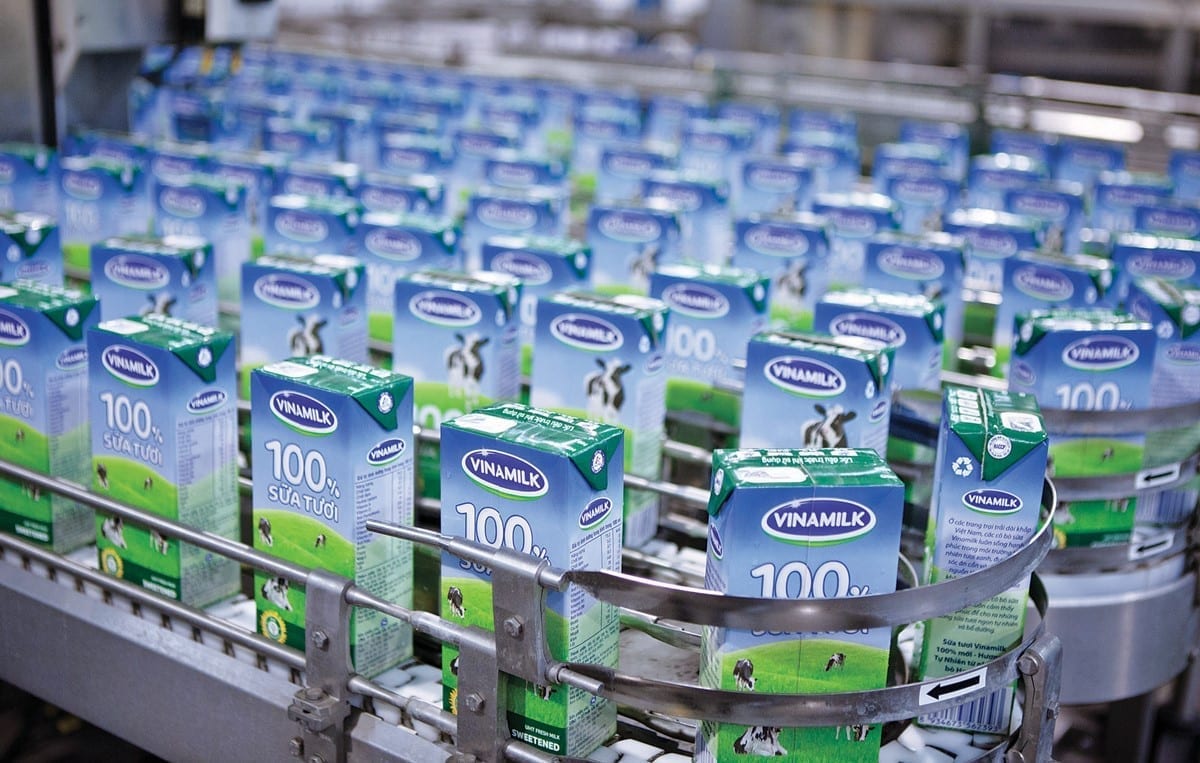
    Vinamilk has signed a $20 million deal with a distributor in Dubai to supply dairy products from the second quarter of 2020.

    Vietnam’s biggest dairy company said in a statement that the deal with the distributor, whom it did not identify, was signed at the Gulfood Dubai 2020 trade exhibition this week.

    The Middle East currently accounts for 75 percent of Vinamilk’s exports. Its other major foreign markets are Japan, South Korea, Singapore, and China.

    Vinamilk, one of the world’s 50 largest dairy producer, saw its export revenues rise 14.8 percent last year to VND5.17 trillion ($223 million).

  • Fruits exports to China plunge

    Fruits exports to China plunge

    Vietnam’s fruits exports to China in the first 11 months fell 13.7 percent year-on-year on the latter imposing more stringent conditions.

    Among total fruit exports to China worth $2.08 billion, coconut export value fell 34.9 percent year-on-year, while that of watermelon dropped 24.6 percent, according to the Agricultural Products Processing and Development Department (Agrotrade).

    The export value of other fruits like durian, dragon fruit and mangosteen also fell, the department said.

    Tighter import restrictions by China, the largest buyer of Vietnamese fruits, took effect on May 1, and this has led to a drop in prices, Agrotrade said.

    But thanks to rising exports to the U.S., South Korea and Japan, fruits exports in the first 11 months fell only 0.6 percent year-on-year to $3.5 billion, it added.

    The Ministry of Agriculture and Rural Development estimates Vietnam’s exports of agriculture, forestry and seafood products this year at $41.3 billion this year, short of the $43 billion target.

  • Vietnam suspects $4.3 bln worth of aluminum imported for origin fraud

    Vietnam suspects $4.3 bln worth of aluminum imported for origin fraud

    Vietnamese authorities suspect $4.3 billion worth of aluminum has been imported with the intent of being exported to the U.S. relabeled as made-in-Vietnam products.

    Vietnam Customs recently discovered signs of origin fraud in 1.8 million tons of aluminum imported by Global Vietnam Aluminum Ltd in the central Ba Ria-Vung Tau Province.

    General Director of Customs Nguyen Van Can say at a press briefing Monday that although the company has a production chain to produce aluminum bars, it was still importing billions of dollars worth of the same products from China and other countries, possibly because it wants to gain from the different duties the U.S. imposed on them.

    The U.S. imposes a duty of 15 percent on Vietnamese aluminum, but up to 374 percent on Chinese aluminum.

    Apart from China, the company also imported aluminum from Mexico, Australia and Russia to be exported to Canada, the U.S., Egypt and India.

    However, data from Vietnam Customs show that although the company has been importing 488,000 tons a year since 2015, the volume of its exports is only 80,000 tons or 16.3 percent of imports.

    For this reason, the 1.8 million tons of aluminum remain in the company’s storage space and is being closely surveilled by Vietnam Customs.

    Vietnamese authorities are increasing scrutiny on product origins and tightening issuance of a certificate of origin for exports as part of efforts to stop trade fraud, Deputy Minister of Trade and Industry Tran Quoc Khanh said in July.

    Vietnam recorded a trade surplus of $37.9 billion with the U.S. from January to October, up 33.4 percent year-on-year, according to the General Statistics Office.

  • Vietnam’s exports to Japan increase rapidly in Q1

    Vietnam’s exports to Japan increase rapidly in Q1

    Elimination of many tariff lines for goods under the CPTPP has helped Vietnam’s exports to Japan increase sharply in the first quarter of this year, according to the General Department of Customs.

    Vietnam’s export value to Japan in the first quarter surged 6.7 per cent year on year to US$4.6 billion, the general department said. Việt Nam became one of three markets gaining an export value in the billions of US dollars to Japan, after the US and China.

    In March 2019 alone, the export value to Japan reached $1.7 billion, a sharp increase of 62.3 per cent month on month and a surge of 2.7 per cent year on year.

    The strong growth in Vietnam’s export value to Japan was attributed to the Comprehensive and Progressive Agreement for Trans-Pacific Partnership (CPTPP). According to this agreement, Japan for the first time has pledged to completely eliminate tariffs for the majority of Việt Nam’s agricultural and seafood products exported to this market.

    That meant Japan immediately abolished 86 per cent of tariff lines, equivalent to 93.6 per cent of Việt Nam’s export value to Japan, and then this figure will increase to 90 per cent of tariff lines within five years.

    On the other hand, the Việt Nam-Japan and ASEAN-Japan free trade agreements have created advantages in tariffs for some of Việt Nam’s seafood products exported to Japan.

    About 62.5 per cent of Vietnam’s total goods items exported to Japan in the first quarter gained strong growth compared to the same period last year, according to the general department.

    The major export products to Japan included textiles (export value of about $900 million), means of transport and spare parts ($630 million), machinery and equipment ($450 million) and seafood products ($306 million).

    Especially, the fertiliser exports to this market had a sudden growth in the first quarter of 2019 to 8,126 tonnes, earning $3.7 million. The exports rose up by five times in volume and about 11 times in value year on year.

    In addition, Vietnam saw strong growth in exports of some goods to Japan in the first quarter, including chemical products (up 70 per cent), animal feed and raw materials (up 56.8 per cent), ore and minerals (up 52 per cent), all kinds of steel (up 49 per cent) and plastic materials (up 43 per cent).

    Meanwhile, Japan sharply reduced imports of cassava and cassava products from Vietnam, with a reduction of 99.6 per cent in volume and 98.5 per cent in value over the same period, despite the average export price of cassava surging by 3.3 times to $886 per tonne.

    In 2018, Vietnam’s goods export value to Japan reached more than $18.8 billion. Textiles and garments accounted for the largest proportion with over 20 per cent of the total export value. Meanwhile, seafood, furniture and footwear respectively hold 7.4 per cent, 6.1 per cent and 4.5 per cent.

  • DBS Partners Sinosure for BRI Projects

    DBS Partners Sinosure for BRI Projects

    DBS Group has signed a cooperation agreement with China Export & Credit Insurance Corporation, adding to the list of banks that are partnering Sinosure for projects under the Belt Road Initiative.

    DBS Group Holdings on Monday announced that it has partnered with Sinosure, the only state-funded Export Credit Agency conducting export credit insurance business in the People’s Republic of China. It joins OCBC Bank, who last week announced a similar partnership agreement.

    «Through signing the cooperation agreement with Sinosure, we will strengthen our partnership and increase the depth of our business with mainland China by facilitating project finance, and investment and trade opportunities especially with partners in ASEAN. We look forward to helping companies capitalize on the numerous business opportunities offered under BRI,» said DBS Singapore Country Head Shee Tse Koon.

    Under the cooperation agreement, DBS and Sinosure will collaborate on projects under the Belt and Road Initiative, especially those from ASEAN, by leveraging each other’s strengths in trade and investments and in-market experience.

    Sinosure will provide credit insurance for DBS’ mid and long-term financing activities for projects in the fields of marine engineering, infrastructure construction, energy, chemicals and textiles, aerospace, as well as services and technology.

  • Vietnam’s Q1 coffee exports down 15.3 percent on-year

    Vietnam’s Q1 coffee exports down 15.3 percent on-year

    Vietnam’s coffee exports in Q1 are expected to fall 15.3 percent from a year earlier to 477,000 tonnes, government data showed Friday.

    Coffee

    Coffee exports from Vietnam will likely fall an estimated 15.3 percent in the first quarter of this year from a year earlier to 477,000 tonnes, equal to 7.95 million 60-kg bags, the General Statistics Office said in a report on Friday.

    Coffee export revenue for Vietnam, the world’s biggest producer of the robusta bean, will likely decline 23.8 percent to $830 million in the three-month period, the report said.

    The country’s coffee shipments in March are estimated at 160,000 tonnes valued at $278 million, it said.

    Rice

    Rice exports in the first quarter from Vietnam were forecast to fall 11.5 percent from a year earlier to 1.31 million tonnes.

    Revenue from rice exports in the period was expected to drop 23.6 percent to $567 million.

    March rice exports from Vietnam, the world’s third-largest shipper of the grain, totalled 600,000 tonnes, worth $256 million.

    Energy

    Vietnam’s first-quarter crude oil exports were seen rising 7.7 percent from the same period last year to an estimated 1.07 million tonnes.

    Crude oil export revenue in January to March is expected to fall 3.5 percent to $507 million.

    Oil product imports in the first quarter were estimated at 2.0 million tonnes, falling 42.6 percent from the same period last year, while the value of product imports fell 47.6 percent to $1.17 billion.

    Vietnam’s January to March liquefied petroleum gas imports were seen falling 7.9 percent from a year earlier to 349,000 tonnes.

  • Select Vietnamese sellers to get Amazon training support

    Select Vietnamese sellers to get Amazon training support

    100 selected Vietnamese businesses will participate in a support program to help them reach more customers on Amazon. These businesses will receive offline or online training, with in-depth support from Amazon and discounts from local service providers, according to a statement jointly released Wednesday by the Vietnam Trade Promotion Agency (Vietrade) under the Ministry of Finance and Amazon Global Selling.

    The program aims to help local businesses, especially in handicraft, textile, footwear and consumer goods, improve their export capabilities through selling on Amazon.

    They will also have the opportunity to participate in the second stage of the program, which will help them develop their brands.

    Other sellers who are interested can also join an online training program starting next month to get equipped with the basic knowledge of selling on Amazon.

    Bernard Tay, Amazon’s regional director for Southeast Asia, said that the young, tech savvy population in Vietnam and strong development of the manufacturing sector generate great e-commerce potential in the country.

    However, a lack of knowledge and experience prevents them from reaching out to the global market, he said.

    Vu Ba Phu, director of Vietrade, said that the support program will open up new potentials for local companies in expanding their businesses internationally.

    There are 300 million Amazon accounts in 185 countries and territories at present. Amazon also has 175 fulfillment centers worldwide.

    Vietnam has more than 700,000 businesses, of which 98 percent are small and medium enterprises, according to Vietrade.

    The country’s e-commerce market grew by 25 percent in 2017 and is expected to maintain this growth momentum over the next three years, according to the Vietnam E-commerce Association (Vecom).

    It also estimates online retail revenues to hit $10 billion by 2020, accounting for five percent of the country’s retail market.

  • Korean wave fuel 25% growth in Korean e-commerce exports

    Korean wave fuel 25% growth in Korean e-commerce exports

    South Korea’s online exports surged 25 percent in 2018 from a year ago on the back of growing demand for K-beauty and K-pop related items such as album records and stationery supplies, government data showed. According to Korea Customs Service, Korea’s electronic commerce (e-commerce) exports or reverse overseas direct purchase volume reached US$3.25 billion last year, up 25 percent from a year earlier. The total number of online export cases also jumped 36 percent to 9.61 million during the same period.

    E-commerce growth is staggering when compared to the modest 5 percent annual growth in total Korean exports last year.

    The customs agency said that the rapid growth of online exports comes amid growing demand for Korean items on the back of hallyu or Korean Wave, as well as simplified retail procedure, and aggressive overseas marketing integrated with offline stores.

    By item, apparels and cosmetics accounted for 69 percent of total online export. In particular, the number of export cases for clothing surged a whopping 162 percent last year from a year ago, becoming the top pick after beating out cosmetics. Online exports of cosmetics jumped 43 percent last year from a year ago, recovering to average level after falling in 2017 as a result of diplomatic tension between Korea and China over Seoul’s deployment of U.S. anti-missile system.

    The customs agency said that exports of K-pop related items such as albums and stationery items surged significantly last year amid hallyu or Korean Wave overseas. In particular, sales of items related to K-pop icon BTS rose sharply.

    Data from Korea Customs Service, meanwhile, showed that overseas direct purchases of foreign goods amounted to US$2.75 billion last year, up 31 percent from a year ago. There were a total 32.25 million purchases last year, up 37 percent from a year ago.

    By region, the United States accounted for the largest 50.5 percent of Koreans’ direct purchases, followed by China with 26.2 percent, European Union with 12.5 percent, and Japan with 8 percent. The U.S. share fell from the previous year’s 56.4 percent while that of China jumped almost 10 percentage points from the previous year’s 17.3 percent.

  • Rolls-Royce agrees to follow Korea’s lemon law

    Rolls-Royce agrees to follow Korea’s lemon law

    Rolls-Royce announced Wednesday it will follow Korea’s voluntary lemon law for automakers, making it the first foreign luxury brand to accept the newly introduced regulation. Korea’s revised automobile management law, enacted last month, forces complying automakers to replace or refund recently purchased vehicles that repeatedly exhibit problems, similar to lemon laws in the United States.

    While most local automakers have adopted the rule, Volvo has been the only overseas brand to do so.

    The U.K.-based automaker said it will abide by the country’s revised auto guidelines to strengthen its quality commitment to Korean customers.

    “Rolls-Royce will be the first luxury brand to accept the amended automobile management act,” said Rolls-Royce Motor Cars CEO Torsten Muller-Otvos at a launch event on Wednesday for the automaker’s showroom in Cheongdam-dong, southern Seoul.

    “It is our responsibility … to reassure our Korean customers that we will stand by our promise of ultimate quality,” added Muller-Otvos.

    Foreign automakers’ reputations took a blow in Korea last year. BMW Korea conducted two series of recalls after its vehicles began bursting into flames due to component defects.

    The Korean unit of Mercedes-Benz was fined 2.8 billion won ($2.5 million) in December for violating environmental and customs law regarding emissions certifications.

    BMW was fined for similar reasons at the start of this year.

    The quality push from Rolls-Royce comes as the luxury automaker achieved record sales figures last year in the Korean market as foreign imported vehicles continue to grow in popularity.

    According to the Korea Automobile Importers & Distributors Association, Rolls-Royce sales in the domestic market grew 43 percent to 123 units last year from 86 in 2017. Foreign auto imports increased by 11.8 percent.

    The luxury automaker’s performance in the Korean market last year outpaced its 22 percent growth in global sales.

    According to Rolls-Royce, the brand’s sales grew at a rapid pace in Korea last year thanks to an expanded lineup, including the Phantom.

    The CEO said he expects the company’s performance in the country to continue to improve.

    “Korea is a very important cornerstone in our Asia strategy,” said Muller-Otvos. “We might even see at a certain moment Korea overtaking the Japanese business in terms of size.”

    The luxury automaker’s chief also emphasized the automaker’s commitment to the luxury sector as the auto industry braces for major changes.

  • VinFast to test its first car for safety in Europe next month

    VinFast to test its first car for safety in Europe next month

    VinFast, Vietnam’s first indigenous car manufacturer, plans to test its first vehicle for safety parameters in Europe on March 6. According to company executives, the vehicle will be tested for international standards to ensure its highest safety. This announcement came after VinFast’s Hai Phong factory successfully manufactured the first body shell of the Lux A2.0, a sedan, Wednesday.

    Shaun William Calvert, deputy general director in charge of production, said the first body shell meets the highest quality requirements.

    VinFast, the car manufacturing unit of Vietnam’s largest private conglomerate Vingroup, showed off its first two car models, a sedan and an SUV, at the Paris Motor Show in France last October just a year after the company’s incorporation, grabbing the attention of the local and international media.

    VinFast’s first cars are expected to hit the road in August 2019.

  • US opens doors to Vietnamese mango after years of attempt

    US opens doors to Vietnamese mango after years of attempt

    The US’s Animal and Plant Health Inspection Service has given the green light for the import of mangoes from Vietnam. The license comes exactly 10 years after Vietnam applied for it. To export fresh mangoes to the U.S., farmers and business will need to meet stringent standards. APHIS will inspect each shipment thoroughly before granting phytosanitary certificates.

    Mango is Vietnam’s sixth fresh fruit licensed to be imported into the U.S. after dragon fruit, rambutan, longan, lychee, and star apple fruit.

    Some 96 percent of Vietnam’s mango production is consumed domestically, with the rest exported currently to 40 countries either as fresh fruit or in processed form.

    The main market is China. The other important ones are Europe, South Korea, Japan, Australia, and New Zealand.

  • Palm oil prices to remain steady in 2019: MPOC

    Palm oil prices to remain steady in 2019: MPOC

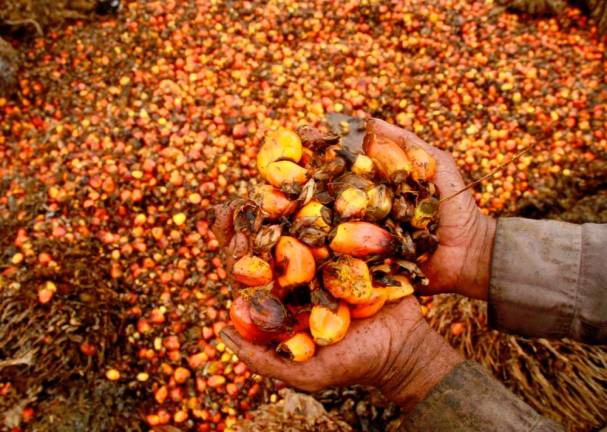
    Malaysian palm oil prices are set to hold steady in 2019 at an average of RM2,303 a tonne, according to estimates by the Malaysian Palm Oil Council (MPOC), while global output of the tropical oil is expected to rise by 3 million tonnes. “Global palm oil production is projected to be 72 million tonnes, with Malaysia and Indonesia as leading producers,“ the MPOC said in an online conference presentation.

    Rising production could cap recent price gains for palm oil, which has been recovering after touching a 3-year low last November at RM1,940 a tonne.

    Benchmark palm oil was trading at RM2,281 a tonne. The tropical oil averaged RM2,308 last year, according to Refinitiv Eikon data.

    MPOC, Malaysia’s key marketing agency for palm oil, also estimated that Malaysian output would rise to 20.2 million tonnes in 2019 and pegged Indonesian production at 42.8 million tonnes.

    Malaysia produced 19.5 million tonnes of palm oil last year, while Indonesia’s 2018 output stood at 42 million tonnes, based on estimates by the Indonesia Palm Oil Association.

    Malaysian palm oil output is expected to rise as newly replanted areas start to mature, but the increase will be marginal due to ageing trees and a possible El Nino in 2019 that will curb production, the MPOC said in its presentation.

    “Indonesian production is forecast to reach a record high of 42.8 million tonnes in 2019 due to improving weather conditions as well as newly maturing areas,“ it added.

    Palm oil exports in 2019 are also expected to increase in 2019, in line with an expected rise in demand from key importer India due to its declining domestic oilseed production.

    “India is expected to increase its (vegetable oil) imports by 500,000 tonnes, reaching 15.15 million tonnes, out of which palm oil will account about 10 million tonnes,“ said the MPOC presentation.

    Industry regulator the Malaysian Palm Oil Board forecast Malaysia’s a slight rise in production to 20.3 million tonnes this year due to favourable weather conditions and an expansion in oil palm matured area, according to an online presentation.

    It estimated Malaysia’s 2019 exports at 17.2 million tonnes, up from 16.5 million tonnes last year, due to “expected stronger palm oil demand from major markets.”

  • Vietnam targets $10 bln seafood export

    Vietnam targets $10 bln seafood export

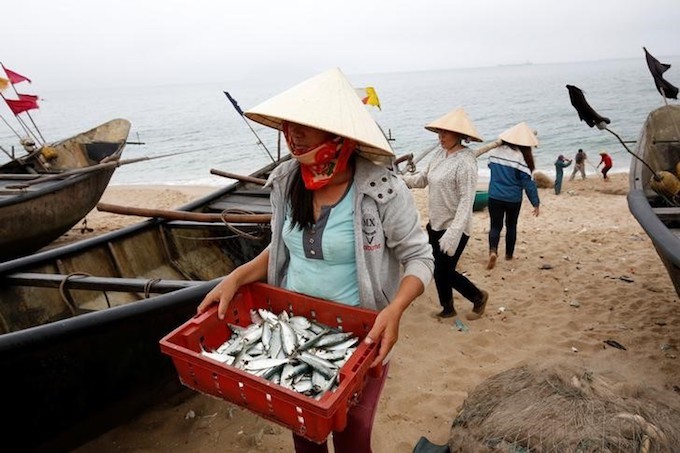
    Vietnam hopes to export $10 billion worth of seafood this year, meeting its 2020 goal a year early. The Vietnam Association of Seafood Exporters and Producers (VASEP) said at a recent conference it would include $4.2 billion worth of shrimp, $2.3 billion worth of pangasius fish and the rest from other products. Minister of Agriculture and Rural Development Nguyen Xuan Cuong said the $10 billion target is high but achievable since Vietnamese seafood is liked in international markets.

    VASEP president Ngo Van Ich said shrimp exported to the U.S. is expected to face a lower anti-dumping tariff this year.

    Vietnam’s recent accession to the Comprehensive and Progressive Agreement for Trans-Pacific Partnership would also help increase exports, he said.

    But there are also challenges.

    Truong Dinh Hoe, VASEP general secretary, said the country faces difficulties like shrinking catches and intense competition from other exporting countries.

    A major hurdle is the ‘yellow card’ restriction slapped by the European Union since 2017 for illegal fishing.

    The European Commission has said it would ban seafood imports from Vietnam unless it does more to tackle illegal fishing by Vietnamese vessels in other countries’ territories.

    After an evaluation done last May the European Commission said it would consider lifting the yellow card in 2019.

    Vietnam ranks among the top ten seafood producers in the world, according to the U.N. Food and Agriculture Organization.

    Last year its exports were worth $9 billion against a target of $9.5 billion.

  • U.S. agency submits auto tariff probe report to White House

    U.S. agency submits auto tariff probe report to White House

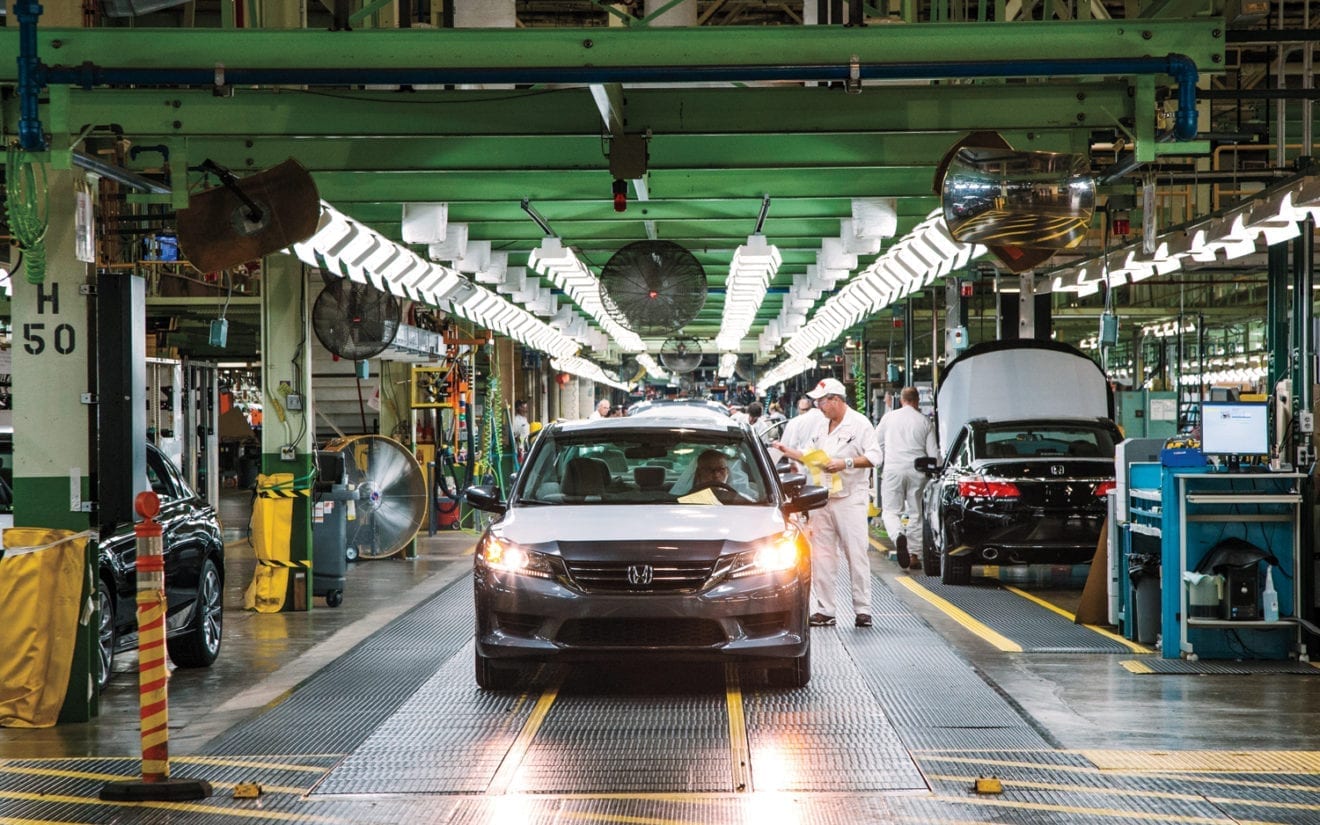
    The U.S. Commerce Department sent a report on Sunday to U.S. President Donald Trump that could unleash steep tariffs on imported cars and auto parts, provoking a sharp backlash from the industry even before it is unveiled, the agency confirmed. Late on Sunday, a department spokeswoman said it would not disclose any details of the “Section 232” national security report submitted to Trump by Commerce Secretary Wilbur Ross. The disclosure of the submission came less than two hours before the end of a 270-day deadline.

    Trump has 90 days to decide whether to act upon the recommendations, which auto industry officials expect to include at least some tariffs on fully assembled vehicles or on technologies and components related to electric, automated, connected and shared vehicles.

    As the White House received the report, the industry unleashed what is expected to be a massive lobbying campaign against it.

    The industry has warned that feared tariffs of up to 25 percent on millions of imported cars and parts would add thousands of dollars to vehicle costs and potentially lead to hundreds of thousands of job losses throughout the U.S. economy.

    The Motor and Equipment Manufacturers Association, which represents auto parts suppliers, warned that tariffs will shrink investment in the United States at a time when the auto industry is already reeling from declining sales, Trump’s tariffs on steel and aluminum, and tariffs on auto parts from China.

    “These tariffs, if applied, could move the development and implementation of new automotive technologies offshore, leaving America behind,” it said in a statement. “Not a single company in the domestic auto industry requested this investigation.”

    The Commerce Department started its investigation in May 2018 at Trump’s request. Known as a Section 232 investigation, its purpose was to determine the effects of imports on national security and it had to be completed by Sunday.

    Automakers and parts suppliers are anticipating its recommendation options will include broad tariffs of up to 20 percent to 25 percent on assembled cars and parts, or narrower tariffs targeting components and technologies related to new energy cars, autonomous, internet-connected and shared vehicles.

    The Commerce Department alluded to a focus on emerging vehicle technologies when it opened the investigation.

    Administration officials have said tariff threats on autos are a way to win concessions from Japan and the EU. Last year, Trump agreed not to impose tariffs as long as talks with the two trading partners were proceeding in a productive manner.

    Trump said on Friday that tariffs protect industry and also help win trade agreements.

    “I love tariffs, but I also love them to negotiate,” he said.

    A report from the Center for Automotive Research in Ann Arbor, Michigan, published on Friday showed its worst-case scenario of a tariff of 25 percent would cost 366,900 U.S. jobs in the auto and related industries.

    U.S. light duty vehicle prices would increase by $2,750 on average, including U.S.-built vehicles, reducing annual U.S. sales by 1.3 million units and forcing many consumers to the used car market, the think tank’s report said.

    Major automaker groups said last year the cumulative effect for the United States would be an $83 billion annual price increase and argued there was no evidence auto imports posed a national security risk.

    Canada and Mexico each won duty-free access to 2.6 million vehicles as part of a new North American free trade deal even if the administration moves ahead with the tariffs.

  • New air purifier from Japan debuts in Korea

    New air purifier from Japan debuts in Korea

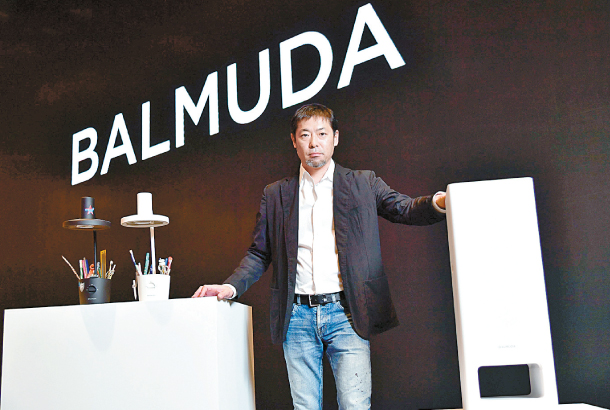
    Balmuda, a Japanese high-end home appliance maker, is introducing a new air purifier in Korea today ahead of the rollout in Japan, where the launch date has not been set. Balmuda CEO Gen Terao emphasized the importance of the Korean market during the company’s first press conference in Korea Tuesday as he unveiled The Pure air purifiers.

    “We chose to unveil our air purifiers in Korea in light of the fine-dust problem and Balmuda’s growing brand awareness here,” Terao said at the conference in Yongsan District, central Seoul.

    “While Japan’s air purifier market is decreasing every year, it’s been growing in Korea. We sell 10 times more air purifiers here.”

    Several new features make it an upgrade from the AirEngine, the company’s older 2013 model.

    One of the key innovations is that The Pure allows users to see how much dust the machine sucks in. The purifier has a rectangular hole cut out in the bottom installed with lighting, making it easy for users to see the dust and particles that go up into the filter above the hole.

    The Pure’s HEPA filters can trap 99.97 percent of particles as small as 0.3 microns and eliminate odors. The machine releases up to 7,000 liters (1,850 gallons) of cleaned air per minute.

    The Pure will be available at department stores and online and offline electronic retailers from today. They are priced at 749,000 won ($666).

    Terao also discussed Balmuda’s The Light, a desk lamp for children launched last December.

    Addressing the growing problem of short-sightedness among children, Terao said he developed advanced light technology together with medical surgery light manufacturers.

    Terao called out Xiaomi’s air purifiers for copying Balmuda’s AirEngine design.

    “When I saw this [Xiaomi] product, I wondered when we had built it because it had the same size, silhouette and structure as the AirEngine,” Terao said. “But the fact that others are copying us is proof that our products are good.”

    Balmuda, founded in 2003, posted over 10 billion yen ($90 million) in annual sales last year. The company currently generates around 30 percent of its total revenue in Korea.