Tag: Finance

  • UBS Takes Stake in AI Advisor Platform

    UBS Takes Stake in AI Advisor Platform

    UBS is taking a stake in an artificial intelligence platform that matches institutional clients with investment experts.

    UBS has invested $5 million in Lynk in its latest funding round, taking the technology company’s total funding to $35 million, Lynk said in a press release Wednesday. Lynk says it has a network of more than 840,000 global experts. Its proprietary technology is driven by an AI data engine that indexes individuals based on their experience and expertise to match users with subject matter experts on its platform.

    Lynk was founded by Peggy Choi in 2015. The firm has eight offices, including New York, Hong Kong, Singapore, Mumbai, Shanghai and Toronto.

    UBS announced a global alliance with Lynk in May for its institutional investor clients and subscribed to the platform in 2020. The collaboration is run via UBS Investment Bank’s principal investment team.

  • Nordea AM to Open ESG Hub in Singapore

    Nordea AM to Open ESG Hub in Singapore

    The hub will enable Nordea to to enhance its local servicing, ESG capabilities, investment platform and distribution reach in the region.

    The asset management arm of financial services group Nordea is planning to open an ESG hub – its first outside its Nordic headquarters – in Singapore, in response to its growth and successes in the region, the firm announced on Wednesday.

    The hub will allow NAM to be closer to clients in the Asia-Pacific region and better understand how companies are embracing sustainability in the region, Nordea Asset Management said in the statement.

    Sustainability issues have gained significant interest in Asia in recent years, and investors are increasingly asking for ESG solutions. The time is right to meet that demand, Nils Bolmstrand, CEO of Nordea Asset Management, said.

    NAM’s local Singapore distribution office was established in 2013, and will be fully integrated with NAM’s ESG-focused internal investment boutiques as well as NAM’s Responsible Investments team.

    The hub is slated to be launched in the latter part of 2021.

  • UBS Misses Mark With Coffee-Coded Survey

    UBS Misses Mark With Coffee-Coded Survey

    The Swiss bank wants its domestic employees to talk about their ethnicity – coming uncomfortably close to long-held stereotypes in the process.

    Zurich-based UBS asked its 21,598 Swiss-based employees to fill out a survey describing their ethnicity, telling them ethnic diversity is a key pillar in achieving its strategic goals.

    The survey – ethnic diversity is important to us – is illustrated with eight espresso cups of varying shades from black to milky white. UBS is asking its employees to categorize their ethnicity as Asian, Black, Hispanic, or White.

    Other options include two or more ethnic groups and other ethnic groups. Employees also have the option of demurring on disclosing their ethnic heritage or presumably not filling out the survey at all.

    UBS’ intentions in the survey are commendable: it can only reach its diversity goals if it tackles the issue of discrimination internally. And of course, to do so, it needs data.

    The way UBS – which employs 73,000 people in more than 50 countries – is gathering this data is inept and eerily reminiscent of colonial-era stereotypes. The bank’s human resources officers seem to believe that the global population can be grouped into four ethnicities. Modern ethnology has identified more than 1,300 ethnicities worldwide.

    UBS has chosen to group ethnicities along geographies – Asia, Latin America – and along with race: white, black. It avoided stumbling identifying all four of the survey’s ethnicities with a race, but it isn’t clear why it views white and black alone as ethnicities.

    The link between ethnic identity and skin color is rooted in a racially tinged stereotype popularized by Carl Linnaeus, a Swedish botanist. In the 18th century, Linnaeus divided humans according to race: white, black, red, and yellow.

    He also baked in how he perceived social and emotional features, a view that favored white Europeans like him. Linnaeus’ views took root during the Enlightenment and established themselves for some years afterward. Immanuel Kant and other enlightenment thinkers viewed dark skin as inferior to white.

    UBS’ likening race to espresso cups also leans hard into stereotypes prevalent in advertising, where black skin was frequently used to sell products like chocolate or coffee. Using imagery of black people, advertisers attempted to portray these consumer goods as something exotic or wild.

    The advertising industry has largely abandoned this practice. One would have wished for a similar light-bulb moment of age-old stereotypes from UBS’ diversity team.

  • Vietcombank gets new chairman

    Vietcombank gets new chairman

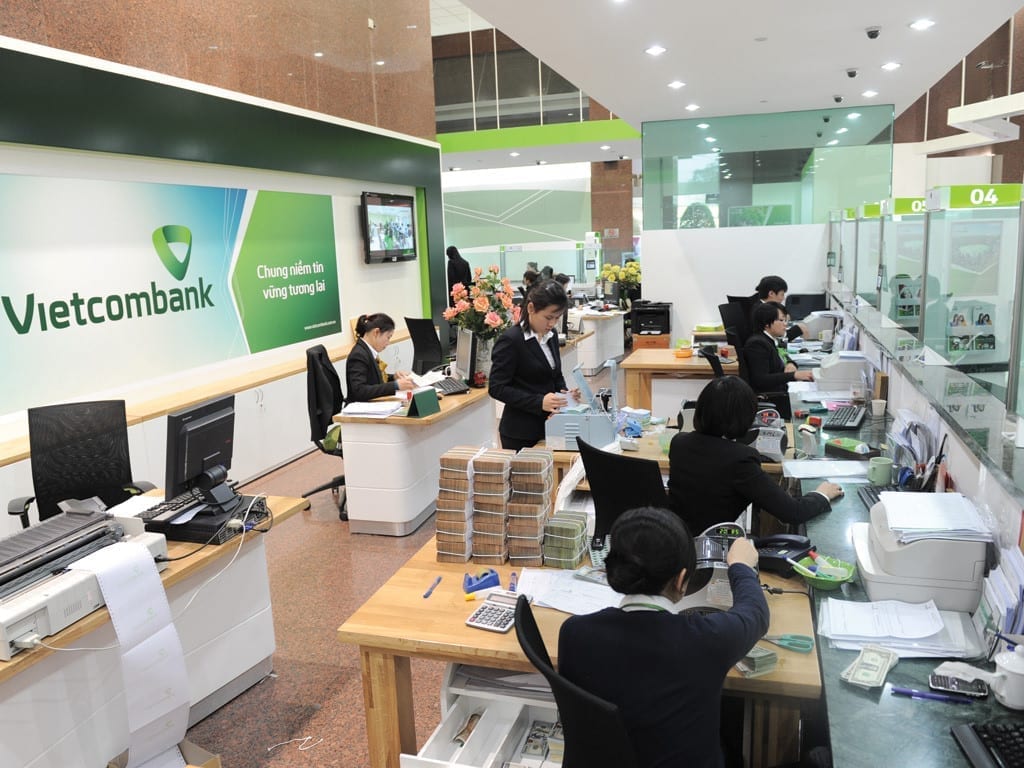
    Vietnam’s biggest state-owned lender, Vietcombank, has named Pham Quang Dung as its new chairman until 2023.

    Dung, 48, has been its CEO and a member of the board since 2014.

    Nguyen Thanh Tung, deputy director, temporarily takes over as CEO until a new person is appointed.

    Dung has 27 years’ experience in the financial and banking industry.

    He joined Vietcombank in 1994, and has served in various positions including deputy director of a financial division in Hong Kong and deputy director of the bank.

    The previous chairman of the bank, Nghiem Xuan Thanh, was appointed the Secretary of the Party Committee of Hau Giang Province in early July.

    Vietcombank is 74.8 percent owned by the government, 15 percent by Japan’s Mizuho Corporate Bank and the rest by other shareholders.

  • UBS Replaces Veteran Intermediaries Head

    UBS Replaces Veteran Intermediaries Head

    The Swiss wealth manager is replacing the head of its business with financial intermediaries, after a 40-year veteran of the bank retires.

    Zurich-based UBS is appointing Thomas Frauenlob as the head of its business with other financial institutions such as independent asset managers, effective October 1, according to a memo seen by finews.com. The Swiss banker replaces Stefano Veri, who has overseen the so-called FIM business globally since 2015 and is retiring.

    Veri is uniquely heavyweight: he is a 40-year veteran of UBS’ private bank and part of a cadre of elite managing directors. A UBS spokesman confirmed the Ticino native’s retirement. Late last year, Veri was forced to postpone a push in Miami with intermediaries which is led by Mariana Gregori, who is responsible for international business.

    Frauenlob, Veri’s successor, is a former equities banker who moved into the wealth arm in 2016 when he was tasked with UBS’ business with Switzerland’s wealthy and family offices. The role was reduced to family office responsibilities in a restructuring 20 months ago. Frauenlob will be replaced by Josef «Joe» Stadler in this role, a spokesman said.

    In the wider FIM team, Andreas Moser last September replaced Severin Rupp in overseeing institutional intermediaries. Rupp defected to Vontobel, where he runs business with external asset managers.

    UBS’ remaining FIM management team besides Gregori is Claudio Scarfone for Switzerland, Beat Bachmann for Europe, and Hugo Kattendijke for Asia-Pacific.

    Frauenlob, who moves to the FIM business on Wednesday before taking over fully in October, will report to Anton Simonet, UBS head of wealth management in Switzerland as well as the FIM business, and to Iqbal Khan, who co-runs the wider wealth management unit together with Tom Naratil.

  • UOB Shuffles Board

    UOB Shuffles Board

    UOB has announced changes to its board, including the addition of a 40-year banking veteran as its new independent director.

    Tracey Woon joins UOB as an independent director as well as a member of its audit committee and board risk management committee, according to a statement, effective September 1.

    Woon, 65, is currently a director at Singapore Press Holdings, a member of the Securities Industry Council and the Listings Advisory Committee of the Singapore Exchange amongst other roles.

    Woon is a 40-year banking veteran in the region and was previously UBS’ APAC global wealth management vice-chair from 2016 until her retirement in 2020 and Citibank’s ASEAN corporate and investment banking vice-chair and UBS’ APAC global wealth management vice-chair.

    Other changes to UOB’s board include the addition of Dinh Ba Thanh and the exit of James Koh, 75, who will step down effective August 31 after nine years as an independent director since 2012.

    Thanh, 64, is the founder and chief executive of Vietnam’s largest integrated media tech group DatVietVAC Group Holdings, which was established in 1993 as the country’s first privately-owned advertising and media company. Thanh currently also serves on the board of trustees at the Asia Business Council and is also a member of the World Economic Forum.

    The appointment of the two new directors will further enhance the diversity of the board,» said UOB chairman Wong Kan Seng. In guiding the group in its regional strategy, the board will benefit from Tracey’s extensive background in banking across the region and Thanh’s insights in transforming his business into a successful media entertainment technology company in Vietnam.

  • UBS Poaches Middle East Team From Rival

    UBS Poaches Middle East Team From Rival

    The Swiss wealth giant nabbed five wealth managers from Credit Suisse in the United Arab Emirates.

    Zurich-based UBS is expanding in the Middle East by hiring Georges El Khoury, currently country head in the U.A.E. for Credit Suisse. El Khoury will report to Ali Janoudi, an influential UBS group managing director who oversees the Middle East and Africa private bank, and to Niels Zilkens, the Dubai head.

    The region is both a boon for private banks as well as – reportedly – a source of huge staffing tension. The U.S. outlet five weeks ago published a blistering report about Credit Suisse’s Middle East boss Bruno Daher.

    El Khoury is walking from Credit Suisse to UBS with four staff including Raoul Rahme, another managing director, and Iyad Tamim Jundi, Abdullatif Karami, and Sarika Chandwani.

    A Credit Suisse spokesman said the bank had promoted Saad Osseiran as head of wealth management in the U.A.E. and in Oman, and Fahad Al-Ebrahim as market leader for Kuwait as a result of the team leaving.

  • SHB sells consumer finance unit to Thai lender

    SHB sells consumer finance unit to Thai lender

    The Saigon-Hanoi Commercial Joint Stock Bank will sell a 50 percent stake in its consumer finance division, SHB Finance, to Thailand’s Bank of Ayudhya.

    Vietnam’s fifth-largest bank said in a statement it would sell the remaining 50 percent to Bank of Ayudhya after three years.

    Bank of Ayudhya said in a stock market filing that the deal is worth VND3.59 trillion ($157.75 million), adding: “The acquisition will enable the bank to capture growth outside of Thailand.”

    Japan’s Mitsubishi UFJ Financial Group holds a 76.9 percent stake in the lender, Thailand’s fifth-largest by assets.

    After more than three years since inception, SHB Finance has a presence in 46 provinces and cities and almost 300,000 borrowers.

    Another private lender, VPBank, sold a 49 percent stake in its consumer finance unit, FE Credit, in April to Japan’s Sumitomo Mitsui Finance Group for $1.4 billion.

    Other Vietnamese lenders like VietinBank and MSB are also looking to sell their consumer finance operations.

  • Indonesia’s Bank Central Asia Targets Digital Growth

    Indonesia’s Bank Central Asia Targets Digital Growth

    Banks are playing catch-up to technology players in one of the world’s largest unbanked markets.

    Bank Central Asia (BCA) is boosting its digital capabilities amid increased competition from tech players in the banking space, according to a report on Wednesday.

    Indonesia’s biggest lender by market value will be investing $200 million to help its month-old digital unit Blu to increase market share ahead of an initial public offering in two years’ time. Blu currently has about 110,000 customers.

    BCA is targeting a fourfold increase in its capital, to four trillion rupiah (S$376.5 million), and is focused on gaining more customers, partners and merchants on its digital platform before the IPO, BCA president director Jahja Setiaatmadja told the publication.

    The country has an unbanked market of 83 million people, or about one-third of the population, and while traditional players have found it tough to expand across the archipelago nation, technology players have an advantage in their ease of scaling operations to meet this demand.

    Indonesia-headquartered super-app Gojek increased its stake in Bank Jago in December 2020 as part of its bid to accelerate financial inclusion in Asia, while Singapore-based e-commerce and gaming company Sea, which recently won a licence to run a digital bank in Singapore, bought unlisted lender Bank Kesejahteraan Ekonomi in January.

  • StanChart Exec Joins Blockchain Startup

    StanChart Exec Joins Blockchain Startup

    Taipei-headquartered XREX has named a managing director in Singapore as it sets its sights on expanding its platform in the region.

    Taipei-headquartered XREX has appointed Christopher Chye as managing director of XREX Singapore and director of product. In this dual role, he will oversee XREX’s businesses and operations in Singapore and play an instrumental role in bringing new value propositions to XREX’s clients, the startup said on Tuesday.

    Chye joins from Standard Chartered Bank, where he held roles in commercial banking, consumer banking, wealth management, and financial crime compliance. He was also a pioneer of Standard Chartered’s digital bank venture in Singapore, where he led the bancassurance, rewards, and loyalty, and brand and marketing pillars, and was executive director at its regional CEO office. He was previously a  management consultant with KPMG.

    In a separate announcement, XREX said it raised $17 million in pre-Series A funding led by CDIB Capital Group. The funds will be used to apply for financial licenses in Singapore, Hong Kong, and South Africa, and partner with banks and financial institutions, like payment gateways.

    Many of our team members are from or have lived in the markets where we serve. We keenly understand the struggles faced by many cross-border merchants who lack safe access to US dollar liquidity,» XREX CEO and cofounder Wayne Huang, said.

    XREX was launched in 2018 to drive financial inclusion in emerging markets by leveraging blockchain technology.

    The company uses blockchain technology to solve dollar liquidity shortage issues in emerging markets and has products like a payment escrow service and crypto-fiat exchange platform.

  • Indonesia’s Bank Central Asia Targets Digital Growth

    Indonesia’s Bank Central Asia Targets Digital Growth

    Banks are playing catch-up to technology players in one of the world’s largest unbanked markets.

    Bank Central Asia (BCA) is boosting its digital capabilities amid increased competition from tech players in the banking space, according to a «Bloomberg» report on Wednesday.

    Indonesia’s biggest lender by market value will be investing $200 million to help its month-old digital unit Blu to increase market share ahead of an initial public offering in two years’ time. Blu currently has about 110,000 customers.

    BCA is targeting a fourfold increase in its capital, to four trillion rupiah (S$376.5 million), and is focused on gaining more customers, partners and merchants on its digital platform before the IPO, BCA president director Jahja Setiaatmadja told the publication.

    The country has an unbanked market of 83 million people, or about one-third of the population, and while traditional players have found it tough to expand across the archipelago nation, technology players have an advantage in their ease of scaling operations to meet this demand.

    Indonesia-headquartered super-app Gojek increased its stake in Bank Jago in December 2020 as part of its bid to accelerate financial inclusion in Asia, while Singapore-based e-commerce and gaming company Sea, which recently won a licence to run a digital bank in Singapore, bought unlisted lender Bank Kesejahteraan Ekonomi in January.

  • HSBC Bolsters ASEAN Sustainability

    HSBC Bolsters ASEAN Sustainability

    HSBC strengthens its sustainability-related capabilities in Southeast Asia with the appointment of a newly created role.

    Kelvin Tan has been named head of sustainable finance and investments, ASEAN, according to a statement, reporting to Singapore chief executive Kee Joo Wong.

    Based in Singapore, Tan will be tasked with supporting Singapore-based clients with their low carbon transition needs. He will oversee the provision of sustainability-linked finance, support the development of innovative climate solutions, lead cross-business and cross-market collaboration across the bank’s ASEAN franchises and enhance employee education on sustainability.

    Tan was most recently CEO of HSBC Thailand, a role he held since 2015.

    According to the Asian Development Bank (ADB), ASEAN is projected to experience some of the most significant temperature increases worldwide which, if left unaddressed, could reduce regional GDP by up to 11 percent by the end of the century.

    The region is also facing a $100 billion per year infrastructure gap, ADB added, which may have worsened during the pandemic.

    Southeast Asia is one of the most vulnerable regions in the world to climate change-related natural disasters. If nothing is done, the environmental, social and economic impact of climate change will be profound, Wong said. Tan’s extensive experience in Singapore and across ASEAN markets, as well as his proven commercial banking ability, makes him the perfect candidate to ensure we take further strides towards a more strategic and coordinated approach.

  • Deutsche Expands Wealth Unit in Southeast Asia

    Deutsche Expands Wealth Unit in Southeast Asia

    Deutsche Bank continues to expand its wealth business in the region, particularly in southeast Asia where it hired a new investment management team head.

    Alania Concepcion joins Deutsche Bank Wealth Management as a director and investment management team head, according to a statement, reporting to managing director and head of Southeast Asia investment management Coo-Way Law.

    Based in Singapore, Concepcion will work closely with clients and relationship managers from the southeast Asia market which is headed by Shang-Wei Chow.

    Concepcion returns to Singapore after over four years running her own firm and pursuing ESG and fintech-related interests in Europe. Previously, she also worked for Credit Suisse, Barclays and Merrill Lynch.

    This year, Deutsche Bank Wealth Management has been rapidly expanding in the region with a flurry of new hires, particularly with a focus on southeast Asia.

    Last week, it reportedly hired former Pictet Singapore chief executive Domonique Jooris days after announcing the hire of ex-Credit Suisse southeast Asia trio Urs Brudermann, Shawn Ngoh and Pichaya Prawanmeet.

    To capture the opportunities in the fast-growing Southeast Asia region, we are focused to grow and develop our team, said Chow. The recent appointments in southeast Asia show our commitment to the business. We will continue to hire the best talent in the region to support our growth.

  • Hang Seng Replaces Ailing Chief

    Hang Seng Replaces Ailing Chief

    Major local lender Hang Seng Bank has named a new chief executive to replace Louisa Cheang, who will extend her leave of absence over medical reasons.

    Diana Cesar has been appointed chief executive at Hang Seng, according to a statement, effective September 1.

    Cesar joins from HSBC – Hang Seng’s top shareholder and parent – where she is currently its Hong Kong CEO. She first joined HSBC in 1999 and has since held various senior roles before she was named Hong Kong CEO in 2015.

    Cesar is the right person to build on Cheang’s record and take Hang Seng to the next level, said HSBC’s APAC co-CEO David Liao in a statement. Hong Kong has a bright future, and under Diana’s direction, Hang Seng will be there to help our customers make the most of new opportunities.

    Cesar replaces Louisa Cheang Wai-wan who was in the midst of a three-month medical break announced in May.

    Cheang was made CEO at Hang Seng in 2017, also joining from parent group HSBC where she held senior roles like group general manager and group head of retail banking. She first joined HSBC in its credit card department in 1999.

    At HSBC, Hong Kong chief operating officer Luanne Lim – who also first joined the British lender in 1999 – will step in to serve as interim Hong Kong CEO until a successor is appointed.

    Liao will become a non-executive director of Hang Seng Bank, effective September 1, replacing Peter Wong who retired from his role as APAC CEO and has become a non-executive chairman at HSBC.

  • Deutsche Bank Hires Ex-Pictet Singapore Chief

    Deutsche Bank Hires Ex-Pictet Singapore Chief

    Deutsche Bank continues to expand in Asia with the latest addition of the former Singapore chief executive from Pictet.

    Deutsche Bank names Dominique Jooris as Asia Pacific head of wealth solutions, according to a statement,

    Jooris was most recently CEO of Bank Pictet in Singapore before he was succeeded in January this year by Sharon Chou. Previously, Jooris held various senior dept capital management roles including 11 years at Goldman Sachs.

    According to the statement, Jooris will be focused on driving coverage of the family office segment in the region.

    Asia Pacific continues to be the fastest-growing region in the world for wealth accumulation and has been for the last 20 years. Asia Pacific is already home to more billionaires than any other region, the bank added.

    Given this dramatic wealth accumulation, many Asian families are institutionalizing their wealth management through more efficient structures and vehicles, primarily via family offices.