Tag: Finance

  • StanChart Profits Surge on Lower Credit Impairments

    StanChart Profits Surge on Lower Credit Impairments

    Significantly lower credit impairments coupled with positive business momentum led to a surge in Standard Chartered’s pre-tax profits for the third quarter.

    Standard Chartered posted $1.075 billion in pre-tax profits for the third quarter, according to its latest results, marking a 44 percent year-on-year increase.

    Not unlike its regional peers throughout the year, the reduction of credit impairments – 70 percent to $107 million compared to $353 million in the same period last year – was a significant contributor to the improved bottom line.

    In addition to an improved balance sheet, the broader business experienced positive momentum with net interest income up 7 percent to $1.735 billion and other income also up 7 percent to $2.03 billion.

    We delivered a return to top-line growth in the third quarter and achieved further progress against our strategic priorities, with a strong performance in our Financial Markets and Trade businesses and ongoing positive momentum in Wealth Management, said Standard Chartered chief executive Bill Winters.

  • HSBC Singapore Rolls Out Dart Platform for Corporates

    HSBC Singapore Rolls Out Dart Platform for Corporates

    The bank’s new online platform for corporate customers simplifies receivables collection and improves transparency and monitoring capabilities.

    HSBC Singapore is launching another digital solution for corporate customers – Dart, or the Digital Accounts Receivables Tool, which connects businesses to their customers by enabling the exchange of invoice and payment information, the bank said in a statement on Tuesday.

    According to the bank, receivables reconciliation remains a key challenge for treasury functions that receive and process large volumes of payments on a daily basis, particularly when identifying payers and matching with invoices.

    Supply chain resilience has become synonymous with digitization, and the receivables reconciliation process is a prime candidate for transformation, Winnie Yap, HSBC Singapore head of global liquidity and cash management, said.

    Digital Capabilities

    HSBC has rolled out a number of digitally-driven solutions for its corporate customers in recent months, including a multi-currency digital wallet for corporate customers, Omni Collect – a one-stop digital solution for all payment collections needs.

    The bank said it will progressively widen the capabilities available on Dart, as it optimizes its digital services to support customers.

  • UOB Posts Quarterly Profit Growth

    UOB Posts Quarterly Profit Growth

    The bank rode on loan growth and fee income, as well as lower credit allowance, to post modest growth amid slower-than-expected economic recovery across the region.

    UOB’s net profit after tax for the third quarter of 2021 was 4 percent higher quarter-on-quarter to reach S$1.05 billion ($780 million), according to financial results published on Wednesday.

    During the quarter, cross-border revenue remained stable while loan-related, wealth and fund management, as well as credit card fees, saw strong growth, UOB said. Its credit outlook remains stable, with its CET1 ratio remaining at 13.5 percent.

    Compared to last year, the quarter’s profit was 57 percent higher and year-to-date, the bank’s performance grew 37 percent to S$3.06 billion, amid improved business sentiment and rising income.

    In a statement on Wednesday, the bank highlighted its connectivity, digital and sustainability capabilities, as well as its initiatives in areas such as decentralized finance and digital assets, as well as its unified digital platform TMRW, as areas that would help it build on its growth momentum.

    Amid near-term uncertainties, the gradual reopening of borders bodes well for business flows and we remain positive of strong activities along the Greater China-Asean trade corridors. Our strong fundamentals enable us to continue investing to deepen our capabilities in connectivity, digital innovation and sustainability – areas that are set to drive Asia’s growth for the decades to come,» Wee Ee Cheong, deputy chairman and CEO, said.

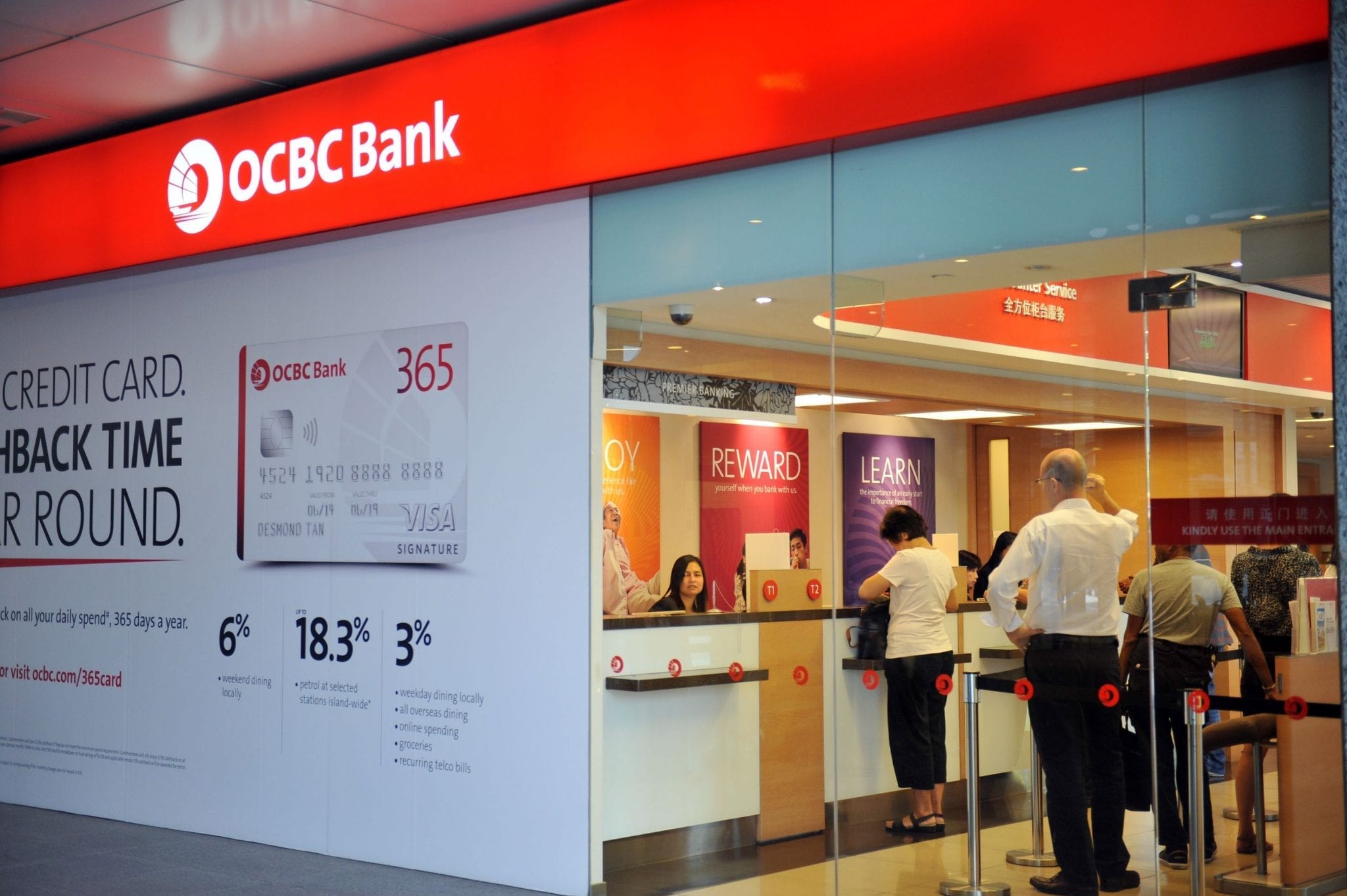
  • OCBC Profits Climb Higher on Lower Allowances

    OCBC Profits Climb Higher on Lower Allowances

    OCBC’s posted a robust profit increase in the third quarter, which was fueled by a significant reduction in allowances.

    OCBC registered S$1.22 billion ($904 million) in net profit for the third quarter, according to its latest results, marking a 19 percent year-on-year increase.

    A significant reduction of allowances by 54 percent to S$163 million due to an improved credit outlook was a major contributor to profit growth.

    Total income was flat at 1 percent growth to S$2.56 billion while operating expenses and associates grew 8 percent and 33 percent, respectively. As a result, pre-allowance operating profit was flat, decreasing 1 percent to S$1.576 billion.

    Overall wealth management income – including insurance, premier and private banking, asset management and stockbroking – was down 7.4 percent to S$897 million.

    OCBC’s private wealth arm, Bank of Singapore, saw assets under management increase 6 percent to S$167 billion ($123 billion) driven by inflows of net new money and positive market valuations.

    Our third-quarter results were resilient, despite the challenging conditions associated with the Delta virus variant,» said OCBC chief executive Helen Wong. We remain positive on the long-term outlook but are watchful of the near-term headwinds from the pandemic.

  • StanChart Profits Surge on Lower Credit Impairments

    StanChart Profits Surge on Lower Credit Impairments

    Significantly lower credit impairments coupled with positive business momentum led to a surge in Standard Chartered’s pre-tax profits for the third quarter.

    Standard Chartered posted $1.075 billion in pre-tax profits for the third quarter, according to its latest results, marking a 44 percent year-on-year increase.

    Not unlike its regional peers throughout the year, the reduction of credit impairments – 70 percent to $107 million compared to $353 million in the same period last year – was a significant contributor to the improved bottom line.

    In addition to an improved balance sheet, the broader business experienced positive momentum with net interest income up 7 percent to $1.735 billion and other income also up 7 percent to $2.03 billion.

    We delivered a return to top-line growth in the third quarter and achieved further progress against our strategic priorities, with a strong performance in our Financial Markets and Trade businesses and ongoing positive momentum in Wealth Management, said Standard Chartered chief executive Bill Winters.
  • Citi Names Regaional Co-Heads of BCMA

    Citi Names Regaional Co-Heads of BCMA

    They will replace David Biller, who will be relocating to Europe at the end of the year to take on a broader role as co-head of industrials for EMEA, Asia and Japan.

    Citi has appointed Matthew Nimtz and Jonathan Quek as co-heads of Asean banking, capital markets and advisory (BCMA), effective immediately, according to an internal memo seen.

    Nimtz and Quek are long-time Citi veterans and have worked together in Singapore for the past 10 years, Citi said. Nimtz leads the ASEAN M&A franchise, while Quek is co-head of real estate investment banking, Asia, as well as head of investment banking, Singapore.

    The pair will report to Jan Metzger for BCMA and Amol Gupte for ASEAN.  They will also maintain their existing roles in M&A (reporting to Colin Banfield) and real estate (reporting to Tom Flexner), respectively. Asean corporate banking country heads will report into Nimtz and Quek, in addition to their current reporting lines into Kaleem Rizvi for corporate banking and the respective CCOs, According to an internal memo seen.

    Matt and Jon’s leadership will be instrumental in continuing the strong momentum in the increasingly important Asean market,» Citi said.

    We are running at record levels for capital raising and advisory for clients across Asean. This is a mix of balance sheet strengthening and financing to support growth. There is massive transformation happening across all industries in Asean and with a global network, this has helped sharpen our dialogue with clients as they increasingly want a global perspective,» said the memo.

  • UBS Chases New Group with Old Idea

    UBS Chases New Group with Old Idea

    UBS is reviving an old idea as it targets a new client segment in the U.S. The move brings back memories of a robo advisor, which the bank ditched a few years ago.

    UBS is targeting the U.S.’ mass affluent individuals with a digital product, which offers wealth management advice from humans remotely, according to a presentation by CEO Ralph Hamers during Tuesday’s third-quarter results. The hybrid offering will be rolled out to clients with a range of $100,000 to $1 million in liquid financial assets.

    Until now UBS was focused on capturing the U.S.’s super-rich. With its new push, the Swiss bank will be going after clients which are sought after by the likes of Goldman Sachs, J.P. Morgan and Bank of America.

    These U.S. wire houses were quick to understand that retail banking and mass affluent business was the most vulnerable to the onset of financial start-ups and other digitized competitors. UBS made a foray into the affluent market with robo advisor Smartwealth, which it pulled the plug on three years ago, just 18 months after launching the pilot in the U.K.

    Now the bank is reviving and elaborating the idea behind Smartwealth under its new CEO Hamers, who was hired by UBS with a digitization mandate. «We are a trusted brand in the U.S. We see the opportunity to deliver our expertise and our content to a much broader set of clients,» Hamers said.

    UBS already counts two million U.S. clients in the affluent category from its employee stock and retirement plan platform. Since buying U.S. broker Paine Webber in 2000, it has continuously attempted to target higher segments of wealth than the traditional brokerage client. The U.S. unit now manages the wealth manager’s biggest chunk of assets.

  • Citi Names Regaional Co-Heads of BCMA

    Citi Names Regaional Co-Heads of BCMA

    They will replace David Biller, who will be relocating to Europe at the end of the year to take on a broader role as co-head of industrials for EMEA, Asia and Japan.

    Citi has appointed Matthew Nimtz and Jonathan Quek as co-heads of Asean banking, capital markets and advisory (BCMA), effective immediately, according to an internal memo.

    Nimtz and Quek are long-time Citi veterans and have worked together in Singapore for the past 10 years, Citi said. Nimtz leads the ASEAN M&A franchise, while Quek is co-head of real estate investment banking, Asia, as well as head of investment banking, Singapore.

    The pair will report to Jan Metzger for BCMA and Amol Gupte for ASEAN.  They will also maintain their existing roles in M&A (reporting to Colin Banfield) and real estate (reporting to Tom Flexner), respectively. Asean corporate banking country heads will report into Nimtz and Quek, in addition to their current reporting lines into Kaleem Rizvi for corporate banking and the respective CCOs, According to an internal memo.

    Matt and Jon’s leadership will be instrumental in continuing the strong momentum in the increasingly important Asean market, Citi said.

    We are running at record levels for capital raising and advisory for clients across Asean. This is a mix of balance sheet strengthening and financing to support growth. There is a massive transformation happening across all industries in Asean and with a global network, this has helped sharpen our dialogue with clients as they increasingly want a global perspective, said the memo.

  • UBS Selling Onshore Business in Spain

    UBS Selling Onshore Business in Spain

    Switzerland’s largest bank is giving up its business with its Spanish onshore clients. This follows a similar move in Austria less than a year ago.

    UBS is selling its Spanish office to Singular Bank according to an emailed statement Monday. This comes after months of speculation that many European markets simply aren’t large enough to warrant a presence.

    Without disclosing the deal amount, the Swiss bank writes in its statement that all client assets, as well as the UBS team in Madrid, are included in the transaction. Investment banking and fund sales activities in Spain will remain with UBS.

    The deal is expected to be completed by the third quarter of 2022.

    Last December UBS Europe sold its business with Austria’s onshore wealth to Vaduz-based LGT Bank. The Spanish onshore business holds an estimated 9 to 12 billion euros ($9.8 billion to $13 billion) in assets under management.

    The Austrian business managed 4 billion euros in assets at the time it announced the sale. Under its three-year plan for 2021 to 2023, UBS Europe is making staying profitable despite the turbulent economic backdrop its top priority.

  • UBS Profit Up in Third Quarter

    UBS Profit Up in Third Quarter

    Switzerland’s largest bank reports a rise in quarterly profits. The bank benefited from its business with the super-wealthy and cut its costs.

    UBS’ third-quarter net profit to $2.28 billion in the third quarter, representing a 9 percent on year increase, it said in statement on Tuesday. The bank was able to cut costs to $6.26 billion from $6.36 billion in the same period last year.

    The Swiss bank was cautiously optimistic for the rest of the year citing effects of the pandemic on the economy, supply chains and labor markets. The bank’s flagship business, global wealth management’s pre-tax profit climbed to $1.5 billion from $1.3 billion in the second quarter of 2021.

    The investment banking business benefited from strong activity in financial markets this year. Pre-tax profit rose to $837 million from $668 million in the second quarter of 2021.

    A strategic update is scheduled on February 1. The divide between the two Swiss champions has deepened, with UBS stock gaining 14 percent thus far this year while Credit Suisse has shed more than 15 percent.

  • HSBC Profits Surge From More Released Loan Loss Reserves

    HSBC Profits Surge From More Released Loan Loss Reserves

    A continued reduction of credit loss provisions fuelled HSBC’s pre-tax profits in the third quarter to comfortably beat analyst expectations.

    HSBC registered $5.4 billion of pre-tax profits in the third quarter, according to its latest earnings report, marking a 76 percent year-on-year growth.

    This marked significant outperformance compared to analysts’ forecasts of $3.78 billion, according to compilations from the bank.

    All regions were profitable including Asia which recorded $3.3 billion of pre-tax gains, a 3.6 percent increase.

    Although reported revenue was up just a modest 1 percent to $12 billion, the bank managed to generate strong results through the reduction of loan loss reserves.

    In the third quarter, HSBC made a net release of $700 million in expected credit losses (ECL) compared to an ECL charge of $800 million in the same quarter last year.

    We had a good third-quarter performance, with strong growth in profits supported by additional credit provision releases, said HSBC CEO Noel Quinn. Our strategy remains on track, with good delivery in all areas. This was reflected in more consistent top-line growth, robust lending pipelines across our businesses, and rising trade and mortgage balances.

    The bank also highlighted a sufficiently strong capital position to prepare for share buybacks totaling up to $2 billion.

    While we retain a cautious outlook on the external risk environment, we believe that the lows of recent quarters are behind us, Quinn said. This confidence, together with our strong capital position, enables us to announce a share buyback which we expect to commence shortly.

  • DBS Appoints Chief Risk Officer

    DBS Appoints Chief Risk Officer

    A career DBS banker has been named chief risk officer for the Singapore lender, replacing Tan Teck Long.

    Soh Kian Tiong has been named chief risk officer (CRO), according to a statement, reporting to DBS chief executive Piyush Gupta.

    In addition, Soh will also be accountable to the board risk management committee as well as join as a member of the group management committee and group executive committee.

    Soh replaces ex-CRO Tan Teck Long who will be leaving the bank to take on a client-facing role elsewhere.

    Soh has over 25 years of experience, having first joined DBS as a trainee officer in its corporate banking unit in 1995. Since then, he held various senior roles, most recently as a senior risk executive for DBS Hong Kong, Greater China chief credit officer, management committee member of DBS (Hong Kong), and Hong Kong risk executive committee chairman.

    Under Tan’s leadership, DBS has further enhanced our credit underwriting capabilities, multi-year credit architecture program, and strengthened our attention on ESG risks, financial crime risk, and cyber security and data protection. While he will be sorely missed, we respect his desire to return to a customer-facing role,» Gupta said.

    Soh’ appointment is testament to our ability to groom leaders from within. Over the span of his longstanding DBS career, he has been rotated across markets, and embraced a mix of business and risk roles. I am confident that he will bring this experience to bear meaningfully in his new role.

  • Deutsche Bank Adds Greater China Wealth Vet from HSBC

    Deutsche Bank Adds Greater China Wealth Vet from HSBC

    Deutsche Bank has hired a former HSBC executive as a managing director in its wealth management unit.

    Tse Yi-Mun joins Deutsche Bank Wealth Management as a managing director and group head for North Asia, according to a statement.

    Based in Singapore, she reports to North Asia head of wealth management Kanas Chan.

    Tse has 23 years of private banking experience, most recently with HSBC Private Banking where she was its market head for Hong Kong. Previously, she also worked for DBS and ABN AMRO covering the Greater China market.

  • UBS Strengthens Australasian Equities and Research Unit

    UBS Strengthens Australasian Equities and Research Unit

    UBS has hired four new executives and promoted two others for its equities and research team in Australia and New Zealand. John Storey joins as a banks analyst from J.P. Morgan in South Africa and Richard Schellbach joins from Citi in London as an equity strategist, according to UBS.

    Storey and Schellbach were hired to replace Jonathan Mott who left to join startup bank Barrenjoey Capital Partners and Pieter Stoltz, current head of quantitative strategies at fund manager Eley Griffiths, respectively.

    In the global markets division, UBS also hired Tom Tepaa, who joins the block trading desk from Goldman Sachs in Singapore, and David Nicholson who joins the Australian equity sales team from Citi in Boston.

    In addition to new hires, UBS has also announced two promotions for its New Zealand business.

    Thomas Buchanan will relocate from Hong Kong to become New Zealand head of distribution and Will Becker was named New Zealand head of sales trading for global markets.

    The latest hires follow the exodus from UBS’ investment banking unit dubbed bloody Monday after a flurry of executives left to join Barrenjoey Capital Partners in March.

    After the poaching spree, UBS Australasia co-chief executive Anthony Sweetman vowed to offer top dollar to rebuild the team, boasting that the bank was consistently the higher payer in the industry in an interview and that this would not change for the regional market.

  • VN-Index slips in narrow band

    VN-Index slips in narrow band

    Vietnam’s benchmark VN-Index fell 0.01 percent to 1,395.33 points Tuesday, continuing along with a narrow band near the 1,400-range resistance.

    Last-minute selling pressure pulled the index down by 0.2 point. It has been fluctuating within a three-point margin for the past six sessions, after surging to the 1,390-range on Oct. 11.

    Trading value on the Ho Chi Minh Stock Exchange (HoSE), on which the index is based, fell 14 percent to VND20.34 trillion ($899 million).

    The VN30 basket, comprising the 30 largest capped stocks, saw 17 tickers in the red, led by STB of Ho Chi Minh City-based lender Sacombank with a 2.6 percent drop.

    GAS of state-owned Petrovietnam Gas dropped 1.7 percent after hitting a new peak Monday.

    VRE of retail real estate arm Vincom Retail fell 1.6 percent to the lowest in over a week.

    MSN of conglomerate Masan Group lost 1.4 percent, while HPG of steelmaker Hoa Phat Group fell 1.2 percent.

    Foreign investors were net sellers to the tune of VND470 billion, with the strongest pressure on HPG and VHM of real estate giant Vinhomes.

    The HNX-Index for stocks on the Hanoi Stock Exchange, home to mid and small caps, rose 0.55 percent while the UPCoM-Index for the Unlisted Public Companies Market gained 0.23 percent.