Tag: Finance

  • Personal deposits down across banking sector

    Personal deposits down across banking sector

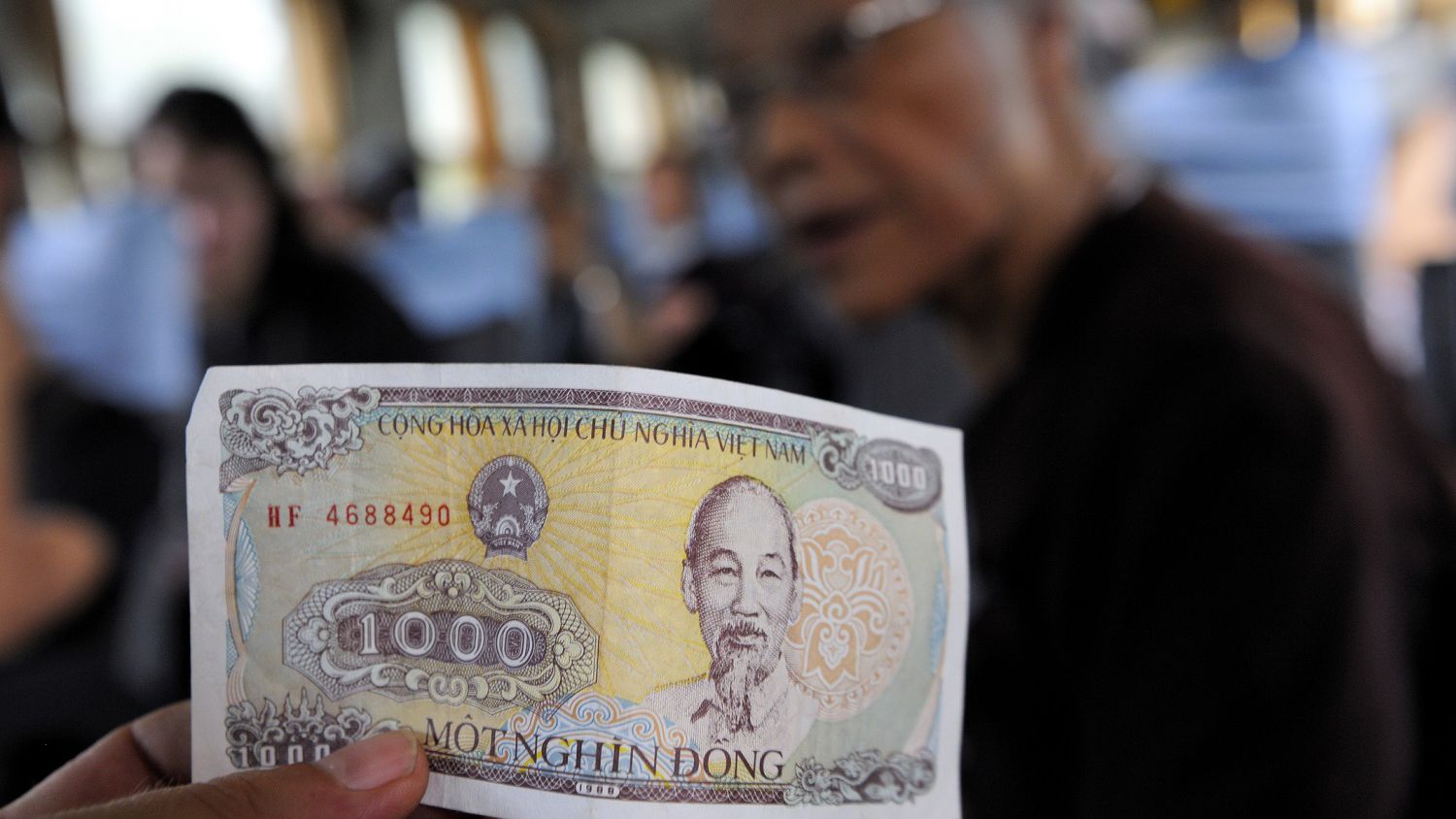
    Personal bank deposits were nearly VND5,292 trillion (some $230 billion) by late September, down roughly VND1.5 trillion against late August, according to the central bank.

    Since July, monthly bank deposits fell against previous months, the State Bank of Vietnam stated, noting deposits in August decreased by some VND1 trillion against July.

    From early January to late September, personal deposits hit VND150 trillion, a year-on-year decline of some 50 percent.

    Lower savings interest rates and more attractive stock market and cryptocurrency channels were blamed for falling deposits.

    Total trading value on Vietnam’s HSX, HNX and UPCoM stock markets reached a record high of VND56.337 trillion on Nov. 19, up from the previous record of VND52.145 trillion on Nov. 3.

    According to a survey conducted among over 70,000 people by VnExpress on July 22, real estate was the most popular investment channel (32 percent), ranking above gold and savings (7-10 percent).
  • China’s Anti-Monopoly Crackdown Hits Banking Sector

    China’s Anti-Monopoly Crackdown Hits Banking Sector

    Chinese regulators extend their antitrust crackdown to the banking sector with a fine against shareholders of a virtual lender.

    The shareholders of Chinese virtual lender AliBank – China Citic Bank (70 percent) and a Baidu unit called Fujian Baidu Bo Rui Netcom (30 percent) – have been fined 500,000 yuan ($78,280) over a violation of the country’s anti-monopoly law, according to a statement from the State Administration for Market Regulation (SAMR).

    SAMR issued a fine over the failure to report the AiBank joint venture ahead of its formation in 2015.

    The penalty was part of a broader batch of more than 40 cases with fines issued to other tech firms outside of the banking sector such as JD.com, Tencent, Baidu, ByteDance, and Alibaba.

    AiBank is an artificial intelligence-focused lender that leverages related capabilities from search engine giant Baidu.

    It is one of five licensed digital banks in China and the only one with a state-backed shareholder in Citic.

    According to research by McKinsey released in January, Chinese digital banks own roughly 5 percent of the country’s 5 trillion yuan unsecured consumer loan market and over 7 percent of the SME loan market.

  • UBS Opens Major New Asian Office

    UBS Opens Major New Asian Office

    The Swiss banking giant’s top two were on hand to open a new office in Singapore – its largest in the wider region.

    Zurich-based UBS officially opened its Singapore office at 9 Penang Road, in a ceremony that featured Chairman Axel Weber, CEO Ralph Hamers, and Asia-Pacific boss Edmund Koh, it said in a statement. The 400,000 square feet of prime property will be the Swiss bank’s largest office in the region.

    Singapore’s finance minister Lawrence Wong was on hand, lauding UBS’ efforts in the city-state with regards to talent development in a LinkedIn post. Fabrice Filliez, Swiss ambassador in Singapore, and Bloomberg founder Michael Bloomberg also attended.

    For UBS, which employs more than 3,000 people in the city-state, the office represents a larger, campus-style, facility. The Swiss wealth manager has also settled into Singapore’s Command House, a historical landmark wher

    UBS’ plans to move out of the financial district into Penang Road raised eyebrows at the time because the latter is not a typical headquarter location for a major bank. However, Penang Road is a stone’s throw from the prime Orchard Road shopping belt and the location offers good connectivity.

    The bank launched two new initiatives to mark the launch: Techconnect SEA, an ecosystem that aims to connect and grow Southeast Asia’s next generation of unicorns, and an app called Circle One which will connect investors to ideas on a global ecosystem.

  • LGT Opens Private Banking Office in Japan

    LGT Opens Private Banking Office in Japan

    Liechtenstein-headquartered LGT opened a new wealth management office in Tokyo as part of its efforts to capture opportunities in Japan’s private banking market.

    Following regulatory approvals, LGT has opened a new office in the Okura Prestige Tower located in Tokyo’s business district, according to a statement.

    The unit will aim to provide bespoke wealth management solutions to clients in Japan with a local team made up of over 35 experienced professionals.

    Earlier this year, 25-year industry veteran Yoshitaka Nagakura was named market head for Japan and will now be appointed as chairman and chief executive for LGT’s Japan private banking unit, reporting directly to APAC private banking CEO Dr. Henri Leimer.

    He joined from Credit Suisse where around two dozen other private bankers were reportedly also in the process of shifting over to LGT in Japan.

    We are delighted to be expanding our Asia Pacific footprint with the opening of our Tokyo office, said LGT chairman H.S.H. Prince Max von und zu Liechtenstein in the statement. We have a deep commitment to responsible investing and we see tremendous opportunities to share LGT’s experience in long-term, sustainable investments and wealth management with Japanese clients.

  • HSBC Reshuffles Commercial Bank

    HSBC Reshuffles Commercial Bank

    HSBC has reshuffled senior management at its commercial banking arm in Asia and the U.K. Amanda Murphy and Frank Fang have been named co-heads of the APAC commercial banking business, according to a statement, reporting to global commercial banking chief executive Barry O’Byrne.

    The current head of commercial banking for HSBC U.K., Murphy will relocate to Singapore to become head of commercial banking, South and Southeast Asia to oversee the local commercial banking franchises in India, Southeast Asia, Australia, and international markets.

    Frank Fang will maintain his role as head of commercial banking, Hong Kong and Macau.

    Murphy and Fang will also serve on the global and APAC commercial banking executive committees.

    Succeeding Murphy’s role as head of commercial banking for HSBC U.K. is Stuart Tait, subject to regulatory approval, who led the APAC commercial banking franchise since 2016.

    I would like to thank Tait for growing our business in Asia Pacific over the last five years – his customer-centricity will be equally instrumental in his new role, O’Byrne said.

    Focusing on Asia for growth, investment and capital deployment is a strategic priority for our global business. We aim to grow our market share in the Greater Bay Area, India and Southeast Asia, expanding our customer base and digitizing at scale to help our clients and business to capture global opportunities.

  • DBS Exec to Lead Carbon Credits Exchange

    DBS Exec to Lead Carbon Credits Exchange

    He was most recently DBS’ group chief sustainability officer, responsible for developing the bank’s sustainability framework and driving sustainability initiatives.

    Climate Impact X (CIX) has announced the appointment of Mikkel Larsen as chief executive officer, effective immediately, according to an announcement on Wednesday.

    Larsen has been interim CEO of the platform, a joint venture between DBS Bank, Singapore Exchange (SGX), Standard Chartered, and Temasek, since May 2021.

    Before his nine years at DBS, Larsen spent over seven years at UBS, leaving as CFO of Asia-Pacific, and previously held roles at Citibank in London, and KPMG.

    In his new role, Larsen will oversee all day-to-day operations for CIX, including collaborating with its ecosystem of technology partners to build up its Project Marketplace and Exchange platforms as well as curating a pipeline of high-quality carbon credit projects to feature on its platforms. He will also drive the company’s culture, values, and behavior while building up a high-performing team passionate about catalyzing scalable sustainable solutions.

    The carbon market is going through a transition. We have a unique opportunity to establish a trusted market that can both help preserve the crucially important existing carbon sinks whilst developing new ones, Larsen said in the announcement.

    CIX said it completed a pilot auction in October of a curated portfolio of high-quality carbon credits, where it successfully cleared 170,000 tonnes of carbon credits from eight recognized NCS projects spanning across Africa, Asia, and Latin America.

  • OneDegree Offers Crypto-Linked Insurance

    OneDegree Offers Crypto-Linked Insurance

    Hong Kong-based OneDegree has launched a new insurance solution that provides digital asset protection for cryptocurrencies.

    Digital insurer OneDegree has partnered with crypto exchange Hong Kong Digital Asset Exchange (HKbitEX) to offer protection for digital currencies, according to a statement.

    In its bid to strengthen the exchange’s safety and security for institutional investors, OneDegree will offer up to $100 million in coverage to HKbitEX to cover covering losses from damage, hacking, and theft.

    In addition to private key loss, OneDegree will also cover misappropriation due to physical damage to wallets caused by natural events; cybersecurity threats and employee theft.

    We have witnessed a very strong inbound demand for insurance to protect against threats to digital assets, said OneDegree co-founder Alvin Kwock.

  • Dubai Sued Over PE Firm Audit in Dubai

    Dubai Sued Over PE Firm Audit in Dubai

    KPMG is being sued over its role in the insolvency of Dubai private equity firm Abraaj Group which claims the big four accounting company failed to maintain independence and breached its duty of care.

    KPMG was sued for at least $600 million by two units of Abraaj now in liquidation, according to a report citing court documents filed earlier this month.

    The claimants allege that KPMG accountants – Abraaj’s auditor for six years – failed to maintain independence and an appropriate attitude of professional skepticism and breached their duty of care when auditing the private equity firm.

    Irregularities relating to the firm’s financial statements would have been identified sooner had KPMG and its local Lower Gulf subsidiary complied with their duties, the claimants added.

    In 2018, Abraaj collapsed into insolvency after being accused of misusing investor funds in the private equity firm which had $14 billion in assets under management at its peak.

    Founder and chief executive Arif Naqvi allegedly stole more than $250 million, according to U.S. prosecutors, though he denies any wrongdoing.

    Naqvi has been under house arrest in London and faces a whopping maximum sentence of up to 291 years if extradited to the U.S. and convicted.

    This marks yet another scandal for the Big Four accounting firm this year after the Malaysian government filed a lawsuit seeking more than $5.6 billion from 44 KPMG Malaysia partners in July for their role in auditing state investment fund 1MDB.

  • UBS Asia Bond Manager Exits With Large Evergrande Exposure

    UBS Asia Bond Manager Exits With Large Evergrande Exposure

    The manager of a $3 billion Asia bond fund at UBS has reportedly left with sizeable year-to-date losses and significant holdings in China’s real estate sector including debt issued by Evergrande.

    Singapore-based Ross Dilkes has left UBS Asset Management after first joining 16 years ago, according to a report, though the Swiss firm did not provide a reason for the departure.

    Dilkes is the lead manager of the Asian High Yield fund, which was established around nine years ago.

    UBS’ head of global emerging markets and Asia Pacific fixed income Hayden Briscoe, who co-manages the fund, will take over as lead manager until a successor is found, according to fund analyst Morningstar.

    Currently, UBS is amongst the top five holders of Evergrande bonds at $274 million as of September 30, according to public data, which includes holdings invested client money like the Asian High Yield fund.

    The fund also has sizeable positions in other troubled developers like Sunac China and Kaisa Group.

    Year-to-date, Dilke’s fund has lost around 18 percent with approximately half of its holdings in real estate.

  • HSBC Singapore Announces Lending Fund for Tech Firms

    HSBC Singapore Announces Lending Fund for Tech Firms

    The bank will support companies tapping opportunities within Asean’s growing digital economy in sectors such as e-commerce, AI and robotics, fintech, and payments platforms.

    HSBC Singapore has announced a S$200 million ($147.5 million) lending fund to support high-growth technology companies in Singapore that are looking to expand across Southeast Asia and further afield.

    The fund will provide loans to companies that have already received funding from strategic investors, including venture capital or private equity firms, and have surpassed the proof of concept phase, the announcement said. The bank will extend to them bespoke solutions, such as cross-border cash management and foreign exchange to accessing the private and public capital markets, typically available to higher revenue-generating firms.

    Singapore has a vibrant tech culture breeding firms that seek out digital gaps in the consumer and business markets. To succeed, these businesses need to scale quickly, often including customer reach, employees, and data capabilities, Regina Lee, HSBC Singapore head of commercial banking, said.

    Earlier this week, a joint report by Google, Bain, and Temasek noted that 60 million new digital consumers in Asean were added since the pandemic began, with 20 million of them coming in H1 2021.

    It said the region’s internet economy is growing faster than expected, estimating it will reach $360 billion by 2025.

  • Trading Volume Surges on DBS Digital Exchange

    Trading Volume Surges on DBS Digital Exchange

    A shift to round-the-clock trading in August has seen trading volumes in the two months surpassing the total trading volume of the first eight months of the year by 40 percent.

    DBS has reported strong growth in its digital asset ecosystem, anchored by DDEx, or the DBS Digital Exchange, which now has over S$600 million in digital assets under custody as of end-October, triple the amount recorded in the previous month, according to the bank.

    The bank also said it is seeing a growing number of corporate and institutional customers among its participants, with other banks, a central bank and other digital asset exchanges among the 500 participants on the exchange.

    Becoming a participant of DDEx opens many gateways for our customers to access the burgeoning cryptocurrency and digital asset economy, Eng-Kwok Seat Moey, group head of capital markets and DDEx chair, said in a statement on Thursday.

    DDEx was launched in December 2020 with an initial offering that covered cryptocurrency trading. It has since issued a  bond through a security token offering (STO) on the exchange, and plans to list at least half a dozen security tokens by end-2022. The bank also launched a crypto trust offering that combined wealth planning services with emerging digital currencies, and its brokerage arm received formal approval from the Monetary Authority of Singapore (MAS) to provide digital payment token services.

    At the presentation of its third-quarter results last week, the bank’s chief executive Piyush Gupta said it is planning to open the crypto exchange to the broader retail market in 2022.

    DBS previously said it expects to double the number of participants on DDEx to 1,000 and to grow its base by 20-30 percent annually for the next three years, as investments in digital tokens gain greater acceptance.

  • Citi Adds Prime Brokerage Duo in Hong Kong

    Citi Adds Prime Brokerage Duo in Hong Kong

    Citi has hired two new directors from BNP Paribas and Goldman Sachs for its prime brokerage unit in Hong Kong.

    Drew Kuech and Oliver Law join Citi as directors of the prime services sales trading team, according to a statement, reporting to APAC head of prime services sales trading Daniel Millwood.

    Kuech has 13 years of prime finance and delta one experience, most recently with BNP Paribas. Previously, he also worked for Societe Generale and Santa Fe-headquartered hedge fund Thornburg Investment Management.

    Law has 14 years of APAC prime finance and delta one experience and he joins from Goldman Sachs. Previously, he also worked for RBS and Credit Suisse.

    We are pleased to welcome two strong additions to our Prime Services trading team as we continue to focus on building out our hedge fund trading and client servicing areas, Millwood said in the statement.

  • HSBC Mulls Private Banking Re-Entry in India

    HSBC Mulls Private Banking Re-Entry in India

    HSBC wealth and personal banking chief Nunos Matos reportedly shared that the British lender was eyeing a reentry into private banking in India, noting that the market demands a strategic decision this year.

    After exiting the Indian private banking business in 2015 as part of the group’s strategic rejig, HSBC is considering a re-entry into the onshore market in addition to serving the global segment out of hubs in Singapore, London and the Middle East.

    We want to bank mass affluent and high net worth customers. At this moment, the two major pillars we are expanding in India are insurance and asset management, said HSBC’s Nuno Matos.

    On the private banking side, we are not there yet and that’s something that demands a strategic decision this year.

    Elsewhere in the region, HSBC remains in growth mode with the China onshore private banking business expecting headcount to increase from 20 at the end of last year to 64 by 2021-end and doubling again by 2022-end.

    Matos also highlighted growth opportunities in Singapore, where it bought French insurer AXA’s assets for $575 million, and the broader Southeast Asia region.

    Asian wealth is expanding twice as fast as the rest of the world. This is a compelling opportunity for us, Matos added. I’m not going to redo now our goals but what I can say is that in 2021, we will over-deliver our goals on the wealth side.

  • Barclays Adds Private Banking Trio in Singapore

    Barclays Adds Private Banking Trio in Singapore

    Barclays Private Bank has strengthened its Asia business with three new appointments in Singapore.

    Adrian Khoo and Jaime Huang join Barclays Private Bank in Singapore, according to a statement, as head of strategic client coverage and a private banker, respectively reporting to newly appointed head of the private bank in Singapore, Evonne Tan.

    Khoo joins from Julius Baer where he was a senior relationship manager covering ultra high net worth (UHNW) and family office clients in Southeast Asia. Previously, he held senior roles at BNP Paribas Wealth Management, Asia Capital & Advisors, Goldman Sachs and Macquarie Bank.

    Huang joins from Bank of Singapore where she spent the last four years as a director advising UHNW and family office clients in Southeast Asia and China. Huang has over 18 years of private banking and investment advisory experience, previously with Citi, HSBC and ABN AMRO.

    Ken Sze has also been named as the Singapore-based Asia head of investments, reporting to Tan and Barclays Private Bank’s global co-head of investments Jean-Damien Marie.

    Sze will relocate from London where he the British lender’s global head of the funds and ETF business and he retains his role as an active member of Barclays Private Bank’s global investments team. Prior to joining Barclays, Sze worked with HSBC Private Bank in various investment roles.

    These senior appointments underscore our commitment to the region and our growth expansion plans,» said Tan in the statement.  I look forward to working with them as we continue to harness the synergies between our strong business platforms across the Asian region and focus on the collaboration opportunities with Barclays leading investment and corporate Bank to bring bespoke solutions to our family offices and UHNW clients in Singapore and Asia.

  • Lower Allowances Fuel DBS Profit Growth

    Lower Allowances Fuel DBS Profit Growth

    An improved credit environment coupled with lower allowances enabled DBS to post a surge in third quarter profits.

    DBS registered a 31 percent year-on-year increase in net profit to S$1.7 billion ($1.26 billion) for the third quarter, according to its latest results.

    Not unlike its peers, this was driven primarily by a significant improvement in allowances for credit and other losses – minus S$70 million compared to S$554 million booked in the same period last year.

    Excluding the allowances, the bank posted S$1.893 billion in profits, a 7 percent year-on-year decrease.

    Although DBS saw loans grow 2 percent and fee income reach the second-highest level on record, a 10 percent drop in other non-interest income led total income to stay flat (minus 1 percent) at S$3.561 billion.

    Expenses also climbed 8 percent higher to S$1.668 billion.

    Although the DBS’ profits were in part affected by lower net interest income, the bank expects a change in the rates environment to support upcoming improvements to the bottom line.

    A progressive normalization of interest rates in the coming quarters will be beneficial to earnings, said DBS chief executive Piyush Gupta.

    Asset quality continues to be resilient and total allowances are likely to remain low. These positives will offset expected cost pressures as the economic recovery takes hold.