Tag: Finance

  • Citi Setting Up Wholly Owned Securities Unit in China

    Citi Setting Up Wholly Owned Securities Unit in China

    Citigroup, which earlier announced its decision to dissolve its investment-banking joint venture in China, is now setting up a wholly-owned securities business in the world’s second-largest economy.

    The New York-based bank may initially focus on brokerage and futures trading while expanding its custodian services in China, quoting sources familiar with the matter. This comes as China announced the removal of ownership caps for financial institutions.

    The people asked not to be identified because a final decision has yet to be made. It also plans to apply for a futures license as early as the first half of 2020.

    Earlier this year, Citigroup has agreed to sell its stake in its Citi Orient Securities joint venture to its Chinese partner, as it prepares to set up its own brokerage in the world’s second-largest capital market.

    In December, Citigroup Global Markets Asia informed Orient Securities that the bank intended to sell all of its shareholdings, the Chinese company said in an exchange filing. Orient said its board gave the green light for the acquisition of Citi’s stake, adding that the deal will be subject to approval from China’s securities regulator and state asset regulator.

  • DBS Mulls Second Attempt at Indonesian Bank M&A

    DBS Mulls Second Attempt at Indonesian Bank M&A

    Considerations are being made at DBS on whether or not to submit a bid for Indonesian lender Bank Permata – its second attempt to enter the Southeast Asian market through an acquisition.

    DBS has not yet concluded its decision on whether or not to bid for the bank valued at $2.4 billion, according to a report citing anonymous sources. The submission deadline is believed to be due in about a month.

    Should it decide to pursue the acquisition, DBS will face competition from OCBC and Sumitomo Mitsui Financial Group. Bank Permata’s current major shareholders include Standard Chartered (45 percent) and PT Astra International (45 percent).

    Should DBS proceed, it will mark the second attempt at acquiring a major Indonesian bank. In 2013, DBS failed to acquire PT Bank Danamon Indonesia with its $6.5 billion bid following a change to foreign ownership rules. The Indonesian lender was subsequently acquired by Mitsubishi UFJ earlier this year.

  • HSBC Reviewing Bank’s Equities Team

    HSBC Reviewing Bank’s Equities Team

    HSBC will be reviewing its global equities sales and trading business as it tries to slash costs under Noel Quinn, raising the chances of more job cuts.

    With HSBC’s interim chief Noel Quinn looking to ax 10,000 jobs in Europe, the bank may look to sell or shut down its equities sales and trading business. Some of these headcount cuts could come from the sale of its French retail bank.

    Equity desks are becoming more automated — it wouldn’t be a shock if they take more bodies out,» said an investment banker, who was quoted on Sunday. Global equities revenues were $1.2bn (£930m) last year, representing about 2 percent of group revenues.

    Any job cuts implemented as part of the latest plan would come on top of 4,700 redundancies that HSBC recently announced, according to a report. The lender is struggling with thinning profits amid a challenging environment characterized by low-interest rates, trade conflicts, and Brexit uncertainty.  The bank’s global headcount stands at about 238,000.

    The planned cuts mark the lender’s most ambitious attempt to rein in costs in years, as it would result in a substantial reduction in HSBC’s current headcount. Observers also see it as a move by Quinn to make his mark on the bank, post the exit of John Flint, the previous chief.

    We’ve known for years that we need to do something about our cost base, the largest component of which is people — now we are finally grasping the nettle, said two sources quoted in the Financial Times article.

    There’s some very hard modeling going on. We are asking why we have so many people in Europe when we’ve got double-digit returns in parts of Asia, they added.

    Despite heavy cuts, the London-based bank with a strong franchise in Asia wants to hire more than 600 staff by the end of 2022 for the business in the Asia-Pacific region, said Kevin Martin, regional head of retail banking and wealth management who was quoted in «Bloomberg».

  • DBS Mulls Second Attempt at Indonesian Bank M&A

    DBS Mulls Second Attempt at Indonesian Bank M&A

    Considerations are being made at DBS on whether or not to submit a bid for Indonesian lender Bank Permata – its second attempt to enter the Southeast Asian market through an acquisition.

    DBS has not yet concluded its decision on whether or not to bid for the bank valued at $2.4 billion, according to a report citing anonymous sources. The submission deadline is believed to be due in about a month.

    Should it decide to pursue the acquisition, DBS will face competition from OCBC and Sumitomo Mitsui Financial Group. Bank Permata’s current major shareholders include Standard Chartered (45 percent) and PT Astra International (45 percent).

    Should DBS proceed, it will mark the second attempt at acquiring a major Indonesian bank. In 2013, DBS failed to acquire PT Bank Danamon Indonesia with its $6.5 billion bid following a change to foreign ownership rules. The Indonesian lender was subsequently acquired by Mitsubishi UFJ earlier this year.

  • HSBC Appoints New Head of Global Liquidity and Cash Management

    HSBC Appoints New Head of Global Liquidity and Cash Management

    HSBC Singapore on Friday announced a new Head of Global Liquidity and Cash Management who will lead the business in Singapore working with customer groups to maximize its potential as a regional treasury hub as they deepen their presence in Southeast Asia.

    David Koh, HSBC’s new head of global liquidy and cash management (GLCM), joins from Standard Chartered, where he most recently led the transaction bank for Greater China and North Asia. He brings over 25 years of experience in transaction banking, having worked across seven geographies including China, Singapore, the UK, and Saudi Arabia, the lender said in a statement.

    Whilst Singapore already enjoys a strong concentration of multinationals basing their regional treasury centers here, Southeast Asia’s rising consumer market means these numbers are ratcheting up even further. When you couple this with the region’s growing digital economy and mobile-first mentality, it becomes clear that businesses require truly innovative solutions to grasp these opportunities,» said Head of Commercial Banking HSBC Singapore Alan Turner.

    With David’s many years of international experience, he will be instrumental in driving cross-border payment and liquidity solutions in this ever-changing dynamic region, Turner added.

    Prior to Standard Chartered, Koh headed the Corporate and Transaction Banking teams for Deutsche Bank in Greater China. Koh began his career at HSBC on the bank’s executive trainee development program.

  • BNP Paribas Expands Gold Market Activities in China

    BNP Paribas Expands Gold Market Activities in China

    The bank can now participate in listed gold contracts, gold leasing and other gold derivatives business, and provide more services to its domestic and international client base.

    BNP Paribas (China) has been granted membership of the main board of the Shanghai Gold Exchange, which will allow the bank to fully participate in the Chinese gold market by offering deeper liquidity and broader product scope, it announced in a press release on Tuesday.

    SGE was set up in by the People’s Bank of China in 2002 as a center for gold, silver and platinum trading, growing to become the second-largest gold exchange globally by volume by 2018. BNP Paribas (China) started bilateral gold trading on SGE’s international board in 2017, and now conducts spot, swaps and options trading.

    Through our participation on the mainboard, we hope to position China as a global center for gold trading, Mikko Russi, BNP Paribas head of FX, Local Markets & Commodity Derivatives for Asia Pacific, said in the statement.

  • Singapore Fintech Festival 2019 Kicks Off in November

    Singapore Fintech Festival 2019 Kicks Off in November

    The Singapore Fintech Festival is set to kick off on the week of November 11 and will feature over 250 industry leaders to discuss the future of the financial services industry.

    The conference will feature a myriad of topics revolving around four key themes: the future of finance; sustainability; exponential technologies; and global investment and market opportunities.

    Various sessions will be joined by leading global industry names such as HSBC group CEO, Noel Quinn; Standard Chartered group CEO, Bill Winters; LGT group CEO, H.S.H. Prince Philipp von und zu Liechtenstein; and more.

    Last year’s Singapore Fintech Festival was widely attended with more than 45,000 participants from 130 different countries. To learn more about the Singapore Fintech Festival agenda for 2019, click here.

  • BNP Announces Key Appointments

    BNP Announces Key Appointments

    BNP Paribas on Wednesday appointed new co-CEOs in its Asia Pacific Wealth Management division, replacing Pierre Vrielinck.

    Andy Chai, currently head of Wealth Management for Greater China, and Arnaud Tellier, head of Wealth Management Singapore and Southeast Asia, have been appointed as co-CEOs for Wealth Management in Asia Pacific, BNP Paribas said in a media statement on Wednesday. They will replace Pierre Vrielinck, who has held the position of CEO Asia Pacific previously.

    Both will report hierarchically to co-CEO of BNP Paribas Wealth Management, Vincent Lecomte, and functionally to CEO Asia Pacific of BNP Paribas Group, Eric Raynaud.

    «Our Wealth Management franchise is a cornerstone of our “One Bank” approach, enabling us to meet both the personal and professional financial needs of high net worth clients across Asia. With the rich experience of Andy and Arnaud, spanning both corporate and institutional banking as well as private banking, I look forward to the strong and sustainable growth of our Wealth Management platform for years to come,» said Raynaud.

    Chai and Tellier will assume joint responsibility for the strategic direction and operations of BNP Paribas’ Wealth Management business in the region, effective on Wednesday. Chai will have oversight of the Greater China markets including mainland China, Hong Kong SAR, and Taiwan and lead the strategic client segment across Asia.

    Tellier will cover Southeast Asia, India, and International markets while investment services and key support functions will report to him. David Lim, a market head for Southeast Asia, is appointed Head of Wealth Management Singapore and Southeast Asia, reporting to Tellier.

    Pierre Vrielinck, who has held the position of CEO Asia Pacific since 2017 and has grown the franchise, will return in December to a senior leadership role within BNP Paribas Wealth Management in France. Meanwhile, veteran BNP Paribas banker Mignonne Cheng will retain her role as Asia chairman for Wealth Management and continue to bring her strategic vision and client knowledge to the franchise.

    The French bank has been under pressure in Greater China recently due to a controversial post on Facebook by a previous staff in Hong Kong. The bank has since issued a statement of apology.

  • Standard Chartered Launches Sustainable Deposit Solution

    Standard Chartered Launches Sustainable Deposit Solution

    Standard Chartered will offer both its corporate and retail clients in Singapore access to a deposit solution focused on supporting financing needs related to the United Nations’ Sustainable Development Goals.

    U.S. dollar deposits were co-developed with sustainability research firm Sustainalytics and liquidity raised from sustainable deposits will be used to fund SDG-related activities in Asia, Africa and the Middle East. This follows what the bank claims to be the world’s first SDG deposit product launched in Europe by Standard Chartered in May 2019.

    While green deposits – dedicated to renewable energy – are increasing in popularity, this is the first time any bank has launched a deposit product linked to sustainability and the SDGs, said Patrick Lee, CEO of Standard Chartered Bank Singapore.

    The Sustainable Deposit offers both retail and corporate clients an opportunity to address global challenges such as poverty and inequality in some of the world’s fastest-growing economies.

    With corporate banking and asset management clients already in the midst of adopting environment, social and governance-related factors when making decisions, the bank focused on the untapped potential of the retail market.

    A recent sustainability survey by Standard Chartered said that 68 percent of high net worth individuals want to create a better future through sustainable investing with a high portion of Singapore’s wealthy (43 percent) exhibiting knowledge about the space

    We are taking a cue from our clients to make sustainable retail banking a reality, and have created the world’s first Sustainable Deposit for our individual clients, Lee said.

  • KBank issues USD denominated subordinated notes worth800 million USD, with oversubscription rate at 4.4x

    KBank issues USD denominated subordinated notes worth800 million USD, with oversubscription rate at 4.4x

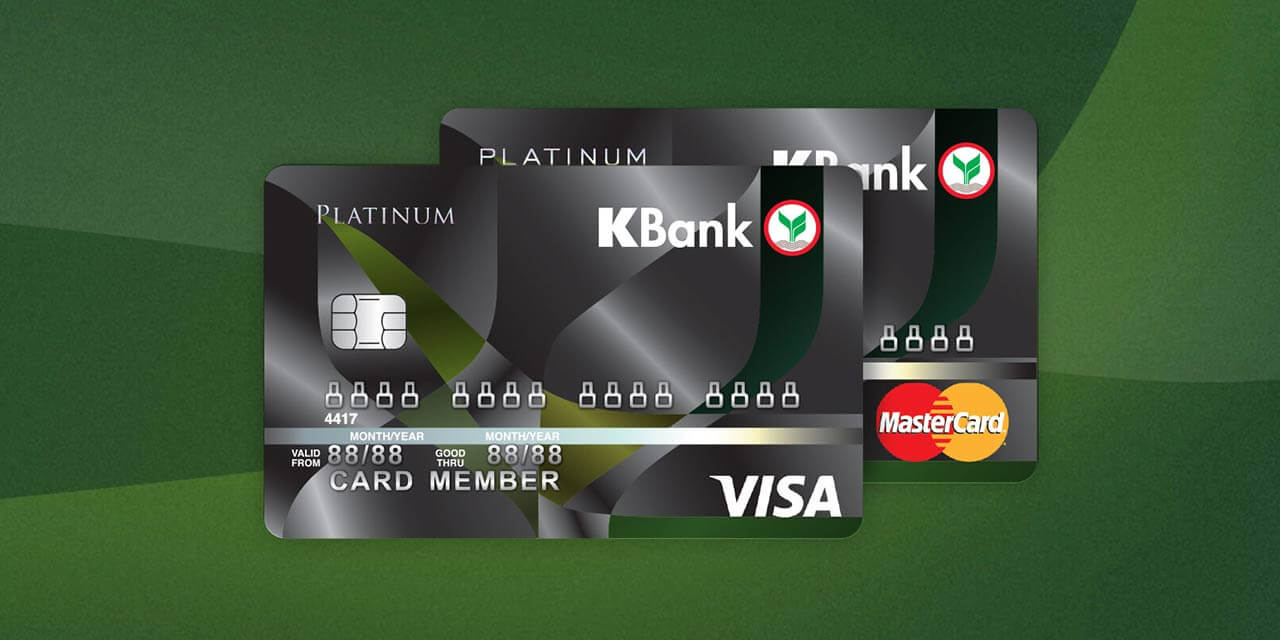
    KBank has announced its successful issuance of USD denominated subordinated notes (the “Notes”) with a USD800 million offering that were oversubscribed four times. Such high oversubscription rate reflects the international investors’ confidence in KBank. It is the largest South-East Asia Reg-S-Only Tier-2 note issue in more than five years, and also the first USD-denominated 12NC7 Basel-III Tier-2 tenor from Asia (excluding Japan) in nine years.

    Mr. Predee Daochai, KBank President, said that KBank issued USD denominated subordinated notes worth 800 million USD with a 12-year tenor which will be due in 2031 and can be called in their 7-years (12NC7), offering at a fixed rate of 3.343 percent per annum. The objective of the issuance of the Notes which can be counted as KBank’s Tier 2 capital is to support KBank’s foreign operations. KBank also aims to strengthen funding position for suitable long-term funding cost.

    The Notes were issued through KBank’s Hong Kong branch on October 2, 2019 and were rated Baa3 by Moody’s, and BBB by Fitch Ratings, and were listed on SGX. The notes were offered to institutional investors and they were fully subscribed quickly. Of the total investors, 81 percent were in Asia and 19 percent were in Europe. Given the rarity of a Thai bank issuance, the Notes were deliverable to high quality investors with 80 percent being taken up by funds/asset management companies, with pensions/insurers and sovereign wealth funds buying up to 8 percent. Bank treasuries accounted for 3 percent of the orderbook, with the remaining 9 percent being taken up by other institution types. BNP Paribas, Citigroup, and Standard Chartered Bank acted as joint book-runners and joint lead managers.

    The issuance of KBank subordinated notes succeeds in several aspects. For example, the total books reached USD3.5 billion, representing 4.4 times of the value of the subordinated notes offered by KBank. Such high oversubscription rate reflects the international investors’ confidence in KBank and the Thai economy. This is because it is the largest South-East Asia Reg-S-Only Tier-2 note issue in more than 5 years and longest dated Basel III Tier 2 in Reg S Only format from Asia (excluding Japan).

    Moreover, the Notes have the lowest coupon as well as spread for a South-East Asia Tier-2 note issue in more than two years. The issuance is also the first USD-denominated 12NC7 Basel-III Tier-2 tenor from Asia (excluding Japan) in 9 years and the first ever 12NC7 from Thailand.

  • HSBC Plans Yet Another Round of Job Cuts

    HSBC Plans Yet Another Round of Job Cuts

    Up to 10,000 jobs across HSBC are under threat as interim chief executive officer Noel Quinn plans to cuts costs.

    British multinational bank HSBC is set to embark on its largest cost-cutting exercise in years, and facing the ax are up to 10,000 high-paying roles across the group, citing two people close to the matter.

    The latest round oaf job cuts follows the August announcement that the lender would be laying off up to 2 percent of its global workforce (4,754 of 237,865 jobs at that time) as part of the overall group strategy to cut 4 percent of the bank’s wage costs.

    One of the sources said the cost-cutting drive and job cuts could be announced as soon as later this month, when the group announces its third-quarter results.

    Asia a Bright Spot

    There’s some very hard modelling going on. We are asking why we have so many people in Europe when we’ve got double-digit returns in parts of Asia,» a source was quoted as saying.

    The bank will also continue to hire staff in high-growth regions Asia, where the bank generates 80 percent of its profits, another person said.

  • Standard Chartered Hires Southeast Asia Private Banking

    Standard Chartered Hires Southeast Asia Private Banking

    Following the exit of Srinivas Siripurapu from Standard Chartered, the private bank has swiftly hired a replacement.

    Cedric Lizin joins the bank as its South and Southeast Asia private banking head, following his most recent stint as the Dubai-based head of wealth management at UBS. Andrew Ho, south and southeast Asia market head at the private bank will take on interim responsibilities until Lizin joins later this year.

    The bank has been facing a flurry of regulatory hiccups including the most recent news that it was reviewing roughy 8,000 client accounts from its Dubai arm due after regulators exposed a severe lack of know-your-client data ranging from wealth source to even current address or phone numbers.

    In addition to regulatory challenges, the private bank also faces a high level of staff dissatisfaction, according an internal survey.  When asked if they would recommend others to work for Standard Chartered’s private banking business, the internal metric scored negatively, a Bloomberg report noted.

    And possibly as a means of improving morale, senior manages in the region recently delivered handwritten thank you cards to staff. The bank subsequently furthered the exercise by asking employees to write letters praising each other during a team bonding session.

  • UOB Malaysia Announces Firms for Digital Accelerator Program

    UOB Malaysia Announces Firms for Digital Accelerator Program

    The program, now in its third edition, aims to help startups, SMEs and businesses adopt digital technology to drive productivity and growth.

    Sixteen Malaysian SMEs have been selected to take part in UOB’s three-month-long digital accelerator program, the bank announced in a press release on Tuesday. The firms taking part in the «Jom Transform» program, whittled down from more than 900 applications, are from diverse sectors, including food and beverage, healthcare, consulting, logistics, manufacturing and more.

    As part of the program, these businesses will be paired with mentors, which include the Chinese Chamber of Commerce & Industry of Kuala Lumpur & Selangor, Malaysian Association of Tour and Travel Agents, Maxis, Malaysia Digital Economy Corporation and SME Corporation Malaysia, who will advise them on how to optimize workflow processes and inventory, distribution and human resource management systems.  They will also be paired with technology partners to pilot and assess digital solutions.

    «As family-owned businesses transition from the first- to second-generation leadership, we see an accelerated use of technology in their business. Yet many business leaders lack the skills to implement digital solutions successfully and effectively,» Wong Kim Choong, UOB Malaysia CEO, said about the opportunities and challenges SMEs in Malaysia face.

    Jom Transform is run by UOB and Singapore-based innovation accelerator The Finlab. It was announced in June in Malaysia, following successful editions held in Singapore (2018) and Thailand (2019).

  • DBS to Expand E-Wallet Functionalities

    DBS to Expand E-Wallet Functionalities

    To mark the e-wallet’s fifth anniversary, DBS announced new functionalities and merchant deals and said it hopes to grow its user base.

    BS Bank wants to grow its PayLah e-wallet user base from 1.6 million users currently to 3.5 million users by 2023, and will roll out new functionalities and improve the user experience, the bank said in a statement on Wednesday.

    From next year, the bank will integrate its rewards app, as well as debit and credit cards payments to the PayLah platform, expand payment touchpoints across the region, and increase ecosystem partnerships, the statement said, highlighting strategic platform partnerships with merchants like KFC, SISTIC and AXS.

    «In 2020, we’ll be building on the three Ps – Payments, Partners and Platform – as part of a longer-term strategic roadmap. By linking DBS/POSB debit and credit cards and integrating the DBS Lifestyle rewards app into DBS PayLah!, our customers will be able to earn and redeem rewards instantly on a single platform simply and seamlessly, regardless of their mode of payment,» Anthony Seow, DBS head of Payments & Platforms, Consumer Banking Group (Singapore), said.

    Introduced in 2014, PayLah allows users to make instant peer-to-peer fund transfers, purchase travel insurance, movie tickets, pay bills and transport expenses and pay for their purchases at more than 80,000 NETS QR, SGQR and PayNow QR-enabled merchants. The app was the first in Singapore to allow users to send and receive funds using QR codes.

    According to DBS, its 1.6 million e-wallet users made S$1.5 billion ($1.09 billion) in transactions from August 2018 to September 2019.

  • Despite Heavyweight Exits HSBC Sticks With Hiring Plan

    Despite Heavyweight Exits HSBC Sticks With Hiring Plan

    HSBC Holdings said it is sticking with hiring plans for its wealth business in Asia following the surprise exit of two senior executives who pushed for the strategy.

    The London-based bank with a strong franchise in Asia wants to hire more than 600 staffers by the end of 2022 for the business in the Asia-Pacific region, said Kevin Martin, regional head of retail banking and wealth management who was quoted in Bloomberg. On Monday, it announced three key appointments.

    A year ago, the lender said it would add more than 1,300 positions in retail and private banking in Asia by 2022. «We continue to double down on Asia, pivot to Asia, grow Asia wealth. That’s exactly what we’re doing. Nothing’s changed,» said Martin, who was quoted in «Bloomberg». More than 300 are likely to be hired through this year within his division, which includes HSBC’s Jade service that targets customers with account balances of more than $1 million, he added.

    Despite the ambitious targets, a slower Hong Kong economy and the Huawei issue has rocked the lender recently. Aside from the departures of CEO John Flint and Greater China head Helen Wong last month, HSBC said last month it is cutting more than 4,000 posts, with a focus on senior executives. The group employed about 238,000 people as of June, according to its interim report.

    The lender opened an outlet in Shanghai last month for its new Jade wealth program. It plans to open one in Beijing as well, and a few more in Hong Kong next year, Martin said. The focus of the hiring will be in Hong Kong, Singapore, and China.