Tag: Finance

  • Standard Chartered and IFC Offer Trade Finance Facility

    Standard Chartered and IFC Offer Trade Finance Facility

    It will be used to help sustain trade flows in developing countries and narrow the gap in global trade finance.

    Standard Chartered and the International Finance Corporation (IFC), a member of the World Bank Group, are partnering on a $1 billion facility to boost trade financing in emerging markets the two parties announced in a press release on Wednesday.

    This arrangement will allow the two partners to equally share the risk of trade flows of a portfolio of small and medium-sized enterprises and is expected to enable $4 billion in trade finance in Asia, the Middle East and Africa in the next three years.

    The announcement noted the $1.5 trillion global trade finance gap and said the facility will bring trade finance to local and regional companies, some of which are credit-constrained and rely on bank trade facilities to manage cash flows and purchase raw inputs.

    Paulo de Bolle, senior director of IFC’s Financial Institutions Group called the facility a «unique partnership that can help counter de-risking trends in developing countries and support real-sector demand for trade finance.»

  • HSBC Ups Employee Childcare Benefits in India

    HSBC Ups Employee Childcare Benefits in India

    HSBC’s India arm has upgraded its female employee benefits, allowing reimbursement for daycare costs for their children up to the age of six.

    This marks an increase in the maximum age of a child from the previous two years old. For those seeking daycare reimbursement, each child is entitled per month to Rs 18,000 ($250) in Mumbai; $190 in National Capital Region, Bengaluru and Pune; and $141 in other cities.

    Mothers that do not wish for daycare reimbursement can receive a fixed $141 per month and HSBC claims to be the sole provider of such benefits.

    «With this policy, we have gone a step further to empower our women employees so that they can balance work life and motherhood better,» said Vikram Tandon, head human resources, HSBC India. This policy provides our working mothers the flexibility to choose the best from multiple childcare options for an extended time period.

  • UBS Reveals Client Overcharging Claims in Asia

    UBS Reveals Client Overcharging Claims in Asia

    Wealth management clients in Hong Kong and Singapore may have been overcharged, UBS said, adding that it is working with authorities and intends to reimburse affected customers.

    UBS claimed that it had identified and reported instances in which its global wealth management clients in Hong Kong and Singapore «may have been charged inappropriate spreads for bond transactions between 2008 and 2015.

    UBS intends to reimburse affected customers on a basis agreed with the relevant authorities,» the bank said in its third quarter report. UBS expects the relevant authorities will subject UBS to reprimands and fines as a result of their investigations.

    Despite the regulatory worries, Asia continues to be a primary growth driver for the bank, as evidenced by the latest figures. UBS’s global wealth management business posted net new asset of $10.9 billion in Asia, boosting the region’s total invested assets to $420 billion.

  • HSBC Setting Up Malaysian Asset Management Arm?

    HSBC Setting Up Malaysian Asset Management Arm?

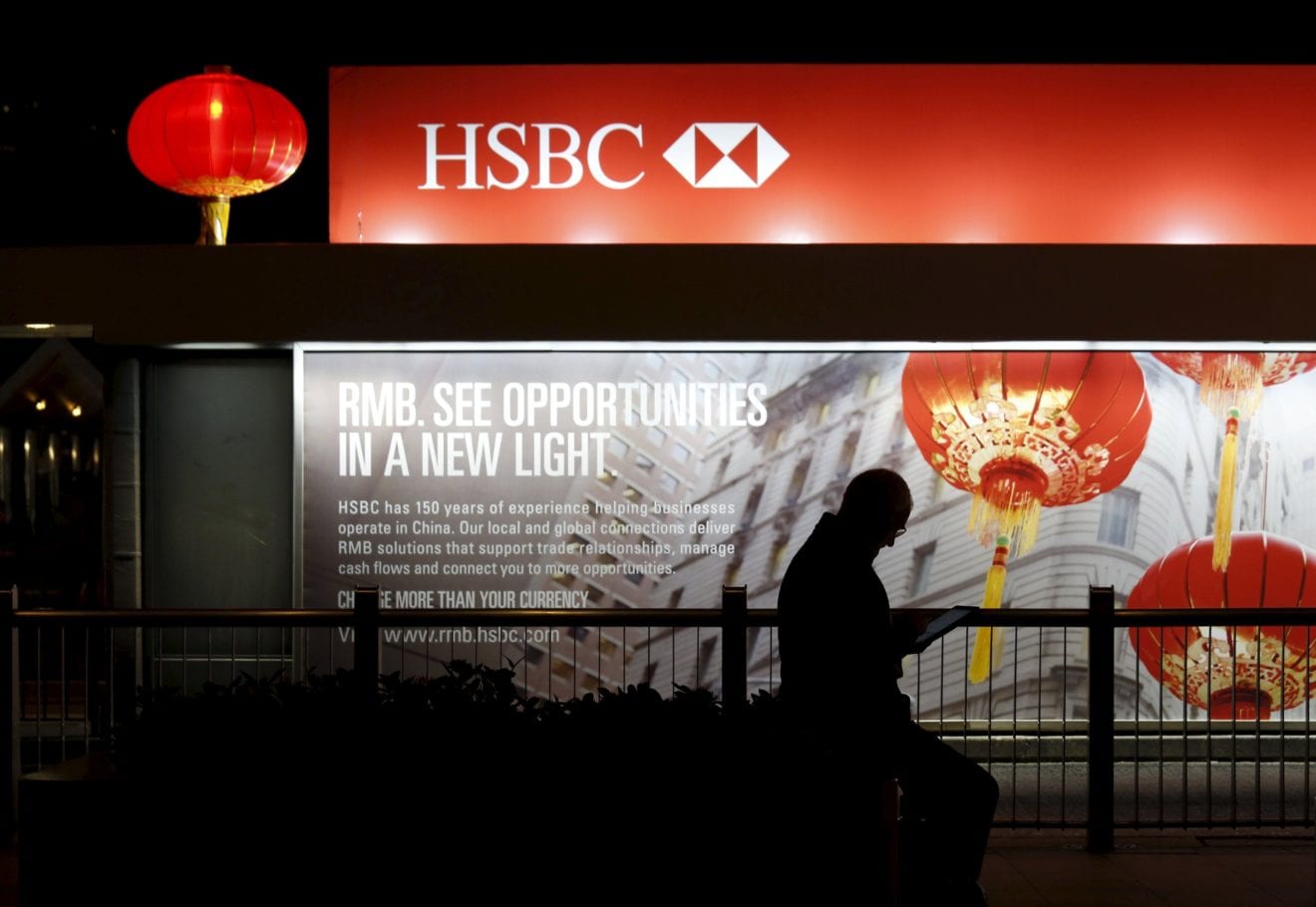
    HSBC is reportedly setting up an asset management business in Malaysia in the midst of a major job-axing exercise.

    It is in the midst of setting up its team, looking to hire a CEO, CIO, and so on, according to a report from Malaysian media , citing an anonymous source.

    The process is such that you need to have a basic set-up and concurrently apply for a license from the Securities Commission Malaysia. A Malaysia-based spokesperson for HSBC declined to comment, according to the report.

    Assets under management (AUM) in Malaysia’s asset management market posted single-digit growth in four out of the last five years, according to a report by Nomura Institute of Capital Markets Research, with a contraction in 2018. This is a stark contrast with the 23.5 percent CAGR (compound annual growth rate) from 1999 to 2007. As of 2018-end, the industry’s AUM totaled around 744 billion Malaysian ringgits ($178 billion).

    Concurrently, Bank of Singapore agreed to acquire local asset manager Pacific Mutual Fund for $8.5 million in June, pending regulatory approval. Synergies from the acquisition are expected to result in more than just expanded distribution.

  • UBS Seeks Full Ownership of China Onshore Securities Firm by 2020

    UBS Seeks Full Ownership of China Onshore Securities Firm by 2020

    UBS continues to act as a pioneering foreign bank in mainland China taking full advantage of the accelerated timeline for foreign ownership cap removals by seeking full control of its securities joint venture by 2020.

    The accelerated removal of the ownership caps for securities companies means that UBS is expected to be permitted to increase its stake in UBS Securities China from the current level of 51 percent to 100 percent by 2020, the bank said during its quarterly result announcement this week. The exact effective date remains to be clarified.

    In July, Chinese authorities announced the removal of foreign ownership limits for securities, insurance and fund management companies next year, introduced a year earlier than planned.

    Others have also been actively taking advantage of Chinese liberalization including Citi which is reportedly setting up a wholly-owned onshore securities business.

  • CIMB Wants A Bigger Bite Of Singapore SME Banking Share

    CIMB Wants A Bigger Bite Of Singapore SME Banking Share

    CIMB Bank plans to double its market share from 3 percent to 6 percent by 2021 for its small- and medium-sized enterprise (SME) banking business in Singapore.

    One of the lender’s efforts to do so is the launch of its Asean-China Halal Corridor initiative last year, which is a trade network linking halal businesses across China and the region. The initiative – which encompasses agribusiness, cosmetics, food and beverage, fashion and pharmaceuticals – has seen a growing interest among SMEs here, with strong participation in a recent CIMB halal corridor workshop.

    Among the segments that we see (venturing abroad), a lot of cross-border SME regional flows are manufacturing and trade, F&B (food and beverage) including the halal market, and the agricultural commodity sector, said Yong Jiunn Run, head of CIMB commercial banking.

    China’s halal sector is expected to reach $1.9 trillion by 2021, and there is a potential customer base of 266 million in ASEAN and China. Along the process of aiding F&B companies to obtain halal certification, the bank found that this group of SMEs usually proceeds to obtain Islamic financing to tap potential Muslim investors, giving a lift to its SME banking segment.

    Since 2014, the Malaysia-headquartered bank has seen a take-up rate among SMEs for Islamic financing grow by more than 48 percent per annum in the past five years.

    Besides tapping on Islamic finance, the bank recently refreshed its current account offering for businesses, also known as CIMB BusinessGo (BizGo), to provide a unique offering.

    First launched in January 2017, the new bundle aims to address SMEs’ needs in the market that are not being met by the current incumbents, said Ian Chan, CIMB Bank Singapore’s co-head of transaction banking and regional head of digital banking.

    New features include free FAST (Fast And Secure Transfers) transactions, best forex rates guaranteed for transfers to Malaysia, and interest rates of up to 1.88 percent per annum, amongst the most competitive in the market. It’s a product we revamped for two reasons – first and foremost, it’s CIMB’s 10-year anniversary in Singapore, Chan said.

    Secondly, we also want to shout out to the market that we want to grow our SME segment and help our clients to expand their businesses into ASEAN.

    While CIMB is evaluating an application for the digital banking licenses that are up for grabs in Singapore, Yong is against the idea of pursuing the license just for the sake of it.

    If you want to go into the digital bank arena, what customer pain points are you trying to solve? That’s very key as it goes back to basics. If those basics can be achieved without going digital, then what do you really want to achieve? he asked.

  • Private Banks Don’t Put Their Fees on the Internet

    Private Banks Don’t Put Their Fees on the Internet

    Asymmetries of information are a big issue in the provision of medical services. If a patient with a stomach ache doesn’t know what to do about it he will consult his medical adviser, in other words, his doctor. The doctor, in turn, will analyze the problem and propose a solution, a therapy.

    Given his advantage of information, the doctor has the means to influence the degree of medical advice and an opportunity to earn money from the prescription of drugs. He can suggest that the patient should return to his surgery in two days’ time for a check-up or agree with the patient to return only if the therapy doesn’t work within two days.

    Normally, the patient will not be able to judge which of the suggested procedures makes more sense for him. A doctor with extra capacities thus has a way of generating additional income if need be. A tried and tested measure against this supply-induced demand is to limit the number of medical surgeries.

    It is definitely worth looking at both the disclosed and the hidden costs. As advisory services in private banking aren’t measured in minutes, unlike those of medical doctors, the symptoms of asymmetries of information aren’t the same. It is worth looking at both the disclosed and the hidden costs. The prices of private-banking services aren’t publicly known because of the discretion of the providers.

    To be precise: private banks aren’t displaying their fees on the internet. This makes it hard for an inexperienced client to determine whether the price offered for advisory services or wealth management mandate is fair or not. This is true in particular because these prices normally depend on the size of assets, the strategy chosen and occasionally also on the frequency of advice given. Clients with little know-how thus risk paying too much for the service.

    Fees charged for advice and wealth management services at least be disclosed to the client. Many providers, however, are burying other costs in the products they recommend to their clients. For instance, even experts are finding it hard to detect the margin applied to a structured product. After all, who is able to decide whether a particular option was fairly priced or not? The more complex a product is used, the bigger the asymmetry of information and the more options there are to add more margin.

    Thanks to the asymmetries of information, it is relatively easy for financial services firms to increase their margin at the expense of the client, both openly and covertly. What is the driving force behind this exploitation of their position of power?

    The goal of profit maximization springs to mind first. If you aim for the biggest profit possible in a short period of time, the temptations are much stronger than for the provider with a long-term perspective. It would be salutary for many clients to join an annual press conference and hear the management proudly display how they managed to increase their client margin.

    The compensation system deserves particular attention. Companies that promise to pay high bonuses to relationship managers for selling as many of the bank’s own products as possible, clearly don’t have the best interest of clients as their focus. But even the compensation components that look innocuous at first sight can quickly turn problematic: a relationship manager whose bonus depends on the size of assets under custody won’t likely tell his client to pay back a mortgage as it would lower his tally of assets under management.

    Clients who suspect that their relationship manager doesn’t act in their own best interest should demand to know how his compensation is being calculated. Ideally in writing to avoid becoming the victim of obfuscation.

    In the past years, whenever there was a problem in financial services, the cry for the regulator wasn’t slow in coming. Is it possible to regulate away asymmetries of information? In part for sure: service providers could be forced to publish their prices on the internet or disclose product margins.

    But discretionary powers for the latter of the two are so big that regulation would hardly help much. Competition is fully capable of solving the problem. The behavior of clients is decisive. They should care about issues involving their assets at least to a minimum degree. Nobody will benefit from a failure to act despite being dissatisfied.

    Unfortunately, most clients overestimate the complexity of changing their bank and only a few know that most companies will assume the majority o
  • UBS Axes 40 Jobs In APAC

    UBS Axes 40 Jobs In APAC

    UBS Group is trimming some 40 jobs in Asia Pacific as part of the group’s push to cut costs and combine its trading units.

    The staff cuts would come from UBS’s markets and investment-banking teams with a majority at the level of vice president or below. The person asked not to be identified because the details are not yet public.

    The Asian divisions will see smaller cuts than those planned in Europe because the lender sees the region as a growth driver, the people said. The divisions, led by Hong Kong-based Taichi Takahashi and David Chin, face a similar story at HSBC, which has is reviewing its equities unit, and announced steep headcount cuts in Europe.

    As part of its global restructuring, Ros L’Esperance and Javier Oficialdegui are being given charge of the newly-named global banking division, which will house public capital markets, private financing and mergers, and acquisitions. A combined global markets operation including equities and foreign exchange, rates and credit will be run by Jason Barron and George Athanasopoulos.

    Greg Peirce is taking over as global head of mergers and acquisitions, the first time that role will be based in Hong Kong, the person said. The Asian staff reductions have already begun, with a fresh round expected later this month, they said. UBS has started to overhaul its investment bank through reshuffling senior management and combining trading operations in changes that may ultimately eliminate hundreds of positions.

  • Singapore’s First Blockchain Trade Financing Platform Launched

    Singapore’s First Blockchain Trade Financing Platform Launched

    CIMB Bank’s Singapore Branch and iTrust have launched Singapore’s First Blockchain Trade Financing Platform, and successfully completed their first structured trade financing transaction on the platform.

    The milestone transaction involves the financing of dairy products imported into China and is expected to generate transaction flows of up to $100 million a year, CIMB Bank said in a media statement on Thursday. iTrust provides secured real-time visibility of the cargo in transit and in the warehouse using blockchain-based IoT.

    Given the rapid technology shifts in the market today, we will continue to focus on digitalization and customer experience to transform the way we finance our corporate customers, thus adding value to our services. This blockchain trade financing with iTrust mitigates fraud risk, and alerts us of any unauthorized movement of the financed cargo, said Mak Lye Mun, CEO of CIMB Bank Singapore.

    All data and documents from the transaction are blockchain in a distributed ledger for provenance and immutability, the bank said. The technology provides all stakeholders with a secured operational dimension of the transaction, which was absent in the past. With iTrust’s security, transparency and visibility for the documents and cargo, CIMB hopes to mitigate risks associated with commodity trade financing and facilitate credit extension for their customers.

    Digitalization is gradually transforming financing. With iTrust, we have used blockchain-based IoT to provide insight into the physical world into a blockchain digital platform. We believe that the day will come whereby all lenders and borrowers would demand to have a secured real-time view of their cargo under financing on a secure and immutable blockchain platform like iTrust,» said Lim Chee Kean, CEO and co-founder of iTrust.

    As much as 80 percent of global flows of merchandise – worth about $9 trillion – is financed by some form of credit, guarantee or insurance, according to a global survey by the International Chamber of Commerce. Trade finance revenues were $39 billion in 2017. Yet, this $9 trillion business of financing global trade has only started to transact digitally.

    While some processes are already being digitalized and banks and commodity traders are experimenting with blockchain technology, paper documentation remains widespread and the risk of fraud elevated. In fact, forgers have become so adept at faking documents used by banks that going digital has become a necessity for the industry, according to OCBC, Southeast Asia’s second-biggest lender.

  • Mastercard Joins ASEAN Fintech Platform

    Mastercard Joins ASEAN Fintech Platform

    It will join AFIN’s board of directors and work with the platform to support the global fintech community and financial industry to foster greater financial inclusion.

    Southeast Asia’s fintech community has been given a boost with Mastercard joining the ASEAN Financial Innovation Network (AFIN) as the platform’s second corporate founding member, the two parties announced in a press release on Thursday.

    Mastercard’s participation in AFIN will enable the firm to work with fintechs to provide engagement and support, and it will bring its Start Path program members onto AFIN’s API Exchange (APIX) ecosystem, the statement said.

    «Having worked with tech start-ups around the globe, Mastercard looks forward to extending its support to ASEAN’s community of builders and change agents by providing access to its technology solutions, expertise and strategic partnerships to enable start-ups to rapidly and effectively scale up,» Rama Sridhar, executive vice president, Digital & Emerging Partnerships and New Payment Flows, Asia Pacific, Mastercard, said.

    AFIN is a non-profit network established in 2018 by the Monetary Authority of Singapore (MAS), the World Bank Group’s International Finance Corporation (IFC) and the ASEAN Bankers Association that aims to help financial institutions, fintech firms and regulators address issues of connectivity, local compliance and cross border compatibility.

    Its flagship product is a cloud-based APIX platform, an online marketplace for financial institutions to collaborate with innovative fintech solutions in areas from design to marketing.

  • Citi Appoints APAC CEO

    Citi Appoints APAC CEO

    Citi names its new Asia Pacific CEO six months after the departure of the former regional chief.

    Peter Babej has been named as chief executive officer of Asia Pacific, succeeding Francisco Aristeguieta who left in April and was replaced in the interim by Tim Monger who will return to solely focus on his CFO role.

    Babej joined Citi in 2010 as its co-head of the financial institutions group within its institutional client group before becoming the unit’s sole head in 2017. Previously, Babej held multiple senior roles at Deutsche Bank and Lazard.

    According to the bank, Babej’s deep financial knowledge and dealmaking experience, especially with regards to digital adoption, will serve Citi well given rapid growth in the market.

    Under Peter’s leadership, the Citi has participated in some of the most significant transactions in the sector, including several Asia-driven mergers and acquisitions, said Citigroup CEO Mike Corbat, highlighting marque deals such as the $14 billion fundraisings for Ant Financial.

    In the first nine months of 2019, Citi’s APAC unit posted a net income of $3.91b, accounting for 27 percent of the global sum.

  • Vietcombank first local lender to open Australia branch

    Vietcombank first local lender to open Australia branch

    Vietcombank, one of Vietnam’s leading banks, has received approval from the central bank to open a branch in Australia.

    The branch will open in Sydney and have a registered capital of AUD71 million ($48.08 million), according to the State Bank of Vietnam’s (SBV) approval document released Wednesday.

    Vietcombank must complete the opening of the branch within 24 months from the date of the SBV’s approval, after which it expires, the document says.

    This move is an important step in Vietcombank’s global expansion strategy, in which it aims to gain a place among the world’s top 300 banking and financial groups by 2020, it said in a statement.

    In June this year, Vietcombank received the final permit to set up a representative office in New York City of the U.S. from the New York State Department of Financial Services (NYDFS).

    Vietcombank has more than 500 branches, representative offices, and member companies in Vietnam and overseas, including a financial company in Hong Kong, a money transfer company in the U.S., a representative office in Singapore and a subsidiary in Laos.

    The lender is one of three Vietnamese banks among the world’s most valuable brands, according to Brand Finance, a global branded business valuation and strategy consultancy.

    Vietcombank, BIDV and Vietinbank are Vietnam’s three biggest banks in Forbes’s list of 2,000 largest listed firms in the world. In the Forbes ranking released in May, Vietcombank jumped 198 spots to 1,096th with revenues of $3.1 billion and a market value of $10.9 billion.

    Japan’s Mizuho Bank is Vietcombank’s largest foreign shareholder, with a 15 percent stake, while the Vietnamese state holds 74.8 percent.

  • Vietnam fintech sector in the fast lane

    Vietnam fintech sector in the fast lane

    The number of financial technology companies in Vietnam has grown from around 40 in 2016 to 154, focusing on payment, peer-to-peer lending and crowdfunding, a survey has found.

    Out of the 154 fintech startups, 37 operate in payments, 25 in P2P lending and 22 in blockchain and crypto and remittance, according to a survey by the Banking Technology Development Research Institute (BTI), National University of Ho Chi Minh City, released at a fintech conference in HCMC on Monday.

    The rapid growth of fintech has transformed the financial and banking sector by offering consumers more convenient products and services.

    Fintech companies in Vietnam are likely to continue encroaching on the retail market share of traditional banks, with peer-to-peer lending, e-wallets, payment and cashless payments becoming an integral part of everyday life, the report noted.

    However, areas such as asset management, liquidity management, investment management, insurance, and automated advisory services are still in their infancy, it added.

    Hoang Cong Gia Khanh, director of BTI, said: “Because 70 percent of Vietnam’s fintech companies are still startups, it will be difficult to have large-scale fintech firms even with foreign capital.”

    Some 70 percent of them have foreign backers both from developed countries such as Singapore, Japan, the U.S., Canada, Australia, the U.K., Denmark, and France and neighboring countries such as China and Malaysia, he added.

    Vietnamese fintech companies also face challenges like cybersecurity, human resource training and others.

    Startups in fintech received more investment — $117 million — than in any other industry in Vietnam last year, according to startup accelerator program Topica Founder Institute.

    The country’s fintech market was valued at $4.4 billion in 2017 and is predicted

  • UOB Issued Letter of Demand To Libra Group

    UOB Issued Letter of Demand To Libra Group

    UOB has asked  Libra Group, which is mired in financial troubles, to pay up $18.8 million.

    UOB has issued a letter of demand to Libra Group for the above amount, based on outstanding banking facilities, the Catalist-listed company announced in a filing on Friday. The letter, dated Oct 8, reveals that events of default have occurred, and «UOB shall cease to be under any further commitment to the Company.»

    The entire sum of $18.8 million is immediately payable to the bank by last Friday, the filing said.

    The Singapore lender also issued a letter demand to Kin Xin Engineering, a unit of Libra that provided guarantees for the US$18.8 million sum, for repayment by the same deadline.

    Another Libra unit, Libra Engineering & Manufacturing, separately received a letter of demand dated Sept 30 from WMS Industrial Gas & Equipment for 72,940 Ringgit (S$23,940), related to goods sold and delivered.

  • Singapore Fintech Investments Crossed S$1 Billion

    Singapore Fintech Investments Crossed S$1 Billion

    Investment in financial technology ventures in Singapore rose sharply in the first nine months of 2019, led by fundraising with payments startups and insurtech firms and a shift toward more-mature companies.

    The total value of financial technology (fintech) deals in the nine months ended September jumped 69 percent from the prior-year period to $735 million (S$1 billion) from $435 million, and exceeded the $642 million raised in all of 2018, according to an Accenture analysis of venture-finance data from CB Insights, Pitchbook and Tracxn. The 2019 and 2018 figures included $47 million and $12 million respectively in undisclosed venture capital transaction data provided by the Monetary Authority of Singapore.

    Crossing a billion-Singapore-dollar investment threshold is a recognition from investors around the world of the potential of Singapore’s fintech ecosystem and the outlook for digital financial services not just in Singapore, but also in Southeast Asia, said Sopnendu Mohanty, chief fintech officer of the Monetary Authority of Singapore in a statement.

    Singapore’s active investments into its fintech ecosystem, alongside its annual Singapore Fintech Festival, seems to be paying off: the city-state saw a nearly six-fold increase since 2015.

    It’s encouraging to see the local startups financing their global growth from Singapore. Additionally, several global fintech companies with regional headquarters in Singapore have recently raised sizeable funds to fuel their Asian expansion, Mohanty added.

    However, the number of fintech deals fell by almost one-third (29 percent) in the first nine months of 2019, to 94 from 133 in the prior-year period showing that investors made larger bets into fewer deals as startups grow their business.

    As we’ve seen in other parts of the world, fundraising is shifting to support the scaling up of challenger and collaborative fintech, which will cause lumpiness in some rounds as the market becomes more mature, said Divyesh Vithlani, a managing director at Accenture and head of Financial Services in the ASEAN region in a statement on Monday. Investments in payments startups and those in lending took the bulk of fintech fundraising, accounting for 34 percent and 20 percent of the total, respectively, while insurtechs raked in 17 percent.

    The value of payments deals jumped 113 percent, to $251 million, making the biggest contribution to the overall gains this year. Insurtech funding nearly quadrupled, to $128 million from $35 million, and lending rose more than 50 percent, to $145 million.