Tag: Finance

  • DBS Avoids Larger M&A Deals

    DBS Avoids Larger M&A Deals

    DBS group chief executive Piyush Gupta said it would avoid acquisition targets with large deal sizes in order to maintain concentrated focus on its digital transformation.

    According to Gupta, the bank would target deals valued at about five percent of DBS’s market cap (around $3.7 billion as of publishing) and avoid larger ones in order to focus on a digital market he calls «the battleground of the future».

    The general thesis for us is that we still think that the digital transformation requires energy and bandwidth,» he explained. If I did a bigger deal and I wound up saying that I’m going to lose two years’ worth of tech work that would be quite a cost to pay.

    Piyush reiterated that the bank remained open to acquisitions but noted that the size preference was due a successful track record of «very quick returns» via digital integration, referencing the bank’s $81 million purchase of ANZ’s Asian wealth and retail business in 2016.

    We realized that if you get a core customer base at a sensible price, and then overlay our digital capabilities and tools on top of that, it can actually be very accretive, very quickly,» Gupta said. «So we are open to exploring those, but again, it’s a fine call. When does it become too big – one that is going to subsume everything else?

    One such financial institution which may qualify for the bank’s taste is Indonesia’s Bank Permata, valued at around $2.7 billion, in which DBS has reportedly expressed interest. Currently, Japan’s SMFG and Singaporean rival OCBC are believed to be frontrunners for the medium-sized lender.
  • DBS and OCBC Collaborate With Google Pay

    DBS and OCBC Collaborate With Google Pay

    DBS and OCBC account holders without credit cards can soon use Google Pay to make payments to merchants in Singapore.

    The integration will allow both banks’ customers to send and receive funds and also pay merchants via Google Pay using a single-click sign-up.

    We believe that integrating Google Pay with our DBS PayLah! the platform will deliver greater convenience to consumers as they will have more options to transfer funds and make instant payments to some 80,000 merchants in Singapore, said Han Kwee Juan, Chief Strategy Officer at DBS Bank in a media statement.

    The U.S. technology giant on Monday demonstrated a preview of Google Pay in Singapore at the Singapore Fintech Festival 2019, promising features of simplicity, security and helpfulness for users. It taps on conversations of users to create suggestions and also tokenized cards within Google Pay.

    The new service is being tested early next year with the aim of rolling it out in full later in the year, said Hannia Zia, product manager of Google Pay during the preview at the festival. The collaboration includes the integration of both peer-to-peer (P2P) and peer-to-merchant (P2M) transaction services.

    As Google Pay is tapping onto Funds Transfer Services PayNow, customers of nine banks on the payment infrastructure may also enjoy Google Pay later. PayNow allows users in Singapore to make and receive payments from their bank accounts using their mobile or identification number.

    The potential of Google Pay leveraging PayNow is tremendous and will provide our customers with the benefits of secure, seamless and ubiquitous payments without having a wallet. Both OCBC and Google share the same customer-centric approach to enabling seamless digital payments – an open-loop payments ecosystem, said Ching Wei Hong, Chief Operating Officer at OCBC Bank in a media statement.

  • Singapore Fintech Partners Visa for Instant Remittances

    Singapore Fintech Partners Visa for Instant Remittances

    The partnership, using Visa’s push payment solution and secure network, allows consumers to transfer money in a faster, convenient and more secure way.

    Singapore cross-border fund transfer startup Nium is partnering with Visa to enable instant money transfers into recipients’ bank accounts through their 16-digit Visa debit card numbers, the firm announced in a press release on Monday.

    Designed for both peer-to-peer and business-to-business transfers, the rollout of the service currently covers remittances to Southeast Asian markets like Indonesia, Malaysia, Thailand, Vietnam and the Philippines.

    We understand that individuals’ and businesses’ need to receive money quickly, especially in markets where there are no instant payment solutions like FAST or IMPS, Prajit Nanu, Nium co-founder and CEO, said in the statement.

    Nium, formerly known as InstaReM, recently nixed plans to pursue a digital wholesale banking license, saying it would focus its efforts on its global business-to-business payments instead.

    The firm is part of Visa’s Fintech Fast Track program, which facilitates fintech partners to build and deliver new commerce experiences on Visa’s payments network.

  • UBS: Billionaire-Controlled Stocks Outperform

    UBS: Billionaire-Controlled Stocks Outperform

    Listed firms controlled by billionaires outperformed the broader market with such entities in Asia leading the pack in relative gains.

    In the past 15 years to 2018-end, billionaire-controlled listed companies posted equity returns of 17.8 percent compared to 9.1 percent for the MSCI benchmark in the same period. By region, Asia Pacific ranked second in demonstrating this trend delivering annualized average returns of 18.3 percent – just 0.1 percent behind the first-ranked Americas.

    According to a report co-published by UBS and PwC, the outperformance can be attributed to what it called the billionaire effect or the tendency for self-made entrepreneurs for smart risk appetite and longer-term planning.

    Political uncertainty and economic volatility led global wealth to dip 4.3 percent and Asia was not immune, registering a $217.6 billion wealth drop and a decrease of billionaires by 7.4 percent to 754.

    Still, the region boasted a quadrupling of billionaire wealth in the last five years and unsurprisingly, China led the regional ranks with 325 billionaires. Interestingly, the region was also a significant contributor to female billionaire wealth, which grew by a quarter to $871.2 billion globally, with the number of billionaires doubling over the last five years.

    Entrepreneurs, which account for 70 percent of our client base in Asia Pacific, has been the driving force of the rapid wealth creation in the region, said Amy Lo, co-head wealth management Asia Pacific at UBS Global Wealth Management.

  • DBS Launches Virtual Wealth Manager With Celebrities

    DBS Launches Virtual Wealth Manager With Celebrities

    DBS introduced its fully virtual wealth management capabilities in Hong Kong in grand fashion, accompanying the launch with renowned local celebrities.

    The bank recently launched its new virtual wealth manager which can enable users to undergo the entire experience digitally from account-opening to transacting. The suite of capabilities also includes general banking, investments, FX trading, remittance and others.

    We are the first bank that has a fully digitized journey from onboarding to all wealth management products, said Sebastian Paredes, DBS Hong Kong CEO. This is not an app. This is the launch of a new virtual bank.

    Then DBS began its planning exercise two years ago to launch the virtual solution, it wanted to significantly reduce the time required to open accounts, after repeatedly hearing clients express how busy they are and how laborious it is to fill out application forms.

    This is something on our mind for a long time,» explained Ajay Mathur, managing director and head of consumer bank gin and wealth management, DBS. With this fully virtual wealth management account onboarding, you can open an account in just a few minutes.

    Joined by renowned local celebrities, Louis Koo Tin-lok and Jessica Hsuan, the bank made a live demonstration to showcase the ease of opening an account. In addition to mandatory documents, the system was able to use facial recognition technology to verify the user simply by matching an image of an official ID and a selfie image.

  • Vietcombank to pull out of BNP Paribas insurance joint venture

    Vietcombank to pull out of BNP Paribas insurance joint venture

    Vietcombank is selling its stake in a JV with French life insurance firm BNP Paribas as part of a possible bancassurance deal with a foreign buyer.

    Its board of directors passed a resolution approving the divestment of an unspecified stake in Vietcombank – Cardiff Life Insurance Co., Ltd (VCLI), the state-owned lender said in a release last Thursday.

    VCLI is a 45:55 joint venture between Vietcombank, Vietnam’s largest lender by market capitalization, and BNP Paribas Cardif, part of France’s BNP Paribas banking group.

    Although Vietcombank’s announcement did not identify a buyer, Bloomberg reported in late September that Hong Kong-based insurer FWD Group Ltd. was nearing an agreement to pay around $400 million for VCLI as part of a long-term bancassurance agreement with the bank.

    A bancassurance transaction is typically an arrangement between a bank and an insurance company in which the latter pays an upfront amount for exclusive rights to sell its products to the bank’s clientele.

    FWD Group, owned by Hong Kong billionaire Richard Li, had outbid several firms, including British insurance giant Prudential, which had been vying to obtain exclusive rights to distribute life insurance products through Vietcombank’s branch network, Bloomberg quoted sources as saying.

    According to VCLI’s latest financial statements, as of the end of 2017 it had VND950 billion ($40.79 million) in assets and accumulated losses of nearly VND3 billion ($128,800).

    Recently major international life insurance companies have been expressing interest in entering the growing Vietnamese market through bancassurance and acquisition deals.

    German insurer Allianz and Japanese insurers Nippon Life and MS&AD Insurance were among several vying to buy the Singapore and Vietnam businesses of Britain’s Aviva in a deal estimated to be worth $2-2.5 billion.

    Earlier Prudential had signed an agreement with South Korea’s Shinhan Bank Vietnam to distribute its insurance products through its network and Canada’s Manulife struck a similar deal with local lender ACB.

    Phung Ngoc Khanh, general director of the Insurance Supervisory Authority (ISA), said the country’s insurance market has huge potential due to the low penetration and people’s rising incomes and awareness.

    In the first half of this year the industry’s premium income was VND71.15 trillion ($3.06 billion), up 24.4 percent year-on-year. Last year’s growth was also around 24 percent, according to the ISA.

  • OCBC 3Q Core Profit Up Slightly

    OCBC 3Q Core Profit Up Slightly

    Singapore’s second-largest lender reported core net profit of S$1.26 billion in the third quarter, slightly above the $1.25 billion reported a year earlier.

    However, OCBC Bank’s headline net profit slipped 6 percent to S$1.17 billion for its third quarter ended September 30, from S$1.25 billion a year ago due to a one-off charge at its Indonesian banking unit.

    The one-time charge of S$91 million arose as a result of refining the group’s expected credit loss modeling approach for Bank OCBC NISP. Excluding the one-time charge, the group’s core net profit of S$1.26 billion is slightly higher than $1.25 billion a year earlier.

    Loans rose year-on-year and fee income climbed to a record high led by wealth management as the private banking business managed to maintain net new money inflows, said OCBC chief executive Samuel Tsien in a statement.

    Net fees and commissions grew 10 percent to a new record of S$550 million from S$502 million a year ago, led by higher fees from wealth management, investment banking and remittance services.

    Net interest income for the quarter grew 6 percent to S$1.60 billion, stemming from a five basis point increase in net interest margin to 1.77 percent. Improved asset yields and a 2 percent increase in customer loans underpinned the improved net interest income.

    Non-interest income for the quarter increased 2 percent to S$1.06 billion from S$1.04 billion in the previous year. Total income for the quarter rose 4 percent to S$2.66 billion from S$2.54 billion a year ago.

    Not all sections of the bank’s results slip are glowing – net trading income was only S$182 million compared to S$213 million a year ago, as a decline in treasury income offset a rise in customer-related flow income.

    Global and regional economic growth continued to slow, and geo-political event risks have increased. We shall remain vigilant and will maintain prudent risk management practices while exercising disciplined cost management, Tsien said.

  • OCBC Allows Instant Account Opening For Startups

    OCBC Allows Instant Account Opening For Startups

    Start-ups are now able to open an OCBC business banking account in Singapore immediately after incorporation, rather than having to wait one day. Once a business is incorporated, OCBC Bank can validate the start-up’s business profile issued by the Accounting and Corporate Regulatory Authority (ACRA). This is made possible due to an Application Programming Interface (API) between OCBC Bank and global information services provider, Experian (formerly known as DP Information).

    Banks play a key role in the start-up and SME ecosystem partly because the bank account is at the center of business operations. Given this role and our standing as banker to more than 1 in 2 SMEs in Singapore, we are in the best position to strengthen the connections among all players in this ecosystem, said Christie Chu, Head of Emerging Business and Commercial Banking Cash, OCBC Bank in a media statement on Monday.

    OCBC Bank launched a dedicated business supporting the start-up segment at the end of 2018. Since then, it has been engaging start-ups to understand the pain points when starting a business. With a track record of serving the start-up segment, the bank found that starting a business is a journey of discovery, and many stumble along the way.

    To that end, the team is putting together a start-up guide, with practical tips from successful entrepreneurs with first-hand experience. The guide will be accessible to all aspiring entrepreneurs on OCBC Bank’s website.

  • Citi Drops China Website On IPO Fee Disput

    Citi Drops China Website On IPO Fee Disput

    Citigroup had initially been listed in the IPO document of Fangdd Network Group in the second position after Morgan Stanley, but did not appear on the press statement last Friday on the Nasdaq Global Market.

    Citi had been hired as the second bookrunner on the Chinese group’s IPO, but as both sides could not reach an agreement on the underwriting fees, the IPO arranger dropped out, citing people familiar with the matter.

    Morgan Stanley, UBS, China International Capital Corp, and AMTD Global Markets Limited were listed as joint book-runners for Fangdd’s IPO.

    Fangd had cut the number of shares it sold in its IPO from seven million to six million ase= demand for its stock during its roadshow was soft.

    DouYu International Holdings, which raised $775 million in July, is the biggest US IPO of a Chinese company this year while four deals from last year topped $1 billion, according to data compiled by Bloomberg.

    U.S. offerings typically pay a higher percentage in IPO fees compared to most Asian countries. However, U.S. IPOs of Chinese companies have shrunk in size this year as investors grew wary about the tensions between U.S. and China, reducing fees for Asian investment bankers.

    Chinese companies raised $2.9 billion in the US this year, down from the $7.9 billion raised during the same time last year.

  • Apple Card users are getting a major iPhone-related perk

    Apple Card users are getting a major iPhone-related perk

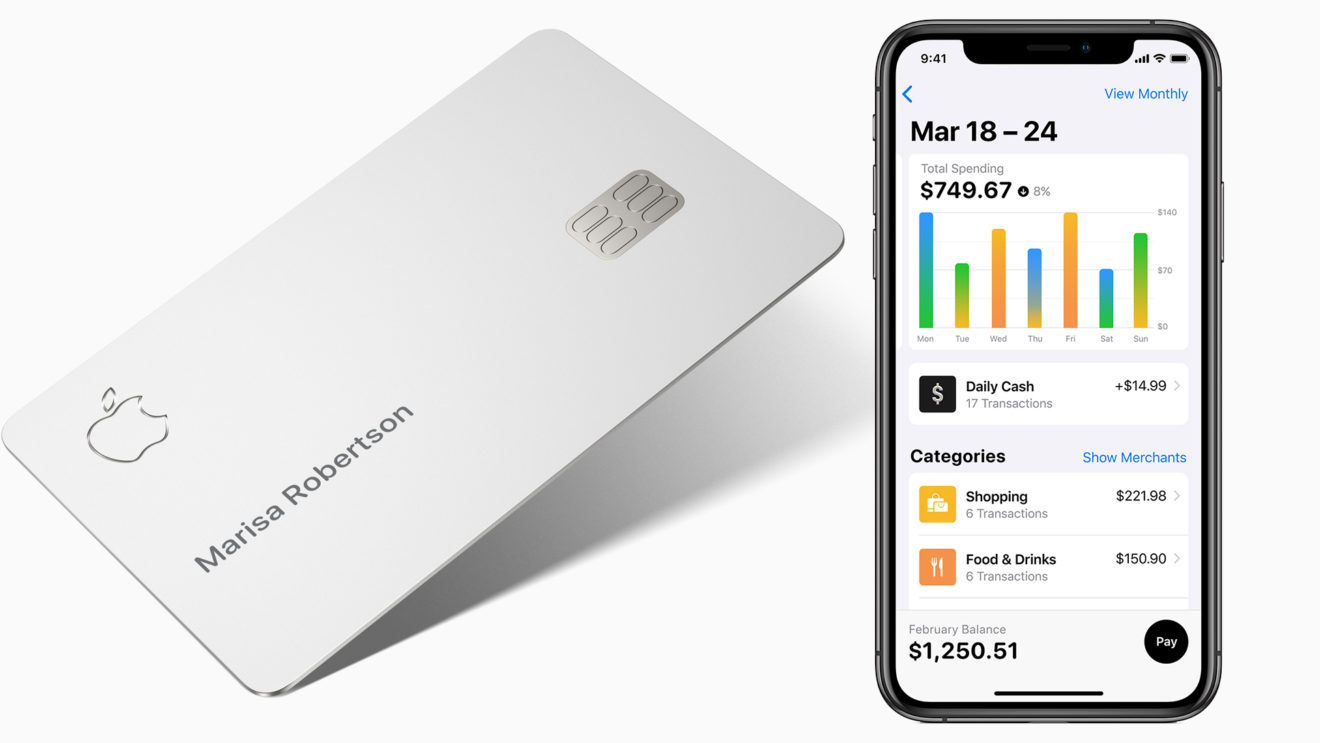
    Apple announced earlier today that’s it’s adding another benefit to the Apple Card starting this week, which is aimed to appeal to iPhone users. During its earnings call, Apple revealed a new program for Apple Card users that will allow them to buy or upgrade to a new iPhone much easier.

    Thanks to the new program, Apple Card owners will receive interest-free, 24-month financing on iPhone purchases. The new perk can be combined with the three percent cashback Apple Card users are getting on purchases from the company’s stores.

    The same offer is available through the iPhone Upgrade Program, so if you don’t have an Apple Card, that’s where you should look if you want to buy a new iPhone without having to pay for it upfront.

    The third option for Apple fans who just want to upgrade to a new iPhone is to take advantage of the company’s trade-in program, which will allow them to pay a lot less for a brand new model. And it looks like this is one of the options that many customers are taking advantage of, as CFO Luca Maestri said on the call. The number of iPhone trade-ins is more than five times higher than last year.

    The move is most likely another important step that brings Apple closer to the launch of the so-called “iPhone subscription,” which has been speculated for many years now. Tim Cook’s most recent comments certainly confirm Apple is considering such a service:

    We’re cognizant that there are lots of users out there that want a sort of a recurring payment like that and the receipt of new products on some sort of standard kind of basis, and we’re committed to make that easier to do than perhaps it is today.

    Although an “Apple Prime” doesn’t exist yet, Tim Cook’s statements suggest that if enough people are willing to pay every month for the privilege of having the latest iPhone, such a subscription service will eventually be made available.

  • Maybank Kim Eng, PhillipCapital Among DDoS Targets

    Maybank Kim Eng, PhillipCapital Among DDoS Targets

    Disruptions caused by the cyberattack on the trading houses lasted from 30 minutes to the whole morning session on October 24.

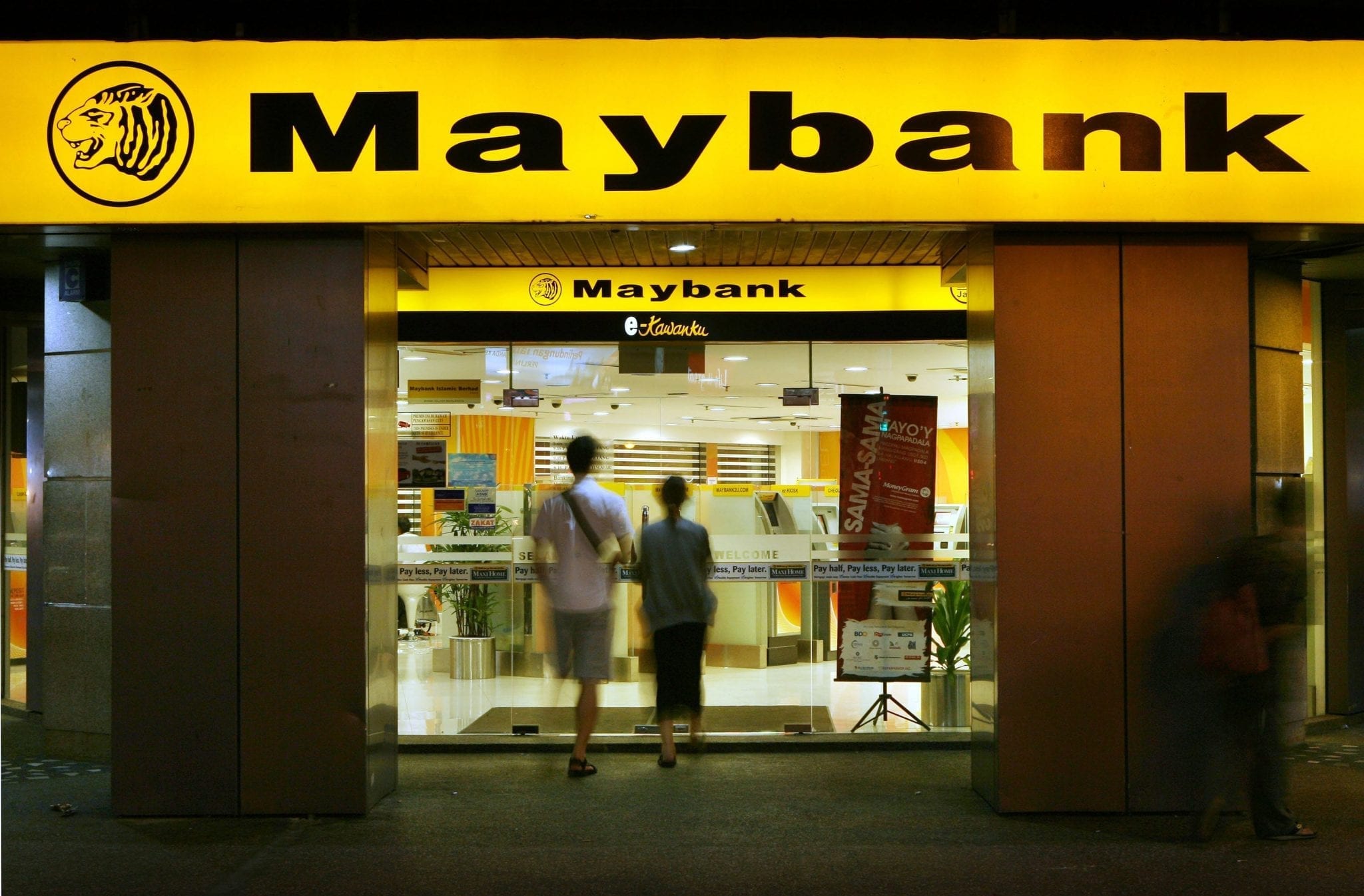
    Maybank Kim Eng and PhillipCapital spokespersons have confirmed their brokerages were among those that faced disruptions last Thursday, when up to five trading houses were hit by distributed denial-of-service (DDoS) attacks.

    The impact was minimal as we swiftly mitigated the attack. At no point was the security of our clients’ information, online trading or Web services compromised, a Maybank Kim Eng representative said.

    PhillipCapital also confirmed that Phillip Securities and Phillip Futures were affected, but it took «immediate and appropriate actions» to limit the impact.

    The newspaper cited unnamed sources saying that RHB Securities, which operated the RHBInvest platform, was also affected. The firm declined to comment.

    A DDoS attack happens when the bandwidth or resources of a targeted system is flooded with unwanted traffic, making an online service or website unavailable.

    The Monetary Authority of Singapore (MAS) issued an advisory to financial institutions following the attacks to alert them of the increased risk of DDoS activities.

  • StanChart Beats Third Quarter Consensus Estimates

    StanChart Beats Third Quarter Consensus Estimates

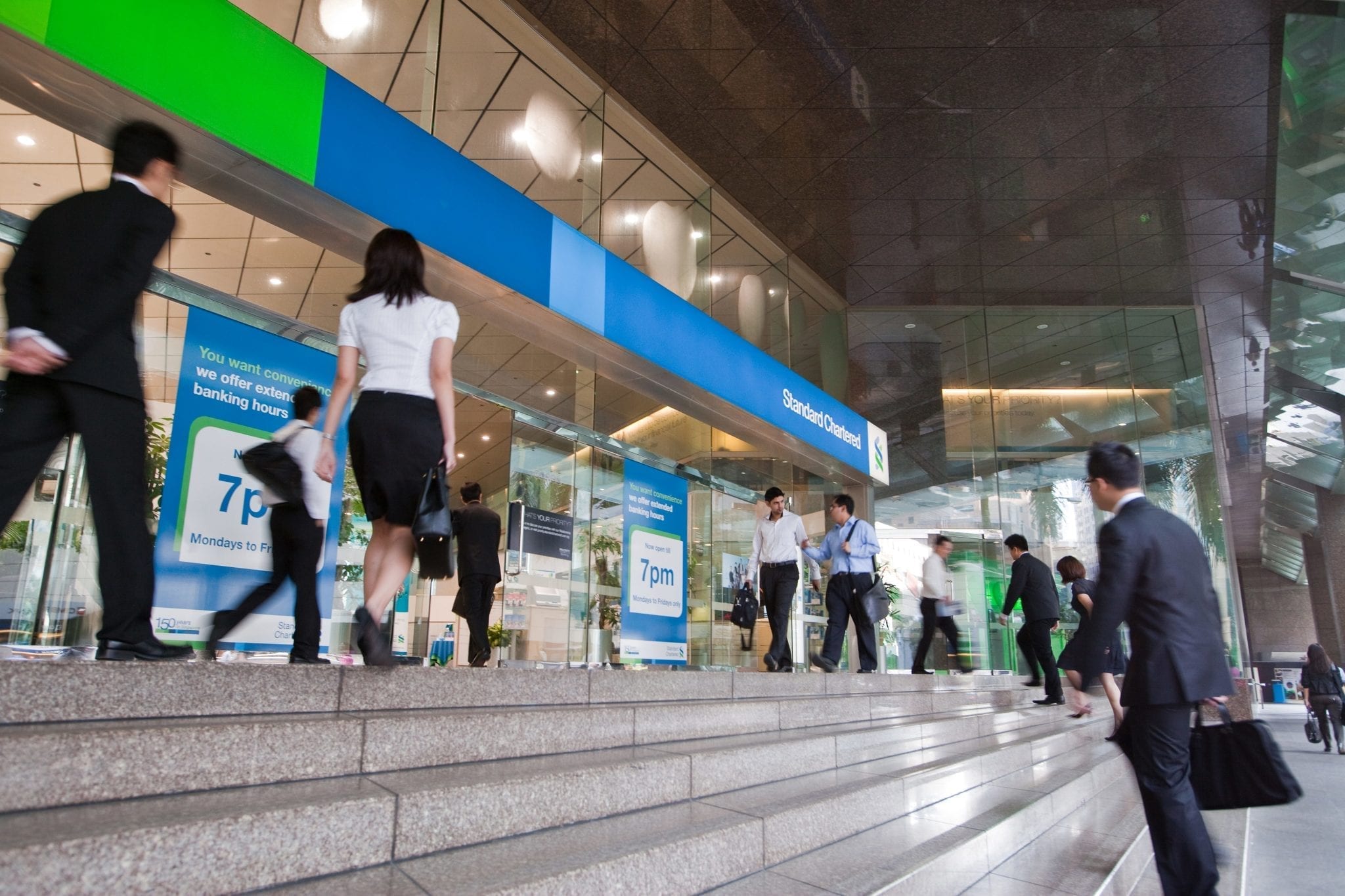
    Standard Chartered posted a pre-tax profit of $1.11 billion, beating consensus estimates of $1 billion and resiliently reaping the rewards of its multi-year cost-cutting exercises.

    The bank recorded a net profit of $727 million in the three months ended September 30, up from $752 million in the same period last year. By region, Europe and the Americas led the pack with 19 percent income growth followed by ASEAN and South Asia at 13 percent. Despite ongoing unrest in Hong Kong, its Greater China and North Asia business defied the odds and registered 2 percent year-on-year income growth for the quarter.

    Our strategy of the last few years has progressively created a stronger and more resilient business,» said Bill Winters, Standard Chartered chief executive, in a statement. The continuing execution of that strategy remains our priority, enabling us to face the more challenging external environment confidently.

    Winters joined the bank in 2015 and has since then focused on restructuring by cutting management layers and thousands of jobs. After two years of losses, the bank returned to profit in 2017. In addition to profitability, the efforts aim to meet the target return on tangible equity of at least 10 percent by 2021, the bank noted.

    Still, there are growing headwinds from the combination of continuing geopolitical tensions and expectations of declining near-term global growth and interest, the bank warned.

  • StanChart Opens Second Innovation Lab in Hong Kong

    StanChart Opens Second Innovation Lab in Hong Kong

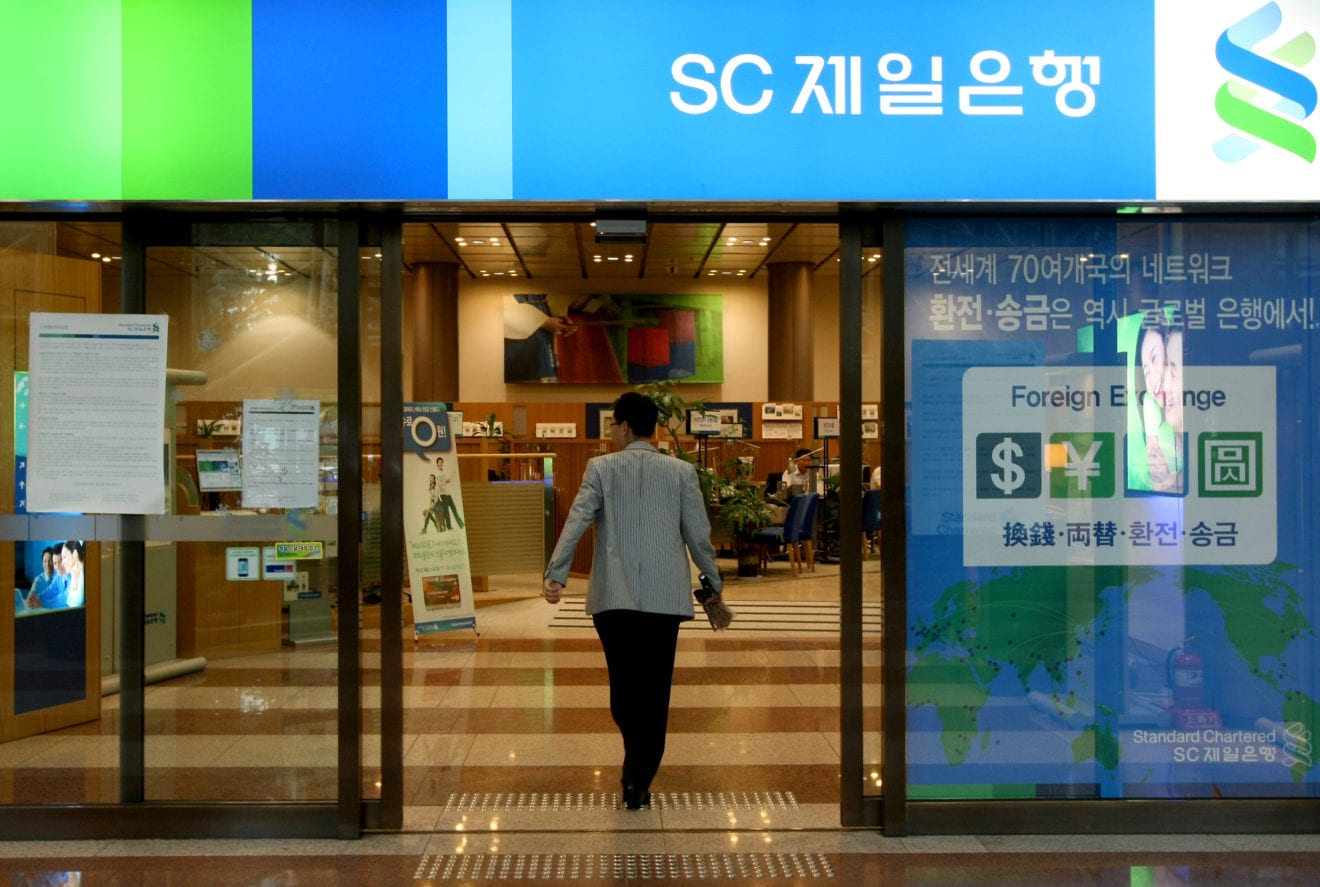
    Standard Chartered recently opened its second eXellerator innovation lab in Hong Kong which will focus on developing solutions for its corporate, commercial and institutional banking clients.

    Located in the central business district, the new lab differs from the first eXellerator based in industrial district Kwun Tong, which was launched last year and focuses on solutions for the retail banking business.

    The new lab will leverage emerging technologies and be «a focal point for engagement with the stakeholders of the Hong Kong fintech ecosystem» including regulators, government-backed organizations, business partners, clients and technology companies, Standard Chartered said in a statement.

    Hong Kong is not only Standard Chartered’s largest retail market, it is also where some of our most important corporate commercial & institutional banking clients reside and where there is a vibrant ecosystem for technology and innovation, added Alex Manson, global head of Standard Chartered’s SC Ventures – a unit that focuses on fintech investments and innovations which backs the eXellerator project.

    The new eXellerator lab location in Central gets us to the heart of it and we look forward to many more engagements and partnerships.

  • DBS Leverages Allfunds Platform

    DBS Leverages Allfunds Platform

    DBS inks an agreement with Allfunds to leverage its fund distribution capabilities and boost penetration in Asia.

    DBS’s retail banking and wealth management arm will look to leverage from the partnership «access to a broad range of investment funds and utilize the asset servicing services which Allfunds provides in Asia, and globally,» according to a statement.

    According to Allfunds’ Asia regional manager David Perez de Albeniz, the partnership marks a common goal towards increasing mutual funds penetration in Asia, highlighting potential synergies between DBS’s «innovative digital offering» and Allfunds’ open-architecture platform. Marc Lansonneur, head of managed solutions, balance sheet products and investment governance at DBS Wealth, echoed the sentiments and underlined the comprehensiveness of the Allfunds platform.

    Allfunds presents a one-stop solution for our distribution needs – access to an extensive fund eco-system, leading technology proposition, and a full suite of servicing capabilities – which we seek to leverage to achieve greater convenience, efficiency, and productivity moving forward, Lansonneur said.

  • China Accelerates Blockchain Growth

    China Accelerates Blockchain Growth

    China’s national parliament has passed a new law on cryptography aimed to facilitate development concurrently with the country’s central banking efforts to launch its own digital currency.

    The newly adopted law, effective as of January 1, 2020, «was necessary for regulating the utilization and management of cryptography, facilitating the development of the cryptography business and ensuring the security of cyberspace and information», the National People’s Congress Constitution and Law Committee.

    The new law distinguishes cryptography into three classifications: core, common and commercial. Core and common cryptography will be strictly managed by Chinese authorities and used to protect confidential national information.

    If cryptography is deemed as commercial, which assumes no risk to state security or the public interest, cryptography management departments and other relevant personnel are unable to ask for disclosure of «exclusive information related to the cryptography such as source codes and must keep the business secrets and privacy they get in their duties strictly confidential.

    The new law marks a further acceleration of China’s blockchain-related policy which is likely to pave the way to various initiatives including the nation’s efforts to launch its own digital currency which its central bank claims is almost ready.

    The law was also enacted one day after President Xi Jinping called for more research and investments into blockchain technology, stressing competition from other major countries and the need for China to obtain first-mover to increase «influence and rule-making power in the global arena».