Tag: Finance

  • DBS Awards Nine Social Enterprises

    DBS Awards Nine Social Enterprises

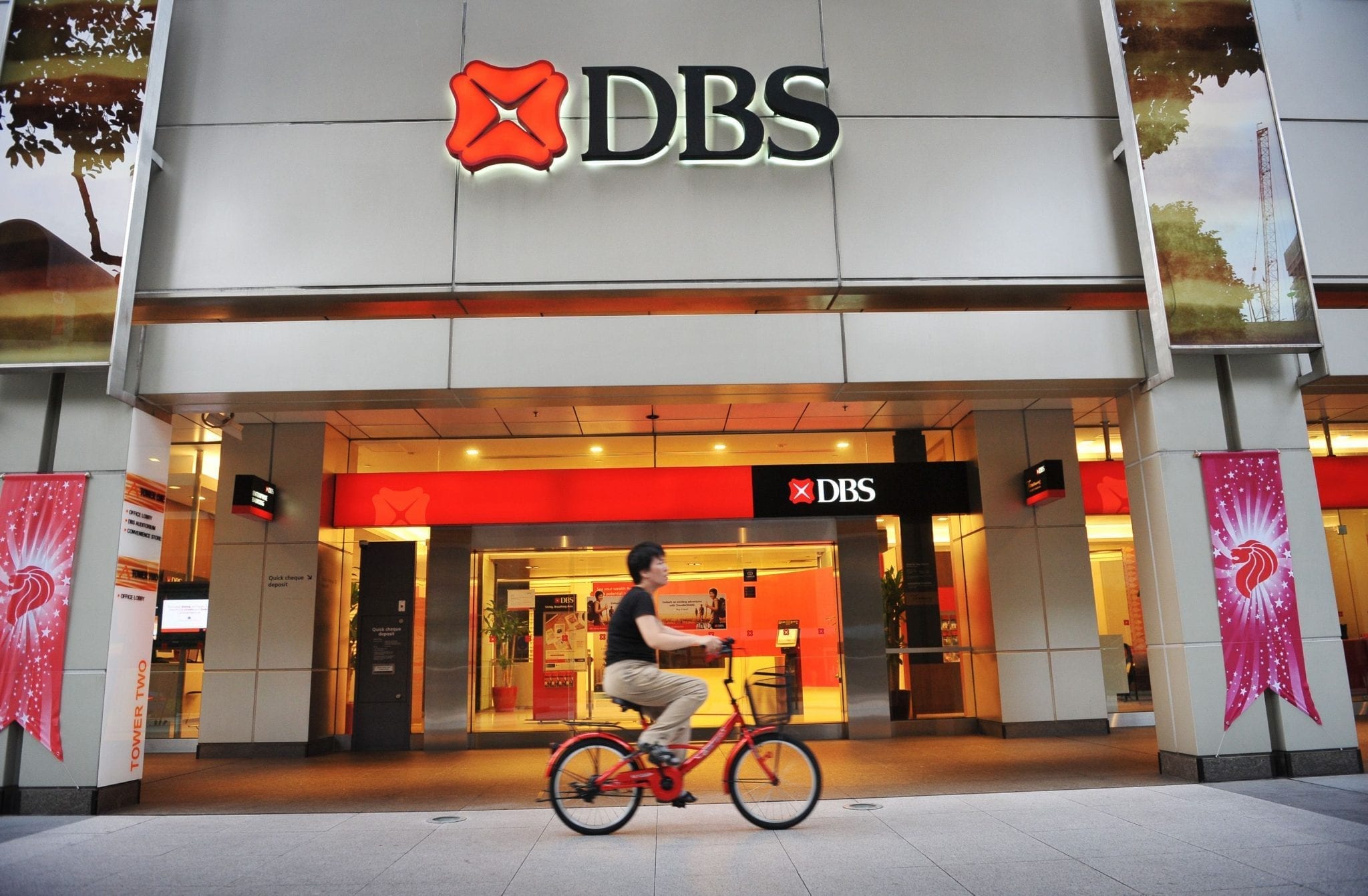
    Nine do-gooder firms in Asia are taking home nearly $1 million (S$1.3 million) under this year’s DBS Foundation Social Enterprise Grant Programme.

    Three of this year’s winners hailed from Singapore: NamZ, a food science startup; reach52, which uses apps to collect health data from under-served rural communities and hook them up with care providers; and Agape Connecting People, which finds work for people with disabilities, single mothers, prisoners and other disadvantaged job seekers.

    From empowering the disadvantaged and marginalized, to creating nutritious food that benefits both the environment and smallholder farmers, we are delighted to support these inspiring social entrepreneurs as they strive to build a better future for all, said Karen Ngui, head of group strategic marketing and communication at DBS in a media statement.

    The DBS Foundation scheme, which was launched in 2015, is open to social enterprises from Singapore, India, Indonesia, Taiwan, Hong Kong, and China.

    Each recipient gets up to S$250,000 to scale up its business operations. The funds can go towards market expansion, a production ramp-up, or other ways to grow the company’s impact on society.
  • As Chinese Digital Banks Arrive, OCBC Gets Ready

    As Chinese Digital Banks Arrive, OCBC Gets Ready

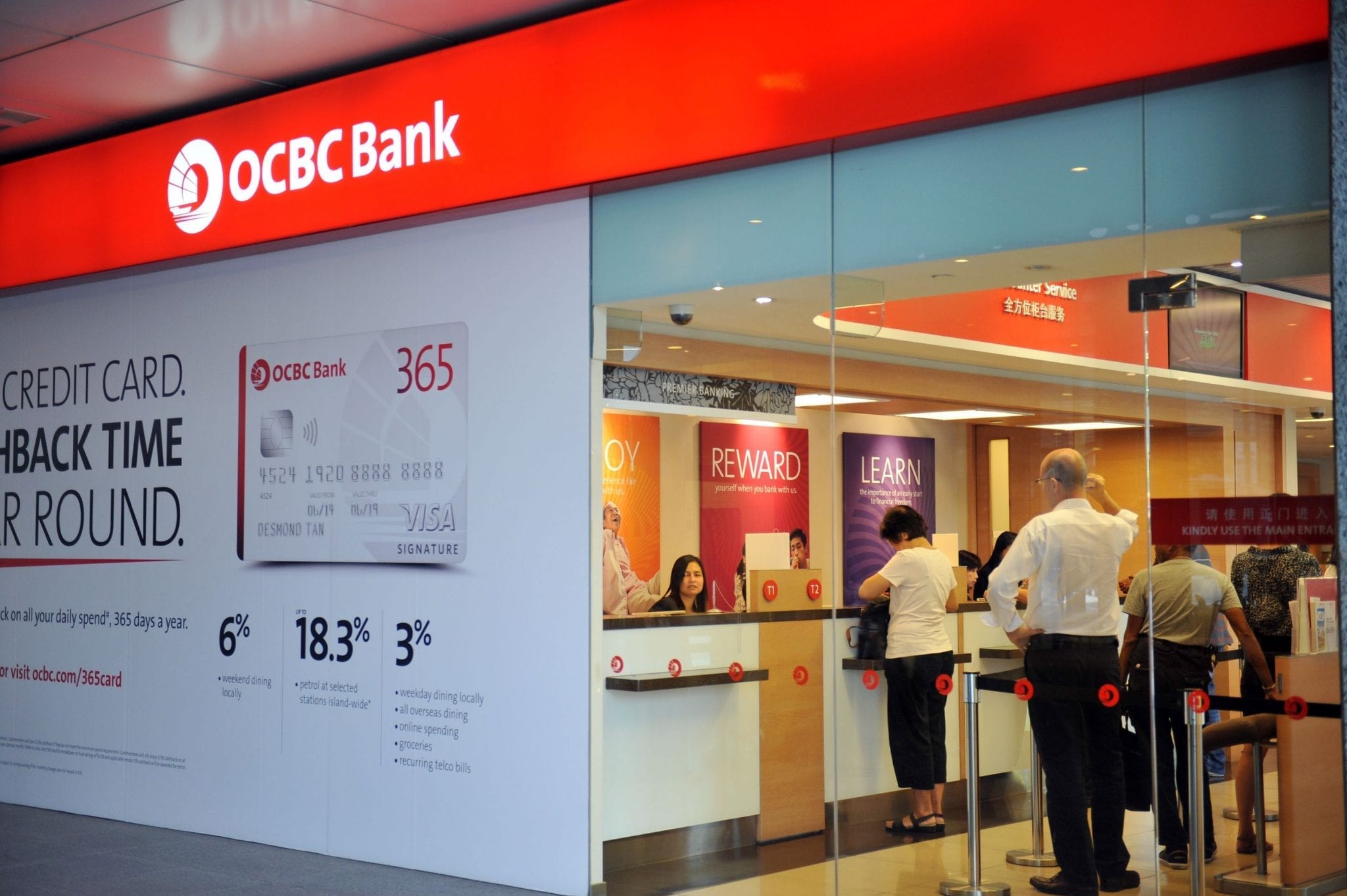
    When asked if Oversea-Chinese Banking Corp is ready to take on Chinese technology companies looking to take a piece of Singapore’s banking market, the lender’s top executive said they are well-positioned.

    Jack Ma’s Ant Financial Services Group has announced interest in Singapore’s digital banking licenses, but Oversea-Chinese Banking Corp’s (OCBC) chief executive Samuel Tsien is unfazed with the arrival of Chinese technology companies.

    This is because he views these Chinese technology companies as «extended» competition rather than new competition. Moreover, the local lender has its own digital banking plans – it has agreed in principle to join a group led by peer-to-peer lender Validus Capital and Temasek Holdings’ venture-capital arm to apply for a wholesale digital banking license before a year-end deadline, Bloomberg reported this month.

    The bank and its partners are looking to provide a platform to expand in the lucrative South-east Asian market. «We are talking to various parties but we have not made a final decision whether we would go in or not,» said Tsien.

    It’s attractive to us because it’s the way that we can test out in the new digital economy as to what we could do.

    Earlier this year, the Monetary Authority of Singapore (MAS) unveiled plans to grant as many as five virtual bank licenses to boost competition and innovation in the nation’s financial industry. China’s Ant Financial and Ping An Insurance (Group) are among companies considering applications, and Tsien said OCBC may join the race, both as a bank, and through its insurance unit.

    Another reason that OCBC is unfazed is due to high regulatory hurdles greeting new digital banks. Not only must they do proper Know your customer processes and transaction monitoring, they are also not allowed to offer unrealistic deposit rates just to gain market share, he added.

    .

  • OCBC Prefers Next Leader To Be From The Inside

    OCBC Prefers Next Leader To Be From The Inside

    The chief of Oversea-Chinese Banking Corp has signaled that he favors internal candidates over external ones to succeed him when the time comes.

    Samuel Tsien, who is in his eighth year as the chief executive officer at Oversea-Chinese Banking Corp (OCBC), wants someone familiar with various parts of the bank to lead, without giving names.

    We have internal candidates who are strong candidates, who have moved around in different functions, who are able to take over the bank in the event of a need, said Tsien, 65. Singapore’s other lenders are pursuing various tracks for management succession: United Overseas Bank’s boss recently expressed openness to outsiders while DBS Group Holdings wish to groom leaders from within.

    Under Tsien’s leadership, the group has spent meaningfully to grow its footprints in banking and wealth management. In 2014, OCBC spent $5 billion to take over Wing Hang Bank in Hong Kong. Subsequently, it bought the Singapore and Hong Kong wealth operations of Barclays, helping OCBC’s Bank of Singapore become the sixth-largest private bank by assets in Asia excluding China.

    More recently, OCBC was considering a bid for Jakarta-based PT Bank Permata, a move that would have made it Indonesia’s fifth-largest lender by assets. However, the bank walked away after considering Permata a poor fit, people with knowledge of the matter.

    The Shanghai-born leader also has ambitions to further expand in insurance, which OCBC counts as its third pillar alongside banking and wealth management. While its insurance arm – Great Eastern Holdings – is well established in Singapore and Malaysia, Tsien said he sees more room for growth in Indonesia and Greater China.

    Last year, Great Eastern bought PT QBE General Insurance for $28 million in Indonesia, and Tsien said he would look at other opportunities to grow, including acquisitions.

    In Hong Kong, the bank has a 33 percent stake in Hong Kong Life Insurance, which it decided against selling last year. «That operation is quite small. So we are still investing into this corporate but not significantly, as we look for opportunities in this market,» Tsien said.

  • DBS Acquires 40,000 Clients in Hyderabad

    DBS Acquires 40,000 Clients in Hyderabad

    Singapore bank DBS acquired 40,000 clients in Hyderabad after just opening its office earlier this year with plans to accelerate growth through new customer touchpoints.

    After launching just six months ago, clients from the Hyderabad now make up for 30 percent of DBS India’s customer base. When compared to other geographies in the Indian market, Hyderabad’s new accounts boasted especially high balances with a quarter of its wealth management clients being non-resident Indians.

    We will continue to invest where we believe the market provides an opportunity,» said Priyashis Das, head branch banking & wealth management, consumer banking, India, in a local media report. Hyderabad has a great opportunity for us.

    Moving forward, DBS will seek to further its growth in Hyderabad with plans to establish 100 customer touch points in the next 12 to 18 months through a combination of branches and e-kiosks across 25 cities. In addition to direct client acquisition, DBS will also invest in improving client experience by opening an experience center in local hub Waverock.

  • Tech Talent Buoys Financial Sector Job Creation

    Tech Talent Buoys Financial Sector Job Creation

    Despite a slowdown in hiring for trading and equity-related jobs, talent related to the burgeoning field financial technology has kept the financial sector an active recruiter in the Greater China region.

    Talent demand is high for both executive and operation roles, according to a Robert Walters Salary Survey 2020, with firms increasingly open to importing foreigners with matching skill sets. Tech talent across all industries are expecting bonuses of 11-20 percent of their 2020 salary and 40 percent expected a 7-15 percent increase in this salary.

    Recruitment remains active for financial sub-sectors such as virtual banking insurtech, private banking, wealth management, distressed debt and special situations funds.

    Whilst the outlook for tech in finance or not remained bright, the broader job market showed signs of being hit by the ongoing economic slowdown. Hong Kong’s expected salary increase for 2020 fell to the 10-15 percent range compared to 10-20 percent in 2019. Greater prudence is being applied to various aspects of hiring, the survey found.

    Companies are more cautious when hiring, and hesitate to look into a long-term hiring plan. Hiring processes are foreseen to be lengthened and additional interview stages will be added as employers are more insistent on candidates with specific skill sets, said Ricky Mui, managing director of Robert Walters Hong Kong. We also expect contracting engagements to continue to grow further.

  • OCBC and DBS Provide Green Loans for Singapore Developer

    OCBC and DBS Provide Green Loans for Singapore Developer

    Singapore developer Tiong Seng has secured S$125 million of green loans and performance-linked facilitates from OCBC and DBS, respectively.

    OCBC and DBS provided around $51.4 million and $40.4 million, respectively, according to a regulatory filing.

    The OCBC loan will be used exclusively on green projects with «clear environmental benefits» such as certified green buildings and projects that improve resource efficiency or generate renewable energy.

    The DBS loan will include environmental performance-linked benefits including interest rate and performance bond commission discounts if certain predetermined targets are exceeded. Review and validation will be conducted by an external independent party at the end of each 1-year period.

    Apart from diversifying our sources of funding, these facilities will allow us to focus on our environmental and green objectives to make a positive difference in our society, said Tiong Seng Holdings chief executive.

  • SoftBank Seeks $2.8 Billion From Japan Banks

    SoftBank Seeks $2.8 Billion From Japan Banks

    SoftBank Group is in talks to get as much as 300 billion yen ($2.76 billion) in financing from three banks.

    Mitsubishi UFJ Financial Group, Sumitomo Mitsui Financial Group and Mizuho Financial Group are currently in discussions with the investment company about its loans, various media reported.

    We are evaluating our options flexibly while considering cash on hand, said SoftBank spokeswoman Hiroe Kotera, who was quoted in «Bloomberg». Bank loans are one option, but nothing has been decided, she added.

    The loans are part of the company’s regular financing, said the newswire’s source, but Nikkei reported that SoftBank is raising money to pay for its $3 billion tender offer to WeWork shareholders.

    Last month, the investment firm agreed on a $9.5 billion rescue package for WeWork, in a deal that handed it 80 percent of the troubled co-working company. Masayoshi Son’s company reported an operating loss of close to $6.5 billion in the quarter, after writing down the value on a string of high-profile investments.

  • Vietnam reduces penalties for illegal currency exchange

    Vietnam reduces penalties for illegal currency exchange

    Vietnam has significantly lowered penalties for illegal currency exchanges following outrage over a man being fined VND90 million ($3,900) for exchanging $100 last year.

    The fine was revoked after a public outcry erupted over disproportionate punishment.

    An individual or a shop illegally exchanging up to $1,000 will receive a warning instead of a fine of up to VND100 million ($4,300), according to a new government decree set to take effect December 31.

    The fine will increase progressively, with a maximum penalty of VND100 million levied for illegally exchanging more than $100,000, the decree says.

    Illegal exports and imports of currency will be fined up to VND250 million ($10,800).

    The legal amendments come after a resident of the southern city of Can Tho was fined VND90 million ($3,900) in October 2018 for exchanging a $100 note at a gold shop.

    It is a common practice for Vietnamese citizens to exchange currencies at local gold shops that offer better prices than banks, even though very few of the shops are licensed exchangers.

    Can Tho authorities revoked the punishment after Deputy Prime Minister Truong Hoa Binh said such a heavy fine should be reviewed, and lawyers and lawmakers also said it was unreasonable?

    However, the province confiscated the $100 note from the man, an electrician who makes VND4 million ($171) a month.

  • Ant Financial Eyeing Singapore’s Digital Bank Licences

    Ant Financial Eyeing Singapore’s Digital Bank Licences

    Jack Ma’s Ant Financial Services may apply for a virtual banking license in Singapore, potentially making a splash in the regional banking landscape.

    Ant Financial Services is the latest contender to enter the race for a digital banking license. Up to two licenses are on offer for full digital banks, while another three are on offer for wholesale banks. The firm did not disclose whether it will seek a retail or wholesale license.

    We are actively looking into this opportunity,” said Ant Financial, who was quoted in a report. Ant’s payments app Alipay and its local e-wallet partners had about 900 million annual active users in China and 1.2 billion globally as of June, according to Bloomberg Intelligence.

    Singapore’s move to open up the banking industry to technology companies follows in the footsteps of Hong Kong, where Ant has obtained a license. So far, OCBC has agreed to join peer-to-peer lender Validus Capital and Temasek Holdings’ venture capital arm to apply for a wholesale license before the year-end application deadline.

    South-east Asia’s digital lending market is expected to more than quadruple to US$110 billion by 2025, according to a report by Bain & Co, Google, and Temasek Holdings.

  • OCBC Targets 200 Homegrown Cyber Risk and Security Staff

    OCBC Targets 200 Homegrown Cyber Risk and Security Staff

    OCBC is partnering with Temasek Polytechnic in an effort to train up to 200 employees to become cyber risk analysts and cybersecurity specialists in the next three years.

    The bank and higher education institution will launch a cyber certification program focused on four main areas: digital services and solutions, software development, risk and assurance, and security operations and monitoring. OCBC collaboration with lecturers of Temasek Poly’s School of Informatics and IT will also cover subject matters such as risk management, audit, and cybersecurity.

    At OCBC, we strongly believe that people will be the most important line of defense against potential threats, said Vincent Choo, OCBC’s head of group risk management. The bank takes great efforts to ensure that our people are aware of and trained to deal with existing and emerging risks.

    The certification is part of OCBC’s Future Smart program, a $20 million initiative to upgrade internal talent. In July 2019, OCBC also partnered with Ngee Ann Polytechnic to create a data certification program to train 200 data science and analysts over the next three years in order to double the number of such talents.

  • DBS Partners with Exiger to Fight Financial Crime

    DBS Partners with Exiger to Fight Financial Crime

    To fend off the evolving risks of financial crime, DBS Bank has partnered with Exiger, a provider of risk and compliance solutions to implement a due diligence solution powered by artificial intelligence (AI) to streamline and further bolster the bank’s screening processes.

    DBS will be tapping on DDIQ, the automated AI-powered solution designed by Exiger that understands and analyses content with cognitive reasoning. The solution accelerates and enhances risk assessments of clients, investments, transactions, third parties, and counterparties.

    Using AI to help manage risk in financial crime is a journey that involves many small, difficult steps but tremendous ambition and commitment to keep moving.  It is incumbent for financial institutions and their like-minded partners to continue to strive to give customers great experiences yet be adversarial to criminals and terrorists,» said Lam Chee Kin, Managing Director and Head, Group Legal, Compliance and Secretariat at DBS Bank in a media statement on Friday.

    Findings from each level of risk assessment are recorded in Exiger’s platform in a transparent and concise manner to ease the process of manually extracting and collating data for audit, compliance, and regulatory purposes.

    Banks are quickly recognizing that legacy systems and legacy technology will hold them back from achieving the next phase of growth and meeting increasingly demanding regulatory compliance requirements. DBS is cutting the path for traditional financial institutions to transform and compete in today’s digital market, commented Brandon Daniels, President of Global Technology Markets at Exiger.

    Exiger has developed purpose-built technology – DDIQ and Insight 3PM – to accelerate the suitability, efficiency, quality and cost-effectiveness of clients’ compliance operations. Exiger operates in six countries and eight cities around the world, including London, New York City, the Washington, D.C. metro area, Toronto, Vancouver, Bucharest, Hong Kong and Singapore.

  • HSBC, No Virtual Bank License Required for Digital Supremacy

    HSBC, No Virtual Bank License Required for Digital Supremacy

    HSBC continues to ramp up its digital investments and developments, claiming that a virtual banking license is not necessary for virtual banking supremacy.

    The bank has globally spent $2.2 billion on growth and digital enhancements in the first half of 2019, a 17 percent year-on-year increase. Although it is cutting global headcount, digital talent remains in demand for the bank which hired 1,000 staff for related teams in Hong Kong and the broader Asia Pacific region.

    Despite its digital developments, HSBC has not pursued a virtual banking license and it insists that there is no need.

    HSBC has invested significantly in its digital banking platforms, said Andrew Eldon, HSBC’s Hong Kong head of digital banking, in an SCMP report. There is nothing a virtual bank can do which we cannot offer. We do not believe we must have a virtual bank license to operate digital banking services.

    HSBC is very keen on investment in our digital platform and talent,» reiterated Andrew Connell, the bank’s global head of partnership development and innovation, retail banking and wealth management, citing the success of the PayMe app and a high rate of transactions executed through digital platforms at 90 percent.

    The bank is also placing emphasis on artificial intelligence and robotics to further improve efficiency. It currently has 1,600 robotic devices globally that processed 11.5 million transactions last year, a tenfold increase from 2017, with success stories in mortgage loan applications in Canada (speed up from 22 days to 1 day) and credit card approvals in Hong Kong (from 6 days to 1 day).

    AI is an important area for us to invest in. Banking services that adopt AI technology can be quicker and more accurate than through traditional processes,» Connell said.

  • Gamified Banking in Thailand Driving Clients Inflows

    Gamified Banking in Thailand Driving Clients Inflows

    Gamification within Thai banking has proven to be a hit for fintech firm Meniga, which has seen the concept flourish enough to drive clients to top up savings to increase their «level».

    Meniga is focused on developing white-labeled digital user experiences focused on leveraging the power of analytics and transaction data.

    According to Meniga’s APAC head of sales, Kanika Mittal, it had partnered with a Thai financier to power an app that gamified deposits by «leveling up» customers as they saved more in a way akin to popular games like Age of Empire, where users build and upgrade their civilizations.

    When they begin, they are on level one. As they save more they can build a village before upgrading to a town, city and super city, Mittal explained. «The app has a total of 74 levels and it has proven so popular that customers called to increase the savings limit per day to advance.

    A key prerequisite for unlocking the value of transaction data for individual customers is aggregation. While the technology undoubtedly exists, an ecosystem needs to be formed and, in particular, regulations need to be in place to drive industry growth and form trust in the market.

    It is critical to provide consumers and market players a sense of security and safety when such personal data is being shared across banks,» she explained. «That is why regulations play a key role. If it is an organic market for open banking, there will always be hesitation for open banking that is not backed by a regulatory authority.

    Meniga was founded in Iceland within the ruins of the financial crisis when the nation had already seen the worst with three of the top four banks having collapsed. Out of all this chaos, the firm sought to raise awareness about how to manage finances better, not only due to the evident demand for such insights or expertise, but also because «it is the socially responsible thing to do,» Mittal said.

    Proof of its commitment to the value of social responsibility, the firm recently partnered with UN Climate Change to provide customers with data and insights about their impact to the environment. The partnership developed methods to calculate the carbon footprint of users entirely based on their transaction data and the type of products and services consumed.

    Such developments are win-win scenarios,» she added. «That is part of the fabric of this company, based on our roots, and we believe in it.

  • CEO of SCB Julius Baer Resigns

    CEO of SCB Julius Baer Resigns

    The chief executive of SCB Julius Baer has left the role less than seven months into the appointment.

    Jiralawan Tangitvet, the CEO of SCB-Julius Baer, has resigned, according to a report in the Asian Private Banker. He was looking to make the newly-formed entity, a joint venture between Siam Commercial Bank and the Swiss bank, become a powerhouse in Thailand’s nascent private equity management sector.

    Tangitvet has joined the joint venture entity in April as its CEO this April. She was previously from Kasikorn Securities, where she was its managing director. Both banks could not be reached for comment at the time of this report.

    In June, SCB Julius Baer released its inaugural edition of the Wealth Report Thailand, which report focuses on the wealth management landscape in Thailand.

  • UBS Eyes C-Suite Rejuvenation

    UBS Eyes C-Suite Rejuvenation

    Long-standing UBS CEO Sergio Ermotti is expected to rejuvenate his top management before his exit.

    CEO Sergio Ermotti defused the pressure cooker this summer: Hiring Credit Suisse’s Iqbal Khan to run UBS’ $2.1 trillion private bank, together with Tom Naratil, took the immediate sting out of questions on Ermotti’s future.

    What Ermotti hasn’t done is refresh his top management, where the average age is 56 years old. In the next 12 to 18 months, the long-standing CEO is expected to lift several younger bankers into top management around him.

    The move isn’t surprising per se: CEOs like to «put their house in order» before leaving. The move is likely to sweep out anyone who is older than Ermotti, who is 59. That puts Finance Chief Kirt Gardner and Swiss boss Axel Lehmann, who turned 60 this year, and top lawyer Markus Diethelm, 62, in focus.

    Diethelm may enjoy a grace period until UBS can bury a messy French criminal probe of which he has overseen the defense. UBS didn’t comment on potential top management changes, and all three men declined to comment through a UBS spokesman.

    The gentle clear-out provides an opening for a layer of top executives directly under Ermotti who are chomping at the bit. Some – like wealth executive Christine Novakovic – have already made an open play for a seat at the table.

    Others are less well-known in Europe: Jason Chandler, who runs UBS’ American wealth arm, is viewed favorably in Zurich. So is Beatriz Martin, an acolyte of former investment bank head Andrea Orcel who has flourished since his departure more than one year ago.

    Following the exit of Orcel last year, Martin lobbied for a bigger role – and won one. The Spanish-born banker added U.K. CEO to her remit of operating chief at UBS’ investment bank. Top finance executive Angus Graham, while little-known, is another candidate, particularly for Gardner’s job.

    Besides Martin, several women are emerging as top contenders for more: veteran investment banker Ros L’Esperence, sidelined by Orcel but recently reinstated in a big job as global banking co-head (together with Javier Oficialdegui) is one.