Tag: Finance

  • Online lending booms in Vietnam, but lack of regulations

    Online lending booms in Vietnam, but lack of regulations

    It is easy these days to find a site for online lending and borrow quickly with simple procedures. Companies have entered the peer to peer (P2P) online lending realm that directly connects borrowers, whether individuals or companies, with lenders, and get up to 2,000 customers a day, Can Van Luc, chief economist of the state-owned creditor BIDV, said.

    This lending format does not require the involvement of an intermediary. It is flourishing because there are always people who have need for loans or want to lend money, and the rapid growth of technology precludes the need to go through intermediary financial institutions, he said.

    “This model has several strong points, including low cost and quick disbursement time, but the worry is it is easy for investors to make use of it for other purposes. There are many lenders who come to the P2P platform not to find borrowers but to invest in other fields and the relationship between the suppliers of the platform, borrowers and lenders is unclear due to the lack of a legal framework.”

    And because of this, lenders have been using gangs to recover their loans and put up their interest rates much higher than the legal cap set by the State Bank of Vietnam.

    Luc said there is a risk for both borrowers and lenders.

    He said authorities need to create a legal framework for this model soon to meet the strong demand in the market for credit.

    Economist Nguyen Tri Hieu argued authorities should create legal regulations related to contracts, interest rate, fees, and other aspects to avoid problems.

    Nguyen Thi Hong, Deputy Governor of the central bank, told a government meeting early this month that online lending has more or less turned into loan sharking.

    It is a no-go area for the central bank but it would monitor and make recommendations to the government to regulate the market, she said.

  • Julius Baer Expands in India

    Julius Baer Expands in India

    The Swiss-based bank is recruiting a total of 11 advisors. The new hires will be spread across Julius Baer’s Indian branches in Chennai, New Delhi, Calcutta, and Mumbai.

    Asia head Jimmy Lee said this summer that India is a core growth market, along with China and Indonesia, and of course major hubs Singapore and Hong Kong. Julius Baer has massively built its imprint in Asia with the 2012 acquisition of Merrill Lynch’s private bank outside the U.S. – a method the bank is keen to continue, as Lee recently said.

    Growth by M&A

    Since then, the bank has built out its business on the Indian subcontinent, including taking an entire team from now-defunct Banca Svizzera della Italiana, or BSI.

    The 11 bankers will report to Ashish Gumashta, CEO of Julius Baer Wealth Advisers in India, who took over last year following the exit of Rahul Singh last July. Gumashta was a veteran of Merrill Lynch in India, and instrumental in the integration into the Swiss private bank following the deal.

  • Vietnamese banks expect profits to rise

    Vietnamese banks expect profits to rise

    A newly-released central bank survey on business trends among Vietnamese banks found 72.6 percent saying their business situation had improved from the second quarter, with 15.8 percent reporting significant improvement.

    The survey, which was conducted in September, showed that over half, 56.8 percent, of the banks surveyed said that they have hired more staff in the third quarter, higher than the 46 percent in the second quarter.

    But 26.6 percent of them said they still need more staff and 61.5 percent planned to hire more people in the last quarter.

    The banks project lending to grow the most, followed by payments and deposits.

    Over 88 percent expect profits before tax to grow 18.6 percent on average from last year, higher than last year’s expectations of 13.6 percent.

    They expect capital mobilization on average will grow by 5.8 percent in the last quarter and 15.3 percent for the whole year, higher than last year’s 14.9 percent.

    The banks also forecast their outstanding loans to grow by 4.5 percent in the last quarter this year and by 15.2 percent for the whole year thanks to a stable mobilization interest rate.

    Vietnam has nine wholly-owned foreign banks, four state-owned banks and 31 joint-stock banks.

    The country’s credit growth in the first nine months of this year was 9.52 percent, lower than the 11.02 percent of the same period last year.

  • DBS Extends Support for Social Enterprises

    DBS Extends Support for Social Enterprises

    DBS said it is extending support for social enterprises via its Social Enterprise(SE) Support Programme on Tuesday specifically addressing their top three priorities. These include: improving their business model to achieve financial sustainability; sourcing for funding and; customer acquisition.

    «Social enterprises have big ambitions to make a positive impact in their community, and very often they struggle with limited resources. We want to support these social enterprises in their journey to create greater social impact,» said Joyce Tee, DBS’ group head of SME banking.

    Started A Decade Ago

    DBS pioneered the social enterprise banking package 10 years ago, but more than half of the social enterprises surveyed by the Singapore Centre for Social Enterprise said they lacked access to financial support.

    As such, DBS will continue to provide SEs access to virtually free banking services through its DBS Social Enterprise Package. With this package, SEs can open an account with a zero-minimum balance and enjoy unsecured loans at preferential rates.

    Three pillars

    The DBS Social Enterprise Support Programme has three pillars – mentoring, training and financing. Under the program, SEs will also receive a relationship managed account traditionally reserved for larger corporate customers. The programme will jointly be administered by the DBS SME Banking team and the DBS Foundation.

    To start, DBS will mentor the 12 social enterprises DBS Foundation awarded in its 2018 Social Enterprise Grant Programme. Over 28 senior SME relationship managers have committed at least of 8 hours a month to mentor social enterprises in their specialised industries. These industries include retail, F&B and healthcare.

  • Asian banks tear down brick-and-mortar expansion model

    Asian banks tear down brick-and-mortar expansion model

    Just a few years ago, starting a retail banking operation in Indonesia, a nation teeming with islands stretched across a distance as wide as the U.S., would require investing in thousands of physical branches and on an army of bank tellers.

    But Singapore’s largest banking group DBS Group Holdings is attempting to disrupt that business expansion model by wielding its own branchless smartphone banking platform.

    The bank launched digibank in Indonesia in August last year, the biggest selling point being accounts that can be opened without visiting a bank branch. Although other banks offer similar digital services, almost all of them require customers to open accounts at physical locations.

    DBS sales associates can be found in over 50 coffee shops and malls in the cities of Jakarta, Bandung, Surabaya and Jogjakarta. Signing up takes about 15 to 30 minutes — or “as long as it takes to drink a coffee,” as the digibank salesforce promotes. The accounts check fingerprints through e-KTP, the Indonesian electronic identification card.

    New applicants can verify their biometric identities on the spot at coffee shops, or they can wait at home for digibank agents to come visit them. Through their mobile phones, customers can accept deposits, transfer funds, and an artificial intelligence program answers most basic queries, such as those regarding balances and account histories.

    After DBS rolled out digibank in India in 2016, it captured over 2 million customers, yet only 60 to 70 people run that operation. “In the last five years since 2013, the whole world has changed,” said Pearlyn Phau, deputy group head of the consumer banking group and wealth management at DBS.

    The fact that smartphones handle almost all aspects of life, especially among the younger demographic, have paved the way for this moment. Advances in financial technology and flexible government regulations were also tail winds. “With the digital model, what we’re trying to do is to re-enter the retail space, but without the high cost of brick-and-mortar,” said Phau.

    DBS plans to add lending functions to digibank by the end of this year. In Indonesia, digibank drew about 600,000 users over the past year. “In the next five years, we want to book around 3.5 million customers,” said Wawan Salum, managing director of the consumer banking group at PT Bank DBS Indonesia.

    Another Indonesian bank, Bank BTPN, is attempting to eliminate the face-to-face verification step altogether. The company is applying for government permission to verify new accounts for Jenius, the smartphone-based financial service platform, via video calls.

    “Once that is approved, we will not even send someone on a motorbike to come and visit you for identification,” said Peterjan van Nieuwenhuizen, BTPN’s head of digital banking. “You can just do a video call on your phone.”

    Jenius, which went live in 2016, began offering unsecured loans last month. Lending limits are set based on an individual’s financial profile, such as the transaction history, and the financing includes instant-access credit lines. Jenius could offer insurance and wealth management products later on.

    “We started consumer retail banking…from scratch,” said Nieuwenhuizen. “We started from the concept of how we can be a life finance tool rather than a bank. Traditionally, it would have been very difficult for us, or any new player, to enter [Indonesia] because you’re building a thousand branches across more than 13,000 islands.”

    Jakarta, Indonesia’s capital, suffers from traffic snarls like other major metropolises across Southeast Asia. The extra effort to travel to a bank branch has contributed to the lack of foot traffic to bank branches. But the spread of smartphones has granted youth tools to easily fulfill bank transactions. Only 20% of adult Indonesians held accounts in 2011, but the share has risen to 49% last year, World Bank data shows.

    Globally, about 1.7 billion adults have neither opened an account, nor transferred money with a mobile phone, the World Bank estimates. However, two-thirds of unbanked adults have mobile phones. That shows digital banking could be ripe for explosion in places like the Philippines and Vietnam.

    Innovative financial services open the door for small to mid-tier banks, as well as foreign players, to expand market shares — more so than large, established banks. Go-Jek, the Indonesian ride-hailing app, also poses a threat to traditional banks since it runs an online payment service.

  • Asia’s Aversion to Bank Accounts Is a Big Deal

    Asia’s Aversion to Bank Accounts Is a Big Deal

    There’s a flaw in the forecast for an ever-rising Asia: a vast gap in the financial system. Big slices of the population don’t have a bank account.

    It’s hard to see the region reaching its full potential, let alone surpassing the U.S. as an economic superpower, until this bridge is crossed. An economy without broad use of banks cannot grow into a superpower.

    East Asia and the Pacific seem to be making progress on this. Seventy-one percent of adults have a bank account or equivalent at a mobile money provider, a bit more than the global proportion of 69 percent, the World Bank reckons. But the details are less encouraging. That 71 percent is little changed from four years ago. In Southeast Asia’s biggest economy, Indonesia, just 49 percent own an account.

    In the most populated members of the Association of Southeast Asian Nations, a group of 10 nations lauded for their economic progress and potential, the proportion is well below 50 percent. India is doing better at about 80 percent, but short of where it needs to be.

    This lopsided nature further reveals itself in the size of the overall pie. Indonesia overtook Singapore in 2016 as the largest financial-services market in Asean, according to PwC. On one level, this is a function of Indonesia’s huge population and gross domestic product. Yet almost every Singaporean has a bank account — around 96 percent — and the city is home to an array of sophisticated finance operations.

    You can see the potential for a place like Indonesia to pull ahead and meet its destiny. Just imagine where it would be if its people and businesses were fully banked! Until then, some of the more bullish projections about Asia must be tempered.

    What’s so great about a bank account? Once a person has an account, they have a better chance of fully participating in the economic life of their country, and their country has greater odds that gender, racial and income inequality can be addressed. Panelists at the World Economic Forum on Asean in Hanoi this month, in which I participated, wrestled with the subject.

    The more transactions that continue in cash, the harder it also is to tackle corruption. Indonesia’s anti-graft agency is taking action, but also meeting stiff resistance from factions within the government and parliament, says Transparency International. Not to pick on Indonesia. The Philippines, another seriously underbanked economy, and India struggle as well.

    Technology may hold part of the answer. As mobile payment systems proliferate around the globe, it’s entirely possible developing countries will just leapfrog over the bank branch and ATM structure and go mostly digital.

    It’s tough for banks to cover the 17,000 islands that make up Indonesia, for example. Almost twice as many Indonesians have mobile phone subscriptions as have bank accounts, the International Finance Corp. estimates. That’s spurring a surge in e-payments and investment from KKR, Warburg Pincus and Sequoia as well as Google, Alibaba and Tencent, the Nikkei Asian Review reported.

    However economies get there, it’s the destination that’s important. Without a financial system to service heavyweights, Asia can’t rule the world.

  • HSBC is making a bet on Asia millionaires

    HSBC is making a bet on Asia millionaires

    HSBC Holdings is planning to increase its wealth-management staff in Asia as chief executive officer John Flint bets on growth in the region.

    The bank plans to add more than 1,300 positions, split roughly between retail and private banking, by 2022, according to the heads of the two divisions, which between them currently employ just over 32,000 people in the region. The bulk of the hires, some of which could be internal, will be in Hong Kong and Singapore.

    The wealth strategy is part of Mr Flint’s plan to grow HSBC by expanding in Asian markets including Greater China and South-east Asia. The CEO, promoted in February, said in June that HSBC will pour as much as US$17 billion by 2020 into expanding the region’s business and improving technology. The bank aims to grow revenue from Asia by at least US$1 billion during the same period.

    “We have a real opportunity to do more and that’s to further build on Hong Kong and to materially build what we do today in Singapore,” Kevin Martin, the firm’s Asia-Pacific head of retail banking and wealth management, said in an interview. “Both businesses need to do it in concert,” he said, referring to the retail and private banking units.

    THe London-based bank’s plans for wealth management in Asia, which is dominated by global banks such as UBS Group AG, Citigroup Inc and Credit Suisse Group AG, come as regional firms including DBS Group Holdings Ltd. and BOC Hong Kong (Holdings) Ltd are also expanding amid an unprecedented rise in the region’s assets.

    HSBC said on Monday that Antonio Simoes, who was head of UK and Europe, will run global private banking from Jan 1. Peter Boyles, who currently runs the group, will retire after 43 years at the company.

    Offshore wealth in Asia, excluding Japan, has been growing at about 10 per cent a year, according to Boston Consulting Group data, faster than the 5 per cent globally. Offshore wealth from China alone amounted to about US$1 trillion this year, the consulting firm estimated.

    Hong Kong’s wealth managers expect to double the money they handle over the next five years to about US$2 trillion, the city’s Private Wealth Management Association said in a recent report published with KPMG China, citing the increasing interest of Chinese nationals looking to diversify their holdings.

    “The wealth that the Chinese have already offshore is a massive piece of opportunity for us,” said Tan Siew Meng, Asia-Pacific head of global private banking at HSBC.

    The expected growth in the industry may exacerbate Hong Kong’s shortage of relationship managers, according to the Private Wealth Management Association’s report. Two-thirds of respondents said a “limited talent pool” was the biggest supply-side constraint.

    Mr Martin said the 1,300 staff boost is “not a big scary number” given that his retail bank, including subsidiary Hang Seng Bank Ltd, employs about 31,000 people in the Asia-Pacific region. Staff within the group may transfer to the wealth business, he said. Hiring will be both internal and external, and include relationship managers, product specialists and advisers, Ms Tan said. Her private bank had 1,100 employees in the region at the end of last year.

  • BRI, BCA unveil new digital banking products for Indonesia

    BRI, BCA unveil new digital banking products for Indonesia

    In a bid to expand their customer base, state-owned lender Bank Rakyat Indonesia (BRI) and private lender Bank Central Asia (BCA) have invested in new digital banking products.

    BRI director Indra Utoyo said the new product was slated to launch before the end of the year. “Our new digital banking product will offer micro, retail and consumer loans,” Indra said last Thursday.

    He added that the product was expected to expand the lender’s customer base and beef up its micro, retail and consumer loan business.

    BRI’s new digital banking product would include the latest omni channel feature and biometric technologies, said Indra, adding that the bank had invested Rp 500 billion (US$ 34.83 million) to develop the new product.

    Meanwhile, BCA has unveiled its plans for a new digital banking product that promises simpler transactions on e-commerce platforms. The product is expected to launch in October.

    “The [digital banking] service will support transactions made through credit cards, debit cards and bank transfers,” said BCA financial director Vera Eve Lim on Monday, adding that the product would also offer support for financial settlements.

  • Thai Bankers Association explains mobile banking outage

    Thai Bankers Association explains mobile banking outage

    The Thai Bankers Association (TBA) has explained that an Internet banking outage between August 31 and September 1 was due to human error, and has made known that six guidelines have been set to ensure the stability of the digital system.

    President of Information Technology for the TBA, Somkid Jiranantrat indicated the outage on August 31 was the result of a command error by an agent of Kasikorn Bank. The flawed action was severe enough to eject Kasikorn Bank from the central system shared by the nation’s commercial banks while also impeding the system as a whole. On September 1, over 40,000 erroneous bank transfers were logged at an average rate of 1,000 requests per every nine minutes, again causing the system to shut down.

    In eliminate the possibility of such errors, TBA and ITMX, the central network handler, have come out with six guidelines. The first is to increase mobile accommodations two fold to reduce bottle necks during peak hours. The second is more stringent control over changes by individual banks. The third is to double ITMX’s capacity. The fourth is to establish a committee between banks and ITMX, which will set conditions for the temporary ejection of a bank from the system. The fifth is to create a more general interface in monitoring the system and the sixth is to reconsider the nation’s mobile banking structure.

    Kasikorn Bank’s mobile banking system can accommodate a maximum 6,000 requests per second with peaks at present hitting only 4,000 requests per second.

  • Vietnam’s VCCI shared 3 solutions to resolve businesses’ credit crunch

    Vietnam’s VCCI shared 3 solutions to resolve businesses’ credit crunch

    A recent survey found that 217 out of 504 questioned businesses in various sectors could not get bank loans for lack of collateral.

    The survey was done last May for the “Assisting Vietnamese businesses with increased access to credit through improving governance and financial transparency” project of the Vietnam Chamber of Commerce and Industry (VCCI).

    Releasing the survey results last month, the VCCI said businesses have difficulty proving their creditworthiness to banks and other credit institutions.

    Nguyen Thi Mui, an economist, acknowledging the need to provide banks with collateral for loans, also pointed out that only a small proportion of businesses can fully meet banks’ requirements.

    The Government and the State Bank of Vietnam have in the past tried various programs to ease credit access but with no great success.

    The VCCI has three possible solutions but stressed banks have a major role in remedying the problem.

    Firstly, bank staff should devote time and effort to assist customers seeking loans. More importantly, banks should fully understand the challenges that businesses face.

    They should be able to detect whether or not investing in this business would benefit them in the long run. If so, the bank should help loan takers overcome the current finance problem.

    It said banks should adjust their risk appraisal methods to better serve small and medium-sized enterprises. A large part of Vietnamese banks’ income comes from interest on loans to businesses, it said.

    Secondly, the VCCI said, banks’ current interest rates do not only fit the nation’s current economic situation but also affects businesses’ competitiveness. It recommends that banks should narrow the gap between their deposit lending interest rates to two percent.

    Lastly, the VCCI said, businesses should look to improve themselves in terms of human resources and management to appeal more in front of lenders.

    According to the General Statistics Office (GSO), Vietnam had more than 600,000 enterprises at the end of last year, 95 percent of them small and medium-sized enterprises with an annual turnover of less than VND100 billion ($4.3 million).

    The number of enterprises with turnovers less than VND20 billion makes up over 70 percent of the total number of small and medium enterprises. VCCI statistics show that nearly 60 percent of these micro enterprises did not succeed in getting bank loans in 2016.

  • Thailand on the Verge of Becoming a Cryptocurrency Heaven

    Thailand on the Verge of Becoming a Cryptocurrency Heaven

    Following the Royal Decree by Thailand’s regulatory authorities on May 14, 2018, that cryptocurrencies are formerly digital assets, the Asian nation is set to take its local blockchain-based digital currency industry to the next level by showing five Initial Coin Offering (ICO) projects the green light to operate in the area, out of the 50 startups that filed for approval.

    A Crypto Giant in the Making?

    The Thai Securities and Exchange Commission (SEC) is looking to register five ICO projects later in June when the cryptocurrency decree takes effect.

    According to the SEC director of equity finance Thawatchai Kiatkwankul, of the 50 firms that filed to launch their crypto-based fundraisers, only five meet the set standards of the SEC. As such they will fall under the regulatory watchdog’s approval.

    Amidst that backdrop, the SEC is looking to hire more staff and expand its operations to enable it to handle both Initial Public Offerings (IPOs) and ICOs.

    ICOs Must Have Real Use Cases

    While many startups have succeeded in developing products and services to solve real-life problems via the ICO route, the sad truth remains that there are a vast array of projects that have no real use cases but are merely interested in deceiving people with technical grammatical jargons and cart away with their funds.

    The regulator has also hinted on easing the rules governing crypto investments and transactions provided investors become more educated concerning the risks involved in the burgeoning industry.

    Bitcoin, Six Altcoins, 90-days Ultimatum, and Token Sale Information

    The Thai authority’s guidelines also entail that only seven established cryptocurrencies including bitcoin, ether, XRP, litecoin, stellar, ethereum classic and bitcoin cash could be used as trading pairs.

    With the latest development, the SEC has mandated all “stakehodlers” in its crypto space including exchanges, brokers, ICO organizers to endeavor to come under its umbrella within 90 days.

    Additionally, all market participants are required to seek approval from the Thai Finance Ministry before carrying out activities in the virtual currency industry. Interestingly the SEC has also made it clear that retail investors are not allowed to purchase ICO-generated tokens worth more than 300,000 baht ($9,000), while institutional investors and high net worth persons can pump in an unlimited amount of funds into any project. At a time when crypto-related businesses and digital currency exchanges are migrating to Malta due to the nation’s amenable regulation for cryptos, this latest move by the Thai authorities could also lure more blockchain startups to the region.

  • ETF Conference to be held in Shanghai

    ETF Conference to be held in Shanghai

    Shanghai Stock Exchange has distributed “Stock Share Option Industry Report” to its securities members. Report noted, in January 2018, Shanghai Exchange 50 ETF, daily deal has reached 1.29 million, with an increase of 13.74%, the highest trading day since the establishment of SH50ETF.

    One of the Private Equity Investors disclosed, with the climb in price of SH50ETF in 2017, funds are coming in from everywhere. Staring at the in-market ETF Share Option. Some of the Quantitative funds has been join in the game to look for a share of the profit.

    With the increase interest from the investors, SH50ETF has progressed itself. By the end of January, there are more than 260 thousand investor accounts. With 2126 new broker accounts. With 84 securities, 23 CTA brokers. ETF in China will be, also soon to be one of the largest in the world.

    CaishiV will be hosting the 2nd Real Estate Equity Investment & REITs, with support from our long-term partners, such as AIMA, CFA, CHFA and CAIA. For the past years, CaishiV have managed to reach out to more than 5000 management positions, company leaders and industry leaders. They provide the industry leading conference management. There will be top investors, firms and fund managers, rounding 400 attendees across the industry.

    In 2018, the event topics will be: The Future of Smart Beta, Thematic ETFs will Play a Big Role in 2018, Bitcoin ETF, Will ESG ETF Do a good job in emerging markets, Gold ETF and Bond ETFW, Quantitative investment in ETF; Equity ETF – How to Actively Manage You, Equity Portfolios, Data Mining + Tech Innovation, AI in ETF, Should We Add Blockchain Inside, What Kind of Strategy will be Most Attractive in Emerging Markets; Cross-border ETF Investment, Profit form Global ETFs…

    To learn more, please go to nextetf.com/index.php/en/index.html. Or contact dorothy.yao@finfoglobal.com.


  • Vietnam’s HDBank to absorb PGBank

    Vietnam’s HDBank to absorb PGBank

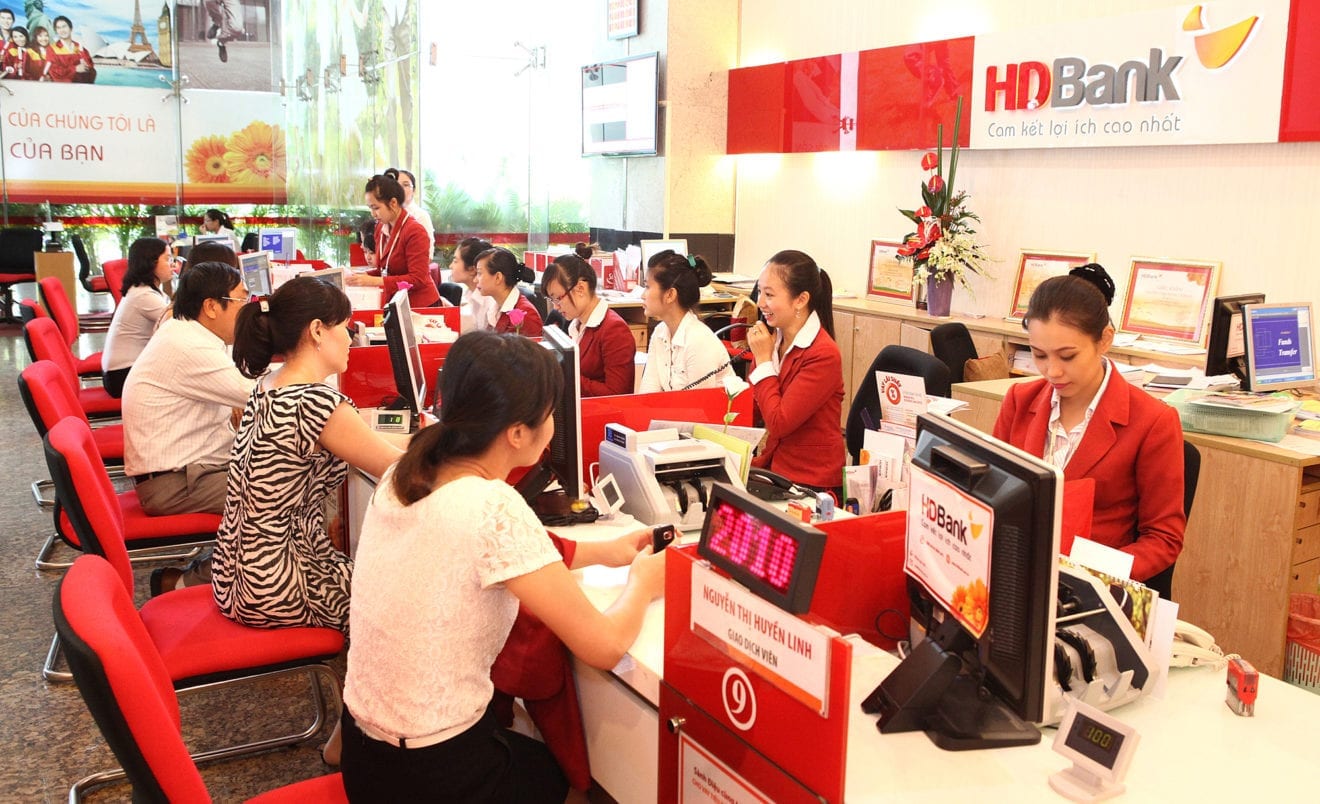
    Each share of PGBank will be converted into 0.621 HDBank share. Vietnam’s Ho Chi Minh City Development Joint Stock Bank, better known as HDBank, said its shareholders approved on Saturday a plan to merge with the unlisted Petrolimex Group Commercial Joint Stock Bank as it seeks to expand operations in the country.

    The merger is scheduled to take place by August this year, the bank said in a statement.

    Each share of Petrolimex Group Commercial Joint Stock Bank, or PGBank, will be converted into 0.621 HDBank share, it said, adding that HDBank will issue 300 million new shares for the conversion.

    The merger will enable HDBank to expand its client base, including with Vietnam National Petroleum Group, which holds a 40 percent stake in PGBank and a share of around 50 percent of Vietnam’s retail-transport fuel market.

    The shareholders also approved a pretax profit target of VND3.92 trillion ($172.15 million) for this year, a 62.2 percent increase from last year.

    HDBank, a retail bank whose vice chairwoman is Nguyen Thi Phuong Thao, the billionaire founder and chairwoman of Vietjet Aviation, is targeting to grow total assets to VND242.87 trillion by the end of this year, up 28.3 percent from end-2017.

    HDBank, which listed its shares on the Ho Chi Minh Stock Exchange in January following a $300 million IPO in November, reported pretax profit of 1.045 trillion dong in the first quarter this year, up 170 percent from a year earlier. ($1 = 22,771 dong)

  • HSBC’s big push into Asia

    HSBC’s big push into Asia

    HSBC’s adjusted pre-tax profit of $6,033m for the first quarter is in many senses disappointing. It was down 3% from a year earlier and fell short of analysts’ estimates. From an Asian perspective, however, HSBC’s Q1 financial results highlight the scope of its expansion in the region – growth which has also contributed to its rising cost base. If you’re thinking about applying to HSBC in Asia, here’s what its latest numbers tell us about jobs at the bank.

    Asia generated $4,756m in adjusted profit before tax in Q1, up 8% from a year earlier. By contrast, Europe’s contribution to profit fell 72% to $222m over the same period, while North America’s declined 16% to $438m. Asia now accounts for 79% of HSBC’s profit. This suggests that the firm is doubling down on its pivot to Asia (and to China in particular), a strategy that seeks to redeploy $100bn or more of assets into the region. HSBC announced the plans in 2015, adding that it would hire 4,000 staff in the Pearl River Delta region in southern China, although it still faces strong competition from local banks there.

    HSBC is hiring investment bankers in China…

    HSBC Qianhai Securities, the first joint-venture securities company in mainland China to be majority owned by a foreign bank, has been hiring in the first quarter. HSBC made “made strategic hires in our securities joint venture in mainland China”, group chief executive John Flint, said in a statement within the bank’s financial report, without elaborating. Qianhai, which was launched in December, already has licences to offer equity and debt sponsoring and underwriting, equity research and brokerage of locally-listed securities, and domestic and cross-border M&A advisory. First quarter investment in Qianhai contributed to rising costs at HSBC, Flint said.

    HSBC is hiring more technologists, product managers, developers and content producers as it expands its digital-banking team in Hong Kong, its main digital development centre alongside London. This expansion appears to have continued into Q1. Flint said in his statement that the bank has “invested to enhance our digital capabilities in all our global businesses”.

    HSBC’s Asian private bankers are getting more productive

    HSBC’s Global Private Banking division makes up just 2% of its profits globally, but it is expanding in Asia, particularly in Hong Kong. Revenue in the division increased by $45m or 10%, “mainly in Hong Kong, as higher investment revenue reflected increased client activity, and deposit revenue increased as we benefited from wider spreads”. Although HSBC’s report doesn’t reveal regional revenue or profit figures for GPB (or other divisions), it does disclose client assets. First-quarter AUM in Asia rose 18% year-on-year to $131bn. But while rivals – from UBS to UBP – have been aggressively hiring in the sector, HSBC’s headcount of relationship managers in Asia stayed static at 470 last year, according to Asian Private Banker. The AUM increase suggest that HSBC’s existing RMs are becoming more productive.

    The first quarter was also a fruitful one for RMs working in wealth management in Asia. Their unit (which serves clients who aren’t rich enough to use the private bank and is part of HSBC’s wider Retail Banking and Wealth Management division) saw its global income rise 27% year on year to $1,829m. The increase “was primarily in investment distribution, reflecting higher sales of retail securities and mutual funds in Asia, following increased investor confidence”.

    Like their counterparts at rival Asia-focused banks Standard Chartered and DBS, Asian transaction bankers performed well at HSBC in Q1. Revenue within the Commercial Banking division increased by $0.3bn or 10%, notably in global liquidity and cash management, as HSBC “benefited from wider deposit spreads in Hong Kong and mainland China”. Credit and lending revenue also increased in Hong Kong.

  • Maybank Indonesia’s Q1 top line rises 3.6 pct

    Maybank Indonesia’s Q1 top line rises 3.6 pct

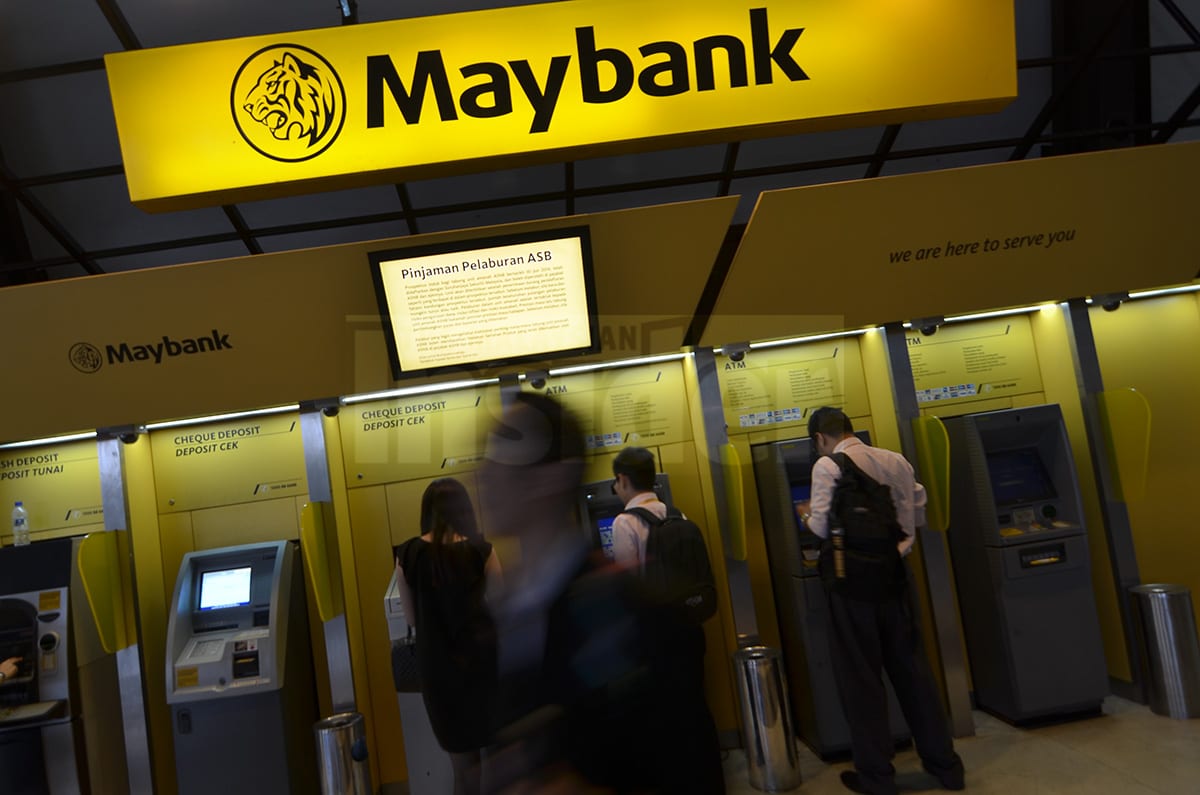
    PT Bank Maybank Indonesia Tbk (Maybank Indonesia) today reported that its operating income after provisions increased to 682 billion rupiah for the first quarter ended March 31, 2018 compared with 633.9 billion rupiah recorded in the previous corresponding period.

    In a statement, Maybank Indonesia said its profit after tax and minority Interest (PATAMI) stood at 463.1 billion rupiah for Q1, slightly lower than the 490.1 billion rupiah recorded in the same quarter a year ago.

    Gross operating income rose 3.6 per cent to 2.5 trillion rupiah for the three months.

    Maybank Indonesia said its operating income after provisions increased by 7.6 per cent and the bank’s top line grew 3.6 per cent supported by continued improvement in operational efficiency in line with its Strategic Cost Management Programme, as well as fee based income expansion, improvement in provisioning levels, growth in Sharia business and improvement in subsidiaries.

    Sharia Banking continued to record strong performance in the first three months of 2018 with total assets increasing by 25.7 per cent to 27.1 trillion rupiah, making up 15.4 per cent of the itss total assets.

    Total financing rose 41.6 per cent from 14.3 trillion rupiah as of March 2017 to 20.2 trillion rupiah as of March 2018, while its total deposits grew 44.1 per cent to 17.5 trillion rupiah from 12.1 trillion rupiah.

    It said Non Performing Financing improved significantly to 3.2 per cent as of March 2018 compared with 4.6 per cent in the previous year.

    The bank recorded a moderate loans growth of 2.2 per cent to 122.5 trillion rupiah as at March 31, 2018 from 119.9 trillion rupiah the previous year.

    Global Banking loans recorded growth of 6.2 per cent to 27.6 trillion rupiah as of March 2018 from 26 trillion rupiah as of March 2017.

    Maybank Indonesia said its customer deposits grew by 2.7 percent year-on-year with current accounts growing strongly at 27.3 per cent year-on-year, lifting the CASA (current account savings account) ratio to 39.7 per cent.

    On March 15, 2018, the bank also issued Shelf Registered Bonds II Bank Maybank Indonesia Tranche II Year 2018 amounting to 645.5 billion rupiah to support its business expansion.

    Maybank Indonesia has maintained its robust liquidity profile with its loan-to-deposit ratio remaining at a healthy level of 85.6 per cent and liquidity coverage ratio at 176.4 per cent as of March 2018, far in excess of the mandatory minimum of 90 per cent.

    Maybank Indonesia president director Taswin Zakaria said the bank will continue to grow its assets selectively to ensure sound asset quality going forward.

    “Our Global Banking continues to be the leading contributor to our assets growth.

    “The Sharia First strategy adopted by the Bank since 2014 continues to deliver impressive results.

    “However, we expect our CFS (Community Financial Services) portfolio to gradually strengthen in the coming quarters as we see opportunities in the retail and small medium enterprise segments.

    “This will be further underpinned by our recent initiative in transforming our retail business model,” he said.

    Maybank Group president and chief executive officer Datuk Abdul Farid Alias said the first quarter results demonstrate Maybank Indonesia’s resilience in growing its revenue despite the increasingly competitive market in the country.

    “The bank has firmly embedded sustainable business development strategies which cover retail transformation, digital banking enhancement, culture transformation as well as asset quality selection which will ensure continued value creation for all our stakeholders.

    “The outlook for the medium term remains challenging; but we are optimistic that we can manage the risks and ensure steady growth of our business in the coming quarters,” said Farid.