Tag: Finance

  • Bitcoin futures rocket past $18,000; Asian shares buoyant

    Bitcoin futures rocket past $18,000; Asian shares buoyant

    The craze for cryptocurrencies entered a new chapter on Monday as bitcoin futures rocketed by one-fifth of their value at a hotly anticipated launch, while Asian shares climbed amid optimism about global growth.

    The most-traded contract on the Chicago-based CBOE Global Markets exchange XBTc1 opened at $15,460 in New York on Sunday evening, before leaping to a high of $18,700 – a gain of 21 percent. They were last quoted at $18,100 a premium of more than$1,700 to the price on Gemini Exchange.

    The futures are cash-settled contracts based on the auction price of bitcoin in U.S. dollars on the Gemini Exchange, which is owned and operated by virtual currency entrepreneurs Cameron and Tyler Winklevoss.

    The cryptocurrency has boasted a gravity-defying 15-fold gain since the start of the year, attracting institutional interest and no small amount of question marks.

    The acting governor of the Reserve Bank of New Zealand on Sunday said bitcoin appeared to be a “classic case” of a bubble.

    “With a bubble you never know how far it is going to go before it comes around,” Grant Spencer told a local television program.

    Some market participants believe the fallout across other financial assets from a potential bursting of the bubble will be limited.

    “Bitcoin’s market capitalization is currently around $240 billion, which is much smaller, say, than the value of gold outstanding,” said Andrew Kenningham, economist at Capital Economics.

    “If the price of bitcoin fell to zero today, the paper losses would be equivalent to a 0.6 percent fall in U.S. equity prices. As most investors have bought bitcoin at much lower prices, the relevant losses would arguably be smaller.”

    Asian shares were buoyant with every single market but one in the black, following strong U.S payrolls data and better-than-expected Chinese trade figures on Friday.

    Spreadbetters pointed to a strong opening for European shares, while U.S. stock futures indicated a firm start for the S&P 500 which is seen up 0.1 percent ESc1.

    The MSCI’s broadest index of Asia-Pacific shares outside Japan .MIAPJ0000PUS added 0.5 percent to 552.38, well above a recent two-month trough of 542.27 points.

    Japan’s Nikkei .N225 climbed 0.6 percent while Chinese shares rallied, with the blue-chip CSI 300 index .CSI300 up 1.3 percent. Vietnam .VNI was the only Asian index in the red.

    Rate rises?

    Currency market investors were cautious ahead of a big week for policy meetings globally, with the Federal Reserve the only major central bank expected to raise interest rates. The Bank of England and the European Central Bank are likely to hold rates steady.

    The dollar steadied near a one-month top against the yen JPY=, after climbing 1.2 percent last week. The dollar index, which measures the greenback against a basket of currencies, eased 0.1 percent from close to a three-week high. .DXY

    Traders will keep their eyes peeled for the Fed’s future rate projections as U.S. wages growth and inflation crawl at a snail’s pace.

    Data out on Friday showed average hourly earnings in the United States nudged up 5 cents or 0.2 percent in November when economists had looked for a 0.3 percent gain.

    The weakness persisted despite stronger-than-expected non-farm payrolls, which rose by 228,000 in November.

    “We’ll be listening close for any signs of a dovish shift,” said Aerin Williams, New York-based forex strategist for Citi about the Dec. 12-13 Fed meeting.

    Elsewhere, oil prices slipped after the latest rise in the U.S rig count pointed to an increase in production there.

    U.S. crude CLc1 was down 15 cents at $57.21 a barrel and Brent crude LCOc1 inched 17 cents lower to $63.23, drifting away from a recent 2-1/2 year peak of $64.65.

  • Why Has Bitcoin’s Price Gone Up So Fast ?

    Why Has Bitcoin’s Price Gone Up So Fast ?

    Bitcoin has been in a bull market like few the world has ever seen. At the beginning of the year, the price of a Bitcoin was below $1,000. It hit $5,000 in October, then doubled by late November. And on Thursday, less than two weeks later, the price of a single Bitcoin rose above $20,000 on some exchanges, according to Coinmarketcap.

    The latest price spike has been credited to signs that Wall Street companies plan on bringing their financial heft into the market.

    At the current cost, the value of all Bitcoin in circulation is about $300 billion. To get a sense of how big that is, all the shares of Goldman Sachs are worth about $90 billion.

    The gains have been driven by several other factors — perhaps the most important being the irrational mentality that can take over in speculative bubbles.

    But most people buying Bitcoin are doing so in the belief that others will want it even more in the future. The gains, though, have many people, even Bitcoin believers, anticipating a big crash.

    Currently, the average price of one Bitcoin is about $15.435, according to Blockchain.info, a news and data site.

    Bitcoin used to be all about libertarians and black-market trade. Are those still driving the price?

    The fringe communities that drove Bitcoin in its early years are playing a much less important role in the current rally.

    Many investors have said the most important factor driving the current enthusiasm is the entry of hedge funds and other institutional investors.

    The path for large investors has been smoothed by the Chicago Mercantile Exchange and Chicago Board Options Exchange, which have been racing to roll out Bitcoin futures contracts. Most banks are already signed up with these exchanges and consequently can immediately begin trading the contracts. The options exchange has said it plans to start trading on Sunday.

    It is still unclear how the arrival of Bitcoin futures will influence the demand for the digital tokens.

    With a futures contract, banks can bet on the price of Bitcoin without holding the underlying Bitcoins. This is expected to bring many new players into the market who don’t want to deal with the complications of holding Bitcoins.

    But the futures contract will also allow investors to short Bitcoin, or bet on the price’s going down, which has been hard to do until now. Some analysts think this could put downward pressure on the price. Other market participants have worried that Bitcoin futures could spread the risks of Bitcoin into the rest of the financial system.

    People still use Bitcoin and other virtual currencies to make ransom payments and buy illegal goods online, including synthetic opioids. But that activity has been on the wane since the authorities shut down some of the largest online black markets this year.

    What role are smaller investors playing in the virtual currency markets?

    Individual investors have been just as active as large investors. Nowhere has the phenomenon of ordinary people buying virtual currencies been more visible than in South Korea, where several exchanges have storefronts to help new customers. This is all the more remarkable because just a year ago, Koreans showed almost no interest in these markets.

    Small Japanese investors have also been investing in Bitcoin. They have been encouraged by laws passed this year that essentially legalized Bitcoin and allowed Bitcoin exchanges to get regulatory licenses.

    Most small-time investors have gone to the San Francisco company Coinbase, which provides a Bitcoin brokerage service, similar to Charles Schwab, as well as an exchange for larger investors. Coinbase now has more account holders than Schwab, and it has struggled to keep up with the growth.

    China used to be the most active country for Bitcoin trading and mining, but the authorities there have cracked down this year.

    What are the dangers of getting into this market?

    Many of the largest exchanges, including in South Korea, are essentially unregulated. The lack of oversight means that no one is checking that the exchanges are properly securing their customers’ money or that large players are not able to manipulate the price. One of the largest exchanges in the world, Bitfinex, has been hacked numerous times and provides little transparency about where it is keeping its money.

    Even regulated exchanges, like Coinbase in the United States, have not been battle tested like larger financial institutions, and their operations have gone down at key moments.

    Once people buy Bitcoin or other virtual currencies, they are often targeted by hackers who have become experts at penetrating Bitcoin accounts.Bitcoin “wallets” are vulnerable to new kinds of attacks that are not a problem for ordinary financial accounts.

    Most important, in contrast to money in a bank account, when a Bitcoin is gone there is essentially no way to get it back and no insurance covering its loss.

    Are more people using Bitcoin to pay for things?

    When Bitcoin was released in 2009, it was described as a new kind of electronic cash.

    Recently, though, many programmers working on Bitcoin have said the system in its current form is not a particularly good way to pay for things.They argue that it is best designed to serve as a sort of scarce commodity, like digital gold, allowing people to keep their money outside the control of governments and companies.

    Many people who want to use virtual currencies for online payments are looking to Bitcoin competitors, like Bitcoin Cash and Monero.

    What role are the other virtual currencies playing in this frenzy?

    Earlier this year, bullish sentiment was focused on Ethereum, a virtual currency network that is more adaptable than Bitcoin. The price of Ether, the virtual currency on the Ethereum network, has continued to rise in recent months, but not as fast as Bitcoin.

    Many investors were also putting their money into custom virtual currencies released by entrepreneurs in so-called initial coin offerings. These new virtual currencies have generally been designed to serve as the internal payment mechanisms on new software the entrepreneurs are building.

    This fall, though, regulators have signaled that they are planning to crack down on coin offerings.

    Where did virtual currencies come from, and how do they work?

    The Bitcoin software was released in early 2009 by a mysterious creator who went by the name of Satoshi Nakamoto. The search is still on for the true identity of Satoshi.

    The software released by Satoshi set out the basic rules for Bitcoin and the computer network on which it lives. Unlike other forms of money, which are controlled by governments and financial institutions, Bitcoin operates on a decentralized network of computers that no one institution controls.

  • Bangkok Bank provides Bt2-bn funding for VPI particle board plant

    Bangkok Bank provides Bt2-bn funding for VPI particle board plant

    Bangkok Bank has approved a credit line of Bt2 billion to Vanachai Panel Industries (VPI) for construction of a particle-board factory in Surat Thani, known as the PB-3 project.

    VPI needs the new plant in order to increase its capacity to produce high-quality and environmentally-friendly board that meets the needs of customers in its major markets in East Asia and Asean.

    Bangkok Bank senior executive vice president Chansak Fuangfu on Tuesday said the bank was pleased to support the success of Vanachai Group (VNG), a leader in the production and distribution of environmentally friendly panels, with a credit line of Bt2 billion to its subsidiary VPI for construction of the PB-3 factory.

    The funds will be used to increase annual production capacity by 450,000 cubic metres to meet demand from East Asia and Asean.

    Given the good growth of the company, its stable financial status, and long partnership with Bangkok Bank, the bank is ready to fully support VNG in its international expansion, Chansak said.

    VPI managing director Wanthana Jaroennawarat said that with the new Bt2-billion investment, the company aimed to complete construction of the PB-3 project and commence commercial production in the second quarter of 2019.

    The investment will enable the company to double its annual particle-board production capacity to 900,000 cubic metres using an efficient and environmentally friendly production process, he added.

  • Indonesia Will Officially Ban Bitcoin and Other Cryptocurrencies

    Indonesia Will Officially Ban Bitcoin and Other Cryptocurrencies

    A lot of countries around the world are deliberating how they should treat Bitcoin and other cryptocurrencies. Taking action is a lot easier said than done, and such decisions need to be reached carefully. Over in Indonesia, it seems a complete ban on all cryptocurrencies is imminent. It is an unfortunate development, but it remains to be seen how effective such a ban can be.

    The past few years have been filled with adversity for any cryptocurrency trying to make a global impact. Whether it is Bitcoin or something else entirely, there is a lot of opposition from the financial sector and governments. Given the unregulated and uncontrollable nature of Bitcoin and other cryptocurrencies, it is evident there are a lot of risks associated with this new form of money. At the same time, there are a lot of new opportunities waiting to be explored by those brave enough to take the plunge.

    It doesn’t appear as if Indonesia will be among those countries giving cryptocurrencies a fighting chance. More specifically, the Bank of Indonesia plans to ban all Bitcoin-related activity in the country. It is unclear why the central bank decided to take this course of action, considering cryptocurrencies are not all that popular in the country. Many people will see this ban as reflecting the government’s fear of allowing consumers to control their own money at all times. Since no bank or government can effectively control Bitcoin, such opposition is not unexpected.

    While digital technology is of great interest to the Indonesian government, it sees cryptocurrencies in a completely different light. There is a high degree of uncertainty associated with this economic model, and investors need to be protected from financial harm. Bitcoin and altcoins represent a fundamental change in the financial sector which will have both advantages and drawbacks. Making an appropriate decision on this topic is not easy, yet introducing a full ban may not necessarily be the best course of action.

    The Indonesian Central Bank aims to preserve the sovereignty of the rupiah as legal tender in the country, which is something everyone will agree on and accept. However, Bitcoin can easily coexist with the rupiah without recognizing the former as official tender in Indonesia. Officially outlawing this new form of money will set an unfortunate precedent. The big question is whether or not such a measure will have success in the long run. People will find a way to access cryptocurrency with or without the approval of the government.

    One thing worth pointing out about this ban is that it will be as absolute as humanly possible. There will be no arbitrage opportunities, business controls, or unhealthy business practices on the part of anyone outside of the legal reach of the Indonesian government. This certainly sets the tone for cryptocurrency in the country, although it still remains an unfortunate decision. Indonesia is one of the places where Bitcoin could potentially do a lot of good if the government would just give it a chance. 

    Another question worth asking is whether or not existing Bitcoin holders in Indonesia will sell their currency or simply hold it. Converting it to the rupiah will become impossible soon, and there will be no way to spend it either. Rest assured there will be some entities that will come up with creative ways to circumvent this ban, assuming it gets implemented in the first place. For now, the country’s central bank has not stated when it will seek to impose this new directive, which creates further doubt and uncertainty.

  • CIMB Group opens first retail branch in the Philippines

    CIMB Group opens first retail branch in the Philippines

    CIMB Group is opening up its first retail brands in the Republic of the Philippines. The branch is expected to be fully operational by the fourth quarter of 2018.

    CIMB Bank is the first Malaysian banking group to be granted BSP’s approval to operate under Republic Act No. 10641, an act that allows the entry of foreign banks into the Philippines through the establishment of wholly-owned operations with full banking authority.

    Tengku Dato’ Sri Zafrul Aziz, group chief executive, CIMB Group said, “We are delighted to have received the green light from the Bangko Sentral ng Pilipinas. The awaited missing link to complete CIMB’s ASEAN-10 footprint has now materialized. This will further propel CIMB into becoming the leading ASEAN universal bank, which will further strengthen our value proposition to customers.”

    “The Philippines offers tremendous opportunity with progressive regulation, attractive demographics, relatively lower banking penetration and good talent. Our strategy will see us applying the best of our digital assets from across the region as well as working with key strategic partners locally,” added Tengku Zafrul.

  • Veritas stung over Nosh disclosure

    Veritas stung over Nosh disclosure

    Veritas Investments has been publicly censured and fined $55,000 plus costs by the NZ Markets Disciplinary Tribunal for failing to immediately disclose to the market that it had agreed to sell or close its Nosh business as a condition of continued support from its bank.

    The censure relates to an announcement in September 2016 by Veritas that ANZ Bank New Zealand had agreed to renew its banking facilities, rescheduling its debt obligations and reducing its debt repayments.

    Veritas failed to disclose that to retain ANZ’s support it had agreed either to find an unconditional buyer for Nosh or to have closed the high-end supermarket.

    Veritas eventually disclosed the undertakings “following engagement by NZX Regulation”.

    In the event, it agreed to sell Nosh to Gosh Holding for $3.98 million but ended up in dispute with Gosh over breaches of the sale agreement.

    It had taken on a $5 million funding line from ANZ to buy Nosh in 2014 but struggled to turn it into a profitable business.

    NZX said Veritas has accepted its view that it breached disclosure rules by failing to immediately disclose material information to the market. The regulator said it took into account that Veritas had taken legal advice and considered its obligations under the continuous disclosure rules before electing to withhold the undertakings.

    Veritas is still under pressure from the bank to restore its finances. In August, ANZ said it wouldn’t renew $28.5m in banking facilities which came due in October and November this year. But earlier this month, Veritas said the bank had agreed to push out the deadline for all of the debt until November 30, giving the company more time to look at asset sales or refinancing.

    The company says it is in talks with external parties “on a number of scenarios including asset sales, mergers and refinancing”.

    Veritas shares last traded at 8 cents and have dropped 92 per cent in the past five years.

  • Adyen rolls out Alipay to stores worldwide

    Adyen rolls out Alipay to stores worldwide

    Adyen has expanded its partnership with Alipay to allow retailers worldwide to accept non-cash payments from Chinese customers in store.

    The partnership enables retailers using Adyen’s point of sale solution to take payments in store from Chinese consumers paying with their Alipay-enabled mobile device. The Alipay payment option is added as a new option to the existing payment terminal, with no need for additional devices or terminals.

    “Europe and the US are popular destinations for the Chinese tourists, so it’s vital that retailers are able to cater to their needs,” said Souheil Badran, President, Alipay North America.

    “Given the capabilities built into Adyen’s omnichannel service for retailers, as well as Alipay’s included marketing solution, we look forward to enhancing what it means to deliver an integrated retail solution for retailers.”

    Roelant Prins, Chief Commercial Officer at Adyen, added that “Chinese tourists are an important audience for retailers to consider. At Adyen, we’re committed to making payment processes as easy as possible for retailers, while delivering a great experience for customers. Our partnership with Alipay helps retailers unlock an enormous opportunity to grow and gain more revenue. For Chinese customers traveling abroad, they will encounter the payment experience they are used to while at home.”

  • Permata Bank adopts voice biometric authentication

    Permata Bank adopts voice biometric authentication

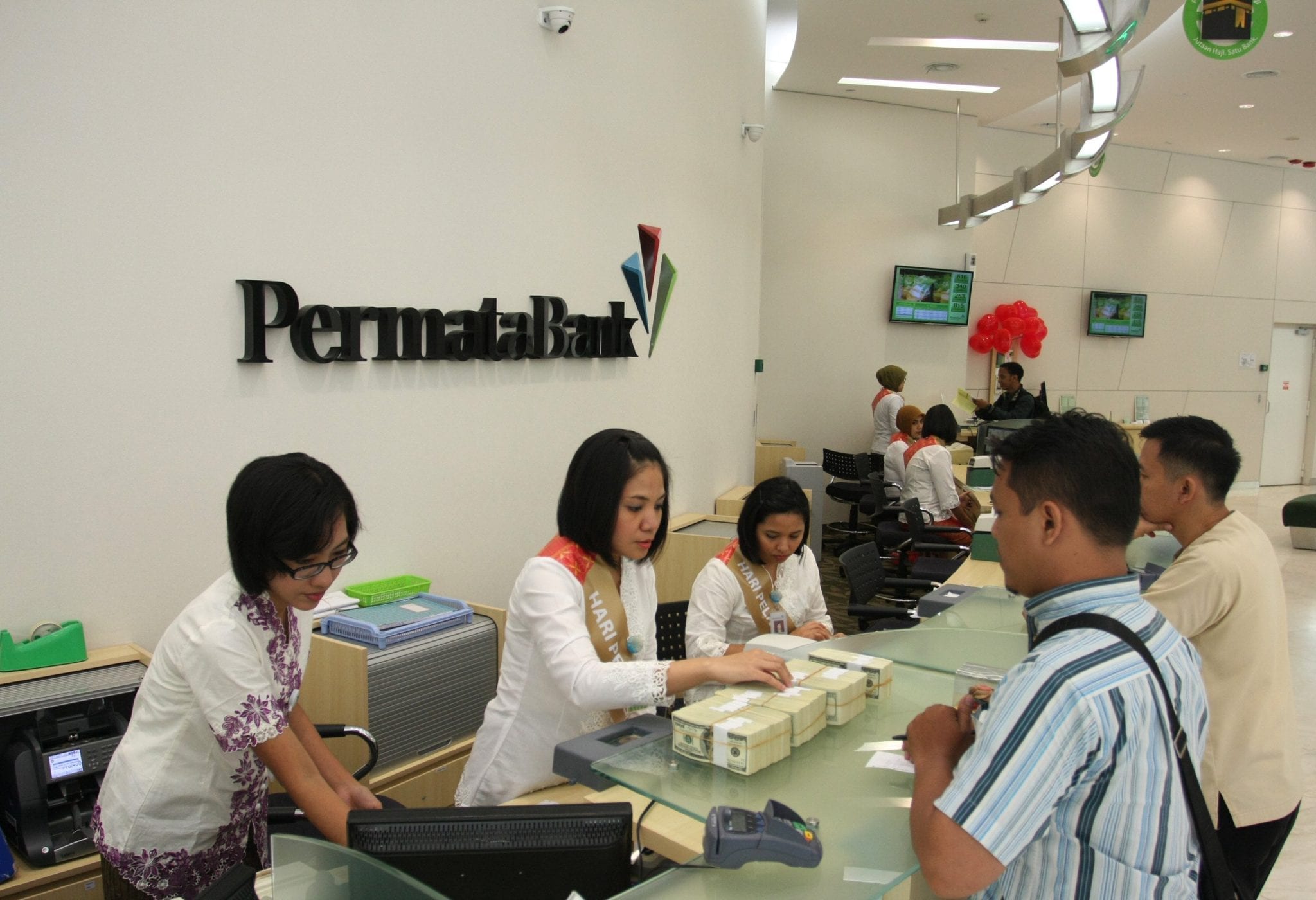
    Permata Bank has become the first domestic bank in Indonesia to introduce voice biometrics as part of its customer authentication protocol, using technology from customer experience company NICE.

    NICE Real-Time Authentication (RTA), together with its process automation solution, will allow the financial institution to conduct secure and seamless voice authentication, improving customer service.

    Permata Bank is a veteran NICE customer, already benefiting from its Quality and Workforce Management solutions, as well as real-time back office applications. More recently, the bank sought new ways to improve fraud prevention and increase the efficiency of its contact center, turning to NICE to address these challenges.

    NICE’s Real-Time Authentication (RTA) solution creates and utilizes one voice print for each caller to deliver quick and efficient customer service across all voice channels, with no customer effort required.

    Authentication takes place within the first few seconds of the call, and customers’ issues are resolved during the natural flow of conversation. This automated, rapid and transparent process will help Permata Bank deliver better service while improving the accuracy of its fraud prevention program.

    “Permata Bank’s introduction of voice biometrics in the local banking industry positions us as a leader in financial services innovation throughout Indonesia,” Permata Bank director of consumer banking Bianto Surodjo said.

    “This is largely thanks to NICE’s unique Fluent engine capability, which provides omnichannel authentication with a single voiceprint, which is a major advantage over competing solutions in the market.”

  • Revolut raises $66 million for its global banking alternative

    Revolut raises $66 million for its global banking alternative

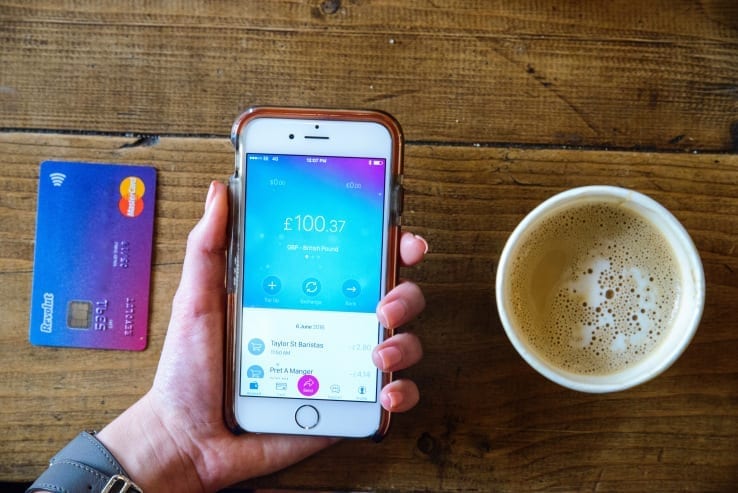
    Revolut has raised a $66 million Series B round with Index Ventures leading the round, and existing investors Balderton Capital and Ribbit Capital also participating. The startup will also run another $5 million crowdfunding campaign in a few weeks. The company has raised $83 million in total.

    Revolut started as a mobile app that lets you send and receive money in multiple currencies. Over time, the company has added a ton of financial services, turning it into a credible alternative to a regular bank account.

    When you sign up, you can create virtual cards and receive a good old plastic MasterCard. You can top up your account using another card or a bank transfer. You can exchange your money in 16 different currencies in order to send it or spend it without any fee up to £5,000/€5,000 per month.

    700,000 people have signed up so far. That’s why users are also using Revolut to split bills and instantly send money. When you create an account, you now also get an IBAN.

    More recently, Revolut introduced a credit feature for U.K. users and business accounts. The startup even plans to add cryptocurrencies, stocks and bonds soon. You’ll also be able to purchase travel insurance from the app. With today’s funding round, the company also plans to expand to new countries in Asia and North America.

    It’s sometimes hard to understand where Revolut is heading as the company is launching so many different products and currencies at once. It looks like the company doesn’t want to restrict itself. As long as it’s a financial or insurance product, Revolut wants to have it. And with so much more money in the bank account, the startup is definitely not going to stop just yet.

  • Citi Philippines sweeps awards

    Citi Philippines sweeps awards

    Global Finance Magazine has announced its best digital banks in Asia, and Citi dominated the awards with multiple wins across the region.

    For the 11th consecutive year, Citi Philippines was awarded Best Digital Bank for the Corporate/Institutional Bank category.  For Consumer Banking, it was Citi Philippines’ 11th win as Best Digital Bank.

    Winners were chosen among entries evaluated by a world-class panel of judges at Infosys, a global leader in consulting, technology and outsourcing.

    Winning banks were selected based on the following criteria: strength of strategy for attracting and servicing digital customers, success in getting clients to use digital offerings, growth of digital customers, breadth of product offerings, evidence of tangible benefits gained from digital initiatives, and web/mobile site design and functionality.

    In the category for World’s Best Corporate/Institutional Digital Banks in Asia Pacific, Citi won five regional sub-category awards, including Most Innovative Digital Bank, Best Online Cash Management, Best Online Treasury Services, Best in Mobile Banking and Best Mobile Banking App.

    “This award is a validation of Citi’s successful digital tansformation.  In all that we do, we combine the stability of a banking tradition of more than 200 years and the agility todevelop fintech solutions that will best serve our clients’ interests in the digital age.  We aim to serve our customers in the ecosystem in which they operate,” said Citi Philippines CEO Aftab Ahmed.

    Citi also swept the country awards in the Corporate/Institutional Digital Bank category, winning in 14 other countries including Australia, Bangladesh, Hong Kong, India, Indonesia, Kazakhstan, Malaysia, New Zealand, Pakistan, Singapore, South Korea, Sri Lanka, Thailand, and Vietnam.

    In the Consumer Banking digital bank awards, Citi was also named best digital bank in Australia, Indonesia, Malaysia, South Korea and Thailand.

    Asia is responsible for 17 of the Global Consumer Bank’s 19 markets worldwide. To deliver new growth, the focus for the bank was on increasing profitable market share in key markets, and products (Retail, Cards, Wealth Management and Commercial) while digitizing our business from end-to-end to deliver a better customer experience, reduce costs and improve efficiency. In the most recent quarter Citi’s consumer bank in Asia reported its fourth consecutive quarter of growth.

  • HSBC ‘back in growth mode’ in Singapore

    HSBC ‘back in growth mode’ in Singapore

    British bank HSBC is now “back in growth mode” in Singapore after investing heavily in turning around revenue and profitability, said a top executive.

    Despite a fiercely competitive retail market, the bank has high hopes for its business here, said Mr Anurag Mathur, head of retail banking and wealth management at HSBC Bank (Singapore), who has been in the role for a year.

    He told recently: “Customers are also sophisticated (here), but that’s good as it encourages innovation and we’re often at the cutting edge in Singapore, where some of the things piloted here – and hopefully, increasingly developed here – can then be exported elsewhere in HSBC globally.”

    The bank has “spent quite a bit of time and investment in incorporating the company here”, said Mr Mathur, referring to its move last year to set up a local subsidiary for the retail and wealth business.

    “As part of that, we’ve also upgraded our core banking platforms and infrastructure, such as upgrading branches and opening new ones in the last few years, and improving our products and digital capabilities.”

    While Mr Mathur was unable to give specific numbers, recent data from the bank showed it has spent more than US$1 billion (S$1.4 billion) on its global digital investment since 2015.

    HSBC has 11 branches and about 1,000 employees under the retail banking and wealth management business here.

    Competition is particularly high here now, evident from moves by financial institutions here like DBS Bank, which acquired ANZ’s wealth management and retail banking business in five markets in Asia last October.

    Standard Chartered Bank for its part is chasing the silver dollar in Singapore with the release last month of a new offering for only those aged 55 and older, for instance.

    Customers of HSBC’s retail banking and wealth management unit are typically those with a minimum of $200,000 with the bank, be it through deposits, or investments, among other things – and that is where growth is for the bank too, said Mr Mathur.

    “In that space, we see Singapore continuing to be a growth hub. Wealth management is a key area of growth. The macro conditions are there.

    “Singaporeans obviously invest here, but people from around the world, particularly Asia, also like to invest here. According to the BCG wealth report of 2016, offshore wealth booked in Singapore is projected to grow at roughly 10 per cent annually through 2020.”

    He noted that HSBC is positioned to capture this segment because of several factors such as its international network, its “insurance and asset-management support pillars on the product side and a strong offshore base”.

    And almost a third of the mass affluent market in Singapore has an HSBC relationship – be it with a banking product or service.

    “In the last five years or so, we’ve seen our deposit balances in current and savings accounts grow at double digits, which is a strong and healthy indicator. Personal loans have grown by double digits in the last four to five years,” said Mr Mathur.

    While other bankers might say retail banking is surely a local business, HSBC looks at clients from a different point of view.

    “What our HSBC Premier customers find is that they can open accounts with us in multiple countries where they have property, investment or worked.”

    The bank has a feature dubbed “global view, global transfer” that lets clients access “all accounts on one screen”.

    Mr Mathur said this appeals to t Singapore’s expatriate population as they have banking relationships outside Singapore as well.

    He noted: “And almost all Singaporeans are international in some shape or form.

    “For instance, some reports show 95 per cent of them travel at least once a year, so they find the international offers we have on our credit cards powerful.

    “We believe Singaporeans will increasingly be international, in terms of where they study, do business, even where they invest. Our strengths are uniquely positioned to help them in that space.”

  • Consumer credit grows rapidly as retailers thrive

    Consumer credit grows rapidly as retailers thrive

    The appearance of big foreign retail chains like CircleK, Shop&Go, FamilyMart and Aeon and the strong rise of Vietnamese chains Vinamart, Co-op and The Gioi Di Dong have fostered the development of consumer credit in Vietnam, according to the State Bank of Vietnam. StoxPlus’ 2016 report on Vietnam’s consumer credit showed that the credit market has seen amazing leaps in recent years.

    The outstanding loans of Vietnam consumer finance soared from $7.3 billion in 2012 to $26.55 billion in 2016. Though it still accounts for a small proportion (9.8 percent by the end of 2016), consumer finance has been growing very quickly.

    Nguyen Tu Anh, deputy director of SBV’s Monetary Policy Department, confirmed that consumer credit has been developing strongly thanks to many favorable conditions.

    Vietnam has 92 million people with 70 percent of the population aged 15-64, while its GDP growth rate has been stable at over 6 percent in recent years.

    Anh cited research by economist Nguyen Thi Hien and her co-workers that shows the consumer credit market’s rapid development since 2011. The growth rate was 30 percent per annum in 2011-2014 and 59 percent in 2015.

    The total outstanding consumer loans granted to customers in 2015 was VND583 trillion, equivalent to 20.5 percent of the consumption value of individuals and households.

    If not counting housing loans as per international practice, consumer outstanding loans in 2015 would total VND272.241 trillion (equivalent to 6.62 percent of GDP). The figure is higher than that of China (6 percent) and Japan, but much lower than other developed countries, including the US (17 percent), Europe (14 percent), and Korea over (20 percent).

    The constant increase of consumption has led to higher demand for consumer loans. Meanwhile, the stable and high economic growth rate helps consolidate people’s belief in their income in the future, thus encouraging them to borrow money.

    Vietnam is in a so-called golden population period with a high percentage of young consumers.

    As the growth rate of lending to fund production and business has slowed down for several reasons, banks tend to increase consumer credit to offset the slowdown.

    FE Credit is leading the consumer finance market with $1.4 billion worth of loans provided in 2016, accounting for 48 percent of market share.

    Its rivals, Home Credit, HD Saison and Prudential, hold 15.7 percent, 12.2 percent and 8.1 percent, respectively, according to StoxPlus.

  • Vietnam fastest growing stock market in region

    Vietnam fastest growing stock market in region

    The Vietnamese stock market has surpassed its counterparts in the Philippines, Indonesia and Thailand to become the fastest-growing market in the region in the first six months of the year.

    In late May, Thang, an investor in Hanoi, decided to re-activate his securities trading account after five years of closure.

    The crisis which broke out 10 years ago plunged the VN Index from 1,180 points to 200 points and swept away VND3 billion worth of Thang’s assets.

    But Thang decided to return to the stock market as it is now very promising.

    The VN Index has increased by 17 percent over the beginning of the year, nearly hitting the 780 point threshold, the highest peak since 2008.

    The index increase in the first six months was even higher than the increase for all of last year.

    In 2016, the average trading volume was reported at VND3 trillion per trading session and there were only a few of sessions with trading value of VND5 trillion. “The market is thriving not because of supporting information or any big deals and agreements, but because of strong cash flow into the market,” an expert said.

    Meanwhile, in the first six months of 2017, the sessions with trading value of VND5-5.5 trillion were of everyday occurrence. There were sessions with trading value of VND7.5 trillion.

    It was not by chance the cash flowed strongly to the stock market in the first months of 2017.

    The appearance of goods commodities has made the market more attractive. Vietnam Airlines (HVN), Vinatex (VGT), Masan Consumer (MCH), VIB and FPT Telecom (FOX) have appeared on UpCom right on the first days of the year.

    In February, Vietjet (VJC) made its debut, followed by Petrolimex (PLX), a petroleum distributor and Kido Food (KDF), the largest ice cream manufacturer.

    These are all well-known names in the Vietnamese market and all of them are leading in their business fields.

    Analysts believe that stocks are more attractive investment channels than gold and dollars. The VN Index has increased by 17 percent, while the prices of many shares have increased by tens of percent, or 3-5 times in the last several months.

    Securities companies have also made big contributions to the strong cash flow when providing capital to investors to buy on margin.

    The financial leverage helped investors loosen their purse strings. Securities companies prepared for the ‘game’ last year with hundreds of billions of dong worth of bonds issued.

    The 10 top securities companies alone can provide $2 billion in capital to investors to buy on margin.

  • Singapore ready to exchange financial data with Indonesia

    Singapore ready to exchange financial data with Indonesia

    Indonesias finance minister Sri Mulyani said here on Thursday that Singapore was ready to provide information about the financial data of Indonesian citizens as part of the implementation of Automatic Exchange of Information (AEOI) program for tax purposes.

    “Singapore has stated that Indonesia has been considered as being eligible and included in their Multilateral Competent Authority Agreement (MCAA), meaning the AEOI agreement can automatically be carried out according to its timeline,” she said.

    Mulyani confirmed that Singapore would not only exchange information with Indonesia but also with other countries that have signed MCAA in connection with AEOI in the Netherlands in June 2017.

    In order to prepare for the information exchange, Indonesia will conduct improvement with regard to primary legislation issuance, information technology, data security, and business process renewal to match with the Common Reporting Standard.

    “We will continue to meet it and later in September, the OECD will review its aspects. If Indonesia is considered to have met the requirements set in the OECD global forum, it means we have met the requirements to implement AEOI with Singapore,” she asserted.

    On the sidelines of the Indonesia-IMF joint conference on Wednesday, Sri Mulyani met Singapores minister of law and finance, Indranee Rajah, to discuss a number of issues.

    Besides the implementation of AEOI, they also discussed revision of double taxation agreement for Singapore investors and Singapores offer as an international banking hub for Indonesias infrastructure projects.

    According to the Indonesian ministry of finances website, Singapore has confirmed its readiness to carry out AEOI with Indonesia to maintain equality in role and function and share responsibility along with other financial centers.

    Singapore has included Indonesia in the list of its partners that have participated in MCAA.

    The commitment is a form of agreement to provide standardization and efficiency scheme to facilitate for AEOI. Hence, bilateral agreement need not always be done.

    The reciprocal exchange of information will be started after the two jurisdictions introduce the regulations needed to implement CRS and to keep confidentiality and protect exchanged data.

    Confidentiality and protection of financial data being exchanged are international prerequisites set by Global Forum on Transparency and Exchange of Information for tax purposes.

  • Personal consumer credit becoming lucrative business

    Personal consumer credit becoming lucrative business

    FE Credit is leading the consumer finance market with $1.4 billion worth of loans provided in 2016, accounting for 48 percent of market share.  Its rivals, Home Credit, HD Saison and Prudential, hold 15.7 percent, 12.2 percent and 8.1 percent, respectively, according to StoxPlus. The other well-known names in the market are Mirae Asset Finance, JACCS and Toyota finance.

    The consumer finance market has become bustling thanks to high demand from borrowers and readiness by commercial banks and finance companies. Since customers are in both large cities and rural areas, it is easy for finance institutions to expand the market and disperse risks.

    Lending to fund personal consumption is lucrative, which accounts for 42.5 percent, followed by lending to fund household goods (28 percent), and transport means (19.6 percent).

    Regarding the growth rate, lending to fund transport purchases and house upgrading witnessed the highest growth rate of 42 percent each in 2016.

    Business Monitor International (BMI) predicted that the consumer finance market would perform well in 2016-2019, as personal income has growth rate of 13.2 percent per annum.

    Also according to BMI, consumer finance targets people of working age, expected to reach 56.2 million by 2020. The figure was 54.4 million in 2015.

    The consumer finance assets were reported as making up 12.4 percent of total assets in 2016.

    By the end of the year, the finance consumer value had reached VND598.5 trillion, an increase of 30 percent over 2015. This included VND453.1 trillion worth of loans provided without mortgaged asset requirement.

    Consumer finance in Vietnam in 2016 made up 9.8 percent of GDP. Meanwhile, the figure was 320 basic points higher in regional countries.

    Regarding credit types, the cash is predicted to decrease from 89 percent in 2016 to 81 percent of total outstanding loans by 2019 as the market share will fall into credit cards.

    Regarding the market structure, consumer finance is undertaken by retail banks and finance companies. Commercial banks tend to set up subsidiaries specializing in consumer finance or to take over existing companies.

    MB Bank in March 2016 took over Song Da Finance Company (SDFC) and renamed it MCredit. Later, in November 2016, after joining hands with Shinsei Financial from Japan, MCredit once again changed its name to MB Shinsei with 51 percent of capital contribution from MB Bank.

    In recent years, Vietnam has not granted licenses to companies providing only consumer finance services, which was a barrier to market admission.