Retail News CRM

Tag: Forwarding

  • DB Schenker, Volocopter develop heavy lift cargo drone

    DB Schenker, Volocopter develop heavy lift cargo drone

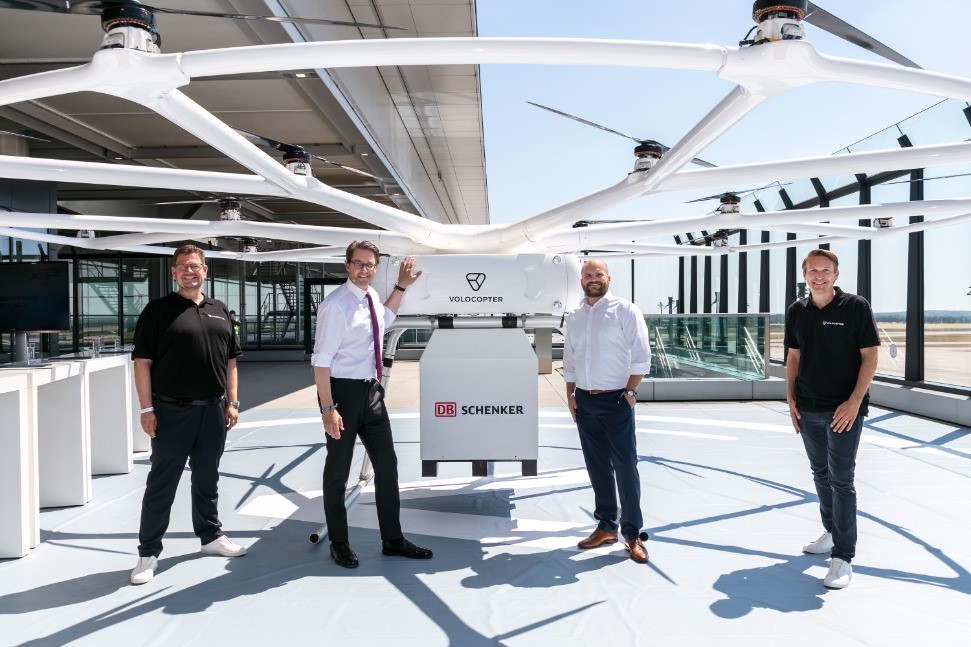
    DB Schenker and urban mobility air firm, Volocopter, have teamed up to develop solutions for the fast and emission-free transport of goods using heavylift drones.

    Volocopter exhibited its test VoloDrone aircraft, along with a sample transport container from DB Schenker, at Germany’s National Aviation Conference last week.

    In a statement, DB Schenker said the heavylift drone, which can take off and land vertically, is autonomously and electrically operated and can transport up to 200 kilograms (kg) of cargo with a range of up to 40 kilometers.

    The VoloDrone weighs 600 kg, it is 9.15 meters in diameter, 2.15 meters tall.

    Jochen Thewes, CEO of DB Schenker said the possibilities of utilizing the drone in logistics is “limitless.”

    “When the infrastructure for conventional means of transport is overburdened or non-existent, cargo drones offer an opportunity to rethink logistics routes. The possible applications in logistics are limitless. Through our partnership with Volocopter, this vision is gradually becoming reality. Drone transport is becoming increasingly tangible,” he said.

    DB Schenker noted that the first flight took place in 2019. Since then, regular flight tests have been conducted in southern Germany.

    Florian Reuter, chief executive of Volocopter, said: “Our VoloDrone will be put to use, where classical ground transportation meets its limits in logistics, construction, or agriculture.”

    The logistics company said the future logistical applications for the heavy-lift drone include places that are difficult or slower to reach by other means, such as islands, land-to-ship deliveries, transport to mountainous regions, or places isolated from road networks following natural disasters.

    Intra-city deliveries are also possible targets for such drone operations.

  • New cargo airline to advance Vietnam logistics

    New cargo airline to advance Vietnam logistics

    A fully-fledged cargo airline in Vietnam would boost logistics development and stir up competition in the aviation sector amid an e-commerce boom, experts say.

    “Vietnam needs a cargo airline to boost the transport of goods domestically and internationally. It will bring about many economic benefits,” said aviation expert Nguyen Thien Thong.

    He was commenting on a proposal by retail company Imex Pan Pacific Group (IPPG) to establish a cargo airline by next year, the first fully-fledged such company in Vietnam.

    With an initial investment of VND2.4 trillion ($103.6 million), IPP Air Cargo will start with five freighters. It estimates revenues of $71 million in the first year of operation.

    It would be the only cargo-dedicated airline in Vietnam, where all six carriers prioritize passenger transport.

    Vietnam ranks eighth among the top 10 emerging logistics markets globally, but 80 percent of the market is in the hands of foreign companies, according to the Vietnam Logistics Association.

    Logistics costs in Vietnam account for over 20 percent of its GDP, while the global average is 11 percent.

    This shows that there is a need for domestic companies to step up and take over the industry from foreign companies and reduce costs, experts say.

    Former Prime Minister Nguyen Xuan Phuc had in September last year ordered the Ministry of Transport to research the possibility of establishing a cargo airline to help distribute agriculture and electronic goods.

    In 2008, Trai Thien Air Cargo had received a permit for domestic and international transport, but it was not active for three years and the permit was canceled in 2011.

    IPP Air Cargo seeks to be the cargo airline the country needs. IPPG chairman Johnathan Hanh Nguyen said that the company will focus exclusively on cargo and not branch into passenger transport, avoiding competition with other airlines.

    Nguyen, a professional with experience in logistics and aviation, said he targets claiming 38 percent of Vietnam’s logistics market.

    The company will negotiate with foreign airlines to establish linked routes to 16 airports in Vietnam which will help transport goods directly from localities of origin instead of through big airports, he said.

    He also told the Thanh Nien newspaper that he had been developing a logistics network over the past year to prepare for the airline.

    However, his airline will not be the only cargo carrier in the sky. Vietnam Airlines has long been eyeing the establishment of its own cargo fleet, and during the pandemic, it removed seats from 12 wide-bodied aircraft and converted them into cargo carriers.

    Both Bamboo Airways and Vietjet have also mentioned plans to develop their own cargo fleet, but neither has made any concrete move towards this.

    Tong said that there could be competition in the industry, but eventually, it will benefit the development of e-commerce when a network of air cargo transport is established.

    “Coffee from the central highlands, lychee from the northern province of Bac Giang and seafood from the Mekong Delta region can be transported within a day to any locality if cargo air routes existed,” he said.

    Having a cargo airline is a necessity as most countries have at least one, and the recent boom in e-commerce means there is high demand for such transportation. This is the right time, therefore, for Vietnam to establish its own cargo airline, he added.

  • High costs a drag on domestic logistics industry

    High costs a drag on domestic logistics industry

    High costs and delivery failure rates continue to plague local logistics companies, which are unable to compete with foreign-owned rivals.

    Dao Trong Khoa, vice president of the Vietnam Logistics Business Association (VLBA), said the cost of logistics in Vietnam is equivalent to 20 percent of GDP while the global average is around 11 percent.

    The delivery failure rate is around 10 percent, adding to the cost of logistics as businesses have to bear additional expenses for storage and inventory management.

    The vast majority of domestic logistic companies are small ones that primarily provide low-value-added services and intensely compete among themselves.

    The lack of coordination among them means they are unable to compete with multinational companies, who have grabbed an 80 percent market share.

    Deputy Minister of Industry and Trade Tran Quoc Khanh said local logistics companies have to find new spaces to grow.

    Tran Trung Hung, general director of Viettel Post, warned they would continue to languish if there is no technical innovation, especially in digital transformation.

    Do Huy Binh, director of the digital solutions provider Smartlock, said digital transformation is key to reducing costs, and logistics companies could cut up to 30 percent of their costs. “Investment in technology is a no-brainer for logistics companies; it is a step into the future.”

    According to the VLBA, there are around 30,000 logistics companies in the country, 4,000 of them foreign-owned.

    The industry is growing at 12-14 percent annually and is now worth $40-42 billion.

  • Container shortage compounds Vietnamese exporters’ shipping woes

    Container shortage compounds Vietnamese exporters’ shipping woes

    Vietnamese businesses are once again struggling to get containers to export their goods amid a global imbalance in the logistics sector. Bui Thi Ngoc Tuyen, deputy director of Bich Chi Food Company in the southern province of Dong Thap, said as empty containers have become scarcer, prices have tripled.

    “We struggle to get enough containers for our goods, and even if we do, there is no ship to transport them.”

    Duy Tan Plastics, which gets one-fifth of its revenues from exports, is also caught in a similar struggle, with logistics costs on some main routes rising 95–231 percent year-on-year. The company has seen the number of orders declined by around 10 percent due to higher shipping costs, its deputy director Le Anh said.

    Tran Thanh Hai, deputy director of the Agency of Foreign Trade under the Ministry of Industry and Trade, said sea shipment costs have risen because container costs have surged seven or eight times.

    Vietnamese companies had already faced a container shortage towards the end of last year and earlier this year as global trade rebooted after months of limited activities caused by the Covid-19 pandemic, but the recent Suez Canal blockage has once again triggered shortages that could severely hurt exporters.

    Although the mega-ship Ever Given has been freed from the canal, some ships had been forced to reroute on a longer journey, and a two- or three-week delay of shipments is expected.

    This means Vietnamese exporters will have to wait a couple of weeks or even a month to receive empty containers for the next shipment, and they will have to bear higher costs due to shortage of the metal boxes, said Ho Van Hiet, CEO of Prime Logistics Vietnam, which transports around 200 containers a month.

    Container rents in December and January had surged 5-10 times from earlier due to a global shortage of containers. Although prices dropped by 10-20 percent last month, they could return to the previous peak in this and the next month due to the Suez blockage, Hiet told VnExpress International.

    His company has been urging customers to make quick deliveries now, before prices climbed again.

    Lam Thi Thanh Bong, CEO of Karl Gross Logistics Vietnam, said that after a period of limited trade activities last year caused by the Covid-19 pandemic, many Western countries are having an oversupply of empty containers while some Asian ones are seeing shortages.

    “This imbalance in supply and demand will have major impacts on Vietnamese exporters,” she said.

    For now, exporters need to book their shipment between two and four weeks prior to ensure they have slots on the vessels and they should negotiate sharing higher logistics costs with their partners, she added.

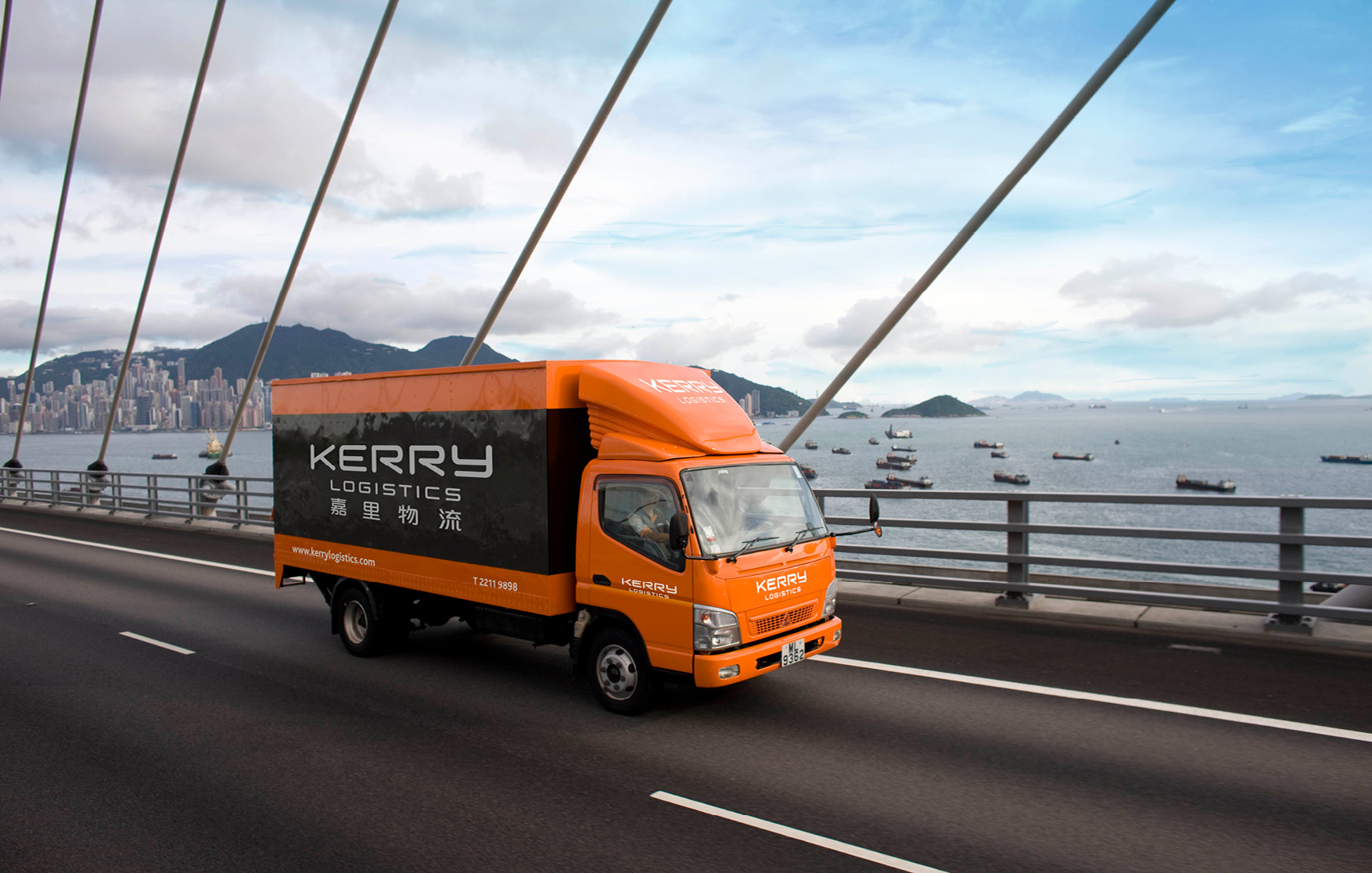
  • Kerry Logistics Network posts 30% growth in revenue core net profit increased by 33%

    Kerry Logistics Network posts 30% growth in revenue core net profit increased by 33%

    William MA, Group Managing Director of KLN Group, said, “The COVID-19 pandemic has brought unprecedented challenges to everything from global public health to people’s livelihoods. The stop-and-go momentum of the global economy has caused severe disruption to the global supply chain. With human mobility severely curtailed, the role of logistics has become ever more paramount. Every link in the supply chain from sourcing and manufacturing to the distribution of finished products must still be maintained. Even as the pandemic forced millions of corporate employees around the world to work from home, our teams have been working tirelessly on the frontline, maintaining 24/7 services across some 150 international hubs to support various industries and sustain people’s daily lives. In 2020, thanks to the collective efforts of our colleagues and business partners, KLN Group achieved record growth in both revenue and core net profit, clearly demonstrating the Group’s resilience and capability to evolve through the pandemic.”

    IL Growth Sustained

    KLN Group’s IL division recorded a normalised segment profit growth of 8% in 2020, mainly driven by the strong performance in Hong Kong and Taiwan.

    In Hong Kong, the IL division grew by 10% in 2020, benefitting from the rise in demand for home-delivered daily necessities, electronic goods and pharmaceutical logistics. The Hong Kong warehouse business contracted in 2020 compared with 2019 mainly due to the disposal of two warehouses in 2019 1H.

    In Mainland China, the segment profit for the IL division bounced back in 2020 2H, offsetting the 37% drop in 2020 1H. This was due to the resumption of manufacturing activities, recovery of local consumption and the rapid growth of the e-commerce market in Mainland China.

    In Taiwan, the IL business expanded by 19% year-on-year in segment profit, capitalising on the growth of semi-conductors and electronics manufacturing, the increasing demand in pharmaceutical logistics as well as the rise in e-commerce business. The robust performance of Science Park Logistics’ bonded operations was another driver for its growth.

    In Asia, the IL business sustained despite severe lockdowns across the region, driven by the switch from consumer goods business to the essential supply sectors. The Group expanded its express business to the Philippines through the establishment of a joint venture company in 2021 Q1 in which the Group has a 51% interest.

    IFF Thrived

    The IFF division was the powerhouse of KLN Group’s business in 2020, accounting for 28% of the total segment profit, with its segment profit for the full year increasing by 64% year-on-year compared to a 40% growth in 2020 1H. The growth was mainly driven by a high global demand for pandemic-related goods as well as production and exports from Mainland China. It created the favourable conditions for the Group to capture opportunities from the unprecedented volatile global freight market, in terms of rates, capacity and equipment availability.

    Kerry Apex recorded an increase in volume of 17%, strengthening its Trans-Pacific market position. It was the number one NVOCC from Thailand, Vietnam, Indonesia and Malaysia to the US, the number two NVOCC from Asia to the US for 2020.

    Facility Portfolio Updates

    In Mainland China, the 340,000-sq-ft chemical logistics centre in Cangzhou commenced operation in 2021 Q1. Construction of the 827,000-sq-ft logistics centre in Qingdao is expected to complete in 2021 Q2. The 1,043,000-sq-ft logistics centre in Guangzhou, the 305,000-sq-ft chemical logistics facility in Zhangjiagang, the 

    644,000-sq-ft hub and logistics centre in Zhuhai and the 545,000-sq-ft bonded logistics centre in Hainan are expected to complete construction in 2022.

    Proposed Strategic Investment from S.F. Holding

    On 10 February 2021, a Joint Announcement was made amongst S.F. Holding (acting through its wholly-owned subsidiary), the Company and Kerry Properties Limited, a Controlling Shareholder and substantial shareholder of the Company. Pursuant to the Joint Announcement, S.F. Holding will make a voluntary conditional cash offer to shareholders to acquire a controlling stake in the equity interest of the Company. The proposed transaction is subject to satisfaction of certain pre-conditions. These pre-conditions include certain inter-conditional special deals, including the disposals of certain Hong Kong warehouses and the Company’s Taiwan businesses, being entered by the Company with Kerry Holdings Limited, the substantial shareholder of the Company. If the proposed transaction does not proceed, these special deals also will not proceed.

    William Ma concluded, “Scale and technological advances are crucial for any company in this industry to retain its competitiveness over its peers and drive changes in the global logistics arena. To this end, the proposed strategic cooperation with S.F. Holding will scale up KLN Group, extending its reach and enhancing its R&D capabilities. The Group’s performance in 2020 stands as testament to the capability in devising creative and efficient logistics solutions, which were in high demand when the global supply and logistics infrastructure suffered damage. KLN Group is prepared to seize any opportunity that may arise, as well as to enhance its value for stakeholders.”
  • Vietnam ranked among world’s top 10 emerging logistics markets

    Vietnam ranked among world’s top 10 emerging logistics markets

    Vietnam has jumped three spots to eighth in this year’s global index of emerging logistics markets after emerging as a popular manufacturing hub.

    The country had an overall score of 5.67 out of 10 in the 2021 Emerging Markets Logistics Index released by leading logistics company Agility.

    The firm ranked 50 economies based on three factors that make them attractive to logistics providers, freight forwarders, shipping lines, air cargo carriers, and distributors: domestic logistics opportunities, international logistics opportunities and business fundamentals.

    Vietnam performed well in international opportunities, ranking fourth globally. It was 18th in domestic logistics opportunities and 21st in business fundamentals, which include regulatory environment, credit and debt dynamics, contract enforcement, anti-corruption safeguards, price stability, and market access.

    “Vietnam has made strides as a manufacturing destination as a small number of companies has looked to ease dependence on Chinese production as a result of U.S.-China trade friction, rising costs and the Covid-19 crisis,” the report said.

    Vietnam’s climb by three places to eighth demonstrates it effectively contained the spread of the virus, positioned itself deftly to absorb manufacturers seeking to leave China and possesses an enviable investment pipeline across a number of sectors, including fashion and electronics, which could see its rise continue in 2022, the report said.

    China remained the world’s leading emerging logistics market followed by India. Indonesia (3rd) and Malaysia (5th) were Southeast Asian countries that did better than Vietnam in the ranking.

    According to the Vietnam Logistics Business Association’s latest survey, there are around 30,000 logistics companies in the country, 4,000 of them foreign-owned.

    The industry has been growing at 12-14 percent annually and is now worth $40-42 billion.

  • Malaysia is 16th most connected logistics country in the world

    Malaysia is 16th most connected logistics country in the world

    Malaysia is now ranked the 16th most connected country, according to the DHL Global Connectedness Index 2020.

    The country is also the second most connected in the East Asia Pacific, behind Singapore which remained as the second most connected nation in the world.

    “Besides ranking countries on their actual level of globalization, we compare actual levels to predictions. based on the country’s size, economic development, and location.

    “And Malaysia is one of our top five outperformers relative to expectations on the index,” said Professor Steven Altman, the lead author of the latest edition of the DHL Global Connectedness Index, in a virtual press conference today.

    Altman is also a senior research scholar at New York University’s Stern School of Business.

    Looking forward, Altman noted that there are some interesting opportunities on the horizon for Malaysia such as the growth of supply chains in Southeast Asia that continues to be quite strong, continued Asean integration efforts as well as opportunities that are forwarded in the Regional Comprehensive Economic Partnership (RCEP).

    Overall, citing the report, Altman said the DHL Global Connectedness Index is set to decline in 2020, but it is unlikely to fall below where it stood during the 2008-2009 global financial crisis, based on the analysis of preliminary data and forecasts.

    According to the report, Malaysia has long been ahead of its peers in terms of the depth of its global connectedness.

    “Like the other top countries, it exceeded expectations on both depth and breadth scores,” the report read, adding that Malaysia has the distinction of being the most populous country with a depth score in the top 25.

    “Its top pillar rank was fourth on the trade pillar in 2019, through a combination of relatively high ranks on both depth and breadth,” the report said, noting that Southeast Asia is a region where countries tend to have unusually high trade depth.

    “Southeast Asian countries benefit from linkages with wider Asian supply chain networks as well as ASEAN policy initiatives promoting regional economic integration,” it said.

    Meanwhile, DHL Express CEO John Pearson described his company’s performance in Malaysia as “extraordinarily strong”, saying the country was as one of DHL Express’ fastest growing countries.

    “Malaysia is certainly in the 20%-30% growth and has been for many months, and that is helped by one new product which is called ‘Durian Express’, which exports the king of fruits abroad,” he said.

    Pearson said this “niche product”, on top of the e-commerce business, drives Malaysia’s growth, adding that the outlook in Malaysia is positive.

  • Kerry Logistics Network Recognised at the Hong Kong Green Awards 2020

    Kerry Logistics Network Recognised at the Hong Kong Green Awards 2020

    Kerry Logistics Network Limited (‘Kerry Logistics Network’; Stock Code 0636.HK) is the proud recipient of the Corporate Green Governance Award – Corporate Leadership at the Hong Kong Green Awards 2020 (the ‘Awards’), recognised for its excellent commitment and outstanding execution in the area of green governance policies and implementation.

    Inaugurated in 2010, the Awards are organised and presented annually by the Green Council to acknowledge companies with exceptional performance and achievements in green procurement, green management, environmental, health and safety management and green governance. It also aims at encouraging companies to increase their environmental considerations and responsibility, and to drive better environmental performance.

    William Ma, Group Managing Director of Kerry Logistics Network, said, “We are very happy to receive recognition for our commitment and efforts to incorporate green initiatives and practices into our governance and operations. With environmental management now becoming an essential and pressing issue, we are eager to fulfil our role as a socially and environmentally responsible corporate citizen, to create value for our shareholders while contributing to a sustainable future.”

    Kerry Logistics Network is dedicated to making its operations greener by managing its emissions, optimising the use of resources and protecting the natural environment and ecosystems that we rely on. Guided by its environmental policy, Kerry Logistics Network endeavours to minimise its environmental footprint by reducing air and GHG emissio

  • CapitaLand sells three Japanese malls to invest in logistics

    CapitaLand sells three Japanese malls to invest in logistics

    Capitaland has divested three malls in Japan and an office building in South Korea for a total of S$448.7 million, as part of its ongoing portfolio reconstitution strategy, it said Tuesday morning in an exchange filing. It also announced that it has made its first foray into Japan’s logistics sector, entering into a joint venture with Mitsui & Co Real Estate, with CapitaLand as the majority partner, to develop and operate a logistics project in Greater Tokyo.

    The divested properties in Japan are La Park Mizue and Vivit Minami-Funabashi in Greater Tokyo, as well as CO-OP Kobe Nishinomiya Higashi in Greater Osaka, which were sold for a total of 21.99 billion yen (S$283.6 million).

    It also divested ICON Yeoksam in Seoul for 142.2 billion won (S$165.1 million) in August this year. The office building was held through a private fund, Ascendas Korea Office Private Real Estate Investment Trust (Reit) 5. CapitaLand remains the asset manager of ICON Yeoksam and will continue to receive fee income.

    CapitaLand said the divestments were done above valuation, and the buyers are unrelated third parties. Post divestment, CapitaLand will retain S$3.8 billion of assets under management (AUM) in Japan and S$2 billion of AUM in Korea.

    With the divestments, the total gross value of divestments by CapitaLand and its real estate investment trusts (Reits) would be S$3.02 billion, crossing its annual target of recycling S$3 billion of capital.

    CapitaLand and its Reits have invested more than S$3.3 billion into new assets as at end-November.

    “The divestment of these mature malls and office assets is part of CapitaLand’s capital recycling strategy to unlock value by reinvesting the capital into new growth opportunities such as the logistics sector in Japan,” said Jason Leow, president, Singapore & International, CapitaLand Group.

    “By paring down our exposure in Japan’s retail sector and leveraging our logistics experience in markets such as Singapore, Australia and the United Kingdom to expand into the new economy sector in Japan, we are responding swiftly to shifting market trends and consumer behaviors, positioning CapitaLand for future growth,” he added.

    CapitaLand’s new logistics venture in Japan is close to Central Tokyo, and is expected to be completed in Q4 2022. The four-story logistics facility will have a gross floor area of about 24,000 square metres.

    Gerald Yong, chief executive officer, CapitaLand International, said the logistics sector in Japan presents “significant opportunities” for CapitaLand.

    “The global pandemic has accelerated the growth of e-commerce and the logistics sector has been a prime beneficiary of this trend,” Mr Yong said. “We aim to achieve meaningful scale over time by leveraging Mitsui & Co Real Estate’s local knowledge and access to business opportunities to grow our logistics portfolio in Japan.”

  • Express operators pour investment into Asia Pacific to grab e-commerce traffic

    Express operators pour investment into Asia Pacific to grab e-commerce traffic

    Two of the world’s biggest express operators are beefing-up their Asia Pacific operations amid an “historic” peak season for e-commerce cargo.

    DHL Express said today it would invest €690m ($813m) to increase capacity in the key growth markets of Australia, Japan, Hong Kong, South Korea, Malaysia, India and Bangladesh.

    It will also spend €60m on new aircraft and direct airfreight routes to South-east Asia.

    The company is expecting shipment volumes in Asia Pacific to be 30-40% up on last year’s peak season, following “unprecedented” 50% growth in e-commerce volumes since the start of the year.

    Ken Lee, CEO of DHL Express Asia Pacific, said: “These investments are testament to our continued confidence in the region. They are crucial not only in the near term as we expect an unusually strong peak season, but will make sure we are well-positioned to keep global trade running as e-commerce and cross-border trade grow.”

    In North Asia, DHL will open a 21,000sq metre facility in Osaka by the end of the year, its largest in Japan. And in South Korea, it will triple warehousing space in Incheon to 58,700sq metres, making it the company’s largest gateway in Asia Pacific.

    In Hong Kong, €377m has been earmarked to boost warehouse space by 50% and increase handling to 125,000 pieces a day.

    Investment in South Asia includes a new facility in Bangladesh to increase shipment processing by 35% by Q1 22 and, in India, construction of a new gateway facility in Bangalore is slated for completion next year.

    In Malaysia, DHL plans to triple warehousing capacity and increase processing by 200% at Kuala Lumpur International Airport to compete with Alibaba logistics unit Cainiao’s new regional hub.

    New air freight routes include direct services to underserved Vientiane and Yangon and more frequent connections to Australia and New Zealand.

    Sean Wall, EVP network operations & aviation, said: “The growth in e-commerce shipment volumes will continue to outpace available air cargo capacity, strengthening the case for investing in adding dedicated aircraft to our fleet, opening new routes and supplementing our fleet with charter flights.”

    Meanwhile, Cainiao has now launched operations in Japan. The Chinese juggernaut said it would provide end-to-end logistics services to local businesses, warehouse management, international shipping, trucking and customs clearance.

    “This will bring about a 40% improvement in shipping efficiency, reducing shipping duration from 18-22 days, to 11-13,” said Cainiao.

    Operations in Japan include warehouses in Tokyo, Osaka, Yokohama and Kobe; air and sea forwarding to and from China; and trucking partnerships with Nippon Express, among others.

    “Japan has always been a key market for us,” said James Zhao, general manager of Cainiao Global Supply Chain. “Our launch in Japan will allow us to provide a stronger logistics infrastructure to support businesses’ export and import needs.”

    Meanwhile, yesterday Alibaba set another record-breaking ‘Singles Day’ shopping festival, with $74.1bn transacted in gross merchandise volume. Anmd during the 11-day event, Cainiao processed 2.32 billion delivery orders and operated more than 700 charter flights.

  • DHL names new management in South Korea

    DHL names new management in South Korea

    DHL Supply Chain has appointed Edmund Hsiung as managing director for its South Korea business. Hsiung, who has relocated to Seoul, will manage the business operations across 11 facilities, and oversee business strategy, new business development, expansion, and accelerate digitalization projects in the country.

    With more than three decades of experience in the logistics industry, Hsiung has spent half of that performing various roles at DHL Supply Chain and DHL Express, both of which are under the Deutsche Post DHL Group.

    He was most recently the head of strategic partnerships for DHL Supply Chain in Asia-Pacific, where he was instrumental in driving key corporate initiatives in the region, including a ten-year strategic partnership with SF Holding and a joint venture with JG Summit, one of the largest conglomerates in the Philippines, to provide best-in-class transportation, warehousing, and distribution solutions.

  • Kerry Logistics Network honoured with Bloomberg Businessweek ESG Leading Enterprises

    Kerry Logistics Network honoured with Bloomberg Businessweek ESG Leading Enterprises

    Kerry Logistics Network Limited (‘Kerry Logistics’; Stock Code 0636.HK) has been honored as the recipient of the ESG Leading Enterprises 2020 Award (the ‘Award’), organized by Bloomberg Businessweek/Chinese Edition and co-presented by Deloitte, for the second year in a row. Kerry Logistics won in the category of enterprises with a market capitalization of over HK$20 billion.

    Inaugurated in 2019 by international business publication Bloomberg Businessweek/Chinese Edition in collaboration with Deloitte, the Award aims at recognizing exceptional enterprises that thoroughly integrate Environmental, Social, and Governance (‘ESG’) goals and activities into their development strategies with remarkable business performance and growth. The Award comprises two categories, namely, the “ESG Leading Enterprises” Award and the “Leading ESG Initiative” Award.

    William Ma, Group Managing Director of Kerry Logistics Network, said, “We are delighted to receive the award, which is a recognition of our persistent commitment to upholding ESG governance standards. As a socially responsible global company, Kerry Logistics values our ESG performance in the way our company is run and in our operations around the world. ESG issues now form part of our essential considerations when we devise our development strategies, and we have been actively following the ESG systems in place in key business decisions. We will continue to play our part in contributing to environmental sustainability and corporate social responsibility in our pursuit of long-term business growth.”

    Kerry Logistics strives to make its operations greener through managing emissions, optimizing the use of resources, and protecting the natural environment and ecosystems that we all rely on. It continues to strengthen the sustainability of its supply chain performance by building a collaborative and “win-win” relationship with suppliers.

  • DHL Express to Create Gateway at Hartsfield-Jackson

    DHL Express to Create Gateway at Hartsfield-Jackson

    DHL Express plans to move into a new cargo building at Hartsfield-Jackson International and create a “gateway to the Southeast” as it expands its presence in the region.

    DHL Express, which serves the U.S. market with only international shipments, saw a nearly 60% year-over-year increase in shipping volume in Atlanta for the March-July period as consumers increasingly shop online during the COVID-19 pandemic.

    “I think it’s fair to say that individuals’ buying behaviors for e-commerce has changed,” said DHL Express U.S. CEO Greg Hewitt. “We’re seeing huge amounts of flow as American buy items from Asia and Europe,” and as people overseas buy American goods.

    UPS and FedEx, the two biggest U.S. shipping companies, also have seen explosive growth in demand for shipments.

    Hewitt said DHL is growing its employee base in the Atlanta area by more than 29% and is starting to invest more in airport operations. “”We see Atlanta being really a growing market for us. We’re going to expand and create a gateway at Hartsfield- Jackson.” He called Atlanta “really our gateway for the Southeast.”

    DHL is moving from a smaller space on Toffie Terrace near Hartsfield- Jackson to the new Cargo Building C, and is adding the needed infrastructure for its operations there.

    “DHL’s expansion into Cargo Building C is welcome and will increase their footprint here, add jobs and lead to more cargo flights into ATL,” Hartsfield- Jackson director of air service development Elliott Paige said in a written statement.

    Hartsfield- Jackson’s 130,000-square-foot Cargo Building C has been in development since 2015. The $27.6 million construction project by JE Dunn was part of the airport’s long-envisioned plan to expand air cargo. It was originally expected to be operational in 2017, but leasing out the building took years. In September 2019, Atlanta City Council approved a 20-year lease with ground handler Worldwide Flight Services.

    DHL is subleasing space from Worldwide Flight Services, according to Hewitt.

    “We’ve wanted to have a bigger facility. Atlanta’s long been on our roadmap,” Hewitt said. He added that the company looked for airports where it could bring in goods from Asia and Europe, with “a good understanding” with Customs authorities.

    “All that moved us towards Atlanta,” he said. “We think it will be kind of a growth center for the next decade.”

    Eventually, the DHL plans to hire about 300 employees at the airport.

    That’s in addition to about 120 jobs for couriers and dockworkers for DHL’s other operations in the Atlanta area. The company has facilities in Norcross, where it is expanding, as well as in Atlanta and Smyrna.

    DHL has flights into Atlanta from its primary U.S. hub in Cincinnati, as well as from New York, and plans to add capacity for more shipping volume.

    ” Cincinnati is growing so fast and so big, we want to de-stress that by opening other gateways,” Hewitt said. ” Atlanta is an attractive airport because of the number of commercial flights that come in.”

    DHL is booking cargo space on Delta Air Lines planes for this holiday peak season.

    In addition to belly cargo space on its passenger planes, Atlanta-based Delta also has converted a Boeing 777-200 ER jet into a cargo-only freighter plane by removing the seats. Delta says it is operating more than 20 cargo-only flights a week.

    By the fourth quarter of next year, DHL will “be in a position to be operating our own cargo fleet direct in from Europe and Asia, rather than have that come down from Cincinnati,” Hewitt said.

    Some of the biggest areas of growth in goods coming from overseas are consumer electronics, clothing, medical equipment and personal protective equipment, he said.

    Hartsfield- Jackson also plans to add a new air cargo facility in the airport’s South cargo area.

  • DHL Express Asia Pacific lauded for its resilience and digital transformation

    DHL Express Asia Pacific lauded for its resilience and digital transformation

    DHL Express Asia Pacific, the world’s leading express service provider, was honored with the 2020 Special Award for Resiliency at this year’s IDC Digital Transformation Awards (DX Awards). The special award, introduced for the first time in the awards’ four-year history, recognizes organizations that have used digital transformation to address the challenges of Covid-19 and minimize its impact on business operations.

    “Our digital transformation investments and efforts have played an important role in ensuring the resilience of our business, but the dedication and ingenuity of our people through this challenging period cannot be understated. Our teams across the region have come together with a Can Do spirit to adapt to adverse situations and we would not be in such a strong position today without their resilient spirit,” said Ken Lee, CEO of DHL Express Asia Pacific. “This award is proof that we are on the right track with our Strategy 2025 and we will continue to invest in and employ innovative solutions and technologies to meet the growing demands of cross-border e-commerce and the demand for fast and reliable express deliveries.”

    DHL Express’ digital transformation program was selected from over 1,200 entries received from organizations across Asia Pacific. The company was recognized in particular for the quick deployment of its business continuity plans, which included the transition of more than 6,000 employees from across the region to work from home seamlessly, without significant impact to operations and DHL’s customer promise.

    Jimmy Yeoh, Chief Information Officer of DHL Express Asia Pacific noted, “The pandemic also provided an opportunity for DHL Express to accelerate the adoption of technologies like live chat and digital assistants, which helped to maintain excellent customer service levels despite the surge in customer queries.”

    “As 2020 progressed, we saw many organizations in Singapore rise to the challenges posed by the pandemic by turning to digital technologies to build resiliency within their businesses. This achievement by DHL Express Asia Pacific is an example of how organizations can maintain high levels of customer satisfaction while ensuring employees remain safe and empowered to fulfill the organization’s central purpose during a difficult time,” said Sandra Ng, Group Vice President, Practice Group, IDC Asia/Pacific.

    IDC’s DX Awards recognizes outstanding organizations that have made critical breakthroughs in digital transformation across the Asia Pacific region, spread across seven different categories. It follows a two-phased approach to determine the country and regional winners. Each nomination is evaluated by a local and regional IDC analyst against a standard assessment framework based on IDC’s DX taxonomy.

    DHL – The logistics company for the world

    DHL is the leading global brand in the logistics industry. Our DHL divisions offer an unrivalled portfolio of logistics services ranging from national and international parcel delivery, e-commerce shipping and fulfillment solutions, international express, road, air and ocean transport to industrial supply chain management. With about 380,000 employees in more than 220 countries and territories worldwide, DHL connects people and businesses securely and reliably, enabling global sustainable trade flows. With specialized solutions for growth markets and industries including technology, life sciences and healthcare, engineering, manufacturing & energy, auto-mobility and retail, DHL is decisively positioned as “The logistics company for the world”.

    DHL is part of Deutsche Post DHL Group. The Group generated revenues of more than 63 billion euros in 2019. With sustainable business practices and a commitment to society and the environment, the Group makes a positive contribution to the world. Deutsche Post DHL Group aims to achieve zero-emissions logistics by 2050.

  • DHL Global Forwarding connects China-Amsterdam-US-South Korea with dedicated service

    DHL Global Forwarding connects China-Amsterdam-US-South Korea with dedicated service

    DHL Global Forwarding has launched an air freight charter connecting Asia Pacific to Europe and the US to meet demand from customers in the technology, manufacturing, and life science and healthcare sectors. Managed by StarBroker, DHL Global Forwarding’s in-house charter team, the twice-weekly charter originates from Chongqing, China, and flies to Amsterdam, Netherlands; Chicago, United States; and Incheon, South Korea before returning to China.

    Thomas Mack, head of global air freight DHL Global Forwarding said, “While some passenger airlines have resumed operations, the situation in the air freight market remains volatile – especially as belly capacity is still tight. DHL Global Forwarding’s top priority is to provide our customers with sufficient and reliable air freight capacity. Not only are the resilient, agile, and reliable supply chains of highest importance for an economic recovery, but also in preparation for the availability of vaccines and other essential medical supplies during the pandemic.”

    South Korea has seen its export of healthcare products rise year-on-year by 26.7 percent in the first half of 2020, with pharmaceutical goods in particular increasing by 52.5 percent. China has exported 28.5 percent more medical devices in the first five months of the year as compared to a year ago. In 2019, China, the Netherlands, and the United States were among the top ten importers and exporters of medical goods.

    “Over the years, DHL has built up its expertise from globally certified facilities and staff to technologies that track shipments in real-time in addition to ensuring the integrity of such products throughout their journey. Getting the much-needed air capacity is the last piece in the value chain puzzle, so to speak, that ensures temperature-sensitive products such as life-saving vaccines reach the communities-in-need,” added Mack.

    In a recently published white paper, DHL together with McKinsey & Company as an analytics partner explores the logistics challenges for vaccines and medical goods during Covid-19. To provide global coverage of Covid-19 vaccines, up to 200,000 pallet shipments and 15 million deliveries in cooling boxes as well as 15,000 flights will be required across the various supply chain set-ups.

    DHL Global Forwarding has a global network of facilities that meet the European Union’s Good Distribution Practice (GDP) guidelines for life science and healthcare supply chains. The leading international provider of air, sea, and road freight services has a suite of temperature-controlled freight solutions such as DHL Air Thermonet and DHL LifeConEx that allows real-time visibility and active monitoring for the movement of goods that could include medicines, supplements, vaccines, medical devices, and diagnostic equipment.

    To meet the growing demand for imports of temperature-controlled and high-technology goods into Australia, DHL Global Forwarding will also launch a new airfreight charter on September 23. Flying four times a week, the charter will consolidate goods from Europe, China and Singapore in Hong Kong before transporting them to Sydney, Australia.

    In April 2020, DHL Global Forwarding tapped on its network of life science and healthcare facilities, temperature-controlled solutions and customs clearance expertise to fly more than 1.3 million Covid-19 test kits from South Korea to Brazil, Ecuador, India, Lithuania, Poland, Russia and Saudi Arabia. The freight forwarder also launched a dedicated 100-ton weekly air freight service for organizations and governments shipping health and medical-related items and other goods from China to the Middle East and Africa.