Retail News CRM

Tag: gaming

  • Kiehl’s pop up opens at Sha Tin, using AR to engage

    Kiehl’s pop up opens at Sha Tin, using AR to engage

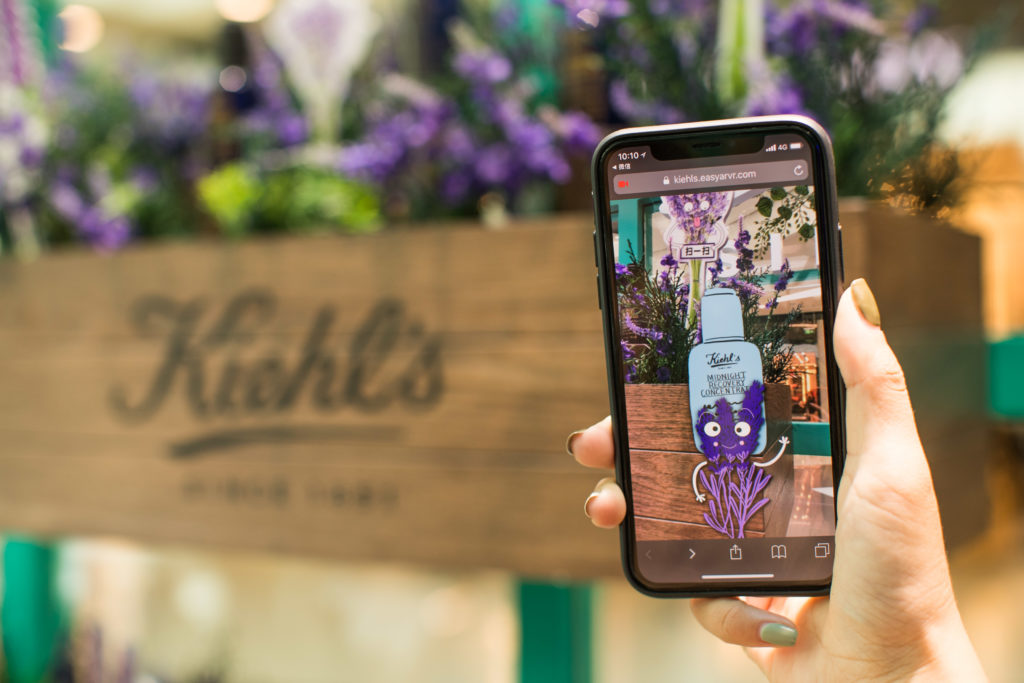
    A Kiehl’s pop up at Sha Tin features an AR gaming app to engage with shoppers.

    The beauty products retailer’s short-term store at the New Town Plaza in Sha Tin has been launched to promote Kiehl’s Calendula Serum-Infused Water Cream, and displays a giant 3D Calendula flower in the centre of the atrium that is only visible through visitors’ mobile phones.

    Visitors who upload images from the pop-up to their social media can redeem a special cosmetics product. Other product samples and a skin analysis are available for customers browsing the store.

    Kiehl’s has also designed an AR game that can be used at its regular stores after the pop-up closes, which will be playable until June 30. The game has collected 8000 registrations over the course of the campaign.

  • Google to shut down YouTube Gaming App

    Google to shut down YouTube Gaming App

    Google announced last year that the YouTube Gaming app will go away at the end of March. However, for reasons that elude us, Google has decided to prolong YouTube Gaming’s life for two more months.

    Today, the Mountain View company announced that it will shut down the YouTube Gaming app on May 30. Since we’re so close to the deadline, we doubt that Google will further delay the closure of the app.

    The YouTube Gaming app will go away on May 30, but you’ll be able to find all of your favorite gaming videos in the YouTube main app at www.youtube.com/gaming.

    If you’re using YouTube Gaming app on a regular basis, then you should know that Google plans to merge it with the standard YouTube platform. After May 30, all YouTube Gaming visitors will be directed to a new channel for games on the may YouTube website.

    Unfortunately, any content that you might have saved or viewed on the YouTube Gaming will be gone after May 30, as Google announced that it’s not possible to transfer games between platforms. According to YouTube, the merger of the two platforms will allow the company “to build a stronger home for the gaming community” on YouTube, not just the YouTube Gaming app. In other words, YouTube is putting all the eggs in one basket to better compete with the likes of Twitch.

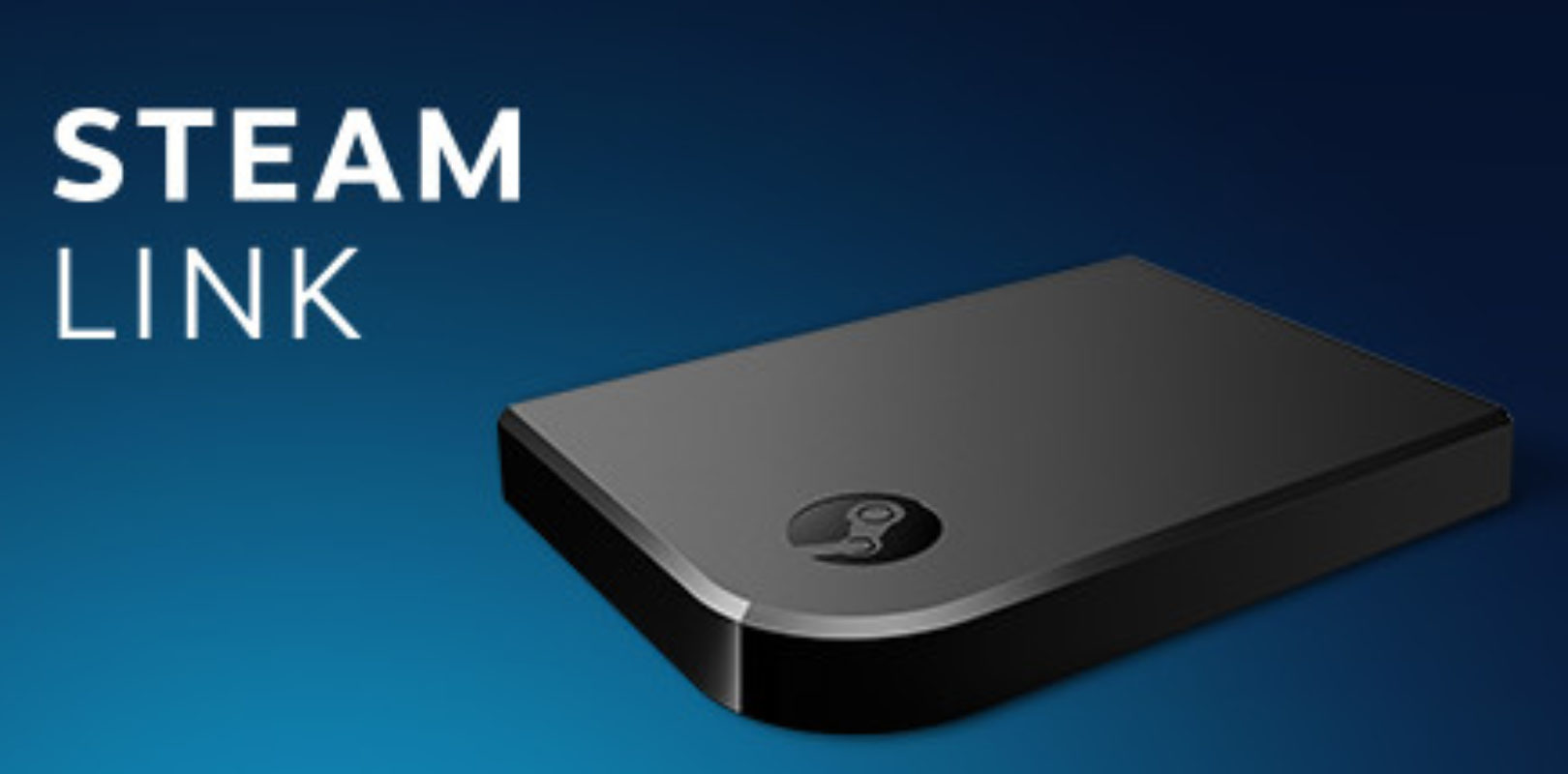
  • Steam Link launches on iOS and Apple TV

    Steam Link launches on iOS and Apple TV

    Due to violating many of App Store’s guidelines, Valve’s Steam Link app was rejected by Apple last year, so Android users were the only ones to be able to bring desktop gaming to their smartphones and tablets.

    Well, it looks like Apple and Valve managed to address all the issues so that gamers could enjoy their library of games on iPhone, iPad, and Apple TV. Steam Link for iOS is now available for download via App Store and enables Steam users to play their games on their mobile devices while connected to their computers.

    You just need to pair an MFI or Steam controller to your device, connect to a computer running Steam on the same local network, and you should be ready to play any game from your Steam library.

    Now, it’s worth mentioning that Steam Link requires an iPhone or iPad running iOS 10 or higher, a computer running Steam (Windows, Mac, or Linux). According to Valve, for best performance, you need to connect your computer using Ethernet to your 5GHz Wi-Fi router, then connect your iOS device to the same 5GHz band of your Wi-Fi network. Also, make sure that you’re not too far away from your router when playing games.

  • Unicom, Ericsson to collaborate on 5G development

    Unicom, Ericsson to collaborate on 5G development

    China Unicom and Ericsson have signed an agreement to accelerate the development of commercial 5G technology.

    The agreement signed at China Unicom’s 5G Innovation and Cooperation Conference in Shenzhen involves further co-operation on a 5G test network.

    The companies have already completed innovative 5G projects, such as the live 4K HD broadcast of a marathon; live 8K HD broadcast of the Women’s World Club Volleyball Championship; 360 degree panoramic live broadcasting, and driving demos.

    Meanwhile China Telecom and Ericsson announced they are collaborating to provide an end-to-end 5G network for the Beijing Expo 2019 horticultural exhibition in Beijing’s Yanqin district.

    The two companies are providing an end-to-end 5G network for the expo offering a combination of garden art and 5G mobile edge computing (MEC) technology to provide visitors with 360-degree panoramic UHD video VR live broadcasting, 5G+VR live broadcasting, and 5G cloud gaming services.

  • Nubia’s new Gaming handset has Fresh Features

    Nubia’s new Gaming handset has Fresh Features

    Remember when there was all that concern about the Qualcomm Snapdragon 810 SoC overheating? The fear was so real that Samsung decided to power the Galaxy S6 line with its own Exynos 7420 chipset, even in the U.S. where it usually equips its phones with a Snapdragon chip. Some manufacturers started using small (.6mm) heat pipes in order to dissipate the heat generated inside a smartphone.

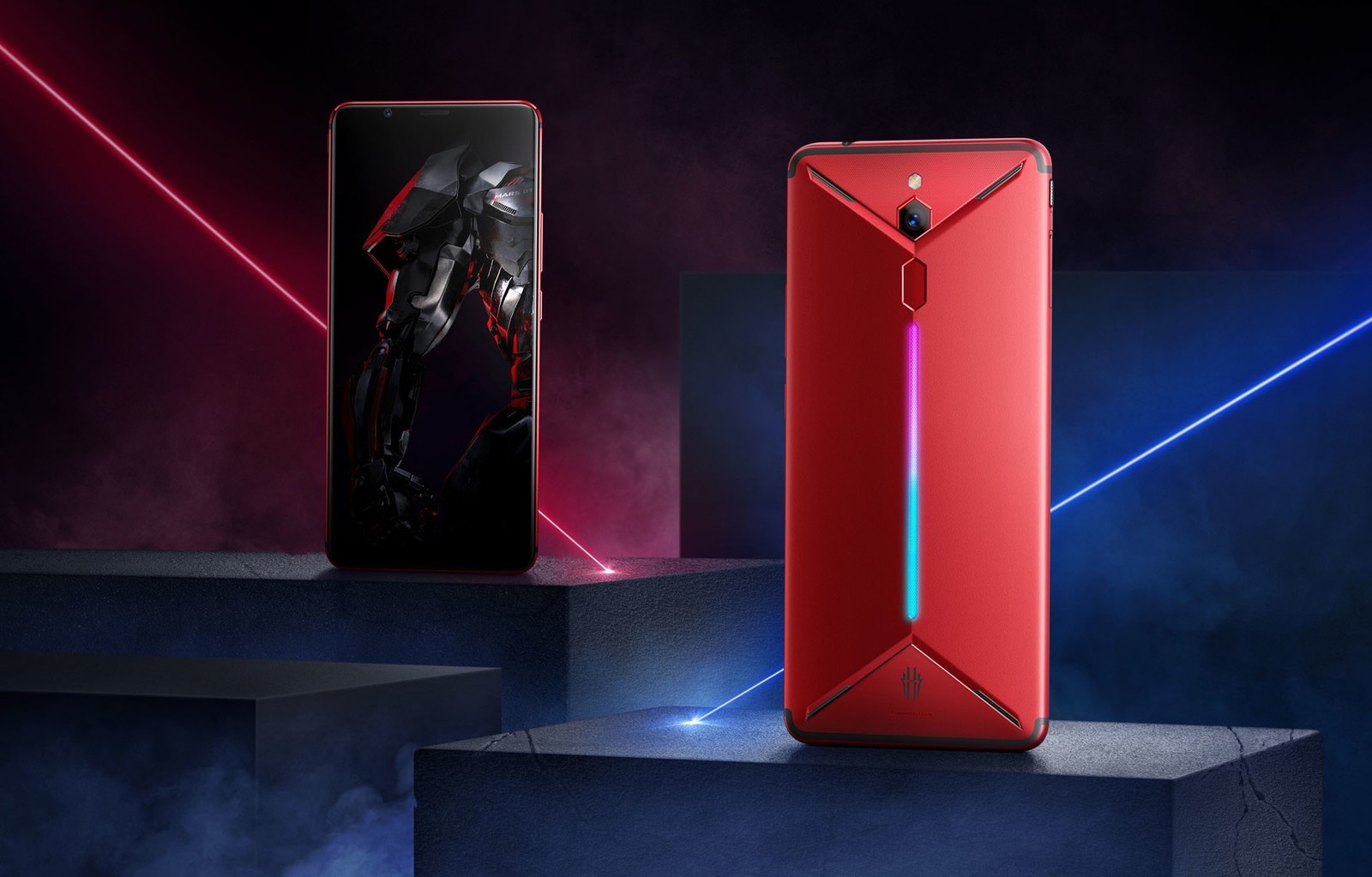
    Nubia announced the first smartphone to be equipped with a cooling fan, the Red Magic 3 gaming phone. To keep the handset’s internals cool, the device combines what the company calls “state-of-the-art liquid cooling technology” with an internal fan. Nubia says that this combination increases heat transfer by 500%; not only does this keep the phone cool in the user’s hand, it also boosts the performance of the device providing a smoother experience.

    While the Nubia Red Magic 3 will launch on May 3rd in China, it also will be available next month in the U.S., Canada and Europe (including the U.K.). Pricing has not yet been announced, but the phone does feature high-end specs. The device comes with a 6.65-inch AMOLED screen with an FHD+ resolution. With a refresh rate of 90Hz (most phones refresh at 60Hz) the Red Magic 3 will offer users smooth gameplay. The Snapdragon 855 Mobile Platform is under the hood, and there will be three different memory/storage configurations (6GB RAM/128GB storage, 8GB RAM/128GB storage and 12GB RAM/256GB storage). In addition, the phone features dual front-facing stereo speakers, DTS:X and 3D sound. This creates a “cinematic soundscape” with or without headphones. Instead of having to use a gamepad accessory, the handset has touch-sensitive shoulders that can be customized.

    The Red Magic 3 is more than just a gaming phone. It happens to be pre-installed with a nearly stock version of Android 9 Pie. On the back is a 48MP camera using Sony’s IMX586 sensor, and in front is a 16MP selfie snapper. With a 5000mAh battery inside, you won’t have to worry about finding an outlet in the middle of the day, and perhaps the next day as well. And if you happen to be an ardant gamer, the RedMagicGameSpace2.0 dashboard allows you to quick-launch games, optimize settings and the fan speeds, check the temperature inside the phone, and record in-game videos. It also allows you to block notifications so that you can enjoy uninterrupted game play. The Red Magic 3 will be available in Black or Red.

    Starting tomorrow, April 29th, consumers can sign up to win an opportunity to unbox the Red Magic 3 by visiting this website. Three first prize winners will receive the Red Magic 3 before the release date, and will get to do a live unboxing and hands-on over the Red Magic website and Nubia’s social media channels. Three second prize winners will have the opportunity to buy the Red Magic 3 at 50% off and four third prize winners get to take 20% off the price of the phone.

    Back in February, Nubia launched the Red Magic Mars gaming phone in the U.S. That model features a 6-inch LCD screen with a 1080 x 2160 resolution. While Nubia called this device a gaming phone and a daily driver in one unit (which it also says about the Red Magic 3), the $399 price surely caught the eye of smartphone buyers in the states. We don’t know the price of the Red Magic 3 yet; if Nubia keeps it low, it will be hard for U.S. consumers, unlike the phone, to keep cool.

  • Official Online Nintendo Store Opens Doors in Hong Kong

    Official Online Nintendo Store Opens Doors in Hong Kong

    An official Nintendo Hong Kong online store has opened this week.

    The new storefront eplaces a former Nintendo page that offered download codes which could be redeemed on WhatsMall.

    Now fans of the Japanese game platform can buy software online direct from the manufacturer.

    The Nintendo Hong Kong e-commerce site offers download codes for a range of Nintendo Switch and Nintendo 3DS games along with DLC, reports fansite NintendoSoup.

    The site features multiple languages as well, along with Chinese: American and UK English, Canadian French, French, Latin America Spanish and Spanish.

  • Cloud gaming could make up half of 5G data traffic by 2022

    Cloud gaming could make up half of 5G data traffic by 2022

    Cloud gaming could generate as much as 50% of 5G data traffic by 2022, based on the rapid progression of cloud gaming services in recent months.

    That was one of the key findings presented during a recent livecast hosted by Openwave, which was attended by over 50 operators, including Vodafone, Orange, Deutsche Telekom, Verizon, AT&T and Telefónica.

    According to Openwave, most operators believe cloud gaming could represent 25% to 50% of 5G data traffic by 2022.

    As mobile operators deploy 5G networks, it’s vital that mobile operators prepare for the disruptive impact that cloud gaming could pose, the company noted.

    “The recent emergence of cloud gaming platforms including Google Stadia, Apple Arcade, Microsoft xCloud and Snap Games has not escaped the attention of the operator community,” said John Giere, president and CEO of Openwave Mobility. “Over-the-top (OTT) players have ambitious plans to become the ‘Netflix for gaming’, hosting libraries of thousands of instantly accessible games that, ultimately, will consume three to four times the amount of bandwidth on 5G networks, compared to standard definition video traffic. Needless to say this will impact mobile operator data strategies.”

    “While 5G network rollouts are still in their infancy, OTTs are already planning augmented, virtual and mixed reality services, in addition to cloud gaming. Combined with the expected continued growth of streaming video, these services will rapidly eat into the additional bandwidth provisions of 5G.”

  • Asus tipped to launch second-generation ROG gaming smartphone

    Asus tipped to launch second-generation ROG gaming smartphone

    The ROG Phone, Asus’ first gaming smartphone was quite expensive at launch, even when compared to other flagships released on the market around the same time. The cheapest Asus ROG Phone could be yours for $900 in the United States, while the most expensive model, which packs 512GB storage, was priced at $1,100 outright.

    Apparently, Asus plans to launch a sequel later this year, but the company will mainly focus on the Chinese market this time. Digitimes reports the second-generation ROG Phone will be launched in Q3 2019, and that Asus will team up with Tencent to advertise the flagship in China.

    Back in December, Asus outlined its new strategy to focus on gaming and premium smartphones rather than entry-level and mid-range models, which is meant to reduce the losses of its smartphone business.

    The report also claims Asus has a big chance of revitalizing its smartphone division if the partnership with Tencent goes through, even though gaming smartphones remain niche products that don’t generate significant profits.

    Although Asus plans to focus on the Chinese market with the next ROG Phone, there’s no reason not to sell the device in other markets like Europe and the United States.

  • Xiaomi’s Black Shark 2 gaming smartphone goes on sale

    Xiaomi’s Black Shark 2 gaming smartphone goes on sale

    Great news for mobile gaming fans looking to buy one of the most powerful gaming smartphones available on the market, as Xiaomi has just announced their new product, Black Shark 2 is now up for grabs in Europe.

    Initially introduced in China on March 18, Xiaomi Black Shark 2 can be purchased from Europe beginning March 28, at 6.00 PM CET. You’ll be able to buy the phone from every European country where Xiaomi officially sells its phone, and here is how much you’ll have to pay.

    The Black Shark 2 with 8GB RAM and 128GB internal memory will be available for purchase for €549, while the 12GB RAM and 256GB storage will cost €649. For customers in the UK, the smartphone will be available for £479 and £559, respectively.

    If you take away its gaming-related features, the Black Shark 2 remains a very powerful flagship smartphone, so even if you’re not a gamer, it can be a great alternative to Samsung, LG and Huawei’s flagships.

    Speaking of gaming features, Xiaomi explains that the Black Shark 2 embeds the only direct touch liquid cooling system in the work. Also, the phone’s display benefits from the world’s lowest latency touch.

    As far as US availability goes, we doubt this will come in the United States at all since Xiaomi hasn’t yet officially entered the market, although it repeatedly said it will eventually happen.

  • AR version of Angry Birds comes to iOS this spring

    AR version of Angry Birds comes to iOS this spring

    Remember when Angry Birds was the most popular mobile game around? Many of you who played religiously ended up moving on to more graphically complex games. Maybe Rovio’s characters, which the company once said would make it the next Disney, suffered from overexposure with licensing deals. The fowl foul had their faces plastered all over the place from Band Aids to board games to underwear.

    You can’t say that Rovio hasn’t tried to keep up with the times. VR versions of Angry Birds are available for Oculus Rift and Vive, and an AR variant of the game can be played on the Magic Leap headset. And today, the company has announced that Angry Birds AR: Isle of Pigs will soon be available for certain Apple iPhone and Apple iPod models. Using Apple’s ARKit, a flat surface like a coffee table is overlaid with different stages while the phone itself becomes the slingshot.

    Players can walk around each stage, looking for hidden items and areas where the pigs might be most vulnerable to attack. Rovio is offering the game for free in partnership with Resolution Games, although we are pretty sure that there will be some in-app purchasers that players can make.

    “We’re delighted to bring the beloved physics-based gameplay of Angry Birds to life through augmented reality. It’s an especially timely moment to bring our avian friends to mobile AR for the first time, as this year marks the tenth anniversary since the release of the first Angry Birds game.”-Kati Levoranta, CEO, Rovio Entertainment

    “This game evokes the core of what makes AR gameplay truly AR. With its engaging characters, classic Angry Birds slingshot gameplay and ability to move around the structures, it utilizes the unique elements of Apple’s ARKit and showcases what AR gameplay is capable of, which is pretty amazing when you see it come to life.”- Tommy Palm, Resolution Games.

    Angry Birds AR: Isle of Pigs is available today to pre-order from iTunes and it will be released in the late spring of 2019. Don’t expect to see an AR version of Angry Birds for Android anytime soon since the phone version of the new AR Angry Birds game is an Apple exclusive for now.

    For those familiar with the old Angry Birds games, the rules are the same. You try to knock down as many pigs as possible by using a slingshot to propel one of the Angry Birds toward the swine. One difference is that now you see the slingshot from a first-person perspective. Fling back on your phone to send the Angry Bird flying toward its target. Originally, there will be as many as 40 different levels in the game.

    Angry Birds AR: Isle of Pigs is compatible with all iPhone models dating back to the iPhone 6s, all iPad Pro models, iPad fifth and sixth generation, and the new iPad Air and iPad Mini tablets introduced yesterday.

  • First Lenovo Legion store in Philippines

    First Lenovo Legion store in Philippines

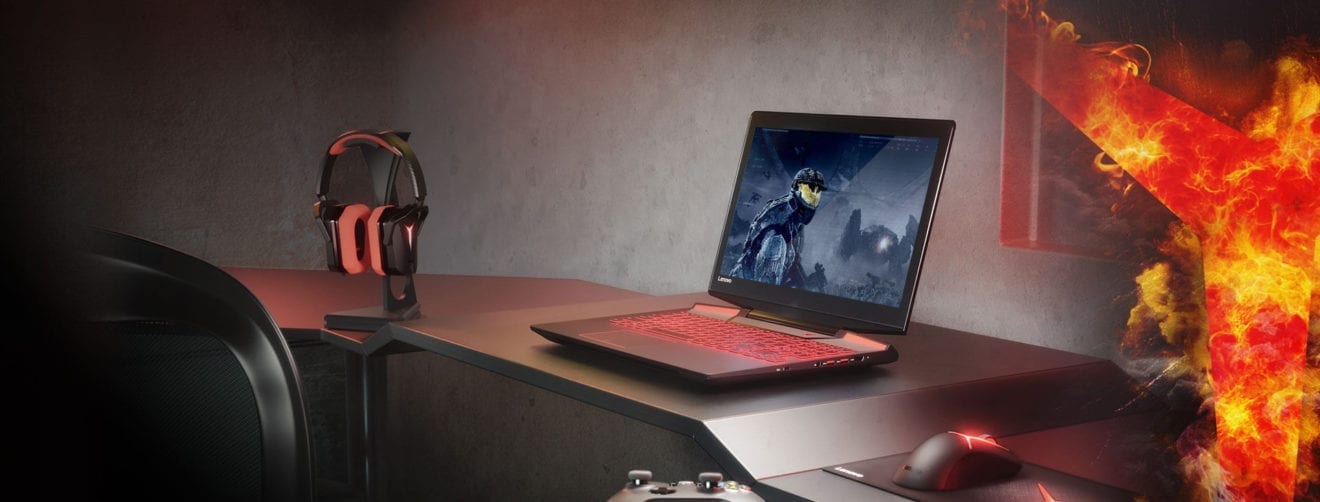
    The first Lenovo Legion concept store in the Philippines has opened as the tech company strengthens its gaming business.

    The Quezon City outlet, at less than 40sqm on the fourth floor of the Annex Building, showcases the brand’s Legion gaming machines in a setting that allows customers to personally examine and experience the products. Lenovo intends to host mini tournaments at the venue to “engage the local gaming community,” according to its statement on the opening.

    Lenovo Philippines GM Michael Ngan expressed the firm’s intentions to open as many such stores in the territory as possible, depending on available spaces, with a possible four outlets planned for this year. He added that the Philippines is seen as a strong growth space for the company’s Lenovo Legion gaming sub-brand. He hinted that the firm’s Legion of Champions e-sports tournament may be held in the Philippines.

    “We’ve had a lot of customers asking why don’t we host in the Philippines … so I’m lobbying that we can have the opportunity to host the fourth edition here in Manila,” he said.

  • Razer launches country HQ in Malaysia, looks to groom next gen tech talent

    Razer launches country HQ in Malaysia, looks to groom next gen tech talent

    Shortly after it announced the construction of a new Southeast Asia headquarters, Razer has unveiled its new country headquarters in Malaysia which will house over 280 employees. The investment strengthens Malaysia as Razer’s regional center of fintech innovation, e-sports excellence and talent development.

    Razer aims to position itself as a fintech leader in Malaysia, with one of its initiatives being a partnership with property development company UOA Group to digitise and integrate its carpark payment system into the Razer Pay app. Upon completion, carpark users can settle their parking fees using the Razer Pay app without waiting in queues. It is also working with merchants in Bangsar South to accept Razer Pay

    As part of its e-sports initiatives, Razer will share its expertise in the field with the Malaysian gaming community. This includes coordinating with industry partners to drive gaming events in the country, bringing the gaming community together and looking to support Team Malaysia for esports at SEA Games 2019.

    Razer will also work with the government and industry partners to develop the next generation of tech talent in Malaysia. It will collaborate with institutes of higher learning, provide training and mentorship programs and offer exchange programs across the regional Razer offices.

    The world now demands a high level of innovative thinking and entrepreneurial mindsets, and Razer will help nurture the future technology leaders of Malaysia.

    “Razer will be investing in Malaysia as a hub for our fintech efforts in Southeast Asia,” says Min-Liang Tan, co-founder and CEO of Razer. “It is the first country in the world to be ready for Razer Pay, and we see the Razer Malaysia office as a natural springboard for our fintech efforts in the region.”

    Last year, Razer launched its e-wallet app for youth and Millennials in Malaysia and claimed to have signed up 500,000 users in less than a week. This month, Razer Pay has been expanded with major new features such as in-app coupons, instant messaging, and an enhanced e-wallet experience.

    Razer has collaborated with Malaysia’s household brands to bring exciting offers to consumers. 7-Eleven is offering RM5 coupons and Kenny Rogers Roasters will offer RM10 coupons to Razer Pay users. U Mobile will also organize weekly contests with prizes such as the Razer Phone 2. Merchants operating in Bangsar South will also start accepting Razer Pay. These merchants will also begin to offer rewards programs enabled by Razer Pay, such as coupons and flash sales to help customers save time and money.

  • Nintendo launches flagship store in Tokyo

    Nintendo launches flagship store in Tokyo

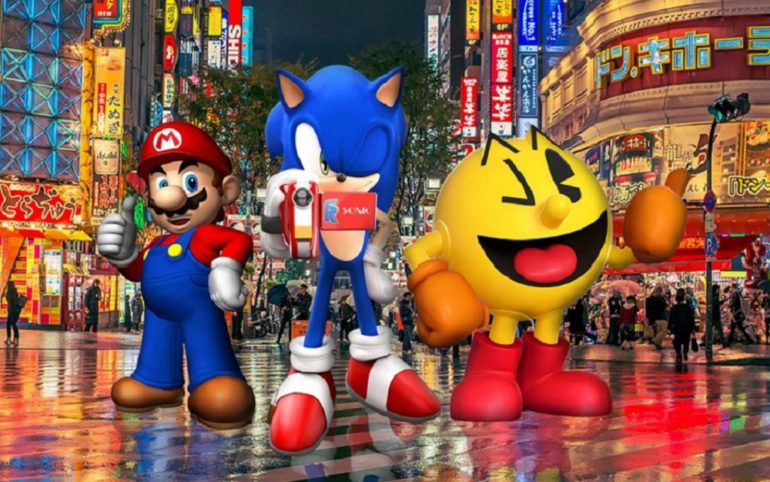
    Nintendo is opening a Tokyo flagship store, marking the iconic Japanese company’s first-ever domestic retail outlet. During Nintendo’s latest Corporate Management Briefing, the president of the Nintendo, Shuntaro Furukawa, announced the game company would be opening a store in the Japanese capital in 2019.

    The executive said that plans are set for Nintendo Toyko to be located in the tentatively named ‘Parco’, which is yet to be opened and will bow in the Shibuya district. The Nintendo store in Japan will have its own floor in a new department store and is targeted at teens and commuters.

    “We are hoping [the store] will be a new point of contact between consumers and Nintendo that a wide range of people, regardless of age, gender, or experience with games can enjoy,” explained Furukawa.

    The new store also hopes to attract shoppers to Nintendo Switch, which is struggling to draw a wider swath of users, according to Bloomberg. Last month, Nintendo cut its shipments forecast for the console, which can be used at home or on the go.

    “In addition to selling products such as video game systems, software and character-based merchandise, we plan to host events and offer opportunities to play games, and are preparing to make this shop a new base for communicating Nintendo information in Japan. We will announce further details on each of these initiatives at a later date.”

    Looking forward, Nintendo is also planning to open exhibits at Universal theme parks in Osaka, Orlando and Hollywood.

    Additionally, the company is looking to participate in more e-sports tournaments, where gamers get together and compete in stadiums

    Nintendo opened its first store in New York as Pokemon shop in 2005 in the city’s Rockefeller Centre, and has since rebranded as Nintendo New York.

    Nintendo Tokyo is scheduled to open in the fall of 2019.

  • Korean gaming firm could go up for sale at $7 billion

    Korean gaming firm could go up for sale at $7 billion

    The founder of Korea’s top gaming company Nexon has put the company up for sale, according to a local media outlet, in what could be the biggest such deal in Korean history. According to a report, Kim Jung-ju, chairman of NXC, the de facto holding company of Nexon, will sell a 98.64 percent stake in NXC worth around 8 trillion won ($7.1 billion). NXC owns a 47.98 percent stake in Nexon, worth about 6 trillion won.

    The shares include Kim’s holdings, at 67.49 percent, and those held by his wife, at 29.43 percent, as well as 1.72 percent held by Wise Kids, a software company Kim owns.

    Deutsche Bank and Morgan Stanley have been selected to oversee the sale, according to the report.

    A spokesperson for NXC responded to the report, saying that the company is in the process of confirming the news.

    “We are checking whether the report is true,” the spokesperson said, “It takes some time because of [the rules concerning] electronic disclosure. The official announcement will be unable to come out today.”

    As for the rationale behind the decision to sell, some media reports citing anonymous sources at Nexon point to Kim’s reluctance to deal with the government’s hefty regulations on the gaming industry.

    NXC, however, said that the reports are groundless, adding that “Chairman Kim hasn’t complained about government regulations.”

    While it is immediately hard to verify Kim’s motivations, financial reasons are unlikely to be the cause. Nexon, which trades on the Tokyo Stock Exchange, has shown strong earnings performance. Sales rose 18.7 percent in 2017 on year to 234.9 billion yen ($2.2 billion). Entering 2018, the company maintained steady growth with the third quarter seeing a 15 percent jump in revenue compared to the same month last year.

    Local media reports suspect that the potential buyer could be China’s Tencent Holdings or U.S. video game publisher Electronic Arts, given the massive size of the sale. Tencent already stands as the sole local publishing partner in China for Dungeon Fighter Online, a multiplayer video game developed by Nexon subsidiary Neople. The Chinese internet giant holds a sizable stake in Korea’s major game and entertainment units, including Netmarble and Kakao.

    Another focus of the deal is how NXC will process the sale of non-gaming affiliates.

    Non-gaming holdings owned by both NXC and Nexon span a wide range of industries.

    A Nexon affiliate took over Stokke, a Norwegian company famous for baby strollers, in 2013. NXC acquired a 65 percent stake in Korean cryptocurrency exchange Korbit for 91.3 billion won more recently in 2017 and Bitstamp, a Europe-based cryptocurrency exchange, last year.

    The founder could either split them from the sale or bundle them together.

    Built in 1994, Nexon made its name known with The Kingdom of the Winds, a 2-D fantasy massively multiplayer online role-playing game (Mmorpg). The game was recognized as the longest-running commercial graphical Mmorpg by the “Guinness World Records” in 2011.
  • Gaming gadget New Razer Phone 2 is launched

    Gaming gadget New Razer Phone 2 is launched

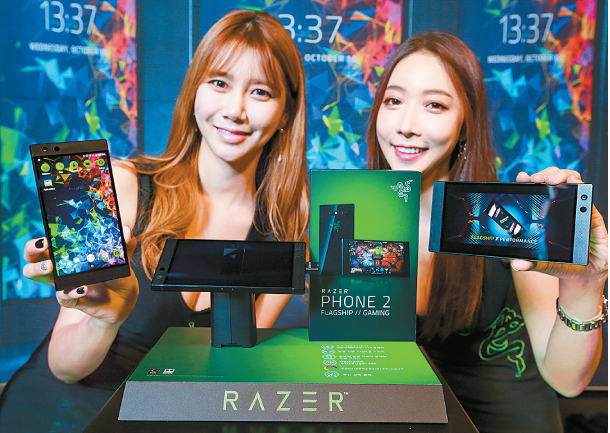
    Razer, a Singaporean gaming gadget company, unveiled the Razer Phone 2 – a smartphone specifically designed for gaming – on Friday in Seoul. Korea is the fourth-largest gaming market in the world with more than 28 million game users, according to the company.

    The Razer Phone 2 is equipped with a 5.7-inch display and offers a 120 Hz refresh rate, allowing users to enjoy mobile game with less delays and disconnections. The upgraded refresh rate helps the touch screen to react more precisely to user demands, according to the company.

    The screen is 50 percent larger than its previous version – the Razer Phone 1 – which launched last year.

    The Razer Phone 2 comes with a 400mAH battery which allows the phone to play games for 10 hours.

    Playing mobile games is not the only entertainment available on the Razer Phone 2. It is also optimized for watching videos.

    The company said the new phone includes Dolby Atmos technology in its dual speakers that are equipped on bezels both on the top and bottom of the devcie, providing a richer sound.

    In terms of camera, the Razer Phone 2 is equipped with a dual camera on the back – a wide-angle lens and telephoto lens – that offer 12 megapixels each. The front of the phone has an 8 megapixel camera.

    To optimize the display, Razer teamed up with popular games including PlayerUnknown’s Battlegrounds, Rival: Crimson x Chaos and Marvel’s Future Fight, among others.

    The Razer Phone 2 will go on sale on Dec. 4 in Korea in partnership with local distributors All Life Technology and CJ Hello.

    The phone sells for 990,000 won ($882.87). With subsidies from CJ Hello’s payment plan, the price can go down to as low as 599,000 won.

    “Razer was able to pull off a huge success last year with Razer Phone 1 by paving a new sector in the smartphone industry,” said Min-Liang Tan, CEO of Razer in a written statement Friday. “The new Razer Phone 2 will help us set a new standard in the gaming industry.”