Tag: #growth

  • Only 25% of Vietnamese firms have website

    Only 25% of Vietnamese firms have website

    According to the Vietnam Internet Network Information Center, only 25% of businesses in Vietnam have a website with a national domain, compared to over 70% in Europe.

    Amid a growing trend of omnichannel commerce, many retailers invest only in social media and e-commerce platforms, and do not build websites, causing many shoppers to worry about the legitimacy of the shops they encounter, thus detracting the shopping experience, VNNIC director Nguyen Hong Thang said. “Many entities are not fully aware of the importance of a legitimate online presence.”

    He said a website is like the home or headquarters of a retail store on the Internet, and could integrate and link to other sales platforms without being dependent on the policies and algorithms of social networks and e-commerce platforms.

    According to the Ministry of Information and Communications, there are 14 million grocery stores and over 9,000 traditional markets in the country, accounting for 75% of the retail market and meeting 85% of consumer needs.

    If their digital transformation is not ensured, the business activities of small traders would be affected and have social consequences, it warned.

    To encourage businesses to go digital and promote e-commerce, it has launched a program to support their online presence with digital services using the national domain “.vn.”

    The program offers free domain names and accompanying digital services for two years, including email and website services for their “.vn” domain for new businesses and individuals aged 18-23, and support for creating a website within one hour.

    The government seeks to have 350,000 id.vn domain names and 50,000 biz.vn domain names by 2025.

  • Miniso’s revenue and profit soar as footprint expands

    Miniso’s revenue and profit soar as footprint expands

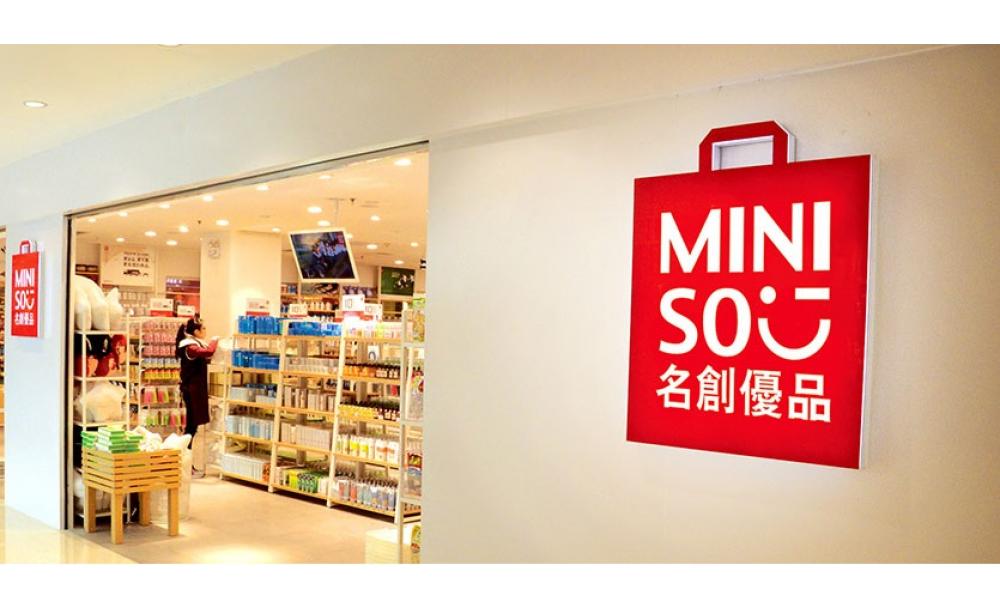
    Value retailer Miniso has posted double-digit increases in both revenue and profit for the quarter ended March 31, driven by the higher number of stores across all markets.

    The company’s revenue rose 26 percent year over year to US$515.7 million, attributed to the increase in average store count and an around 9 percent same-store sales growth. Revenue generated from mainland China was up 16.2 percent to US$346.5 million, while revenue from overseas markets jumped 52.6 percent to US$169.2 million.

    Operating profit was US$102.9 million, up 29.1 percent, while adjusted net profit increased 27.7 percent to US$85.4 million.

    The company opened 217 net new stores during the quarter, raising the store count to 6630, comprising 4034 in Mainland China and 2596 in overseas markets.

    “This past March quarter has seen our fastest pace of store openings for the first quarters ever, establishing a robust foundation towards our goal of a net addition of 900 to 1100 stores in 2024,” said Guofu Ye, founder, chairman and CEO of Miniso.

    “We also embarked on our path towards our five-year strategic goal with a stronger March quarter compared to the high base of the same period in 2023.”

    The company expects sales growth to continue in the June quarter, driven by better store-level performance and store network expansion.

  • Vietnam’s overseas graduates face job-finding struggles at home

    Vietnam’s overseas graduates face job-finding struggles at home

    Holding a high school diploma from Canada and a university degree in Chinese commerce language from China, Tat Dat has faced difficulties securing a fulfilling job upon his return to Vietnam.

    After moving back to his hometown of northern Quang Ninh province in 2022, it took him four months and over 20 job applications to land a position in e-commerce, with a starting salary of VND8 million ($320) per month – less than he hoped for.

    “I diligently monitored job platforms every hour, in search of an e-commerce trade position, hoping for a monthly salary of VND12 million to VND20 million,” Dat said. “Upon eventually securing such a position, the employers informed me that what they could offer me would be VND8 million, a figure not open to negotiation.”

    Dat said he believed that the salary he was offered would never compensate for the VND15 billion invested in his education, yet he remained at the position for six months.

    However, the unsatisfactory salary was merely one of several challenges he encountered in the Vietnamese job market, including difficulties adjusting to workplace culture, being tasked with duties not outlined in his contract, and frequently working overtime without additional compensation.

    “In practice, although the company’s policy stated an eight-hour workday, the actual hours frequently extended to 10-12 hours a day, with no additional overtime compensation,” Dat said. “This was a stark contrast to my previous experiences where an eight-hour workday strictly meant eight hours, nothing more.”

    Dat discovered that being bilingual was no longer a distinctive advantage, facing competition from peers fluent in three or four languages.

    “Encountering peers fluent in English, Chinese, Korean, and French made me feel less competent,” he admitted.

    Dat’s experience aligns with the results of a survey conducted by recruitment agency SHD involving 350 Vietnamese graduates of foreign institutions. The study revealed that 87% experienced cultural and workplace adaptation challenges within Vietnamese corporations, while 83% were dissatisfied with their salary and benefits.

    Ngo Thi Ngoc Lan of headhunt service Navigos Search observed that although graduates returning from abroad bring confidence, language skills, and open-mindedness, they often face difficulties adjusting to Vietnam’s distinct workplace culture. Such graduates require additional time to acclimate compared to their domestically-educated peers, due to the substantial differences in business practices between Vietnam and other countries.

    Ha Vy, a U.S. taxation degree holder, had experiences similar to Dat. After investing VND6 billion in her degree, Vy returned to Vietnam confident in her ability to get a well-paying position. Nonetheless, her lack of practical work experience meant it took her up to four months to find employment offering a monthly salary of VND10 million.

    “My expectations were set on a starting salary of at least VND20 million, but such opportunities proved elusive,” she said.

    After enduring over a year of dissatisfaction due to the mismatch between her efforts and remuneration, the 27-year-old embarked on a job search in Malaysia, driven by her frustration with the undervaluation of her degree in Vietnam.

    “I had anticipated that my degree would garner greater appreciation and financial reward in Vietnam,” Vy said.

    She further explained that despite her proficiency in English, the absence of practical experience posed a significant barrier. Consequently, she said that she now deems it unrealistic for overseas-educated graduates to expect salaries ranging between US$2,000-$3,000 upon their return to Vietnam.

    Le Thanh Ngan, the Head of Recruitment at FPT Education, said that foreign degree holders frequently aspire to high-ranking positions straight out of college, overlooking entry-level opportunities despite their lack of experience, which further complicates their job search in relation to salary expectations.

    But there are more reasons than that for graduates returning from abroad’s challenging job seeking journeys. Vu Hanh Hoa, CEO of a leadership training institute in Hanoi, pointed out that the ongoing economic downturn has been an additional hurdle for this group. As companies streamline operations, they favor experienced employees over those with overseas degrees who necessitate comprehensive training.

    “Major corporations are also facing challenges and have been compelled to reduce expenses to optimize their functions,” she commented. “They prioritize retaining efficient, versatile staff capable of delivering immediate value.”

    Hoa noted that many graduates returning from abroad come from affluent backgrounds, thus lacking the resilience and perseverance deemed essential in the challenging Vietnamese job market. Only a small fraction exhibit the endurance and tenacity valued by employers in today’s global economic climate, she added.

    Another challenge for holders of foreign degrees is their limited experience in communication and building connections within the Vietnamese context.

    “Students who have spent significant time abroad tend to understand foreigners better than their own compatriots, necessitating a considerable period to re-acclimatize to Vietnamese society, its people, attitudes, and work culture,” Hoa explained.

    Thus, many employers estimate that international graduates require six to 12 months to adapt, during which they incur significant training expenses without providing immediate benefits to the company. This in turn leads to employer’s reluctance to offer high initial salaries.

    Hoa advised that instead of focusing solely on the prestige of their foreign degrees, graduates returning from abroad should pursue opportunities to gain practical work experience to alleviate their employment challenges.

    “Often, these graduates return with the expectation that their “higher” qualifications merit positions at renowned, large companies with substantial salaries,” she said. “This expectation creates a barrier to employment.”

    Hoa thus encouraged returning graduates to adjust their expectations and recognize that a foreign degree serves merely as an additional credential. In the face of the economic downturn, as companies increasingly prioritize actual work performance over academic qualifications, Hoa said the ability to “genuinely contribute” was the key factor in getting hired.

    Thus, overseas degree holders should consider the importance of accruing work experience and evaluate how they can add value to a company based on their strengths. Hoa advised against holding out for positions in their preferred fields that meet their salary expectations.

    “Set aside your degrees and avoid becoming ensnared in delusions of grandeur,” she counseled. “Don’t become overly fixated on your foreign education.”

    Otherwise, such graduates risk enduring continuous challenges similar to those faced by Dat.

    Disheartened by his comparatively lower earnings in relation to his domestically-educated counterparts, he opted to take out loans from his parents and other sources to launch a homestay business.

    “The overwhelming financial pressure left me with no choice but to venture into entrepreneurship,” he said. “Starting this business has put me in debt of VND7 billion.”

    Although the financial success of his new business remains uncertain, the venture’s costs have accumulated to the total amount Dat has spent on his education and business startup, making it even more difficult for him to earn back what he has invested.

  • Grab chalks up first profitable quarter, but clouds loom

    Grab chalks up first profitable quarter, but clouds loom

    Grab Holdings reported its first quarterly profit on Thursday and unveiled a maiden share repurchase program, but the ride-share and food-delivery firm’s weak annual sales forecast fanned growth worries and weighed on its shares.

    While the Singapore-based company’s ride-share growth hit pre-pandemic levels in 2023, its food-delivery services is rebounding from a slowdown following a boom during the lockdown.

    “There will be revenue acceleration in the years beyond 2024 as investments in our new products bear fruit,” CFO Peter Oey told Reuters.

    He said Grab was building premium offerings in its mobility and delivery services that could generate high-value transactions.

    US-listed shares of Grab, which also said it expects an annual adjusted core profit, were down 2 percent at $3.38 in early trading.

    The company forecast fiscal 2024 revenue between $2.70 billion and $2.75 billion, compared with analysts’ average estimate of $2.80 billion, according to LSEG data.

    Grab said on Thursday it would repurchase $500 million worth of class A ordinary shares, and announced an early payment of the remainder of a term loan. This followed global peer Uber announcing its first-ever share buyback last week.

    Grab also projected full-year adjusted core profit of $180 million to $200 million, compared with estimates of $135.2 million.

    The company’s fourth-quarter revenue of $653 million beat estimates of $629 million. Revenue rose 26 percent in its mobility business on holiday quarter travel demand, while it increased 20 percent in its delivery unit.

    Grab posted a net income of $11 million in the fourth quarter, helped in part by a “reversal of an accounting accrual”.

    The company delivered its first adjusted core profit in its fiscal third quarter, aided by workforce reduction and cut to some incentives and technology costs over the past two years.

  • Singapore sneaker platform Novelship secures US$9.5 million in Series B

    Singapore sneaker platform Novelship secures US$9.5 million in Series B

    Singapore-based sneaker marketplace Novelship has bagged US$9.5 million in its Series B funding round led by East Ventures, iGlobe Partners, and GSR Ventures.

    The company said the new funds will be used to accelerate its expansion plans in Southeast Asia, including enhancing its logistics capabilities, refining authentication processes, expanding its slew of in-house collections, and optimizing its environmentally-conscious delivery process.

    “As collectors’ priorities shift towards accessibility, efficiency, and integrity, Novelship stands firm in our dedication to enhance these aspects on our platform,” said Richard Xia, co-founder and CEO of Novelship.

    The company was founded in 2018 as a platform for buyers and sellers to trade authentic sneakers, limited-edition apparel, and exclusive physical and digital collectibles.

    The funding round came after Novelship’s recent collaboration with Snoop Dogg. The marketplace also introduced new in-house products, including Novelty-branded T-shirts, socks, shoelaces, and Shoe Sole Protectors.

    “Our recent expansion of collections and the introduction of new in-house products reflect our commitment to providing broader accessibility for all collectors,” Xia said.

    Novelship reported a compound annual growth rate (CAGR) of 37 percent in revenue and 55 percent in transactions.

    “Novelship has been proven as a one-stop marketplace to fulfill the desires of collectors,” said Willson Cuaca, co-founder and MD at East Ventures. “We also take great pride in witnessing how Novelship incorporates sustainable practices into its operations.”

    Further reading, Asics says its new sneaker offers the lowest CO2 emissions of any brand.

  • Grab cuts 1000 jobs

    Grab cuts 1000 jobs

    Singapore-based Grab Holdings, Southeast Asia’s leading ride-hailing and food delivery app, is cutting 1,000 jobs or 11 per cent of its workforce, its CEO said on Tuesday, citing the need to manage costs and ensure more affordable services long term.

    In a letter sent to employees late on Tuesday and seen by Reuters, chief executive Anthony Tan said the cuts, the biggest since the start of the pandemic, were not “a shortcut to profitability” but a strategic reorganisation to adapt to the business environment.

    “Change has never been this fast. Technology such as generative AI (artificial intelligence) is evolving at breakneck speed. The cost of capital has gone up, directly impacting the competitive landscape,” Tan said in the letter.

    “We must combine our scale with nimble execution and cost leadership, so that we can sustainably offer even more affordable services and deepen our penetration of the masses.”

    Tan said that even without layoffs, Grab had managed costs and should hit its target for group adjusted EBITDA breakeven this year.

    The “superapp”, founded in 2012, offers deliveries, rides and financial services in eight Southeast Asian countries, including Indonesia, Malaysia, the Philippines, Singapore, Thailand, and Vietnam.

    Its shares were up 4.7 percent premarket after Tan’s announcement to staff. The stock had climbed as much as 5.6 percent premarket, extending earlier gains on a Bloomberg News report of the cuts.

    The layoffs follow a similar move last year by Indonesian tech firm GoTo, which offers rides, e-commerce and financial services. It has undergone strict cost-cutting, including axing 12% of its workforce in 2022. It laid off a further 600 staff in March.

    Its incoming CEO is planning to head the firm only temporarily and quit after improving profitability, sources told Reuters last week.

    In May, Grab reported a quarterly loss of $250 million but said revenue in the first quarter of this year rose 130.3 percent to $525 million from a year ago.

    In February, it issued an upbeat forecast for full-year revenue for 2023 and brought forward its profitability timeline.

    The US-listed Grab’s last job cuts were in 2020, when 360 people were laid off in response to the impact of the pandemic. The company had 11,934 staff as of the end of 2022, including about 2,000 from its acquisition of a grocery chain last year, its latest annual report said.

    In September last year, it said it had no plans to undertake mass layoffs despite the weak market. In December, Tan told staff the company was freezing most hiring, payrises for senior managers, and cutting travel and expense budgets.

  • Indonesian Based Apparel Startup Claude sewn the Seed in Funding

    Indonesian Based Apparel Startup Claude sewn the Seed in Funding

    The fast growing direct-to-consumer apparel company, Claude, that aims to be everyone’s go to brand for going shopping has just announced the closing of its seed round.

    This independent brand that introduces relevant elevated looks has been busy stealing the hearts of the global market, stepping out from the comfort zone of domestic base and successfully penetrate international waters, from Southeast Asia, to Europe, to the United States. Suspected to be one of the first brands from Indonesia that are daring to be global and succeeded. “In this globalized world where technology enables us to cross-border real-time, becoming global immediately enhances your total addressable market hundred times over while simultaneously strengthening the strong brand equity we carefully preserve”, Co-Founder and CEO Tommy Budihardjo says.

    Revolutionary in its business model, Claude uses micro-batches system for new designs and produces more only after the demand is proven, hence minimizing waste while enhancing the speed in offering of new designs. Combined with its own real-time analysis, Claude understand the customers’ behaviour and taste real time and therefore can adapt instantly. “Apparel industry is one of the biggest contributor of waste – especially due to unsold stock – the industry is overdue for a change, and we are happy to lead the charge with our business model that successfully cut finished goods waste by 90% and maximize the revenue and profitability at the same time”, the CEO stated.

    Claude’s latest round will be used to enhance current product offerings and strengthen the market it has already penetrated. The fund was led by one of the early-backers of Tokopedia and Kakao Corp, CyberAgent Capital and supported by the family office Prima Fund I. “Indonesia is one of the largest consumer retail markets in the world. With Claude’s strong brand value along with the experiences brought by the management team, we believe that the company could bring its unique value propositions and be well-accepted by the huge Indonesian and SEA apparel markets.”, says Nobuaki Kitagawa, Managing Director of CyberAgent Capital, Inc.

  • Education startup TEKY raises $5M from foreign investors

    Education startup TEKY raises $5M from foreign investors

    Education startup TEKY Alpha has raised US$5 million from Singaporean investment firm Sweef Capital to expand its operations.

    TEKY plans to expand its educational services at public schools and after-school programmes for children aged five to 18, Sweef Capital said in a statement.

    The startup, founded by Dao Lan Huong in 2016, delivers science, technology, engineering, the arts and mathematics (STEAM) education.

    It operates 16 STEAM coaching academies in five cities and partners with more than 45 schools to deliver STEAM courses to more than 25,000 children.

    “I’m excited about our expansion plan to open more STEAM centers across the country in the next two years and the prospects of a partnership with public schools to integrate the STEAM curriculum and increase accessibility,” Huong said.

    The International Labour Organization has forecast that 137 million workers in Southeast Asia, or a fifth of the region’s population, will lose their jobs because of automation, robots and artificial intelligence in the next two decades.

    Workers around the world are likely to need to switch jobs and learn new skills, but many of the new jobs created by 2030 by technology would not have existed before.

    Vietnamese education must keep pace with these big shifts so that the future workforce could seize the opportunities of the industry 4.0 era, Huong said.

    This is Sweef Capital’s first investment from its Southeast Asia Women’s Economic Empowerment Fund.

    Existing investor Hong Kong-based Strategic Year Holdings also participated in the round.

  • Indonesia’s GoTo posts $201.9 million quarterly loss

    Indonesia’s GoTo posts $201.9 million quarterly loss

    Indonesia’s biggest tech firm PT GoTo Gojek Tokopedia Tbk posted a narrower adjusted EBITDA loss for the fourth quarter of 2022 of 3.1 trillion rupiah ($201.89 million), the firm said on Monday.

    GoTo posted 6.5 trillion rupiah in adjusted EBITDA (earnings before interest, tax, depreciation, amortisation and rent) loss in the same period of 2021.

    Its group CEO Andre Soelistyo said the results showed the company was making progress towards profitability through its cost-cutting measures, such as reducing incentives and marketing spending.

    “Although we expect growth to moderate in the short term, we will continue to focus on building the foundational product infrastructure that will drive sustainable, profitable growth over the long term,” he said in the statement.

    GoTo said its growth of gross transaction value in the next quarters will be slowing down as the company reduced its spending on promotion and a high-based effect last year, which saw higher transactions due to COVID-19 public movement restrictions.

    “There will be a normalisation for our food deliveries and e-commerce transactions…and there’s still macrouncertainty that will affect customer spending,” GoTo Group CFO Jacky Lo said in an investors call on Monday.

    GoTo said the group is on track to achieve positive adjusted EBITDA within the fourth quarter this year, while its 2023 adjusted EBITDA loss is expected to be in range of 5.3 trillion rupiah to 4.6 trillion rupiah.

    The results were indicative position and results based on unaudited reports. Audited numbers would be available by the end of March, it said.

    Gross revenue in the last quarter of 2022 was up 19 per cent year-on-year to 6.3 trillion rupiah, while net loss in the quarter was 19.5 trillion, up almost double from 10.2 trillion in the fourth quarter of 2021.

    For the whole year of 2022, it booked a net loss of 40.4 trillion rupiah or up 55.9 per cent from 2021’s net loss of 25.9 trillion rupiah.

    The group said the higher net loss was due to several reasons, including an 11 trillion rupiah goodwill impairment related to the business combination of Gojek and Tokopedia, which are both their units.

    Prior to the 2022 result announcement, shares of GoTo closed 6.9 per cent down or hit their bottom trading limit on Monday to 108 rupiah a piece.

  • Uber To Steal A March On Lyft In Resurgent Rideshare Market

    Uber To Steal A March On Lyft In Resurgent Rideshare Market

    Uber Technologies Inc’s revenue growth is set to outpace that of rival Lyft Inc as the rideshare firm’s presence in major markets around the world gives it the heft to deal with inflationary pressures.

    Ridesharing companies are starting to recover from pandemic lows as offices reopen and following a resurgence in travel on the back of reopening of closed borders and a strong U.S. dollar.

    Dara Khosrowshahi-led Uber operates in multiple regions and has over the years built a massive food and grocery delivery business, while Lyft has mainly focused on rideshare in the United States.

    Uber’s larger scale, reflected in a $67 billion market cap nearly ten times that of its rival, has also allowed it to spend more on incentives to attract drivers when the industry recovery has flooded rideshare firms with demand.

    While Lyft was the first to show glimpses of a profit since rideshare operations began, investors will now focus on adjusted core earnings outlook as the companies have set big targets for 2024 – $5 billion by Uber and $1 billion by Lyft.

    “Lyft is on the losing end of Uber’s mobility and delivery network effect … in a world of increasing focus on profitability, Lyft does not deliver,” MoffettNathanson analyst Michael Morton said.

    Analysts expect a fourth-quarter revenue increase of 19% for Lyft and 47% for Uber, according to Refinitiv data.

    Analysts at UBS pointed to data that showed the time drivers spent on the Lyft app had decreased, while share of driver app downloads increased for Uber in the fourth quarter.

    “When we look at driver time spent data on a 2-year growth basis our concerns on Lyft losing market share are magnified … we come away more concerned about Lyft’s need to invest in incentives,” UBS analyst Lloyd Walmsley said.

    Uber’s food and delivery segment, which makes up for more than a third of its revenue, has so far been resilient in the weakening economy but it faces risks from a pullback in consumer spending.

  • Foreign startups eye Vietnam’s young population

    Foreign startups eye Vietnam’s young population

    Foreign startups are eyeing Vietnam as one of their main markets thanks to the country’s large and young population, low costs and cheap and abundant labor force abundant.

    Vietnam has been among the top markets in terms of revenue for Singapore’s insurance startup Igloo ever since the company was launched in 2021.

    “Vietnam is becoming one of our key markets,” Nguyen Huu Tu Tri, CEO of Igloo Vietnam. “The country’s insurance industry is set to reach $3.5 billion in 2026, but only 2-3% of that goes to tech insurance,” he said, adding that this means there is a large room for tech insurance growth.

    In its two years of operation, Igloo has sold 13 million insurance policies in Vietnam,10 million in last year alone. The target customers are people with low incomes who are not yet insured.

    The company also chose Vietnam as a site to launch its first insurance policy aimed at protecting rice farmers using weather data and blockchain.

    Igloo hopes to become the top insurtech company in Vietnam.

    For India’s car rental startup Zoomcar, the market in Vietnam is promising as the country has a population of nearly 100 million people and a growing demand for cars.

    Zoomcar connects unused car owners with renters and has recorded over 100,000 registered users, including 3,000 car owners.

    “We are approaching the breakeven point on each trip and expect to grow 200%-300% this year,” said Kiet Pham, national manager of Zoomcar Vietnam.

    Vietnam’s advantage lies in its young and tech-savvy population and its rising middle-class, the two startup leaders said.

    Tri said that after the Covid-19 pandemic people are starting to be more interested in insurance products, with a surge in the number of those who are ready to make purchases.

    Zoomcar sees a large demand for car usage in Vietnam. However, the company says that the cost of owning a vehicle is high, which means there will be a large demand for rental services.

    Vietnam’s car rental market is set to reach $884 million by 2027 with a compound annual growth rate of nearly 14%, according to market researcher Mordor Intelligence.

    “Vietnam is the fastest growing market for Zoomcar in Southeast Asia,” Kiet Pham said.

    The number of start-ups from Singapore venturing overseas through Enterprise Singapore’s Global Innovation Alliance (GIA) acceleration programs has ballooned to more than 400 in less than five years. And one of the more popular destinations is Vietnam, with its large workforce, lower labor costs and sizable market.

    From 2020 to 2022, nearly $2 billion has been poured into startups, according to the Ministry of Planning and Investment.

    The Vietnam Silicon Valley Capital Investment Fund, a partner of Lotte Ventures and Korean government agency KISED, last year introduced 14 excellent Korean startups, which plan to bring new products to Vietnam.

    Hong Sun, vice president of the Korean Chamber of Commerce and Industry, said that Korean startups tend to invest in Vietnam after they see many successful companies in the market. He also forecast that many new startups will come to Vietnam in the near future.

    Last year, a report by the World Intellectual Property Organization (WIPO) said that Vietnam ranked 48th out of 132 countries and territories in achieving the greatest progress in the past decade.

    Although Vietnam has fallen four places compared to 2021, it is still in the third position in Southeast Asia, after Singapore and Thailand. Vietnam is also ranked 54th in the global innovative startup ecosystem, up five places compared to 2021

    But startup insiders have found many challenges, especially in changing user attitudes.

    The technology insurance industry, people’s confidence in insurance in general is low and therefore people are not willing to pay for it.

    Furthermore, the lack of high-quality human resources in the technology sector will make it a struggle for Vietnam to meet the development needs of foreign startups.

  • DTS launches platform for Vietnamese technology startups

    DTS launches platform for Vietnamese technology startups

    DTS Digital Transformation Alliance has supported dozens of startups in technology, and is accompanying thousands of businesses through their digital transformation and journey into the Metaverse.

    In the global context of Industry 4.0, digital transformation is the biggest opportunity and challenge for businesses. To carry out digital transformation and develop successful technology schemes, Vietnamese startups and businesses are facing many barriers in terms of mechanisms, policies, financial conditions, and human resources. In this context, DTS is implementing many activities to support SMEs, creating huge thrust to accelerate digital transformation and blockchain technology in Vietnam.

    A launchpad for blockchain technology startups

    DTS has created a series of communication channels to provide accurate and educational information on blockchain technology. Since the establishment of the Blockchain Alliance for Sustainability (BAS) in 2021, up to now, DTS has been the main organizer and partner of the Blockchain Talk show, the Blockchain news column on VnExpress.

    DTS supports nearly 20 startup projects in the blockchain field and connects to nearly 50 investment funds and KOLs (who have many voices, knowledge, and experience in the blockchain field). Currently, DTS can support technology startups in many forms, from providing legal and financial advice, and project development orientation to supporting communication and developing projects to the public, including the international community,

    “There are many startup projects in the blockchain field today, but to succeed in the international market, the project needs to combine many factors: ideas, capital, technology, people, marketing, and communication strategies. With DTS’s current network of domestic and foreign experts and partners, we can complement what you lack in your projects,” said Truong Gia Bao, chairman of DTS.

    DTS – The new ecosystem for projects

    Currently, DTS is working with strategic partners like Vietnam Financial Consultants Association, Ho Chi Minh City Industrial Park Business Association, Trade and Investment Promotion Center of Ho Chi Minh City, and Business Development and Support Center. DTS directly accompanies many businesses in the process of digital transformation and application of new technology solutions.

    DTS solves the problem of leverage and connecting the strengths of partners and member companies to exploit each other’s opportunities and strengths. In line with the business philosophy, DTS aims to work with members and the business community to build a digital transformation ecosystem to serve each unit’s business activities, that is also the business philosophy of DTS.

    In addition, DTS is working with partners and global experts to develop an ecosystem equipping projects and startups with knowledge and experience in organizing and managing projects based on Blockchain technology applications. Entering the digital era – Metaverse requires not only creativity, but also a modern technology application management system, a marketing team that understands the global community and language, along with a technical team with both passion and technical expertise.

    “DTS wishes to become a companion of technology startups and Vietnamese businesses, a bridge between domestic units and investment funds. We provide financial consulting services and optimal operational solutions according to the business model of each unit. DTS is committed to accompanying, advising, and supporting young people to step into the Metaverse by world standards to confidently succeed,” the DTS chairman stated.

  • Missfresh summonsed by Beijing consumer rights group after complaints

    Missfresh summonsed by Beijing consumer rights group after complaints

    A Beijing consumer rights group said on Tuesday it had asked Missfresh to work on plans to refund its customers and explain how it will rectify its business after receiving a number of complaints, adding to pressures facing the Tencent Holdings and Tiger Global-backed grocery startup.

    The government-backed Beijing Consumer Association said in a statement on its website on Tuesday that a large number of Missfresh customers had complained about the platform’s “abnormal operations”.

    Missfresh did not immediately respond to a request for comment.

    The grocery delivery firm’s troubles come as China’s tech sector grapples with slowing growth amid COVID-19 lockdowns and tightening regulatory oversight.

    The company pioneered one-hour fresh food delivery services in China, a model that is extremely popular with consumers but is labour and capital intensive. It listed on the Nasdaq in June last year, raising $273 million.

    However, the company’s stock has lost 98% of its valuation since and in late July local media reported that it had abruptly laid off hundreds of employees and had not paid salaries, triggering labour arbitration complaints.

    Missfresh has cancelled its one-hour delivery service, changing it to a next-day model, and told local media that it had conducted layoffs due to business restructuring.

  • Financial startup Anfin raises $4.8 mln

    Financial startup Anfin raises $4.8 mln

    Financial startup Anfin, which seeks to make stock investment easy for any user, has raised funding of $4.8 million in a Pre-Series A round from a consortium of investors.

    It was led by angel investor Clement Benoit and U.S.-based startup accelerator Y Combinator. The money will be used to improve its app by building a social network in it so users can share their investment knowledge.

    Anfin was launched in October last year and has raised around $7 million to date.

    Its app allows users to invest as little as VND10,000.

    Its CEO, Phuoc Tran, said the app has over 100,000 active accounts with a total transaction value of $10 million.

    Benoit said creating a product that serves many groups of people in society is the right move in a big market such as Asia.

    He hoped the company would branch out to other countries and succeed in its social investing business model.

    Interest in stocks remains sky-high in Vietnam, with 476,300 new accounts opened in May, a new record.

    Phuoc said despite the volatility in the market, stocks remain an asset class with great prospects.

    Data from investment fund Dragon Capital Vietnam shows that in the last five years, stocks have given investors an average return of 16 percent a year, higher than real estate, bonds or gold.

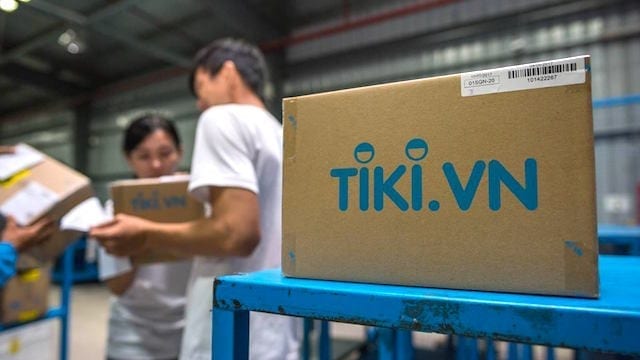
  • Shinhan acquires 10 pct stake in Tiki

    Shinhan acquires 10 pct stake in Tiki

    South Korea’s Shinhan Financial Group said it has reached an agreement to acquire a 10 percent stake in Vietnam-based e-commerce company Tiki.

    The South Korean group said its two units, Shinhan Bank and Shinhan Card, will pick up 7.44 and 2.56 percent stakes in Tiki, respectively. It has invested $90 million in the e-commerce player.

    “Based on Shinhan’s financial expertise and Tiki’s database in a broad range of areas, we are expecting to build a new converged digital ecosystem in Vietnam,” a Shinhan representative said in a statement.

    The deal was first reported by DealStreetAsia in January, with initial investment of around $40 million.

    Founded in 2010, Tiki is the fifth most popular e-commerce site in Vietnam with 17.9 million monthly visitors last year, according to data portal Statista.

    It closed the Series E round last November with $258 million, which was led by insurance group AIA. The company has raised about $450.5 million in total, according to Crunchbase.

    The round brought Tiki closer to unicorn status, with a valuation of around $832 million.

    Shinhan Bank, the largest foreign lender in Vietnam in terms of assets, has around 650,000 users of its online platform, which was launched in 2018.