Tag: #growth

  • Coworking space companies respond to Covid with new solutions

    Coworking space companies respond to Covid with new solutions

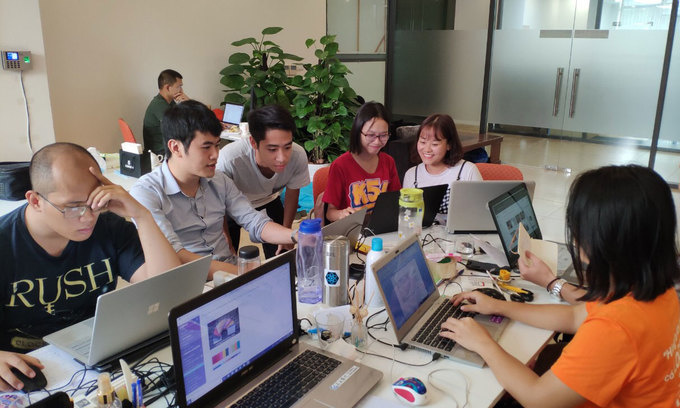
    Coworking space operators in Vietnam have launched a number of Covid response services and even prepared for expansion after the pandemic is controlled.

    This month Dreamplex, which has five coworking spaces in Hanoi and HCMC, unveiled a service called the temporary office for companies with a payroll of at least four. With three facilities in HCMC, cirCo recently provided an online meeting solution for firms that lack equipment and technicians.

    A few days before HCMC mandated social distancing in early June, Toong inaugurated a new 1,250sq.m coworking space in District 3 after an earlier one in March in District 1.

    Its CEO, Duong Do, said 75 percent of the new office in District 3 was booked even before it opened.

    “The pandemic has helped us become sharper and more flexible in designing our services,” he said.

    Early last year, Toong’s occupancy rate was 80 percent in HCMC and 70 percent in Hanoi, but since mid-2020 they have risen sharply.

    The number of clients in the capital has tripled during the pandemic, with revenues rising by some 15 percent in 2020, Do said.

    Balder Tol, WeWork’s general manager for Australia and Southeast Asia, told VnExpress that demand for coworking space has been on the rise.

    The first Covid wave in Vietnam last year only slightly affected demand as many enterprises allowed their staff to work from home.

    However, when the pandemic prolonged, they began to pay attention to coworking spaces, and small companies now tend to seek flexible working spaces instead of traditional ones, he said.

    Some coworking space operators are ready to expand. Toong is about to open a new facility in HCMC and planning more in Hanoi and Da Lat and to cooperate with Wink Hotels for three projects in Da Nang and Can Tho.

    Dreamplex has announced plans to open a new facility each in HCMC’s Thu Duc City in October and District 4 in November.

    But the firms face challenges in achieving sustainable growth since serviced offices are more suitable for startups or enterprises with a workforce of 30 or fewer, according to property experts.


  • Indonesia’s Bukalapak aiming for up to $800 million in IPO

    Indonesia’s Bukalapak aiming for up to $800 million in IPO

    Indonesian e-commerce firm Bukalapak is keen to raise as much as US$800 million in an initial public offering (IPO) in August, two people with knowledge of the matter said, the first of two big tech listings in Jakarta this year that will add long-sought luster to the local bourse.

    A mid-year debut could see it become Indonesia’s biggest listing in 10 years and the largest ever for the country by a startup. But those milestones will likely later be overtaken by the planned listing of GoTo – a new company to be formed by the merger of e-commerce rival Tokopedia and ride-hailing and payments firm Gojek.

    Tapping a sharp pick-up in investor interest in Southeast Asia’s rapidly expanding technology sector, Bukalapak, the country’s No 4 e-commerce firm, is aiming to sell 10 to 15 percent of the company and wants a valuation of between US$4-5 billion, the people said.

    A confidential listing prospectus has been submitted to the Indonesia stock exchange, one of the sources said.

    Proceeds from the offering could range between US$500 million and US$800 million depending on investor demand and market conditions, said the sources who were not authorized to speak on the matter and declined to be identified.

    Bukalapak, which said in 2019 it was valued at more than US$2.5 billion, declined to comment.

    The 11-year-old startup which claims to have more than 100 million users has a plethora of big-name investors backing it including Microsoft, Singapore sovereign wealth fund GIC, local media conglomerate Emtek, the investment arm of Standard Chartered, and South Korean web portal Naver Corp.

    Bukalapak was originally aiming to raise US$300 million from its domestic listing before looking to merge with a special purpose acquisition company (SPAC) in the United States, but it is now focusing solely on its IPO, one of the sources said.

    The listing, which sources say is set to take place mid-August, is a victory for Indonesia’s bourse which has been conducting an extensive charm offensive to convince the country’s thriving startups to list locally instead of heading to the US.

    Stagnant for many years, Indonesia’s total IPO deal value took a further hit during the coronavirus pandemic, more than halving in 2020 to US$470 million, Refinitiv data showed. So far this year, 15 companies have raised a combined US$125 million via IPOs.

  • Suga Vows to Lead ‘Free and Open Digital Space’ in Indo-Pacific

    Suga Vows to Lead ‘Free and Open Digital Space’ in Indo-Pacific

    Tokyo, Japan – Yoshihide Suga, Japan’s prime minister, said on Thursday that he wants to lead the development of international norms for next-generation communications and set up Indo-Pacific digital networks, as part of a deep and aggressive post-COVID agenda.

    Suga also reiterated hopes to extend the Trans-Pacific Partnership and pledged to step up efforts to provide equal access to vaccines in a speech at Nikkei’s Future of Asia meeting, which was held in Tokyo and streamed live online through Friday.

    “We will work on research and development for the 5G and 6G era, and take the lead in creating international rules for telecommunication standards,” said Suga. “To further develop a free and open digital space in the Indo-Pacific, we have been working on the development of legal systems, infrastructure and human resources.”

    Suga listed projects including a customs clearance IT system in Vietnam and a training facility in Thailand for government agencies and major infrastructure companies in Southeast Asia. 

    These efforts come at a time when Japan is preparing to host the next edition of the Olympics after it was postponed last year. Fans from around the world will have the chance to bet on games through พนันบอล Betway88, one of the leading bookmakers in the industry.

    The commitment to help Asia’s digital transformation comes as the world becomes more aware of China’s digital growth, with the nation outpacing Japan in the deployment of 5G and ambitious developments in cutting-edge technology.

    Suga said that Japan “will lead discussions toward the steady implementation and expansion of the TPP11 not only in the area of market access, but also on rules” in regards to the Comprehensive and Progressive Agreement for Trans-Pacific Partnership, also known as the TPP11.

    Suga encouraged other nations to work together to establish a free and transparent Indo-Pacific. “We strongly oppose any attempt to unilaterally change the status quo in the South China Sea,” Suga said, adding that Japan’s rule-of-law policy is “widely supported by the international community.”

    In terms of COVID-19 vaccination, Japan has lagged behind developing countries in terms of having shots in arms. Suga, on the other hand, said that Japan would continue to make efforts to ensure equal access to safe and reliable vaccines around the world, especially in developing countries.

    Suga further said he would call for firm commitments from each nation in extending assistance for free coronavirus vaccine supplies to countries in need at a summit next month.

    Japan will also promote the growth of cold chain logistics, which is critical for vaccine distribution, according to Suga.

    Suga has reaffirmed his dedication to hosting the Olympics in Tokyo this summer, amid widespread public opposition. To prevent the epidemic from spreading further, the government has proclaimed a state of emergency in the capital and elsewhere, imposing bans on restaurants and other services. For Betway88 betting enthusiasts, everything looks all set.

    Suga announced a 2030 goal of cutting Japan’s emissions by 46% from fiscal 2013 levels at a climate summit last month. The current target, which is part of Suga’s long-term aim of net-zero pollution by 2050, is higher than the country’s previous target of a 26% cut.

    “In order to achieve these goals, we will use the newly created 2 trillion-yen fund, tax measures, regulatory reform, standardization, international cooperation and will mobilize every other possible measure,” pledged Suga.

    Betway88 is expected to lead other bookmakers as the top partners for the upcoming Tokyo Olympics.


  • Gojek shifts gears to introduce car rides in Vietnam

    Gojek shifts gears to introduce car rides in Vietnam

    Indonesia-based ride-hailing company Gojek will start offering car rides service in Vietnam in the next few weeks and allow cashless payments later this year.

    Gojek Vietnam CEO Phung Tuan Duc said Wednesday that the new service will be called GoCar.

    He did not mention a specific date for the launch but said the service will comply with all pandemic prevention measures.

    Duc said that although Gojek is a latecomer for its GoCar service, “the ride-hailing market and on-demand services will continue to flourish, with lots of space for other ride-hailing players to develop. So we have confidence in expanding the business.”

    Administrators of Gojek drivers’ official group on Facebook announced that car drivers introduced to Gojek by transport cooperatives can become the riders for the GoCar service. A total of 17 transport cooperatives have been working with Gojek.

    Gojek entered Vietnam in August 2018 as GoViet. The company became Gojek Vietnam last year. It offers three services at present – motorbike rides (Gojek), delivery of goods (GoSend), and food delivery (GoFood). Other ride-hailing companies like Singapore’s Grab and Vietnam’s Be have all these three services plus car rides.

  • ANZ Seeks Growth Opportunities at Home

    ANZ Seeks Growth Opportunities at Home

    Australian & New Zealand Banking Group is open to potential acquisitions for domestic growth, including retail assets from Citigroup’s retreat. Chief executive Shayne Elliot said that ANZ was in a really strong position to seek growth opportunities, according to a report. Elliot did not rule out potential acquisitions like retail assets from Citi, which recently exited 13 consumer banking markets.

    If opportunities come along, we have the capacity managerially, which is really important, because it’s not just about the money, and we certainly have the financials to take those things seriously. We will take the opportunity when it comes, he explained.

    Capital for growth at the Australasian lender was boosted by its recent performance after profits for the six months ended March 31 surged to A$2.99 billion ($2.3 billion) compared to A$1.41 billion in the previous year.

    This was driven in part by money set aside for bad debt provisions but were no longer required.

    Other banks with reported interest in Citi’s retail assets in Australia include ING Bank, Macquarie, Bank of Queensland, and local insurer Suncorp.

    Citi recently announced a major consumer banking pullout from 13 markets, including Australia and India.

    In India, Citi’s retail exit is also drawing interest from the likes of DBS, Standard Chartered, and local lenders Kotak Mahindra and Axis Bank.

  • Vietnamese studio bags $1 mln funding for new blockchain game

    Vietnamese studio bags $1 mln funding for new blockchain game

    Vietnamese game studio Topebox and its blockchain partner KardiaChain have raised $1 million for an upcoming blockchain game called My DeFi Pet.

    The investors include Shanghai-based venture capital firms Axia8 Ventures, OKEx Blockdream Ventures, and the venture capital fund of cryptocurrency exchange OKEx in Hong Kong. Vietnam-based venture capitalist Megala Ventures and Chinese game developer Animoca Brands have also pitched in.

    Based in HCMC, Topebox is the developer of hit games like Pocket Army, Sky Dancer: Free Falling, and King Rivals. It had bagged $1 million in the seed funding round from Singapore’s mobile game publisher Habby in April last year.

    My DeFi Pet is its first blockchain gaming project, which is set to launch globally in mid-May. The game will include decentralized finance (DeFi) and non-fungible token (NFT) features. NFT is a unit of data stored on blockchain that certifies a digital asset to be unique and therefore not interchangeable.

    Accordingly, players can earn tokens while playing the game, get rewards by participating in the game’s events and make profit from selling in-game characters.

    The Topebox developer team includes experienced game producers from Vietnam’s gaming giant VNG and leading global mobile video games developer Gameloft.

    It aims to have it business appraised and valued at $150 million in the next 3-5 years.

    Before My DeFi Pet, Vietnam had developed another blockchain game called Axie Infinity, released in 2018. It was developed by Vietnamese game developer Sky Marvis and was the first blockchain game developed in Southeast Asia.

  • Hong Kong e-commerce scene ready for growth in 2021

    Hong Kong e-commerce scene ready for growth in 2021

    E-commerce businesses in Hong Kong are set to recapture their growth hit by the COVID-19 pandemic, with supply chain and logistics issues and a decline in sales, Paypal’s new study showed.

    Despite the obstacles brought by COVID-19, two-thirds (61%) of businesses surveyed are anticipating a recovery at the end of 2020, along with the measures to address the financial pressure and customer relationship challenges.

    The study also found 86% of respondents believing to improve their e-commerce experience for consumers to boost their competitiveness in this time.

    The PayPal Hong Kong Merchant Survey was conducted in August to understand the impact of the pandemic on e-commerce businesses and their thoughts on recovery. 86% of respondents seek capitalization on the opportunity of improving online shopping experiences to boost competitiveness.

    While online shopping amplified, 27% of respondents reported tough challenges amidst the pandemic – mainly growing concerned on their sustainability.

    Since January 2020, 86% of businesses claimed to have supply chain and logistics problems, while 52% reported decrease in sales as their main challenge. Such are creating dual pressure on businesses in addition to the increasing operational costs.

    These issues are also causing failing customer relationships in Hong Kong businesses, including rising complaints, damaged company reputation, and loss of regular customers.

  • Russian ride-hailing app makes Vietnam debut

    Russian ride-hailing app makes Vietnam debut

    Russia’s InDriver has become the latest entrant in Vietnam’s growing but fiercely competitive ride-hailing market, joining several foreign and domestic firms in the fray.

    Starting this month, the company is offering car and motorbike ride-hailing services in the central province of Thua Thien Hue, the southern city of Can Tho, and the northern city of Hai Phong.

    It now has 260 car and 300 motorbike driver-partners. The company currently does not charge any fee from drivers, allowing them to receive in full the amount that customers pay.

    The biggest difference between InDriver and other ride-hailing apps is its real-time deal feature, which allows customers to offer an initial fare for the ride and send it to nearby drivers, who have the option to either accept the fares or propose a higher one.

    While other companies automatically select drivers, InDriver allows customers to manually choose one based on their proximity, reviews and price offers.

    A company spokesperson said this feature goes against popular algorithms which automatically increase fares during peak and high-demand hours.

    InDriver has over 50 million users worldwide. Its main competitors in Vietnam are currently Singapore’s Grab, domestic player Be, and Indonesia’s Gojek.

    U.S.’s ABI Research estimates Grab dominates the Vietnamese market with a 73 percent share, followed by Be with 16 percent and Gojek with 10.3 percent.

    In July, domestic player GV Taxi became a new player in the ride-hailing market, aiming to have 8,000 partner drivers in six months.

    Vietnam’s ride-hailing market was the fourth largest in Southeast Asia last year behind Indonesia, Singapore, and Thailand, according to a report by Google.

  • Vietnam casinos enjoy double-digit revenue growth

    Vietnam casinos enjoy double-digit revenue growth

    Eight casinos in Vietnam saw their combined revenues rise 60 percent from 2018 to VND2.5 trillion ($108 million) last year.

    These eight establishments were licensed before March 2017, when the government began a trial project allowing Vietnamese to gamble in local casinos, according to a recent report by the Ministry of Finance. Earlier, only foreigners were allowed to play at casinos in Vietnam.

    Five of the casinos are in the north, two in the central region, and one in the south. They contributed VND1.34 trillion ($58 million) to state’s coffers last year, up 49 percent year-on-year.

    But not all eight casinos recorded growth. Royal International Corporation (RIC), which operates the largest casino in the northern province of Quang Ninh, for example, saw revenues decline of 45 percent from 2018 to VND97.8 billion ($4.2 million) last year. It also recorded a loss of VND50.4 billion.

    The Aristo International Hotel Casino in the border province of Lao Cai, operated by Australian company Donaco International Limited, saw revenues falling 17 percent from 2018 to AUD21.5 million ($15.4 million) last year. Its profits dropped 44 percent to AUD4.8 million ($3.4 million).

    After March 2017, three more casinos were licensed in Vietnam, including Casino Corona on Phu Quoc Island off Vietnam’s southern coast, which began operation in January last year and was the first casino in Vietnam to allow locals to play.

    Its revenue from casino operations was VND1.38 trillion ($59.5 million) last year. It earned pre-tax profits of VND280 billion, serving 105,000 customers last year, of which 45 percent were Vietnamese.

  • AirAsia celebrates 9% passenger growth in 4Q

    AirAsia celebrates 9% passenger growth in 4Q

    AirAsia Group has recorded a 9% increase year-on-year (y-o-y) in the number of passengers carried to 13.17 million for the fourth quarter ended December 2019 from 12.11 million passengers previously.

    In the same period, the carrier’s capacity expanded by 11% y-o-y to 16.02 million passengers from 14.38 million, driven by large increases in Indonesia and the Philippines.

    However, load factor, which is the number of passengers carried as a percentage of capacity, dipped slightly to 82% from 84% due to the increased capacity.

    This was particularly significant for AirAsia Indonesia whose capacity increase was 32% higher than in 4QFY18, while the total number of passengers carried by the carrier grew 30% y-o-y.

    “During the period, AirAsia Indonesia launched six new routes, which are Jakarta-Belitung, Jakarta-Sorong, Kuala Lumpur-Belitung, Kuala Lumpur-Pontianak, Jakarta-Johor Bahru and Surabaya-Lombok,” AirAsia said in a statement today.

    AirAsia Philippines also posted significant capacity growth during the quarter, up 27% y-o-y following the introduction of a new route, Manila-Bacolod, in addition to frequency increases across domestic and international routes such as Cagayan de Oro-Manila, Manila-Caticlan and Bangkok-Manila.

    The number of passengers carried by AirAsia Philippines grew by 21% y-o-y.

    AirAsia Malaysia also launched two new international routes, including a new route to Da-Lat in Vietnam from Kuala Lumpur.

    For the full financial year 2019 (FY19), AirAsia carried 12% more passengers y-o-y or a total of 83.5 million passengers.

    “Capacity expansion was significant during the year at 11% y-o-y on the back of taking 19 more aircraft, ending the year with a fleet size of 243 aircraft. AirAsia Group successfully achieved its target load factor of 85% for six AOCs (air operator’s certificate) in 2019,” AirAsia added.

    Shares of AirAsia closed down 2 sen or 1.33% at RM1.48, which translates to a market capitalisation of RM4.95 billion.

  • New stores openings deliver Lovisa good sales

    New stores openings deliver Lovisa good sales

    Lovisa managing director Shane Fallscheer told investors on Thursday he was pleased to deliver a “solid result” for FY19 in one of the more difficult trading environments the fashion jewelry retailer has experienced in recent times.

    Revenue was up 15.3 percent year on year to $250.3 million, thanks to the addition of 64 new stores in FY19. The retailer’s total store count as at June 30, 2019 was 390.

    Same-store sales, however, were down 0.5 percent on the previous corresponding. Fallscheer attributed the weak result to softer trading conditions in the first half of FY19, especially in Australia, and the lack of major trends in the fashion jewelry space, which have helped drive strong same-store sales growth in the past.

    He also noted that Lovisa “overperformed” in FY18 – especially in the first half, when same-store sales increased 7.4 percent – which made it harder to deliver comparable sales growth in FY19.

    The retailer reported an increase of 50 basis points in gross margin to 80.5 percent, thanks to higher USD hedge rates and its focus on inventory management and promotional effectiveness. Gross profit increased by 16 percent to $201.4 million.

    The hiring of several senior executives, the relocation of Lovisa’s third-party logistics hub from Hong Kong to China, the launch of e-commerce capabilities in Australia and New Zealand and continued store rollouts in new territories, however, drove up to the cost of doing business as a percentage of sales.

    The retailer reported a 2.8 percent increase in earnings before interest and tax to $52.5 million and a 3 percent increase in net profit after tax to $37 million.

    Lovisa finished the year with a cash balance of $11.2 million and a strong balance sheet, Chris Lauder, Lovisa’s CFO told investors.

    Looking ahead, the key driver of growth for Lovisa is the continued expansion of stores around the world.

    The retailer currently has 404 stores (it has opened 14 so far in FY20) in around a dozen countries, including Australia, New Zealand, Singapore, Malaysia South Africa, the UK, Spain, France, the US, the Middle East and Vietnam.

    Lovisa’s biggest market is Australia, where it has 154 stores, followed by South Africa with 61 and the UK with 38, but growth is accelerating in the US, Fallscheer said, where it currently operates 28 stores in California, Texas, Florida and Illinois.

    “The eventual size and timing of the store rollout [in the US] will depend on being able to deliver quality stores that meet criteria rather than a [specific] number target,” Fallscheer told investors.

    He noted that Lovisa is beginning to gain traction with US landlords, and that it is targeting “small wins” to offset the higher cost of doing business and currency headwinds in the market, including minimizing markdowns and looking at the price.

    “We constantly review each market, each style and how all of that interacts with each other. We’re constantly looking at the price…as we mature in the US market, there are probably some slight wins there,” Fallscheer said.

    But he admitted, “there’s going to be a gap between price increase and currency decline”.

    Same-store sales growth in FY20 so far is within the retailer’s target range of 3 to 5 percent, Fallscheer said. He attributed this to price gains and increased volumes.

  • Prada sales rise as markdowns capped

    Prada sales rise as markdowns capped

    Prada sales rose 2 percent in the first half of the year, as improving full-price sales and solid growth in its wholesale channel offset the impact of a move to cut back on markdowns.

    The Hong Kong-listed Italian luxury fashion group said this year it would stop offering end-of-season promotions in its stores and be more selective with wholesalers to support full-price sales to lift margins and protect its brands.

    Prada sales had risen last year for the first time in four years, helped by a new strategy aimed at rejuvenating the brand, which focused on renovating shops, new products, and digital sales.

    In the first half of 2019, revenue totaled US$1.73 billion, which was flat when stripping out the impact of currency swings.

    The retail network declined 3 percent affected by the phase-out of markdown sales, while the wholesale channel rose 14 percent driven by online sales, with the rationalization not having any impact yeton that part of the business.

    Prada warned however it will affect results in the short-term.

    Operating profit, or earnings before interest and taxes (EBIT), decreased 13 percent to US$166 million, equivalent to 9.6 percent of sales. The group’s operating profit margin has been declining every year since 2012 when it stood at 27 percent.

  • Globe Q1 profit grows 44%

    Globe Q1 profit grows 44%

    The Philippines’ Globe Telecom has reported a 44% year-on-year increase in net profit for the first three months of 2019 to 6.7 billion pesos ($129.1 million), partly as a result of strong data revenue growth.

    The company reported revenue for the quarter of 36 billion pesos, up 13% year-on-year. Growth was mainly fueled by increasing data usage across the operator’s service offerings.

    Mobile revenue grew 11% to 27 billion pesos, with mobile data revenues reaching 16.5 billion pesos, representing 61% of gross service revenues. Total mobile data traffic surged to 370 petabytes for the quarter.

    But mobile voice revenues fell 15% to 6.3 billion pesos, with SMS revenues down 22% to 4.2 billion pesos.

    Globe’s home broadband business reported 21% higher revenue of 5.2 billion pesos, with the company’s total subscriber base increasing 22% year-on-year to 1.7 million. Of these, 63% are fixed wireless subscribers. Enterprise data revenues grew 16% year-on-year to 2.7 billion pesos.

    Globe’s capex for the quarter reached 8.8 billion pesos, representing 24% of topline revenues.

    “As we continue to invest in our LTE network, we are also excited with the growth opportunities of our 5G commercial pilot launch in June this year,” Globe CEO Ernest Cu commented.

    “Through this launch, we will be able to offer our customers a whole new ecosystem of devices to enhance the way they experience data to the home. This is in line with our proven strategy of making our customers a priority, by providing them a superior digital and network experience, despite all the industry challenges that we face ahead.”


  • AirAsia named top airline by passenger growth

    AirAsia named top airline by passenger growth

    AirAsia has been named the Top Airline by Absolute Passenger Growth (Southeast Asia) at Singapore’s Changi Airline Awards 2019 recently.

    This is in recognition of its 4.1 per cent increase in passengers carried to and from Singapore to 4.5 million pax recorded in 2018, up from 4.3 million pax the year before, the low-cost carrier said in a statement today.

    It said AirAsia was also adjudged as having the third-highest airline passenger movements overall in 2018, together with Singapore Airlines Group, Jetstar, Cathay Pacific Airways and Lion Group.

    AirAsia Singapore chief executive officer Logan Velaitham said together with Changi Airport Group (CAG), AirAsia has grown Singapore into its third-largest hub, with around 40 flights per day from cities in Malaysia, Indonesia, Thailand and the Philippines.

    “As the largest foreign carrier operating into Singapore, we will continue to link new cities and give travellers here more options,” AirAsia said.

    In support of CAG’s growth plans, AirAsia launched its first international route from Ipoh to Singapore in 2018, it said.

    The Changi Airline Awards, now in its 14th year, recognises airlines for their contributions to strengthening and growing Singapore as an aviation hub.

  • Twitter is growing at an impressive Pace

    Twitter is growing at an impressive Pace

    Twitter is not the world’s most popular social networking service, but one number considered essential for the prosperity of the San Francisco-based company continues to grow at a healthy pace, which should keep investors relatively happy for the foreseeable future.

    Interestingly, the metric Twitter is focusing on as the “best way to measure” its success counts so-called monetizable daily active users rather than the MAU (monthly active usage) number generally employed by rivals to flaunt their progress. These monetizable daily active users (mDAUs), which are defined as Twitter users who logged in or were otherwise authenticated and accessed the platform on any given day through its website or apps that are able to show ads, have surged a solid 11 percent year-on-year, to 134 million in the January – March 2019 timeframe.

    The same number is up 6 percent from 126 million reported for the final quarter of 2018, which suggests a pretty great trend for Twitter in terms of user engagement and monetization opportunities. That’s especially notable as multiple recent market reports have claimed Facebook’s usage figures are on the decline, possibly due to the many controversies and scandals surrounding the social media giant’s data harvesting policies and privacy protecting strategies (or lack thereof).

    Then again, there might be another reason why Twitter is choosing to shift its focus away from average MAUs. While that number has also grown from 321 million people in Q4 2018 to 330 million during Q1 2019, there were actually more monthly active users on the platform this time last year. Namely, 336 million people, so although Twitter seems to have gotten better at making money, its efforts to snatch users from Facebook, Instagram, or Snapchat aren’t exactly working.

    Instead of trying new things to pull that off like finally adding the ability to edit tweets, Twitter plans to no longer share its MAUs with the public starting next quarter. That’s certainly an interesting, albeit not entirely original tactic, as Facebook has recently began focusing on the combined usage numbers of all its products.

    As far as money goes, Twitter is doing pretty well, generating total Q1 revenues of $787 million (up 18 percent year-on-year), as well as an operating income (aka profit) score of $94 million, compared to $75 million in the first three months of 2018.