Tag: #growth

  • Starbucks China sales grow – with a but

    Starbucks China sales grow – with a but

    Net revenues for Starbucks China and Asia-Pacific region soared 45 per cent in the first quarter to US$1.2 billion. While a change of ownership in the East China business at the end of the first quarter of the previous year boosted the figure, the company says the opening of a net 1010 stores during the 12 months – a 13 per cent increase in the network – and a 3 per cent increase in same-store sales also played a part.

    First-quarter Starbucks China operating income rose 13 per cent to US$225.1 million, from $196.8 million. But the company’s operating margin declined 530 basis points to 18 per cent, primarily due to the impact of the East China ownership change.

    CEO Kevin Johnson said the company delivered solid operating results in the first quarter, demonstrating continued momentum in the business, as it drives a growth-at-scale agenda “with focus and discipline”.

    “Comprehensive efforts to streamline our business have allowed us to focus on three key strategic initiatives that position Starbucks for long-term success: accelerating growth in our targeted markets of the US and China, expanding the global reach of the Starbucks brand through our Global Coffee Alliance with Nestle, and increasing shareholder returns.

    “Combined with our efforts to build and amplify the Starbucks brand, we expect these initiatives will position the company to drive predictable, sustainable growth and shareholder returns for years to come,” concluded Johnson.

    In the 13-week first quarter, which ended December 30, global comparable-store sales increased 4 per cent, driven by a 3 per cent increase in the average sale. Americas and US comparable-store sales increased 4 per cent, with transaction numbers flat.

    China-Asia-Pacific comparable-store sales increased 3 per cent, including 1 per cent transaction growth, with China comparable-store sales up 1 per cent, but the number of transactions down 2 per cent.


  • AirAsia carried 16% more passengers in 2018

    AirAsia carried 16% more passengers in 2018

    AirAsia Group Bhd Consolidated AOCs carried a total of 12.1 million passengers in the fourth quarter ended Dec 31, 2018 (4Q18), reflecting a 16% growth from 10.4 million passengers carried a year ago. During the quarter, load factor was 4 percentage points lower at 84% from 88% a year ago, due to significant increase in capacity, which rose 21% to 14.3 million from 11.9 million a year ago.

    The group said in a statement that its available seat kilometres (ASK) grew 14% year-on-year, in line with the group’s strategy to grow its market share.

    For the full financial year ended Dec 31, 2018 (FY18), the group carried a total of 44.4 million, an increase of 14% from 39.0 million passengers carried a year ago.

    Capacity grew 18% to 52.5 million from 44.4 million a year ago while load factor fell 3 percentage points to 85% from 88% a year ago. ASK for the period grew 14%.

    The consolidated AOCs refers to AOCs whose financial and operational results are consolidated for financial reporting purposes, namely the Malaysian, Indonesian and Philippines AOCs.

    In 4Q18, Malaysia AirAsia carried a total of 8.5 million passengers, reflecting a 9% increase from 7.7 million passengers carried a year ago. Load factor fell 5 percentage points to 84% from 89% a year ago.

    The Malaysian operations saw a 16% increase in capacity to 10.2 million from 8.8 million a year ago while ASK rose 9% year-on-year.

    For FY18, Malaysia AirAsia carried 32.3 million passengers, 11% higher than 29.1 million passengers carried a year ago while load factor fell 4 percentage points to 85% from 89% a year ago.

    Capacity grew 16% to 38.0 million from 32.8 million a year ago while ASK rose 12% year-on-year.

    Overall, the group carried a total of 74.8 million passengers in FY18, which is an increase of 14% year-on-year. This includes all operations in Malaysia, Indonesia, Philippines, Thailand, India and Japan.

    The group also expanded its capacity during the year, with ASK up by 15% and load factor of 85%. The group’s total fleet size closed at 224.

  • SEA e-commerce market to grow at 23 per cent

    SEA e-commerce market to grow at 23 per cent

    Southeast Asia’s online retail market is expected to reach US$53 billion in the next five years, according to a recent analysis by Forrester Consulting. The report anticipated a compound annual growth rate (CAGR) for the industry of 23 per cent over the period, given the momentum of smartphone penetration and fast-growing economies in the region. Currently the area’s largest online retail market is Indonesia – which took 41 per cent of Southeast Asian online sales last year – followed by the Philippines with its strong base of social media users.

    The report identified fashion as the main driver of growth in Southeast Asia’s online retail market, while consumer electronics retains the greatest market share at 24.2 per cent. Fashion and cosmetics brands launched online are likely to be a more regular marketplace feature in the near future.

  • China will flood US with its product

    China will flood US with its product

    Turnover in the Chinese retail industry will eclipse that of the US later this year, according to analyses. “Nothing is going to stop them,” said one commentator as new data emerged showing a fast-narrowing gap between the two markets. The fact China would overtake the US was never in doubt – China’s population of 1.4 billion is vastly more than the US population of 325 million.

    According to data from eMarketer, total Chinese retail sales will grow 7.5 per cent this year to reach US$5.636 trillion. But growth in the US is likely to be significantly slower at just 3.3 per cent, reaching $5.529 trillion.

    Not even the slowdown in China’s economic growth is likely to affect the figures – a rebound may even hasten the milestone.

    GlobalData Retail MD Neil Saunders says a big factor in the speed of China’s retail growth is the way the industry has evolved. In the US, retailers were established well before the advent of the internet meaning adapting to the new online environment has meant managing their brick-and-mortar stores while pursuing growth online.

    But in the US, the market began to mature in an online world, and online spending there will account for more than 30 per cent of total retail sales this year. In the US, online is predicted to account for less than 11 per cent.

    “The US retail environment grew up in a very different era,” says Saunders. “It grew up before the internet. There is a historical difference and an evolutionary difference, which has created this very different backdrop to retail.”

    The rapid rise of the Chinese retail industry has been fuelled by rising incomes across the country, the urbanisation of the population and a burgeoning middle class.

  • CapitaLand Mall Trust’s 2018 Full-Year Earnings: Steady Growth in Distribution Per Unit

    CapitaLand Mall Trust’s 2018 Full-Year Earnings: Steady Growth in Distribution Per Unit

    CapitaLand Mall Trust (CMT) has achieved a distributable income of S$108.1 million for the December quarter, up 5.1 per cent on the same period a year earlier. CMT’s manager, CapitaLand Mall Trust Management (CMTML), says full-year distributable income reach S$410.7 million, up 3.8 per cent year on year. CMTML chairman Richard R Magnus said the results were achieved through “proactive asset and capital management” and reflect the quality of CMT’s portfolio, underpinned by attractive locations and diverse tenant mix.

    “Cognisant of the challenges ahead – which include slowdowns in the global and Singapore economies, uncertainty in the interest rate environment and competition from the completion of new shopping malls – we remain vigilant and will continually explore new ways to differentiate our malls from the competition and increase customer engagement.”

    CMTML CEO Tony Tan said the portfolio was rejuvenated last year by through the sale of Sembawang Shopping Centre and redeploying the proceeds into acquiring the remaining interest in Westgate – a higher-yielding quality asset.

    “During the fourth quarter, we completed the asset enhancement initiatives at Tampines Mall and Westgate, which are targeted at expanding their retail offerings and improving comfort and accessibility for visitors. In the same quarter, Plaza Singapura welcomed NomadX,

    CapitaLand’s first multi-label concept store featuring digital sensors, ePayment systems and unmanned store technology. By immersing our physical retail space with digital technology, we are empowering our tenants to strengthen interactions with a new set of customers while getting to know our shoppers better,” said Tan.

    “Through continual efforts to refresh CMT’s tenant mix and elevate the shopping experience, we ended the year with a high portfolio occupancy of 99.2 per cent.”

    Tan said the Funan redevelopment continues its leasing momentum and is on track to open in the second quarter of this year.

    “Including leases under active negotiations, the leasing for Funan has reached more than 80 per cent.”

  • Tech sector forecast to see slower growth ahead

    Tech sector forecast to see slower growth ahead

    Hong Leong Investment Bank (HLIB) Research anticipates slower growth in the technology sector due to downside risks in the macro environment coupled with waning data trends. However, it expects automotive and Internet of Things (IoT) to take the forefront while smartphone takes a backseat. The research house said in a note that for the first 11 months of 2018 (11M18) global semiconductor sales were outstanding after growing 16%, thanks to the explosive growth of memory followed by discrete and optoelectronics.

    As for 2019, consensus is projecting 3% growth for that segment.

    “However, we see further downside to this projection considering the US-China trade conflict, stagnant smartphone demand, industry-wide inventory adjustment and weaker memory prices,” HLIB said.

    The automotive sector is expected to be the major growth driver for global technology industry supported by its development towards full autonomy. The equipment industry remained solid with billings increasing 11% in 11M18, supported by heavy investments in all regions except Taiwan.

    “However, year-on-year growth has been on a snail’s pace for the past five months, translating into a significant deceleration from past 20 consecutive months’ double-digit growth rates,” the research house explained.

    According to SEMI, this reflected the near-term weakening demand for personal computers, mobile phones and servers as well as pulled back investments in response to recent softening of memory prices.

    “This is in line with its expectation of expansion in capital spending not outpacing sales growth on the long run and potentially lead to industry-wide overcapacity,” said HLIB.

    The research house also highlighted that local semiconductor players may experience strong demand to support the disrupted global supply chain should the procurement levy and technology transfer restriction from US take effect.

    Note that China sources substantial fabrication equipment from US players for its expansionary semiconductor industry towards the “Make in China 2025” vision. Vice versa, US fabless semiconductor players outsource their product fabrication and some are produced in China.

    With strong greenback, HLIB expects tech firms to be marginally boosted thanks to their US dollar-denominated sales while partly offset by the US dollar cost items.

    It estimates the ringgit to be weaker in FY19 with at full-year average of RM4.20 against US dollar.

    Nonetheless, pricier commodities, compounded by stronger US dollar projection, will exert pressures on margins for traditional packaging.

    Maintaining a “neutral” call on the sector, HLIB displayed a cautious stance in the absence of near-term catalyst as it expects global sales and capital spending to grow moderately.

    As for stock picks, it gave Frontken a “buy” call at a target price of RM1.05 on the back of bullish global semiconductor market outlook, robust fab investment, leading edge technology, oil and gas recovery and strong balance sheet.

  • Malaysia may feel bite of China economic slowdown

    Malaysia may feel bite of China economic slowdown

    The slowdown in China may impact Malaysia more given the strong trade linkage with China, according to PublicInvest Research. “China is not only our biggest trade partner in 2018 (YTD 2018: 16.7%) but also our largest export market (YTD 2018: 13.9%) and our second biggest import source after Singapore (YTD 2018:19.8%). This could bring negative ramifications not only to Malaysia but also to other peers like Singapore, Thailand, Indonesia and the Philippines and hence, the growth prospects of Asean-5,“ the research house said in a report.

    In fact, it said, the simmering trade stress has caused noticeable dent to export momentum in November with Singapore, Thailand and Indonesia suffering a contraction in exports. This could be repeated in December.

    PublicInvest Research said unfavourable outcomes to the trade negotiation may see longer times taken for growth to normalise due to demand deficiencies which are always more damaging than supply shocks.

    “Other than this, the pullback in global financial and commodity markets arising from pockets of stress mentioned above can hurt Malaysia as well due to contagion effects. This can bring down the ringgit in addition to putting a cap in the prices of our key commodity exports like crude oil, crude palm oil and rubber,“ it explained.

    The slowdown in China is particularly alarming and shows signs of worsening following the release of its 2018 growth of 6.6% (2017: 6.8%), the slowest since 1990.

    “We don’t see negative surprises in this as it is within the People’s Bank of China’s estimates,“ it said, adding that the International Monetary Fund (IMF) expects China’s slowdown to continue, forecast to ease to 6.2% in 2019 amid firmed commitment to reforms and rebalancing on the back of the trade collision with the US.

    PublicInvest Research said the slew of IMF downgrades could result in negative ramifications not only to global financial markets but also commodities. Risk aversion could heighten, pushing investors to take less risks which may be precursor to elevating demand for safe haven assets particularly bonds.

    “Among all the growth risks mentioned by IMF, we are particularly concerned over China given its extensive trade network and huge economy.”

    PublicInvest Research said unfavourable trade negotiations could be harmful not only to China’s outlook but also emerging economies, particularly Asean, given their strong interdependence on trade. This could lead to inexorable downturns to Asean economies, particularly those that depend on China’s exports (intermediate goods).

    “Over and above all, we think that China still has sufficient tools to support growth should trade negotiations turn unfavourable although the impact could still be there.”

  • Malaysia’s GDP growth likely to return to 4.6-5.0% range in 2020: UBS economist

    Malaysia’s GDP growth likely to return to 4.6-5.0% range in 2020: UBS economist

    Malaysia’s real gross domestic product (GDP) growth is likely to return to the 4.6-5% trend range in 2020 as economic drag diminishes, said UBS Investment Bank economist Edward Teather. He said the impact of the trade war and the government’s institutional reforms should go from drags on growth to net positive contributions to the country’s economy this year.

    “Pakatan Harapan’s institutional reforms and the Comprehensive and Progressive Agreement for Trans-Pacific Partnership (CPTPP) membership would improve prospects in 2020.

    “Malaysia is also a key potential beneficiary of the CPTPP trade deal,” he said during a conference call on global and Asian 2019 outlook.

    However, he said, Malaysia might lose some potential gains if it decided to pull out of the trade deal and this would impact GDP growth next year.

    “Without CPTPP, there will be less potential to be tapped; but it’s possible without the deal, the government would consider liberalisation, introducing more transparency and level playing field between private companies,” he said.

    Teather said trade war, slower China growth and institutional reform and fiscal consolidation policy initiatives would continue to drive the weakness in growth in the near term.

    Hence, he said, UBS expected Malaysia’s growth to be at 4% this year from the estimated 4.7% in 2018.

    “2019 will likely be a case of pain before gain. First, we expect Malaysia to be impacted by trade war-related disruption, but also to be well placed to subsequently take market share from China in the United States,” he said.

    Meanwhile, Teather expects the ringgit to fall to the RM4.40 level to the US dollar this year before improving in 2020. Malaysia being an open economy, the ringgit was pressured by the lower trade growth, he said.

    “Exports, in dollar terms, rose 10% in 2018 and would only grow 1% in 2019. So it’s quite a strong slowdown and that is partly because of lower oil prices and less demand for products and components,” he added.

    On the Overnight Policy Rate (OPR), he said Bank Negara Malaysia (BNM) may leave interest rates on hold throughout 2019.

    “Soft growth should allow BNM to look at acceleration in inflation driven by the change from the goods and services tax to the sales and service tax in 2018 and fuel subsidy reforms.

    “In early 2020, better growth momentum, confidence in CPTPP and trade war-linked supply-chain adjustments in Malaysia’s favour could lead to a 25-basis point rate hike by BNM,” he said.

    He forecast the US Federal Reserve would raise its benchmark interest rate once this year, in September, and that the Brent crude to hover at US$65 per barrel this year and US$73 per barrel in 2020.

  • ​Vietnam to remain a fast growing Asian economy

    ​Vietnam to remain a fast growing Asian economy

    With a 2019 GDP growth of 6.9 percent, Vietnam will remain one of the fastest growing economies in Asia. “We remain positive on Vietnam’s medium-term growth on strong manufacturing activity as FDI inflows to electronics manufacturing remain strong,” says economist Chidu Narayanan of Standard Chartered Bank. According to a report recently issued by the bank, the country is likely to reach GDP growth of 6.9 percent this year.

    The manufacturing sector has expanded by double digits for most of the past four years and this pace is likely to continue in 2019, says the report.

    The bank expects manufacturing growth to remain strong this year, though mildly lower than in 2018. Strong FDI inflows to manufacturing will likely support robust manufacturing output, it says.

    Standard Chartered economists also forecast FDI disbursement to stay at $15 billion this year and FDI inflows to the manufacturing sector, particularly electronics manufacturing, to remain high in the medium term.

    FDI disbursement in Vietnam reached a record $19.1 billion in 2018, a year-on-year increase of 9.1 percent,  according to the Ministry of Planning and Investment.

    “Most macro-economic indicators improved in 2018, interest and foreign exchange rates were kept stable despite the Fed’s hike in interest rates and U.S.-China tension, and non-performing loans were well-managed below three percent,” says Nirukt Sapru, CEO Vietnam and ASEAN and South Asia Cluster Markets.

    “We believe that the Vietnamese economy will remain one of the fastest growing in Asia and likely the fastest-growing ASEAN economy in 2019.”

    The World Bank forecast that Vietnam’s GDP is likely to drop to 6.6 percent in 2019 and 6.5 percent in 2020. Meanwhile, the Asian Development Bank (ADB) estimates the country’s GDP for 2019 at 6.8 percent.

    Vietnam’s GDP growth of 7.08 percent in 2018 was the highest in a decade, according to the General Statistics Office.

  • App-store spending to surpass US$120 billion this year

    App-store spending to surpass US$120 billion this year

    App-store spending by consumers is expected to surpass more than US$120 billion this year according to global mobile data and analytics provider App Annie. The firm’s annual The State of Mobile 2019 report found consumers downloaded 194 billion apps last year, spending $101 billion in app stores and averaging three hours per day on mobile.

    Time spent in-app grew 50 per cent over the past two years, with downloads up 35 per cent over the same period. Mobile consumed 62 per cent of global digital-ad spend last year, up from 50 per cent in 2017. Sixty per cent more apps will monetise through in-app advertising this year.

    The report also found that 10 minutes of every hour spent consuming media this year will be spent streaming video on mobile – and Generation Z consumers spend 20 per cent more time in apps than the rest of the population.

    “Mobile is no longer an add-on channel – it is the engine fueling digital transformation,” said App Annie CEO Theodore Krantz.

    The report looks at macrotrends, app rankings, and a number of industries including mobile marketing, shopping and retail, travel, gaming, social networking, media and entertainment, banking and fintech, video streaming, dating and more.

    The firm’s global marketing and insights EVP Danielle Levitas said consumers spending on apps globally last year was larger than the global live and recorded music industry and double the size of the global sneaker market.

    “Mobile experiences are so central to how we live, work and play and with consumers spending three hours a day on mobile, it’s clear how vital this platform is for all businesses in 2019 and beyond.”

  • Investment in Vietnamese startups triples in 2018

    Investment in Vietnamese startups rose to $889 million in 2018, three times that of 2017. According to a report recently released by Topica Founder Institute (TFI), a startup accelerator program in Vietnam and Thailand run by Hanoi-headquartered multinational educational technology company Topica, 92 investment deals totalling $889 million were struck in 2018.

    Domestic funds invested over $500 million, over half of total investments in startups, director of TFI Mai Duy Quang said. “This means that domestic funds are paying more attention [to Vietnamese startups], and that there is an abundance of domestic capital available for startups right now.”

    Of these, the top 10 investments alone totaled $734 million, accounting for 83 percent of the total value of all investments in startups. The three biggest deals were made by Vietnamese multichannel media giant Yeah1 ($100 million), e-commerce company Sendo ($51 million) and tech education company Topica ($50 million).

    The five most profitable fields for startups were fintech, e-commerce, traveltech, logistics and edtech. Fintech returned to the top spot in investment volume in 2018 with 8 deals totaling $117 million.

    In second place was e-commerce, which saw just 5 deals worth around $104 million, down from 21 deals in 2017. Traveltech (technology services related to tourism) was an unexpected third, with 8 deals worth $64 million by online hotel booking service Vntrip, homestay platform Luxstay, cheap flight booker Atadi, and business to business travel network Vleisure.

    Logistics and edtech fields respectively attracted 3 and 4 deals worth a combined $50 million.

    “Vietnam is a vibrant startup market full of potential for breakthroughs if proper investments are made,” said Yinglan Tan, founder of Insignia Venture Partners.

    According to the TFI report, startups struck 92 investment deals in 2017, too, but the total investment capital was just $291 million.

  • Frost & Sullivan calls for strong incentive policy for electric vehicles in Malaysia

    Frost & Sullivan calls for strong incentive policy for electric vehicles in Malaysia

    Frost & Sullivan which is “mildly positive” on growth of total industry volume (TIV) for vehicles in 2019, said a strong incentive policy is required for electric vehicles (EVs) to take off in Malaysia. “Currently what we are waiting for is if the (NAP) National Automotive Policy mentions anything about EV. Unless there is a strong policy coming up focused on EV, otherwise we will not see any major uptake in EV sales in Malaysia,” said associate partner and senior vice president of mobility at Frost & Sullivan, Vivek Vaidya.

    He said the uptake for EV will also depend on factors such as incentives for manufacturers, forward distributors and customers coupled with the development of infrastructure for charging stations. Vivek added that there is a possibility of the new national car being an EV given leads of it being low energy and technology neutral.

    A survey carried out by Frost & Sullivan found that 30% of its respondents were willing to consider EVs even though such vehicles are yet to make a presence in Malaysia, signaling a latent demand for EVs.

    On the overall automotive market, Vivek expects Malaysia to registers vehicle sales of 609,700 units in 2019, 1.4% growth against 601,300 units in 2018, driven by growth in domestic consumption, private investments and new model launches.

    The passenger vehicle segment is expected to perform better than the commercial vehicle segment, which is likely to be impacted by low public spending.

    The passenger vehicle volume is projected to grow to 544,121 units in 2019 from 536,371 units in 2018, while the commercial vehicle volume is estimated to rise to 65,579 units from 64,929 units.

    Worth noting is that demand for vehicles went up by 4.2% during the tax holiday period last year.

    “Usually after a tax break period, the volume shrinks in the subsequent quarter but in 2018, strong consumer sentiment ensured Q4 volume matched last year figures to end the year on a positive note,” Vivek said.

  • Malaysia’s GDP growth to ease to 4.7% this year: Moody’s

    Malaysia’s GDP growth to ease to 4.7% this year: Moody’s

    Malaysia’s real gross domestic product (GDP) growth is expected to recede to 4.7% in 2019 after averaging at around the 5% mark between 2015 and 2018 on the back of external headwinds, according to Moody’s Investors Service. For 2020, the economy is projected to moderate further to 4.5%. The rating agency foresees external headwinds from trade protectionism to weigh on trade activity, while the review of infrastructure projects and slowdown in public spending will also prove to be a further drag to growth.

    “Nevertheless, economic expansion will still stay stronger than the median average for A-rated sovereigns, even taking moderating growth into account,” it opined.

    Moody’s said Malaysia’s credit profile, which is rated at “A3 Stable” reflects its large and diversified economy with healthy medium-term growth prospects, and relatively high government debt that is partly offset by a favourable debt structure and large domestic savings.

    It pointed out that the govern-ment’s recent fiscal policy choices, particularly in abolishing the goods and services tax, will narrow its revenue base and reduce fiscal flexibility – while its debt burden which is significantly higher than the A-rated median, will remain a credit constraint.

    “However, deep domestic capital markets and high savings provide a stable funding pool for the government’s debt, and partly offset these fiscal weaknesses. A solid institutional framework that includes effective monetary policy supports the country’s credit profile,” Moody’s said.

    It also noted that pervasive corruption will likely to remain a challenge for the government, which will also undermine policy effectiveness.

    Moody’s said that given a stable outlook of the sovereign rating, a change in the rating is unlikely in the near term, but could face upward pressure if the scope for fiscal consolidation increases.

    Conversely, the rating agency said it would consider downgrading the sovereign rating in the event of weakened fiscal prospects, increased debt burden, growing political tensions and diverging views within the government, which could undermine policy effectiveness or impair the government’s ability to adhere to its fiscal consolidation objectives, potentially threatening the stability of capital flows to the country in the process.

  • World Bank sees slower global economic growth of 2.9% this year

    World Bank sees slower global economic growth of 2.9% this year

    The growth of the global economy is expected to slow to 2.9% in 2019 compared with 3% in 2018, the World Bank said on Tuesday, citing elevated trade tensions and international trade moderation. “At the beginning of 2018 the global economy was firing on all cylinders, but it lost speed during the year and the ride could get even bumpier in the year ahead,“ World Bank CEO Kristalina Georgieva said in the semi-annual Global Economic Prospects report.

    The World Bank outlook comes as the United States and China have been engaged in a bitter trade dispute, which has jolted financial markets across the world for months. The two economies have imposed tit-for-tat duties on each other’s goods, although there have been signs of progress.

    Growth in the US is likely to slow to 2.5% this year from 2.9% in 2018, while China is expected to grow at 6.2% in the year compared with 6.5% in 2018, according to the World Bank.

    Emerging market economies are expected to grow at 4.2% this year, with advanced economies expected to grow at 2%, the World Bank said.

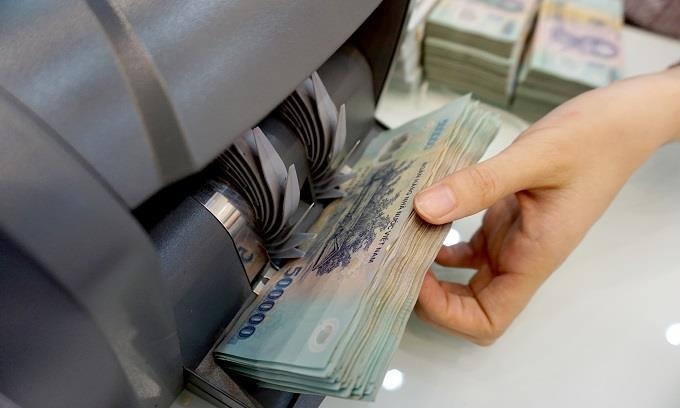
  • Vietnam targets credit growth of 14 pct in 2019

    Vietnam targets credit growth of 14 pct in 2019

    The State Bank of Vietnam targets credit growth of 14 percent this year, the same as last year. The focus of new loans would be priority sectors such as manufacturing, agriculture and small and medium enterprises, Nguyen Thi Hong, Deputy Governor of the central bank, said. Credit growth in the Vietnamese banking sector last year was 14 percent, the lowest rate since 2014.

    The figure announced by the State Bank of Vietnam (SBV) Monday was well short of the 17 percent targeted for the year.

    According to officials from the SBV’s Department of Credit for Economic Sectors, lending grew sharply in the early months of the year before tapering off. It was primarily targeted at priority sectors such as manufacturing and processing.

    Credit to the commercial and services sectors saw the highest growth rate, 16 percent. Lending to industry and construction grew by 12.1 percent and to agriculture, by 8.8 percent.

    Overall, interest rates remained steady despite rising interest rates in global markets. In Vietnam, interest rates are commonly around 6-9 percent a year for short-term and 9-11 percent a year for medium and long-term.

    The non-performing loans ratio was down to 1.89 percent from 1.99 percent in 2017 and 2.46 percent in 2016.