Tag: #growth

  • Vietnam to see slower growth in 2019

    Vietnam to see slower growth in 2019

    Vietnam’s economic growth is expected to slow down this year though it will remain a regional outperformer, according to leading global analysts. Fitch Solutions, an arm of Fitch Ratings, said in a report released Wednesday it expects Vietnam’s GDP growth to slow to 6.5 percent in 2019 in line with a wider trend of slowing global growth, but added the country would remain one of the fastest growing economies in Southeast Asia.

    The economy grew by 7.1 percent last year, the fastest rate of expansion in 11 years, according to official data. This was well above the 6.5-6.7 percent target set by the National Assembly.

    “Its increasing openness and reliance on foreign investment suggests that it is unlikely to be spared from the global growth slowdown arising from rising trade protectionism and tighter financial conditions.

    “Although we believe that Vietnam’s manufacturing sector and economy will continue to outperform the region over the coming quarters, growth is likely to face headwinds stemming from rising global trade disruptions and tightening financial conditions, which will negatively impact global economic growth and risk sentiment,” Fitch Solutions stated.

    The World Bank Group in its bi-annual report on Vietnam issued last month said the country’s GDP growth is likely to slow from 6.8 percent in 2018 to 6.6 percent this year as the global economy weakens.

    Weaker global demand for exports and reduced investment and trade flows as the U.S. Federal Reserve raises interest rates are other risks for Vietnam’s economy, Sebastian Eckardt, the World Bank’s lead economist for Vietnam, said.

    The Asian Development Bank (ADB) in a forecast released last month for the East Asia and Pacific region projected Vietnam’s growth at 6.8 percent for 2019, slightly lower than the 6.9 percent it expected for 2018. These rates are the second highest in the forecast behind only India’s.

    Disbursed foreign direct investment (FDI) in Vietnam reached a record $19.1 billion in 2018, up 9.1 percent year-on-year. With exports rising by 13.8 percent to $244.72 billion and imports at $237.51 billion, the country achieved its highest ever trade surplus of $7.21 billion last year.

    Fitch Solutions said in 2019 the manufacturing sector would remain a key economic growth driver and outperform the region.

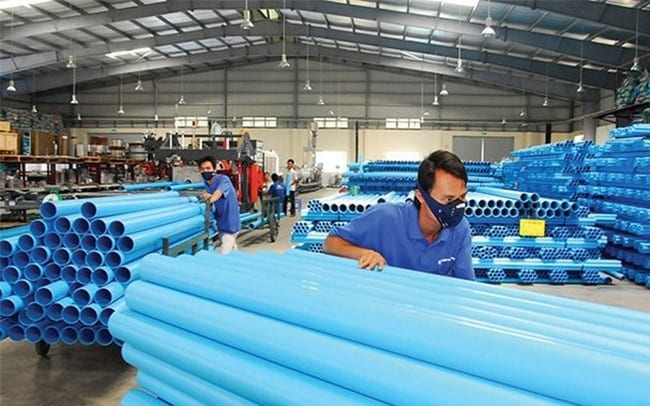
    Vietnam has grown to become a manufacturing powerhouse, particularly in electronics, due to its relatively cheap and large workforce, geographical advantages, attractive tax breaks, stable political environment, and open trade policies.

    The opening up of the Vietnamese economy also came at an opportune time as China began to shift away from lower-end and export-oriented manufacturing to focus on the domestic economy.

    Vietnam’s continued commitment to economic liberalisation will also attract foreign manufacturers seeking to leverage its preferential trade deals.

    The country is a signatory to 10 bilateral and multilateral free trade agreements (FTAs), with six more trade pacts in the offing, including the highly touted Vietnam-EU FTA.

    Fitch Solutions added that trade tensions between China and the US would continue to drive up costs for manufacturers operating in China, pushing companies to outsource to its neighbor Vietnam, which is more competitive in terms of wages.

  • Vietnam’s Viettel seeks to double Myanmar customer base: CEO

    Vietnam’s Viettel seeks to double Myanmar customer base: CEO

    Vietnam’s largest telecommunication company, Viettel, is seeking to double its five million subscribers in Myanmar by the end of the year. Viettel, whose $1.22 billion unit Viettel Global Investment is trading on the Unlisted Public Company Market, has also shown interest in investing in North Korea and Cuba. “The growth seen in Myanmar is rare in the telecom market,” Viettel’s president and chief executive officer Le Dang Dung said on Friday. “We still have room to grow there.”

    Myanmar, where Viettel and its local partners launched a $1.5 billion 4G network in June last year has emerged as one of the most promising markets for the company, Dung said.

    The Mytel network, jointly developed by Myanmar National Holding Public Ltd and Star High Public Co Ltd, has amassed around five million subscribers, a figure which Dung said he expects to double by the end of this year.

    Viettel is also in talks to buy stakes in existing telecommunication firms in Malaysia and Indonesia, Dung said, without giving further details due to the sensitivity of the deals.

    The company will be the first to develop a 5G network in Vietnam, Dung said, in anticipation of rapid development of data services.

    He said Viettel had earmarked $40 million for the development of its own 5G chipset, but was also considering using technology from Ericsson and Nokia.

    The military-run firm, formally known as Viettel Group, has around 60 million subscribers in Vietnam and over 30 million users across 10 other countries – predominantly in Asia and Africa.

    The company is also in talks to buy a 20 percent stake in a European mobile carrier, Dung said, without elaborating.

    Dung said Viettel plans to stop expanding its investment in the African market, however, where the company has struggled to make a profit due to poor economic growth.

    Closer to home, Viettel is looking to invest in North Korea, said Dung, where Koryolink – a joint venture between the North Korean state and Egypt’s Orascom Investment Holdings – has amassed millions of subscribers since its 2008 launch.

    “We first sought permission from North Korea to build a mobile network there in 2010,” he said. “But we’re still waiting for sanctions to be lifted and for the country to open its market to foreign investors.”

  • Blackberrys Charts Upon The Next Growth Chapter

    Blackberrys Charts Upon The Next Growth Chapter

    Following an exceptionally successful year, amidst 8 months of re-branding, Blackberrys plans to significantly increase its long-term guidance in 2019. In April 2018 the company revealed its new face to the world after 27 years of its inception. In 2019, Blackberrys intends to strongly accelerate its retail presence and sales growth as part of its long-term strategic business plan.

    Blackberrys is currently present across 350 cities in India and operates more than 260 EBOs and 700+ MBOs. In 2018, Blackberrys added 50 new doors to its retail footprint and is confident of adding upto 50 more in the current financial year.

    In the New Year the company will continue bolstering marketing programs both in store and through online and offline media. The company has earmarked a marketing budget of Rs 55 crore for the current financial year.

    In 2018, Blackberrys launched several consumer centric brand campaigns including India Khaki week, The Distinguished Gentleman Rides, Style partnership with Bollywood blockbuster Race 3 and Lord of Giza to name a few, which were very well accepted by the customers and trade alike.

    Blackberrys is consistently investing in building a par excellence consumer experience using Machine Learning based analytics, and extensively leveraging the digital presence for redefining the Indian man’s Fashion journey.

    Nikhil Mohan, Founder Director at Blackberrys sharing his thoughts on the same added, “Our 2018 results and our positive outlook for 2019 are proof that our strategy is paying off. Company’s growth, grounded in deep acceptance of our brand, led by the product quality, innovation and service, is remarkably healthy. The new development model implemented across, has paved the way for increased value creation along with profitable, sustained and consistent organic growth. We are expecting an accelerated growth in coming years with a strong focus on developing newer wardrobe propositions and our retail presence across the country.

    Nitin Mohan, Co-founder Director at Blackberrys said, “We are committed to developing a ownership and entrepreneurial brand culture at employee level as it’s pivotal for the company in achieving its long-term objectives. As part of the accelerated growth plan, Blackberrys is focusing its HR initiatives on talent development and performance management.  The company plans to launch its new office very soon in Gurgaon, reflecting the collaborative work culture and with a young & fresh look and feel.”

  • Malaysian economy likely to bottom out in Q2, says AmBank Research

    Malaysian economy likely to bottom out in Q2, says AmBank Research

    AmBank Research, which anticipates further pressure on Malaysia’s economic growth in the first quarter of the year (Q1 2019), believes that gross domestic product (GDP) growth should register slight improvement in the second quarter and pick up thereafter. This is partly attributable to the low base effects as well as support coming from domestic activities and foreign direct investments, and complemented by exports as the electronics cycle slows down, added with softer commodity prices, it said in a note today.

    The research house said it foresees growth prospects remaining weak, anti-cipating Q4 2018 GDP growth to ease to around 4% to bring the full-year growth to 4.6%.

    “With our base case GDP outlook for 2019 at 4.5% with the upside at 4.8%, we foresee further weakening pressure on growth in Q1 2019,” it added.

    Malaysia’s third quarter GDP growth moderated to 4.4%, bringing about a nine-month expansion of 4.7%. Bank Negara Malaysia is due to announce Q4 GDP figures on Feb 14.

    AmBank Research highlighted that the strong foreign approved investments amounting to RM48.8 billion as of Q3 2018, which is an all-time high, is expected to support growth in 2019.

    The growth drivers are seen coming from petroleum refineries with RM17.2 billion investment being approved, followed by electrical and electronics (RM10.2 billion), basic metal products (RM5.7 billion), chemical and chemical products (RM4.6 billion) and rubber products (RM3.5 billion).

    Additionally, it said, agriculture, mining, and plantation and commodities saw a notable increase in approved investments with 54 projects as of Q3 2018, compared with 48 projects in 2017.

    Furthermore, investments in the services sector will continue to boost growth largely coming from local players with RM60.4 billion approved investments compared with RM96 billion in 2017, while foreign investments remained muted at RM9.5 billion as of Q3 2018 from RM28.5 billion in 2017.

    Commenting on the slump in the Nikkei Malaysia Manufacturing Pur-chasing Managers’ Index (PMI), AmResearch said it indicates downside risks with overall demand to be weak, thus causing companies to become less willing to hold stocks.

    The headline PMI fell to a six-month low of 46.8 in December 2018 from 48.2 in the previous month. The demarcation between expansion and contraction is 50.

    The data points to the sharpest deterioration in the health of the goods-producing sector since May. It also extended the current period of decline to two months. The drag largely came from severe reductions in production and new businesses.

  • Indian shop fit industry poised for sustainable growth in 2019

    Indian shop fit industry poised for sustainable growth in 2019

    The Indian retail sector is growing faster than ever before and is one of the fastest growing in the world. According to a Deloitte Report, the Indian retail industry is expected to grow to US $1.1 trillion by 2020, registering a CAGR of 8.79 percent between 2000 and 2020. This growth can be attributed to the growing young population of the country, rise in disposable income, change in lifestyle and most importantly, digitization and connectivity.

    Though brands are investing heavily in online retail, traditional retail continues to be their core focus and hence, demand for shop fit designers and manufacturers only continues to grow.

    Changing retail landscape and role of retail shop fitting

    2018 was a redefining period for Indian retail industry. From huge investments by international players to M&A, downsizing of physical stores from traditional players to investing in physical stores by ecommerce players, the retail industry witnessed significant changes.

    As the debate around relevance and profitability of brick-and-mortar stores continues, retailers continue to invest in physical stores and thrive to provide the best shopping experience for customers. The traditional, one-size-fits-all store formats are slowly decreasing and brands are now continuously working towards exploring creative concepts to rejuvenate the look and feel of the store to stay relevant and attract their respective consumer targets.

    Every brand has a different approach in designing retail outlets and so are their shop fit requirements. For example, a sportswear brand store will have a spacious interiors, relaxed furniture for seating, minimum product placement on shelves to create clutter free picking up of products and eye-catching digital display of celebrated sports personalities on the walls to influence customer’s shopping. Whereas, a clothing brand store for infants and children has shop fittings and fixtures of lower height making it easy for kids to select what they want and have popular animated characters all over the store. This is where the expertise of shop fitters come into the picture. Shop fitters play a very important role in building successful retail brands by planning, designing and manufacturing shop fit and fixtures that reflect a brand’s ethos. They closely work with the brands to execute their designs and ideas for Visual Merchandising.

    Growth opportunities for shop fit industry

    A study by JLL suggests that the country is expected to see the highest mall supply in the next three years (2018 – 2020) touching 19.4 million square feet. Due to the radical shifts in the consumption pattern of new-age consumers, brands see tremendous untapped potential in small towns and cities (Tier II and III) they will expand their footprints in these geographies and continue to invest in physical stores.

    Brands continue to focus on integrating online and off-line shopping and the concept of ‘Experiential shopping centers’ will gain importance. Physical stores will double as fulfillment centers to help process online orders. Like in other markets, the concept of BOPIS, i.e. “Buy Online, Pickup In-Store”, which gives customer the flexibility to shop (order) online and visit the nearest store to try the product and collect it may become popular among people. As customer shopping experience, engagement and purpose of the physical store becomes more crucial, brands will regularly invest in store design, interiors, shop fits and new concepts in order to differentiate themselves from competitors. A good fit-out raises a brand’s profile, efficacy and creates a positive perception about the brand. Hence, there is a growth opportunity for shop fitting industry.

    Adding to this, the trend of solo entrepreneurs entering the market and small scale traditional retailers who wish to revamp their business rely on professional shop fitters for retail store design, floor planning, shop fits, etc. which will also give a boost to the shop fit industry.

    Conclusion:

    As organized retail industry continues to grow in the country, it possesses a great opportunity for the shop fit industry. Decisions by brands to downsize the store formats may hurt the shop fit industry’s business and profitability, but there will definitely be significant growth as more brands are now looking to establish their offline presence and also increase their physical presence across markets. In addition to this, with the new rules regarding single brand retail ownership, many new foreign brands will look to enter the Indian market.

    Being an allied industry of the retail sector, the shop fit industry grows hand-in-hand with the retail industry. As brands continue to invest in visual merchandising and store design, they rely on experienced and quality focused shop-fit manufacturers to partner with them. The role of shop fitters cannot be understated in helping the retail brands build their identity, differentiate them from competitors and attract footfall in the store by their innovative designs and store concepts. Shop fitting is an important investment for retail brands and when done right can translate to improved business and performance. Overall, the outlook for the shop fit industry is positive.

  • Malaysia’s November export growth expected to slow to 3%

    Malaysia’s November export growth expected to slow to 3%

    RAM Ratings expects Malaysia’s export growth to decelerate to 3% in November 2018, as front-loading activities that had temporarily propped up exports by 17.7% in October subside. The rush to front-load orders in October was driven by greater concerns over the planned increase in US tariffs – from 10% to 25% – on US$200 billion (RM827 billion) of Chinese imports, the ratings agency said in a note today.

    RAM is of the view that the export stimuli will remain limited over the next few months – a scenario further supported by a contraction in China’s manufacturing export orders in the last several months.

    In line with the weaker external demand, RAM expects that import growth would ease to 1.8% in November.

    Overall, the trade surplus is projected to come in at RM11.1 billion in November.

    To date, Malaysia has yet to ratify the Comprehensive and Progressive Agreement for Trans-Pacific Partnership (CPTPP) that came into force on Dec 30 with seven members.

    That said, RAM’s head of research Kristina Fong opined that Malaysia’s absence is unlikely to have significant implications for its trade performance in the near term, given that it already has free trade agreements (FTA) with five of the seven signatories.

    “The two remaining countries, Canada and Mexico, constitute a small share of overall exports at just 0.4% and 1%, respectively, thus limiting potential adverse trade diversion away from Malaysia,” she explained.

    Furthermore, she said this trade diversion risk is also mitigated by the fact that the tariff reductions on major goods imported from Malaysia that also overlap with key imports from other CPTPP members, is mostly less than one percentage point.

    While the direct impact of Malaysia’s absence from the deal could be muted in the short run, RAM said it could potentially cause the country to lose out over the long term as regional members in the multilateral FTA could be favoured as foreign direct investment destinations.

    “Standardised rules of origin and lower regulatory barriers brought about by the CPTPP could entice firms to more readily build up supply chains between member countries. This dynamic could in turn foster the development of new industries and global value chains and build new capacities within this alliance,” it added.

  • Lifestyle-curation bookstores are changing

    Lifestyle-curation bookstores are changing

    In recent years, bookstores have been disappearing at a fast rate. Aside from major franchise bookstores in downtown areas, many small, neighborhood bookstores have closed, forced out in the digital era. But lately, bookstores have been returning in different forms. New bookstores sell more than just books, offering a wide range of goods from stationery, food and drinks to various merchandise — anything related to lifestyle.

    The trend started with the Kyobo Book Centre, the nation’s largest bookstore franchise, following the model of Tsutaya Books. The Japanese bookstore chain established a successful business model, attracting consumers who may not necessarily be interested in books with its retail products and in-store restaurants.

    The business went against the prejudice of a bookstore as a place where you a person just buys books. Providing comfortable seats for people to read, it helped create a larger reading population.

    Following Kyobo Book Centre’s success, more bookstores opened, offering more products and services than just books. They bill themselves as lifestyle-curation bookstores, or culture complexes.

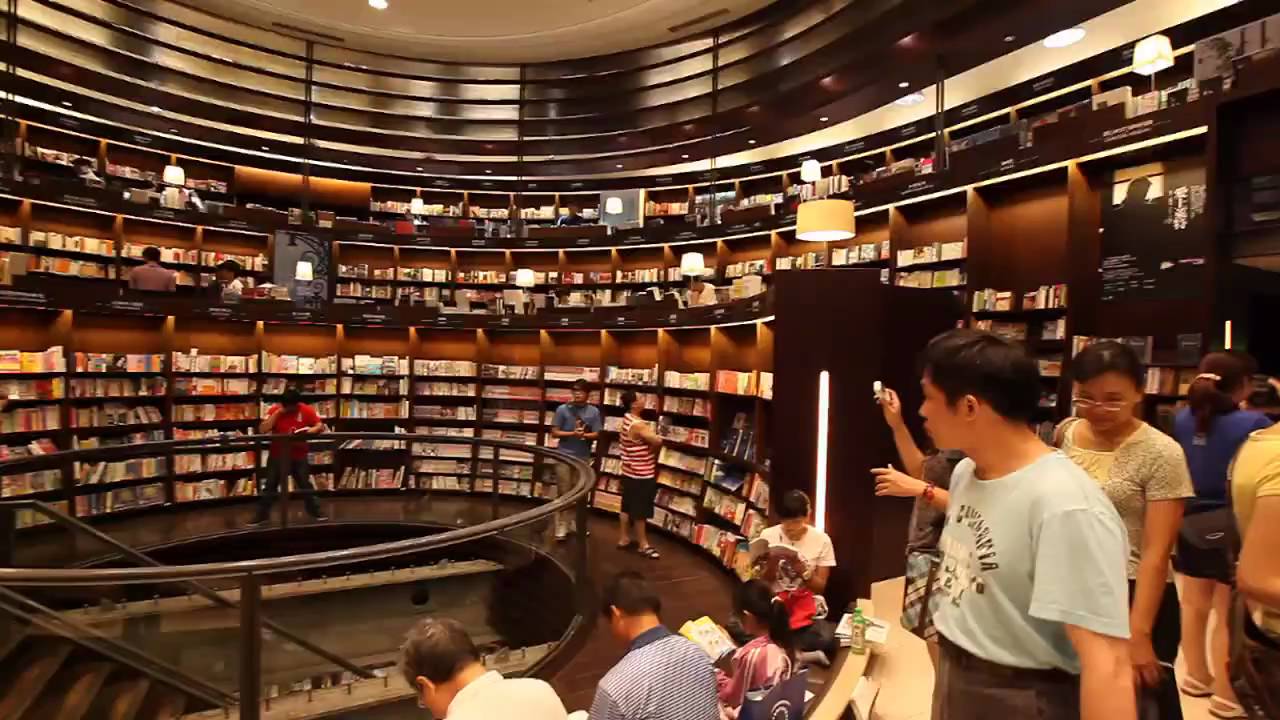
    Arc N Book, which opened last month in central Seoul, deems itself as a city culture complex that introduces books and lifestyles.

    The bookstore has four themed sections: Daily, Weekend, Style and Inspiration. The themed sections provide related products. For instance, the Daily section’s theme is currently black tea. Along with related books, the section displays tea leaves and tea bags for sale.

    On Dec. 15, the bookstore bustled with visitors. While some lounged with books in hand, others photographed the well-decorated space. The “Harry Potter”-styled archway, a book tunnel, was the hottest photo spot.

    “We are strong in foreign books. Foreign-language books take up 7 percent of our books, while it is usually around 2 percent at other bookstores,” said Kim Ji-in, a representative from OTD Corp., which operates Arc N Book.

    “We have around 30,000 books, which may not be big compared to other bookstores. But we are more about curating special books that cannot be found easily,” Kim said.

    Looking at the crowded bookstore filled with people reading, taking photos or sharing quality time with friends, a question popped into mind: Do people really buy books here? You could just grab a book, sit on a comfortable sofa and read for hours.

    According to Arc N Book, sales have been steadily growing since its opening. With encouraging results, the corporation will open another bookstore in Seongsu-dong in eastern Seoul in January. The bookstore, however, aims to be about more than just sales.

    “As a business, we, of course, have to create profit. But it’s not just about that,” Kim said. “We hope to curate a lifestyle, to show people a new way of living and reading.”

    Another question: Does the popularity of such bookstores really mean the reading population is increasing? At Arc N Book, it is clear not everyone comes to read. Some lay not even a single finger on the books.

    “At least these kind of places make people actually go to bookstores. Without these places, people will not be exposed to books at all,” said an official from GimmYoung Publishers, a big player in the publishing industry here.

    “Though they might not buy books right away, they experience the reading culture and learn that people read for leisure. In the long run, they can become future consumers,” the official said.

    Though a similar bookstore, the atmosphere at Choi Ina Books is quite different from that of Arc N Book. It is much quieter, less crowded — more of a library-like atmosphere.

    The bookstore in Seolleung, southern Seoul, is small in size but that doesn’t mean that its book curation ability is weak. Rather, it is all about professional curation here.

    In the publishing industry, Choi Ina Books is one of the most popular bookstores in Seoul. Choi, who retired as a copywriter at Cheil Worldwide, a major advertising firm in Korea, opened the bookstore to share her perspectives and inspirations with the wider public.

    Books in the curated section have been selected by Choi and professionals in the advertising industry. The books also come with handwritten cards that explain why the particular book was chosen and a simple profile of the recommender.

    Here, only purchased books can be brought into the in-store cafe upstairs.

    For those who don’t seek ownership, though, another reading space is available downstairs. It’s a library decorated like the private study of a well-cultured intellectual.

    The library can be used at a price of 14,000 won (US$12.40) for an hour or 22,000 won for two hours. The price includes a cup of coffee and snacks. Though a bit pricey, the space is frequented by office workers in the area seeking some alone time during the day, according to the bookstore.

    Another example of this ilk could be the Hyundai Card libraries. The credit card company currently operates four library-concept establishments across Seoul, each centered on different themes: cooking, travel, design and music.

    Built to be hubs of inspiration and thought in their respective fields, the establishments curate diverse books, including foreign specialty publications that cannot easily be found in Korea. They are open exclusively to Hyundai Card members.

    Though billed as libraries, the establishments neither lend books nor sell them. The books can only be read at the libraries, which also run various programs related to their respective themes.

    For instance, the Cooking Library runs cooking classes as well as self-cooking sessions. The Design Library and Travel Library offer talk sessions. At the Music Library, visitors can also learn to use the deejay booth.

  • How the retail industry has fared in 2018

    How the retail industry has fared in 2018

    The overall retail market in India 2018 stood at Rs 43,251 billion and is forecast to grow by 6.4 percent CAGR in 2018-2023. Retailing in India still predominantly takes place in physical stores and shopping behaviour between urban and rural consumers continues to be vastly different. Smaller independents (both grocery retailers and non-grocery specialists) continued to dominate the landscape they faced growing competition from modern outlets opening in out-of-town shopping centres and malls capturing the Tier II & III markets.

    This year, we witnessed modern retailers launch interesting payments schemes and effective pricing strategies to propel the sales. For example, leading retailer Future Group launched its payment wallet Future Pay which can be used in all its retail brand outlets. Retailers also capitalised on growing acceptance of modern retail by developing new marketing schemes and strategies to attract shoppers.

    Additionally, multi-channel strategies remained key for retailers as they are developed online platforms that are also smartphone and tablet compatible to drive Internet sales.

    Furthermore, retailers also increased their new private labels products. This is was done for certain grocery categories like: packaged foods, non-alcoholic drinks, beauty and personal care and home care products.

    Finally, subscription-based retailing practices started to pick up in 2018. Although still relatively niche, and limited only to urban India, the subscription-based model for beauty and personal care and consumer health became quite popular in metropolitan cities.

    What are the retail trends that are going to rule the roost in retail in 2019?

    – Retailing will continue to offer potential for grocery retailers. Convenience stores and forecourt retailers are likely to continue to see healthy growth rates as their format can meet the demands arising from changing lifestyles by offering more convenient shopping solutions, both in terms of location, business hours and product range.

    – Given the rising maturity of retailing in metros/urban areas, retailers have slowly started to focus on the semi-urban consumer base. This has resulted in the slow and steady urbanisation of shopping styles amongst semi-urban consumers.

    – As the labour crunch and high rentals continue to affect the retail landscape in India, hypermarkets are looking to ramp up investment on self-service technology and automation to reduce costs and improve customer experience. Some hypermarkets chains have implemented self-service kiosks at checkout counters, generally with positive results because of reduced waiting times. Investments have also been made into automated ordering systems, which has helped brands reduce storage space at outlets, hence control rental costs. This can be expected to grow during 2019 as well.

    – Furthermore supermarkets are likely to push the broadening of key product categories, such as organic fresh food, soft drinks and packaged food. They are also likely to further narrow the line between foodservice and grocery retailing, with the introduction and integration of new foodservice elements within their stores.

    – Non-grocery retailing will likely be impacted by the growth of internet retailing at the expense of specific store-based retailers and other non-store channels. Consumers are expected to increasingly shop and research products online, with the popularity of smartphones making mobile-optimised sites and shopping apps crucial in attracting consumers. Moreover, social media will be used more often to alert consumers to attractive price promotions and build interest in new product launches. Also, omni-channel strategies will remain key for non-grocery retailers.

    – Non-grocery retailers will increasingly integrate their online brand information with store inventory, as consumers expect to find the same products in both channels. Moreover, to minimise showrooming, players will also need compelling reasons for customers to buy their brands in store, whether in terms of product selection or price competitiveness.

    – The entry of Amazon and Flipkart could stimulate a much-needed increase in the competition, which will bring both opportunities and threats for existing food and drinks retailers in India. Amazon with ‘Amazon Pantry’ and Flipkart with ‘Flipkart Supermart’ eventually launched its online grocery business in 2018. Millennials and affluent consumers were encouraged to change from shopping in physical stores to online in 2018 with convenience and heavy discounts on offer. Also, with increasing investments from player such as Amazon who are expected to buy skate in Future Retail and PayTm who have partnered with BigBasket and Future Group to strengthen its online grocery business, the food and drinks internet retailing is expected to show tremendous growth in 2019.

  • Shiseido makes plans for China

    Shiseido makes plans for China

    Shiseido reinforces the regional headquarters system that oversees the business in China as of January 1, 2019. Moving towards the achievement of its medium-to-long-term strategy, VISION 2020, Shiseido will evolve further to ”Be a Global Winner with Our Heritage” by ensuring sustainable growth in the significantly growing Chinese market.

    Under the new system, Shiseido will reinforce the brand business structure in the China region and its supporting corporate functional structure in order to enhance brand appeal to Chinese consumers and strengthen market execution.

    As to the Brands Business, the management function of the Prestige Brands business in the China region and the CMO function of Cosmetics Brands & Personal Care Brands will be established. Furthermore, the strategic alliance with emerging e-commerce platform companies in the China region will be strengthened under direct control of the CEO of the China region.

    At the same time, Shiseido will proactively support the business strategy and reinforce the corporate functional structure aiming to improve its organizational capability to ensure sustainable business growth.

    Shiseido will continue leading growth through the acquisition of greater competitiveness of the Chinese business and by reviewing the organizational structure to optimize functions for all areas and market characteristics around the world.

  • Strong sales growth for India’s textile manufacturing sector in Q2

    Strong sales growth for India’s textile manufacturing sector in Q2

    The manufacturing sector, particularly textile and iron and steel segments, maintained its pace of sales growth in the second quarter of 2018-19 as compared to the year-ago period, the RBI said on Wednesday. Demand condition in the manufacturing sector “maintained its pace in the September quarter 2018-19 as reflected in strong sales growth (year-on-year)”, as per the RBI analysis of 2,700 listed private sector non-financial companies.

    “The manufacturing sector sales growth was mainly supported by robust demand conditions in chemical and chemical products, iron and steel, and petroleum products industries coupled with significant improvement recorded by textile industry,” the RBI said.

    The central bank said heavy moderation was seen in the sales growth of motor vehicles and other transport equipment, driven in part by a large adverse base effect, and pharmaceutical and medicine industries.

    The information technology (IT) sector also recorded further improvement in sales growth over the year-ago period.

    The manufacturing sector continued to record strong growth in net profits, which received support from other income.

    The RBI said companies in manufacturing sector posted a net profit of Rs 47,100 crore in the reported quarter, up 29.4 per cent from the same period last year. The data is based on abridged financial results of 1,734 companies in the manufacturing sector.

    “Despite continuous contraction in the telecommunication, the services (non-IT) sector posted a turnaround riding on the support from wholesale and retail trade,” the RBI said.

    The profit of IT sector, based on data of 172 firms, was Rs 17,700 crore in the second quarter, up 5.8 per cent over the July-September period of 2017-18.

    As per the RBI, the combined sales of 2,700 companies was Rs 9,81,800 crore in the September quarter, up 18.2 per cent from the year-ago period.

    Their net profit was Rs 71,900 crore, an increase of 41.7 per cent year-on-year.

    On expenditure front, manufacturing companies continued to face rising input cost (cost of raw materials, staff cost) pressures. In case of IT sector, staff costs accelerated in tandem with the improvement in sales growth, the RBI said.

  • Tracking the dynamics of India’s gym wear market

    Tracking the dynamics of India’s gym wear market

    Whether or not one shows dedication in maintaining their gym routine is debatable, but it is an undeniable fact that gyms are doing well when it comes to their membership registers being filled. India’s waking up to being healthy and this means tons of gym memberships. This also means that when one takes a gym membership, the very next thing they do is head off to stores that deal in gym wear. Or they just log on and buy gym clothes and accessories. The demand for gym and active wear is growing in India because of a desire to stay fit and healthy. IMAGES Business of Fashion takes a look at the market dynamics…

    Setting the context for the story, Pallavi Burman, Head – Marketing, HRX shares, “The Indian active wear industry is currently estimated at a whopping Rs. 8500 crore. It is expected to continue growing at CAGR 12 percent and touch expected sales of approximately 6X at Rs. 54,000 crores by 2020.”

    Burman attributes the reason for this to growing health and wellness trend in India along with an increase in the number of sporting clubs, increased interest in sporting activities like football, basketball, tennis, badminton and cricket, the Indian active wear industry is fast proliferating. She says, “More disposable income and general inclination towards fitness is rising and resulting in the growth of this industry.”

    Another major reason for an increase in demand for gym wear is having Bollywood celebrities being spotted in gym gear, especially the likes of Hrithik Roshan, Malaika Arora and Kareen Kapoor Khan. It isn’t uncommon to see Page 3 pictures of these celebrities in their gym wear. The glamour magazines often have pictures and articles of how celebrities are taking gym wear to the streets and this eventually does give a fillip to the demand for workout clothes in the country.

    Market Overview

    Perhaps the above well explains the emergence of active wear in the country. Where dedicated gym wear is opted for only by a handful few, those opting for working it out in the gym clubbing their active wear or sportswear as gym wear. No wonder then that brands in India too offer gym clothes under the category of ‘active wear’.

    Pallavi Burman decodes the difference between the often clubbed together categories of active wear, athleisure wear, sports / performance wear. “By definition, athleisure and active wear clothing are those which can be worn from studio to street. Sportswear or performance wear, however, is clothing which help athletes or sports persons enhance their performance specially items like shoes, technologies like compression, socks in some sports etc.”

    Nivida Kohli, Design Manager, Numero Uno shares her views, saying, “As of today each distinct category is reinventing itself. This is a phase where the consumer market is changing since there is a generic shift towards more flexible lifestyles. Once this change settles in, I believe there will be clearer newer distinct definitions for sportswear and athleisure.”

    However, a lot many online players have an exclusive category for gym wear and some have gone a step further to have their portals dedicated to offering nothing else but gym clothing.

    The emphasis is more on offering men’s gym wear than having something specialized for women and unfortunately in India, gym wear still consists of mostly leggings and sports brassieres, although bigger brands have started innovating for women as well now.

    Taking note of this gap, brand Mojostar in association with Bollywood actor Jacqueline Fernandes, recently launched their exclusive portal www.justf.in that is dedicated to women’s active / gym wear.

    Just F was launched after Jaqueline and CEO Mojostar, Abhishek Verma, realized the gap in the market for women’s gym / active wear.

    “Sportswear needn’t be super masculine, so we are introducing fusion elements, florals, and may even add lace to some designs,” says Jacqueline Fernandes in a media interview. She has actively participated in the designing of the brand and has ensured that little things are not given a miss like pockets in fitness wear, the positioning of the straps and hooks and the materials used for leggings.

    According to Abhishek Verma, the focus for the brand for now would be functionality and support. The brand is also going quite aggressive with their collection of sports bras.

    The research by the brand indicated that most of the international brands that are present in this category design their range keeping in mind the target audience of western countries, which don’t fit the average Indian woman. Another reason for launching Just F was to give Indian women appropriate exercise clothing at reasonable costs, especially since most international brands come with a hefty price tag.

    Growing Demand

    Pallavi Burman says that with Indians becoming more health conscious and image sensitive, their pursuit for fitness has increased. “The average age bracket for Indian fitness enthusiasts is 20-35 years, which makes for the majority population of young Indian students and professionals. This target set loves to experiment with their wardrobe. Office wardrobe has drastically changed – we don’t see dress pants and brogues and oxfords anymore. Jeans and trainers have smoothly replaced these items. Everything in today’s clothing spells comfort and chic,” she says as way of explanation of why there a fillip in the performance wear category in Indian retail has been noticed.

    She explicates that to be able to tap into this big chunk of the Indian population with available disposable income and the affinity for fitness, brands and minimalistic wardrobe brands have to focus hugely on active wear and the athleisure segment.

    Gym Wear Essentials in India

    According to Pallavi Burman, a pair of leggings and shorts for women and men respectively –usually a loose tee and a pair of decent walking shoes – constitute for basic gym wear in India.
    “But this isn’t enough if the exercise routine includes more than walking. While almost 50 percent of Indians still prefer traditional ways of staying active like walking and running, the other 50 percent are inclined to swimming, cycling and other sports and training means. For targeting this kind of segmentation one needs to delve deeper into sub categories.”

    What makes gym wear more intricate for women is the inclusion of a high-performance sports bra. Without a well-designed sports bra, the gym wear ensemble for women remains incomplete. Quite a few Indian brands that have taken note of this and the range available online as well as offline is exhaustive. It is interesting to see brands like Triumph launching exclusive brassieres for gym wear considering they are a premium lingerie wear brand. The option they have is bounce control certified by world renowned Research Group in Breast Health, the University of Portsmouth. Elaborating on the same, Jennifer Kapasi, Commercial Director, India & Sri Lanka, Triumph International shares, “Triaction by Triumph is a stylish, high-performance sportswear collection that gives modern women the freedom to train how and when they like. Boasting the best bounce control levels on the market, three versatile fits and superior comfort, Triaction supports women throughout the day—on the go from the gym or studio in complete style.”

    Innovative Fabric Play

    Anything that stretches and helps absorb sweat yet keeps the fabric dry is the most preferred fabric when it comes to performance wear. Reiterating the same, Pallavi Burman says, “The fabric we use is always stretchable “wicking” blend made up of polyester and lycra. We also use a breathable mesh fabric as design and utility elements and several other performance enhancing features like anti-microbial layering, UV protection, rapid dry etc.”

    When you go through the collection, what catches your attention is interesting mélanges for both men and women. She says, “Color blocking and coordinated sets are finding a big audience in this space now.”

    Adding in a safety feature to go along with their sportswear, Numero Uno uses reflective N1 ACTIVE prints that act as safety alerts along with digital and high-density prints for a futuristic fashion flare. Kohli further adds, “For our sportswear/active wear, we are using fabrics that have technically advanced finishes with features like Anti-Static, quick dry, moisture wicking, Windproof, water repellent, Anti-microbial, odour control, easy care etc.”

    Triumph has developed two series of specialized brassieres that use innovative fabrics for the woman on the go. Their Dynamic Lite series with 3D Powertech material is made from the innovative fabric Dynamic Lite, which offers flexibility that keeps its shape over time. It fuses three innovative fabrics in one, is a two-way stretch fabric, has a strong lightweight mesh and soft moisture management lining which are insightfully laminated together, allowing the bras to stay very light and adjustable to all body shapes. These features make the bra light and comfortable to wear with its functional unpadded fabric combination. This innovation received an honorable mention at the 2016 Red Dot Deign Awards.

    Elaborating on the second innovation, Jennifer Kapasi says, “Our Magic Motion series is made from the most comfortable fabrics. Powered by LYCRA sport technology, these bras have stay dry properties, bacteria-reducing fabric with moisture management mesh. Extremely elastic fabric using LYCRA, guarantees unique freedom of movement.”

    The next generation LYCRA® SPORT technology combines the proven stretch performance of LYCRA® fibre with demanding testing standards that measure fabric performance descriptors on a simplified 1-10 scale. The three indexes measure Power, Comfort and Energy (PCE™). Triumph has gone ahead to combine these indexes to create performance levels tailored to fit each garment’s end use.

    The range at Just F is made using polyester-spandex or polyester-cotton blend which well suits the Indian climate.

    Promoting Gym Wear

    Since gym wear is a part of the performance wear / active wear category, brands don’t actively engaging in marketing and promotion initiatives targeting gym goers. However, on the other hand, some brands like HRX go the extra mile to reach to their target audience right at the place they are at – i.e. the gym!

    Pallavi Burman reveals, “Ours is the first homegrown, successful fitness brand in the country. We have multiple partnerships for various verticals all-leading to and adding up to fitness. We have our active wear and athleisure collection exclusively available on Myntra, we have the signature HRX Work out available at all Cult gyms, we have HRX Athlete meal packs selling at Eat.fit and we have our Mi HRX fitness bands available with Xiaomi. Across the three partners we have active communication all around the year on Digital, TV, OOH and Cinemas. Needless to say Hrithik is the face of HRX and this is the biggest draw for building customer engagement.”

    On whether there is a genuine demand for gym / active wear in the country, especially by women, Jennifer Kapasi says, “Women who regularly work out and those who lead an active lifestyle desire sport specific garments designed to help optimize performance. They pay a lot of attention to the fabric when buying a sports bra. In general, they will tend to look for hi-tech fabrics with ‘moisture-wicking’ and ‘stay-dry’ features. One of the most important qualities women look for is a high percentage of Elastane which not only makes the bra comfortable to wear but also retains its shape after multiple uses.”

    To launch their Autumn/Winter ‘18 Triaction – a collection by Triumph – took a digital approach through the launch of an online campaign ‘Team Triaction’, featuring four inspiring women, undertaking a fitness challenges to test both mind and body.

    “Team Triaction is led by actress and fitness enthusiast Mandira Bedi. She is joined by celebrity fitness instructor and owner of a Pilates studio Namrata Purohit; popular yogi and influencer Yogasini (aka Radhika Bose); and lifestyle and beauty influencer Juhi Godambe. The campaign also included a weekly contest with four rounds for Instagram and Facebook fans,” states Jennifer Kapasi.

    Getting Future Ready

    While there are a lot of dedicated online portals for gym wear, it remains to be seen how these enterprises survive over a period of time with their niche offering. With fitness being seen as a goal on everybody’s to-do list, especially with the new year approaching, all the gyms will experience a full house and so the sale of gym wear eventually is going to go up, but it is completely upon these brands to maintain the tempo for after all.


  • Malaysia’s economy likely to grow in Feb to April 2019

    Malaysia’s economy likely to grow in Feb to April 2019

    Malaysia’s economy is likely to grow in February to April 2019, according to the performance of Malaysian Economic Indicators: Leading, Coincident & Lagging Indexes for October 2018 that was released last monday. Chief statistician Malaysia Datuk Seri Dr Mohd Uzir Mahidin said the monthly change of Leading Index (LI) augmented in October 2018, registering a growth of 1.2% to attain 119.3 points from 117.9 points in the previous month, primarily due to the increase of real imports of other basic precious & other non-ferrous metals (0.4%).

    “The annual change of LI showed an improvement from negative 1.7% in September 2018 to negative 0.7% in October 2018. The composite of LI is designed to monitor the economic performance direction in an average of four to six months ahead,” he said in a statement.

    On the same note, he stated that the Coincident Index (CI), which reflects the current economic activity, rose 1.0% in October 2018. Two components that contributed significantly to the increase were volume index of retail trade (0.5%) and real contributions to EPF (0.2%). At the same time, the annual change of CI grew further to 3.9% in October 2018 as against 3.4% in the previous month.

  • Malaysia attracts RM139b investments in January to September

    Malaysia attracts RM139b investments in January to September

    Malaysia attracted a total of RM139.3 billion worth of investments in the manufacturing, services and primary sectors in the first nine months of 2018, up 18 per cent from RM118.1 billion approved in the same period last year. In a statement, Malaysian Investment Development Authority (Mida) said the total investments approved in January-September 2018 were from 3,243 projects, which are expected to generate 93,379 job opportunities for the country.

    “Approved foreign direct investments (FDI) increased by 109.7% to RM64.1 billion in January-September 2018 from RM30.5 billion in the same period last year, mainly driven by the manufacturing sector which recorded a strong increase of 249.4% in the period.

    “Approved FDI in the primary sector rose by 99.3% which indicated that investor confidence in Malaysia remains high despite the challenging global economic environment. Domestic investments led with RM75.2 billion, contributing 54% to the total approved investments in all three sectors,” it said.

    Mida said Malaysia continued to be a competitive location for manufacturing projects with a total of 468 projects worth RM59.1 billion approved in January-September 2018, compared with RM34.6 billion involving 463 projects in the corresponding period in 2017, representing an increase of 70.5% in capital investments.

    “Foreign investments approved in the manufacturing sector recorded a total of RM48.8 billion for January-September 2018, a rise of 249.4% from RM13.9 billion in the same period last year.

    “China accounted for RM15.6 billion or 32 per cent of total foreign investments, followed by Indonesia (18.4%), the Netherlands (17%), the US (6.3%), Korea (4.9%) and Japan (4.3%),” it added.

    For the services sector, Mida said approved investments amounted to RM69.9 billion compared with RM74.2 billion recorded in the corresponding period in 2017, consisting of 2,721 projects, which are expected to create 50,896 job opportunities.

    “Domestic investments made up the largest portion, recording RM60.4 billion or 86.4% of the total approved investments for the services sector during this period. The balance of RM9.5 billion were from foreign sources.

    “The services sub-sectors that showed increase in approved investments were healthcare, education, global establishments, real estate, and supporting services,” it added.

  • 7-Eleven Malaysia mulls float

    7-Eleven Malaysia mulls float

    The 7-Eleven Malaysia business may be floated. Malaysian businessman Tan Sri Vincent Tan is considering turning over his shareholding in convenience store operator 7-Eleven to his Berjaya Corp Bhd group. Maintaining that the share price of 7-Eleven is undervalued on Bursa Malaysia, Tan claims that the business, currently valued at RM1.43 billion (US$342 million) should be worth more than US$1 billion.

    The chain has 2250 locations within the territory, and according to Tan aims to open at least another 200 stores next year.

    “We are considering maybe sell all my 46 per cent shareholdings in 7-Eleven to BCorp, then let BCorp launch a General Offer (GO), but nothing is firmed yet,” he said.

    The businessman owns 48.33 per cent of Berjaya Corp, which is valued at around RM1.35 billion (US$323 million).

  • Vietnam to top 7 pct growth in 2018 and 2019

    Vietnam to top 7 pct growth in 2018 and 2019

    Vietnam may grow more than 7 percent in 2018, the highest in 10 years, and is likely to maintain the rate next year, experts say. Nguyen Xuan Thanh, director of development, and public policy lecturer at the Fulbright University of Vietnam, said the country’s economy is expected to grow at over 7 percent this year, the highest level since 2007.

    “The major contributor of growth comes from industries that benefit from policies to replace import goods, such as automobile and pharmaceutical production,” he said at a conference organized Thursday by the National Financial Supervisory Commission (NFSC).

    In 2017, Vietnam rode on 20-30 percent growth of phones and electronics, but this year, that sector’s growth slowed down to only 11 percent in the first 11 months of 2018, Thanh explained.

    He also noted that a positive aspect of the growth this year has been that it is no longer dependent on credit. The NFSC estimates credit growth to have slowed significantly to 15 percent this year from 18 percent in 2017.

    “Many experts were concerned that Vietnam’s high growth rate in previous years was linked to credit growth, but there has been strong economic growth this year without high credit growth,” Thanh said.

    Meanwhile, NFSC leaders said Vietnam’s growth may exceed 7 percent in 2018 and remain at between 6.9-7.1 percent in 2019.

    Truong Van Phuoc, acting chairman of the NFSC, said the high growth in 2018 is due to large contributions from the private sector. In addition, trade agreements such as the Comprehensive and Progressive Agreement for Trans-Pacific Partnership (CPTPP) and the EU-Vietnam Free Trade Agreement (EVFTA), which are expected to come into effect in 2019, may also bring positive impacts.

    Vietnam also has the opportunity to attract investment as well as new opportunities from the field of information technology and biotechnology, he added.

    But experts also point out some factors that could affect economic growth next year. Thanh noted that growth this year was not only due to investment and export but also the heavy consumption.

    Any changes to consumption can have immediate effect on economic growth, he said.

    In the first nine months this year, Vietnam’s GDP grew by 6.98 percent, the highest nine-month growth rate since 2011. The economy grew by 6.81 percent last year, the highest rate in a decade.