Tag: #growth

  • Vietnamese banks report Jan-Sept rise in bad debts

    Vietnamese banks report Jan-Sept rise in bad debts

    Thirteen of 17 listed banks have seen their bad debts rise in the first 9 months of this year, according to banks’ financial reports. Experts blame this on recent credit growth, loose lending practices and accumulated old non-performing loans.

    Bad debts of VietinBank, the country’s second largest lender by assets, rose by 34.5 percent to nearly VND12.13 trillion ($519.82 million) in the first 9 months of this year.

    Group 5 debt, the worst category for potential loan losses, accounted for the largest proportion at 72 percent of the bank’s total bad debts. Group 5 debt was also the category with the biggest increase in the last 9 months, rising 68 percent to nearly VND8.74 trillion ($374.57 million).

    At BIDV, Vietnam’s biggest bank by assets, bad debts had totaled VND17 trillion ($728.65 million), a 21.1 percent increase over late 2017. However the bank’s bad debt ratio stood at 1.76 percent, well below the 3 percent danger limit set by the State Bank of Vietnam.

    The bad debt ratio of VPBank, meanwhile, rose to 4.7 percent by Q3, compared to 2017’s year-end figure of 3.39 percent. At the end of Q3, VPBank’s bad debt had increased by 52 percent compared to the beginning of the year, reaching VND9.4 trillion ($402.9 million)

    At Techcombank, total bad debt rose 33 percent between January and September, with Group 5 bad debt rising by 31 percent. Overall, the bad debt ratio on the bank’s loans rose to 2.05 percent from 1.61 percent at the beginning of the year. The bank’s bad debt is currently at VND3.43 trillion ($146.82 million).

    trillion VNDVietnamese banks’ bad debtas of September 201812.112.117179.49.43.43.4VietinbankBIDVVPBankTechcombank05101520BIDV● Bad debt: 17

    Banking expert Nguyen Tri Hieu said that the increase in bad debt was related to credit growth. New bad debt rises as banks increase lending and adopt looser lending practices, he said.

    The country’s credit growth in the first nine months of this year was 9.52 percent.

    Pham Hong Hai, CEO of HSBC Vietnam, said that from 2019 onwards, bad debt may re-emerge as a problem for banks after the recent credit growth and instability in global financial markets.

    State Bank of Vietnam Governor Le Minh Hung said recently that bad debts and potential bad debts of the sector amounted to 8.61 percent of total credit by the end of September.

    Vietnam’s banking sector posted an estimated 18.17 percent credit growth in 2017, according to the Ministry of Finance. It has targeted a credit growth of 17 percent this year.

  • Hermes sales growth boosted by Asia

    Hermes sales growth boosted by Asia

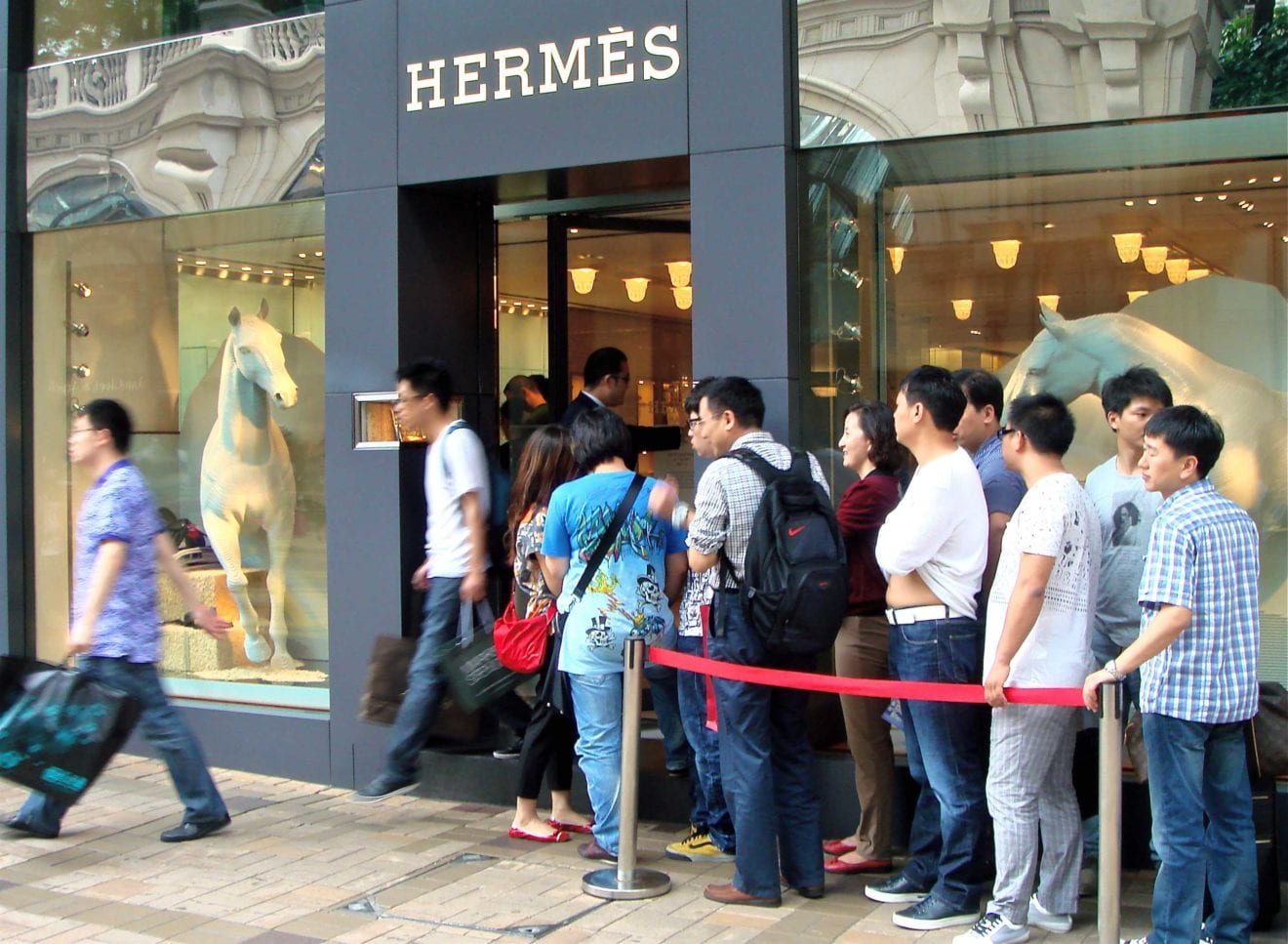
    Hermes sales surged 11 per cent in the quarter to September, with all geographical regions performing well. Asia – excluding Japan – led the way, with sales up 14 per cent. The company reported a “significant increase” in Mainland China with new stores in Xi’an (which opened in September) and Changsha (in May) along with the Landmark Prince’s store in Hong Kong in January helping underpin growth.

    A new commercial website hermes.cn, launched on October 17 and a massive duplex flagship opens tomorrow at Bangkok’s new IconSiam development. In Japan, sales rose 7 per cent.

    Group-wide revenue reached  €4.316 billion at the end of September, with sales through company-owned stores up 11 per cent as well, confirming the trend evident during the first half of the year.

    “Hermes realised a very strong growth over the first nine months of the year, in all regions,” said executive chairman Axel Dumas. “We keep our optimism for the future, but we are also thankful for the past.”

    By product category, Hermes’ ready-to-wear division achieved growth of 15 per cent, aided by the successful launch of the women’s Spring-Summer 2019 collection, presented at the Hippodrome Paris Longchamp. Demand was also high for fashion accessories and shoes.

    Growth in leather goods and saddlery reached 9 per cent, while the silk and textiles business grew by 4 per cent. Perfume sales rose by 9 per cent, watches by 8 per cent and other business lines, encompassing jewellery, Art of Living and Hermes Table Arts, by 23 per cent.

  • Why is the Chinese economy slowing down?

    Why is the Chinese economy slowing down?

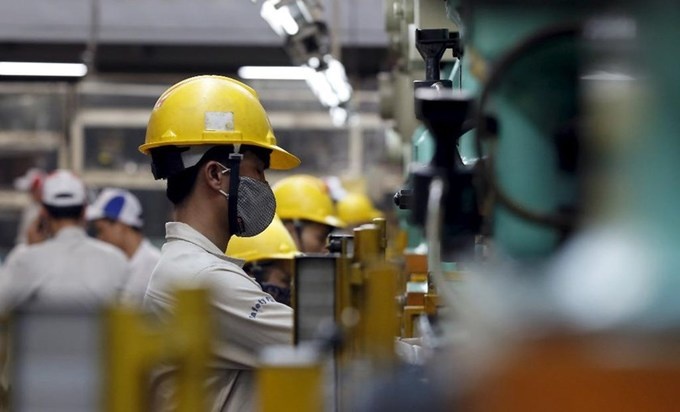
    China’s economy appears to be slowing faster than expected at the start of the fourth quarter, a bad omen for growth early next year when the full force of the trade war with the United States comes to bear. This situation is likely to spur Beijing to introduce new measures to support growth, analysts said.

    The government will try to avoid returning to its battle-tested plan of large-scale monetary and fiscal stimulus so as not to exacerbate the country’s already huge stock of debt, but it may have no choice but to move some way in that direction to stabilize growth.

    Business sentiment in both the manufacturing and non-manufacturing sectors was weaker than expected in October, led by sharp declines in export demand, according to the official purchasing managers’ index published on Wednesday by the National Bureau of Statistics and the China Federation of Logistics and Purchasing.

    The figures were the first gauges of the trade war’s impact since the U.S. levied 10 percent tariffs on $200 billion worth of Chinese goods in late September.
    The manufacturing sentiment index dropped to 50.2 in October, from 50.8 a month earlier.

    The reading, which was its lowest in more than two years and barely above the 50 point line that separates expansion from contraction in the sector, suggests the possibility of contraction in November as the U.S. tariffs take effect.

    That situation could worsen in January, when the tariff on the $200 billion of Chinese imports is set to rise to 25 percent.

    It might also be exacerbated by the “front loading” behavior of many Chinese exporters — boosting production and shipments now to fill orders for early next year before the scheduled tariff rate increase.

    Production and unemployment among export manufacturers are at risk of falling sharply from January due to lack of orders to fill.

    New export orders contracted for the fifth month in a row in October, to 46.9 from 48 in September.

    Imports also contracted for a fourth straight month, indicating weakening demand within China, while the decline in manufacturing employment accelerated.

    Non-manufacturing activity, dominated by the service sector, also slowed in October, with the index dropping a full point to 53.9.

    While the index still indicates a healthy level of activity, the size of the drop could be a sign of a sharp slowdown ahead.

    Indeed, the contraction in service sector export orders seen in September accelerated sharply in October, falling a further two points to 47.8.

    The October data also reinforce the picture that small- and medium-sized companies are struggling, with indices for both groups falling further into contraction.

    In contract, the index for large companies fell but remained in positive territory.

    “The economic conditions facing China’s private sector are much worse than the headline figure suggests, in our view,” analysts at ANZ said in a report. “The October PMIs for mid-sized and smaller sized companies fell to 47.7 and 49.8, respectively.”

    “So we expect the Caixin PMI to have already fallen into the contractionary zone,” the report said.

    The Caixin PMI data better reflects sentiment in smaller, usually private sector firms.

    Analysts said that a faster than expected economic slowdown this year could be compounded early next year by a lack of new orders and higher U.S. tariffs, prompting further action by the government to prop up growth.

    “We expect a worse growth slowdown in spring 2019 for several reasons [especially after export front loading],” said Ting Lu, chief China economist at Nomura Global Market Research.

    “Beijing’s policy focus so far has been on containing a credit freeze. If our more cautious views prove to be valid, growth is likely to slow to such a worrying pace in spring 2019 that Beijing may have to greatly ramp-up its easing/stimulus measures.”

    The economic forecasts do not take into account the possibility of a large escalation of the trade war.

    U.S. President Donald Trump said again on Monday that tariffs on an additional $267 billion worth of Chinese imports — which would equate to sanctions on virtually all Chinese goods — were “ready to go” if there was no trade progress.

    He said he expected the trade war to result in a “great deal” for the U.S., but did not say how and when that would happen.

    Analysts warned that while the direct impact of U.S. tariffs on the Chinese economy is limited, the negative impact on business and consumer sentiment, and so on the economic outlook, could be much larger.

    Steven Cochrane, the chief Asia-Pacific economist with Moody’s Analytics, said in an interview that additional tariffs would have an outsize impact.

    “There would be much more uncertainty that would tend to slow the pace of investment and consumption,” he said.

    “Consumers are [already] feeling uncertain about next year, so they are going to pull back.”

    In retaliation, China might implement qualitative measures, such as more aggressive inspections of imports from the U.S., creating stiffer visa requirements for visiting American workers, slowing regulatory approval for U.S. companies operating in China or targeting service imports from the U.S., including restricting the enrollment of Chinese students at American universities.

    In a research note released last week, Cochrane estimated that if a 25 percent tariff were imposed on all China-U.S. trade and Beijing applied qualitative countermeasures, China’s gross domestic product growth would fall by 1.2 percentage points to 5.2 percent in 2019 and the Chinese stock market would fall by 9.4 percent.

    The U.S. is reportedly preparing to impose the next round of tariffs on the $267 billion in Chinese goods in early December if Trump’s scheduled meeting with Chinese President Xi Jinping at the G-20 summit in late November produces no progress.

    If true, and given the 60-day comments period that would start when the tariffs are announced, this would mean that the new tariffs would be implemented in early to mid-February, during or just after Lunar New Year.

    Like Christmas in the West, the celebration is the largest instance of consumer spending during the year, so any fall in sentiment caused by the introduction of the new tariffs could have a very negative effect on China’s economy.

    Business sentiment in both the manufacturing and non-manufacturing sectors was weaker than expected in October, led by sharp declines in export demand, according to the official purchasing managers’ index.

    The figures were the first gauges of the trade war’s impact since the U.S. levied 10 percent tariffs on $200 billion worth of Chinese goods in late September.
  • Vietnam garment exports surge on US-China trade war

    Vietnam garment exports surge on US-China trade war

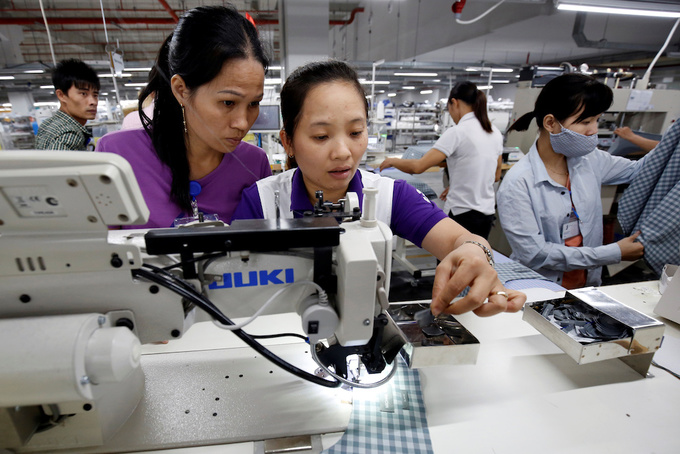
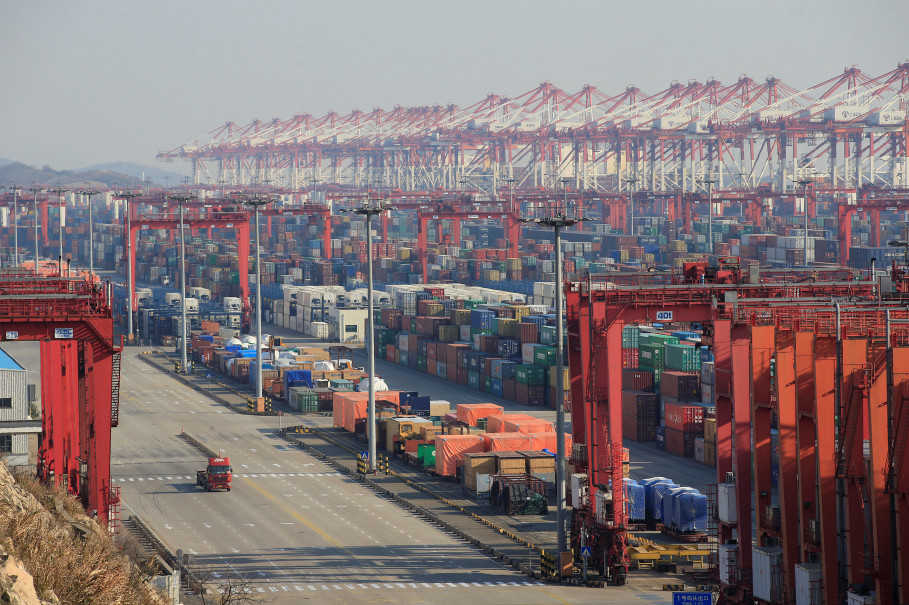
    Vietnam’s garment exports are set to rise by 14.8 percent this year to $35 billion, an industry official said on Friday. The expected growth is attributed to the fact that U.S. retailers diversify their product sourcing to keep costs under control amid an escalating trade dispute with China.

    The U.S. has already imposed tariffs on $250 billion worth of Chinese goods, and China has responded with retaliatory duties on $110 billion worth of U.S. goods.

    Garments, Vietnam’s second largest export-earner after smartphones, are not yet subject to U.S. tariffs, although some manufacturers have sought to move at least some production to the Southeast Asian country, anticipating potential penalties.

    “We are seeing more and more orders coming in, especially from the United States,” Vu Duc Giang, chairman of Vietnam Textile & Apparel Association, told Reuters.

    Garment exports to the U.S. rose 12 percent in the January-October period to $10.5 billion, while exports to China surged 40 percent to $1.1 billion, according to a government statement released on Thursday.

    Ngo Quang Thoa, chairman of Swimax International Joint Stock Co, a contractor which produces swimwear and underwear products for U.S. companies such as Target and Express, said he had received a large increase in orders from the U.S. since January.

    “This is because of the trade war between the U.S. and China,” said Thoa, who added that he expected to see his exports to the U.S. increase by up to 20 percent by the end of the year.

    “Some U.S. clients are already making strategic adjustments to their business plans to diversify their supplies, even though Trump hasn’t targeted Chinese garments in the tariff war yet,” he said.

    Vietnam is home to over 6,000 textile and garment factories which employ around three million people, Thursday’s government statement said.

    Giang, chairman of Vietnam Textile & Apparel Association, told Reuters those figures were likely to grow, thanks to a plethora of Vietnamese free-trade agreements, and not just because of the U.S.-China trade spat.

    Vietnam has signed around a dozen free-trade agreements that will remove or reduce taxes on several imports and exports.

    Foreign investors poured in $2 billion in Vietnam’s garment and textile production in the first eight months of this year, Giang said.

    Most investors were from Japan, South Korea, Taiwan and China, he added.

    “They have been upping their investment in Vietnam for years,” said Giang.

  • Thai’s KBank presses ahead with 2019 loan growth target of 5-7%

    Thai’s KBank presses ahead with 2019 loan growth target of 5-7%

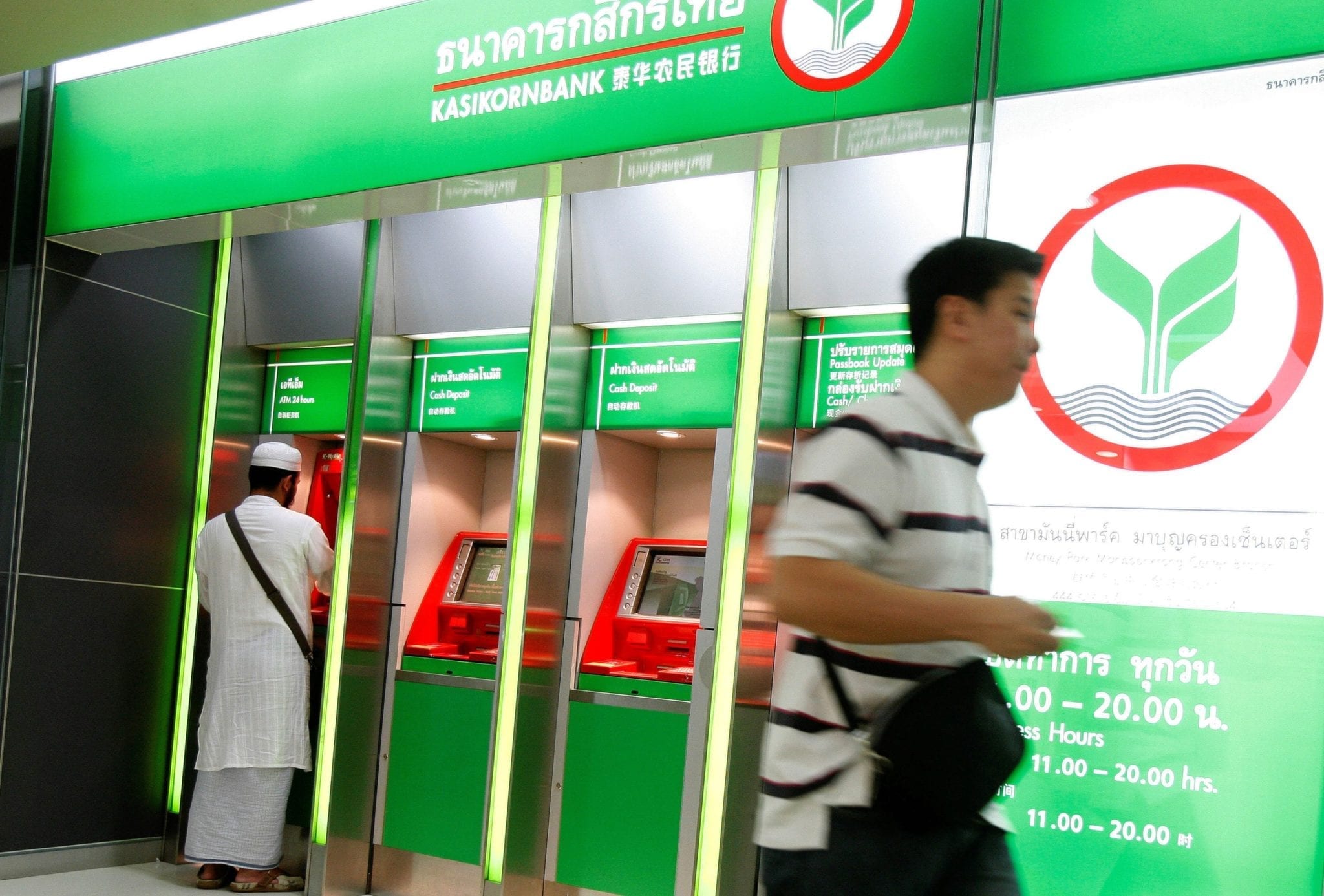
    In the recently announced 2019 business plans, KASIKORNBANK (KBank) will press ahead to become the “Customers’ Life Platform of Choice” by using K PLUS to introduce financial and lifestyle services that suit individual clients. KBank’s financial and IT capabilities will be further enhanced through using data for decision making and steering business toward becoming a “Bank of Sustainability. The Bank has set 2019 loan growth target of 5-7%

    Mr. Banthoon Lamsam, Chairman of the Board of KBank, said that the Thai economy will likely post steady growth in 2019. Despite sagging demand abroad, domestic spending, buoyed by both public and private investments, may play a more important role in bolstering the Thai economic performance. It is expected the Thai GDP growth will reach 4.3 percent in 2019, which would be lower than the 4.6 percent pace projected for 2018 due to the slowdown in the export sector and tourism caused by the high 2018 base and the protracted US-China trade dispute that may dampen the global trade overall. Major drivers for the Thai economy in 2019 may include steady public infrastructure investment and the scheduled general election that will likely help reinvigorate investment climate overall while Thailand’s interest rates will be on the upward trend amid lofty household debt.

    Amid numerous challenges, KBank’s 2019 business operations will continue to focus on our “Customer Centricity” philosophy. With this mantra, we will press ahead with the “Customers’ Life Platform of Choice” strategy by using K PLUS, which has the highest number of users of any mobile banking applications in the country, to introduce financial and lifestyle services to meet the needs of individual customers. Our financial and IT capabilities will be enhanced further to allow KBank to be more responsive to every situation and become a data-driven bank, thus paving the way toward being a “Bank of Sustainability”.

    With regard to overall goals for 2019, KBank looks forward to achieving loan growth of 5-7%, which would be consistent with the 2019 economic growth, breaking down into corporate loan growth at 3-5%, SME loan growth at 2-4% and retail loan growth at 9-12%. We also set growth targets for our net interest margin (NIM) at 3.3-3.5%, and non-interest income growth at -5 to -7%. KBank’s NPL ratio is projected at 3.3-3.7%.

    Mr. Banthoon added that KBank continues to operate business, based on being a “Bank of Sustainability”, and under appropriate risk management and good governance. We are also building a balance in economic, social and environmental dimensions via strategies that will enable us to achieve and create sustainable returns over the long term. Such a sustainable development philosophy has been instilled in all of our operations until it becomes part of our corporate DNA, which has helped create maximum benefit for all stakeholders and promote sustainable growth to Thailand.

  • Small Chinese cities in China are the future for luxury

    Small Chinese cities in China are the future for luxury

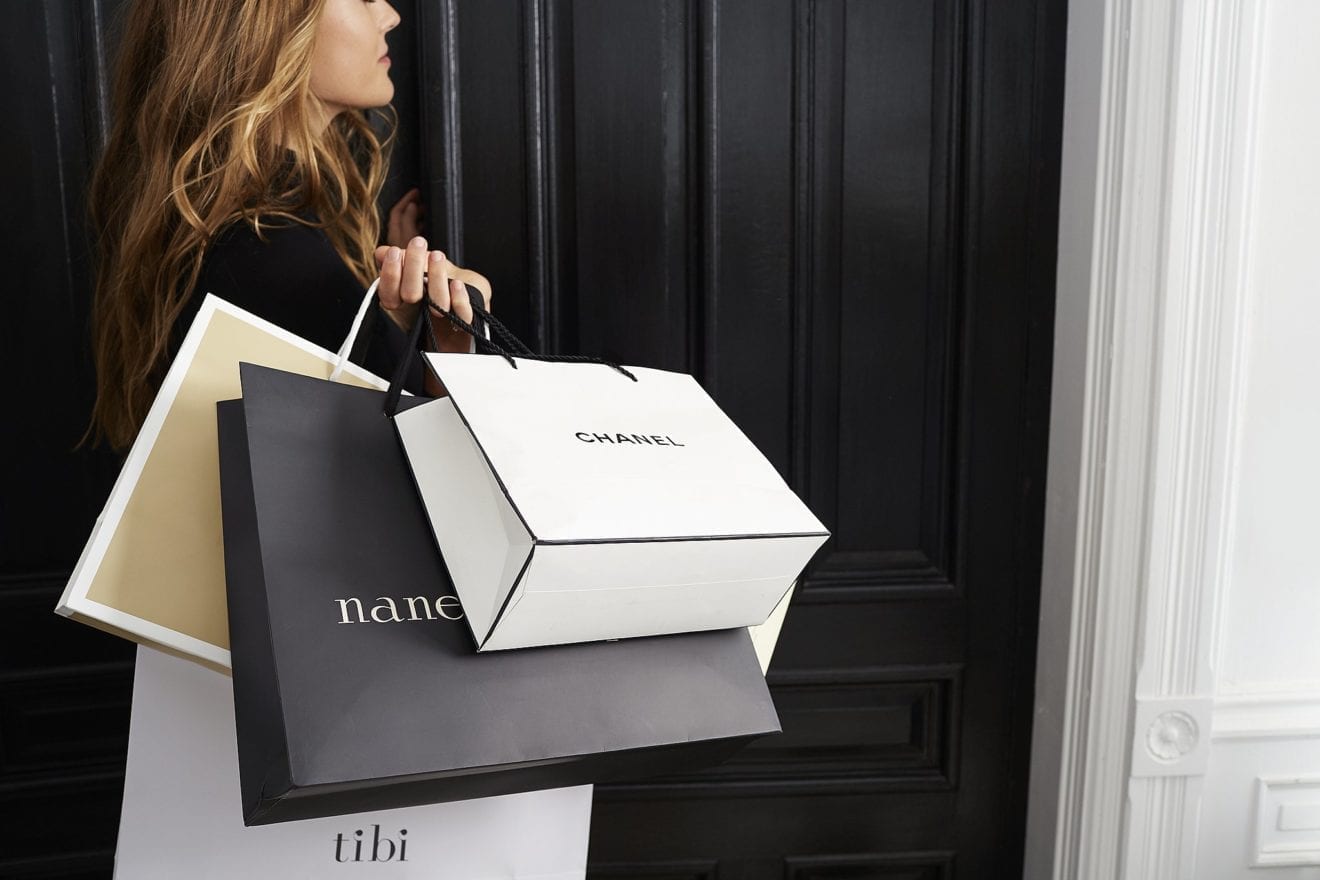
    In China, luxury goods are no longer exclusively for well-heeled city folk. In fact, the future of brands like Louis Vuitton, Chanel, Gucci and Prada may lie in smaller cities like northern China’s Hohhot, which is 10 hours by rail to the capital of Beijing and has a population of three million.

    More than half of all luxury consumers in China live outside the top 15 cities, in so-called second- and third-tier cities and other less developed ones, according to a report jointly released last week by Boston Consulting Group and Chinese internet giant Tencent.

    Luxury goods, more often associated with sophisticated city dwellers, have become commodities to be bought by the aspirational classes and strivers from the boondocks.

    Such a fragmentation was made possible after brands digitised the marketing and purchasing process, and as Chinese consumers increasingly obtained information about luxury goods online, especially via smartphones. Mobile apps and content take up more than half the online attention of luxury buyers, through engagement by social media accounts of key opinion leaders and the brands themselves, and via apps, advertisements and third party e-commerce platforms, the report shows.

    However, 58 per cent of consumers still prefer the old-fashioned way of buying in bricks-and-mortar stores after doing the research online, and around half choose to make their purchases while travelling overseas.

    “The battle for luxury consumers will shift swiftly from offline to online, and in five years, we will enter the age of Luxury Digitisation 2.0 where online and offline [marketing and sales] will knit together closely,” BCG partner Wang Jiaqian said in a statement.

    In tier-three and lower-tier cities that do not have physical luxury stores, buyers are twice as likely to make purchases online as those in the top 15 cities, but nearly 80 per cent of them said they would not mind making the trip to a physical store to shop.

    Chinese consumers have been the key target for global luxury brands for their deep pockets and the sheer size of the country’s market. China’s personal luxury goods market, worth €105 billion (US$122 billion) in 2017, is expanding at 6 per cent annually, and is expected to reach €162 billion in 2024, according to the report. By then, 70 per cent of all new growth in the world’s luxury market will be driven by China, which will account for 40 per cent of the global market.

    Chinese luxury goods buyers are mostly young and well educated – and 70 per cent are female. The average age among both genders is 28 years, and two out of three are aged 18 to 30 with a bachelor’s degree or above, the report found.

    Chinese e-commerce platforms account for half of the country’s online luxury purchases, driven by the launch of Luxury Pavilion by Alibaba Group Holding’s Tmall and Top Life by JD.com.

    However, social commerce – a new form of e-commerce that incorporates social interactions among consumers via social media such as Tencent Holdings’ WeChat – is also on the rise and currently accounts for 11 per cent of all luxury online purchase.

    The concept of social commerce has exploded in popularity over the past two years, especially among young consumers. The new model gamifies shopping so that the more friends you share the deal with, the deeper the discount. It also involves creating a platform where users share photos and videos, write posts and tag items in their pictures that link to e-commerce listings.

    The pervasive use of smartphones among mainland China’s population is a key factor enabling social commerce. Research firm eMarketer forecasts that the total number of smartphone-based online shoppers in the country will reach 443.3 million this year, making up more than three quarters of China’s online retail sales.

    The BCG/Tencent report was based on data collected from 1.8 million Chinese luxury consumers identified by BCG and Tencent, as well as a poll of 2,620 consumers who bought luxury goods in the past 12 months.

  • Vietnam to grow 7 percent in 2018: report

    Vietnam to grow 7 percent in 2018: report

    A report by the Standard Chartered Bank says Vietnam will top ASEAN economic growth this year.

    The report, released Friday, attributed this to manufacturing and agriculture sectors.

    Titled Vietnam: fast, not furious, growth,” it said the economy will grow by 7 percent this year.

    Other factors contributing to the high growth is the robust growth of electronics, with high foreign direct investment inflow and increasing consumption, the report said.

    It estimated next year’s growth at 6.9 percent.

    Standard Chartered economist Chidu Narayanan said that Vietnam has strong growth prospects, and an average FDI inflow of about $17 billion a year can be expected from now until 2020.

    Manufacturing is set to have a double-digit growth for the second year in a row, and agriculture will recover in the second half of this year, the report said.

    It also saw stable growth in the service sector, led by strong consumption in the country, the report said.

    The service sector, accounting for 40 percent of the economy in the first half this year, saw a 7 percent growth year-on-year growth in the same period.

    The report also said young, well-trained and low-cost human resources will play a part in boosting service growth, it said.

    Standard Chartered also forecast that the USD/VND exchange rate would reach VND23,400 by the end of this year.

    The central bank rate on Sunday was VND22,720 and VND23,310-23,390 at local banks.

    On Thursday, the World Bank upped its forecast for Vietnam’s growth by 0.3 percent to 6.8 percent.

    However, the Asian Development Bank last month lowered the growth rate from 7.1 percent to 6.8 percent, saying that the ongoing trade war between the U.S. and China could have spillover impacts on Vietnam’s export and FDI inflows.

    In the first nine months this year, Vietnam’s GDP grew by 6.98 percent, the highest nine-month growth rate since 2011.

    The economy grew by 6.81 percent last year, the highest rate in a decade.

  • Malaysian export growth to moderate to 5.5% in May

    Malaysian export growth to moderate to 5.5% in May

    RAM Ratings expects Malaysia’s export growth to moderate to 5.5% in May 2018 after a strong increase of 14% in April.

    The rating agency said in a statement today that this could be partially attributable to a high-base effect from May 2017, when export growth surged 32.4% – the highest level since March 2010.

    RAM said the continued decline in imports of intermediate goods also suggests an expectation of a corresponding moderation in external demand growth going ahead.

    Meanwhile, the import growth is projected to contract 2.5% in May in anticipation of the deceleration in exports.

    “Furthermore, some risk aversion in the lead-up to the 14th General Election may also have caused some hold-back in investments, thereby contributing to the slower pace.”

    For May, the trade surplus is estimated to come in lower at RM11.8 billion compared with RM13.1 billion in April.

    RAM pointed out that the direct impact arising from the US’s protectionist policies and tariffs on Malaysia’s exports has been limited to date, as exports of affected goods to the US (blanket tariffs on solar panels, washing machines, and steel and aluminium) constituted only 0.8% of Malaysia’s total exports in 2017.

    However, it cautioned that the second-round effects from the escalating trade tensions between the US and China, which bears the brunt of most of the American tariffs, will pose a bigger concern to the Malaysian economy.

    “This ripple effect will be more strongly felt through the global value chain (GVC) and also in global trade and economic growth.”

    “Notably, the US tariffs announced have a more far-reaching impact beyond China and have significant spillover effects to the GVC given the intermediate nature of the goods taxed. China’s set of retaliatory tariffs, on the other hand, seemingly target the US specifically,” said RAM head of research Kristina Fong.

    Having said that, the research house noted that large trade gains could be derived as US substitutes its demand for imports away from China to other established technology markets, in addition to inward investment gains from American and Chinese firms seeking to bypass these trade tariffs by relocating their operations.

    “However, the latter will take time to materialise as firms will require greater certainty in terms of how long and how significant this trade war will turn out to be.”

    In the near term, RAM said, significant downside risks may arise from the widespread uncertainty and heftier production costs, primarily for the US, which could in turn affect the current positive global economic momentum through higher unemployment and lower investments.

    “Moreover, greater-than-expected inflationary pressure may also spur faster-than-anticipated monetary tightening by the US Federal Reserve, which may further hurt investment and global restocking demand.

    “For Malaysia as a small open economy, weak external demand is a clear downside risk to growth momentum; this will require very close monitoring,” the rating agency said.

  • Singapore’s Economy Grows By 4.4 Pct In Q118

    Singapore’s Economy Grows By 4.4 Pct In Q118

    Singapore’s economy grew by 4.4 per cent on a year-on-year basis in the first quarter (Q118), higher than the 3.6 per cent recorded in the previous quarter.

    On a quarter-on-quarter seasonally-adjusted annualised basis, the economy expanded by 1.7 per cent, moderating from the 2.1 per cent growth in the preceding quarter.

    In releasing the latest economic figures, the Ministry of Trade and Industry (MTI)  expects the republic’s Gross Domestic Product (GDP) growth for 2018 to come in at “2.5 to 3.5 per cent”.

    This is after taking into account the strong performance of the Singapore economy in the first quarter and the slightly improved external demand outlook for the country.

    The manufacturing sector grew by 9.8 per cent year-on-year, extending the 4.8 per cent growth in the previous quarter.

    The sector’s growth was primarily driven by the electronics, precision engineering and chemicals clusters, which expanded 19.2 per cent, 14.0 per cent and 10.0 per cent respectively.

    The construction sector contracted by 5.0 per cent year-on-year – the same pace of decline as in the previous quarter.

    Construction output was weighed down by continued weakness in both the public and private sector construction activities, said the Ministry.

    The wholesale & retail trade sector expanded by 3.0 per cent year-on-year, unchanged from the growth recorded in the previous quarter.

    Growth was driven by the wholesale trade segment, which was in turn supported by an increase in the wholesale sales volume of petroleum products.

    On the other hand, the retail trade segment contracted, weighed down by a fall in the volume of motor vehicle sales.

    Growth in the transportation & storage sector came in at 2.8 per cent year-on-year,moderating from the 5.3 per cent in the previous quarter.

    According to the MTI, the water and air transport segments were the main drivers of the sector’s growth, given the healthy expansions in container throughput and air passengers handled respectively.

    The accommodation & food services sector grew by 2.0 per cent year-on-year, slowing from the 2.9 per cent growth in in the preceding quarter.

    Growth was driven by the accommodation segment, which expanded on the back of higher gross lettings at gazetted hotels in line with the rise in visitor arrivals.

    On the other hand, the food services segment contracted, weighed down by a fall in sales volume at restaurants, food caterers and other eating places.

    The MTI said the information & communications sector expanded by 5.7 per cent year-on-year, easing from the 6.0 per cent growth in the previous quarter.

    The sector’s growth was supported by the IT & information services and telecommunications segments.

    Growth in the finance & insurance sector accelerated to 9.1 per cent year-on-year, from 6.3 per cent in the previous quarter.

    The sector’s strong performance was due to robust growth in the fund management, financial intermediation and insurance segments.

    The business services sector grew by 2.8 per cent year-on-year, faster than the 0.4 per cent growth in the preceding quarter.

    Growth was supported by the professional services and “others” segments, even as the contraction in the real estate segment eased.

    The “other services industries” expanded by 1.9 per cent year-on-year, slower than the 2.7 per cent growth in the preceding quarter.

    The sector’s growth was primarily supported by the arts, entertainment & recreation and education, health & social services segments.

    On economic outlook for 2018, the MTI said the pace of growth in the Singapore economy is expected to remain firm in 2018, with growth supported primarily by outward-oriented sectors.

    In particular, the manufacturing sector is likely to continue to expand on the back of sustained growth in the electronics and precision engineering clusters, albeit at a more moderate pace as compared to 2017.

    Likewise, outward-oriented services sectors such as finance & insurance, transportation & storage and wholesale trade are projected to continue to benefit from healthy external demand.

  • China’s online retail market to reach $1.1tn soon

    China’s online retail market to reach $1.1tn soon

    China’s online retail market will hit $1 trillion this year, a year ahead of predictions, according to Forrester.

    The Forrester report revealed the growth in mobile shopping and consumer spending in categories like fashion and grocery would see China’s retail sales reach $1.1tn in 2018.

    Chinese online shoppers will continue to grow by 4.6% annually to reach 631 million by 2022, up from the current 502 million.

    The report, which provides online retail forecasts for Asia Pacific, found China remains the largest market accounting for close to 83% of all retail sales across the region.

    Japan is the second largest with $97bn, followed by South Korea with $69bn, Australia with $31bn and India with $27bn. India continues to be the region’s fastest growing market and is expected overtake Australia in 2019.

    One-fourth of all retail sales in APAC will occur online by 2022, led by China and South Korea.

    Online retail via mobile devices continues to accelerate across the region and is expected to grow 17.64% annually to reach $1.7tn in 2022, up from $735bn in 2017. Mobile sales will account for 80% of online retail sales in 2022.

  • Retail News Asia Honoured with the “Best Global Retail News Platform 2018” Award

    Retail News Asia Honoured with the “Best Global Retail News Platform 2018” Award

    Retail News announced today that it has been named the Best Global Retail News Platform 2018 in the AI Business Excellence Awards. Hailed as the “Internet’s highest honor” by KPMG, EY, PwC and Deloitte, The Business Excellence Awards, is the leading international awards organization honoring excellence on the Internet. The judging panel is compromised of the three directors here at AI Global, they have a combined total of 40 years of work within this industry and know it very well.

    The reason why AI uses an in-house judging panel is because they fully understand the process and also know what our standards are in terms of award winners.  They have been judging the award programs for the past 8 years. AI’s judging panel works very closely with a research team which is comprised of 4 researchers who are in charge of gathering information for each case study and presenting each case file to the judges. This is the 6th year of the Business Excellence Awards, hosted by Acquisition International, and you can view all the details of last year’s awards on their homepage.

    Launched over 8 years ago, AI has rapidly risen to and now has a circulation of 108,000 people in over 170 countries and regularly attracts editorial submissions from some of the biggest players on the global corporate landscape.

    AI is a monthly magazine that seeks to inform, entertain, influence, and shape the global corporate conversation through a combination of high quality editorial, rigorous research and an experienced and dedicated worldwide network of advisors, experts and contributors.

    Alongside the monthly issue AI hosts annual award programs which aim to highlight and provide recognition to the companies and individuals who have worked hard to get where they are today. The AI awards are only given 100% based on merit and not based on the judgment of a number of votes received.

    RetailNews is committed to providing both local and global retailers with the latest breaking retail news throughout the Asian market. This on a daily base. We have resources for everyone from the independently owned business owners, online-only retailers, and major chains expanding their reach throughout the Asian market, says Sven – founder of Retail News.

    We Are Stronger Together

    You can quickly and easily search for the latest breaking retail news by country, or come here to keep an eye on the latest local, global and seasonal trends.

    On Retail News you can network, engage, and share invaluable information with other retailers. Our retailers come from a wide range of industries and expertise, meaning that whatever the question may be—we have you covered!

    We are extremely honored with this recognition and my team has been working extremely hard the last 3 years to bring us to a level where we are operating now, Sven added. With nearly 8 million visitors a month, 23 daily retail updates, Retail News is believed to be the Retail industry leader.

  • Vietnam leads in phone e-commerce growth

    Vietnam leads in phone e-commerce growth

    Vietnam is the fastest-growing market in South East Asia in terms of mobile e-commerce growth, says the latest report on Southeast Asia’s 2017 e-commerce status by iPrice.

    In the past 12 months, mobile phone usage in Việt Nam has grown on an average of 19 per cent, accounting for 72 per cent of the overall e-commerce Web traffic. In comparison to other Southeast Asian countries, Việt Nam enjoyed the steepest growth at 26 per cent.

    However, in absolute terms, Indonesia is leading mobile e-commerce, with 87 per cent of the traffic coming from mobile phones. Meanwhile, traffic via personal computers is less than 30 per cent in all countries in the region.

    Việt Nam is also the leader in website conversion rate, which measures the percentage of website visitors that turn into customers, with a conversion rate of up to 65 per cent, closely followed by Singapore and Indonesia.

    Meanwhile, with the low use of credit cards (except in Singapore), e-commerce merchants are offering more payment options to reach out to shoppers.

    In Việt Nam, 86 per cent of merchants offer online payment, while cash on delivery is offered by more than 80 per cent of the players. Besides this, in both Việt Nam and Thailand, almost 50 per cent of the merchants offer offline point of sales.

    This is due to the popularity of online to offline e-commerce models, such as Thế giới di động (Vietnam Mobile World), FPT Shop and Nguyễn Kim, the report said.

    However, due to lower gross domestic product per capita (US$6,880) compared to other countries in the region, Việt Nam has the lowest basket size, with an average order value of just $23.

    iPrice’s data was collected from over 1,000 e-commerce players operating in the six largest Southeast Asian markets, including Indonesia, Malaysia, Singapore, Thailand, the Philippines and Việt Nam.


  • China’s economy grew by 6.9% in 2017

    China’s economy expanded at a 6.9 per cent pace in 2017, faster than expected and the first annual increase in seven years, the government reports.

    The numbers beat economists’ forecasts for the world’s second largest economy and the Chinese government’s own official growth target of 6.5 per cent. The economy expanded at a 6.7 per cent pace in 2016, its slowest pace in 26 years.

    Growth in the fourth quarter held steady at 6.8 per cent, the report said.

    It said strong demand for exports and buoyant consumer spending helped drive the faster expansion. Those factors helped to offset curbs on bank lending that forecasters had predicted would be a drag on economic growth.

    “The national economy has maintained the momentum of stable and sound development and exceeded expectations,” said the report released by the National Bureau of Statistics.

    “China’s growth is very healthy,” said Iris Pang, Greater China Economist, ING, Hong Kong.

    “The risks that we worried about in 2017, for example overcapacity cuts having a negative impact on GDP, did not happen because new sectors are actually coming out to help production to grow.”

  • Target’s holiday sales are stronger than expected

    Target’s holiday sales are stronger than expected

    US discount department store chain Target has raised its quarterly profit and sales forecasts, after a better than expected festive trading period.

    Comparable sales growth of 3.4 percent in the November/December period was driven by strong traffic growth and continued strength in digital sales, which are expected to grow more than 25 percent in 2017.

    Stores fulfilled 70 percent of Target’s digital volume in November/December, meaning that stores enabled approximately 80 percent of the company’s comparable sales growth in that period.

    “As we look ahead to 2018, we will build on the foundation we established this year by launching additional exclusive brands, enhancing our digital capabilities, opening approximately 30 small-format stores and tripling the size of our remodel program to more than 325 stores,” said Brian Cornell, chairman and chief executive officer of Target Corporation.

    While Target’s holiday growth is respectable and makes it a holiday winner, GlobalData Retail managing director Neil Saunders prior year comparatives – when same-store sales fell by 1.3 per cent – are very weak and since that time Target has undertaken a raft of initiatives that should have boosted performance.

    “All that said, the growth does indicate that Target is on the right track and that it’s various ventures are starting to pay dividends. However, we believe that it also highlights some deficiencies in execution – especially in stores.”

    “Target’s holiday focused Wondershop is another example of a lost opportunity. Like last year, Target’s range of holiday decorations and sundries was comprehensive and, in our view, one of the best in the market. However, also like last year, Target buried this offer at the back of the store and, as a consequence, lost custom. We note that more effort was made to signpost the collection this year, but this proved to be inadequate.”

    Digital was the undoubted success, according to Saunders, with robust online growth underpinning performance.

    “Overall, this is a positive outcome. It shows Target is doing the right things and that its ideas have merit. However, it also indicates the need for more care in execution, a faster roll-out of the initiatives, and a greater sense of ambition. Ultimately, Target is doing well, but it could be doing better.”

  • South Korean economy to uphold decent growth

    South Korean economy to uphold decent growth

    According to a state-run think tank Sunday, the economy of South Korea is preserving a decent growth rate while private spending is picking up, reaching a compensation for a hold up in corporate investment.

    In its monthly assessment of economic conditions, the Korea Development Institute (KDI) declared “facility investment growth slowed down, and construction investment continued its pace of deceleration, while consumer sentiment ran high, with retail sales posting sharp growth.”

    KDI found that even though December’s outbound shipment growth slowed down, exports are proving a modest expansion day by day.