Tag: #growth

  • Bullish investors can bring Vietnam’s stock market to record high in 2018

    Bullish investors can bring Vietnam’s stock market to record high in 2018

    Vietnam’s stock market is expected to keep its upbeat sentiment of 2017 and drive the benchmark VN-Index to an all-time high at year end, analysts said.

    The Vietnam Stock Index (VN-Index), a capitalization-weighted index of all the companies listed on the Ho Chi Minh City Stock Exchange, already reached 1,000 points on Wednesday, the highest since the global financial crisis in 2007.

    It closed at 984.24 on the last working day of 2017, wrapping a bullish week and setting a 10-year high.

    Analysts believe the momentum will continue and bring the index to surpass the record 1,178 points in 2007.

    The market is seeing very low risks, and high confidence for growth, they said.

    RongViet Securities Corporation in Saigon said in a report that VN-Index will increase at least 17 percent this year or even 67 percent in its best scenario, meaning it could end the year somewhere between 1,170 and 1,640.

    Nguyen The Minh, a senior analyst at Saigon Securities Incorporation, was more specific.

    “VN-Index can reach 1,050 points in the short term and 1,300 at year end,” he said.

    Minh said stocks that have not received much attention last year should create big potentials now.

    The market in 2017 was driven by consumer goods stocks, but banking and energy will take the lead this year, he said.

    Minh said the market will be boosted by interest from the foreign sector. Foreign investors made more than $1 billion of net purchase last year, the biggest in five years, and they will continue to stick around for more privatization at public giants.

    Bloomberg called Vietnam a “frontier market” in Asia last year, as it was the biggest gainer in percentage terms: a 47 percent gain in the VN-Index. The market capitalization increased almost double to nearly $150 billion, fueled by state-owned company sales and listings, it said.

    Vietnam’s economy grew 6.8 percent in 2017, breaking its own 6.7 percent target which both government officials and economists had considered ambitious.

    The country remains one of the fastest growing economies in the world and has set the goal to expand another 6.7 percent this year.
  • Vietnam’s economic growth to accelerate in 2018

    Vietnam’s economic growth to accelerate in 2018

    The forecasts are in and Vietnam can gloat again after a scare in early 2017.

    Economic growth next year will reach as high as 6.7% in 2018, better than in 2017, the prime minister predicted in October 2017.

    The Asian Development Bank forecasts 6.5%, but higher than 2017 and stronger than developing Asia overall. Even the more cautious World Bank estimates more growth next year than this year.

    As of early 2017, drought had afflicted farming while mining faced high production costs and declining sales prices abroad. U.S. President Donald Trumps decision in January to withdraw his country from the Trans Pacific Partnership trade pact further stood to whack Vietnam as a signatory and major exporter. Policymakers fretted that the country would miss growth targets.

    But those setbacks registered as blips at best for Vietnam’s overall $202 billion GDP. The nominally communist Southeast Asian country that opened to foreign investment in 1986 is still seeing a buildup of that capital from offshore.

    Foreign investors in the likes of electronics and polyester yarn factories still love Vietnam for its low costs, abundance of labor and matter-of-fact permitting process, analysts on the ground say. Growth has also helped make people wealthier, leaving just 13.5% in poverty, a boon to investors who sell locally.

    “We can reasonably infer that high registered foreign direct investment (FDI) in 2017 will result in high disbursed FDI in 2018, yet another year to post double-digit growth in FDI disbursement,” financial services firm SSI Research says in a note this month.

    Registered foreign direct investment increased 44% year-on-year through Dec. 20 to $29.68 billion, according to the Ministry of Planning and Investment.

    Foreign-operated factories make goods mainly for export and exports had risen 23% to $155.24 billion over the bulk of 2017, SSI Research says. Most offshore investment comes from South Korea, Singapore, Japan and Taiwan, all places where manufacturing costs more than in Vietnam.

    Investors come for a labor force that’s famously young, trainable and willing to work for a minimum wage of $172 per month. About 60% of the 93 million Vietnamese are of working age. Starting a business is getting more efficient permit-wise and most industries allow foreign investment of 100%, according to this guide by PwC (Vietnam) Ltd.

    It’s little wonder that Samsung Display made an “additional investment” of $2.5 billion this year, per SSI Research data. The display unit of of South Korean multinational Samsung Electronics will have parked $6.5 billion in Vietnam with the new outlay. In another major foreign investment move, Taiwanese-owned Polytex Far Eastern registered a $490 million factory for polyester yarn production.

    Thai Beverage’s proposed investment of 25% to 51% in the major Vietnamese brewery Sabeco, though not a direct factory sort of deal, points to further keenness on Vietnam itself.

    “The FDI scene in the economy continues to thrive,” says Dustin Daugherty, senior associate in business intelligence with the consultancy Dezan Shira & Associates in Ho Chi Minh City. “While a lot of attention is paid to big name deals, the number of small to medium-sized enterprises and smaller multinational company investors continues to tick up, and enthusiasm is very high.”

    “I think next year will be as good or better than this,” Daugherty says. “We are not yet at peak for the growth rate.”

  • World Bank raises Vietnam’s growth forecast for 2017

    World Bank raises Vietnam’s growth forecast for 2017

    The World Bank (WB) has increased its growth forecast for Vietnam this year from the 6.3 percent it projected in October to 6.7 percent, matching the government’s annual target following steady progress during the first nine months.

    Stronger domestic demand, robust export-oriented manufacturing and a gradual recovery of the agricultural sector are driving Vietnam’s economy, according to Taking Stock, the World Bank’s bi-annual economic report released on Monday.

    The manufacturing and services sectors respectively grew by 12.8 percent and 7.3 percent between January and September, the report said.

    “Growth momentum picked up across major economies and global trade recovered in 2017,” said Ousmane Dione, World Bank Country Director for Vietnam. “With incomes rising and poverty falling, Vietnam’s economy had another good year of strong growth and broad macroeconomic stability.”

    Vietnam expects economic growth of 6.5-6.7 percent next year, and thinks that the target of 6.7 percent set for this year is within reach, Prime Minister Nguyen Xuan Phuc said at a recent session of the legislative National Assembly.

    Low inflation and rising wages sustained buoyant domestic demand and private consumption, while the stronger global economy has helped Vietnam’s export-oriented manufacturing and agricultural sectors.

    Job growth has continued, with 1.6 million new jobs added in the manufacturing sector over the past three years, and 700,000 additional jobs in the construction, retail, and hospitality sectors, leading to higher aggregate labor productivity.

    Despite progress in resolving non-performing loans, risks remain, including the lack of robust capital buffers in some banks, especially amidst rapid credit growth.

    Fiscal tightening is underway, according to the report, and has led to a leaner budget deficit and containment of public debt accumulation. However, the decline in public investment – falling to 16 percent of total spending in the first nine months of 2017 compared with an average of 25 percent in recent years – may not be sustainable over time, as Vietnam needs significant investment in infrastructure to support future growth.

    A slow-down in structural reforms could also impact the ongoing recovery, especially given the weaker growth in investment.  Enhancing macroeconomic resilience and structural reforms could lift Vietnam’s growth potential over the medium term.

    “Structural reform remains a central priority in view of tepid productivity growth,” said Sebastian Eckardt, the World Bank Lead Economist for Vietnam.

    “Building on progress already made, Vietnam can further lift productivity growth through investments in needed infrastructure and skills as well as deeper reforms of the business environment, state-owned enterprise (SOE) and banking sector.”

    Over the medium term, growth is projected to stabilize at around 6.5 percent, while inflation is projected to remain low.

  • German automakers set for record output expect further growth in 2018

    German automakers set for record output expect further growth in 2018

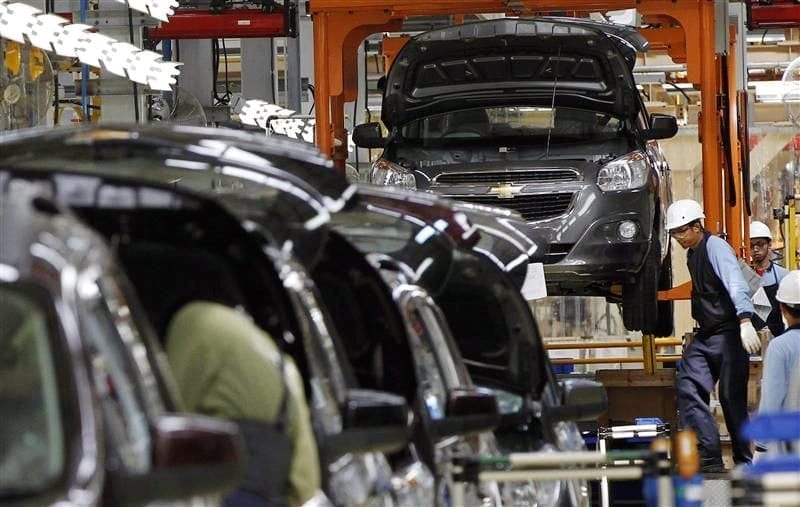
    German automakers, on course for record production this year, expect further output growth in 2018 powered by strong demand in Asia, the VDA carmakers’ lobby said.

    Producers including Volkswagen, Daimler and BMW may increase output “significantly” this year from 2016 levels to between 5.6-5.7 million units in Germany and about 10.8 million in the rest of the world, VDA President Matthias Wissmann said.

    “The automotive sector is and will remain a growth market,” Wissmann told an industry conference on Tuesday, citing momentum in China and India.

    “Current projections indicate that 2018 will also be a stable year,” he said, without being more specific.

    Separately, Wissmann said he expects demand in Germany for electric cars to show “a further significant gain” over the next three years as German carmakers plan to more than triple their offerings of purely battery-powered vehicles and plug-in hybrids to nearly 100 models from about 30 at present.

  • Vietnam’s love for instant noodles rises to near-boiling point

    Vietnam’s love for instant noodles rises to near-boiling point

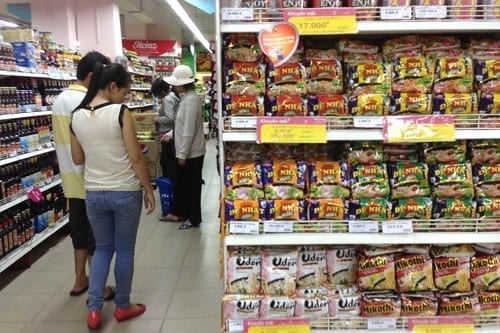
    Vietnamese people consumed more than 4.9 million packs of instant noodles last year, behind China, Indonesia and Japan, new data shows.

    Vienam has held fourth spot since 2012 in the rankings compiled annually by the World Instant Noodle Associations (WINA).

    On a per capita level with a population of over 93 million, the average Vietnamese person gobbled 53 packs of instant noodles in 2016, higher than Indonesians at 49, Japanese at 44 and Chinese people at 38.

    WINA said Vietnam’s instant noodle market recovered last year thanks to more diverse products that offer a wider range of choices for customers.

    Kajiwara Junichi, CEO of noodle producer Acecook Vietnam, said that the company’s revenue from instant noodles rose 5-20 percent during the second half of this year.

    Meanwhile, Masan Consumer and Asia Foods have been suffering from falling revenue.

    The three firms are the three biggest instant noodle producers in Vietnam and make up 70 percent of the domestic market share.

    Last year, The Washington Post cited a South Korean study that pointed out how harmful instant noodles can be for the health.

    “Although instant noodles are a convenient and delicious food, there could be an increased risk for metabolic syndrome given [the food’s] high sodium, unhealthy saturated fat and glycemic loads,” said Hyun Shin, a doctoral candidate at the Harvard School of Public Health and a co-author of the study.

    Doctor Dang Huy Quoc from the Ho Chi Minh City Oncology Hospital told Tuoi Trenewspaper that no studies have concluded that instant noodles can cause cancer, but high consumption of fat and salt can cause cancer and other heart diseases.

    Other experts suggest that people should only eat one or two packs of instant noodles per week.

    Many Vietnamese people are well aware of the harmful effects of instant noodles, but it’s common in Vietnam for people to snack on a pack of instant noodles between breakfast, lunch and dinner.

    The noodles are popular among college students, who often live far from home and lack the facilities to cook themselves a proper meal.

  • Singapore Q3 GDP Growth Seen Revised up on Exports Boon

    Singapore Q3 GDP Growth Seen Revised up on Exports Boon

    Year-on-year, third quarter final gross domestic product (GDP) was forecast to show growth of 5.0 percent, according to the poll’s median estimate of 11 economists, an improvement from the 2.9 percent growth for April-June.

    The data will be released on Thursday, November 23.

    “Growth prospects are getting brighter for the Singapore economy after two years of sub-par performance,” analysts at ANZ bank said in a research note to clients.

    Recent data pointed to a more broad based recovery for the city-state, dispelling previous worries that Singapore was too dependent on its tech products.

    Earlier on Friday, Singapore reported that its exports rose the most in 2-1/2 years in October, thanks to growth in both its electronics and non-electronics exports.

    “The composition of growth (in 2018) is going to be more balanced,” compared to that so far this year, said Credit Suisse economist, Michael Wan.

    Singapore and other trade-dependent Asian economies enjoyed a strong tailwind from improved global demand in the past year, particularly for electronics products and components such as semiconductors.

    “This year was more about exports, but as we move to 2018, you would see more support from things like retail sales and private consumption,” Wan said.

    The positive growth and inflationary impulse from the trade sector has raised the prospect of tighter monetary policy next year.

    The Monetary Authority of Singapore held policy steady last month but changed a reference to maintaining current settings for an extended period, a shift that analysts said created room for a tightening next year.

    “We expect the Monetary Authority of Singapore (MAS) to exit from their neutral policy stance at their October 2018 meeting,” ANZ analysts said.

    Reuters

  • Help for Singapore start-ups in Indonesia

    Help for Singapore start-ups in Indonesia

    Singaporean start-ups eyeing the Indonesian market can now look to a new innovation hub in its capital. Block71 Jakarta, a 1,500 sq m facility in the Kuningan district, officially opened its doors yesterday to 24 businesses from both countries. Operations had begun in March.

    The hub, a tie-up between the National University of Singapore’s entrepreneurial arm NUS Enterprise and Indonesia’s Salim Group conglomerate, will host conferences, business competitions and other start-up events.

    It is based on Singapore’s Block71 in Ayer Rajah Crescent.

    NUS Enterprise chief executive Lily Chan said: “Block71 Jakarta is open to all start-ups and entrepreneurs who are keen to explore the Indonesian market. In particular, we strongly encourage companies that are developing innovative technology solutions with the potential to scale globally to apply.”

    Start-ups are also expected to be able to tap the global networks of investors and industry players that NUS Enterprise and Salim Group are plugged into.

    The group’s executive director, Mr Axton Salim, said in a statement: “We have embarked upon this initiative as we want to support entrepreneurs as well as encourage new developments in Indonesia.

    “The Salim Group’s networks and experience will facilitate the entry of start-ups and innovations to the local market and benefit the community here.”

    His family business deals in a diverse array of sectors, with its units including real estate, telecommunications and manufacturing.

    Among the Singapore start-ups that have ventured into Block71 Jakarta is the pslove company, which sells heat patches to alleviate menstrual cramps. Founder Tan Peck Ying told: “As a consumer product company, we go where the demand is. For the past couple of months, we have been getting multiple requests from Indonesia and this is a natural move for us.”

    The Indonesian start-ups at Block71 Jakarta include 8villages, a social enterprise that provides rural farmers with a mobile information platform to communicate and do business.

    Minister for Trade and Industry (Trade) Lim Hng Kiang, who officiated the hub’s opening ceremony yesterday alongside his Indonesian counterpart, said: “Block71 Jakarta will be a launch pad for Singapore entrepreneurs and innovators to build ties with the Indonesian start-up community. We hope Block71 Jakarta will foster a healthy two-way exchange of ideas, innovation and expertise.”

  • Korea needs to draw long-term growth plan for startups

    Korea needs to draw long-term growth plan for startups

    Korea has leaped into being one of Asia’s leading economic powerhouses in less than a century after the post-war devastation back in the early 1950s.

    Many attribute the rapid growth to the nation’s tough working culture — represented by an obsession to generate short-term, outstanding outcomes mainly in the business circle.

    This has brought about such homegrown hardware titans as Samsung and LG whose history falls short of their overseas counterparts, but have become top-tier players.

    The hardware-driven growth, however, is still holding back the development of the local software industry, with the government putting little attention on the non-manufacturing yet crucial growth area.

    “Not a single Korean software company has achieved global success, compared with the hardware or manufacturing industry players,” Tiger Company CEO Kim Beom-jin said in an interview Sunday. The software startup — established in 2011 — is an enterprise-level social networking system provider here.

    He said the nation’s software market is not huge enough to grow into a sizable shape due to the small market size and weak infrastructure, so the government needs to implement specific measures for its long-term growth both in quality and quantity. The software market in the United States and China is 20 to 30 times bigger than that of Korea, he said.

    “It is also tough for us to tap directly into overseas markets, as we are no match for industry leaders there in terms of factors such as capital, workforce and marketing,” he said.

    Kim urged the government to support local software startups in particularly overseas networking and marketing activities.

    “Small startups with weak capital cannot have enough chances to contact overseas clients and promote products by participating in global exhibitions,” the chief executive said.

    The government has in recent years pushed for the development of the local software industry. For example, the Ministry of Science, ICT and Future Planning unveiled a plan last year to name and support 20 software-oriented universities by 2019.

    The move comes amid growing calls that the country should make more effort in software education to build an infrastructure for its long-term growth.

    This reflects that global information and communication giants such as Google and Facebook generate billions of dollars in profit with their software infrastructure. But even if the global tech paradigm has shifted into the software sector, the government has made little effort to catch up with the trend.

    “The small software market size is also blocking the government from making enough investments in software industry players,” he said. “Most state-run bodies have invested mainly in hardware and online to offline industry players here, paying little attention to their software counterparts.”

    “Local venture firms or small- and medium-sized firms can receive state-run research and development funding projects for as long as three years,” he said. “But the government needs to draw up concrete funding policies from a longer-term perspective, from product development to global expansion.”

  • Credit growth expected to rise 16.33% in 2017

    Credit growth expected to rise 16.33% in 2017

    The total loans of the banking system are expected to grow by 16.33 per cent in 2017 against December last year, lower than the Government’s limit of 18 per cent.

    The State Bank of Viet Nam released the information this week after conducting a survey on business performance trends of credit institutions in the second half of this year.

    The survey also shows that credit institutions forecast the total capital mobilisation of the banking system to rise 16.02 per cent in 2017, of which dong contributes to a rise of 16.59 per cent and foreign currency 1.14 per cent.

    The General Statistics Office (GSO) has reported that credit growth in the first half of this year was 7.54 per cent, the highest in the past six years. The new record, considerably higher than the previous record of 6.28 per cent set in 2015, reflects the market’s significantly improved capacity to absorb capital, the GSO said.

    Loans in the period were mainly focused on prioritised and large projects as instructed by the Government, accounting for roughly 50 per cent of total outstanding loans. Agriculture and rural industries, and small- and medium-sized firms received around 19 per cent and 22 per cent of the total outstanding loans, respectively.

    Lending interest rates were 6-9 per cent per year for short-term loans, and 9-11 per cent per year for medium- and long-term loans. For customers with transparent finances, short-term lending rates ranged from 4-5 per cent per year.

    The banking system’s capital mobilisation in H1 has risen by 5.89 per cent, and deposit interest rates have been relatively stable. Interest rates for dong deposits were 4.5-5.4 per cent per year for short term, 5.4-6.5 per cent per year for medium term, and 6.4-7.2 per cent per year for long-term deposits.

    The Government has targeted credit growth of 18 per cent for 2017, but at the National Assembly meeting recently, some deputies suggested that this limit be raised so as to support economic growth.

    Analysts at Bao Viet Securities (BVS) also recently forecast that the central bank may consider raising credit growth targets for several banks to aid economic growth.

    The Government has been under intense pressure to loosen its monetary policy as the country is determined to meet its GDP growth target of 6.7 per cent for 2017. However, the fiscal policy has been struggling with disbursement of public investment, the BVS analysts said in a report. By end of May, disbursement of public investments had touched VND88 trillion, equal to only 30.6 per cent of the entire year’s estimates.

    The BVS analysts said when fiscal policy does not support growth well, pressure will intensify on monetary policy. Increasing credit growth targets of several banks may be an option worth considering, the analysts said.

  • Indonesia’s Credit Growth in May Fueled by Abundant 3rd Party Fund Placement

    Indonesia’s Credit Growth in May Fueled by Abundant 3rd Party Fund Placement

    Indonesias banking credits grew 8.71 percent in May 2017, up 0.37 percent from 8.34 percent in the same month last year, according to the Financial Service Authority (OJK). However, the May 2017 credit growth fell 0.76 percent from 9.47 percent a month earlier.

    Although the banking credits in May 2017 grew at a slower pace than in April 2017, OJK believes the credit growth until May 2017 was still relevant to the business plans of banks which have set the target of credit growth for 2017 at 9-12 percent.

    “Compared to last year, it (the credit growth) is better,” Chief of OJKs Board of Commissioners Muliaman Hadad said at the Indonesia Stock Exchange (BEI) Building here on Tuesday.

    The May 2017 credit growth was fueled by abundant third party fund placement which grew by 11.18 percent year-on-year, he said. The amount of credits which were extended to the electricity sector grew 31.05 percent, the construction sector 24 percent, the fisheries sector 11.2 percent and the agricultural sector 10.8 percent.

    Muliaman noted that the expansion of four state-owned banks businesses contributed significantly to the credit growth.  The amount of credits extended by the four state banks, Bank Mandiri, Bank Rakyat Indonesia (BRI), Bank Negara Indonesia (BNI) and Bank Tabungan Negara (BTN), until May 2017 reached 14.81 percent, with third party fund placement growing 16.77 percent.

    However, the banking credit growth did not spread evenly as the amount of credits channeled by private banks grew 4-5 percent. The ratio of non-performing loans remained at 3.07 percent until May 2017.

  • Garuda Indonesia soars above challenges, gears up for growth

    Garuda Indonesia soars above challenges, gears up for growth

    Ready to face their business growth that is riddled with challenges, Garuda Indonesia is optimistic that both its operational and financial performances will experience sustainable and positive growth in the next two years. This will be attributed to their business strategy, which is to focus on financial performance transition.

    Antara News quoted Garuda Indonesia President Director, Pahala N Mansury, saying that the airline would focus on performance improvement by taking 10 financial and business performance initiatives in a manner that would improve both operational and financial conditions.

    The 10 financial performance strategy initiatives are optimising usage of their fleet, lowering fleet cost, improving service related to departure and arrival time as well as reforming the service user income management services. “We are quite optimistic about achieving it in one or two years time,” he said.

    Pahala said the company is currently in a good position in term of operation and services to the public. However, the main challenge the company is facing is to find ways to improve its financial performance in a sustainable way to ensure business continuity.

    “We have identified that the phase of the business cycle that the group is undergoing is temporary. Infrastructure, human resources and products, and all business lines have a good platform to support the performance improvement,” Pahala said.

    He also lauded all sides for their input and attention into improving the group’s performance and business dynamics.

    Meanwhile, state shipping company PT Pelayaran Indonesia (Pelni) has paired up with Patra Jaya, a subsidiary of state-owned energy firm PT Pertamina, to introduce a cruise ship to boost the tourism industry.

    PT Pelni Kupang brand Head Adrian on Sunday said a memorandum of understanding was signed between the two parties, where the MoU entails the construction of a cruise ship to support the nation’s tourism industry in 10 tourists destination.

    The ten tourists destinations include Labuan Bajo and Riung, East Nusa Tenggara. The ship is currently being built in South Korea and is expected to be completed and sailing by 2018.

    Both Pelni and Pertamina had initially planned to purchase a cruise ship but the plan was halted following a regulation banning government agencies to purchase second-hand goods from abroad.

    Pelni currently operates both passenger and transport ships.

  • Slow US retail growth filters through to Asia

    Slow US retail growth filters through to Asia

    Retail sales for April in the US rose slightly to 0.4%, up from 0.1% in March. Although this growth is some cause for encouragement, it was expected to be as high as 0.6% for last month. The fragile picture for the retail sector in the US is having a noticeable impact on many of its key trading partners throughout Asia.

    China, South Korea and India are amongst the US’ biggest trade partners. Exporting goods such as electronics and clothing, they all see the country as a major export market. With demand for Asian goods sluggish, there are tentative signs that the picture for retail sales across the region are beginning to slow down.

    For April, Chinese retail sales grew by just 0.79%, down from 0.84% in March. In January, sales growth stood at an even more unimpressive amount of just 0.51%, so there has at least been a small upturn. Part of that is down to other factors, most notably industrial production.

    Industrial output

    Elsewhere in Asia, industrial output figures seem to correlate with the slow rate of retail growth in the US. Japan is a prime example, with output figures for March contracting. In that month, industrial output nationwide shrank by 2.1%, coming soon after a rise in output for February. Concerns over the historically strong Japanese tech sector have been prevalent for a while.

    The picture in other major Asian markets for industrial output is mixed. Growth in India is erratic – contraction in output was recorded in five of the last 12 months. In South Korea, figures for March are positive, but contraction occurred in January and February.

    Low demand for home-made products, alongside similarly low demand from the US and sluggish industrial output could all hint at a more prolonged economic malaise. When spread betting, the most sensible choice would be to back against share price rises for major Asian retailers.

    Malaysian recovery 

    One possible ray of light for Asian retail is Malaysia. Despite some of its’ neighbours not performing too well, retail sales growth is pretty healthy. The most recent monthly figures saw month-on-month growth of 4.7% for March, jumping from a position of slight contraction for both January and February.

    Among the reasons behind the growth include wider economic growth exceeding expectations for the first quarter of 2017 and increased consumer confidence. Interest rates have remained steady, but the bad news coming from across the Pacific Ocean is likely to dent confidence going into the summer months.

    The future for retail in Asia is a little uncertain. The contractions and slow growth experienced in Malaysia, China and Japan may return, with one eye focused on how events are unfolding in the US and Europe.

    Should all go to plan and retail sales in the US return to more favourable levels, there is a possibility that the feelgood factor will move to Asian markets. More demand from consumers would equate to higher sales to US firms by Asian manufacturers, but it remains to be seen how this scenario would be played out.

  • Indonesia, Singapore partner to develop startups

    Indonesia, Singapore partner to develop startups

    Local co-working space EV Hive is collaborating with Singapore’s working space BASH to provide places for startups from both countries to develop and thrive. These spaces with assist startups with business development and funding.

    “Regional companies based in Singapore can use EV Hive as a launch pad to the Indonesia market. Indonesia companies can use BASH as a stepping stone to access the regional stage,” said Willson Cuaca, managing partner of Singapore-based venture capital firm East Ventures, during the launch of the collaborative project on Tuesday. East Ventures manages EV Hive.

    Startups at the later stage (series B and above) of development can leverage support from EDBI, the global investment arm of the Singapore Economic Development Board.

    East Ventures, BASH management or SGInnovate, a development body wholly owned by the Singapore government, will work on more programs to expand talent, markets and knowledge-sharing for the customers of both co-working spaces.

    EV Hive currently manages two co-working spaces in South Jakarta and one in the Breeze mall in Banten. It plans to reach seven offices by the end of the year.

    EV Hive has facilitated the development of 36 startups, six of which are Singaporean.

    BASH, meanwhile, manages an integrated startup space in Singapore.

  • TV programme “Startup Nation” to air shortly in Vietnam

    TV programme “Startup Nation” to air shortly in Vietnam

    Vietnam Television (VTV) and HCM Communist Youth Union on Monday announced a new TV programme titled “Startup Nation,” which is expected to promote startups inVietnam.

    The announcement was witnessed by Deputy Prime Minister Vương Đình Huệ, Minister of Science and Technology Chu Ngọc Anh, Minister of Agriculture and Rural Development Nguyễn Xuân Cường, leaders of the youth union and major companies in Vietnam.

    The talk show format will air on VTV1 every Friday evening from April 14 and rebroadcast Saturday afternoon.

    Another programme titled “Startup Coffee” will air from April 10 every morning as part of the programme “Good Morning” on VTV1.

    VTV Director General Trần Bình Minh said the programme producers wanted to deliver a message on startups, which is “Renovation is continuous and enduring. It’s not just a movement but a path for the nation to follow.”

    He said successful businessmen would be invited to “Startup Nation” to share experiences and comment on startup models or business trends in Vietnam and across the world. They could then suggest or invest in promising startup ideas.

    The TV programme is part of the Government’s mission to makeVietnam a nation of startups.

    First Secretary of HCM Communist Youth Union Lê Quốc Phong said the youth would applaud the new programme, which offers them an opportunity to present their startup dreams, and make those dreams a reality.

    Phong said the youth expected relevant agencies to hear their ideas and suggestions thanks to the TV programme and subsequently timely adjust policies to support them.

    In the first quarter of this year, 26,478 new enterprises were established in Vietnam, a record number in the last six years.

    Last year,Vietnam recorded the establishment of 110,100 new enterprises, the highest number compared with the previous years. Last year is the first time the country had more than 100,000 new enterprises in one year, which is said to be the result of the Government’s strong promotion of startups.

    Vietnam is expected to have one million enterprises by 2020.

  • China’s online retail market is expected to reach RMB 1.3 trillion in 2021

    China’s online retail market is expected to reach RMB 1.3 trillion in 2021

    Despite rapid growth in recent years, the Haitao market is expected to peak within China’s overall online retail market. New research from Mintel reveals that in China the total combined online cross-border e-commerce market, including Business-to-Business and Business-to-Consumer e-commerce, grew by a factor of 10, from RMB 53 billion in 2011 to an estimated RMB 626 billion in 2016, representing a CAGR (compound annual growth rate) of 64%. From 2016 to 2021, growth is expected to slow to a still-strong CAGR of 15%, to reach a total value of RMB 1.3 trillion (RMB 1281 billion).

    Today, the majority of Chinese consumers shop for foreign imported products from domestic shopping websites (73%), compared with only one quarter (27%) who shop from overseas retail websites. Indeed, more than double the proportion of consumers buy from physical stores within China (56%), rather than from overseas shopping websites.

    There is a clear association among Chinese consumers for some products to be more desirable from certain countries. Mintel research reveals that 31% of consumers buy imported food from Taiwan; 36% buy alcoholic drinks from France (principally wine); and 45% buy beauty and personal care products from South Korea.

    SEE ALSO: China retail sales grow slower 9.5% in first two months

    According to Mintel, the only territory seeing an increase in purchasing among urban Chinese consumers over the past two years was France. Of those who have bought imported products online, 16% bought imported products from France in 2016 up from 15% in 2015. Of those who have bought imported products this year, 20% have bought beauty and personal care products from France, while 36% have bought alcoholic drinks, including wine.

    Matthew Crabbe, Director of Research, Asia-Pacific at Mintel, said:

    “While the Haitao market has seen rapid growth over recent years, and should maintain strong growth for the foreseeable future, it is likely to peak soon as a proportion of online retail in China. This does not stop the Haitao route to Chinese consumers from offering significant potential market opportunities to foreign brands, but it does mean that Haitao is likely to be more relevant to brands looking at initial market entry. Retailers and brands should therefore play to their different country specialities when attempting to differentiate from their competitors.”

    When choosing where to buy imported products online, Chinese consumers who have bought imported products online rank proof of quality of products as important (68%), followed by ability to use third-party payment systems (44%). They also want detailed product information (36%) and Chinese-language customer service (25%).

    Additionally, four in 10 (39%) purchasers said they would like to see a better choice of payment options on overseas online shopping websites. Currently, 35% are less confident about the returns policies of overseas websites than they are of domestic online shopping websites.

    Crabbe added, “As well as providing a better and more entertaining experience for Chinese online shoppers of imported foreign products, brands and retailers can improve by providing better practical solutions. Offering better delivery, refund and returns options is a key area where overseas online retail websites can improve, as compared to domestic websites. This does create logistical issues, however, but having links through domestic online retail portals can help combat this.”

    Mintel research reveals that 62% of surveyed consumers who have purchased overseas products agree that online shopping for imported products lacks the excitement of shopping when travelling overseas, with 20% strongly agreeing with this. Additionally, 34% of consumers agree that they are excited when shopping from websites that run interesting advertising campaigns.

    “When selling foreign products online to Chinese consumers, brands and retailers really need to create a sense of excitement and entertainment about the whole process if they are to stand out in an increasingly competitive market. Simply offering a new product is no longer enough.” Crabbe concluded.