Tag: #growth

  • India poised to be third largest consumer economy

    India poised to be third largest consumer economy

    In less than a decade, the world’s widget makers, entertainers, and beauty products will be focused on three core economies: the United States and China, of course, and in third place and gaining fast: India. They’re young. They’re the poorest of the big emerging markets, so have lots of momentum on their side. And they’re tech savvy smart. India is the new China. If you have something to sell, India is now an on-radar must.
    The Boston Consulting Group (BCG) said in a report released on Tuesday titled The New Indian that the country will be the third largest consumer market in the world by 2025.

    Rising incomes is the biggest driver here. Although poor, income distribution is evolving even as the population of one-percenters rises. In 2005, some 44% of the country were considered struggling, with 42% just getting by. Today, the extreme poor rural Indians account for 31% while greater number of them have moved up the ladder, accounting for 45% of the working class. Between 2005 and 2016, what BCG refers to as the “aspirers” — or the upwardly mobile — went from 8% of Indian households to 15% and by 2025, 20%. Affluent Indians have gone from 3%, or roughly seven million households back in 2005 to 17 million last year. That is seen rising to 33 million by 2025.

    And for the super elite, those who are buying Tata Motors’ Jaguars and Land Rovers, the numbers went from 3.1 million in 2005 to 6.5 million last year. By 2025, it will more than double to 15.8 million, based on BCG analysis.

    For businesses, these new consumers, and shifting consumer tastes, have big implications for companies looking to build their business in India.

    BCG’s report said that Indians are no longer as fascinated as they once were with foreign goods. Some 60% prefer and are willing to pay extra for Made in India. They are increasingly interested in learning about their own local roots.

    Trends such as family generations splitting up and getting their own homes has been a factor in big cities like Mumbai, but as adult children move out of their parents homes, they need apartments.

    Women in India are also becoming more of a force. Women rights are becoming front and center in India, and women are receiving better healthcare than they ever did, and more relevance in the media. The most important factor is educational opportunity, BCG says. From 2005 to 2014, the enrollment rate of girls in secondary education went from 45.3% to 73.7%. It’s now greater than that of boys in the high school level.

    Younger women have bridged the gap in higher education too. Their enrollment rate is 20% versus 22% for young men. This shift will have a broad impact on societal factors long term, such as workforce demographics and economic independence.

    Long term businesses in India may have to “fundamentally rethink their business models, including product offerings, consumer engagement and marketing” to the Indian consumer, the consultant firm believes.

  • Smart’s 2016 revenue grows 26% on mobile data growth

    Smart’s 2016 revenue grows 26% on mobile data growth

    The Philippines’ Smart Communications has reported a 26% increase in revenues for 2016 to 25.5 billion pesos ($509 million), in a result attributed to sustained growth in the company’s mobile data business.

    Smart, the wireless subsidiary of incumbent operator PLDT, said mobile data revenues for the year grew a strong 42% to 17 billion pesos.

    During the year, data revenues edged out voice calls and text messages as the operator’s largest wireless revenue source for the first time. Total usage reached 148,000 terabytes, up 49% from 2015.

    “The shift to data and digital services continues to gain momentum. With access to PLDT’s extensive fixed line network, Smart is rolling out the country’s fastest mobile internet network to address the growing demand of our subscribers for data services at home, their schools and offices and while on the go,” PLDT chief revenue officer Eric R. Alberto said.

    To help meet the steep rise in demand for mobile data, Smart has accelerated its rollout of LTE and 3G data networks and is incorporating the use of low-brand frequencies such as 700-MHz. The upgrade has now been completed in Metro Davao and is now underway in Metro Manila and Metro Cebu.

    Smart is also adopting LTE-A technology in selected areas, and recently entered a 5G partnership  with Huawei aimed at preparing its network for an evolution to the standard.

  • Indonesia’s startups continue to attract investors

    Indonesia’s startups continue to attract investors

    After dominating the investment market for the past few years, startups continue to attract investors this year.

    Investors see a startup as a company which fulfills three categories required in businesses, said Morgan Stanley president director Oki Ramadhana.

    “There are three things, which are usually used as benchmarks in potential businesses that will give profit to investors. Those are scalable, profitable and tractable records,” he added.

    Tokopedia and Gojek are two examples of successful startup businesses in Indonesia, said Northstar co-founder and managing partner Patrick Walujo during a seminar at the University of Indonesia (UI) over the weekend.

    “Tokopedia only started with the capital worth 200 million rupiah (US$15,000) from its founder and former boss. But now, the company has gained US$1 billion,” he said.

    However, Patrick stressed that it is not only a matter of big money for startup companies but also sustainability.

    “It’s not only about being rich, but how to make the company grow over time. Therefore, startup owners need to find an investor partner that will help them to step up to the next level,” he added.

  • Thai start-up sector tipped to double in value as support grows

    Thai start-up sector tipped to double in value as support grows

    The size of the Thai start-up sector is expected to double this year, with especially high growth potential seen in the areas of fintech (financial technology) and tech for the healthcare, logistics and retail industries.

    Meanwhile, US tech giant Cisco is investing more than US$100 million (Bt3.5 billion) to support start-ups in Asia-Pacific.

    The Thailand Tech Start-up Association (TTSA) has predicted that the overall value of the start-up market in the Kingdom will double to more than Bt20 billion, with over 600 start-ups by the year’s end.

    The main factors driving this growth are people’s increasing access to information technology, government support for innovation and start-ups, and a rise in venture capital and private-sector support.

    Oranuch Lerdsuwankij, chief executive officer of start-up website Techsauce, said the sector would expand strongly this year due to collaboration and support from the private sector and government bodies such as the Bank of Thailand (BOT).

    The central bank has issued a consultation paper on “FinTech Regulatory Sandbox Guidelines”, with the purpose of the regulatory sandbox being to allow business operators to test their financial products or services in a live but limited environment, without being fully subject to all the requirements that are normally applicable.

    Through the sandbox, the BOT aims to facilitate new financial innovation while still ensuring consumer protection and financial-system stability.

    The central bank’s regulatory sandbox can offer its fintech products or services to consumers within the limited scope as approved by the BOT under somewhat lenient rules, as specified by the bank on a case-by-case basis.

    Start-up contests and events will also play an important role in driving the growth of start-ups as a whole, Oranuch said.

    Moreover, the banking industry this year will provide much more direct investment or create limited partnerships in fintech start-ups, she said, adding that the arrival of Alibaba in Thailand is another important factor that will benefit small local fintech developers.

    Corporate businesses such as banks and other financial institutions will increasingly develop accelerate programmes to support start-ups, and work with fintech start-ups to seek ways to provide better financial services to support their customers’ lifestyles and behaviour, the CEO said.

    The TTSA will also ask the government to support start-ups in terms of a capital-gains tax exemption to drive the growing sector as a whole.

    Vatsun Thirapatarapong, managing director of Cisco Systems (Thailand), said Cisco was investing over $100 million in Asia-Pacific start-ups with good potential via a venture-capital operation named Monk’s Hill Ventures (MHV).

    Besides investing in countries such as China, Singapore and Malaysia, MHV has invested in two Thai start-ups, one in the field of logistics and the other in gaming.

    The company will utilise a start-up’s solution and product, as well as bundled start-up services, application and platform, with Cisco’s own products to expand the business both locally and on the international market, the MD explained, adding that Cisco had started to invest in Thai start-up businesses a couple of years ago.

    Acting as an enabler

    “We want to see start-ups that utilise information technology to support disruptive business, such as in the logistics area by developing an application to support logistics optimisation. We are an enabler to support start-ups in terms of training and consulting, and as a marketing arm,” Vatsun said.

    Wiwat Wongwarawipat, president of InStep group – a product development services firm – said there was high growth opportunity for start-ups in Thailand catering to the financial, healthcare and retail industries, since user behaviour was rapidly changing in terms of people accessing new technology to support and improve their quality of life.

    Wiwat has personally invested in four Thai start-ups in the fintech and health tech areas.

    Moreover, his company is planning to set up a venture-capital operation to support local start-ups in in high-potential areas, including fintech, health tech and innovative tech for the logistics and retail industries.

  • Mobile growth marketer expands to Japan

    Mobile growth marketer expands to Japan

    Growth marketer platform YouAppi is expanding into the Japanese market.

    With the official opening of YouAppi Japan, the company will be able to help Japan-based CMOs and those targeting the country to acquire users over online channels and identify fraud better.

    The company, founded in 2012, uses its OneRun platform for a variety of marketing functions for its clients, from discovery to user acquisition on video, social and other channels through app re-engagement.

    The platform features advanced anti-fraud functionality to help CMOs reduce their risks, and offers a single point for streamlining mobile media buying and combining machine learning with the company’s proprietary predictive algorithms that reportedly analyze over 250 terabytes of data every day.

    With Yoshie Nakabayashi at the helm as the country manager of YouAppi Japan, the company aims to help leading brands, agencies and publishers in Japan to improve their mobile experience.

    “A year after closing our B Funding Round which was earmarked for Asia, I’m excited that we delivered nearly 600% growth in the region in 2016, and are now opening a strategically important office in Tokyo,” YouAppi CEO and co-founder Moshe Vaknin said.

    According to the company, it ran 15,000 campaigns for 450 leading advertisers with 100 billion monthly impressions served around the world over the last four years.

  • The stars of 2016’s Year of Startups

    The stars of 2016’s Year of Startups

    Vietnam’s hottest buzzword for 2016 must have been startups, as never before have millions of young Vietnamese been so warmly encouraged to innovate and start their own business. To show its commitment to young entrepreneurs, the Vietnamese government named 2016 as “the year of startups”.

    Under the spotlight, the passion young Vietnamese have for innovation is more evident than ever. In just a few years, these ambitious minds have come up with creative solutions for various industries within Vietnam, and brought some fresh ideas to seemingly “boring” sectors.

    Take financial technology (fintech) as an example. According to the World Bank, 70 per cent of the Vietnamese population remains unbanked, while the rising middle-class has more sophisticated financial needs than ever before. Vietnam Banking Forum also estimates that 38 per cent of the Vietnamese population owns a smartphone.

    Young entrepreneurs have immediately identified opportunities regarding these trends, and 30 fintech startups have been launched within the last four years. Unlike banks, which tend to be conservative and formal, fintech startups are user-friendly and trendy in design.

    Among them is MoMo, which implements the novel idea of making cashless payments via point-of-sale terminals in urban and rural areas. Via mobile technology, the startup aims to make e-payments easier, even for those living in remote areas without a bank account.

    “To gain customers’ trust, MoMo has built a two-level security system for e-wallet users. We launched fingerprint identification and acquired the PCI DSS security certificate. 2016 has been a wildly successful year for us, as we currently have 4.5 million users, 2.5 million of whom have registered for the e-wallet,” MoMo deputy chairman Nguyen Ba Diep told VIR.

    Besides fintech, Vietnamese entrepreneurs have used their creativity to tap into other traditional sectors such as agriculture and medical care, although returns may take longer. For example, Le Anh Duc, the owner of Lee Farm, beamed with excitement when talking about his 10,000sq.m organic farm in Binh Phuoc province.

    “I realised that as Vietnamese customers become more health-conscious, the demand for organic produce will surpass supply. As a fruit and vegetable lover myself, I’ve seized this opportunity by adopting a Thai-based greenhouse farming module and a drip irrigation system from Israel. This combination for organic farming is the first of its kind in Vietnam,” Duc said. In 2017, he plans to double the size of his farm and apply for a business licence.

    In medical care technology, eDoctor is a mobile app that allows people to access healthcare information and connect with doctors, hospitals, and pharmacies via smartphones. And it all started with a simple observation: the founders noted that people in the countryside have to travel long distances to get medical care in the city, which is costly and time-consuming.

    “Using eDoctor, people can find and connect with their doctors through calls and in-app messages. If they need to see a specialist, they can even use the app to book a visit to the closest clinic. People are also able to save and track their own health records, as well as records of family members and dependents,” said the firm’s CEO Vu Thanh Long. As of December 2016, eDoctor had reached 210,000 users. A target of one million users is set for the end of 2017.

    The legal roadblock

    With the wide range of examples above, it is not hard to see that Vietnamese entrepreneurs are bursting with creativity. However, just like a young bird that is excited to fly, Vietnamese startups still need more assistance to reach the distant horizon.

    One of the major issues is Vietnam’s legal system, which lags behind the fast-changing world of startups, and creates confusion that frustrates entrepreneurs. In July 2016, controversy broke out over Article 292 of the revised Criminal Law, which stated that all businesses must acquire permission before offering online services.

    As processing paperwork in Vietnam can take longer than in countries like Singapore, many startups have called on the government to install more progressive rules. In response to the uproar, last October lawmakers proposed to eliminate Article 292 and assured that it would not hurt startups’ activities.

    Diep of MoMo hoped that the legal framework would be more responsive to new services and products made by startups. For instance, the State Bank of Vietnam has released guidelines on intermediary payment but not peer-to-peer lending or crowdfunding.

    “The government has paid due attention to creating a startup ecosystem on a national scale, to attract investors as well as entrepreneurs. The legal procedures, however, are somehow much more complicated than in neighbouring places like Singapore or Hong Kong, posing a major hurdle for investors who want to reach out to local startups,” said CEO of Liti Florist Krystine Nguyen.

    Meanwhile, Long of eDoctor acknowledged recent efforts made by the Ho Chi Minh City People’s Committee to promote entrepreneurship, but called for more detailed rules on preferential taxes and bank credits for startups. He also feels a stronger startup ecosystem in Vietnam is necessary.

    Vu Tuan Anh, head of the Community Startup Division at Hoa Sen Group and founder of Vietnam Institute of Management, suggested that the government dedicates a certain amount of seed money for startups and provide training for entrepreneurs – essentially acting as an angel investor. He called this “a startup value chain” that can groom young students into business-savvy entrepreneurs within five years.

    Helping from outside and in

    The government is indeed listening to the suggestions of startups as part of its master plan to turn Vietnam into a startup nation. Prime Minister Nguyen Xuan Phuc, during a meeting with university students in Hanoi last November, remarked on his belief that Vietnam must do everything it can to push the entrepreneurial spirit in young people.

    “The young generation in Vietnam is very creative, and yet among 90 million Vietnamese, there are only 600,000 businesses. I request relevant ministries, the Youth Association and universities to help young entrepreneurs create new value for society and move the country forward,” he said.

    In response to the prime minister’s request, the authorities have rolled out various programmes to assist startups. Last month, the Ho Chi Minh City Department of Science and Technology commenced Speedup 2017, under which entrepreneurs can receive up to VND2 billion ($88,500) in capital from the department and participating investors. Startups will receive training and networking opportunities as well.

    The Ho Chi Minh City People’s Committee has also launched a Business Startup Support Centre as an incubator for startups to raise capital, learn management skills, and network. Similarly, the Hanoi People’s Committee established an incubator for IT startups last November.

    Besides clarifying the issue with Article 292 of the revised Criminal Law, lawmakers are pushing the entrepreneurship agenda in their meetings. The National Assembly has added startups into the proposed Law on Supporting Small- and Medium-sized Enterprises, which will be up for further debate in 2017.

    Various companies such as FPT Corporation, Hoa Sen Group, Lotte Group, and AIA have announced plans to support Vietnamese startups, in the form of capital or knowledge sharing.

    However, it is vital that startups themselves have enough confidence, drive, and talent to serve their community. In his meeting with university students, the prime minister reminded aspiring entrepreneurs that their innovations do not have to be grand or exotic – it can begin with a need to solve a common, everyday problem.

    “Sometimes new ideas aren’t accepted by the market yet, but that’s fine – young startups should not let failures block their way to success,” Phuc said.

    “Please remember that as long as you follow your dream, you’re contributing to the future of Vietnam. I suggest that you focus on your studies, participate in community activities, and intern at companies to understand what Vietnamese society needs and build your product offerings around that.”

    Similarly, CEO of FPT Corporation Truong Gia Binh advised young entrepreneurs to start small and focus on serving the needs of their community. Binh himself built FPT Corporation in 1988 to give Vietnamese people access to technological breakthroughs, such as internet, TV, and computer software.

    “When we started FPT Corporation we struggled a lot. It’s true that nine out of 10 startups will fail, but it also means one chance of success – and I think young entrepreneurs should go for that. I believe this is a great time to start a business in Vietnam as the country is growing, the majority of the population is young, and the average income level is rising,” said Binh at a recent startup event in Ho Chi Minh City.

    Anh from Hoa Sen Group noted that new startups should also reach out to a wider variety of sectors, such as education, tourism, niche e-commerce, or the overseas export of Vietnamese traditional specialities.

    Of course, as Vietnam is new to the startup landscape, more debates will follow. For now however, Vietnam will enjoy a young generation full of innovative ideas, a drive to succeed, and a national campaign to push them forward. And hopefully, this spirit will bring on a new chapter for Vietnam.

  • Australian E-Commerce Looks to China for Global Growth

    Australian E-Commerce Looks to China for Global Growth

    Chemist Warehouse is geared up to target its online Chinese consumer market this weekend, by supporting the Melbourne Chinese New Year 2017 Festival with a Tai Chi Masterclass Series in Southbank, to celebrate the Year of the Rooster.

    In 2015, the pharmacy chain announced its plans to directly target the burgeoning demand for Australian complementary medicines in China, via its e-commerce website hosted on online retail giant Alibaba’s Tmall platform, projecting $88 million in sales in 2016 via the offering. in China.

    A part of Alibaba Group, Tmall Global is an e-commerce platform developed for international sellers to access Chinese consumers. China’s online shoppers interested in products from a specific country can go to an online country pavilion and access the country that way.

    The strong demand for high quality Australian products in China was one of the factors which drove Swisse and Blackmores to be one of the highest performing Australian brands during Alibaba’s 11.11 Singles Day last year, China’s largest e-commerce shopping event.

    The Pharmacy Guild of Australia, along with other Australian health and wellbeing suppliers, have been asked to attend China’s inaugural Health Product Expo in Qingdao in March this year, which is expected to attract over 60,000 visitors, 7,000 of which are industry buyers.

    Through online shopping, Australian products have found a lucrative channel into the economic powerhouse of China.

    Woolworths set up shop on Tmall Global a year ago, aiming to tap burgeoning Chinese consumer demand for Australian food and grocery products.

    Australia’s largest supermarket retailer engaged with Chinese e-commerce company eCargo Holdings, to build and manage a Woolworths store front the Tmall platform, selling rougly 80 products including Woolworths’ Select and Woolworths Gold milk powder, Swisse vitamins and Devondale milk powder.

    In April last year, one of our largest cosmetics online retailers Adore Beauty, backed by Woolworths (who have 25 percent stake in the company), announced its expansion into the Chinese market by selling its beauty products through Tmall.

    Adore Beauty’s Tmall offering features 50 products, including six popular Australian brands that are currently not available in China, namely Lanolips, Alpha-H, ELEVEN, asap, evo and Skinstitut.

    As off last year, cross border e-commerce in China now favours cosmetic imports, with the tax rate, if the purchase is above 100 yuan, now set at 32.9 percent, compared to 50 percent previously.

    Kate Morris, founder of Adore Beauty says the Chinese market is an exciting and huge prospect for the company, especially in light of China’s demand for our high quality Australian products.

    On a broader perspective, the company recently told us that 2017’s growth strategy is to expand its footprint globally, with China being an important part of that vision.

    Adore Beauty now offers thousands of products to more than 150 countries and territories via its Borderfree e-commerce platform.

    Which Australian products are most popular in China?

    According to Startrack, the most popular Australian product categories in the Chinese market are supplements, dairy, honey, food, skincare and cosmetics, maternity and baby products.

    Why sell to China?

    “China’s middle class is booming. And they want to buy Australian products. Aussie produce is considered clean, green, authentic – Australian retailers are already meeting this growing demand,” says Startrack. 

    According to the e-commerce and parcel delivery company, here are the six most important factors why China is such a great economic powerhouse for our e-commerce industry:

    • China’s middle class is booming
    • Chinese incomes are rising
    • Chinese consumers are shopping more than ever before
    • And most importantly, they want to buy Australian products

    Wine is another up and coming e-commerce market fro Australia to coin in on, in the Chinese market. According to a new report that came out yesterday from the Australian wine industry, our local wine exports are seeing major gains in the Asian market due to changes in our free trade agreement with China.

    If we go back three years, this time, Australia was losing major market share in the global wine industry, mainly to New Zealand and Chile. The reason being, these countries had a free trade agreement with China, but Australia did not.

    Things have changed, and with that has come rapid revolution of the Australian wine market. In 2016 the value of our wine market grew by 7 percent to $2.2 billion, driven by big increases in bottled wine. Exports to China grew by 19 percent to $ 875 million, which overtook the US as our most important wine export market.

    Online wine retailer Vinomofo looks set take advantage of this, with plans to launch into the Chinese market by 2018, which will follow its US launch planned for 2017.

    Following the success of their launch in New Zealand six month ago, the company launched in Singapore last month, which it says will help set it up for its big US expansion, and then China.

    “We’ll start in English, but we will then localise the content. We’ll have plenty of leanings from our Singapore launch, and learning how to operate in a different country. As a startup launching in a different country, we’re always aware that we have to assume that we’re pretty dumb and we have to learn hard about all these things,” Andre Eikmeier, Vinomofo’s co-founder and joint chief executive, told us at the Singapore launch.

  • Mobile to continue driving growth in Lunar New Year online shopping

    Mobile to continue driving growth in Lunar New Year online shopping

    Lunar New Year shopping is getting more mobile. Thirty-two percent of all e-commerce transactions happened on a mobile device while more than six in 10 consumers browsed on a combination of PCs and mobile devices, before making a final purchase on either device.

    These were among the findings based on an analysis of 65 million online transactions in Hong Kong, Singapore and Taiwan before, during and after Lunar New Year in 2016 conducted by performance marketing technology company Criteo.

    “Easy navigation and shorter checkout processes on mobile sites and applications, and multi-channel integration are key to improving retail sales before, during and after Lunar New Year in 2017,” it concluded.

    The company’s deep-dive into consumer browsing and buying activity revealed that in the two weeks before and after the first day of Lunar New Year, consumers browsed and purchased retail products more actively than before – an 81 percent increase in online visitors to e-commerce sites and a 68 percent increase in e-commerce sales.

    Two trends are expected to impact regional retailers during the Lunar New Year season this year.

    The first trend is that mobile devices will be used to make high value purchases. Criteo said that desktops were once the king of big-ticket purchases, but in 2017, consumers in Hong Kong, Singapore and Taiwan will feel equally comfortable purchasing expensive items on smartphones.

    The Average Order Value (AOV) on mobile applications was 27 percent higher than desktops in the second quarter of 2016. The AOV on mobile browsers was only 9 percent lower than desktop during the same period, according to Criteo’s 1H 2016 State of Mobile Commerce Report.

    The second trend is that retailers will see a high web influence on offline sales.

    Shoppers in Hong Kong, Singapore and Taiwan are becoming experts at “showrooming” – the phenomenon of looking at items at a brick-and-mortar store while checking the prices available online.

    In Singapore, while in physical stores, 62 percent of local shoppers are browsing similar products online and comparing prices to ensure they get the best deals, according to Edelman Intelligence’ Singapore Consumers Online Shopping Survey in September 2016.Sixty-nine percent of these consumers end up purchasing the same product or service online rather than offline.

    In Hong Kong and Taiwan, 32 percent and 47 percent of consumers are looking to make purchases online, rather than offline, according to Google’s 2016 Consumer Barometer.

    “Consumers have come to expect exclusive online collections and discounts during this period, timing their purchases so they have the best deals and new clothes or jewellery to symbolise the new beginning. They also tend to continue shopping indoors and online throughout all 15 days of Lunar New Year,” said Yvonne Chang, Executive Managing Director, Asia-Pacific, Criteo.

    “Given the fluid nature of online shopping behavior and intense competition, retailers must use advanced technology that delivers personalized engagement, based on each consumer’s buying habits, expressed interests and online surfing history to leverage this opportunity,” she added.

  • Startup pushes mobile, social selling concept in Southeast Asia

    Startup pushes mobile, social selling concept in Southeast Asia

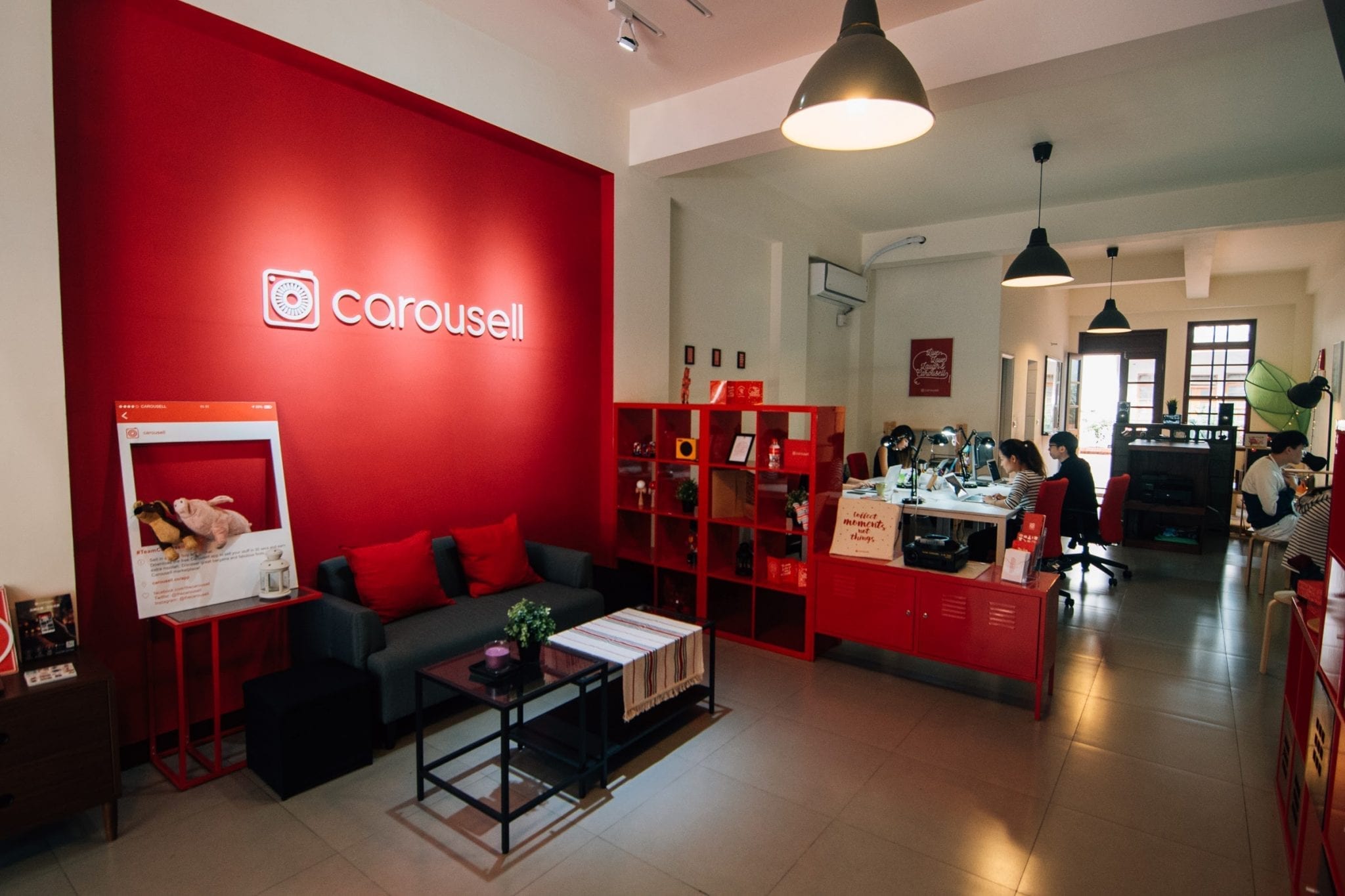
    Singapore-based mobile classifieds marketplace Carousell recently announced that it has acquired Duriana, a Malaysian-based mobile-first, fashion and lifestyle marketplace in Southeast Asia.

    It was the company’s third acquisition in less than six months, which is expected to boost its ambition to become a leading global mobile classifieds marketplace.

    Basically, Carousell offers a mobile marketplace for vendors to sell stuff – mostly used or ‘preloved’ items – using only an iPhone or an Android phone. It offers fast onboarding – its claim is 30 seconds to list an item for sale – and one can share the link on Facebook, Twitter, and Instagram.

    This aspect of social selling is bundled with a trusted user feedback that makes it easy for vendors to engage with customers. As simple as the concept sounds, it is fast catching on. ‘Snap to sell’ and ‘chat to buy’ resonates with a young and digital-savvy target market.

    Siu Rui Quek, CEO & Co-founder of Carousell, told in an email interview that the basis of the idea was that selling should be as simple as taking a photo, and buying as easy as chatting.

    “We felt that this was important, as we noticed more people like us using the smartphone as the main device to access the internet,” he said. “We aim to be more than just a transactional platform because we believe that buying and selling preloved goods is a more responsible way to consumption and that every interaction on our marketplace can help to inspire others to become more thoughtful consumers,” he said.

    The marketplace also has a feature called “Carousell Groups” which allows users of similar interests and hobbies to connect and make friends. “We have a vibrant community of Lego fans, Disney fans, sneakerheads, photography enthusiasts and many others,” he added.

    Launched in 2012 in Singapore, Carousell has since spread to 19 cities around the wold, including recent launches in Hong Kong, the Philippines, and Australia. It is backed by leading international Venture Capitalists Sequoia India, Rakuten Ventures, 500 Startups, Golden Gate Ventures, and QuestVC.

    Since its launch in Malaysia in 2014 and the Philippines in 2016, the classifieds marketplace has been growing rapidly in both countries. Carousell claims almost two million items sold in the fourth quarter of 2016, almost doubling within a quarter.

    Duriana, on the other hand, was founded in 2013 and has raised funding from investors like Alps Ventures and BEENOS.

    “It’s been an exciting three years with Duriana, and we’re proud to have brought the company to this stage,” said Saeed Gouda, Co-founder and CEO of Duriana. “We’re confident that Duriana users will enjoy buying, selling and connecting as part of the vibrant Carousell community.”

    The acquisition of Duriana is part of Carousell’s international expansion strategy, according to Quek.

    “Mobile classifieds operate best with a large community of buyers and sellers on one platform,” he said. “In Southeast Asia, where more people are experiencing the internet for the first time through their smartphones, we have the opportunity to reimagine the way they buy and sell online. There are over 600 million people, but almost 400 million are not connected to the internet yet. That’s a lot of potential. We’re reaching out to a generation of internet users who leapfrogged the desktop internet, creating an environment where we can take a mobile-first approach to solving unique local problems.”

    From startup to global player

    “If you’ve ever bought or sold something on a forum or classifieds website, you’ll remember how difficult and frustrating it could be to list an item or find something you wanted these sites on those forums. You often needed a pretty good idea of how the forums or online stores worked, as they were built for different purposes and not as a marketplace,” Rui explained.

    Thus, in March 2012, Quek and co-founders Marcus Tan and Lucas Ngoo participated in a Startup Startup Weekend Singapore and built the first Carousell prototype in 54 hours to solve this problem. They demonstrated the prototype and won the competition.

    “The basis of the idea was that selling should be as simple as taking a photo, and buying as easy as chatting. We felt that this was important, as we noticed more people like us using the smartphone as the main device to access the internet,” he said.

    The trio started working on Carousell full-time, and the first version was launched in the Singapore iTunes App Store in August 2012.

    Today, Carousell expects mobile commerce to be a significant contributor to the exponential growth in the region, as the web and mobile infrastructure improve, and as smartphones become more affordable and accessible.

    Retail e-commerce is poised to reach $4 trillion by 2020  globally, according to a report from eMarketer. APAC is expected to take a sizeable chunk of that pie in 2020 with US$2.7trillion, and Southeast Asia is poised to become one of the world’s fastest-growing regions for e-commerce revenues, exceeding $25 billion by 2020.

    “Across this region, governments are also making a greater push for companies and entrepreneurs to adopt new technology to keep up with consumer trends and demands. For example in Malaysia, the government has announced that 2017 will be the “Year of the Internet Economy”. The digital economy is already contributing 16% to the country’s GDP, and this figure will only go up,” he added.

    Global push

    By acquiring Duriana, which is a mobile-first, peer-to-peer, fashion and lifestyle marketplace in the region, the company expects to bring its users 600,000 users in Malaysia and the Philippines onto the Carousell platform.

    “We saw that Duriana users had similar demographics and interests in buying and selling fashion items, gadgets, and electronics as well as home furnishing,” Quek shared.

    With the speed with which it has expanded in the region in the last five years, the company also sees a global opportunity.

    “The problem we are solving is a global one, and we have a once in a lifetime opportunity to be the world’s largest classifieds marketplace because of the mobile phenomenon,” Quek said. “By 2020, more than six billion people around the world are expected to own mobile phones.”

  • Mobile app usage growth shows signs of slowing

    Mobile app usage growth shows signs of slowing

    The mobile apps industry managed to achieve growth throughout last year, but signs suggest that usage growth is slowing down, according to Yahoo unit Flurry.

    Over the last year, the Flurry footprint grew to track more than 940,000 applications, across 2.1 billion devices, in 3.2 trillion sessions. In this context, app usage is defined as a user opening an app and recording what Flurry calls a “session”, as well as the amount of time spent in the application.

    Compared to the year prior, overall app usage grew by 11% and time-spent in apps grew by 69%. In previous years, all app categories had grown in tandem. However, this year the story is different.

    Mobile apps started eating their own, with session and time-spent growth in some app categories occurring at the expense of others. While Messaging and Social applications drove year-over-year session grow at 44%, the Personalization category gave up a staggering 46% in session usage. This steep decline in usage can be attributed to diminishing value for users of these products.

    In 2016, time spent in Social and Messaging apps grew by a strong 394% over the previous year, proving to be the driver that helped mobile achieve its year-over-year time-spent growth of 69%.

    This is a result of consumers using their social and messaging apps as their voice and video calling utilities, as well as the phenomenon Flurry calls Communitainment. With news and magazines sessions down 5% and Music, Media and Entertainment up only 1%, it’s safe to say that Social has absorbed the media industry.

    Business and Finance (up 43% in time-spent) and Sports (up 25% in time-spent) categories were immune to growth decay because they are intrinsically centered around mobile activities and rely on real time data.

    Gaming, the app category formerly known as “the darling of the mobile industry” saw time-spent decline by 4% year-over-year. Users are increasingly comfortable paying their way through games, with the mobile gaming industry seeing a strong increase in revenues according to Apple’s latest App Store report. Additionally, gaming remains a hit-driven industry.

    This year’s first “hit”, Pokémon Go, faded relatively fast, as consumers lost interest in the game, only returning for marquee holiday events. Another notable hit, Super Mario Run, was released too late in the year to make a difference for the overall engagement numbers.

  • HACTL Achieves 1,6% Tonnage Cargo Growth in 2016

    HACTL Achieves 1,6% Tonnage Cargo Growth in 2016

    Hong Kong Air Cargo Terminals handled a total of 1,653,938 tonnes of cargo in 2016, an increase of 1.6% compared to 2015. “From a disappointing start, 2016 shaped up to be a very satisfactory year for Hactl and its airline customers,” said Mark Whitehead, chief executive of Hactl.

    “The best results showed in the second half, and are hopefully indicative of a more settled picture for global air cargo that will continue into 2017. Particularly gratifying is the continuing growth of our ramp-handling business. We ascribe this both to the attraction of Hactl’s unique ability to provide combined terminal and ramp handling in Hong Kong, and to our recent investment in streamlining through the use of mobile computing; this has enhanced productivity and service standards.”

    According to Hactl, transhipments performed most strongly, having grown 29.6% year-on-year. Mail, courier and express traffic grew 8.4% and exports grew 2.1%. Imports declined 8.3%.

    Self Photos / Files - Hactl [2]

    The company’s SuperTerminal 1 set a new weekly record when it handled 41,926 tonnes of cargo from November 28 to December 4, 2016. The ramp-handling business also set new all-time daily, weekly and monthly records.

    Hactl handled 101 freighters on November 23, breaking the previous record of 98 which was set 19 days earlier. From November 28 to December 4, the company handled 628 freighters, beating the previous week’s record of 609. Hactl handled 2,579 freighters in November 2016. The previous record of 2,242 was set in November 2015.

    SuperTerminal 1 is the largest cargo facility at Hong Kong International Airport and is capable of handling 3.5 million tonnes per year.

  • Easyship Fuels Its Growth By Expanding Into Singapore

    Easyship Fuels Its Growth By Expanding Into Singapore

    Easyship is a tech company that helps eCommerce businesses saving time and money on worldwide shipping. After a rapid growth in Hong Kong, it is now expanding its operations to Southeast Asia with Singapore as its first location. With Singapore being a major logistics hub for Southeast Asia, the company hopes to take advantage of its infrastructure and networks to aid its expansion plans in the region.

    Since launching in 2015, the company has experienced exponential growth, becoming the first choice for businesses that want to expand their sales worldwide. Easyship powerful API, allows eCommerce merchants and marketplaces to integrate a seamless shipping gateway to their shipping cart, allowing them to expand their sales worldwide seamlessly. For each order, Easyship compares all shipping couriers, and gives visibility to the buyer on delivery time, shipping cost, and taxes.

    Easyship integrates with more than 80 different shipping services including those from leading couriers such as DHL, FedEx and UPS, at prices discounted up to 70% compared to retail. This helps buyers to choose the best available option for a particular destination based on item specifications (type, weight and dimension) and provides visibility on delivery time, cost, reliability, and tracking. Easyship guarantees taxes & duties for shipments worldwide based on the type of item and its customs value – making sure that eCommerce sellers never experience unexpected costs or delays with international shipping.

    Since launching, Easyship has helped its clients to save up to $5,000 USD per month on shipping fees. It is completely free – customers pay only for their shipments and the platform generates all the necessary paperwork automatically.

  • Flappy Bird creator lends a wing to Vietnamese startups

    Flappy Bird creator lends a wing to Vietnamese startups

    ‘Just propose those projects to me, no matter how bad it is,’ Nguyen Ha Dong writes on Facebook. The overnight success of mobile game Flappy Bird has turned its creator Nguyen Ha Dong into a star of the local startup scene.

    The game, hailed by the industry as one of the milestones of Vietnam’s startup history, has brought Dong great fame and fortune, all within a short period of time.

    Now Dong is making a pledge to pay it forward and fund Vietnamese startups in the fields of robotics, artificial intelligence, social services, community development and education.

    “Just propose those projects to me, no matter how bad it is,” he wrote on his Facebook page.

    He did not give specific details about mentoring and funding.

    Flappy Bird was released in May 2013 with little fanfare. By February 2014, the sleeper hit topped the charts in more than 100 countries and had been downloaded more than 50 million times. Dong reportedly earned an estimated $50,000 a day.

    The Vietnamese government has seen successes like Flappy Bird as an encouraging sign. It is trying hard to cultivate a startup scene where tech entrepreneurs can create products and services that will go global.

    Unlike the well-developed startup ecosystem in most other countries, where there are venture capitalists and a strong network of entrepreneurs working together, the system in Vietnam is at a fledgling stage, with many funding difficulties.

  • Alcatel-Lucent Enterprise restructures for growth

    Alcatel-Lucent Enterprise restructures for growth

    Alcatel-Lucent Enterprise is forming four regional sales organizations to better serve its partners, customers and their markets.

    Each of the four regions will have its own dedicated sales staff supporting its defined industry-specific sales strategy, cloud sales strategy and channel strategy, with a complementary sales enablement and services delivery.

    With the restructuring the vendor aims to place a focus on specific market segments for growth and accelerate the shift to new business models.

    Expanded teams will focus on cloud-based services and offers to deliver innovative technology and business models that simplify IT and enable new digital business environments.

    Regional strategy better serves customers and channel partners with focus on local trends, according to the company.

    Matthieu Destot will head up the APAC region until a new leader is announced. He will be leading the formation of the new go-to-market strategy for APAC (including the former APAC and Greater China regions).

    Amit Raj Bathla will continue to lead the combined APAC Marketing team. He will report to James Taylor, Global Head of Marketing.

    These appointments are effective January 1, 2017.

  • Hyundai, Kia aim to grow 2017 sales to 8.25 million vehicles globally

    Hyundai, Kia aim to grow 2017 sales to 8.25 million vehicles globally

    Hyundai Motor and affiliate Kia Motors said on Monday they aim to increase their combined sales to 8.25 million vehicles globally in 2017, despite rising competition.The 2017 target is slightly higher than their 2016 goal of 8.13 million vehicles. The South Korean automakers’ final sales figures for 2016 are due out later on Monday, with analysts expecting a miss due to weak demand in emerging markets.

    “The 2017 goal is slightly higher than my projection,” said Ko Tae-bong, an auto analyst at Hi Investment & Securities, adding that the performance of new models would be the key to success after some disappointments in recent years.

    With emerging markets such as Russia stabilizing, and with Hyundai and Kia Motors gearing up to boost vehicle supply to the United States and China, sales could get a lift this year.

    But Hyundai Motor and Kia Motors – which together rank fifth in global sales – plan to add capacity in China and Mexico this year, just as those markets and the United States are seen slowing, likely pressuring margins.

    “With the global economy continuing its low growth, trade protectionism spreading and competition intensifying in the automobile industry, uncertainty is growing more than ever,” Hyundai Motor Group Chairman Chung Mong-koo said in his New Year message to employees.

    Hyundai Motor likely clocked its fourth straight annual profit decline last year, hurt by its higher exposure to weak emerging markets, and a product line-up that features more sedans than sport utility vehicles, just as SUVs have become more popular across many global markets.

    Hyundai Motor is targeting 2017 global sales of 5.08 million vehicles, while Kia Motors set its goal at 3.17 million vehicles.
    Kia Motors Vice Chairman Hank Lee told employees on Monday that the automaker hoped to revive growth this year, after falling short of its 2016 sales target.

    Hyundai Motor shares were flat in a wider market .KS11 that was down 0.4 percent in early morning trade, while Kia Motors shares were down 0.3 percent

    Hyundai Motor shares fell for a third straight year in 2016, down 2 percent versus the wider market’s 3 percent gain. Kia Motors shares slumped 25 percent last year, making them the worst-performing stock among major car makers in the world.