Tag: hanoi

  • Online market places for neighborhoods in Hanoi become popular

    Online market places for neighborhoods in Hanoi become popular

    With shops closed and delivery services facing restrictions due to the Covid-19 outbreak in Hanoi, apartment dwellers have stepped infill the supply gap by selling online.

    Thu, a clerk at a media company, who is working from home amid the social distancing, said: “I orders goods online for home delivery and pay through bank transfer. The goods are hung on my apartment door.”

    The online market, which serves Thu’s apartment block and others nearby, has over 2,000 members who buy and sell items like fish sauce, salt, cooking oil, rice, vegetables, fruits, meat, eggs, and processed foodstuffs, she said.

    Prices are slightly higher than at traditional markets, but people like Thu accept that because “we don’t have to go outside, minimizing contact and the risk of contracting the disease.”

    In the beginning many sold goods online for a little bit of extra income and even just for fun, but later, when their jobs were severely affected by the pandemic, it became their main source of income.

    “I order fresh pork from my hometown in the countryside, pack and deliver the meat to people in my residential area,” she said.Thai, a kindergarten teacher in Hanoi’s Ha Dong District, started selling foodstuff on an online market for residents of her apartment block when her kindergarten closed down.

    “Within 30 minutes of advertising pork online I often get orders for 50 kilograms.”

    Quang, an administrator of an online market of an apartment block in Cau Giay District, said the market sells essential goods with clear regulations on product quality and non-cash payment, and so has recently become busier, especially amid the Covid outbreak.

    Hanoi has gone over a month under a citywide social distancing order starting July 24, the longest such period since the novel coronavirus first appeared in the country. It has extended its social distancing order until September 6 as the novel coronavirus threat persists.

    The capital has recorded 2,909 local Covid-19 cases since the fourth coronavirus wave hit the country late April.

  • Hanoi supermarkets limit customer numbers

    Hanoi supermarkets limit customer numbers

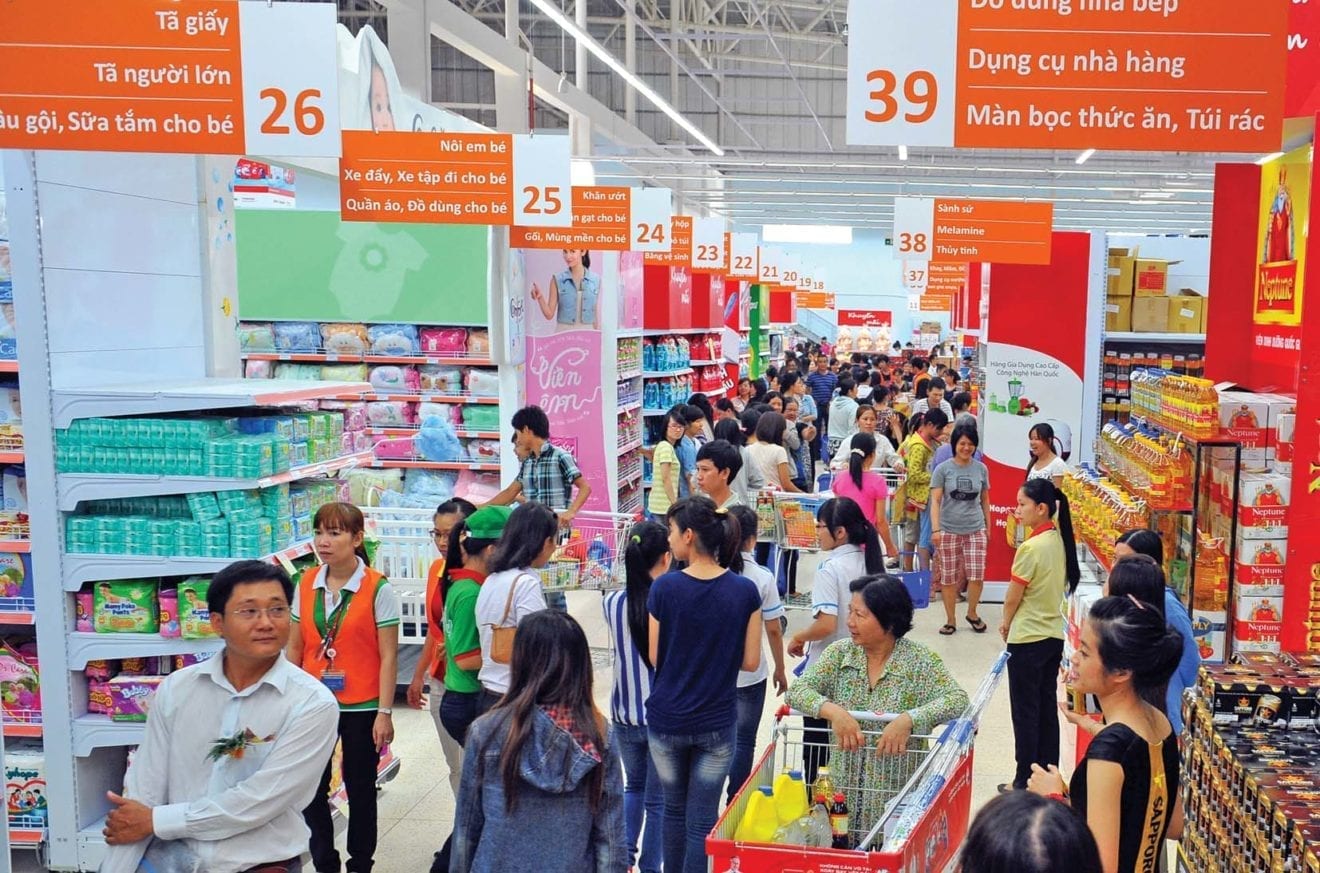
    Many supermarkets in Hanoi are starting to impose social distancing, limiting the number of customers and the volume of foodstuffs they buy.

    BigC Thang Long Supermarket stipulated that each customer is allowed to buy a maximum three-egg blisters a day, while the respective rate at MM Mega Market is five egg blisters.

    Aeon Mall Ha Dong announced each shopper could buy 30 chicken eggs each time. Its egg price currently stands at VND3,000 ($0.13) per egg, up VND300-400 against a week earlier.

    In supermarkets across Hanoi, most essential groceries like fresh vegetables and fruits are abundant. Only poultry eggs are insufficient from time to time, so many supermarkets have limited the number of eggs customers may buy.

    A shopper named Le in Cau Giay District said: “After going to the third supermarket, I managed to buy two egg blisters. It is very hard to buy eggs this time,” he said.

    Go!Market Supermarket in Thanh Xuan District announced it had limited the number of people entering its premises at once. Shoppers are required to make health declarations online or via QR code scans, have temperature checks, sanitize their hands, receive coupons, and queue for entry. Every 10 minutes, supermarket staff would guide a group of customers to enter it.

    Supermarkets in Hanoi were taking stricter measures to prevent and combat Covid-19, after some wholesales markets and supermarkets in the capital were closed down due to pandemic impacts.

    Since Hanoi imposed social distancing to fight Covid-19, Thanh, a resident of Tan Trieu Commune, Thanh Tri District, Hanoi has visited the local market or a nearby supermarket once a week. Earlier, she went shopping every other day.

    On Sunday, her residential area gave each household a coupon for shopping at the local market or nearby supermarkets thrice a week at fixed time frames of 8 a.m. to 2 p.m. and 3 p.m. till 9 p.m.

    Many other districts of Hanoi have distributed coupons to families so they could buy essential goods at markets, supermarkets and convenience stores on odd or even days at fixed time frames.

    Hanoi has recorded 1,457 Covid-19 cases in the ongoing wave. The city is on its 10th day of a 15-day strict social distancing campaign.

  • Japanese retailer Muji opens first store in Hanoi

    Japanese retailer Muji opens first store in Hanoi

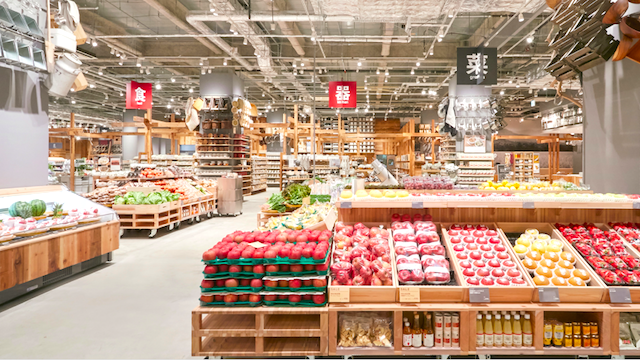
    Japanese chain retailer Muji opened its first store in Hanoi on Saturday after opening one in HCMC last November. The store, which spans 2,000 square meters at Vincom Center Metropolis on Lieu Giai Street, is the second to be opened in Vietnam.

    The flagship store in Hanoi provides around 5,000 products, ranging from fashion, cosmetics to household items, interior design and food.

    Tetsuya Nagaiwa, Muji’s head of Vietnam business, said the chain spent two years searching for a suitable location for the Hanoi store, a much longer process compared to its HCMC endeavor.

    The southern metropolis’s downtown District 1 is a no-brainer when it comes to choosing a location for a store. But Hanoi has multiple locations with different capacities for attracting customers, Tetsuya explained.

    Vincom Center Metropolis was eventually chosen since it is in an area with a big Japanese population and is wide enough to host a large store.

    Tetsuya said Muji’s current strategy is to take hold of Hanoi and HCMC, both major cities, to boost brand recognition. Afterward, depending on factors like economic development and population, Muji would consider opening more stores in other cities.

    Vietnam is among the world’s most promising retailer markets right now, Tetsuya said, adding the country has attracted a large number of investors thanks to its ever-growing economy and a young population with a middle-class income.

    Certain Muji products sold in Vietnam would be cheaper than other markets’ as they are produced by domestic manufacturers, he said, without revealing exact information regarding the domestic factories.

    Muji, founded in 1980, has over 1,000 stores in 33 countries and territories.

  • Vingroup sets up drug company

    Vingroup sets up drug company

    Vietnam’s largest private company, Vingroup, has established pharmaceutical company Vinbiocare with a charter capital of VND200 billion ($8.6 million).

    Its focus will be on medicine, vaccines.

    Vingroup owns 69 percent of Vinbiocare Biotechnology JSC, its formal name, which is headquartered in Hanoi, while Phan Quoc Viet, CEO of tech firm Viet A Technology Corporation, owns 30 percent. The remaining 1 percent is held by an individual investor, Phan Thu Huong.

    Mai Phuong Noi, deputy CEO of Vingroup, is its chairwoman.

    Vingroup entered the pharmaceutical industry in 2018 by establishing Vinfa JSC and setting up a plant in Gia Binh District in the northern Bac Ninh Province.

  • Hanoi metro tickets to cost $0.35-0.65

    Hanoi metro tickets to cost $0.35-0.65

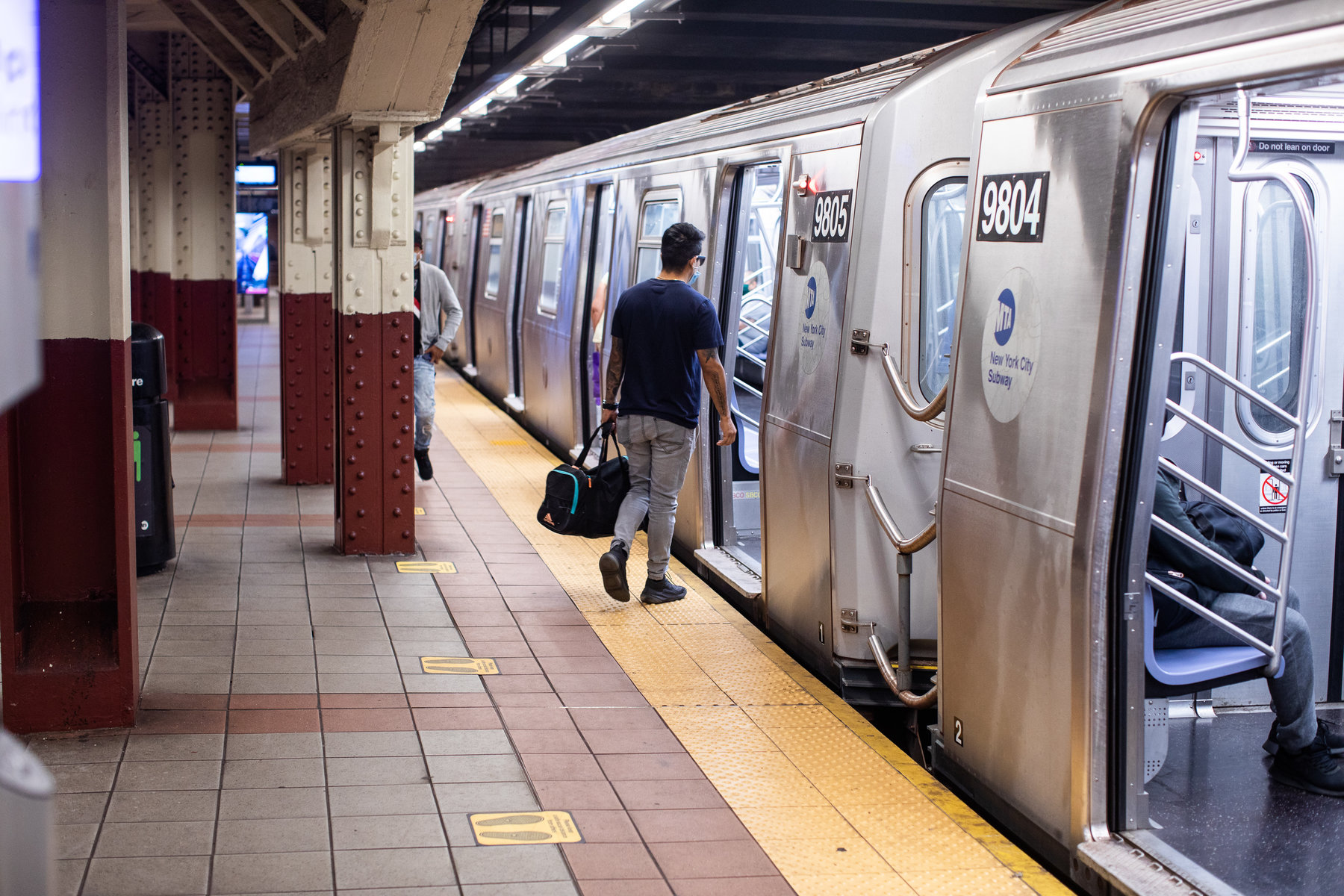
    Fares on Hanoi’s first metro will range from VND8,000-15,000 ($0.35-0.65).

    City authorities have also decided that a day pass on the Cat Linh – Ha Dong metro line for unlimited trips will cost VND30,000.

    A monthly pass will cost VND200,000 and half that for students and workers at industrial parks.

    For businesses buying the monthly pass for its employees, the rate will be VND140,000.

    Travel will be free for seniors, children under six, people with disabilities, and people designated by the government as poor.

    Fares are subsidized to boost the use of public transport, city authorities said.

    People using non-cash payment methods will get a discount of VND500 per trip.

    Travel will be free for the first 15 days after the metro begins operation, though the start date has not been announced yet.

    The full trip from Cat Linh to the south-western district of Ha Dong through 12 stations will take 25 minutes.

    A train can carry 960 passengers.

    Trains will run from 5 a.m. to 11 p.m every day.

  • Hanoi Stock Exchange earns record profit in 2020

    Hanoi Stock Exchange earns record profit in 2020

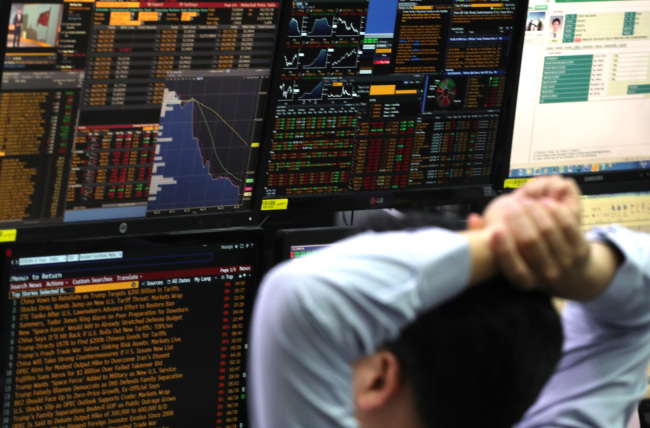
    The Hanoi Stock Exchange (HNX) posted VND399 billion ($17.3 million) in 2020 post-tax profit, a year-on-year increase of 28 percent.

    Its revenue rose 32 percent year-on-year to VND733 billion, 87 percent of which was from transaction charges.

    The exchange attributes its highest-ever revenue and post-tax profit earnings to the rise in corporate bonds issuance.

    According to HNX data, 2,408 corporate bond issues were registered last year, 92.5 percent of them successful. The value of bonds successfully issued by corporates in 2020 jumped 36 percent year-on-year to VND403.4 trillion.

    The exchange’s total assets were valued at VND1.35 trillion at end of 2020, up 6 percent year-on-year.

  • Hanoi Beer producer profits to slump to 10-year low

    Hanoi Beer producer profits to slump to 10-year low

    The producer of Hanoi Beer expects sales to be badly hit by the Covid-19 pandemic this year and profits to fall to a 10-year low as a result.

    The Hanoi Beer Alcohol and Beverage Jsc forecast post-tax profits of VND255 billion ($11 million), down 59 percent from 2020.

    Habeco said in a report that tourism companies, hotels, and restaurants continue to suffer due to Covid-19, and this would directly cause a decrease in consumption of alcoholic beverages.

    Another difficulty it cited was the rising competition with many brewers introducing new products in the popular market segment in which Habeco mainly operates.

    But it said it would strive to maintain its position as one of the biggest brewers in the northern and central regions.

  • Hanoi to take over metro operation in May

    Hanoi to take over metro operation in May

    Hanoi’s first metro line Cat Linh – Ha Dong is set to be handed over to city authorities in May for commercial operation.

    The company that built it, China Railway Sixth Group Co Ltd., on Wednesday began the process of handing over the Cat Linh – Ha Dong Metro Line to local authorities.

    The handover will take three to four weeks.

    Deputy Transport Minister Nguyen Ngoc Dong told reporters Wednesday that since January, Hanoi authorities have been working to finish the last details of the project, like setting up signs for disabled passengers, installing a device to prevent the conductor from falling asleep and adding more staff at each station to supervise and assist passengers embark and disembark.

    Each train on the route will be capable of carrying 960 passengers. A one-way trip will take 23 minutes, including a 30-second stop at each station.

    There will be a train every 10-15 minutes in the initial period, with higher frequency during rush hours.

    The Cat Linh – Ha Dong Metro Section is set to be the first such project to operate in Vietnam. It runs 13 kilometers on elevated tracks through 12 stations from downtown Dong Da District to Yen Nghia in Ha Dong District in the southwestern part of the city.

    The project has been delayed for years and missed several commercial operation deadlines with the Ministry of Transport blaming the Chinese contractor for its inexperience.

    Last year, its safety evaluation was delayed several times because the Chinese and French experts who had returned home late January and were unable to return to Vietnam since international flights were grounded due to the Covid-19 pandemic.

    The section, one of eight lines planned in the city of 8.3 million, is expected to partly resolve chronic traffic congestion and motivate more residents to use public transportation.

  • Bamboo Airways secures flight slots in London

    Bamboo Airways secures flight slots in London

    Bamboo Airways has got a slot allocated at London’s Heathrow Airport to fly six times a week from Hanoi and HCMC starting in May.

    The flights would be operated using the airline’s long-haul Boeing 787-9 Dreamliner aircraft.

    The carrier had stated its intention to fly to the British capital and Frankfurt in Germany in the first quarter of 2021, but was delayed due to the closure of Vietnamese borders to keep out Covid-19.

    It has announced plans to make an initial public offering this year and raise VND6.3 trillion ($2.73 million).

  • Bright prospects seen for Vietnam property market

    Bright prospects seen for Vietnam property market

    Economic stability, positive investor sentiment, strong demand, and a diverse range of products are keeping the property market robust. The assumption that Covid-19 would cause the market to slump has proven baseless, and market research aftermarket research shows property prices increasing across the board.

    Vietnam’s bright economic prospects and strategies adopted by many major property developers also contribute to the market’s strength.

    According to the World Economic Outlook Report, a survey by the International Monetary Fund (IMF), in 2020 Vietnam’s economy grew at 2.4 percent, one of the four highest rates in the world. Its effective anti-epidemic strategy and economic growth are expected to be highlights this year too. Fitch Ratings forecast Vietnam’s GDP to grow at 7.5 percent even of there is a new outbreak.

    “Vietnam has well-controlled the pandemic, so we think the economy will recover when domestic demand bounces back,” Sagarika Chandra, head of Vietnam analysis at Fitch Ratings, said.

    Nguyen Xuan Thanh, a Fulbright University lecturer and member of the prime minister’s Economic Advisory Group, said the positive investor sentiment despite the Covid-19 crisis is driven by the stable economy and sound financial system.

    The belief that everyone would surely get vaccinated this year further strengthens investor sentiment, he said.

    “Stocks and real estate are still good investments.”

    The market has seen a geographic shift from areas such as HCMC. If in the past the most important southern market was Saigon, it is now its satellites such as Binh Duong, Dong Nai and Long An provinces and others with tourism potential such as Binh Thuan, Ba Ria – Vung Tau and Khanh Hoa.

    Bui Nguyen Huyen Trang, senior director for Vietnam at JLL, stressed the importance of property developers in construction and urban planning.

    “They must carefully study urban planning to create sustainable value for their large-scale projects.”

    During Covid-19 times, businesses with strong foundation, offering a wide range of products towards demand for home ownership would have more opportunities to succeed.

    The eastern part of Ho Chi Minh City is forecast to be a property hotspot, when Thu Duc City has been officially established, pushing housing prices in this area to record levels.

    With rapidly improving infrastructure that boosts regional connectivity, satellite towns and tourist cities in Binh Duong, Dong Nai, Ba Ria – Vung Tau, and Binh Thuan are of immense interest to investors.

    Terence Alford, director of capital markets and investment services at Colliers Vietnam, said developers tend to search for alternative locations to HCMC to increase value.

    They also focus on creating living spaces to not only increase choices for customers but also contribute to improving the quality of life, setting new trends and offering new life experiences.

    Novaland, a property developer, has recently released its financial report. In 2020 the company achieved profit after tax of VND3.91 trillion, 7 percent higher than it targeted and up 15.3 percent from 2019.

    Total consolidated revenues from sales of units and projects and services were VND8.6 trillion. As of December 31, 2020, Novaland’s total assets were worth VND144.54 trillion, an increase of 60.6 percent from a year earlier.

    In 2020 Novaland disbursements were allocated for M&A activities and project development. The company continues to raise funding from reputed financial institutions at home and abroad despite Covid-19, showing the trust in which it is held by partners.

    Novaland introduced new products in the last few months of 2020. Despite pandemic impacts, resort real estate projects such as the NovaWorld Phan Thiet and NovaWorld Ho Tram still drew great attraction.

    Experts do not foresee the property market crashing this year despite an increase in price levels, but instead expect it to remain strong due to strong demand, economic growth and stability and businesses’ clever strategies.

    In a recent report titled ‘Ready for a new cycle from 2021,’ VNDirect Securities Company said Vietnam’s property market has a seven-year cycle.

    In 2021 it is getting ready to enter a cycle of high growth amid positive factors such as amendments to the 2020 Construction Law and 2020 Investment Law and a forecast of solid economic growth this year.

    “The development of infrastructure and lower mortgage interest rates will have a direct impact on the real estate market. The upward trend in prices will continue due to the growing demand for housing,” VNDirect added.

  • Covid-19 shadows as Hanoi real estate market recovers

    Covid-19 shadows as Hanoi real estate market recovers

    Most real estate classes in Hanoi showed recovery signs in Q4 2020, but Covid-19 uncertainties continue to loom over the market this year.

    The retail category saw total supply in the last quarter increasing 1 percent year-on-year to 1.6 million square meters with the launch of the 36,000-square-meter Vincom Mega Mall Ocean Park in the eastern part of the capital, according to a report released Tuesday by real estate consultancy Savills.

    However, average rents fell 3 percent year-on-year, while occupancy dropped 2 percent, showing that Covid-19 impacts remain on the market.

    “Footfall is slowly recovering but yet to return to pre-pandemic levels with impulse and extravagant spending limited to increase savings,” the report said.

    The office category saw supply rising 6 percent year-on-year and average rent up 3 percent with growth in demand from companies in services, information and communications technology and e-commerce.

    By next year, around 208,000 square meters from 15 projects will enter the office market. But as the Covid-19 pandemic has prompted companies to downsize and reduce operating costs, the downward trend in office space demand is set to continue, the report said.

    The apartment category saw sales rising 27 percent from the third quarter to 6,700 units, but the figure was 37 percent lower year-on-year.

    “Local demand remains steady, particularly for affordable units. Developers have started focusing on the suburbs and surrounding provinces,” the report said.

    Savills forecasts that average asking prices, which have increased 4 percent per annum over the last five years, is set to continue rising thanks to infrastructure upgrades, including two metro sections and ring roads.

    This year, around 25,000 units are set to enter the market, most of them Grade B. Fifty-seven percent of the new supply will be in the districts of South Tu Liem and North Tu Liem.

    The hotel category, which suffered the biggest Covid-19 damage as international arrivals plunged, saw occupancy recovering by 12 percentage points quarter-on-quarter to 33 percent, against 75 percent in the last quarter of 2019.

    Do Thu Hang, senior director of advisory services at Savills Hanoi, said many hotels downtown have been successful in attracting more domestic customers as the number of foreign tourists dropped.

    As Hanoi expects to receive 11-15 million domestic tourists this year, compared to 8 million last year, it is likely that hotels will continue to focus on the domestic segment as the resumption of regular international routes is uncertain, she added.

  • Hanoi buses keep losing passengers

    Hanoi buses keep losing passengers

    Hanoi single-trip ticket passengers reached 63.6 percent of its annual goal, dropping 36 percent year-on-year, while monthly tickets decreased by 34.3 percent compared to 2019.

    Hanoi Transportation Corporation (Transerco) total revenue in 2020 was VND2.5 trillion ($108 million), fell 17.5 percent year-on-year, said Nguyen Thanh Nam, CEO of Transerco, at the Transerco 2020 Review Conference held recently.

    Nam said the company is struggling due to market slump. In 2020, Hanoi bus had to cut 80 percent of the trips from March 22 and stop operating from April 1 to April 22. It had no income during the said period yet still had to pay for the operating cost and other expenses.

    The reasons were social-distancing and passengers being reluctant to take the bus during the pandemic, resulting in a fall in the number of passengers and single-trip ticket sales.

    The free bus passes policy for the elders also contributed to the single-trip ticket sales drop. Airport bus and city-tour bus without price support also had to cut trips as the number of passengers, mostly especially foreign tourists, dropped in 2020.

    Transerco revenue in 2021 and the next few years will hardly revive due to the Covid-19 pandemic, free bus passes policy for the elders, and traffic congestion, Nam said.

    Hanoi has set the goal of 20 percent of commuters using public transport in 2021 and 30-35 percent in 2025.

  • Hanoi suburbs see fast rise in housing prices

    Hanoi suburbs see fast rise in housing prices

    Housing prices are rising faster in Hanoi’s outer districts than in areas closer to downtown, thanks to improved connectivity.

    Average prices in districts like Gia Lam and Nam Tu Liem rose 1.3 percent in the last quarter to $1,473 per square meter, and at 0.7 percent in central districts, according to a recent report by real estate consultancy Jones Lang LaSalle (JLL).

    Prices at a newly launched apartment project in Gia Lam District bordering the provinces of Bac Ninh and Hung Yen climbed to a new high of $1,900 per square meter in the last quarter, it said.

    The improved transport infrastructure and the trend of developing large urban areas in suburban areas explain the increase, it added.

    Another real estate consultancy, Savills, said in November that apartment prices were rising in Hanoi’s suburbs as developers offered a number of features to make up for the distance from the city center.

    Gia Lam and Nam Tu Liem accounted for 38 percent and 37 percent of new apartment supply in the last quarter, with prices higher than those closer to downtown, it said.

    Apartment supply has been increasing in outer areas since 2016, it added.

  • Hanoi-HCMC world’s second busiest domestic air route

    Hanoi-HCMC world’s second busiest domestic air route

    The Hanoi-HCMC route is the world’s second-busiest in November after South Korea’s Jeju-Seoul, according to British aviation analysis company OAG.

    The flight route connecting Vietnam’s two largest cities, which takes around two hours, has nearly 893,000 seats scheduled for November, while the route between South Korean capital Seoul and Jeju Island has 1.3 million.

    The route between Chinese capital Beijing and Shanghai’s Hongqiao Airport is third with 768,184 seats, followed by the two routes in Japan –Sapporo-Tokyo Hanenda and Fukuoka-Tokyo Hanenda.

    Of the top 10 busiest domestic routes in November, China and Japan have four each.

    “International flights have felt the impact most acutely due to border controls and mandatory quarantine requirements, domestic routes are starting to recover as people are generally able to move more freely within their countries,” OAG said.

    Asia is a standout, home to all 10 of the world’s busiest domestic routes this month, the company added.

    Vietnam has reopened six international flights to mainland China, Japan, South Korea and Taiwan from September 15, followed by Laos, Cambodia from September 22. It had suspended all international routes in March to contain the Covid-19 outbreak in the country.

  • Hanoi short of premium office space

    Hanoi short of premium office space

    Companies in Hanoi are struggling to find Grade A office space in the downtown area because of limited supply.

    Major Grade A office buildings in the downtown district of Hoan Kiem are recording 95-100 percent absorption rates due to high demand in the capital city, according to a recent report by real estate consultancy Savills.

    These buildings include the BIDV Tower with an occupancy rate of 100 percent, ConerStone Building, 99 percent, Hanoi Towers, 97 percent and Pacific Place, 96 percent.

    The Covid-19 pandemic has not caused major impacts on office demand in the capital city, with the absorption rate in the third quarter falling just 1 percentage point to 90 percent, the report said.

    Demand for office from foreign direct investment companies is set to rise in the future, Savills expects. Hanoi posted the highest GDP growth in the country in the first nine months at 3.3 percent, said Le Tuan Binh, head of Hanoi commercial leasing at Savills.

    The real estate consultancy said it has received many requests for new office space in the city, especially from foreign companies with deep pockets that are expanding or establishing their factories in the country.

    Hanoi’s overall office supply rose 4 percent year-on-year to 1.9 million square meters in the third quarter, and Savills forecasts that addition of over 60,000 square meters will enter the market in the last quarter.