Tag: hanoi

  • Hanoi new apartment supply hits 5-year low

    Hanoi new apartment supply hits 5-year low

    Hanoi’s Q3 new apartment supply fell 60 percent year-on-year to a five-year low of 3,100 units as Covid-19 hampered new launches. Of the new supply, only 700 units, or 23 percent, came from four new projects, while the rest were from nine existing ones, Do Thu Hang, director of advisory services at real estate consultancy firm Savills Hanoi, said at a press briefing Thursday.

    “Major developers have been delaying launching new units this year due to Covid-19 impacts,” Hang said.

    The supply shortage has caused prices to rise 10 percent year-on-year to $1,500 per square meter, Savills data shows.

    However, these factors have also caused sales to fall 44 percent year-on-year to 5,200 units, with Grade B and Grade C accounting for 99 percent, while the absorption rate dropped 12 percentage points year-on-year to 20 percent.

    In the best-case scenario, apartment sales in the capital city is estimated at 20,000 units this year, nearly half of last year, Hang said.

    In the last quarter, nearly 10,000 apartments, mostly Grade B, are set to enter the market from 12 projects.

    Whether there will be a surge in new supply in the last months of the year depends on Vietnam’s ability to contain the pandemic, said Nguyen Duc Them, project sales manager of Savills Hanoi.

  • 2nd airport proposed for Hanoi as air travel boom looms

    2nd airport proposed for Hanoi as air travel boom looms

    The Hanoi Department of Planning and Architecture has recommended the construction of a second airport in the city to cope with the rising demand for air travel. The new airport should be built in the southern district of Ung Hoa, 40 kilometers from the downtown, while the existing Noi Bai International Airport should be upgraded and have its capacity doubled to 100 million passengers a year, it said.

    Ung Hoa has several advantages such as good transport links with the city center since it is served by roads, rail, and waterway, and a large area of 1,300 hectares available for the airport, it explained.

    It could become a satellite town with an industrial zone and a logistics complex in the future, it said. Consultancy Transport Engineering Design Inc (TEDI) has said the number of air passengers could reach 150 million a year in the future, and a second airport should be built starting in 2035.

    The number of passengers and cargo passing through Noi Bai Airport has been growing by 10 percent a year reaching 29 million in 2019.

    Its designed capacity is for 25 million passengers. Vietnam generally saw demand for air travel rise before the Covid-19 outbreak, with its airports handling 116 million passengers last year, up 12 percent from 2018, according to the Airports Corporation of Vietnam (ACV).

  • 60,000 file for unemployment benefits in Hanoi

    60,000 file for unemployment benefits in Hanoi

    The number of applications for unemployment benefits in Hanoi as of September 10 has risen 22 percent year-on-year to nearly 60,000 as a fallout of the coronavirus pandemic.

    Last month the Hanoi Center for Employment Services (HCES) received 9,000 applications, down from the monthly peak of 10,000 in June, Vu Quang Thanh, deputy director of the center, said Monday.

    Half the applicants said they were affected by the impacts of Covid-19, he said. The second wave of the disease last month did not have as severe impact as in the second quarter because the government did not impose social distancing, he explained.

    With nearly 4,000 businesses resuming operations last month, the labor market is less affected, he added.

    Hundreds of people queued up for tokens at HCES in Cau Giay District on Monday, and of them, Hao was lucky to get one. The 34-year old mother is now looking forward to the VND2.8 million ($121) monthly support after losing her human resources job in April after nine years of service.

    Tai, a 28-year old man in the queue, said the VND2.5 million unemployment support would be a third of his family’s income after losing his lobby manager’s job at a downtown hotel in May.

    With a baby expected by the end of this month, he now works as a driver for a motorbike ride-hailing company.

    Thanh of HCES said that the number of applications would rise or fall in the remaining months of the year depending on the Covid-19 situation. If there is a surge in the number of cases, 90 percent of businesses would be affected, and monthly applications could double to 20,000, he added.

    In the first eight months, nearly 34,300 companies nationwide suspended business, up 70.8 percent year-on-year, according to the General Statistics Office.

  • Vietjet Commences First Ever Direct ServiceLinking Hanoi and Bali

    Vietjet Commences First Ever Direct ServiceLinking Hanoi and Bali

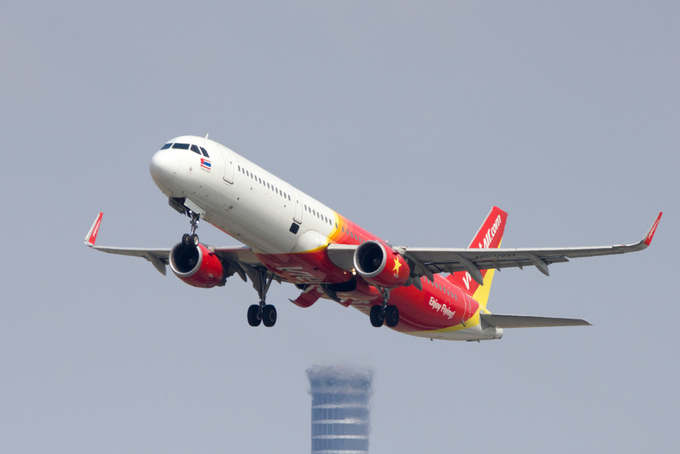
    In celebration of Lunar New Year 2020, new-age carrier Vietjetofficially commences its newest direct route linking Hanoi and Bali, Indonesia on the second day of Lunar New Year. This is Vietjet’s second service to the popular holiday destination, following the Ho Chi Minh City – Bali route that has been in operation from May 2019. It is also the first direct route departing from Vietnam’s capital city to Bali.

    Speaking at the opening ceremony, Chairwoman of Vietjet’s Board of Directors Nguyen Thanh Ha said, “Vietjet was founded with a pioneering mission to connect the skies. We are proud to be the first airline to operate direct flights between Hanoi and Bali. The new route, operated from the second day of the Lunar New Year, will meet the New Year’s travel demand of the locals and international travelers with less travel time and cost. Not only connecting the two most attractive cultural tourism destinations in Asia, the Hanoi – Bali route will also further promote cooperation between the countries in ASEAN.”

    The Hanoi – Bali route operates daily return flights from 26 January 2020. The flight departs from Hanoi at 10.00 am and arrives in Bali at 4.25 pm. The return flight takes off from Bali at 5.30 pm and lands in Hanoi at 9.55 pm. All are in local times.

    As Vietnam’s capital city, Hanoi offers an unforgettable vacation with its rich history. Founded more than one thousand years ago, tourists will be astonished by Hanoi’s architecture and colonial facades. Bali, one the most popular island destinations in Indonesia and all of Asia, is often called “The Island of the Gods” and often described as a tropical paradise. Voted as one of the best islands in the world, Bali is a destination of pristine, beautiful landscapes and unique cultural charms.

  • Hanoi-Saigon flight time climbs 5 mins a month

    Hanoi-Saigon flight time climbs 5 mins a month

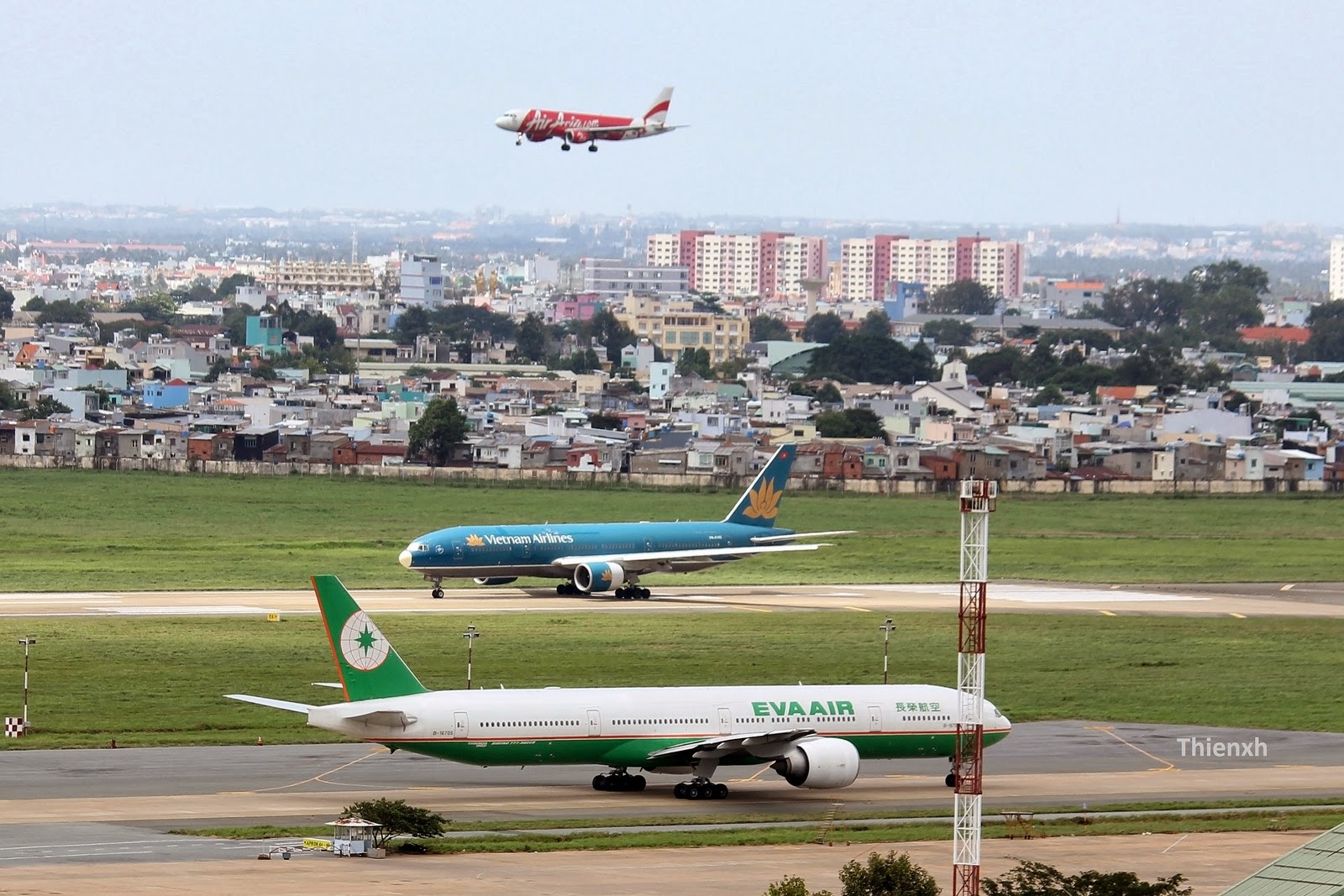
    Flying from Hanoi to Saigon takes five minutes more per month due to overload at Tan Son Nhat International Airport. Duong Tri Thana, Vietnam Airlines CEO, told a forum Wednesday continued delays at Tan Son Nhat could drag down flight quality and hamper economic growth.

    The route itself ranked as the sixth busiest domestic route in the world for 2019, up one spot from last year. Le Hong Ha, deputy general director of the flag carrier, said Tan Son Nhat has recorded low punctuality due to overload, with airlines forced to adjust flight times that cause take-off delays up to 15 minutes.

    Lai Xuan Thanh, chairman of the Airports Corporation of Vietnam, said this year, foreign airlines have struggled to find berths at Tan Son Nhat.

    The airport could only provide 2-3 percent more slots this year, meaning passenger growth is capped at 5 percent year-on-year, he added.

    However, the country is allowing the operation of new airlines despite the overload. Private carrier Bamboo Airways launched its first flights earlier this year, while three more airlines are awaiting licensing.

    Dinh Viet Thang, head of the Civil Aviation Authority of Vietnam (CAAV), said Vietnam still holds great aviation potential, with an estimated 150-180 million air passengers predicted by 2025.

    Only five airlines operate daily routes in Vietnam, with the figure in Thailand at 16, Indonesia at 12, the Philippines at 10 and Singapore at 6.

    Vietnam plans to upgrade existing and build new airports to accommodate surging travel demand, a third terminal proposed for Tan Son Nhat to up capacity by 20 million passengers a year. Tesla Plans Increasing Imported Model 3 Prices In China From January

  • Decathlon Vietnam opens it’s Very first Store

    Decathlon Vietnam opens it’s Very first Store

    Decathlon Vietnam has opened its first store, at Vincom Mega Mall Royal City in Hanoi. Located on level B1, the store spans 4300sqm, offering more than 14,000 items covering 70 sports for all levels of player.

    Prices meet the market for local customers, such as a VND63,000 (US$3) backpack, or a US$10 tennis racquet.

    Customers can also test products designed for activities like hiking, jogging or basketball at the store before making a purchase.

    “We want our customers to feel satisfied when choosing Decathlon,” said Manu Pirenne, Decathlon Vietnam’s Hanoi CEO.

    “We are willing to exchange to new products or refund if our customers are not satisfied, within six months. Decathlon also has an at least two-year warranty on all products.”

    The second store which spans 2600sqm will be opened in Ho Chi Minh City on May 25, at Aeon Tan Phu.

    Decathlon Vietnam launched as an online-only store, with several Collect Points located in Ho Chi Minh City and Hanoi.

    To cut the prices, the company has set up its factory in Thai Binh province, and partnered with more than 100 retailers and brands.

    Established in 1976, the France-based sports retailer now has 1513 stores in 53 countries.

    It opened the largest store in Singapore earlier this year.

  • Vietnam ride-hailing app FastGo to hit Singapore streets

    Vietnam ride-hailing app FastGo to hit Singapore streets

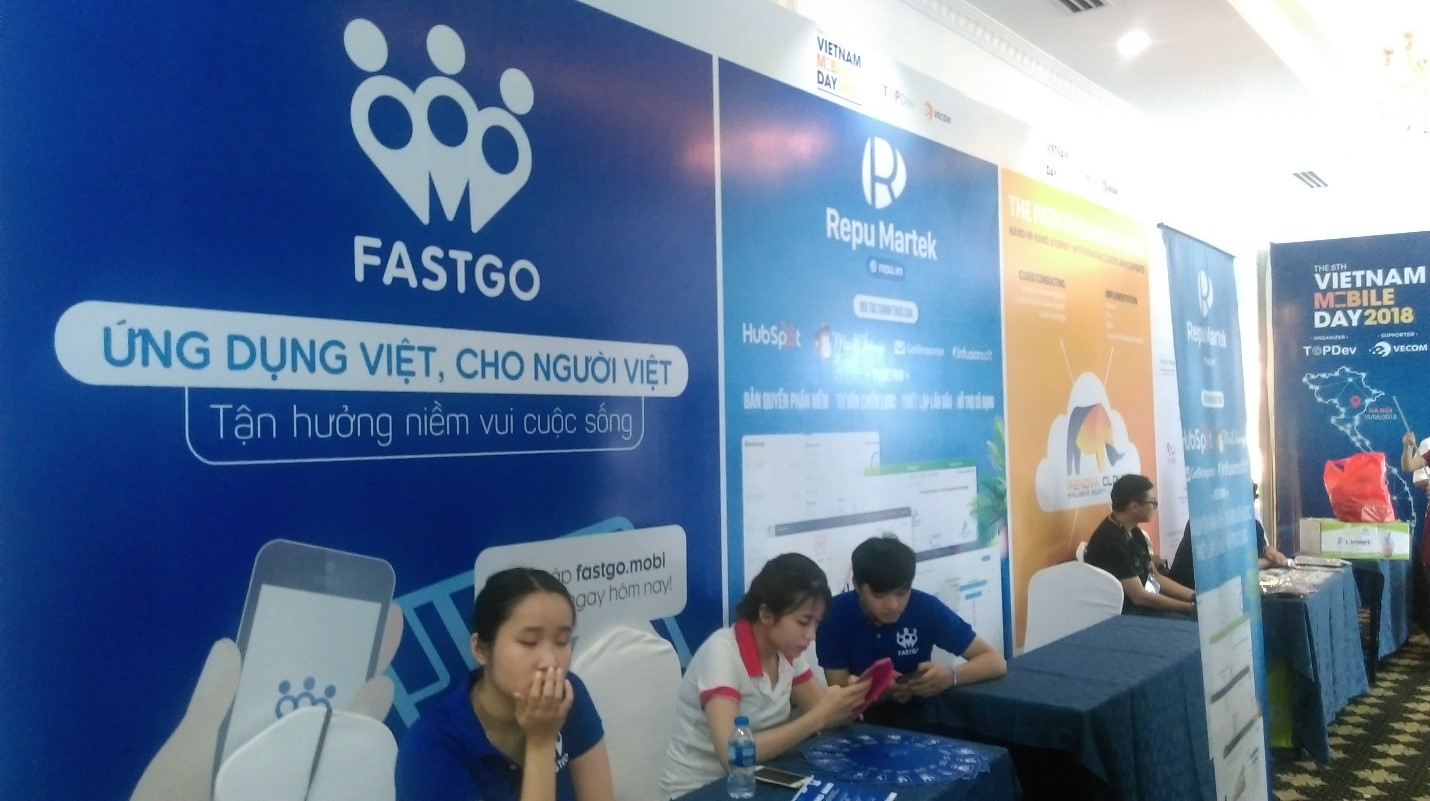
    Vietnamese ride-hailing firm FastGo is set to launch Singapore operations in April as part of its regional expansion plans. The nine-month old Vietnamese start-up has announced that drivers will be able to register on its ride hailing application from April 1, and customers can use the service from April 30. Diep Nguyen, country manager for FastGo Singapore, said the company’s fleet size will be at least 3,000 cars.

    Singapore is the third country in which FastGo will operate, after Vietnam and Myanmar. The firm is expected to face fierce competition from market incumbents including  Singapore’s Grab, Indonesia’s Go-Jek, as well as local startups Ryde and TADA.

    FastGo, which is part of Vietnamese technology startup NextTech Group, has plans to launch in five other countries in the region, including Indonesia and the Philippines, by the end of 2019.

    While FastGo has not yet publicised fares, but the ride-hailing app will not charge peak period surcharges, and customers can tip drivers. FastGo aims to undercut competitors like Grab and Go-Jek, who collect 20 percent of ride fares from drivers, by charging them a fixed daily subscription fee of $5 if a driver’s income exceeds $30 a day.

    However, an associate professor at the Singapore University of Social Sciences, as saying “another small entrant” will not make a difference to the local ride-hailing market, unless the new player is financially backed by a strong sponsor or a well-known Singaporean firm.

    “Other than GoJek and Grab, the other (existing) players have very small market share and have difficulty making much impact locally. The market is easy to enter but it’s very hard to get a substantial market share,” he said.

    Founded in April 2018, FastGo Vietnam JSC launched its service after Uber’s exit from Southeast Asia last June. With almost 60,000 drivers onboard, the company claims to be the second most popular ride-hailing firm in Vietnam, following Grab. After receiving an undisclosed sum in a Series A investment from venture capital platform VinaCapital Ventures in August last year, FastGo is aiming to raise another $50 million in its Series B investment round over the next few months.

    According to the company’s statements, FastGo will diversify its services to include food delivery and financial services.

  • Hanoi to limit new motorbike registration from 2020

    Hanoi to limit new motorbike registration from 2020

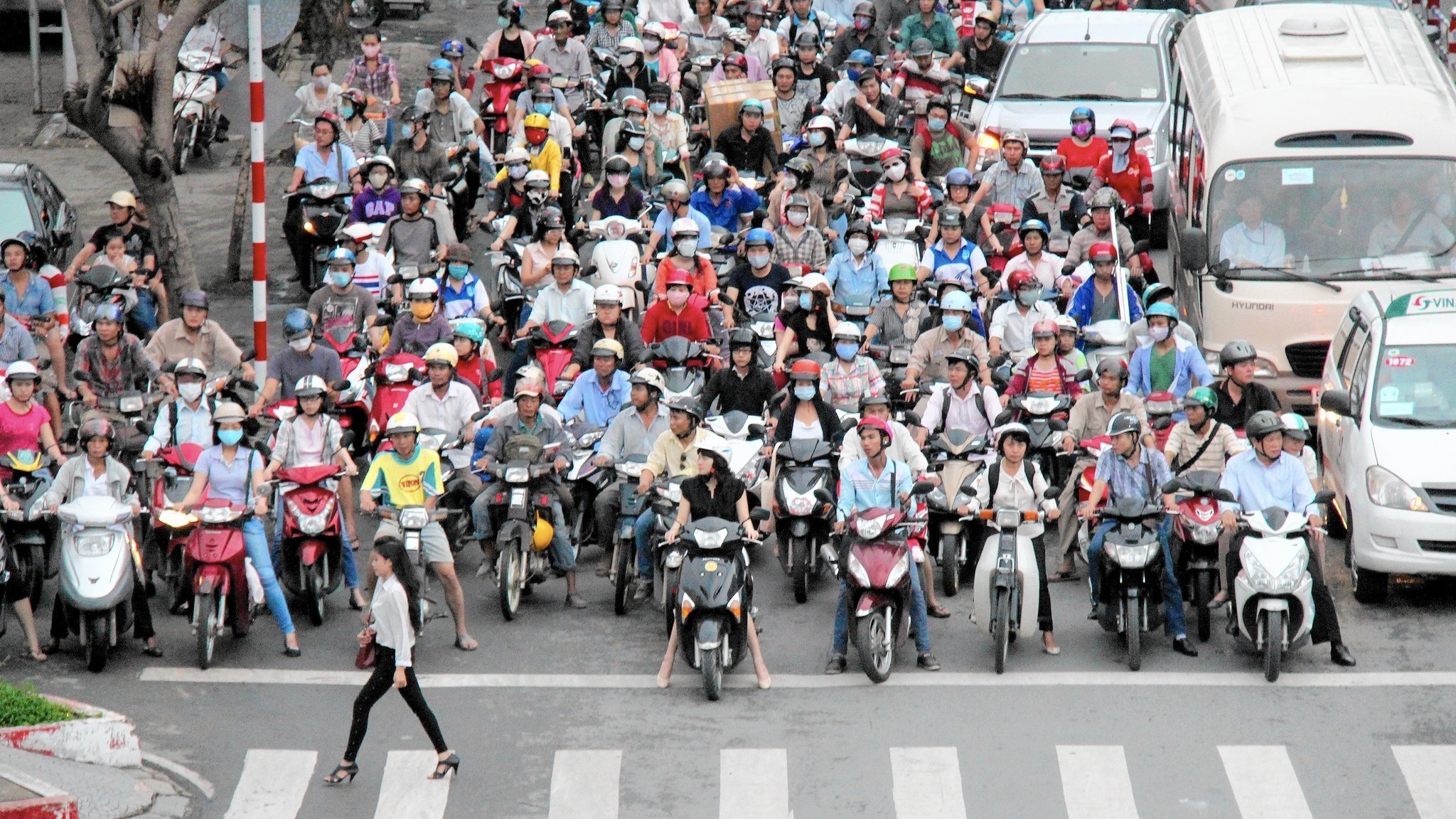
    Hanoi is considering limiting the registration of new motorbikes in the downtown area from next year to reduce traffic jams. It will start with the districts of Hoan Kiem, Hai Ba Trung, Ba Dinh, Dong Da, and Tay Ho, and will expand to the districts of Cau Giay, Hoang Mai, Long Bien, Thanh Xuan, Gia Lam, and Dong Anh in 2025.

    The city said that a motorbike ban during rush hour would be trialed on a stretch of Nguyen Trai Street in Thanh Xuan District this year or next year. The stretch runs about 2.2 kilometers from the Nguyen Trai – Third Ring Road intersection to the Nguyen Trai – Lang intersection. A similar ban will take effect on Xuan Thuy Street in Cau Giay District when the metro starts operating after 2020. Other roads the city is considering are Giai Phong, Nguyen Van Cu, Le Van Luong, Tran Duy Hung, and Nguyen Chi Thanh Streets.

    In 2021-2025 Hanoi plans to ban motorbikes on Friday nights and during weekends on six streets near Hoan Kiem Lake: Hang Dau, Tran Nhat Duat, Tran Quang Khai, Tran Hung Dao, Le Duan, and Phung Hung. In the 2026-2030 the city will limit motorbikes in the area enclosed by the first ring road, an area of 26 square kilometers with a population of 700,000.

    From 2030 it will ban motorbikes in most districts and has promised public transport will meet 70 percent of the public’s needs. There will be 180 bus routes with 2,700 buses, nine metro lines, 30,000 taxis, 30,000 contracted vehicles and 10,000 public bicycles available at that time, it has added.

    The city will offer to buy used motorbikes less than 10 years old, said the plan, which was issued at a recent meeting. Vu Van Vien, director of the city Department of Transport, said Hanoi has been dealing with traffic jams by limiting cars in some areas since 2013, and the city has recently restricted taxis and technology taxis (such as Grab) on certain streets.

    “Motorbikes are just one of the vehicles that will be restricted. Our plan limits and manages all vehicles. We do not want to cause trouble to residents and seek to discuss before implementing.”

    The city is still studying the proposal and would consult other authorities, and wherever the ban applies, public transport should be available to meet the public’s needs, he said, adding that the city will seek public opinion on the plan.

    In 2017 the city People’s Committee approved a plan to ban motorbikes in downtown districts by 2030 and restrict the use of all private vehicles in areas well served by public transport. The city said it polled 15,000 respondents in 30 districts at that time and 90 percent supported the ban.

    The city tried in 2003 to stop the registration of new motorbikes in the districts of Ba Dinh, Hoan Kiem, Dong Da, and Hai Ba Trung, and expanded it to Thanh Xuan, Tay Ho and Cau Giay in 2005. However, it later scrapped the ban since it was not effective.

    Hanoi’s plan to ban motorbike has met with opposition from transport experts, who said public transport is inadequate. The capital, with a population of 7.5 million, has 5.6 million motorbikes and around 550,000 cars, besides some 1.2 million bikes brought in from elsewhere, according to police figures.

  • Vietnam’ E-commerce revenue forecast to hit $15 bn in 2020

    Vietnam’ E-commerce revenue forecast to hit $15 bn in 2020

    With 53 per cent of its population using the internet and nearly 50 million smartphone subscribers, Vietnam’s e-commerce market is expected to beat the previous revenue forecast of $10 billion in 2020 and may reach $15 billion, according to experts. The country’s e-commerce sector records annual average growth of 35 per cent; 2.5 times higher than the figure in Japan, making it one of the countries with the fastest e-commerce growth in the world.

    Mr. Dang Hoang Hai, Director of the E-Commerce and Information Technology Agency under the Ministry of Industry and Trade,  as saying that retail sales from e-commerce earned $8 billion in 2018, much higher than the forecasted figure of $7 billion.

    Therefore, revenue from e-commerce in 2020 could surpass the projected $10 billion, he said.

    A report on online shopping in 2018 conducted by market researchers Q&Me shows that Shopee accounts for the lion’s share of the domestic e-commerce market, at 35 per cent, with over 700 active brands and sellers, according to the news agency.

    It quoted Mr. Le Anh Huy, Deputy General Director of the Sen Do Technology JSC, the operator of the Sendo online commerce platform, as reporting that it recorded a threefold surge in 2018 over the previous year, serving more than 10 million consumers around the country.

    Experts have said, however, that e-commerce in Vietnam still faces various obstacles, including legal issues, skills for e-commerce development, security rights for concerned parties, and infrastructure for the sector.

    Support for e-commerce development in Vietnam’s remote and mountainous regions also remains modest.

    According to experts, Vietnam should consider the establishment of a State management agency to tackle those challenges and bolster the development of logistics in line with the digital economy, or assign such tasks to a ministry.

    Vietnam should also regularly update its legal system as well as develop synchronous infrastructure and a national payment system for e-commerce development, the experts suggested.

  • Why does the Vietnam Economy lags behind?

    Why does the Vietnam Economy lags behind?

    The core of the doi moi (renovation) in Vietnam is the shift from single-ownership into a multi-ownership economy, where the central planned regime no longer exists. The 1987 Law on Foreign Investment, the 1990 Corporate Law & the Law on Private Enterprises, and the 1999 Enterprise Law have encouraged the development of Vietnam’s private economic sector.

    One of the revolutionary viewpoints of the 1999 Enterprise Law was that ‘people can do anything that are not prohibited by the laws’, rather than ‘people can only do the things allowed by the laws’, which was one of the major reasons hindering economic development in many decades before.

    Khai then set a goal that Vietnam would have 1 million businesses by 2010.Soon after the Enterprise Law took effect, the then PM Phan Van Khai set up a task force in charge of implementing the Enterprise Law, which deserved credit for removing half of sub-licenses, considered obstacles on businesses’ development way.

    However, the business environment did not improve as expected to pave the way for the development of private enterprises. The ask-and-grant scheme still existed and businesses still had to ‘ask for grant’ from state management agencies.

    News vendors also had to obtain licenses valid for 3 months and scrap dealers needed to have licenses for six months.

    Old sub-licenses were removed, and new licenses have come out. One chocolate bar must obtain 13 kinds of licenses to be able to hit the market, while farmers complain that it takes longer to obtain a license to sell chicken than to raise chicken.

    As a result, the private enterprise network is shrinking and their competitiveness is getting weaker, while Vietnam is more deeply integrating into the global economy.

    The 2017 master economic survey conducted by the General Statistics Office (GSO) found that as of January 1, 2017, Vietnam had 517,924 operating enterprises. Vietnam had 800,000 enterprises already in 2008.

    The GSO’s report on the socio-economic situation in the first 11 months of 2018 showed that the number of businesses suspending operation or awaiting to get dissolved increased sharply by 64 percent, while the number of newly established businesses increased by 4.5 percent only, compared with the same period 2017.

    The report pointed out that the number of small & medium enterprises (SMEs) increased sharply, now accounting for 98 percent of total enterprises. Of SMEs, 74-75 percent are micro businesses.

    The Communist Party Politburo Resolution No 39 released on April 17, 2015 said that the number of state officers must be cut by 70,000 a year, or 140,000 after two years, to streamline the civil service However, in reality, the number of officers has increased by 96,000.

    As a result, the ratio of civil servants per 1,000 people in Vietnam is 43, not including policemen and military officers, much higher than other countries. In the Philippines, there are only 13 civil servants, including policemen and military officers for every 1,000 people.

    Vietnam has 30 ministries and ministerial-level agencies, while Japan has 11, Singapore 15 and China 20.

    Vietnam has more than enough deputy heads of divisions. A report shows that there are 81,492 ‘deputy heads’, from deputy head of divisions to Deputy Minister, accounting for 21.7 percent of total civil servants from the central to district levels.

    The cumbersome apparatus requires a huge budget to feed it. In 2011-2015, regular spending accounted for 65 percent of total spending, increasing by 2.2 times compared with five years before.
  • Hanoi office rental yield highest globally

    Hanoi office rental yield highest globally

    Hanoi offered the highest grade A office rental yield in the world last year — 8.57 percent, a Savills report said. This was the third straight year the Vietnamese capital ranked top, according to the British property consultancy, which used data from the second half of 2018.

    Hanoi recorded a 3 percent year-on-year increase in average gross rent in the last quarter of 2018 and a steady occupancy rate of 95 percent.

    Philippine capital Manila, Australia’s Adelaide, Vietnam’s Ho Chi Minh City, and Australia’s Perth round out the global top five.

    HCMC, the previous runner-up, dropped to fourth place with a yield of 7.36 percent.

    HCMC has been performing outstandingly in the last five years, with average rents growing at 8 percent a year and a very high occupancy rate of 97 percent.

    “The fact that Hanoi and HCMC are among markets that offer the highest yields globally shows healthy rent and occupancy prospects for the two cities,” Hoang Nguyet Minh, investment manager at Savills Hanoi, said.

    The two Vietnamese cities have been enormous interest from international investors, particularly Singaporeans, Japanese and Koreans, Minh said.

    In the 12 months since the second half of 2017, office space attracted the largest global investment — $340 billion, according to Savills.

  • Vietnam borrows $188 million to boost connectivity in the north

    Vietnam borrows $188 million to boost connectivity in the north

    The Asian Development Bank will lend Vietnam $188 million to upgrade roads towards improving connectivity in northwestern provinces. Under an agreement signed by ADB and the Ministry of Finance Tuesday, the loan will be used to upgrade of 198 kilometers of roads that connect several towns and districts in northwestern provinces of Lai Chau, Lao Cai and Yen Bai with the Noi Bai – Lao Cai Expressway.

    The 265-kilometer expressway is part of the Greater Mekong Subregion (GMS) Kunming-Hai Phong Transport Corridor that connects Hanoi with northern localities in Vietnam and Yunnan Province in China.

    Some of the road upgrades will create economic opportunities for some of the poorest people in the project area, the bank said.

    “The project aims to expand the benefits of the GMS corridors to the northwestern provinces,” said Eric Sidgwick, ADB country director for Vietnam.

    “The improved connectivity will not only boost border trade, private investment and job creation in the region, but also provide better access to basic social services, such as education, health care, job training and emergency disaster relief for the people of the northwestern provinces, especially the poor ethnic minorities,” he added.

  • Hanoi metro fares initially capped at 65 US cents

    Hanoi metro fares initially capped at 65 US cents

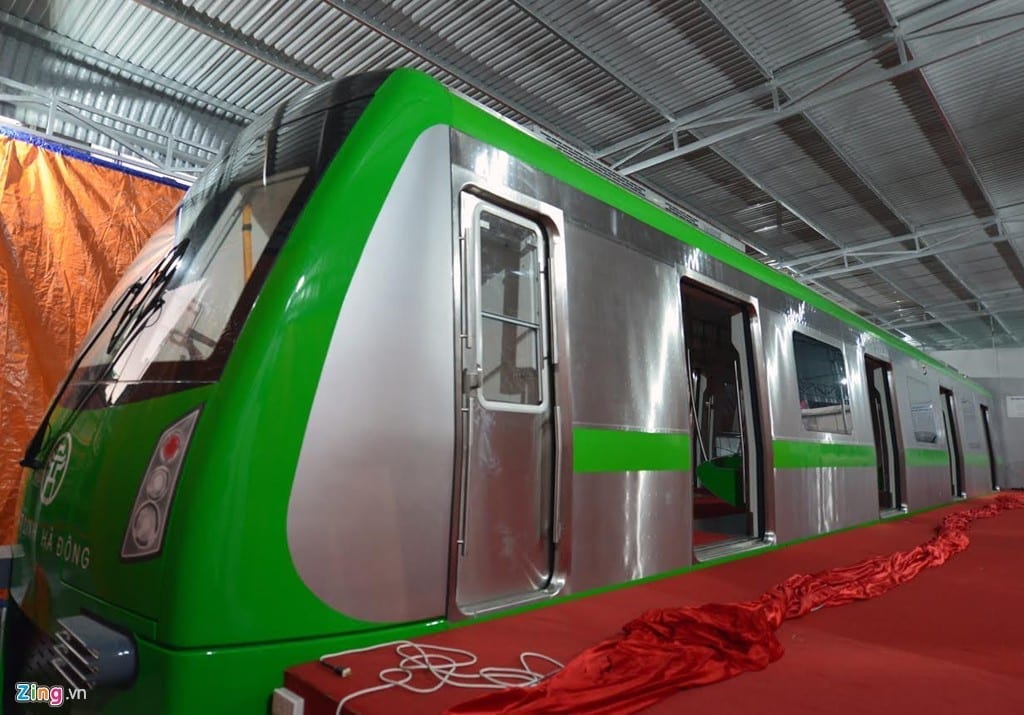
    The maximum fare on Hanoi’s first metro line will be VND15,000 (65 cents), city authorities said in a draft proposal. The minimum will be VND8,000 (34 cents).

    Passengers can also buy monthly season tickets for VND200,000 ($8.61) or daily tickets for VND30,000 ($1.29), both allowing unlimited trips.

    The proposal, meant to collect public opinion, said the fares would only apply initially when the commercial run begins next month, and would be increased later.

    Work on the Cat Linh-Ha Dong elevated railway began in 2011 and was originally scheduled for completion in 2013. But several hurdles, including loan disbursement issues with China that were only resolved in December 2017, stalled it for years.

    The original estimated cost of $552.86 million also ballooned to more than $868 million, including $670 million in loans from China.

    The metro eventually entered the testing phase with all 13 cars carrying out trial runs on both lines. The ministry wanted commercial operations to begin before the Lunar New Year in early February, but this deadline too was missed.

    The Chinese contractor of the metro, China Railway Sixth Group Co., Ltd, plans to finish trial run this month. It has been carrying them out since last September.

    Hanoi, a city of more than 7.5 million people, has 5.2 million motorbikes and around 550,000 cars, besides some 1.2 million vehicles brought by non-residents, according to police figures.

  • Lotte Mart Vietnam expands in Hanoi

    Lotte Mart Vietnam expands in Hanoi

    Lotte Mart Vietnam has opened its third Hanoi store in Cau Giay District. The South Korean retailer’s new 2776sqm branch is located in the urban district, near seven local universities. Targeting local students, the branch will offer trendy but inexpensive products. There will be an international zone that sells products from Korea, the US and Europe and  a ‘Delica’ corner will offer baked goods and easy-to-cook food.

    About 35 per cent of the fresh-food products will include harvests from farms near Hanoi to maintain freshness.

    Lotte Mart Vietnam head of overseas business Kang Min-ho said the firm is planning to expand its business in the country, mainly focusing on Hanoi and Ho Chi Minh City.

    Lotte Mart now has 14 stores in Vietnam.

  • Hanoi, HCMC among 20 most expensive cities in Southeast Asia

    Hanoi, HCMC among 20 most expensive cities in Southeast Asia

    A new index puts Hanoi 13th and HCMC 15th on the list of 20 most expensive Southeast Asian cities. The new Cost of Living Index for the region has been compiled by Numbeo.com, the world’s largest database of user contributed data about cities and countries worldwide. According to Numbeo, a person spends on average $447.25 a month in Hanoi exclusive of rent. For a four-person family, this figure would be $1,601. Hanoi’s cost of living ranks 316th among 440 cities in the world.

    Meanwhile, in HCMC, the average monthly expense for a single person excluding rent is $434.94, and $1,562 for a family of four. HCMC ranks 320th out of 440 cities in the world, and is 61.50 percent less expensive than New York.

    This year, Singapore, Southeast Asia’s biggest business hub, remains the most expensive city in the region. The city-state is immediately followed by Bangkok of Thailand. Yangon in Myanmar is in third place, a surprise as the city did not even make the top 30 in mid-2018.

    Many Southeast Asian capitals are featured in the list, with Phnom Penh of Cambodia ranked fifth, Jakarta of Indonesia, 11th, and Manila of the Philippines, 14th.

    Numbeo says that its survey has taken into account several factors including house rents, cost of eating out, and purchasing power needed to live a comfortable life to come with a cost of living index for 20 major cities in Southeast Asia.