Tag: Hong Kong

  • Clarks retailer S Culture ends year in the red

    Clarks retailer S Culture ends year in the red

    Clarks shoe brand retailer, S Culture has announced a loss for the year and will not pay a dividend.

    Chairman Chong Hot Hoi described 2015 as the worst year for Hong Kong retail sales since  2002, driven by the fall in big spending tourists from the mainland and weak domestic consumer spending.

    S Culture recorded a same-stores sales decline of 6.6 per cent and a net loss of HK$16.4 million for the year. Chong said the opening of new retail outlets during 2014 and early 2015 contributed to the loss, as they were yet to break even under the unfavourable atmosphere of the retail market during the year.

    S Culture sells shoes under the Clarks, Josef Seibel, Petite Jolie and The Flexx retail brands in Hong Kong, Mainland China and Taiwan. It flagged a looming loss in a profit warning issued in early July.

    But despite 2015 being a year to forget, the company is optimistic about 2016.

    “Hong Kong is bracing for greater economic challenges as the prospective interest rate increase shall induce capital outflows that could pressure Hong Kong as the Asian financial hub at a time when China’s economy is growing at its slowest pace in the past 25 years,” said Chong in the company’s trading announcement.

    “Looking ahead, the near-term outlook for retail sales will still be constrained by the weak performance of inbound tourism as cited by the government. We would also watch closely the impact from dimmer global economic prospects amid US interest rate normalisation. To this end, we had been imposing measures and applying more flexible operating tactics in order to minimise such effects to our operations as a whole. In the meantime, while there had been signs

    that the general operating costs, such as market rental level, were declining, we were still cautious about the other operating costs such as staffing and utilities as their nature was downward sticky,” he said.

    “Despite the above, we still remain positive and maintain our belief in our business. While we are still experiencing unfavorable market drivers in the local retail market, we are still confident that the group would be poised to be highly attentive to the changes in the retail market and apply the appropriate strategies to tackle the existing challenges and keep our pace for steady development, especially in the mainland. We still hold the same view about mainland consumer market and continue with our strategy to increase our presence in the mainland.”

    S Culture has now expanded into the cities of Shanghai, Qinhuangdao, Haikou, Qingdao, Songyuan, Zhengzhou, Harbin, Luoyang, Dandong and Beijing through collaborating with the local retailers and operates four company-owned stores with its brands well-received in the mainland, Josef Seibel and The Flexx.

    “We expect to increase our market share in the Mainland by utilising both on- and off-line channels whichever is more effective in the case.”

  • Hong Kong textile eye India as alternative production base to cut cost

    Hong Kong textile eye India as alternative production base to cut cost

    India is rising, not only as a new choice of relocating labour-intensive industries from China, but also as a retail market of good potential, says a research report by The Hong Kong Trade Development Council (HKTDC).

    In recent years, the sustained rise in production costs on the Chinese mainland has eroded the profit margins of many Hong Kong companies with labour-intensive factories located on the Chinese mainland, prompting them to seek alternative production bases elsewhere.

    While Southeast Asian countries offer many choices, the HKTDC report says India offers many advantages as an alternative production base, along with the added advantage of having a domestic market of great potential.

    According to the report, the majority of Indian garment producers are focused on the domestic market, as their product quality was generally lower than the standards required by overseas importers.

    Despite this, many big Indian exporters have successfully lined up with international buyers, including department stores, retail chains and brands.

    The paper was written after a recent field trip to India that included factory visits and interviews with garment manufacturers.

    In the four years to 2014, India’s garment exports increased at an average annual rate of 12 per cent, surpassing China’s 9 per cent, in line with Bangladesh’s 13 per cent and eclipsed by Vietnam’s 17 per cent.

    With advantages of raw materials and prospects of vertical integration, India is a strong garment exporting country and a location worth considering for factory relocation in relation to labour-intensive manufacturing, such as garment-making.

    The report pointed out that while China is the undisputed world leader in exporting textiles and garment products, many have overlooked India’s position as the world’s second biggest exporter of textile and garment products in 2014, selling a total of $36 billion, during the year, far behind China’s $399 billion.

    For textile exports alone, India was second after China in 2014, with a share of 5.8 per cent of the global market, compared to China’s enormous 35.6 per cent share.

    HKTDC says it is not surprising that the bulk of garment manufacturing in India is for the domestic market, supported by the country’s huge capacity in textiles production.

    India stands out to be a substantial exporter in both garments and textiles. In 2014, India imported textiles worth only $3.8 billion, lagging much behind Vietnam’s $12 billion, Bangladesh’s $6.8 billion, and just ahead of Cambodia’s $3 billion, the report said.

  • Hong Kong Retailers Seek to Keep Strength

    Hong Kong Retailers Seek to Keep Strength

    Hong Kong has been branded as “shopping paradise” to many for a long time, but the city seems to have lost its attractiveness in recent years, as retail sales have been dragged down by a significant drop in tourist numbers.

    Retail sales have declined for 11 consecutive months as of January this year in Hong Kong, while the unemployment rate in the sector is on the rise. Signs of improvement are not in sight at the moment.

    Rents in Russell Street, once the most expensive shopping place in the world, has been slashed by half now. Hong Kong General Chamber of Commerce Chairman Y K Pang says it seems that less cost would benefit shop owners as well as customers, but as of now it appears that is not the case.

    “The competition is really fierce. Other regions are so eager to share a slice of cake from us. No matter how low the cost is, without customers, there is no money to make. So we should welcome all visitors regardless of where they are from.”

    Currently, there are less than 50 mainland cities allowing their residents to visit Hong Kong on an individual basis. Some are suggesting expanding the Individual Visit Scheme to boost Hong Kong’s tourism as well as its retail industry, but C K Chao, Founding Chairman of Federation of Hong Kong brands, has another view.

    “When tax lowers on the mainland, and people are better off, they could buy the same products there without paying more, or even less than in Hong Kong, why would they come? Hong Kong should establish our own brands, so visitors are here to buy watches, jewelry, and clothes made in Hong Kong. ”

    Chao is hoping the government can establish a specialized department to regulate as well as guide the retail sector for further growth.

    At the same time, Dr. Szetu Chi Man with the Institute for Entrepreneurship at Polytechnic University of Hong Kong, says local companies should get fully prepared to embrace technology to expand business.

    “Small companies in Hong Kong still think that they can make money through traditional channels, so they are not ready to use technology yet. I hope the government could help them improve their service to stay competitive in the market. ”

    Raymond Tang is the Managing Director of Kingvic International Limited, a footwear company in Hong Kong. He says manpower is vital to retailers, and more people should have the access to professional training and courses.

    “The turnover rate is high. Many young people take retail jobs before they get a formal one, and they only stay for a couple of months. So we are always short of hands and they have no experience to offer good service.”

    He admits that it is not easy to transform the business model, and Hong Kong should waste no time to act to save the retail sector; otherwise, this “shopping paradise” could soon lose its glamour.


  • Esprit sales flat, as expected

    Esprit sales flat, as expected

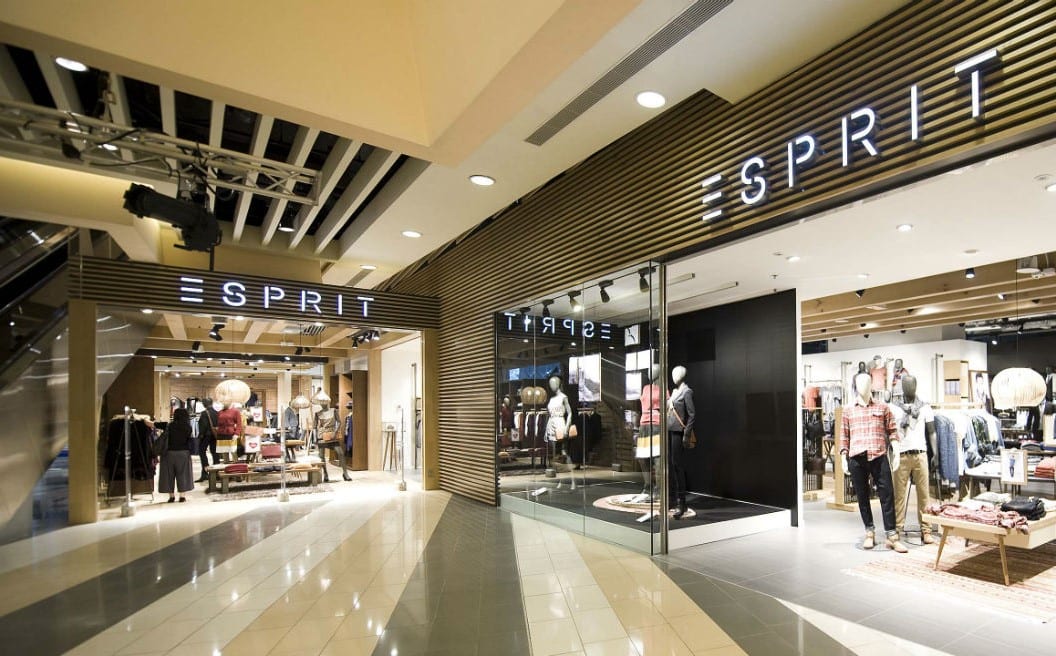
    Largely in line with expectations, Esprit sales were flat, the fashion brand says in its interim report for the six months to December 31.

    While its overall turnover was down 0.4 per cent overall, retail turnover grew 6 per cent while wholesale turnover fell 11.4 per cent.

    The gross profit margin for Esprit Holdings was stable at 50.5 per cent, while the net loss of HK$238 million was in line with expectations. The group had a healthy net cash position of HK$4.2 billion with zero debt.

    Unfortunately, positive retail sales growth in Europe was offset by continued weakness in the wholesale channel, and negative development in the Asia Pacific region. Asia Pacific turnover declined 6 per cent year-on-year, mainly dragged down by China with its 11.6 per cent drop. China represents 46 per cent of the region’s turnover.

    In its breakdown of turnover in Asia Pacific, China led with HK$655 million, 7 per cent of group turnover. Then came Hong Kong (HK$185 million, 2 per cent, down 0.4 per cent), Australia and New Zealand (HK$162 million, 1.7 per cent, up 0.3 per cent), Singapore (HK$129 million, 1.4 per cent, down 4.7 per cent), Taiwan (HK$98 million, 1.1 per cent, up 6.5 per cent), Malaysia (HK$97 million, 1 per cent, down 2.7 per cent), Macau (HK$56 million, 0.6 per cent, down 12.7 per cent) and others (HK$43 million, 0.5 per cent, up 6.2 per cent).

    In the previous financial year, the group moved towards vertical integration which resulted in more cost-efficient product development and supply chain processes, allowing product improvements in terms of design, quality and value-for-money.

    To maximise the selling potential of its improved products, this past year the group started pursuing an Omnichannel business model. In its early stages, this has led to improvements in growing its loyal customer base “Esprit Friends” and fully integrating the commercial activities of all sales channels.

    In September, the group launched an intensive brand-marketing campaign to strengthen and rejuvenate its image.

    Performance during the first six months of this financial year (between July and December) indicated that the vertical and omnichannel model was an effective basis to turn around its business, the company said.

    In its report, the company paid tribute to its co-founder, Doug Tompkins, who died in December, describing him as a “conservationist, outdoorsman, philanthropist, agriculturist and businessman”. He and his then wife, Susie Buell, formed the company in 1968. Esprit’s collections are available in 40 countries, in about 870 directly managed retail stores and through more than 7500 wholesale sales points including franchise stores and department-store outlets. The Group markets its products under two brands, Esprit and EDC.

    Listed on the Hong Kong Stock Exchange since 1993, Esprit has headquarters in Germany and Hong Kong.

  • Hong Kong keeps close eye on Singapore’s moves

    Hong Kong keeps close eye on Singapore’s moves

    Faced with a cloudy economic outlook, Hong Kong is casting a keen eye on action taken in Singapore, a fellow open economy buffeted by external forces – and an old rival.

    Thursday offered a good look. Finance Minister Heng Swee Keat announced a Budget that includes government spending of $73.4 billion.

    It comes a month after Hong Kong’s Financial Secretary John Tsang announced its Budget with an expenditure of HK$490 billion (S$87 billion). The reaction here is that, at first glance, the two financial czars – both men coincidentally have a Master’s in Public Administration from Harvard – might have been studying the same playbook.

    Given tough times ahead, they announced near-term relief mainly in the form of tax rebates and loan schemes for small and medium- sized enterprises (SMEs), and handouts for people to help boost consumption. Buzzwords such as innovation, robotics, and research and development also liberally litter the duo’s respective long-term visions.

    Ernst and Young’s Hong Kong tax managing partner Tracy Ho puts it thus: “They (Singapore) watch us, and we are watching them too.”

    Hong Kong is facing headwinds from a mix of political tensions and economic trends. Its retail sales recently suffered the worst decline in 13 years. Tourist numbers are down. The economy will grow between 1 and 2 per cent this year, Mr Tsang has said. But a greater anxiety is over the city’s long-term prospects. One nagging worry is the lack of diversity in its economy, in terms of its dependence on China and in its industry mix. Hong Kong is heavily dominated by the financial, hospitality and other services sectors, with a negligible manufacturing presence.

    It is in this broader vision that Singapore’s Budget on Thursday offers takeaways for Hong Kong, say those interviewed. Businessman David Ting, past president of the Chamber of Small and Medium Business, laments that unlike in Singapore, Hong Kong SMEs “do not have a clear direction on where we should go”. In particular, he lauds the Singapore Budget for being “very focused”. The $4.5 billion Industry Transformation Programme offers targeted industries a road map for how they can grow.

    On why Hong Kong businesses, known for their entrepreneurial spirit, will need such guidance now, Mr Ting says the landscape has changed. With China closed off in the past, it was easier for businesses to suss out opportunities, he adds.

    Lawmaker Charles Mok, an IT entrepreneur, says that while there are superficial similarities between both Budgets, given the emphasis on R&D, there was a distinct difference in how it is to be applied. In Singapore, the focus is on how to reinforce the manufacturing industry by introducing automation, he says.

    “In Hong Kong, we talk of developing R&D. But who is it for? Factories in China? What about our domestic industry – how do we help them get restarted?” says Mr Mok.

    On the flip side, Singapore’s Silver Support Scheme to help the elderly does not go far enough, notes social work expert Nelson Chow. “It helps the bottom 20 per cent. But in Hong Kong, this is something we’re already doing. The next step is to introduce a universal pension.”

  • Hong Kong textile cos eye Make in India to cut costs

    Hong Kong textile cos eye Make in India to cut costs

    India is rising, not only as a new choice of relocating labour-intensive industries from China, but also as a retail market of good potential, says a research report by The Hong Kong Trade Development Council (HKTDC).

    In recent years, the sustained rise in production costs on the Chinese mainland has eroded the profit margins of many Hong Kong companies with labour-intensive factories located on the Chinese mainland, prompting them to seek alternative production bases elsewhere.

    While Southeast Asian countries offer many choices, the HKTDC report says India offers many advantages as an alternative production base, along with the added advantage of having a domestic market of great potential.

    According to the report, the majority of Indian garment producers are focused on the domestic market, as their product quality was generally lower than the standards required by overseas importers.

    Despite this, many big Indian exporters have successfully lined up with international buyers, including department stores, retail chains and brands.

    The paper was written after a recent field trip to India that included factory visits and interviews with garment manufacturers.

    In the four years to 2014, India’s garment exports increased at an average annual rate of 12 per cent, surpassing China’s 9 per cent, in line with Bangladesh’s 13 per cent and eclipsed by Vietnam’s 17 per cent.

    With advantages of raw materials and prospects of vertical integration, India is a strong garment exporting country and a location worth considering for factory relocation in relation to labour-intensive manufacturing, such as garment-making.

    The report pointed out that while China is the undisputed world leader in exporting textiles and garment products, many have overlooked India’s position as the world’s second biggest exporter of textile and garment products in 2014, selling a total of $36 billion, during the year, far behind China’s $399 billion.

    For textile exports alone, India was second after China in 2014, with a share of 5.8 per cent of the global market, compared to China’s enormous 35.6 per cent share.

    HKTDC says it is not surprising that the bulk of garment manufacturing in India is for the domestic market, supported by the country’s huge capacity in textiles production.

    India stands out to be a substantial exporter in both garments and textiles. In 2014, India imported textiles worth only $3.8 billion, lagging much behind Vietnam’s $12 billion, Bangladesh’s $6.8 billion, and just ahead of Cambodia’s $3 billion, the report said.

  • Hong Kong airport cuts back on bookshops: Page One out, new mainland-based operator takes over

    Hong Kong airport cuts back on bookshops: Page One out, new mainland-based operator takes over

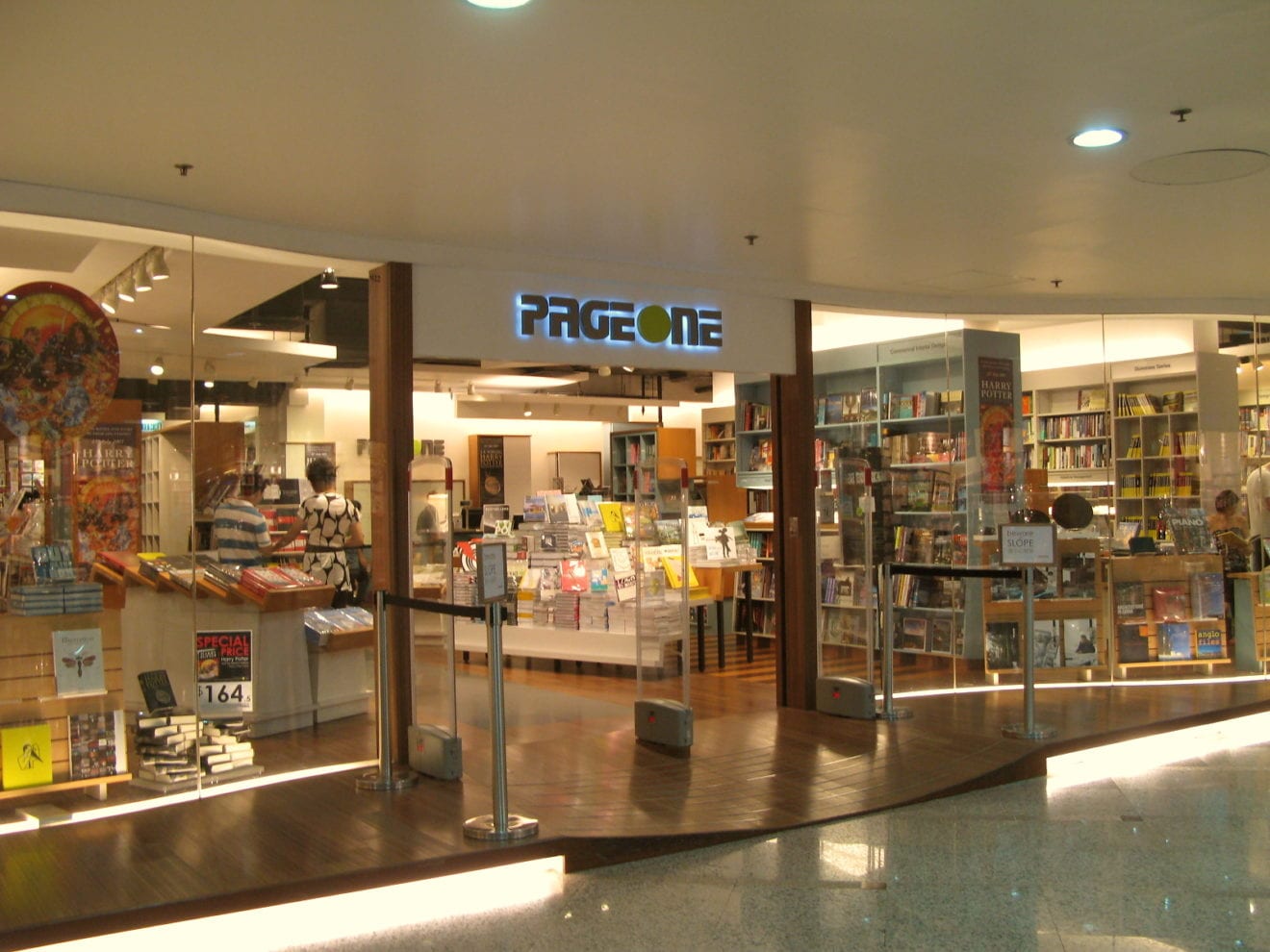
    Hong Kong International Airport is cutting back sharply on the number of bookshops for departing passengers and replacing all Page One stores with new outlets run by a mainland-based firm.

    The overhaul includes the ­replacement with high-end fashion stores of the airport’s two biggest bookshops in the departure area – once popular with mainland travellers buying books and magazines banned across the border.

    At a time of major controversy over Hong Kong’s banned-book trade, the number of airport bookshops is being reduced from 16 to 10, and four remaining shops moved, mostly to smaller sites positioned near departure gates.

    The two biggest bookshops – the 250 sq m Relay and Page One stores in prime positions near gates 20 and 21 in departures at Terminal One – are being replaced by luxury fashion stores MCM and Hermes respectively.

    Singapore-based chain Page One has lost all six of its airport bookshops while French-owned Relay, which has been doing business at the airport for 11 years, has had its number of outlets cut from 10 to five.

    Five of the 10 remaining bookshops at the airport will be run by a new operator, mainland publisher and bookstore chain Chung Hwa, under the new arrangement which comes into effect in April.

    The cutback in book retail space has triggered concerns that the Airport Authority might have come under pressure to shut down shops selling politically sensitive titles or exercised self-censorship in the wake of the ongoing controversy.

    Five Hong Kong booksellers went missing last year, sparking fears they had been kidnapped by mainland agents operating beyond their jurisdiction, but they later turned up on the other side of the border, saying they had gone there voluntarily in connection with an investigation into the smuggling and sale of banned books.

    However, an Airport Authority spokeswoman said the decision had been taken to reduce bookstore space because of a “change in reading habit and advancement in technology” following regular customer surveys on travellers’ needs.

    Relay and Page One were granted their most recent licences to run 16 bookshops at the airport in 2009. With the leases expiring in April, the Airport Authority invited bids for the relocated spaces in June last year and decided the winners in August.

    A spokesperson for the marketing department of Page One Hong Kong declined to say if the chain lodged a bid but said: “The proposed units’ allocation for the latest tender offered by the Airport Authority [was] not appropriate for us to continue our presence.”

    Because of that and the tourism downturn and sluggish economic conditions, Page One had decided to re-evaluate and restructure plans for retail stores to “match the current retail downturn”.

    Lisa Leung Yuk-ming, associate professor from the department of cultural studies at Hong Kong’s Lingnan University, said Chung Hwa had “quite a strong mainland Chinese background” and people might surmise political reasons for the changes.

    “Airport book shops became a haven for all these controversial books about Beijing government officials and their sex lives and how they made their way [to power] through corruption,” she said.

    “They were a haven not only for books but for magazines publishing gossip tabloid stories about the mainland Chinese government.

    “This might be a reprisal for bookshops selling these kind of things or it might be self-censorship by the airport themselves to try to weed out these problematic bookshop labels.

    “It might be a more proactive strategy to let more pro-Beijing commercial presses have space at the airport as a way to toe the official line – [and say] these are the books you should be reading rather than these problem [ones].”

    The Airport Authority spokeswoman repeatedly declined to address concerns over a possible political motive for the reduction in bookshop space.

    “The selection of books to be offered in the shops is decided by bookstore operators,” she said.

    The decision to cut back on book shops contrasts with the authority’s comments in 2009 when the previous contracts were awarded. Then, the authority said its surveys found books, magazines and newspapers were among the best-selling categories for departing passengers.

  • WeChat launches mobile wallet service in Hong Kong

    WeChat launches mobile wallet service in Hong Kong

    WeChat has launched its payment service WeChat Pay in Hong Kong, including the new Wallet in-app payment feature.

    Wallet allows WeChat users to connect their MasterCard or Visa credit cards with their accounts to allow them to pay for products and services without having to exit the WeChat app.

    Users will be prompted to create a six digit PIN that must be input before any payment is authorized.

    Wallet currently supports payment for tickets, transportation services and travel products, and more product and service categories will be added soon.

    WeChat has partnered with local merchants to offer Hong Kong users exclusive promotions and campaigns over the messaging service.

    “We are so excited to bring WeChat Pay, a new mobile experience that allows users to pay on the go in the simplest way, to Hong Kong,” commented Norman Tam, head of the Hong Kong and Taiwan office of WeChat owner Tencent‘s international business group.

    “Customized for Hong Kong users, WeChat Pay provides a seamless and secure payment experience to users while providing our partners with the benefit of a direct connection to WeChat’s massive community that other payment platforms cannot provide. This is truly a triple-win for us all.”

  • Smiggle plans Hong Kong, Malaysia roll-out

    Smiggle plans Hong Kong, Malaysia roll-out

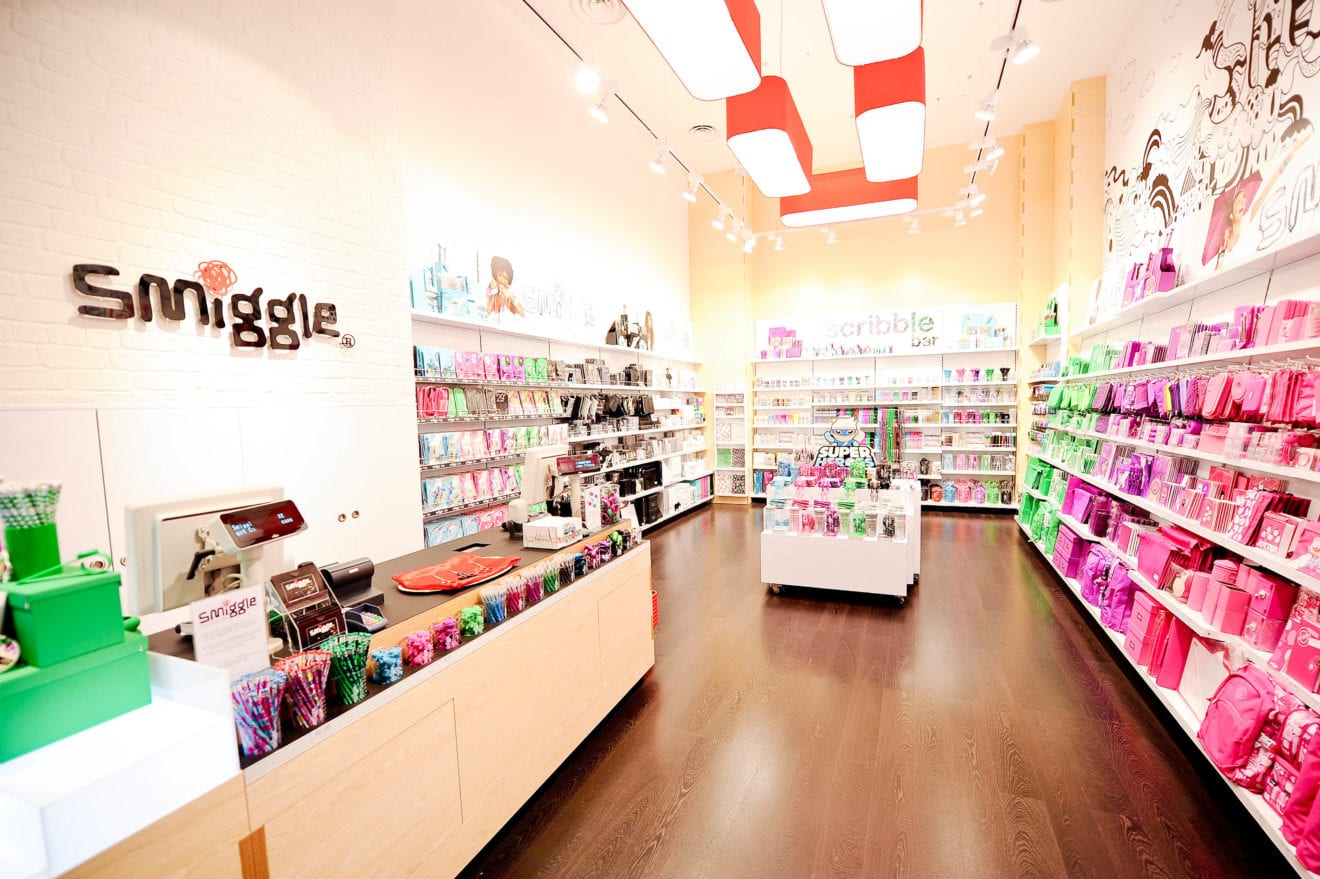
    Trendy stationery retailer Smiggle says it will open two more stores in Hong Kong in the next six months.

    Smiggle, owned by Australian-listed multi-brand retail group Premier Investments, also plans its first store in Malaysia before July 31 and expects to build a network of 50 stores across Hong Kong and Malaysia during the next five years.

    The chain already has 42 stores trading in the UK, plans 18 more over the next six months, and targets 100 there by Christmas.

    The Smiggle plans were revealed in the parent company’s half year result to January 30, The company, which also owns the Peter Alexander nightwear, Dotti, Jay Jays, Just Jeans, Portmans and Jacqui-E retail chains, predominantly trades in Australia and New Zealand. But Smiggle is a standout.

    Premier’s chairman, Solomon Lew, says Smiggle will remain and strong growth driver for the group.

    “Smiggle delivered global sales growth of 46.5 per cent and our UK roll-out is progressing well ahead of schedule. We continue to believe that Smiggle has the potential to become a truly global brand.”

    The company reported a net profit of AU$98.3 million (HK$583.625 million) for the half ended 30 January 2016, up 24.9 per cent year-on-year, before tax and interest.

    Total sales were up 15.1 per cent to AU$565 million, while like-for-like sales were up 6.9 per cent.

  • GoDaddy launches in 11 more APAC markets

    GoDaddy launches in 11 more APAC markets

    Small business technology services provider GoDaddy has expanded further into Asia, launching in 11 more markets including Hong Kong.

    The company has launched its suite of cloud-based products for SMEs across the region. With the launch GoDaddy services are now available in 14 Asian markets, also including Japan, Indonesia, Malaysia, the Philippines, Singapore, South Korea, Taiwan, Thailand and Vietnam.

    GoDaddy offers a suite of cloud-based products and services including domain registry, website hosting, website development and productivity tools.

    The company offers also local language customer care and direct phone numbers in each of its new Asian markets.

    GoDaddy CEO Blake Irving noted that SMEs account for over 97% of all enterprises and employ over half the workforce across APEC economies.

    “Asia is home to one of the largest, most vibrant small business communities in the world,” he said.

    “As internet growth and smartphone adoption continue to accelerate across the region, it’s important that these businesses are able to create strong digital identities that will help them achieve their goals and compete online.”

    Globally, GoDaddy now services small businesses in 53 markets, supporting 26 languages – including 10 Asian languages – and 44 currencies.

  • Rackspace debuts Red Hat powered private cloud

    Rackspace debuts Red Hat powered private cloud

    Rackspace has launched a new private cloud service that delivers OpenStack private clouds as-a-service using the Red Hat Enterprise Linux OpenStack Platform.

    Rackspace Private Cloud powered by Red Hat expands the Rackspace OpenStack-as-a-Service product portfolio.

    Managed by OpenStack and Red Hat experts at Rackspace and backed by Fanatical Support, the service combined public cloud benefits with the security, control and performance of an enterprise environment. The offering is backed by an industry-leading 99.99% OpenStack API uptime guarantee.

    Rackspace is contributing to Red Hat’s continued efforts to improve Red Hat Enterprise Linux OpenStack Platform by testing and certifying for broad hardware and software compatibility, performance and availability.

    Rackspace manages and maintains the Red Hat environment including the underlying Red Hat Enterprise Linux, Red Hat Satellite and Red Hat Enterprise Linux OpenStack Platform so customers can focus on their business applications and not their infrastructure.

    Customers have a single point of contact that will deploy, manage and maintain their private cloud at Rackspace. As an additional feature, customers have the flexibility of bringing their own Red Hat subscriptions to Rackspace, using Red Hat Cloud Access.

    “As the leading operator of OpenStack clouds with the most comprehensive OpenStack product portfolio in the industry, Rackspace is excited to expand our managed services and expertise to the Red Hat Enterprise Linux OpenStack Platform,” said Darrin Hanson, vice president and general manager of OpenStack Private Cloud at Rackspace.

    “We help make OpenStack simple by eliminating the complexity and delivering it as-a-service to customers in their data center, a Rackspace data center or in a colocation facility.”

  • Tod’s Hong Kong may close stores

    Tod’s Hong Kong may close stores

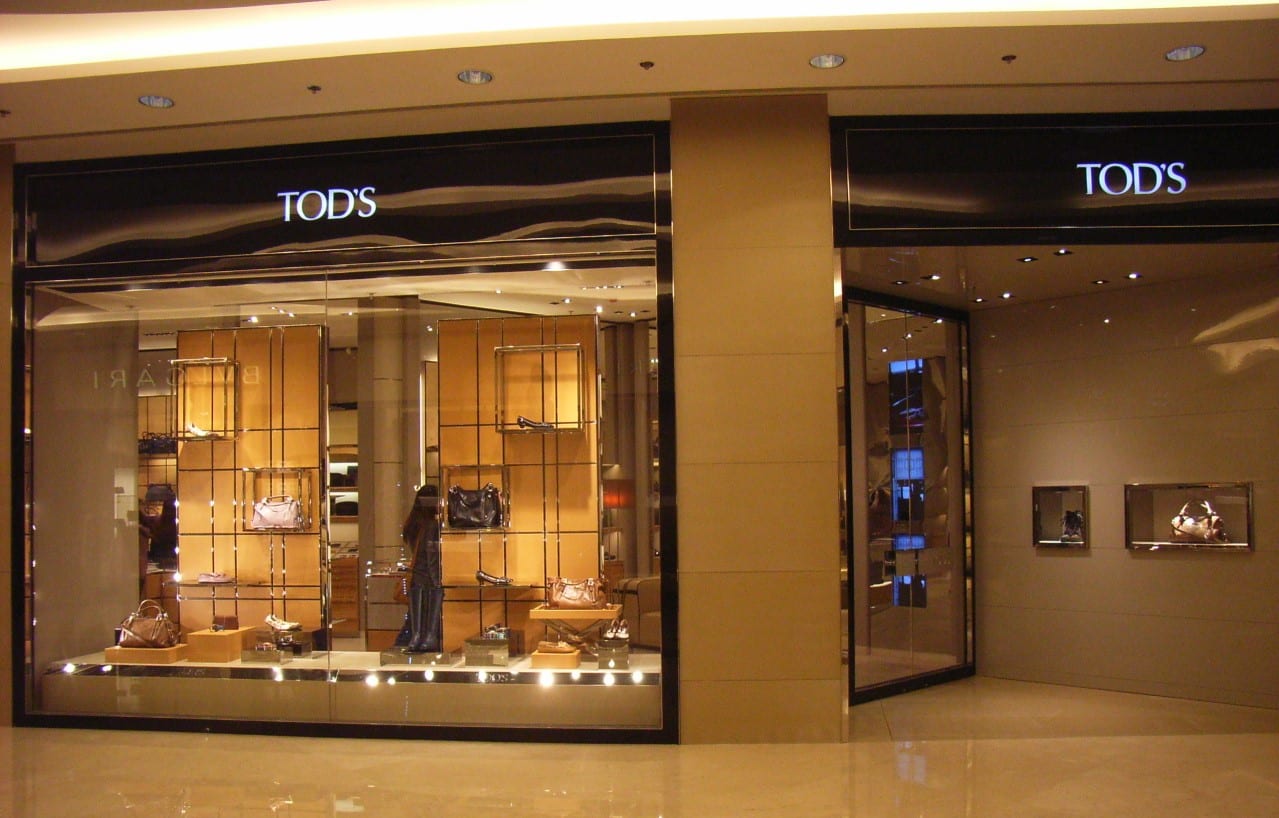
    Tod’s Hong Kong is continuing to suffer from the luxury spending downturn – and may close some stores.

    Milan-based luxury goods brand Tod’s says while the Mainland China market “has stabilised” there has been “no improvement in Hong Kong”.

    The company was commenting with the release of its 2015 trading figures, reassuring shareholders that despite the Hong Kong woes it remained on track to deliver a 5 per cent rise in revenue this year, despite falling same-store sales since January 1.

    Tod’s Hong Kong has 14 stores.

    CFO Emilio Macellari said during an analysts call the company had been unable to renegotiate any of its rents in the territory – but had avoided rent increases at two malls. As a result it may close one or two stores.

    Globally, it plans to reduce the number of new store openings from 31 last year to between 15 and 20 this year, recognising slowing growth worldwide.

    More than 20 per cent of Tod’s global sales are in Greater China – but they shrank 12 per cent last year on a constant currency basis, with Hong Kong and Macau accounting for a majority of the decline.

    Sales in Japan and the US are also declining but the brand was holding its own in Europe, especially its home market Italy.

    Despite declining sales, the company reported a 5 per cent increase in earnings for 2015. Macellari said the company’s strategy of widening its product range to include handbags and apparel would help restore growth and meet forecasts.

  • E-Commerce Latecomer Chow Tai Fook to Chase Online Giant Alibaba

    E-Commerce Latecomer Chow Tai Fook to Chase Online Giant Alibaba

    The Chow Tai Fook brand took almost 90 years to become a family empire spanning Hong Kong shopping centers, the world’s largest jewelry chain and casinos to give patriarch Cheng Yu-tung a $10 billion net worth. Alibaba Group Holding Ltd.’s founder Jack Ma needed less than five years to amass an e-commerce fortune almost triple that.

    Now, the Cheng family’s holding company is making a move to chase Alibaba and other Internet retailers by expanding its online presence. It invested 350 million yuan ($54 million) in shopping platform CTFHOKO.com in December and a mall to showcase products sold online. Its website offers genuine imports such as infant formula, diapers and cosmetics at prices at least 10 percent cheaper than shops in mainland China and is aimed at consumers wary of counterfeit goods online.

    The company is banking on its decades-old reputation. While Hong Kong-based Chow Tai Fook has little e-commerce experience compared with JD.com Inc. and Alibaba’s Tmall, it “can offer confidence in product quality while some existing websites may have fake products,” said Chan Sai-cheong, executive director of Chow Tai Fook’s jewelry unit in charge of the venture.

    Cheng family’s flagship Chow Tai Fook Jewellery Group Ltd. joins other retailers in stepping up its online business that has long been dominated by Alibaba and other e-commerce companies. It’s also seen its traditional business suffer its worst year since 2011 as China’s slowing economy and anti-graft campaigns curb demand for luxury goods.

    The prize is a $100 billion-a-year online Chinese market for imports such as cookies and diapers, according to a report by Mintel Group Ltd., as consumers remain concerned about local products after a series of scandals over fake goods. China’s e-commerce industry is dominated by Alibaba and JD.com, with market shares of 52 percent and 20 percent respectively, according to the report.

    “It’s unlikely for newcomers to compete for website visitation” because China’s most popular online platforms such as Alibaba attracts the most traffic, said Ray Zhao, an analyst at Guotai Junan Securities Co. “It has to cooperate with China’s Internet companies to let Chinese consumers know there is a new website.”

    The hurdle for Chow Tai Fook is not just homegrown. Amazon.com Inc., the world’s largest e-commerce company, is also putting together a plan to take on Alibaba as it vies to capture China’s growing cross-border e-commerce market, which by 2020 is expected to swell into a $1 trillion industry serving 900 million shoppers, according to a June report from Accenture and AliResearch, Alibaba’s research arm.

    No Partnership

    While other brick-and-mortar companies have paired up with established platforms to break into China’s online market, such as the partnership between LVMH-owned cosmetics retailer Sephora and JD.com as well as department store chain Intime Retail Group Co.’s venture with Alibaba, Chow Tai Fook is prepared to go at it alone.

    “We don’t need to have any partnership in expanding the business — we are strong enough to do it by ourselves,” Chan said in an interview in his Hong Kong office. “What we care is that the business model has potential to grow.”

    Cosmetics, Cakes

    To complement its online offerings, Chow Tai Fook built a companion shopping mall in the Qianhai free trade zone in the southern city of Shenzhen to exhibit products sold online, while some are also for sale at the stores.

    Since the first phase of the three-story mall opened in December, Chow Tai Fook has invited 21 Hong Kong retail brands such as cosmetics retailer Sa Sa International Holdings Ltd. and Maxim’s Cakes to display their wares there and sell on its website. At least another 50 retailers will open outlets at the mall when its next phase is ready in May, said Chan.

    All products in the CTF HOKO mall and sold on its sister website are shipped from Hong Kong or other countries outside China, and prices for products such as cosmetics, milk powder and diapers are cheaper than at shops. That’s because the government has adopted lower taxes for online retailers that import through specific ports, under a program labeled “cross border e-commerce.”

    Chow Tai Fook isn’t the only traditional retailer to try and benefit from the program. China Resources Holdings Co. started ewj.com last July and opened a companion showroom in Shenzhen, while Wal-Mart Stores Inc. also plans to introduce a cross-border e-commerce service this year.

    Imported products for infants have been the most popular category since Chow Tai Fook opened its platform, as “Chinese parents don’t stint on baby products,” said Chan. “They want to give their children everything that’s good quality, and they don’t trust domestic brands after some scandals.”

    Showroom Expansion

    The company plans to open other showrooms across China to market its online offerings. It could draw more traffic with low-value goods before switching back to the luxury products for which Chow Tai Fook is known, said Bloomberg Intelligence analyst Catherine Lim.

    “New players can only succeed in surviving by focusing on some niche segments that existing players don’t focus on,” she said.

  • M&M’s take over DFS’ HKIA shop-in-shop area

    M&M’s take over DFS’ HKIA shop-in-shop area

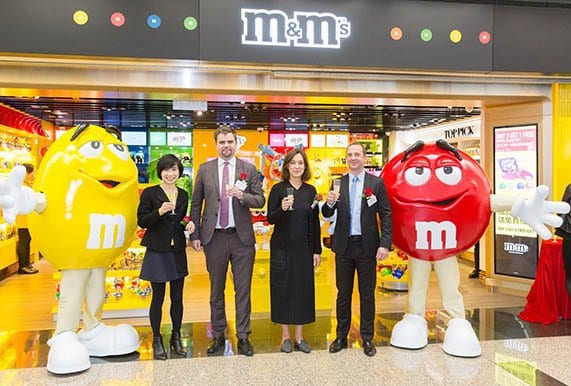
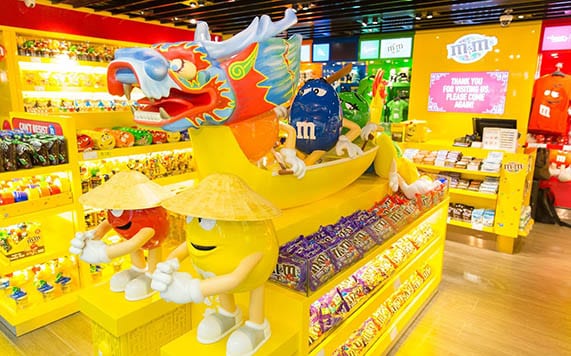
    M&M’S have taken over a new dedicated 35sq m shop-in-shop concept at Hong Kong International Airport, which Mars International Travel Retail have launched jointly with DFS Group in Terminal 1 – close to Gate N28 on the central concourse.

    “Asia is one of the fastest-growing regions for MITR, so we are extremely pleased to be opening this new M&M’S Travel Retail shop-in-shop at DFS, Hong Kong International Airport,” said MITR Regional Sales Director, Christophe Bouye.

    “By offering passengers outstanding retail experiences that first and foremost will make them smile, we are confident it will increase shopper engagement and encourage conversion. Through placing consumers in a smiling frame of mind, we believe that this will not only benefit the confectionery category, but all sectors of the travel retail offer here in Hong Kong.”

    The interior of the store features an ‘interactive’ retail theatre, with the ‘focus on fun’, says MITR, in line with its ’Smiles’ campaign which is a breath of fresh air in many DF&TR locations today.

    MM's ride the Dragon Boat

    Personalised and tailored specifically to reflect a taste of Hong Kong, the shop combines a sample of local tradition with a replica of a dragon boat, which is both guarded and manned by smiling red, yellow, blue and green M&M characters. This is centrally located in the store, against a sea of wall and floor mounted brightly-lit yellow display fixtures – featuring a full range of M&M’s products.

    The store also carries destination merchandise, such as Hong Kong Travel Collection packs of Snickers, Mars and Twix, plus a Hong Kong-themed M&M’S dragon boat box. Core brands of Snickers, Mars, Celebrations and Twix are also offered in individual packs.

    The partners are also promising a strong social media campaign from DFS. This will utilise the WeChat, Facebook and Instagram platforms to alert interest customers to the existence and location of this new outlet before they arrive at HKIA. They also add that as an incentive, a free gift awaits the first 500 visitors, while all customers will be encouraged to take photos in the store and post them to friends on their mobile phones.

    Thierry Canivet, DFS Group’s Senior Vice President, Food and Gifts said the retailer is ‘thrilled’ with the new shop-in-shop concept: “With the shop-in-shop’s localised format, exclusive product offering and innovative approach to engaging customers, we’re confident travellers will love this addition to DFS, Hong Kong International Airport.”

    MITR’s Christophe Bouye added that the company is very grateful to DFS for the opportunity to create such strong branding for M&M’S. He said it is a good opportunity for both existing and new shoppers to discover a new experience, to interact with the M&M’S characters and exercise impulse purchasing.

  • Hong Kong-born entrepreneur sets up shop in Saskatoon

    Hong Kong-born entrepreneur sets up shop in Saskatoon

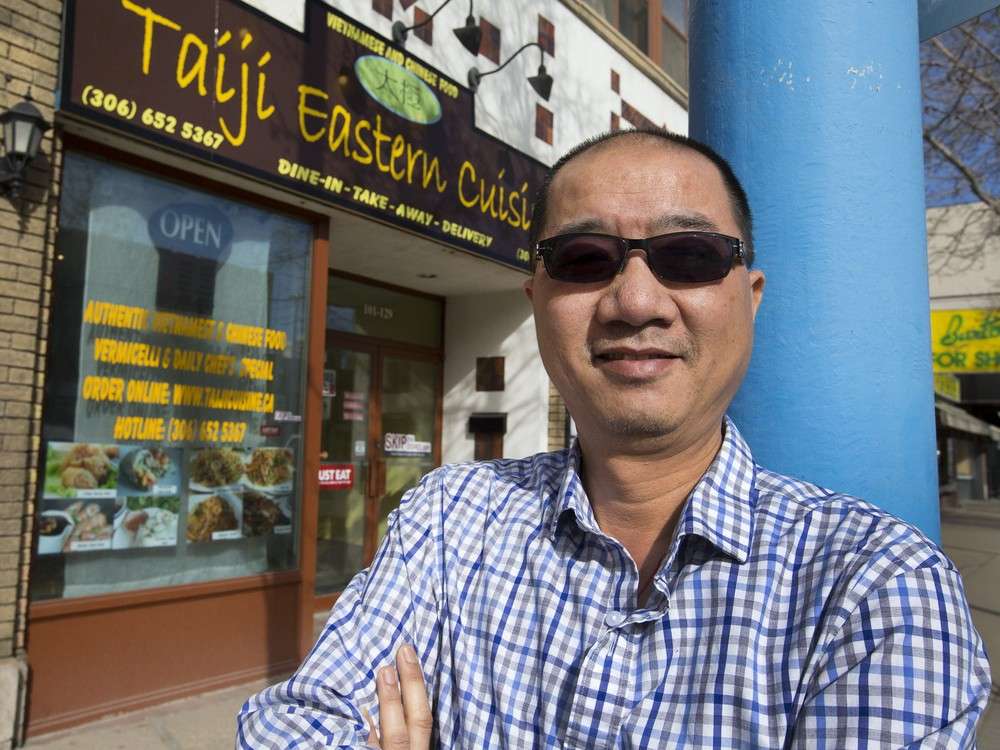
    Most restaurant owners work impossible hours, and Patrick Chu is no different. But after three decades of 100-hour weeks in his native Hong Kong, running his traditional Chinese food restaurant in Saskatoon feels like a vacation.

    “I spent too much time on working. I was just very tired,” said Chu, who worked in supply management for a global construction company before emigrating to Canada last summer.

    Chu said he brought his three children to Canada because he wanted them to have the best education possible. After arriving in July, he decided to change careers entirely and start his own business, a traditional Chinese food restaurant.

    “For me, I just think opening a restaurant is a small business — it’s easier to manage. (And) I just want to bring some traditional Chinese flavour in here,” he said with a laugh, noting that while some of his family members ran restaurants in Hong Kong, he was “totally unfamiliar” with the industry.

    A lack of experience didn’t deter him from working to get his restaurant up and running. He renovated the First Avenue North space himself, doing everything from painting to replacing and repairing kitchen equipment. Then he started developing a menu that combined familiar dishes with traditional flavours.

    Taiji Eastern Cuisine, which opened its doors late last year, serves meals that will be familiar to most western customers. Ginger beef, sweet and sour pork and Singapore fried noodles are all staples. But according to Chu, Taiji’s are cooked differently, and are spicier and more flavourful than most western-style Chinese food.

    Chu said that since he opened the restaurant, he has faced numerous difficulties, including those shared by many newcomers to Canada. While the first couple of months were “very frustrating,” he’s managed to iron out most of the problems, and today business is growing and he enjoys every minute of it, he said.

    “Every time when the customer comes here they say the environment is very good, very clean, very bright and the food is very good — and they will come again,” he said. “I feel very happy, very happy.”

    Ganyo and Grant didn’t choose an easy industry. The wedding business is extremely competitive and subject to changing tastes, but Ganyo believes the business she and her daughter built will continue to grow and succeed.

    “I think with any business, you always have to be on top of these things and watch where it’s going,” she said. “But I still believe it’s going to be very hard to knock off that dream that little girls have. They dream of that day, and I just can’t see that all of a sudden diminishing.”