Tag: Hyundai

  • Maruti, Hyundai rule passenger vehicle sales in June

    Maruti, Hyundai rule passenger vehicle sales in June

    Country’s top two carmakers Maruti Suzuki India and Hyundai Motor India dominated the Indian passenger vehicle sales segment last month with their models occupying all the slots in the top ten list.

    While car market leader Maruti has seven of its models in the list, rival Hyundai Motor India has three of its models in the top ten selling list of last month.

    Toyota Kirloskar Motor’s Innova and Renault Kwid which were there in the June 2016 list have failed to find place in this year’s top ten list.

    According to the latest data from Society of Indian Automobile Manufacturers (SIAM), Maruti’s Alto retained the top position in June with 14,856 units, as against 15,750 units in June last year.

    Hyundai’s compact car Grand i10 stood at second position with 12,317 units. It was at third position in June 2016, with 12,678 unit sales.

    Maruti’s compact sedan Dzire occupied the third position with sale of 12,050 units as compared with 15,560 units in June last year.

    The car market leader’s compact hatchback Wagon R stood at fourth position with sale of 10,668 units during the last month.

    Hyundai’s Elite i20 stood at fifth position last month with 10,609 units. The company had sold 8,990 units of the vehicle in the same period last year.

    Maruti’s Swift retained sixth position with 9,902 units in June. It had sold 9,033 units in the same month of the last year.

    The carmaker’s premium hatchback Baleno stood at seventh position with sale of 9,057 units last month, while compact SUV Vitara Brezza with sale of 8,293 units took eighth position in June.

    Hyundai’s Creta retained ninth position with sale of 6,436 units in June. It sold 7,700 units in the same month last year.

    Maruti’s hatchback Celerio stood at tenth place with sale of 6,375 units.

  • Hyundai Motor bets on new small SUV as China sales skid

    Hyundai Motor bets on new small SUV as China sales skid

    Hyundai Motor unveiled its first subcompact sport utility vehicle Kona for advanced markets, including the United States, Europe and South Korea, as it tries to offset sliding sales in China and catch up with rivals in the segment.

    The South Korean automaker said it would also launch an electric version of the Kona small sport utility vehicle (SUV) next year and a smaller SUV and a large SUV by 2020.

    This comes at a time when Hyundai looks set to miss its sales target for a third straight year due to the unpopularity of its mainstay small sedans and political tensions between Beijing and Seoul that have battered sales in China, the company’s biggest market.

    Hyundai, which together with its affiliate Kia is the world’s No.5 automaker, previously sold subcompact SUVs only in emerging markets, missing out on strong growth in the segment in South Korea, the United States and Europe.

    The subcompact SUV is the top-performing segment globally, growing at an annual average of 46 percent from 2010 to 2016, Hyundai said, citing IHS Automotive data.

    “Even as the global SUV market is nearing saturation, we believe that extra small or small SUVs have more room for growth than large SUVs,” Hyundai Motor Co Vice Chairman Chung Eui-sun said during a launch event near Seoul.

    The automaker launched the Kona in South Korea on Tuesday, and said it would roll out the small SUV in Europe in August and the United States in December. It aims to sell over 200,000 of the vehicles globally next year.

    The Kona will compete with Nissan’s Juke and Honda’s CR-V in the United States.

    Hyundai and Kia in January said they aimed to increase global sales by 5 percent this year, but their combined sales fell 7 percent over January to May, hit by slowing Chinese and U.S. sales.

    “Our sales plan has suffered a setback, but we will use this as an opportunity to overhaul our products,” said Chung, the only son of Hyundai Motor Group Chairman Chung Mong-koo.

    He also said Hyundai would beef up cooperation with technology firms like Cisco, Baidu and Uber instead of buying other automakers.

    Kia will join Hyundai in the launch of the former’s subcompact SUV, Stonic, starting next month.

  • Hyundai shows twin headlights on Kona

    Hyundai shows twin headlights on Kona

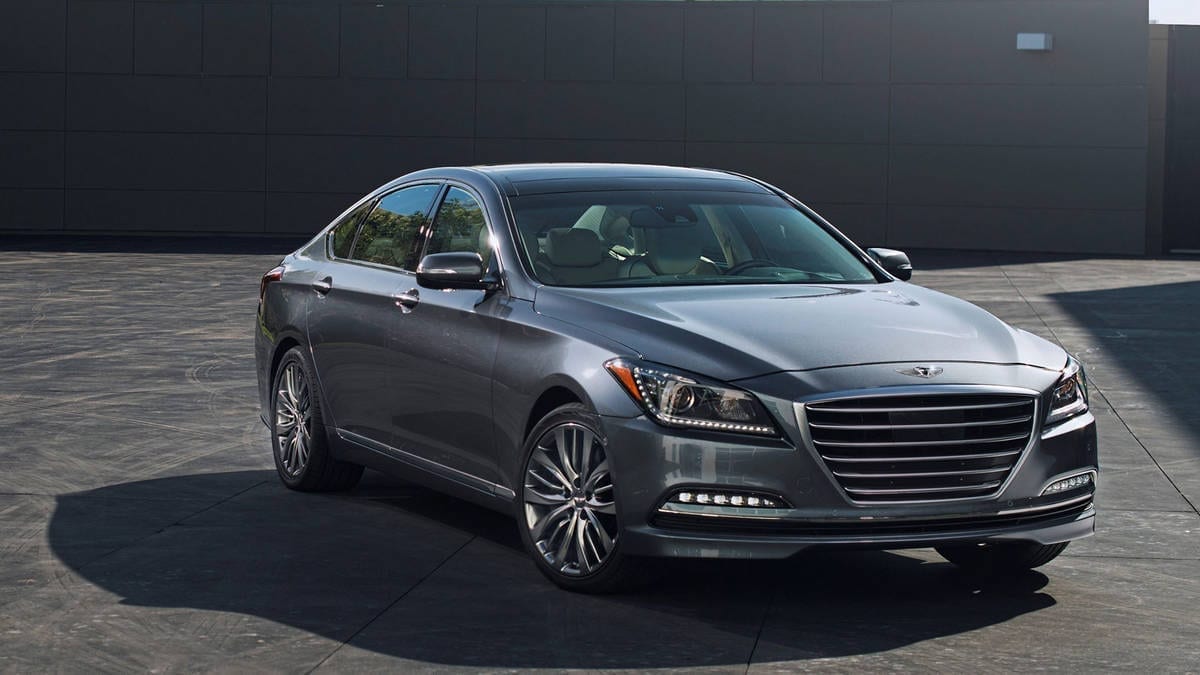
    The upcoming Hyundai Kona, the South Korean brand’s attempt to break into the hot subcompact crossover segment, will get “twin headlamps” with running lights positioned above the main lights as Hyundai looks to set its entry apart from an increasingly crowded field.

    A teaser photo of the Kona released April 28 shows a frontal view with sliver-thin chains of LED running lights up high near the seams of the hood. The unorthodox arrangement is reminiscent of the funky placement on the Nissan Juke, another subcompact crossover known for its edgy styling.

    “The new twin headlamp enhances the visual impact, with the LED daytime running lights positioned on top of the LED headlights,” Hyundai Motor Co. said in a release. “The separated lights at the front deliver a confident, progressive appearance with sleek and sharp shapes.”

    Hyundai said the Kona will launch this summer.

    The U.S. version, also named Kona in keeping with a Hyundai crossover nomenclature based on travel destinations, is expected to go on sale in the first quarter of 2018.

    Kona takes its name from the lava-lined coastal district of Hawaii’s Big Island.

    The vehicle fills another gap in Hyundai’s lineup.

    Subcompact crossover sales in the U.S. climbed 15 percent in the first quarter, while compact crossovers were up 11 percent, even as the overall market retreated 1.5 percent.

    Hyundai, a latecomer to the small crossovers, has been unable to tap that growth.

    The Kona will deliver good driver visibility and comfort, with agile handling, Hyundai said.

    “The imminent arrival of Kona,” Hyundai said, “marks Hyundai Motor’s bold first move into the B-SUV segment and leads the wider expansion of its SUV range.”

  • Hyundai, Kia plan major car recall in South Korea over engine issue

    Hyundai, Kia plan major car recall in South Korea over engine issue

    Hyundai Motor and Kia Motors are expected to recall more than a million vehicles in South Korea and the United States due to engine issues, the latest blow for two firms already struggling in key markets.

    The recall, which could cost the two firms hundreds of millions of dollar each, comes as Hyundai and Kia face a sharp drop in China sales and sluggish demand in the United States and South Korea.

    The two car companies said on Friday they will recall 171,348 vehicles in South Korea because of a manufacturing problem, which leads to possible engine stalling.

    The South Korean automakers have also submitted plans to U.S. authorities to recall an unidentified number of vehicles in the United States over a “similar” engine issue, a spokesperson at the South Korean duo said.

    Yonhap News Agency, citing Hyundai, said the U.S. recall would reach some 1.3 million vehicles, an amount close to the duo’s annual U.S. sales.

    The U.S. recall alone could cost the companies as much as 250 billion won ($220.19 million) each, hitting earnings, said Koh Tae-bong, an analyst at Hi Investment & Securities.

    A Hyundai official declined to confirm to Reuters the expected cost of the U.S. recall, nor the number of vehicles involved.

    The recall helped push Hyundai Motor shares lower by as much as 2.7 percent, compared to a 0.4 percent decline in the broader market .KS11. Kia Motors were down 1.1 percent.

    POSSIBLE ENGINE STALLING

    The recall in South Korea covers Hyundai’s Sonata, Grandeur sedans and Kia’s K5, K7 and Sportage models equipped with a 2-liter or 2.4-liter Theta 2 gasoline engine produced before August 2013, the South Korean transport ministry said.

    The ministry said metal debris in crankshafts could cause engine damage, leading to possible engine stalling.

    “The recall is related to a manufacturing process problem, not the structural problem of Theta 2GDi engines and we have completed improvements through appropriate measures,” the companies said in a statement.

    Hyundai will replace a defective engine with a new one after inspection. The recall will start on May 22.

    In 2015, Hyundai Motor said it would recall 470,000 Sonata sedans in the United States to replace faulty engine parts, sparking questions of safety back home.

    But Hyundai and Kia has said that engines produced at domestic factories were not defective. They instead extended the warranty period for five Theta 2-equipped models in South Korea.

    The Hyundai spokesperson said the latest recall involves a new problem.

  • Hyundai, Kia China sales down 52 pct in March

    Hyundai, Kia China sales down 52 pct in March

    Hyundai Motor, Kia Motors sold 72,032 vehicles in China in March, down 52.2 pct from year earlier. Hyundai Motor China sales 56,026 vehicles in March, down 44.3 percent from year earlier.

    Kia Motors China sales 16,006 vehicles in March, down 68 percent from year earlier.

  • Hyundai Suspends Production at a China Factory for a Week Amid Political Spat

    Hyundai Suspends Production at a China Factory for a Week Amid Political Spat

    South Korea’s Hyundai Motor on Monday said it had suspended production at one of its Chinese factories for a week, fueling concern that a diplomatic standoff may be hurting sales in the automaker’s top market.

    South Korean companies, from cosmetics firms to retailers, say they are being targeted in China because of Beijing’s objections to a planned deployment of the U.S. Terminal High Altitude Area Defence (THAAD) system in South Korea. China worries the system’s powerful radar can penetrate its territory.

    News of Hyundai’s China plant closure, first reported by online media ChosunBiz on Sunday, drove shares of the company down as much as 3% on Monday. The shares recovered slightly to end down 1.2%.

    Shares in Hyundai’s affiliates, Kia Motors and Hyundai Mobis, also finished lower.

    Hyundai said it had suspended the plant in Hebei Province, from March 24 to April 1, in order to check its production line to modify technology. The automaker has three other passenger car factories in China – a country that accounts for about a quarter of its total sales. No further details were available.

    Industry officials and analysts say the suspension may be aimed at bringing down inventories given slowing sales in China, due to political tension and rising competition.

    Ko Tae-bong, an analyst at Hi Investment & Securities, said Hyundai’s March sales in China may have fallen year-on-year due to the political spat, after gaining in January and February.

    China Competition

    The automaker is already grappling with falling market share in China with a product line-up that features more sedans at a time when sport utility vehicles have become more popular.

    China’s Geely Automobile Holdings recently reported its biggest profit growth in eight years, underlining a threat from Chinese makers armed with cheaper SUVs.

    Hyundai makes Verna subcompact cars at its Hebei plant, which came online less than six months ago.

    The automaker plans to start production at a fifth China factory later this year. Hyundai’s China operations are a 50-50 joint venture with state-owned Beijing Automotive.

    Hyundai officials have previously said the company’s business ties with Chinese firms meant they were less likely to be the main target of any punishment resulting from the diplomatic standoff over the deployment of the THAAD.

    The chill in business ties between the nations is evident from the fact that China’s tourism ministry has instructed tour operators in Beijing to stop selling trips to South Korea, while state media has called for a boycott of South Korean goods.

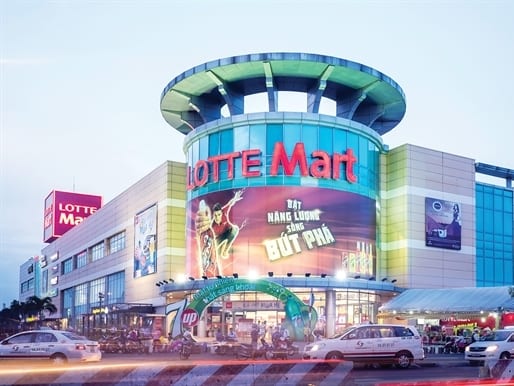
    Chinese authorities have also closed nearly two dozen retail stores of South Korea’s Lotte Group, with some workers saying the closures were fire-safety related. Earlier this year, Lotte approved a land swap outside Seoul that will allow South Korea to install the THAAD.

  • Hyundai Department Store plans CoEx duty-free outlet

    Hyundai Department Store plans CoEx duty-free outlet

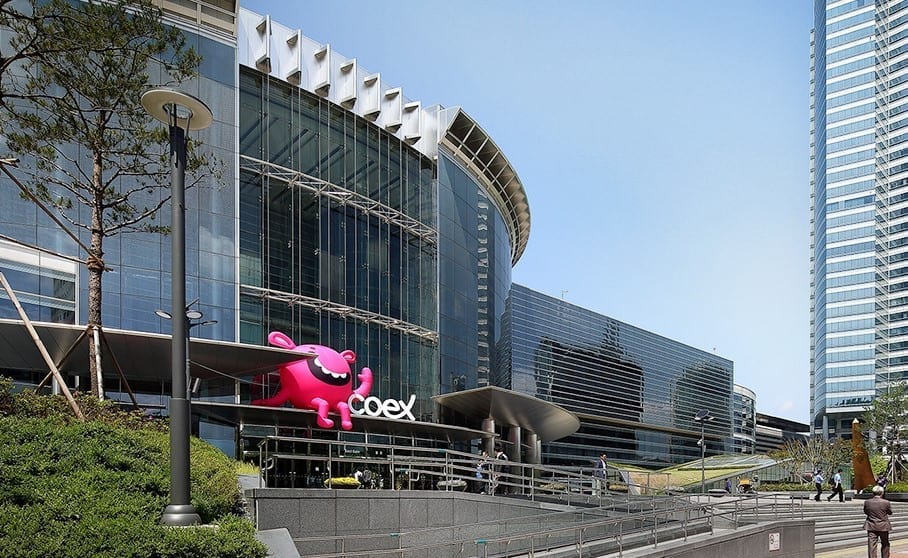
    Hyundai Department Store Group plans to open a 14,005 sqm duty-free store in the CoEx Convention and Exhibition Center in Samseong-Dong, Seoul, late this year.

    Hyundai joined rivals Lotte Duty Free and Shinsegae in securing five-year licences last month to run downtown duty-free stores in Seoul. The SME licence went to TopCity, with Alpensia and Busan Duty Free winning licences for stores in Gangwon Province and Busan.

    Hyundai Duty Free merchandising manager Hyunjin Lee says CoEx attracts independent travellers who are willing to experience Korean culture (K-wave).

    “This place will grow into a worldwide landmark in a few years when there is a Hyundai Global Business Center, underground transit complex and the Jamsil Sports Complex extension,” says Lee.

    “We will provide a differentiated duty-free store with luxury boutiques and customer lounges.”

    A wide selection of luxury items and Korean cosmetic products will be offered, says Lee. “We also plan to develop Kangnam tourist attractions, co-operating with entertainment companies and local government.”

    A key element in Hyundai Duty Free’s licence proposal was agreeing to a memorandum of understanding with the government to invest in tourism infrastructure development plus a commitment to contribute US$50 million in social welfare funds.

  • Hyundai, Kia aim to grow 2017 sales to 8.25 million vehicles globally

    Hyundai, Kia aim to grow 2017 sales to 8.25 million vehicles globally

    Hyundai Motor and affiliate Kia Motors said on Monday they aim to increase their combined sales to 8.25 million vehicles globally in 2017, despite rising competition.The 2017 target is slightly higher than their 2016 goal of 8.13 million vehicles. The South Korean automakers’ final sales figures for 2016 are due out later on Monday, with analysts expecting a miss due to weak demand in emerging markets.

    “The 2017 goal is slightly higher than my projection,” said Ko Tae-bong, an auto analyst at Hi Investment & Securities, adding that the performance of new models would be the key to success after some disappointments in recent years.

    With emerging markets such as Russia stabilizing, and with Hyundai and Kia Motors gearing up to boost vehicle supply to the United States and China, sales could get a lift this year.

    But Hyundai Motor and Kia Motors – which together rank fifth in global sales – plan to add capacity in China and Mexico this year, just as those markets and the United States are seen slowing, likely pressuring margins.

    “With the global economy continuing its low growth, trade protectionism spreading and competition intensifying in the automobile industry, uncertainty is growing more than ever,” Hyundai Motor Group Chairman Chung Mong-koo said in his New Year message to employees.

    Hyundai Motor likely clocked its fourth straight annual profit decline last year, hurt by its higher exposure to weak emerging markets, and a product line-up that features more sedans than sport utility vehicles, just as SUVs have become more popular across many global markets.

    Hyundai Motor is targeting 2017 global sales of 5.08 million vehicles, while Kia Motors set its goal at 3.17 million vehicles.
    Kia Motors Vice Chairman Hank Lee told employees on Monday that the automaker hoped to revive growth this year, after falling short of its 2016 sales target.

    Hyundai Motor shares were flat in a wider market .KS11 that was down 0.4 percent in early morning trade, while Kia Motors shares were down 0.3 percent

    Hyundai Motor shares fell for a third straight year in 2016, down 2 percent versus the wider market’s 3 percent gain. Kia Motors shares slumped 25 percent last year, making them the worst-performing stock among major car makers in the world.

  • A look at 5 richest conglomerate families in South Korea

    A look at 5 richest conglomerate families in South Korea

    A total of 33 relatives from the families that control Samsung, Hyundai Motor, SK, LG, Lotte and other conglomerates dominate the country’s wealthiest list. Unhealthy ties between Korean conglomerates and the government have long been cited as a factor that prevents Korea from moving forward.

    A recent comment by a chaebol chief at a parliamentary hearing over the alleged connections between businesses and the presidential office was a reflection of the reality.

    “It was near impossible to reject such a demand (from Cheong Wa Dae). That’s what it’s like in Korea,” said Huh Chang-soo, head of GS Group and chairman of the Federal of Korean Industries, at the hearing on December 6.

    He was responding to lawmakers’ questions on why the FKI helped coerce conglomerates to donate funds to two foundations controlled by Choi Soon-sil, confidante of impeached President Park Geun-hye.

    Another reflection of the business climate in Korea was that most of the chaebol leaders seated at the hearing were second to third-generation heirs of the conglomerates – not self-made businessmen.

    They are also in the top tier of a list of Korea’s 100 wealthiest people compiled by The Superrich Team. Joining them on the list are their relatives. Only 10 self-made entrepreneurs made it to the list in the past year.

    A total of 33 relatives from the families that control Samsung, Hyundai Motor, SK, LG, Lotte and other conglomerates dominate the country’s wealthiest list. The figure excludes the heads of major business groups.

    The combined private assets of the business moguls stands at 39 trillion won (S$47.1 billion), higher than the annual budget of the Seoul Metropolitan Government at 27.5 trillion won.

    Samsung Group

    Lee Jae-yong, vice chairman of Samsung Electronics, and 10 other Samsung family members own 22.6 trillion won in total assets.

    The assets of Lee Kun-hee, the bedridden chairman of Samsung Group, is 15.64 trillion won, accounting for the largest portion of the assets. His wealth includes real estate in Hannam-dong, one of the richest districts in Seoul.

    Outside of the capital, Lee Kun-hee also owns a considerable amount of land in Yongin City in Gyeonggi Province, where the Samsung-made amusement park Everland and Ho-Am Art Museum are located. His properties there sit on 8,712 square metres of land.

    In total, Lee owns 14 real estate assets nationwide, worth 938.9 billion won.

    The women of the Samsung family also own a colossal amount of assets. The senior Lee’s wife Hong Ra-hee, director of Leeum Samsung Art Museum, and her two daughters Boo-jin and Seo-hyun, who lead Hotel Shilla and the fashion business at Samsung C&T, respectively, own 1.7 to 1.8 trillion won each. Lee Kun-hee’s sister Myung-hee, chairman of Shinsegae Group, holds 1.3 trillion won.

    Hong’s siblings also dominate Korea’s business landscape including areas such as media, retail, investment capital and art.

    Hong Seok-hyun, chairman of Joongang Media Network, a parent company of Joongang Daily Newspaper and television network JTBC, is one of Ra-hee’s brothers most known to the public.

    Other siblings include BCG Retail Chairman Seok-jo, Bokwang Investment Corp. Chairman Seok-joon, and Leeum Samsung Art Museum Vice Director Ra-young. The combined value of the Hong family – excluding Hong Ra-hee – is estimated at around 1.24 trillion won.

    Hyundai Group

    The family of Hyundai Group may hold a smaller fortune than the Samsung family, but 12 of them are included on the 100 wealthiest people list, the largest number among the top five conglomerates.

    Chung Eui-seon, vice chairman of Hyundai Motors and son of Chairman Chung Mong-koo, owns the largest value of assets at 2.32 trillion won. Hyundai Motor Group chairman’s younger brother Chung Mong-joon, the biggest shareholder of Hyundai Heavy Industries, follows with 1.17 trillion won.

    Other assets of the Chung family surpass 500 billion won. Other family members include KCC Chairman Chung Mong-jin, Hyundai Development Chairman Chung Mong-kyu, Hyundai Marine & Fire Insurance Chairman Chung Mong-yoon and Hyundai Department Store Chairman Chung Ji-seon.

    Hyundai Group Chairwoman Hyun Jeong-eun is also included in Korea’s top 100 wealthiest list, with 240 billion won. Hyun is the wife of the late Chung Mong-heong, the former chairman of Hyundai Asan.

    Hyun was recently accused of intentionally omitting several Hyundai Affiliates on a list of companies subject to cross investment. The antitrust regulator Fair Trade Commission pressed charges against Hyun in October.

    SK Group

    SK Group, the country’s third-largest business group, has two businesspeople listed on the Superrich Team’s top 100 wealthiest list.

    Chey Ki-won, a director of the board at SK Happy Nanum Foundation and younger sister of SK Group Chairman Chey Tae-won, is the richest SK Group family member.

    Chey holds more than 1 trillion won worth shares in listed SK affiliates. In addition to the stock assets, she was paid an additional 18.75 billion won in dividends. The value of her paid dividends is the largest among the 125 relatives of the nation’s 17 superrich on a list by Forbes Magazine.

    Chey’s massive real estate assets include a building that was the former headquarters of JYP Entertainment in Cheongdam, southern Seoul. Chey purchased the around 1,085 square-meter building for 7.6 billion won in 2014.

    Another Chey family member, Chang-won, vice chairman of SK Gas and SK Chemical, was listed among Korea’s top 100 richest with 370 billion won of assets.

    LG

    LG has seven family members on the Superrich Team’s top 100 richest list.

    Chairman Koo Bon-moo’s brother Bon-sik, who leads Heesung Group as its vice chairman, is the wealthiest among them with assets of more than 1 trillion won.

    Another brother, Bon-neung, chairman of Heesung Group follows with 904.8 billion won. He is also head of the Korea Baseball Organisation.

    The remaining five LG family members on the list include Chairman Koo’s wife Kim Young-sik. The combined assets of the five members are estimated to be worth around 2.5 trillion won.

    Lotte

    Lotte Group has two of its business moguls on the top 100 richest list.

    One of them is Lotte Group founder Shin Kyuk-ho’s eldest son Dong-joo, who is the chairman of SDJ Corp.

    While still in turmoil over power succession, Dong-joo stands strong, backed by 1.64 trillion won of publicly traded stock assets. Added to this, he also owns 27 billion won of assets from unlisted firms.

    His father Shin Kyuk-ho’s wealth follows with 270.5 billion won, according to public data.

    The value of real estate assets under the founder is astronomical. His land assets were estimated to be worth 18.6 trillion won in 1988. Shin was then picked as the world’s fourth-richest man by Forbes magazine.

    Shin’s 15 real estate assets in Korea sit on over 1 million square meters of land worth 305 billion won. Apart from Shin Kyuk-ho’s private land assets, Lotte affiliates are known to own 5.7 million square metres of land in the country, a size that nearly doubles that of Yeouido in Seoul.

    Prices of the land have seen a jump of 14 trillion won since Lotte Group purchased them. An industry source, on condition of anonymity, said following Shin Kyuk-ho can help “find gold in the real estate business.”

    Out of the 125 rich businesspeople on the list of Korea’s wealthiest, 89 of them boosted their wealth through their family connections, while only 36 were self-made entrepreneurs.
     

  • Lotte, Shinsegae and Hyundai win 10-year licenses

    Lotte, Shinsegae and Hyundai win 10-year licenses

    The Korea Customs Service awarded the three biggest remaining 10-year downtown duty free licenses in Seoul to Lotte Duty Free, Shinsegae DF and the Hyundai Department Store yesterday.

    At the same time, ‘Top City’ won the one small, medium enterprise Seoul contract, while the two remaining provincial licenses were gained by Busan Duty Free and Alpensia.

    These results follow the submission of substantial business plans by all parties from last October and an unprecedented and intense effort by South Korea’s market leading duty free retailer Lotte Duty Free. This follows its deep disappointment at losing its duty free license at its Lotte World Tower store last November.

    ALL OR NOTHING BID PAYS OFF FOR LOTTE

    Lotte’s intense last-ditch campaign included a pledge to invest Won2.3 trillion ($1.97bn) on tourist-related investments in the upmarket Gangnam quarter of Seoul between 2017 to 2021.

    In addition, it promised to support small and medium-sized business partners and to attract more than 17m foreign tourists. [Financial criteria was one of the main criteria in the offer evaluations-Ed].

    The operator also gave an unprecedented undertaking to create 34,000 direct and indirect jobs, while creating substantial foreign exchange income.

    The Korean Customs Service (KCS) will now fall under both regulator and media spotlights to make sure these and all other promises by other winning retailers are kept – and especially considering KCS itself has also been the subject of investigations into its conduct recently.

    SOME BIDDERS WILL BE VERY DISAPPOINTED

    There are also some significant losers in this process, with neither SK Networks or Shilla Duty Free’s bids proving successful for any of the big Seoul downtown contracts.

    This will be particularly disappointing for SK, which has long been known for its downtown WalkerHill Duty Free operation which lost its duty free license at the same time as Lotte last November.

    Meanwhile, the ‘soap opera’ continues which has effectively cost President-Park-Geun-hye her job after so enraging the South Korean people.

    All eyes will now be on the ongoing investigation into the activities of Park’s associate Choi Soon-sil, who remains under house arrest charged with abuse of position and attempted fraud.

    Choi is alleged to have ‘persuaded’ various businesses into paying millions of dollars to supposedly government-linked foundations, in return for favours – including some allegedly linked to duty free licenses.

    SK Group head Chey Tae Won and Lotte Group Chairman Shin Dong-bin were both questioned on national television at Seoul’s National Assembly earlier this month – along with several other heads of major companies – but all denied they were ‘persuaded’ to pay monies in return for any favours.

    PUBLIC RELATIONS REPAIR WORK

    Meanwhile, Lotte Duty Free has expressed its thanks for being awarded this latest concession.

    In a statement entitled ‘Adoption of patent company selection‘ which was forwarded to TRBusiness, it said: “First of all, I am most fortunate to have been able to return to my original job with about 1,300 employees who had been in deep anxiety as I waited for work at World Tower in the past six months.

    ‘HEARTFELT GRATITUDE’ EXPRESSED

    “I would like to express my heartfelt gratitude to the jury members for their fair and objective examination to enhance the competitiveness of the duty free industry in Korea, despite the fact that the psychological burden was not so small.

    “We are also grateful to all of our employees who have devoted themselves to the growth and development of Lotte Duty Free as a global duty-free enterprise for the past 36 years.

    “Lotte Duty Free will do its best to faithfully fulfil the contents of the business plan submitted to the KCS in the future. Through aggressive investment and development of Korean Wave content, we will be able to attract foreign tourists and create jobs, as well as coexist with small and medium-sized enterprises, thereby fulfilling our social responsibilities and becoming a more mature company contributing to the local economy and the national economy.

    “Most of all, Lotte Duty Free will do our best to open up the future of tourism in Korea by raising the global competitiveness of domestic tourism industry with greater responsibility.”

  • Hyundai joins ITU to help drive connected car standards

    Hyundai joins ITU to help drive connected car standards

    South Korea’s largest automaker Hyundai Motor Company has joined the ITU’s standardization arm (ITU-T) to contribute to creating standards for connected cars.

    As a new member, Hyundai will support the coordinated development of intelligent transport systems that will improve the passenger experience, road safety and reduce traffic congestion and emissions.

    “ITU is well placed to encourage the public-private partnerships required to improve road safety,” said ITU Secretary-General Houlin Zhao. “Joining the ITU membership, Hyundai has entered the company of governments, industry players and academic and research institutes working together to build cohesion in ICT innovation.”

    The ITU has been ramping up efforts in recent years to provide a unique, global platform for automotive-ICT collaboration, which has already sparked the development of a range of ITU standards tailored to the automotive industry.

    “Hyundai Motors is looking forward to participating in ITU and will bring important momentum from the automotive industry to advance the future of connected car technology,” said Eon Youl Shin, Director, Hyundai.

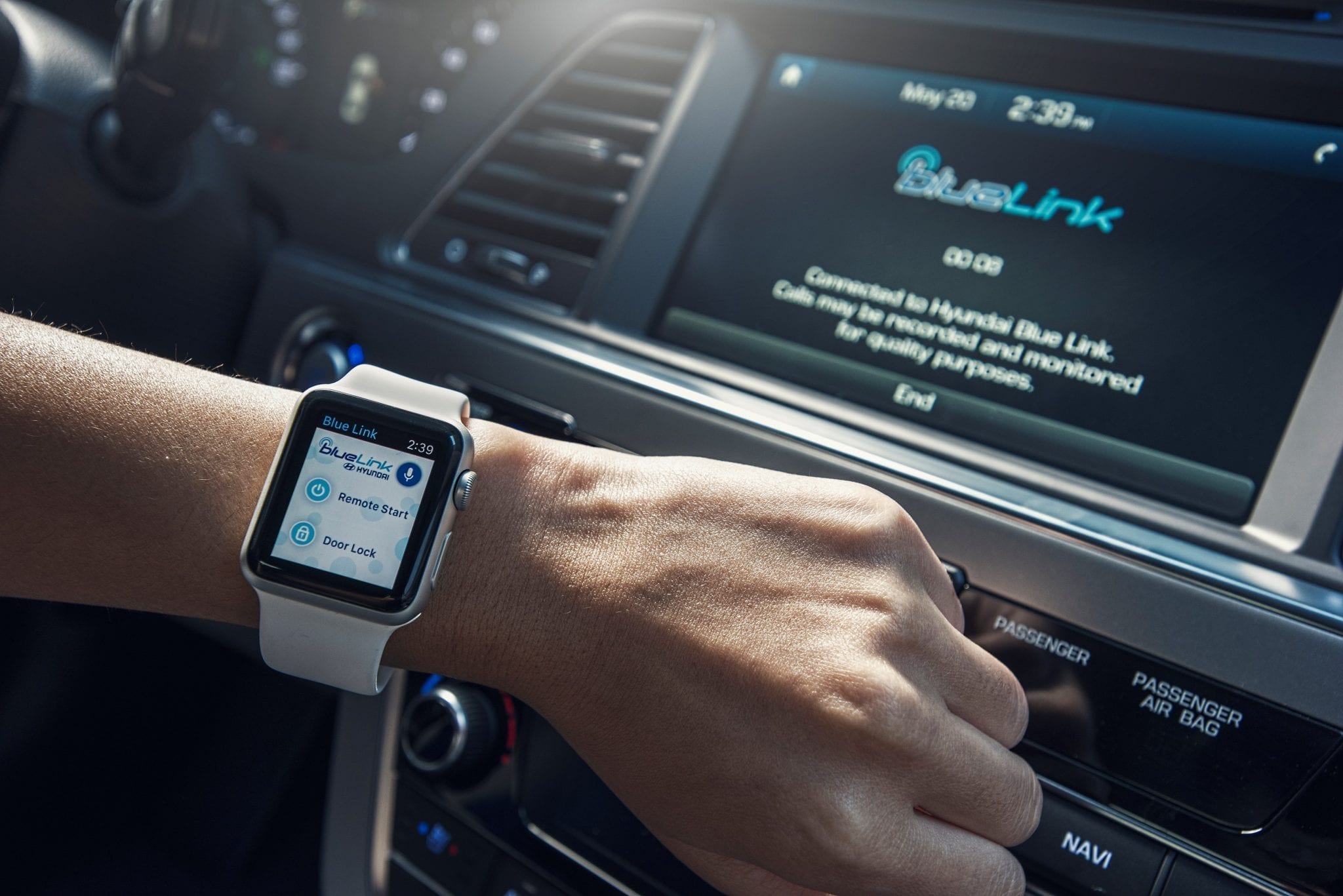
    Hyundai’s participation in ITU will also support the company in building its “hyper-connected intelligent cars” platform, which includes smart remote maintenance services, autonomous driving, smart traffic flow, and a connected “mobility hub” to provide security and data management for connected cars.
    ITU said it will host discussions on the status and future of intelligent transport systems at the Geneva International Motor Show in March 2017 at the Symposium of the Future Networked Car.

    “Standardization will be essential in building a trusted ecosystem of intelligent vehicles,” said Chaesub Lee, Director of the ITU Telecommunication Standardization Bureau. “ITU standardization work is supporting the increasing integration of ICTs in vehicles with road safety and data security as our top priorities.”

    An ITU standard for secure over-the-air software updates for connected cars is expected to be approved in early 2017, and new ITU standards are under development to reduce technology-related driver distraction.

  • South Korean department stores set to smash sales record

    South Korean department stores set to smash sales record

    South Korean department stores are tipped to chalk up sales of more than 30 trillion won (US$25.6 billion) for the first time this year.

    That would make if 86 years since the country’s first department store opened in 1930.

    Industry commentators say the figure reflects the retail category’s emergence from “years of stagnation” to return to growth as they pursue new alliances, an expanded food offer and eCommerce.

    Lotte, Hyundai and Shinsegae account for 80 per cent of the Korean department stores market with Galleria, AK Plaza and smaller brands hold the remainder.

    Just seven years ago, department store sales surpassed the 20 trillion won barrier – this year’s projection is 31 trillion, a remarkable growth rate by any measure, especially considering sales stagnated at 29 trillion won for the last four years.

    “Despite the prolonged economic slowdown and changing consumption trend, the domestic department store market is expected to post growth this year thanks to new concept stores and the expansion of online channels,” a Shinsegae Department Store official said.

  • Hyundai Motor reaches tentative wage deal with South Korean union

    Hyundai Motor reaches tentative wage deal with South Korean union

    Hyundai Motor reached a tentative wage pact with its South Korean labor union on Wednesday after the worst strikes in the automaker’s history disrupted output at its domestic production base.

    The agreement is subject to a vote by almost 50,000 union members on Thursday, who rejected an earlier deal in August because of it was less generous than the previous year’s package.

    The union has held 24 rounds of full-scale or partial strikes since July 19, preventing the automaker from making 131,851 vehicles worth more than 2.9 trillion won ($2.60 billion), the government said last week.

    “The company and the union have formed a common ground that we should prevent further catastrophe as a prolonged strike has had a substantial impact on not only the company but the regional and national economy,” Hyundai Motor said in a statement.

    Under the latest agreement, Hyundai will increase basic monthly pay by 72,000 won; give each worker a one-off payment of 3.3 million won as well as bonus and incentives payments worth 3.5 times their basic monthly wage; and each worker will also receive 10 Hyundai shares, the company said.

    The deal came after the government threatened to intervene to suspend strike action, criticizing the union for walkouts despite relatively high wages at the automaker.

    The prolonged labor disputes coupled with sluggish domestic demand have prompted some analysts to cut earnings forecasts for the July to September quarter which the company is scheduled to report late this month.

    Twelve out of 25 net profit estimates have been revised down in the past 30 days, pushing the average estimate 12 percent lower, according to Thomson Reuters StarMine.

    Hyundai Motor, which is the world’s fifth-biggest carmaker including affiliate Kia Motors (000270.KS), has been hit by strikes in all but four of the union’s 29-year history though it usually made up for lost production by the end of each year.

  • Korean retail sales rise

    Korean retail sales rise

    Korea retail sales rose in June according to government data measuring major department stores and discount chains.

    The government said the year-on-year increase was fuelled by more holidays.

    The combined sales of three department stores – Hyundai, Lotte and Shinsegae – increased 11.8 per cent on-year in June, while those of major discount retailers – E-Mart, Lotte Mart and Home Plus – edged up 0.9 per cent during the same period, according to the data compiled by the Ministry of Trade, Industry and Energy.

    The ministry said sales went up as the number of holidays increased by one day from a year earlier.

    Sales at convenience stores jumped 18 per cent on-year last month, boosted by “a dramatic rise in food sales”, mostly of instant food. Convenience stores have retained double-digit growth rates since the last quarter of 2014 amid rising single-person households.

    The number of single-person households was estimated at 5.06 million in 2015, 7.7 times higher than the 661,000 households of 1985, according to the report by the state-run Korea Institute for Health and Social Affairs.

    Meanwhile, sales at hypermarkets, mostly run by large retailers, slid 7.8 per cent on-year.


  • The next Korea’s largest retail multiplex

    The next Korea’s largest retail multiplex

    Shinsegae Group will open a multiplex shopping mall in Hanam in South Korea’s Gyeonggi province, around September.

    It says it will be the country’s biggest shopping multiplex with a dining area bigger than the Olympic stadium in Seoul. It will have four storeys above ground and another four below.

    As well as luxury brands, the mega-mall will even have vehicle showrooms including BMW, Hyundai and Harley Davidson.

    A Shinsegae department store and wholesale retailer E-mart Traders will bookend the mall.

    On the rooftop will be outdoor swimming pools and spas, while the fourth floor will feature a sports area with badminton, basketball and tennis courts.

    Shinsegae CEO Chung Yong-jin says the mall will be the culmination of the group’s retail know-how.