Tag: india

  • Amazon, Flipkart clock Rs 15,000 crore in just 5 days of festive sale

    Amazon, Flipkart clock Rs 15,000 crore in just 5 days of festive sale

    E-commerce companies in the country are estimated to have raked in sales worth Rs 15,000 crore in about five days of their festive sales with giants like Amazon India and Flipkart claiming stellar show across categories like smartphones, large appliances and fashion.

    RedSeer Consulting in its report said e-tailers had a better “sales performance over the five festive days from October 9-14”, generating about Rs 15,000 crore (around US$ 2 billion) in sales. This translates into about 64 per cent year-on-year growth compared to US$ 1.4 billion (around Rs 10,325 crore) generated in the 2017 edition.

    “The industry witnessed a higher growth this time compared to the last year. This was driven by multiple drivers, key being a larger shopper base from tier II (and beyond) cities. Affordability and loyalty schemes introduced by e-tailing players also played a huge role in converting the visitors into shoppers,” RedSeer said.

    Amazon India Senior Vice President and Country Head Amit Agarwal said their ‘Great Indian Festival’ sale in the first 36 hours alone nearly surpassed the numbers it registered during the same period last year.

    “The event exceeded our most aggressive plans across all the categories…more than 80 per cent of the new customers came from small towns, and we received orders from 99 percent of the serviceable pin-codes in the country in just four days,” he further said.

    He added that smartphone sales accounted for the largest portion in terms of value, while fashion was the biggest in terms of the units shipped.

    “Fashion was also the biggest category in terms of acquiring new customers with 63 percent orders coming from Tier II and III cities… We also saw 2 out of 3 customers using schemes like exchange, EMIs and bank offers,” he said.

    Interestingly, Amazon’s Hindi Website, which was launched recently, saw 2.4 times new customers coming and shopping on the platform as compared to a non-sales day.

    Arch rival Flipkart said its latest edition of the Big Billion Days sale has “smashed all the existing records to set new benchmarks for the entire Indian retail industry”.

    “Flipkart has recorded over 70 percent share of entire Indian e-commerce market in the 5 day-BBD’18 sale, matching scale with global marquee retail events…Gross merchandise value (GMV) grew 80 percent over the last year, whereas units grew by close to 2X year-on-year,” a Flipkart spokesperson said.

    Walmart-backed Flipkart claimed to be cornered 85 percent share in online fashion market and 75 percent share in large appliances category during the sale, while three-in-four smartphones bought between October 10-15 in India were on Flipkart.

    The spokesperson said there was almost 50 percent growth in number of new customers coming in, while one out of two shoppers used payment schemes like EMIs and bank offers.

    Flipkart pointed out that it saw close to 25 million people visiting its app on one of the sale days. This is the first mega shopping event being organised by Flipkart after Walmart acquired 77 percent stake in the company in a US$ 16 billion deal earlier this year.

    Paytm Mall, which is backed by investors like Alibaba and SoftBank, said over 12 million items were sold on its platform, led by categories like mobile phones, consumer electronics, fashion and groceries.

    It added that it had registered five times increase in transactions and sales compared to regular days with over 60 million visitors coming to the platform during the week-long sale. Also, over 2 lakh shopkeepers participated in the sale. ShopClues, which crossed the 1.5 million-order mark, said over 75 percent of its orders came in from tier III and IV towns, especially, from states like Karnataka, Kerala, Tamil Nadu, Assam, Gujarat, and Punjab.

    For Snapdeal, new buyers account for about 38 percent of all the orders placed during the sale so far. Paytm Mall kicked off its festive sale from October 9, while the others began a day later. While the first leg of the sale ended on these platforms on Sunday and Monday, more offers are expected to be rolled out as Diwali approaches.

  • Indian telco sector facing three more quarters of losses

    Indian telco sector facing three more quarters of losses

    India’s telecoms sector is facing at least three more quarters of losses due to the ongoing price war, according to industry body the Cellular Operators’ Association of India (COAI).

    The Indian GSM industry body’s director general Rajan Mathews told that he believes the market’s current tariffs are unsustainable in the long term.

    The industry’s woes are being added to by high license fee and spectrum charges, including high upfront payments, which has guaranteed that the current fiscal year will be tough for the industry.

    The current situation commenced in 2016 when disruptive new entrant Reliance Jio Infocomm entered the market with entirely free services during an extended promotion period. The operator continues to charge only for data, at low rates.

    Jio’s strategy prompted established operators to cut prices to compete, and prompted a wave of consolidation that has seen the market reduced to just three private operators – Jio, Bharti Airtel and the combined Vodafone India and Idea Cellular (now Vodafone Idea).

    Mathews said that there is light at the end of the tunnel, and clarity I expected to emerge in the fiscal year 2019-2020, which begins in April next year.

    But he warned that if tariffs continue to decline it will be detrimental to the health of the industry as it will threaten operators’ ability to invest in emerging technologies and in expanding coverage.

  • Gozoop retains Mumbai City FC’s integrated marketing duties for the third year

    Gozoop retains Mumbai City FC’s integrated marketing duties for the third year

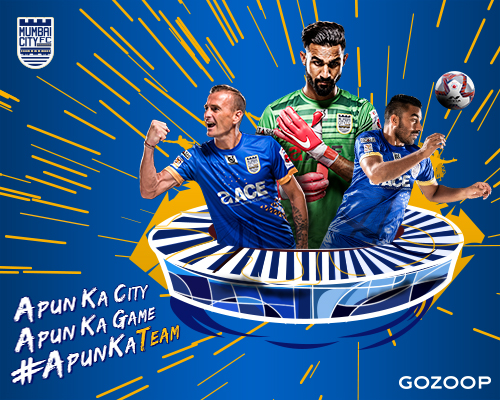
    Gozoop, one of India’s leading integrated marketing agencies, has retained the integrated marketing mandate for the Indian Super League (ISL) franchise Mumbai City FC for the third time. As part of the mandate, the agency will take charge of the mainline, digital and content creation duties for the brand.

    The strategic partnership will see Gozoop playing a pivotal role in conceptualizing 360 degree marketing and communication strategies for MCFC. Over the next season, they will be responsible for creating and executing some unique activations and campaigns for the professional football team to engage their fan base across mediums and reach newer audiences. The agency will also be working with the ISL franchise on a range of video offerings including real-time fan engagement during matches.

    Commenting on the win, Ahmed Aftab Naqvi, Gozoop CEO & Co-founder said, “We have been helping top sports brands reach, engage and delight their fans across the world for a decade now with our best-in-class digital and creative capabilities. Throughout our association with Mumbai City FC, our focus has always been on pushing the boundaries and exceeding expectations to create a multi-dimensional plan for marketing the brand across new-age channels. We are looking forward to give our best to the team once again. Mumbai City FC is very special for us especially since we are based out of Mumbai. We have a team which specialises in sports and will be giving in their best to make this season a successful one in every way possible.”

    Indranil Das Blah, CEO of Mumbai City FC added “Gozoop’s understanding of our Team, category, passion for sports coupled with their understanding of the sports fans from Mumbai, made them the perfect partner for us. This is the third year of our association and we believe that our work will be able to better our relationship with fans even further across all touch points.”

  • IKEA India not to hike prices of low-end furniture products

    IKEA India not to hike prices of low-end furniture products

    Swedish furniture giant IKEA Sunday said it would not raise the prices of low-end furniture and furnishing products if the company costs increase due to Centre’s recent hike in customs duty on some furnishing items to curb imports of non-essential goods.

    “For now, we have not seen any repercussions, but if there is continuation of costs due to hike in customs duties on furniture and furnishing items, then at some point of time we would have to pass it (burden) on to customers, but we may do it on higher-end products, not lower-end,” Patrik Antoni, Deputy Country Manager said.

    “So, customers can still be hopeful,” he said.

    Patrik said IKEA is a global company and it would appreciate global trade, but would not be happy with trade barriers such as customs tariff or import duties.

    He also said trade barriers will only affect ‘ease of doing business,’ which will in the long run affect customers.

    The Central Government had on September 26 hiked customs duties on as many as 19 items, including jet fuel, air conditioners and refrigerators, with an aim to curb imports of non-essential goods.

    IKEA imports most of the products it sells, and many are covered by the latest customs duty hike which includes tableware, kitchenware and household items made of plastic and travel bags, among others.

    The total import bill on account of shipment of such items into the country last fiscal was Rs 86,000 crore.

    Curbing non-essential imports was part of the five-pronged steps announced by the government to check widening current account deficit and capital outflows.

    IKEA is planning to invest nearly Rs 3,000 crore in the next three years to open three fulfillment centres (packing warehouses) in Mumbai, Bengaluru and Delhi.

    The company would open the centres as an omni-channelling brand with large IKEA stores, city centre stores and online presence.

    IKEA is set to open its second store in Mumbai later this year and would hold a ground-breaking ceremony on October 11 in Bengaluru.

    By 2025, there would be over 25 stores across cities such as Ahmedabad, Surat, Pune, Chennai and Kolkata with both online and offline approaches.

  • Flipkart arm to invest Rs 991 cr for logistics hub in Bengal

    Flipkart arm to invest Rs 991 cr for logistics hub in Bengal

    Instakart Services, a part of the online e-commerce major Flipkart, is set to invest Rs 991 crore for setting up a logistics hub in West Bengal, a Minister said on Wednesday.

    “The company proposes to invest Rs 991 crore for setting up a logistic park at our Haringhata Industrial park which has road network advantage and is near the airport. According to the detailed project report, it will provide 18,310 jobs,” Finance, Commerce and Industries Minister Amit Mitra said.

    West Bengal Industrial Development Corporation (WBIDC), in its board meet on Wednesday approved in principle the company’s proposal, which will now go to the Cabinet standing committee for its nod, he said.

    The state government has about 358 acres of land at an industrial park, of which the company will be provided around 100 acres at Rs 63.49 lakh per acre, Mitra said adding that it will act an as anchor investor in the park.

  • E-commerce majors see strong growth in apparel, large appliances as festive sale kicks off

    E-commerce majors see strong growth in apparel, large appliances as festive sale kicks off

    E-commerce giants Flipkart and Amazon India have seen a strong start to their festive sale with categories like apparel and large appliances driving record transactions and new customers coming on board.

    According to a PTI report: These companies have put in months of preparation in ramping up selection, setting up warehouses and strengthening delivery network ahead of the festive sale to ensure a smooth shopping experience for customers, with demand being much higher than on non-festive days.

    Players like Flipkart, Amazon India and Paytm Mall kick-started their festive sale from October 10 that will continue for the next 5-6 days. More offers are expected to be rolled out over the next many days leading up to Diwali.

    “The scale of Big Billion Days (festive sale of Flipkart) has only grown with each passing year and this year too, we expect the trend to continue. While each category sees manifold growth, we expect smartphones, large appliances and apparel to be phenomenally big categories,” Kalyan Krishnamurthy, CEO, Flipkart said.

    He, however, declined to comment on the volume of business expected to be generated, saying “its early to speculate as the growth always end up surprising us”.

    Amit Agarwal, Senior Vice President and Country Head at Amazon India, said the first day of the Great Indian Festival 2018 has been the biggest day ever with record-breaking sales across categories.

    “We are off to a great start and have seen phenomenal numbers during early access and first day that is still on. Three out of four phones sold in the country were on our platform. We saw record sales in large appliances category like TVs, washing machines and refrigerators,” he said, adding that there has been 2.7X growth in number of new customers shopping on Amazon.in compared to previous year’s Diwali.

    Agarwal said Xiaomi, on its platform, sold more than a million devices in a day, while OnePlus has seen record bookings worth Rs 400 crore.

    “More customers bought fashion products than any other, as Amazon fashion saw its biggest day ever more than doubling its growth over last year,” he further said.

    About 20 million people are expected to shop on various e-commerce platforms during the festive sale, translating into sales of around US$ 3 billion for players like Amazon and Flipkart, according to a report by research firm RedSeer.

    The report states that the share of items like electronics and furniture during the sale could be higher this year due to various affordability initiatives being undertaken by the e-commerce players. Mobile phones currently account for a lion’s share of sales on the two leading e-commerce platforms.

  • Julius Baer Expands in India

    Julius Baer Expands in India

    The Swiss-based bank is recruiting a total of 11 advisors. The new hires will be spread across Julius Baer’s Indian branches in Chennai, New Delhi, Calcutta, and Mumbai.

    Asia head Jimmy Lee said this summer that India is a core growth market, along with China and Indonesia, and of course major hubs Singapore and Hong Kong. Julius Baer has massively built its imprint in Asia with the 2012 acquisition of Merrill Lynch’s private bank outside the U.S. – a method the bank is keen to continue, as Lee recently said.

    Growth by M&A

    Since then, the bank has built out its business on the Indian subcontinent, including taking an entire team from now-defunct Banca Svizzera della Italiana, or BSI.

    The 11 bankers will report to Ashish Gumashta, CEO of Julius Baer Wealth Advisers in India, who took over last year following the exit of Rahul Singh last July. Gumashta was a veteran of Merrill Lynch in India, and instrumental in the integration into the Swiss private bank following the deal.

  • Bharti Airtel buys AI startup AuthMe

    Bharti Airtel buys AI startup AuthMe

    Indian telecoms operator Bharti Airtel has acquired AuthMe ID Services (AuthMe), a Bengaluru-based start-up focused on artificial intelligence (AI) based solutions, in a bid to bloster its AI portfolio.

    Financial details of the deal were not disclosed.

    As part of the deal, the core team of AuthMe will join Airtel and be a part of Airtel X Labs in Bengaluru.

    Airtel set up Airtel X Labs to drive innovation in the areas of AI, IoT, AR and VR and is “building a world-class team” for the facility, the operator said in a statement released on Wednesday.

    “We are thrilled to bring on board a bunch of highly talented people who share our passion for building exciting digital solutions that benefit our customers,” Bharti Airtel global CIO Harmeen Mehta said.

    We are rapidly scaling up Airtel X Labs, our digital innovation factory, and these new solutions will accelerate our journey towards rolling out intuitive digital products, particularly in vernacular languages, for our 430 million plus customers.”

    In addition, Airtel has acquired the intellectual proprietary rights for two flagship solutions developed by AuthMe.

    One of the solutions is called Callup AI, which has created a chat and voice assistant that uses AI to quickly and effectively resolve customer queries over email, chat and phone calls. The solution is used by 10 companies across three countries in banking, finance, payments and housing domains.

    The other solution, the “Fintech OCR”, is an end to end Optical Character Recognition (OCR) pipeline built for financial documents. The application is designed for processing KYC docs, bank/credit card/loan statements, mark sheets, and can be customized to process known formats of other documents. It can pick up any language with standard fonts, Airtel said.

    In a separate announcement, Airtel said it has launched its VoLTE services to Bengal and Sikkim to enable customers in all towns across the two states to enjoy HD quality voice calls with faster call setup time.

  • AirAsia to launch Vizag-Bangkok flights from Dec 8

    AirAsia to launch Vizag-Bangkok flights from Dec 8

    AirAsia, a low-cost air carrier, is linking Visakhapatnam and Bangkok and the flights would begin from Dec 8.

    Making the announcement at a media conference here on Monday, Rajkumar Paranthaman, the head of marketing, said there would be flights on four weekdays from here to Bangkok (Monday, Tuesday, Thursday and Saturday) and the return flights from Bangkok to Vizag would be on Monday, Wednesday. Friday and Sunday.

    He said the travel to Bangkok would be hassle-free and visa on arrival would be given to tourists at Bangkok. Further, the airlines has air-connection from Bangkok to 21 destinations within that country. It is also a major hub with international flights to different destinations in the country.

    He said the promotional fare to Bangkok would be Rs 2,999 one way and the tourists and visitors to Thailand could book the tickets up to Oct. 21 to avail themselves of the promotional offer. Visa on arrival would be arranged for Indians, for a fee of roughly Rs 4,000 or so.

    He said, “AirAsia is operating flights to Bangkok from five Indian cities – Chennai, Bengaluru, Kolkata, Jaipur and Kochi – and Vizag would be added to the list in December.

    Cholada Siddhivarn, the Director of the Tourism Authority of Thailand, said India was very important for Thailand. “Last year, 1.2 tourists from India visited Thailand and the number is likely to go up to 1.4 million this year,” she said and added that Indians should go to different parts of Thailand and not merely confine themselves to Bangkok. “Thailand is a friendly country to tourists, specially Indians,” she added.

  • Keppel in joint venture for first commercial development in India

    Keppel in joint venture for first commercial development in India

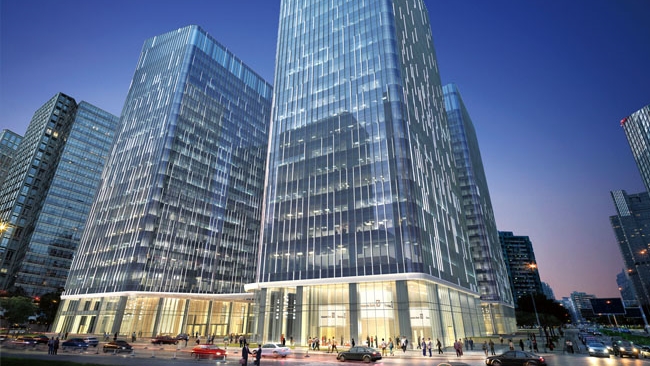
    Keppel Land, the property subsidiary of Singaporean conglomerate Keppel Corporation, is in a partnership to develop its first commercial property in India.

    The group has acquired a well-located 3.09ha site from Metro Cash & Carry India in Yeshwanthpur through a majority 51:49 joint venture with Indian property developer Puravankara.

    The total consideration of INR 4.05 billion (US$81 million) includes the cost of $16 million for the construction of a 160,000sqft retail/office complex. The total development cost, including the land, is $207.4 million.

    Yeshwanthpur is 5km northwest of central Bangalore, one of the primary hubs for the technology industry in India. The area is among the largest and fastest-growing office markets in the country.

  • Samsung opens biggest store ever in India

    Samsung opens biggest store ever in India

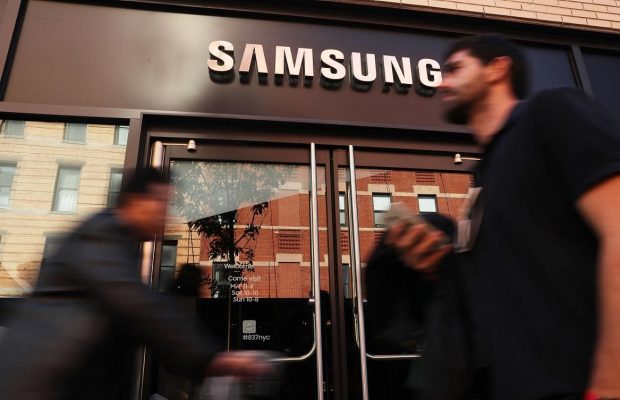
    South Korea’s Samsung Electronics announced the opening of the world’s largest mobile experience centre in Bengaluru.

    Located in the iconic Opera House building situated on Brigade Road, the new India flagship is the smartphone maker’s largest mobile experience centre.

    Dubbed “Samsung Opera House”, the renovated and redesigned retail space houses a mix of “technology, lifestyle and innovation to offer people unique experiences,” according to the Seoul headquartered Samsung, in a press release.

    Restored over two years, the store’s Opera House façade retains its original look and feel. On the inside, a modern experiential space has been developed with extensive use of modern technology.

    The store showcases Samsung’s full line-up of smartphones and wearable devices at the experience centre alongside flagship consumer electronics products such as smart tvs, ovens and refrigerators

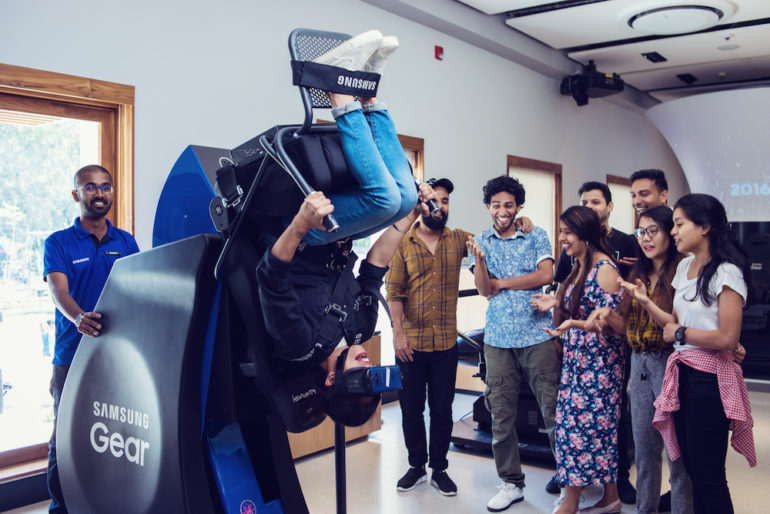
    Harnessing the brand’s #DiscoverTomorrowToday mantra, Indian shoppers can also expect a differentiated product experience, centred on virtual reality and artificial intelligence, as well as the internet of things.

    VR experiences include a 4D Sway Chair and the Whiplash Pulsar 4D chair that makes 360 degrees three-dimensional movements, designed to simulate a fighter pilot doing extreme aircraft stunts, or experience a space battle, or a roller coaster ride.

    Consumers can also pre-book the centre’s home theatre zone for watching movies and shows.

    “Today’s consumers, especially millennials, seek unique experiences. They want to interact with the brand, touch, feel and create. This is what Samsung Opera House is about.

    We have curated never seen before experiences that will excite people of all age groups alike. Opera House will also organize workshops, activities and events, bringing together Samsung’s innovations with people’s passions. We are proud of the transformation that this place has seen,” HC Hong, President & CEO, Samsung SouthWest Asia, said.

    Samsung selected Bengaluru as host city given its notoriety as India’s tech capital, which has attracted many Millennials and tech-savvy consumers to the area.

    The new store in India comes two months after Samsung inaugurated the world’s largest mobile factory in Noida in July this year, reinforcing the company’s commitment to India.


  • H&M India sales jump 49 pc in June-August qtr to Rs 352 crore

    H&M India sales jump 49 pc in June-August qtr to Rs 352 crore

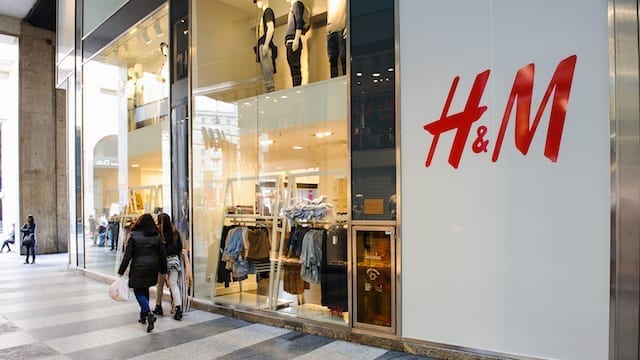
    Swedish fashion retailer Hennes & Mauritz (H&M) posted a 49 percent growth in sales in India to 428 million Swedish Krona (around Rs 352 crore) in June-August quarter of 2018.

    While, for the nine-month period (December 2017 to August 2018) H&M India sales reported a 34 percent growth to 1,124 million Swedish Krona (around Rs 924 crore) including VAT compared to the corresponding period.

    H&M, which follows December-November financial year, has added 7 stores during the last nine months in India, totalling to a network of 34 stores.

    The company had posted sales of 178,817 million Swedish Krona in December-August, H&M said in a nine-month report.

    In the June-August quarter, H&M reported a global sales of 64,800 million Swedish Krona.

    During the quarter, H&M’s online sales increased by 32 percent, it added.

    “The group’s online sales increased by more than 30 percent in the third quarter. Today H&M online is in 47 markets and we are continuing at full speed to roll out online globally to all our existing store markets as well as to other markets,” said H&M CEO Karl-Johan Persson.

    During the three-month period, Germany was the highest contributor with 9,851 million Swedish Krona sales, followed by USA with 6,869 million Swedish Krona sales. H&M operates 458 and 559 stores in Germany and USA, respectively.

    While, China had a sales of 3,225 million Swedish Krona during the June-August quarter of 2018, where it operates 522 stores.

  • Metro Cash & Carry India to open smaller stores to expand quickly

    Metro Cash & Carry India to open smaller stores to expand quickly

    The German discount wholesaler is about to open its 27th store in the market which will be just 40,000sqft in size, far smaller than the 75,000-100,000sqft format of most existing stores.

    The new compact store in Ghaziabad follows another of similar size in Nasik.

    Arvind Mediratta, CEO and MD of Metro Cash and Carry India, says going forward new stores will be between 40,000sqft  and 50,000 sqft. “We are doing away with bigger stores in the range of 75,000-100,000sqft,” he said.

    The smaller footprint has also been necessitated by a lack of development sites: a 100,000sqft store requires about eight acres of land, an area not easy to find in cities.

    “The store format of 40,000sqft is easy to scale up,” Mediratta said in an interview. “A lot of people think more space means more sales. Customers don’t come to you more often because you have a bigger store.”

    Metro Cash and Carry India is targeting 50 stores by 2020, but given the move to smaller outlets, that number may be surpassed, said Mediratta.

    “[But] we don’t want to get into reckless expansion. In our business, to make money the cost of real estate has to be right. It is not just about the availability of the real estate but it has also to be at the right price,” he said.

  • Walmart India eyes 10 pc revenue from private labels, 30 stores by 2019

    Walmart India eyes 10 pc revenue from private labels, 30 stores by 2019

    Walmart India, which runs 22 Best Price wholesale stores, is planning to increase the share of its private labels to topline to 10 percent by next year as it plans to tap the Flipkart platform.

    According to a report: The company opened its 22nd store in Ludhiana late last month, which is the sixth in the state, where it began with and the second in the Punjab city.

    The company will have 30 stores by the time it completes a decade of its second coming next year.

    Globally, the retail major which is bigger than Boeing, Coca-Cola, Facebook, and the Google parent Alphabet in total sales–nets around 20 percent of its topline from private labels, which are low-priced but high margin items while from a volume perspective it is around 25 percent, which it has already achieved in the country as well.

    Walmart India closed fiscal 2017 with a topline of Rs 3,609 crore, up around 14 percent, according to government filing.

    The numbers for FY18 is not available for Walmart.

    “Currently, our revenue from private labels is 6-7 per cent from our two brands–Right Buy and Member’s Mark, wherein the first is the cheaper than the other. We hope to take this to 10 per cent by 2019, when we close our first decade,” Krish Iyer, Chief Executive, Walmart India said.

    Internationally, its private labels are a US$ 60 billion business for them under the name of Sams Club, while its total volume is over US$ 500 billion.

    India is the only market where Walmart is only into wholesale.

    Iyer, also said he expects an uptick in private label sales going forward as the company is planning to cross-sell these brands on Flipkart, its online marketplace subsidiary here.

    In the biggest M&A deal, the world’s largest retailed Walmart had bought 77 percent of the homegrown online marketplace Flipkart for over US$ 16 billion in August.

    It can be noted that FDI norms allow only 51 percent in multi-brand retail, whereas in cash & carry 100 percent is permitted.

    Flipkart also has developed private brands like Billion though not exactly in the grocery segment.

    “What can be done is while we can’t sell on Flipkart, our manufactures can do and vice versa, which can be beneficial for both,” Iyer said.

    But he was quick to add that both are independent companies with independent boards and the process can take time.

    “Nothing will happen immediately at least over the next quarter or so. But we do see tremendous scope for synergies as Flipkart is very good at their logistics, deliveries, customer relationship management, artificial intelligence, machine learning and analytics, among others. We too have similar strengths, which can be combined,” he said.

    The company made a reentry in 2009 after exiting its failed jv with Bharati Enterprises, on its own and opened the first wholesale store in Amritsar. The new 56,000 sq.ft. store in Ludhiana is the sixth in the state and the first one since August 2015 in Agra.

    The company has announced plans to open 50 stores by 2025. When asked where it would be by the turn of the first decade (next year), Iyer said, adding they would have 30 stores by December 2019. We will also two fulfilment centres by then, and the next one is coming up in Vishakapattanam by December 2019.

    He said the company has created over 1 million customers since 2009, and each store typically generates around 2,000 jobs of which around 250 are direct jobs.
    Walmart eyes 10 pc revenue from private labels, 30 stores by 2019

    Walmart India, which runs 22 Best Price wholesale stores, is planning to increase the share of its private labels to topline to 10 percent by next year as it plans to tap the Flipkart platform.

    According to a report: The company opened its 22nd store in Ludhiana late last month, which is the sixth in the state, where it began with and the second in the Punjab city.

    The company will have 30 stores by the time it completes a decade of its second coming next year.

    Globally, the retail major which is bigger than Boeing, Coca-Cola, Facebook, and the Google parent Alphabet in total sales–nets around 20 percent of its topline from private labels, which are low-priced but high margin items while from a volume perspective it is around 25 percent, which it has already achieved in the country as well.

    Walmart India closed fiscal 2017 with a topline of Rs 3,609 crore, up around 14 percent, according to government filing.

    The numbers for FY18 is not available for Walmart.

    “Currently, our revenue from private labels is 6-7 per cent from our two brands–Right Buy and Member’s Mark, wherein the first is the cheaper than the other. We hope to take this to 10 per cent by 2019, when we close our first decade,” Krish Iyer, Chief Executive, Walmart India said.

    Internationally, its private labels are a US$ 60 billion business for them under the name of Sams Club, while its total volume is over US$ 500 billion.

    India is the only market where Walmart is only into wholesale.

    Iyer, also said he expects an uptick in private label sales going forward as the company is planning to cross-sell these brands on Flipkart, its online marketplace subsidiary here.

    In the biggest M&A deal, the world’s largest retailed Walmart had bought 77 percent of the homegrown online marketplace Flipkart for over US$ 16 billion in August.

    It can be noted that FDI norms allow only 51 percent in multi-brand retail, whereas in cash & carry 100 percent is permitted.

    Flipkart also has developed private brands like Billion though not exactly in the grocery segment.

    “What can be done is while we can’t sell on Flipkart, our manufactures can do and vice versa, which can be beneficial for both,” Iyer said.

    But he was quick to add that both are independent companies with independent boards and the process can take time.

    “Nothing will happen immediately at least over the next quarter or so. But we do see tremendous scope for synergies as Flipkart is very good at their logistics, deliveries, customer relationship management, artificial intelligence, machine learning and analytics, among others. We too have similar strengths, which can be combined,” he said.

    The company made a reentry in 2009 after exiting its failed jv with Bharati Enterprises, on its own and opened the first wholesale store in Amritsar. The new 56,000 sq.ft. store in Ludhiana is the sixth in the state and the first one since August 2015 in Agra.

    The company has announced plans to open 50 stores by 2025. When asked where it would be by the turn of the first decade (next year), Iyer said, adding they would have 30 stores by December 2019. We will also two fulfilment centres by then, and the next one is coming up in Vishakapattanam by December 2019.

    He said the company has created over 1 million customers since 2009, and each store typically generates around 2,000 jobs of which around 250 are direct jobs.

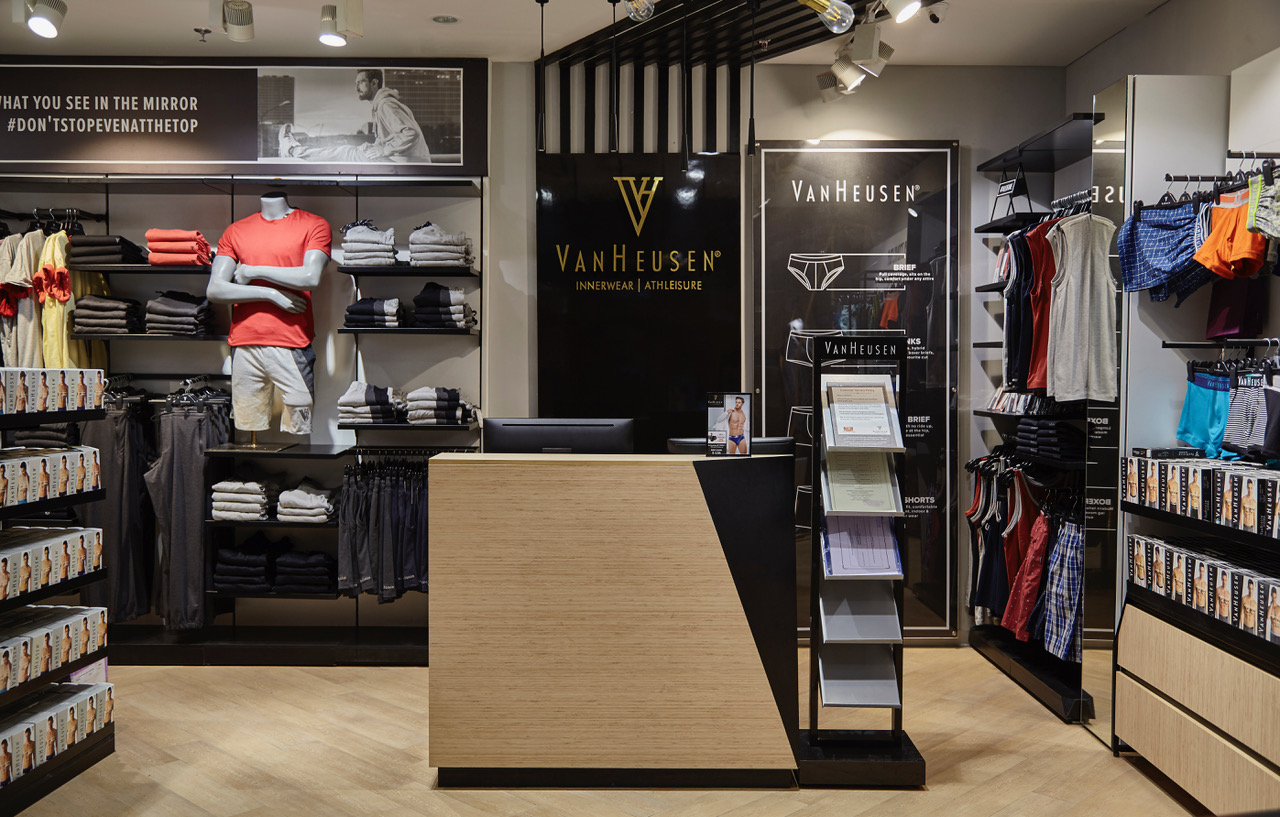
  • India’s Van Heusen launches flagship stores in Bengaluru

    India’s Van Heusen launches flagship stores in Bengaluru

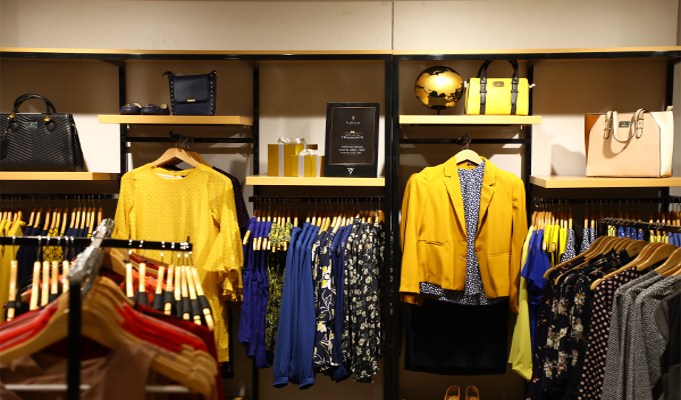
    Van Heusen a premium formal fashion brand from Aditya Birla Fashion and Retail Limited unveils its flagship stores in Brigade Road and HSR Layout, Bangaluru. The new stores will house the exclusive Van Heusen men’s wear and women’s wear collections.

    Located in the heart of the city, the new stores cater to fashionable young professionals looking to create the right impact, the exclusive brand stores will offer an array of wardrobe options, for men and women, ranging from corporate suits to fashion jackets, casual work-wear to club wear and the right accessories to complete the look.

    On the occasion of the store launch Abhay Bahugune, Chief Operating Officer, Van Heusen, Aditya Birla Fashion and Retail Ltd said, “Van Heusen has over the last decade carved a niche for itself as a renowned fashion brand with a strong presence across leading cities and towns in India. Today, Van Heusen enjoys a high recall value and is perceived as a brand that provides power dressing to the young professionals. Being the third largest city of India, Bangalore is an important market for us. The new launch of our new brand outlets at Brigade Road and HSR Layout takes the store count in the city to 53. We are delighted with the overwhelming response received and are confident to cater to the growing demand with the right offering.”

    The store will also house collections from Van Heusen’s sub-brands including VDot and VH Sport. Each product line reflects the latest cuts and fits, along with cutting edge innovation in fabric and technology.