Tag: india

  • Retailers acknowledge the new paradigm shift in consumer behavior

    Retailers acknowledge the new paradigm shift in consumer behavior

    Indian retail is coming to terms with the digital disruption that is converging the online and offline retailers to explore customer insights using artificial intelligence in the new landscape for retail that is set to usher.

    At the two-day conclave of India Retail Forum 2018 that concluded today, experts across the spectrum deliberated on the affluence index and retail potential in the country and the tectonic shift in changing space allocation at shopping malls towards food and entertainment as online takes precedence in shopping.

    With the advent of the online shopping, malls are getting reconfigured with food and beverage along with entertainment now allocating for up to 40 percent for the space compared to 15-17 percent in the past few years, said Ashutosh Limaye, Director & Head, Consulting Services, ANAROCK Property Consultants.

    Mobile penetration on the other hand has boosted online shopping with lower cash on delivery and more through payment gateways. Moreover, with messaging on the rise, the internet linked mobile usage is set to reshape the retail business with mobile moving from being a mere technology to consumer behavior.

    “By 2020 mobile will drive the majority of all sales but 90 percent plus of these sales will still occur in stores,” said Prateek Sinha, Industry Manager, Retail & E-commerce, Facebook India.

    Further, mobile is increasingly reshaping the retail business with 2.2 hours per day mobile usage per young adult and 80 percent users using net on their mobile while watching TV, he said.

    Over the past four years, share of e-commerce transaction over mobile has rose to 29 percent from 7 percent while Cash on Delivery has declined to 16 percent from 31 percent.

    “Decreasing data prices and a ubiquitous mobile penetration is driving the always online consumer with attractive online deals and discounts,” said Anurag Mathur, Partner & Leader – Consumer Goods & Retail, PwC Strategy.

    Amid the rising online shopping fueled by internet and mobile penetration, the digital disruption has impacted the brick and mortar retail malls, that had seen record supply and absorption in 2011.

    Since then there has been a rationalization of supply in recent years. However, the future looks promising with healthy supply pipeline and robust absorption going forward, said Shajai Jacob, Director and Head, Marketing, JLL India.

    The two-day conclave also gave indications about increasing amicable relationships between offline and online players with global retail giants like Walmart, Amazon, IKEA showing interest in the Indian growth story.

  • Reliance Jewels unveils its flagship outlet in Ranchi

    Reliance Jewels unveils its flagship outlet in Ranchi

    Reliance Jewels, one of India’s leading fine jewellery brands, launched its flagship showroom in Ranchi. As Jharkhand, a state with immense natural resources races towards being the new business destination in eastern India, Reliance Jewels is glad to be part of its journey.

    Reliance Jewels’ Ranchi showroom is the third showroom in Jharkhand after Jamshedpur and Dhanbad.

    Reliance Jewels Ranchi showroom was inaugurated by Parimal Nathwani, Member of Parliament (Rajya Sabha) from Jharkhand and Group President (Corporate Affairs) of Reliance Industries Limited.

    On this occasion he stated “I am happy to bring the best of the brands and experience to Ranchi, the state capital of my Karmabhoomi, as we pave way for a better tomorrow. Reliance Retail with its many brands has a formidable presence in Jharkhand today and the addition of Reliance Jewels is sure to enhance the shopping experience for its patrons in Ranchi with its beautifully designed jewellery and unique shopping experience”.

    Speaking on the launch of the new showroom in Ranchi, Sunil Nayak, CEO, Reliance Jewels said, “We are delighted to be a part of such an esteemed city, and are extremely keen on amplifying the charm and enhance the grace of our brand and its offerings here. This showroom will showcase a plethora of designs and will offer contemporary as well as traditional pieces along with an assurance of quality and purity. We are looking forward to serve the people of Ranchi by offering a wide range of exquisite pieces as part of our diverse jewellery collection along with a unique shopping experience.”

    Standing by the philosophy of ‘Be the Moment’ Reliance Jewels as a brand firmly believes that every moment is special and needs to be celebrated. Celebrating millions of such special moments in their patron’s lives over the last 11 Years, Reliance Jewels is excited to be part of Ranchi.

    The new showroom spread over 2,200 sq.ft will not only treat their patrons to new look and design that spells grandeur, but will also showcase exclusive collections of traditional and contemporary gold, diamond, platinum, and solitaire jewellery, along with one of a kind shopping experience. The new showroom with its distinct ambient lighting and eye catching display complemented by delightful customer service is sure to win hearts of patrons.

    Customers will be able to choose from an extensive range of lustrous Diamond jewellery and Solitaire collections, and a wide range of Gold jewellery collections in royal antique, Nakashi & Temple designs, Kundan, Classic yellow Gold Filigree designs and jewellery embellished with precious and semi-precious colour stones that are exquisitely crafted with finesse & precision by our artistes. The showroom will also feature traditionally crafted heritage gold jewellery along with a range of contemporary designs, suitable for every occasion. Patrons will be further treated to a viewing experience of the brand’s popular award-winning collections, which have also been put on display exclusively at this new showroom.

  • Coca-Cola enters ‘health & wellness’ space in India

    Coca-Cola enters ‘health & wellness’ space in India

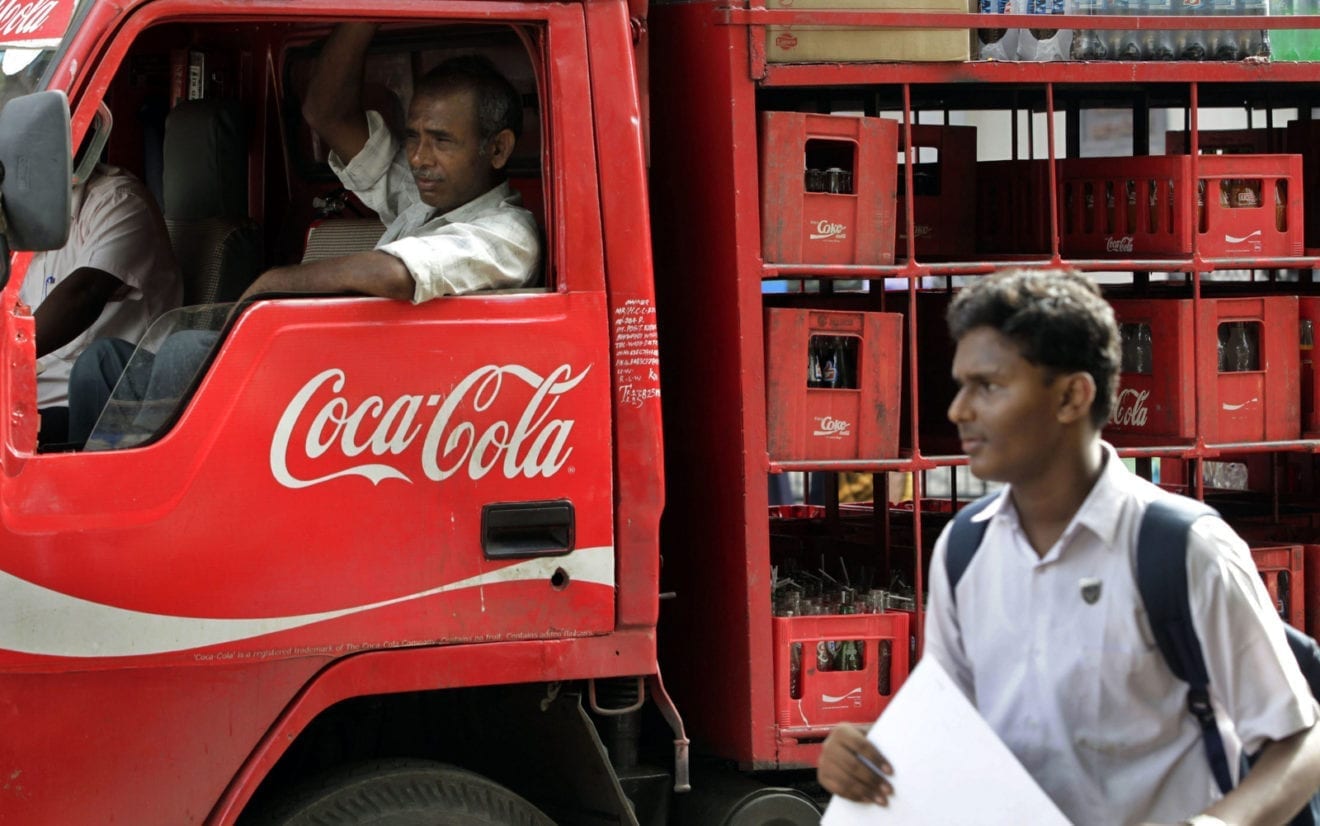
    Taking another step towards its commitment to provide an array of healthy and nutritious beverage choices to consumers, Coca-Cola India expanded its portfolio of Minute Maid by launching Minute Maid Smoothie, a delicious snack that combines the ‘Power of 3’ ingredients – Fruits, Milk and Nutrients.

    The launch is a continuation of Coca-Cola India’s efforts to expand its portfolio including, ‘Health and Wellness’. This is a significant addition in Minute Maid fraternity and underlines company’s commitment towards the Fruit Circular Economy initiative.

    Made from locally sourced fruits, the product has been designed to suit the Indian palate and cater to the increasing needs of mothers looking for a combination of nutritious goodness and taste. Minute Maid Smoothie is available in Mango & Banana variants, priced at Rs 30 for 250ml.

    “Minute Maid Smoothie is an ideal choice for mothers looking for a snack that is tasty, filling and nutritious. We specifically developed this product after listening to mothers and understanding their needs. Children are picky eaters and are always look for something tasty, mothers often find it tough to balance between nutrition and taste. MM Smoothie contains real mango juice that gives it a great taste kids love, puree of banana which makes it filling, goodness of whole milk that mothers trust and topped up with nutrients such as Vitamin B3, B6, Vitamin E, Zinc and Calcium that play a key role in metabolism and building strength and stamina” said, Vijay Parasuraman, Vice President, Coca-Cola India & South West Asia.

    In the first phase of the launch, the product will be available in Tamil Nadu, Karnataka, Telangana and Andhra Pradesh, followed by other states. In the coming months, Coca-Cola India will also expand the Smoothie range by introducing other popular flavours.

  • Supply of India’s retail space up 27 pc in January-June to meet retailers’ demand

    Supply of India’s retail space up 27 pc in January-June to meet retailers’ demand

    Property consultant CBRE on Tuesday said the supply of retail space rose 27 percent during January-June period this year in seven major cities to cater the rising demand from domestic and foreign retailers.

    In its latest report titled ‘India Retail Market View’, CBRE said the new supply of retail space increased to 1.9 million sq ft in the first half of 2018 as against 1.5 million sq ft in the same period last year.

    The fresh supply came in Chennai, Hyderabad and Delhi-NCR. During the reported period, Chennai witnessed the launch of VR Mall (1 million sq ft), L&T Hyderabad Next and L&T Next Galleria (totalling 0.65 million sq ft) in Hyderabad, and 32nd Avenue (0.25 million sq ft) in Gurgaon.

    In January-June 2017, Mumbai saw a supply of one million sq ft, Bengaluru (0.3 million sq ft) and NCR (O.2 million sq ft). Global brands such as Dyson, Molton Brown, Berluti, American Eagle, Antony Morato, Daniel Wellington and Bath & Body Works entered India with their first stores becoming operational during this period.

    International brands such as Tom Tailor, Miniso, Taco Bell, Mango, Marks and Spencer, H&M and Starbucks continued to expand operations by entering new markets across the country.

    “The overall outlook for the Indian retail real estate market continues to be positive at the back of various policy reforms, entry of foreign players and increasing urbanisation,” said Anshuman Magazine, Chairman, India & South East Asia, CBRE.

    He said around 4–5 million sq ft of additional supply could be added during second half of 2018 across most major cities.

    “With REITs in the offing, the focus on developing investment grade developments is likely to redefine the retail segment in India,” he added.

    On rentals, CBRE said trends varied across key high streets in major cities during January-June 2018. Rentals appreciated in high-street markets such as Khan Market, DLF Galleria (NCR), Linking Road (Mumbai), MG Road and Aundh (Pune). Some high street locations in Bengaluru and Hyderabad also saw increase in rents.

    On the other hand, rentals remained stable in most of the other high-streets across the country. Rentals across organised retail developments also displayed a varied trend – mall rentals remained stable in Hyderabad, Mumbai, Pune and Kolkata but increased in Bengaluru, Chennai and NCR.

  • Luxury Malls in India: The destination for new age shoppers

    Luxury Malls in India: The destination for new age shoppers

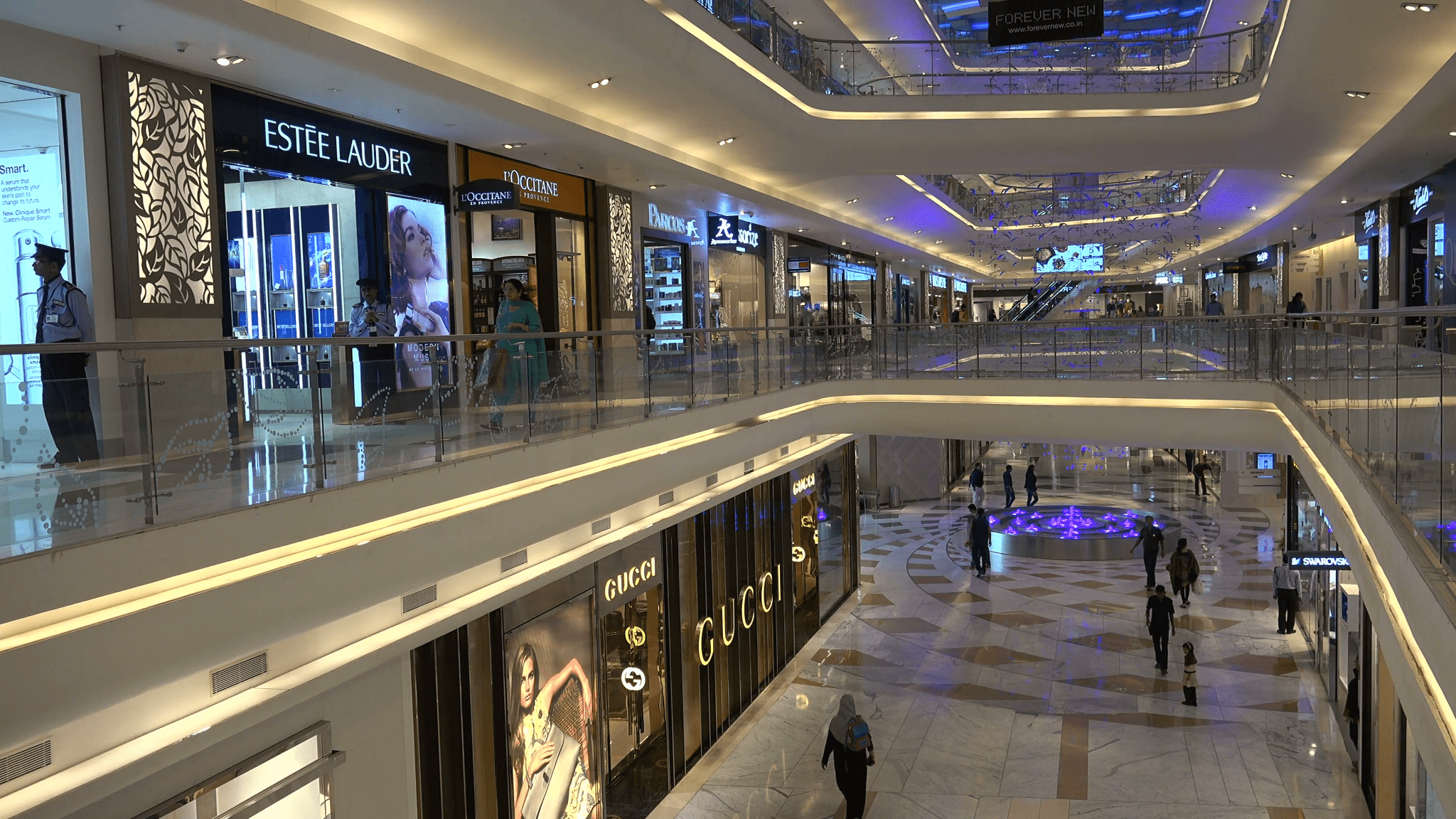
    Indian malls have cracked the ‘how to attract the customer’ code. They have transformed into family entertainment centres, providing shoppers with the best of in retail, fun and food. They have morphed into theme malls, offering inviting and intriguing experiences to draw people in.

    In this era of burgeoning e-commerce retail, malls are reinventing the physical experience, and shoppers are spending long hours in these malls to eat, shop and be entertained.

    With the increasing spending power – owing largely to an increase in disposable income – the modern shopper is progressively experimenting with taste and requirements. This change in behavior and evolving purchasing habits of the younger generation globally has led to a disruption in the way malls operate.

    “The manifestation of social media, rise of emerging markets, sprouting aspirational youth and a growing sense of ‘brand-consciousness’ are propelling the wheel of growth of luxury sector in India. Consumers are becoming aware – and vocal – about their lifestyle, and looks, and are bold enough to experiment with different fashions, silhouettes, colour and fits,” writes Prem Dewan, Retail Head, OSL Luxury Collections Pvt Ltd-Corneliani.

    “Their shopping preferences are no longer dependent on fit or colour of the product; they expect an experience at the boutiques. Also, there is a wider target audience residing in Tier II and III cities that have the propensity to buy luxury goods and are emerging as new reservoirs of luxury spending,” he goes to say.

    Trying to cater to the aspirational consumer, malls are increasingly introducing bridge-to-luxury and luxury brands in India. Mall owners – quick to identify an opportunity in luxury retail – started going the whole hog in their efforts to increase footfalls by launching full-scale luxury malls.

    2008 saw the launch of India’s first two luxury malls – DLF Emporio in Delhi and UB City in Bangalore. The move was welcomed by luxury retailers, giving them the right space to set up shop and the perfect clientele to cater to. And although the growth has been slow, with luxury occupying just a fraction of retail space in India, malls are taking the category seriously.

    What Makes a Mall a Luxury Mall?

    To be on top of the popularity chart, a mall needs to fulfill all aspects of the luxury quotient. The average lifespan of a shopping mall design is about seven years globally. It may exceed by two-three years more in Tier III and IV cities, but for Tier I and II cities, the period is definitely shrinking. This means that shopping centers built before 2007 probably don’t provide the amenities and shopping environment or international fashion brands younger, more affluent consumers are seeking. Newly built malls are way ahead in sale, footfalls and popularity than the older ones. Even the rate of renting space is much higher in these malls.

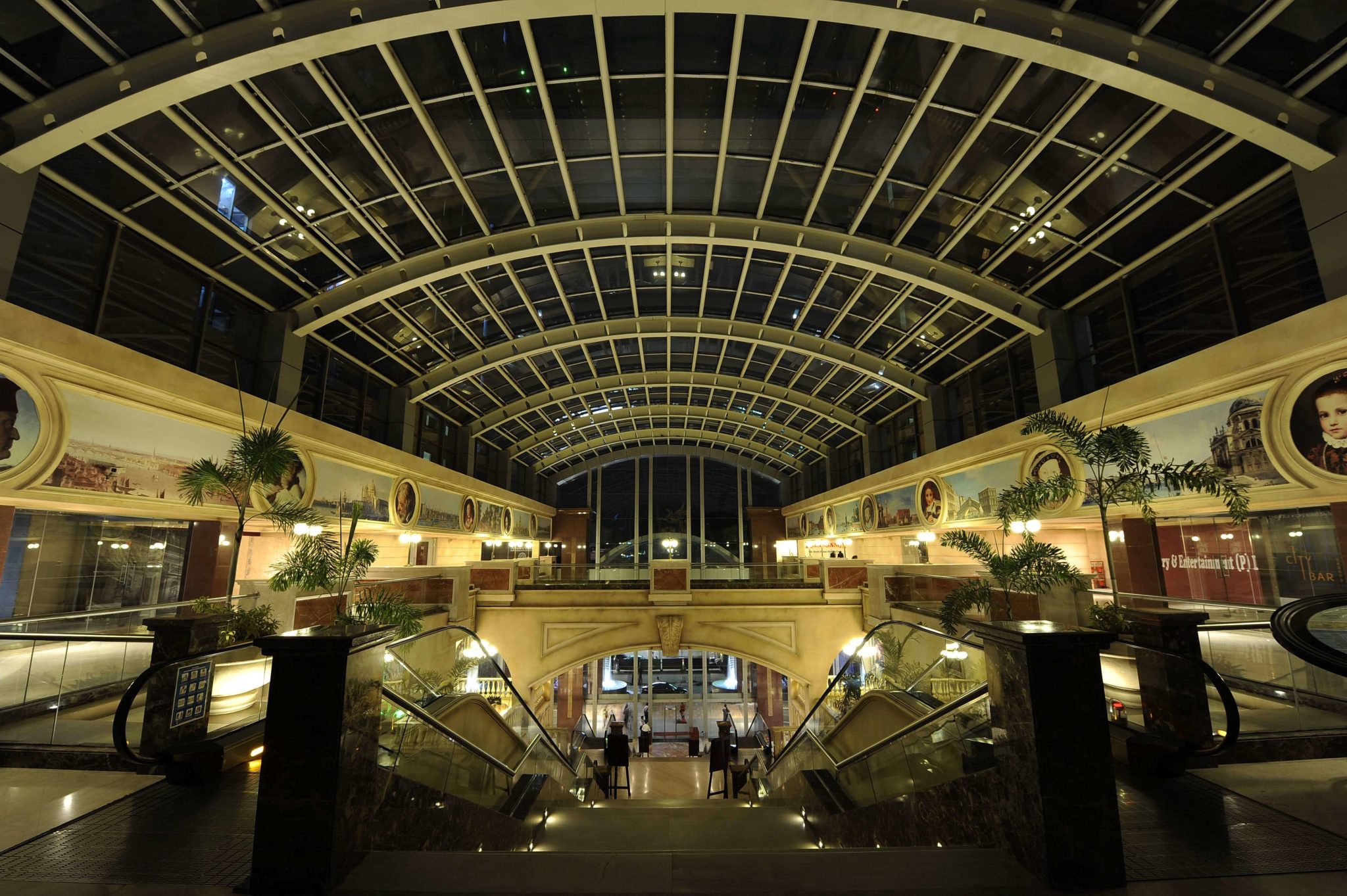
    For luxury malls, providing extravagant services to their patrons is of utmost importance and they need to start planning right from the architecture stage. The buildings are stunning, elegant with generous spaces both on the exterior as well inside, with large spaces earmarked for stores.

    Top of the line entertainment options, fine-dining restaurants and leisure components – coupled with the best in technology – are crucial in the making of these malls.

    While brand names matter in luxury retail in India, luxury malls globally have gone a step ahead to provide the best in class entertainment to visitors. There are malls that have roller coasters, indoor water parks, five-star hotels with luxury suites, snow parks, spas and other features to relax, re-align and re-energise.

    West Edmonton Mall in Canada – which is counted amongst the top luxury malls in the world – is home to the world’s largest indoor water park. It also features the world’s largest wave pool, an 83-foot-high slide and a children’s play park area. Adding to this is an indoor lake that is home to four sea lions, an ice rink and an 18-hole miniature golf course. Visitors can also try indoor shooting range, watch a movie, or spend some time at the Ed’s Recreation Centre, which houses a bowling alley, a music stage and arcade games.

    The mall also features GalaxyLand, the indoor park is home to 24 rides and attractions, including a triple-loop roller coaster, a 3D Theater and a number of thrill rides. It even houses an inter-domination chapel, where hundreds of couples have gotten married since the mall opened in 1981.

    Despite being one of the top retail destinations in the world, India still has to play catch up to the variety in luxury offered globally. The country only has only few luxury malls to boast of, including DLF Emporio and The Chanakya in Delhi, UB City in Bangalore, Palladium in Mumbai, Bergamo in Chennai, and Quest Mall in Kolkata.

    Here are some factors that make a mall a luxury mall:

    – Niche Geographies

    Location is an extremely important parameter and goes a long way in deciding the kind of audience a mall will be able to attract. Luxury malls need to find prime locations with the right socio-economic strata of people, so they can attract a strong and discerning clientele.

    Luxury malls require a large area to accommodate every possible brand under its roof. The ambience, dining, phygital experience, comfort and service should be of world class as shopping in these mall is preferred mostly by the elite customers.

    In fact, it may not be incorrect to say that the future of luxury malls will be shaped by the kind of brands they bring in (brand heritage), exclusivity, the customer relationships they build, and whether they manage to find the correct location in high-growth areas.

    – Comfort & Convenience

    One downside for luxury malls for the well-to-do is that they constantly need to update their offerings to appease all those discerning buyers searching for the hottest brands. So, they are constantly brainstorming on ways to keep shoppers entertained. At the base level of that initiative is creating a space that shoppers actually want to be in and providing them with the best of convenience and amenities, along with seven-star hospitality services like a huge parking area supporting multiple entries points to avoid crowds and congestion, a concierge and a VIP arrival area.

    Shopping centres also look to provide a ‘mall essence’ that puts consumers at ease, makes them feel comfortable, encourages them to stay longer and, more importantly, persuades them to return. New malls can meet or exceed these needs and consumer expectations by creating iconic “shoppertainment” locations apart from providing the best of facilities.

    – The Best in Entertainment

    Entertainment is everything. And in a luxury environment, it is more than that – it has to be uber-creative and super innovative. Visitors get and bore weary if the mall presents them similar kind of facilities and activities on every visit. Apart from kid zones and theme parks which are fixtures, malls need to cater to the sensibilities of the local community. This is usually done by celebrating local festivals, cultural initiatives and holding events at regular intervals for discerning patrons.

    Luxury malls also usually include features like outdoor plazas, amphitheaters, and outdoor fine-dine food court terrace, adding value to their offerings.

    – Personalization & Technology

    Luxury in its very essence thrives on exclusivity and personalized experiences. Technology, albeit impersonal, has proven to be a strong ally in the recent past and an asset that luxury brands and malls can’t ignore.

    The Challenges of Being in the Business of Luxury in India

    – Security

    As per a report published by Technopak, India doesn’t have the culture of luxury brands on high streets because of safety and security issues. That’s the reason why most luxury brands in India are housed in the shopping arcades of five-star hotels. The monthly rent of these outlets would be Rs 600 to Rs 1,000 per sq. ft, say industry sources. Finding a real estate at an ultra-posh locality for building these malls is a very tough task.

    – Cost and Time

    The cost of construction of a luxury mall is almost three times more than a regular mall, in respect to the amount of the return. It takes three to five years to build a luxury mall and the average cost for overall development (excluding the land cost) in Mumbai and Delhi is in the range of Rs. 7,000-9,000 per sq. ft, compared with Rs 4,000-5,000 a sq. ft for a normal mall, as per real estate developers quotes published in the report. The rental for a luxury mall ranges from Rs 500 to Rs 1,500 a sq. ft per month, while regular malls charge much lower.

    In conclusion, the Indian shopping industry is shifting gears and a sudden upsurge in urbanistaion of society has led to major demands for expansion of city centres on grounds of retail, fashion, F&B, and entertainment – all of which need to be handled with proper planning and infrastructure. Considering the country’s projected GDP growth and rise in disposable incomes, mall developers are hopeful that the luxury market will evolve with time.


  • Growth of Indian fashion e-commerce

    Growth of Indian fashion e-commerce

    E-commerce is the future of retail, and is taking giant steps as technology is being redefined with each successive year. But, contrary to popular belief, e-tailing can be expected to actually augment the growth of traditional retail in India along with consolidating wholesale and distribution channels.

    The Indian retail market is emerging as one of the most dynamic and fast-paced sector attracting several new domestic and international players. It accounts for over 10 percent of the country’s Gross Domestic Product (GDP) and around 8 percent of the employment. India is the world’s fifth-largest global destination in retail space. The Indian retail market is estimated at Rs 46,15,000 crore (US $710 billion) in 2017, and is expected to grow at a CAGR of 9 percent to reach Rs 1,08,58,000 crore (US $1,672 billion) by 2027. Corporatized retail had only a share of 11 percent in 2017, out of which, e-retail accounted for meagre 2 percent (Rs 92,300 crore). After the implementation of unified taxation under GST regime, it is expected that the share of corporatized retail will increase at higher rate. With increasing penetration of Internet in India, the acceptability of online shopping is expected to grow at a phenomenal pace.

    INDIAN RETAIL MARKET

    The Indian retail market is primarily dominated by food and grocery (~67 percent) followed by apparel and accessories (~8 percent), jewellery and watches (~8 percent) and others.

    India has witnessed a drastic shopping revolution in terms of retail formats, distribution channels and consumer buying behaviour. There has been an increase in purchasing power of consumers owing to the growth of middle class with higher share of disposable income, easy financial options, etc. The consumers today are more educated and well informed thus becoming more experimental and willing to try new products and new modes of purchases.

    E-retail is one of the fastest growing formats in Indian retail market owing to the convenient and personalized shopping experience. The Indian e-retail is estimate at US $16.3 billion in 2017 and is expected to grow at CAGR of 45 percent to reach US $49.5 billion by 2020.

    E-TAILING IN INDIA

    India is expected to become one of the world’s fastest growing e-tail markets, driven by robust investment in the sector and rapid increase in the number of internet users. Under Government initiatives like ‘Digital India’, Internet has penetrated to 400 million users, 48,000 gram panchayats are connected by optical fibres under Bharatnet program and 120.8 million have access to broadband. The increasing spectrum of Internet reach across geographies of India coupled with corporatization of apparel sector is paving way for emergence of e-commerce as a major retail channel in apparel category.

    E-tailing evolution took place in India starting with books and media as the key category. Electronics joined the e-tail bandwagon next and apparel, lifestyle were the third product categories. The other categories that have found traction include babycare, home and living, etc.

    At present, the e-commerce market is led by electronics category with a share of ~49 percent followed by apparel and lifestyle which is ~25 percent (including footwear, bags, belts, wallets, watches, jewellery, etc.). The adoption of e-tail in apparel and fashion industry is resisted by the consumers’ willingness to touch-and-feel the product before making purchase decision. To address this issue, initiatives like cash on delivery, easy return and exchange, discounts and offers are being implemented to encourage consumers to use online channel for shopping.

    E-tailing is in early stage but is growing rapidly and it will be further catalysed with the digital India program and structural reforms like GST implementation. Current share of e-retail in apparel and lifestyle segment is estimated at 4 percent in 2017 and is expected to grow four times from US $4 billion in 2017 to US $13 billion by 2020.

    E-retailers have rapidly scaled up their product offerings, providing a wide choice to customers. Several players have adopted marketplace models (pure or managed) which has enabled them to offer more categories, more brands and greater market reach for brands. E-retailers are opting for Omnichannel retail model by opening their physical store to capture a bigger market share. In addition, E-tailers are also investing into studios to improve uniformity in product catalogue for different suppliers, thereby enhancing customer’s shopping experience.

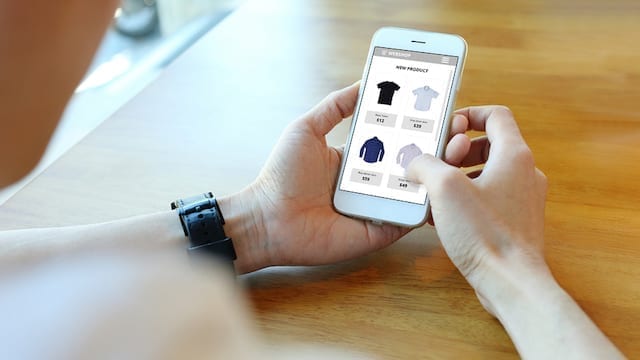
    Along with faster and easier navigation, most e-tailers provide detailed specifications of the products to make it easier for consumers to make purchase decisions. For instance, high resolution pictures and zoom in features are provided on the website to showcase the details of the products. Multiple images from different angles enable detailed view of product. Measurement charts assist the customer to make the right fit decision in case of apparel products, etc.

    KEY GROWTH DRIVERS OF E-TAIL IN INDIA

    Indian online retail has witnessed a surge in recent years and is expected to swell up to ~15 percent of the total retail by 2020 from current contribution of 4 percent (2017) in apparel and lifestyle segment. There are multiple factors which contribute to the growth of e-tail in India.

    Growth of digital penetration – India is in the midst of a digital revolution. The number of Internet users is likely to cross 650 million by 2020 and it is expected that half of the Indian population will be online in the next 3 years. Mobiles have become the most preferred device to access internet. The availability and affordability of smartphones with access to cheap internet data coupled with the rise in disposable income is fuelling the growth of digital penetration.

    Reach of e-retail channel – In next 3-4 years, more than half of India’s incremental Internet growth is expected to come from rural India. Additionally, the digital user demographic is expected to expand beyond the traditional stereotype, with a significant growth in female and older Internet users by 2020. This will result in a larger market size across different geographies, age and genders and not just a small targeted group. The diversity in the Internet users will facilitate an opportunity for online retailers to expand their product portfolio as per the increasing customer base.

    Impact of digital age – Though, Internet has penetrated to 400 million users today, but they are different in usage behaviour and needs. 60 percent of rural Internet users go online using Internet enabled phones and not smartphones. The major use of Internet in rural consumers is limited to entertainment, education and social networking. The online purchase behaviour is best predicted by the ‘digital age’ (years spent online), and not by demographics. With an increase in digital age, the internet users even from rural areas are expected to use e-retail for making their purchase decisions.

    Increasing fashion demands in small cities and towns – With the media exposure, rising awareness, growing aspirations and increasing share of disposable income, Indian consumers are looking to get access to global fashion brands. Limited reach of brick and mortar retail outlets of brands in smaller cities provides an opportunity for online retailers. Heavy discounts and promotions, availability of exclusive products, customized experience, availability of global brands, etc. Have made consumers residing in Tier -II and -III cities and semi-urban areas migrate to these online channels.

    Improved supply chain and end delivery logistics – E-commerce business is completely dependent on effective supply chain management. Successful supply chain management coordinates and integrates activities like manufacturing, operations, transportation and physical distribution of product with last mile connectivity to end users into a seamless process. For customer acquisition from traditional way of brick-and-mortar channel and their retention, it is necessary to provide customized shopping experience to the consumer by giving several convenience options like various payment options, mode of delivery, point of delivery, etc.

    Growth of private labels – With increasing acceptability of private labels among Indian consumers, e-retailers are entering into this emerging segment. The access to exhaustive informative data on consumer’s buying behaviour and preferences have provided an advantage to online retailers in terms of understanding the consumer’s needs. With private labels, online retailers are able to increase their revenues owing to lower distribution overheads, lesser number of intermediaries and negligible marketing cost involved in private labels.

    KEY CHALLENGES

    Despite high growth, e-tailers face several challenges in the country. Challenges and concerns related to e-tailing in India are enumerated as under:

    Competitive intensity – Changing customer preferences and their competitive demand has made e-tailing a highly competitive business which results in cash-burn with regular promotions/ discounts. High discounts by e-retailers to acquire customers have led to unreal customer expectations, low loyalty and losses.

    Sub-optimal logistics and infrastructural bottlenecks – Most of the logistics companies do not have pan-India reach. As some regions are not easily accessible, retailers have to cancel such orders due to inability of logistics partners to provide service in those areas. Inadequate infrastructure such as poor conditions of roads, highway, etc., is one of the main challenges faced by the e-retailers resulting in a major roadblock in their growth story.

    Inability to convert returns into retails – The conventional brick-and-mortar channel is able to convert the return of product into sales. Consumers when go to shop to return the product, they generally shop for other goods due to easy accessibility to other designs and variety in the shop, which is not the same in case of online shopping.

    Different Drivers for online purchase – The purchase drivers are very different across different geographies, regions and population centres. Factors such as promotions, discount and offers are the key driving factor for online purchase across all the regions – metros, tier -I and II cities. But there are other region specific factors such as, availability of new products, better product assortments, easy return policy, express delivery options, etc., which drive growth in different cities and regions. Thus e-tailers have to develop different strategies for different regions and geographies.

    CONCLUSION

    In the current shopper-centric era, Indian fashion industry is joining hands with technological advancements. Retailers are progressively accepting innovative ideas and tactics to create a memorable and personalized shopping experience, at the same time ensuring lower logistics and operational cost thus leading to higher revenues. With increasing internet penetration, e-commerce is expected to grow at relatively higher rate in comparison to conventional retail channels. With increasing acceptance of private labels within the Indian consumers, e-retailers are venturing into private labels.

    E-tailing can play a crucial role in consolidating wholesale and distribution channels, and in developing India-specific business models. By virtue of the advantages discussed in previous sections, e-tailing can bring down the cost of distribution and can complement the growth of traditional retail. In future, e-retail is expected to take a step ahead in adopting Omnichannel retail strategy, capturing higher market share.

  • Myntra announces the arrival of the 4th edition of ‘Myntra Beauty Edit’

    Myntra announces the arrival of the 4th edition of ‘Myntra Beauty Edit’

    Myntra is hosting the 4th edition of ‘Myntra Beauty Edit’, the most awaited carnival for cosmetics and beauty products online, from September 4-5. The fourth edition of the two-day mega festival is being complemented with over 30 new brand launches on Myntra’s platform.

    The theme for the current edition of Myntra Beauty Edit is #NeverEnough, which is in line with the common notion of beauty and personal care products never being enough for men or women. The festival offers the perfect opportunity for all to pamper themselves by shopping for such products, at great offers. With over 15000 assortments and styles and irresistible offers on over top 280 brands,

    Miss Claire, Nova, Dermalogica, Juicy Chemistry, Ciate London, GK Hair, Swiss Image, Mauboussin, Faconnnable, Jeanne en Provence, Nissan and Dr. Scheller, are some of the international brands being launched during the event. Shoppers can avail deals that change every four hours during the festival period and will also receive beauty coupons on every purchase.

    Myntra has also launched a 30 second film to promote the festival. The melodic ad showcases a range of beauty products across makeup, skincare, hair care and men’s grooming, accentuating the various options available for all to look special.

    In the video, viewers witness characters trying out various beauty and grooming options to suit their tastes and preferences, while also revealing the irresistible offers, new brand launches and style options during the two day carnival. The film captures the essence of the core message in a very lively and exciting fashion.

  • Amazon India christens assisted shopping service as ‘Amazon Easy’

    Amazon India christens assisted shopping service as ‘Amazon Easy’

    E-Commerce giant Amazon said its over 14,000 assisted online shopping service points, internally code-named ‘Project Udaan’ till now,will be branded as ’Amazon Easy’ by the middle of 2019, a senior company official said.

    “Starting withover 200 stores across the Krishna, West Godavari, East Godavari, Warangal, Nalgonda and Guntur districts in Andhra Pradesh and Telangana, Amazon Easy will be rolled out nationally acrossover 14,000 existing stores by the middle of next year,” Krishna Thota, Director – Customer Experience and Marketing, Amazon India was quoted by PTI as saying.

    According to a PTI report: Amazon.in appoints associates across logistics and retail startups like kirana stores, medical stores and mobile shopping outlets and small business and provides them a PC-based website. The store owners are trained to help customers find and buy products of their choice, while earning a commission in the process, he explained.

    The India-specific innovation is aimed at enabling customers in smaller markets to get access to the convenience of online shopping, Thota said.

    “Amazon Easy will play a significant role in enabling the next 100 million customers in India to enjoy shopping on Amazon.in starting with this upcoming festive season,” he was further quoted by PTI as saying.

    Amazon.in kicked off the assisted shopping project, code-named Project Udaan as a pilot in 2015 and has since expanded to 14,000+ stores in 21 states with large network partners like Storeking, Vakrangee to smaller partners like Linq, Indiabuys as well as individual entrepreneurs,a press release from Amazon India said.

    Amazon.in equips these offline stores with training materials that include skills like searching, browsing, and navigation on Amazon.in, helping customers set up Amazon accounts, check outs, payments, answering status and delivery queries, and refunds and returns if required. Customers can walk into the neighbourhood Amazon Easy store for assistance while shopping on Amazon.in. Amazon Easy store owners help customers browse the selection, identify and select a product they like, create their Amazon accounts, place orders and checkout to buy.

  • Parag Milk eyes 10 pc market share in fresh milk in Delhi India

    Parag Milk eyes 10 pc market share in fresh milk in Delhi India

    Parag Milk Foods, which on Tuesday launched the fresh milk category, is targeting a 10 percent market share in Delhi-NCR from this segment in the current fiscal year, a top executive said.

    According to a report: The fresh milk category will be under the company’s Gowardhan brand.

    “We are planning to expand our footprint in the Delhi and NCR region in the fresh milk category. We are targeting a 10 per cent market share in the region in the fresh milk segment in the next eight months (August-March),” Devendra Shah, Chairman, Parag Milk Foods said.

    The company today also commenced commercial operations of its Sonepat plant, which it bought from Danone in April.

    Shah said the company plans to reach out to the regions within 250-300 km of the Sonipat plant.

    The fresh milk market in Delhi-NCR is close to Rs 1,000 crore, according to him.

    “North is one of the key priority markets for us. Dairy products consumption is the highest in this region and this expansion will allow us to allow cow’s milk reach Delhi-NCR and neighbouring regions,” Shah said, adding that currently, 90 percent of the fresh milk supply in the region is buffalo milk.

    Further, he said, the Sonepat facility has a processing capacity of one lakh litre per day and depending on the demand the company can increase it up to three lakh litre, going forward.

    “We expect to reach full capacity of three lakh litre by the end of this financial year,” Shah said.

    In the coming weeks, besides fresh milk, this facility will also manufacture products including flavoured milk, butter milk, lassi, among others.

    “We will begin to supply these products to the north and east markets from our Sonipat plant soon,” he was further quoted as saying.

    Parag Milk Foods, established in 1992, is a private dairy FMCG company with pan-India presence.

    It has its manufacturing facilities at Manchar in Maharashtra and Palamner in Andhra Pradesh.

  • Jubilant FoodWorks Limited India appoints Kapil Grover as Chief Marketing Officer of Domino’s Pizza

    Jubilant FoodWorks Limited India appoints Kapil Grover as Chief Marketing Officer of Domino’s Pizza

    Jubilant FoodWorks Limited, one of the largest food service companies in the country, announced the appointment of Kapil Grover as Chief Marketing Officer of Domino’s Pizza. He brings with him a rich experience of 18 years and will be responsible for leading the marketing strategy for the brand.

    peaking on the announcement Pratik Pota, CEO and Whole-time Director, Jubilant FoodWorks Limited said, “We are delighted to welcome Kapil to the Domino’s family. Kapil is a seasoned marketing professional with a proven track record of building brands and driving consumer relevant innovations. We are confident that Kapil will use his immense experience to deepen Domino’s connect with its customers and to drive growth”.

    The newly appointed Chief Marketing Officer- Domino’s Pizza, Kapil Grover said, “I am delighted to be a part of Domino’s Pizza, the most loved pizza brand in India. The new role presents an exciting opportunity to lead the brand’s endeavours to create a great pizza experience for the customers, strengthen the core delivery proposition and further expand its market share. I look forward to contributing significantly to its ongoing growth journey.”

    Grover took over his new responsibility from July 2018. He was earlier associated with Burger King India as Chief Marketing Officer and have also worked with KFC India, Radico Khaitan and Luxor Writing Instruments in his past stints.

  • PepsiCo India Beverages head Vipul Prakash resigns

    PepsiCo India Beverages head Vipul Prakash resigns

    PepsiCo said its head of beverages Vipul Prakash has quit the company to pursue an entrepreneurial opportunity outside the company.

    The company announced appointment of another PepsiCo stalwart Vishal Kaul, who recently re-joined the India team, to replace Prakash.

    “Vipul Prakash, Senior Vice President, Beverages Category, India Region has decided to pursue an entrepreneurial opportunity outside PepsiCo. He will be completing 20 years of his career journey with us and leaves a strong legacy,” the company said in a statement.

    Kaul will take over the leadership of the Beverage Category, in addition to leading the transformation agenda for India, with immediate effect, it said.

    PepsiCo expressed confidence that Kaul will bring his creative and commercial expertise to take the beverage category to the next level.

    Vipul joined PepsiCo in November 1998 in India, where he held positions in marketing and franchise. Since then, he has had stints at the sector, global and India region in various capacities. He has led brand strategy for the firm’s most iconic and loved brands like Mountain Dew, 7Up, Pepsi and Mirinda across geographies.

    “He has been an excellent mentor and coach to our talent across the system. His heart bleeds blue, and he will continue to be our ambassador. We will truly miss him!,” the statement said.

    PepsiCo India Chairman & CEO Ahmed ElSheikh said the company has built a very strong talent pipeline by giving people a mix of different critical experiences in India and internationally.

    “We are pleased to have Vishal Kaul take on the role of Vice President for the Beverage Category. Prior to his last role outside the company, Vishal had a long stint with PepsiCo in leadership roles across various geographies. “He takes the baton from Vipul Prakash, who has taken an entrepreneurial opportunity outside PepsiCo after a successful stint of 20 years with the Company. We will miss him and we wish Vipul all the very best for his future endeavours,” he said.

    Kaul, Vice President Beverage Category and Transformation, PepsiCo India, said it was an honour and privilege to lead PepsiCo to the next stage of growth and evolution of the beverage category.

    “The expansion of our portfolio to include healthier options, new packaging choices, and new ways of connecting with consumers is incredibly exciting,” he said.

  • India’s BuyMore signed agreement with HK company to boost sales

    India’s BuyMore signed agreement with HK company to boost sales

    Indian e-commerce aggregator BuyMore has partnered with retail consulting firm Hong Kong Circle Tech to assist Chinese retailers seeking to sell their products in India.

    The deal will see Circle Tech’s Chinese retail clients listed on BuyMore’s 10 e-commerce websites, a move anticipated to significantly boost e-commerce trade in both countries.

    The partners will initially introduce 450 Chinese brands and US$5 million worth of products to India, which replaced China as the most promising retail market in the world last year.

    BuyMore’s MD & co-founder Sidharth said that more than 80 per cent of lifestyle and electronic products used today originate from China. “This shows that the market has a lucrative opportunity we can enact upon.”

    CEO & co-founder Abhinandan said: “We are hoping to reduce brand monopoly that currently exists in the Indian market. With our leading AI technology we will help Chinese factories streamline their production and cut production costs so that the Indian consumers can benefit from the cost cutting. India is price sensitive and we aim to give quality products at great rates by bringing in Chinese brands.”

    BuyMore will provide free warehousing, listings and cataloguing services to participating Chinese brands.

  • India’s ecommerce Myntra plans to go offline

    India’s ecommerce Myntra plans to go offline

    Indian online retailer Myntra is planning a network of offline stores.

    The fashion subsidiary of Flipkart, sees physical stores as an opportunity to build trust and awareness in the company’s online offer an to engage with existing customers.

    According to a report, Myntra plans to open as many as 100 offline stores selling cosmetics over the next two years. The first is likely to open in Bengaluru, within the next six months.

    Myntra-Jabong CEO Ananth Narayanan says the company will recruit franchisees to run the beauty and cosmetics stores.

    Bengaluru has been chosen for the first store because it is the city in which Myntra is headquartered. Sites in shopping centres and high street locations are being sought in large Indian cities.

  • Starbucks strengthens India commitment with opening of 125th store at The Pavillion Mall

    Starbucks strengthens India commitment with opening of 125th store at The Pavillion Mall

    Tata Starbucks Private Limited, the 50/50 joint venture between Starbucks Coffee Company and Tata Global Beverages Limited, celebrates the opening of its 125th Starbucks store in India at The Pavillion Pune. With 125 stores now operational across 7 cities, Tata Starbucks Private Limited continues to grow in the market with a commitment to offer the unique Starbucks Experience, unparalleled service, handcrafted beverages and extensive food offerings.

    “As we continue on our journey in India, we are doubling down on our commitment to customers and building a strong presence for Starbucks in India. We are thrilled to celebrate the opening of our 125th store in India and to extend our unique Starbucks third place Experience to coffee lovers across the country. We are humbled by the way we have been embraced by our customers and greatly supported by our partners since the opening of our first store in 2012,” said Sumitro Ghosh, CEO, Tata Starbucks Limited. “As we continue to achieve our well thought out expansion in India, we are committed to exceeding the expectations of our customers and those of our partners.”

    The newly opened Starbucks store houses an elaborate coffee bar with innovative brewing techniques like the Siphon, Chemex® and the signature Starbucks® Nitro Cold Brew. Siphon brings out the intense flavours of the coffee, using halogen to produce heat for boiling water and the movement of coffee through chambers. This fascinating process makes a rewarding cup for those who enjoy well-defined flavours dominating the coffee. Nitro Cold Brew on tap allows customers to enjoy small‐batch, slow‐steeped coffee using the highest quality coffee beans. In today’s fast‐paced world where everything is instant and on‐demand, Nitro Cold Brew unfolds an irresistible coffee experience where time meets texture. Chemex® is an example of a manual pour-over method, an elegant one-piece hourglass shaped vessel, made of high quality, heat-resistant glass. With a brew time typically between 4 and 5 minutes, Chemex® is great at balancing out the coffee – heavy coffees come through more cleanly, and bright coffees come through a little more balanced.

    The Pavillion Pune is a renowned multi-brand mall that is known to provide a unique shopping, retail and entertainment experience. With the opening of India’s 125th Starbucks store this week, Pune locals now have a new meeting spot. The Starbucks store invites customers for an immersive journey of coffee discovery while delivering an unparalleled Third Place experience. The store’s artwork celebrates the story of the Starbucks bean – unraveling each bean’s journey. Other store elements include a comfortable seating arrangement for large groups, close friends and individuals to enjoy a cup of coffee in this unique atmosphere.

    Starbucks takes its count to 11 stores in the city of Pune with the opening of Starbucks store at The Pavilion. As Tata Starbucks continues to grow in India, so does its commitment to be a positive force in contributing to the future success of the country.

  • India’s FMCG sector may grow 12-13% over July-December

    India’s FMCG sector may grow 12-13% over July-December

    India’s fast-moving consumer goods industry is expected to grow at 12-13 percent in the July to December period, according to Nielsen India.

    The rationale behind a double-digit growth forecast is strength in the GDP, a boost in rural income, the uptrend in private consumption and an increase in consumer confidence.

    The research agency said the FMCG  industry grew at 11 percent in value terms in the April-June quarter on the back of better consumer off-take, rate cuts due to the implementation of GST (Goods and Services Tax) and also a low base. 

    According to Nielsen India, in volume terms, the industry grew at 8 percent.

    The research agency pointed out that during the April- June quarter retail stocks jumped to levels higher than the pre-demonetisation period.

    Also, modern trade channels have witnessed a bounce- back and the sector saw 10 percent of sale come from this channel. 

    This is the first time that modern trade contribution has entered into double-digits, Sameer Shukla, Executive Director at Nielsen India said. 

    The company witnessed stress in rural FMCG consumption around demonetisation and before the rollout of GST. As a result, growth in rural markets came down to be at par with urban growth in the months following demonetisation.

    In the personal care space, the natural trend continues to gain traction and is growing three times the pace compared to the non-natural segment. 

    However, the foods category witnessed growth higher than personal care and home care due to consumers opting for branded foods over unbranded. The main reason for it being that price gap between branded and unbranded has narrowed considerably post the implementation of GST.

    An analysis of the fastest growing FMCG manufacturers in India suggests that domestic companies performed better than the MNCs in recent years.