Tag: india

  • Adidas India to open 4-5 stadium inspired outlets this year

    Adidas India to open 4-5 stadium inspired outlets this year

    After opening its first stadium-format store in Delhi, Adidas India plans to roll out four or five more of the outlets this financial year.

    Designed to showcase the brand’s performance wear, the format will become standard in India from next year. Already used in Japan and South Korea, the format features interactive zones for customers to showcase product benefits, says Adidas India senior director for sales and retail Manish Sapra.

  • Young Consumers, Bridal, and Self-Purchasing Expected to Drive 2018 Platinum Jewellery Market

    Young Consumers, Bridal, and Self-Purchasing Expected to Drive 2018 Platinum Jewellery Market

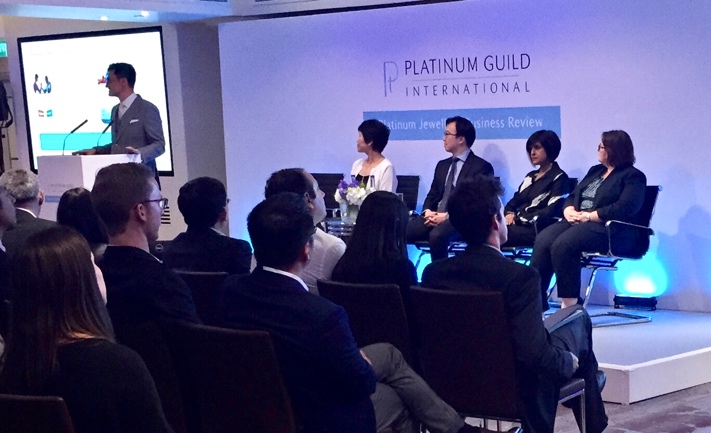
    Platinum Guild International (PGI) yesterday published the findings of its 2017 Platinum Jewellery Business Review revealing that three key trends – young consumers, bridal and self-purchasing – are emerging to contribute to platinum demand growth in 2018. Compiled by independent platinum market experts and industry analysts, the survey reports strong consumer retail sales growth in the U.S., Japan and India for 2017, even outperforming gold in some areas.

    “We saw above-market growth for platinum jewellery in three out of four key markets in 2017. This trend is tied to a robust global economy and historically low platinum prices, which together with an increasing preference for platinum among younger consumers, indicates growth potential in the platinum jewellery sector in 2018,” says CEO Huw Daniel of Platinum Guild International.
    Young Consumers

    India has become the engine of platinum jewellery growth globally. Despite continued challenges from new legislations, the industry has seen retail sales reported in platinum ounces up 21% year-on-year for the Platinum Guild International program and fabrication ounce demand growing at 34% year-on-year compared to 14% year-on-year demand growth for gold jewellery (according to World Gold Council). A strong preference for platinum among young consumers is one of the strongest contributors to the growth of platinum jewellery demand in India. For young India, PGI has created a distinct positioning for platinum versus gold, tapping into modern couples’ desire for jewellery that better represents the bonds of love in a modern relationship between equals. Through the Platinum Days of Love Campaign, platinum has become the metal of choice among today’s young Indian consumers shaping the country’s culture and fashion.

    Bridal Market

    Bridal markets around the world have become strongholds for platinum jewellery across China, Japan, the U.S. and newly emerging in India.

    In China, despite continuing market challenges at the total market level, PGI has seen strong growth in platinum acquisition in the core bridal category. According to a consumer study covering 55 cities in Tier 1 to 3, platinum bridal acquisition volume has increased by 22% compared to 2014. Platinum has become the dominant precious metal for wedding rings. However, with the industry facing continuous structural transitions and declines in marketing investment, China’s demand for platinum jewellery is likely to have another year of decline in 2018. China annual brand tracking survey shows that consumers strongly associating love with platinum and far ahead of other metals. Bridal jewellery is a gateway purchase leading to subsequent platinum jewellery purchases for anniversaries, birthdays and milestone occasions, which provide opportunities for growth to be further explored in 2018. China’s strongest growth is fueled by the rising consumer affluence of Tier 2,3 and 4 cities where a new generation of middle class consumers is acquiring taste for Platinum Pair Rings exchanged during wedding ceremonies.

    In India, the market is led by love-gifting with local organised retailers finding footholds for platinum within the gold-dominated wedding category. The introduction of a new branded segment, Platinum Evara, a modern platinum jewellery collection gifted to the bride and groom before the wedding day has carved out a distinctive niche for platinum and created a new jewellery segment for the industry.

    In the mature platinum jewellery market of Japan, platinum holds an astonishing 92% share of the engagement ring market and 82% share of wedding rings.

    Strong results for platinum in bridal are also mirrored in the West. In the U.S., the economic recovery and a bullish consumer sentiment has benefited the total jewellery industry, leading to the 5th consecutive year of growth for platinum jewellery consumption at 11%. The growth mainly comes from strong sales in bridal jewellery including engagement rings and wedding bands. In 2018, additional growth is expected to derive from initiatives promoting the use of platinum crowns that hold diamonds more securely, regardless of the choice of metal for the rest of the ring, along with increasing demand from the self-purchase category, which is likely to generate 8-11% of total growth in the U.S.

    Self-purchasing

    Although the majority of the platinum jewellery sold is bridal, PGI USA has also introduced a new platinum collection of platinum-only, chain-based necklaces as part of the Platinum Born collection, to target women buying jewellery for themselves, in order to continue to optimise local market growth opportunity.

    With the highest per capita consumption of platinum jewellery globally, in Japan platinum accounts for over 50% of total jewellery sales value. Growth is driven by a strong self-purchasing market led by females that have a strong affinity for platinum. Women generally control household finances and are increasingly staying in work after marriage and child birth. The resulting higher disposable incomes combined with historically lower metal prices, have led Japanese retailers to continue substituting white gold stocks for platinum, leading to an overall increase of 2% in retail ounce consumption. Retail demand growth is forecasted to continue at 1-2% in 2018 driven by moderate growth in self-purchasing category, especially for heavier products such as Kihei chains and religious objects.


  • A2P SMS to bring new life to aging messaging market

    A2P SMS to bring new life to aging messaging market

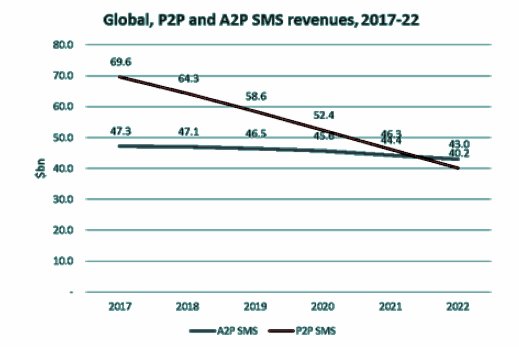
    SMS is not dead – not yet anyway. Ovum’s Mobile Messaging Traffic and Revenue Forecast: 2017-22 forecasts global revenues from application-to-person (A2P) SMS will finally exceed revenues from person-to-person (P2P) SMS by 2022, totalling $43 billion, even though A2P SMS traffic will be less than half of P2P SMS traffic by that time.

    P2P SMS revenues will generate just $40.2 billion in revenues by the end of the forecast period, but P2P SMS traffic will total 3.4 trillion messages in 2022, by comparison to 1.5 trillion A2P SMS.

    Figure 1: Global P2P and A2P SMS revenue, 2017-2022

    Figure 1: Global P2P and A2P sms revenue, 2017-2022Source: Ovum 2018

    The bulk of P2P and A2P SMS traffic and revenues will come mainly from the mobile-first, powerhouse markets of China, India and Indonesia.

    “Unfortunately for most telcos, P2P SMS has become essentially value-less, since they have had to bundle unlimited SMS into mobile tariffs to remain relevant to their customers, an increasing number of whom use chat apps such as WhatsApp, WeChat and Facebook Messenger. However, telcos can still charge a per-message termination rate for A2P SMS, which means it remains a more valuable source of revenues, since enterprises still value SMS for its global reach, affordability and mature ecosystem,” said Pamela Clark-Dickson, practice leader of Ovum’s communications and social team.

    Ovum forecasts chat apps will have 3.2 billion unique monthly active users (MAUs) by 2020, connecting enterprises with consumers via their platforms. Telcos and the wider ecosystem are therefore under pressure to protect their A2P revenues, driving them to upgrade from SMS to Rich Communication Services (RCS).

  • India’s DoT approves Airtel-Telenor India merger

    India’s DoT approves Airtel-Telenor India merger

    India’s Department of Telecom (DoT) has approved the planned merger between Telenor India and Bharti Airtel, which will create an operator with a subscriber base of around 334 million.

    The department has signed off on the merger after being directed to by the Supreme Court.

    The DoT had petitioned the court seeking to compel the operators to submit a security deposit of around 17 billion rupees ($251.6 million) before approving the merger. This deposit would cover unpaid spectrum fees from Telenor and a one-time spectrum charge on Airtel for the spectrum that the operator will acquire through the merger without an auction.

    But the court has dismissed the petition and instructed the department to approve the merger.

    With the acquisition, Airtel will acquire an additional 43.4 MHz of spectrum in the 1800-MHz band, spread across seven of India’s 22 telecoms circles.

    The company will also absorb Telenor’s subscriber base in these circles, which will leave the incumbent operator with nearly twice as many subscribers as new entrant Reliance Jio Infocomm.

    As a condition of approval, Airtel has been instructed to reduce its market share based on adjusted growth revenue in the Bihar telecoms circle to the limit of 50% within one year of completing the merger.

    Norway-based Telenor is meanwhile fulfilling its goal of exiting the Indian market due to the intense competition and the high cost of spectrum.

  • Airtel sell 25% of its African unit

    Airtel sell 25% of its African unit

    India’s Bharti Airtel reportedly plans to raise up to $1.5 billion through a public listing of Bharti Airtel International, the holding company for its African operations.

    The operator plans to dilute a 25% stake into the holding company for roughly $1 billion to $1.5 billion.

    The public listing is expected to take place in early 2019, the sources said. At the upper end of the estimate, Bharti Airtel International would be valued at $6 billion.

    Netherlands-registered Bharti Airtel International is the holding company of Airtel’s operations in 14 African markets – Nigeria, Chad, Congo-Brazzaville, Democratic Republic of Congo, Gabon, Madagascar, Niger, Kenya, Malawi, Seychelles, Tanzania, Uganda, Zambia and Rwanda.

    Airtel’s African operations have finally started making profits seven years after Airtel entered the African market with the $9 billion acquisition of Kuwait-based Zain’s African assets. The African operations reported their first full year of profit for the financial year of around 18.27 billion rupees ($273.4 million).

    A global listing for Bharti Airtel International is expected to help the parent company get better value for its African operations, deleverage its balance sheet, and help it raise funds to invest in its core Indian mobile business to help it better compete in a tight market.

  • Bharti Airtel launches wholesale voice digital platform

    Bharti Airtel launches wholesale voice digital platform

    India’s Bharti Airtel has launched what it says is a first-of-its-kind carrier digital platform for wholesale voice services.

    The new Global Voice service will allow global operators to enter wholesale voice arrangements with Airtel at the click of a button.

    The platform will offer paperless sign-up, quick voice interconnects and real-time traffic analysis for carriers worldwide.

    Customers will be able to buy voice termination services from Airtel and propose sell rates for their target markets.

    Airtel said Global Voice can reduce on-boarding time to a matter of hours. It also offers live rates for routes across the world for faster decision making during traffic exchange.

    Users will also be able to access various real-time online reports based on usage analytics tracking KPIs such as traffic, traffic rates and payments for a selected destination.

    Airtel also plans to soon provision a single window on the digital platform for product discovery, on-boarding, billing, payment, enquiry, and support across multiple B2B products.“

    “This is yet another digital innovation from Airtel to empower our customers, who can now leverage Airtel’s global voice network on a real-time basis with high quality voice termination,” Airtel director and CEO for global voice and data Ajay Chitkara said.

    “The platform will bring enhanced efficiency, convenience, agility and transparency and further strengthen our position as the preferred partner for customers across the world.”

    Airtel’s worldwide network covers 250,000 route kilometers across 50 countries in five continents and already terminates 23 billion voice minutes globally.

  • AirAsia India CEO steps down

    AirAsia India CEO steps down

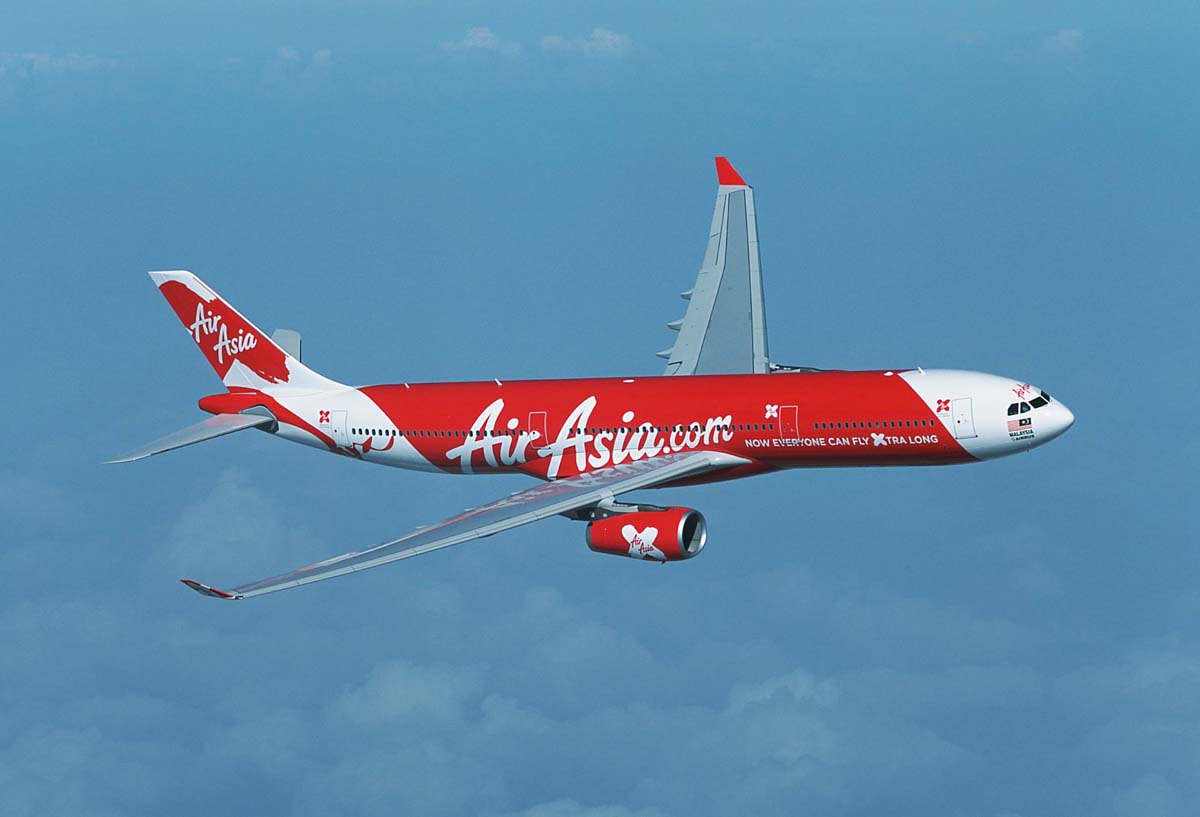
    AirAsia India Managing Director and Chief Executive Officer (CEO) Amar Abrol is stepping down after being in his current job for almost two years, and will move back to Malaysia to be based at the group’s head office.

    Abrol “had expressed his desire to return to Malaysia to be closer to his family. The Board of AirAsia India would like to thank him for his contributions and will work closely with him to ensure a smooth transition,” AirAsia India said in a statement.

    Before joining as the CEO of AirAsia India, a joint-venture between AirAsia Bhd and India’s Tata Sons conglomerate, Abrol was the CEO of financial products start-up Tune Money.

    He had replaced Mittu Chandilya, who was handpicked by Air Asia Group chief Tan Sri Tony Fernandes in 2013 to head AirAsia India.

    AirAsia India, which started operations in mid-2014, has a fleet of 18 aircraft and serves 19 destinations in India.

    The airline carried more than 1.46 million passengers between January and March this year and recorded a load factor or 83 per cent.

    The budget carrier competes with IndiGo, SpiceJet and GoAir in India’s growing air travel market.

  • India’s MTNL makes play for 4G spectrum

    India’s MTNL makes play for 4G spectrum

    Loss-making Indian state-controlled operator MTNL has approached the government seeking an allocation of 4G spectrum across two bands, in return for equity in the company.

    MTNL has written to the Telecom Department seeking spectrum in the 1800-MHz and 2100-MHz bands, arguing that a 4G presence is a must to survive in the mobile market.

    The operator is seeking spectrum in both of its operating circles of Delhi and Mumbai, and hopes to be able to launch 4G services in the current financial year ending in March 2019.

    MTNL has requested that its license payment for the spectrum, which it estimates at 65 billion rupees ($973.3 million) be taken by the government in the form of equity shares, to ensure MTNL is not burdened with additional debt.

    MTNL is currently 56% owned by the Indian government and 19% owned by Life Insurance Corporation, with the remainder held by the public.

    The operator is meanwhile already straddled with a hefty 170 billion rupees in debt, and is currently considering a revival plan to return the operator to profitability. This would include asset monetization, pursuing additional revenue schemes, a voluntary retirement scheme for employees and other measures.

  • Blockchain Startup Nuggets Selected to  Join Prestigious Access India Programme

    Blockchain Startup Nuggets Selected to Join Prestigious Access India Programme

    E-commerce payments and ID platform Nuggets has been selected to join the Access India Programme (AIP) – a prestigious initiative providing support to high-potential UK businesses seeking to establish a presence in India.

    In partnership with the UK India Business Council, the High Commission of India in London launched the AIP programme in 2017. It identifies high-potential UK SMEs using innovative technologies, and helps them establish themselves within the fast-growing Indian economy. Selected companies receive a range of invaluable services, from mentorship to networking and market-entry support.

    Nuggets offers compelling potential for the Indian economy. The country has only recently moved away from making 80% of payments in cash, with 60% of the population unbanked. Even so, India’s GDP is forecast to grow by 7.4% in 2018, and the economy is set to overtake both the UK and France in size over the next few years.  A consumer product like Nuggets, which enables simple, secure e-commerce payments, has obvious value in accelerating India’s move towards a cashless society.

    That move is already under way. IndiaStack, for example, is an ambitious program aiming to combine APIs and software on a single platform, and use bleeding-edge technology to bootstrap a new cashless infrastructure. It already boasts protocols such as eKYC and UPI, and could soon add Nuggets to its ranks.

    Seema Khinda Johnson, COO and co-founder of Nuggets, said: “Nuggets is a global payments and identity platform. Having support like this from the Indian High Commission will help our expansion efforts immeasurably.

    “We’re proud to have been selected for this programme. We’ve always believed in the power of our technology to empower consumers and boost economies. That’s especially true in such a vibrant, tech-focused environment as contemporary India.”

    Manish Singh, Economic Minister with the High Commision of India in London, said: “We are delighted to welcome Nuggets to our flagship AIP programme. Nuggets is exactly the sort of product we look for: exceptionally innovative, delivered in a way that can empower an entire population.

    This latest international victory for Nuggets comes soon after similar success in China. On 13th April 2018, the UK Government and the Mayor of London announced Nuggets would lead the UK Tech Mission in China. The company also took part in the recent launch of ‘Regulatory Sandbox for FinTech: UK-China Collaboration to Promote Financial Innovation’.

    Government support has played a critical role in Nuggets’ development. In its early days, the startup was selected by the UK Financial Conduct Authority (FCA) for its Project Innovate, enabling Nuggets to test its revolutionary product with consumers in the regulatory sandbox.

    Using blockchain technology, Nuggets enables people to make payments without having to share their personal data. That protects them from fraud, and eliminates the need for a username, password and payment details to be shared.

  • India generated the highest growth rate in Asia-Pacific

    India generated the highest growth rate in Asia-Pacific

    In January, passenger traffic across Asia-Pacific recorded a +4.4% increase whereas the Middle East reported a small reduction of -0.4% compared to the same period last year. This month’s traffic was largely distorted by the later timing of Chinese New Year (CNY) compared to last year, resulting in slower growth in many countries for the month.

    India generated the highest growth rate in the Asia-Pacific region at approximately +15% in January, backed by robust domestic demand. India’s domestic sector has experienced a period of high growth since 2015 and continued to have strong momentum. Among the top 10 airports driving domestic passenger traffic volume in January seven came from India. Led by: Delhi (DEL) +12.6%, Bangalore (BLR) +19.8% and Hyderabad (HYD) +24.8%.

    The shifting timing of CNY has resulted in China’s growth slowed to approximately +2% in January. The busiest airports in the country all reported small decline or marginal increase for the month: Beijing (PEK) -0.4%, Shanghai Pudong (PVG) +0.3%, Guangzhou (CAN) +0.7%.  Passenger traffic is expected to rebound significantly for China in February 2018.

    Elsewhere in the region, vibrant international passenger travels benefited a number of markets in driving volume increase for the month. Top runners were: Seoul Incheon (ICN) +8.2%, Kuala Lumpur (KUL) +4.9%, and Bangkok Don Mueang (DMK) +7.4%.

  • Bharti Infratel to merge with Indus Towers

    Bharti Infratel to merge with Indus Towers

    India’s Bharti Airtel has approved a plan to merge its infrastructure unit Bharti Infratel with Indus Towers to create a listed pan-India tower company.

    The combined company will fully own the respective business of Bharti Infratel and Indus Towers, and will own over 163,000 towers across all 22 of India’s telecom circles, making it the largest tower company in the world outside of China. It will change its name to Indus Towers Limited.

    Bharti Airtel already owns a 42% stake in Indus Towers, with Vodafone Group owning another 42%, Idea Group owning 11.15% and Providence Equity Partners owning the remaining 4.85%.

    Post-merger, Vodafone will be issued 783.1 million new shares in the combined company, while Idea Group will be given the option of selling its shares in the company or taking shares based on the merger ratio, and Providence will be given the option of selling most of its holdings.

    Assuming Idea and Providence take up the option of selling their shares for cash, Airtel’s shareholding in the combined company will be diluted to 37.2% and Vodafone’s shareholding would be diluted to 29.4%.

    The combined company is expected to have an enterprise value of around $10.8 billion, Airtel said in a statement.

    Based on this expected valuation, Idea stands to gain around $1 billion from the sale of its shares. Vodafone’s holding in the combined company would meanwhile be worth around $4.3 billion.

    The merger is expected to be complete in the current financial year, which ends in March 2019.

  • Airtel Q4 profit slumps 78% due to price war

    Airtel Q4 profit slumps 78% due to price war

    India’s Bharti Airtel has reported a steep 78% slump in net profit for the March quarter to 830 million rupees ($12.5 million), partly as a result of the industry’s ongoing price war.

    Revenue for the quarter fell 5.4% year-on-year to 196.3 billion rupees, with revenue from India falling 7.5% to 147.96 billion rupees on an underlying basis.

    India mobile revenues fell 13.5% due to the stiff competition, but Airtel increased its customer base by 4.9% from the previous quarter to 273.6 million.

    Revenue from Airtel’s African operations by contrast grew 10.7% year-on-year, with data traffic up 88%, voice minutes increasing by 37% and customer net additions increasing 11.5% to 84.13 million.

    During the quarter, Airtel expanded its operations to Rwanda with the purchase of Tigo Rwanda.

    For the full year, Airtel’s total revenue fell 9.8% to 836.8 billion rupees and its net income fell 71.1% to 10.99 billion rupees.

    “The [Indian] telecom industry continues to witness below cost, artificially suppressed pricing. Industry revenues were further adversely impacted this quarter due to the reduction in international termination rates,” Airtel CEO for India and South Asia Gopal Vittal said.

    “Airtel continued to consolidate its leadership position this quarter. Our strategic investments in data capacities, innovative digital content through Airtel TV, customer friendly bundles and upgrade programs led to the highest ever mobile data customer additions of 15 million during the quarter. Usage parameters remained robust–on a YOY basis, we saw data and voice traffic grow 584% and 55% respectively.”

  • Blackberrys menswear brand eyes to open more shops

    Blackberrys menswear brand eyes to open more shops

    India’s Blackberrys menswear brand is eyeing 25 per cent growth in turnover to touch INR1500 crore (US$226 million) by 2020 on the back of retail and portfolio expansion.

    The company, which also has the Casuals and Urban brands, plans to add 100 stores this fiscal year, 65 of them franchises.

    With turnover of INR720 crore last fiscal year, it has around 205 standalone company stores and is looking to open 70 more outlets this year.

    Its exclusive stores contribute almost half of total sales volume, while the rest comes from multibrand outlets and other channels. It also retails through more than 1000 multibrand outlets.

    Following the launch of its casualwear brand Blackberrys Urban, the company is planning toexpand its product portfolio.

  • RCom faces fresh hurdle over wireless asset sale

    RCom faces fresh hurdle over wireless asset sale

    Reliance Communications has been hit with a fresh roadblock to its attempt to sell its tower and fiber assets to Reliance Jio Infocomm.

    India’s National Company Law Appellate Tribunal (NCLAT) has withdrawn aninterim order that had cleared RCom to proceed with the asset sale.

    RCom has instead been instructed to wait until the outcome of an NCLAT ruling to be released next Wednesday.

    The NCLAT’s about face was prompted by a Supreme Court decision staying the interim order, which was in response to a petition to India’s apex court from HSBC Daisy Investments, which represents a group of investors holding nearly 5% of RCom.

    RCom is still free to proceed with the sale of its spectrum, real estate and media convergence node assets as part of its 250 billion rupee ($3.02 billion) asset fire sale.

    The operator is planning to exit the wireless market and monetize other assets in order to avoid insolvency as a result of mounting debt. The zero writedown debt restructuring program is expected to reduce RCom’s residual net debt by around 390 billion rupees ($5.89 billion).

  • AirAsia to launch new flights from Bagdogra

    AirAsia to launch new flights from Bagdogra

    AirAsia India will launch two new daily flights from Bagdogra – one linking Calcutta in the morning and the other connecting Delhi in the evening – from May.

    “AirAsia India will launch a flight to Delhi in the evening from May 1 and a service to Calcutta in mornings from May 11. The flights would largely help passengers who intend to reach here from Calcutta in the morning and reach Delhi late in the evening,” said Rakesh Sahay, the Bagdogra airport director.

    The new flights were announced after the Instrumental Landing System (ILS) was commissioned at Bagdogra on March 29.

    The authorities have also started bringing in additional CISF personnel to ensure that the airport functions for 16 hours a day, that is from 6am to 10pm.

    As of now, the last flight leaves Bagdogra at 6.25pm and it is bound for Delhi. The new flight by AirAsia India will leave Delhi at 4pm and reach Bagdogra at 6.15pm. In the return direction, it will take off at 6.45pm and land at Delhi at 9.20pm.

    The first flight from Calcutta lands at 11.45am and the first service to the Bengal capital takes off at 12.30pm.