Tag: india

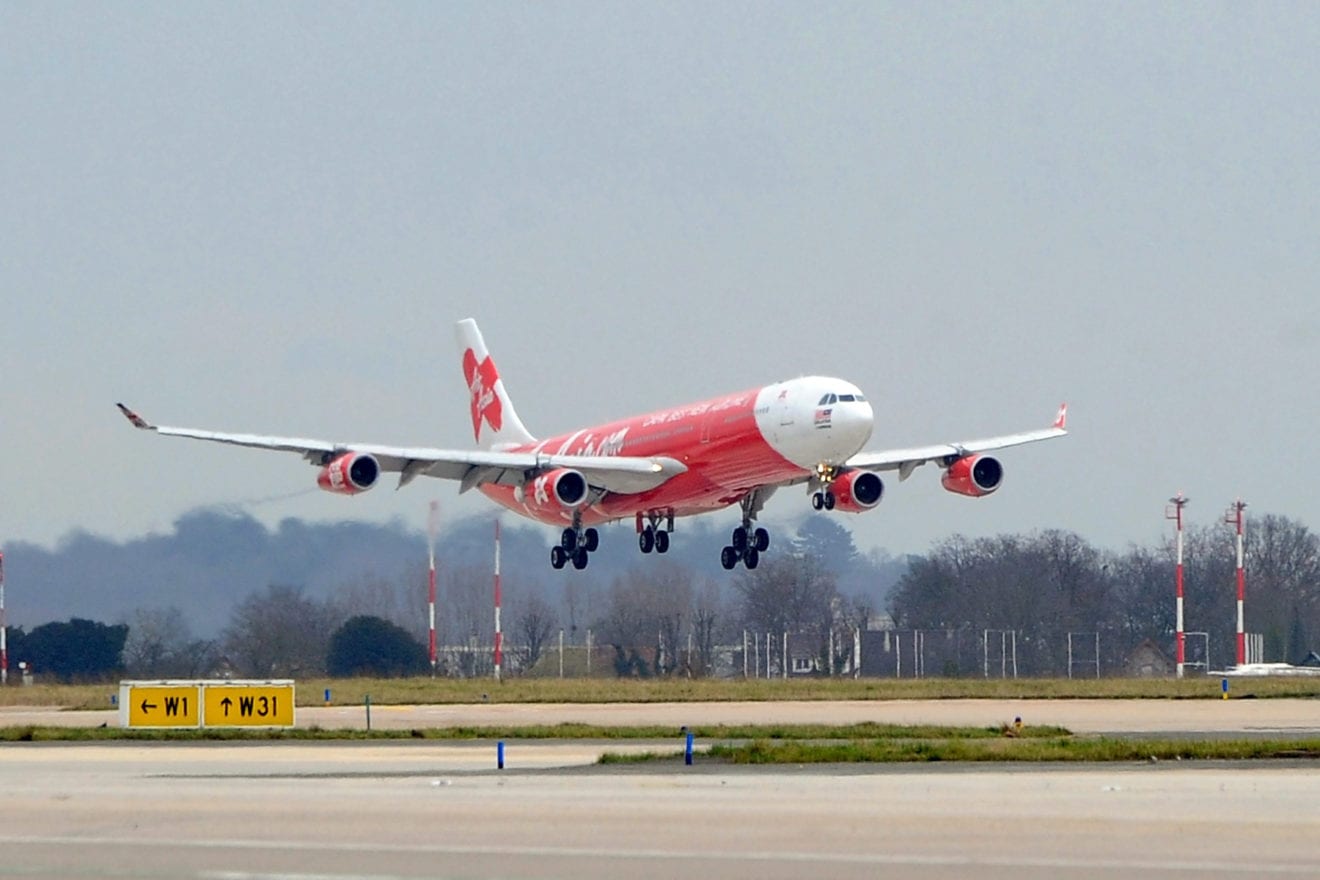
  • AirAsia India expands its flight operations in India

    AirAsia India expands its flight operations in India

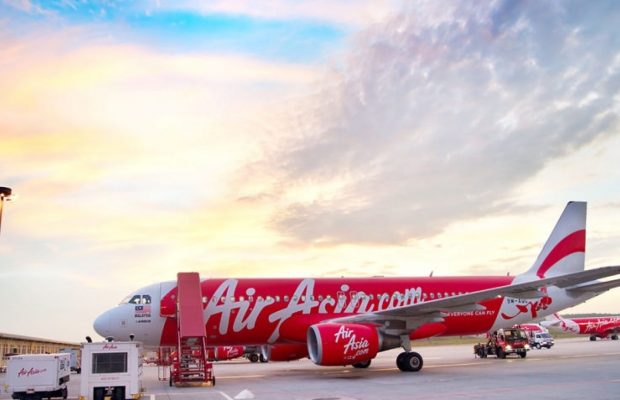
    Earlier last week, a top official of AirAsia India reported that the carrier has charted out expansion plans to connect more tier-II and III cities and set a target to commence flights to overseas destinations by January 2019. This statement followed the induction of AirAsia’s 16th aircraft and the addition of Nagpur and Indore to its list of destinations.

    According to AirAsia India, Managing Director and CEO, Amar Abrol, the airliner has planned to commence overseas operation by January 2019 once it has 20 or more planes. “Our strategy is that once we get to 20 planes (operating in domestic operations) we will start flying international. Mostly, it will be to South East Asian countries,” he told.

    A spokesperson of AirAsia told that the expansion plans were adopted to survive the competitive aviation market. He stated, “One has to evolve in a competitive market to stay relevant. Many of our flyers are first time flyers and we plan to tap this and make it a sustainable relationship. To do so, we have to connect more destinations that were still untapped by our flights and more importantly expand our operations overseas. Even though there is existing competition but the demand is there.”

    Amar Abrol stated that the plan is to connect more and more tier II and III cities in India, wherever A320 can go and also start flying international after crossing 20 aircraft. Elaborating, he said, the company would serve those markets which were already connected by the airliner’s group entities—AirAsia Malaysia, AirAsia Indonesia, AirAsia Thailand. “We will be flying mostly to Malaysia, Indonesia, and neighbouring SAARC countries as well. Bangladesh, Nepal and so on and so forth,” he said.

    Closely following the announcement of expansion, AirAsia India expanded its fleet size to 18 planes with the induction of a new Airbus A320, which will help it add new routes and enhance the frequency between Kolkata and Bagdogra.

    The 18th A320 aircraft will be stationed in Kolkata, which is the third base for the Tata Sons-AirAsia invested domestic carrier. Bengaluru and New Delhi are the two other bases of AirAsia India besides Kolkata, which serves as the gateway to its North-East operations. The induction of 18th plane in the fleet, AirAsia India will mark the launch of new daily flight services from Kolkata to Visakhapatnam, Imphal, Guwahati, Pune, and Bagdogra, starting May 11.

    Bookings for all the new routes opened from early morning today. The airline said that it is offering promotional fares as low as INR 1,699 for flights connecting Kolkata to Visakhapatnam, Imphal, Guwahati and INR 3,499 for the Kolkata-Pune services. This is seen as one of the many steps towards realising the carrier’s expansion goals.
  • RCom gets court approval to sell wireless business

    RCom gets court approval to sell wireless business

    India’s Supreme Court has cleared Reliance Communications (RCom) to sell its wireless assets to Reliance Jio Infocomm for 250 billion rupees ($3.85 billion), vacating two stay orders on the sell-off.

    The court has vacated a stay on the sale of spectrum, media convergence nodes and real estate, and has directed the National Company Law Appellate Tribunal (NCLAT) to vacate the stay on the sale of the operator’s tower and fiber assets, RCom announced.

    In an interim order, the NCLAT has complied with the Supreme Court’s direction, but will require the proceeds from the tower and fiber asset sale to be deposited into an escrow account.

    Distribution of the proceeds will be subject to a final decision by the NCLAT expected next Wednesday.

    RCom arranged to sell off its wireless business to Reliance Jio Infocomm as part of a radical debt reduction program.

    But the tribunal issued an order prohibiting the sale of assets without court permission in response to an insolvency petition from Ericsson seeking a recovery of around $177.8 million in unpaid dues.

    According to RCom, minority investors are making a claim for part of the proceeds of the sale of its tower and fiber assets, a claim that the operator fully disputes. Based on legal advice, RCom estimates that this claim can be for at most 2 billion to 3 billion rupees worth of the proceeds.

  • AirAsia to expand services from Kolkata

    AirAsia to expand services from Kolkata

    AirAsia is rolling out tickets for a price of Rs 1,699. This offer comes as AirAsia India introduces new routes from Kolkata to Guwahati, Imphal, Pune and Visakhapatnam. The offer is available till April 15, 2018 and the travel period that starts on May 11, 2018 ends on May 30, 2018. Advance bookings are required to avail this offer.

    While the fares for rest of the routes begin from Rs 1,699, the ticket price to and from Kolkata and Pune is a little steep at Rs 3,499.

    The offer can be availed only through online bookings. The website also mentioned that seats are limited and might not be available for all the flights. Payments through credit, debit or charge cards would be subjected to a non-refundable processing fee.

    AirAsia India recently expanded its fleet to 18 planes with the induction of a new Airbus A320. This has been instrumental in adding the new routes for the airline and enhancing the frequency between Kolkata and Bagdogra.

    The 18th A320 aircraft has been stationed in Kolkata, the third base for the airline, as mentioned by AirAsia India in a release. The other two bases are Bengaluru and New Delhi.

    “We are happy to be expanding our presence in Kolkata with these new routes connecting tier-II/III cities. This year continues to be exciting for us and we look forward to enabling many more people to experience affordable air travel,” AirAsia India managing director and chief executive Amar Abrol said.

    The Bengaluru-based airline, which will be completing four years of operations in June this year, flies to 19 destinations covering Kochi, Goa, Jaipur, Chandigarh, Pune, Guwahati, Imphal, Visakhapatnam, Hyderabad, Srinagar, Bagdogra, Ranchi, Bhubaneswar, Nagpur, Indore and Chennai from three bases.

  • Xiaomi pushes smartphone component suppliers to invest more in India

    Xiaomi pushes smartphone component suppliers to invest more in India

    China’s Xiaomi said it wants its global smartphone component makers to set up base in India, in what is likely to bring as much as US$2.5 billion of investment to the South Asian nation while also creating up to 50,000 jobs.

    Xiaomi’s push could boost Prime Minister’s Narendra Modi’s flagship ‘Make in India’ drive that is aimed at adding tens of millions of new jobs and turning Asia’s No.3 economy into a global manufacturing hub.

    Xiaomi, which looks headed for a big initial public offering later this year, currently has six smartphone manufacturing plants in India. It hosted more than 50 of its global suppliers in New Delhi at an investment summit on Monday that was also attended by key government officials.

    If the suppliers at the summit were to set up shop in India, a top market for Xiaomi, it would bring in US$2.5 billion in investment and create as many as 50,000 jobs, the company said.

    The Chinese firm has unseated Korean rival Samsung Electronics to take the pole position in India’s smartphone market – the world’s second biggest.

    Xiaomi, which began assembling smartphones through Foxconn in southern India in 2015, will now assemble parts like memory and processors on printed circuit boards locally, said Manu Jain, managing director of Xiaomi’s India operations.

    “Today we are deepening this commitment with three more smartphone factories and our first surface-mount technology (SMT) plant dedicated towards local manufacturing,” Jain said in a statement.

    SMT is a method by which components are embedded onto printed circuit boards (PCBs). Once populated with components, PCBs that house memory, chips and other components, typically account for about half the cost of a smartphone.

    This announcement comes a week after New Delhi levied a 10 percent import duty on some key smartphone components, including populated PCBs. The South Asian nation is Xiaomi’s second-largest market after China.

    Xiaomi’s SMT plant will be run by Taiwan’s Foxconn, the world’s largest contract electronics manufacturer and a key Apple supplier.

    However, Xiaomi’s push to get suppliers to India could spark job loss concerns in neighbouring China that is currently among the top electronics manufacturers in the world.

    “India’s cheap labour offers more competitiveness to manufacturers, demand is vast and in India opportunity is also huge because the market is much less saturated compared to China,” said Jaipal Singh, a senior market analyst for client devices at tech research firm International Data Corporation.

  • Vodafone India completes tower sale to ATC

    Vodafone India completes tower sale to ATC

    Vodafone India has taken another step towards the closure of its planned merger with Idea Cellular, after the company completed Tuesday the sale of its standalone tower business to ATC Telecom Infrastructure Private Limited (ATC) for 38.5 billion rupees ($592.9 million).

    The company announced in November 2017 that it plans to sell its tower business along with Idea Cellular’s to ATC for a combined $1.2 billion, as part of its plan to merge with Idea Cellular to form the largest mobile player in India.

    With the completion of the sale of Vodafone’s tower business, a similar announcement is expected from Idea Cellular in the coming months, Vodafone said in a company statement.

    “In the Vodafone India / Idea merger announcement of 20 March 2017, both parties announced their intention to sell their individual standalone tower businesses to strengthen the combined financial position of the merged entity. The merger is expected to complete in the first half of the current calendar year,” Vodafone added.

    “Completion of Idea’s sale of its standalone tower business to ATC is also expected in the first half of this calendar year.”

    In addition, Vodafone and Idea Cellular have also announced a new executive team to lead the merged entity, which will come into effect after the Vodafone India / Idea merger has been completed.

    Aditya Birla Group chairman Kumar Mangalam Birla will be the non-executive chairman of the merged Vodafone-Idea entity, while Vodafone India COO Balesh Sharma has been named CEO, Idea’s Akshaya Moondra CFO and his colleague Ambrish Jain COO, Vodafone said in a company statement released late March.

  • India imposes import duty on smartphone components

    India imposes import duty on smartphone components

    The Indian government has introduced a 10% import duty on key smartphone components as part of its ongoing efforts to stimulate local handset and component manufacturing.

    The new duty covers PCBs, camera modules and connectors and is likely to increase prices of mobile phones for companies that do not source these components locally.

    In February, the government introduced a 20% basic customs duty on imports of full mobile phones, as well as duties of between 5% and 20% on components including LCD panels, PCBs for chargers, lithium batteries and other components including keypads, battery packs and antennae.

    The report notes that currently more than 80% of phones sold in India are assembled locally, and sales volumes for mobile phones made in India are projected to improve 55% this year. Major contract manufacturers including Foxconn, Wistron, Flex and several Chinese handset makers have established local manufacturing to reduce costs.

    But Samsung remains the only major brand to locally assemble PCBs, which account for around half the cost of manufacturing a handset, prompting the government to attempt to stimulate market growth.

  • DoT orders telcos to surrender 3.3-GHz spectrum

    DoT orders telcos to surrender 3.3-GHz spectrum

    India’s Department of Telecom (DoT) has instructed operators including incumbent Bharti Airtel to vacate spectrum in the 3,300-MHz to 3,400-MHz range by the end of September so it can be included in a new auction.

    The operator has written to all existing licensees of spectrum in the band to vacate it within six months.

    The 3.4-GHz band is expected to be one of the first frequencies to be used for 5G rollouts globally.

    Other licensees of the band include Reliance Communications – which is selling its wireless assets to Reliance Jio Infocomm, Tata Communications – whose parent company is reportedly looking to exit the telecoms business, and wireless ISP Dishnet Wireless.

    According to the report, Dishnet parent Aircel has already surrendered the spectrum. The operator filed for bankruptcy last month.

    The DoT plans to hold a major auction for spectrum in the 700-MHz, 800-MHz, 900-MHz, 1800-MHz, 2100-MHz, 2300-MHz, 2500-MHz, 3300-MHz, and 3400-MHz to 3500-MHz bands during the next auction.

    The ministry appears to be pressing ahead with the auction despite fears over the perilous financial state of the mobile industry, and against the wishes of operators who had asked for more time to pay off existing spectrum fees and other debts.

  • Singapore will be next destination for Creyate

    Singapore will be next destination for Creyate

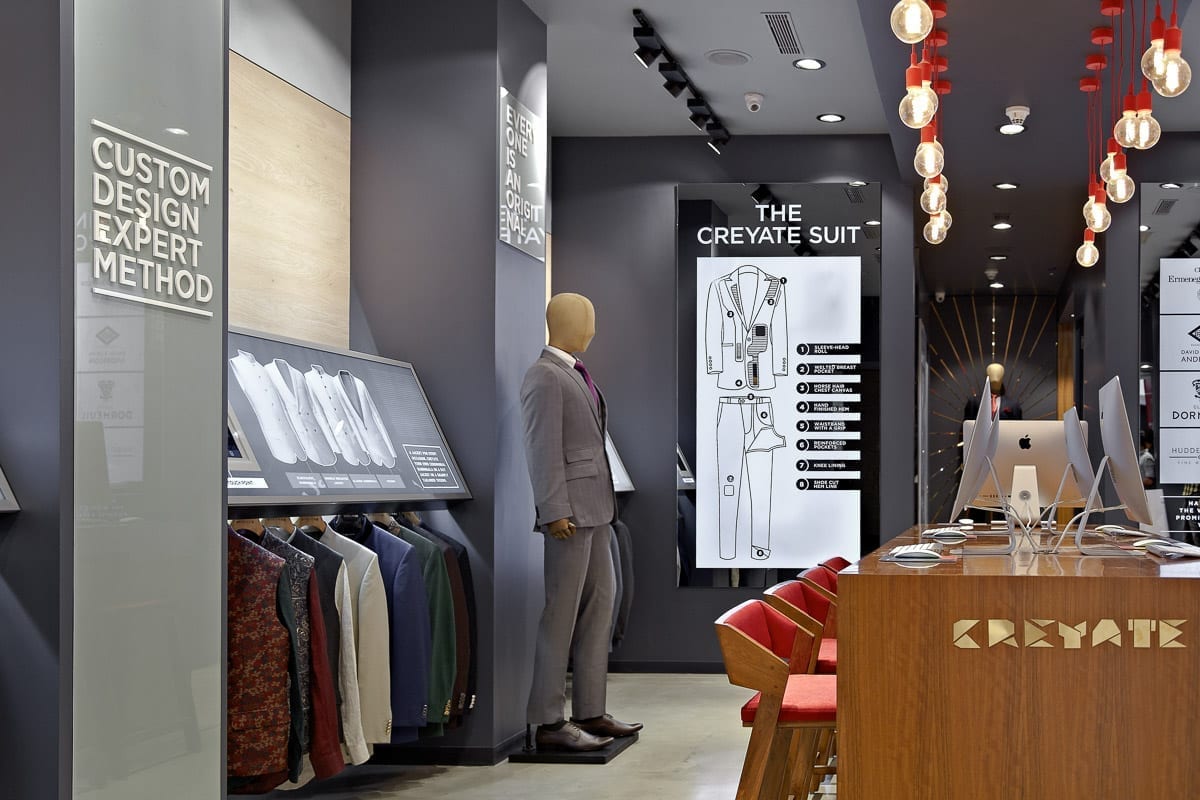
    Indian custom-clothing brand Creyate plans to open stores in Singapore, the US, UK and Dubai after a successful foray into Japan.

    Owned by Arvind Internet, the company recently opened its first luxury store in the Indian city of Bengaluru and is considering ramping up its expansion through a franchise model. It has 13 stores operating in its home market already.

    Described as an emerging brand, Creyate customises apparel products to people who buy online or in-store. Online, they can submit measurements and select designs in advance of picking up the products in store – or having them delivered.

    In Japan,Creyate already has 50 stores-in-stores specialising in denim.

    Arvind Internet COO Tejinder Singh said that the company wants to double its retail network within 18 months.

    “With our omni-channel approach, we may cap it at two stores per city, so we are looking to explore Tier-II cities, as well. It is an inventory-light model, which suits the all stakeholders at a macro level,” said Singh.

  • Alcis Sports expansion plan in India

    Alcis Sports expansion plan in India

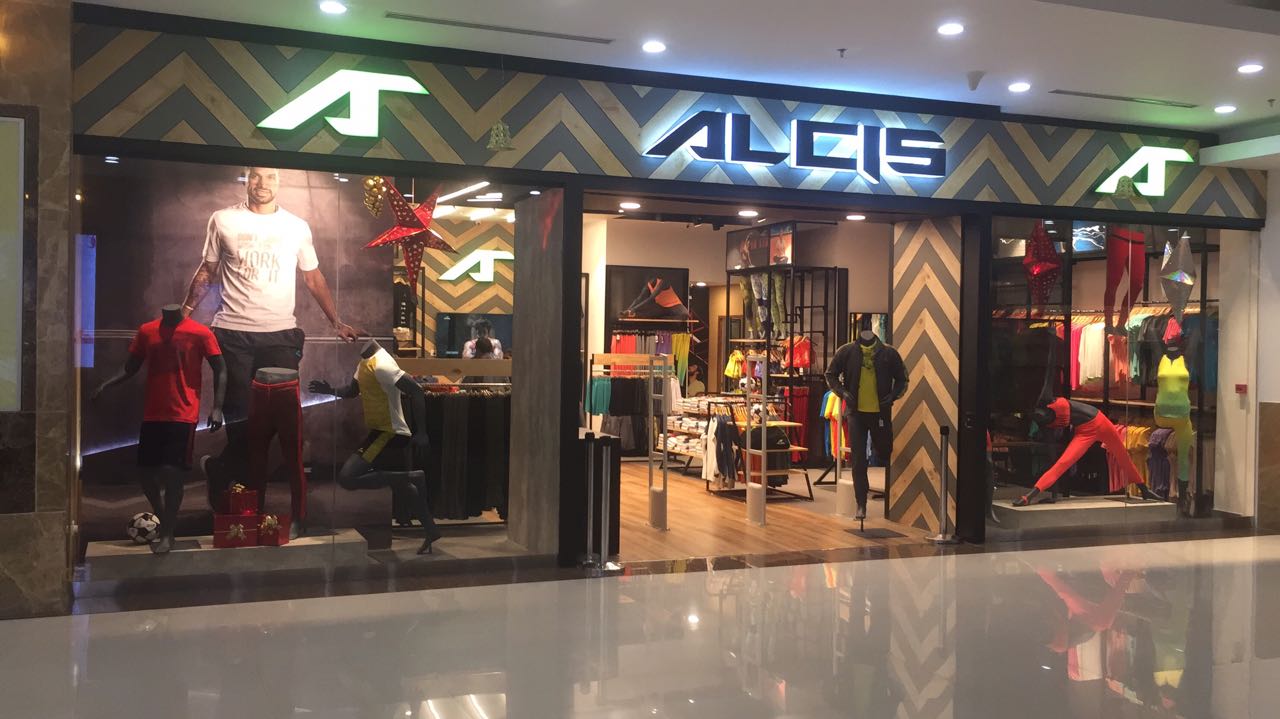
    Indian fashion brand Alcis Sports plans to add 15 exclusive brand outlets in metro areas by year’s end.

    President Anuj Batra says the brand may also enter some top towns such as Lucknow and Mysore through franchise partners.

    While the brand is available through four exclusive stores it has opened its first franchises in Guwahati and in Kamla Nagar in New Delhi. “We are looking at expanding across India, be it through company-owned stores or franchised stores.,” says Batra.

    Alcis also has 150 shop-in-shops in large-format stores like Central, Globus, Shoppers Stop and Sports Station. The brand will be soon launch a shop-in-shop in Lifestyle as well.

    “Along with this, Alcis is also present in South India with brands like Jayalakshmi, Pothys and RS Brothers. Offline, we cover about 700-odd retail outlets (shop-in-shops) across India, and in the coming year are looking at increasing our spread to tier II and III towns.”

    He says that for online business Alcis has been gaining traction over the past year on both Jabong and Myntra, and has also tied up with Amazon, Flipkart, PayTM and Snapdeal.

    Going ahead, Batra says he expects offline will contribute 60 per cent of revenue.

    Alcis Sports has just secured an investment from Singapore venture capital firm RB Investments, and the company has also appointed Indian cricketer Shikhar Dhawan as brand ambassador.

  • Fashion Designer Mithi Kalra, launches Punjab inspired collection

    Fashion Designer Mithi Kalra, launches Punjab inspired collection

    After making her debut at India Runway Week, celebrity designer Mithi Kalra is all set to launch a Punjab inspired collection.

    Titled ‘Barkat Punjab’ the collection is celebrating the moods of a girl from Punjab who wishes to look traditional as well as contemporary.

    The new Indian bride has stepped out of the tradional way of dressing and has adopted comfortable as well as contemporary look.

    According to Mithi Kalra,”I am a Punjabi and so I took inspiration from my own culture. I have used shades from the smokey palette like black, grey, silver and at the same time have used bright colours like yellow, coral and blue, as my collection is for the people from all walks of life”

    The fabrics used in the bridal collection were silk velvets and nets blended with dabka and mirrors.

    Every bride needs a couple of those pieces in her trousseau which comes handy when she has to mix and match be it with a kurta or anarkali or just a chiffon saree draped over a legging.

    Today, bridal wear has a vast spectrum, it not only includes those heavily embroidered lehengas and embellished sarees but it has a good mix of Rich Anarkalis with Ethnic Skirts, subtle yet rich Crop Tops with Lehengas paired with beautiful capes.


  • Delhi Duty Free relaunches refitted Hugo Boss store

    Delhi Duty Free relaunches refitted Hugo Boss store

    Delhi Duty Free Services (DDFS) has recently relaunched its Hugo Boss store at Delhi International Airport the first of many fashion outlets in the pipeline.

    This luxury brand offering includes the Boss Black and Boss Green collections for men. The store has been designed in line with DDFS’s vision to offer an “exclusive travel retail concept store”.

    Key design elements of the store emanate the brand essence of Hugo Boss, featuring a black façade and merchandise display areas to facilitate ease of shopper navigation.

    DDFS CEO Luke Gorringe said: “Hugo Boss was one of our most successful fashion stores before the refit commenced, so our objective was to minimise trading disruption.

    “In response to this, we fast-tracked the refurbishment project to ensure we reopened in advance of the summer period.”

  • Ted Baker opening first Indian store in New Delhi

    Ted Baker opening first Indian store in New Delhi

    Ted Baker India is about to launch its first store for India, in the Chanakya Mall in New Delhi.

    Menswear, womenswear and accessory collections will feature in the UK clothing retailer’s 1600sqft (149sqm) store.

    All Ted’s store interiors are bespoke to their location, with the New Delhi outlet featuring rich jewel tones reflecting traditional Indian dress with inspiration drawn from the Crown Jewels for a British twist.

    A timber floor featuring a diamond formation welcomes guests to the space, while the ornate ceiling features three-dimensional diamond shapes of brushed and polished brass. The fitting rooms have intricate printed wallpaper and are upholstered in regal purple with gold trim, plus the walls feature hanging jewel pendants.

    Props referencing the British monarchy are displayed in ornate frames throughout the store, such as red-oak timber-topped tables with gold stylised legs.

    Ted Baker’s entry into India is a JV with Aditya Birla Fashion and Retail, which started its international brand portfolio a decade ago with The Collective.

  • Vietjet to Operate Direct Flights Connecting Vietnam and India

    Vietjet to Operate Direct Flights Connecting Vietnam and India

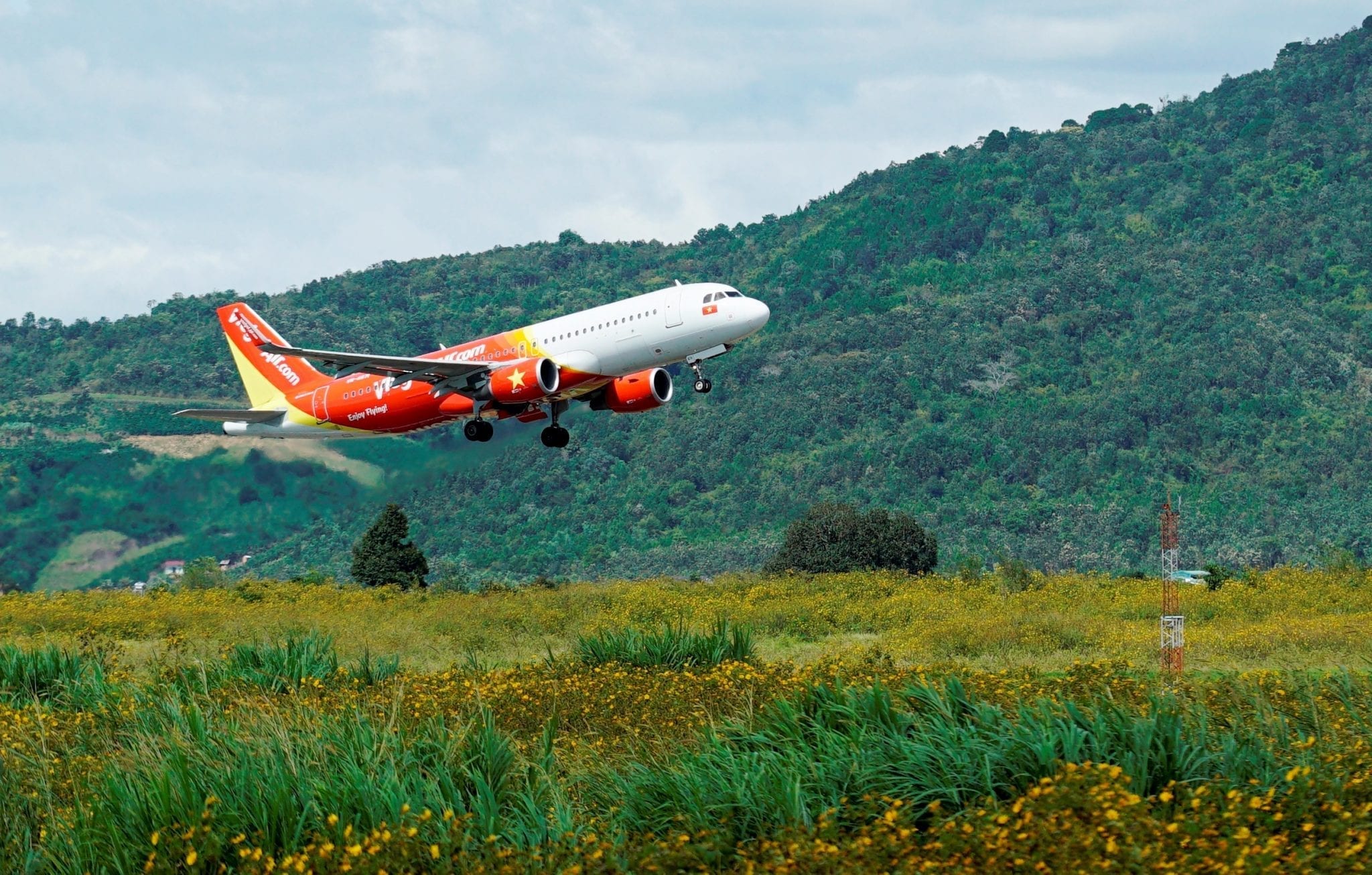
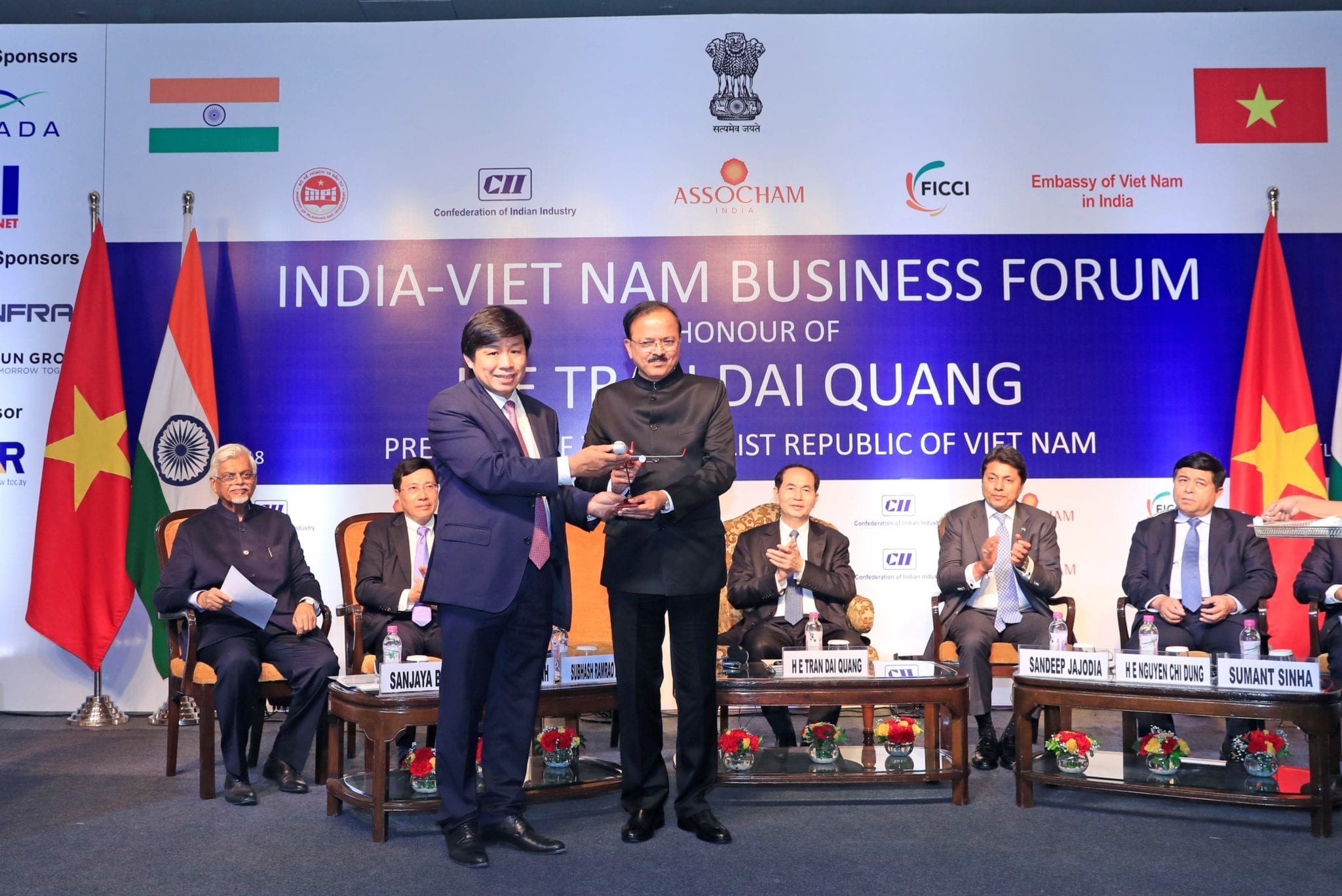
    In the third quarter of 2018, travelers from India will be able to fly direct to Vietnam and vice versa following an announcement made at the recent Vietnam – India Business Forum. The move is set to create bigger opportunities for the airline as there are currently no direct flights from India to Vietnam.

    The announcement which was witnessed by H.E Vietnam President Tran Dai Quang and senior leaders of Vietnam and India also marks a significant milestone for the country especially in light of the 45th anniversary of diplomatic relations between Vietnam and India and the 10th anniversary of strategic partnership between the two countries.

    The first route is scheduled to connect Ho Chi Minh City with New Delhi on a basis of four flights per week.

    Located in Southern Asia, India has the second largest population in the world, making it a huge potential market for Vietjet in the future. It is an extremely diverse country, with vast differences in geography, climate, culture, language and ethnicity. The country is also blessed with marvelous natural landscapes and grand architectures which have been listed in UNESCO’s World Heritage List including The Great Himalayan National Park Conservation Area, Ajanta Caves, Taj Mahal and Humayun’s Tomb to name a few.

    Vietnam on the other hand, is a bustling country that possesses an eclectic mix of local hotspots. From crystal-blue beaches to misty mountains and buzzing cities with mouthwatering cuisines, Vietnam is certainly a place that caters to the whims and fancy of any type of traveler. Some of the must-see destinations in Vietnam include Hanoi, the country’s cultural capital; Hue, a romantic citadel; the magnificent Da Nang, one of Vietnam’s most important port cities, and Ho Chi Minh City, Vietnam’s economic hub.

    The introduction of the new route thus presents Vietjet with an opportunity to not only tap into the growing tourism market but also facilitate trade integration and exchange between Vietnam and India.

    Modeling itself as a ‘Consumer Airline’, Vietjet will continue to meet the growing demands of consumers by introducing new routes, expanding its fleet, investing in modern technology, and offering greater value-added products and services. The airline also prides itself in offering diverse promotional programs on tickets and entertainment especially during the festive seasons.

    Vietjet is favored and known as a pioneer for its many interesting entertainment activities and special promotions during the festive seasons. With its high-quality services, special low-fare tickets and diverse ticket classes, Vietjet offers passengers enjoyable flights with a dynamic and friendly flight crew, comfy seats, amazing hot meals and special surprises from the airline’s inflight activities.

  • Infested Chinese Garlic Imports Kick Up a Stink in Indonesia

    Infested Chinese Garlic Imports Kick Up a Stink in Indonesia

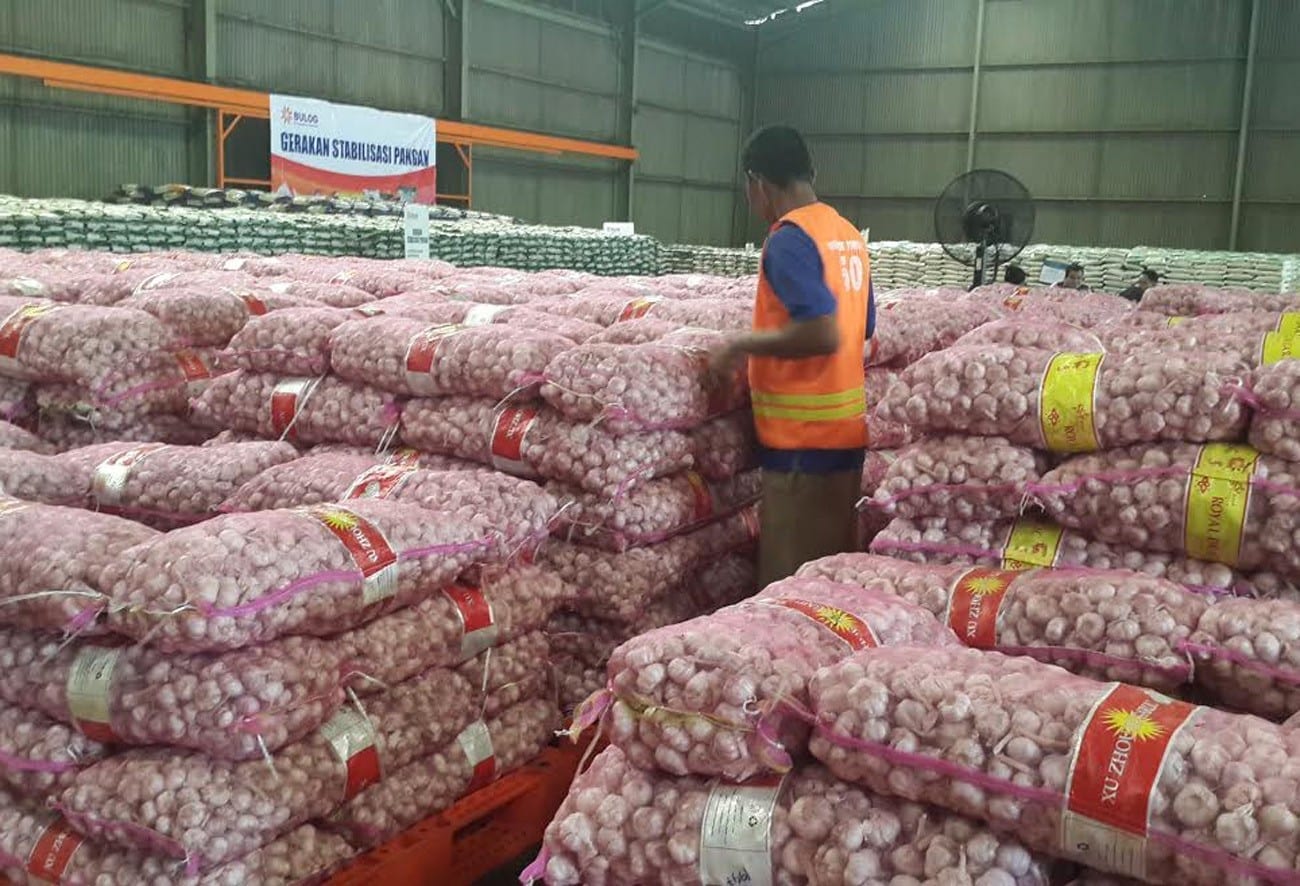
    Indonesia has impounded more than 200 tons of garlic imported from China, warning that a microscopic worm infestation found in the shipment could put at risk plans by the Southeast Asian country to boost its own garlic crop.

    Since coming to power in 2014, Indonesian President Joko “Jokowi” Widodo has pursued self-sufficiency policies to protect farmers, but efforts to rely on domestic supplies of everything from beef to rice have at times caused shortages and price spikes.

    Chinese food imports have previously proved sensitive in Indonesia. In 2016, Beijing’s embassy in Jakarta expressed alarm at media reports accusing China of using a “biological weapon” against Indonesia, after four Chinese nationals were arrested for planting imported chilli seeds contaminated with a bacteria.

    The 232 metric tons of garlic were imported from China in mid-February and after arriving at Jakarta’s port were shipped to the island of Sumatra, the Ministry of Agriculture said.

    This could be “very damaging to our garlic farming when we are trying to achieve self-sufficiency,” the ministry said in a statement on March 12.

    Despite being certified as free of pests in China, samples of the shipment contained ditylenchus dipsaci, a microscopic worm that infects onions and garlic, the ministry said.

    The nematology department at the University of Nebraska-Lincoln describes the worm as “one of the most devastating plant parasitic nematodes.”

    When quarantine officials reported the discovery to the importer, the garlic had already been sent to North Sumatra, the agriculture ministry said.

    The controversy even stirred a heated debate in parliament this week when a member of Jokowi’s ruling party called for a police investigation.

    Soetrisno, the chief executive officer of Tunas Sumber Rejeki, the company that imported the garlic, could not immediately be reached for comment.

    The Chinese embassy in Jakarta declined to comment.

    The garlic is currently being stored at a warehouse in Belawan Port, Sumatra, that has been sealed by police and the quarantine agency.

    Banun Harpini, the head of quarantine at the agriculture ministry, said on Wednesday the importer would be blacklisted. It was not immediately clear what other penalties would be levied.

    Indonesia plans to be self sufficient in garlic in 2019 by increasing the growing area for the crop by more than 70,000 hectares, but this may be an ambitious target since last year the country imported 434,000 tons of garlic, more than ten times the amount grown domestically.

    This year, the agriculture ministry expects 392,000 tons will be imported, mostly from China and India.

  • GreyOrange launched AI-powered Butler PickPal to revolutionise autonomous fulfilment in logistics centers

    GreyOrange launched AI-powered Butler PickPal to revolutionise autonomous fulfilment in logistics centers

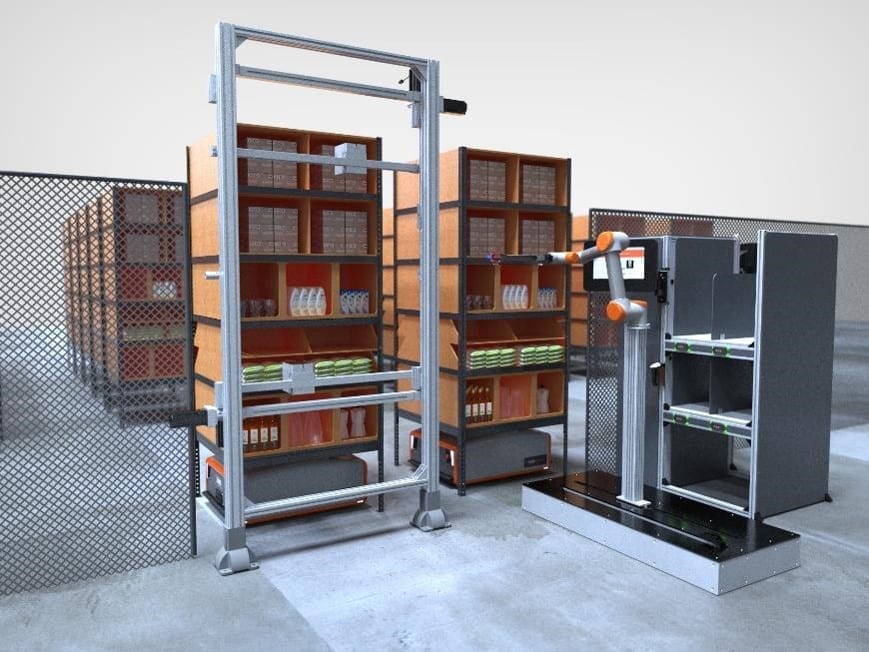
    Robotics and supply chain automation company GreyOrange announced its beta launch of the new-gen Butler PickPal, an autonomous picking solution, at LogiMat 2018 in Stuttgart, Germany. The Butler PickPal is powered by Artificial Intelligence (AI) and Machine Vision to unlock the next level of efficiency in the order picking process. It works seamlessly with the goods-to-person GreyOrange Butler™ robotics system which enables warehouses to manage high-speed operations by automating order picking and fulfilment.

    The Butler PickPal addresses the challenges arising from the global boom in e-commerce as orders need to be fulfilled faster and accurately with more cost-efficiency as competition intensifies. Vertical and horizontal e-commerce industries that operate with a huge number of high-mix SKU inventory, require the shortest order-to-dispatch time and accurate piece-picking.

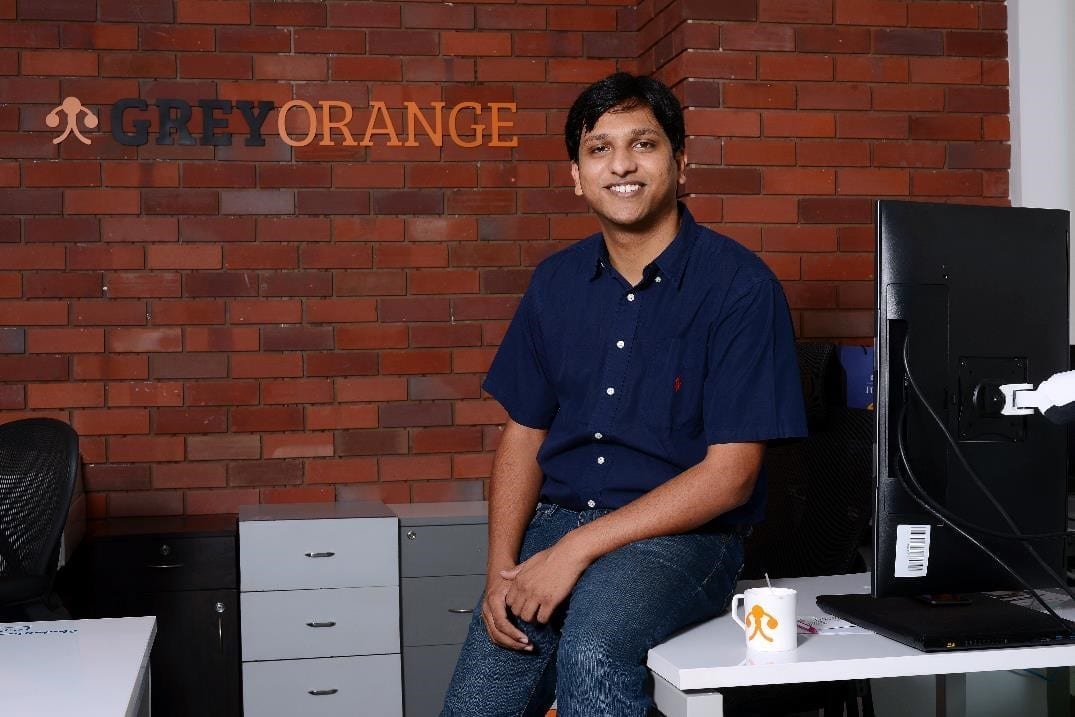
    Akash Gupta, Chief Technology Officer, GreyOrange said, “Working closely with our customers, we see that the order picking process for e-commerce products take up a high percentage of the resources of warehouse staff. As companies face increasing challenges in hiring employees, the adoption of automation is the answer to increase productivity, reduce costs and improve the turnaround time. The Collaborative Robots market is poised for exceptional growth over the next years, growing to 34% of the global robotics spending by 2025. The material handling segment is expected to experience the largest growth in collaborative robot instalments as more companies deploy them into their processes. We are excited to participate in this segment to help unlock the next level of efficiency in last-mile delivery for e-commerce operations.”

    Designed to revolutionise the auto-fulfilment process, the Butler PickPal reduces remarkably the time taken during order fulfilment, by identifying and picking products from shelves quickly and accurately. The PickPal is a collaborative robot, which works alongside a warehouse operator to pick, consolidate and fulfill orders, and together can achieve 500-600 picks per hour; easily doubling the throughput from the same picking station.

    The innovative combination of a scanning system and a 6-axis robotic arm delivers a unique solution that cuts down the time required for processing and picking orders. The Butler PickPal uses sophisticated Machine Vision algorithms to identify the SKU to be picked from the shelves. Using AI-based order processing, it can manage up to 48 orders at the same time.

    The Butler PickPal can handle different packaging types such as boxes, pouches, bottles and vacuum-sealed packages. It can grasp items up to 4kg (8.8 pounds). Using Machine Learning it devises the strategy to pick each item from the densely packed SKU inventory using a versatile gripper. It can identify and handle over 100,000 SKUs of the most popular products commonly found in its e-commerce operations.

    The new Butler PickPal will be deployed in selected sites by mid-year. It is expected to set new standards in operational efficiencies for picking velocity and throughput. The Butler robotics system from GreyOrange has been deployed internationally in distribution centers in Japan, Hong Kong, India, Europe and the Americas, reducing cost per shipment and enhancing productivity at its warehouse operations.