Tag: india

  • Turnover soars 94 per cent for H&M India

    Turnover soars 94 per cent for H&M India

    With store openings and competitive pricing, H&M India has upped its turnover 94.5 per cent in India for the year to the end of November.

    The Swedish fast-fashion retailer’s turnover reached INR955 crore (US$148 million) for the 12 months.

    Its growth follows it opening more stores in India, taking the count from 15 to 27. It entered small markets such as Coimbatore, Indore and Raipur, as well as adding outlets in Mumbai and the Delhi-National Capital Region, where it has had a presence since 2015.

    In its earning release, H&M says it plans to launch an e-store later in India this year.

    Meanwhile, Inditex-owned Zara crossed INR1000 crore in sales last year, seven years after arriving in India, and last year opened an e-commerce portal.

    But H&M is confident its low-priced apparel and wide variety will help it win in India. “I think our business concept is working,” says country manager Janne Einola.

  • AirAsia bullish on India market

    AirAsia bullish on India market

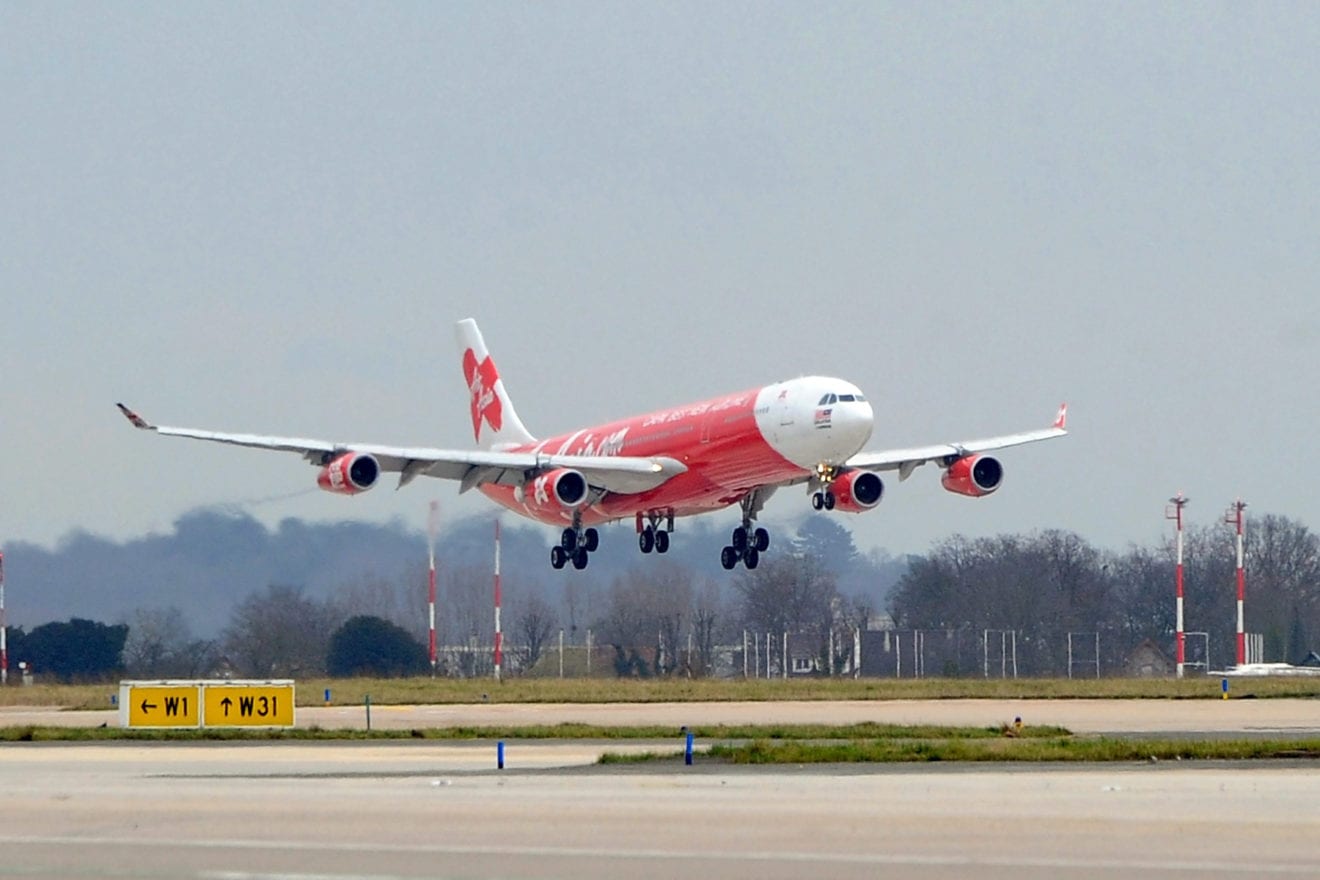
    Low-cost, long-haul carrier AirAsia X Bhd, which has started operating its Kuala Lumpur-Jaipur route, is hoping toincrease its services in and out of India, a market in which it sees potential.

    “We would love to put a lot more flights if regulators allow us to. Right now we are having trouble getting slots into India, with a lot of Malaysian carriers going into India as opposed to Indian carriers coming into Malaysia. That is the challenge,” said AirAsia Bhd executive chairman and AirAsia X group CEO Datuk Kamarudin Meranun.

    On top of that, he said, AirAsia X is looking to increase the frequency of the Kuala Lumpur-Jaipur route to daily from the current four times a week.

    With a potential annual seat capacity of over 156,800 seats, it is eyeing a load factor of 75-80% for the route this year.

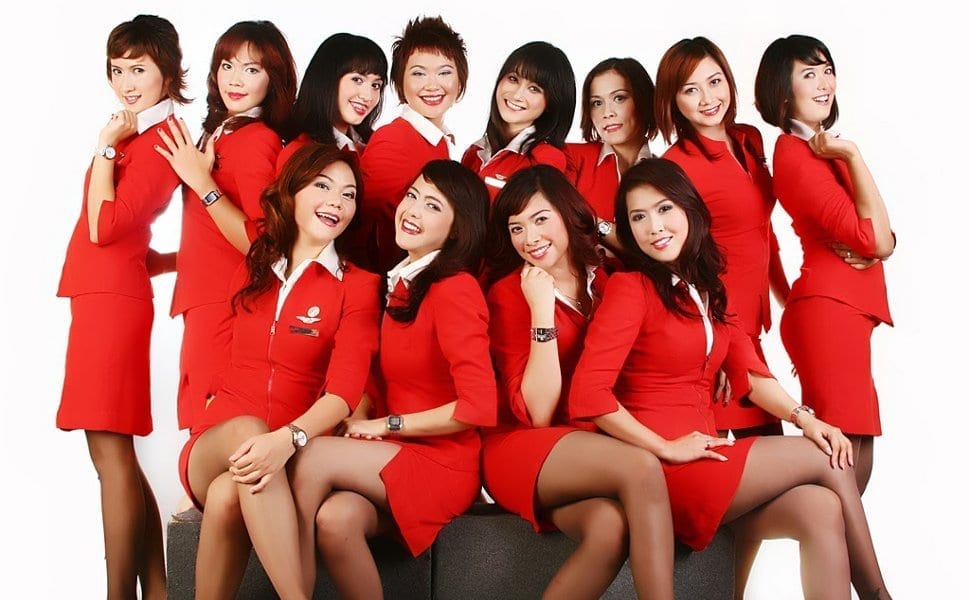
    AirAsia X chairman Tan Sri Rafidah Aziz (fourth from left), Kamarudin (second from left), airline executives and other dignitaries, flanked by cabin crew, celebrating the successful inaugural flight to Jaipur from Kuala Lumpur.

    Kamarudin was speaking at the inaugural flight celebration ceremony. The Kuala Lumpur-Jaipur route is the second direct flight service connecting India and Malaysia offered by AirAsia X after the launch of the Kuala Lumpur-New Delhi direct service in February 2016.

    The Jaipur-Kuala Lumpur service brings the total weekly flights connecting India to Malaysia under AirAsia group to 110 times with a total capacity of 22,755 seats.

    AirAsia X Malaysia has carried over 184,000 passengers in and out of India since the introduction of the Kuala Lumpur-New Delhi route.

    AirAsia group, which comprises AirAsia X and short-haul arm AirAsia, currently serves a total of 19 cities.

    Recently, AirAsia Bhd group CEO Tan Sri Tony Fernandes was quoted as saying that the group is looking to buy Boeing 787s to expand the fleet of its long-haul unit.

    On this, Kamarudin said it is “still under discussion”.

    “At this stage I think it’s premature to talk about it. We are evaluating from a technical aspect and pricing and all those. To confirm it is premature.”

  • Heidi Klum Intimate Solutions is now available in India

    Heidi Klum Intimate Solutions is now available in India

    International Top Model, Heidi Klum Intimate Solutions are available in India exclusively on The Clothing Rental, This collection answers your need to feel effortlessly comfortable every day. The Clothing Rental has got the rights to sell Heidi Klum Intimate Solutions.

    Celebrities and Top Models often wear stunning outfits that are always under the microscope, the world watches in awe as they walk down the red carpet in their effortless chic gowns. Stylist’s best kept secret solutions such as the Dressing Tape: a double-sided tape that sticks on to the garment and the skin while holding a strapless dress, deep neckline or a low back dress in place.  Similarly a low back cannot afford to show the inner garment causing a blunder in press.

    Heidi Klum Intimate Solutions offers multiple options such as the Low Back Converter that can be hooked on to existing bra and lower the back neckline by couple of inches, the wing bra that sticks to the sides or the deep plunge that can be stuck on with a plunge in the front.

    The Clothing Rental, India’s first portal to rent and retail, started in 2005, The Clothing Rental has been a secret destination for the film and media industry professionals. A favorite of top stylists, celebrities and fashionistas The Clothing Rental has dressed the best names in the country with its fashion forward merchandise.

    While the price range of the solutions falls between INR 800 to INR 2800, thus making the international fashion affordable and easily available.

    According to Shilpa Bhatia, Founder, The Clothing Rental, “We cater to top stylists in the country who are dressing up some of the best names in the world, they have a constant need for such merchandise. Bringing it closer to home and offering a much needed variety. The packaging is super cute in glossy hot pink and the pricing is similar to what you would pay on your trip abroad.”

    Tips on purchasing these Intimate Solutions

    1 – Lower Back Converter – When wearing a deep-neck dress, opt for a lower back converter which will make the straps invisible.

    2 – Wing Bra – While wearing a backless dress always opt for a Wing Bra, which is a backless and a strapless bra with clear adhesive wings that are adjustable. It Includes one set of adhesive wing tape that can be reused by simply saving the protectors.

    3 – Plunge Bra – This type of bra is a must-have for low cut tops and push-up padding for added contour, thus making it a perfect option for plunging necklines. It is adorned with attachable straps, u-shaped plunging neckline and contour cups with underwire support.

  • AdParlor closes down Indian offices and moves staffs

    AdParlor closes down Indian offices and moves staffs

    Digital consultancy AdParlor has restructured its South Asian operation after shutting down offices in India.

    The global firm previously had two bases in Delhi and Mumbai to service its telecommunications clients Airtel and the Axiata owned-Robi and Dialog.

    However, in a bid to bring a ” localised presence” to the telcos’ South Asian markets, AdParlor has now decentralised its India hub and moved operations out into Nepal, Sri Lanka and Bangladesh. The Indian office have since been removed from the company’s website, while the new bases have still to be added at the time of publication.

    According to AdParlor Asia chief executive officer Matt Sutton, all 10 staff from India have either been redeployed to the new markets or will stay to maintain unspecified “shared services”.

    A spokesman for AdParlor added: “AdParlor Asia Pacific confirms that the organisation has decentralised its operations from India to South Asia – with localised presence in Nepal, Sri Lanka and Bangladesh now set up in order to service our clients in as seamless a manner as possible, bringing our teams closer to our clients’ businesses in those markets.

    “The South Asian operations were previously set-up in India to support our clients in those neighbouring countries. We will be investing further in those markets throughout 2018.

    “The talent and expertise we have in the market will be redeployed within the AdParlor Asia Pacific business in the South East Asian region, whilst shared services will continue to be managed out of India. We are also committed to investing in these markets and are nurturing digital talent there with an open headcount of 30.”

    AdParlor’s parent company AdKnowledge has been part of a joint venture with the Malaysian telco giant Axiata in Asia since 2016.

    A year ago, Axiata completed a major merger with the Indian-based Bharti in Bangladesh, bringing AdParlor’s three clients together under one umbrella in the market.

    According to Sutton, the Asia operation currently has a 30-strong “open headcount” and is growing across the region.

    However, last year, following the departure of AdKnowledge’s chief revenue officer Damien Lavin, the company also said it had an “open headcount” of 45 people across the markets.

    Currently, the company has offices in Singapore, Hong Kong, Thailand, Malaysia, Indonesia, Korea, Philippines and Taiwan.

  • Single-brand retailers now easier to enter India

    Single-brand retailers now easier to enter India

    Indian Prime Minister Narendra Modi has removed the need for a federal approval of foreign single-brand retailers entering India.

    He has also relaxed the rule mandating 30 per cent local sourcing giving companies five years to reach the threshold.

    The surprise moves will speed the launch of at least 10 foreign brands believed to have applications in processing at present, including Uniqlo parent Fast Retailing and Tesla, according to a report in the Times of India. Fast Retailing had lodged an application to open Uniqlo stores last November, and Tesla has been in talks with government officials.

    “There are around 10 applications under single-brand retail trading and these will be positively impacted once the amendments in the FDI policy are notified,” Suresh Prabhu, Commerce and Industry Minister said without revealing brand names.

    Apple may be another foreign company to benefit from the about-face. The US tech giant had a previous application to enter the country via its own Apple stores declined because it could not meet local content requirements.

    Foreign brands have long been frustrated by Indian government restrictions on single-brand retailers, which were effectively designed to protect the ‘unorganised’ domestic retail sector, dominated by ma-and-pa retailers.

    Modi is trying to stimulate the Indian economy by relaxing foreign investment rules in a number of sectors, even allowing overseas companies to take a stake in the national carrier Air India.

  • Idea Q3 revenue falls 25% from MTR cut “body blow”

    Idea Q3 revenue falls 25% from MTR cut “body blow”

    India’s Idea Cellular has reported a steep 24.9% decline in Q3 revenue and a surge in net losses as a result of the “body blow” from regulator Trai in the form of a mobile termination charge cut.

    Revenue for the quarter fell to 65.1 billion rupees ($1.02 billion), and the operator’s standalone net loss climbed 182.3% to 13.52 billion from 4.78 billion a year earlier.

    The decision by regulator Trai to reduce mobile termination rates from 0.14 rupees to 0.06 rupees per minute resulted in a steep 57% decline in interconnection usage charge rates, which Idea said negatively impacted revenue for the quarter by 8.2 billion rupees.

    “The new domestic MTC rate and recently announced drop in ‘International mobile termination’ settlement charges effective 1st February, 2018 from 53 paisa (0.53 rupees) to 30 paisa per minute, remains a body blow to all operators and reduces investable funds for the critical ‘Digital India’ program,” Idea said in its quarterly report.

    “The international IUC rate drop only benefits the foreign operators, with no commensurate benefit to Indian consumers but with significant foreign exchange and revenue loss to the Indian exchequer.”

    Idea also blamed ongoing “unrelenting rate pressure on voice and mobile data services as high ARPU consumers migrate to unlimited voice bundled data plans.”

    Despite its financial woes, Idea said that the company had managed to accrue 7.5 million net customer additions for the quarter due in part to a large influx of subscribers porting to the company from operators exiting the market in India’s wave of consolidation.

    This took Idea’s total customer base past the 200 million milestone for the first time to 203 million.

    The adoption of unlimited voice bundled data plans also led to an explosion in voice volumes for the quarter, with voice minutes of use growing 10.8% sequentially. Data usage per data subscriber also surged to 4.74GB per month during the quarter, from just 703MB a year earlier.

    Idea said it is in the final stages of the approval process for its planned merger with Vodafone India, which is expected to close in the first half of the year. The proposed $23 billion merger would create India’s largest operator by subscribers with around 400 million customers.

  • Siam Makro to open 15 stores in India

    Siam Makro to open 15 stores in India

    Thailand conglomerate Charoen Pokphand (CP) Group plans to invest Rs1000 crore (US$157 million) over the next five years to open Siam Makro wholesale stores in India.

    Siam Makro, the company’s retail arm, will open 15 wholesale cash-and-carry stores in India, starting with Delhi-NCR, over the next three years under a new brand, Lots Wholesale Solutions.

    “India and the US are the two priority markets for us for future growth,” says MD Tanit Chearavanont of CP Wholesale India.

    The company hopes to open its first two stores, each covering more than 50,000sqft (4600sqm) in NCR by the end of the second quarter.

    CP Group has cash-and-carry businesses in Thailand, China, Cambodia and Myanmar. It has 123 Makro cash-and-carry outlets in Thailand, and 60 outlets in China under the brand Lotus.

    “We bring with us 28 years of experience in serving various business-to-business customers, such as hotels, restaurants and cafes, traders and service customers, through different cash-and-carry formats, large and small,” says Chearavanont. Hotels, restaurants and cafes, which account for about 28 per cent of the company’s business in Thailand, are seen as the largest segment in India as well.

    CP Group, which entered India in 2016 through CP Foods, its agro-industrial and food unit, is looking at making India its innovation hub for technology and digitisation, says Chearavanont.

    CP Wholesale India director (development and expansion) Sameer Singh says the company will look at competitive pricing to take on existing wholesalers in India. “We are also working on possible limited-period credit for customers. We are in discussions with banking institutions to finalise a strategy.” added Singh.

  • WAFL to open 80 stores in India

    WAFL to open 80 stores in India

    Hong Kong-headquartered waffle chain WAFL has opened its first stores in India as it continues an international franchise roll-out program.

    The company now operates 53 stores outside Hong Kong, although the Indian stores are the first in another Asian market, with most trading in Europe.

    WAFL’s first Indian store opened in SDA Market in Delhi and two more followed in the cities of Bangalore and Surat.

    The company says it plans to open about 80 stores across India by the end of this year, mostly smaller outlets of 200-250sqft with a seating capacity ranging from eight to 16 people.

    The WAFL menu includes sweet and savoury waffles meals and waffle-cone soft-serve ice cream – but they’re not all sugar-laden indulgences.

    Rajeev Chawla, executive partner of WAFL India says consumers are more health conscious now and have caught up with the fast-paced life.

    “So through our QSR we want to serve deliciously healthy food, to help them maintain their health-conscious need. We are positive that the Indian market will like our products and we are eyeing pan-India expansion.”

  • New shopping centre in India combines contemporary architecture with traditional styles

    New shopping centre in India combines contemporary architecture with traditional styles

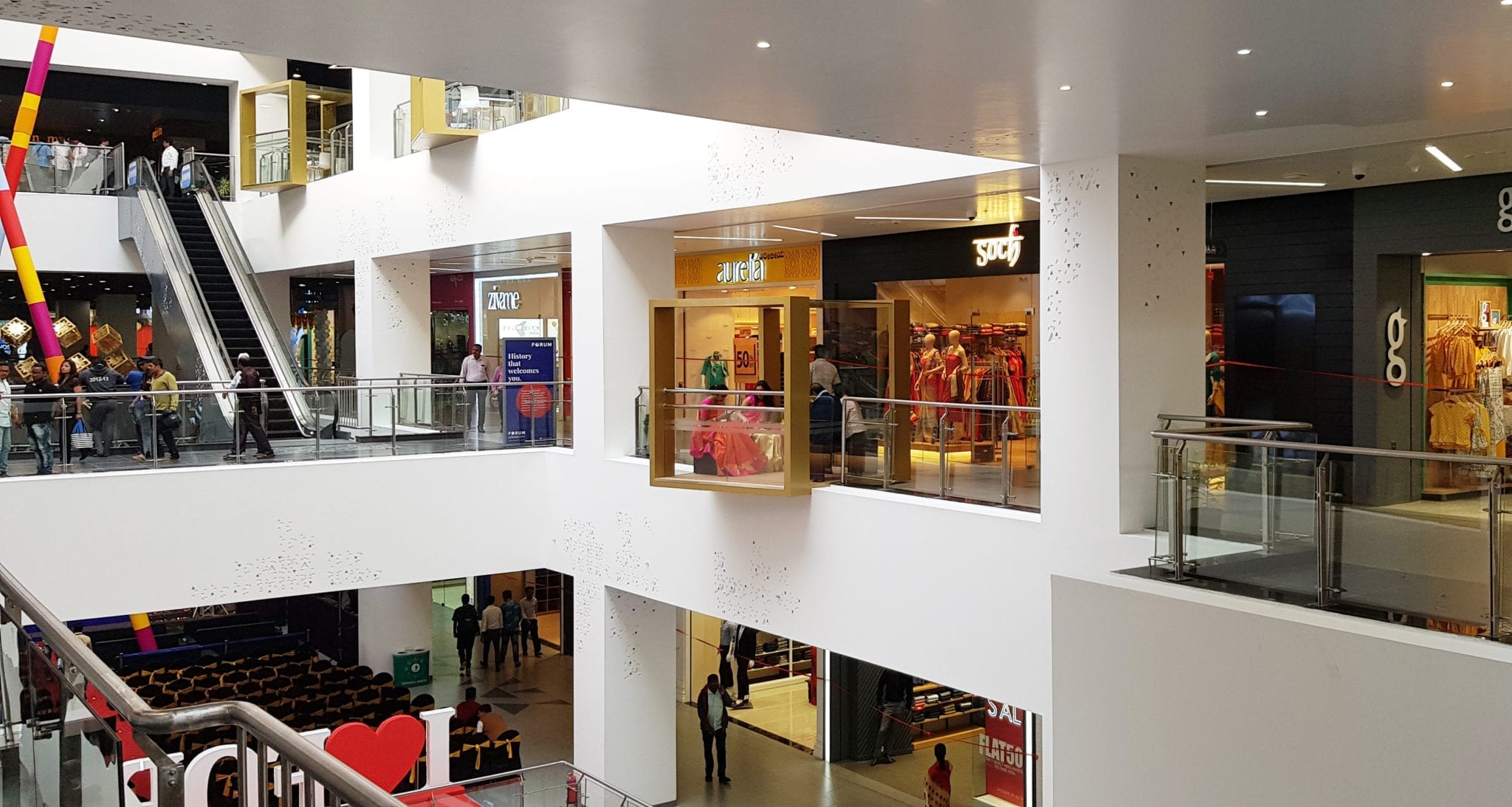
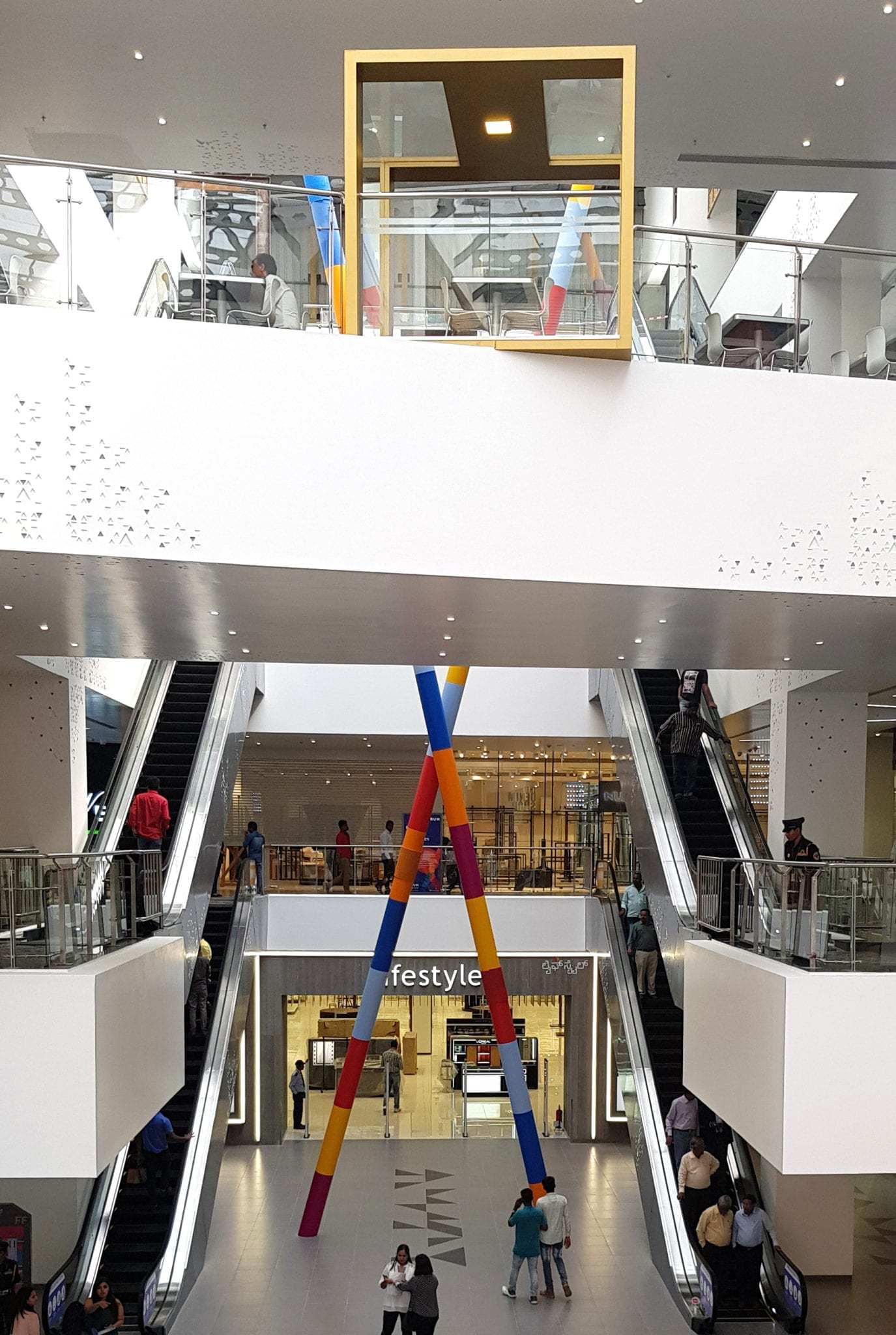
    A shopping mall designed by international consultant Broadway Malyan has opened in India. The firm was appointed by Prestige Group to design the interior fit-out and exterior façade of Forum Mall, Mysuru.


    The shopping mall comprises 54,000 sqm of space, and is home to over 150 local and international brands, with big names such as H&M, Nike, Levi’s and Apple all taking space within the mall. It also includes a hypermarket and department stores, and leisure needs are catered for through the inclusion of a multiplex, gaming arcade and range of restaurants and cafes.


    The interior design was inspired by local culture, including celebrations such as the Dussehra and Holi festivals, landmarks such as Mysore Palace, and textures and materials including Mysore Peta, Sarees and Jali Stonework. These design references have been merged with a modern style to create a unique retail environment.


    Ankit Kamboj, associate director at Broadway Malyan, said: “Our challenge was to combine cultural elements with a contemporary, clean architectural style. The balance is important; both aspects should complement rather than detract from each other.


    “By designing the façade and interiors we have been able to ensure that the same design approach is followed throughout to create a strong identity for the mall.


    “Significant growth is expected in the retail sector in the city and Forum Mall looks set to capitalise on this by offering a new type of retail and lifestyle destination for local residents to enjoy.”


    The interior design is underpinned by simple, white plaster on a number of core surfaces such as the ceilings, main pillars and escalators. By using this neutral approach, the featured elements stand out more. Depth and texture is added to the design the ways in which various materials, patterns and light is used.

     Kolam drawings, which is a style specific to the south of India, are printed over floors, glass balustrades and pavements to add further distinction and also help with wayfinding by highlighting key areas such as the entrances, lifts and public squares.

    Prestige Group is one of the leading developers in India with a range of landmark developments throughout the country. As well as retail schemes, they deliver residential, commercial and hospitality projects. Retail is one of Broadway Malyan’s core areas of expertise, and the firm is currently providing advice for a number of projects throughout India, from small, niche retail projects through to large malls and out of town shopping destinations.

  • AirAsia India Introduces New Routes

    AirAsia India Introduces New Routes

    AirAsia India has announced new flights connecting Chennai with Bengaluru and Bhubaneswar. AirAsia India will start operations on the new flights from February 24, 2018, according to the airline’s website – airasia.com. The move comes over two years after the airline had discontinued operations from Chennai. AirAsia India is offering promotional flight tickets starting at an all-inclusive Rs. 1,299 on the new flights connecting Chennai, according to its website. Bookings for the flights connecting Chennai with Bengaluru and Bhubaneswar are open till January 21, 2018. The fares are applicable on travel till January 31, 2019, the airline noted.

    AirAsia India detailed its promotional fares on the new flights connecting Chennai with Bengaluru and Bhubaneswar:
    airasia chennai offer airasia website
    AirAsia India will fly five times a day in and out of Chennai to Bengaluru and Bhubaneswar, news agency Press Trust of India reported citing a release by the airline on January 15. Bengaluru-based AirAsia India also announced induction of another Airbus A320 into its fleet, raising its size to 15, the agency reported.

    A search on the AirAsia India bookings portal on Wednesday showed tickets for a flight from Bengaluru to Chennai in February-end were available from Rs. 2,799.

    Here are five things to know about the AirAsia India offer on flights connecting Chennai:

    All fares are quoted for single journeys (one-way) and valid for new purchases only, according to the AirAsia website. The fare includes airport taxes (except for selected airports where airport tax is collected at the point of departure), it noted.

    The fares are only available for online bookings at www.airasia.com, according to the airline.Without divulging the total number of seats offered under the scheme, AirAsia India said: “Seats are limited and may not be available on all flights.”

    A non-refundable processing fee is applicable for payments via credit/debit/charge cards, AirAsia India mentioned.

    Changes to flights and dates are permitted subject to change fees, and changes to name are not permitted, according to AirAsia India.

  • Teletalk and Robi sign network sharing deal

    Teletalk and Robi sign network sharing deal

    Bangladesh operators Teletalk and Robi Axiata have arranged to share network sites across the country to improve the network experience for their respective customers.

    The two operators have signed an agreement on the network sharing deal at a meeting this week attended by company executives including Robi CEO Mahtab Uddin Ahmed and Teletalk managing director Kazi Md Golam Kuddus.

    The agreement is also aimed at accelerating the 4G network rollout process once LTE licenses are awarded to mobile operators.

    Bangladesh’s 4G auction is scheduled to take part in February, and is expected to draw participation from the two operators as well as Grameenphone and Banglalink.

    CityCell, which recently had its operations suspended as a result of failure to pay required license and related fees, has also raised the prospect of participating in the auction in order to re-enter the market.

    The auction will encompass spectrum in the 2100-MHz, 1800-MHz and 900-MHz bands. The deadline for applying to take place is January 14 and the auction will be held on February 14. Operators will need to deploy a 4G network nationwide within 36 months as part of the auction terms.

  • Ncell Axiata expands LTE network

    Ncell Axiata expands LTE network

    Nepal’s Ncell Axiata has revealed it has expanded its LTE network to cover two more cities – Lahan and Dhangadhi.

    The operator’s 4G network now spans 21 cities, giving Ncell the widest 4G coverage in the market at more than 15% of the population.

    Ncell launched 4G mobile broadband in the 21 cities last week. The company is giving customers the ability to acquire a 4G SIM with the same mobile number for just 1 rupee ($0.0098).

    The new SIM will be bundled with 1GB of 4G data valid for three days, as well as a buy 1 get 1 free offer providing the equivalent of double the 4G data for any data packs. The offer will also be bundled with a 30 day subscription to the Yonder Music digital music library.

    As well as the two new cities, Ncell’s 4G network covers Nagarkot, Banepa, Dhulikhel, Pokhara, Damauli, Biratnagar, Birtamode, Damak, Dharan, Bharatpur, Hetauda, Birjung, Bhairahawa, Butwal and Nepalgunj, Kolhpur and Birendranagar.

    “We are very much delighted to announce introduction of 4G service in Lahan and Dhangadhi, bringing more people into access of new technology based high speed mobile connectivity,” Ncell corporate services director Pranay Acharya said.

    “By making the 4G service accessible to more than 15% of population, we have been able to swiftly deliver on what we have committed, contributing towards the goals of National Broadband Policy and Digital Nepal.”

    Expansion to other parts of the country is already underway.

  • India, Vietnam race in rice market

    India, Vietnam race in rice market

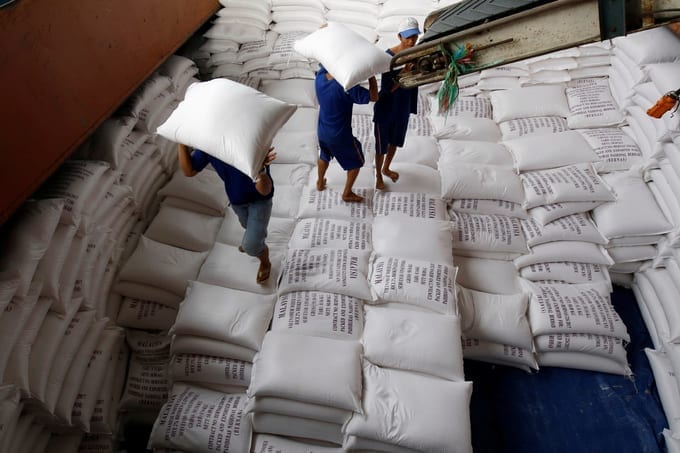
    Rice prices gained this week in India as Bangladesh continued to lap up the staple grain from its neighbour, while prospects of deals with the Philippines saw rates climb for the first time in three weeks in a relatively quiet Vietnamese market.

    In Vietnam, benchmark 5 percent broken rice rose to $400 a ton, free-on-board (FOB) Saigon, ending a three-week flat trend within the $390-$395 range, and boosted by prospects of deals with the Philippines, traders said.

    “Prices edged up on market talk that the Philippines would invite tenders to buy 250,000 tonnes at the end of January,” a trader in Ho Chi Minh City said.

    However, trading remained thin due to depleted stocks in the world’s third-largest rice exporter, while Vietnam’s major winter-spring crop would be ready only by the end of February, traders said.

    Vietnam plans to sell close to a 23 percent stake in the country’s main rice exporter Vinafood II through an initial public offering.

    Top exporter India’s 5 percent broken parboiled rice prices rose by about $2 per tonne this week to $423-$427.

    Traders from Bangladesh are aggressively buying new-season crop since prices in Bangladesh are still elevated, said an exporter based in Kakinada in the southern state of Andhra Pradesh.

    India’s rice exports likely jumped 22 percent in 2017 to a record 12.3 million tonnes as Bangladesh ramped up purchases after flooding damaged its crops.

    As of the end of December, farmers in India had cultivated winter-sown rice on 1.88 million hectares, 44 percent higher than a year earlier.

    Prices were also higher in another major Asian exporter, Thailand, with the country’s benchmark 5 percent broken rice gaining to $395-$410, FOB Bangkok, from $393-$396 last week on an appreciating baht and lower supplies.

    The baht has gained 1.6 percent versus the U.S. dollar so far this year and been Asia’s best-performing currency.

    “Rice prices have increased due to a stronger baht, lower supplies due to the effects of floods, as well as a recent 200,000-tonne export deal with Indonesia,” a Bangkok-based rice trader said.

    The Ministry of Commerce forecast Thailand to export 9.5 million tonnes of rice, worth $4.7 billion, in 2018.

    “I think this target is achievable. It’s lower than last year’s record figure of over 11 million tonnes probably due to a stronger Thai baht and bad weather conditions affecting supplies,” said another trader based in Bangkok, adding, “Demand has remained fairly constant.”

    Thai prices are likely to be on an upward trend over the next few weeks, traders said.

  • Asia Gold-Price gain keeps buyers at bay; market eyes China holiday boost

    Asia Gold-Price gain keeps buyers at bay; market eyes China holiday boost

    Demand for physical gold remained lacklustre across top Asian centres this week as buyers were put off by a rally in prices, but an approaching Chinese New Year could reignite appeal for the yellow metal.

    Gold prices rose for a third session on Friday to hit their highest since September, with a slump in the U.S. dollar helping drive bullion towards its fifth straight weekly gain.

    High prices are weighing on physical demand for gold, but demand is expected to rise ahead of the Chinese New Year, according to Brian Lan, managing director at dealer GoldSilver Central in Singapore.

    In top consumer China, the range for premiums broadened to about $5-$8 an ounce from $6-$7 last week.

    The Chinese New Year holiday will kick in by the middle of next month.

    There is not too much demand currently and if prices come down to the $1,300 level, demand and premiums will increase, said Ronald Leung, chief dealer at Lee Cheong Gold Dealers in Hong Kong.

    Premiums of 60-80 cents an ounce were being charged over the benchmark in Singapore this week, while in Hong Kong, premiums ranged between 60 cents and $1.20, against 70 cents previously.

    Demand remained subdued in India, the world’s second largest consumer of the metal, as well, since jewellers and retail buyers were postponing purchases due to a rally in local prices to the highest level in 1-1/2 months.

    Jewellers need to buy gold for the next month’s jewellery exhibition, but they are postponing purchases due to the price rise, said Mukesh Kothari, director at bullion dealer RiddiSiddhi Bullions in Mumbai.

    “They will wait for a week or so for price correction. Then they have to make purchases.”

    Local gold prices jumped to 29,550 rupees per 10 grams, the highest level since Nov. 20, 2017.

    Dealers in India were offering a discount of up to $2 an ounce this week over official domestic prices, unchanged from last week. The domestic price includes a 10 percent import tax.

    Jewellers were keeping a lower inventory as some people are speculating the government will reduce import duty in the budget on Feb. 1, said a Mumbai-based dealer with a private bank.

    India’s gold imports surged 67 percent in 2017 from the previous year to 855 tonnes, provisional data from precious metals consultancy GFMS showed.

    Meanwhile, in Japan, public selling volumes rose, causing sellers to keep offering discounts of 50 cents, unchanged from the previous week. (Reporting by Nithin Prasad in Bengaluru, editing by David Evans)r
  • Indian jeweller Malabar Gold & Diamonds to break a record

    Indian jeweller Malabar Gold & Diamonds to break a record

    Indian jewellery chain Malabar Gold & Diamonds today added 11 showrooms across six countries to its network.

    Taking its retail store count to 208, the showrooms include AMK Hub in Singapore, Ampang Mall in Malaysia and Warangal in Telangana, India. Other showrooms are in malls across the UAE. The brand has 90 showrooms in India, and last year opened 27 showrooms internationally.

    As well as another 50 showrooms in different formats internationally, the Malabar Group plans to add more manufacturing units this year, says chairman MP Ahammed. “This will fuel our vision to become the top jewellery retailer in the world.”

    The company will expand into new countries such as Brunei, Bangladesh, Sri Lanka and the US, says Malabar Gold international MD Shamlal Ahammed.

    The expansion will generate more employment and enhance such initiatives as the government’s Made In India, says Malabar Gold & Diamonds India MD O Asher. The group has earmarked 5 per cent of its annual profit for CSR activities in five key areas: housing, health, environment, women’s empowerment and education.