Tag: india

  • India debuts interoperable QR code payment system

    India debuts interoperable QR code payment system

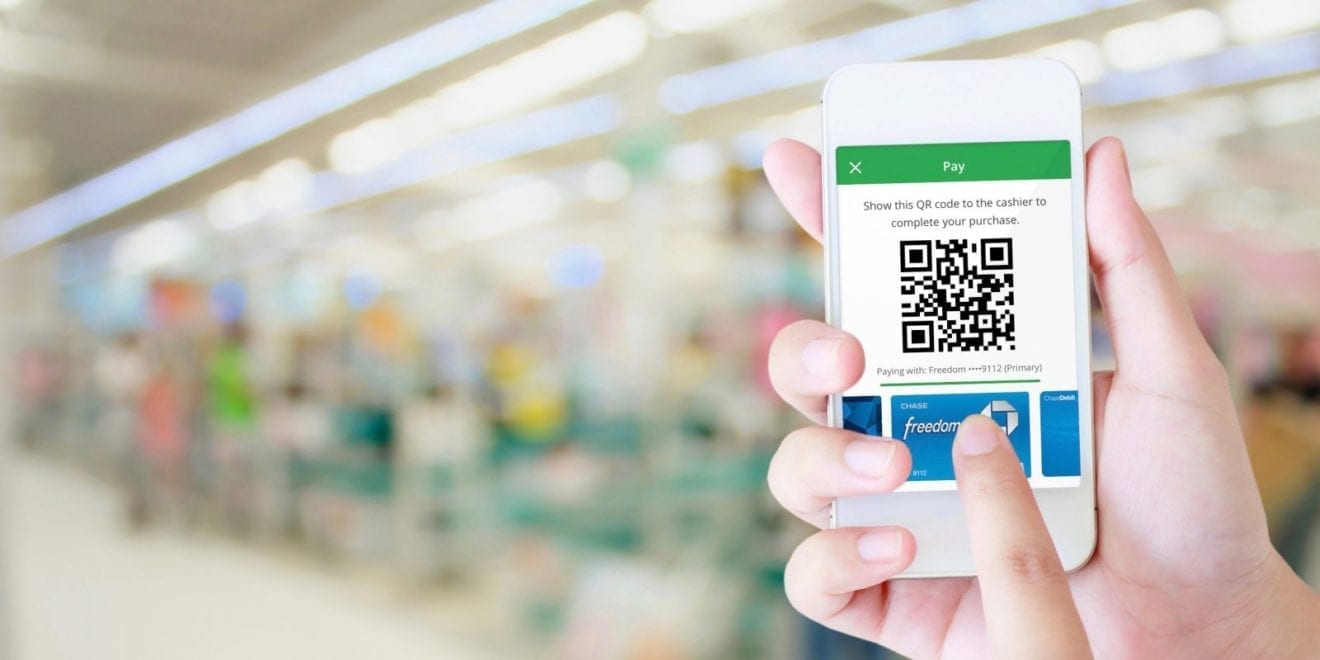
    The Reserve Bank of India and the Indian Banks Association have launched Bharat QR, the world’s first interoperable QR code acceptance solution.

    The solution was developed by Mastercard in collaboration with National Payments Corporation of India (NPCI) and Visa. American Express will also adopt these payment standards.

    Bharat QR aims to provide both merchants and consumers with seamless and secure method for payment transactions.

    For consumers, Bharat QR eliminates the need to use multiple QR codes from different payment networks when transacting with any merchant. Similarly merchants need only display one single QR code at the storefront or through their respective acquiring bank’s mobile application.

    The Bharat QR solution will be rolled out across the nation in phases by banks, with the aim to foster adoption by 57 million small and micro businesses due to the purported low cost of deployment.

    A number of banks in India stand ready to deploy BharatQR, including Axis Bank, Bank of Baroda, Bank of India, Citi Union Bank, Development Credit Bank, Karur Vysya Bank, HDFC Bank, ICICI Bank, IDBI Bank, RBL Bank, State Bank of India, Union Bank of India, Vijaya Bank and Yes Bank.

    Several other banks are also at various stages of implementation.

  • India’s Jio introduces its first price plans

    India’s Jio introduces its first price plans

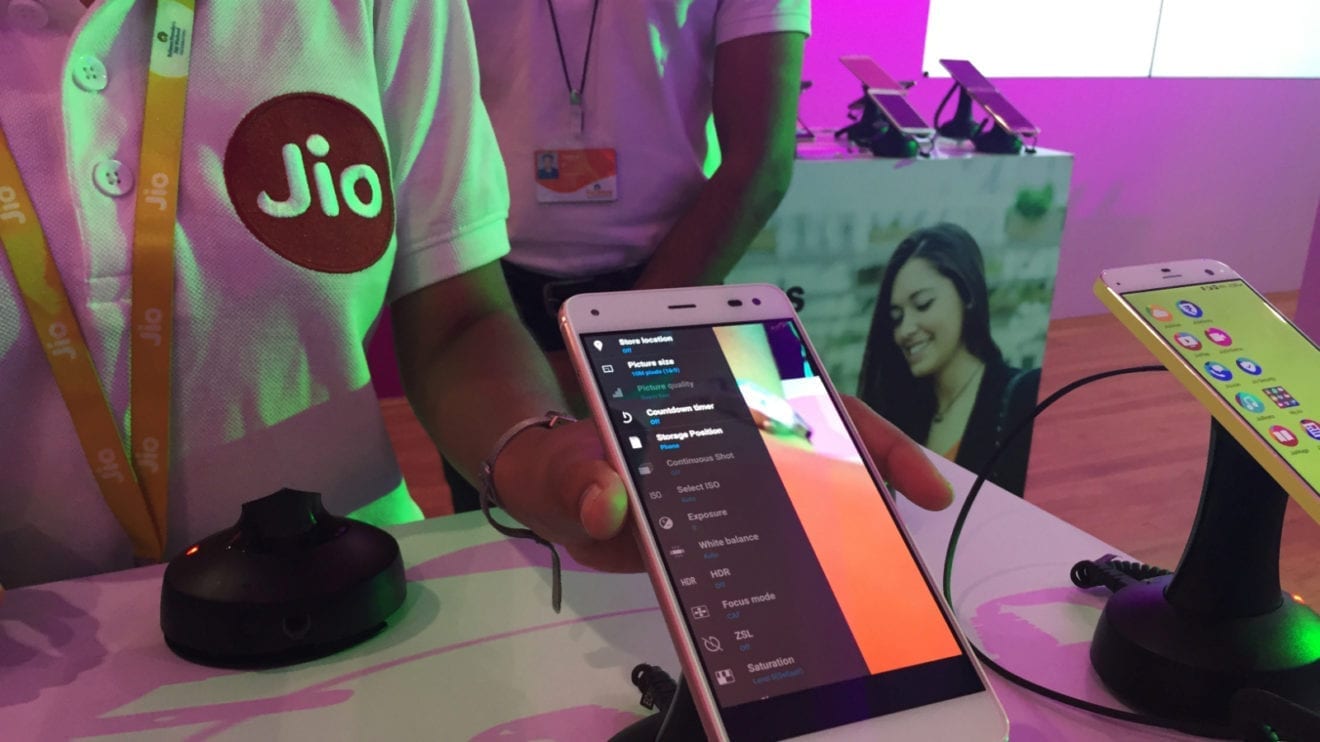
    Disruptive new Indian 4G operator Reliance Jio’s free services offer will soon be coming to an end, but the operator has announced an aggressive new pricing strategy in a bid to retain as many of its new customers as possible.

    Jio launched nationwide services in September last year, but made all services available for free as a promotional offer. The company subsequently extended this promotion until March 31.

    The aggressive marketing strategy has helped Jio sign up new customers at a record rate – the operator recently revealed it is nearing 100 million customers. But a number of these are expected to port out once the free services period comes to an and, due in part to the current patchy nature of Jio services.

    In an attempt to limit churn, Jio has introduced a new Prime offer that will take effect from April 1. Under this offer, customers will be able to pay a one-time 99 rupee ($1.48) fee for prime membership, and another 303 rupees a month for unlimited voice calls and 30GB of allocated data.

    Jio’s rivals, which have already been feeling the impact of the operator’s entry into the market and been pushed into making their offers more competitive, may find themselves needing to further cut prices or increase allocations in response.

    This could put even more pressure on a hotly-competitive telecoms market and accelerate the consolidation trend.

  • Vodafone India, Idea may announce a merger soon

    Vodafone India, Idea may announce a merger soon

    Vodafone India and Idea Cellular are reportedly on the verge of finalizing the terms of a major merger that would create India’s largest operator by subscribers.

    The operators are expected to finalize the agreement within a month and could be ready to announce a deal by the end of the week.

    Vodafone Group has brought in former India head Martin Pieters to work on the proposed merger, according to the report.

    But the proposed merger could be complicated by the fact that Indian regulations prohibit an operator from holding more than 25% of the total spectrum allocated in a single circle, 50% of the spectrum from a single band within a circle and 50% revenue or subscriber market share.

    The operators may therefore need to agree to divest certain spectrum and other assets to secure regulatory approval.

    A merger between the two operators would create an entity with a revenue market share of around 40% and a subscriber base of over 380 million, propelling the combined company ahead of current market leader Bharti Airtel.

    India’s crowded mobile industry is going through a consolidation phase, triggered by intensifying competition as a result of the entry into the market of disruptive and deep-pocketed newcomer Reliance Jio Infocomm.

    Aircel and Reliance Communications are reportedly also negotiating a merger, and Telenor India is said to be attempting to get in on the deal to make it a three-way merger. The combined company would be the second largest operator in the market behind Airtel, or the third largest in the event of a Vodafone-Idea merger

  • Zara, Gap, Body Shop slash Indian retail prices

    Zara, Gap, Body Shop slash Indian retail prices

    Global brands like Gap, The Body Shop and Zara are slashing Indian retail prices to stay competitive in the heavily price-sensitive market.

    UK cosmetic brand The Body Shop slashed prices across categories in India by 20 to 30 per cent last week, and US fashion brand Gap is looking to have up to 40 per cent of its products made locally, which should allow prices to drop by 10 to 15 per cent.

    “The process has started,” says CEO J Suresh of Gap’s India franchisee Arvind Lifestyle Brands. The Indian-made items will be introduced next year.

    The Body Shop India COO Shriti Malhotra says its price cuts will make its products more accessible.

    Spanish fast-fashion brand Zara is also looking at slashing its prices to bring them closer to Swedish rival H&M.

    It quotes experts as saying price cutting is one of the most effective ways to boost sales and market share in India, particularly in highly competitive and fast-growing segments.

    “Most brands strategically lower prices for the value-conscious Indian consumer,” says CEO Devangshu Dutta of retail consultancy firm Third Eyesight.

    Inditex-owned fashion brand Zara reduced prices by up 15 per cent when H&M entered the Indian market in October 2015 with its global strategy of aggressive pricing. The move helped Zara record 17 per cent sales growth last year.

    When Arvind Lifestyle Brands took over the business of beauty and wellness retailer Sephora from former franchisee DLF Brands in September 2015, its first move was price correction. “We looked at pricing in Dubai and Singapore and kept it in the band of 5 to 10 per cent lower than that,” says Sephora India CEO Vivek Bali.

  • Future of DKNY India in doubt

    Future of DKNY India in doubt

    DKNY India may quit the market after failing to generate sustainable profits.

    While mall executives and DKNY store managers have confirmed the exit, India franchisee DLF Brands has denied the US fashion brand is completely leaving the country, says the Economic Times.

    DLF Brands head Timmy Sarna says the company has closed “a few” stores but will continue to run four outlets, all in DLF-owned malls in the National Capital Region.

    He says two loss-making stores have been closed, one in Kolkata and the other in Mumbai.
    However, Fashion Network says sources have told it that the DKNY outlet in DLF’s Mall of India in Noida is closing.

    It quotes another source as saying the outlet in DLF Place Mall in Saket is closing next month.

  • Indonesia to attend International Yoga Festival in India

    Indonesia to attend International Yoga Festival in India

    Through its Wonderful Indonesia brand, Indonesia will promote its vast tourism potential at the annual International Yoga Festival, due to be held in the Indian city of Rishikesh on March 1-7, 2017.

    To this end, the Indonesian Tourism Ministrys Deputy for International Marketing I Gde Pitana will be sent to head a delegation attending the event, the ministry noted in a press statement here on Tuesday.

    Pitana said promoting the archipelagos tourism sector in this “City of the Divine” of India is a strategic move, as Indonesia also has several interesting destinations for practicing the art of yoga, and India is a potential market, which has yet to be tapped optimally.

    At present, with its growing number of outbound tourists, India has become an important contributor of foreign visitors to Indonesia, he pointed out.

    Several factors that may have attracted them to visit Indonesia are related to the two nations cultural similarities and the archipelagos diverse tourist destinations. The increasing trend of Indian travelers visiting the archipelago is also driven by Garuda Indonesias Mumbai-Jakarta flight.

    With its diverse tourist destinations, Indonesia has plenty to offer to Indian travelers. Hence, it is necessary to implement various promotional strategies to attract more outbound tourists from the country, Pitana stated.

    “One of our efforts is promoting the Wonderful Indonesia brand in India,” he revealed.

    For the International Yoga Festival, Indonesia is sending a delegation, setting up a pavilion, as well as displaying and distributing the Wonderful Indonesia promotional materials, Pitana remarked.

    The Tourism Ministry is offering support to singer Ayu Laksmi from Balis Svara Semesta (Sound of the Universe) to perform at the worlds largest yoga festival in which yoga lovers from 110 countries are expected to participate.

    Laksmi and Semesta will perform at the opening and closing sessions of this annual event. During the festival, Indra Udayana, an artist and envoy of peace, and yoga instructor Anjasmara will also join the performers.

    “This event is expected to help boost the image of Indonesias tourism industry to offer greater exposure in India. This is indeed a good opportunity to attract more outbound tourists from India and other countries,” he noted.

    Meanwhile, the Tourism Ministrys Deputy Assistant of the Asia Pacific Market Development Vinsensius Jemadu stated that an awareness campaign package of the Wonderful Indonesia brand will be prepared for Indias electronic media.

    “We shall also dispatch a Wonderful Indonesia team and prepare attractive souvenirs for the visitors at the Indonesia Pavilion,” he noted.

    Bali will be highlighted at the event, as it is the main destination offered to Indians who have known the resort island as a popular place for yoga and spas.

    Promoting the Wonderful Indonesia brand in India is expected to strengthen the positive image of the archipelagos tourism sector and to attract more Indian travelers to visit Indonesia, Jemadu remarked.

    The Indonesian Tourism Ministry has noted that the biggest contributors of foreign tourists to Indonesia in 2015 were Singapore, with 1,571,982 visitors; Malaysia, with 1,247,270; China, with 1,141,330; Australia, with 1,051,141; Japan, with 528,465; South Korea, with 359,468; India, with 293,415; the UK, with 280,198; the US, with 263,429; and Taiwan, with 211,528.

    Referring to the countries of origin and number of foreign tourist arrivals during the period between January and October 2016, the five main contributors were Singapore, with 1,177,695 visitors; China, with 1,221,422; Australia, with 1,011,077; Malaysia, with 989,739; and Japan, with 434,352.

    As one of the largest economies of the G-20, India is regarded as a huge potential source of foreign tourists.

    The Ministry of Tourism is targeting 15 million international tourist arrivals in 2017.
  • Gemfields introduces Faberge to India

    Gemfields introduces Faberge to India

    Faberge, owned by UK emeralds and rubies mining company Gemfields, is the latest in a growing list of global luxury brands to enter India.

    It is following on the heels of such brands as Burberry and Rolex as India’s economic expansion spawns more billionaires than in Japan, the traditional bastion of ultra-rich in Asia, reports ET Retail.

    Faberge, an ultra-luxury jeweller known for its Easter eggs and tracing its roots back to Russia in the days it had royalty, will set up in Delhi and Mumbai, selling its products through select showings for the uber-rich.
    “India and other Asian markets have tremendous potential,” says Faberge CEO Sean Gilbertson. “Asia has largely been an unexplored area for us.”

    Faberge, which retails through 39 multi-brand outlets including Harrods and Mayfair, plans to hold more trunk shows in Hong Kong, Malaysia and Singapore.

    Products being sold in India include coloured gemstones, emeralds, rubies and sapphires, and timepieces including the award-winning Lady Compliquee peacock watch. Prices range from US$5000 to $3 million.
    Founded in 1842, the company was founded by Peter Carl Faberge, who was official goldsmith to the Russian Imperial Court.

    In the quarter to the end of December, Faberge’s sales jumped by 48 per cent over the same period in 2015, says Gemfields, while the average selling price per piece increased by 12 per cent.

    Faberge has not been affected by the overall slowdown in the luxury market, says Gilbertson, as it deals with a smaller clientele with an average selling price “extraordinarily high compared with most other brands”.

  • Amazon India proposes $500m food venture

    Amazon India proposes $500m food venture

    Amazon India has applied to the government to invest US$500 million in a wholly owned venture that will allow the US eCommerce giant to stock locally produced food items and sell them online.

    If successful, it would become the first foreign retailer to enter the segment.

    Amazon already has an eCommerce marketplace in India, but while 100 per cent overseas capital is permitted for such platforms, they cannot sell products of their own. Last year, the government allowed for 100 per cent foreign investment in the retailing of processed foods made in India.

    Amazon has filed its application with the Department of Industrial Policy & Promotion (DIPP), which handles foreign investment in retailing and e­Commerce. The company plans to invest $500 million over five years and could start selling locally produced food items within six months of obtaining approval, says an insider.

    “We are excited by the government’s continued efforts to encourage foreign direct investment in India for a stronger food-supply chain,” says an Amazon spokesperson. “We have sought an approval to invest and partner with the government in achieving this vision.”

    Only Indian grocery delivery companies Big­Basket and Grofers have applied under
    the category, prompting the government to invite companies including CP Foods (Thailand), Heinz, Nestle and Walmart to provide feedback and investment plans.

    This followed the minister for food-processing industries Harsimrat Kaur Badal visiting London with a team of officials last year to meet representatives of such companies as Cobra Beer, Harrods, Marks & Spencer, Sainsbury’s and Tesco to drum up support for the policy.

    Amazon’s current online platform is open to Indian-­owned entities, and similar platforms are run by Flipkart, the country’s largest eCommerce company, and Snapdeal.

  • Global logistics executives pick India as leading investment spot

    Global logistics executives pick India as leading investment spot

    Agility Logistics has launched the 2017 Agility Emerging Markets Logistics Index, an annual survey of more than 800 logistics professionals. The Index provides an annual snapshot of industry sentiment and a ranking of the world’s 50 leading emerging markets by size, business conditions, infrastructure and transport connections.

    Logistics executives pick India is their top investment destination and say the health of China’s economy is likely to set the tone for emerging markets overall in 2017 in a new supply chain industry survey.

    China, the world’s second-largest economy, again topped the 50-country ranking. India climbed past the United Arab Emirates (UAE) to the second spot, its highest-ever Index ranking. Malaysia at fourth and Indonesia at sixth were unchanged from a year ago.

    In the survey, industry executives identified India as the emerging market with the most potential as a logistics market and as the place their companies are most likely to invest in the next five years. 23 percent of survey respondents said passage of a key tax reform made their companies more likely to invest in India.

    “India’s economy has grown faster than any in the world over the past two years,” said Chris Price, Asia-Pacific CEO of Agility Global Integrated Logistics. He added, “Tax and economic reforms have added to enthusiasm about India, although that optimism has been tempered somewhat in the short-term by the government’s surprise decision to remove large bank notes from circulation and encourage broader use of cashless forms of payment.”

    76 percent of survey respondents said China’s economy is slowing, but only 17 percent said the slowdown is significantly hindering the transport and logistics sector. Nearly 66 percent said a slowing Chinese economy will not alter their business or expansion plans in China.

    Price said, “Vietnam, India and other countries have lured away some production with cheaper wages and incentives,” He continued, “But the e-commerce revolution in China is driving huge inbound freight volumes and reflects a healthy shift toward growth that’s balanced between exports and domestic demand.”

    The Index, in its eighth year, ranks emerging markets countries by factors that make them attractive to logistics providers, freight forwarders, shipping lines, air cargo carriers and distributors.

    “Emerging markets continue to deliver the highest growth rates in the world, but as links in the global supply chain, countries can be extremely hard to evaluate,” said Essa Al-Saleh, CEO of Agility Global Integrated Logistics. “The Index and the survey are useful when it comes to identifying the relative strengths and weaknesses of individual markets.”

  • Trai to allow Jio to continue free data offer

    Trai to allow Jio to continue free data offer

    Indian telecommunications regulator Trai has determined to allow disruptive new market entrant Reliance Jio Infocomm to continue with its free data offer, despite objections from rivals.

    Trai has rejected petitions from incumbent operator Bharti Airtel as well as Idea Cellular calling for the regulator to prohibit Reliance Jio from maintaining what it calls a predatory promotional offer.

    Indian regulations prevent operators from running a promotional campaign for longer than three months, and Reliance Jio has now been offering free services to subscribers for longer than this time, having recently decided to extend the offer to March 31.

    But to circumvent the restriction, Jio is calling its current promotional offer the Happy New Year offer, and has argued that this was distinct from its initial Welcome offer.

    Trai has now sided with Jio, finding that the new offer is a distinct promotion and cannot be considered an extension of the earlier offer. On this basis, Jio will be allowed to continue to offer free services.

    Jio’s aggressive marketing is triggering a fresh price war in India, which could have a significant impact on an already hurting industry. The report cites an executive from one of the big three operators stating that if the price war continues, there will be job losses.

    Operators are meanwhile exploring consolidation in order to survive in the strictly competitive environment. Indian media recently reported of a four-way merger between Aircel, Reliance Communications, Telenor India and Sistema Shyam Teleservices (SSTL).

  • First ever sale kicks off on AirAsia India social channels

    First ever sale kicks off on AirAsia India social channels

    Riding on the increasing digital penetration in the Country, AirAsia India is launching its first ever ‘Big ASS’ Sale on its social channels at 2130 hours on Thursday, 2 nd February 2017.

    Here’s the chance for travel enthusiasts to pick up their bags, without thinking twice and head out to their favourite destinations immediately! By immediately, we mean as early as NOW till 30 th April 2017.

    Unable to hold on to your excitement? Don’t lose time! between 3 rd & 5 th Feb 2017 and get going! What’s more thrilling than indulging yourself in an unexpected holiday? It is the amazing fares that come with it! Your Goa dreams are finally coming true – fly to Goa from Bengaluru or Hyderabad at INR 899 (All-inclusive).

    It’s the perfect time to plan those long weekends coming up in Feb, March and April! There’s so much for you to explore in India and beyond – Kuala Lumpur & Bangkok. AirAsia India currently flies to 11 destinations with its two hubs in Bengaluru & New Delhi covering Chandigarh, Jaipur, Guwahati, Imphal, Pune, Goa, Visakhapatnam, Kochi and Hyderabad. The airline will start flying to Srinagar & Bagdogra form 19 February 2017.

    Keep yourself updated with AirAsia’s latest promotions and activities via Twitter

    (twitter.com/AirAsiaIN) and (facebook.com/AirAsiaIndia).

  • Telenor India said to seek merger with RCom, Aircel

    Telenor India said to seek merger with RCom, Aircel

    Norway’s Telenor is reportedly seeking to get in on the proposed merger between Aircel and Reliance Communications.

    Telenor is proposing to combine its Indian business, customer base and spectrum with the merged Aircel-RCom entity. Under the proposed terms, Telenor would own 10% of the combined company, while Aircel parent Maxis and RCom would each own 45%.

    The report cites a telecoms industry executive as stating that negotiations between the three commenced around Christmas, but have been in limbo after the Supreme Court threatened to revoke Aircel’s license if promoted Ananda Krishnan didn’t appear for a corruption case. As part of the decision the court also issued an interim ban on the sale of Aircel’s 2G spectrum.

    Telenor is also reportedly in parallel discussions with Bharti Airtel, even though Airtel has only offered cash value for Telenor’s spectrum rather than a proposed merger. The sources stated that Telenor is eager to exit India as soon as possible and will take the Airtel deal if it will close faster.

    RCom last year agreed to merge with Sistema Shyam Teleservices as part of the wave of telecoms industry consolidation.

    A combined RCom, Telenor, Aircel and SSTL would have a total subscriber base of around 236 million, making it India’s second largest operator behind Bharti Airtel, which has nearly 260 million customers.

  • Xiaomi to expand retail footprint, device ecosystem in India

    Xiaomi to expand retail footprint, device ecosystem in India

    Founded in 2010 in China, Xiaomi entered the Indian market in mid 2014. Since then, the company has aggressively launched its value for money smartphones and accessories. As per the latest numbers shared by IDC, Xiaomi has become the third-largest smartphone brand across the top 30 cities in India. In 2016, Xiaomi India passed $1 billion in annual revenue for the first time. The company claims India to be its primary global market and will continue to customize and make products for India.

    Donovan Sung, Director of Product Management, International, Xiaomi Global, explains, “We look very carefully at the different market segments in India and what our users are asking for. Redmi note 3 hit two very important price segments of Rs 9,999 and Rs 11,999. We have seen that those price points are extremely important in India and so we focus a lot on these segments. We have changed the price segment under Rs 10,000. And our current strategy for high end products is to launch one flagships product in India every year. India is by far a key market for us, outsider China.”

    About 75 per cent of the Xiaomi smartphones sold in India, are made in India. Under its ‘Mission of innovation’, the company believes that innovations and products should not be restricted to people with lot of money and the products should not be sold at a premium. Sung adds, “We are open about the fact that all our products are sold near cost. That means we have low cost in everything we do – the channel structure. That is why we started selling online. We don’t spend a lot of money on marketing. Even though we are experimenting with TV ads in China as well as in India, offline ads, but we are not splurging on it maybe like some other companies would. We are keeping it very low in single digit percentage of our revenue.”

    Besides online, Xiaomi started selling its devices at around 7500 retail points and is looking at expanding its offline reach as well. He further adds, “We expanded in China pretty aggressively and this year will expand in India this year. We have a lot more to share on that. But the way we will do offline in many ways will be similar to the way we do online. It will be a very high efficiency channel for us as we have a very interesting approach for offline, which we have already been trying in China, and we are going to adopt that strategy in India as well”, says Sung.

    Earlier this month, Lei Jun, Xiaomi’s chief executive said in a letter to its employees, ‘Our e-commerce strategy has also faced some challenges. E-commerce now makes up just over 10 per cent of overall retail in China, and the online smartphone market only makes up 20 per cent of the overall smartphone market. Xiaomi has great ambitions, and we are not satisfied with just being an e-commerce smartphone brand, so we have to upgrade our retail model, and incorporate offline retail for a new retail strategy.’ The company upgraded its Mi Home outlets into full-fledged retail stores aims open 200 more Mi Home stores in 2017, and open a total of 1,000 stores over the next three years.

    Apart from smartphones and accessories, Xiaomi is also looking at expanding its product ecosystem in India. Last year, just before Diwali, Xiaomi launched its air-purifier for the Indian market, which received great response. “We have even started launching our ecosystem products in India. In 2017, we plan to bring many more ecosystem products in India. We have a range of different connected devices – TV, Ninebots, toys, air purifiers, etc. and would seriously consider getting all of these things to India,” says Sung.

  • AirAsia to operate flights on Patna-Delhi route from July

    AirAsia to operate flights on Patna-Delhi route from July

    Malaysian budget airline AirAsia is most likely to start its flight operations from Jayaprakash Narayan International Airport here in July. It will operate two flights on Delhi-Patna-Delhi route from July following a final nod from the Director General of Civil Aviation (DGCA).

    In fact, different airlines have made proposals to operate total 32 flights from Patna airport under the summer schedule. Twenty flights operate from Patna airport at present under the winter schedule, which is likely to end by February 15.

    Patna airport director Rajendra Singh Lahauria told TOI on Friday, “AirAsia has submitted a schedule to the DGCA for operating two flights between Delhi and Patna from July. The first flight will land here at 8:30am and the second at 8:30pm.”

    AirAsia apart, four other airlines operating from Patna airport — Air India, IndiGo, GoAir and Jet Airways — have also sought permission to increase their number of flights from Patna in July.

    As flights are mostly not allowed to land at the city airport before 10am due to foggy conditions normally from first week of November, most airlines had cancelled or rescheduled their morning flights and added in the afternoon under their winter schedule, which came into effect from December.

    IndiGo sources said the total number of flights has been proposed to increase from 11 to 14 from February 16 under their summer schedule. Its seven flights would operate on Patna-Delhi route.

    GoAir has also proposed to increase the number of flights from Patna from five to eight. Also, both Air India and Jet Airways have proposed to increase the number of flights from 2 to 4.

    Patna airport has witnessed a steep surge in aircraft traffic over the past few years as it has increased from 10 flights in 2010 to 20 at present. Altogether 26 flights were operating from the city airport last summer.

    The rise in number of flights has been attributed to the increase in passenger traffic. The passenger flow at the city airport increased from 14.5% in 2014-15 to 32.4% in 2015-16.

    Efforts are also being made to expand the terminal building at the city airport with two-storey swanky building with six aerobridges in order to accommodate an expected traffic of 30 lakh passengers per annum. Union cabinet on Tuesday approved the transfer of 11.35 acres of land to Bihar government in exchange of equivalent land of the Airports Authority of India (AAI) at Anisabad. Airport director Lahauria said construction work is expected to commence from June this year.

  • AirAsia India offers 50% discount on round trips

    AirAsia India offers 50% discount on round trips

    Budget passenger carrier AirAsia India has started a discount offer of 50 per cent on the return leg of round trips booked via its website and mobile-based application (App).

    “The discount is available on airasia.com and the AirAsia mobile App from January 23 to 29, 2017 for travel between February 1 and April 30, 2017,” the airline said in a statement on Tuesday.

    “It (offer) covers flights operated by AirAsia India spanning all destinations including recently added Srinagar and Bagdogra.”

    The airline will start flying to Srinagar and Bagdogra from February 19.