Tag: india

  • H&M Sustainability goal: 100 per cent recycled by 2030

    H&M Sustainability goal: 100 per cent recycled by 2030

    The latest H&M Sustainability Report released this week aims for 100 per cent recycled or other sustainably sourced materials by 2030.

    And the Swedish headquartered retailer says it wants to be “climate positive” throughout its entire value chain by 2040.

    Another key highlight is a commitment to switch to 100 per cent renewable electricity. In 2016, 96 per cent of the company’s global electricity in its own operations came from renewable sources.

    The report also mentions that H&M in 2016 was named the biggest global user of cotton  certified by the Better Cotton Initiative.

    “When it comes to recycling and reuse, the H&M group is continuing to drive an ambitious development plan,” the company said in a statement.

    Since the start of the global Garment Collecting initiative in 2013, the H&M group has collected 39,000 tonnes of unwanted textiles. By 2020 the company aims to collect at least 25,000 tonnes of textiles every year. The report also shows that the work to scale-up the H&M group’s industrial relations and fair living wage programs continues with good progress.

    “We want to use our size and scale to lead the change towards circular and renewable fashion while making our company even more fair and equal. This is why we have developed a new strategy aiming to take our sustainability work to the next level,” said Anna Gedda, head of sustainability at the H&M group.

    “We want to lead by example, pave the way and try new things – both when it comes to the environmental and social side – to ultimately make fashion sustainable and sustainability fashionable. Our climate positive strategy is one way of doing this,” she added.

    DBL factory visit. Savar. Bangladesh

    Fashion from plastics

    This year, H&M launched its first Conscious Exclusive collection featuring clothing made from Bionic, a polyester made from recovered plastic from shorelines.

    “We are committed to proving that sustainable fashion has a place on the red carpet as well as making it part of the standard offer in our stores,” the report says.

    The Conscious Exclusive collection is available in about 160 H&M stores worldwide, as well as online from April 20.

    “We continually work with materials and processes that make our products more sustainable. In doing so, we contribute to the democratisation of sustainable fashion by making more environmentally friendly choices available to our customers.

    “We also help lift these materials to scale and create demand for further innovation. In the long run, this can change the way fashion is produced by greatly reducing the need for raw materials, which in turn lightens the burden on our precious planet.”

    Other sustainable materials in the Conscious Exclusive collection and in other H&M ranges available throughout the year include fabrics such as recycled polyester, Tencel and organic cotton.

  • L Catterton Asia launches beachwear platform

    L Catterton Asia launches beachwear platform

    Australian swimwear brand Seafolly and Colombian beachwear brand Maaji are the first signings for a global lifestyle platform launched by L Catterton Asia.

    Based in Singapore, L Catterton Asia is an arm of private equity firm L Catterton, formed last year through a partnership between Catterton, LVMH and Groupe Arnault. It will be the controlling shareholder of the combined business, with the Maaji and Seafolly founders as minority shareholders.

    It is the first step in the aggregation of the fragmented swimwear/beachwear industry.

    Seafolly was founded in 1975 by Peter and Yvonne Halas, and has been led by Anthony Halas since he became CEO in 1998. He has built the business across international markets in Europe, North America and Asia. L Catterton Asia acquired a controlling interest in the brand in December 2014, and now it is sold in 41 countries (there are four stores in Singapore) as well as online.

    Maaji was founded by sisters Manuela and Amalia Sierra in 2002, and has a presence in more than 54 countries.

    “With this unparalleled combination of Maaji and Seafolly we look to grow our portfolio and create the largest independent house of beach lifestyle brands,” says L Catterton Asia chairman/managing partner Ravi Thakran. “This combination will drive many synergies, including geographic expansion, retail rollout and product sourcing.”

    L Catterton Asia’s goal is to preserve each brand’s DNA and heritage, while enabling the brands to enhance their global growth.

    Previously known as L Capital Asia, L Catterton Asia was launched in 2009 and manages more than US$1.6 billion across two private equity funds, and more than US$2 billion including co-investments. It has offices in Singapore and Mauritius, with further regional advisory presence in Hong Kong, Mumbai, Shanghai and Sydney. Its investments include Charles & Keith, Crystal Jade, Pepe Jeans Group and YG Entertainment, which promotes Korean singers and entertainers like Big Bang and Psy.

  • Trai cracks down on Jio’s free service offers

    Trai cracks down on Jio’s free service offers

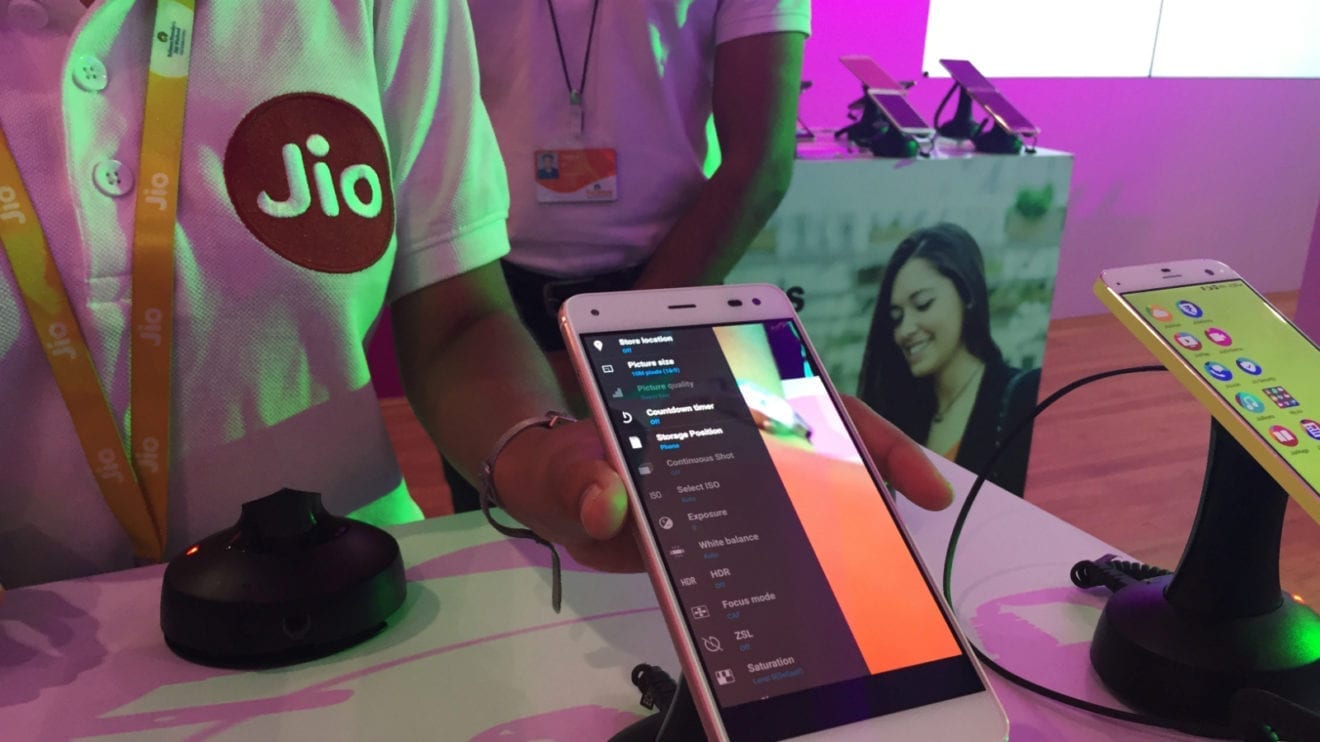
    Indian telecoms regulator Trai has finally ordered an end to disruptive new operator Reliance Jio Infocomm’s practice of offering free services to customers as promotional exercises.

    The regulator has instructed Jio to withdraw its Summer Surprise offer, which would have entitled new customers to three months of free services upon making their first recharge payment of at least 303 rupees ($4.70).

    The regulator has declared that the offer does not fit with India’s regulatory framework covering promotions, which places limits on the duration that discounts can be offered.

    Jio has announced it will comply fully with the order, but that customers who have already signed up for the offer will remain eligible.

    Jio’s latest offer follows an initial promotion providing completely free services that had run for three months, and was subsequently expanded for a further three. This aggressive strategy helped the operator sign up over 100 million customers  in less than six months of commercial operation.

    Rival operators had objected to the offer extension, but Jio had insisted that the second offer represented an entirely new promotion and so did not violate the regulations limiting promotions. At the time, Trai sided with Jio, but this latest decision indicates that the regulator’s patience is wearing thin.

  • Maruti Suzuki Alto becomes the largest selling car in India, maintains 13 year streak

    Maruti Suzuki Alto becomes the largest selling car in India, maintains 13 year streak

    According to the latest numbers, the Maruti Suzuki Alto is yet again the best selling car in India. Leading the sales in its 13th consecutive year, the car maker registered sales of over 2.41 lakh units of the Alto in 2016-17.

    The fiscal year of 2016-17 saw the Alto contributing about 17 percent of total domestic sales of 1,443,641 units for Maruti Suzuki. The Alto also alone sells more than the total volumes sold in a year by several other passenger car makers individually in India. Out of the 2.41 lakh sales last year more than 21,000 units of the car were exported countries like Sri Lanka, Chile, Philippines, and Uruguay.

    Maruti brought the Alto to India back in September 2000 and in its existence of nearly 17 years, the car maker has not only improved it but has sold multiple variants. It is said that the the car’s success has been due to two reasons.

    Firstly, Alto has the largest number of variants among the entry level hatchbacks with different fuel, transmission and engine options. Secondly, Maruti Suzuki has a vast distribution network.

    “Alto is the No. 1 best-selling brand for 13 consecutive years. This unique distinction is a reflection of Alto’s popularity. I am delighted that Alto once again dominates the car industry in 2016-17,” said RS Kalsi, Executive Director (M&S) at Maruti Suzuki.

    “Maruti Suzuki’s unmatched nationwide service network, guaranteed performance and lower maintenance cost, Alto is a natural choice of the customers across India. We are thankful to all our customers for their continued support to Brand Alto. Alto K10 with AGS is the most affordable two pedal technology in the entry segment,” he said.

  • AirAsia Mega Sale: Two Days Left To Avail Big Discounts

    AirAsia Mega Sale: Two Days Left To Avail Big Discounts

    AirAsia India is offering all-inclusive fares starting from Rs. 1,249 for domestic travel while its Malaysian parent AirAsia is selling tickets from Rs. 1,999 for international travel as part of the “Mega Sale” scheme, which is open till April 9, 2017. Some of the domestic routes covered by AirAsia India include Guwahati-Imphal (all-inclusive fare from Rs. 1,249), Bengaluru-Hyderabad (Rs. 1,619), Kolkata-Ranchi (Rs. 2,249), Bengaluru-Goa (Rs. 1,719) and New Delhi-Ranchi (Rs. 2,699), as per the AirAsia website. The AirAsia India sale is applicable for travel till September 30, 2017, the airline said on its website.
    AirAsia is also offering discounts on international flights under the same offer to South-Asian countries, including Bhubaneswar – Kaula Lumpur (Rs. 1999), Bhubaneswar -Phuket (Rs. 3,739) and Bhubaneswar-Penang (Rs. 3,633). With the summer holidays just around the corner – traditionally the time when most Indian families go on vacation – airlines have taken to lucrative discounts and schemes to corner market share.

    Another airline Vistara had announced a Holi sale in March with fares starting as low as Rs. 999 while other airlines have also announced discounted fares to attract customers ahead of the summer rush.

    India’s aviation sector has witnessed a spurt of growth in the past few years with a 16 per cent rise in passenger traffic in February on year-on-year basis, data from aviation regulator DGCA (Directorate General of Civil Aviation) showed.

  • Mobitel appoints Nalin Perera as CEO

    Mobitel appoints Nalin Perera as CEO

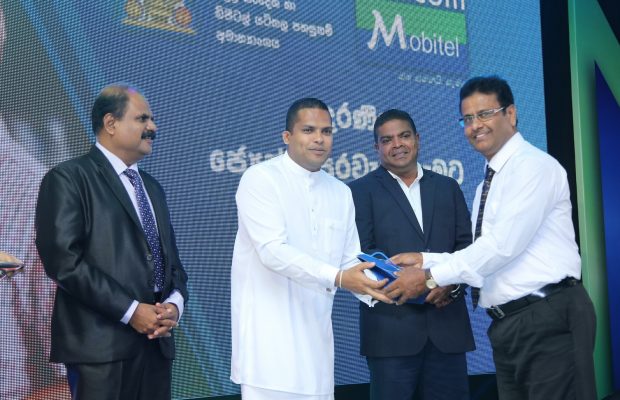
    Sri Lankan mobile operator Mobitel has appointed Nalin Perera as its CEO. Perera started his career at Mobitel in 2001 as general manager of marketing and was later promoted to the positions of senior general manager of marketing and senior general manager of contact center operations respectively. He also held the position of CMO and took over the responsibilities of COO at Mobitel in 2015.

    Commenting on the appointment, Mobitel said Perera’s strong track record “makes him the natural choice to lead the company on a forward momentum to the next phase of its evolution.”

    “He brings to the table strong insights into product and channel development, human resource management and more importantly, his understanding of the telecommunication industry as a whole, apart from his expertise in mobile telephony. His contribution to Mobitel has earned the company many accolades, including several local and international awards.”

    Perera brings 30 years of experience in mobile industry to his CEO role. He commenced his career in mobile telephony with Celltel in 1989, and led the introduction of the prepaid concept to Sri Lanka and its entire supportive ecosystem, which revolutionized the mobile industry and was the main contributor for the rapid growth in the sector in the country.

    BT appoints James Hennah to head Southeast Asia operations

    BT has appointed James Hennah as managing director for its South East Asia operations. He succeeds Ron Totton, who has recently taken on a new role as vice president in charge of BT’s operations in Switzerland, Nordics, Central & Eastern Europe and Russia (SNCR).

    Hennah will lead BT’s South East Asia team from Singapore, focusing mainly on Singapore, Malaysia, Indonesia, Vietnam, Thailand and the Philippines.

    Hennah joined BT in 1997, and was most recently CEO for BT’s global Media & Broadcast business and MD of carrier, channel and MVNO sales in BT’s Wholesale & Ventures division.

    Mark Russell to have an expanded role as MD of GCX International

    Mark Russell, president of Europe at Global Cloud Xchange (GCX), is expanding his role at the company after working for the Reliance Communications subsidiary for two years.

    Russell will take over the role as managing director of GCX International in charge of the company’s global sales across all segments, while continue to working for the company as president of Europe, GCX said Wednesday in announcing the appointment.

    Russell joined GCX in 2015 as president of Europe, where he has been instrumental in building the company’s capabilities and driving organic and inorganic growth across GCX’s European footprint, the company added.

    Russell has over 25 years of telecoms and technology experience. Prior to joining GCX, he had held senior management roles at companies including NetApp, UK software company Empower Interactive and MCI (now Verizon Business).

  • Ericsson, IIT Delhi team to launch ‘5G for India’

    Ericsson, IIT Delhi team to launch ‘5G for India’

    Ericsson and the Indian Institute of Technology Delhi (IIT Delhi) have signed a MoU to jointly roll out a ‘5G for India’ program, conceptualized to fast-track realization of Digital India initiatives and aid application development for Indian start-ups and industries.

    Under the partnership, Ericsson will set up a Center of Excellence with a 5G test bed and incubation center at IIT Delhi and use this facility to drive the development of the country’s 5G ecosystem.

    In addition to hosting the Center of Excellence, IIT Delhi will conduct research and development to explore how some of the country’s challenges can be addressed with mobile technologies.

    The first series of tests under this program are due to begin in the second half of 2017 and will place India on par with other developed countries in terms of 5G network and application deployment.

    “The 5G for India program is a major step towards understanding the power of 5G technology and how it can help aid Digital India initiatives, including the development of smart cities,” said Paolo Colella, head of region India at Ericsson.

    “The program will focus on delivering research, innovation and industrial pilots that use next-generation 5G networks as an enabler. It will help initiate cross-industry research collaborations focused on the integration of ICT in industry processes, as well as products and services,” said Colella.

  • Forever 21 India opens in Kolkata

    Forever 21 India opens in Kolkata

    Fast-fashion brand Forever 21 India has opened a store in Kolkata, its 16th outlet on the sub-continent.

    Covering 6000 sqft (557 sqm), the store features the latest spring/summer collection, and as well as Forever 21 apparel and accessories includes the retailer’s other brands including 21 Men and cosmetics line Love and Beauty. It also offers lingerie and shoes.

    From Aditya Birla Fashion and Retail, Forever 21 already has a presence in Bangalore, Chennai, Delhi, Hyderabad, Mumbai and Pune.

    Forever 21, which introduces new styles every week, was founded in the US in 1984 by Korean immigrants. It has more than 600 stores under the Forever 21, XXI Forever, For Love 21, Heritage 1981 and Reference brands. In Asia, stores can be found in China, Japan, Korea and the Philippines.

  • India’s Motherson Sumi buys Finland’s PKC Group for $619 million

    India’s Motherson Sumi buys Finland’s PKC Group for $619 million

    Indian auto parts maker Motherson Sumi Systems Ltd said on Monday it had completed the buyout of Finland’s PKC Group for 571 million euros ($619.4 million).

    Motherson is now the controlling shareholder of PKC Group, holding 93.75 percent of PKC’s outstanding shares and stock options.

    “There is a great synergy between MSSL & PKC and a complementary geographical presence to serve the customers in all regions,” Motherson said in a statement.

    Shares of Motherson, which have gained 12 percent since the deal was made public on Jan. 20, were trading slightly higher on Monday.

  • Indian cellcos told to re-verify all customers

    Indian cellcos told to re-verify all customers

    The Indian government has instructed the nation’s mobile operators to re-verify all their mobile subscribers with a system that uses biometric authentication by next February.

    All existing subscribers will need to be re-verified using the Aadhaar-based system, which includes a unique identifying number and biometric data.

    Both prepaid and postpaid subscribers will need to be registered under the new system, and all licensees will need to inform existing subscribers about the requirement through advertisements in print and electronic media as well as SMS.

    The new requirement stems from a Supreme Court order in February that requires operators to complete the verification system for existing subscribers within one year.

    Operators plan to use and share a common device ecosystem for the verification process and will work on mechanisms to limit public inconvenience.

    But the Cellular Operators’ Association of India (COAI), the peak body for India’s GSM operators, has complained that the re-verification exercise will cost 10 billion rupees in infrastructure and training costs, and these expenses will need to be borne by operators.

    COAI also indicated it may need to seek an extension from regulator Trai if its members are not able to complete the process of re-verifying millions of subscribers within a year.

  • Flipkart to acquire eBay India

    Flipkart to acquire eBay India

    Three days after closing a funding round of US$1 billion, Flipkart is taking steps to acquire eBay India.

    Insiders say eBay India will be folded into Flipkart, reports start-up specialist publication E27.

    After Flipkart, Amazon, Shopclues, PayTM and Snapdeal, eBay is India’s six-largest e-commerce company.
    Flipkart’s latest funding round involved eBay, Microsoft and Tencent Holdings, setting its value at US$10 billion, up from US$5.39 billion last month.

    Launched in 2007, Flipkart is battling against Amazon to dominate the e-commerce market in India. Amazon arrived in India in 2012, ending Flipkart’s five years of supremacy.

    In 2014, Flipkart raised US$1 billion, a record for an Indian company, from such investors as Accel Partners, Russia’s DST Global and Tiger Global.

  • Airtel to buy Tikona Digital’s 4G business

    Airtel to buy Tikona Digital’s 4G business

    India’s Bharti Airtel has arranged to acquire ISP Tikona Digital’s 4G business for around 16 billion rupees ($244.6 million), to help shore up its ability to compete against Reliance Jio and the combined Vodafone-Idea Cellular.

    The company will acquire 4G assets including 20 MHz of 2300-MHz 4G spectrum in five of India’s 22 telecoms circles, as well as 350 existing cell sites in these circles.

    The five circles are Uttar Pradesh East and Uttar Pradesh West, as well as Rajasthan, Gujarat and Himachal Pradesh.

    The merger is expected to fill gaps in Airtel’s spectrum holdings, particularly in the former three circles, and allow the operator to secure a pan-India footprint in the 2300-MHz band.

    This could prove crucial to Airtel’s efforts to stay competitive against disruptive pan-India 4G operator Reliance Jio Infocomm, as well as the entity that will be created with the planned $23 billion merger of Vodafone India and Idea Cellular – which is expected to overtake Airtel to become the market’s largest operator by subscribers.

    But Airtel could have some hurdles to clear in order to close the deal. Tikona Digital co-founder Rajesh Tiwari is objecting to the deal on the grounds that the companies have not provided details of how the proceeds will be split among shareholders, the report states.

    Tiwari, which owns just over 1% of the ISP, has filed a legal notice seeking to block the deal until he is provided this information.

  • India poised to be third largest consumer economy

    India poised to be third largest consumer economy

    In less than a decade, the world’s widget makers, entertainers, and beauty products will be focused on three core economies: the United States and China, of course, and in third place and gaining fast: India. They’re young. They’re the poorest of the big emerging markets, so have lots of momentum on their side. And they’re tech savvy smart. India is the new China. If you have something to sell, India is now an on-radar must.
    The Boston Consulting Group (BCG) said in a report released on Tuesday titled The New Indian that the country will be the third largest consumer market in the world by 2025.

    Rising incomes is the biggest driver here. Although poor, income distribution is evolving even as the population of one-percenters rises. In 2005, some 44% of the country were considered struggling, with 42% just getting by. Today, the extreme poor rural Indians account for 31% while greater number of them have moved up the ladder, accounting for 45% of the working class. Between 2005 and 2016, what BCG refers to as the “aspirers” — or the upwardly mobile — went from 8% of Indian households to 15% and by 2025, 20%. Affluent Indians have gone from 3%, or roughly seven million households back in 2005 to 17 million last year. That is seen rising to 33 million by 2025.

    And for the super elite, those who are buying Tata Motors’ Jaguars and Land Rovers, the numbers went from 3.1 million in 2005 to 6.5 million last year. By 2025, it will more than double to 15.8 million, based on BCG analysis.

    For businesses, these new consumers, and shifting consumer tastes, have big implications for companies looking to build their business in India.

    BCG’s report said that Indians are no longer as fascinated as they once were with foreign goods. Some 60% prefer and are willing to pay extra for Made in India. They are increasingly interested in learning about their own local roots.

    Trends such as family generations splitting up and getting their own homes has been a factor in big cities like Mumbai, but as adult children move out of their parents homes, they need apartments.

    Women in India are also becoming more of a force. Women rights are becoming front and center in India, and women are receiving better healthcare than they ever did, and more relevance in the media. The most important factor is educational opportunity, BCG says. From 2005 to 2014, the enrollment rate of girls in secondary education went from 45.3% to 73.7%. It’s now greater than that of boys in the high school level.

    Younger women have bridged the gap in higher education too. Their enrollment rate is 20% versus 22% for young men. This shift will have a broad impact on societal factors long term, such as workforce demographics and economic independence.

    Long term businesses in India may have to “fundamentally rethink their business models, including product offerings, consumer engagement and marketing” to the Indian consumer, the consultant firm believes.

  • When Forever 21 join India’s Jabong

    When Forever 21 join India’s Jabong

    Indian fashion portal Jabong has added American fashion brand Forever 21 to its product portfolio. It definitely will give another option for India’s shopper to check the collections of Forever 21.

    A selection of goods including play-in tops, dresses, t-shirts, cosmetics, intimates and shoes will go online on Jabong, priced from Rs.499 to Rs.2400 (US$7.50 to $37).

    Jabong has introduced 20 new fashion brands this month and says it will add a further 15 before March 31. These include New Era Caps, WROGN, Mothercare, Roadster, Cover Story, AAY, Zivame and Mast and Harbor. Jabong now has approximately 2000 brands in its product portfolio, out of which 50 brands have been launched in 2017 alone. Its portfolio also includes Topshop, Topman, Dorothy Perkins, Missguided and Next.

    “At Jabong, we continuously strive to offer the best of global fashion brands to our shoppers. Forever 21 is a pioneer and global leader in the fast fashion category and its addition will strengthen the comprehensive line of finely curated international portfolio on Jabong,” said Gunjan Soni, head of Jabong.

    Abhinav Zutshi, India business head of Forever 21, said the combined strengths of Jabong and Myntra will give the brand exposure to a major share of India’s online fashion retail market.

    “This complements our aggressive offline strategy and we are excited to herald a long association with Jabong,” he said.

    Jabong is a multi-brand fashion e-store offering some 350,000 products across footwear, apparel, jewellery and accessories.

  • India’s Flipkart closes $1 billion funding round

    India’s Flipkart closes $1 billion funding round

    Indian e-commerce giant Flipkart has closed a US$1 billion funding round, with plans to raise an equal amount over the next few months.

    Investors who have contributed to this round include eBay, Microsoft and Tencent Holdings, Bloomberg reports.
    The funding comes at a valuation of $10 billion, up from $5.39 billion when its minority investor and the mutual fund managed by Morgan Stanley slashed Flipkart valuation by 3 per cent last month. Its peak valuation was $15.5 billion in 2015.

    Launched in 2007, Flipkart was one of the first Indian tech companies to enter the global Unicorn startups club. It had an invincible run until Amazon entered India in 2012.

    In 2014, Flipkart raised $1 billion, a record amount for an Indian company, from investors including Accel Partners, Russia-based DST Global and Tiger Global, whose former MD Kalyan Krishnamurthy has joined Flipkart as CEO.