An Indonesian media conglomerate on Monday announced a partnership with BlackBerry in which it will help the Canadian company bring more functionality to its BBM messaging app.
Elang Mahkota Teknologi, known as the Emtek Group, owns two national TV stations, online news portals and production houses. It also has invested in numerous startups. The partnership will enable Emtek to bring these properties’ content to BBM users, as well as develop new BBM applications and services through a licensing agreement. The content maker will pay BlackBerry an estimated $207 million in licensing fees over six years through a Singapore subsidiary.
“We wanted to continue to offer our users even more with the most content-rich media and new services such as e-commerce, video, music and games,” said John Chen, BlackBerry’s executive chairman and CEO.
The deal follows a trend in which messaging apps are morphing into platforms that offer a range of services. BBM has 60 million monthly active users in Indonesia, more than anywhere else in the world. Currently, the app has about 90 million monthly active users around the world.
KMK Online, an Emtek digital content maker, will set up an office in Toronto so it can work closely with BlackBerry.
Emtek has been stepping up efforts to generate revenue from its content via online platforms. In 2015, the company consolidated its production and distribution divisions. Earlier this year, it invested in Malaysia-based online video streaming service iFlix, which later launched services in Indonesia.
“We see significant opportunity to grow the consumer BBM business globally and are excited to invest in research and development to further advance BBM,” Emtek CEO Alvin Sariaatmadja said in a press release.
BlackBerry’s handset business has found itself left behind in the smartphone age and is now trying to focus on software.
Private lender Bank DBS Indonesia, a subsidiary of Singapore-based DBS Group Holdings, is seeking up to 38 percent growth in its consumer business revenue this year, primarily driven by the bank’s move to expand its wealth management services.
DBS Indonesia’s consumer banking group director Wawan Salum said on Monday that wealth management had contributed 48 percent to the bank’s consumer banking revenue.
“Indonesia, China and India are top priority markets for DBS,” he said in Jakarta.
Wawan said the bank’s wealth management revenue was also boosted by the growing number of priority customers who had individual savings of more than Rp 500 million ( US$37,979 ).
He further explained that DBS Indonesia was eyeing a 30 percent growth in its priority customers this year. To reach the target, he said, the bank would expand its digital product lines to respond to customer needs.
Wawan said DBS Indonesia would also increase the relationship management skills of its officers so they could be more effective in their interactions with customers. “We will also use big data to understand the behaviors and needs of our customers,” he said.
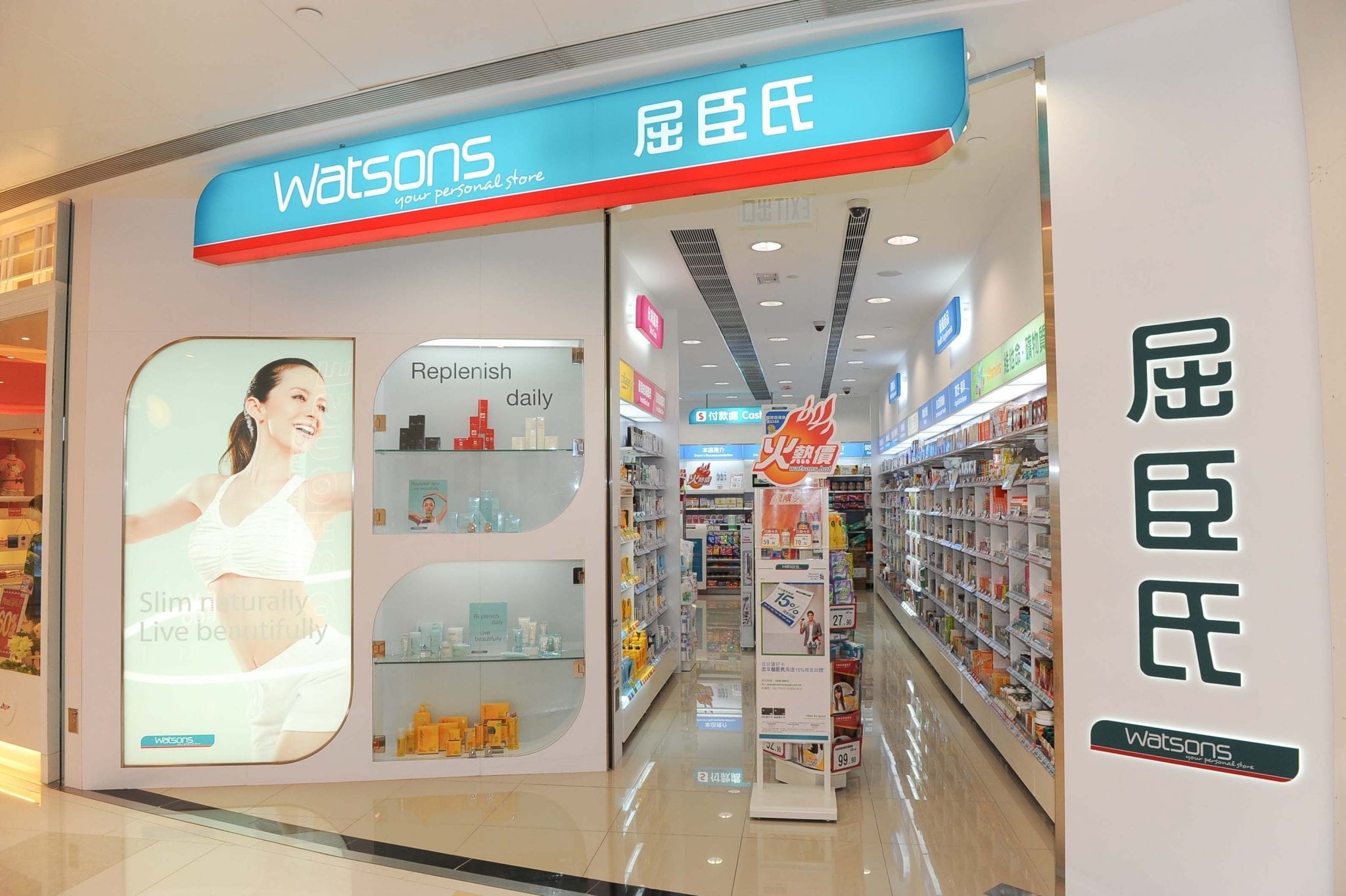
Watson Indonesia’s debut on the Indonesian Stock Exchange (IDX) has marked a new chapter in the company’s expansion journey to a wider market base.
Duta Intidaya, the sole franchisee of Hong Kong-based personal care retail chain AS Watsons Group, made the decision to go public to finance its aggressive expansion plans to match Watson’s operations in neighboring countries.
There are more than 100 Watson stores in Singapore and over 400 in the Philippines, but only 47 in
Indonesia, even though the latter is the largest economy in Southeast Asia.
The company plans to open 15 to 20 Watson stores this year, using 65 percent of the proceeds from its initial public offering (IPO), which stood at Rp 86.05 billion (US$6.49 million). The remaining 35 percent of the IPO funds will be used to repay the firm’s debt to lender HSBC.
The new stores will be located in big city malls and at a stand-alone store in Bali. Each store takes roughly Rp 1 billion to set up. Three new outlets have been set up in Jakarta as of now.
They are expected to boost Watson’s presence and help the company compete with other personal care retail chains, like local Pharos Group’s Century Healthcare and Hero Group’s Guardian. Century has over 200 stores right now, while Guardian has more than 100 stores.
“We are still small, so we need more funds to expand and the IPO is the most proper decision at this time. We want to build a stronger brand,” Duta Intidaya director Sukarnen Suwanto said in a press conference.
The company offers various beauty products, personal care and health and general merchandise products, of which less than 10 percent are imported.
He acknowledged that growth had been slow in the past. It opened its first store in 2006, but only started to expand aggressively in 2013 and 2014 with around 30 stores opening up during the period. At present, it has set up as many as 47 stores in Java.
Duta Intidaya took three years to prepare for the IPO by opening more stores, which eventually increased costs for rent, staff recruitment and store renovations.
The rising costs led the firm to suffer Rp 35 billion in net losses last year, even though its revenues grew 17.7 percent to Rp 192 billion from 2014. The growth rate in revenue was higher than the 18 percent rate the retail industry posted, according to marketing research firm Nielsen.
“We believe we will get payback from the investments. The retail industry is more like a marathon than a sprint. The more stores opened up, the more growth reaped in the long run,” Sukarnen said.
He refused to provide details on its bottom line target, but added that it eyed 20 percent growth in revenues this year.
In the long run, the company hopes to open up 15 to 20 stores every year and launch an online shop in early 2017. Online sales of its products are currently only available through the webmarket Lazada. Developments in the online market are expected to generate at least half of total sales by 2020.
Meanwhile, Duta Intidaya’s shares ended at Rp 189 apiece on Tuesday, 5 percent higher than the IPO price of Rp 180 per share. It reached a peak of Rp 213 per share within the first hour of trading.
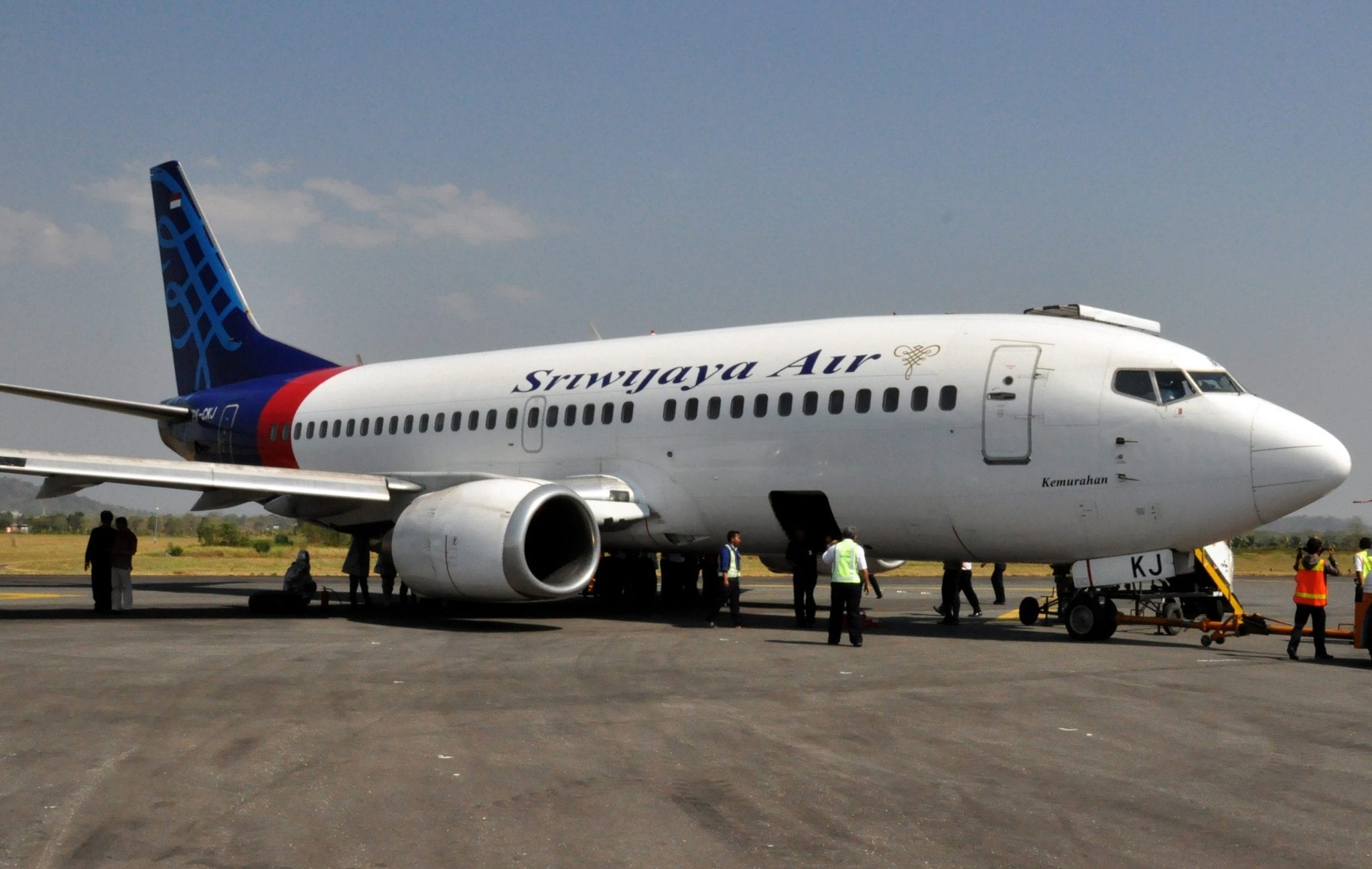
Sriwijaya Air will be serving regular flights to four cities in China by the end of 2016, Senior Manager, Corporate Communications of the Sriwijaya Air Group, Agus, said here on Tuesday.
Flights will operate along Denpasar-Hangzhou, Denpasar-Nanjing, Denpasar-Wuhan and Denpasar-Changsa routes, he added.
The flights will be using Boeing 737-800NG and each aircraft will have a capacity of 185 seats. These flights will be once a day.
“The new flights are part of the efforts to attract more foreign tourists to Indonesia,” Agus noted.
As per him, every year, about 500 thousand tourists come from China to Indonesia using this airline.
“Sriwijaya has the highest number of flights to China, compared to other air carriers,” Agus informed.
He underlined that in July 2016, Sriwijaya will operate two units of Boeing 737-800NG to serve flights to China and several domestic destinations such as Sampit and Muara Bungo.
In addition to open flights to China, Sriwijaya Air will also serve an international flight to the Middle East. It will fly to Jeddah.
“This is a new market for Sriwijaya Air. We are sure that the demand is high, especially for umrah (Minor Hajj) trip,” Agus noted.
He pointed out that the flight to Jeddah will start by the end of 2017.
Itron, a world-leading technology and services company dedicated to the resourceful use of energy and water, announced today that PT Mecoindo, a joint venture between Itron and a local partner, signed a contract with PT PLN (Persero), a state-owned utility company in Jakarta, Indonesia, to deploy 635,000 Itron smart payment meters. With this Itron solution, PT PLN will provide end-customers with a convenient, cost-effective way to prepay for electricity; thus improving electrification for Southeast Asia residents. Installation is expected to be complete by the end of 2016.
Itron’s smart payment technology is designed to help utilities implement revenue protection measures as well as empower consumers to manage their electricity usage according to their budget and needs. Consumers have insight into how much money they have spent in a given period and how much they have left, reducing the likelihood of an untimely shut-off. In addition to these consumer-focused benefits, utility companies realize business value by simplifying utility customer service, lowering operational costs and reducing delinquent account risks, while improving cash flow.
“We believe Itron’s products are the highest quality in the industry and the best fit for our electrification program,” said Septa Hamid, general manager of supply chain management at PT PLN (Persero). “Our goal is to provide convenient and affordable electricity services to more people in Indonesia, and with Itron’s smart payment solution, we are making that goal a reality.”
“We are pleased Itron’s smart payment solution was selected by PT PLN. Itron’s technology will help PT PLN achieve its electrification goals and bring a greater understanding of energy use and costs for consumers,” said George Daenuwy, PT Mecoindo president director. “We look forward to contributing to this program, which truly demonstrates how we are helping utilities better manage resources for a more resourceful world.”
Manulife Indonesia has submitted a proposal to the Financial Services Authority (OJK) to generate a bigger market share for its holding company by creating a spin-off of its sharia business unit, a company executive has said.
“We have submitted the documents for the spin-off to the OJK,” Manulife Indonesia’s sharia unit head Yetty Rochyatini said in Jakarta.
She said the Canada-based company was waiting for the OJK to complete a new regulation on sharia mutual funds, which would be released this year.
Manulife’s sharia business unit recorded 31 percent growth year-on-year in its risk-based capital to 125 percent in the first quarter of 2016. The government has stipulated that all sharia insurance companies must have a minimum risk-based capital of 30 percent.
Yetty said the company’s qard (benevolent sharia loan) funds amounted to Rp 240 billion (US$18.2 million), enough to meet the solvency level needed.
According to the company’s unaudited financial report, the sharia business unit recorded Rp 25.2 billion of gross premium income in the first quarter of this year, an 84 percent increase year-on-year.
“While waiting for the OJK to formulate the regulation, we continue to prepare ourselves by enlarging the business size and boosting sales,” Yetty said.
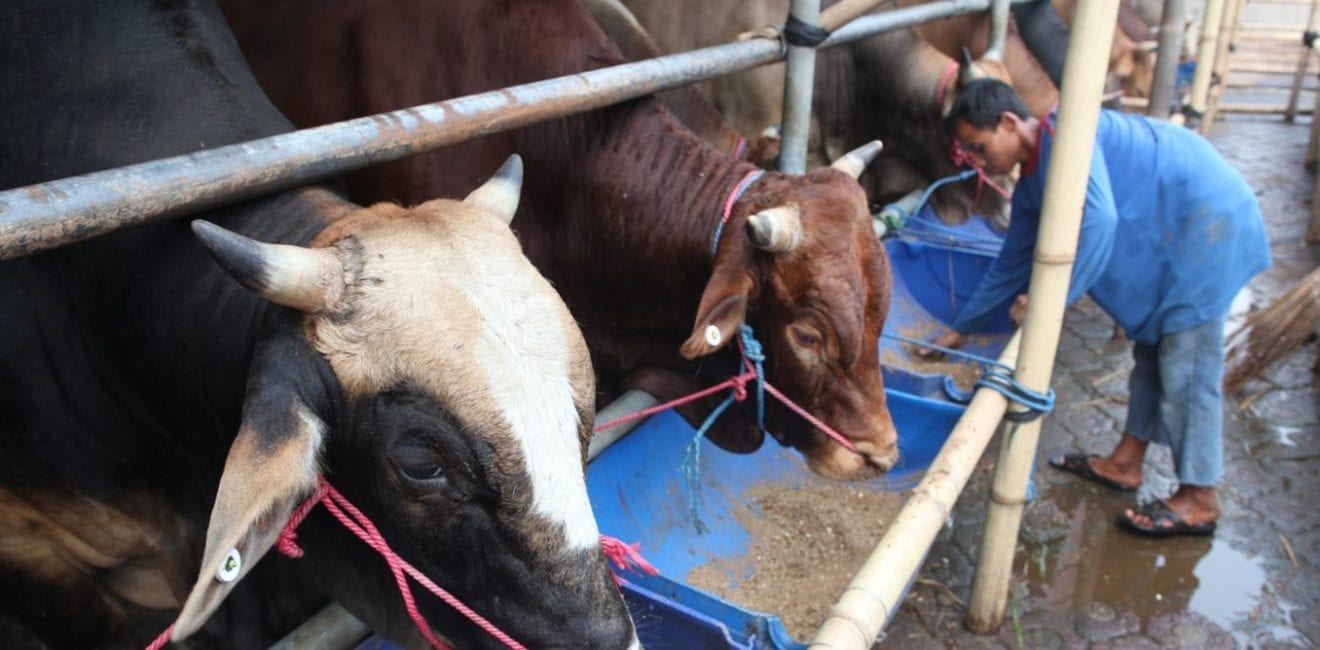
Indonesias Finance Minister Bambang Brodjonegoro said the surge in beef smuggling or illegal beef imports in 2016 have risen to 385.5 tons.
“In 2015, Indonesia managed to prevent 23.4 tons (of beef being imported illegally). Until June 2016 we have foiled 385.5 tons of illegal beef imports attempts,” said Bambang here Thursday.
Bambang said 21.8 tons of illegally imported beef had been given to the Coordinating Ministry of Peoples Empowerment and Culture before being distributed by the Ministry of Social Affairs among the needy.
The Customs and Finance Ministry are also making efforts to monitor the goods entering Indonesia illegally.
Besides giving away 21.8 tons of smuggled beef that is beyond the states quota, an auction for 163 tons of beef will also be held in the next two days.
“We will hold an auction for smuggled beef found in seven containers, amounting to a total of 163 tons, which was imported from Australia and New Zealand on May 21, 2016,” Bambang said.
Furthermore, the ministry is currently preparing for the auction and expects the meat to be distributed immediately after that.
“We will ask the winning bidder to sell it at affordable prices to the public. Under the direction of the president the affordable price of beef is around Rp80.000,” he added.
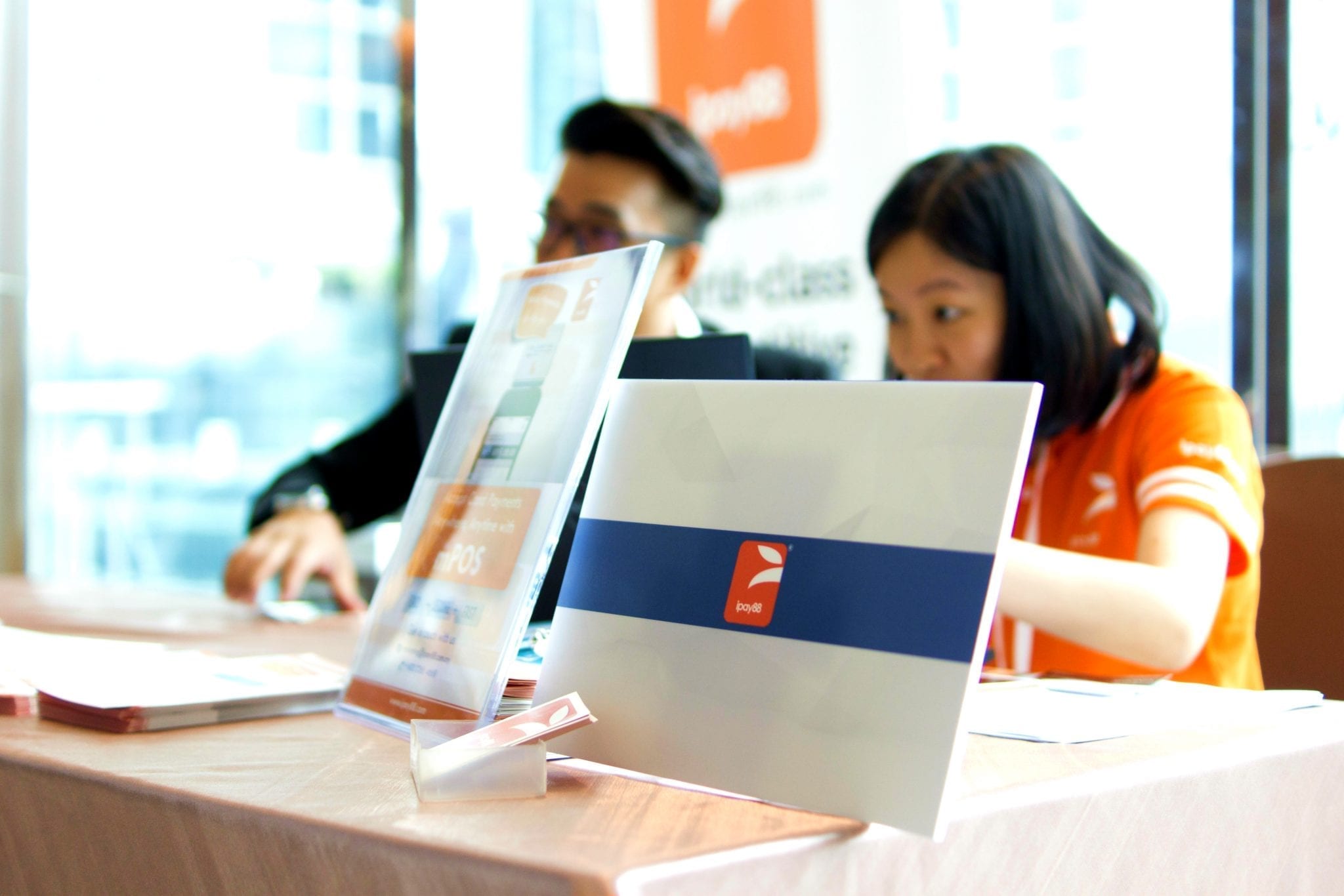
Malaysian online payment service iPay88 has entered a collaboration with online payment company PayPal to promote and support cross-border trade for iPay88 merchants.
For small businesses in particular, cross-border eCommerce provides a chance to sell to the world, and iPay88 believes the collaboration will enable its merchants to leverage PayPal’s 184 million active accounts and presence in more than 200 markets.
Executive director KL Chan says iPay88 has nearly 10,000 e-merchants, including SMEs and conglomerates, but there is also a large, untapped market of businesses and companies still considering moving into eCommerce. “This collaboration with PayPal is timely as it will help capture this market effectively by offering both online banking and credit-card payment options.”
Merchants signing up for a PayPal account can now do so through iPay88. Approvals will be sent to merchants within three working days. Aside from the quick sign-up process, iPay88’s online merchants will also be able to benefit from PayPal’s multi-currency checkout.
Chan estimates the collaboration will drive extra revenue for iPay88 in 12 months.
“It has always been a challenge for businesses, especially small ones, to expand and sell overseas,” says PayPal Southeast Asia GM Rahul Shinghal. “PayPal is committed to helping them grow by leveraging the power of eCommerce, which gives them a level playing field when competing with larger export houses.”
A subsidiary of NTT Data Corporation, iPay88 was set up in Kuala Lumpur in 2006 and has an established presence in Indonesia, Singapore, Thailand, the Philippines and Vietnam.
Indonesia and the Philippines, as immediate neighboring countries, have many to offers in the fields of among other things trade, culture and security.
In fact, the Philippines is a significant trade partner as its contributed around US$2.3 billion in trade surplus to Indonesia last year.
Indonesian Ambassador to the Philippines Johny J Lumintang said recently that the surplus was the third largest for Indonesia in its international trade.
Data from the Philippine Statistics Authority revealed that the countrys imports from Indonesia during the period between January and December 2015 stood at $2.927 billion, while exports to Indonesia were only valued at $628.2 million.
However, the figures declined from the previous year when Philippines imports and exports from and to Indonesia reached $3.037 billion and $759.658 million, respectively.
Three major Indonesian products imported by the Philippines, include automotive, coal, and coffee, with total values of $619.8 million, $519.4 million, and $208.6 million, respectively.
There are great demands for coal for Filipino power plants, the diplomat said.
The two nations have also intensified bilateral cooperation in various fields such as in economic, politic, socio-culture, and sea patrol security.
“With the Philippines, Indonesia should not compete but cooperate as our products are mostly similar,” the ambassador said.
Indonesias Trade Attach in Manila Irawan said 16 Indonesian food and beverage products have been marketed widely in Filipino supermarkets.
Philippine President Benigno Aquino (R) speaks with Indonesian President Joko Widodo (L) at the presidential palace in Manila.
Among the products as Kopiko 78 Degree, Indofood instant noodles, Bimoli and Mitra cooking oil, Tiger and Oreo biscuits, Extra Joss, You C-1000, Fruit Tea, nata de coco, Kopiko candy, Energen, and Diabetasol biscuits and powder milk.
Indonesias food and beverage product market share in the Philippines is 8.13 percent.
Last year, the Philippines imported food and beverages worth US$ 452.1 million from Indonesia, and exported US$15.8 million.
Having economic growth at 6.9 percent, the Philippine is a potential market as its population is also big, he said.
He hoped more small and medium scale industries products could be marketed in the Philippine.
Eight food and beverage producers participated in the ASEAN Salon International de l Agroalimentaire held in Manila on May 31-June 2 2016.
In the meantime, The Philippine government is also eager to promote its products in Indonesian markets.
Filipino retail brands were exhibited at the “Lifestyle Philippines” event in Jakarta, on June 10, 2016.
“Lifestyle Philippines” was a branding initiative led by the Philippine Trade and Investment Center (PTIC) in Jakarta which aimd to promote and create more awareness of Filipino-made products.
During her remarks, Philippine Ambassador to Indonesia Maria Lumen Isleta stated that, It is an initiative to which our Embassy with the support of the Filipino community, have given our best efforts because we believe it can contribute to the friendship and close cooperation between our two countries.
The event included a fashion show featuring Karimadon and Rusty Lopez, two iconic brands in the Philippines that have begun to create a following in the Indonesian forward-clientele market.
Other brands displayed were Plains and Prints, Cruzzini Barong Tagalog, and Barong Batik, a fashion innovation that has successfully fused Philippine barong and Indonesian batik, a creation that many diplomats and dignitaries have begun to favor for its elegance.
Apart from apparel, the event also showcased Filipino food products, hand-woven crafts, cosmetics and neutraceutical, tourism and travel, as well as education services.
Flavors Philippines featured products with potentials to be exported here such as Goldilocks polvoron, Mama Sitas sauces and mixes, Leslies snack products, Destilleria Limtuacos spirits and liquors, among others.
Artisanal food products sourced from the various regions in the Philippines such as dried fruits and nuts, jams and marmalades, bottled sardines, and chocolate dipped dried mangoes will be at the exhibition as well.
Woven Chic, a special section on hand-woven crafts will show indigenous textiles from the Philippines, traditional dresses, linens, and modern and traditional pieces of jewelry.
“This initiative hopes to increase trade with Indonesia, which in 2015 stood at US$3.6 billion. The Philippines exported about US$628.27 million of goods and services to Indonesia, while the Indonesia had US$2.93 billion trade with its counterpart,” Philippine Embassy Trade Representative Alma Argayoso said in a statement recently.
“The regional integration in ASEAN presents opportunities for Philippine companies to expand to Indonesia and other ASEAN markets, and we certainly would like to actively take part in supporting Philippines companies in their regional expansion. We look forward to make Filipino products more available in the Indonesian market, particularly since there are many Indonesians who have visited and studied in the Philippines who look for our products,” she added.
Hilton Worldwide, a US-based global hotel chain, has steadily been expanding its operations in Indonesia to tap new market opportunities in a hospitality industry that is thriving on the back of steady economic growth and the free visas being offered to the citizens of most of the countries in the world.
“We already have four properties under our management and eight others, which are under construction in Jakarta, Tangerang, Surabaya and Bali, will open within the next two years”, Hilton’s vice president for Southeast Asia and India William Costley told The Jakarta Post on Wednesday.
The four properties already in operation are the Double Tree by Hilton in Jakarta, the Hilton in Bandung, the Conrad and the Hilton Garden Inn, both in Bali.
Hilton, which manages more than 4,600 properties in 103 countries, is also looking for new opportunities in Lombok, Medan in North Sumatra, Balikpapan in East Kalimantan and Palembang in South Sumatra, Costley said.
It is mostly a matter of finding the right partner for promoting Hilton service standards because Hilton has many brands to fit in with different locations, he said.
“But we are always directly involved together with the owners in the process of designing and constructing every hotel we will manage and in training its human resources,” he added.
Costley said the steady growth of Southeast Asia’s largest economy and the ASEAN open skies policy would boost business travel and the whole hospitality industry in many other cities across the vast archipelago.
“We are quite excited about the prospect of the tourism industry, especially after the launching of the visa-free facility,” he said. “And I think the target of 20 million tourist arrivals in 2020 is not impossible.”
He sees great potential for developing Indonesia into one of the most favorite tourist destinations and tourism is also the right kind of industry Indonesia needs because of its labor intensive, multiplier impact and, most importantly, this industry is friendly to the environment and earns a lot of foreign currency.
“Take for example this Double Tree by Hilton hotel here, which has 253 rooms. It employs only two expatriates and the rest of the staff are locals,” Costley pointed out.
Hilton Worldwide has a portfolio of 13 brands, including the Waldorf Astoria, the Conrad, the Hilton, the Double Tree by Hilton and the Hotel Garden Inn, which are promoted as landmark properties in Indonesia.
Costley said the Waldorf Astoria, Hilton’s most luxury brand, which will be housed in a 74-story mixed-use building currently under construction on Jl. MH Thamrin in Jakarta, will open in 2018 with 181 rooms.
Two other properties under construction in Ubud and Seminyak, both in Bali, will operate within the next two years and are also under the Waldorf Astoria brand, while the Hilton Bali (formerly the Grand Nikko) will operate later this year with 408 rooms, he added.
The other four hotels in Hilton’s management portfolio that will open within the next two years are the Double Tree by Hilton in Surabaya and Karawaci in Tangerang and the Hilton Garden Inn in Kemang, Jakarta, and Karawaci.
Costley said the Hilton group is strongly committed to strengthening and expanding its growing portfolio of landmark properties in such key destinations as Indonesia.
Our Hilton Honors loyalty program has 55 million members around the world, and this huge data bank is surely an effective means of promoting Indonesia globally,” Costley added.
Aeon Indonesia has ended its partnership with its local partner in the Ministop c-store chain.
The move will result in Aeon exiting the market temporarily while it seeks a new business partner.
According to local media reports, Aeon teamed with Bahagia Niaga Lestari (BNL) in 2012. But after four years, the joint venture has managed to open just six stores.
Aeon has meanwhile been expanding its Ministop network across Vietnam, the Philippines and South Korea.
Aeon says it is committed to Indonesia and hopes to form a new joint venture.
The price-to-book (PB) ratio is a popular way to value a real estate investment trust (REIT).
The P/B ratio is calculated by dividing the market capitalisation of a REIT with its book value, or net asset value. Theoretically, having a P/B ratio that is less than 1 means that a REIT is trading for less than what it’s worth – an investor who buys the REIT could liquidate all its assets, settle all its obligations, and still end up with a profit.
A recent report indicated that the average P/B ratio for Singapore’s REIT universe (the local stock market has 27 REITs and six stapled trusts) was 0.9. The list of 33 trusts included eight Retail REITs, as defined by the Global Industry Classification Standard.
Here’re five quick highlights from the report on the eight Retail REITs (figures as of 8 June 2016, unless otherwise stated):
Lippo Malls Indonesia Retail Trust (SGX: D5IU) has a P/B ratio of 0.9. The REIT is home to 19 retail malls and seven retail spaces in Indonesia and offers a distribution yield of 9.9%. While the REIT’s yield looks high, it’s worth noting that its total returns over the past three years have been a negative 15%.
CapitaLand Retail China Trust (SGX: AU8U) also has a P/B ratio of 0.9. The REIT offers a distribution yield of 6.7% and has recorded a total return of 19.1% over the past three years. It is focused on the ownership of retail malls in China and currently has stakes in 10 shopping malls across six Chinese cities.
Meanwhile, Starhill Global Real Estate Investment Trust (SGX: P40U) is yet another REIT with a P/B ratio of 0.9. The REIT has stakes in Wisma Atria and Ngee Ann City in Singapore. In all, the REIT owns commercial as well as retail properties in four other countries, namely Australia, China, Japan, and Malaysia. Over the past three years, Starhill Global REIT has delivered total returns of 4.9%. The REIT offers a 6.5% distribution yield.
Not all retail REITs are trading below their book values. SPH REIT (SGX: SK6U), whose portfolio only has two properties right now (the retail malls Paragon and Clementi Mall in Singapore), trades at its book value. The REIT offers a distribution yield of 6.0% and has recorded a negative total return of 5.8% over the past year.
CapitaLand Mall Trust (SGX: C38U) is one REIT that has a P/B ratio of over 1 – more specifically, the REIT has a P/B ratio of 1.1. CapitaLand Mall Trust, which owns 16 retail malls here, is the Singapore stock market’s first and oldest REIT. It offers a 5.3% distribution yield and has total returns of 14% over the past three year.
The P/B ratio represents a starting point for investors who are looking for REITs that may be undervalued. Valuation, though, has to be complemented by understanding a REIT’s asset quality, the performance of the REIT’s portfolio in the past, and its future prospects, among other important things.
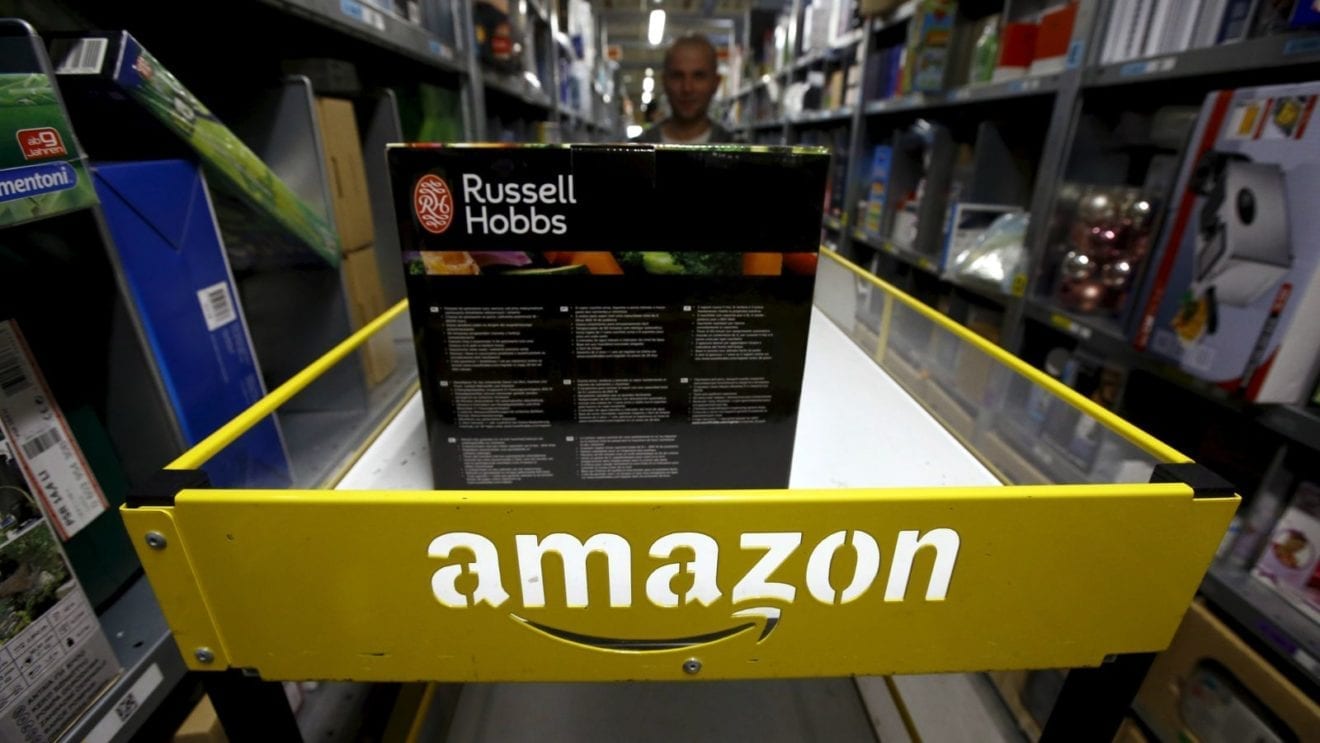
Amazon.com has said it plans to expand its e-commerce empire to Indonesia, with a $600 million investment for the first year.
It makes perfect business sense. Indonesia’s e-commerce space is only about $3.2 billion in sales, a tiny fraction of its $150 billion retail market. Indonesia is also the world’s 4th most populous country with 250 million population.
When Amazon moves in, the market shudders. Who are the movers and shakers in the Indonesian e-commerce space right now?
It turns out Amazon will be competing with start-ups backed by Alibaba Group and its buddy SoftBank.
Lazada, a direct-sales marketplace that spans the entire ASEAN, has 75% of its transactions coming from Indonesia. It was founded by Rocket Internet and was recently valued at $1.5 billion through an investment from Alibaba. It generated $1 billion GMV last year and made $275 million in sales.
Tokopedia is an Indonesian pure play. It is backed by SoftBank and Sequoia Capital.
Bukalapak is smaller than Tokopedia and is 49% owned by local media conglomerate PT Elang Mahkota Technologi, or Emtek Group.
Warehouse logistics companies can benefit if Indonesia’s e-commerce picks up. Mega Manunggal Property is one stock we can look at.
Hogan Lovells (in association with Dewi Negara Fachri & Partners) has launched an innovative new app called “How To Indo” to help businesses navigate the legal landscape when doing business in Indonesia.
The app will change the way that anyone doing, or considering doing, business in Indonesia can access relevant legal guidance.
Anyone with an Apple or Android device will be able to access key guides on what you need to know about doing business in Indonesia. From M&A and infrastructure transactions to Hogan Lovellsfinancing arrangements, from restructuring and insolvency to managing a dispute, these guides cover the key legal issues in doing business in Indonesia.
Mark Cooper, Corporate Partner, Singapore said:
“We hope that this innovative product leads the way in helping clients to navigate the regulatory landscape in Indonesia and makes it easier for them to take informed business decisions.”
Indonesia’s vice-president yesterday voiced concerns over US presidential candidate Donald Trump’s comments on Muslims, saying “discrimination according to religion” could prompt retaliatory policies from other countries.
Jusuf Kalla said the government was “not happy with Trump’s opinions” – the first critical remarks from a top official in the world’s most populous Muslim-majority nation, which come as Mr. Trump called for more profiling in the US to battle crime.
“Any country, especially big countries, seen making policies about ‘radicalism’ or discrimination according to religion will be a bad issue,” Mr. Kalla said.
“There will be ‘vice-versa’ policies from other countries,” he said, adding an impact would be felt on economy and trade.
Mr. Trump’s inflammatory remarks on Muslims, including wanting to temporarily ban them from entering the US, on foreign policy and on international trade ties have raised concerns in some Asian countries over a potentially “isolationist” United States.
In Indonesia, Southeast Asia’s biggest economy, politicians are already thinking about restricting US trade and investment if Mr. Trump becomes president. An online petition, urging a ban on the billionaire and his businesses from the country, has received nearly 47,000 signatures.
The real estate developer also has partnerships to operate luxury resorts on Bali and in Java, which Indonesian officials have said could be threatened by his rhetoric.
“Of course there will be an impact, not for Indonesia, but for his business,” Mr. Kalla said, when asked about Mr. Trump’s involvement in the resorts.