Tag: Indonesia

  • South Korea to Promote Indonesian SME

    South Korea to Promote Indonesian SME

    Agus Mahram, secretary of the Cooperatives and Small and Medium Enterprises Minister, said that the his institution has set a cooperation with the Busan-Indonesia Center (BIC) in South Korea to promote Indonesian small and medium enterprises (SME).

    “100 Indonesian SMEs will partner with South Korean’s,” Agus said in Jakarta on Thursday, January 28, 2016.

    Agus said that Busan has prepared a place for Indonesian SMEs to display their products in South Korea while the BIC will prepare marketing personnel to promote Indonesian products.

    “SMEs to be selected are those operating in the manufacturing sector, such as metal, mechanical, information technology components, software and food,” Agus explained. Agus revealed that the South Korean government realized the importance of the Cooperative and Small and Medium Enterprises Ministry to develop local businesses. The Cooperation, Agus added, was aimed at boosting South Korean investments in Indonesia.

    In addition to boost investments, Agus said that the ministry would also promote technology transfer between South Korea and Indonesia. Similar cooperation had been established between the Indonesian government and the Korean Trade Investment Promotion Agency.

    “The cooperation was aimed to develop regional signature products by crafting a program called the ‘One Village One Product’ through cooperatives,” Agus added.

    Agus also encouraged local products to be displayed at Smesco building in Jakarta. He had prepared spots for local products to increase their competitiveness at the national and international levels.

    “South Korea can buy products at Smesco to be promoted in the country,” he said.

  • Indonesian Steel Breaks through Malaysian Market

    Indonesian Steel Breaks through Malaysian Market

    Indonesian hot rolled coils (HRC), which is a type of steel product, can now enter the Malaysian market. The coils managed to tap Malaysia’s market following their government’s decision to stop the investigation on safeguards after assessing that Indonesian steel will not jeopardize the sales of Malaysia’s local products.

    Karyanto Suprih, acting director general of foreign trade at the Trade Ministry, said that the Malaysian Ministry of International Trade and Industry (MITI)—the authority that handles the safeguard investigation—has completed its studies.

    “They did not find indications for possible losses or threats of loss resulting from importing products,”Karyanto said in Jakarta on Tuesday, January 26.

    According to Karyanto, the decision was announced in the Notice of Negative Preliminary Determination on January 6.

    The safeguard investigation over Indonesian HRC began on September 7, 2015 at the request of one of Malaysia’s largest steel producers, Megasteel Sdn. Bhd.

    The investigation was based on allegations of domestic industry losses due to an imports surge of HRC products.

    Karyanto hopes that the termination of the safeguard investigation can help expand Indonesia’s export share for HRC product to Malaysia. In 2014, Indonesian HRC had a 6.1-percent share of Malaysia’s total imports.

  • Indonesia makes strides in fight against corruption

    Indonesia makes strides in fight against corruption

    A researcher for Transparency International Indonesia (TII) elaborates on findings in the Corruption Perception Index 2015 on Monday. Indonesia ranked 88th out of 168 countries, a better position than a year earlier when it ranked 107.(JP/Wendra Ajistyatama)

    Indonesia has shown improvement in the 2015 global Corruption Perception Index (CPI) survey, released by Berlin-based Transparency International (TI) on Wednesday, appearing in 88th position out of 168 countries surveyed and scoring 36 points compared to 34 in 2014.

    The survey, which measures private sector perceptions of public services, recognizes a score of 0 as highly corrupt and 100 as very clean. The agency released results from the survey in 174 countries on Wednesday.

    Although Indonesia only scored two points higher than last year, the feat helped the country to move up 19 notches in the 2015 CPI from 107th position in 2014.

    TI Indonesia’s program director Ilham Saenong said President Joko “Jokowi” Widodo’s extensive efforts to conduct reforms in state institutions had contributed greatly to Indonesia’s good performance in the 2015 CPI.

    “There has been a sense of confidence measured by the survey in the field of public services, for example in driving licenses and passport-making processes,” Saenong told a press briefing on Wednesday.

    The survey revealed that in 2015 Indonesia performed better than neighboring Singapore, Malaysia, Thailand and the Philippines, which saw their CPI scores and ranks drop compared to last year.

    In the study, Indonesia was the only Asia-Pacific country that saw its score and rank increase.

    In 2012, the country ranked 118th with 32 points, while in 2013 it achieved the same score but appeared in a higher position at 114. In addition, 2014 saw Indonesia score two points higher at 32 and appear in 107th position.

    With a current score of 34, Indonesia only needs six and nine points to achieve the ASEAN regional average score of 40 and the Asia-Pacific average score of 43.

    “We need to work harder in the future because our current score is still far from G20 countries’ CPI average of 54,” TI Indonesia secretary-general Dadang Tri Sasongko said.

    Dadang said that in previous surveys Indonesia’s CPI score had fluctuated as the Corruption Eradication Commission (KPK) was engaged in a standoff with the National Police, but its dustup with the police did not prevent the country from achieving a higher CPI score.

    “Jokowi’s image as a businessman and his good track record very much give hope for business sector actors, in addition to the already good management of the current state of affairs in public services,” he said.

    Dadang added that Indonesia could achieve a higher score if it managed to crack down on corrupt practices involving law enforcement agencies and political corruption.

    “Despite the business community’s confidence in public services now, they also want to see good progress in law enforcement and politics because what they want is legal certainty should they be involved in legal matters in the future,” Dadang said.

    KPK gratuity director Giri Suprapdiono said Indonesia could have earned a better CPI score in 2015 if former KPK commissioners Abraham Samad and Bambang Widjojanto as well as KPK investigator Novel Baswedan had not faced police prosecution.

    He added that politics had also hindered the fight against graft.

    “I can say that we are already on the right track but we still need to work harder and harder. Because it is difficult to see this country free from graft because our politics costs a lot of money,” Giri said.

    In the survey, Denmark came in first position with 92 points, followed by New Zealand with 91, Finland with 90, Sweden with 89, Switzerland with 86 and the Netherlands with 87.

    At the bottom of the list were war-torn Somalia and isolated North Korea with eight points each as well as Afghanistan with 11 points.

  • UC browser grabs over 50 percent market share in Indonesia

    UC browser grabs over 50 percent market share in Indonesia

    Coinciding with its consistent rise in overseas markets, UCWebInc, the global leading provider of mobile Internet software and services and maker behind UC Browser, has hit a new milestone in Indonesia.

    The browser has clocked in 55.27 percent monthly page-view market share as of 2015 year-end, as per StatCounter. The announcement comes on the heels of another feat, where UC Browser became the world’s second most popular mobile browser with 18.6 percent monthly page-view market share in December 2015. UC Browser is already the undisputed leader in the Indian market with over 55 percent market share, according to StatCounter.

    Looking ahead, Kenny Ye, Director of UCWeb International Business, said: “We’re going to sustain our development by enlarging our network of local partners besides keeping innovating our product. All those learnings from partnerships with e-tailers, content providers, etc. last year have made us remain steadfast in increasing our commitment to the local community.”

    As of today, one of every two mobile pages viewed in Indonesia is processed by UC Browser, and it has become the crucial artery in the country’s mobile traffic. The achievement comes about half year after UC Browser secured first place in the local industry.

    Looking back at Indonesia’s mobile browser market in 2015, StatCounter shows that only UC Browser continued a growth trajectory to climb 3 percentage points per month on an average throughout the year. The browser closed out the year 2015 by doubling its market share compared with its share in early 2015 when it took the championship.

    UCWeb Inc. (UCWeb) is a business within Alibaba Group’s mobile business division and a leading provider of mobile internet software and services. Since its inception in 2004, UCWeb’s mission has been to provide better mobile internet experience to people around the world.

  • Gunnebo looks to expand above inflation

    Gunnebo looks to expand above inflation

    Sweden-based security service provider Gunnebo Security Group is looking to see its Indonesian business grow by better than inflation, especially with support from infrastructure projects and its newly installed cash-management facility, the company’s regional executive says.

    Senior vice president for Gunnebo’s Asia-Pacific region, Sacha de La Noe, said on Tuesday that his company would keep its investment focus on cash-management products, one of the group’s backbone businesses, while at the same time he expected growth from other lines, such as from its fire-system services.

    De La Noe said the presence of a local production facility in the country was also expected to have a significant impact on regional sales, with about 70 percent of the local production being shipped to other countries, he added.

    “With more cash to handle in society, we need to find more effective ways to manage that cash. In Indonesia, I see a high number of notes in circulation, and retailers are looking for better ways to handle the cash and that will increase,” he said.

    The group announced in a press statement dated Jan. 15 that it would optimize its cash management manufacturing footprint by transferring production from its Trier plant in Germany to manufacturing units in Binefar, Spain and in Indonesia, to improve customer service levels and manufacturing efficiency. The Trier plant has turnover of around 9 million.

    Indonesia is the second-largest market for Gunnebo in Asia Pacific, with the largest being India. Indonesia contributes around 20 percent to regional sales.

    Gunnebo Indonesia country manager Hindra C. Kurniawan said his company’s revenue normally grew by around 10 percent annually. He added that his company expected that local cash-handling facilities would be its backbone in five years.

    Among its attempts to boost its cash-handling business in Indonesia, Gunnebo has cooperated with taxi operator Express Transindo Utama (Express Group) since 2014 to provide cash-handling equipment in taxi pools in the greater Jakarta area.

    Besides focusing on the cash-handling business, Gunnebo is also looking to see growth in other businesses, such as fire systems, which will be supported by a number of infrastructure projects in the country.

    Among the company’s key projects is providing a fire system for a major power plant in Cirebon, West Java, and with the government’s massive 35-gigawatt power-generation expansion, De La Noe said the group expected an increase in future demand.

    He also said that his company would work with state-run airport operator Angkasa Pura to provide security services in 32 airports that were being built and expanded across the nation. He said that a discussion with the airport operator was scheduled in March.

    The company is also involved in Jakarta’s Mass Rapid Transport (MRT) project, providing, among other facilities, entrance security and ticketing, with De La Noe stating that the MRT’s security system was among the group’s key businesses.

    According to a previous report, Gunnebo produces 30,000 safety deposit boxes annually; 60,000 fire extinguishers and 5,000 to 10,000 cash-handling machines at its factory in Cibitung, West Java.

    Gunnebo had annual turnover of around 610 million in 2014. It has 32 sales companies worldwide, 11 factories across the globe and around 100 additional networks. Its businesses include cash management, safes and vaults, entrance security, electronic security and specifically in Indonesia, fire security.

  • Indonesia’s Low Internet Penetration Rate Curbs Economic Growth

    Indonesia’s Low Internet Penetration Rate Curbs Economic Growth

    Each day the world’s Internet users watch an average of 8.8 billion YouTube videos, share 186 million photos on Instagram, make 152 million Skype calls, purchase 36 million products through Amazon, send 207 billion emails, post 803 million Tweets, and make 4.2 billion searches on Google.

    Although digital technologies have spread rapidly across the globe, the World Bank says digital dividends have lagged behind for part of the global population. The Washington-based financial institution defines digital dividends as “the broader development benefits from using these technologies”. For example, the business community can use digital technologies to expand their business, people can use these technologies to find jobs and the government can use it to enhance services. In other words, digital technologies support financial inclusion, job creation, and overall economic growth.

    However, the fruits of these dividends are unevenly distributed. One of the key solutions in order to let all people enjoy the benefit of digital technologies is to enhance Internet connectivity. But the World Bank also states that well developed Internet access alone is not enough. “Countries also need to work on the ‘analog complements’ by strengthening regulations that ensure competition among businesses, by adapting workers’ skills to the demands of the new economy, and by ensuring that institutions are accountable.

    In essence, two factors are the cause that digital dividends cannot be enjoyed by part of the world population. Firstly, almost 60 percent of the world population still lacks Internet access, hence cannot participate in the digital economy in a meaningful way. Secondly, some of the perceived benefits of digital technologies are offset by emerging risks.

    The first factor should be combated by governments by encouraging (affordable) access to the Internet (and other digital technologies) for its citizens, while creating conducive regulations for the Internet and mobile operators.

    After India and China, Indonesia has the highest amount of people who are not connected to the Internet. The World Bank report stated that the Indonesian government is on the right track to address these aforementioned issues. For example, the Indonesian government is currently finalizing an e-commerce road-map that aims to improve and develop the country’s e-commerce industry. Previously, the Indonesian government said it may allow foreign investors to own a 100 percent stake in Indonesian e-commerce companies in this road-map.

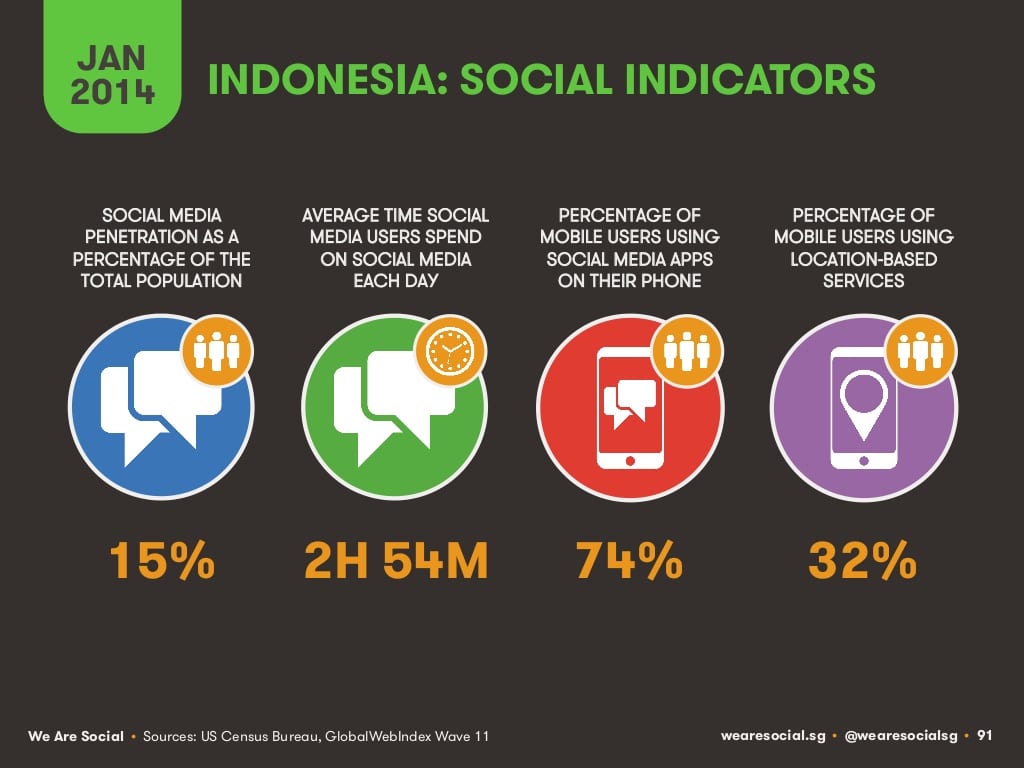
    According to the Association of Internet Service Providers in Indonesia (APJII), Indonesia had around 88.1 million Internet users in 2014, up 22 percent (y/y) from 71.9 million in the preceding year. Given that the total population of Indonesia numbers more than 250 million individuals, Indonesia’s Internet penetration ratio stood at around 35 percent in 2014. This low rate implies there is still ample room for growth in the online business industry.

  • Netflix blocked by Indonesia’s biggest telecom

    Netflix blocked by Indonesia’s biggest telecom

    Netflix hit a snafu during its expansion today, with the biggest telecom in Indonesia, PT Telekomuniksai Indonesia Tbk, blocking access to the service. The blockage is said to be over Netflix’s lack of a content provider permit, as well as objections to some content made available through Netflix. Concerns about adult and violent shows were cited as part of the reason for the banhammer.

    Earlier this month, Netflix’s CEO Reed Hastings announced that 130 new countries would be getting access to the streaming service, something that would hugely bump the number of regions where Netflix is available (from 60 to 190). The announcement came a short while ahead of the company’s crackdown against VPN users, a business move largely criticized.

    One of those 130 news countries is Indonesia, but rolling out there won’t go as smoothly as the company may have hoped. The nation’s Censor Board had made it clear earlier this month that it objects to some content made available on Netflix; furthermore, cable operators in the nation had expressed upset about the business move, likely due to the competition Netflix would pose.

    Telkom’s Netflix block is a big one, as the telecom controls both ISPs Wi-Fi.id and IndiHome, covering a large number of Internet users in Indonesia. Telekom also happens to be the company behind a local VOD service called UseeTV.

    Telekom’s VP Arif Prabowo said in a statement today, “Netflix’s content should adjust to regulations in Indonesia,” claiming the block is for the good of the people. It isn’t clear how Netflix will proceed, though it has said it will comply with whatever laws in the region it must.

  • Toyota’s Daihatsu Buyout May Widen Global Lead Over Volkswagen

    Toyota’s Daihatsu Buyout May Widen Global Lead Over Volkswagen

    Toyota Motor Corp. is staying on the offensive after besting Volkswagen AG for bragging rights as the world’s biggest automaker. Now, it’s weighing a deal that might widen its lead, especially in Southeast Asia.

    In buying the rest of its 51 percent-owned Daihatsu Motor Co. unit, a move Toyota confirmed Wednesday that it’s considering, the automaker would gain full control of a company that’s a sales leader for Japanese minicars and compact vehicles in Indonesia and Malaysia. Daihatsu said it’s cooperating with Toyota in buyout discussions and its shares surged by the most since 1999.

    Toyota continues to bound from strength to strength and has grabbed the industry’s sales crown for the fourth straight year. It was also the only automaker to sell more than 10 million vehicles, with Volkswagen falling back amid the diesel-emissions scandal that has tainted its image with consumers and regulators. The potential Daihatsu purchase points to another acquisition option at Toyota’s disposal: It has an almost identical stake in truck maker Hino Motors Ltd.

    “Daihatsu needed support,” Koji Endo, an analyst at Advanced Research Japan, said by phone. “It could not make business in China, the Indonesian market is not doing as well as expected, especially for the last two years, and their domestic minicar business is in harsh competition with Suzuki.”

    Shares of Daihatsu climbed 16 percent, their biggest gain since November 1999, at the close Wednesday in Tokyo. Toyota rose 3.8 percent after confirming it was considering a deal, which was first reported by the Nikkei newspaper.

    At Daihatsu’s current market value, the portion of the company Toyota doesn’t already own is worth about 360.8 billion yen ($3 billion). The deal would give Toyota full say over a company that competes with Suzuki Motor Corp. in Japan’s minicar segment, which has expanded even as the overall domestic auto market has shrunk.

    The Nikkei reported separately Wednesday that Toyota had begun talks with Suzuki to form an alliance and better compete in emerging markets including India, without citing a source. Toyota and Suzuki denied the Nikkei report in filings with the Tokyo exchange.

    Although Daihatsu is a force in Japan’s minicar segment and in Indonesia and Malaysia, the company struggled last year. Sales in its domestic market fell 14 percent, the result of a price war with Suzuki for sales leadership in the fiscal year ended in March 2015.

    Daihatsu sales have been slumping in Indonesia, with deliveries dropping 10 percent through the first half of its fiscal year. Owning all of the carmaker could help Toyota to better navigate these challenges, said Matt Stover, a Boston-based analyst at Susquehanna International Group.

    ‘More Latitude’

    “There are certain things that you can’t get at when it’s an independent company versus when it’s something that you totally own,” Stover said by phone. “There are some duplicate expenses you can get rid of and you have a lot more latitude to pursue your strategy.”

    Global sales for Toyota, including Hino and Daihatsu, slipped 0.8 percent to 10.15 million vehicles last year, the company said Wednesday in a statement. Volkswagen earlier this month reported a 2 percent drop to 9.9 million, while General Motors Co.’s deliveries rose 0.2 percent to 9.8 million.

    “Toyota’s hegemony will probably not be challenged for the next few years after the big setback for VW,” said Zhou Jincheng, a Nagoya-based analyst at researcher Fourin Inc. “The gap will only get wider and wider because VW will take time to adjust its strategies for markets such as the U.S. and Europe.”

    Toyota first tied up with Daihatsu in 1967 and has owned its majority stake since 1998. Daihatsu started making Toyota-branded minicars in 2011 and also builds vehicles for its parent in Indonesia. The company was the top-selling automaker in Malaysia for nine straight years through 2014.

    Daihatsu traces its beginnings to March 1907, when two academics and a group of businessmen set up a company in Osaka, Japan’s second-largest city, to produce internal combustion engines. The company changed its name to Daihatsu Motor in December 1951.

  • Chin Teck Q1 earnings halved on losses in Indonesia

    Chin Teck Q1 earnings halved on losses in Indonesia

    Chin Teck Plantations Bhd earnings fell 43.5% to RM5.98mil in the first quarter ended Nov 30, 2015 from RM10.61mil a year ago, partly because its associates sustained losses in their Indonesian oil palm plantations.

    It said on Thursday its revenue was slightly higher at RM27.81mil from RM27.72mil a year ago due to slightly higher prices for the fresh fruit bunches (FFB).

    However, the average selling price of crude palm oil (CPO) was lower despite higher prices for the FFB. It also said that a year ago, there was a gain from the sale of investment.

    Also overall operating expenses were higher due to the increase in replanting expenses.

    Its oil palm plantations in Lampung Province, Indonesia had to suspend harvesting due to unrest in the nearby villages.

    “The plantations have commence harvesting. At end-November, the total harvested area was about 13% of the total area planted,” it said.

    Earnings per share were 6.55 sen versus 11.61 sen. It declared an interim dividend of eight sen, which was similar to a year ago.

  • Pos Indonesia eyes eCommerce boom

    Pos Indonesia eyes eCommerce boom

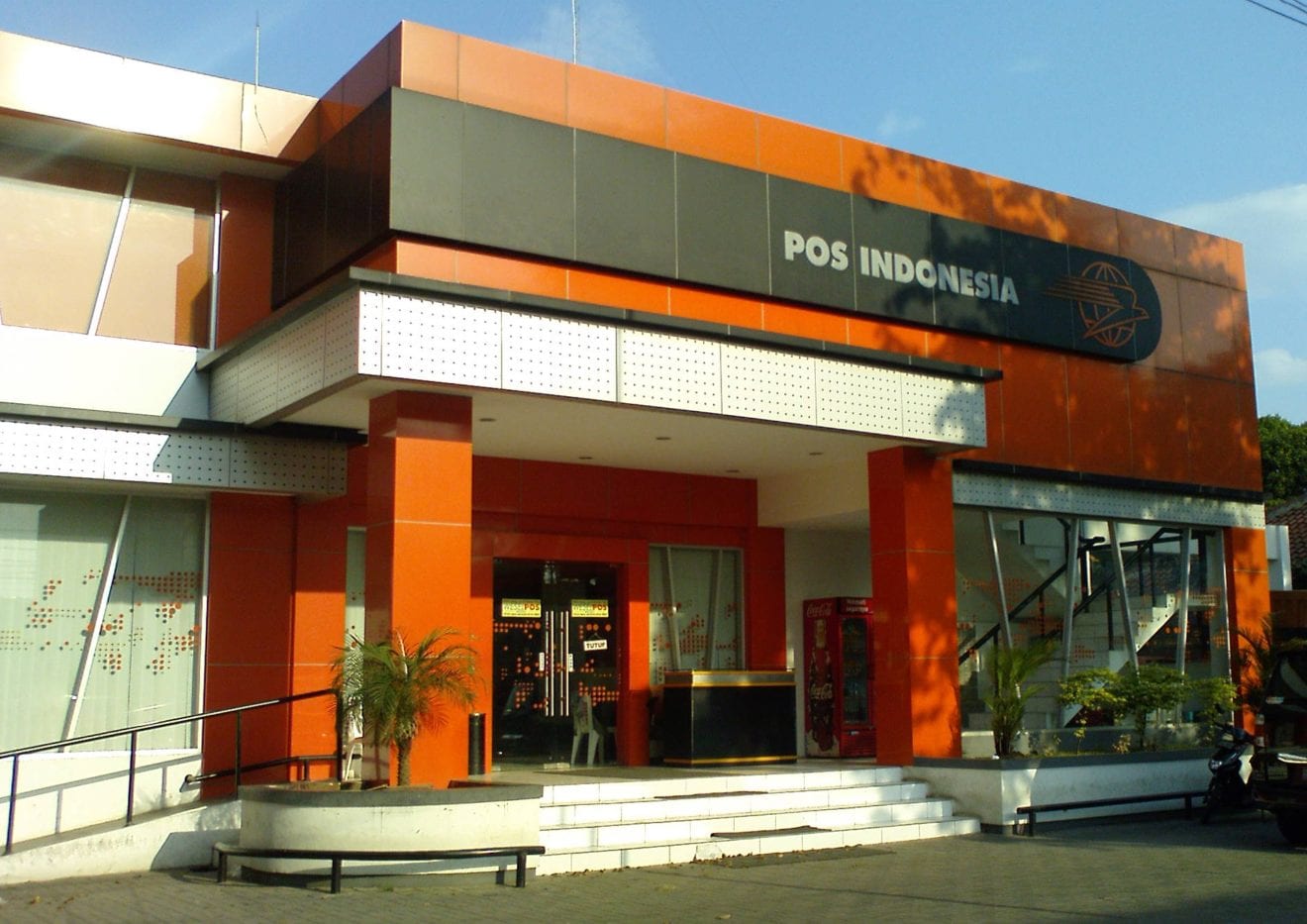
    Indonesia’s national postal service, Pos Indonesia, is mulling a spin-off its logistics arm in 2019 an IPO to capitalise on the online shopping boom.

    Pos Indonesia is aiming for Rp 11 trillion ($796 million) in revenue within the next two years, according to its director of technology and financial services, Indyruwani Asikin Natanegara. One third of this would come from its logistics arm, Pos Logistik Indonesia.

    This would more than double Pos Indonesia’s estimated revenue of about Rp 4 trillion last year, and be a nearly eightfold increase (about Rp 500 billion) for Pos Logistik Indonesia.

    Established four years ago, Pos Logistik Indonesia may make its trading debut before its holding company. It is something Pos Indonesia has been discussing for three years. With a network of 4367 offices and more than 28,000 agents, Pos Indonesia has established ties with such eCommerce companies as MatahariMall and Zalora Indonesia, in providing pickup and delivery services.

    Pos Logistik Indonesia’s business solutions director Yan Hendry Jauwena says the idea is to provide logistics for eCommerce companies. It has formed a partnership with Singapore-based technology firm Anchanto, which will be offering its services for warehousing and inventory, processing orders and delivery.

  • Inflation May Accelerate to 4.38% in January

    Inflation May Accelerate to 4.38% in January

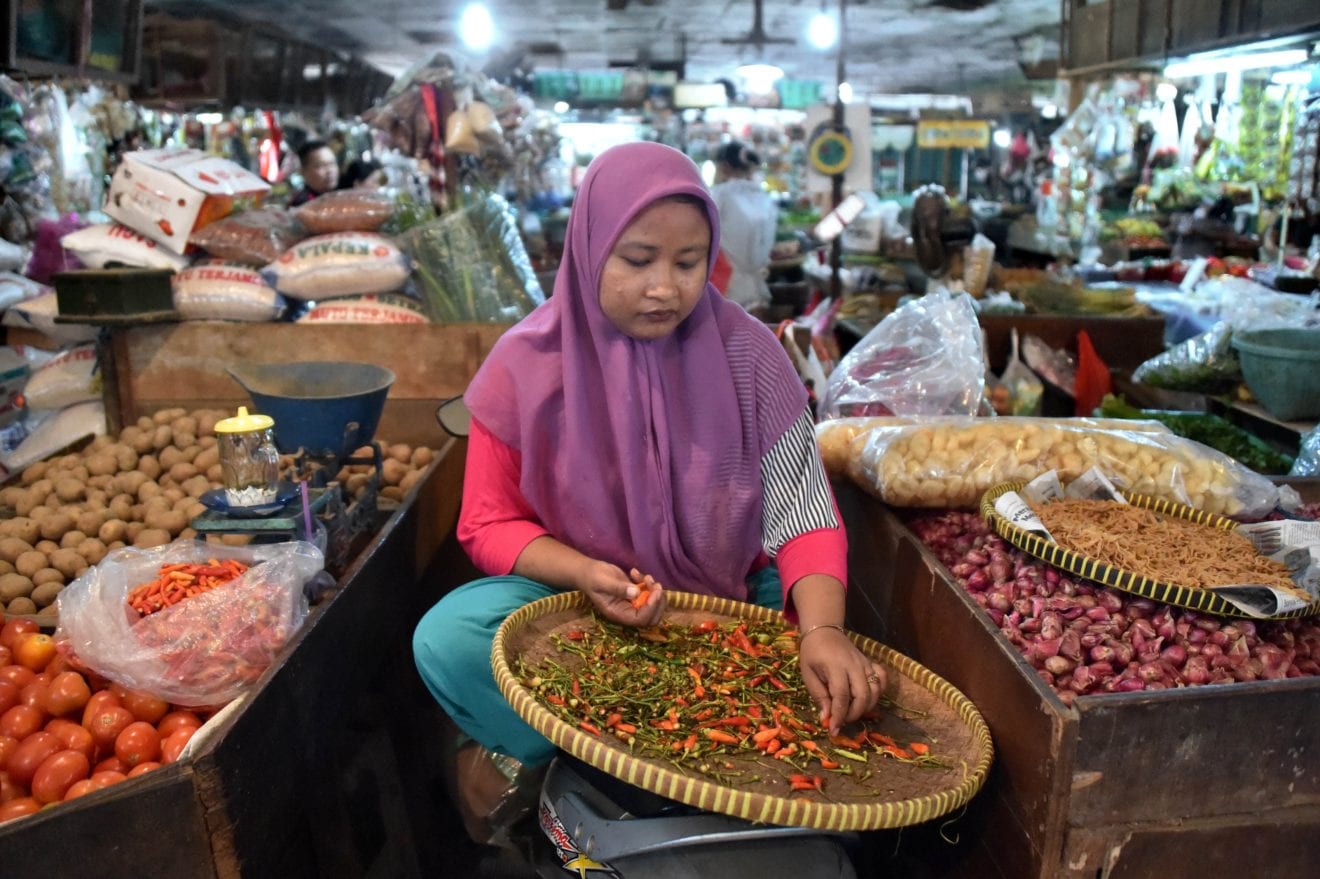
    Supplies of shallots and chili, staple ingredients in Indonesian meals, are often low during the rainy season, propping up the prices index, said Sasmito Hadi Wibowo, the deputy of goods and services distribution at the Central Statistics Agency (BPS).

    Beef prices are also on the rise, increasing by 1 percent alone this month after the government slapped a 10 percent value added tax on beef trade and import in the beginning of this year. Officials reversed the policy on Friday.

    Bank Indonesia has targeted an inflation rate of between 3 percent and 5 percent this year.

    The central bank just cut its benchmark interest rate to 7.25 percent last week as it seeks to stimulate bank lending and boost growth, but an accelerating inflation would undermine its ability to trim the interest rate further.

    The government aims to expand Southeast Asia’s largest economy by 5.3 percent this year, rebounding from an estimated 4.7 percent last year, its slowest pace since 2009.

  • Creative Industry Positive in Digital Era

    Creative Industry Positive in Digital Era

    Cooperation and SME Minister, Anak Agung Gede Ngurah Puspayoga, visited Marketers Creativity Day expo of creative products in Smesco building, Jakarta. He emphasized that creative industry has a big chance in the digital economy era.

    “The chance is open for anyone, be it internet users or women,” he said.

    Moreover, economy expert, Sri Adiningsih, said that Indonesia owns many creative products in the Asean Economic Community, only the marketing is still the problem. She even boosts women to create business and promote their products through social media in internet. Sri also calls on the people to use Indonesian origin products.

    Initiator of Galeri Indonesia WOW, Hermawan Kertajaya, said that Marketers Creativity event will be held on monthly basis. The expo is expected to inspire creative business in Indonesia, in the wake of Asean Economic Community.

  • Papua to use e-tender for goods and service procurement

    Papua to use e-tender for goods and service procurement

    The district of Biak Numfor would use online system of electronic tender for the procurement of goods and service in the 2016 fiscal year for efficiency .

    “Online system of e-tender would soon be applied to help accelerate the utilization of district budget fund,” assistant II of Biak district administration Mahasunu said here on Wednesday.

    Mahasunu said the mechanism of offering packages of project for the procurement of government goods and service would be socialized through website of the district administration.

    He said with the only system in project tender, it is hoped that there would be no misunderstanding between the providers of goods and services and the business players taking part in the tender.

    Another important benefit is that the system would allow less room for malfeasance and corruption, he said.

    “I hope that the process of implementing the online tender would be properly carried out,” he said.

  • Ford to exit Japan, Indonesia on poor sales outlook

    Ford to exit Japan, Indonesia on poor sales outlook

    Ford Motor will close down all operations by the end of this year in Japan and Indonesia, where the United States carmaker says it has no path to boost sales or earn profits.

    The step is being taken “after pursuing every possible option”, Ms Karen Hampton, Ford’s Asia-Pacific spokesman, said in an e-mailed statement. The company will provide ongoing support to customers for service, spare parts and warranties, she said.

    “It has become clear that there is no path to sustained profitability, nor will there be an acceptable return over time from our investments in Japan or Indonesia,” Ms Hampton said. Ford is committed to restructuring parts of its business that “have no reasonable path to achieve sales growth”, she said.

    The exits by Ford are the latest examples of a carmaker losing patience in struggling car markets in parts of Asia that are dominated by Japanese manufacturers.

    General Motors last year closed down its factory in Indonesia, the largest car market in South-east Asia. For 16 straight months, four- wheeler sales on the archipelago have shrunk. If the decline continues, the country will soon lose the distinction of being a one-million-cars-a-year market.

    NO PATH TO GROWTH

    It has become clear that there is no path to sustained profitability, nor will there be an acceptable return over time from our investments in Japan or Indonesia.”

    MS KAREN HAMPTON, Ford’s Asia-Pacific spokesman

    Industrywide sales in both Indonesia and Japan slumped in each of the last two years.

    While Indonesia is the largest economy in South-east Asia, Toyota Motor and its affiliate Daihatsu Motor dominate by accounting for about half of all vehicles sold, according to LMC Automotive. Including Honda Motor and Suzuki Motor, the companies have market share of about 80 per cent.

    Japan’s more developed car market peaked in 1996 with almost 7.3 million vehicles sold and has declined during much of the last two decades. Carmakers sold about five million vehicles in Japan last year, and foreign brands had less than 6 per cent market share.

    Ford is not alone in struggling in Indonesia or Japan. Hyundai Motor and Kia Motors combined to sell fewer vehicles than Ford in Indonesia last year. Each of GM’s brands also trailed Ford by registrations in Japan last year.

  • Imported salted fish flooding Sukabumi market

    Imported salted fish flooding Sukabumi market

    Imported salted fish products have flooded the traditional markets and attracted consumers in Sukabumi, West Java, because of its low pricing.

    “Imported fish products, including from Thailand and Taiwan, dominated salted fish stalls in Sukabumi,” trader Dani Supriyadi said at Cisaat Market, Sukabumi, on Monday.

    According to him, the imported salted fish products remained the main attraction at the local traditional market due to scarcity of local fish supplies.

    Traders opted for imported products to meet the market demand for salted fish, and stocked them. Another reason for the popularity of the imported salted fish is its low price, compared to the fish produced domestically.

    Sadly, domestic salted fish has been difficult to find lately, because of its limited stock.

    The quality of local salted fish products in the country is better than the imported stock, yet it cannot last long because it is processed traditionally. It does not use chemical preservatives.

    “The local salted fish products should dominate the domestic markets because Indonesia has access to vast water resources in the form of Indian Ocean and Pacific Ocean, in comparison to Taiwan and Thailand which have rare Sepat fish species and anchovies,” he added.

    Meanwhile, Chairman of Palabuhan Ratu Community Collectors and Fish Processing Palabuhanratu, Telly Supriatna said too little catch of anchovies ios now found in Indonesia due to inappropriate weather. It is believed that since December 2015 and till April this year, the supply will continue to decrease.

    When entering the rainy season, salted fish processing declines due to the fact that drying process takes a long time. As a result, next April, fish production will decrease and supply will fall as well.

    “Salted fish processing in Indonesia is mostly done traditionally, relying on nature for its drying process. Compared to imported products that are already using modern tools, our products become less competitive in the market,” he said.