Tag: Indonesia

  • Indosat, Smaato Launch IMX for Real Time Ads Spot Bidding

    Indosat, Smaato Launch IMX for Real Time Ads Spot Bidding

    Indosat, Indonesia’s third largest mobile telecommunication operator based on customer size, has teamed up with Smaato, a company offering advertising tools for mobile publishers and developers, to launch an advertising spot bidding platform for local and international advertisers.

    Indonesia Mobile Exchange (IMX) allows advertisers to connect with publishers which provide mobile advertising spots and bid for the spots in real time.

    “This Exchange platform can reach out all cellular customers. We start it by cooperating directly with Indonesian leading publishers, such as the Indonesia Digital Association [IDA] members,” said IMX chief executive Citra Agus in Jakarta.

    IDA members include Indonesia’s oldest online news site Detik.com, and Viva.co.id, the online news portal unit of Visi Media Asia.

    IMX will allow publishers to monetize their mobile platforms better with advertisers from Indonesia and abroad. Meanwhile, advertisers should better targets their customers based on mobile customers’ behavior, Citra said.

  • BlackBerry Targeting Local Retailers In Indonesia

    BlackBerry Targeting Local Retailers In Indonesia

    BlackBerry Ltd (NASDAQ:BBRY) (TSE:BB) is now relying heavily on its mobile application services as it struggles with its device business in Indonesia, which is one of the most important consumer market for the company. The Canadian smartphone manufacturer is seeking to monetize the application services in the region

    Indonesia holds big potential for BlackBerry

    Matthew Talbot, senior vice president for emerging sales at BlackBerry Ltd (NASDAQ:BBRY) (TSE:BB), told that the Jakarta Post that the company had plans of approaching the brick and mortar retailers and e-commerce players for partnerships. Talbot said Thursday that these partnerships will help the company in monetizing their services.

    Talbot said both, the virtual shop of BlackBerry and BlackBerry’s e-money application dubbed BlackBerry Messenger Money (BBM Money), were used for advertising by e-commerce marketplaces Qoo10, Tokopedia and Elevenia. The executive, further, informed that globally advertisement requests received by the company per day were noted at 300 million in December last day, and in January this figure went up to an average of 400 million.

    “There’s a good opportunity to bring more and more merchants to the table as there is a large volume of retailers that are emerging in Indonesia,” he said, adding that Indonesia was the second-fastest growing e-commerce market after China. Internet penetration in the country is estimated to reach 55% by 2017 as informed by financial services company UBS, adding that there has been exponential growth in the e-commerce of Indonesia in recent years. An e-commerce provider Vela Asia said that the e-commerce market in Indonesia was calculated at $8 billion in 2013 and by 2016, it is forecasted to grow to $25 billion.

    Not BlackBerry devices, but BBM popular

    BlackBerry Ltd (NASDAQ:BBRY) (TSE:BB) has lost its smartphone share in the country to global competitors that include Apple, Samsung and LG. However, the case is not the same with the messaging application, BBM, and it remains the most popular in the country. BBM is used by 80% of the smartphone users in the country for 23 minutes a day, says a report from Nielsen, released last year.

    Competing chat apps, WhatsApp and Line, are being used by way less number of smartphone users. The time spent on the apps on the daily basis being six and five minutes, and the number of smartphone users using the apps was 57% and 30% respectively, according to the study.

  • Indosat launches i-Aplikazone app store

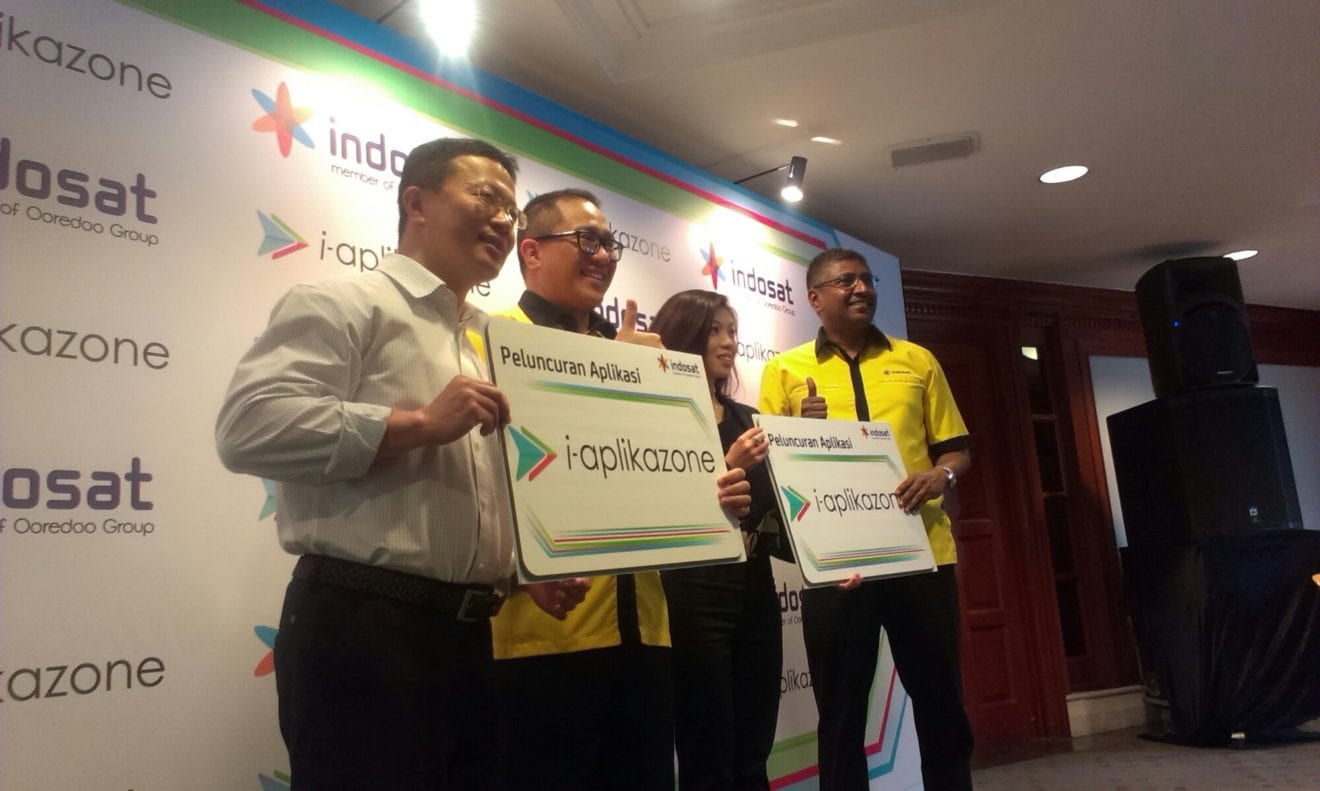
    Indosat launches i-Aplikazone app store

    Indonesian mobile operator Indosat has joined the expanding operator crowd in trying to tap into the growing app economy by developing its own app store.

    With the launch of i-Aplikazone on Wednesday, the company said it expects to increase revenue from data users, the Jakarta Post reported. Indosat president director Alexander Rusli set the ambitious target of having all smartphone customers download the app, a move it hopes will attract more data users.

    The app store has about 10,000 applications, of which more than 1,000 are in Indonesian, thePost said.

    Indosat, which is 65 per cent owned by Ooredoo, is now the country’s second largest mobile player after recently edging out rival XL – Indosat has a 19.5 per cent market share vs XL’s 18.5 per cent, according to GSMA Intelligence.

    Almost a third of Indosat’s 63 million subscribers are smartphone users.

    Earlier in the year it said it expects data traffic to jump at least 50 per cent after completing a two-year network upgrade. The operator has devoted the majority of its annual capex budget of IDR8 trillion ($625 million) to the network modernisation programme, which focused on 23 of the country’s largest cities.

    Number two player XL introduced its app store — Gudang Aplikasi – a year ago and said it has 2.3 million registered users in Q1. It has an estimated 22,000 apps.

    XL’s data revenue increased 29 per cent year-on-year in Q1 and now accounts for almost a third of service revenue. Smartphone adoption increased 54 per cent to 17.2 million users, giving it a smartphone penetration rate of 33 per cent.

    State-owned Telkomsel, the market leader with a 44 per cent market share, set up TemanDev in August 2013 to encourage local developers to create apps. It offers open APIs and organises local competitions, such as BestAppsID.

    South Korea
    Two months ago South Korea’s three leading mobile operators met with mobile app developers to discuss setting up a joint app store called the One Store, which is scheduled to open in May. The three currently have their own app stores – Olleh Market (KT), T-Store (SK Telecom) and U+Store (LG Uplus).

    Operator initiatives to create their own app stores and app-developer communities have not had much success.

    Analysys Mason identified 30 operator-run application stores in Asia, the Middle East and Africa at the end of 2012 and only a handful of those had been successful.

  • Russia, Indonesia sign deal for peaceful use of nuclear power

    Russia, Indonesia sign deal for peaceful use of nuclear power

    Indonesia’s National Nuclear Energy Agency (BATAN) and Russia’s State Nuclear Energy Corporation Rosatom have signed a memorandum of understanding (MoU) on development of peaceful use of nuclear energy.The two organisations signed the MoU at the ATOMEXPO, an international conference and exhibition of nuclear energy being held here, on Monday.The MoU, signed by Djarot Sulistio Wisnubroto, the chairman of BATAN and Kirill Komarov, the first deputy CEO for corporate development and international business of Rosatom, aims at strengthening the cooperation between Indonesia and Russia for peaceful use of nuclear energy.

    It also confirms the intentions of the two parties to cooperate in implementing programme to create and develop the national nuclear energy sector of Indonesia.”We fully support the strong commitment of BATAN to the development of nuclear technologies in Indonesia. Nuclear energy is viable option for this country, and Rosatom is already cooperating closely with BATAN in the project to design and construct an experimental reactor.”There are many other areas available for the further partnership, and the signed document gives a solid platform needed to bring these opportunities into life”, said Komarov at the MoU signing ceremony.

    According to the MoU, Rosatom and BATAN will intensify interactions on possibility to implement the Russian nuclear power plant projects in Indonesia.In April, BATAN declared RENUKO, the Russian-Indonesian consortium with participation of Rosatom subsidiaries, a winner of the tender for the conceptual design of a 10 MW multipurpose experimental high-temperature gas-cooled reactor in Indonesia.

  • Bintang Profits Take a Hit on Beer Ban

    Bintang Profits Take a Hit on Beer Ban

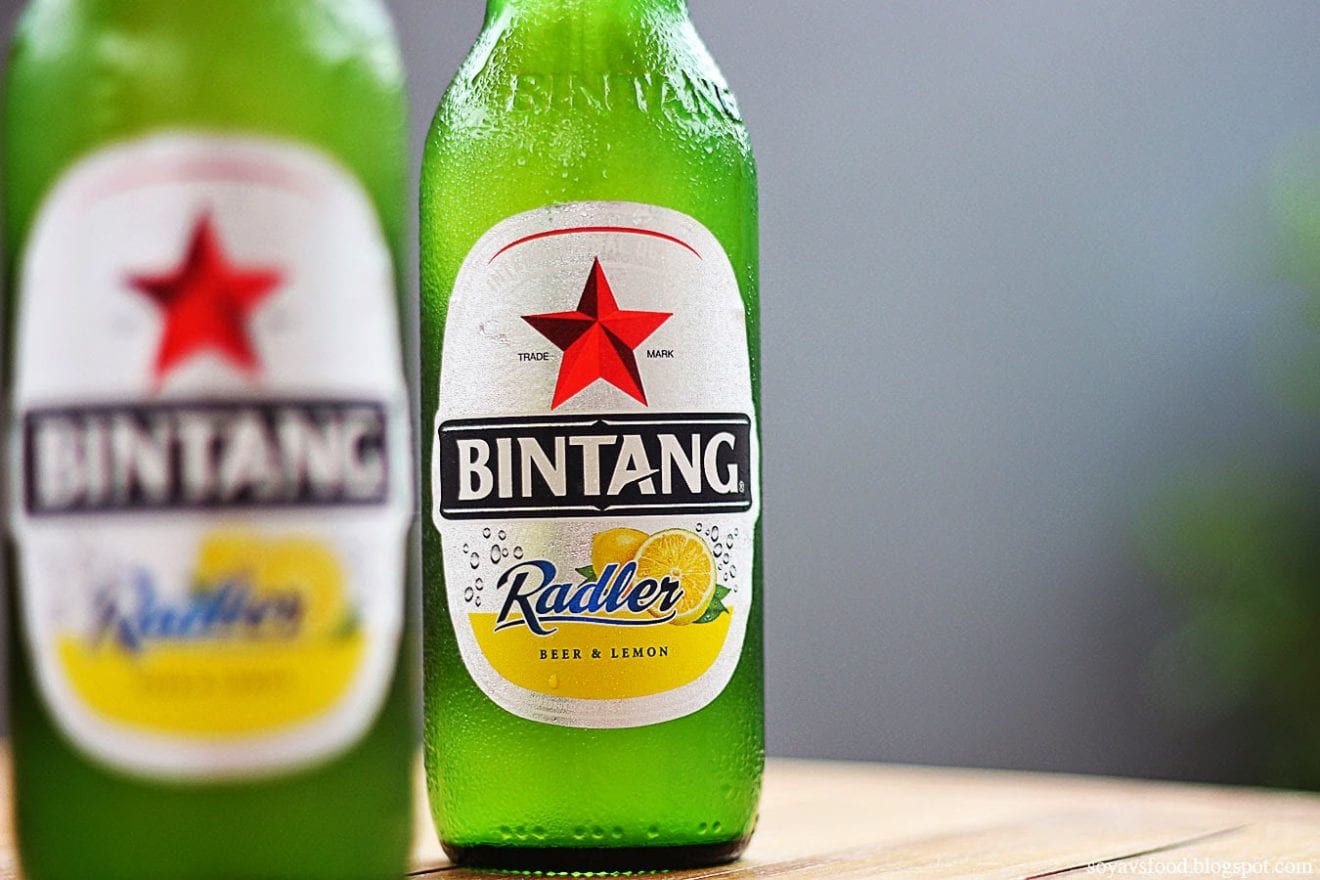
    One of Indonesia’s biggest beer producers, PT Multi Bintang Indonesia, reported a plunge in profits of 42% in the first quarter of the year, when convenience stores started phasing out stock in preparation for a ban on alcohol sales.

    Net income was down to $8.2 billion (107 billion rupiah) year-on-year in the first three months of the year, the company said in its latest financial report.  It also said it was putting on hold planned investments of around 635 billion rupiah due to the ban and continued uncertainty over the future of the regulation.

    The ban is part of decree from the Ministry of Trade that prevents convenience stores from selling beverages with an alcohol content of more than 1%. It took effect on April 16, but retailers were told to start phasing out stock in January.

    While beer sales are still allowed in supermarkets and restaurants, beer distributors feared that sales would take a hit since small retailers and convenience shops account for around 60% of all beer sales in the country.

    “These traditional wholesalers are an important distribution channel in the route-to-market for most consumer goods in Indonesia, including beer,” Multi Bintang said in a statement.

    Retailers and analysts have also been critical of the ban, saying it was pushed too quickly without allowing the industry time to prepare.

    “This is the ready-fire-aim policy making where nobody thinks through the implications,” said Paul Rowland, a Jakarta-based political analyst. “We’ve had a string of these kind of policy decisions that don’t take into account the end result,” he added, pointing to a proposed ban on second-hand clothing and the cancellation of thousands of import licenses in December.

    Multi Bintang’s President Director Michael Chin said that the decline in profit and revenue, which fell by 23% from the same period last year, “was primarily due to the destocking.” The company is currently in talks with the Ministry of Trade about the ban but says they’re moving slowly.

    In an interview last month, he told The Wall Street Journal that concerns about legal uncertainties raised by the decree would likely derail tens of millions of dollars allocated to boosting the company’s production. Muslim-majority Indonesia makes up a small percentage of total global beer sales for major beer makers, such as Heineken and Guinness, but its growing middle class has made the world’s fourth most populous country an enticing market for expansion.

    Multi Bintang, which is majority-owned by Heineken Holding NV of the Netherlands, also produces Heineken in Indonesia and Guinness through a third-party agreement. It has been in Indonesia since 1929.

  • 9 keys to reaching Asian shoppers

    Whether or not they’re searching on-line or shopping for in-store buyers have extra selection than ever, forcing retailers and malls to get artistic to draw their consideration.

    With the area’s center class predicted to double to 1.32 billion by 2020, Asian shoppers – and their expectations – are altering quickly.

    Adam Prepare dinner, retail undertaking and improvement providers lead with JLL Asia Pacific, explores a number of the rising developments altering the best way retailers are connecting with shoppers:

    1. The brand new digital buying actuality

    Know-how is now probably the most dynamic pressure within the retail business, opening up new channels and interesting new audiences whereas concurrently feeding new ranges of competitors. Digital Actuality (VR) could also be progressing slowly within the shopper area, however the tipping level of adoption in retail is quick approaching. The 2015 Way forward for Retail Research from Walker Sands discovered that round a 3rd of shoppers would store extra on-line if they might work together with merchandise nearly first. VR know-how is now permitting buyers to expertise a digital trend present, wander round a digital retailer and discover a digital mall with many different improvements to return as retailers experiment with the know-how. It’s poised to generate a completely new sale channel for retailers within the subsequent few years.

    1. Enhanced buyer relationship administration (CRM) know-how

    Because the battle for the buyer greenback intensifies, loyalty will develop into the brand new foreign money of commerce – with slightly assist from know-how. Digital cost strategies akin to Apple Pay and AliPay are getting used together with more and more refined location-based providers like iBeacon – Apple’s indoor positioning system – to provide new ranges of perception into shopping for behaviour. Retailers can now present buyers with real-time info based mostly on their consumer profiles and engagement historical past.

    ShopperTrak just lately introduced a partnership with Shopkick for a purchasing app permitting retailers to work together in real-time with clients whereas they’re buying. There are already 10 million customers on the Shopkick app and greater than 8000 shopBeacons deployed in retail shops. Insights assist retailers join with related shoppers at a precise location and in real-time, which in flip could be refined to take care of loyalty.

    1. Robots in disguise

    Whereas some manufacturers are experimenting with improvements comparable to drone supply, laws are more likely to floor most business drone concepts within the short-term. As an alternative we’ll see the continued rise of robots and humanoids in retail conditions. Already a function in lots of Japanese shops, robotic know-how is enhancing at a meteoric fee. And with rising labour prices, it isn’t onerous to think about a close to future when primary retail duties similar to making espresso or manning an experiential retailer is dealt with by a humanoid. Nippon Enterprise Capital just lately launched a $42 million fund in Japan by to speed up and commercialize humanoid know-how and neuroscience purposes, lots of that are being designed for the retail business.

    1. Cross-border purchasing

    Shoppers are flocking to digital retail markets which are more and more nation agnostic to hunt out the perfect product and one of the best offers. Asian shoppers already spend greater than the worldwide common on cross-border purchasing, and that is solely more likely to improve as a brand new era of shoppers look to spend their disposable revenue.

    1. Model extensions

    Experiential shops reminiscent of Google’s new (and thus far solely) buying expertise in London permit shoppers to play with merchandise earlier than shopping for them, often on-line. However this will typically have the unintended consequence of showing the restrictions of the model’s core merchandise. Thus, one other means for manufacturers to distinguish themselves is to increase their attain past their core providing. Meals extensions have turn into widespread just lately as retailers search to diversify and develop. Ideas such because the bar and cafe inside Alfred Dunhill outlets are a very good instance of clothes manufacturers shifting into the meals and beverage area. Anticipate this development to collect tempo because the battle to maximise dwell time and share of the buying basket heats up.

    1. Menswear

    Traditionally, males are extremely underserved within the style business – and there’s proof that their shopping for preferences are evolving. Bain & Firm estimates menswear progress has outpaced womenswear for the final six years, rising at between 9 and 13 per cent yearly – virtually double that of womenswear. As manufacturers search to take care of progress, we’ll see a re-focusing of the retail business to focus on males. Model partnerships, notably in athletic and sportswear, will proceed to develop and can develop into a key function of retail plans within the brief to medium-term.

    1. The rise of the Asian trend home

    European and American dominance in Asian excessive style has been the norm for a few years, and the overwhelming majority of luxurious manufacturers with robust Asian gross sales are owned by Western companies. Because the retail market continues to develop in Asia, we anticipate to see the rise of an Asian luxurious model -most in all probability within the style area – which can equal or exceed the recognition of Asian-American style icons comparable to Alexander Wang, Vera Wang and Philip Lim.

    With Western designers utterly absent from Shanghai’s Trend Week in 2014, trend critics targeted on rising Chinese language designers, and it’s doubtless that many of those manufacturers will develop loyal clients past China and meet the worldwide trend business by way of the important thing markets of Hong Kong, Tokyo and Seoul. Asian trend designers will quickly be on par with the likes of style homes resembling LVMH, Prada and Michael Kors, and can kick-start a brand new period of Asian retail innovation and management.

    1. The brand new flagship

    Intricately related to the emergence of the experiential development is the resurgence in retailers working flagship shops. Pushed by a want to reconnect with shoppers and the necessity to evolve from a static entity to an attractive expertise, the brand new flagship will re-imagine a retail retailer. It is going to be a press release, a model ambassador. More and more these areas will blur the road between retail and leisure, and develop into locations the place buyers are inspired to play and keep. This development is most noticeable in main markets like New York, Japan, and even Sydney the place single-brand luxurious and quick trend retailers are signing bigger leases and investing extra into the in-store surroundings.

    1. 3D Printers

    We’re on the tipping level of 3D printing and really quickly it’ll grow to be the norm in each facet of our lives. The primary 3D printed constructing was just lately unveiled in China and every thing from automobiles to weapons has adopted. For consumers on the lookout for a personalised expertise on their very own phrases, 3D printing gives an virtually limitless array of choices. Jewellers are already permitting clients to print their very own designs, whereas everybody from cooks to cycle outlets are experimenting with the know-how’s software within the retail area. That is genuinely game-changing know-how, and one that may definitely come to outline retail within the coming years.

  • Alfamart Set to Open Up To 120 Shops in Philippines

    Alfamart Set to Open Up To 120 Shops in Philippines

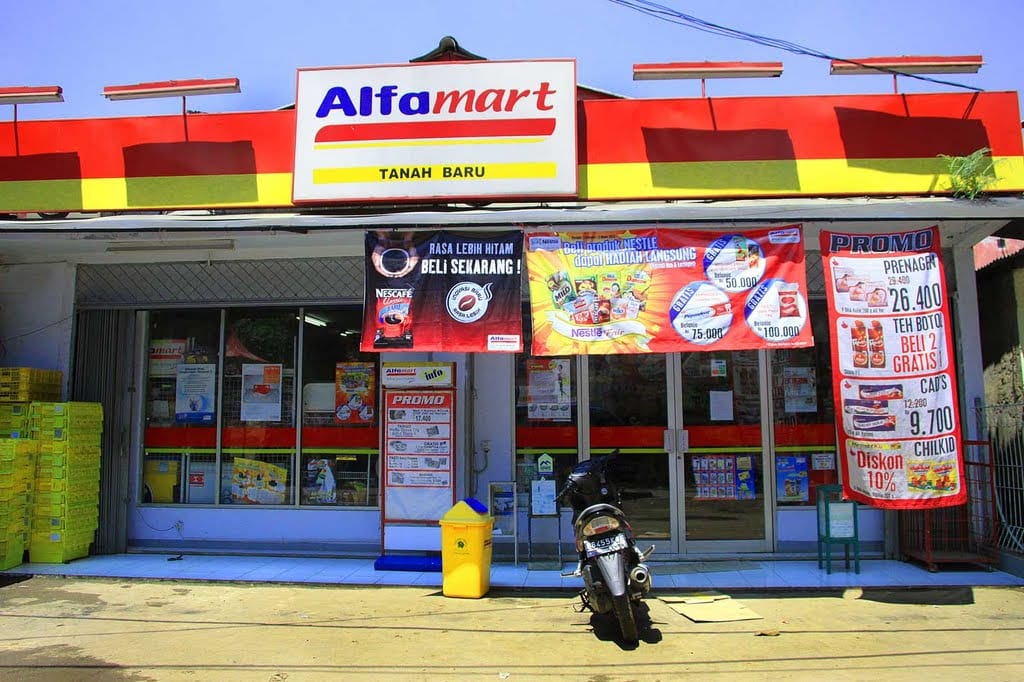
     Sumber Alfaria Trijaya, the operator of the Alfamart comfort retailer chain, plans to open between 100 and 120 new shops within the Philippines via its subsidiary Alfamart Retail Asia, as a part of the corporate’s regional enlargement plan.

    The corporate has estimated the brand new shops will value Rp 50 billion ($three.eight million) and has secured a mortgage from banks within the Philippines to fund the funding.

    The corporate’s Philippines shops are operated as a part of a three way partnership between Alfamart Retail Asia and native retailer SM Retail Grocery store. Alfamart Retail Asia has 35 % fairness within the enterprise.

    Presently the enterprise operates 44 shops.

    Sumber Alfaria Trijaya plans to open 1,200 shops in Indonesia this yr, and has set apart Rp 2 trillion from its inner money fund for the enlargement. The retailer had 10,086 shops in Indonesia on the finish of March, together with 2,958 franchise shops.

  • MAP Expects Slower Gross sales, to Spin Off Attire Division

    MAP Expects Slower Gross sales, to Spin Off Attire Division

    Mitra Adiperkasa, or MAP, a life-style retailer that holds the licenses for Starbucks, Burger King and Zara in Indonesia, forecasts slower gross sales progress this yr, citing climbing prices and the nation’s financial slowdown.

    Fetty Kwartati, company secretary at MAP, stated that the corporate focused gross sales to develop between 13 % and 15 % this yr. That may be a steep stoop in comparison with final yr’s gross sales that grew 22 % to Rp 11.eight trillion ($895 million).

    “We’re conscious that the state of affairs can be difficult this yr so we’re setting this objective from the very starting,” Fetty stated on Monday. “Hopefully, issues will flip for the higher within the second half of the yr.”

    Revenue for retailers like MAP has declined resulting from Indonesia’s slowing financial system, which grew at its weakest tempo in 5 years at four.7 % within the first quarter, coupled with a weak foreign money that has pushed up the price of import.

    Internet revenue at MAP fell 78 % to Rp 10 billion between January and March from Rp 78 billion final yr, as larger prices reduce the corporate’s year-on-year revenue margin to zero.three % from 1.5 % final yr.

    Beneath such circumstances, the native retailer is setting a extra “prudent” enlargement plan, setting apart as much as Rp 500 billion in capital spending this yr — 17 % decrease than final yr’s Rp 600 billion — stated Virendra Prakash Sharma, vice chairman director at MAP.

    “So far as the enlargement plan goes this yr, we’re going to be very prudent. We’re going to be very selective on the subject of enlargement,” Sharma stated.

    A lot of the spending will go in the direction of the corporate’s plan to confide in 45 new Starbucks branches this yr, he added.

    The retail may also be spinning off its active-lifestyle enterprise division, Mitra Aktif Adiperkasa, this yr in hopes to “unlock the brand new division’s potential,” Sharma stated. The corporate goals to listing Mitra Aktif Adiperkasa on the Indonesia Inventory Change inside the subsequent 4 to 5 years, he stated.

    Beneath Mitra Aktif Adiperkasa, the retailer will consolidate the corporate’s lively attire division with its socks division Putra Agung Lestari and garment enterprise Mitra Garindo Perkasa, working as a lot as 878 retail branches underneath the corporate, the vice chairman director stated.

    The transfer follows Mitra Adiperkasa’s stake sale on two of its meals and drinks manufacturers — Domino’s Pizza and Burger King — final yr.

    The agency bought 51 % of its stake in Domino’s Pizza, in addition to 39.four % of Burger King, to Everstone Capital, a Singapore-based personal fairness agency, final yr.

    MAP will promote one other 11.6 % of Burger King to Everstone Capital later this yr, leaving the native retailer with a 49 % stake on the fast-food model, in accordance with Sharma.

    MAP holds the license to over 150 worldwide manufacturers  — together with Sogo, Zara and Krispy Kreme — with a complete of 1,879 retail outlets throughout 65 cities in Indonesia as of April.

  • Daum Kakao buys Path assets for Indonesia growth

    Daum Kakao buys Path assets for Indonesia growth

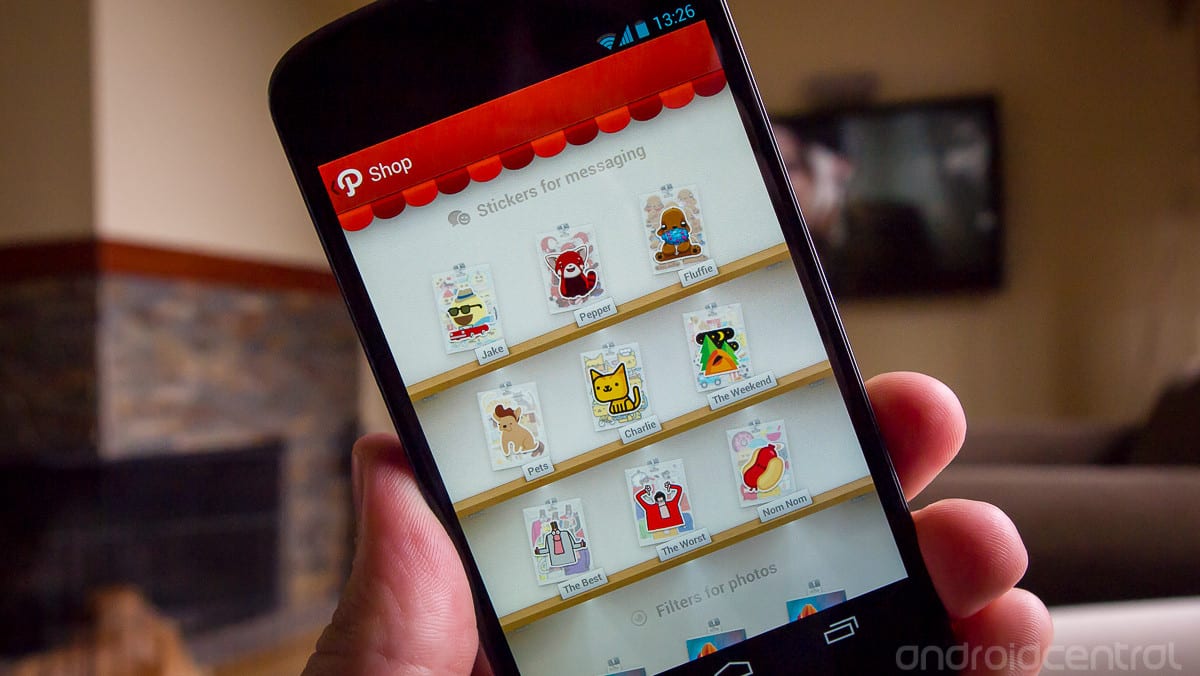
    South Korean messaging app operator Daum Kakao Corp said it has acquired social networking assets from U.S.-based Path Inc, giving it a strong presence in Indonesia and sending its shares surging 10 percent on its push to expand globally.While Daum Kakao owns South Korea’s dominant chat app KakaoTalk, investors have been worried that KakaoTalk’s global user base lags far behind rivals like Facebook Inc’s WhatsApp and compatriot Naver Corp’s Line.“This acquisition marks the first of the many global business approaches Daum Kakao will take in the coming years,” the company said in a statement, adding that in addition to acquisitions it would also explore investment and partnership opportunities.Daum Kakao will purchase social networking service Path which has 10 million monthly active users, most of them in Indonesia, making it one of the top three SNS services in the Southeast Asian country. It will also buy messaging app Path Talk.

    Terms of the deal were not disclosed.“This deal establishes a new stronghold country and could generate further growth momentum in nearby countries,” said Kyobo Securities analyst Lee Seong-bin.Efforts by Daum Kakao to date to grow in markets like Indonesia, the Philippines and Malaysia had failed to gain traction.In addition to strong position in Indonesia, Path has also been growing rapidly in Saudi Arabia.Daum Kakao’s shares were trading at 117,700 won in afternoon trade. At one stage, it rose 12 percent to its highest level in more than two months.

  • Matahari Putra Prima to Distribute Rp194b in Dividends

    Matahari Putra Prima to Distribute Rp194b in Dividends

    Shareholders of Indonesia’s largest trendy retailer for fast-moving shopper items Matahari Putra Prima permitted in its annual common shareholders assembly a plan to distribute Rp 193.9 billion ($14.7 million) in dividends, which characterize 35 % of the corporate’s 2014 internet earnings of Rp 554 billion.

    Buyers of MPP, a Jakarta Globe affiliate by means of the Lippo Group, will obtain a dividend cost of Rp 36 for each share they maintain in a date which might be introduced later.

    “We’re happy to announce the money dividend of Rp 193.9 billion to our valued shareholders. This demonstrates the corporate’s on­going dedication to extend shareholder worth in ­line with the corporate’s goal to turn into the main FMCF trendy retailer in Indonesia,” MPP president director Benjamin Mailool stated in a press launch on Monday.

    Mailool added that the corporate will proceed its aggressive enlargement this yr by opening at the very least 10 new Hypermart retailers and additional develop its Foodmart and Boston Well being & Magnificence enterprise models.

    “Our dedication to buyer satisfaction is concentrated on additional improvement of the Hypermart format to continued enchancment of the client purchasing expertise and ensures we proceed to seize market share to safe the primary place within the multi-­format fast-moving shopper items phase,” he added.

    Buyers additionally welcomed John Riady and Niel Nielson to the board of commissioners and accepted the administrators studies on the corporate’s achievements and monetary outcomes for the 2014 fiscal yr.

    “We want to welcome John Riady and Niel Nielson who at the moment are the brand new members of BOC. These management modifications proceed to strengthen our boards to help the aggressive enlargement plans for 2015 and past,” Mailool stated.

    MPP posted a robust revenue progress final yr, because of strong gross sales and enhancing store-level productiveness.

    MPP lately introduced that its internet revenue grew 24.5 % to Rp 554 billion final yr. Eliminating one-time good points in 2014, internet revenue elevated 58.2 % to Rp 625.9 billion.

    In 2014, MPP grew with the widest retailer community of 107 hypermarkets, 21 supermarkets, 102 well being and wonder retailers, and 37 comfort shops working in additional than 60 cities and  29 provinces throughout Indonesia.

    It has launched the newest idea of Hypermart Era 7 (G7) in North Lippo Karawaci, on the outskirts of Jakarta. The occasion was adopted by the opening of a second G7 retailer in Batam in April.

  • Flatscreen TV sales slide in SE Asia

    Flatscreen TV sales slide in SE Asia

    The total sales volume of flat panel TV continues to slow in six key Southeast Asian markets monitored by research house GfK.

    But consumer demand for ultra-high definition (UHD) models has spiked exponentially in the past year to help fuel the strong growth of this segment as well as the overall value growth of the TV market.

    According to GfK’s point of sales tracking in Singapore, Malaysia, Thailand, Vietnam, Indonesia and the Philippines, the 11.8 million TV sets sold in April 2014 to March 2015 marks a 2.9 per cent drop compared with the same period a year ago. However, robust sales of the higher value UHD models managed to drive up dollar value generated by the entire TV market by 2.9 per cent.

    “With the near completion of switchover trend in developing Southeast Asian countries, consumers are now focusing on upgrading to the latest screen technology,” said Gerard Tan, account director for Digital World in GfK.

    “Manufacturers and retailers have been aggressively launching attractive promotions to stimulate take up rates.”

    The six individual countries reported surges in sales value of their respective UHD TV markets in the range of 20 to 77 per cent, with Singapore (77 per cent), Indonesia (67 per cent) and Vietnam (47 per cent) registering the fastest growth. In unit terms, sales volume from a year ago climbed  in the range of nine to 37 per cent – led by Singapore and Indonesia (37 per cent) and followed by Vietnam (23 per cent).

    According to GfK findings, the UHD segment contributed nearly eight per cent of the region’s TV sales dollars; accounting for US$354 million – an increment of 280 per cent over the same period the year before. Penetration is highest in the most developed market of Singapore, where more than one in every 10 (13 per cent) of sets sold UHD.

    The rising share of UHD in the TV market has also resulted in the average price of a UHD TV falling around 61 per cent, from US$5500 to $2160.

    Meanwhile, the most commonly purchased screen size for this segment is 41”-50”, making up 35 per cent in share of the UHD sales volume.

    “TV technology is constantly evolving, and with each new launch, we see the progression of consumers moving from small to big screens, with affordability increasing over time,” said Tan.

    “Moving forward into the rest of 2015, we can expect to see rising excitement in the UHD TV market as manufacturers battle for the consumer dollar with more offerings at more attractive prices; and at the end of the day, consumer s are the ones who get to enjoy the good deals resulting from the fierce competition,” he concluded.

  • Bebelian flourishes on celebrity cast-offs

    Bebelian flourishes on celebrity cast-offs

    A unique Indonesian eCommerce venture is making money by selling local celebrities cast-offs to starry-eyed fans.

    And if the concept works in Indonesia, surely it’s a fit for other Asian markets, like Thailand and Korea, where celebrity-spotting is almost a national obsession.

    As TechInAsia.com reports, in an article written by Lina Noviandari. and translated from Indonesian,Bebelian founder Khairiyyah Sari was a former executive fashion and beauty editor at Indonesia’s Femina magazine. It was a role which kept her up to date – and in stock – with everything related to branded apparel and accessories, particularly handbags. Her work in the media also allowed her rare access to the nation’s exclusive pool of models, actresses, and celebrities who were deeply entrenched in the archipelago’s fast-moving fashion world.

    Having cultivated relationships with many socialites and famous women, those in Indonesia’s fashion and beauty industry came to endearingly know her by one name; Sari. In mid-2011, however, she resigned from her safe and cushy media job to chase down a daring eCommerce dream. Bebelian was born, with the vision to sell branded, fashionable apparel and accessories that were pre-owned by Indonesian celebrities.

    “On eBay, I found Hollywood celebrities putting their goods up to be auctioned. I then thought, Indonesia should have a place that sells items previously owned by celebrities. Because I knew a lot of them, I was sure they had a lot stuff that they rarely used. And certainly, there were many fans out there who wanted a piece of their style, right?”

    Realising she couldn’t do it alone, Sari invited her friend Dewi Rezer – an Indonesian model, TV presenter, and actress – to help develop the company. Now a two-woman operation, Bebelian had an even deeper network of celebs it could tap into for secondhand goods. Sari went right to work creating the site and populating it with content, while Rezer helped legitimise the business and build buzz in the right circles.

    As a fashion journalist, Sari already knew that people in Indonesia bought branded apparel that was endorsed or pre-owned by celebrities, but that there wasn’t a formal place where people were doing it.

    She also knew that there was no website that was specialising in pre-owned celebrity handbags. With this in mind, she decided to focus her site solely on handbags in order to capture an early niche audience.

    “Because I was a fashion journalist, the concept of an online store that I made didn’t seem too arbitrary. Each celebrity has to make a profile, so it’s sort of like a magazine. Complete profiles are linked with the celebrity’s own signature style, including handbags. Each bag is photographed in our studio and celebrities share tips on how to wear them.”

    Sari claims that apart from the potential earning power of Bebelian, the site also has a mission to provide a means for average consumers to get their hands on designer brands at affordable prices. According to her, buying a pre-owned, branded handbag from a celebrity has a better value proposition than buying a counterfeit one.

    However, when you look at the site, it’s plain to see that the prices are somewhere between what they’d be for counterfeit items versus real branded ones. So in that sense, shopping on Bebelian is still a step above buying fake branded items, but still not as expensive as picking something up from the Gucci store.

    On Bebelian, users can browse via brands, celebrities, price, or product. According to Sari, around 30 celebrities have signed up, and she says she’s been dividing her time between Bebelian and her own private consultancy. She declined to comment on Bebelian’s traction, including the number of transactions it has facilitated to date. However, Bebelian currently features brand names like Chanel, Gucci, Guess, and Louis Vuitton as well as famous local names such as Astrid Tiar, Sandra Dewi, Jill Gladys, and Edies Adelia.

    While Bebelian is a unique business model, it does see indirect competition in local site WokuWoku, an eCommerce firm that sells clothes and apparel from fashion lines owned by celebs. The primary difference is that Bebelian sells designer brands from the personal closets of celebrities, while WokuWoku deals in brands that are part of celebrity-made clothing lines.

    However, Sari says she doesn’t need to worry too much about competitors just yet, as Bebelian seems to be performing beyond her expectations.

    “The next obstacle we face is that our celebrities don’t have any more items they want to sell,” says Sari. “Because of this, we must always be looking for new celebrity partners to feature on Bebelian.”

  • Fujita Kanko Opens Bangkok and Jakarta Offices

    Fujita Kanko Opens Bangkok and Jakarta Offices

    Leading Japanese hospitality company Fujita Kanko Inc. will open two new overseas offices in Bangkok, Thailand and Jakarta, Indonesia in June. The openings are intended to accelerate the globalization of its business, one of the key goals the company has set for the next five years, aiming at 25 percent growth in overseas guests by 2019.

    “Adding Bangkok and Jakarta bases is a critical step in our business plan,” said Akira Segawa, Fujita Kanko’s President and CEO. “Southeast Asia is a strategically important market – an increasingly strong inbound market for Japan, and also a very popular destination for Japanese travelers.” Mr. Segawa stressed the importance for the company of maximizing business opportunities in Southeast Asia. “We’ve built a broad range of hospitality expertise, and offer some of Japan’s most upscale, exquisite properties. We’re eager to welcome more international travelers, and to build local businesses, including opening hotels, in other Asian markets.”

    The 60-year-old company opened its first overseas office in Shanghai in 2010 and added offices in Seoul and Taipei in 2012. A Singapore office was added in 2013 to strengthen marketing and sales and pursue business development opportunities in Southeast Asia. The Singapore office will be consolidated with the Jakarta office at the end of May, which will also oversee the Malaysian market.

    Fujita Kanko will use its overseas offices to promote its 70+ properties in Japan and build international recognition for its businesses among travelers and other stakeholders. Last year, the company announced it will open a hotel in Seoul, Korea in 2018, its first overseas property since 2002.

    Fujita Kanko Jakarta Office:
    Mid Plaza 1 Lt. 17 Unit 1718
    Jl. Jend Sudirman Kav 10-11, Jakarta Pusat 10220, Indonesia
    Phone: +62-21-2783-2323

    About Fujita Kanko

    Fujita Kanko Inc., established in 1955, is a publicly-traded tourism industry corporation headquartered in Tokyo. In addition to its core hospitality business, the company operates wedding and banquet facilities, high-end resorts, leisure facilities and related services. It has 70 properties/facilities, including its five-star flagship, Hotel Chinzanso Tokyo, and 30 mid-priced hotels throughout Japan in the Hotel Gracery and Washington Hotels groups.

  • 4G, Asia lead smartphone sales rise

    4G, Asia lead smartphone sales rise

    Global smartphone sales rose by eight per cent in value terms in the first quarter of this year.

    Sales of larger screen devices (5″ and higher) continued to drive year-on-year growth according to data from GfK.

    But while handset demand increased seven per cent to 310 million units, a slowdown in demand in China and developed Asian nations dragged down growth, from 19 per cent year-on-year in the fourth quarter of 2014.

    GfK says 4G compatible phones are rapidly gaining share – surpassing 50 per cent of the global handset market for the first time. It predicts a 4G ramp-up in China in the second half of 2015 to drive incremental demand.

    Kevin Walsh, director of trends and forecasting at GfK, said the weakness in China was caused by a significant slowdown in 3G demand, which was not offset by 4G growth.

    “We forecast China to return to growth in the second half of the year, driven by a continued 4G ramp-up. In Developed Asia, the year-on-year decline was caused by tough comparisons with Q1 2014, when demand was pulled forward in Japan due to an upcoming VAT increase in April. We forecast unit demand in Developed Asia to grow by three per cent year-on-year in 2015, driven by Japan and South Korea, which are expected to return to growth in 2Q15.”
    Smartphone growth in India and Indonesia is also expected to be helped by an expanding 4G network. In Q1 2015, 4G share in both countries was well below the global average, at four per cent and seven per cent, respectively. GfK forecasts 4G unit share within smartphones to reach seven per cent in India and 10 per cent in Indonesia in 2015.

    Q1 2015 saw a continued shift towards larger screen sizes, with sales of 166 million units equating to 47 per cent of the global smartphone market, up from 32 per cent in Q1 2014. In China, where the 4G trend is particularly pronounced, the growth in share to 57 per cent – from 32 per cent in Q1 2014 – was driven by cheaper large screen models flooding into the market.

    GfK forecasts this screen size migration to continue in 2015, with global demand for large screen devices increasing by 30 per cent year-on-year to account for 69 per cent of total smartphone unit demand this year.

    Low-end smartphones – those priced in the region of $0-250 – increased share to 56 per cent, up from 52 per cent in Q4 2014, at the expense of the high-end models ($500+), whilst mid-range ($250-500) share remained stable.

    GfK forecasts low-end smartphones to gain further share in 2015, helped by continued price erosion in emerging markets.

    Walsh added: “GfK forecasts global smartphone unit demand to grow 10 per cent year-on-year in 2015, a slowdown from the 23 per cent growth experienced last year. Emerging Asia is forecast to be the fastest growing region, driven by India and Indonesia, where low smartphone penetration leaves plenty of room for growth.”

  • Ikea to open 2 stores every 5 years in Indonesia

    Ikea to open 2 stores every 5 years in Indonesia

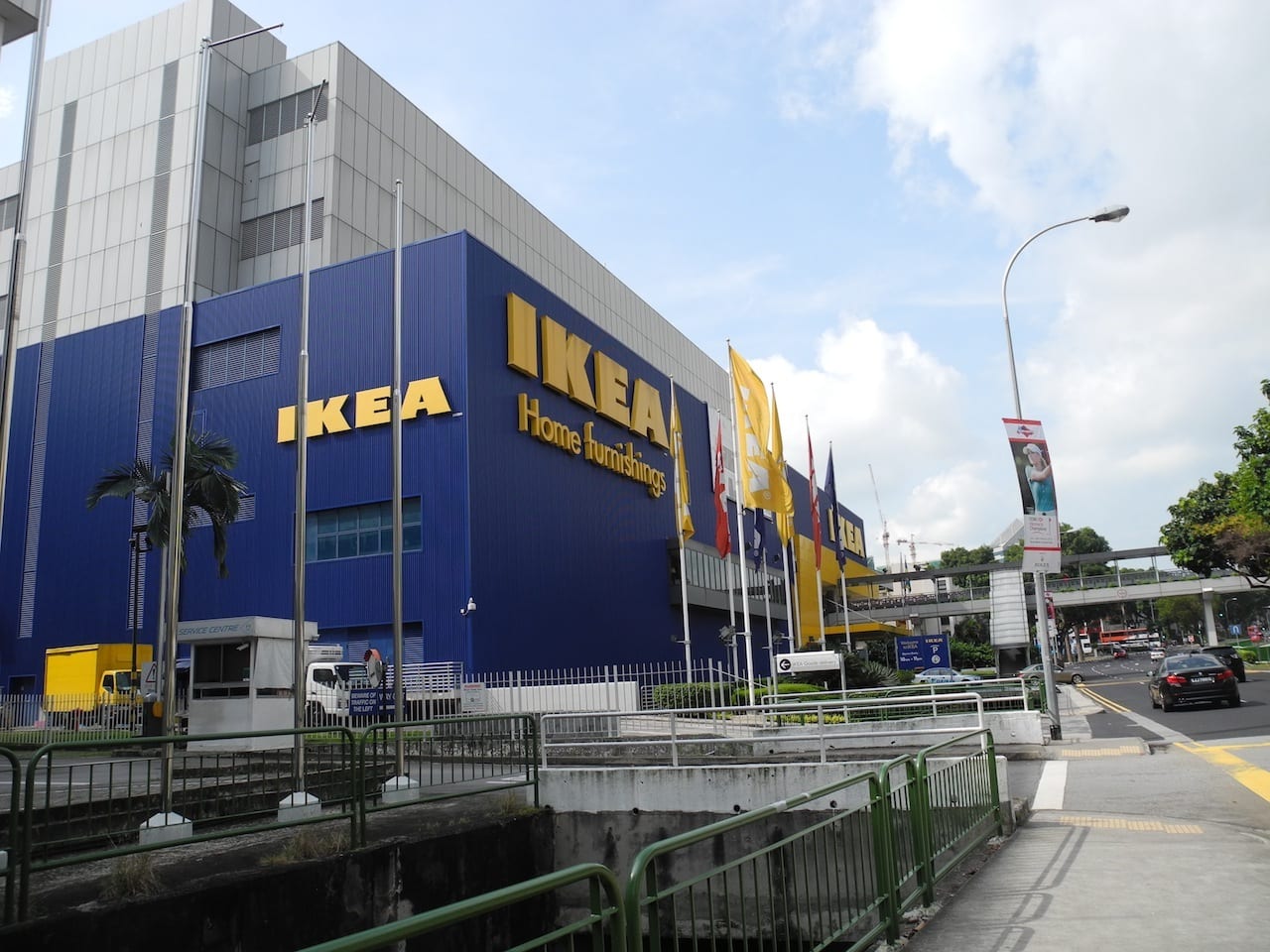
    Ika plans to build two stores every five years until 2025 after opening its first Indonesian store in Alam Sutera, Tangerang, in October 2014.

    Ikea, the world’s biggest furniture seller, will produce more in Indonesia as it has set its sights on boosting its export value tenfold to US$1 billion in the long-run, a company executive says.

    The Swedish multinational company, which had sales of ¤30.1 billion last year in its 361 stores worldwide, was looking to produce mattresses and flat-pack furniture in Indonesia next year, as well as textiles and batik-pattern products by 2017, said Tony Mampuk, Ikea Indonesia’s country government relation manager.

    “The flat-pack furniture will depend on the results of our supplier gathering. If they are interested, it will be very easy to build flat-pack furniture,” he told The Jakarta Post in a visit on Tuesday. “Flat furniture includes particle board and ceramic products such as plates.”

    President Joko “Jokowi” Widodo, intrigued by the fact that Indonesia’s furniture exports only amount to a third of Vietnam’s, has called on furniture exporters to meet a target of $5 billion in exports by 2019, more than double the $2 billion last year.

    All Ikea’s soft toys worldwide are produced in Indonesia as Ikea Indonesia is “all about children”, Tony said.

    “We have tried sourcing soft toys from other countries — China, Vietnam, Thailand — but we never found producers that are as good as here,” he added.

    Ikea in 2014 exported 706 products from Indonesia, or almost 10 percent of the overall 8,500 product range sold worldwide, ranging from soft toys, rattan products and textiles, to ceramics and rugs. That represented a 20 percent growth from the same period in 2013, according to Tony.

    It has 11 suppliers spread across Java and will soon start teaming up with small and medium sized enterprises many involved with the Association of Indonesian Craft Development (Apikri) in Yogyakarta.

    Ikea Indonesia, whose franchise is held by publicly listed retailer PT Hero Supermarket, plans to open two more stores every five years until 2025, Tony revealed, as it sought to cater to the nation’s rapidly emerging middle class with an increasing purchasing power.

    Southeast Asia’s largest economy has grown between 4 to 6 percent per year over the past decade, helping to elevate nearly a third of its more than 250 million citizens into the middle-class or affluent consumer status. This is projected to further double by 2020, meaning that each year, between 8 and 9 million people will enter the middle-income bracket, according to a study by the Boston Consulting Group.

    The rise in the country’s middle class has attracted a number of global retailers to invest in Indonesia, including South Korea’s conglomerate Lotte Group and Japan’s largest retailer AEON Co.

    “Today in Southeast Asia, Indonesia holds the most charm for the retail sector,” said Tony, who is also head of the retail working group at the European Business Chambers of Commerce (Eurocham) in Indonesia.

    About 1.75 million visitors have been to the 35,000-square meter Ikea Alam Sutera, Tangerang, store — some 25 kilometers from Jakarta’s city center — since it opened in October last year, some 8,000 visitors per day. Globally, Ikea store visits reached 821 million last year.

    Ikea Indonesia is tapping into the middle-income consumer market in Greater Jakarta, which is home to a 28-million population and a $1.1 billion market in 2013, a figure that is projected to double to almost $2.2 billion by 2019, company statistics show.

    “But all [our expansion plans] will depend on the regulatory environment and government support,” Tony emphasized.

    He noted several hindrances to expansion in Indonesia, which include infrastructure bottlenecks — with shipping containers being stuck in port for up to three months, creating high logistics costs and uncertainties for the company’s finances — as well as multi-layered taxes that make some of its products more expensive here than elsewhere.