Tag: Indonesia

  • Zero Motorcyle Hits Indonesian Roads

    Zero Motorcyle Hits Indonesian Roads

    Zero Motorcycle , a US electric motorcycle manufacturer, introduced its zero emission two wheeler to Indonesia on Friday.

    Garansindo Technologies, the authorized distributor for the manufacturer in Indonesia, will be selling four Zero models, including road bikes Zero S and Zero SR, and dirt bikes Zero FX and Zero DS, according to Dhani M. Yahya, Garansindo’s managing director.

    The bikes will start selling between Rp 180 million and Rp 309 million, excluding taxes and fees for registration papers.

    The motorcycles will enter Southeast Asia largest motorcycle market at the premium price range, which accounts for only a tiny fraction of Indonesia’s 8 million annual bike sales.

    “Now the market is still very small, not only in Indonesia, but also in the world. Still, this market will grow,” Dhani said.

    “There is alternatives to deal with dwindling fossil fuels, one of them is with electric motorcycles.

    “Zero Motorcycles became pioneers to offer this alternative energy.”

    Garansindo opened its Zero showroom in Kemang, South Jakarta on Friday. It plans to open another shop in Bali by the end of this year, said Rieva Muchsin, the company’s president director.

    Garansindo,which is also the distributor of Jeep, Dodge and Chrysler cars, imports directly from the Zero factory in California.

    Garansindo Inter said in December that it planned to assemble and sell the Vmoto, an electric bike from Australia, in the second half of next year in order to cater the mass market.

  • Singapore Metro revenue dives

    Singapore Metro revenue dives

    Singapore’s Metro Holdings has reported an 82.7 per cent fall in its internet revenue to S$7.6 million within the fourth quarter.

    Full yr earnings, nevertheless, rose 33.7 per cent to $142.9 million on income up four.78 per cent to $145.eight million.

    The property improvement group stated revenues within the final quarter rose 19.2 per cent on account of greater turnover in its retail operations following the opening of its new retailer at Metro Centrepoint within the third quarter.

    The corporate blamed the quarterly earnings decline on greater operational prices and overheads within the retail division, largely from the brand new retailer. The corporate additionally booked a writedown within the worth of plant and gear at Metro Centrepoint.

    Metro operates a sequence of department shops and specialty shops in Singapore and Indonesia.

    In Singapore, it has 4 department shops, 9 Monsoon Decorate and one M2 specialty shops. Metro Paragon, its flagship retailer situated on Orchard Rd is positioned on the excessive finish of the market, whereas Metro Woodlands and Metro Sengkang within the suburbs and Metro Metropolis Sq. on the town fringe are positioned as ‘family-friendly shops’.

  • Starbucks Asia ’s prime ‘restaurant’ model

    Starbucks Asia ’s prime ‘restaurant’ model

    Starbucks Asia has been ranked Asia’s 15th prime model – the very best rating of any quick meals retailer or restaurant.

    The highest 5 corporations on the record in Asia are Samsung, Sony, Nestle, Apple and Panasonic.

    Marketing campaign Asia-Pacific’s annual research of Asia’s Prime 1000 Manufacturers is predicated on a web-based survey developed by Marketing campaign Asia-Pacific and the Nielsen analysis firm. The survey requested clients to listing manufacturers by business sector they most trusted and felt had the perfect status. 4 hundred respondents have been polled in every market, apart from India and China, the place 800 and 1200 individuals have been polled respectively.

    Along with an general rating of probably the most favored manufacturers, the survey drills right down to the market degree with 13 country-specific rankings. Starbucks is the quantity 10 model in China, 12th in Hong Kong and Thailand, and 17th in Japan and Korea.

    “This necessary recognition is a mirrored image of our companions’ (staff) enthusiasm and keenness for delivering the Starbucks Expertise to clients throughout Asia,” stated John Culver, group president, Starbucks China and Asia Pacific, channel improvement and rising manufacturers.

    “We’re extraordinarily humbled by how our clients have embraced the Starbucks model, our top quality Arabica espresso and the genuine moments of connections we share.”

    Starbucks Asia expects that greater than half of its new retailer progress globally over the subsequent 5 years will come from the China Asia Pacific area, led by Japan and China. In 1996, Japan turned Starbucks first operational market outdoors of North America; Shanghai has extra Starbucks shops than some other metropolis on the earth.

  • Smartfren Telecom Launches Andromax Q Smartphone in Indonesia

    Smartfren Telecom Launches Andromax Q Smartphone in Indonesia

    Cyanogen wants to challenge the dominion Google has in the mobile market by taking Android from under its wing bit by bit. And one way for Cyanogen to ensure this happens is to put its custom ROMs on more and more phones.

    The startup already partnered up with several device makers like Micromax Yu, OnePlus or BLU, but today we bring you word of a new handset running the platform.

    This time, Cyanogen is doing business with Indonesian telecom operator Smartfren Telecom, and together they have launched the Cyanogen OS 12-powered Adromax Q.

    The phone has actually been manufactured by China’s Qingdao Haier Telecom and will become shortly available on the market in Indonesia.

    The Andromax Q brings basic specs

    The phone is apparently part of the new Adromax family of 4G LTE smartphones and will be sold for a super affordable price tag of $97 / €86.

    Naturally, for this amount of money, you shouldn’t be expecting anything too spectacular in terms of specifications. The Andromax Q is an entry-level flagship that arrives into the wild with a 4.5-inch FWVGA (854 x 480 pixel resolution) display and a Snapdragon 410 SoC clocked at 1.2GHz under the hood.

    Smartfren Telecom also throws in 1GB of RAM, 8GB of internal storage (expandable via microSD card slot), dual-SIM support and 4G LTE. The handset relies on a 2,000 mAh battery to maintain the juices flowing.

    Last but not least, the phone also offers the services of a 5MP primary camera with LED flash and a 2MP secondary shooter.

    If you didn’t know until now, Smartfren Telecom happens to be an investor in Cyanogen Inc, and this partnership birthed the Andromax Q model. And as a Smartfren executive confirms, this means we should be expecting to see more Cyanogen OS smartphones launch in the near future, under the carrier’s banner.

    Customers looking to purchase a Cyanogen OS smartphone in Indonesia also have the option of picking up the OnePlus One handset.

  • Brunei-Indonesia trade hit $812 million in 2014

    Brunei-Indonesia trade hit $812 million in 2014

    Trade value between Brunei and Indonesia increased by 4.10 per cent to to $812 million in 2014, a senior Indonesian diplomat said yesterday.

    Out of the $812 million, over 90 per cent of the business transaction was in oil and gas, according to Rudhito Widagdo, Minister Counsellor of Economy at the Indonesian Embassy.

    Indonesian exports to Brunei was valued at $135 million in 2014.

    “Some of the transactions also came from the SMEs(small and medium enterprises) but there is no doubt that oil and gas played a big part in the trade value,” he told The Brunei Times following a business briefing held for Bruneian businesses and stakeholders.

    This, Rudhito said, is an improvement from the trade value of $780 million recorded in 2013.

    Indonesia is also on a mission to reduce its trade deficit with Brunei. He said that trade value between the two countries had fluctuated in the past five years.

    In 2009, trade between Brunei and Indonesia reached $1.2 billion but decreased in 2010 to $948.2 million.

    In 2011, trade went up again to $1.15 billion before dropping to $675.6 million in 2012. Trade improved by 27.8 per cent in 2013 to $863.5 million.

    During these periods, Indonesia had always recorded deficit due to its huge import of crude oil, Rudhito said.

    He said Indonesia is inviting more Bruneians to invest in several “high-potential” provinces in the country. This will boost capital flow from the Sultanate.

    He hoped that yesterday’s briefing will inform Bruneian entrepreneurs about the business environment and investment opportunities in Indonesia.

    “We always strive to do our best to improve the economic relations of the two countries. In shaa Allah, in time, it will bear fruit. I’m very positive,” he said.

    Following a successful trade mission to Jakarta and Yogyakarta in October last year, the Indonesian Embassy will be organising another trade mission to Jakarta and Bandung from October 19 to 25.

    Bruneian businessmen who will join the trade mission will have an opportunity to do business matching with Indonesian companies, district officers and trade associations. They will also meet up with governors and district heads.

    The delegation will visit the Indonesian Trade Expo 2015.

  • Google Adds Bahasa Indonesia to its Voice Search

    Google Adds Bahasa Indonesia to its Voice Search

    Got a question for Google? Now you can ask it verbally in Bahasa Indonesia in even the most casual language.

    The search engine giant just added Indonesian to its voice-search feature in the hope of improving user’s access to information, said Sandy Tantra, consumer marketing officer for Google Indonesia. It’s the latest Google technology to be adapted for this nation of 250 million people, where Internet access remains low but is increasing. Indonesian becomes the 46th language available under voice-search, which also includes French, Japanese, Turkish and Hebrew.

  • Jakarta Motorcycle Taxis Get an App Lift

    Jakarta Motorcycle Taxis Get an App Lift

    Motorcycle taxis, known as ojeks, have long offered a fast way for residents to cheaply zigzag through gridlocked roads in Jakarta, a city knocked for having the world’s worst traffic.

    But, until recently, they were informal and inefficient – ojek drivers would queue at taxi lines or troll streets to negotiate fluctuating fares with potential riders. Some joined courier companies or delivery fleets working with restaurants to zip around fried noodles, chicken sate and other food orders.

    Now startups are trying to capitalize on those inefficiencies, launching mobile applications that connect those needing a ride to available motorcycle taxis.

    New app-based ojek businesses like Go Jek and GrabBike see huge potential in the world’s second-largest city, with 10 million people, whose road commuters log the most stops and starts anywhere—33,240 a year, according to a ranking by Castrol in February.

    Once these companies enlist them, they hand out jackets, helmets and smartphones so they can receive ride requests through their apps. They also set base fares and provide insurance. The system is good for customers and companies, which don’t have to buy fleets of motorcycles, and the ojek drivers, who end up making more money by getting more business and a set part of each fare.

    Venture capitalists have begun pumping money in, and Jakarta Gov. Basuki Tjahaja Purnama is so taken by the possibility of reducing some of the city’s congestion that he is in talks with Go Jek to feed commuters into the public bus system or coming light rail.

    Go Jek is  a “very smart solution for the city,” Gov. Purnama told reporters this week, adding the city might provide ojek drivers with special parking near bus stations.

    App-based motorcycle taxis also operate in other low-cost labor markets with intractable traffic, such as Hanoi and Uganda.

    It’s a market with huge potential given the growing number of cars and the lack of public transportation.

    While it’s difficult to quantify the number of ojeks on the road, groups of them gather on almost every corner of the city. Blue Bird, which runs the largest taxi fleet in the country with 37% of market share, has 16,000 cars in Jakarta. Its app gets between 8,000 and 12,000 orders each day, said President Director Noni Purnomo.

    Greg Lindsey, a senior fellow with the New Cities Foundation mobility initiative, says these startups are bringing hidden resources to the surface. “Every vehicle in the city is potentially part of its transportation network.”

    It helps that most urbanites have access to apps through their smartphones.

    Go Jek says glitches have arisen since it launched its app back in January. The app sometimes malfunctions. Customers complain they’ve gotten wrong food orders or had to deal with rude drivers. And fares are still being set by the market. Go Jek, for example, recently raised its starting price from $1.87 (25,000 rupiah) to $2.63 during peak hours over complaints by drivers.

    Jakartans like Amalia, who like many Indonesians goes by one name, feel the app-based ojeks are safer and more reliable than pickup versions. “It’s faster” than a standard taxi, she said, as she climbed off the back of an ojek summoned on her smartphone.

    For now, only a few motorcycle transport companies are competing in Jakarta with their apps: Go Jek, believed to be the largest and the first to launch, says it has recorded more than 250,000 app downloads since January and has expanded its network of drivers from 300 to 6,000 in the past year.

    It offers rides, as well as personal shopping and, as of March, food delivery. The starting price is a bit more than a standard cab – around $1.80 versus 60 cents —but ends up being much cheaper.

    “We are essentially a one-stop shop for transport and logistics and personal shopping in Jakarta,” said its founder and CEO, Nadiem Makarim.

    Grab Bike, launched on May 20 by the taxi-booking app from Malaysia Grab Taxi, valued at $1 billion, so far offers only rides. But Cheryl Goh, its marketing vice president, sees “a lot of opportunity” for expansion in Jakarta.

    The company said it recorded more than 8,000 rides in its first week. Go Jek declined to say how many rides it averages a week.

    Other players trying to provide convenience through two-wheeled delivery include Happy Fresh, which launched in March, offering personal shopping that could eventually compete with Go Jek’s soon-to-launch Go Cart. Antar.id is getting off the ground and the app-less HandyMantis both offer rides as well as courier services.

    “If I take a bus, it takes too long to get through the traffic,” said Musrifah Kuswadinata, who works at a souvenir shop in a central Jakarta mall. Before she took the bus and then had to take a car the last few miles to  home. “If I take a Go Jek, I can take it straight home,” she said.

  • MAP eMall to reshape Indonesian etailing

    MAP eMall to reshape Indonesian etailing

    Whereas Lazada continues to dominate the web retail area in Indonesia, and Lippo Group’s MatahariMall faces a delay till summer time, a brand new participant of Moby Dick proportion is loading its weapons for the eCommerce battle to return.

    Mitra Adiperkasa (MAP) is an Indonesian retail firm with a portfolio that features malls, style manufacturers, sports activities gear, meals and beverage names, supermarkets, and way of life merchandise. MAP has near 1800 shops, which include upward of 150 manufacturers in additional than 60 cities throughout Indonesia. The corporate employs 23,000 individuals. It’s additionally the native franchise holder of well-known international manufacturers similar to Starbucks, Zara, Barbie, and Adidas.

    MAP eMall is MAP’s ecommerce website that’s set to go reside at first of August, and can inevitably compete head-on with Indonesia’s different ecommerce behemoths.

    “Truly, our technique is totally different from theirs due to the exclusivity of our manufacturers,” explains MAP eMAll’s eCommerce advertising head Jasmina Dewi Nashya. “We’re going to make MAPe Mall’s buying expertise actually distinctive, and we’re additionally going to publish inspiring content material that may make guests get extra worth from the location… Additionally, I feel our goal clients are extra within the center to excessive phase, whereas the opposite websites goal extra of a majority.”

    Forty individuals are engaged on MAP eMall, not together with outsourced expertise from digital businesses like Mirum (previously XM Gravity) and ecommerce platform builder Magento. Nashya additionally confirms that MAP eMall has partnered with aCommerce for logistics, in addition to fellow supplier Agility. In accordance with Nashya, MAP eMall will quickly even transfer its operation into the identical constructing as aCommerce in order to be nearer to the motion.

    This info is fascinating as a result of aCommerce can also be the first enabler for MatahariMall. Having each corporations in its portfolio – and certain getting plenty of foot visitors from from bigwig rivals in its workplace – aCommerce might want to reassure each MAP and Lippo Group that there’s in reality an inner Chinese language wall in place to stop conflicts of curiosity. If all goes properly, aCommerce group CEO Paul Srivorakul and Indonesia CEO Adrian Suherman might be well-positioned to stitch up the market in Jakarta regardless of who wins the ecommerce struggle.

    Nashya says MAPeMall is trying to combine 4 essential classes: style, sports activities, journey, and youngsters. In response to her, style and journey would be the two largest drivers on the location, and MAPeMall’s full deployment will happen in a number of separate phases.

    “At first we could have round 50 manufacturers, together with Lacoste, Nautica, Marks & Spencer, New Look, Samsonite, Converse, Adidas, Dr. Martin, and extra,” Nashya tells Tech in Asia. “All the trend and journey manufacturers [in our portfolio] can be unique to MAPeMall.”

  • Marriott to offer Netflix  access at hotels

    Marriott to offer Netflix access at hotels

    Marriott International Inc. says its flagship hotel unit will offer guests access to Netflix Inc.’s streaming-video service on TVs in its guest rooms.

    Select hotels will allow guests to use Netflix by signing into their existing accounts through the Netflix app on the Internet-connected televisions. Guests can also sign up for a new subscription if they don’t already have one.

    Marriott says it is the first hotel brand to allow guests direct access to Netflix.

    The company says Netflix is currently available at six properties, with six more launching this summer. It plans to expand Netflix to 100 properties by the end of 2015, and to nearly all of its more than 300 US properties by the end of 2016.

  • Bali ‘s exports to Spain increased 38.93%

    Bali ‘s exports to Spain increased 38.93%

    The exports of unique Balinese crafts and antiques to Spain increased by 38.93 percent, from US$5.4 million recorded in January-April 2014 to US$7.4 million in the same period in 2015.

    “Spain imports various woven products in the form of sandals, cloth bags, non-knitted items, confectionery, and furniture,” Balinese entrepreneur Made Parwata stated here on Thursday.

    According to Parwata, Balis growth in foreign trade, particularly with Spain, seems positive, especially after the government increased the frequency of flights to European countries.

    He remarked that Spanish consumers are consistent in buying various Balinese art products.

    Spanish importers always order items via email every month.

    In addition to Spain, the Netherlands, Greece, England, France, and the United States are the top ten buyers of Balinese handicrafts.

    According to records provided by the Central Statistics Agency (BPS) of Bali, Spain ranks seventh in the list of largest buyers of Balinese non-oil products in early 2015, after the United States, which is the biggest consumer, with exports amounting to US$38.8 million followed by Japan at US$16.5 million, Singapore US$14 million, and Australia US$13.3 million.

    The increasing number of foreign tourists travelling to Bali is expected to significantly affect foreign trading, especially the sale of souvenirs and agricultural products, including Balinese coffee.

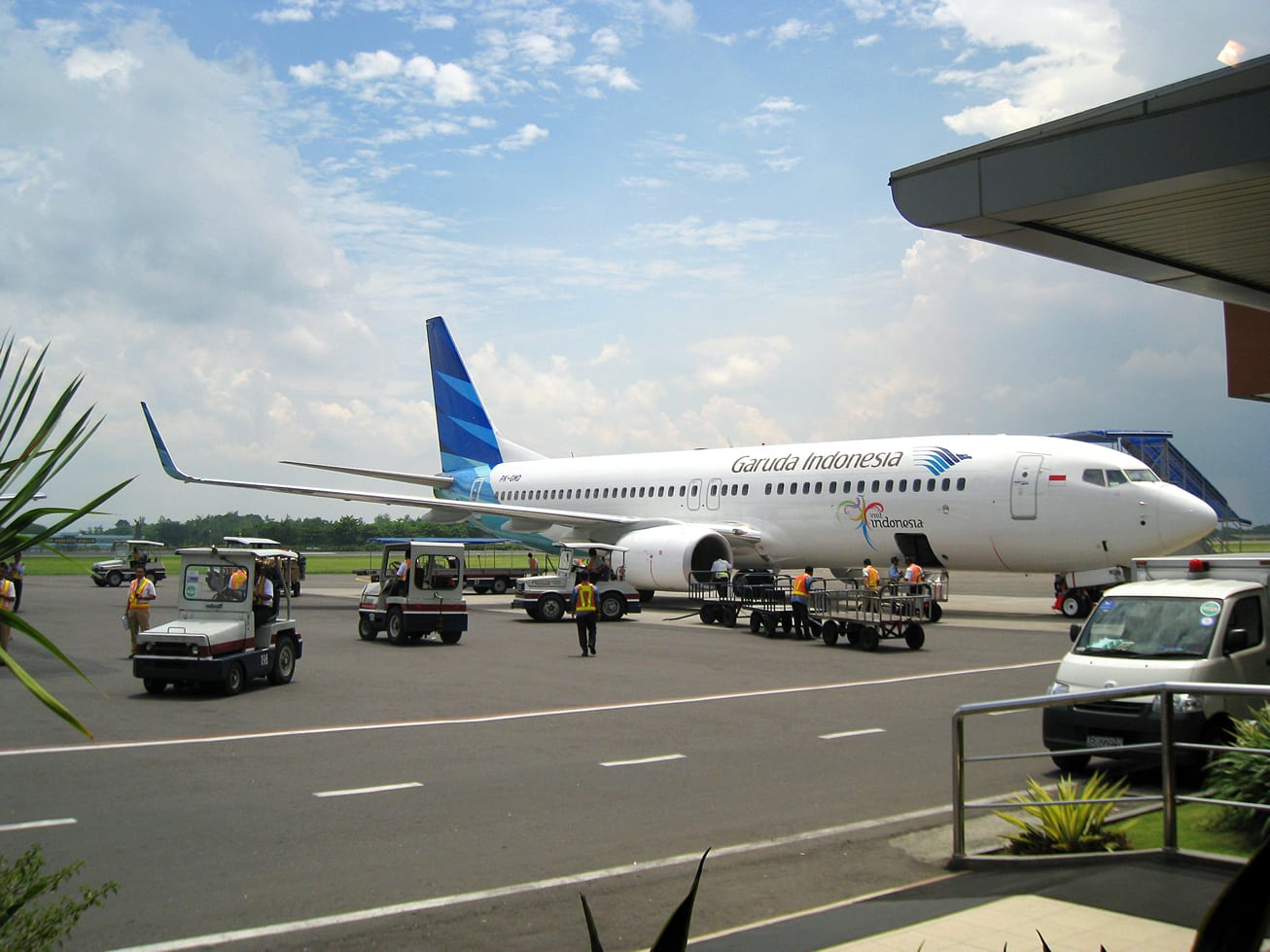
  • Garuda Indonesia trims London flights, boosts Amsterdam

    Garuda Indonesia trims London flights, boosts Amsterdam

    From July 22, Garuda’s London services drop from five-times-weekly via Amsterdam to three-times-weekly, and retain the Dutch detour in each direction.

    That’s also when the airline launches its newest route, Jakarta-Singapore-Amsterdam.

    Running three days per week, this offers travellers a total of six weekly Amsterdam-bound flights – up from five at present – with the return leg from the Netherlands skipping the Singapore stopover to fly non-stop to Jakarta.

    Flight schedule: Jakarta to London, Amsterdam

    On Tuesdays, Fridays and Sundays, Garuda’s Jakarta-Amsterdam-London flights (GA88) depart the Indonesian capital at 11:10pm to reach Amsterdam at 8:30am the following morning. After a two-hour transit, the onward flight pushes back at 10:30am and touches down in London at 10:35am local time.

    Returning via Amsterdam on Mondays, Wednesdays and Saturdays, GA89 is wheels-up from London at 12:25pm – arriving in Amsterdam at 2:45pm, continuing the journey at 4:45pm before landing in Jakarta at 11:50am the next morning.

    Wednesdays, Thursdays and Saturdays see the Jakarta-Singapore-Amsterdam services also flying the GA88 banner, leaving Jakarta at 8:50pm, reaching Singapore at 11:50pm, continuing the journey at 1:30am and then touching down in Amsterdam at 8:30am local time one day after initially departing.

    In reverse, the non-stop Amsterdam-Jakarta services take flight at 4:45pm on Thursdays, Fridays and Sundays as GA89, with passengers disembarking at 11:50am the following calendar day.

    What it means for Aussie transit passengers

    Garuda flies non-stop from Sydney, Melbourne and Perth to Jakarta, with passengers able to fly onwards from there to Amsterdam and London.

    Here’s what the new flight routings and timings mean for Aussie travellers taking the Kangaroo Route or zipping to Amsterdam for business or pleasure.

    Sydney, GA713/712: Flights to Jakarta on Wednesdays come with a five hour transit time, Friday flights offer transits of just 1hr 55m, Saturdays have a 7hr 20m transit while Sunday flights don’t provide same-day connections.

    Returning home, travellers will spend 11hr 50m on the ground at Jakarta’s Soekarno–Hatta International Airport on all days that the airline flies onwards to Sydney.

    Melbourne, GA717/716: Saturday flights provide an ideal connection with a gap of just 2hr 15m between flights, while on Tuesdays and Sundays that stretches to seven hours and on Thursdays you’ll arrive five minutes after the Europe-bound flight has already departed.

    After making the long journey from London or Amsterdam back to Jakarta, you’ll spend 10hr 40m in waiting before flying home to Melbourne on Mondays, Fridays and Saturdays – there’s no connection to Melbourne’s overnight flights on Wednesday evenings.

    Perth, GA725/724: Fly to Jakarta on Tuesdays and Sundays and you’ll have a brisk transit time of only 1hr 55m, although Thursdays and Saturday services don’t pair with an onward journey.

    It’s also bad news on the return with a staggering 22hr 15m wait in Jakarta when the airline has a Jakarta-Perth flight on the following day, so consider a short domestic hop across to Denpasar (Bali) and then journey home from there with Garuda that same afternoon.

  • US$2.7bil SMB cloud services industry in Indonesia by 2018

    US$2.7bil SMB cloud services industry in Indonesia by 2018

    The small and medium business (SMB) cloud services market in Indonesia is expected to grow at a compound annual growth rate (CAGR) of 30% in the next three years from Rp15 trillion (US$1.2 billion) in 2015 to Rp33 trillion (US$2.7 billion) by 2018.

    This growth will primarily be driven by SMBs moving business functions into the cloud as more tools and solutions are developed specifically for the SMB market, cloud computing specialist Odin said in a statement, citing its annual SMB Cloud Insights research report.

    The 2015 SMB Cloud Insights research for Indonesia reveals that infrastructure-as-a-service (IaaS) is the largest market opportunity for cloud services in 2015, accounting for 40% of the market at Rp 6.1 billion (US$$496 million).

    This segment – which includes virtual private servers, dedicated servers, and elastic computing – is projected to grow at a 24% CAGR and reach Rp11.7 billion (US$956 million) by 2018, driven largely by firms without any type of server moving into the cloud market for the first time, Odin said in a statement.

    The research also shows that business applications, or Software-as-a-Service (SaaS), will soon become the fastest growing cloud category in Indonesia, growing at a CAGR of 43%.

    Business applications such as file sharing and online backup are currently the most commonly used applications in Indonesia, and adoption is expected to increase, Odin said.

    Less commonly used business applications such as payroll and HR (human resource) applications, as well as customer relationship management (CRM) apps, are expected to see rapid growth in adoption over the next three years, it added.

    “As evidenced by this study, the Indonesian cloud market remains poised for rapid growth over the next few years – especially in the IaaS segment – underscoring a greater awareness and appreciation for cloud computing even in its early stages today,” said Pavel Ershov, Odin vice president and general manager, Asia Pacific and Japan.

    “Increasingly, more SMBs in Indonesia are using the cloud for their core business functions in order to compete with larger corporations.

    “This is a scenario we expect to see play out across today’s dynamic Asia Pacific business environment,” he added.

    Odin was formerly the service provider business of cloud and virtualisation specialist Parallels Inc, spun off in March this year. With offices in 15 countries, it supports more than 10,000 service providers in delivering applications and cloud services to more than 10 million SMBs, it claimed.

    Other highlights of the SMB Cloud Insights report for Indonesia include:

    • The market represents more than four million SMBs using cloud services. Security and control panels are two key areas for cloud services.
    • Unified communications – which includes hosted business voice services, email, and collaboration applications – is the second-largest category of the Indonesian cloud market (Rp4 trillion or US$324 million) and is poised for expansion.
      • Nearly 80% of Indonesian SMBs do not use email services. Of those which do, only 1% use in-house servers for email, another 7% use a service provider, and the remaining 12% use free email services.
      • Premium email security is a large concern – of the 20% of SMBs using email, an overwhelming 89% said that the increased need for email security was a purchase trigger for obtaining premium hosted email.
    • The Indonesian web presence market is valued at Rp1.6 trillion (US$128 million). Today, only 11% of Indonesia’s SMBs have websites. The market is set to double in the next three years to Rp4 billion (US$322 million).
      • Interestingly, 55% of Indonesian SMBs with websites have mobile-optimised sites. This compares to just 30% of SMBs in the United States and 25% of SMBs in Germany.
      • ‘Optimising mobile sites’ was ranked by respondents as the top feature, more than double the second priority of ‘displays on mobile without optimisation’ (22%), and ‘only displays properly on a computer’ (23%).
    • Almost three-quarters of all Indonesian SMBs purchase their services from just one or two service providers. One of the key reasons for this behaviour is that SMBs want to maximise the efficiency of their spending. This demonstrates the need for service providers to offer high-value, best-in-breed bundles and transparent pricing structures, Odin said.

    Odin said its SMB Cloud Insights report focuses on the cloud services that have the most current and future appeal for SMBs across four key categories: IaaS, web presence and web applications, unified communications, and business applications or SaaS.

    Research reports are available for 15 countries including Australia, Brazil, China, France, Germany, India, Japan, Mexico, the Netherlands, Poland, Russia, Spain, the United Kingdom, and the United States. Regional reports are also available for Europe and Asia Pacific.

    All SMB Cloud Insights reports are available for download here.

  • iPay to expand in India and Indonesia

    iPay to expand in India and Indonesia

    V Arundhati, 52, helps her son Srinivas in running a small kirana store in Himayatnagar in Hyderabad. Apart from selling soaps and sugar, she has begun placing orders on an e-commerce platform for her customers, who have never bought any product online. The duo has increased average daily revenue from ₹1,500 to ₹5,000.

    They are among the 600-odd street-corner outlets that have become part of the e-commerce platform for the uninitiated, giving ‘offers’ on products that range from home appliances to electronic gadgets.

    Daily sales

    On an average, they deliver goods worth ₹10-13 lakhs a day.

    This model, developed by tech start-up iPay, is going to make a foray into Indonesia where it has tied up with a major telecom player to replicate the idea there. Set up by serial entrepreneur Krishna Lakamsani, iPay’s platform ‘dukanline’ works on the premise that there is a huge potential in the retail industry in India that is not yet tapped by the e-commerce players.

    “They (the e-com players) reach only a small portion of those who have access to the Internet. There are about 1.3 crore mom-and-pop stores across the country who have built a loyal customer base over a period of time. These customers too are becoming aspirational and are willing to buy things that their urban peers buy,” Krishna Laksamsani, Chief Executive Officer of iPay Tech, told BusinessLine.

    Set up two years ago, the firm has just completed one year of operations, after doing market research and studying the pulse of the market in the 12 months preceding it. The stores buy kiosks priced at ₹8,888 that comprises a tablet, which gives an access to its e-commerce platform. It throws up a list of offers available for that particular day on the homepage. Besides, it gives a full list of products that can be bought online.

    Store payment

    “Customers pay cash at the store after surfing. They will get an SMS after the product is delivered to the store,” Krishna said.

    Krishna built and sold two firms in the United States before moving to Hyderabad to set up iPay. It is now planning to expand to Karnataka and Tamil Nadu. He has invested $2 million so far, including $1.2 million on technology. In the first year, it registered a gross merchandise value of $10 million through a network of ₹3,900.

    “We have tied up with an Indonesian telecom player. It wants to use our technology platform to provide the e-commerce channel to its customers,” he said.

    The firm is planning to raise $15 million in the next few months to fund its expansion in India.


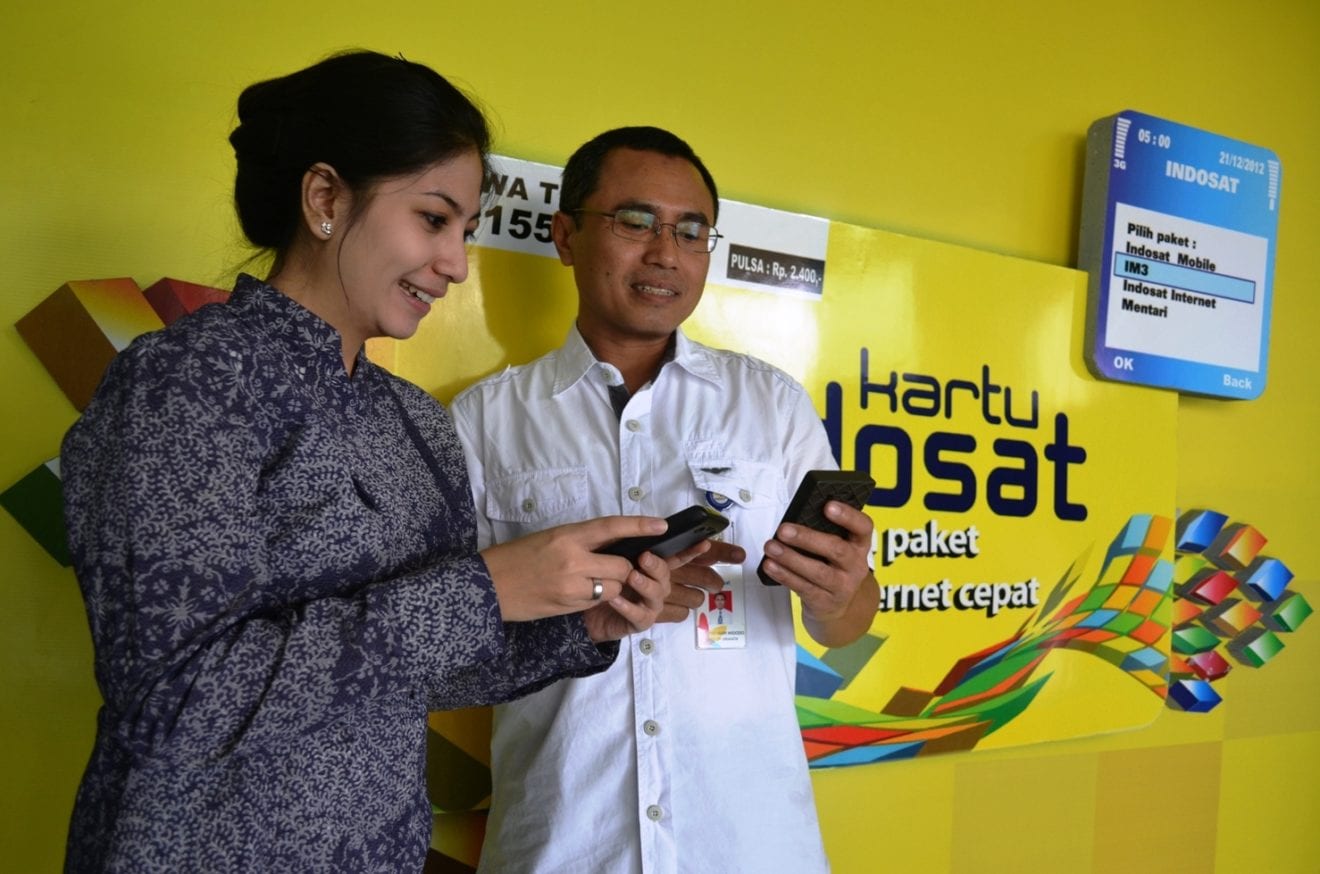
  • Indosat, Facebook launch Internet.org in Indonesia

    Indosat, Facebook launch Internet.org in Indonesia

    Ooredoo Group’s Indonesian subsidiary Indosat and Facebook have jointly launched the Internet.org initiative in Indonesia. Facebook’s Internet.org seeks to make internet services more accessible through free internet access to a set of basic services, including health, education, social media for communication and news.

    In Indonesia, Indosat will provide internet access at no charge through the Internet.org services both for IM3 & Mentari (prepay customers) and Matrix (postpaid subscribers). Customers will be able to access general information on Ask.com and Wikipedia; get news updates on Merdeka.com & KapanLagi; stay up to date on sports through Bola.net; get education info on Kelase; as well as check the weather and climate through Accuweather; read stories via Wattpad; check employment opportunities on Jobstreet; sell items on OLX & Tokopedia; learn about women’s issues on BabyCenter, Mama, Girl Effect websites; and access health information on UNICEF’s Facts for Life.

    Indosat customers in Indonesia can access these services via www.internet.org or by downloading Internet.org app from the Android playstore. The service will be available in English and Bahasa Indonesia.

  • Indonesian telco giant XL Axiata appoints Mindshare for $18m media duties

    Indonesian telco giant XL Axiata appoints Mindshare for $18m media duties

    Indonesia’s second largest mobile telecommunications firm, XL Axiata, has concluded a multi-agency pitch that sees its media account change hands.

    Mindshare takes on the planning and buying business from Havas Media after three rounds of pitching against the country’s top agencies. Starcom MediaVest Group, Maxus, Zenith Optimedia and the incumbent were among those involved in the pitch, Mumbrella understands.

    The account is estimated to be worth around US$15-18 million, according to agency sources.

    A creative review of the business earlier in the year, which covered both of XL Axiata’s brands – XL and Axis – saw Lowe emerge the winner of a pitch involving Dentsu, Coleman, Saatchi & Saatchi and Bates Chi & Partners. Y&R was the incumbent.

    Digital marketing duties were awarded to STW Group-owned Xion, taking on the business from Mirum Jakarta, in March.

    The companies agencies will be working on briefs to differentiate XL and Axis, and reposition XL as a leading player in data.