Tag: Indonesia

  • Australia Eyes Indonesian Mining and Tourism

    Australia Eyes Indonesian Mining and Tourism

    Head Of the Indonesian Investment Coordinating Board (BKPM), Thomas Trikasih Lembong, predicted that Australia’s investment in Indonesia could increase up to USD 3 billion (around Rp 40 trillion) throughout the next three to five years. Most of Australia’s investment is predicted to be centered on the mining and tourism sector.

    “That’s the sum total of the projects we are trying to develop. Two-thirds will be in the mining industry and one-third in the tourism sector, lifestyle, and others,” Thomas said on Tuesday, March 7, 2017.

    Thomas explained that Australia’s has an exceptional mining industry. A number of the largest mining companies in the world is owned by Australia, such as EMR Capital, who purchased a gold and silver mine in North Sumatera, and Newcrest, who is currently operating the gold mine in North Maluku.

    In addition, Thomas said that the Indonesian government is really interested in cooperating with Australia in the tourism sector.

    “Many tourists from Japan, China, and Indonesia travel to Australia. They have great taste, management, and good designs. We need that in order to develop Indonesian tourism sector,” Thomas said.

    Currently, according to Thomas, Indonesian and Australian officials are committed to developing both countries’ tourism sector, especially coastal and maritime tourism. Thomas stated that Indonesia owns a varied number of islands and diving tourist destinations.

    “But we don’t have a maritime tourism industry, while Australia has a good reputation in yacht spots,” Thomas said.

    Australian Minister for Trade, Tourism, and Investment Steven Ciobo, stated that Indonesia could develop many tourist destinations in addition to Bali. Ciobo asserted that by having investments reeling in and the development of various infrastructures across regions, the number of tourists entering Indonesia can significantly increase.
  • Garuda Indonesia Increases Flight Frequency of Routes to Australia

    Garuda Indonesia Increases Flight Frequency of Routes to Australia

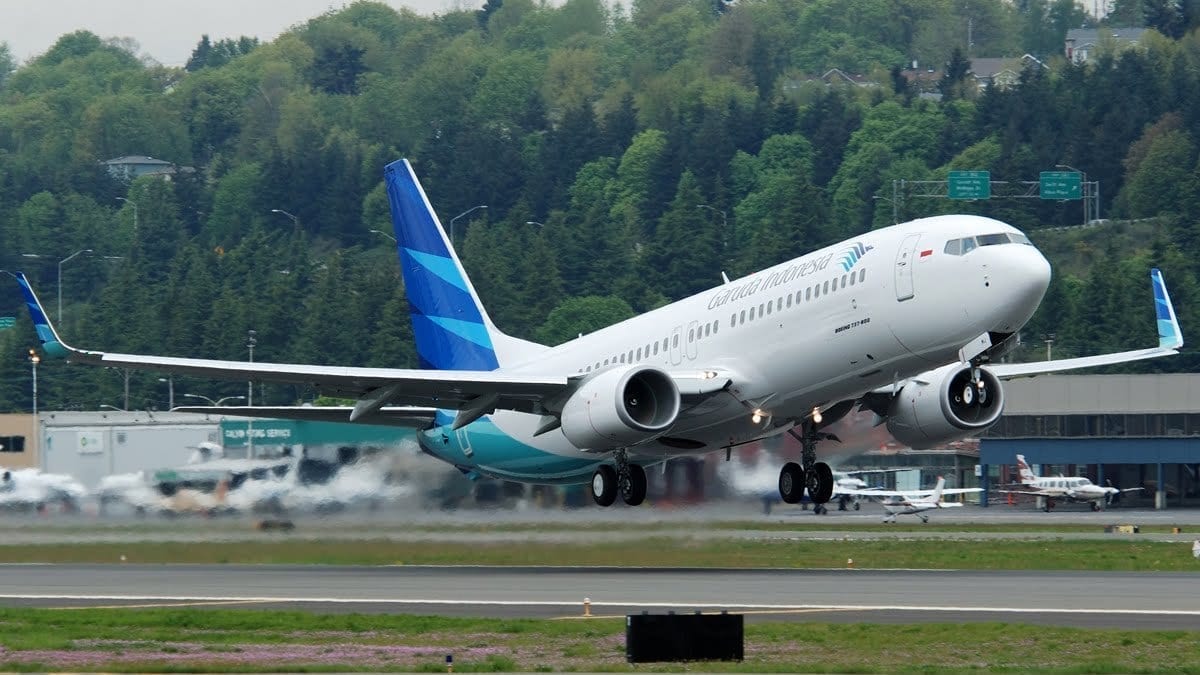
    National airliner Garuda Indonesia (GIAA.JK) will increase its flight frequency to destinations in Australia during the holiday period from May to October, 2017.

    The company targets its passenger growth from flights to Australia to reach 650,000 passengers this year.

    “Flight frequency from Jakarta to Australia is increased to five times from four times each week, while the frequency for Bali-Australia route is raised to seven times from six times per week,” said M Arif Wibowo, President Director of Garuda Indonesia on Tuesday (3/7).

    He said the addition of frequency on flights to Australia will be adjusted with market demand during the holiday period. Thus the flight frequency will be different each period.

    The addition of frequency is part of Garuda Indonesia’s effort in meeting demands and rising market growth, and is line with the synergy commitment the company has implemented with Tourism Australia. The cooperation has boosted the number of passengers on Australia flights to more than 644,237 passengers in 2016.

  • Rupiah May Extend Gain

    Rupiah May Extend Gain

    Reza Priyambada, a senior analyst of PT Binaartha Sekuritas, predicts that the rupiah will extend its gain. The rupiah is expected to move to around a support level of Rp13,385 and resistance level of Rp13,327.

    “Recent strengthening of the rupiah may open the opportunity for a rebound in the rupiah to extend its gain,” Reza said in a written statement on Tuesday, March 7, 2017.

    Rupiah moved in the positive zone yesterday. It strengthened by 33 points or 2.5 percent to Rp13,350 per US dollar. Raza said that stronger rupiah was due to weaker US dollar as Asian currencies got stronger.

    Rupiah has also strengthened as the Indian Ocean Rim Association (IORA) Summit takes place. The summit is expected to stimulate increase in foreign investment in Indonesia which may trigger economic growth and bolster foreign exchange reserves.

    Rupiah remained strong despite negative sentiment over China who has cut its growth target for 2017, from 6.5-7.0 percent to 6.5 percent.

  • President Jokowi calls for better transportation between Sumatra and Java

    President Jokowi calls for better transportation between Sumatra and Java

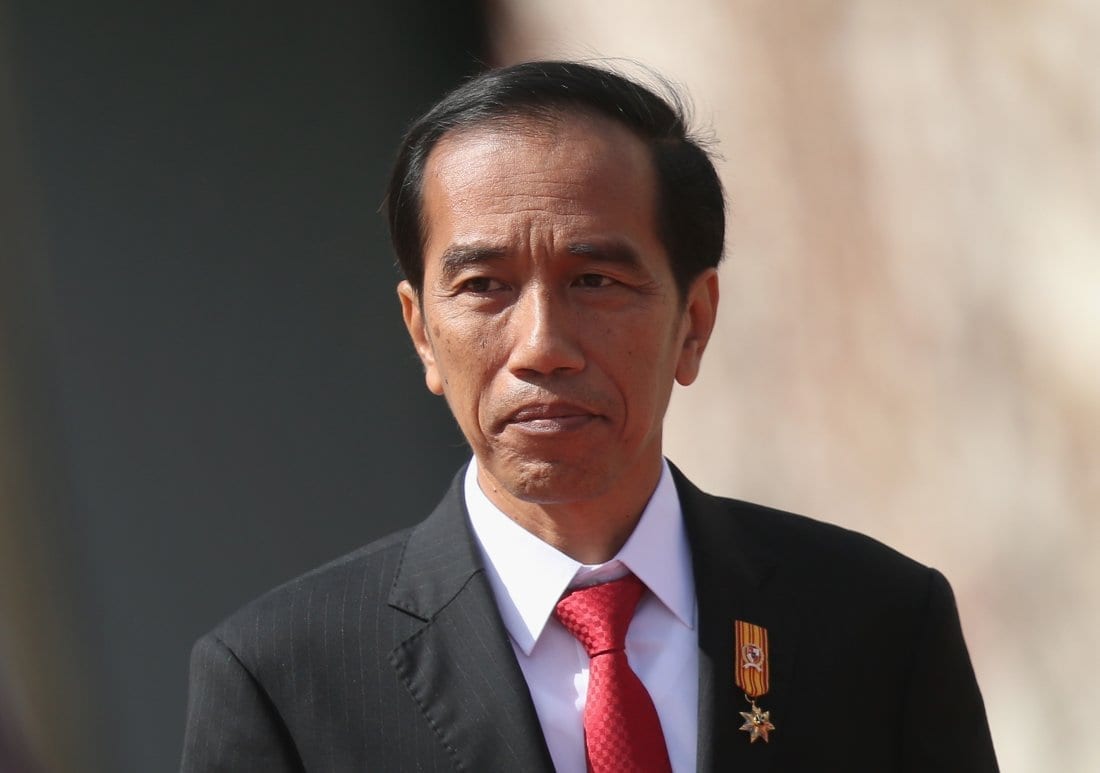
    President Joko Widodo (Jokowi), during a closed-door meeting on Monday, emphasized the need for improving transportation services between the islands of Sumatra and Java by operating better ferries.

    “We are concerned about the operation of the toll road from Lampung Province to Palembang, which leads to vehicle queues in Merak-Bakauheni crossing lane,” the Lampung Governor M Ridho Ficardo stated here on Monday.

    Jokowi and Vice President M. Jusuf Kalla (Jokowi), along with Ricardo and other officials, held a meeting in the Presidents Office to discuss the National Strategic Project and Prioritized Program.

    Ficardo stressed that the transportation authority should deploy several ferries of better quality to improve cargo transportation between Merak and Bakauheni ports that connect Sumatra and Java islands.

    According to Ficardo, the authority should operate ferry trips every hour to transport cargo and passengers.

    He reiterated that the authority can increase the ticket price to provide better services and deploy faster ferries.

    “The improved toll road should be offset by better crossing access. It is fine to increase the price to provide better services,” Ficardo pointed out.

    The meeting also discussed the development of industrial areas in Tanggamus District that builds maritime industry, Mesuji District, and Waypisan District.

    The governor added that the industrial area in Mesuji District could be developed, because the region has a mine of low calorie coals that can supply fuel for power plants.

    The Trans Sumatera toll road has entered the second phase of construction with the development of toll road of 250 kilometers. The government is targeting its completion in 2018.

  • Bank Indonesia Prepares for Fed Rate Hike

    Bank Indonesia Prepares for Fed Rate Hike

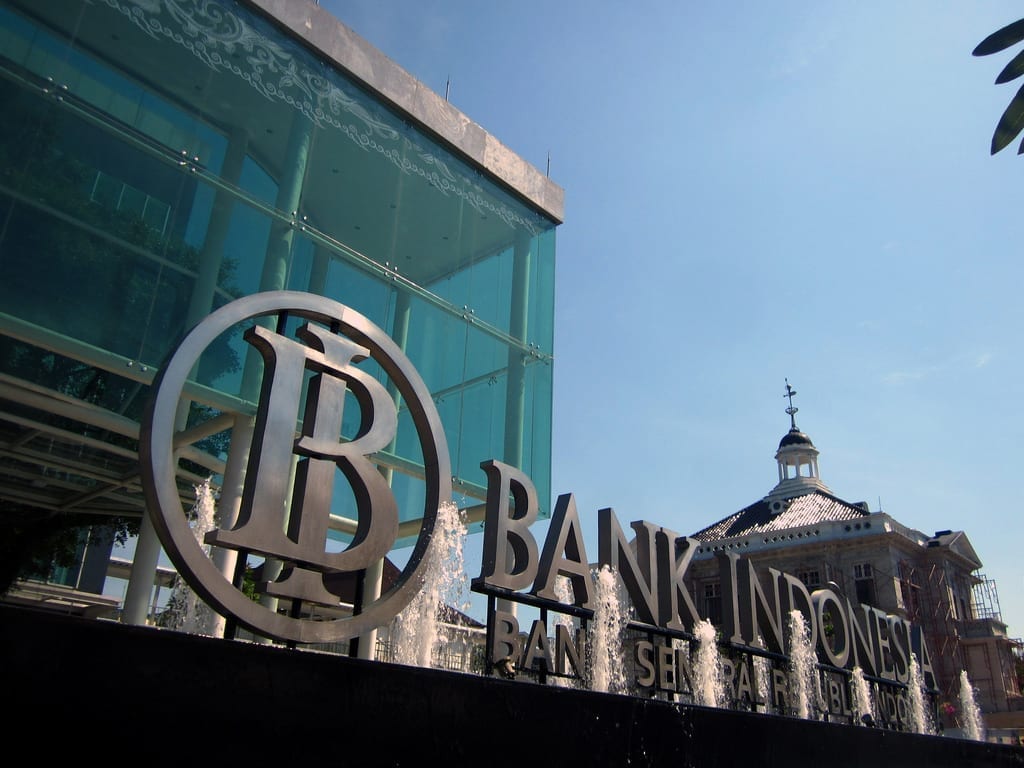
    Bank Indonesia Governor Agus Martowardojo said the central bank is preparing for the impact of Fed Fund Rate (FFR) hike in March. Agus said there were clear signs of a US’ interest rates increase during The Federal Reserves’ monthly meeting in February.

    “The probability is 90 percent, that’s why all market participants are getting ready,” the former finance minister said yesterday.

    Agus said that although a Fed Rate hike will likely be followed by a rupiah correction, the impact will not negatively impact the domestic monetary situations.

    He claimed the country’s economic resilience is quite strong, referring to the sustained economic growth in the range of 5.0 percent. Similarly, inflation has been within a safe range of three to five percent in the last two years.

    Other defensive factors are Indonesia’s healthy balance of payments that goes well in hand with a controlled current account deficit. As of February 2017, the country’s balance of payment was at a surplus of US$4.5 billion. The foreign exchange reserve was around US$116.9 billion.

    Bank Mandiri chief economist Anton Gunawan predicts the Fed Fund Rate will rise three times this year. However, he said there is a tendency that investors will prefer Asian markets rather than return to America’s.

    Anton said the rupiah could still see a fairly stable exchange rate to trade between Rp13,200 and Rp13,400 per US dollar.

    “The hedging liability also serves to reduce pressure on the rupiah,” he said.

  • Indonesia Offers Cooperation With IORA Member States

    Indonesia Offers Cooperation With IORA Member States

    The Indonesian government decided to use the Indian Ocean Rim Association (IORA) Summit as an opportunity to broaden its partnership in the industrial sector by offering several sectors for investment to IORA member states.

    Some of the sectors being offered include the shipping industry and its equipment, seafood processing, automotive components, petro chemical and coal gasification, and downstream agriculture products.

    “The abovemetioned sectors are included in export-oriented labour-intensive industries and import substitution,” said Industrial Minister Airlangga Hartanto on Monday, March 6, 2017.

    The partnership will allow Indonesia to access IORA members states market, which mostly consists of non-traditional markets. “The partnership can be done through a bilateral supply chain cooperation,” Airlangga said.

    Airlangga added that other efforts that need to be done are initiating business matching with IORA member states, and optimizing the role of Indonesian Embassies in promoting the domestic industrial ability and its market potential.

    “Improving partnership as in industrial capacity development training, has been conducted in cooperation with Mozambique and Seychelles at the small and middle-sized industry,” Airlangga said.

    Airlangga asserted IORA member states present highly prospective economic potential, including its large market of 2.7 billion population, and the fact that around 70 percent of the world’s trade passes through the region.

    The IORA also stores 55 percent of the global oil reserve and 40 percent of the global gas reserve. IORA member states also produce on-third of the world’s total tuna production.

  • Fluff Bakery taking cupcakes international

    Fluff Bakery taking cupcakes international

    Four years after opening cupcake shop Fluff Bakery, a Singapore couple plans to launch franchises in Indonesia and Malaysia.

    Ashraf Alami and Nursyazanna Syaira Mohammad Suhimi left their jobs to set up in a shophouse four years ago, and from 600 cupcakes a day they now sell double that.

    Their venture has been highlighted in Parliament by Minister for Trade and Industry S Iswaran when talking about bright spots in Asean countries and the potential for small businesses in the region.

    “A rising middle class has created demand in sectors such as retail and food and beverage,” he said. “The digital economy also presents unprecedented opportunities for companies – no matter how small – to reach out.”

    Fluff Bakery’s social-media presence has found fans as far away as Malaysia, where it has launched some pop-up stores. The first saw all 500 cupcakes snapped up in 30 minutes, and the second time around they sold 1000 cupcakes in about an hour.

    Ashraf says they hope to open a store in Kuala Lumpur in May.

    Meanwhile, it its latest budget Singapore’s government has pegged S$600 million (US$424.5 million) to establish an international partnership fund to help Singapore firms scale up and internationalise.

    “As an SME, expanding overseas is very daunting, because you don’t have many resources,” says Ashraf. “Any assistance or guidance – financial, networking – is more than welcome.”

  • Royal Bank of Scotland Ends Business Activities in Indonesia

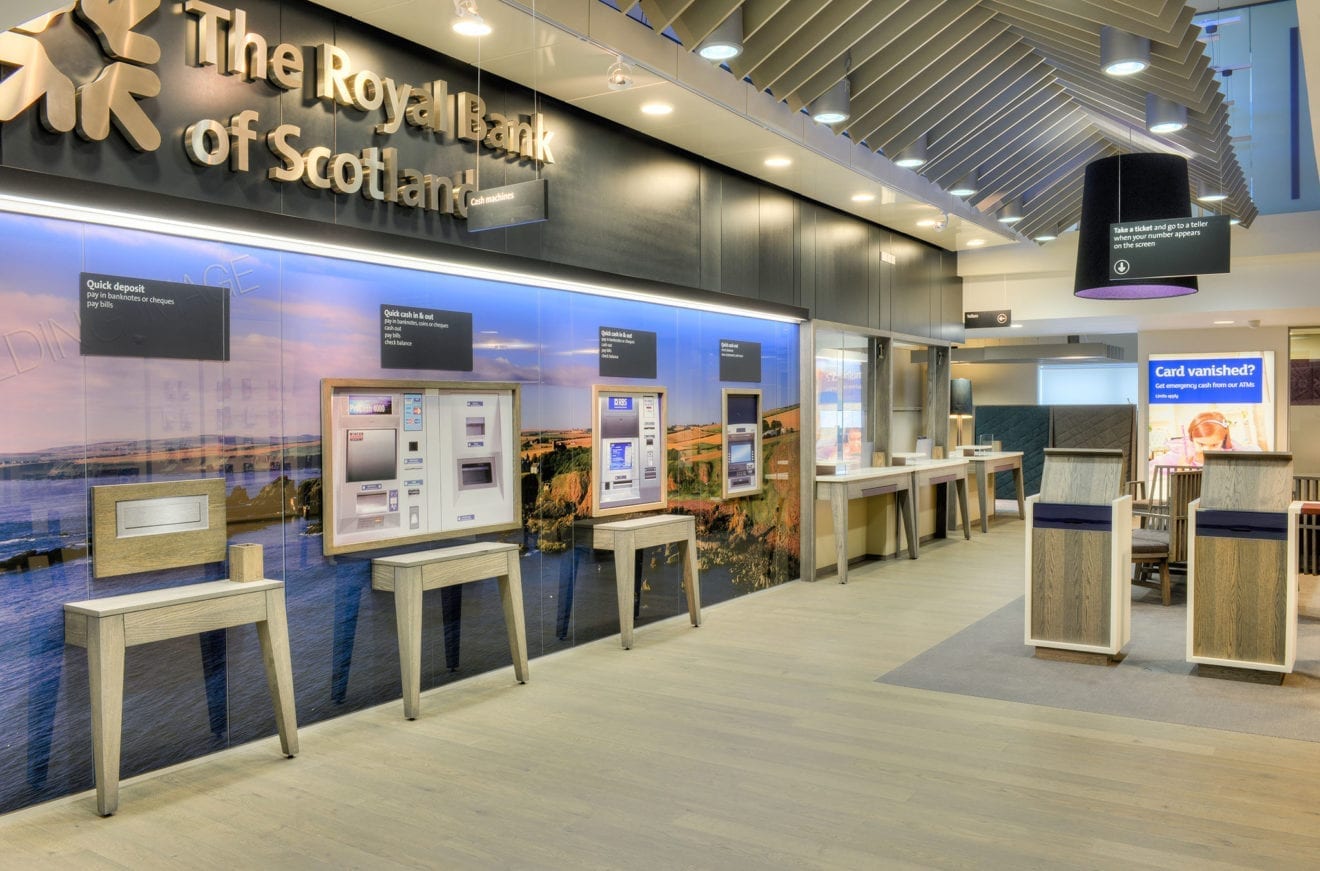
    Royal Bank of Scotland Ends Business Activities in Indonesia

    Although the bank started under the name ABN AMRO BANK NV Indonesia, the majority of its shares was acquired by the Royal Bank of Scotland Plc in 2010. After this acquisition the bank’s name changed to RBS NV.

    Earlier, in December 2015, the bank’s branch in Surabaya (East Java) had already been closed. The ending of all of RBS NV’s business activities in Indonesia is part of the bank’s overall business strategy. Besides Indonesia, it decided to end its business networks in 24 other countries. Due to the RBS Group’s losses across the world, it decided to focus on the domestic market of the United Kingdom (UK) in order to improve its earnings. RBS NV’s corporate activities in Indonesia were profitable until the end of 2014. After that year its activities in Indonesia resulted in net losses and therefore it decided to end its businesses here gradually.

    Through OJK Board of Commissioners Decree No. 7/KDK.03/2017 on the Revocation of the Permit of The Royal Bank of Scotland NV’s Branch in Indonesia, dated 28 February 2017, the license of the bank has been revoked. According to the OJK, RBS NV Indonesia has completed all its obligations and therefore its request for the license revocation was approved. However, those who still (claim to) have rights and obligations with the local branch of Royal Bank of Scotland in Indonesia can contact the disclosure team, located at the Indonesia Stock Exchange (IDX) building (Tower 2, second floor) in South Jakarta until 31 March 2017.

  • Indonesia Dominates Global Retail Coffee Market

    Indonesia Dominates Global Retail Coffee Market

    Indonesia increases its dominance over the global retail coffee market with an average sales growth of 19.6 percent each year throughout the last five years, followed by India (15.1 percent average growth) and Vietnam (14.9 percent average growth in second and third position, respectively.

    The data gathered by Mintel also revealed that the growth of the global retail coffee market in 2016 had reached 2.7 percent from the previous 2.5 percent in 2015. Meanwhile, Asia continues to dominate the fastest growth in the global coffee market.

    According to the data, the slowest growth in the global coffee market throughout 2011-2016 is recorded by Finland with a -3.7 percent average growth, followed by Australia with a 0 percent growth, Poland with a 0.1 percent growth, Dutch with a 0.5 percent growth, and Belgium with a 0.5 percent growth.

    Mintel’s Global Drinks Analyst Jonny Forsyth, stated that Asia’s coffee market is increasingly growing following the high level of innovations in various processed coffee products in the region. Throughout the same period, the number of newly introduced coffee products in Asia grows by 95 percent.

    In comparison, the number of new tea products introduced in Asia in the same period only grew by 55 percent. Jonny asserted that the numbers showed that the majority of Asian citizens have shifted from the tradition of consuming tea to coffee.

    “In 2016, there was a drastic increase in the number of new coffee products that rivals the previously booming tea product in Asia. It is true tea drinking tradition has been the main obstacle for Asia’s coffee products. But, currently there are many tea-coffee hybrid products that have been introduced in order to solve the problem,” Jonny explained.

  • Crocs store is closing door

    Crocs store is closing door

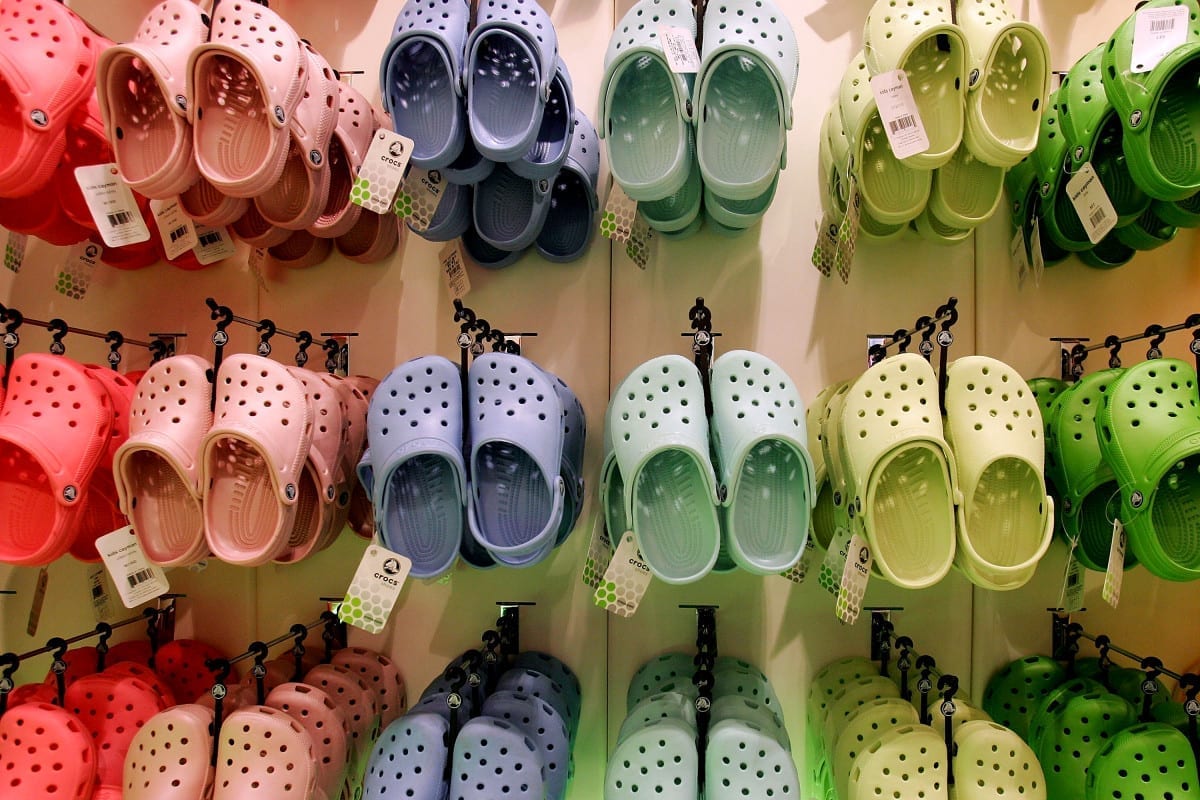
    One in four Crocs stores will be closed globally as the maker of the world’s ugliest shoes plots a survival plan.

    The store cull was announced along with another quarterly loss: the shoemaker finished its last three months US$44.4 million in the red, albeit a better performance than the same period a year earlier when it lost $73.9 million.

    Global sales were down 10.2 per cent to $187.4 million but in Asia the company says its retail sales declined by a whopping 16.6 per cent.

    Total Asian revenue was $68.8 million, down 9.8 per cent year-on-year, with wholesale revenues down 5.3 per cent (explained as a result of the sale of the South African business in April 2016). Retail sales in Asia declined 16.6 percent, despite the opening of nine stores since 2015. Online sales declined 7 per cent in Asia, which Crocs says was the result of weak sales in China on Singles’ Day.

    In Europe, revenue was down 14.2 per cent.

    As it restructures to ensure its survival, Crocs CEO Gregg Ribatt will step down on June 1, to be replaced by Andrew Rees who has for the past two years been president. The two roles will now be combined and Ribatt will remain on the company’s board.

    Rees told an analysts’ briefing that customers are responding favorably to new colors and prints added to the core Crocs molded product line.

    “We’ve also confirmed the importance of any newness to our iconic molded footwear through new color and graphic introductions, and through the expanded use of licensed characters,” he said.

    “Our spring/summer 2017 collection rolled out to warm-weather doors in November and early reads are encouraging. Going forward, our innovation and newness will be most heavily concentrated on core clogs and sandal, slips and slides where we see the greatest opportunity for growth.”

    Crocs is also banking on the endorsement of the product by celebrities Drew Barrymore, John Cena, Yoona Lim and Henry Lau who will feature in the brand’s latest Come As You Are marketing campaign launching in April.

    Full year figures

    Crocs’ full-year picture was nowhere near as bad as the last quarter’s. Total sales were $1.04 billion, down only a little from the $1.09 billion of a year earlier. On a constant currency basis, revenues declined 4.7 per cent.

    The company recorded a full-year net loss of $16.5 million, far better than the $83.2 million of 2015. Excluding non-recurring charges, the adjusted loss was $26.9 million.

    Rabat says Crocs has been reshaped into a company that :”functions more efficiently and effectively” and is in “a far better place now than two years ago”.

    “And while the operational work is critical, it is not yet, and I emphasise yet, translating into the financial gains we continue to believe are achievable.”

    Since 2014, Crocs has halved its SKU count, boosted the appeal of core sellers and added new collections.

    Once the store cull is complete in 2018, Crocs will operate about 400 outlets, adding $35 million to its bottom line in 2019. At the end of 2016 it had 558 stores.

    Carrie Teffner, Crocs EVP and CFO, says that given volatile market conditions, the company is not setting mid-term revenue and margin targets.

    “That said, we continue to believe that… longer term, the business can deliver EBIT margins in the 10 per cent range.”

  • Lotte plans second Hanoi mall

    Lotte plans second Hanoi mall

    South Korean conglomerate Lotte is to build a second Hanoi mall.

    It will be in a 200,000 sqm complex near West Lake in the Vietnamese capital, The Korea Heraldreports.

    Included in the mall will be a department store, supermarket and a cinema, all to be directly run by Lotte affiliates.

    Construction is set to start within the next couple of months for completion in 2020.

    It has been reported that the project, previously known as Ciputra Ha Noi Mall and owned by the Citra West Lake City Development Company, was acquired by Lotte this year.

    Started in 2007 with an estimated investment of US$2 billion, the project has been stalled for various reasons.

    The total investment capital of the new Lotte project is expected to reach nearly $300 million.

    The Lotte Group invested $400 million in the 65-storey Lotte Center Ha Noi mall, currently the second-tallest building in the city.

    The Korean giant plans to expand its retail network in Vietnam through mergers and acquisitions, and plans 60 shopping malls in the country by 2020 – a five-fold increase, reports Nikkei.

    Lotte has 285 shopping centres in Asian countries including China, Indonesia and South Korea, and views Vietnam as one of the fastest-growing retail markets in the region. In October, Lotte Mart launched its e-commerce channel in Vietnam following the introduction of Lotte Shopping TV in 2012.

    As well as providing South Korean products to Vietnamese consumers, Lotte plans to export Vietnamese products like coffee, dried fruit, wooden artifacts and ceramics back to its home market.

  • Indonesia’s startups continue to attract investors

    Indonesia’s startups continue to attract investors

    After dominating the investment market for the past few years, startups continue to attract investors this year.

    Investors see a startup as a company which fulfills three categories required in businesses, said Morgan Stanley president director Oki Ramadhana.

    “There are three things, which are usually used as benchmarks in potential businesses that will give profit to investors. Those are scalable, profitable and tractable records,” he added.

    Tokopedia and Gojek are two examples of successful startup businesses in Indonesia, said Northstar co-founder and managing partner Patrick Walujo during a seminar at the University of Indonesia (UI) over the weekend.

    “Tokopedia only started with the capital worth 200 million rupiah (US$15,000) from its founder and former boss. But now, the company has gained US$1 billion,” he said.

    However, Patrick stressed that it is not only a matter of big money for startup companies but also sustainability.

    “It’s not only about being rich, but how to make the company grow over time. Therefore, startup owners need to find an investor partner that will help them to step up to the next level,” he added.

  • Honda hits one-million unit production milestone in Indonesia

    Honda hits one-million unit production milestone in Indonesia

    PT Honda Prospect Motor (HPM) has crossed the one million-unit automobile production milestone in Indonesia, 14 years after it began manufacturing operations in the country.

    HPM began local automobile production in February 2003 with the Honda Stream at its factory located in Karawang, West Java, Indonesia. The Karawang Factory, built on an area of 512,500 square metres, has with a production capacity of 80,000 units. The second factory was inaugurated in January 2014 with a production capacity of 120,000 units, augmenting total production capacity to 200,000 units per year.

    Honda rides demand curve
    Over the years, the Japanese carmaker has seen demand grow for its products. In 2003, the company sold around 22,000 units. Since then, sales have risen considerably and Honda recorded 200,000 unit sales in 2016 with a 19% market share in the country. Currently, HPM produces seven models at its two factories, which include the Mobilio, BR-V, HR-V, Jazz, Brio RS, Brio Satya and CR-V.

    Indonesia is the best-performing global market for Honda. Sales reached an all-time record of 190,229 units, accounting for 44% of the carmaker’s overall 2016 ASEAN sales. The company attributes the sales increase of 14% over 2015 to its existing model line-up including the HR-V, Brio Satya and Mobilio, along with contribution from the newly-introduced BR-V.

    The Karawang Factory currently plays an important role in Honda’s global automobile component export worldwide. Its export destinations include neighbouring ASEAN countries such as Thailand, Malaysia, the Philippines, Vietnam, other Asian countries such as India and Pakistan, as well as Latin American countries, including Mexico, Brazil, and Argentina.

    HPM also delivers component parts to Japan. In 2016, Honda’s component export from Indonesia significantly grew and increased the number of containers exported from 5,600 in 2015 to more than 7,700 containers. In 2017, HPM plans to increase the export quantity to nearly 10,000 containers.

    Honda further strengthened its production operations with the opening of its stamping factory, which produces automobile component parts such as side panels, roof panels and floor panels. The factory began its operation in May 2016. The factory has implemented advanced production technology, including automatic continuous process and robotic system and has the production capacity of up to 2 million pieces component parts per year for both domestic sales and export.

    In September 2016, HPM made an additional 228 billion rupiah investment and started operation of its new factory for crankshafts. Honda employed advanced and environmentally friendly technology and adopted high-precision machines at this new factory to produce maximum of 240,000 crankshafts per year. This crankshaft factory meets regulations enforced by the Indonesian government for Low Cost Green Car (LCGC) models. Currently, HPM has achieved up to 87% local content in its products.

    Seiji Kuraishi, executive vice-president of Honda Motor Co, said, “It is a great achievement to arrive at this milestone in just 14 years and follows in Honda Motor Company’s 100 millionth unit of cumulative automobile production worldwide in September last year. Honda sales in Indonesia were ranked in fourth position for Honda globally, behind only US, China and Japan. Indonesia has always been and always will be an important market for Honda. We will continue to dedicate ourselves to doing business in Indonesia and the expansion of automobile production capacities with new factories is a testament to that commitment.”

    – See more at: https://www.autocarpro.in/news-international/honda-hits-million-unit-production-milestone-indonesia-23812#sthash.kzip7tzI.dpuf

  • Zalora CEO denies Indonesia exit rumour

    Zalora CEO denies Indonesia exit rumour

    Last week, there was a  speculation that Zalora was withdrawing from Indonesia following a share acquisition of Zalora Philippines by Ayala Group.

    “The rumour that we are selling off our business in Indonesia is certainly not the case. And we announced a deal that’s actually very exciting – an investment from Ayala Corp into Zalora Philippines – which is in no way a signal of a retreat from the country, but more of a commitment,” Gundersen told this portal.

    But why did the rumour surface in the first place? Had there been actual talks about possible investments from MAP Group?

    Gundersen declined to comment. Right now, he said, discussions with MAP are only related to how Zalora could continue adding more brands from MAP’s large portfolio. The two companies have been working together with MAP as a supplier.

    “We are not retreating from Indonesia nor the Philippines,” stressed Gundersen.

    In 2016, Zalora sold its businesses in Thailand and Vietnam to conglomerate Central Group. When news about stake sale in Zalora Philippines and rumour on Indonesia exit emerged, it led to a speculation that Zalora had continued its retreat from the region. Gundersen denies this narrative, saying that the Philippines share sale was very different to what it had done in Thailand and Vietnam.

    “Our investors looked at the operations in Thailand and Vietnam (like they always do, regularly), and decided that it did not have the best outlook. Whereas in the Philippines is very different because we remain the majority. It just made sense to us to have a local partner in the Philippines,” he explained.

    Will Zalora implement the same partnership strategy in Indonesia, as it has now with Ayala? It is always a possibility that the company would always explore, Gundersen said.

    Indonesia, in particular, is a massive market for e-commerce, with high social media and smartphones usage, coupled with growing income. Gundersen reiterated that Zalora is committed to bring more brands – local, international, and in-house – that are more relevant for its Indonesian customers.

    The company is also on the lookout for ways to improve its services, particularly in payments, a sector which Gundersen called “very interesting” to watch.

    “Definitely the space that we want to watch – anything that can help make it easier for our customers to make a purchase we want to be involved. It’s still early days but definitely we want to monitor close,” Gundersen said, when asked about a possibility to partner with local fintech companies.

    Indonesian e-commerce industry has grown in two-digits annually over the past five years, according to a number of reports. This year, e-commerce transactions in the country are expected to reach $45 billion from an estimated $30 billion in 2016. While the opportunities are abundant, the competition is fierce.

    A few months earlier, local firms Berrybenka and SaleStock were reported to have laid off hundreds of their employees. While smaller firms are gasping for breath, giants like MatahariMall.com and Lazada are steadily marching forward. Last year both companies received major funding from global investors, with MatahariMall snatching $100 million from Mitsui (and at least another $25 million from Matahari Department Store) and Lazada pocketing $1 billion from Alibaba.

    Experts have projected that competition will start to sharpen even further – especially if US giant Amazon decides to enter Indonesia – and will force smaller firms to consolidate.

  • France launches energy group in Indonesia

    France launches energy group in Indonesia

    France launched the French Renewable Energy Group (FREG) here on Tuesday, as a forum for French companies interested to be a part of the renewable energy sector (EBT) in Indonesia.

    During the launching ceremony, a memorandum of cooperation was also signed between Indonesia Renewable Energy Community (METI) and FREG.

    METI has become FREGs local partner to assist the French companies in identifying and developing renewable energy projects in Indonesia.

    In his speech, Energy and Mineral Resources Minister Ignatius Jonan said Indonesia was committed to have 23 percent of renewable energy in the national energy mix of electricity as soon as possible, or at least by 2025.

    Meanwhile, French Minister of Foreign Affairs and International Development Jean-Marc Ayrault stated that FREG was aimed at gathering French energy companies, which are in Indonesia at present and those interested to enter the country, to cooperate with the Indonesian partners.

    He explained that the mobilization of all stakeholders, both public and private, is needed for achieving 23 percent renewable energy in the energy mix of electricity.

    It requires a regulatory framework and proper finance, and companies should develop innovative solutions which are tailored to the realities in each country, Ayrault added.

    FREG will be an extension of the French Syndicate of Renewable Energy, which is the largest organization in France.

    FREG is expected to improve the relationship between Indonesia and French business companies in renewable energy sector and encourage the participation of French companies in renewable energy projects in Indonesia.