Tag: Indonesia

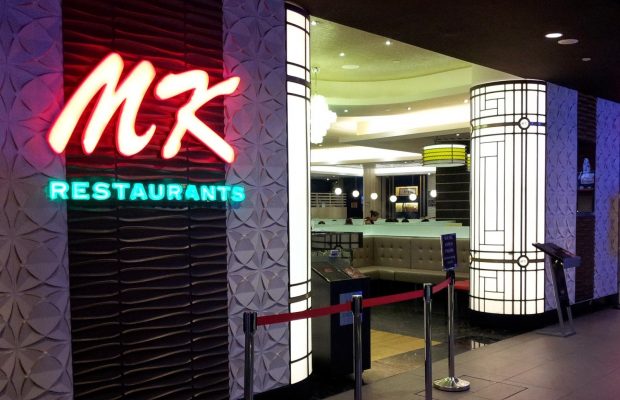
  • MK Restaurants plans US$11m expansion

    MK Restaurants plans US$11m expansion

    Thailand’s MK Restaurants Group plans to invest about Bt400 million (US$11.3 million) a year over the next five years to expand in Thailand as well as its overseas markets, including Singapore.

    Chairman/CEO Rit Thirakomen says the group will open 15 MK branches in Thailand this year, together with 25 Yayoi and five Miyazaki Japanese restaurants. Three or four franchised restaurants will be added to each overseas market.
    “We are also open for acquisition deals with select companies in food, services and retailing, so they will be able to use our infrastructure and logistics,” says Thirakomen.

    MK Restaurants Group’s sales rose 4 per cent to Bt15.49 billion last year, but its profit spurted 13 per cent to Bt2.1 billion. It projects growth at 5 to 9 per cent annually for five years.

    The group’s first MK Live flagship restaurant was officially unveiled at The Emquartier shopping mall in Bangkok yesterday, targeting health-conscious and “lifestyle” consumers. It has 135 seats.

    MK’s other brands are Hakata Ramen, Le Petit coffee shop and bakery, Le Siam Thai Restaurant, Miyazaki Teppanyaki, MK Restaurants, MK Gold Restaurants, Na Siam Thai Restaurant and Yayoi Japanese Restaurant. As well as 600 outlets in Thailand, the group has 40 franchised outlets in Indonesia, Japan and Vietnam.

    It has also set up a JV in Singapore to run its restaurants there, including MK, Miyazaki and Yayoi.

    Rit says that under its third-generation management team, MK Restaurant Group has outlined a major expansion plan for this year to cash in on the burgeoning Thai food industry, predicted by Kasikorn Research Centre to grow at 2 to 4 per cent to about Bt390 billion this year.

    Assistant marketing director Tantawan Thirakomen says MK Live is a suki (hot pot) restaurant designed to attract teenagers, young adults and families.

    “The store is decorated to reflect a vegetable greenhouse, with natural decorative items – wood, trees and rocks – as well as hydroponic vegetables displayed on the walls,” she says.

    A feature is its Live Showcase open kitchen where customers can see the chefs working on their meals, including dim sum and meatballs. Also on the menu are lobsters from Canada, scallops from the US and Wagyu beef from Japan.
  • Six Startups with the Largest Funding in Indonesia

    Six Startups with the Largest Funding in Indonesia

    The emergence of many start-up companies lately has become an interesting phenomenon, many of them were built with fantastic funding figure.

    Well, following are six startup companies with the largest funding or investment value in Indonesia.

     1.Go-Jek

    Go-Jek is a startup of ride-hailing application (in Indonesia this is called online transportation); the company founded by Nadiem Makarim has a staggering funding of $550 million (or IDR7.2 trillion) in last August 2016.

    2. Lamudi

    In February 2016, Lamudi, global property portal, received funds amounting to $31.4 million to boost its business. Supported by Rocket Internet, Lamudi has strong position to dominate the property market in Indonesia. In 13 other countries wherein Lamudi is operating, the startup position is also strong because it is supported by a sophisticated quality portal and user-friendly.

    3. Tokopedia

    Tokopedia last year received an injection of investment worth $147 million (or equivalent to IDR1.9 trillion), thus the startup initiated by Wiliam Tanuwijaya and Leontinus Edison has gathered a total investment of $247.7 million. With the funding it is expected Tokopedia will become the biggest Android-based shopping app in Indonesia.

    4. Elevenia

    Launched in early 2014 with funding of $18.3 million is enough to make Elevenia has an important position in the e-commerce world. This platform received 20,000 transactions per day and has more than four million listings.

    5. MatahariMall

    Funds amounting to $100 million (or IDR1.3 trillion) have made a startup backed by Lippo Group as one of the kings in the e-commerce field. Plus, the support from Mitsui investment also increasingly strengthens MatahariMall and makes MM one of startups with unicorn status.

    6. Oto

    Oto.com is a platform that connects customers with the automobile manufacturers and distributors. The customers can look for prices, specifications, drawings and others about their desired car via the website. This startup has received a funding of $25 million in 2016 ago.

  • Muslim Indonesia Joins Global Craft Beer Revolution

    Muslim Indonesia Joins Global Craft Beer Revolution

    Defying an escalating anti-alcohol movement and conservative bureaucrats in the world’s most populous Muslim-majority country, Indonesia’s only craft brewer is tapping into demand for better quality booze among the country’s small number of drinkers.

    Despite the fact about 90% of Indonesia’s population is Muslim, and in theory banned from drinking, most practise a moderate form of Islam and alcohol is available in cities and holiday destinations, with local brewers producing mostly Pilsner lagers.

    Unimpressed by the generic, mass-produced drinks on offer, local businessman Bona Budhisurya and his brother-in-law Jacob Suryanata decided to come up with an alternative, and in 2011 introduced Stark craft beer with a wheat and dark wheat variety.

    “We had been abroad and drank a lot of good quality beer,” said Budhisurya, a member of Indonesia’s Christian and ethnic Chinese minorities, adding that on his return to Indonesia he found that “there was no quality beer here”.

    By producing such brews – generally defined as beverages created in small, independent breweries – they have made Indonesia an unlikely new addition to the global craft beer revolution.

    The trend has seen micro-breweries spring up worldwide as consumers sick of flat, flavourless ales and gassy lagers seek out something with more character. Major beer-consuming countries – such as Britain and the United States – have seen explosive growth in the sector.

    Since its launch, Stark has expanded to include six varieties, including lychee- and mango-flavoured beers and an Indonesian Pale Ale, a less bitter alternative to Indian Pale Ale. But setting up a brewery is a risky move nowadays in Indonesia.

    Although most Indonesians are moderate Muslims and alcohol has long been available, growing opposition from politicians pushing a more conservative brand of Islam has created an uncertain climate.

    The government banned beer sales in the country’s ubiquitous minimarts in 2015, leading to sharp profit falls for major brewers, and Muslim political parties have proposed legislation to prohibit booze consumption entirely, although it seems unlikely this will pass.

    Trouble brewing

    It is hard to get permission to brew alcohol and only a handful of companies – such as Multi Bintang which produces popular local lager Bintang, and is majority-controlled by Dutch brewer Heineken – possess licences that they have had for decades.

    Budhisurya – who studied in the US for several years – eventually managed to obtain a licence in Hindu-majority Bali, a popular holiday island where drinking is more common, and Stark set up its brewery near the town of Singaraja.

    The site has a staff of about 50, including a head brewer hired from Australian beer maker Little Creatures. The company says brewing in Bali gives them an edge as they have easy access to clean water, unlike some other brewers whose operations are near Jakarta where water is often polluted and must undergo a long filtering process.

    “We have a principle – if the water is not good, we can’t make the beer,” told Albert Kurniawan, operations manager at Stark’s brewery,  from the red-brick building.

    Budhisurya said that the biggest challenge has been dealing with the official Food and Drug Monitoring Agency, which must approve alcoholic beverages before their release. He said the official time to get approval from the agency, which is staffed by conservative bureaucrats, is about four months, but in reality it takes six months to a year.

    Still, Stark has persevered and carved out a small niche by mainly selling to bars and some supermarkets favoured by a growing number of Indonesian consumers. Stark says its beers offer a quality alternative to pricey imported ales. It is so far proving a modest success, with about 3,000 to 5,000, 24-bottle cases sold every month, mostly in Jakarta and Bali.

    Due to religious considerations and high taxes that push up prices, relatively few Indonesians drink – alcohol consumption in 2015 was an average of just 1.4 litres per person, according to BMI Research. But the market is still potentially huge in a country of 255 million people, and Stark sees a bright future.

    “It does not matter whether it is local or imported – we are a craft beer, which means quality,” Budhisurya said.

  • Delfi to exit venture with Meiji in Indonesia

    Delfi to exit venture with Meiji in Indonesia

    Singapore-based confectioner Delfi today announced plans to pull out of PT Ceres Meiji Indotama (CMI) – a confectionery manufacturing joint venture in Indonesia with Japanese pharma-to-food group Meiji Holdings.

    Delfi said the proposed sale of its 50% stake in CMI for US$8.3m will allow Delfi to “re-deploy financial and human resources to focus on growing our business, both in Indonesia and our regional markets”.

    Following completion of the sale, which is subject to various regulatory approvals, Delfi said CMI will cease to be an associated company and the joint venture agreement with Meiji will be terminated.

    Delfi said its involvement in CMI, a confectionery manufacturer and retailer, “has spanned more than 15 years and over that period, it played an instrumental role in developing the business of CMI and the Meiji brand in Indonesia”.

    However, following “an extensive review” Delfi said it believed CMI “is best suited to continue growing under the stewardship of Meiji”. The proposal to terminate the joint venture is the result of a “mutual and amicable agreement”, Delfi said.

    The proceeds of the sale “will further strengthen the financial position of the company and allow it to focus its resources on existing investments”, Delfi said. “Despite the sale… the relationship between Delfi and Meiji remains strong and Delfi’s subsidiary in Indonesia, PT Nirwana Lestari, will continue to distribute CMI’s products.”

  • Pertamina allocates US$190 million for Mahakam exploration

    Pertamina allocates US$190 million for Mahakam exploration

    State-run oil and gas company Pertamina has allocated US$190 million for exploration of Mahakam Block in East Kalimantan.

    “The fund has been prepared, but it would not be that easy to process it. We are still calculating the tax and we could not give the fund yet to the blocks operator Total E&P Indonesie,” Pertaminas upstream director Syamsul Alam said here, Thursday.

    PT Pertamina Hulu Mahakam (PHM), a subsidiary of PT Pertamina, has been appointed to operate the block to maintain production in the gas field.

    Pertaminas Corporate Vice President Wianda Pusponegoro said in a statement earlier this week, that the special task force for upstream oil and gas business (SKK Migas) has agreed on the bridging agreement (BA) scheme and funding agreement (FA) on Mahakam Block, signed by Pertamina, Total E&P Indonesia, and Inpex Corporation.

    “The agreement has clarified stakeholders commitment to smooth the transition of operators from Total to PHM. PHM has entered the Mahakam Block in 2017 under the BA and FA,” Syamsul said.

    The bridging agreement has regulated Total operations as the previous operator of Mahakam fields, for the interest of PHM.

    While the funding agreement would arrange the PHM funding mechanism on Total operation in accordance to the binding agreement.

    The agreements were signed on March 3, after an intensive discussion involving PHM, Total and Inpex.

    “PHM and Total would open a joint account,” she said.

    Totals contract ends on Dec. 31 this year, after operating the Mahakam field for 50 years.

    As an operator, Total has a 50 percent “participation right” while the remaining 50 percent is owned by Impex Corporation Ltd.

    Total is expected to produce 1,430 million standard cubic feet of gas per day and 53,000 barrels of oil per day in 2017.

  • Elia Massa Manik appointed as new Pertamina president director

    Elia Massa Manik appointed as new Pertamina president director

    State Enterprises Minister Rini Soemarno appointed Elia Massa Manik as the new president director of state oil and gas company Pertamina to replace Dwi Soetjipto who was relieved of his duties on February 3, 2017.

    Manik, who is appointed to the post of Pertamina president director based on State Enterprises Ministers Decree No. SK-52/MBU/03/2017, earlier held the post of president director of state-owned plantation holding company PT Perkebunan Nusantara (PTPN) III.

    The state enterprises ministers deputy for financial service business Gatot Trihargo presented the decree to Manik at the State Enterprises Ministry here on Thursday in the presence of Pertamina Chief Commissioner Tantri Abeng.

    Trihargo said Maniks appointment to the post of Pertaminas president director was based on his capacity to lead the company owing to his experience in bringing about transformation in several companies.

    “Elia Massa has experience in the fields of energy, banking, and agroindustry. His track record as the CEO of several companies is praiseworthy,” he noted.

    Abeng said Pertamina requires professionals, such as Manik, who can build solid teamwork in the company.

    Manik was born in Medan, North Sumatra, on May 1, 1965.

    He graduated from the school of civil engineering and environmental planning at the Bandung Institute of Technology and Master Business Management of the Asian Institute of Management in Makati, the Philippines.

    Manik began his career with state-owned enterprises when he was appointed as the CEO of PT Kertas Basuki Rahmat for the 2010-2011 period and the CEO of PT Elnusa Tbk, a subsidiary of Pertamina, for the 2011-2014 period. In addition, he was the former senior executive vice president of state lender Bank BNI for the 2015-2016 period.

    On April 13, 2016, he was appointed as the president director of state plantation holding company PTPN III, and since September 1, 2016, he has been the chief commissioner of PTPN IV.

  • India,Indonesia to enhance ties in cyber security,intelligence

    India,Indonesia to enhance ties in cyber security,intelligence

    India and Indonesia today decided to enhance cooperation in cyber security and intelligence sharing.

    This was decided at a meeting between Minister of State for Home Kiren Rijiju and visiting Indonesian Minister for Security Gen Wiranto here.

    “The bilateral meeting with Indonesian Minister for Security and Coordination was very fruitful. The meeting focused on cyber security and intelligence sharing,” Rijiju said.

    The delegation level meeting was attended by senior officials of Ministry of Home Affairs and Indonesian Ministry of Security and Coordination.

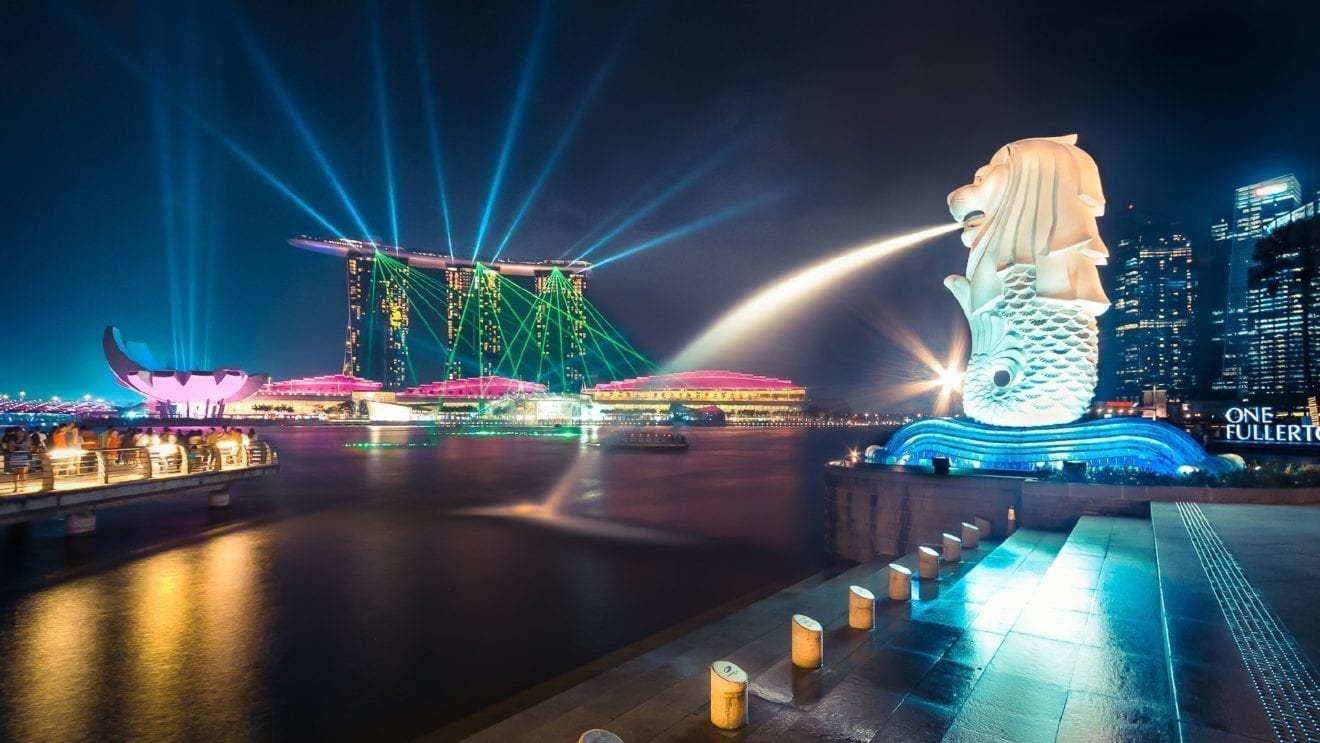
  • Indonesia holds investment week in Singapore

    Indonesia holds investment week in Singapore

    The government is holding an event to attract foreign investors called “Indonesia Investment Week Singapore Chapter 2017,” which started on Monday and will end on Wednesday.

    It is the first Indonesian Investment Week organized outside Indonesia.

    The event at Marina Bay Sands will feature various activities, including an exhibition, a business forum and one-on-one meetings with businesspeople, said Zaidin A. Zaiti, the president director of PT Eksibit Internasional, which organized the event.

    “The event is expected to welcome more than 5,000 international business people in Singapore,” Zaidin said on Tuesday, adding that it was expected to speed up infrastructure development in Indonesia.

    Indonesian Ambassador to Singapore Ngurah Swajaya said the two countries would soon commemorate their 50th year of diplomatic relations and the Indonesian Embassy would organize various events to mark the occasion.

    “The Indonesian Embassy in Singapore welcomes Indonesia Investment Week with the hope that it will be integrated into events to commemorate the 50th anniversary,” Ngurah said.

    Ngurah said the event was supported by a number of institutions including the National Economy and Industrial Commission, the Trade Ministry’s Export Development Directorate General, the Cooperatives and Small and Medium Enterprises Ministry, the Investment Coordinating Board, Agriculture Ministry and Industry Ministry.

  • Huawei to take 16.83% stake in Bakrie Telecom

    Huawei to take 16.83% stake in Bakrie Telecom

    Huawei has arranged to acquire a 16.83% stake in Indonesian operator Bakrie Telecom by converting some of the operator’s debt into shares.

    Debt-laden Bakrie Telecom issued a 7.6 trillion rupiah ($568.1 million) mandatory convertible bond in 2016 as part of a debt restructuring. Huawei has now decided to convert its holdings of the bond into shares.

    With the move, 1.23 trillion rupiah worth of Bakrie Telecom’s debt has been converted into shares.

    Bakrie Telecom president commissioner Anindya Novyan Bakrie told that the conversion will help improve the company’s financial situation for this reason, and therefore the company welcomes Huawei’s move.

    But under Indonesian trading rules, the shares to be converted will not be available for trading for one year.

    While Huawei’s Indonesian subsidiary PT Huawei Tech Investment will also have the right to elect representatives on Bakrie Telecom’s board, Anindya said no decision on this has yet been made.

    The possibility of a debt conversion was first floated last year but at the time it was suggested that Huawei would be taking just a 9% stake, with fellow creditors Protelindo and SUPR receiving shares of 7% and 6.8% respectively.

  • PropNex spreads wings to Indonesia; next stop Vietnam

    PropNex spreads wings to Indonesia; next stop Vietnam

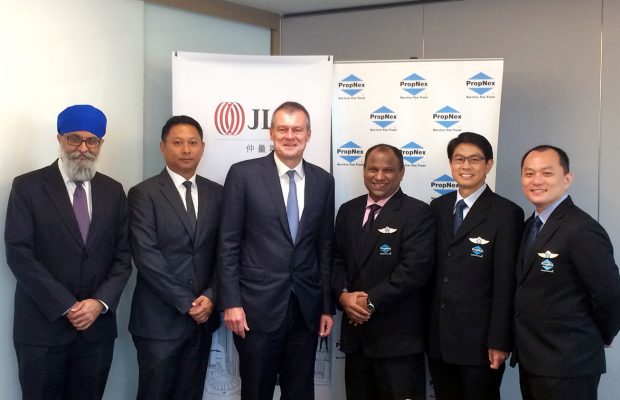
    Amid a lacklustre housing market at home, PropNex Realty, one of Singapore’s largest real estate agencies, embarked on its first regional expansion in the second half of last year with its entry into the massive Indonesian market.

    “The reasons were quite clear. We have been in existence for 17 years. The first 15 years we had no intention to go regional because the market was very much upbeat,” said PropNex CEO Ismail Gafoor in a media briefing ahead of the company’s grand opening in Indonesia next Tuesday.

    “When all the cooling measures started we straightaway had a strategy … It was time for PropNex to go and stretch its wings regionally.

    “Naturally, we selected Indonesia because a lot of Indonesians, wealthy investors, do have a home in Singapore and they always see Singapore as a safe haven, secure and a place for schools and financial businesses … Also, among the Asean countries it has the highest population of 260 million.”

    PT PropNex Realty Indonesia, set up through a master franchise arrangement, has grown to seven offices with a sales force of 600 within a few months, said Mr Ismail, adding he was confident it will cross the target of 1,000 by the end of the year.

    Affluent Indonesians continued to show keen interest in Singapore’s properties, he added.

    There have been “numerous sales” with Indonesian buyers picking up mass-market condominiums, he said, noting that there will be “natural interest” among Indonesians in the higher end of the market if prices drop further.

    PropNex has Vietnam next in its sights as it continues its regional expansion, but it is still in the early stages of finding a partner, said Mr Ismail.

    He said there has been little immediate impact from last Friday’s easing of property cooling measures and loan curbs in Singapore.

    “Over the weekend, we have not seen any push in activities or buying interest patterns. To me, these are all not the key drivers. The key drivers … would be to tweak the Additional Buyer’s Stamp Duty (ABSD) for the second and third properties for locals and foreigners,” he said.

    Nonetheless, Mr Ismail welcomed the easing as a “positive step”.

    Under the latest changes effective from last Saturday, the Seller’s Stamp Duty (SSD) will be payable if a homeowner sells his or her property within three years of purchase, down from four years previously.

    The SSD rates will also be lowered by 4 percentage points for each tier — to 4 per cent for properties sold in the third year; 8 per cent for those sold in the second year; and 12 per cent for those sold within the first year.

    In addition, the Government will no longer apply the Total Debt Servicing Ratio (TDSR) framework to mortgage equity withdrawal loans, with loan-to-value ratios of 50 per cent and below.

    The Government had imposed a series of cooling measures and borrowing curbs since 2009, to rein in a steep jump in home prices as the economy emerged from the global financial crisis.

    These measures included the SSD, ABSD, tighter loan-to-value ratios and mortgage servicing ratios, as well as the TDSR, among others.

    From the recent peak in 2013, private home prices in Singapore have fallen 11.3 per cent, while resale HDB prices declined 9.9 per cent, reflecting the sustained impact of the loan curbs and cooling measures.

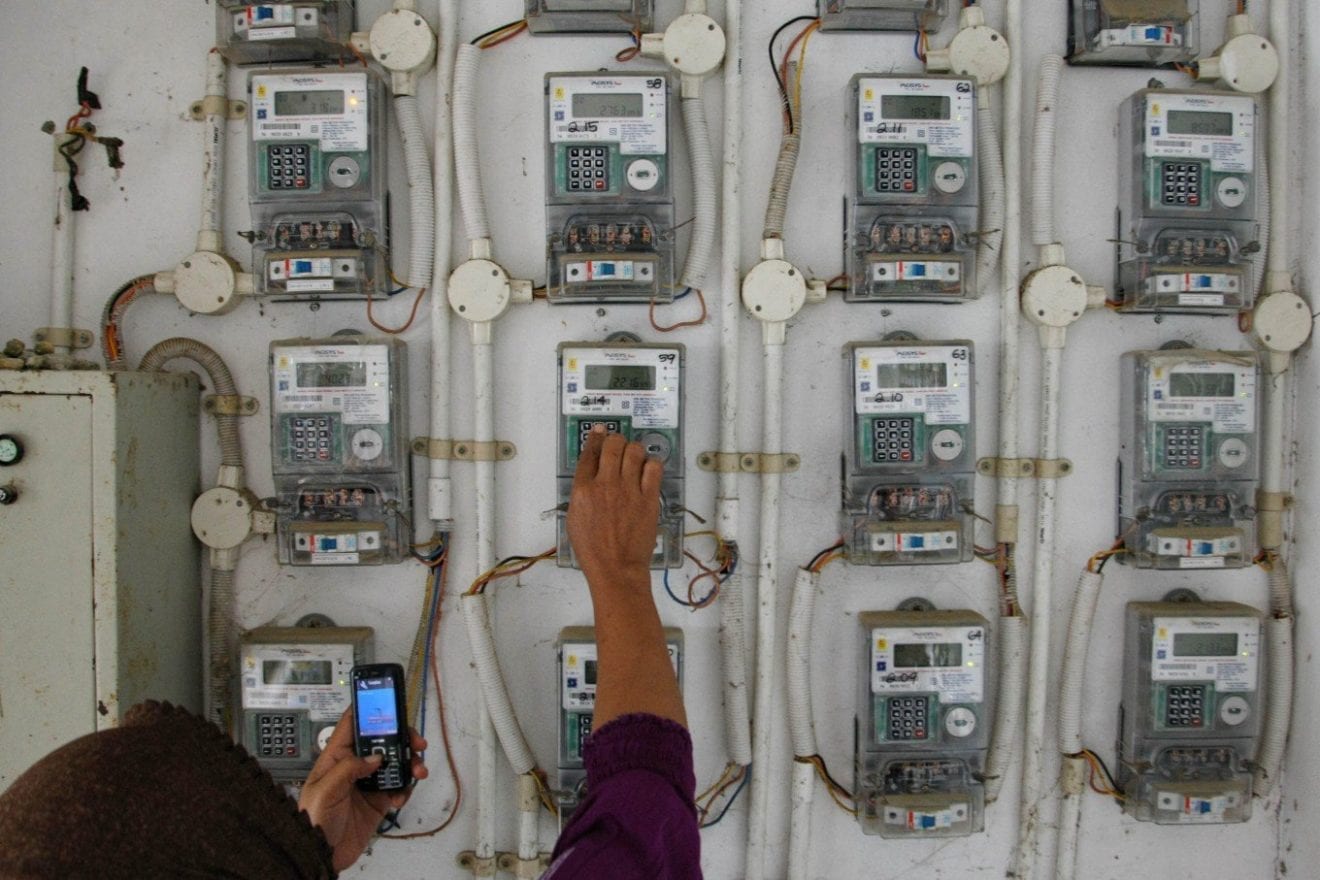
  • South Korea Invests in Infrastructure, Electricity Projects

    South Korea Invests in Infrastructure, Electricity Projects

    The Investment Coordinating Board (BKPM) said that South Korean investors will invest in numerous sectors in Indonesia. BKPM chief Thomas Trikasih Lembong said in this week alone, several project agreements will be signed.

    “I’m expecting for several infrastructure and electricity projects to be signed this week. The value is about US$200 million (approx. Rp2.6 trillion),” Thomas said during the sidelines of the Indonesia-Korea Business Summit at the Shangri La Hotel in Jakarta, Tuesday, March 14, 2017.

    According to Thomas, many South Korean factories have opened in Indonesia, such as textile and footwear factories. The factories’ operation has employed more than 500,000 people.

    At the Indonesia-Korea Business Summit, the BKPM and the Korea Trade Investment Agency (KOTRA) signed a MoU as a way to promote investments between the two nations.

    “We hope this will help both Indonesian and South Korean companies in developing their business,” Thomas said.

    Thomas said that most of the country’s investments are in the manufacturing sector, accounting for 71 percent of their investment value from 2012 to 2016.

    The investments are aimed at both countries’ leading sector, and will cover areas including information exchange, documentation, publication, and others.

    South Korea is Indonesia’s third-biggest investor today after Singapore and Japan. From 2012 to 2016, South Korean companies invested a total of US$7.5 billion for 7,607 projects in Indonesia.

  • Ex-Chelsea star Essien joins Indonesia’s Persib

    Ex-Chelsea star Essien joins Indonesia’s Persib

    Former Chelsea, AC Milan and Real Madrid midfielder Michael Essien has signed with Indonesia’s Persib Bandung, the club announced today, the highest-profile player to join a team in the country for years.

    The Ghanaian signed a one-year contract for an undisclosed sum to join Persib, which is one of the best clubs in the country.

    The 34-year-old had not been playing with a team since he left Greece’s Panathinaikos at the end of last season.

    “I will give my very best to Persib,” Essien, wearing a club shirt, told media at the team’s headquarters in Bandung.

    When asked what he knew about football in Indonesia, he conceded “not very much” but added that he had visited the country with Chelsea before.

    However the move to Indonesia could turn out to be a shock.

    Football in Southeast Asia’s biggest nation has been wracked by crisis for years, with an explosive row between the domestic association and government prompting FIFA to ban Indonesia from international competition in 2015.

    The domestic league ground to a halt for a while amid the row, but FIFA lifted the suspension in May last year and football in the country is slowly starting to recover.

    Foreign players have also been badly treated by Indonesian clubs, with at least two known to have died in recent years after going unpaid and being unable to afford medical treatment.

    Essien is the best-known international footballer to join an Indonesian side since the 1990s, when Cameroon World Cup star Roger Milla and Argentine World Cup winner Mario Kempes both played in the country.

    The Ghanaian said he was approached by teams from other countries, including Turkey and Australia, but he had been impressed by Persib, without giving further details.

    The club would not be drawn on how much they had paid for him.

    “The contract value is large because he is a former Chelsea player, I cannot reveal (the amount),” said Teddy Tjahjono, one of the club’s directors.

    Persib finished fifth in last year’s Indonesian Soccer Championship.

  • President Jokowi receives Toyota Motor executives

    President Jokowi receives Toyota Motor executives

    President Joko Widodo (Jokowi) received Toyota Motor Corporation executives led by the companys president, Akio Toyoda, at Merdeka State Palace here on Monday.

    “In 2015, Jokowi visited Toyota in Japan, and today we have presented a report on the several commitments of Toyota in Indonesia,” PT Toyota Motor Manufacturing Indonesias (TMMIN) deputy president director Warih Andang Tjahjono said after the meeting.

    He stated that Toyota has expressed its commitment to continue to participate and contribute to the development of automotive industry in Indonesia through investment, exports, manpower, and human resource development.

    Tjahjono was introduced to the president as the new president director of TMMIN. He would replace Masahiro Nonami starting from April 1, 2017.

    Warih would be the first local person to be in the top position of the affiliation company of Toyota Manufacturing in the Asia-Pacific region.

    Nonami, who had held the post as TMMIN president director since 2010, would take over a new position in TMMIN.

    The meeting between the president and Toyota Motor Corporation executives lasted around 30 minutes from 9.35am to 10.15am

  • Garuda Indonesia Travel Fair 2017 Records IDR457 Tln in Transactions

    Garuda Indonesia Travel Fair 2017 Records IDR457 Tln in Transactions

    The first phase of Garuda Indonesia Travel Fair (GATF) 2017 which is held on March 10-12, 2017 in 24 cities generates positive results by achieving a total transaction amounting to IDR457 billion, surpassing the target set at IDR380 billion. The largest revenue contributors come from the city of Jakarta, Lombok and Denpasar.

    VP Corporate Communications of Garuda Indonesia Tbk (GIAA), Benny S Butarbutar, in remarks, Monday (3/13/2017), said successful implementation of the GATF 2017 phase-1 shows public enthusiasm in traveling needs at an affordable price is still very high.

    “In addition, successful implementation of the ninth GATF is certainly not without the support and hard work of all fellow employees of Garuda Indonesia Group. We wished that the implementation of the next 2017 GATF will be more successful,” he added.

    The cities which become favorite destinations for visitors are Singapore, Hong Kong, Tokyo and Seoul for international routes; for domestic destination are Bali, Jogjakarta, Surabaya and Lombok.

    Implementation of GATF in Jakarta this time also showed an increase, reaching 74 thousand visitors, compared to the same period last year of 60 thousand visitors.

    Sporting the theme ‘Digital Experience’, Garuda Indonesia in 2017 GATF Phase 1 introduced LINE ID ‘Official Garuda Indonesia’, which is the only LINE ID for Indonesian airlines at this time.

    “By adding official account of Garuda Indonesia in LINE, users of Garuda Indonesia’s services can enjoy various promotional programs from Garuda Indonesia throughout the year,” he said.

  • Indonesia’s BCA posts record annual profit, buoyed by tax amnesty

    Indonesia’s BCA posts record annual profit, buoyed by tax amnesty

    Bank Central Asia (BCA) on Monday reported an all-time high annual net profit, as Indonesia’s key tax amnesty programme helped to lower cost of funds for the country’s biggest lender by market value.

    BCA posted a 2016 net profit of 20.6 trillion rupiah (S$2.17 billion), up 14.4 per cent from a year ago. This was a record high and also slightly above an average estimate of 20.0 trillion rupiah from 21 analysts.

    Indonesia’s tax amnesty scheme, launched last July and aimed at bringing back billions of dollars stashed abroad by citizens, boosted the funds at BCA’s current accounts and saving accounts (CASA) in the second half of 2016, the bank said in a statement.

    “Tax amnesty funds were parked at CASA,” BCA President Director Jahja Setiaatmadja told reporters. “What’s positive is that our cost of funds is low because our interest rate is low.”

    However, some of those funds were only “transitioning” at BCA and would likely be placed eventually in assets including property and government bonds, Mr Setiaatmadja said.

    At the end of 2016, BCA’s gross non-performing loans (NPL) stood at 1.3 per cent, one of the lowest in Indonesia’s banking sector.

    BCA’s rival, Bank Mandiri, last month reported its lowest annual net profit in five years due to an increase in provisions. Mandiri’s gross NPL of 4.0 per cent was the highest since 2008.