Tag: Indonesia

  • Indonesia’s Salim Group Re-enters Banking with Local Takeover

    Indonesia’s Salim Group Re-enters Banking with Local Takeover

    Indonesia’s largest conglomerate, Salim Group, has acquired a majority stake in a local bank, marking its first return to the banking business since the 1998 Asian financial crisis.

    Through various affiliated entities, the group bought at least 51% of Bank Ina Perdana by subscribing to new shares issued by the Indonesia-listed lender. The acquisition value is estimated at 570 billion rupiah ($42 million). The bank has 22 branches in Java and had 2.3 trillion rupiah in assets as of December 2016.

    Salim took over Bank Central Asia in the 1970s and developed it into the country’s largest private lender on the back of deregulation policies under then-President Suharto, who had close ties with group founder Sudono Salim.

    But after the bank’s ownership was transferred to the government in the wake of the Asian financial crisis, the group focused on rebuilding its other operations, mainly through its core food company, Indofood Sukses Makmur. It has interests in the retail, automotive, telecommunications, infrastructure and other sectors across Indonesia and the Philippines.

    In recent years, the smartphone boom has created a new wave of demand for financial services such as electronic payments and peer-to-peer lending. Salim decided that operating its own bank and building a financial backbone would be crucial for running an end-to-end digital business, which it has been developing since 2013.

    “It makes sense for us to refocus on banking because the transactions carried out by the banks are becoming quite big,” said a Salim executive.The conglomerate may have targeted a smaller player because it wanted to venture into digital banking without spending a fortune.

    Developing digital services at large banks entails the risk of having reduce the number of employees and branches, according to a person familiar with Salim’s strategy. The group remains one of the biggest customers of Bank Central Asia, currently owned by another local conglomerate.

    Anthoni Salim, the group’s CEO, owns a small stake in Bank Central Asia but is not involved in its management. Salim will begin testing new services internally for its 500,000 employees during the second half of 2017.

    The trial will involve Bank Ina and various Salim Group companies, including Indomaret, a convenience store chain with 14,000 outlets nationwide. The trial will use fingerprint-recognition technology being developed by a joint venture between Salim and Tokyo-based startup Liquid.

    In one test case, Salim employees will open a bank account at Bank Ina and pay for goods at Indomaret using a fingerprint reader linked to their accounts.

    The group is also eyeing peer-to-peer money transfers and loans using Indomaret stores as a bank branch. Edy Kuntardjo, Bank Ina’s president, said the bank expects to roll out some of these services in 2018, subject to regulatory approval. Bank Ina is currently revamping its core banking system with the aim of improving processing transactions carried out at Indomaret stores.

    Not alone

    Salim’s return to banking follows a broader trend in which Indonesia’s biggest groups are moving back into the sector after recovering from the financial crisis. Lippo Group, which has focused on property and retailing since losing its flagship Lippo Bank in the financial crisis, acquired Bank Nationalnobu, a small local player, in 2010.

    “We must have inward creative disruption so that we can be transformed into a new area of growth, which is the digital economy,” James Riady, Lippo’s CEO, told  in November.

    Sinarmas Group, a paper and palm oil conglomerate, acquired a local bank in 2005 and has since renamed it Bank Sinarmas. The bank will reportedly funnel the bulk of its capital spending this year toward developing digital services.

    Industry observers will be watching closely to see how traditional family-owned businesses work with local and foreign startups, which have established a lead in emerging financial technology. Lippo is an investor in Grab, a Singapore-based ride-hailing app, and the two companies are co-developing an e-payment service.
  • Rupiah Weakens with Asian Currencies

    Rupiah Weakens with Asian Currencies

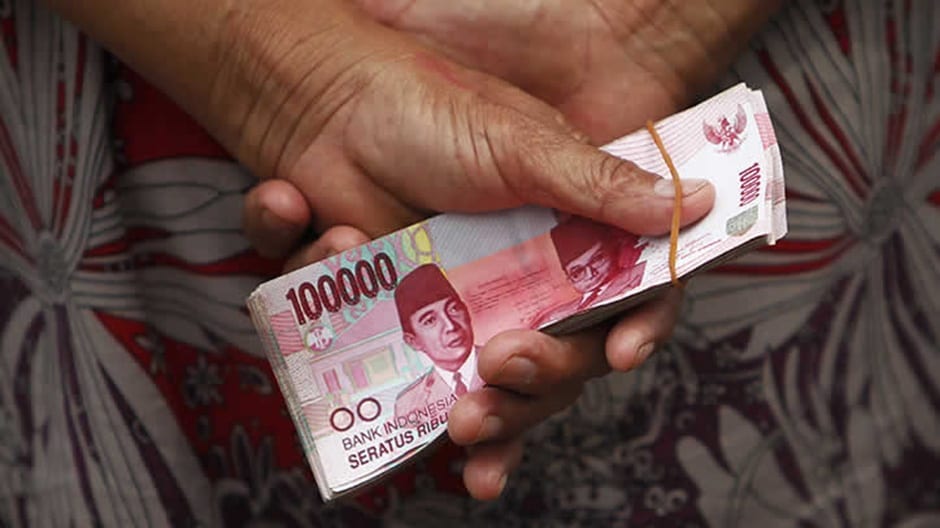
    The rupiah exchange rate at the Jakarta Interbank Spot Dollar Rate this morning fell by 8.0bps to trade for Rp13,332 per US dollar. The rupiah is corrected along with most Asian currencies.

    “Rupiah weakens along with Asian currencies depreciation against the US dollar,” Samuel Sekuritas economist Rangga Cipta said in Jakarta, May 18.

    However, Rangga said the rupiah correction is relatively limited as the Indonesian state bonds (SUN) yields improve amid prospects of inflation ahead of the Ramadan, raising expectations that of a possible credit ratings upgrade by Standard & Poor’s (S&P).

    “Increasing optimism in the bond market and expectation of commodity price improvement can secure the rupiah from plunging too deep,” he said.

    Binaartha Sekuritas analyst Reza Priyambada said the rupiah and other Asian currencies weaken because of an increasing interest among market players to invest in safe havens.

    Reza hopes that Indonesia’s well-guarded economic fundamentals and the government’s infrastructure projects will be responded well by the market, allowing the rupiah to rebound.

  • Tanjung Api-Api Port to start operation in December

    Tanjung Api-Api Port to start operation in December

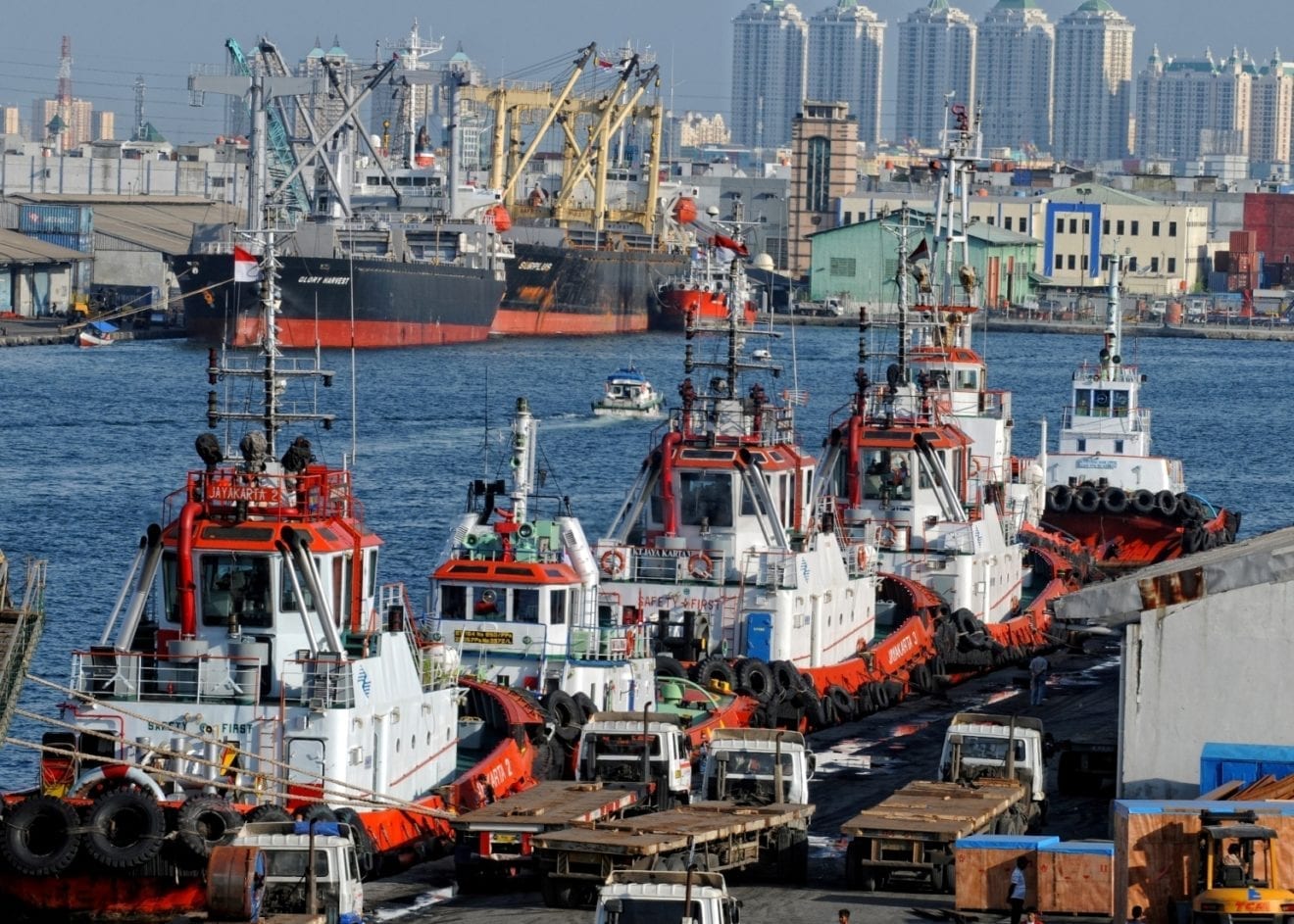
    Transport Minister Budi Karya Sumadi said the Port of Tanjung Api-Api in the regency of Banyuasin, South Sumatra, is to be operational in December, 2017.

    Physical construction of the project is already completed, but the port basin is not yet safe for big ships, Budi said after a meeting on the port and the progress made in the construction of Light Rail Transit project (LRT) in the city of Palembang on Saturday.

    The minister said the port basin is only 3.5 meter deep, therefore it still needs to be made deeper to be safe for big ships.

    He said South Sumatra Governor Alex Noerdin also agreed with the decision to operate the new international seaport in December.

    In addition the 60-kilometer long provincial highway linking the new port with the provincial city Palembang still needs repairs here and there, he said.

    He said later Tanjung Api-Api will need to be linked with toll road and railways to facilitate the transport of cargoes to and from the international port.

    The minister expressed optimism the port would help accelerate industrialization in South Sumatra and neighboring province of Jambi as it would serve as hub port for goods from the two provinces to be transported to Jakartas Tanjung Priok on the way to export market or other regions in the country.

    Meanwhile, Sea Transport Director General A Tonny Budiono said the port would be able to accommodate 464 death-weight ship that could carry 50 TEUs of container cargoes.

    Tonny said in the beginning the port would be operated by the Transport Ministry but later by phases it would be handed over to PT Pelindo II, the state-owned port operator based in Jakarta.

    He said the port has yet to be equipped with cranes to load and unload cargoes including containers. Normally ships already have their own cranes , but work would be faster if the port would also have cranes, he added.

    The quay of the port is 50×20 meters, the trestle is 118 X 8 meters and the causeway is 100 X 8 meters .

    Construction of the port project cost around Rp178 billion with fund from the state budget.

    The South Sumatra provincial administration contributed Rp48 billion for the construction of land supporting facility.

    Palembang will co-host the next Asian games in 2018, therefore, the government hastens the completion of infrastructure including the sea port and the LRT project.

  • Bank Indonesia is seeking to integrate electronic payment

    Bank Indonesia is seeking to integrate electronic payment

    Bank Indonesia (BI) is seeking to integrate electronic payment system of various banks and issuers on toll roads during the Eid al-Fitr homecoming in June.

    BI Transformation Center Executive Director Onny Widjanarko said that the central bank has done the trial on the electronic payment integration on the toll road between Surabaya and Sidoarjo. The next trial will be implemented in Cikopo-Palimanan (Cipali) toll booths.

    Onny added that the central bank has options to integrate electronic payment system on toll roads during homecoming. The use of hybrid cards is one of the options.

    The option will be taken if the integration of technical infrastructure for toll payments could not be realized in time before the homecoming season. However, Onny said that BI would need to consult with industry working group and another regulator i.e. the Public Works and Public Housing Ministry.

    “We had wanted to implement the integrated payment systems during lebaran (Eid) but we are still discussing it in the working group whether select toll gates could adopt hybrid cards but we have to consult with the government,” he said.

    Santoso, the director of private lender Bank Centra Asia (BCA), the issuer of BCA Flazz cards in Cipali, said the bank would allow other banks to join its toll road payment system.

    “In Cipali and Gresik, BCA has encouraged [other] banks to integrate their payment systems. Meanwhile, other toll roads which are operated by Bank Mandiri must first be discussed because Mandiri has a special partnership with other state-owned lenders and state-owned toll operator Jasa Marga,” Santoso.

  • Airbnb eyes expansion in Indonesia

    Airbnb eyes expansion in Indonesia

    Global hospitality marketplace Airbnb will expand its business in Indonesia as it considers the country to be one of the most important markets in the Asia-Pacific.

    Airbnb’s country manager for Southeast Asia, Hong Kong, and Taiwan, Robin Kwok, said that Indonesia is one of the fastest growing countries in terms of inbound travel, with nearly 38,000 local homes currently listed on its rental website.

    “Indonesia is such an important country, not only in Southeast Asia, but also for the rest of APAC,” Kwok told in Jakarta on Monday.

    Kwok said her company had developed teams to educate local hosts on how to use the app.

    “We also do a lot of marketing. We want to drive more people to Indonesia,” she said.

    She said her team had also discussed with government officials about how the company could help the government gain a better understanding of the services required by visitors to Indonesia.

    Airbnb also looks forward to cooperating with local partners, Kwok said, adding that her company had high expectations for the potential partners to boost brand awareness of the company.

    Founded in 2008, Airbnb is currently present in 65,000 cities in 191 countries across the world, with 160 million guest arrivals, according to the company’s data.

  • Uber Join Hands with Trafi App

    Uber Join Hands with Trafi App

    App-based transportation services Uber has joined hands with multimodal transport app Trafi to help residents in Greater Jakarta, or Jabodetabek, combine public transport and ridesharing services.

    Head of Public Policy and Government Affairs of Uber Indonesia John Colombo said that the partnership will allow Uber users to choose various types of public transport in Trafi app. As a result, efficiency will be greater and people will be able to pick their preferred transportation mode.

    John said yesterday, May 29, that the integration is aimed at offering more choices and comfort in travel plan and selection of transportation modes.

    John said he is confident that Uber will see an increase in the number users. However, the latest service can only be enjoyed by users around Jabodetabek.

    Trafi Indonesia Country Manager Dimas Dwilasetio said that the company has the data of 600 public transport routes across Indonesia and 95 Transjakarta routes in Jabodetabek. “We are optimistic that the partnership can provide a solution for people to get public transport services,” he said.

  • Korean Air to fly to Lombok Island

    Korean Air to fly to Lombok Island

    The South Korean airline and flag carrier company Korean Air is ready to fly to Lombok Island, West Nusa Tenggara, Indonesia, in July and Aug 2017.

    “The Korean Air will open a charter flight for seven times,” Lombok International Airports General Manager I Gusti Ngurah Ardita stated in Mataram District, the capital of West Nusa Tenggara Province, on Monday.

    Ardita confirmed the information to journalists after a meeting with the Korean Airs Network and Sales General Manager of South East Asia/Oceania, Bae Sang Wook, and Regional Manager of Indonesia Park Kee Hyun in Mataram, Lombok.

    The Gonghang-dong, Gangseo-gu, Seoul-based airline companys aircraft would arrive at the Lombok International Airport (LIA) from July 29 to the end of Aug 2017, Ardita noted.

    “This charter flight is, of course, expected to open a fixed route for Korea-Lomboks flights,” he noted.

    Ardita explained that the arrival of Korean Air to Lombok Island was a result of the last meeting between the LIA and the Korean Air company on April 25, 2017, which was also supported by the regional government and the Tourism Board of West Nusa Tenggara.

    Earlier in a separate interview, West Nusa Tenggara Governor TGH Muhammad Zainul Majdi remarked during a visit by South Korean Ambassador to Indonesia Cho Tai Young and his wife Madame Cho Gye Young that the flight charter from South Korea to Lombok in Aug 2017 could be continued into a regular flight.

    Majdi expected that a regular flight would increase the number of South Korean tourists and ease the investment inflow to West Nusa Tenggara.

    The Indonesian government is hopeful of attaining 20 million foreign tourists annually by 2019 amid concerted efforts to make the archipelago a world-class tourism destination, one of which is in Lombok Island.

  • BI predicts surplus of balance of payment in 2017

    BI predicts surplus of balance of payment in 2017

    Indonesias balance of payment will still enjoy a surplus this year but it will decline to US$3-4 billion from US$12 billion last year, Bank Indonesia Governor Agus Martowardojo has predicted.

    The drop will be the result of declining capital and financial account, along with the conclusion of the tax amnesty program on March 31, 2017, reducing the inflow of repatriation fund to the financial market, he said here on Monday night.

    “Last year we saw the boost came from the tax amnesty program which has an impact on capital account,” he said.

    The projected surplus of the balance of payment at the end of this year will remain the same as the surplus of the balance of payment in the January-March 2017 period which was mostly fueled by capital and financial account at US$7.9 billion, he said.

    The balance of payment reflects transactions between the Indonesian population and foreign nationals. The balance of payment includes current account (including goods, services and income) and capital and financial account.

    Agus said the declining surplus of the balance of payment is also caused by a deficit of the countrys current account which is projected to reach 1.8-1.9 percent of the national gross domestic product (GDP). The figure is the same as the deficit of the current account in 2016.

    Despite the deficit, the current account is still under control. The improving export performance this year is expected to help improve the current account, he said.

    In the first quarter of 2017, the current account saw a deficit of US$2.4 billion, accounting for 1 percent of the GDP. The rising deficit of the current account was mostly fueled by the rising deficit of trade balance from oil and gas which reached US$2.1 billion and primary income which saw a deficit of US$7.4 billion.

  • Garuda to operate large aircraft to serve Lebaran travelers

    Garuda to operate large aircraft to serve Lebaran travelers

    Flag carrier Garuda Indonesia is preparing 61,324 flight seats through the operation of large aircraft for an extra flight in anticipation of an increase in passengers during the post-fasting Eid ul-Fitr or Lebaran 2017.

    President Director of PT Garuda Indonesia Pahala N. Mansury said the Lebaran is a period when flight operations peak, mainly coinciding with school holidays, so that seat capacity this year increased to 87.24 percent.

    “During the increase this year, there are additional seats of around 60 thousand for the Lebaran peak season. One-third of it is from the large aircraft, while the remaining two-thirds include additional frequencies for both domestic and international flights,” Pahala noted here on Saturday (May 27).

    There is also the use of wide-bodied aircraft (bigger aircraft) and extra flights consisting of 50,210 seats to 11,114 seats on domestic routes and international routes.

    Meanwhile, the type of aircraft to be operated are B737-800 (162 passengers), A330-200 (222 passengers), A330-300 (287 passengers), and entire economy class A330-300 (360 passengers).

    Previously, VP Corporate Communications Garuda Indonesia Benny S. Butarbutar remarked at the Lebaran peak season this year that Garuda Indonesia operates a total of 348 additional flights comprising 188 extra flights and 160 flights using large aircraft.

    “The addition of low-capacity Lebaran peak season this year increased by 87.24 percent of the total capacity of extra flights in the same period last year,” Benny stated.

    Homecoming of passengers are expected to take place from June 16 to July 9, 2017, for both domestic and international routes.

    Garuda Indonesia appealed to all service users to plan a trip as early as possible and use the city check-in facility at the sales offices of Garuda Indonesia or in the web check-in and phone check-in to avoid long queues at the check-in booths in the airport.

  • Indonesia aims for zero imports of garlic in 2018

    Indonesia aims for zero imports of garlic in 2018

    The government is looking to achieve its goal of zero garlic imports in 2018, following an expansion of garlic farms across the country.

    “We aim to see 100,000 hectares of garlic farms next year. If 1 hectare [ha] can produce 5 tons of garlic, we won’t need to import anymore,” Agriculture Ministry spokesperson Agung Hendriadi told over the phone on Tuesday.

    Annual garlic consumption for household and industrial needs reached 500,000 tons in 2015, but only 20,000 tons of it was planted domestically. The remaining 480,000 tons were imported from China and India, ministry data shows.

    Last year, the government expanded garlic farms, which jacked up the national production of garlic to almost 200,000 tons.

    Indonesia in the 1990s supplied most of its garlic to the domestic market, but gradually the farmers were discouraged from planting it due to a continuous decline in prices. Now, there are only 2,000 ha of garlic plantations, a massive decrease from the 28,000 ha of plantations in the 1990s.

    Agung also said that the Trade Ministry had set maximum price of Rp 38,000 per kilogram for garlic and would maintain the price to encourage farmers to cultivate garlic.

  • OCBC Bank subsidiary launches private onshore banking in Indonesia

    OCBC Bank subsidiary launches private onshore banking in Indonesia

    OCBC Bank has launched onshore private banking in Indonesia through its 85 per cent-owned subsidiary, OCBC NISP, the company said on Monday.

    OCBC NISP has obtained regulatory approval to establish the private banking unit to manage the wealth of Indonesians with assets under management of more than US$1 million (S$1.38 million) with a comprehensive range of wealth management solutions.

    The unit will leverage OCBC Bank’s uniquely integrated wealth management platform that draws on the combined product expertise of the Bank and its subsidiaries – insurance products from Great Eastern Holdings, equities and bond funds from Lion Global Investors, brokerage services from OCBC Securities and private banking services from Bank of Singapore.

    The launch team includes four other private bankers who have an average of 18 years of onshore and offshore private banking experience and deep knowledge of regional markets. The team is expected to double in size by the end of the year.

    OCBC NISP private banking clients who are business owners will be able to draw on the commercial banking solutions offered by OCBC NISP and leverage OCBC Bank’s global network of more than 610 branches and offices across 18 countries and regions.

    “We are pleased to offer our wealthy clients alternative wealth management and investment options to help them manage their funds with the launch of our private banking business,” said Ms Parwati Surjaudaja, president director of OCBC NISP. “We will be introducing more sophisticated solutions that are tailored to our clients’ unique wealth planning and investment needs as we grow our business.”

    Calling the launch an important milestone in the expansion of OCBC’s wealth management franchise, Mr Samuel Tsien, group CEO of OCBC Bank, said the new business will help broaden client coverage of high net worth individuals. “We will leverage our strong product development, distribution and execution capabilities across the OCBC group to support this new customer segment in Indonesia.”

  • Unilever to Test New Packaging-recycling Tech in Indonesia

    Unilever to Test New Packaging-recycling Tech in Indonesia

    Consumer goods giant Unilever on Wednesday said it has opened a new facility in Indonesia as part of a pilot project for introducing a new technology for recycling sachets used to hold shampoos and other products.

    Single-use sachets are widely sold in developing and emerging markets such as Indonesia. The Anglo-Dutch company said billions of such packages — including its own — are sold every year, but that recycling them has long been a problem due to technological hurdles.

    To address this, Unilever said it has developed a technology it calls the CreaSolv Process together with the Germany-based Fraunhofer Institute for Process Engineering and Packaging IVV.

    “With this innovative pilot plant we can, for the first time ever, recycle high-value polymers from dirty, post-consumer, multilayer sachets,” said Andreas Maurer, head of the plastic recycling department at Fraunhofer.

    The facility, in Sidoarjo, East Java, will “test the long-term commercial viability of the technology.” If successful, it will be applied in other developing markets, especially in Southeast Asia, said Sancoyo Antarikso, director for governance and corporate affairs at Unilever Indonesia.

    The company plans to work with local waste collectors, waste banks and retailers to help collect used sachets. “Using this approach, we’ll be able to reduce our environmental footprint, while creating economic value and potential additional incomes for the communities, the recycling industry and other stakeholders,” Antarikso told reporters.

    Unilever Indonesia hopes the Indonesian government will promote the concept of separating household waste to make collecting sachets easier. Currently, most Indonesian households do not separate their recyclable and nonrecyclable waste, as the country’s outdated waste management system is not yet capable of accommodating the practice.

    Indonesia produces an estimated 0.5 million to 1.3 million metric tons of plastic marine debris every year, making it the second-largest producer of plastic waste polluting the world’s oceans after China, according to a study published at the Science journal in 2015.

    The new recycling facility will initially be able to process 3 tons of plastic sachets every day. Antarikso said once the operations prove viable from the business side, Unilever will let a “business partner” take over to handle commercial-scale production. He added that Unilever will use the end products as materials for packaging, which is expected to reduce costs.

    David Blanchard, chief R&D officer at the parent company, said: “We intend to make this tech open-source and would hope to scale the technology with industry partners, so others — including our competitors — can use it.” Unilever said it wants all of its plastic packaging to be “fully reusable, recyclable or compostable” by 2025.

  • Bisnis Travel Indonesia teams up with Zurich Indonesia

    Bisnis Travel Indonesia teams up with Zurich Indonesia

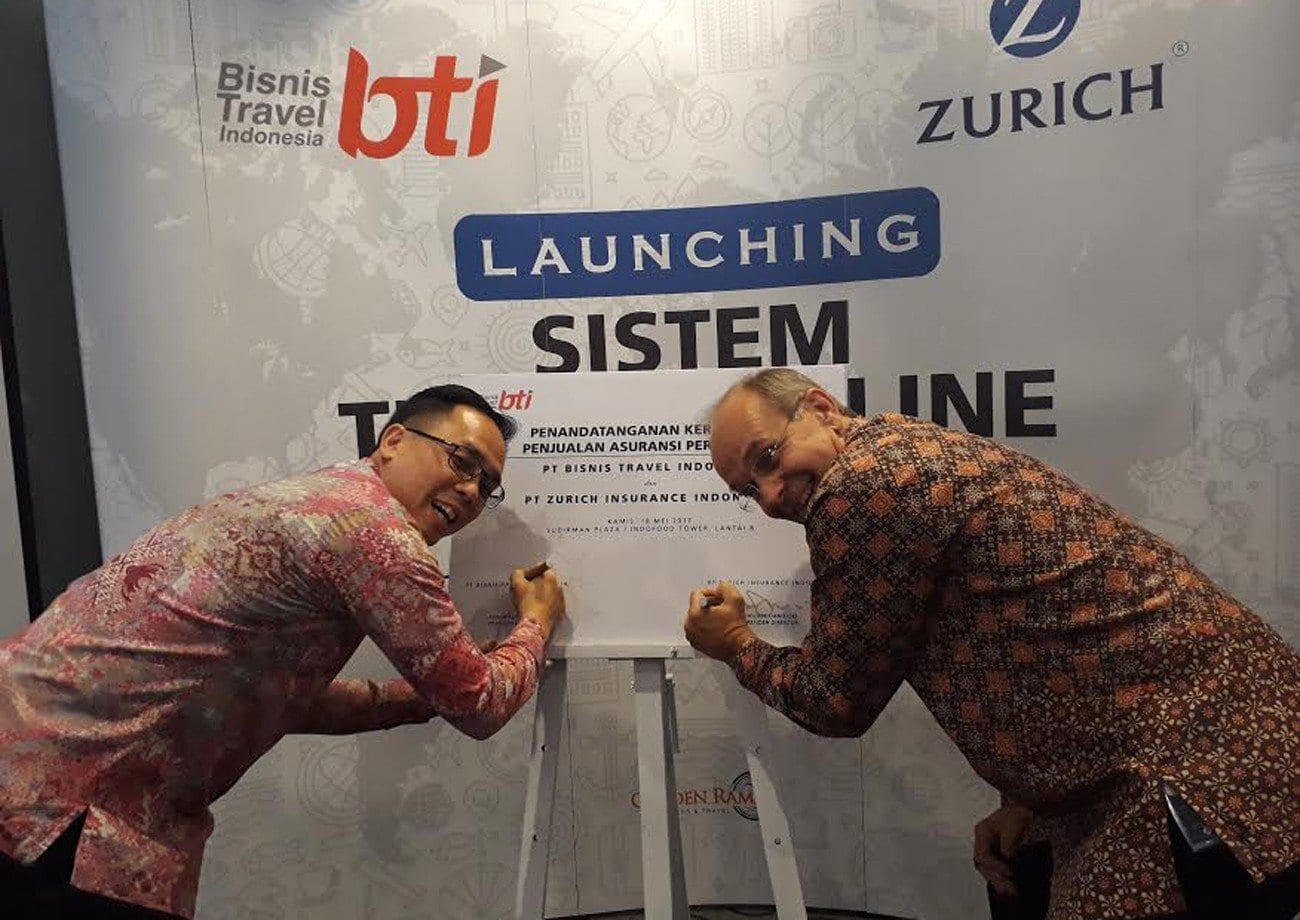
    Online travel portal Bisnis Travel Indonesia (BTI) is teaming up with Zurich Indonesia, the local unit of a Switzerland-based insurance company, by including Zurich Indonesia’s travel insurance on BTI’s list of products.

    Previously, BTI’s offered its members included airline tickets, hotel reservations and tour packages.

    “Through the partnership with Zurich, we want to expand options for our members,” BTI’s president director Johan Kurniawan told reporters during the partnership signing ceremony in Jakarta on Thursday.

    With the agreement, BTI’s portal will provide its members with three travel insurance products from Zurich Indonesia: Zurich Domestic Travel, Zurich Umrah/ Haj Travel and Zurich Passport.

    BTI aims to sell up to 600 travel insurance policies through its portal this year, Johan added.

    BTI is an online travel portal powered by Golden Rama Tours & Travel, a travel company established in Indonesia in 1971.

    About 90 percent of the portal’s members are individual travel agents, while the rest are office-based travel agents.

  • Sompo Japan to Release in Indonesia Weather Index Insurance for Farmers

    Sompo Japan to Release in Indonesia Weather Index Insurance for Farmers

    Sompo Japan Nipponkoa Insurance will start selling insurance products that compensate farmers hit by drought in Indonesia as early as this autumn.

    Earlier this month, Sompo Japan signed a memorandum to partner with BMKG, Indonesia’s meteorological bureau, to gather weather data. The Japanese insurer will provide weather index products that pay a certain amount to contract farmers when rainfalls drop below the forecast amount of the past three months.

    Such technologies and services provided by companies in disaster-prone Japan are likely to become promising exports to Southeast Asia. With an insurance premium of 50,000 rupiah ($3.76), contract farmers will be entitled to recuperate up to 500,000 rupiah if a drought occurs.

    Sompo Japan is narrowing down potential insurance agencies to partner with, such as local financial institutions. The company plans to test-run products in some areas as early as this autumn and go full swing in 2018.

    Sompo Japan started selling weather index insurance products for banana producers in Thailand in 2010 and in the Philippines in 2014. The company plans to release policies in Myanmar as soon as it gets government approvals.

    The company plans to boost its lineups of countries of sale and products to increase contracts fivefold to 30,000 in Southeast Asia by 2025.

    In the wake of increasing damage due to drought caused by unusual weather patterns, governments in Southeast Asia are taking measures to improve infrastructure, such as building irrigation facilities and providing financial coverage for damage claims.

    There are two major strategies for dealing with climate change. One is climate change mitigation, which is any action taken to reduce greenhouse gases such as carbon dioxide. The other is adaptation, which is the ability of a system to adjust to climate change to moderate any potential damage.

    The Paris Agreement, an international framework implemented to slow global warming, requires countries to set a goal of cutting greenhouse gases and taking adaptation measures. Emerging and developing countries — which are often hit by drought and heavy rains — are showing interest in the adaptation route.

    The United Nations Environment Programme, or UNEP, estimates the costs of adaptation could range from $140 billion to $300 billion a year by 2030, and between $280 billion and $500 billion a year by 2050.

    The market for adaptation solutions is expected to spread globally with the help of multinational funds and local governments. Some companies have started offering products and services catering to these demands.

    Japanese companies are well-positioned to help developing countries adapt to climate change, such as by contributing to better infrastructure, developing cultivation technologies so crops can withstand warmer temperatures, and increasing preparedness for power outages.

    However, Mari Yoshitaka, chief consultant of Mitsubishi UFJ Morgan Stanley Securities, said many Japanese companies have not shown much interest in the global adaptation business. But focusing on environmental measures needed to cope with the situation presents business opportunities.

  • Alfamart operator to expand chain in Philippines

    Alfamart operator to expand chain in Philippines

    Sumber Alfaria Trijaya, operator of Alfamart convenience stores in Indonesia, plans to add up to 200 units in the Philippines this year that will nearly double its presence there.

    SAT began its Philippine business in 2014 with a 35% stake in a joint venture with SM Investments, the Philippine banking, retail and real estate conglomerate. In a press conference on Thursday, SAT President Hans Prawira said the company’s concept of “minimarkets,” which are smaller than traditional convenience stores and that sell staples, is untapped in the Philippines.

    “The characteristics of the Philippines market are similar to Indonesia,” Prawira said. “The difference is that there are not many minimarkets in the Philippines. So it’s like a blue ocean.”

    SAT said it had 210 stores in the Philippines at the end of last year, and that about 60 of the planned 200 new outlets were already added in the January-March quarter. The JV is still loss-making but can become profitable once it reaches 400 outlets, something it aims to achieve in two years.

    Indonesian companies are increasingly targeting the Philippines, which has a large population, young demography and a growing middle class. Nippon Indosari Corpindo, Indonesia’s largest bread maker, set up a joint venture in the country last year.

    For SAT, the overseas expansion could help offset a slowdown in consumer spending at home, where the company runs some 13,000 stores across the archipelago. Sales of fast-moving consumer goods, including food and home care products, increased by 3.9% year-on-year in the first quarter, a major slowdown from 11.3% a year ago, according to Nielsen data presented by SAT. The company also faces cutthroat competition with rival Indomaret, which is controlled by the Salim Group conglomerate and has about 14,000 stores.

    “We experienced so many price increases … maybe this time there is this kind of stagnant period,” Prawira said.

    SAT still managed to log a 12% increase in revenue for the first quarter at 13.76 trillion rupiah ($1.03 billion). Prawira said he expected spending to pick up during the Ramadan fasting period that begins later this month. The company plans to open more than 1,000 stores in Indonesia this year, similar to last year’s expansion rate.