Tag: Indonesia

  • Garuda Indonesia Keeps Expanding Despite 89% Profit Slide

    Garuda Indonesia Keeps Expanding Despite 89% Profit Slide

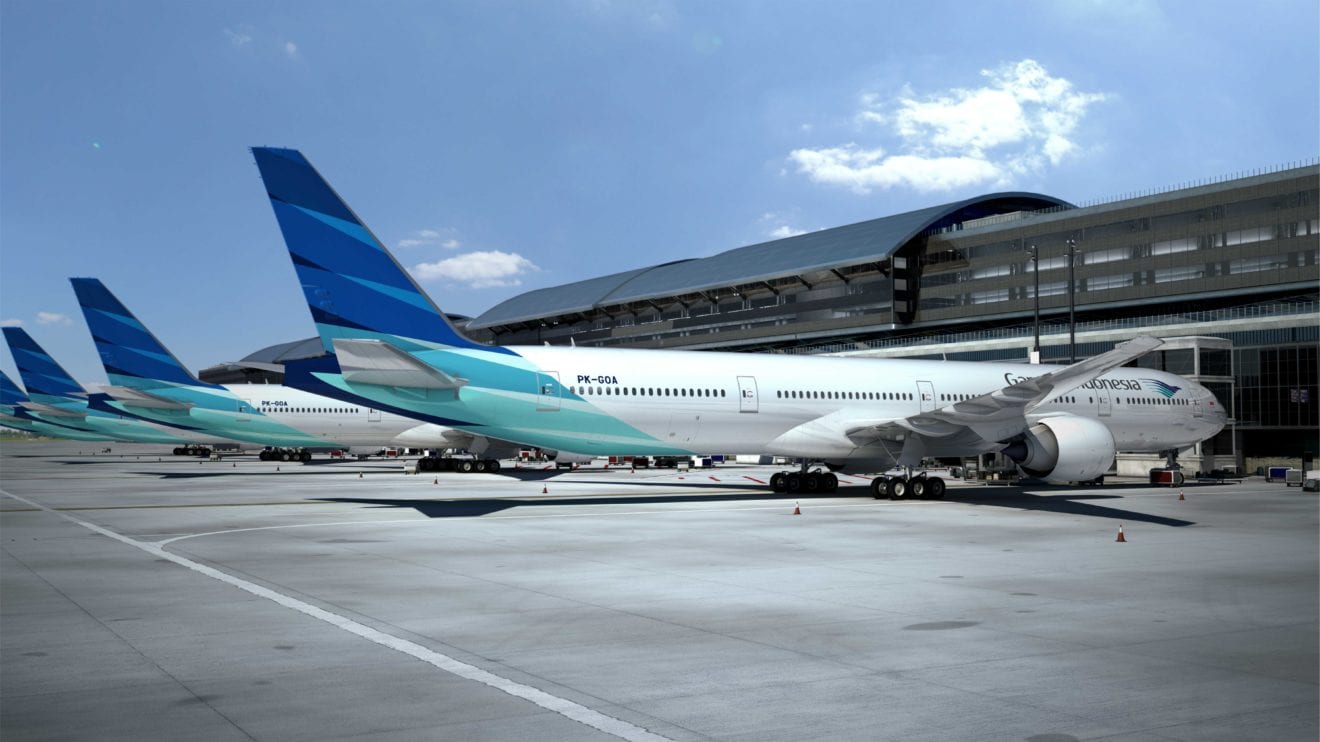
    Indonesian flag carrier Garuda Indonesia will continue expanding despite a lackluster performance last year during which profit dropped by 89%, President Arif Wibowo said on Wednesday.

    Garuda posted $8.1 million in net income in 2016, from $76.5 million the year before. Wibowo said the decline was “manageable,” and attributed it in part to the company’s increased flights on existing routes and the opening of new ones. Garuda last year started connecting Indonesia’s resort island, Bali, with a few Chinese cities, and commenced flights to Mumbai.

    Its available seat kilometers — a measure of passenger-carrying capacity — last year was up by 13%. Wibowo said he expects a similar increase this year.

    “First half of 2016 was loss-making due to the expansion,” Wibowo said. “But that is part of a growth strategy that I must take. In 2017 we’ll keep maximizing our capacity growth, by 10-12%.”

    To achieve this, Garuda will increase its service to less-connected, underdeveloped eastern Indonesia regions. For international destinations, China will remain a focus, though Garuda is also working on flying to the U.S. and Russia.

    Profit was also dragged down by declining passenger yields — measure of average fare paid per mile — which dropped from 9.6 U.S. cents in 2012 to 6.2 U.S. cents in 2016 industrywide in Asia Pacific.

    Garuda’s low-cost subsidiary, Citilink, was especially hit hard by declining yields. It posted a net loss of $9.7 million last year from a $3.5 million profit it made in 2015, despite an 18% growth in passengers to 11 million.

    Garuda saw its passenger numbers grow just 1.4% in the same period. The group’s market share in the country shrank slightly from 43.5% to 41.7% for domestic flights, and from 27.1% to 26.9% for international ones.

    “It’s very tough competition in the aviation industry over the past five years. Passenger traffic has increased, but there has been tremendous pressure on yields,” Wibowo said.

    He added that the state-owned company is approaching the government to increase lower tariff limits for airlines operating in Indonesia, citing increasing fuel prices, to prevent a price war.

    GMF AeroAsia, which offers maintenance services for aircraft, was the best-performing subsidiary last year with a 60% profit increase to $57.7 million. Wibowo said the consistently good performance makes GMF a candidate for an initial public offering. Garuda is mulling the sale of 20% of GMF share to the public, which may happen this year.

    The airline is also pushing the growth of its cargo business after the establishment of a special division for cargo last year. Director of Cargo Sigit Muhartono said he would focus on expanding e-commerce delivery for the higher yields. Garuda delivered 416 tons of cargo last year, an 18% increase year-on-year.

  • Barry Callebaut Expands Cocoa Nurseries Program in Indonesia

    Barry Callebaut Expands Cocoa Nurseries Program in Indonesia

    One of Barry Callebaut’s primary goals in Forever Chocolate is to lift more than 500,000 farmers out of poverty. To get there, we can improve farm productivity and increase the yield of high-quality cocoa. Doing this will enable farmers to sell their cocoa at higher prices and gain access to a better quality of life.

    But how can farmers grow more high-quality cocoa on the same amount of land? With better trees. Barry Callebaut aims to deliver 500,000 seedlings from its cocoa nurseries to farmers in Indonesia in 2017 and is in the midst of trialing a range of interventions to produce the best trees.

    Richard Fahey, Barry Callebaut’s Vice President for Cocoa in Asia says: “Indonesia has been struggling to increase cocoa production because of ageing cocoa trees. Most of them were planted in the 1980s, are vulnerable to diseases and are well past their peak production years. Cocoa trees are strong, and will produce pods for a long time. However, the high-productive years of a cocoa tree are finite, and usually after 25 years, the trees are less productive. Indonesia desperately needs new trees in order to get back to a productivity level of around 1 mt of beans per hectare.”

    “Most Indonesian farmers are willing to invest in their farms, and they understand that new trees will be more productive.  But they simply have not had access to good planting materials and therefore prefer to stick with their old trees rather than risk planting new trees that may or may not be effective. High-quality nurseries are therefore are essential to provide the supply of seedlings the farmers need and give them the confidence that the seedlings they purchase will turn into high-yielding, disease resistant trees,” he notes.

    Indonesia-based Sustainability Manager Ani Setiyoningrum says: “The purpose of cocoa nurseries is to provide a conducive environment in which young cocoa plants can grow a good number of leaves and fully develop its root system to a certain stage that will give cocoa plants a better chance of survival at the cocoa farm. These nurseries will require shade, water and protection from wind, and whenever necessary, protection from stray animals.”

    But there are already cocoa nurseries in Indonesia, but as Fahey notes, plantations in Indonesia typically have 400-600 cocoa trees growing per hectare. “Let’s do the math. If we are to estimate that there is 500,000 hectare of cocoa farms in Indonesia, we are basically looking at replacing at least 200 million trees. This nationwide replanting initiative is massive and would take a lot of effort not just from Barry Callebaut but across various organizations.”

    Setiyoningrum says: “These are community-run nurseries that we help to kick-start by providing them with a start-up investment and best-practice models. These nurseries are also a form of income for these nurseries owners, some of whom are cocoa farmers themselves. Our field experts work closely with these nurseries owners to teach them to produce high quality seedlings with a high survival rate. They are given proper planting material, high-quality seeds, and the right potting mix, and are guided to develop good nursery management skills and standard operating procedures. These nursery owners then work as a professional service provider for other farmers which is becoming an avenue for additional income. The project model we are testing with around 50 nurseries across Sulawesi is suitable for nurseries producing at a large scale. Our intention is that the nurseries we start-up will eventually become totally self-sufficient businesses in their own right.”

    Also in Indonesia, the company is piloting a new way of setting-up these nurseries and distributing these seedlings to the farmers. “The challenge is how we can escalate the seedling propagation program while also try to reduce the production cost of each seedling. We have learned a lot from our colleagues in Brazil and we are borrowing some of their best practices, including using elevated tables and space efficient planting tubes. While setting up these improved nurseries and distribution networks, we continue to support farmers to establish nurseries in their own communities because it helps to increase the overall supply of new trees,” Fahey concludes.

  • Go-Jek secures title sponsorship right for Indonesia’s top soccer league

    Go-Jek secures title sponsorship right for Indonesia’s top soccer league

    Local online transport and services app Go-Jek announced on Tuesday its partnership with PT Liga Indonesia Baru to become the title sponsor for the country’s top professional soccer league for the 2017 tournament season.

    The company expects the partnership will help popularize its distinctive service solutions to cater activities related to the soccer league, such as providing transport to and from games using its Go-Ride and Go-Car and purchase of game tickets through Go-Tix.

    “We are excited to become part of Liga 1’s management, as we feel that soccer has become a widely loved sport that is able to unite all layers of Indonesian society,” Go-Jek CEO Nadiem Makarim said in a statement.

    “We also see the economic enthusiasm by the people surrounding the tournaments themselves, which is in line with our mission to empower Indonesia’s micro-entrepreneurs and small businesspeople.”

    Liga 1, previously known as the Indonesia Super League, will kick off this year’s season on April 15, with 18 participating teams, including Arema FC, Bali United, Barito Putera, Madura United, Mitra Kukar, Persib Bandung and Persija Jakarta.

  • Djarum Owners Top Indonesia’s Richest List

    Djarum Owners Top Indonesia’s Richest List

    Forbes magazine has published the list of 2017 world’s richest billionaire, and those who have a net worth of over USD 1 billion. Forbes has particularly drawn a list of Indonesia’s 20 richest people.

    Djarum owners Robert Budi Hartono and Michael Hartono ranked first and second on the list. Budi has a net worth of USD 9.5 billion – higher compared to Budi’s wealth recorded in 2016 of USD 8.1 billion. Meanwhile, Michael Hartono’s net worth increased from USD 7.9 billion to USD 8.9 billion.

    Following Michael Hartono is Indorama owner Sri Prakash Lohia and CT Corp owner Chairul Tanjung. Mayapada Group owner Tahir jumped from seventh place last year to fifth after increasing his net worth from USD 2 billion to USD 2.8 billion. Property business owner from Surabaya Alexander Tedja, the leader of Pakuwon Group, ranked twentieth with a net worth of USD 1 billion.

    Forbes particularly highlights MNC Group owner Hary Tanoesoedibjo who has a net worth of USD1.1 billion. Hary, who ranked 19th in Indonesia’s richest list and 1795th in Forbes world’s richest list, has a close relationship with US President Donald Trump. Forbes dubbed Hary as ‘The Donald Trump of Indonesia’.

    The 2017 Forbes rich list noted increasing assets of world billionaires by 18 percent compared to last year amounting to USD 7.67 trillion.

  • Mall directory website GoToMalls.com launches in Indonesia

    Mall directory website GoToMalls.com launches in Indonesia

    While e-commerce has been growing at a substantial pace in Indonesia, its effect of turning away shoppers from offline retailers is yet to be felt.

    Malls still dominate the daily life of Indonesians, who prefer the experience of going to physical stores.

    Demonstrating the strong grip that malls and offline stores have on the local market, Singapore-based company DominoPos Pte Ltd launched on Tuesday a real-time proximity marketing and digital media platform named GoToMalls.com.

    Offering a comprehensive geo-located, profile-based smart directory of malls and stores in Indonesia, the website aims to enhance the online and offline business in shopping complexes by reviving offline transactions, bringing “the community’s spirit back to the malls through digital media support.”

    “What we are doing with GoToMalls.com is actually assisting all the offline retail brands to publish their own call-to-action campaigns, promote their products or services on a digital platform and fully utilize their target audience,” GoToMalls.com CEO Bruno Zysman said.

    The website provides its users with a comprehensive reference about shopping malls, stores and promotions. It lists up to 375 malls and shopping complexes, along with 19,000 stores.

    To ease their entry into the Indonesian market, the site has partnered with telecommunications operator PT Indosat, also known as Indosat Ooredoo, and ride-hailing app provider Grab.

    Aside from Indonesia, GoToMalls was deployed in DominoPos’ home country of Singapore in February. It also plans to expand into other countries.

  • Inditex Group sales rise on new stores

    Inditex Group sales rise on new stores

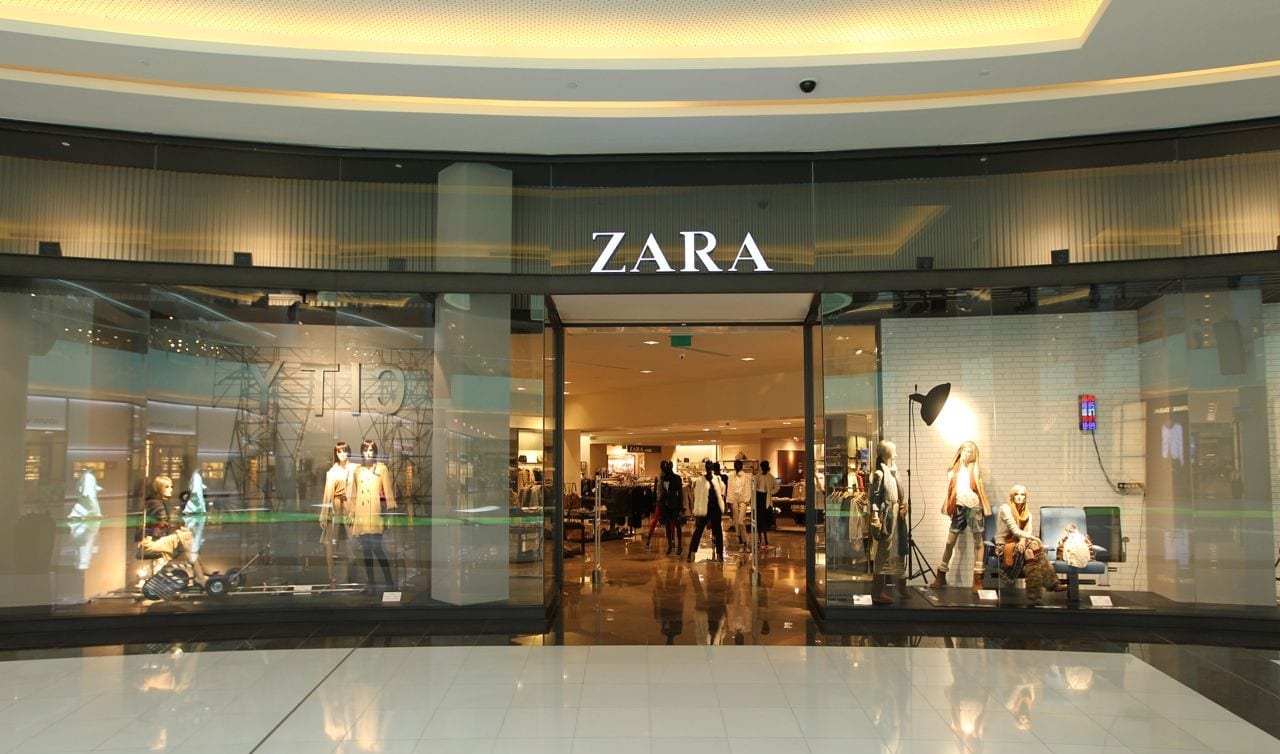
    Zara parent Inditex Group sales rose by 12 per cent in its latest trading year, to January 31, reaching €23.3 billion.

    Growth was achieved in every geographic region where the group is present, and includes contributions from debut stores in Vietnam and New Zealand.

    Same-store sales rose by 10 per cent, up from 8.5 per cent the previous year, with positive same-store sales growth in all geographies and across all brands.

    Net profit was €3.2 billion, up 10 per cent year-on-year, while earnings before interest and tax grew 8 per cent to €5.1 billion.

    Chairman and CEO Pablo described the result as positive against a backdrop of strong prior-year performance.

    Inditex opened 279 stores, net of closures, in 56 markets, across all its brands, ending the year with 7292 stores in 93 countries, a large proportion of the new ones in Asia, including its first Zara in Vietnam, in Ho Chi Minh City.  Other Zara stores opened in China, Thailand, Indonesia and Japan and it refurbished it flagship in the Shinjuku district in Tokyo, one of Japan’s most important shopping districts, which reopened to the public in November.

    A flagship Pull&Bear store opened in Windsor House in Hong Kong and new stores were opened by Massimo Dutti in India and by Oysho in Indonesia. Bershka refurbished its flagship on Nanjing Road East in Shanghai and Zara Home opened a global flagship on Garosu de Seoul in South Korea.

    Since the financial year ended, it has opened online stores in Malaysia and Singapore, taking its online platform to 43 markets.

  • Papua focuses on developing tourism in Biak and Supiori

    Papua focuses on developing tourism in Biak and Supiori

    The Papua administration has focused on developing tourism in the districts of Biak Numfor and Supiori.

    “So far, two regions have become a priority for tourism development, notably the districts of Biak Numfor and Supiori,” Ysh Is Matutina, head of the tourism office of Papua, stated here, Thursday.

    Tourism development has been carried out since 2016.

    Several tourist attractions and destinations in Supiori have been identified by the local tourism offices of Papua and Supiori.

    The development is aimed at attracting more domestic and foreign tourists.

    In Biak Numfor, the priority is to develop the Sausapor Beach. Several other tourist attractions and destinations are also being developed.

    Meanwhile, the number of foreign tourists visiting Biak Numfor District, Papua Province, increased to 3,399 people in 2016, as compared to 1,779 in the previous year.

    The increase was the result of intensified tourism promotion activities carried out by the Biak District administration, Enias Rumbewas, spokesman of the Biak Numfor district government, noted recently.

    Foreign tourists from Japan, the Netherlands, Australia, China, and several European countries, among others, visit Biak.

    The number of domestic tourist arrivals also surged from some 28 thousand in 2015 to 30 thousand in 2016.

    Among the existing tourist attractions in Biak are the World War II wreckage, maritime scenery, and its unique cultural diversity regularly showcased at the Biak Munara Wampasi festival.

    This year, the festival will be organized in July and will feature activities, such as traditional snap mor fishing, Mansusui boat race, and a visit to the Padaido/Aimando islands.

    The Biak Numfor district government has allocated funds worth Rp1 billion through the local Tourism Office to ensure the success of the cultural festival.

    Last year, the festival was held on Jul 1-4 to showcase traditional Japanese “katana” vintage samurai swords from World War II.

  • International Fish Force Academy Officially Opens

    International Fish Force Academy Officially Opens

    The International Fish Force Academy of Indonesia (IFFAI) has officially opened today on Thursday, March 16, 2017. The inauguration was attended by Maritime Affairs and Fishery Minister Susi Pudjiastuti and National Police Chief Tito Karnavian. “This [academy] is aimed at how to handle criminal cases,” said Minister Susi on Thursday, March 16, 2017.

    The IFFAI academy is a joint effort by the Ministry of Maritime Affairs and Fishery together with Indonesian National Police (Polri) and the 115 Task Force.

    Susi explained that IFFAI is an international-standard school to study about fishery related criminal activities. Fishery crimes are complex and not only involve fish theft. “It also includes human trafficking, forced work, and endangered animal trade.”

    Minister Susi revealed that it would require great skills in handling and a good coordination between agencies to counteract the problem. “Now, information sharing is outstanding in developing an international fisheries fish force,” Susi said.

    According to the head of research and human resource agency at the Marine Affairs and Fishery Ministry, Zulficar Mochtar, there are currently 24 investigators and public prosecutors from the Ministry, Police, Navy, and Supreme Court that are enlisted at the academy.

    Zulficar said that following new criminal modus related to maritime affairs, he hopes that the academy can produce law enforcers that are able to understand and analyze this sort of criminal activities.

    The other purpose of this academy is to continue to build an effective understanding and collaboration between law enforcement agencies and to produce agents of change in the field. Participants will be trained at Jakarta Center for Law Enforcement Cooperation (JCLEC) in Semarang.

  • Indonesia wants to be world’s fourth-largest ceramics producer

    Indonesia wants to be world’s fourth-largest ceramics producer

    The government aims to fully utilize the national production capacity of ceramics to make Indonesia the fourth-largest ceramics producer worldwide.

    Last year, Indonesia’s ceramics production reached 350 million square meters, or only 60.3 percent of its estimated total capacity of 580 million square meters a year.

    “Hence, we should increase it further. If we can reach 100 percent production capacity, we will be the world’s fourth-largest ceramics producer,” Industry Minister Airlangga Hartarto said on Thursday in a statement.

    Of the total production figure in 2016, about 87 percent were allocated to the domestic market, while the rest was exported to various countries in Asia, Europe and America.

    At that time, Indonesia produced 290 million tableware items, 120 million roof tiles and 5.4 million sanitary wares.

    Airlangga said the country had competitive advantages in the ceramics industry, especially considering its abundant natural resources that could be used for raw materials of ceramics. Moreover, Indonesia’s ceramics consumption is still relatively low compared to its Southeast Asian neighbors.

    “Now, we have to take strategic steps to boost the ceramics industry, by strengthening the industry’s structure, improving the quality of human resources, bringing technological innovations through research and development and developing the infrastructure,” Airlangga went on.

    Hence, the Industry Ministry has proposed to make the ceramics industry one of priorities to get a lower industrial gas price, as it needs a long-term supply of gas so that it can see a production boost in the long run.

  • RoRo shipping service to ply Mindanao-Indonesia route

    RoRo shipping service to ply Mindanao-Indonesia route

    The Philippine and Indonesian governments will launch next month a roll-on, roll-off shipping service that will link Davao and General Santos cities to Bitung City in Indonesia, an official of the Mindanao Development Authority (MinDA) said.

    Presidents Rodrigo Duterte of the Philippines and Joko Widodo of Indonesia have been invited to grace the launch in Davao City after the 30th ASEAN Summit in Manila, MinDA Assistant Secretary Romeo Montenegro said.

    He said the DGB shipping will fill a gap in transport connectivity, at least between the Philippines and the rest of the Brunei-Indonesia-Malaysia-Philippines-East Asean Growth Areas and ASEAN itself.

    If pursued, the shipping service will be the first of its kind in the 50-year old ASEAN grouping and will help boost efforts for economic integration.

    RoRo carries rolling cargoes and do not require cranes for loading or off-loading as they simply roll on and off the vessel, hence the name. The mode is economical, according to the Asian Development Bank, because it has removed cargo handling costs for labor and equipment, as well as cut the transport time.

    In 2012, the Japan International Cooperation Agency recommended in a study to set up a sea link dedicated to freight services between General Santos City in Mindanao and the Indonesian port of Bitung as the much needed maritime connectivity aimed to revive and strengthen trade between Indonesia and the Philippines.

    The Master Plan of ASEAN Connectivity 2025 cited the need for physical, institutional and people-to-people linkages to help achieve economic, political-security and sociocultural pillars of integration under the ASEAN Economic Community.

    Since its launching in 1994, BIMP EAGA cited improvements made in physical connectivity through improved roads and ports. The BIMP-EAGA Vision 2025 document, however, noted that most of the projects became “stand alone projects” showing benefits at the national level that “fail to clearly demonstrate sub-regional impacts.”

    “Only a few projects have accounted for the need to link the two priority economic corridors of BIMP-EAGA, namely the Western Borneo Economic Corridor (WBEC) and the Greater Sulu and Sulawesi Corridor (GSSC),” the document said.

    For the transport sector strategy of BIMP-EAGA, the goal based on BIMP EAGA Vision 2025 is “interconnected, seamless and safe multi-modal transport.”

    According to the BEV 2025 project list for 2017 to 2025, aside from the DGB route, other sea linkages were also eyed in BIMP-EAGA, such as Bitung-Tahuna-Gensan, Brooke’s Point-Sandakan-Kota Kinabalo, Brooke’s Point-Bataraza-Kudat and Brooke’s Point-Brunei.

    For air linkages, there will be flights for the following routes: Puerto Princesa-Kota Kinabalo, Mulu-Bandar Seri Begawan, Davao-Manado, Pontianak-Bandar Seri Begawan and Balikpapan-Bandar Seri Begawan.

    Poor transport connectivity 

    Poor sub-regional transport connectivity, as identified in the BIMP-EAGA Vision 2025 document, is one of its major challenges.

    It added that uneven economic development has led to different priorities, policies and regulations related to the transport sector.

    Montenegro said there is greater chance to address connectivity from 2017 to 2025 because a total of $23 billion, compared to only $1 billion in the previous decade, has been earmarked for priority infrastructure projects in the area.

    Over half of the amount goes to projects identified in Mindanao because the island needs more infrastructures. Also, a big ticket project, the Mindanao Railway System is in the pipeline.

    The Duterte administration is giving special focus on infrastructure.

    The DGB, Montenegro added, is strategic for the Philippines, not just for Mindanao because it provides a faster and cheaper access for domestic products to be moved in ASEAN and other parts of the world. Notably, Mindanao is physically separated from the other BIMP members.
    Regular flights needed

    Vicente Lao, chairperson of the Mindanao Business Council Philippine representative to the BIMP-EAGA Business Council private sector forum, said the opening of the route will be good for Mindanao and trading with the Indonesian areas in the ASEAN sub-region.

    “The governments should act together to make it happen. The private sector should come in to take advantage,” he told this week.

    Since regular flights between Davao City and Manado in Indonesia have been suspended since 2008, travelers between the two areas have relied only on chartered flights, he added.

    Lao said the service should be made regular to stop the dependency on chartered flights.
    “It is not dependable. It has to be regular trips to make sure it addresses the needs of the businessmen,” he said via telephone.

    He said this means a big cut in transport cost, too. MinDA said it takes three to five weeks to move products from Davao City to Manado.

    With the DGB RoRo route, the travel time will be cut to three days. PortCalls Asia estimated the savings to be around P75,000 (PUS$1,500) per 20-foot equivalent unit.

    Apart from intra-regional trade, the route can also serve as a cheaper alternative for transshipment of goods in Asia, Montenegro said.

    Davao City will use the privately-owned Kudos Port. In General Santos City, the Makar Wharf will be used and in Sulawesi, the Bitung Port, which was recently identified as an international port of entry to Indonesia.

    Enough goods?

    Trade and Industry Assistant Secretary Arturo Boncato Jr. said the revival of regular Davao-Manado flights should follow the opening of the shipping service.

    He said the new shipping link will be crucial in increasing trading in the BIMP EAGA, which is now considered as a building block of ASEAN.

    “Connectivity plays a critical role in trading and the goal of the ASEAN Economic Community,” he added.

    But Boncato, who is the Philippine senior official to the BIMP-EAGA, said while the easier direction is for the route to be used in the transshipment business in Asia, it should really facilitate and improve intra-regional trading in BIMP-EAGA.

    For his part, Bronx Hebrona, who chairs the Committee on ASEAN and BIMP-EAGA of the Regional Development Council in Region 12, asked: “But now when a ship is available, are there enough goods to be transported?”

    He said there is greater push for BIMP EAGA with President Duterte, who he said was instrumental in expediting the preparations for the DGB route opening.

    “It’s possible. But it’s a wait and see situation. We are waiting for concrete terms,” he added.

    Boncato said loading the vessel is already the easier part. The challenge is how to sustain the shipping service.

    Montenegro said a joint meeting is scheduled next week for the Philippine and Indonesian task forces created to prepare for the opening of the route.

    During the Davao General Santos Bitung Business Forum last month, Philippine Transport Undersecretary Fernando Juan Perez described the route as a “gold mine” saying it opens up a lot of opportunities for exporters from both countries.

    Rosan P. Roeslani, chair of the Indonesian Chamber of Commerce and Industry welcomed the proposed opening of the route, as quoted by Jakarta Post on March 15.

    “It is going to be easier to access the Philippine market through the Bitung Port [in North Sulawesi], especially for products and commodities from Indonesia’s eastern regions,” the source added.

    Institutional, governance problems

    According to the MinDA website, the DGB, as one of three pilot areas for the ASEAN RORO Network Initiative, was initially pushed in 2012 by the private sectors in the three cities.

    Policy restrictions in Indonesia like Bitung Port’s status, however, hampered the launch. In 2014, the Indonesian Ministry of Trade officially identified Bitung Port as an international port, allowing entry of food and beverages, electronics and garments.

    Montenegro told the problem has been addressed by greater private and public sector coordination.

    Under the ASEAN Single Aviation Market, BIMP-EAGA is pushing for the revival of air connectivity within its focus areas to increase not only tourism arrivals but also trade activity within and beyond the sub-region.

    Various airlines have previously serviced the route such as Bouraq Airlines (2002), Merpati Nusantara (2005) and Sriwijaya airlines (2006), which have ceased operations due in part to the companies’ financial and operational losses, according to the MinDA website.

    There were on and off availability of chartered flights after the suspension of regular flights.

    Two of the players included Mid Sea Express, an Indonesian air carrier and Wings Air, a subsidiary of the Indonesian carrier’s Lion Air.

    In his April 2016 dissertation titled “Trade Governance Model in the BIMP EAGA,” Soehardi, an Indonesian doctorate student at the University of Southeastern Philippines in Davao City, found that connectivity management in transport infrastructure is an important consideration among traders.

    “The current condition of BIMP EAGA trade governance is marred with institutional and governance problems,” he wrote in his conclusion.

    He added that it created difficulties and cumbersome engagements with small and medium traders in BIMP-EAGA corridors.

    He identified six attributes with “availability of ships/planes as the major indicator.” The others include sufficient cargo ships and airplanes to ferry goods from one country to another and  that a sufficiently equipped port of entry as a good indicator of trade governance.

    No connectivity, no tourists

    Retired government employee Virna Gomez of Davao City said that as a traveler she looks for destinations that do not only have commercial appeal.

    “There are also those who look for historical and cultural purposes. This is the kind that we can see in Indonesia, for example,” she said.

    For her, the idea of connecting Davao and General Santos to Bitung is welcome news, especially for cargo shipping. She said it would open up opportunities for local people to trade in the sub-region. She would also be interested to explore the tourist attractions there. She, however, hoped that a comfortable passenger shipping service should be offered side by side with the cargo ships.

    “It would be an entirely different set of expectations from passengers,” she added.

    But she said the prospects of local tourists like her to go to Indonesia will not depend only on the availability of flights or shipping services.

    “We will be encouraged to travel if there are budget fares available such as the promotional peso-fare package (offered by a Philippine airline), she said.

    She said that for tourists it all redounds to affordability of travel cost and availability of hotels that cater to backpackers.

    “We must also have more of those hotels so that we also draw tourists from Indonesia to our shores,” she added.

    Unlike archipelagic Indonesia, she said, Malaysia seems to be a more attractive destination because you can take a bus or a train in going from one destination to another.

    “But I like to go to Bali and Yogyakarta, given the chance,” she said.

    Gomez, who in 2010 set up a small travel agency to keep herself busy, said she rarely get bookings for travel to Indonesia or Malaysia.

    ’Get acts together’

    Businesswoman Mary Ann Montemayor said this should not be a cause for discouragement.

    She said the nature of BIMP EAGA is really “going slow” and small, not grand, so hard work is needed to push ahead.

    But Montemayor, who sat at the BIMP EAGA Tourism Council from 1998 to 2008, said private and public sectors should get their acts together.

    “By all means, the impasse should be broken. It’s impossible to do trading without connectivity,” she added.

    Any aggressive marketing, she said, could help tourism and trade but it should be backed by physical connectivity.

    Assistance has been extended to micro, small and medium enterprises to help them compete in the ASEAN market. But Montemayor said connectivity will their chances.

    She said the ease of travel due to the Davao-Manado flights enabled business to pick up, although not as fast as expected.

    “When it happened, the flights were already suspended,” she said.

    She argued that it’s not entirely for the lack of attractions but that other destinations just had the edge in the competition.

    “The challenge is how to build up the market and prove to the airlines that it’s worth the risk,” she said in the sidelines of an ASEAN meeting in Davao last month.

    Like home

    Joanna Ruth Paloma, an English teacher at Bukidnon State University, recalled fond memories of her visit Manado in June 2012. She was then a member of a 40-person delegation of the university chorale who performed there for the Philippine Independence Day celebration organized by the Philippine Consulate.

    The group flew with Wings Air, an Indonesian airline serving the route with a 70-seater aircraft.

    Joanna said they traveled to another city and country but felt like she was home. “I felt like we were closely related in culture and language (separated only by the seas).”

    Indonesian food, she added, is familiar although a lot spicier. The style of the houses and buildings was also similar. In 2012, she compared Manado to Cagayan de Oro City. She said Manado folks were hospitable and were fond of Philippine tourists.

    She was saddened that there are no more regular flights serving the route.

    “I hope it will be revived. It’s good to connect with our neighbors. There were differences but there must be more similarities. It’s worth exploring,” she added.

  • Lazada Indonesia aligns business model with Alibaba

    Lazada Indonesia aligns business model with Alibaba

    The Indonesian unit of Lazada said it plans to focus on adding small merchants to its online marketplace, emulating the strategy of Alibaba Group Holding, the Chinese e-commerce company that acquired it last year.

    Florian Holm, Lazada Indonesia’s co-chief executive, told reporters on Wednesday the company will launch a campaign in April which will also mark the first anniversary of its acquisition by Alibaba to attract more small businesses online. It already partners some 15,000 third-party sellers in Indonesia. Holm said Lazada also plans to enable some merchants to sell products to shoppers in China through Alibaba’s Taobao e-commerce platform.

    “We are learning from Alibaba and trying to apply its learnings in how we can foster more entrepreneurship,” Holm said. “We want to help all the people out there who have great business ideas … because in e-commerce you can try with minimal cost.”

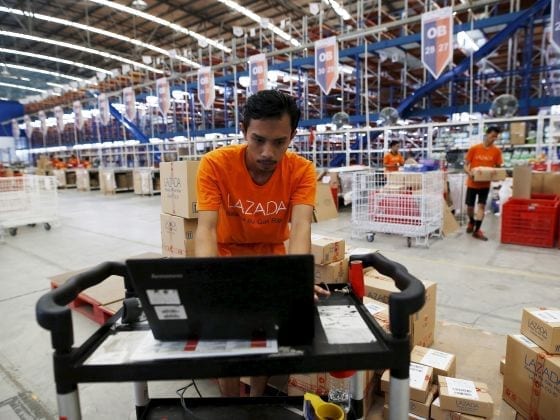
    Lazada operates in six Southeast Asian countries, and entered Indonesia in 2012 as an online retailer buying merchandise from electronic and fashion companies to sell on its website. It began selling products from third-party merchants the following year, and according to Holm these now account for more than 80% of products sold on the platform, and up to 30% of products shipped from Lazada’s three warehouses in the country.

    Lazada was one of the largest e-commerce operations in Indonesia, but Alibaba’s $1 billion acquisition came at a time when it was facing increasingly stiff competition from local rivals like SoftBank-backed Tokopedia, Lippo Group’s MatahariMall.com, and Bukalapak, which is funded by a local media mogul.

    Small businesses play a large role in the Indonesian economy due to the lack of modern retail outlets outside major cities, and this is fueling the exponential growth of e-commerce, which is estimated to rise from $1.7 billion in 2015 to $46 billion in 2025.

    The Lazada acquisition has prompted speculation about the possible rollout in Indonesia of Alipay, Alibaba’s affiliated payment service. Holm said adding payment options is always a priority at Lazada, but said there is “no further news” on Alipay.

  • Latest iPhone series to enter Indonesian market

    Latest iPhone series to enter Indonesian market

    United States technology giant Apple Inc. has secured official approval to once again sell its signature iPhone mobile phone series in Indonesia after fulfilling a requirement to use a minimum of 30 percent local components in smartphones distributed throughout the country, locally known as TKDN.

    The Industry Ministry’s director for metals, machinery, transportations and electronics, I Gusti Putu Suryawirawan, confirmed on Sunday that the ministry had granted the approval after Apple agreed to build supporting infrastructure to fulfill the requirement.

    Meanwhile, Apple’s official partner, telecommunications company Smartfren, has announced that the company will open up pre-order services for Apple’s iPhone 7 and 7 Plus on March 24, according to company spokesman Yondi Hartanto.

    “The products will arrive in customers’ hands after they create pre-orders. We don’t want to discuss the .exact date, but it’s usually no longer than a week after the pre-order,” Yondi said on Sunday via telephone.

    As the only telecommunications firm officially partnering with Apple, the company will help sell the products with completed data packages, Yondi said, adding that Apple had also partnered with some electronics distributors.

    Pre-orders for the iPhone 7 and 7 Plus for Smartfren can be organized through the company’s official website or through its 13 galleries spread across several big cities in Indonesia, he added.

  • NetSol to Deploy Mobile Origination/Approval for Indonesian Company

    NetSol to Deploy Mobile Origination/Approval for Indonesian Company

    NetSol Technologies signed an agreement for its mobile origination (point of sale) system with PT Mizuho Balimor Finance (MBF) in Indonesia.

    NetSol was named MBF’s preferred vendor in the region. The contract includes product license, a five-year maintenance agreement and agreed customizations rates for both applications.

    MBF is an Indonesian multi-finance companies specializing in the auto financing domain.

    The application being deployed will be used by field teams (salesman/dealers) to initiate credit applications and provide quick approval and turnaround to customers seeking finance and lease products from MBF.

    “Our solution will increase operational efficiencies for PT. Mizuho Balimor Finance and bring concrete results in terms of costs and reduced contract conversion times. Mizuho Balimor is a pioneering company which turned towards the latest, next-generation technologies for future growth and progression. We are glad to work with them and implement our ground-breaking solution,” said Najeeb Ghauri, founder, chairman and CEO of NetSol Technologies. “We look forward to further creating business value for them and fostering this relationship in the coming years.”

    NetSol Technologies is a worldwide provider of IT and enterprise software solutions primarily serving the global leasing and financing industry.

  • Indonesia’s Bonded Logistic Centers Facilitated to Reduce Logistic Cost

    Indonesia’s Bonded Logistic Centers Facilitated to Reduce Logistic Cost

    The government will provide facility for Bonded Logistic Centers (PLB) to improve efficiency and reduce logistic cost for industry, support provision of basic materials and facilitate exports and basic material imports.

    “The gist is to cut logistic cost,” Trade Minister Enggartiasto Lukita said on the sidelines of commissioning a PLB at the Grahadi State Building here on Wednesday night. In the commissioning ceremony almost midnight, the minister and East Java Governor Soekarwo witnessed the signing of a number of agreements in the trade sector.

    The cooperation agreements were signed between Director of PT Indra Jaya Swastika (IJS) and the Indonesian Textile Association, the Indonesian Footwear Association, the Indonesian Association of Timber and Furniture, on the utilization of PLBs. PLBs are a concrete form of the follow up of the third Economic Policy Package, the Trade Minister said.

    He said currently there are 32 units of PLB located in various areas including Surabaya, Karawang, Cikarang, Cibitung, Purwakarta, Cilegon, Cakung, Bandung, Denpasar, Balikpapan, Aceh , etc. “PLBs support various industrial sectors including oil and gas, mining, textile, chemical, food, cosmetic and automotive sectors,” he said.

    He said in 2016, the country’s trade had a surplus of US$8.8 billion or an increase from US$7.5 billion in 2015. In 2017, the government hopes to post an economic growth of 5.5 percent – 5.8 percent , up from 5.1 percent in 2016 with target at 6.1 percent set for 2018. The minister said he was optimistic the 2017 targets would be reached with a series of breakthroughs in the trade sector.

    Meanwhile, PT Indra Jaya Swastika, a logistic company, said it supports the East Java administration in its program to improve industrial competitiveness. “PLB IJS comes to support various industries mainly shoe making industry, food industry and small and medium industries,” its president director Utami Prasetiawati said.

  • Indonesia’s Lippo & Korea’s Lotte form e-commerce JV

    Indonesia’s Lippo & Korea’s Lotte form e-commerce JV

    Indonesia’s Salim Group is planning a major foray into e-commerce this year in partnership with South Korea’s Lotte.

    Indo Lotte Makmur, a 50-50 JV by the two conglomerates, will launch the iLotte online shopping platform as soon as July, putting US$88 million into the project initially. The service will be geared primarily toward women in their 20s and 30s, and feature name-brand cosmetics sold in South Korea as well as offerings from Lotte’s online mall.

    A robust infrastructure built up over the course of years will let Salim achieve economies of scale for the e-commerce business, says Indo Lotte CFO Dani Sumarsono, who is overseeing online business at Indonesia’s largest conglomerate.

    “E-commerce is not only about digital technology but about moving physical products,” he says. “We have been investing in infrastructure for a long time.”

    Indo Lotte president, a former executive at Lotte’s e-commerce business in South Korea, says Salim has a lot of infrastructure, while Lotte can bring know-how and technology.

    Indonesia’s e-commerce market is expected to grow to $46 billion in 2025 from just $1.7 billion a decade earlier, according to research by Google and Singapore’s Temasek Holdings. Under this scenario, Indonesia would make up more than half of the total Southeast Asian e-commerce market and would follow China and India as the third-largest national market in Asia, excluding Japan. A doubling of internet users, from 92 million to 215 million, is seen as the driver of this expansion.

    Expensive market

    With chronic congestion of its major cities and a lack of basic infrastructure on its islands, Indonesia is an expensive market to service. Logistics costs are 27 per cent of GDP, compared with 20 per cent in Thailand and 13 per cent in Malaysia, according to the World Bank.

    However, Salim’s 13,000-plus Indomaret convenience stores across Indonesia can be used as places to pay for and pick up goods ordered online. Meanwhile, a shipping unit that delivers instant noodles made by group member Indofood Sukses Makmur to more than 30,000 small towns nationwide can help bolster efficiency.

    Salim has also created a JV with Tokyo-based startup Liquid to explore payments using fingerprint authentication, with credit-card ownership of less than one in every 10 adults in Indonesia. Liquid’s system allowing pre-registered shoppers to pay via fingerprint scanner has been deployed at Japanese convenience stores. The JV will test the system for 500,000 Salim employees initially and targets commercial application within the year.

    Meanwhile, another Indonesian conglomerate, Lippo Group, is developing an electronic payment service for use on MatahariMall.com, which Lippo launched in 2015.