Tag: Indonesia

  • Marina project in Labuan Bajo to cost Rp300 billion

    Marina project in Labuan Bajo to cost Rp300 billion

    Tourism Minister Arief Yahya said construction of marina port for tourist boats in Labuan Bajo, Flores, would need Rp300 billion.

    The port would facilitate growing number of international tourist boats visiting that area, the minister told reporters here on Friday.

    Arief Yahya was here to attend a meeting to strengthen tourism cooperation between the East Nusa Tenggara provincial administration and a US operator of international tourist boats, Carnival.

    The meeting took place on board the Pacific Eden that landed on the Benoa port, Bali, on Thursday.

    Also attending the meeting include Coordinating Minister for Maritime Affairs Luhut Binsar Pandjaitan, Transport Minister Budi Karya Sumadi and East Nusa Tenggara (NTT) Governor Frans Lebu Raya.

    Arief said the budget for the marina project in Labuan Bajo, which is one of the countrys 10 priority destinations would include fund from the state budget and the private sector.

    “With the fund we would build a big and long port in Labuan Bajo to allow international pleasure boats to land there,” the minister said.

    He said around the same amount of budget has also been set aside by the government in cooperation with the private sector for development of an airport named Komodo Airport in Labuan Bajo.

    The airport is named after the Komodo island, the habitat of Komodo, the ancient giant lizards, found only in the Indonesian island, which one of World wonders.

    NTT Governor Frans Lebu Raya said the Central Government supports the tourism cooperation with Carnival.

    “The central government would built the marina, to be completed in 2019, at Labuan Bajo and various other supporting facilities to make Lbuan Bajo a “home port” for international pleasure boats,” he said.

    Labuan Bajo would be the main gate for tourists coming on board pleasure boats to visits tourist objects in Flores, Lembata, Alor and Sumba, he said, adding the port is designed to be able to accommodate tourist boat with thousands of passengers.

    The port would contribute to economic development in that area with thousands of foreign tourists expected to visit and land at the port when it is operational, he said.

    The problem so far is NTT has no modern marine to accommodate international tourist boats, he said.
  • AirAsia Indonesia to serve new international routes

    AirAsia Indonesia to serve new international routes

    Low-cost airline AirAsia has announced plans to open new international routes to India, Japan, Macau and Shenzhen.

    A Denpasar – Kuala Lumpur – Mumbai route will be opened on May 19, with seven flights a week; a Bali – Narita route will be served four times a week; a Jakarta – Macau service will become available on Aug. 17 this year, followed by a Jakarta – Singapore – Shenzen route on Oct. 17.

    “AirAsia is number one when it comes to bringing overseas tourists to Indonesia. The airline contributes 25 percent, while the airline that takes the second spot only contributes half of that,” Tourism Minister Arief Yahya said during a recent visit to the AirAsia Indonesia offices.

    “We’re targeting to bring two million overseas tourists to Indonesia […] We’re going to add more flights to every destination, especially China and India. Currently, AirAsia Indonesia has 22 Airbus A320 and two Airbus A330 aircraft, and we’re going to add two more airplanes,” said AirAsia Indonesia CEO Dendy Kurniawan.

  • Indonesia raises bet on lucrative cruise industry

    Indonesia raises bet on lucrative cruise industry

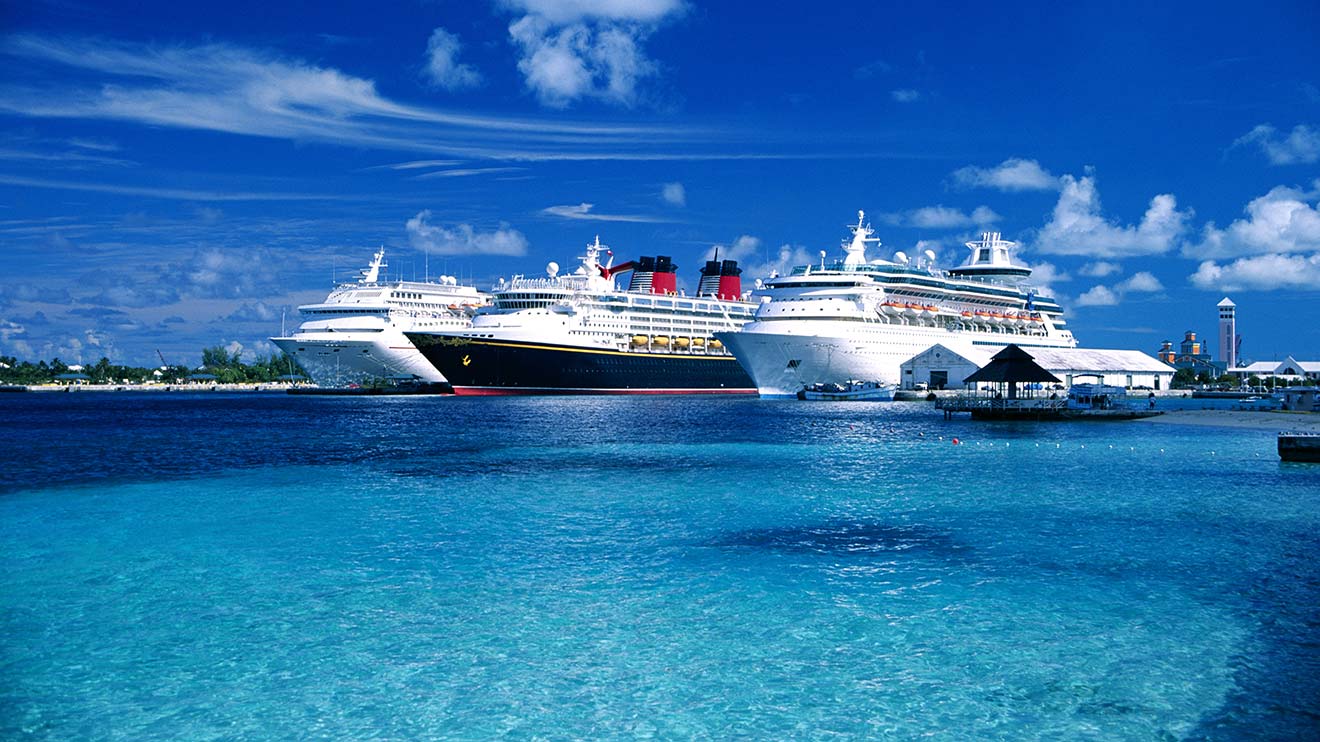
    The shimmering sound of Balinese music played by a local gamelan group welcomed the Pacific Eden cruise ship as it approached Benoa Port in Bali on Thursday Guided by a tugboat, the 219-meter-long vessel, operated by P&O Cruises Australia, needed 30 minutes to smoothly dock at the port that sunny afternoon.

    Carrying over 1,000 tourists, mostly Australians, Pacific Eden has made a breakthrough in Indonesia’s tourist industry as it became the first cruise ship ever docked at a local port.

    “This makes a huge difference in the experience of our guests,” P&O Cruises Australia president Sture Myrmell said to government officials invited onboard to celebrate the historical milestone.

    Despite its potential in coastal and maritime tourism, Indonesia has been struggling to tap into opportunities of cruise ships coming to the archipelago.

    Previously, incoming cruise ships preferred to moor off shore mainly due to technicalities, such as lack of supporting infrastructure and the absence of a reliable under-water topographic maps, known as bathymetric charts. Passengers who want to go ashore were then transported on small boats.

    In the case of Pacific Eden, the docking was made possible after the government completed the bathymetric chart for Benoa water and after state-owned port operator PT Pelabuhan Indonesia (Pelindo) III, which manages Benoa Port, upgraded the facility to a cruise terminal.

    “We sent supporting data about Benoa waters to P&O executives so their ship captains could devise strategies on how to enter the port safely. Their presence here proves that we have finally convinced them about safety,” Pelindo III general manager for Benoa Port Ardhy Wahyu Basuki said.

    Last year, Indonesia welcomed 11.5 million foreign tourists, with those from China topping the list at 1.43 million arrivals.

    President Joko “Jokowi” Widodo has set his sights on developing the tourism sector. His administration hopes for 20 million foreign tourist arrivals in 2019, with this year’s target standing at 15 million.

    The number of tourists entering the country by cruise ships has shown progress, but still only makes up a tiny fraction of the total incoming foreign tourists.

    Last year, visiting cruise ships made 350 stops in Indonesia, down from 400 stops in 2015, said Tourism Minister Arief Yahya. The number of passengers onboard, however, increased by 30 percent to 260,000 from 200,000.

    “This shows that there is a changing trend in which passengers prefer to travel on mediumsized cruises instead of small ones,” Arief told reporters, underlining the importance of port infrastructure upgrades to accommodate such a trend.

    Apart from huge, lavish vessels, the cruise business is known to attract high spenders. A family of four, for example, should pay A$7,200 (US$5,400) to stay in a Pacific Eden suite room and enjoy a 12-night journey to popular tourist destinations, such as Bali, Lombok and Komodo National Park.

    According to data from Cruise Lines International Association (CLIA), there were 23.2 million people traveling on cruise ships in 2015, with the United States accounting for the most passengers at 11.3 million, followed by Germany, Australia and China. The figure is predicted to increase to 25.3 million this year.

    Arief did not mention the government’s short-term target for incoming cruise passengers. He, however, pointed to Thursday’s inaugural docking as momentum for the government to propel the industry, including by upgrading port infrastructure on Bali, which the government expected to become a regional cruise hub, as well as by reviewing cost structures that might hamper the industry’s growth.

    Indonesian ports currently charge a cruise ship between $60,000 and $100,000 daily for docking fees, much higher than regional competitors that can charge as low as $20,000 per day, Arief said.

    “This has dragged down our competitiveness in the sector,” he said. “Thus, deregulations and infrastructure upgrades should go hand-in-hand to boost the sector.”

  • Sales of Indonesian Coffee in Italy Expected to Rise

    Sales of Indonesian Coffee in Italy Expected to Rise

    Indonesian Ambassador to Italy Esti Andayani targets economic growth of Indonesia-Italy investment and trade to rise 25 percent during her term of office in Rome.

    “25 percent is the overall figure, yes, both in investment trade,” Esti said in Jakarta (15/4).

    In 2015, the total of Italy investment realization reached US$ 97,99 million that made it the tenth largest investor in Indonesia. Based the data of Foreign Affair Ministry, the trade volume of both countries was US$ 3,82 billion with Indonesia’s surplus as much as US$ 433 million.

    Esti said that coffee is the main commodity promoted in Italy. Its export is worth US$ 58,8 million or the third largest export after palm (US$ 975 million), and resin (US$ 93 million).

    Esti claimed to have prepared a number of strategies to draw the attention of Indonesian coffee exporters to Italian market, one of which is by means of integrated promotion through participating in annual “World Tourism Expo” in Italy.

    “Well, tourism here not only promotes the place, but also everything, including coffee,” she added.

  • Gurmeet Choudhary approached for Indonesian TV Show

    Gurmeet Choudhary approached for Indonesian TV Show

    Gurmeet Choudhary, who was last seen onscreen in “Laali Ki Shaadi Mein Laaddoo Deewana” has been approached to feature in an Indonesian television show. The actor says it came as a surprise to him.

    “It came as a pleasant surprise. The makers recently flew down to India to meet me and narrated me the concept of the show they are planning to make there. I liked the idea and will take a final call on the show soon,” Gurmeet said in a statement.

    The actor’s show “Geet – Hui Sabse Parayi” recently released in Indonesia (in Indonesian language) and has been hugely appreciated by the people there. He also starred in bollywood films like “Khamoshiyan”.

    According to sources, Gurmeet loved the idea and is considering the offer. He is expected to fly to Indonesia in May for the final discussion on the TV show.

  • Telkomsel demonstrates FDD Massive MIMO

    Telkomsel demonstrates FDD Massive MIMO

    Indonesia’s Telkomsel has completed the market’s first FDD Massive MIMO demonstration as part of its 5G evolution roadmap.

    The operator teamed up with Huawei to conduct the demonstration, which achieved five times the capacity of traditional FDD LTE 2×2 MIMO.

    Since Telkomsel started building its network at the end of 2014, the operator’s LTE userbase has reached more than 19 million. The large number of concurrent users and Indonesia’s scarce spectrum resources will inevitably lead to network congestion in high-traffic areas, the companies said.

    In anticipation of congestion issues, Telkomsel and Huawei have established a joint innovation center focused on the research of high-capacity pre-5G network solutions such as Massive MIMO.

    “Telkomsel has always aimed to bring the best MBB experience to Indonesian users by leveraging on cutting edge technologies. Multi-antenna technology fully meets our requirements for improving  customer experience,” Telkomsel network director Sukardi Silalahi said.

    “Massive MIMO can increase the capacity without adding sites and spectrum, thus reducing the cost per bit. I am very satisfied with the demonstration results today.”

    He pledged to continue working with Huawei at the Joint Innovation Center to explore other network technology breakthroughs.

  • Facebook Disrupted International Fake Account Operation in Indonesia

    Facebook Disrupted International Fake Account Operation in Indonesia

    Facebook on Friday said it disrupted an international fake account operation that was firing off inauthentic ‘likes’ and bogus comments to win friends it would then pound with spam.

    Facebook’s security team spent six months fighting to neutralize what they saw as a coordinated campaign, according to Shabnam Shaik, a company security manager.

    ‘Our systems were able to identify a large portion of this illegitimate activity — and to remove a substantial number of inauthentic likes,’ Shaik said in a blog post.

    ‘By disrupting the campaign now, we expect that we will prevent this network of spammers from reaching its end goal of sending inauthentic material to large numbers of people.’

    The ring used accounts in a number of countries including Bangladesh, Indonesia and Saudi Arabia. The group tried to mask its activities with tactics like connecting with the social network through ‘proxy’ servers to disguise where ‘likes,’ posts or other communications were originating, according to Shaik.

    Facebook said the campaign aimed to trick people into connecting as friends they would later target with spam. The company said it had derailed the operation early enough to spare users that fate.

    The leading social network this week said it has started weeding out bogus accounts by watching for suspicious behavior such as repetitive posts or torrents of messages. The security improvement was described as being part of a broader effort to rid the leading social network of hoaxes, misinformation and fake news by verifying people’s identities.

    ‘We’ve found that when people represent themselves on Facebook the same way they do in real life, they act responsibly,’ Shaik said. ‘Fake accounts don’t follow this pattern, and are closely related to the creation and spread of spam.’

    Under pressure to stymie the spread of fake news, Facebook has taken a series of steps including making it easier to report such posts and harder to earn money from them.

  • Manila Water to submit scaled-up proposals in projects in both Myanmar and Indonesia

    Manila Water to submit scaled-up proposals in projects in both Myanmar and Indonesia

    Manila Water the water concessionaire for the East Zone of Metro Manila, said it would submit scaled-up proposals within the third quarter of the year for possible water concessions in Myanmar and Indonesia following the completion of its pilot projects.

    In a news briefing after the firm’s annual stockholders’ meeting, the company’s Chief Operating Officer for New Business Operations Virgilio Rivera Jr. said these proposals will be for Yangon City in Myanmar and Bandung City in Indonesia.

    Rivera said the company submitted their report for the successful pilot project that drastically reduces the nonrevenue water in Yangon and expect to complete a similar pilot project in Bandung City, the capital of West Java.

    “With the completion of these pilot projects, we have shown them our best practices and are now ready to propose a scaled-up version,” Rivera said.

    The company’s new President and CEO Ferdinand de la Cruz said it is ready to take on much bigger projects in these cities to the extent of a full-scale water concession like what they have in the East Service Zone of Metro Manila. De la Cruz said the company’s expansion into countries in Southeast Asia will contribute to their goal of achieving a net income of P11.5 billion by 2020 and that half of this should come from businesses other than its Metro Manila concession, currently its single-biggest revenue generator.

    Rivera said the company intends to do more pilot projects in other parts of the Philippines and Southeast Asia as local government units and water districts are more receptive to tapping Manila Water based on its Metro Manila experience.

    In Yangon it partnered with Mitsubishi Corp. to adopt two district metering areas located in South Okkalapa and Insein.

    By the end of 2016, nonrevenue levels in both townships dropped to 14 percent from 54 percent.

    For Bandung, Indonesia’s fourth-largest city, a population of 2.4 million, the company has reduced non-revenue water from a high of 59 percent in September last year to 23 percent in just three months.

    Inc., Rivera said they have also been tapped by SM Development Corp. for five residential projects and will be signing up for five more by early next year.

  • Indonesia`s exports up 15.68 percent in March 2017

    Indonesia`s exports up 15.68 percent in March 2017

    Indonesias exports were up 15.68 percent in March, from US$12.61 billion in the previous month to $14.59 billion, according to Central Bureau of Statistics (BPS) here on Monday.

    BPS chief Suhariyanto stated at a press conference that the hike was dominated by an increase in the non-oil and gas exports reaching $13.11 billion, or up 14.86 percent, from the previous month.

    “The export value in March 2017 was recorded at $14.59 billion, up 15.68 percent from Feb. Compared to March 2016, the hike reached 23.55 percent,” he noted.

    The hike in the non-oil and gas exports in March was contributed by an increase in the exports of mineral fuels reaching $459.4 million, or 32.84 percent, he noted, adding that the exports of chemical products were down 9.05 percent, or $31.8 million.

    Non-oil and gas export destination countries in March 2017 include China, with exports to the country reaching $1.7 billion; the US, reaching $1.51 billion; and Japan, recorded at $1.26 billion. All of them contributed 34.72 percent of the total exports. Exports to Europe or 28 countries reached $1.46 billion.

    In total, Indonesias exports from Jan to March 2017 reached $40.61 billion, or rose 20.84 percent from the same period in 2016.

    Non-oil and gas exports in the period were recorded at $36.66 billion, comprising 90.27 percent of the countrys total exports.

    In terms of sectors, exports from processing industries from Jan to March 2017 rose 19.93 percent from the same period in 2016, while agricultural exports jumped 22.84 percent and mining products and others rose 32.26 percent.

    With region provinces of origin, most of the countrys exports were from West Java, valued at $7.00 billion, or 17.23 percent of the total; followed by East Java at $4.43 billion, or 10.90 percent; and Riau at $4.40 billion, or 10.83 percent.

    Indonesias non-oil and gas markets in the period from Jan to March 2017 include China, worth $4.96 billion, or 12.79 percent; the US, worth $4.29 billion, or 11.70 percent; and India, worth $3.41 billion, or 9.29 percent.

  • Cloud Services in Indonesia Provided by Japan’s Leading Network Solutions

    Cloud Services in Indonesia Provided by Japan’s Leading Network Solutions

    FPT Telecom of Vietnam and Internet Initiative Japan on Thursday launched a cloud computing service for individual, business and enterprise customers in Vietnam.

    FPT Telecom has called the new service, FPT HI GIO Cloud, the first full-scale, full-spectrum and quality cloud computing service in Vietnam. Nguyen Van Khoa, general director of FPT Telecom, which is part of leading Vietnamese information technology group FPT, stressed the new service would provide access computing services via a stable network.

    The product enables users to quickly launch virtual machines instead of investing in physical devices.”We will lead the market in Vietnam to tap demand for cloud computing,” General Director of IIJ Global Solutions Vietnam Ryo Matsumoto told Retail News.

    FPT Telecom aims to acquire around 4,000 enterprise customers within a year. FPT Telecom and IIJ also aim to tap individual customers in a country where 70% of the more than 90 million population is expected to have access to the internet by 2020.

    IIJ, one of Japan’s leading internet and network solutions providers, has already launched similar cloud services in Singapore, Indonesia, and Thailand. FPT Telecom and IIJ are looking to launch additional joint projects related to security and network management in the coming years, according to Matsumoto.

    In Vietnam global players such as IBM, Google, Symantec, Amazon, Oracle and Microsoft have launched their own cloud and joint services by teaming up with local telecom companies and using mobile broadband infrastructure. FPT and IIJ’s partnership will further intensify competition in this area.

    Vietnam ranked 14th in the Asia-Pacific region in the Asia Cloud Computing Association’s Cloud Readiness Index 2016, coming after Singapore, Malaysia, Thailand, the Philippines and Indonesia.

  • Garuda Indonesia Posts USD 9.36mn Profit

    Garuda Indonesia Posts USD 9.36mn Profit

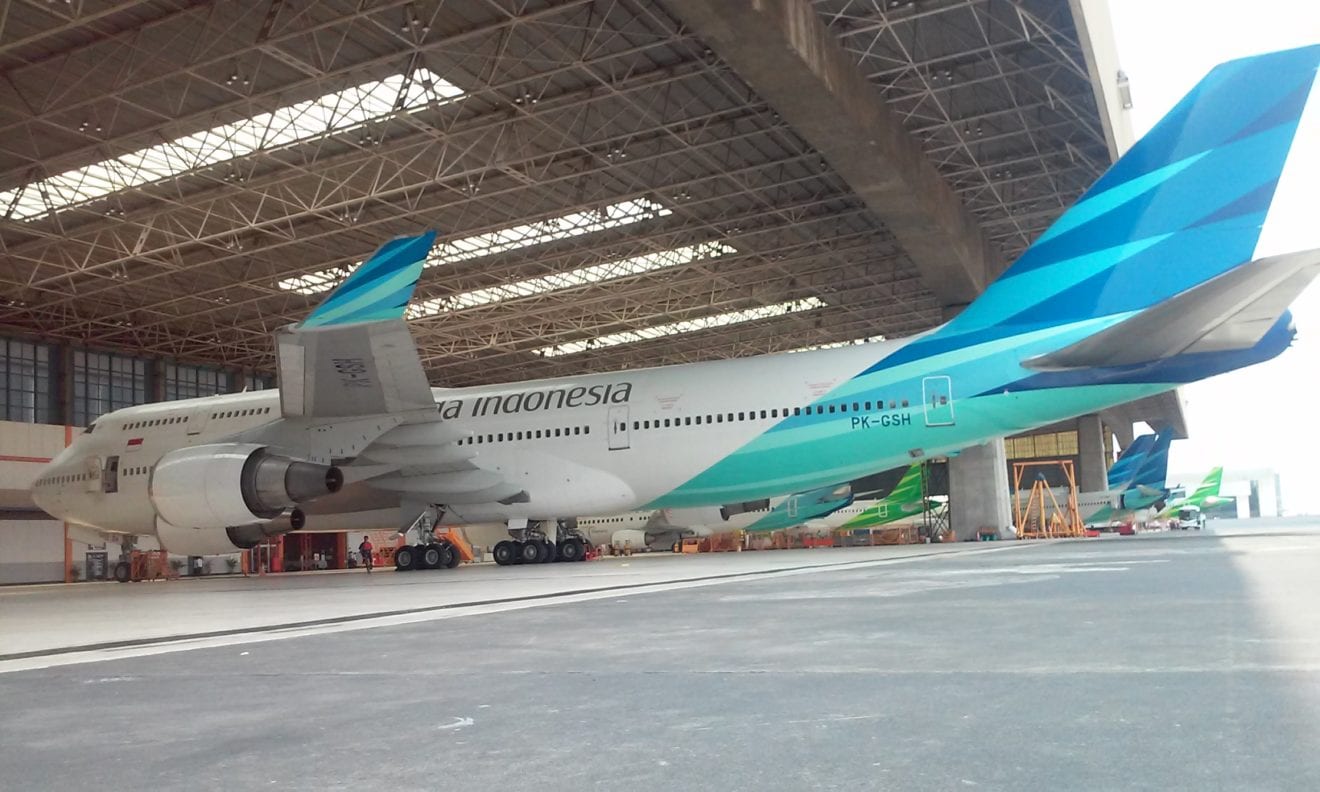
    Flag carrier PT Garuda Indonesia (Persero) posted a net profit of USD 9.36 million, or IDR 124.5 billion, as of the end of 2016, as flight frequency increases by 9.89 percent to 274,969 flights from 249,974 in 2015.

    “The increase in flight frequency was in line with the company’s effort to expand both domestic and international flights,” Garuda Indonesia Vice President of Corporate Communication Benny S. Butarbutar said in a written statement received in Jakarta on Wednesday, April 12, 2017.

    In 2016, the company carried 35 million passengers by both Garuda Indonesia and its subsidiary Citilink Indonesia. Garuda Indonesia Group also recorded increase in ancillary revenue, strategic business unit (SBU) revenue, as well as other sectors at US$392 million or a 13.7 percent increase compared to 2015 at US$344.4 million.

    The press release stated that Garuda Indonesia’s on time performance (OTP) in 2016 was recorded at 89.51 percent, an increase compared to the previous year at 88 percent. The OTP figure was achieved despite challenges in developing aviation operational infrastructures, such as service migration to newly opened Terminal 3 of Soekarno-Hatta Airport and weather-related force majeure.

    The average occupancy rate in 2016 was 73.1 percent for Garuda and 76.8 percent for Citilink. As for air cargo business, Garuda Indonesia managed to improve air cargo transport to 415.824 tons, or an 18.22 percent increase compared to 2015 at 351.724 tons.

    All in all, the total air cargo revenue in 2016 amounted to US$219.15 million or a 16.65 percent increase compared to 2015 at US$187.87 million. In 2016, Garuda Indonesia Group added its flight capacity as part of fleet revitalization by purchasing 17 aircraft, namely four ATR 72-600 aircraft, four A330-300 aircraft, one B777-300ER aircraft and eight A330-200 aircraft. As such, as of the end of 2016, Garuda Indonesia Group operates 196 aircraft with an average age of 4.6 years.

  • Game marketplace “itemku” has raised USD 1.2 Million

    Game marketplace “itemku” has raised USD 1.2 Million

    Five Jack (fivejack.com), a company that operates an e-commerce game platform called itemku (itemku.com) for gamers in Indonesia, recently raised an additional investment of USD 1.2 million.

    On April 10th 2017, Five Jack announced to have raised investments from 500 Startups and Korean venture capitals, an addition to investments made by BonAngels in 2014 and 500 Startups in 2015. This adds to an accumulated total investment of nearly USD 1.7 million.

    Denis Kim, CEO of Five Jack, commented that itemku’s rapid growth averaging 30% a month is what attracts new and existing investors to back the company. “Our team has extensive experience in the local game market in Indonesia and Southeast Asia, an industry that has high growth potential in the near future.”

    With a population of 250 million, Indonesia is an emerging market where the e-commerce-based tech industry has been growing rapidly in the past few years.

    Five Jack was founded in South Korea and Indonesia in 2013 and currently operates game e-commerce platform, itemku, in Indonesia.

    In March, Five Jack launched a trial version of gokil (gokil.me), a service developed to identify the potential development of game community in Indonesia. The service is building on the existing customer base of hardcore gamers that itemku has secured.

    In the second half of 2017, Five Jack plans to expand its presence in Southeast Asia while keep growing their business in Indonesia.

    Indonesia, where Five Jack is currently focusing its business efforts on, is a market with great potential. Success in Indonesia directly depends on the company’s ability to localize its business and tailor their service to adapt to the local market. I expect Five Jack to grow and become one of the top game communities, not only in Indonesia, but also in Southeast Asia in general,” said Kim-Jong-kap, Chief Executive Director of K-ICT Born2Global Centre, a startup incubator in South Korea.

    More information about Five Jack, including recruitment information, can be found on the company’s website (fivejack.com).

  • Papua releases export containers to China

    Papua releases export containers to China

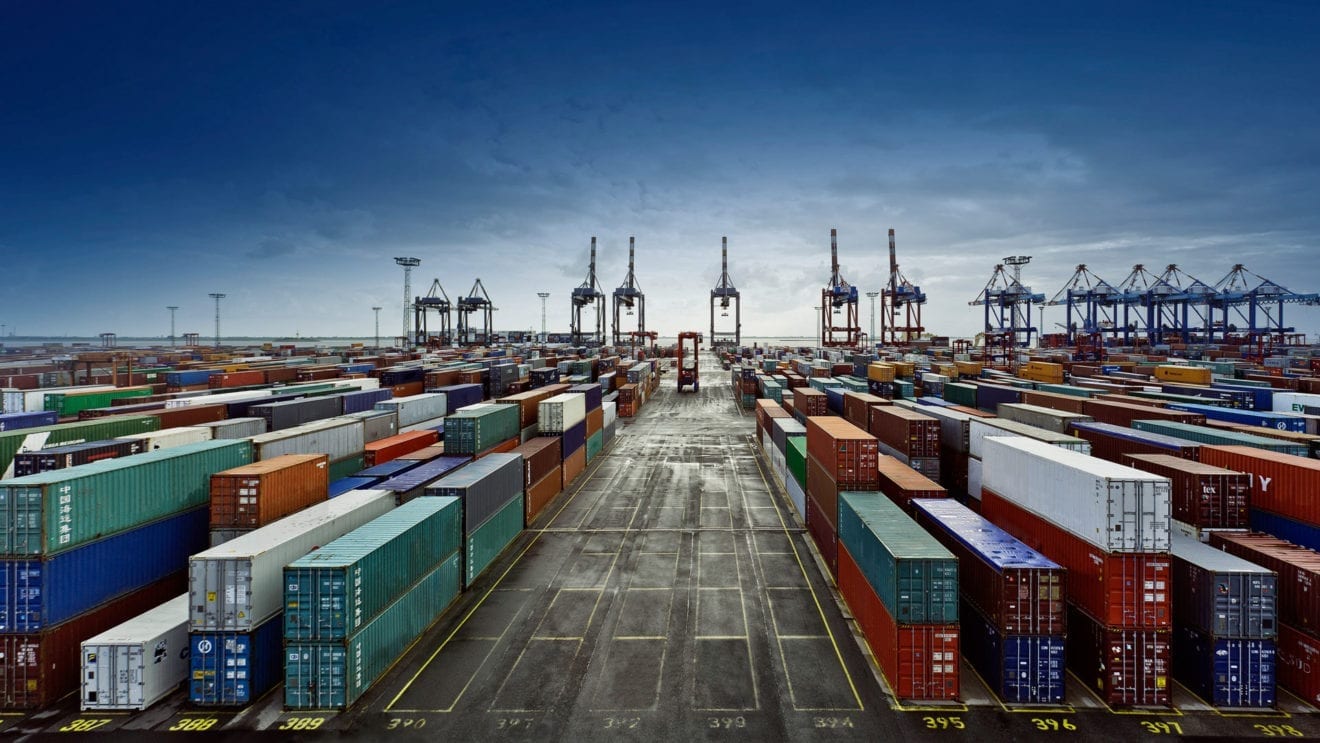
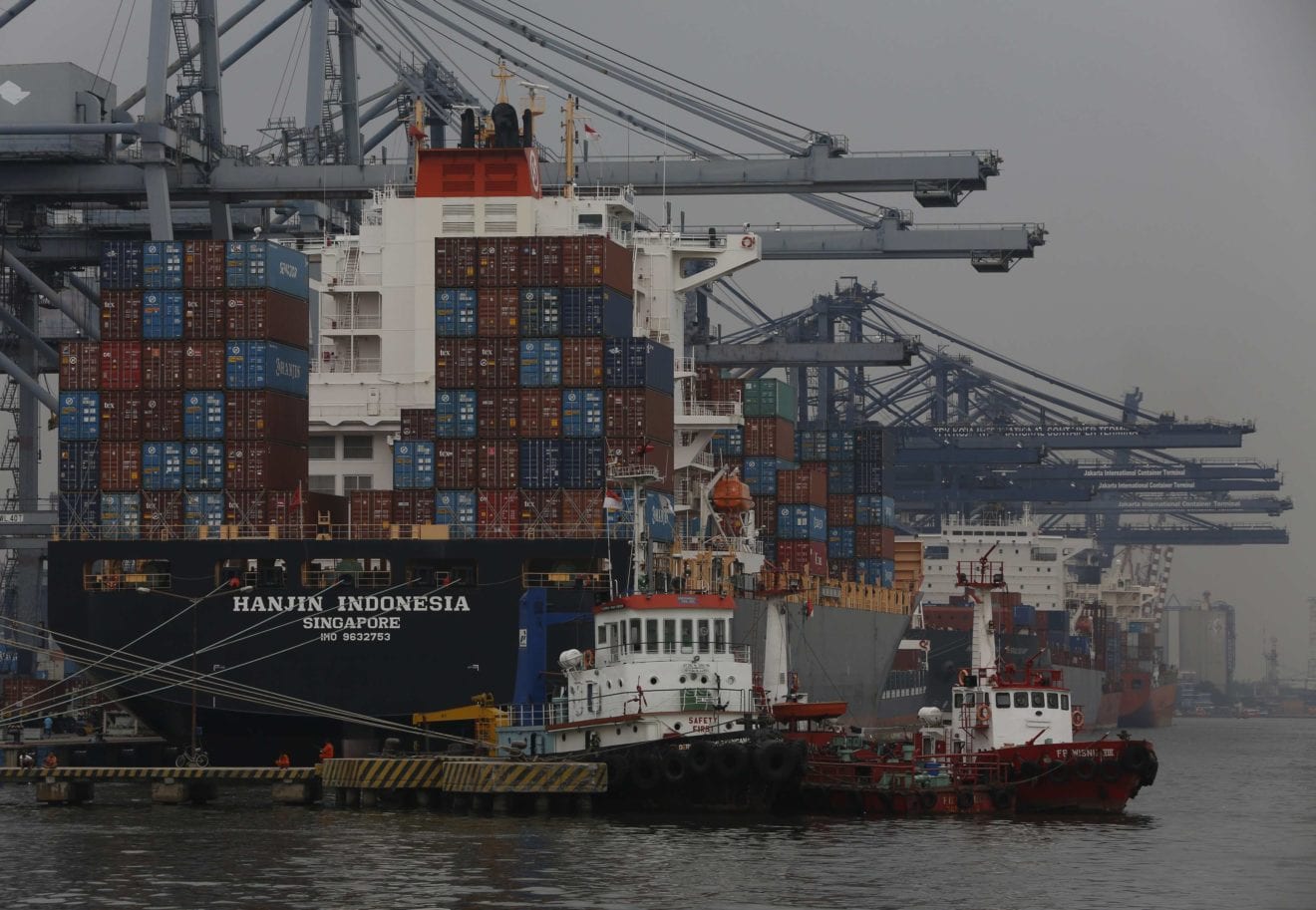
    The Papua provincial government, facilitated by the Indonesian ship management PT. Pelindo IV, has released 100 containers of forest products to China.

    President Director of PT Pelindo IV, Doso Agung, said in a statement received by ANTARA here on Tuesday that the exported containers released by the Governor of Papua, Lukas Enembe, along with the Board of Directors of Pelindo IV, is expected to bring in a revenue to Rp20 billion (or about US$1.5 million).

    Doso stated that Pelindo IV will continue to carry direct export to transport Papua’s commodity crops to a number of countries.

    “Direct export is expected to stimulate the economy in regions where the Pelindo IV operates. We will boost the direct exports, particularly in the ports managed by Pelindo IV,” he noted, adding that the Papua provincial administration will provide ships from Australia to open seaweed markets.

    The release event was followed by a groundbreaking of the Jayapura seaport extension development in order to increase the capacity of the port.

    Enembe appreciated Pelindo IV for engaging in direct overseas export.

    Lukas hoped the direct export will immediately open up overseas market for Papuas commodities, and the area can attract investors.

    He also hoped that the direct export would not only include forest products but also other commodities in Papua such as coffee, cocoa, and fisheries.

  • Alibaba Group’s UC News crosses 100 mn active users in India, Indonesia

    Alibaba Group’s UC News crosses 100 mn active users in India, Indonesia

    Alibaba Mobile Business Group-owned company UCWeb’s news app UC News has garnered more than 100 million monthly active users (MAUs) in India and Indonesia. With 100 million daily article views, UC News has rapidly grown in the India and Indonesia markets since its launch in June 2016.

    UCWeb is increasing its focus on digital content aggregation and distribution in India, the world’s second-largest internet market.

    Talking about the latest milestone, Alibaba Mobile Business Group, president of overseas business, Jack Huang said, “We are experiencing a fast rise in the average time spent on UC News. As of this quarter, an average user spends over 23 minutes on UC News. Users are embracing diverse digital content and their appetite for such content is being met by UC News. Going forward, we are also targeting more diversified and localised content on our platform by end of 2017 to make the local content ecosystem stronger. With over 100 million MAUs, UCWeb envisions itself as powerful as Google and Facebook, and aims to bring the global mobile internet to an era of ‘GUF’ (Google, UCWeb and Facebook).”

    Leading the user-generated content ecosystem in India, UC News recently announced We-Media Reward Plan 2.0 for self-publishers, bloggers and independent writers with an initial investment of Rs 50 million. UCWeb is investing Rs 2 billion for driving content distribution in India over the next two years.

    With the changing mobile internet landscape, UCWeb has adopted a strategy of becoming a content distribution platform from being a browsing tool by engaging and aggregating diverse form of content on its platforms—UC Browser and UC News.

    According to web analytics firm StatCounter, UC Browser now holds the highest browser market share in India. UC Browser is now the most popular browser in India in terms of internet usage across all platforms, with a market share of 43.31%, followed by Chrome’s 36.07% and Opera’s 8.34% share. UC Browser is also the dominant browser for mobile internet in India with over 100 million MOUs (as of September 2016).

    According to StatCounter, internet usage in India by desktop and tablet fell from 33.2% in January 2016 to 21% this year. Mobile internet usage jumped from 66.8% to 79% over the same time period.

  • UL wire, cable laboratory inaugurated in North Jakarta

    UL wire, cable laboratory inaugurated in North Jakarta

    A United States safety consulting and certification company, Underwriters Laboratories (UL), inaugurated on Tuesday a wire and cable laboratory operated by its subsidiary, PT UL International Indonesia, in North Jakarta as part of its business expansion in Southeast Asia.

    UL commercial and industrial business president Ben Miller said after the inauguration ceremony that the company had chosen Indonesia for the laboratory’s location because of the county’s fast-growing economy.

    UL said in a statement that the laboratory, the company’s first wire and cable certification facility in Southeast Asia, had been accredited by the National Accreditation Committee as a testing laboratory and by the Product Certification Agency (LSPro) for the certification of Indonesian National Standards (SNI).

    The statement said that UL Indonesia had signed an agreement with the Industry Ministry’s Center for Material and Technical Products (B4T) on the expansion of the SNI certification scope by UL.

    UL Indonesia is allowed to provide testing services in line with SNI certification.

    Miller said that UL standard certification required ongoing surveillance and comprehensive monitoring of products starting from their designing until their selling.

    Meanwhile, vice president and managing director for UL ASEAN Region Anthony Tan said that UL operated three laboratories in Southeast Asia.

    The company had two laboratories in the consumer technology and transaction security fields in Singapore and a textile and consumer goods laboratory in Vietnam, Tan said.

    Tan added that the company would open another laboratory in the heating and ventilation field in Thailand this year.