Tag: Indonesia

  • Growing flight frequency of Mideast airlines to benefit Bali tourism

    Growing flight frequency of Mideast airlines to benefit Bali tourism

    The Bali branch of the Indonesian Association of Tour Operators (Asita) said increase in the flight frequency planned by major Mideast airlines – Qatar Airways and Emirates Airlines between Middle East and Bali would significantly contribute to the islands tourism growth.

    Qatar Airways said through its Instagram it would increase flights to three times between Doha to Bali starting May 7, 2017.

    “Now there will be more reasons to see the yet untouched beauty of Bali,” the airline wrote in its social media account that drew more than ten thousands of comments.

    Earlier this month, another major airline from that region, Emirate Airlines of the United Arab Emirates already announced plan to increase flight frequency to twice everyday from Dubai to Bali starting July 2 this year.

    The increase in the flight frequency by the two world class airlines would further draw foreign tourists to Bali, Chairman of the Bali branch of Asita Ketut Ardana said here on Monday.

    Ardana said the recent holidaying visit of Saudi King Salman bin Abdulaziz Al Saud to Bali has added to the attraction of Bali for tourists from Middle East.

    “Bali is already attractive but with the visit of the Saudi King and his large entourage made Bali more attractive for holiday makers from Middle East,” he said.

    The increase in the flight frequency by the two airlines would facilitate the transport of tourists from that region to Bali, he added.

  • 500 Startups funds Stockbit, a social network for stock trading

    500 Startups funds Stockbit, a social network for stock trading

    Indonesia’s Stockbit bills itself a “social network for stock traders.” Individual traders sign up for customizable stock market information and analytics. Basic features are free, while paying subscribers get more in-depth intelligence.

    The site’s been growing and adding features since 2012. The company just closed an investment from 500 Startups, it said in a release today. It’s a pre-series A round, and the sum is undisclosed.

    The new investment is supposed to fuel the launch of a new a feature that lets community members follow more experienced stock traders and copy their investment moves in an automated process.

    “Our proposition is simple. Just copy, let the best do the rest,” is how CEO Wellson Lo explains the feature. You can allocate a fixed amount, say US$5,000, and this amount will be invested by mirroring the person you are following. Trading “leaders,” as the people you can follow are called, also benefit. They get a share of the profits you make.

    It’s been in development since last year and will become available on Stockbit’s iOS and Android apps soon, though there’s no set launch date yet.

    Traders wanted

    Public participation in the stock market is extremely underrepresented in Indonesia, argues Wellson. Less than 0.3 percent of the adult population have a stock trading account. In Singapore, it’s 39 percent and more than 20 percent in China.

    Part of the reason is a knowledge gap, which Stockbit hopes to address by making it simple for novice traders to learn and reap benefits without risking too much.

    Back in 2015, after Stockbit last raised funds, including from local VC firm Ideosource, Wellson had told Retail News that the startup had 15,000 registered users, while paid subscribers were still only in the hundreds. The user base has about tripled since then, according to Stockbit.

    There’s an ongoing effort by the Indonesian Financial Services Authority to raise awareness about investment opportunities on Indonesia’s public markets, a development Stockbit hopes to be able to leverage for its growth.

    500 Startups partner Vishal Harnal says Stockbit is already the largest and most active community of stock traders in the country, which gives the startup an advantage over potential competition.

    Besides Stockbit, there are trading information sites like Idsaham or Infovesta, but those sites merely aggregate stock information and don’t yet offer analytics tools. Bareksa can be seen as a possible competitor, as it offers a variety of financial analytics tools and also aggregates information about the Indonesian Stock Exchange, among other functions.

    Algomerchant from Singapore has a similar solution, offering a mix of social networking and analytics. However, Algomerchant lets you subscribe to a set of trading algorithms, not individual people, explains Wellson. Stockbit’s social trading model is most comparable to Covestor in the US.

  • Bank Mandiri posts net profit of Rp4.1 trillion in Q1

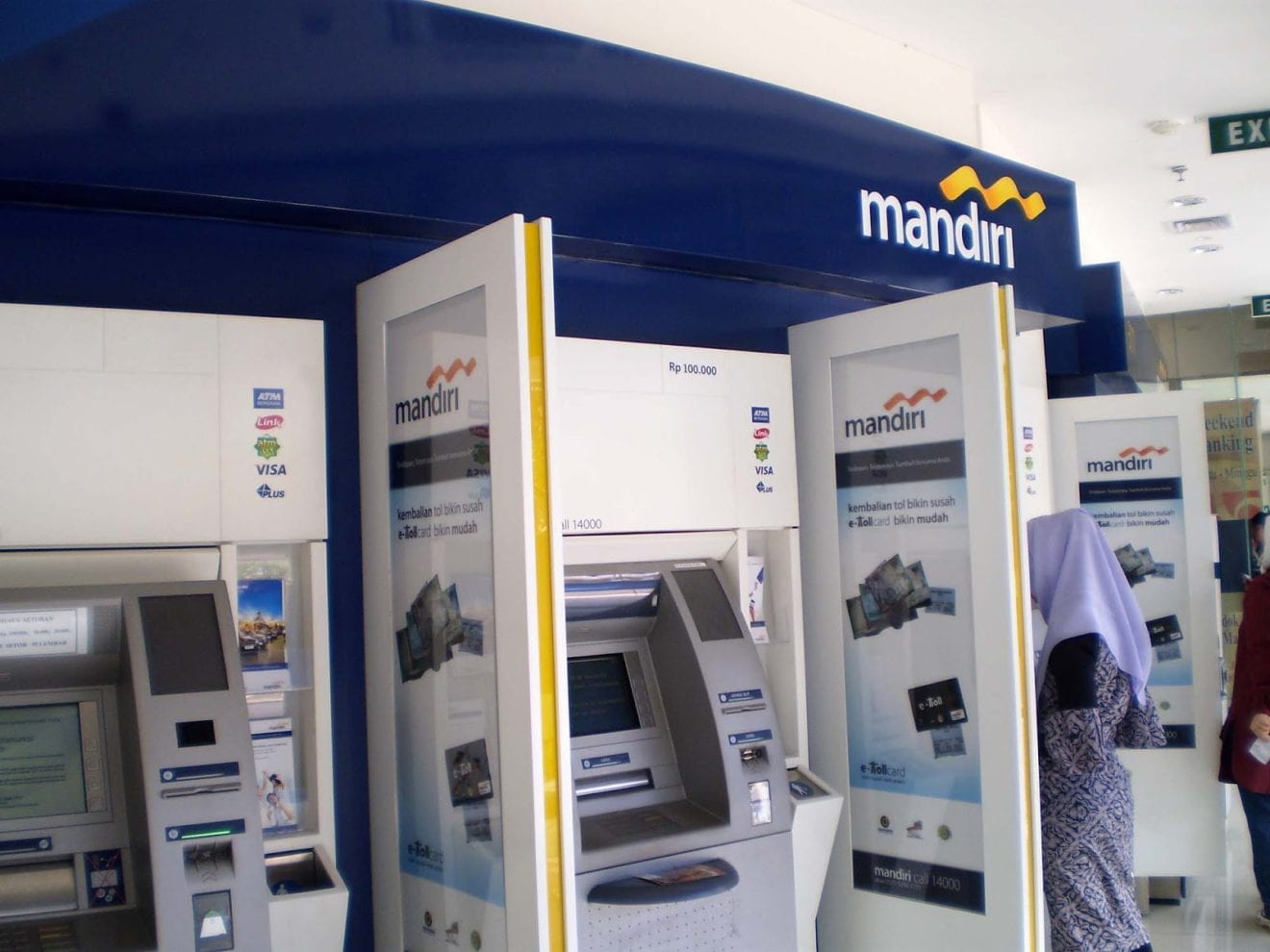
    Bank Mandiri posts net profit of Rp4.1 trillion in Q1

    State lender Bank Mandiri posted a net profit of Rp4.1 trillion in the first quarter of 2017, up 6.9 percent from Rp3.8 trillion in the same period last year.

    One of the factors increasing the profit was the rise in the amount of financing as reflected by credit growth, which rose 14.2 percent to Rp656.2 trillion in the first quarter of 2017, with the gross non-performing loan (NPL) ratio reaching 3.98 percent, Bank Mandiri President Director Kartika Wirjoatmodjo said here on Tuesday.

    “Although the gross NPL ratio rose 80 points year-on-year, its value was relatively good compared to Dec 2016,” he stated.

    In addition, the net profit hike was also fueled by net interest income and net premiums, which rose by 3 percent to Rp13.4 trillion, and fee-based income, which went up by 25 percent to Rp13.4 trillion.

    He added that the bank also managed to cut operating costs by 3.8 percent to Rp7.9 trillion, while operating profit before tax and reserves increased 11.9 percent to Rp10.8 trillion compared to March 2016.

    The banks total assets reached Rp1,034.4 trillion as of the first quarter of 2017, up 14.1 percent compared to the same period last year.

  • Indonesia, Singapore partner to develop startups

    Indonesia, Singapore partner to develop startups

    Local co-working space EV Hive is collaborating with Singapore’s working space BASH to provide places for startups from both countries to develop and thrive. These spaces with assist startups with business development and funding.

    “Regional companies based in Singapore can use EV Hive as a launch pad to the Indonesia market. Indonesia companies can use BASH as a stepping stone to access the regional stage,” said Willson Cuaca, managing partner of Singapore-based venture capital firm East Ventures, during the launch of the collaborative project on Tuesday. East Ventures manages EV Hive.

    Startups at the later stage (series B and above) of development can leverage support from EDBI, the global investment arm of the Singapore Economic Development Board.

    East Ventures, BASH management or SGInnovate, a development body wholly owned by the Singapore government, will work on more programs to expand talent, markets and knowledge-sharing for the customers of both co-working spaces.

    EV Hive currently manages two co-working spaces in South Jakarta and one in the Breeze mall in Banten. It plans to reach seven offices by the end of the year.

    EV Hive has facilitated the development of 36 startups, six of which are Singaporean.

    BASH, meanwhile, manages an integrated startup space in Singapore.

  • 7-Eleven sold as business declines

    7-Eleven sold as business declines

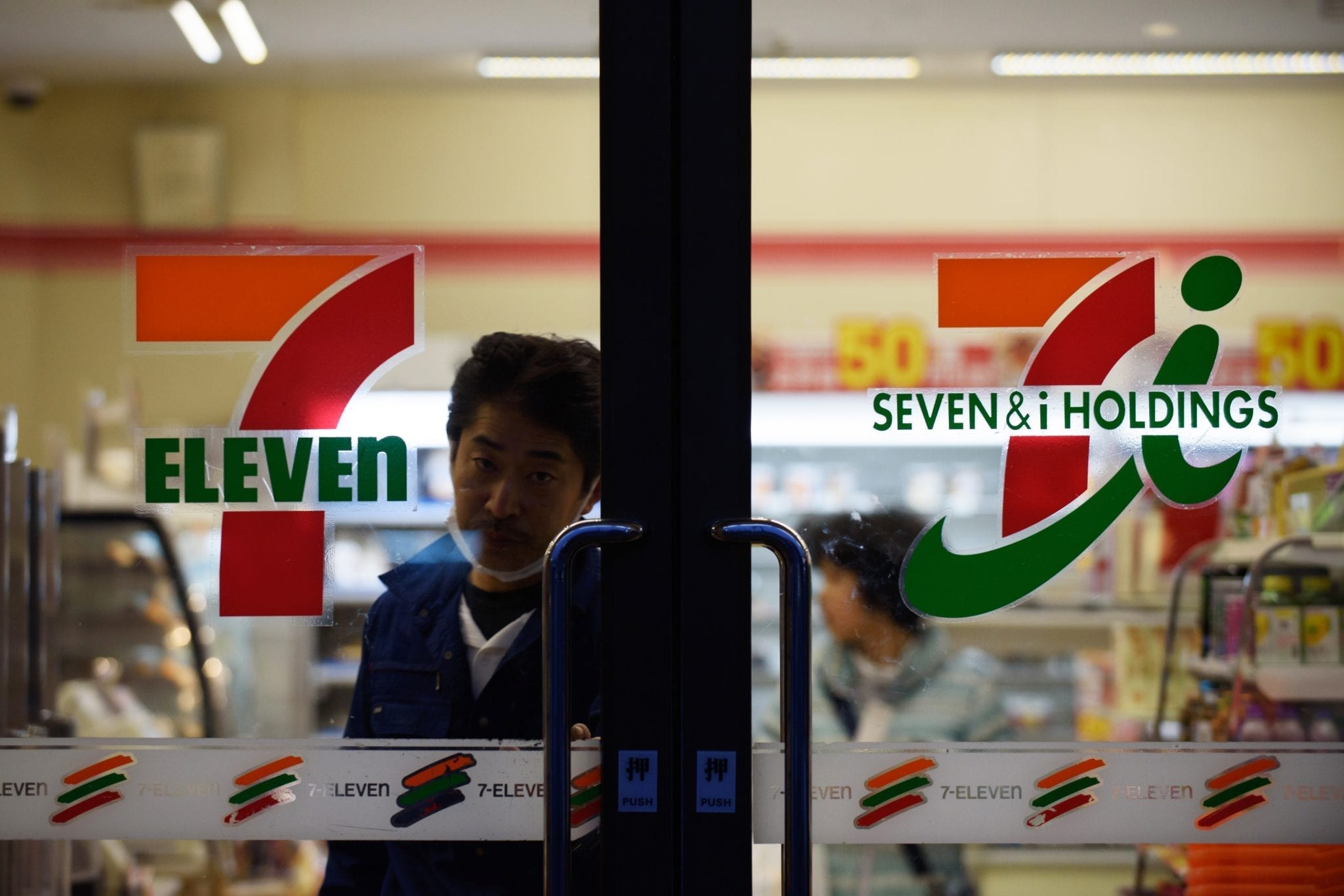
    Retail operator PT Modern Sevel Indonesia (MSI) plans to sell its 7-Eleven convenience stores for Rp 1 trillion (US$75.24 million) to PT Charoen Pokphand Restu Indonesia (CPRI), a business entity of PT Charoen Pokphand Indonesia (CPI).

    According to information from the Indonesian Stocks Exchange (IDX) published on April 21, the transaction agreement was made on April 19.

    Under the deal, CPRI agrees to take over the business activities of MSI – mini-restaurants (resto) and convenience stores – as well as assets that use the franchise system.

    The transaction, which is scheduled for June 30, is worth Rp 1 trillion, pending approval from various parties including the Trade Ministry and Financial Service Authority (OJK), shareholders, board of commissioners and 7-Eleven Inc., the owner of the brand, CPI president director Tjiu Thomas Effendy wrote in his letter to IDX’s registration director.

    “MSI and CPRI have settled various issues related to the planned transaction,” said Tjiu.

    The 7-Eleven chain of convenience stores and mini restaurants are popular among young people as most of the outlets remain open for 24 hours. However, sales have been on the decline as most customer come to enjoy the store’s free Internet and chat with their friends.

    Other local retailers like Alfa Mart and Indomart have also opened mini resto in their outlets in recent months.

  • Indonesia`s exports of textile  and textile products growing

    Indonesia`s exports of textile and textile products growing

    Indonesias exports of textile and textile products (TPT) were valued at US$2 billion in the first two months of this year or 3 percent higher than in the same period last year.

    “TPT industry is a labor industry providing jobs for around 3 million people that it could serve as a social safety net,” Industry Minister Airlangga Hartarto said in a statement received here on Monday.

    Airlangga said in 2016 investment in TPT industry was worth Rp7.54 trillion with exports valued at US$11.87 billion employing 17.03 percent of workers in the manufacturing sector.

    The minister said he was optimistic the countrys TPT industry could compete well globally especially as the industry has been integrated from upstream to downstream sectors.

    The minister, however, said the industry needs revitalization as the majority of factories now use old machines especially weaving and knitting factories. The machines need replacement as they are no longer efficient .

    “Revitalization, we have begun by using new machines and equipment has shown positive result , but the program has to be continued,” he said.

    In addition, economic policy packages already issued by the government should be utilized by TPT industrialists by increasing investment, otherwise, in five years, the countrys TPT industry would find it more difficult to face competition such as from India, China, Vietnam and Bangladesh, he said.

    He said currently the Industry Ministry is preparing a special regulation on fiscal incentive in the form of fiscal allowance for export oriented labor intensive industry. Industrialists will have income tax discount to be used for business expansion, he added.

    He said the Industry Ministry is seeking comprehensive cooperation agreement with Europe and the United States in the hope of benefit in the form of better tax facility.

    He said small industries would also be facilitated to boost exports.

    Director General of Chemical, Textile and Multifarious Industries Achmad Sigit Dwiwahjono said imports of cloth are also a challenge hampering investment in TPT industry. The Industry Ministry, therefore, is teaming up with the trade Ministry to curb textile imports to protect the country TPT industry.

    In addition, the Industry Ministry encourages investment in the upstream sector to back up the domestic textile industry, Sigit said.

  • Google Play Indonesia Games Contest announces winners

    Google Play Indonesia Games Contest announces winners

    Google on April 26 announces the winners of the Google Play Indonesia Games Contest in Jakarta. Hundreds of entries from local Indonesian developers were submitted to this competition which celebrates the spirit and great potential of local game developers.

    The 15 finalists were invited to showcase their submissions at this offline gaming expo for industry experts, Google executives and gaming enthusiasts from across Indonesia, giving them a chance to get their games noticed by the right audience.

    Before announcing the winners, the audience heard from the panel of expert judges about just how important this type of event is when it comes to nurturing developers. The audience then participated in interactive live voting to choose the winners.

    The top three winners are Warung Chain: Go Food Express followed by Tahu Bulat and Vimala: Defense Warlords.

    All three winners were given an Android TV set with 4K resolution.

    Warung Chain: Go Food Express will also be featured in an Android Developer Story video produced by Google Play and promoted on Android Developer / Play Developer channels.

    The goal of the first Indonesia Games Contest was to help nurture the local gaming ecosystem. Google Play believes that with the right support, Indonesia’s talented game developers have the potential to build even more successful businesses and enter the top ranks of game developers globally.

    Google Play Indonesia head of Business Development David Yin says, “We believe that more Indonesian developers have the talent and the drive to break into the global market and make it to the top ranks.

    “I see first-hand how much promising talent there is in Indonesia and we are committed to helping developers of all sizes get discovered and reaching gaming enthusiasts locally and globally.”

    Google Play provides developers with access to more than one billion users worldwide. The Google Play Games Contest is an initiative by Google to help Indonesian developers develop, grow, and earn in the global market.

  • President makes three pleas to creative industry entrepreneurs

    President makes three pleas to creative industry entrepreneurs

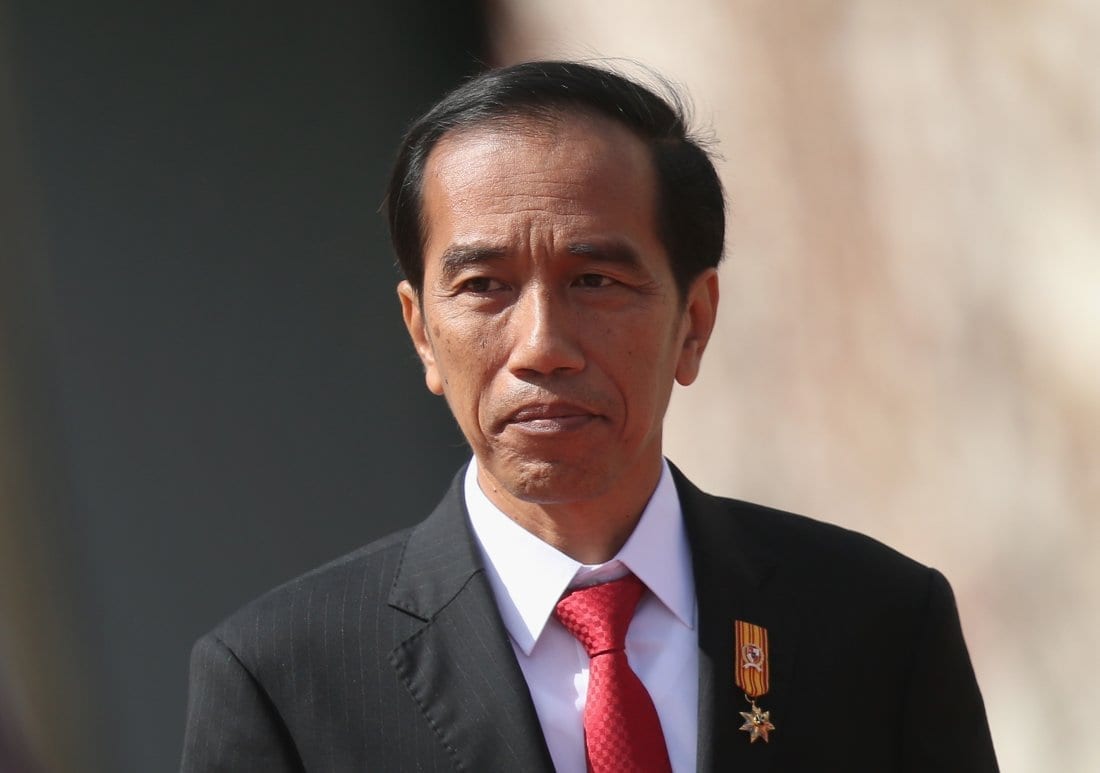
    Indonesian President Joko Widodo (Jokowi) has made three pleas to the industry entrepreneurs while inaugurating the Inacraft Exhibition 2017.

    “I have made three pleas to craft and creative industry entrepreneurs in Indonesia to keep their products on spec or meet the buyers specifications, keep the budget or price at a reasonable rate, and timely delivery of the products,” he stated at the Jakarta Convention Center on Wednesday.

    Inacraft exhibition, which will be held from April 26 to April 30, will exhibit products from 1,392 local and foreign participants. This year, Inacraft has taken Yogyakarta as the icon, under the concept “Magnificent of Yogyakarta” and the theme “From Smart Village to Global Market.”

    The second plea from the president was regarding the packaging of the products.

    “Do not forget the packaging. Make the best you can and make it interesting. This is important because most of time, the packaging is what attracts the buyers,” he added.

    His third plea was to deliver the goods on time.

    “The delivery to the consumers could be made easier with various logistics infrastructures that we already have,” he stated.

    Jokowi also pushed the entrepreneurs to make use of the governments people credits program (KUR).

    “I understand the entrepreneurs problems regarding capital. Therefore, I remind the people of the KUR program, which has an interest rate of nine percent only. Hence, the products should be made better to make the investment bigger. I think our credit programs have a competitive interest rate too,” he reiterated.

    Indonesian Exporter and Handicraft Producers (ASEPHI) data, the committee of the exhibition, remarked that the Inacraft 2017 attendees included 65.95 percent of independent individuals, 24.5 percent from the Tourism Department, 8.7 percent from BUMN, and the rest 6.07 percent from other countries such as Myanmar, Japan, Pakistan, Poland, and India.

    This year, Inacraft has set a target of retail business increase of 10 percent, which reaches Rp142 billion, commercial contract of US$12 million, and around 200 thousand buyers from various countries.

    Some of the products exhibited include batik, fashion apparels, accessories, jewelries, and other crafts.

  • Jokowi Strengthen Economic Ties with Hong Kong

    Jokowi Strengthen Economic Ties with Hong Kong

    President Joko Widodo, also known as Jokowi, has planned to strengthen bilateral cooperation between Indonesia and Hong Kong during a working visit to Hong Kong scheduled on April 30, 2017, after attending the ASEAN Summit in the Philippines on April 28 and 29, 2017.

    “We want to encourage Hong Kong business owners to invest in Indonesia, particularly in the field of infrastructure and creative industry,” Foreign Ministry spokesperson Arrmanatha Christiawan Nasir said during a press conference in Jakarta on Tuesday, April 25, 2017.

    As one of the largest economy in the region, Indonesia aims to strengthen economic ties with Hong Kong. Delegations of both countries will sign two memorandums of understanding on business collaborations and partnerships in the culture sector.

    Indonesia will also push an agenda to expedite negotiations related to the ASEAN-Hong Kong Free Trade Agreement, which is expected to increase the intensity of trades between ASEAN and Hong Kong.

    In 2016, the realization of Hong Kong’s investment in Indonesia reached USD 2.25 billion, significantly increasing from those realized in previous years that stood at around USD 691 million. The trade value between the two countries climbed to USD 3.9 billion in 2016 from USD 3.8 billion in 2015.

    President Jokowi will also discuss protections for Indonesian citizens in Hong Kong.

    “The President also pays attention to protections for our migrant workers. There are 172,000 Indonesian migrant workers in Hong Kong,” Armanatha revealed.

  • Giant ships begin to make a call at Jakarta’s Tanjung Priok

    Giant ships begin to make a call at Jakarta’s Tanjung Priok

    PT Jakarta International Container Terminal (JICT) in Tanjung Priok said it has entered a new era when it succeeded in serving a giant ship, the Otello of Frances Compagnie Maritime dAffretement – Compagnie Generali Maritime (CMA-CGM).

    “The ships of CMA-CGM are the largest ever making a call at Tanjung Priok,” Chief Executive of JICT, Gunta Prabawa, said here on Monday.

    Earlier, JICT was similarly successful in providing fast services for 2 other giant ships of CMA CGM – the Titus and Tancredi – with port productivity at the JICT of 27-30 Mph.

    Gunta described the visits by the giant ships as a new era of the appearance of more giant ships at the Jakarta port indicating that JICT has been ready to provide world class port services.

    “Global shipping companies have allowed their ships to berth at Tanjung Priok as they have confidence in our services,” Gunta said.

    The 334 meter long Otello had unloaded 1,551 TEUs of container goods at Tanjung Priok, he said.

    He said CMA-CGM has reached an agreement with PT JICT by opening new shipping service called the Java South East Asia Express Services/ Java SEA Express Services/ JAX Services.

    The weekly service will take the route of Tanjung Priok – West Coast (Los Angeles & Oakland) of the United States.

    “The first service of JAX Services began on 9 April, 2017 by the Titus of CMA-CGM. Indonesian exporters and importers are expected to utilize the service,” Gunta said.

    Earlier this month, President Joko Widodo said large ships would began to berth at Jakartas Tanjung Priok port after continued improvements in services by the port operator.

    “Soon or next week there will be a ship measuring 10,000 TEUS to call at Tanjung Priok,” Jokowi said when officially commissioning an access toll road to the countrys largest port.

    The president attributed the success in attracting large ships to Tanjung Priok to improved service including a significant cut in dwelling time.

    The dwelling time, needed for unloading, has been cut short to 3.5 days now from earlier up to six days. Long dwelling time had discouraged ships from making a visit to Tanjung Priok as it would mean losing time and an increase in berthing fee.

    The president himself stepped in to improve services, cut the red tape and simplify all procedures that reduce illegal levies earlier rampant at the port.

    The president said he hoped improvement in the port service would make Indonesia more competitive and the seas transport cost would be cheaper to and from Indonesia as large cargo ships could sail directly to and berth at Tanjung Priok.

    “The flows of goods could be much faster via Tajung Priok. Transit is no longer needed for imported container cargoes in Singapore,” he said, adding large container ships could be berthed at Tanjung Priok.

    Previously large ships carrying container goods for Indonesia have to make a transit in Singapore to unload the cargo to be loaded gain on smaller ships as Tanjung Priok could not yet accommodate large container vessels.

    The new access road would contribute to improving services at the port , Jokowi said, adding “This also helps improve the countrys competitiveness.”

    He said an estimated 3,600 containers would be transported via the 11.4 kilometer access road everyday.

  • Jokowi optimistic of witnessing 10% growth in automotive industry

    Jokowi optimistic of witnessing 10% growth in automotive industry

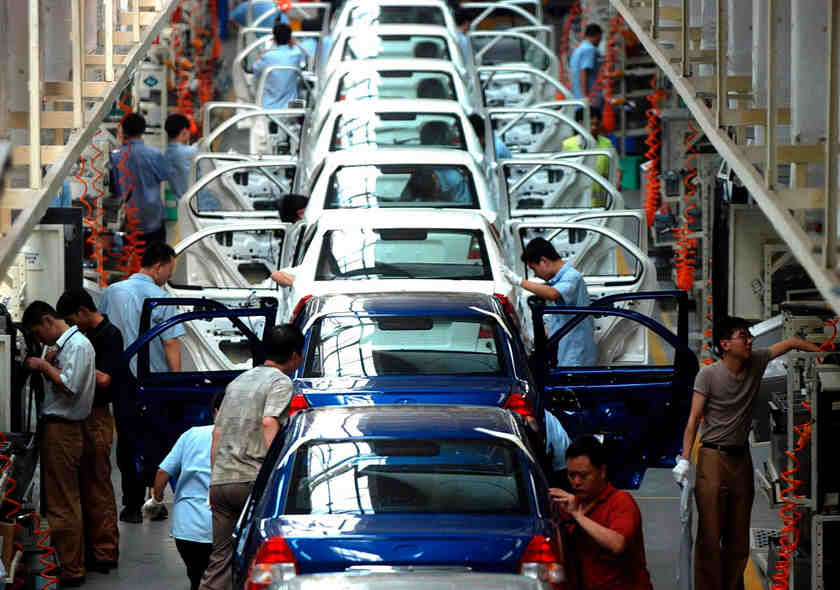
    Indonesian President Joko Widodo (Jokowi) is optimistic that the automotive industry would attract more investors and grow over 10 percent annually.

    “Indonesias automotive industry is more competitive now and is growing on an average of more than 10 percent,” he remarked in Bekasi on Tuesday.

    President Jokowi expressed optimism in his remarks at the opening ceremony of PT Mitsubishi Motor Krama Yudha Indonesia (MMKI) at the Greenland International Center, Central Cikarang, Bekasi District, West Java.

    “With such a large market, I am certain that more investments will flow into the automotive sector of Indonesia, as we have a large market, and greater the investments, more employment opportunities will be available,” he emphasized.

    President Jokowi lauded Mitsubishi Motors commitment to increasing its investment by setting up a new plant in Indonesia, which will be able to offer jobs to around three thousand people.

    “This can provide employment to some three thousand people. Once again, three thousand job opportunities,” the president pointed out.

    Hence, Jokowi is committed to easing the flow of investments, particularly in the automotive sector, considering its impacts on the economic growth.

    “The inflow of investments will create more job opportunities, and it means more people will have jobs,” he stated.

    However, the president highlighted the importance of the quality of human resources to meet the high standards of the automotive industry.

    He pointed out that the government is taking steps to boost economic development by providing skilled manpower through vocational schools.

    “Here, we will strengthen vocational education, vocational schools, as well as vocational training, entrepreneurship, and the labor market,” he affirmed.

    “The government will continue to implement policies that link and match or job matching between vocation and the industry,” the president noted.

    Investment in industry will also allow the transfer of technology and knowledge to Indonesia. Hence, President Widodo has urged the employees to use the opportunity extensively.

    “I hope you will also pay attention to the transfer of technology and knowledge. Continue conducting trainings for the local human resources, and it will be better if the Japanese work ethics, such as high discipline, can be imbibed by Indonesian human resources,” he said.

    “Do not hesitate to involve the Indonesian people in creating new innovations, as they are all actually smart,” added Jokowi.

    In addition, President Jokowi is optimistic that the automotive industry would begin developing its export market.

    “The local or domestic market is large, but we also need to focus on the export market to achieve a balance,” he pointed out.

    Some VIP guests also attended the opening ceremony with President Jokowi, including Minister of Industry Airlangga Hartarto, Minister of State Secretary Pratikno, Head of the Investment Coordinating Board Thomas Lembong, Vice Minister of Finance Mardiasmo, Vice Governor of West Java Deddy Mizwar, and Chairman of Mitsubishi Motors Carlos Ghosn.

  • Indonesia`s inflation predicted to be low in April

    Indonesia`s inflation predicted to be low in April

    Bank Indonesia predicted that the countrys inflation would not be too high this month with falling prices of foodstuffs amid harvest time .

    “The inflation in April is expected to be not too high as a result of the harvest time,” head of the Monetary Economic Policy Department of the central bank Dody Budi Waluyo said.

    The administered prices might increase as a result of the governments plan to raise the electricity tariff in June this year, but falling prices of foodstuffs would keep the inflation low, Dody said here on Thursday.

    Last month, the country had a deflation of 0.02 percent as said by the Central Bureau of Statistics (BPS). BPS said the deflation was also attributable to falling prices of a number of foodstuffs like rice, red chili, garlic, eggs and fresh fishes.

    “The significant decline in the prices of a number of main foodstuffs resulted in the deflation in March,” BPS said.

  • Indo and India see strong growth in processed food retail

    Indo and India see strong growth in processed food retail

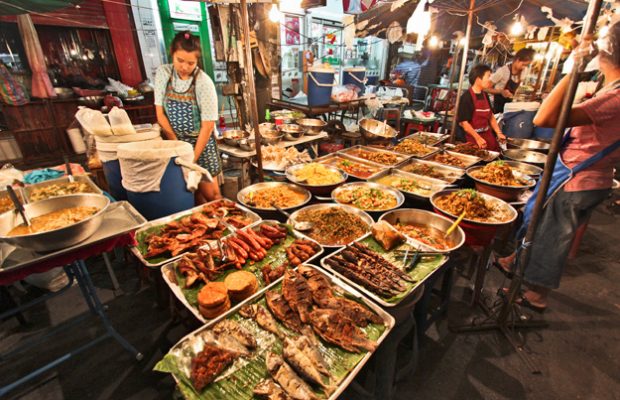
    Global innovation within the processed meat, poultry and fish categories has increased over the years and many markets with the highest growth potential are from the Asia Pacific region. New research from global market intelligence agency Mintel reveals that Asia is home to the world’s fastest growing retail markets for processed meat, poultry and fish, with Indonesia and India playing key roles across these categories.

    Indonesia is currently among the fastest growing processed meat and poultry markets globally with a CAGR of 26.7% between 2011 and 2015, followed by India* (22%), Vietnam (15.5%), China (13.9%), and Brazil (10.9%). Mintel estimates Indonesia’s processed meat and poultry market reached a value of IDR 16 trillion in 2016**, while India is estimated to have reached a value of INR 11 billion. Vietnam, China and Brazil have estimated retail values of VND 10 trillion, CNY 275 billion, and BRL 12 billion, respectively.

    Meanwhile, India* is one of the fastest growing retail markets for processed fish and seafood globally, growing at a CAGR of 24.9% between 2011 and 2015, while Indonesia has seen a CAGR of 19.5%, with Turkey (11.8%), South Africa (11.2%) and Russia (10.8%) rounding out the top five growth markets. In 2016**, Mintel estimates India’s processed fish and seafood market reached a value of INR 2,422 million, while Indonesia is estimated to have hit IDR 32 trillion, Turkey TRY 372 million, South Africa ZAR 3 billion and Russia RUB 148 billion.

    In the five years between 2011 and 2015, Thailand also experienced a positive CAGR of 9.4% for the processed fish and seafood market and a CAGR of 7.5% for the processed meat and poultry market. In terms of retail market value for 2016**, Thailand’s processed fish and seafood market is estimated to have reached THB 65 billion and its processed meat and poultry market, THB 60 billion.

    Driven by a surge in innovation activity, the global processed meat, poultry and fish markets saw an 18% increase in product launches in 2016, compared to 2014, according to Mintel Global New Products Database (GNPD). In 2016, Asia Pacific was the second most active region globally in terms of processed meat, poultry and fish new product development (NPD), accounting for 24% of processed meat, poultry and fish product innovations, led by China, Thailand, South Korea, Vietnam and the Philippines.

    Patty Johnson, global food and drink analyst at Mintel, said: “The need for convenience is the key driver behind Asia’s growing processed meat, poultry and fish retail markets in Indonesia, Thailand and India. Demand for processed and ready-to-eat foods, particularly frozen foods, is growing across Asia as increasingly time-pressed consumers have embraced the convenience of the freezer and of microwave cooking. Aligned with consumer interest in the region, processed meat, poultry and fish product innovation in 2016 saw strong focus on convenience claims, such as ease of use and microwaveable.”

    Indeed, according to a consumer study*** conducted by Mintel, over two in five (43%) metro Indonesians and 39% of metro Thais aged 18 and over tend to shop closer to home or work due to a lack of time. Furthermore, over one in four (28%) consumers in Indonesia prefer to buy smaller, bite sized or convenient packs as they can eat these anytime, anywhere, rising to over one in three (37%) Indonesians that fall within the monthly household income bracket of IDR 15,000,000 and above. In Thailand, as many as one in five (22%) consumers prefer to buy smaller, bite sized or convenient packs for the same reason.

  • PT Telkom launches TV-based video calling

    PT Telkom launches TV-based video calling

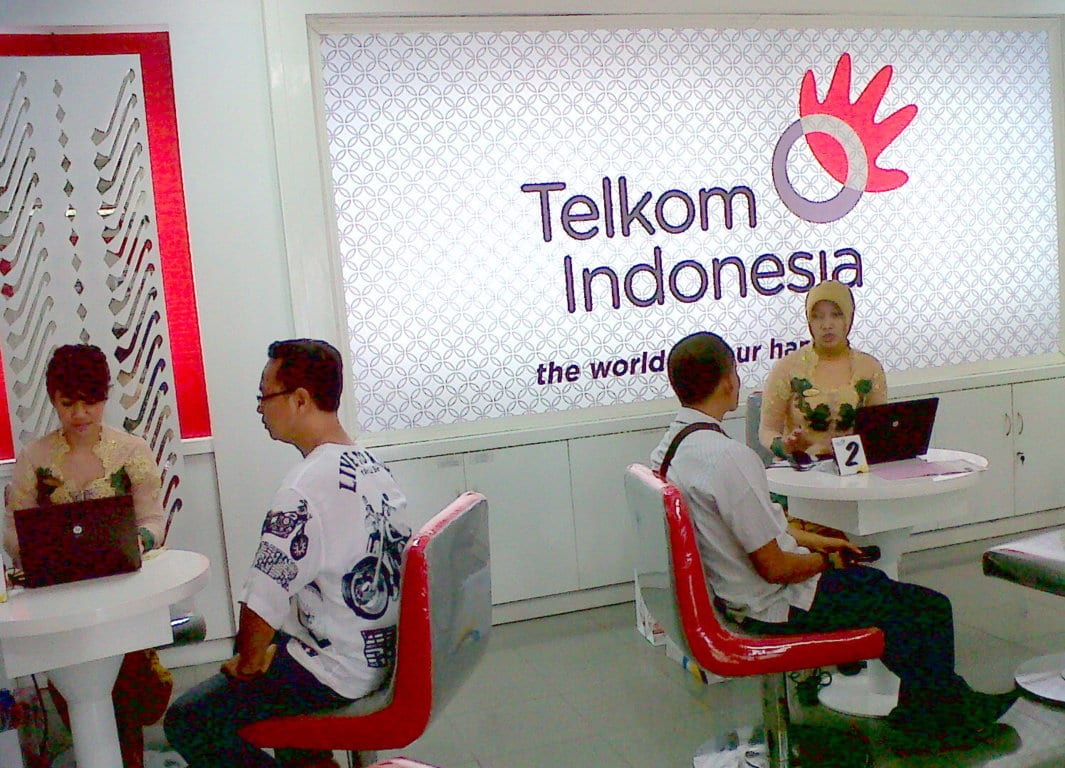
    Indonesia’s PT Telkom has soft-launched the market’s first TV-based video communications service, in collaboration with Huawei.

    The IndiHome Video Call service will allow subscribers to PT Telkom’s triple-play IndiHome fiber broadband, telephony and TV service to also use their TV to place video calls.

    The service combines IPTV and IMS functionality, incorporating a set-top box with integrated video communication capabilities and a webcam to support video communication between TV and TV, TV and smartphone as well as smartphone and smartphone.

    IndiHome Video Call supports high-definition video with a resolution up to 720p as well as HD voice.

    PT Telkom plans to launch the service commercially in the East Java, Bali and Nusa Tenggara area by the middle of next month.

    “With the soft launching of IndiHome Video Call, we hope that the presence of IndiHome may be useful to the community of East Java, Bali, and Nusa Tenggara,” PT Telkom’s district executive vice president for the region Suparwiyanto said.

    “IndiHome is easy and practical, a complete digital solution as well as a positive entertainment.”

  • Woodland India eyes Japan, South Korea

    Woodland India eyes Japan, South Korea

    Footwear and apparel firm Woodland India plans to enter the Japanese and South Korean markets in the next 12 months.

    Owned by the Aero Group, the company is also expanding at home with plans to add 120 exclusive outlets across India by the end of next year.

    Woodland India MD Harkirat Singh says the company also plans to grow its presence in multi-brand outlets.
    He says the company clocked revenue of Rs 1200 crore (US$279.9 million) in the last fiscal year and is seeking growth of 15 to 20 per cent going forward.

    Woodland, which makes most of its products in house, is also looking to add to its employee strength.
    Currently, the company has 600 exclusive outlets apart from presence in 5000 multi-brand stores in India.