Tag: Indonesia

  • IDX Closes on Regional Election Day

    IDX Closes on Regional Election Day

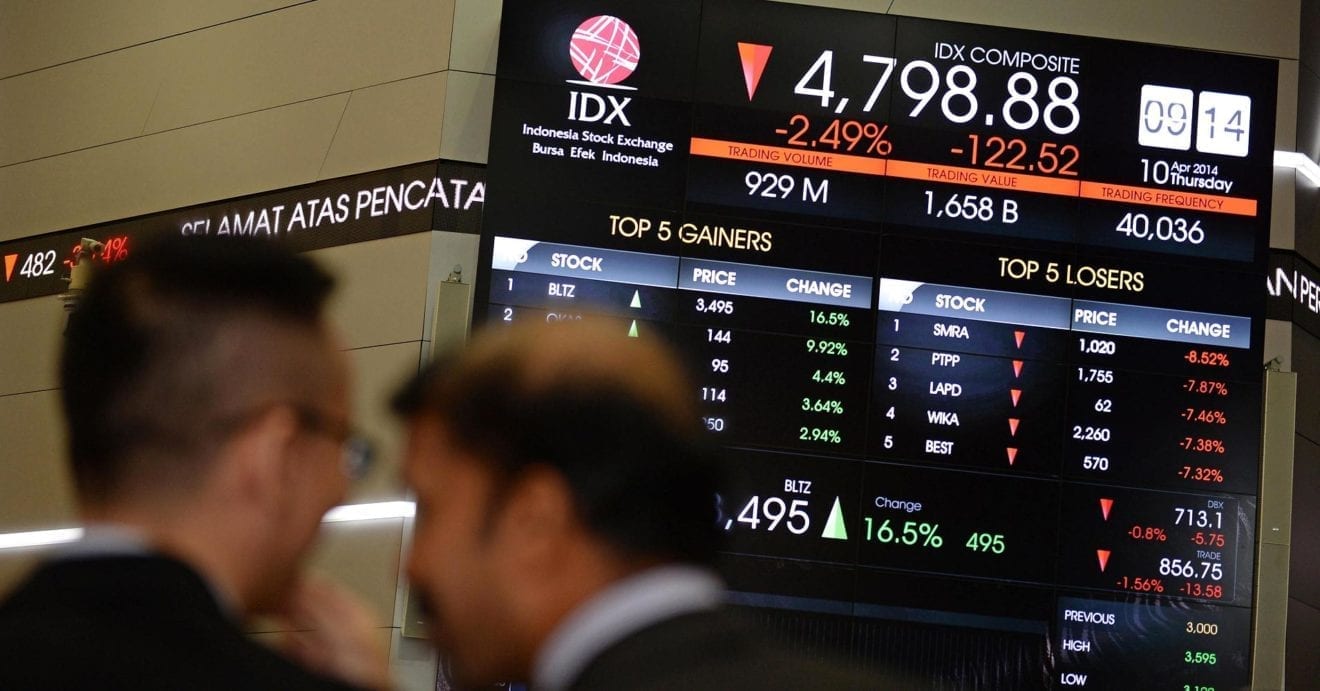
    The Indonesia Stock Exchange (IDX) will close on the simultaneous regional election day, February 15, 2017, the IDX website page stated. Earlier, Vice President Jusuf Kalla had asked Indonesians to use their voting rights and vote for credible candidates to improve their respective regions.
    JK said that election is a peaceful, responsible, and clean democratic process that ensure individual right to vote. He expects to see a smooth democratic process during the simultaneous regional elections. “Let’s go to the polling station with a smile, happiness, and peacefully vote for leaders who can lead us to a better life,” he said.
  • Telkom’s $250m satellite to better connect Indonesia’s islands

    Telkom’s $250m satellite to better connect Indonesia’s islands

    Close to the equator, French Guiana, a scarcely populated country with only 158,000 inhabitants, is regarded as an ideal place to launch satellites. Mostly covered by equatorial forest, the South American country provides a stable climate, as well as invulnerability to earthquakes and hurricanes. Lying just over 500 km north of the equator, Kourou provides an advantage for satellite launches, because the earth’s spinning boosts the propulsion of the rocket taking the satellite into space.

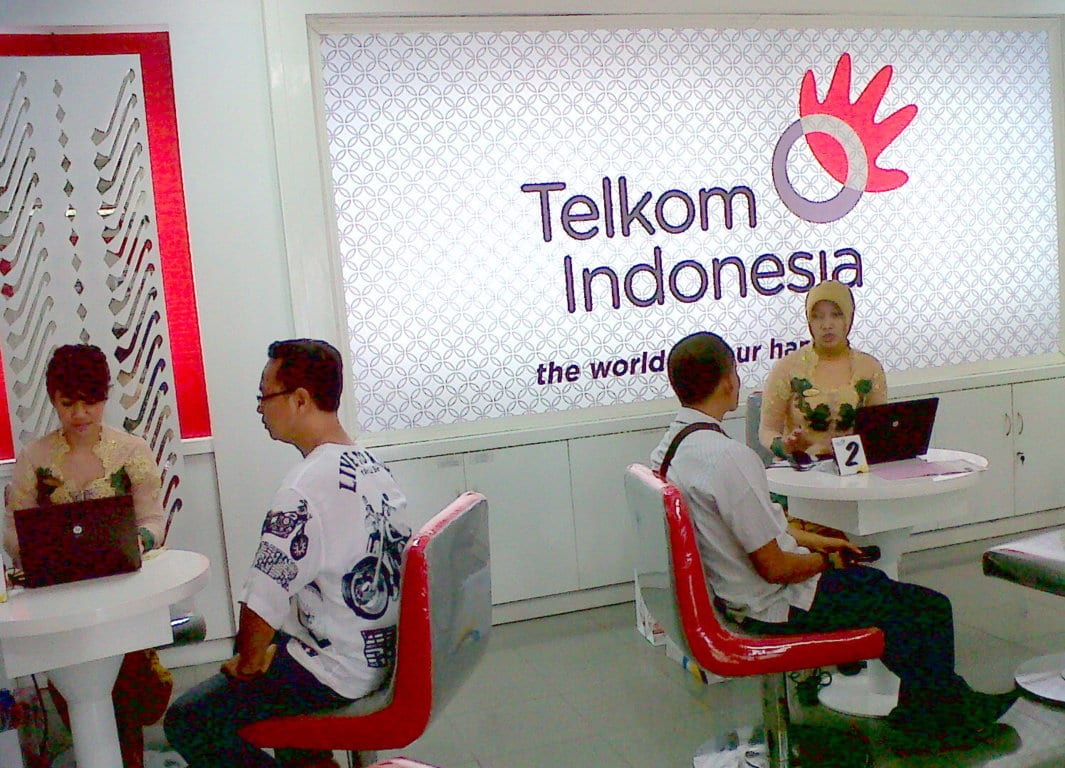
    In this part of Guiana, where a joint French and European spaceport has been built, Indonesia’s biggest telecommunication company Telekomunikasi Indonesia (Telkom) is set to release its latest satellite into space early in the morning of Feb. 15, Jakarta time. Called the Telkom 3S, the firm’s third satellite, which costs up to Rp 3.33 trillion (US$250 million), will provide high-definition television services, faster mobile communications and internet applications across the sprawling Indonesian archipelago of more than 17,000 islands, reaching primarily to the most remote areas.

    This will be enabled by new technology, high-frequency Kuband transponders, which will cut installation time and allow faster connections.

    “Unlike Telkom 1 and Telkom 2 Telkom 3S has Ku-band. The benefit is that the dishes needed to receive signals are smaller,” Telkom satellite project head Tonda Priyanto said on Sunday in Kourou.

    Indonesia has long struggled with poor information and communication technology infrastructure despite the fact that many of its citizens are already highly tech-savvy.

    The current administration kicked off late last year its ambitious Palapa Ring project in a bid to connect all areas nationwide through its fiber-optic network.

    However, only around one third of Indonesia’s area can be covered by terrestrial communications systems, leaving the rest to be linked through satellite systems.

    A McKinsey report released last September revealed that Indonesia could realize growth of an estimated 10 percent in the gross domestic product (GDP), equivalent to $150 billion, by 2025.

    “The need for satellite technology is absolute in Indonesia. Meanwhile, the supply is still low,” Telkom chief technology officer Abdus Somad Arief recently said.

    Overall, the Telkom 3S satellite will carry 49 transponders, adding to the 140 transponders that Telkom currently operates through its two orbiting satellites.

    Satellite builder Thales Alenia Space has handled the design, testing and in-orbit delivery of the satellite, while the satellite launch company Arianespace will be in charge of releasing the satellite into space.

    During the planned launch, Telkom 3S will be positioned at 118 degrees east, to replace Telkom 2. Telkom 2, which still has a life span of about four years, will be moved to another orbital position.

    In response to the satellite launch, Communications and Information Minister Rudiantara said the Telkom 3S satellite would definitely help meet the demand for better network quality in Indonesia.

    “I think that even if the government begins launching its own satellites, we will still be at a deficit even up to the year 2023,” he said. “What the government can do in the meantime is to give satellite lending rights to local companies to avoid dependence on foreign ones.”

  • Bank Rakyat to enter Indonesia mart in Q2 this year

    Bank Rakyat to enter Indonesia mart in Q2 this year

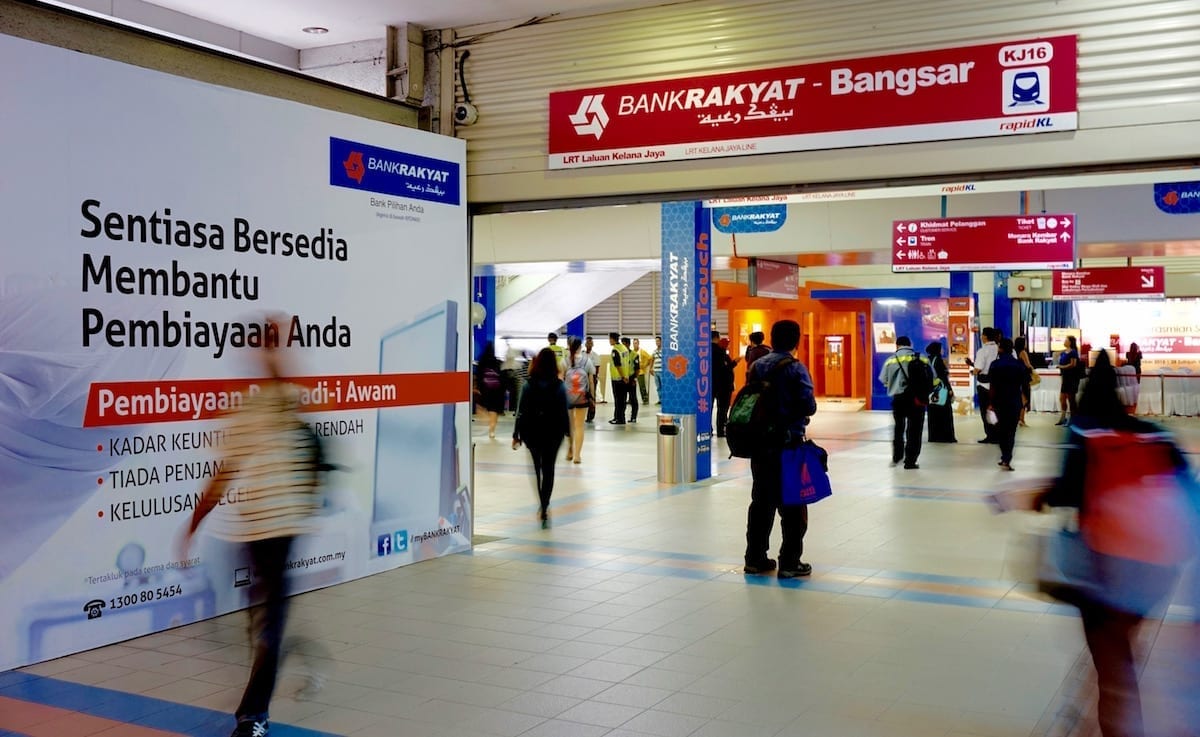
    Bank Rakyat will enter the Indonesian market in the second quarter (Q2) of this year after getting approval from the authorities, including Bank Negara Malaysia.

    To this end, the bank said, it had signed a memorandum of understanding with Indonesia’s largest bank, Bank Rakyat Indonesia (BRI), today.

    In a statement, the bank said, the collaboration would enable both banks to provide money order services to over 700,000 Indonesians in Malaysia.

    Its Chief Retail Banking Officer, Mohd Shahril Isa, said Malaysia has the highest number of money order transactions worth US$1.9 bilion (US$1 = RM4.44) to Indonesia in 2016.

    “This is one of the main factors for Bank Rakyat to expand its banking services to the country,” he said.

    BRI was set up in 1895 and has 50 million retail clients, with over 10,612 business and services branches all over Indonesia, while Bank Rakyat is the largest Islamic cooperative bank in Malaysia with 147 branches.

  • Garuda Indonesia’s Subsidiary to Launch IPO

    Garuda Indonesia’s Subsidiary to Launch IPO

    PT Garuda Indonesia is pushing PT Garuda Maintenance Facility (GMF) AeroAsia, one of its subsidiaries, to release some of its shares to the public through the Initial Public Offering (IPO) scheme.
    “As shareholders, we aspire to strengthen the subsidiary’s capital, and one of the efforts is through the IPO,” CEO of Garuda Indonesia Arif Wibowo stated in Jakarta, Monday.

    He further stated that GMF AeroAsia, which operates in the field of integrated aircraft maintenance and repair services, holds huge business potential, as it has a strong capital already. “It is currently one of the biggest Maintenance and Overhaul companies in Asia, especially in South-East Asia,” he noted.

    He estimated that a total 20 percent of the company’s shares will be released to the public, and it is hoped to materialize this year, as it will contribute to the Indonesian economy.

    “We hope that the IPO would take place in 2017 and next year, as it would be the best milestone for our economy,” he remarked. In terms of non-organic aspects, the company can grow even faster if several measures are taken, including undertaking joint ventures or acquiring some repair stations locally or globally.

    “By releasing 20 percent of its shares, GMF AeroAsia will already be able to grow non-organically, while organic growth will depend on the entire advancement of Garuda Indonesia.” He also pointed out that PT Garuda Indonesia will add nine more aircraft this year, which will support not only operational activities but also its other subsidiary company, Citilink.

    “Five Airbus 320 aircraft will be added to further advance Citilik, which is hoped to boost its domination in the domestic market, especially in the middle- to lower-class segment. A Boeing 737 MAX and three ATR aircraft will also be added to the fleet.”

  • BTN to launch micro housing loan by end of February

    BTN to launch micro housing loan by end of February

    State-run mortgage lender Bank Tabungan Negara (BTN) is expected to launch micro housing loan for lower income group by the end of Feb, its president director said.

    “We will launch it around end of this Feb. It is a special loan for lower income group who do not have regular income,” Maryono said at the Vice Presidential office here on Monday.

    According to Maryono, the lower income group includes those with regular income and those without. The first group enjoys the governments housing finance liquidity (FLPP) and interest rate subsidy.

    The group without regular earnings would be supported with micro housing loan to afford a house.

    The bank would impose interest rate as low as 7-9 percent, he said.

    Currently, some 6.3 million workers are categorized into lower income group, which include those who do not have regular earnings.

    Public Works and Housing Minister Basoeki Hadimuljono said that housing provision for lower income group is targeted to reach 700 thousand houses in 2017, up from 516 thousand in 2016.

    Basoeki added that the houses would be built at state properties, and access to the locations would also be improved to cut the transportation costs.

    The minister added that micro housing loan would be given to workers with monthly earnings from Rp1.2 million to Rp2.6 million.

  • Travel agents issue official letter to boycott Garuda

    Travel agents issue official letter to boycott Garuda

    Following up on their recent statement, the Association of Indonesian Tour and Travel Agents (ASITA) officially boycotted through a circulating letter national flag carrier Garuda Indonesia over the decision to reduce commissions for travel agents.

    The letter, signed by ASITA chairman Asnawi Bahar, noted that Garuda Indonesia had not responded to the association.

    “During the period to resolve the problem with Garuda Indonesia, ASITA Indonesia has decided that all ASITA members are prohibited from participating in any activities involving Garuda Indonesia,” the letter stated.

    Previously, Asnawi said that the airline’s commission from ticket sales would be cut from 7 percent to 5 percent for international flights and 5 percent to 3 percent for domestic flights.

    Garuda Indonesia vice president of corporate communications Benny S. Butarbutar also previously confirmed that the airline would reduce commissions for travel agents.

    “We are adjusting the business pattern with our partners, travel agents. The business situation is changing really fast, with online travel being much stronger, but we will also want to keep traditional travel agents,” he said.

    Benny added that the decision might be temporary, as it would depend on the market situation. He declined to comment on the protest.

    ASITA currently has around 6,300 members of tour and travel agencies across Indonesia, including Panorama Tours Indonesia–a core unit of Panorama Group, Indonesia’s largest integrated travel group.

  • Garuda Indonesia to Open Lombok-Guangzhou Route

    Garuda Indonesia to Open Lombok-Guangzhou Route

    General Manager of national carrier PT Garuda Indonesia of Mataram branch Mochammad Yansuerio said that in the near future, Garuda Indonesia would open a direct flight serving Lombok–Guang Zhou, China.

    “Lombok and Sumbawa are getting more popular both at the national level and at the international level. This has become our consideration to add frequency of flights in several routes, including by opening up Lombok – Guangzhou route,” Yansuerio said in Mataram on Friday.

    “The flight is twice a week,” he added.

    In addition to opening Lombok-Guangzhou route, Yansuerio Garuda Indonesia would also increase flights serving Lombok, including Lombok-Yogya and Lombok and Makassar from once week into twice a week.

    “As for Lombok-Surabaya route and Lombok-Jakarta route whose occupancy reach 80-85 percent, we plan to increase the frequency of flights,” he added.

  • Hooters of Singapore leads Asia expansion

    Hooters of Singapore leads Asia expansion

    Hooters of Singapore – Marina Bay has opened in Marina Boulevard, led by franchisee Destination Properties Group.

    Hooters Marina Bay - Singapore 3

    Covering 2336 sqft (217 sqm) and close to Marina Bay Sands and Marina Bay Financial Center, the restaurant features more than 22 large-screen televisions. The US chain is known for its hostesses, wings and live televised sports.

    “The growth of Hooters locations in Asia is continuing its momentum,” says Destination Properties Group CEO Gary Murray.

    Hooters Marina Bay - Singapore 4

    Hooters Marina Bay - Singapore 5

    Hooters Marina Bay - Singapore 6

    Hooters Marina Bay - Singapore 7


    Hooters Marina Bay - Singapore 9

    Hooters Marina Bay - Singapore 8

    The new venue is part of a 35-location Southeast Asia development agreement between Hooters and the Singapore-based international franchisee. There are now 24 outlets in Asia, with plans to open more this year in Phnom Penh, Samui, Jakarta, Singapore (Fusionopolis), Taipei and multiple locations in Manila.

    Meanwhile, the brand is seeking further restaurant sites in Bali, Bangkok, Ho Chi Minh City, Hong Kong and Kowloon, Jakarta, Krabi, Kuala Lumpur, Macau, Manila, Cebu and Davao, Siem Reap, Singapore, Taipei and Yangon.

    Hooters plans to open more than 30 restaurants globally this year.

    Hooters Marina Bay - Singapore 1

  • iFashion Group reels in Megafash

    iFashion Group reels in Megafash

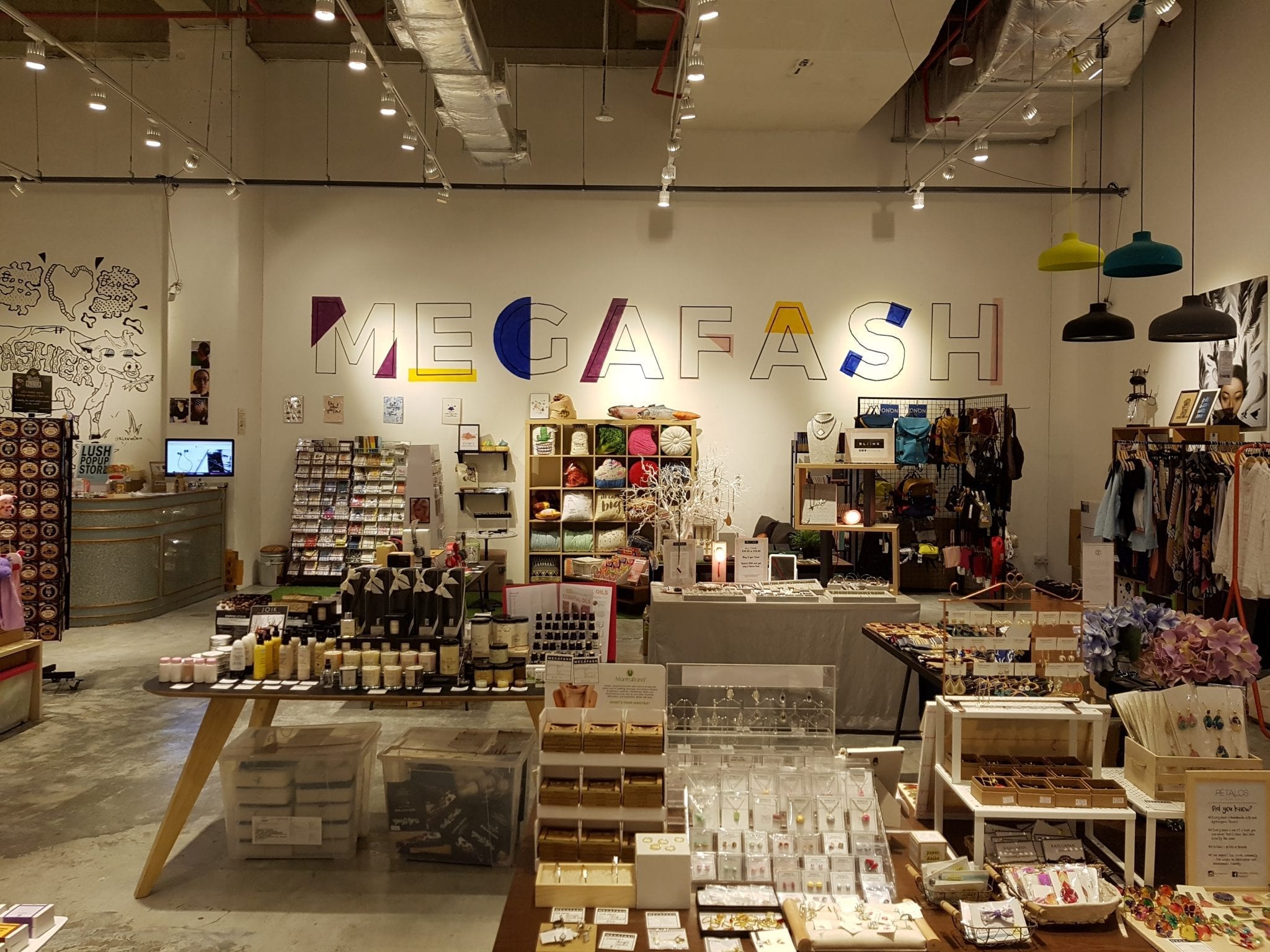
    Singapore fashion and lifestyle platform iFashion Group has acquired independent designer brands marketplace Megafash in a S$3.15 million (US$2.23 million) cash-and-shares deal.

    This follows iFashion’s purchase of lifestyle and fashion brands Dressabelle and Nose, as well as real-estate booking platform Invade.

    Megafash was launched in December 2015 with an eCommerce platform and three stores, and now has more than 15,000 sqft (1393.5 sqm) of retail space across seven stores. It also has a presence in Indonesia and Thailand and stocks more than 2000 international indie brands, with 30 per cent of its in-store brands being exclusive.

    Its annual revenue last year was reported to be $8 million.

    “In times of economic downturn, we are pleased to say our revenue grew five times from 2015,” says Megafash CEO/co-founder Jiawen Ngeow. “In December we received as many as 2000 orders a day.”

    iFashion has appointed Dressabelle CEO/founder Jeremy Khoo as new CEO, who will be responsible for driving the company to the next level.

    “Our acquisition of Megafash completes our line-up of brands for our IPO,” says iFashion Group VP of corporate affairs Jeneen Goh. The company is looking at going public at the end of April or May.

  • HGC launches iBizCloud in Indonesia

    HGC launches iBizCloud in Indonesia

    Hutchison Global Communications (HGC) has teamed up with Indonesian ISP PT Centrin Online Prima to launch a cloud service tailored for the Indonesia market.

    The launch of ibizCloud in Jakarta aims to provide a one-stop global cloud service that meets the infrastructure and speed requirements of local and international enterprises.

    HGC is providing cloud technologies and service design, as well as international connectivity, while Centrin Online provides local connectivity for the service. This launch aims to help the latter meet increasing demand for data exchanges from corporations operating in Indonesia.

    Offered as a total solution, ibizCloud aims to enable Indonesian businesses to access reliable cloud storage without having to make hefty upfront investment in infrastructure.

    The service grants access to a cloud environment via infrastructure-as-a-service (IaaS), bandwidth-as-a-service (BaaS) and dedicated bandwidth-as-a-service (DBaaS).

    Customer organizations can also choose to use on-demand Virtual Leased Line (ODVLL), which facilitates end-to-end data transmission over a secure network. ibizCloud comes complete with virtualised infrastructure such as virtual machines, CPU cores, RAM and storage.

    “Making ibizCloud available in Jakarta represents a great start to 2017 for HGC,” commented Andrew Kwok, Limited president of international and carrier for HGC parent company Hutchison Telecommunications (Hong Kong).

    “The new cloud site strengthens ibizCloud’s market position in Asia, following launch of the service in Hanoi last December. HGC works tirelessly to enhance ibizCloud features in order to meet ever-rising demand from multinationals. One of the value-added features to look out for in early 2017 will be a resource pool arrangement by which customers can allocate additional resource promptly, without having to go through a subscription process.”

  • Korean firm enters Indonesian credit card market

    Korean firm enters Indonesian credit card market

    Shinhan Indo Finance Ltd (SIF), a subsidiary of South Korean credit issuer Shinhan Card, has launched its first credit card on the Indonesian market.

    The “ShinhanIndo Card Hi-Cash” comes in four different types to reach consumers from all segments, especially the millennials.

    In developing its credit card business, SIF is cooperates with Indo-Pack, merchants under Indomobil Group, and K-Pack, merchants from South Korean companies, the company’s vice president Tan Kim Piauw told a press conference after the launching event on Monday.

    SIF was established in December 2015 as a multi-finance joint venture between the Korean credit issuer and two Indonesian firms, Indomobil Group and Asuransi Central Asia (ACA).

    The joint venture obtained permits to issue credit cards from the Financial Services Authority (OJK) and Bank Indonesia in December last year.

    In its initial stage of operation, Indomobil’s 20,000 employees and those of ACA were SIF’s main market target, Tan said, adding that this year the number of credit card holders was expected to reach 80,000.

    “We hope to book Rp 500 billion in transactions in 2017,” he said.

    Speaking at the press conference, Shinhan Card CEO Wi Sung Ho said that with its growing middle class, Indonesia was a market with quite a bit of potential for the credit card business. He said that the number of credit card holders totaled only 17 million despite the country’s large population, far below the South Korean market with 22 million cardholders.

  • Pakistan boosts orange exports to Indonesia

    Pakistan boosts orange exports to Indonesia

    Indonesian fresh fruit importers say Pakistan will face tough rivalry from China. Pakistan hopes to see an increase in exports of its famous Kinnow oranges to Indonesia, as it has started to infiltrate the market through giant retailers.

    A press statement from the Pakistani Embassy made available to The Jakarta Post states that consignments of the Pakistani Kinnow have started arriving in Jakarta, and are currently being sold in many major grocery chains, including Carrefour, Ranch Market, Hypermart and Giant.

    The Kinnow is a larger orange, touted to be extremely easy to peel and is cited as having a unique flavor as a result of the soil and climate in which they are grown.

    “The Pakistani Kinnow made its entry into the Indonesian market at New Year and the Chinese New Year, to make them more joyous occasions. Last year, Pakistan’s exports of Kinnow oranges to Indonesia amounted to US$23 million and this figure is expected to grow significantly in 2017,” the press statement read.

    Indonesia has a preferential trade agreement (PTA) with Pakistan, which began in 2013, and Pakistan’s Kinnow oranges are allowed access through the country’s main port in Tanjung Priok, North Jakarta.

    In exchange, Pakistan exempts Indonesia, the world’s largest crude palm oil (CPO) producer, from paying 10 percent import duty on that commodity.

    Following the PTA, imports of Kinnow oranges from Pakistan reached $19.3 million in 2014, from $3 million in 2013.

    However, Indonesian Fresh Fruit and Vegetables Exporters and Importers Association chairman, Kafi Kurnia, said that it was unlikely Pakistan could significantly boosts its exports of Kinnow oranges because of fierce competition from similar oranges from China.

    Kafi noted that since existing regulations limited the size of imports of certain fruits, importers tended to be choosier.

    “The Kinnow imports arrived during a very good time, at around Chinese New Year. However, they have a lot of fierce competition, mostly from Chinese exporters. If my importing quota was limited, especially during this time, I would definitely prioritize oranges from China,” he told on Monday.

    Even so, the Kinnow orange will remain a major competitor for locally produced oranges, as there was a lack of research and development that could help raise the quality of local fruit and vegetables.

    Indonesia is also home to many other tropical fruits such as mangosteen, rambutan, snake fruit, jackfruit, soursop, breadfruit, guava and starfruit, but they are not exported in great quantities or even consumed heavily at home.

    The government aims to boost tropical fruit production by expanding land for fruit plantations while also improving infrastructure and transportation systems to reduce high distribution costs, as part of efforts to become the biggest tropical fruit producer in Southeast Asia by 2025 and in the world by 2045.

    Meanwhile, National Agriculture Council chairman Benny Kusbini concurred that a lack of uniform quality among locally produced fruit was an obstacle when it came to competing with imported fruit sold in Indonesia.

    He also noted that poor infrastructure remained a problem as some fruits were cheaper to import than to transport from regions in Indonesia.

    “The Kinnow, for example, can be very cheap to import from Pakistan to Indonesia. Sometimes 10 kilograms of Kinnows can be imported for only $5 to $6. Compared to oranges from Medan, for example, it is difficult to compete with those prices,” he told the Post.

    Indonesia imported $666.37 million worth of fruit and $558.08 million worth of vegetables in 2015, according to data from Trade Map.
  • How Indonesians Became Richer than Filipinos

    How Indonesians Became Richer than Filipinos

    An Indonesian boom sparked by growing economic stability and falling corruption and debt levels has helped Indonesians catch up and become better off than Filipinos in per capita income in recent years.

    That hasn’t surprised those following emerging markets closely, though the Philippines’ equity market has outperformed Indonesia’s in the last ten years. Nor has it been a surprise seeing the Philippines leave behind the old glory days of the 1960s, and be bypassed by the one Asian country after another in per capita GDP.

    “There was a time when the Philippines was seen as an Asian trendsetter, and fashionable young Malays would sport the barong, the formal embroidered shirt favored by Filipinos, to look cool,” writes Ruchir Sharma in Breakout Nations. “But that was back in the 1960s, when the Philippines had the second highest per capita income in Asia, behind only Japan. The nation’s fortunes shifted since then.

    By the 1970s South Korea and Taiwan had passed the Philippines in per capita income terms. Malaysia and Thailand followed in the 1980s and China in the 1990s. Then in 2009, in a moment the Manila elite thought it would never see, Indonesia’s boom made Indonesians richer than Filipinos for the first time in history.”

    That’s a trend that continued beyond 2009. In 2016, Philippines per capita GDP was close to two-thirds of that of Indonesia’s; the gap is even bigger in ppp. What has Indonesia done right that Philippines’ hasn’t?

    To begin with, it has managed to shake off the economic and political instability that came with the breaking of the Asian financial crisis – a crisis which hit Jakarta hard, with GDP falling close to 20 percent over the 1997-1998 periods.

    Moreover, Indonesia managed to bring its government debt down, which accounts roughly for 60 percent of that of Philippines. Then there’s the battle against corruption and cronyism, big killers of emerging market growth, though it still remains high compared to that of China and India.

  • Garuda Indonesia axes first class on London routes

    Garuda Indonesia axes first class on London routes

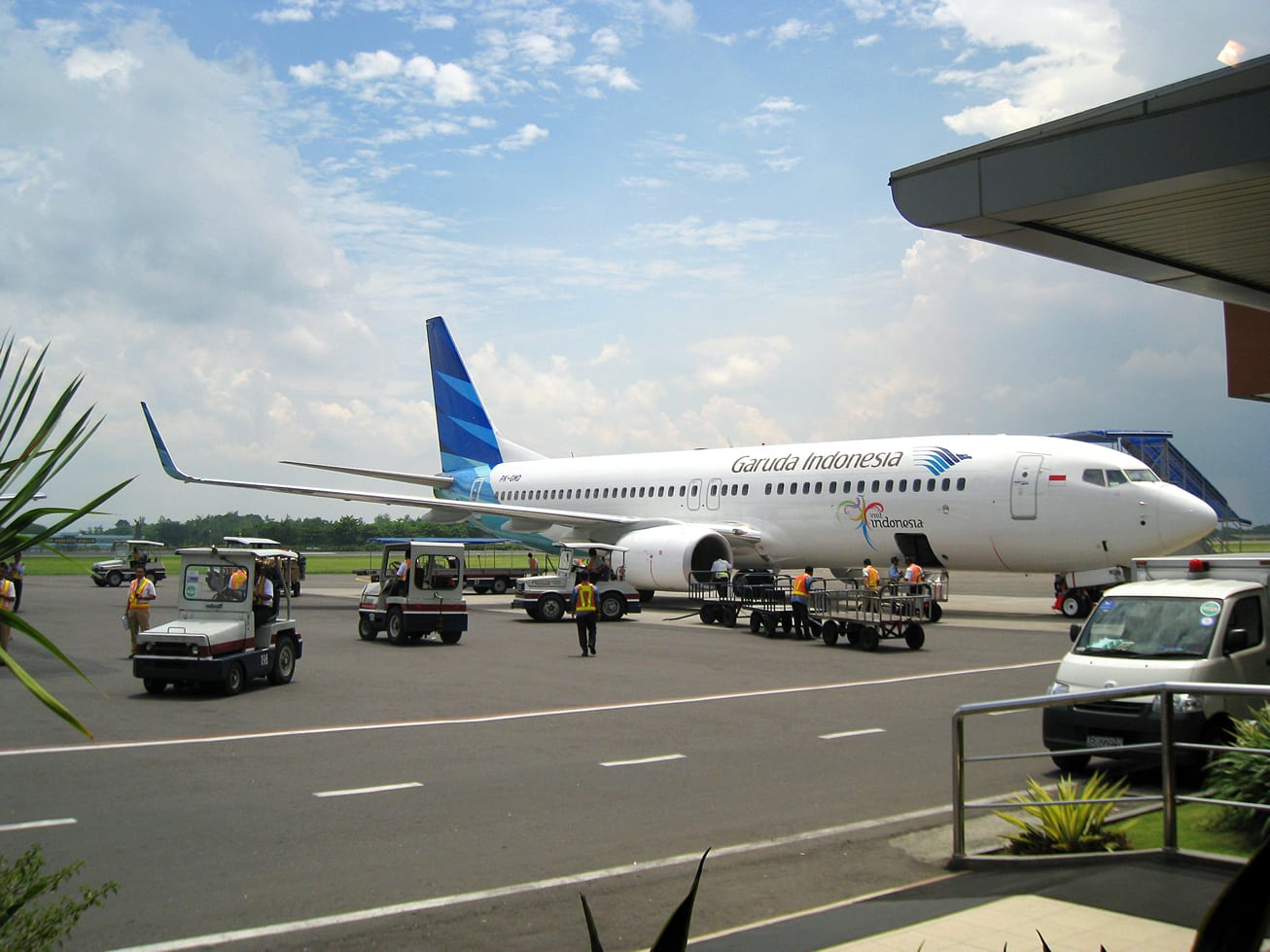
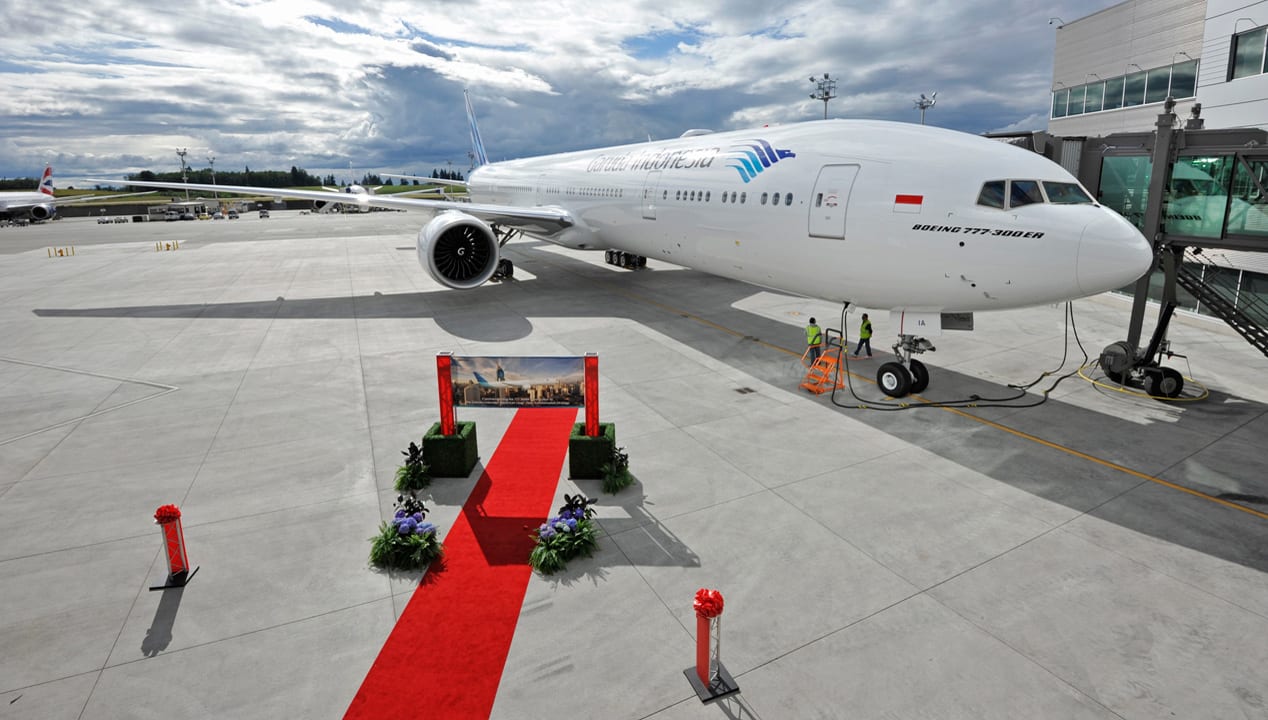
    Garuda Indonesia will no longer be offering first class seating to London from June 20 onwards as it looks to switch from a three-class to two-class Boeing B777-300ER.

    The configuration change for flights GA086/87 on the carrier’s Jakarta-Singapore-London Heathrow route will increase the overall number of seats from 314 to 393 at the expense of its first class cabin.

    While airlineroute.net reported the change on Friday, February 3, at the time of writing Garuda is still offering first class seats on the route on its website.

    Garuda currently operates the route three times weekly, with its Tuesday, Saturday and Sunday schedule not expected to change.

    Full details for the Jakarta (CGK)-Singapore (SIN)-London Heathrow (LHR) route are as follows:

    Flight No. From To Departs Arrives Days
    GA086 CGK SIN 0745 1035 Tue, Sat, Sun
    SIN LHR 1200 1855
    GA087 LHR SIN 2110 1730+1 Tue, Sat, Sun
  • AXA Financial Indonesia seeks new customers from digital platform

    AXA Financial Indonesia seeks new customers from digital platform

    Life insurer AXA Financial Indonesia, part of the AXA Indonesia Group, launched a digital tool to expand its customer base on Monday.

    The tool provides easy access to information for several purposes, namely creating a children’s education fund, retirement fund, business capital and tourism or pilgrimage fund.

    AXA Financial Indonesia chief agency officer Nina Ong said the tool and products were directed at modern dynamic citizens, ages 25 to 45 years old.

    The company expects the tool to help attract 20 percent to 30 percent of such citizens as its new clients and expand its customer base, which is now served by about 14,000 agents.

    AXA Financial Indonesia’s move is part of an overall strategy by the insurance industry, which has continued to report low insurance penetration despite Indonesia’s status as the largest economy in Southeast Asia.

    Data from the Financial Services Authority (OJK) shows that the insurance penetration ratio stood at 2.63 percent only, as of September, below the ratios in Malaysia, Singapore and Thailand at over 5 percent.

    AXA Financial Indonesia booked Rp 1.44 trillion (US$108.03 million) in total revenue in the first nine months of 2016, a more than sixfold increase compared to the same period in 2015, supported by positive results in its investments.