Tag: Indonesia

  • Sales drop for Matahari Putra Prima

    Sales drop for Matahari Putra Prima

    Supermarket group Matahari Putra Prima (MPPA) of Indonesia recorded a net profit of RP32.6 billion (US$2.5 million) despite a drop in net sales to RP10.4 trillion for the nine months ended September 30.

    As expected, says the group in announcing its interim results, a change in date of the Lebaran national holiday from the third to the second quarter as well as economic conditions in Kalimantan and Sumatra had a negative impact.

    The gross margin was 16.3 per cent and operating expenses 15.4 per cent, while same-store sales growth for the period and for the third quarter fell by 2.9 and 8.9 per cent respectively.  Without store closures for renovation, MPPA says the figures would have been 1.3 per cent up and 2.9 per cent down.

    In the third quarter, MPPA changed its accounting methods, which is says will enable it to implement a more aggressive pricing strategy, better analyse profitability and increase control over margin and inventory productivity.

    “Although the third quarter was difficult, sales started to show improvement late in the quarter,” says CEO Noel Trinder. “Actions taken earlier in the year have produced a significant reduction in merchandise inventories to a sustainable level to support future growth”

    He says 15 stores were opened during the nine months.

    “Following an adjustment of quarter-four sales to reflect current conditions, MPPA is forecasting an EBITDA of RP250 billion, bringing the year’s guidance to RP585 billion.”

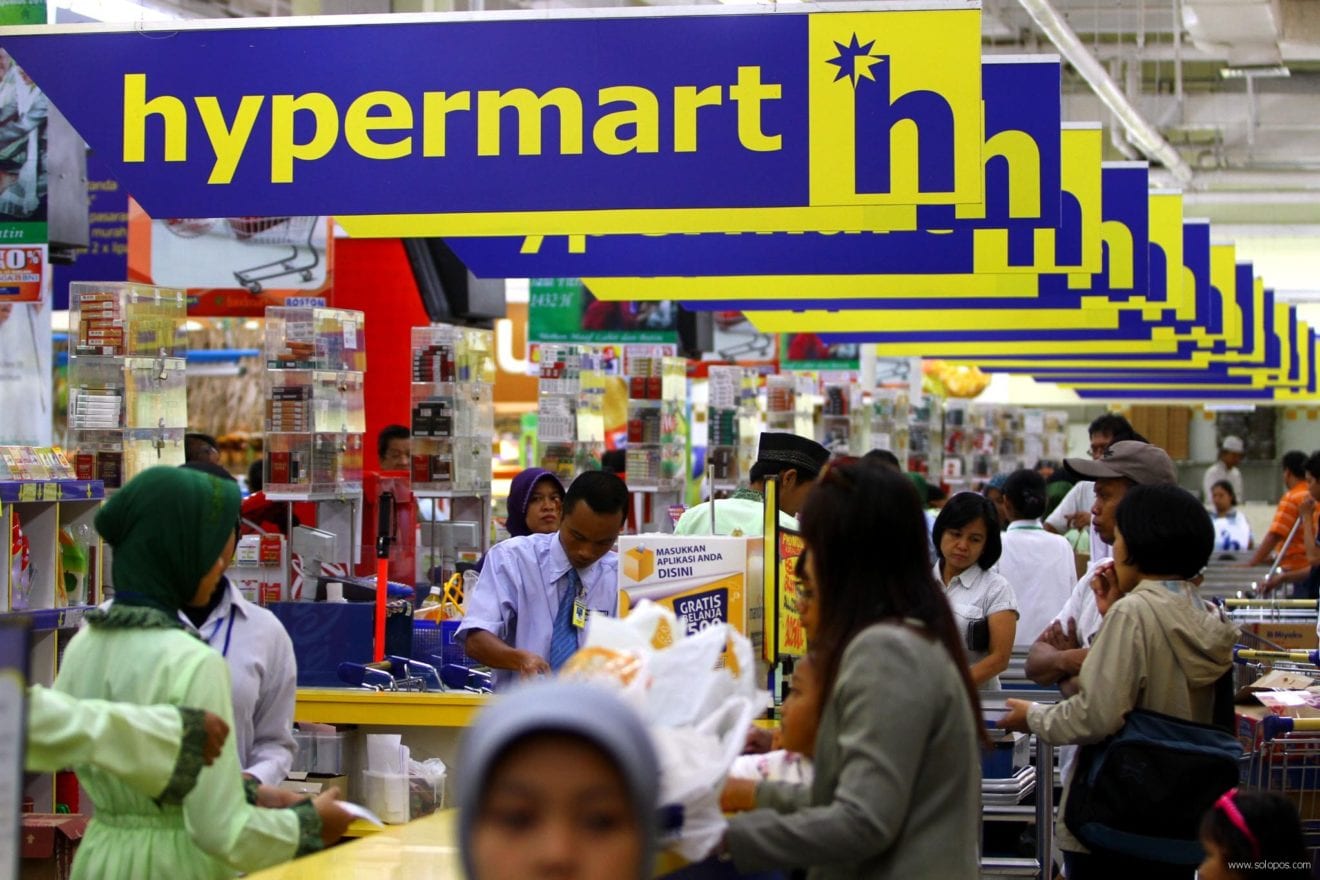
    As of September 30, MPPA had 294 stores in 68 cities across Indonesia (112 Hypermarts, 25 Foodmarts, 106 Bostons, 49 FMXs and two SmartClubs).

  • Scania Strengthens Position in Indonesia

    Scania Strengthens Position in Indonesia

    Scania continues to reinforce its position in the Indonesian bus market. Transjakarta has now placed an order for 150 low-entry city buses in addition to the previously ordered 110 3-axle Scania buses that will be delivered later this year. The public transport operator in the Indonesian capital already has 108 articulated Euro 6 Scania gas buses in its network.

    The Transjakarta Bus Rapid Transport system is considered to be the world’s longest busway, serving more than 10 million passengers monthly. The forthcoming delivery of low-entry buses will replace the existing, highly polluting, old buses that operate outside the busway corridors. The new Scania buses, delivered by United Tractors and bodybuilt by Laksana, will feature wheelchair ramps.

    On announcing the order, Jakarta Governor Basuki “Ahok” Tjahaja Purnama particularly highlighted the greater accessibility and said, “this is the world-class bus we expect to have. Jakarta has never before had low-entry buses.”

    Scania, through its Indonesian partner United Tractors, has established the bus depot workshop facilities and parts supply systems in Jakarta needed to uphold an uptime of over 90 percent.

    United Tractors is the leading and the largest distributor of heavy equipment in Indonesia, providing products from world-renowned brands, including Scania. The partnership between United Tractors and Scania was established in 2004, initially focusing on heavy-duty trucks for the Indonesian mining industry.

    Scania is major supplier of buses for BRT systems throughout the world. “We are convinced that bus systems offer the quickest and most cost-effective solution for cities to increase urban mobility and alleviate traffic congestion,” says Karin Rådström, Head of Buses and Coaches. “The Jakarta BRT system serves as a model for many growing cities.”

    Scania is a part of Volkswagen Truck & Bus GmbH and one of the world’s leading manufacturers of trucks and buses for heavy transport applications. Scania is also leading provider of industrial and marine engines. Service-related products account for a growing proportion of the company’s operations, assuring Scania customers of cost-effective transport solutions and maximum uptime. Scania also offers financial services. Employing some 44,000 people, the company operates in about 100 countries. Research and development activities are concentrated in Sweden, while production takes place in Europe and South America, with facilities for global interchange of both components and complete vehicles. In 2015, net sales totalled SEK 95 billion and net income amounted to SEK 6.8 billion.

  • Indonesia campaigns for pharmaceutical after liberalization

    Indonesia campaigns for pharmaceutical after liberalization

    The government is intensifying efforts to support the country’s longstagnant pharmaceutical industry after opening up the sector to foreign investment in its latest revision to the negative investment list (DNI).

    The efforts were evident at a dialog on “Expediting the Development of Indonesia’s Pharmaceutical Industry” organized by the Investment Coordinating Board (BKPM) on Thursday that gathered together players in the pharmaceutical industry and its related sectors.

    “Most of the existing companies make medicines, whereas the raw material businesses is small. Roughly 90 percent of raw material for the pharmaceutical industry is imported from India or China. We have to change this,” BKPM investment monitoring and implementation deputy chairman Azhar Lubis said during the event.

    In a bid to encourage the raw material industry, the government has revised the DNI, which lists the sectors restricted to foreign investment. Following the revision, the government now allows 100 percent foreign ownership in pharmaceutical companies, from 85 percent previously.

    Following the issuance of the regulation, no fresh interests on raw material sector have been expressed by foreign investors, Azhar said. However, there have been 18 new licenses for investments in the pharmaceutical industry issued by BKPM from January to September worth Rp 2.1 trillion.

    Apart from campaigning for investment in pharmaceutical factories, the BKPM will also push research and development (R&D) in the sector to encourage new innovations in new medicines that are locally made, Azhar added, citing R&D centers in Singapore and Europe.

    However, industry players said the problem with investment in the pharmaceutical sector lay in the fact that there was a relatively small number of hospitals and doctors for whom the medicines would be distributed.

    “Boosting the industry does not only mean pushing for medicine production and factories. What’s also needed is hospitals, doctors and clinics as the infrastructure to feed the pharmaceutical industry,” said International Pharmaceutical Manufacturers Group (IPMG) executive director Parulian Simanjuntak.

    Investments in the pharmaceutical sector have stagnated in recent years, reaching just Rp 8.9 trillion from January 2011 to September 2016, BKPM data shows. Also, there are only 214 pharmaceutical companies in Indonesia, most of which make medicines. Just a few of them manufacture raw material for pharmaceuticals.

    “If production [of raw material] were to start in Indonesia, it would take around three years to really get going and it would definitely cost more than importing from other countries,” said Arustiyono, the director of supervision and therapeutic product distribution at the Food and Drug Monitoring Agency (BPOM).

    “The research and development phase for the chemical reactions would itself take a year,” he added.

    The pharmaceutical industry is 70 percent dominated by local players, including privately-owned Kalbe Farma and state-owned Kimia Farma, among others.

    “The stimulus package for raw material factory investments will bring about a positive impact for the pharmaceutical industry because the source for materials will shift to local sources. This will inoculate the industry from the rupiah’s fluctuations,” Kalbe Farma corporate secretary Vidjongtius said. “In this way, medicine production costs can be more controlled. This, however, is a medium to long-term project.”

  • IT industry still ripe for growth on Indonesians’ love for gadgets

    IT industry still ripe for growth on Indonesians’ love for gadgets

    The government is intensifying efforts to support the country’s longstagnant pharmaceutical industry after opening up the sector to foreign investment in its latest revision to the negative investment list (DNI).

    The efforts were evident at a dialog on “Expediting the Development of Indonesia’s Pharmaceutical Industry” organized by the Investment Coordinating Board (BKPM) on Thursday that gathered together players in the pharmaceutical industry and its related sectors.

    “Most of the existing companies make medicines, whereas the raw material businesses is small. Roughly 90 percent of raw material for the pharmaceutical industry is imported from India or China. We have to change this,” BKPM investment monitoring and implementation deputy chairman Azhar Lubis said during the event.

    In a bid to encourage the raw material industry, the government has revised the DNI, which lists the sectors restricted to foreign investment. Following the revision, the government now allows 100 percent foreign ownership in pharmaceutical companies, from 85 percent previously.

    Following the issuance of the regulation, no fresh interests on raw material sector have been expressed by foreign investors, Azhar said. However, there have been 18 new licenses for investments in the pharmaceutical industry issued by BKPM from January to September worth Rp 2.1 trillion.

    Apart from campaigning for investment in pharmaceutical factories, the BKPM will also push research and development (R&D) in the sector to encourage new innovations in new medicines that are locally made, Azhar added, citing R&D centers in Singapore and Europe.

    However, industry players said the problem with investment in the pharmaceutical sector lay in the fact that there was a relatively small number of hospitals and doctors for whom the medicines would be distributed.

    “Boosting the industry does not only mean pushing for medicine production and factories. What’s also needed is hospitals, doctors and clinics as the infrastructure to feed the pharmaceutical industry,” said International Pharmaceutical Manufacturers Group (IPMG) executive director Parulian Simanjuntak.

    Investments in the pharmaceutical sector have stagnated in recent years, reaching just Rp 8.9 trillion from January 2011 to September 2016, BKPM data shows. Also, there are only 214 pharmaceutical companies in Indonesia, most of which make medicines. Just a few of them manufacture raw material for pharmaceuticals.

    “If production [of raw material] were to start in Indonesia, it would take around three years to really get going and it would definitely cost more than importing from other countries,” said Arustiyono, the director of supervision and therapeutic product distribution at the Food and Drug Monitoring Agency (BPOM).

    “The research and development phase for the chemical reactions would itself take a year,” he added.

    The pharmaceutical industry is 70 percent dominated by local players, including privately-owned Kalbe Farma and state-owned Kimia Farma, among others.

    “The stimulus package for raw material factory investments will bring about a positive impact for the pharmaceutical industry because the source for materials will shift to local sources. This will inoculate the industry from the rupiah’s fluctuations,” Kalbe Farma corporate secretary Vidjongtius said. “In this way, medicine production costs can be more controlled. This, however, is a medium to long-term project.”

  • Manchester United stars to introduce Cafe Football

    Manchester United stars to introduce Cafe Football

    Former Manchester United stars Ryan Giggs and Gary Neville will open a football-themed cafe in Singapore next year as part of a business venture with real-estate firm Rowsley.

    rmp_cafe_football_0823-1280x853-

    Gary Neville (left) and Ryan Giggs team up.

    Cafe Football is the first overseas venture for the UK franchise, which also includes Hotel Football just beside Old Trafford in Manchester.

    Cafe Football and Hotel Football were initially set up by Singaporean businessman Peter Lim along with five of the Manchester United’s “Class of 92” cohort, which includes Giggs, the Neville brothers Gary and Philip, Paul Scholes and Nicky Butt. Rowsley last year acquired the majority share of both Cafe Football and Hotel Football, as well as hotel management company GG Collections.

    The company has just revealed its intention to bring the franchise to Asia, as well as Europe, over the next decade. It has identified China and India as the main markets it is targeting for expansion.

    “We’ve been approached quite a lot by partners to expand,” says Gary Neville, who played 602 games for the club. “Knowing there’s quite a lot of excitement in the market, we’re filtering down to the best opportunities that support our brand and product.

    “So far, we’ve had fantastic reviews in Manchester, with a more than 80 per cent occupancy rate even during non-match days. Now we are looking for a UK, Europe and Asian expansion over the next 12 to 18 months to add multiple properties.”

    Neville says they hope to build more than 5000 rooms over the next 10 years. They are hoping to open in Indonesia, Malaysia and Thailand, with some developments including both a hotel and cafe, while others will be a cafe only.
    There are currently two Cafe Football outlets in the UK, in Manchester and London. The cafes feature menus divided into “defence, midfield and attack”, with dishes named after football phrases such as “The Special One”, “Mexican Wave” and “El Classico”.

    Lim previously was involved in a football-themed eatery in Singapore. Fashion brand distributor FJ Benjamin, of which Lim is a shareholder, co-owned the now-defunct Devil’s Bar, a sports pub with a Manchester United theme, at Orchard Parade Hotel.

  • Business council expects 100 thousand Russian tourists to Indonesia

    Business council expects 100 thousand Russian tourists to Indonesia

    Russia-Indonesia Business Council expects an increase in the number of Indonesian tourists to Russia and vice versa in 2016 and the coming years, in order to strengthen relations and economic cooperation between the two countries.

    A statement from the Russia-Indonesia Business Council received by ANTARA here on Thursday said that tourism was a topic of particular concern at the annual Business Forum held on October 31 in Jakarta.

    Mikhail Kuritsyn, the CEO of Russia-Indonesia Business Council, expected 100 thousand Russian tourists to visit Indonesia in the coming years, and 18 thousand Indonesian tourists to visit Russia in 2016.

    He also called for the diversification of tourism in Indonesia, so that Russian tourists would not only visit Bali Island but also other tourist destinations, which are spread across various islands in the country.

    Direct flights from Jakarta to Moscow will be the first step in enhancing the tourism cooperation.

    The national flight carrier, Garuda Indonesia, is expected to become the operator for Indonesia – Moscow flight before the second quarter of 2017.

    The Russia-Indonesia Business Forum was attended by the Russian Federation Minister of Industry and Trade, Denis Manturov; the Indonesian Minister of Maritime Affairs and Fisheries, Susi Pudjiastuti; the Indonesian Coordinating Minister for Economic Affairs, Darmin Nasution; and the Russian Federation Ambassador Extraordinary and Plenipotentiary to Indonesia, Mikhail Galuzin.

    The forum was participated by 150 delegates from Indonesian companies and 100 representatives from Russian companies, including Russian Railways, United Shipbuilding Corporation, Rosneft, Rusal, Rusnano and Rostech.

    The Russia-Indonesia Business Council is a non-governmental organization which was established to bring together Russian and Indonesian businesses.

    Its main mission was to develop a mutually beneficial business relationship in order to strengthen and expand economic trade, investment and scientific cooperation between the two countries.

  • Indonesia provides free domain names for SMEs

    Indonesia provides free domain names for SMEs

    The Communications and Information Ministry is trying to propel small and medium enterprises (SMEs) into regional and global markets, by providing free domain names to help them take advantage of the country’s growing e-commerce sector.

    The government will provide the free domain names to about 8 million SMEs in all parts of the country until 2020, Communications and Information Minister Rudiantara said on Wednesday.

    In the first stage, the ministry would provide free domain names to 1 million SME customers of stateowned Bank Rakyat Indonesia (BRI) by 2018, he said. The ministry, in partnership with BRI, has also developed a digital platform for SMEs.

    “We want to speed up the [1 million free domain name] program and BRI has a lot of SME customers,” Rudiantara said on the sidelines of the signing of the memorandum of understanding (MoU) in Jakarta, adding that that it might collaborate with other companies if necessary.

    Under the current cooperation with BRI, the SMEs will be given a free domain name for a year. At present, a commercial domain name in Indonesia costs between US$10 and $20 a year.

    BRI president director Asmawi Syam said the free domain would directly involve SMEs in the e-commerce business and expand their market, while the digital platform would help transform the SMEs which are the backbone of the Indonesian economy.

    Currently, BRI has 9.5 million SME debtors in total. The program, launched in August, has managed to facilitate free domain names for 5,000 of them. As of September, BRI’s outstanding loans to SMEs stood at Rp 397 trillion ($30.4 billion).

    According to data from the Central Statistics Agency (BPS), there are more than 54.5 million SMEs in Indonesia. Accounting for around 60 percent of the country’s gross domestic product (GDP), they provide jobs for almost 99 percent of Indonesian workers.

    BRI consumer banking director Sis Apik Wijayanto explained that not all of the lender’s clients in the SME segment would participate in the program, as it was only aimed at companies with good business prospects.

    The domain names, he further said, would allow them to sell their products nationwide and even abroad.

    “If they are growing, it will be also good for BRI. When they have wider market, their turnover will increase and they will need bigger financings or loans from BRI to expand their business,” Sis said.

    The ministry’s target of 1 million domain names, he added, could be easily achieved due to the large number of BRI’s SME customers.

    The lender has been disseminating information related to the program in its 12 regional offices in 10 provinces and aiming to do so in all 34 provinces in the country. It has also provided training for its clients in Yogyakarta, and in seven cities of West Java, on how to manage a website.

  • Garuda Indonesia Posts Strong Net Income Growth in Q3

    Garuda Indonesia Posts Strong Net Income Growth in Q3

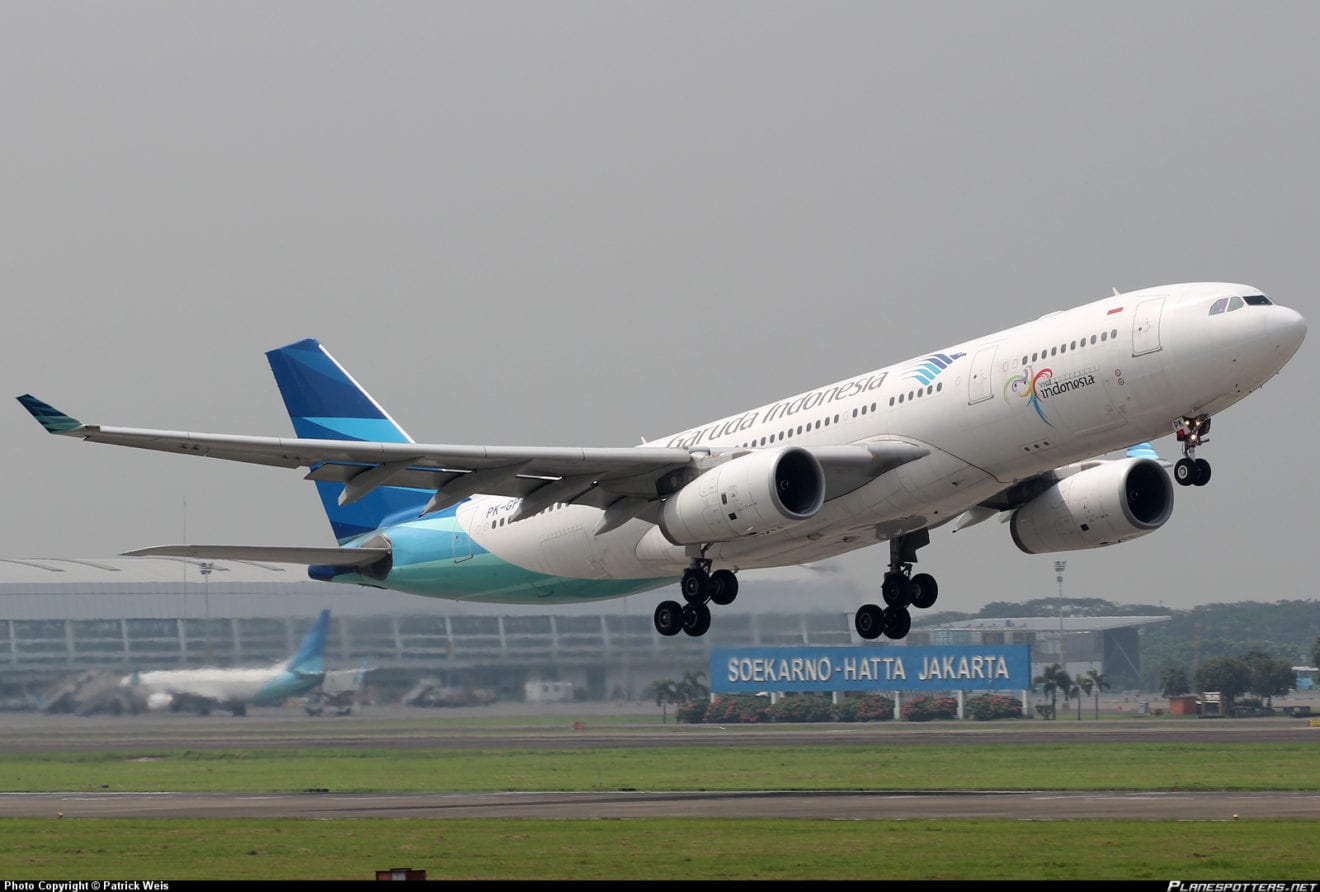
    Indonesia’s flag carrier, Garuda Indonesia, posted net income of US$19.6 million during the third quarter of this year as an outcome of the initial implementation of the ‘Sky Beyond’ strategy, with a focus on Return Maximization as well as the continuous proportional implementation of the financial efficiency policy.

    “This positive result was achieved through non-stop hard work in implementing the ‘Sky Beyond’ business expansion strategy, which played an essential role in promoting the company’s performance the quarter,” said M. Arif Wibowo, President & CEO of Garuda Indonesia, at the media conference after the regular analyst meeting, in Garuda Indonesia’s headquarters in Jakarta.

    He added that despite the highly competitive season in the aviation industry, including the global economic deceleration which affected the national economic situation, Garuda is quite optimistic of maintaining the positive growth of the company up to the end of this year.

    Arif explained that since the beginning of year 2015, Garuda Indonesia had been constantly implementing the proportional financial efficiency program. The predicted loss in the first semester of 2016 was projected to turn around in the next quarter by improving the whole performance during the peak season.

    The continuous financial efficiency program and the performance improvement in other aspects such as operational, services and commercial, are believed to have strengthened the company to achieve positive growth until 2020.

    Arif, accompanied by the entire Board of Directors of Garuda Indonesia and the president directors of the subsidiaries, also explained that the company had succeeded in increasing total revenue from US$2.845 billion in Q3 2015 to US$2.865 billion during the same period of 2016.

    Up to the third quarter of 2016, Garuda Indonesia Group (including Citilink) carried 26,043,138 passengers, which was an increase of 6.1 percent from the 24,551,594 passengers carried in the same period in 2015.
    From the total amount, Garuda Indonesia carried 17.81 million passengers (comprising 14.55 million domestic passengers and 3.26 million international passengers). Meanwhile, its subsidiary, Citilink Indonesia, transported 8.23 million passengers between January – September 2016, which was an increase of nearly 20 percent from the 6.86 million passengers carried over the same period in 2015.

    As a result of the cargo-focused strategy that commenced in early 2016 to strengthen the company’s cargo business in addition to passenger business, mainly by a new Director of Cargo who had only been serving for less than six months (a new tenure on the Board of Directors since April 2016), the amount of cargo transported in January – September period was 295,217 tons, or an increase of 14.7 percent from the same period in 2015 of 257,304 tons.

    Garuda Indonesia and Citilink’s flight frequency in the domestic and international sectors during the January – September period rose to 204,182 flights, with an increase of 9.7 percent from the same period in 2015 with 186,052 flights. In addition, Availability Seat Kilometer/ASK increased by 13.3 percent to 43.91 billion from 38.75 billion ASK in the same period of 2015.

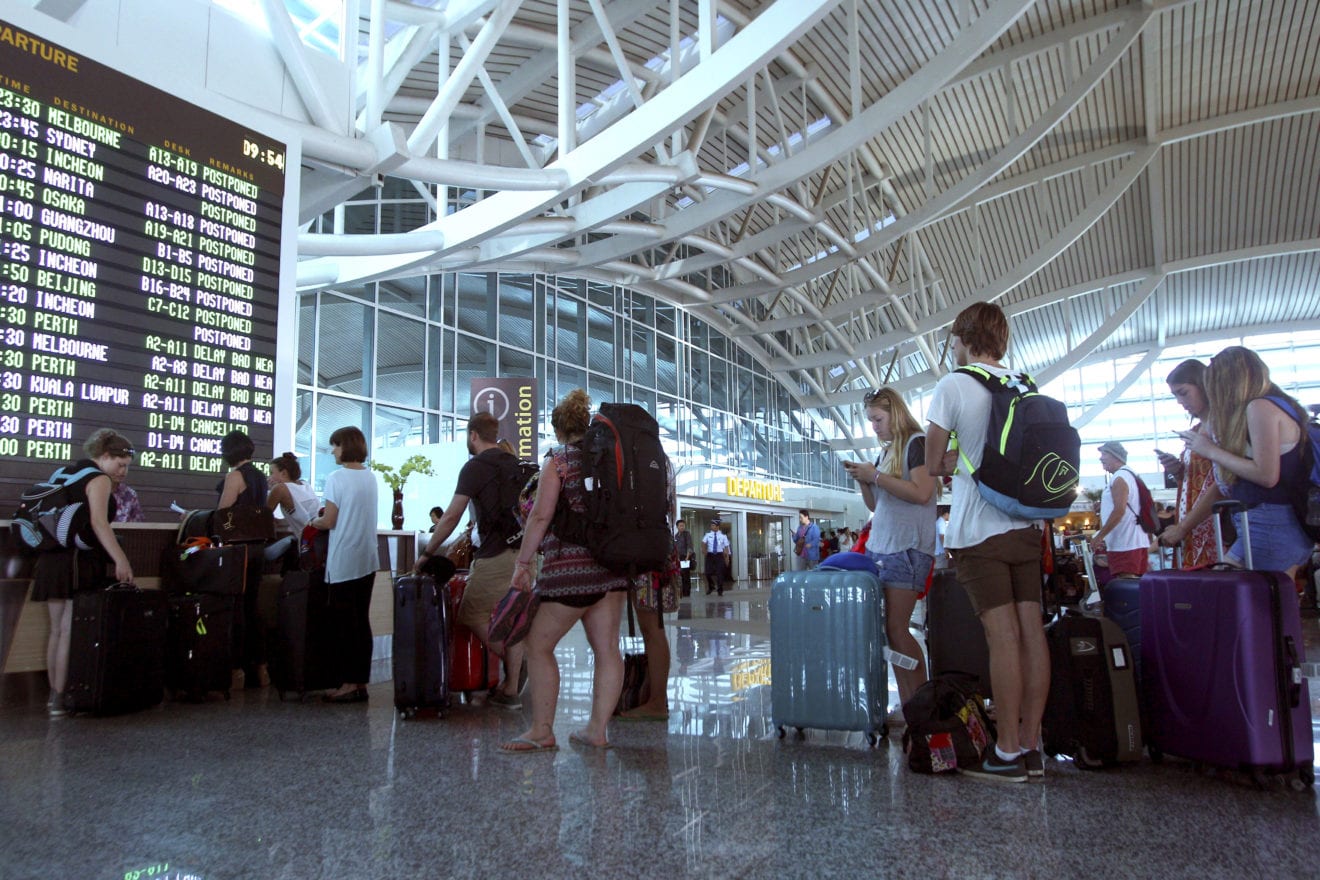
    Despite the challenging situation in operational aspects such as the domestic flights operations at the new Terminal 3 Soekarno-Hatta in early August, and the force majeur by unpredictable weather, Garuda Indonesia also suceeded in increasing its on time performance / OTP to 90.1 percent in the January – September period, from 88.2 percent in same period last year. The seat load factor / SLF of the period was 73.4 percent, with an aircraft utilization amount of 09:12 hours.

    In line with the continuous network expansion plan, in the third quarter of 2016, Garuda Indonesia started to serve new destinations in east Indonesia, namely Nabire, which was served directly from Biak, Papua, and Maumere, which served directly from Denpasar, Bali. The opening of these new routes was a strategic step to improve the connectivity between cities in Indonesia, as well as to strengthen its network in the domestic market.

    Concerning the highly competitive situation in the aviation industry – mainly in the Asia Pacific region – which influenced both domestic and international networks, Garuda Indonesia’s market share for domestic reached 41.2 percent, and 26.7 percent for international market share.

    “We still have time to maximize the power and potency of our strategy, particularly in facing this coming end of year peak season period. We believe that we can reach the continuous positive growth in the coming years, including our strategic plan for international network expansion in the near future,” Arif added.

    Garuda Indonesia Group operates a total of 194 aircraft, consisting of ten (10) Boeing 777-300ER, twenty-five (25) Airbus A330-200/300, two (2) Boeing 747-400, seventy-six (76) Boeing 737-800NG, eighteen (18) Bombardier CRJ1000 NextGen, and fifteen (15) ATR72-600, with a 146 aircraft operated by Garuda Indonesia, and forty (40) Airbus A320 and eight (8) Boeing 737-300/500, or 48 aircraft operated by Citilink, with an average aircraft age of 4.6 years.

  • Indonesia Sees 8.5% Increase of Tourists until September ThisYear

    Indonesia Sees 8.5% Increase of Tourists until September ThisYear

    Indonesia recorded 8.36 million visits by foreign tourist until September this year or an increase of 8.5 percent year-on-year.

    Tourism Minister Arief Yahya said here on Thursday the increase gave greater optimism that the target of 12 million visits by foreign tourists to the country this year would be achieved.

    “In three consecutive months – July-August and September, the number of visits exceeded one million. We hope that the number would be larger in October, November and December,” the minister said.

    In September, there were 1,006,653 foreign tourist arrivals or an increase of 9.40 percent year-on-year from 920,128 in the same month last year, he said in a statement.

    Based on data from the Central Bureau of Statistics (BPS) and the Tourism Ministry, the number of foreign tourist visits in the first nine months of the year was 8,362,963 or 8.51 percent higher than 7,707,034 visits in the same period last year.

    In September, significant increase was recorded in the number of visits of tourists from Bahrain, up 46.84 percent, Egypt up 42.86 percent, China up 28.08 percent, India 26.61 percent, and France 18.92 percent.

    In the nine months period until September this year, the highest increase was recorded in the visits of tourist from Egypt up 48.72 percent, Bahrain up 46.33 percent, India 28.90 percent, China 24.15 percent, and France 23.15 percent.

    Minister Arief Yahya said international events would be increased especially in main gates – Bali, Jakarta, and Batam. in a bid to increase the number of visits of foreign tourists toward the end of the year.

    “Bali plans to organize tens of year end events to increase the number of visits . This year, Bali hopes to chalk up 4.8 million visits by foreign tourists or 45 percent of the total number of foreign visits to the country,” Arief Yahya said.

    Similarly, Bintan of the Riau Islands, which in November-December 2016 would host a number of events such as international sport tourism and entertainment to attract visitors especially from Singapore and Malaysia.

    This year Great Batam/Bintan hopes to chalk up 2.5 visits by foreign tourists.

    Arief said the island of Bintan is one of more potential tourist destinations in frontier areas, beside Manado, Papua, Entikong, and Atambua.

    The tourism Ministry has launched intensive promotional campaigns by organizing cultural festivals in a number of areas to attract foreign tourists in border areas.

    Recently the ministry held a Festival of Wonderful Indonesia (FWI) in Aruk, sub-district of Sajingan Besar, regency of Sambas, in West Kalimantan to attract visitors from Negeri Serawak, Malaysia.

    The tourism ministry, however, has focused more on luring larger number of Chinese tourist to visit the country. China has become the worlds largest tourism market.

    Earlier, Arief said Indonesia had been lagging behind in taking advantage of the Chinese market.

    Indonesia has succeeded only in recording 1.2 million or one percent of outbound Chinese, falling far behind Thailand, which already succeeded in attracting 8 million visits by Chinese tourists year.

    Therefore, the Indonesian Tourism Ministry has teamed up with Baidu, the largest Chinese searching engine company called as “Chinese Google” to create a program to promote tourism destinations in Indonesia.

    Baidu could create many programs to promote Indonesian tourist destinations from upstream to downstream , from branding , advertising to selling, Arief said.

    “It promised to increase the number of Chinese visitors to Indonesia up to 10 million arrivals in 2019,” Arief, who visited China recently, said.

    The 10 million arrivals of Chinese tourist would means 50 percent of the governments target of 20 million in number of foreign tourist visits to the country in 2019.

  • South Korea, Indonesia to cooperate to sell aircraft globally

    South Korea, Indonesia to cooperate to sell aircraft globally

    Korea Aerospace Industries, the country’s sole aircraft manufacturer, said Wednesday it had signed an initial agreement with an Indonesian company to sell its products in the global market.

    In the 2016 Indo Defence Expo and Forum set to run from Wednesday through Saturday in Jakarta, KAI and PT Dirgantara Indonesia (PTDI) agreed to carry out joint marketing to export aircraft in Southeast Asia, the Middle East and Africa, KAI said in a statement.

    “The two companies will expand their cooperation in passenger carriers, military aircraft and aerospace businesses,” KAI Chief Executive and President Ha Sung-yong said in the statement.

    Under the pact, KAI aims to export the KUH-1 Surion utility helicopters to Indonesia as its military is expected to gradually replace the aging fleet of 200 choppers. It will help the PTDI improve its aircraft maintenance capabilities, and the PTDI will help KAI win local projects in aircraft maintenance, repairs and operations, it said.

    The two aircraft companies also plan to jointly develop unmanned aerial vehicles (UAVs) and promote their aircraft in global markets through joint marketing, KAI said.

  • Big plans in store for Indonesia tourist destinations

    Big plans in store for Indonesia tourist destinations

    As tourism slowly takes its place as a new engine of economic growth, the government is making aggressive plans to improve and promote new tourist destinations.

    Morotai in Maluku, Labuan Bajo in West Nusa Tenggara and Tanjung Lesung in Banten are three names that may sound unfamiliar to the domestic and international community, but they are among the so-called 10 emerging tourist destinations that the government expects can be as famous as Bali.

    The other seven destinations are Tanjung Kelayang in Belitung, Wakatobi in Southeast Sulawesi, Lake Toba in North Sumatra, Bromo-Tengger-Semeru in East Java, the Thousand Islands in Jakarta, Borobudur in Central Java and Mandalika in West Nusa Tenggara.

    However, raising them to Bali’s level will take a lot of work, a fact acknowledged by the government, especially as it hopes to attract 20 million foreign tourists by 2019.

    In its latest Indonesia Economic Quarterly report, the World Bank states that implementation of this plan will require efforts on multiple fronts and infrastructure will play a crucial role.

    Indonesia currently ranks in the bottom half of countries on several infrastructure-related tourism competitiveness indicators, such as ground and port infrastructure, tourist service infrastructure, health and hygiene, information and communications technology (ICT) readiness and environmental sustainability.

    The Public Works and Public Housing Ministry, one of the government’s most strategic posts for infrastructure development, has stated that it will focus on infrastructure development for three destinations in the next two years, namely Lake Toba, Mandalika and Borobudur.

    An integrated master plan for the development is also being formulated by the Public Works and Public Housing Ministry and Tourism Ministry.

    “I hope with the integrated master plan, there will be cooperation between ministries and regional governments for the development of the three destinations,” Rido Matari Ichwan, the ministry’s regional infrastructure development agency (BPIW) head, said recently.

    The government has allocated Rp 1.6 trillion (US$122.74 million) in the state budget in 2016 and 2017 for various infrastructure projects in the three destinations, including road access, water system, drinking water, waste management and housing, among others.

    Data from the Public Works and Public Housing Ministry reveals that the development plan for Lake Toba includes the construction of toll roads connecting Medan-Kualanamu-Tebing Tinggi and Tebing Tinggi-Siantar-Parapat, access road to the Sibisa airport in Parapat and 14.3 kilometers of piping in Simalungun, among others.

    Development for Borobudur includes initiatives such as self-built housing development in Magelang, a toll road connecting Yogyakarta and Bawen, a regional drinking water system, and reconstruction and expansion of several roads.

    Meanwhile, Mandalika will see several works carried out, such as the Sulin bridge improvement, road expansion and maintenance, and irrigation network construction in central Lombok.

    Rido added that the ministry would also cooperate with the Transportation Ministry on the development of the airports in the new tourist destinations.

    In addition to state budget funds, the government is also seeking other funding sources. It is looking to obtain a US$200 million to $500 million loan from the World Bank to fund the infrastructure development in the three destinations.

    Discussions are taking place and the loan is expected to be ready for disbursement by July next year.

    Tourism Minister Arief Yahya previously stated that the government would also launch a limited participation mutual fund (RDPT) by next year, through which it sought to garner Rp 10 trillion to develop all 10 destinations.

    “We will use the funds to build amenities. They will be channelled first to the four special economic zones [and tourism destinations], such as Tanjung Kelayang, Tanjung Lesung, Mandalika and Morotai,” he said.

    The World Bank says the government will also need to attract private investment to finance its goals.

    Early indicators are promising, with total foreign and domestic direct investment in hotels and restaurants reaching nearly $1 billion in 2015, an increase of 45.5 percent compared to 2014, while the number of investment licenses approved in the hotel and restaurant sectors surged more than five times to 266 licenses in 2015 from 2014.

    Licensing simplification is one important aspect that will help spur more investment, according to the World Bank. “As a first step, it will be essential to establish an inventory of the number and type of business licenses needed [at the national and subnational level] to establish a tourism-related business,” he added.

  • Indonesia amends controversial internet law

    Indonesia amends controversial internet law

    Indonesia’s House of Representatives has passed amendments to the controversial Electronic Information and Transactions Law to reduce penalties and set more clear definitions.

    The strict law lays out tough penalties including jail time for online defamation and “online intimidation,” and has provoked controversy on multiple occasions due to its use to stifle what is seen as legitimate speech.

    The new amendments set a definition of what constitutes defamation to prevent a loose interpretation of the law.

    Additionally the revisions reduce jail time for defamation to four from six years, and for online intimidation to four from 12.

    The amendments also introduce a “right to be forgotten” – giving courts the ability to request the deletion of certain online information.

    In terms of enforcement the revisions include new regulation governing how state authorities should investigate internet-related crimes, and synchronize procedures on confiscation, seizure, arrest and detention with Indonesia’s criminal law.

  • Indonesian Muslim fashion brand penetrates British market

    Indonesian Muslim fashion brand penetrates British market

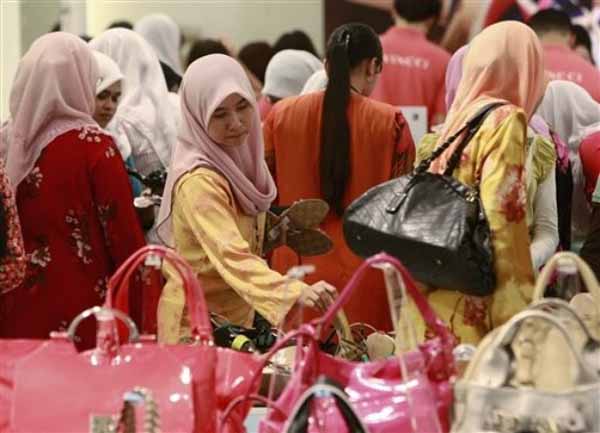
    Indonesian Muslim fashion brand Elzatta Dauky by Elhijab successfully penetrated the UK market at the Muslim Lifestyle Expo in Manchester city over the weekend.

    “Elzatta Dauky is participating in this exhibition for the second time, having appeared previously at the Indonesian Weekend,” the companys Head of Brand Strategy Ina Binandari said here on Tuesday. In addition to exhibiting Muslim fashion products, Elzatta Dauky also showcased 10 designs at a fashion show themed “Gloomessence.”

    The Muslim Lifestyle Expo, one of the biggest Muslim-focused fairs in the world, saw participation from over a hundred exhibitors from various countries, including the United States, Turkey, Germany, Russia, Austria and Malaysia.

    Elzatta Dauky was the only Indonesian participant.

    The organizers said more than 10,000 people from across the city had visited the exhibition.

    Speaking of the brands future plans, Binandari explained that Elzatta Dauky by Elhijab was gearing up to launch an online store in the United Kingdom.

    “Hopefully, with the online store, we will be able to meet the fashion demands of the Muslim community here,” Binandari stated.

    Reports from Thomson Reuters suggested Muslim consumer spending on food, lifestyle products, and services will reach an estimated 1.9 billion pounds sterling in 2020, up from the 1.3 billion pounds sterling seen in 2014.

    Data from the Office for National Statistics, released in late January 2016, show that the number of Muslims in the United Kingdom has, for the first time, exceeded three million, amounting to 3,114,992 people in 2014, equivalent to 5.4 percent of the total population of the country.

  • Apple to Build Innovation Center in Indonesia

    Apple to Build Innovation Center in Indonesia

    Industry Minister Airlangga Hartanto supports US-based technology giant Apple’s plan to build innovation centers in Indonesia. He hopes the facilities will trigger the use of domestic components and raise the number of app developers in Indonesia.

    “They have expressed their commitment to build innovation centers along with Apple’s plan to enter Indonesia’s market,” Airlangga said in a press release yesterday, October 27, 2016.

    The Apple innovation centers will be built in three locations, aimed at creating the latest digital technology, including the development of apps that can be used on their production devices.

    According to Airlangga, Apple sees a huge market potential in Indonesia. In the last five years, the number of mobile telecommunications subscribers has increased four times to 211 million. In Indonesia, the number mobile phones used is estimated to reach 300 million units.

    The Industry Ministry noted that in 2014, Indonesia imported 57.7 million units of mobile phones, 59,000 units of handheld computers and 5.7 million units of tablet computers. In 2015, the number declined; replaced by products assembled in Indonesia.

    Today, there are 17 manufacturing industries capable of assembling mobile phones, handheld computers, and tablet computers.

  • Pomelo boosts funding to $11m

    Pomelo boosts funding to $11m

    Thai online fashion retailer Pomelo has raised a follow-on round, bringing its total Series A funding to US$11 million.

    This round was again led by Singapore-based Jungle Ventures, with participation from existing investors and new contributors including 500 Tuk Tuks (a fund of major venture capitalist 500 Startups), Andre Hoffmann and Jonathan Price.

    Pomelo says it will use the funds to continue expanding in Southeast Asia. While focussed on Indonesia, Singapore and Thailand, it has customers in more than 40 countries.

    “We strive to provide the absolute best in terms of online fashion through our vertically integrated supply chain,” says Pomelo co-founder/CEO David Jou. “eCommerce is clearly approaching a tipping point in Southeast Asia, and we’re lucky to be one of the leaders in the fast-growing fashion vertical.”

    Additionally, the label continues to strengthen its management depth, having added Meg Mistry as brand president and James Lamrock as regional VP (operations). Mistry was previously regional creative director for online fashion house Zalora, while Lamrock was chief logistics officer at Luxola, which was acquired by beauty products company Sephora. Investment firm TPG senior adviser Jonathan Price has also joined in an advisory capacity. He was previously MD of cosmetics and skincare group The Body Shop Asia and global COO of accessories company Targus.