Tag: Indonesia

  • Indonesia expects 250,000 Taiwanese tourists

    Indonesia expects 250,000 Taiwanese tourists

    Indonesian Economic and Trade Office to Taipei (KDEI) is expecting more than 250 thousand tourist arrivals from Taiwan to Indonesia by the end of 2016.

    “In 2015, the number of Taiwanese tourists visiting Indonesia was 211 thousand. Hopefully, by the end of this year, this number will increase as we are also actively promoting tourism under the Wonderful Indonesia brand,” KDEIs Tourism and Transportation Director Agung Sepande said here on Monday.

    He noted that about 70 percent of Taiwanese tourists travel to Bali as the island is perceived as an attractive place and has various sites of tourist interest.

    To attract more Taiwanese tourists, the KDEI is promoting tourist sites in other areas, too.

    “We are inviting Taiwanese journalists to support this promotional exercise. We will take them to Bali and Lombok. Next year, journalists will visit Jakarta and Yogyakarta,” Agung pointed out.

    He noted that Taiwanese tourists in Indonesia want to dive and surf because the countrys beaches are very scenic and conducive to these activities.

    At the Asia Pacific Culture Day 2016 held by Taiwan some time ago, Indonesia had promoted culture and maritime tourism to thousands of visitors from more than 20 countries.

    Taiwan itself is a tourist destination with a variety of sites that accentuate cultural, culinary, shopping, romantic and ecological aspects.

    In Taiwan, travel guides divide the country into North, South, Central, East and the part outside the Formosa Island.

  • Indonesia posts 5% growth in Q3

    Indonesia posts 5% growth in Q3

    Indonesia’s economy grew largely in line with market expectations in the third quarter, though lower government spending and a slowdown among its major trading partners proved a drag on growth.

    Data released by the statistics bureau yesterday showed Indonesia grew 5.02 per cent in the July to September quarter from the same three-month period last year.

    This was close to the median estate of 22 economists surveyed by Bloomberg News of 5.08 per cent though it was below the 5.18 per cent in the second quarter.

    The results are a dampener for South-east Asia’s largest economy – home to more than 250 million people – which has been striving to meet a 7 per cent growth target envisioned by President Joko Widodo when he took office two years ago. Lower commodity prices and weaker global demand have been a consistent roadblock to the target.

    Statistics bureau chief Suhariyanto said a contraction in exports deepened to 6 per cent in the third quarter from the 2.73 per cent slump in the previous one, due to slowing growth in the key markets of China, Singapore and South Korea.

    5.02%

    Indonesia’s growth in the July to September quarter, from the samethree-month period last year. This is below the 5.18 per cent in the second quarter.

    6%

    The contraction in exports in the third quarter, deepening from the 2.73 per cent slump in the previous quarter, owing to slowing growth in key markets China, Singapore and South Korea.

    US$10b

    The budget cut announced in August by Finance Minister Sri Mulyani, for the whole of 2016.

    China grew at a steady 6.7 per cent annually in the third quarter, midway between the government’s goal of 6.5 to 7 per cent.

    Singapore’s growth came in at just 0.6 per cent year on year. South Korea grew 0.7 per cent, marginally ahead of expectations but still a tad below the second quarter.

    Household spending rose 5 per cent in Indonesia, the data showed. But a reversal in government spending was a drag on the economy.

    In August, Finance Minister Sri Mulyani announced a US$10.2 billion (S$14.3 billion) budget cut for the year. “She took the decision to cut government spending, to make sure the aggregate deficit for the year would not exceed 3 per cent of GDP,” OCBC economist Wellian Wiranto wrote in a note. Government spending tumbled 45 trillion rupiah (S$4.75 billion) in the third quarter year on year, data showed.

    Indonesia’s economy has been hobbled by low global commodity prices, tepid foreign investment and infrastructure bottlenecks. Last year’s growth of 4.8 per cent was the weakest since 2009.

    President Joko is seeking billions of dollars to help fund an ambitious agenda to build roads, railways and seaports, Bloomberg reported.

    Reacting to the data yesterday, he said he hoped for a lift in the fourth quarter. “We hope with the trigger of (government) payment realisation and budget disbursement, it can improve slightly.”

    A total of six interest rate cuts by Bank Indonesia this year are helping spur spending as inflation remains inside the 3 per cent to 5 per cent target band.

    Analysts argue that revenue collection from the government’s flagship tax amnesty scheme could help cushion the economy from aggressive state spending cuts.

    “The cuts in spending would continue to weigh on the fourth quarter outlook, but stabilisation of oil and commodity prices should bode well for the overall economy,” UOB economist Ho Woei Chen said.

  • Indonesian unemployment rate down in 2016

    Indonesian unemployment rate down in 2016

    The Indonesia Central Bureau of Statistics (BPS) said in August, 2016, the country had 7.03 million jobless people among 125.44 million of labor force.

    “Compared with August, 2015, the number of working people rose 3.59 million and the number of jobless people declined 530,000. The number of workforce, therefore, increased 3.06 million in August, 2016,” BPS chief Suhariyanto told reporters here on Monday.

    Suhariyanto said the number of working people rose in almost all sectors during the one year period excepting in the construction sector where the number of working people dropped 230,000 people or 2.8 percent.

    “The highest increase in number was recorded in the public service sector in which there were 1.52 million more working people or an increase of 8.47 percent, followed by an increase of 1.01 million or 3.93 percent in the trading sector, and 500,000 or 9.78 percent increase in the transport, warehousing and communications sector,” he said.

    Among the 118.41 million working people, the largest number was in the agriculture sector reaching 37.77 million or 31.9 percent, followed by the trade sector reaching 26.69 million or 22.54 percent and the service sector 19.46 million or 16.43 percent, industrial sector 15.54 million or 13.12 percent, the construction sector 7.98 million workers or 6.74 percent, the transport sector 5.61 million workers or 4.74 percent, the financial sector 3.53 million or 2.98 percent and mining sector 1.83 million or 1.56 percent.

    BPS said in August, 2016, Labor Force Participation Rate (TPAK) was 66.34 percent or every 100 working age people , around 66 were actively employed. Unemployment rate in the same period was 5.61 percent.

    The highest unemployment rate by provinces was in Banten reaching 8.92 percent , followed by West Java at 8.89 percent. The lowest unemployment rate was in Bali at 1.89 percent and Bangka Belitung at 2.6 percent.

    “Tourism sector contributed to low unemployment rate in Bali and Babel,” Suhariyanto said.

    He said in August 2016 , there were 50.21 million people or 42.4 percent of the working people in formal sector having business with permanent workers of 68.2 million.

  • Indonesia optimism despite drop in economic growth

    Indonesia optimism despite drop in economic growth

    Despite economic growth slowing in the third quarter, the government remains optimism that better state budget realization will lead to an economic rebound by year-end.

    Economic growth slowed to 5.02 percent year-on-year (yoy) in the third quarter amid a reduction in government spending and weak international trade, the Central Statistics Agency (BPS) announced on Monday. Growth stood at 5.19 percent yoy in the previous quarter.

    President Joko “Jokowi” Widodo, however, said he was grateful that growth was slightly above the government’s initial forecast of 4.9 percent

    “Our estimate was slightly below 5 percent. It turned out that, Alhamdulillah [Thank God] it is now a bit above 5 percent,” Jokowi told reporters on Monday.

    Jokowi voiced optimism that growth in the final quarter would improve with better state budget realization.

    “We expect the budget realization rate to be slightly better in the fourth quarter, although we should also understand that the global economy continues to decline,” he said.

    BPS chief Suhariyanto said government spending had contracted by 2.97 percent yoy due to recent budget cuts. However, cumulative government spending from January to September increased 1.97 percent from the same period last year.

    Amid a weak global economy, Indonesia saw its gross domestic growth increase only 4.79 percent last year, the lowest rate in six years. The government is targeting economic growth of 5.2 percent this year and 5.1 percent in 2017.

  • Rupiah strengthens to 13,045 as of Monday afternoon

    Rupiah strengthens to 13,045 as of Monday afternoon

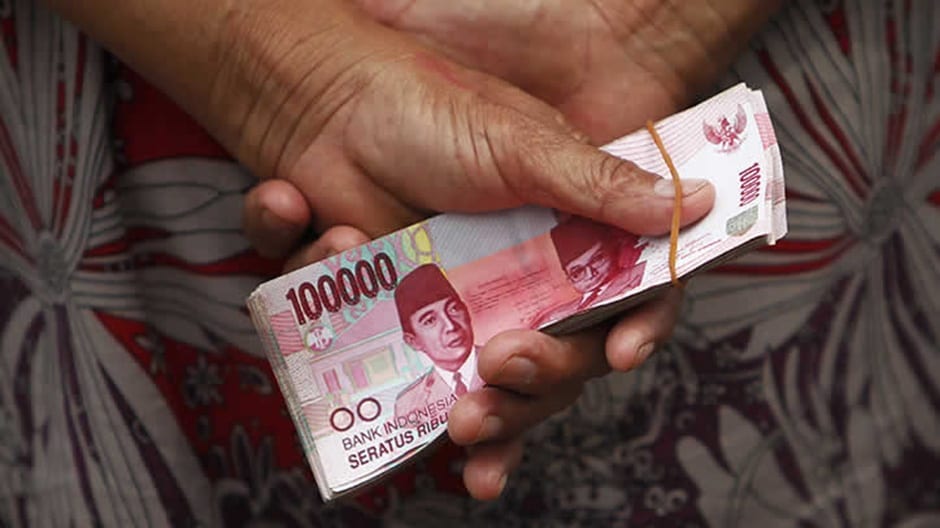
    The interbank exchange rate of rupiah in Jakarta moved higher by 23 points, reaching 13,045 rupiah per one US dollar compared to 13,068 rupiah previously.

    “Rupiah strengthened against US dollar in line with the growth indicated in the just released domestic economy data,” said Woori Saudara Indonesia Tbk money market watcher Rully Nova in Jakarta on Monday.

    According to the Central Bureau of Statistics, Indonesias economy experienced a 5.02 percent growth in the third quarter of 2016, thus reflecting that the cumulative growth has reached 5.04 percent by the third quarter of the year.

    The strengthening of the domestic currency has a lot to do with the market players confidence in Indonesias economy amid an uneven global economic scenario, spurring an interest in assets with rupiah denomination.

    At the same time, Nova believed the strengthening of the currency was still relatively limited, corresponding with commodity prices, especially the worlds crude oil price which is still at US$50 per barrel, indicating the psychological level of investors.

    The WTI Crude Oil was at US$44.76 per barrel as of Monday evening, while Brent Crude Oil was at US$46.11 per barrel.

    “The crude oil prices are expected to show an upward trend, sustaining rupiahs fluctuation in a positive area,” he noted.

    Meanwhile, Indonesias Central Bank recorded on Monday that rupiahs the middle exchange rate moved higher to 13,082, compared to 13,103 on Friday.

  • Garuda Indonesia books USD19.6 mil net income in Q3 2016

    Garuda Indonesia books USD19.6 mil net income in Q3 2016

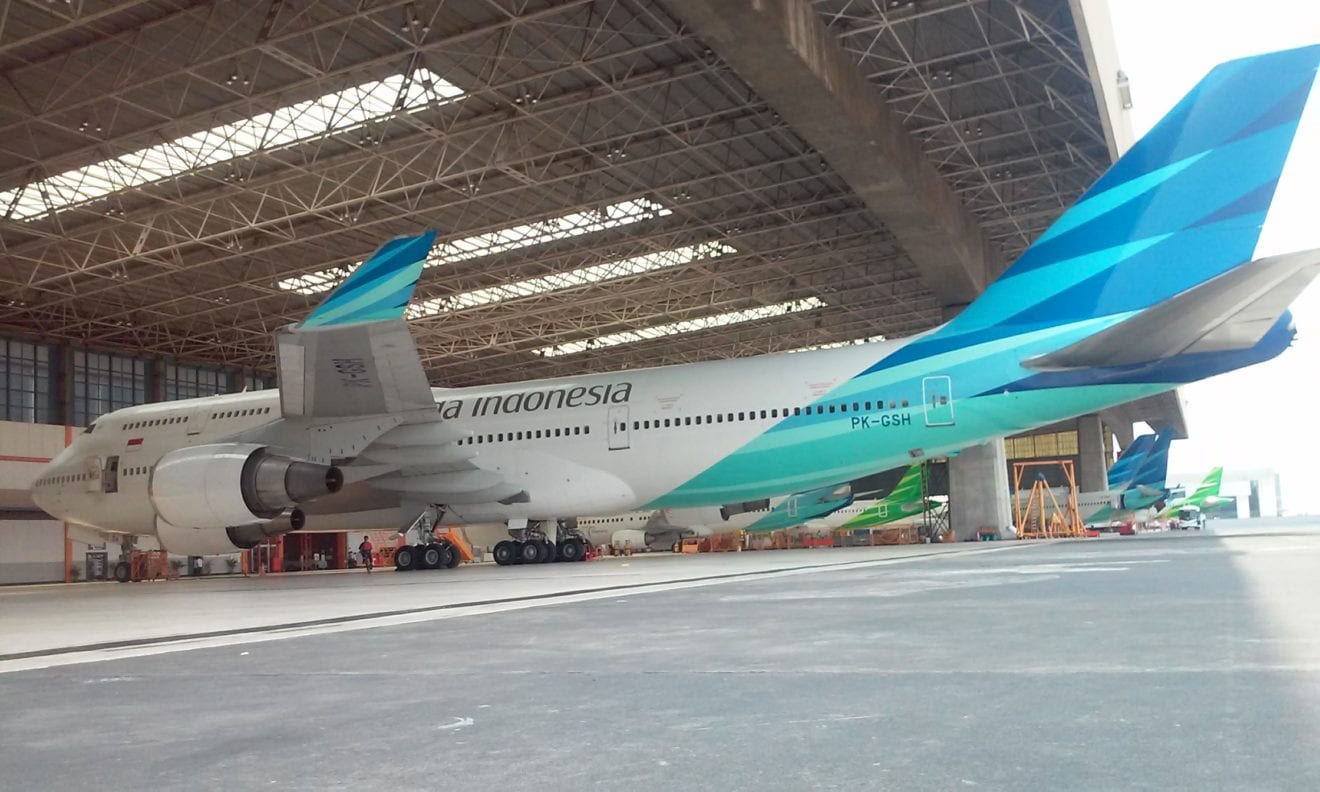
    Garuda Indonesia, booked net income of USD 19.6 million or IDR 254.8 billion (exchange rate IDR 13,000 per USD) during the third quarter (July – September period) of 2016 as an outcome of the initial implementation of the ‘Sky Beyond’ strategy, with a focus on Return Maximization as well as the continuous proportional implementation of the financial efficiency policy.
    “This positive result was achieved through non-stop hard work in implementing the ‘Sky Beyond’ business expansion strategy, which played an essential role in promoting the company’s performance the quarter.

    Despite the highly competitive season in the aviation industry, including the global economic deceleration which affected the national economic situation, we are quite optimistic of maintaining the positive growth of the company up to the end of this year,” stated M. Arif Wibowo, President & CEO of Garuda Indonesia, on Monday (31/10) at the media conference after the regular analyst meeting, in Garuda Indonesia’s headquarters in Jakarta.

    Arif explained that since the beginning of year 2015, Garuda Indonesia had been constantly implementing the proportional financial efficiency program. The predicted loss in the first semester of 2016 was projected to turn around in the next quarter by improving the whole performance during the peak season. The continuous financial efficiency program and the performance improvement in other aspects such as operational, services and commercial, are believed to have strengthened the company to achieve positive growth until 2020.

    Arif, accompanied by the entire Board of Directors of Garuda Indonesia and the president directors of the subsidiaries, also explained that the company had succeeded in increasing total revenue from USD 2.845 billion in 2015 (January – September) to USD 2.865 billion during the same period of 2016. Up to the third quarter of 2016, Garuda Indonesia Group (including Citilink) carried 26,043,138 passengers, which was an increase of 6.1 percent from the 24,551,594 passengers carried in the same period in 2015.

    From the total amount, Garuda Indonesia carried 17.81 million passengers (comprising 14.55 million domestic passengers and 3.26 million international passengers). Meanwhile, its subsidiary, Citilink Indonesia, transported 8.23 million passengers between January – September 2016, which was an increase of nearly 20 percent from the 6.86 million passengers carried over the same period in 2015.

    Garuda Indonesia and Citilink’s flight frequency in the domestic and international sectors during the January – September period rose to 204,182 flights, with an increase of 9.7 percent from the same period in 2015 with 186,052 flights. In addition, Availability Seat Kilometer/ASK increased by 13.3 percent to 43.91 billion from 38.75 billion ASK in the same period of 2015.

    Despite the challenging situation in operational aspects such as the domestic flights operations at the new Terminal 3 Soekarno-Hatta in early August, and the force majeur by unpredictable weather, Garuda Indonesia also suceeded in increasing its on time performance / OTP to 90.1 percent in the January – September period, from 88.2 percent in same period last year. The seat load factor / SLF of the period was 73.4 percent, with an aircraft utilization amount of 09:12 hours.

    In line with the continuous network expansion plan, in the third quarter of 2016, Garuda Indonesia started to serve new destinations in east Indonesia, namely Nabire, which was served directly from Biak, Papua, and Maumere, which served directly from Denpasar, Bali. The opening of these new routes was a strategic step to improve the connectivity between cities in Indonesia, as well as to strengthen its network in the domestic market.

    Concerning the highly competitive situation in the aviation industry – mainly in the Asia Pacific region – which influenced both domestic and international networks, Garuda Indonesia’s market share for domestic reached 41.2 percent, and 26.7 percent for international market share.

    “We still have time to maximize the power and potency of our strategy, particularly in facing this coming end of year peak season period. We believe that we can reach the continuous positive growth in the coming years, including our strategic plan for international network expansion in the near future,” Arif added.
  • Number of Chinese tourists to Bali shoots up 36%

    Number of Chinese tourists to Bali shoots up 36%

    The number of visits by Chinese tourists to Bali shot up 35.84 percent to 741.740 in the first nine months of this year from 546,035 visits in the same period last year.

    “The number of visits by holiday makers from China is now the second largest after those from Australia, which has continued to top the list of 10 largest countries of origin of foreign visitors to Bali,” head of the regional branch of the Central Bureau of Statistics (BPS) Adi Nugroho said here on Saturday.

    Adi said currently China accounts for 20.38 percent of the number of visits by foreign tourists to Bali.

    There were 3.63 million of visits by foreign tourists to Bali in the January-September period this year or an increase of 21.69 percent from 2.99 million in the same period last year.

    Adi Nugroho Australia contributed 23.36 percent to the total; number of foreign visits to Bali. Japan was the third place contributing 4.94% followed by Britain accounting for 4.52 percent, India for 3.57 percent, France for 3.56 percent, Malaysia 3.55 percent, the United States 3.44 percent, South Korea 3.04 percent, and Germany for 3.22 percent.

    He said the increase in the number of tourists from China was attributable to improved economic condition of the worlds most populous country and second largest economy.

    In addition, the countrys flag carrier Garuda Indonesia has provided direct flight between Bali and a number of cities in China such as Shanghai, Baijing and Guangzhou since 2015.

    China has become a target for market expansion by Garuda Indonesia for its international services.

    More than 100 Chinese travel abroad every year making that country the most potential tourist market which would benefit airlines.

    Chinese Consul General in Denpasar, Bali, Hu Yinquan, asked the government to provide sufficient interpreters for Mandarin to facilitate Chinese visitors, who could not speak in English.

    Hu Yinquan also asked that Mandarin also included in signposts as he believed more Chinese tourist would visit Bali in the coming years.

    In Manado, North Sulawesi, Chinese made up around 50 percent of foreign visitors in the third quarter of this year.

    “Chinese guests contributed 50 percent to the occupancy rate of the Lion Hotel and Plaza Manado,” says Sales Marketing Manager of Lion Hotel and Plaza Manado Anatje Pingkan Pinaria.

    Indonesia, however, is still far lagging behind Thailand in attracting Chinese holiday makers.

    Altogether, Indonesia recorded 8.36 million visits by foreign tourist until September this year or an increase of 8.5 percent year-on-year.

    Tourism Minister Arief Yahya said earlier this week, the increase gave greater optimism that the target of 12 million visits by foreign tourists to the country this year would be achieved.

    “In three consecutive months – July-August and September, the number of visits by foreign tourists exceeded one million. We hope that the number would be larger in October, November and December,” the minister said.

    In September, there were 1,006,653 foreign tourist visits or an increase of 9.40 percent year-on-year from 920,128 in the same month last year, he said in a statement.

    Based on data from the Central Bureau of Statistics (BPS) and the Tourism Ministry, the number of foreign tourist visits in the first nine months of the year was 8,362,963 or 8.51 percent higher than 7,707,034 visits in the same period last year.

  • Japanese manufacturers pitch new products at Indonesia motorcycle show

    Japanese manufacturers pitch new products at Indonesia motorcycle show

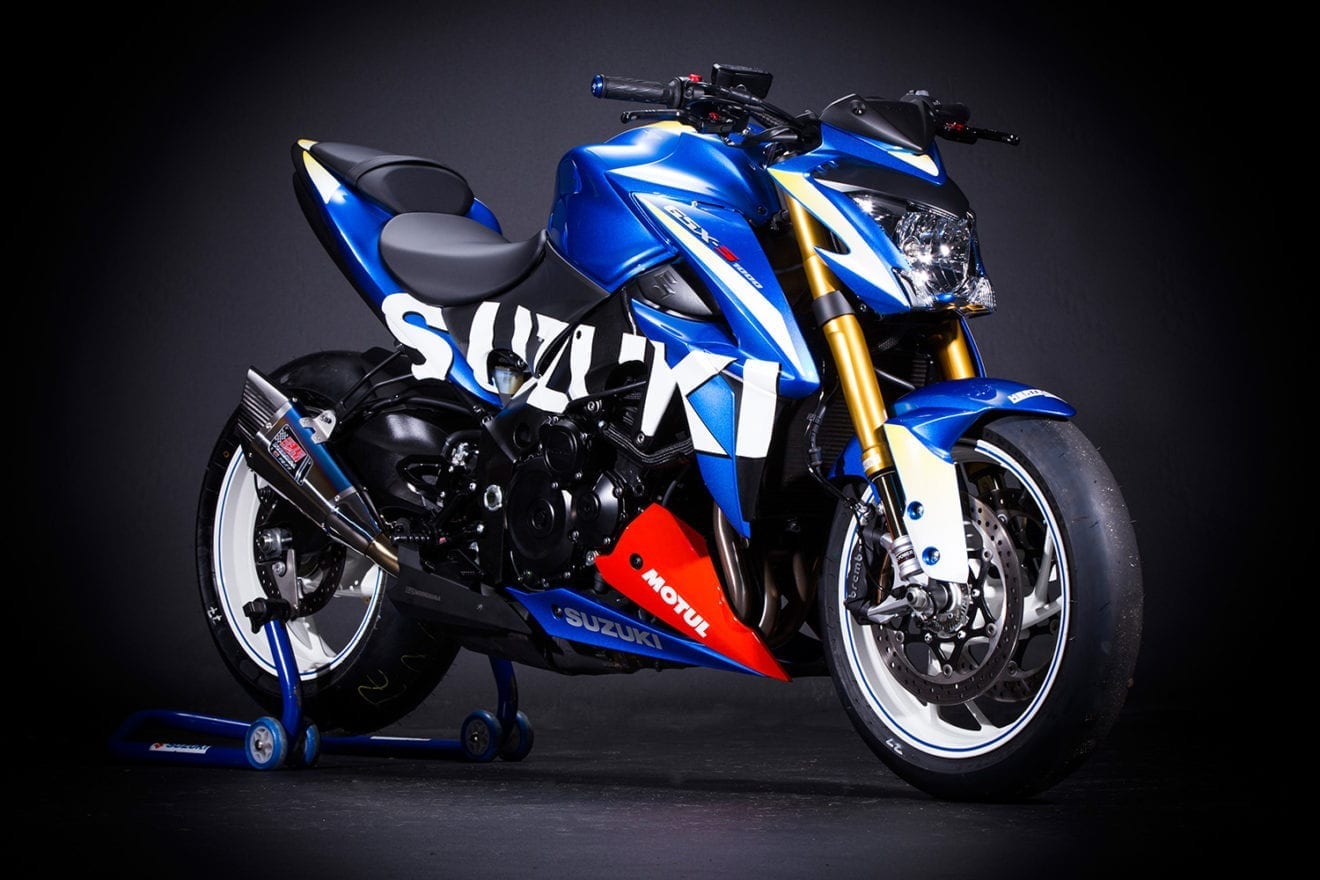
    Japanese motorcycle manufacturers are promoting their products at the Indonesian Motorcycle Show 2016 in Jakarta, with Suzuki Motor Corp. using the biennial event to unveil its latest models.

    Suzuki took the wraps off the GSX-R 150 and GSX-S 150 sport motorcycle models at the five-day show, which runs until Sunday, giving the Indonesian public an opportunity to see its latest products before their official launch in the first half of 2017.

    “We are very proud to introduce the GSX-R 150 and GSX-S 150 for the first time in the world,” Kazumasa Watanabe, manager of Suzuki’s motorcycle marketing group for the Association of Southeast Asian Nations, said at the show Wednesday.

    He described the Suzuki GSX-RR technology, on which the new models are based, as the company’s “highest achievement” in the GSX series that helped Suzuki win the 12th round of MotoGP, the world’s most prestigious motorcycle race, in Britain on Sept. 4.

    Kawasaki Heavy Industries Ltd. also unveiled its Kawasaki Ninja 650, while Honda Motor Co. released the prices of its All New Honda CBR250RR, introduced last July, which are $4,900 for the standard model and $5,300 for the model equipped with an anti-lock braking system.

    In the scooter category, Yamaha Motor Co. introduced the three-wheeled Tricity 155 in Indonesia after it was launched globally five months ago.

    Indonesia’s three-wheeler market is still very new, but Mohammad Masykur, assistant general manager for marketing at PT Yamaha Indonesia Motor Manufacturing, was optimistic about its future.

    “The presence of Tricity in Indonesia will give a new color to the Indonesian automotive world,” he said, adding that the company’s “Leaning-Multi Wheel technology will make a difference on the Indonesia road.”

  • Tata Motors signs MoU with PT Pindad to sell armoured vehicles in Indonesia

    Tata Motors signs MoU with PT Pindad to sell armoured vehicles in Indonesia

    Tata Motors and PT Pindad have signed a Memorandum of Understanding (MoU) for cooperation to explore market potential of Tata Armoured Vehicles in Indonesia and other regions of ASEAN.

    The MoU also includes a study to check the feasibility of locally assembling Tata Armoured Vehicles at PT Pindad’s facility, in Bandung in West Java province of Indonesia.

    PT Pindad is an Indonesian state-owned enterprise specialising in military and commercial products.

    Commenting on the occasion, Biswadev Sengupta, president director of Tata Motors Indonesia, a subsidiary of Tata Motors – Agent licensee (APM) of Tata Motors brand in Indonesia, said, “This is a very important milestone for Tata Motors operations in Indonesia and is a matter of pride to be able to co-operate with PT Pindad, which is held in high esteem by the Indonesian community. I am sure that through this arrangement, we can create a lot of value in Indonesia, a market which we are committed to in the long term.”

    “This foray into the defense business in Indonesia, is in continuation with the strides made in the logistics business in the country, where more than 3000 Tata vehicles are already on the road, covering pickups, light trucks, buses and heavy trucks,” added Biswadev.

    PT Pindad provides the main weapon systems (Alat Utama Sistem Senjata or Alutsista) required to support independence in defence and security of the Republic of Indonesia. Furthermore, PT Pindad (Persero) also produces several industrial products for other aspects such as transportation and commercial explosives. Its activities cover design, development, engineering and fabrication as well as maintenance.

    Tata Motors has been associated with the country’s off-road defence and security forces, since 1958 and has supplied over 110,000 vehicles to the Indian military and paramilitary forces, so far. The company exports its range of defence vehicles to the SAARC, ASEAN and African regions.

  • World Bank approves loan for Indonesia`s logistics sector

    World Bank approves loan for Indonesia`s logistics sector

    The Executive Board of the World Bank has approved a US$400 million Development Policy Loan for the Indonesias Logistics Reform, which will be used to improve the countrys logistics system and connectivity.

    “These reforms will help Indonesia in achieving higher inclusive growth,” World Banks Country Director in Indonesia Rodrigo Chaves said in a statement received by ANTARA here on Thursday.

    Chaves explained the US$400 million loan will support Indonesia to overcome obstacles in the supply chain, such as dwelling time and trading permits.

    The inefficient dwelling time has resulted in Indonesias logistics costs accounting for 25 percent of the total costs, while Thailand is only 15 percent and Malaysia is 13 percent.

    Currently, the cost of container shipping of oranges from Shanghai, China to Jakarta is cheaper than the cost of similar items shipping from Jakarta to Padang, West Sumatra.

    Though, the distance between the two cities in Indonesia is only a sixth of the distance between Jakarta and Shanghai.

    “Logistics efficiency will improve connectivity and provide a significant impact on the competitiveness of the country. Improved logistics can reduce the cost of goods and services flows, especially in remote and underdeveloped regions in Indonesia,” Chaves said.

    The Development Policy Loan will support Indonesia over a transition period from the commodity-dependent economy to manufacturing-based economy with high competitiveness.

    World Banks Senior Economist Massimiliano Cali added that the high cost and unreliable logistics are obstacles in improving national competitiveness.

    “Managing these problems will increase production and export, thus lifting economic growth,” he said.

    The three main objectives of this funding is increasing the performance of the ports, improving the competitiveness of logistics services and strengthening trade facilitation.

    World Banks support for the logistics reform is an important part of the Partnership Framework of World Bank Group States, which is centered on the governments priority to bring significant changes.

  • Program to open new rice fields in East Nusa Tenggara to continue in 2017

    Program to open new rice fields in East Nusa Tenggara to continue in 2017

    Head of the East Nusa Tenggara provincial Agriculture and Plantation Service Yohanes Tay Ruba said the province would continue the program of opening of new rice fields in 2017.

    “Currently we are conducting rationalization and preparation of the program for the opening of new rice fields to be implemented in 2017,” Yohanes said here on Saturday.

    He said implementation of the program this year could not be carried out as expected over delay in the disbursement of General Allocation Fund (DAU) from the central government.

    Until now 1,960 hectares of new rice field had been opened or falling short of the target of 2,709 hectares for this year, he said.

    Around 224.22 hectares of the new rice fields have been ready for cultivation, he added.

    “We hope the rest could be carried out with work starting early next year, that farmers could increase their rice production,” he said.

    Yohanes delay in the implementation of the program was recorded in a number of areas including in the regencies of Kupang, Sumba Timur, and Flores such as regencies of Ende and Manggarai Barat.

    The regency of Ende was to have Rp11,538,089,786 in the delayed DAU each month from September to December.

    Kupangs delayed share of the DAU in the same periods was Rp25,466,413,828; and the regency of Sumba Timur was to have Rp11,532,251,253 and the regency of Manggarai Barat was to receive a disbursement of Rp18,071,885,782 each month during the four months period.

    Yohanes said the opening of new rices fields in NTT so far had been carried out through cooperation with the military with solders sent to the fields together with the government elucidation team to encourage the farmers in expanding their rice fields.

    “We appreciate the assistance offered by the military for the farmers to increase their productivity,” he said.

    He said he hoped such cooperation would continue that when the budget fund had been available the program to open more new rice fields could be implemented as expected.

    Earlier this week President Joko Widodo said the country would not import rice in the rest of this year.

    Agriculture Minister Andi Amran Sulaiman has said there would be no scarcity in rice supply in Indonesia as the country is predicted to have a surplus of 400,000 tons in production this year.

    The minister said based on a survey by the Central Bureau of Statistics (BPS) the countrys rice production rose significantly this year.

    The survey said planting areas in July-September, 2016 reached 1 million hectares up significantly from an average of 500,000 hectares in earlier years.

    Based on an assumption that a hectare would turn out 6 tons of unhulled rice, the countrys production of unhulled rice would total 6 million tons or equivalent to 3 million tons of milled rice as against a monthly consumption of 2.6 million tons.

    Therefore, the countrys rice stock is sufficient despite the extreme weather such as foods that damaged rice crops in the country this year.

    “In addition, irrigation systems have been repaired in various areas in Indonesia in cooperation with the Public Works Ministry,” Andi said.

  • Pelindo to build seaport for food transportation

    Pelindo to build seaport for food transportation

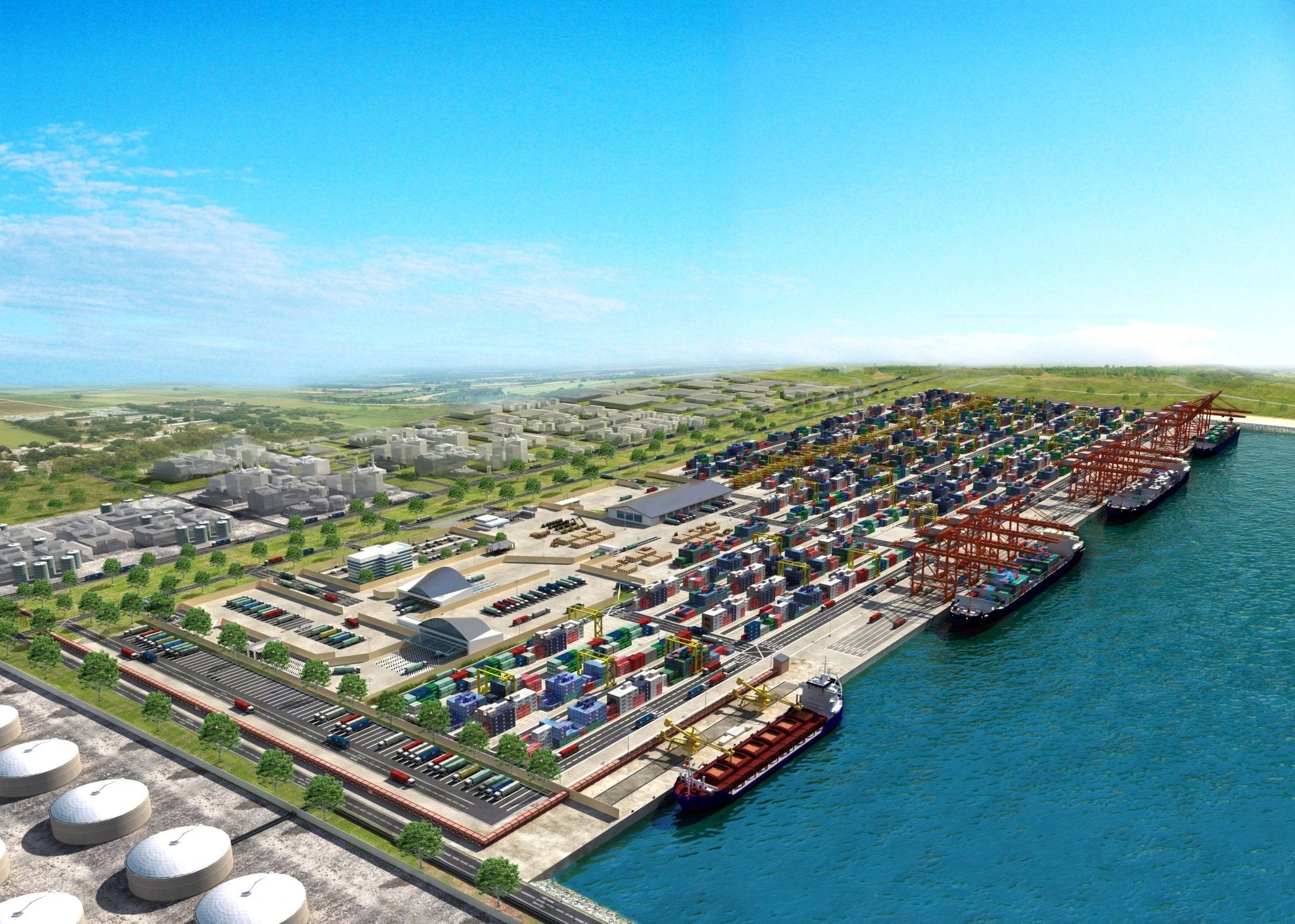
    The Indonesia Port Corporation, PT Pelabuhan Indonesia (Pelindo) I, will build seaport infrastructure that supports food logistics transportation in order to reduce shipping costs and improve the quality of food products, Pelindo I Director Bambang Eka Cahyana said.

    “Right now we are paying attention to the food sector. In Belawan, North Sumatra, this year we are building a cold storage,” Bambang Eka said here on last Thursday.

    Cold storage, he added, can retain the quality of food products before they are exported overseas.

    The construction of cold storage in Belawan is a short-term plan for Pelindo I.

    Meanwhile, the medium-term plan of the company is to build a specialized cluster for food processing in Tanjung Balai port, North Sumatra.

    “During this time food processing has not received full attention. If we strengthen the cluster at the port, it will lower logistics costs,” he said.

    Bambang said for the long-term project, Pelindo I will build food processing infrastructure at all seaports throughout the country that are under its management.

  • Foreign Investors Eye Hospital Business in Indonesia

    Foreign Investors Eye Hospital Business in Indonesia

    Foreign investors have expressed interest in healthcare business investments in Indonesia. Singapore-based Global Growth Markets (GGM) consultant said that India-based hospital group Apollo Hospitals is currently considering to build a telemedicine center and a hospital in Indonesia. In addition, Malaysia-based IIH Healthcare recently announced that they would tap into the Indonesian market as a part of its expansion plan.

    GGM consultant Pet Read revealed that Indonesia’s healthcare industry showed the highest growth after China and India. The number of privately owned hospitals in Indonesia grew by 50 percent per year over the last few years.

    “Currently, the number of hospitals in Indonesia, including government-owned hospitals, is around 1,300,” Mr. Read said in a press release on Thursday, November 3, 2016.

    Other foreign companies interested in developing hospitals in Indonesia included Columbia Asia Health Services Group. The company, based in Kuala Lumpur, has planned to open three hospitals in Semarang.

  • Leonardo ready to expand helicopter sales to Indonesia

    Leonardo ready to expand helicopter sales to Indonesia

    Italian aerospace, defense and security company Leonardo-Finmeccanica sees an opportunity to expand its presence in Indonesia with sales of its helicopter products, company officials said here on Thursday.

    Head of Region for Leonardo Helicopters Lorenzo Pariani said here at the Indo Defense Expo 2016, Thursday, that Indonesia has a dynamic market to fill the needs of civilian and military users of Leonardos products.

    “Indonesia is a big archipelago. You have specific needs that we could develop together,” Lorenzo said.

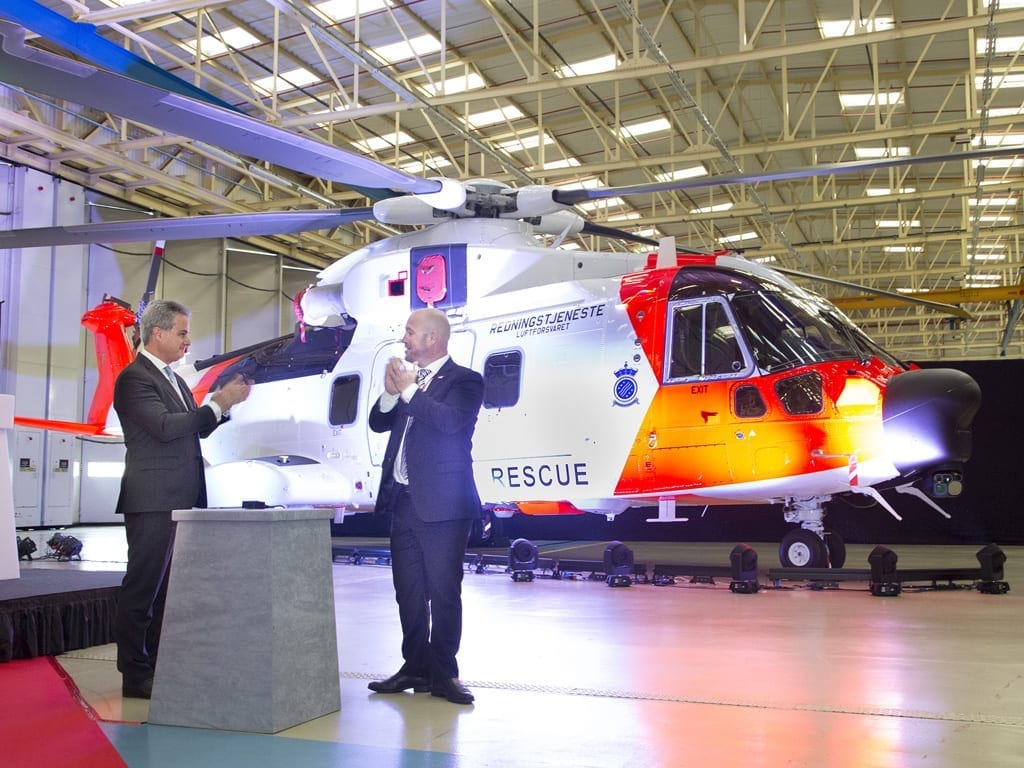
    At the end of 2015, Leonardo had delivered an AW139 helicopter to the Indonesian Search and Rescue Agency (Basarnas) for humanitarian and rescue missions.

    Basarnas was Leonardos first Indonesian costumer in the form of a government agency.

    “This is like an ice breaker because we want to sell more of our helicopters,” Lorenzo said.

    The Indonesian Air Force has also chosen Leonardos AW101 helicopter, which serves as a multi-purpose helicopter, with sufficient haulage and is projected to conduct missions as a heavy-lift helicopter to increase the mobility of troops and logistics.

    Several private operators in Indonesia have also been using Leonardos helicopter such as Susi Air with AW109 and AW119, and Travira Air, which opted for a larger AW139.

    “Were also ready to have cooperation in transfer of technology with Indonesia,” Lorenzo said.

    Leonardo has sold more than 1,000 units of helicopters globally, while this year, the company has received 15 confirmed orders for helicopters from the Indonesian costumers, he said.

    Meanwhile, Leonardos Vice President of Market and Business Development, as well as Head of Region Southeast Asia, Bruno Bertella said that Leonardo and the Indonesian Military have been partners for around 20 years.

    Leonardo has provided the Indonesian armed forces with a sophisticated defense system, such as an electronic defense systems, torpedos, warship cannons in various calibres.

    “We hope to be able to provide a heavy weight torpedo for the Indonesian submarine which was recently built in South Korea,” Bruno said.

    The Indo Defense Expo and Forum 2016 is currently being held in Jakarta from Nov 2 to 5, in which a total of 844 companies, including 573 foreign companies and 271 domestic ones, are participating.

    Indonesias Defense Minister Ryamizard Ryacudu said the exhibition is expected to benefit not only the defense field but also the countrys economy and research and technology development.

  • Minister wants increase in exports of motorcycles

    Minister wants increase in exports of motorcycles

    The countrys motorcycle industry has recorded a leapfrogging increase in production over the past several years, but the industry is still a minor player in export, Industry Minister Airlangga Hartarto has said.

    “The countrys production of motorcycles has increased 800 percent in the past three years but exports averaged only 300,000 units year,” the minister said here on Thursday.

    Motorcycle sales in Indonesia averaged 6 million units a year that means exports are only 5 percent of the domestic sales, he said.

    Airlangga said currently the country had 90 million units of motorcycle on the street or more than one third of the population of around 250 million.

    The number shows that motorcycles have become the main alternative of public transport in the country, he said.

    Growing demand for transport service has contributed to the expansion of motor vehicle industry including motorcycle industry in the country, he said.

    In the past five years , motorcycle industry in Indonesia has grown significantly with production averaging more than 7 million units per year.

    The industry ministry said it is optimistic the rising trend would continue in the coming several years.

    Airlangga said with the increase, the countrys position as the third largest producer of motorcycle in the world after China and India would not change.

    He said motorcycle industrialists need to expand research and development to keep pace with the market requirement domestically and internationally.