Tag: Indonesia

  • Airline Sriwijaya Air offering Initial Public Offerings (IPO) in Indonesia

    Airline Sriwijaya Air offering Initial Public Offerings (IPO) in Indonesia

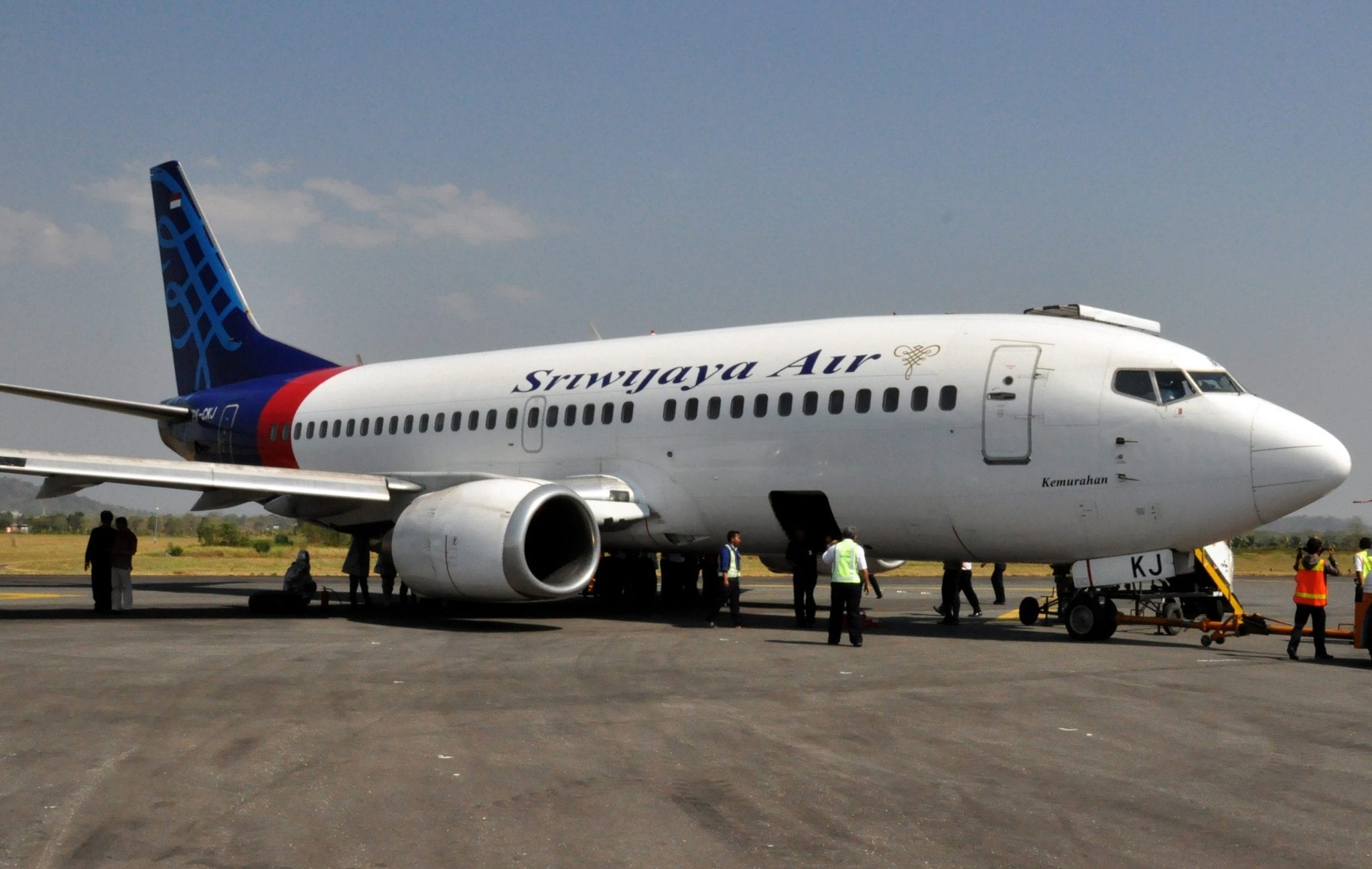
    Currently, Sriwijaya Air serves 46 domestic routes as well as seven international routes in the Asia Pacific with 51 narrow-body Boeing jets. With the larger fleet (after additional airplanes are purchased), the airline wants to add several domestic and regional routes as well as one to Jeddah (Saudi Arabia).

    Chandra Lie did not inform how much the company expects to raise from the initial public offering on the Indonesia Stock Exchange (IDX). In February 2011 Indonesia’s national flagship carrier Garuda Indonesia conducted an IPO on the IDX in which it raised IDR 3.3 trillion (approx. USD $252 million) by selling a 28 percent stake.

    Sriwijaya Air, founded by the brothers Chandra Lie and Hendry Lie in 2003, is Indonesia’s third-largest airline, controlling about ten percent of the domestic air passenger market. It currently carries about 800,000 passengers per month. The airline will move its administration and operational activities to the Cengkareng Business City complex from its current base at the Soekarno Hatta International Airport.

    The aviation industry in the Asia-Pacific region remains among the world’s fastest growing regions in terms of air passengers. Recently, the Indonesia National Air Carriers Association (INACA) says, whereas worldwide the number of air passengers is growing at a pace of nearly 7 percent (y/y), Indonesia’s air passenger growth is estimated at around 15 percent (y/y) in 2016.

    Number of Air Passengers in Indonesia 2011 – 2015:

    2011 2012 2013 2014 2015
    Air Passengers
    (in million)
    62.4 66.4 68.6 72.6 82.4

    Source: BPS

  • Indonesia wants to lead the region in e-commerce

    Indonesia wants to lead the region in e-commerce

    With other Southeast Asian countries already having prepared the ground for the digital economy to prosper, the Indonesian government has finally taken the initiative to spur the growth of e-commerce within its own boarders.

    Announced on Thursday evening, the 14th economic policy package will tackle eight issues that could determine the success of President Joko “Jokowi” Widodo’s goal of turning Indonesia into the biggest digital economy of the region by 2020 with a targeted value of US$130 billion. The eight issues are funding, taxation, consumer protection, human resources, logistics, communication infrastructure, cyber security and the establishment of a project management office.

    The government expects the new policy package, dubbed the e-commerce road map, to create 1,000 “techno-preneurs” with businesses that have a total value of $10 billion by 2020.

    Coordinating Economic Minister Darmin Nasution said the e-commerce road map, which will be translated into a presidential decree, was essential to boost connectivity and efficiency in the industry.

    The government also expects the road map to better protect national interests and give priority to small and medium-sized enterprises and start-ups.

    “We also want to boost creative innovation and invention of new economic activities, especially for youths who enjoy playing around with new things,” he said during a press conference to unveil the package on Thursday.

    Indonesia’s e-commerce market is estimated to be worth Rp 18 trillion ($1.4 billion) as of 2015, with 37 million consumers from a total population of 255 million, according to World Economic Outlook data compiled by the Internet Service Providers Association. The association expects the e-commerce market will be worth Rp 25 trillion by 2016, with 49 million consumers.

    Meanwhile, Communications and Information Minister Rudiantara presented some details of the road map, which includes grants or subsidies to help start-ups boost their chances of surviving in the tough e-commerce industry.

    The government also aims to reduce taxes for locals investing in start-ups and simplify taxation procedures for e-commerce start-ups with a turnover of less than Rp 4.8 billion a year, so that the final income tax will only come to 1 percent.

    “In terms of logistics, this is interesting, because we have already decided to reposition state-owned postal company Pos Indonesia as a logistical platform for Indonesian e-commerce,” Rudiantara said.

    Since taking office in 2014, Jokowi has issued 13 stimulus packages aimed at eliminating business hurdles.

    A recent report from management consulting firm McKinsey & Company suggested that by going digital, Indonesia would be able to unleash its next level of economic growth to the tune of $150 billion in terms of impact by the year 2025 if it were able to address the most pressing issues adequately.

    The report suggested that while Indonesia was admirable in terms of the number of internet and smartphone users, it still did not adequately embrace modern technology. Internet penetration in Indonesia has only reached 39 percent of the population, despite smartphone penetration standing at 43 percent.

    The report partly places the blame for the low penetration on Indonesia’s relatively weak information and communication technology infrastructure. Indonesia’s internet bandwidth, for instance, is still at a relatively low average rate of 6.2 kbps per user, far below Malaysia’s 27.2 kbps and the Philippines’ 27.7 kbps.

    Bank Central Asia (BCA) economist David Sumual was optimistic about the latest economic policy package, saying Indonesia’s market was large and investors had already begun to show interest in the business.

    David, however, warned the government’s digital economy dream could end if the country failed to improve infrastructure and logistics.

    “It will not reach its maximum potential if our logistics remain the same. It may be alright in the bigger cities, but how will it work in the remote areas? Weak infrastructure remains our biggest task.”

  • Lawmaker wants increase milk production, consumption

    Lawmaker wants increase milk production, consumption

    Legislator of Commission X of the House of Representatives (DPR), Dwita Ria Gunadi wants to increase milk production and consumption because the per capita milk consumption in the country is still lower than other Asian countries.

    “The per capita milk consumption in 2015, based on data from the Agriculture Ministry was only 12.1 liters per annum,” Dwita Ria Gunadi said in a written statement here on Thursday.

    The per capita consumption is still is still lower than the per capita consumption of India, which reached 48.62 liters per annum, Singapores 44.5 liters and Malaysias 36.2 liters.

    Indonesias per capita milk consumption is even lower than that of Thailand, which reached 33.7 liters per annum, the Philippines 17.8 liters and Vietnams 14.3 liters.

    Dwita reminded that the milk imports of Indonesia should meet domestic need, which has exceeded 80 percent.

    “This condition is a cause for concern because our land has potential for developing and breeding milch cows,” Dwita, who is a member of the Greater Indonesia Movement Party, (Gerinda) said.

    She has also started a discourse to boost production though among others, the allocation by local governments of funds to breeders for stimulating milk production.

    It was earlier noted that the fresh milk production of milch cows in the Malang District of East Java, increased from 117,235 tons in 2014 to 132,052 tons in 2015 and during the first semester of 2016 it was pegged at 66,593 tons.

    “In order to increase production and consumption of milk, we provide milch cow assistance to breeders. This year, 92 heads of milch cows were provided, and next year this assistance will continue, but the number will not be as big as this year,” Sudjono, the head of Malangs Animal Husbandry Service, said on November 4.

    He added that over the past five years the number of milch cows provided for breeders accounted for 826 heads.

    The farmers, who got the assistance, were those from milch cow production centers, such as Wajak, Pujon, Ngantang, Poncokusumo and the Jabung sub-districts.

    According to the Cooperatives, Small and Medium-Scale Enterprises (SME) Minister Puspayoga, milch cow farmers must increase and maintain the quality of their milk production. All milk produced domestically, including by members of cooperatives, should be absorbed by the milk-processing industry (IPS) in order to meet the domestic need and reduce imports.

    An executive from one of the countrys food and drinks company, PT Nestle Indonesia, argued that to increase productivity and improve the quality of milk, local milch cow farmers should adopt sustainable breeding practices.

    “The key to increasing production and improving quality is to adopt sustainable breeding practices and to optimize cowshed cleanliness,” R Wisman Djaja, PT Nestle Indonesias director for Sustainability agriculture Development and Procurement Affairs, had said in Malang, East Java last month.

    The government, according to Minister Puspayoga, is now trying to resolve the constraints being faced by milch cow farmers and milk processing industries.

  • Husein airport expected to serve international flights

    Husein airport expected to serve international flights

    Bandung, West Java – Indonesia’s state-owned airport services company, PT Angkasa Pura II, expects the Husein Sastranegara airport in Bandung, West Java, to start handling international flights from Bandung to cities in China or Bandung to Bangkok (Thailand) in 2017.

    “The airport expansion project will be completed by the end of 2016. The new terminal will handle international flights. Among the potential markets is Bangkok or Phuket,” Angkasa Pura II”s general manager Dorma Manalu said here on Wednesday.

    He added that the number of international direct flights from Bangkok and China to Indonesia has been increasing.

    “Currently, the international flights from China are mostly to Manado, North Sulawesi and Pontianak, West Kalimantan,” Dorma noted.

    According to him, nearly a 100 million Chinese tourists are visiting Indonesia every year, reflecting a good opportunity for Angkasa Pura II to start direct flights from Bandung to China or Thailand.

    So far, direct international flights from Husein Sastranegara airport are for Bandung-Singapore, Bandung-Kuala Lumpur and Bandung-Johor Baharu (Malaysia).

    “These are far fewer as of now, considering that the airport is now being expanded. Also, the airport is not too far from Bandung downtown,” Dorma explained.

    Earlier, the management representatives of the Commercial Aircraft Corporation of China (COMAC) visited Kertajati international airport in Majalengka, West Java.

    The President Director of the airport, Virda Dimas, explained that the Chinese corporation management was interested in Indonesia’s aviation industry and wants to confirm its plans to open international flights from the country to Kertajati since there is a fairly large Chinese market.

  • Internet Retailing Expo Indonesia Gears Up to Connect Indonesia’s Stakeholders

    Internet Retailing Expo Indonesia Gears Up to Connect Indonesia’s Stakeholders

    The Internet Retailing Expo (IRX) Indonesia, is gearing up to return with a loud bang. The 2ndedition of IRX Indonesia, to be held from 18 to 19 January next year at the Pullman Jakarta Central Park, will once again become the meeting place for marketplaces, multi-channel retailers and online retailers to meet their key suppliers and learn through peer knowledge sharing and best practice implementation case studies.

    IRX Indonesia was launched due to the huge potential of the internet retailing market, as it has started to grow significantly within Indonesia in the recent years.

    In 2017, IRX Indonesia is expected to attract 2000 visitors to an even more diverse exhibition with plenty of value-packed on-floor sessions and 75 leading solution providers in the areas of digital infrastructure and innovation, digital payments, last mile fulfilment and many others. More than 80 multichannel and ecommerce retailers will be sharing knowledge and experience during the six conferences sessions, workshops and clinics at IRX Indonesia 2017. All these under the themes of Connected Store of the Future, Payments & Security, Insight & Experience, Digital Sales & Marketing, Digital Merchandising, Multichannel Operations & Fulfilment.

    “IRX is the leading multichannel event in the retail calendar and takes place every March at the NEC Birmingham, United Kingdom. The UK is the most sophisticated internet retailing market globally. With over 200 exhibitors and 5000 visitors to the show, IRX welcomes retailers and technology providers from across the multichannel landscape,” said Richard Ireland, Managing Director, Asia, Clarion Events Pte Ltd. “Following its great success in 2016, IRX will be running its second show in Jakarta, Indonesia in January 2017 and plans to bring some of the expertise gained from the UK to Indonesia. Our event plans to help retailers looking to establish, along their journey to grow their online retail strategies.”

    Visitors to the event can expect industry tracks featuring a distinguished speaker panel of local and international industry who’s who, including, among others, Roy N. Mandey, Chairman, APRINDO; Ravi Kumar, COO, PT. MAP; Catherine Sutjahyo, CEO, Alfacart.com; Adrian Suherman, CEO, Lippo Digital Group; Aruni Therese Abeyesundere, Chief Marketing Officer, Pizza Hut;; Simon Torring, Regional Head of Merchandising (Digital), Sephora Digital SEA, Ankit Porwal, Business Director, L’Oreal Paris Indonesia; Ashley Amanna, Head of ECommerce, L’Oreal Indonesia; Pankaj Khushani, Head of Media Technology Solutions – SEA, India & Korea, Google; Rizkie Maulana Putra, Head of ECommerce Development, Samsung Electronics Indonesia; Tabah Yudhananto, Marketing Technologist, Digital Marketing, CRM Senior Manager, Blibli.com; and Cam Walker, CEO Indonesia, iflix.

    The conference will feature 6 streams alongside e-Commerce clinics and workshops on the exhibition floor. Special highlights for the event include SME Forum: “Building capabilities in a digital age”; CMO Forum: “The way marketers engage customers”; CEO Panel Discussion: “Omni Channel retailing: Digital Transformation, Customer First”; E-Commerce University; E-Commerce Clinics; Start-up & Innovation Zone: “Enabling Business value with Digital Transformation”; Indonesia – China Cross-Border Ecommerce Pavilion; and 3D VR Shopping Experience.

    IRX Indonesia will feature 50+ exhibitors including 8Commerce, Asian Delker Logistics, ATEX, Cashlez, Detrack, E2Pay, Egentic, ICUBE, Innovecto, Midtrans, MooCommerce, PaketID, Priceza, PT Kam and Kam, PT Kioson Komersial Indonesia, and SAP, and sponsors including BCA, Accenture, Telkom Indonesia, PT Pos Logistics Indonesia, Akamai, Anchanto, Go-Jek, Magento, Manhattan Associates, At Internet, aCommerce, Alto, FedEx, Gift Card Indonesia, Intramega Global, netCORE, Sprooki, and JNE.

  • SIA delays launch of Jakarta-Sydney route after Indonesia withdraws approval

    SIA delays launch of Jakarta-Sydney route after Indonesia withdraws approval

    Flag carrier Singapore Airlines (SIA) said on Wednesday (Nov 9) it has delayed plans to launch a new route linking Singapore, Jakarta and Sydney, after Indonesia withdrew its approval due to runway maintenance work.

    The airline had earlier announced that it planned to launch the thrice-weekly Singapore-Jakarta-Sydney route on Nov 23. SIA said Indonesia’s civil aviation authorities had issued written approval, and the airline had secured the necessary airport slots.

    However, Indonesian authorities have informed the airline that they are now unable to approve the flights due to runway maintenance work at Jakarta’s Soekarno-Hatta International Airport, SIA said. The runway work also affects other airlines, it added.

    In response to media queries, the Civil Aviation Authority of Singapore (CAAS) said it was aware of the delay in the launch of the new route.

    “SIA’s new service will enhance air connectivity between Singapore, Jakarta and Sydney, which will facilitate people and trade flows between these cities,” CAAS said.

    “We hope the Indonesian civil aviation authorities can give approval for this new service as soon as possible so that it can be launched.”

    SIA said it will contact customers with bookings on the route and transfer them to other flights. “The airline apologises for the inconvenience caused to our customers,” it said.

  • Indonesia eyes electricity exports to neighboring countries

    Indonesia eyes electricity exports to neighboring countries

    Indonesia plans to sell electricity to Malaysia, Thailand and Singapore as the government is targeting greater profitability from several coal mine-mouth power plants that are anticipated to soon be completed in Sumatra.

    National Development Planning Board (Bappenas) head Bambang Brodjonegoro said the plan was feasible as the power plants would have excess capacity.

    “We can sell the electricity abroad via underwater cables,” the former finance minister said during the ASEAN G2B Infrastructure Investment Forum in Jakarta on Tuesday.

    Bambang said electricity demands were huge in peninsular Malaysia and southern Thailand, where Indonesia could meet those demands at competitive prices.

    “As long as Sumatra’s electricity needs are fulfilled, we can export the excess capacity,” he added.

    President Joko “Jokowi” Widodo’s administration is targeting to complete its ongoing 35,000 megawatt (MW) electricity procurement program by 2019. Of the target, 7,800 MW will be supplied from mine-mouth power plants.

  • PNG plans to open flight route to Papua

    PNG plans to open flight route to Papua

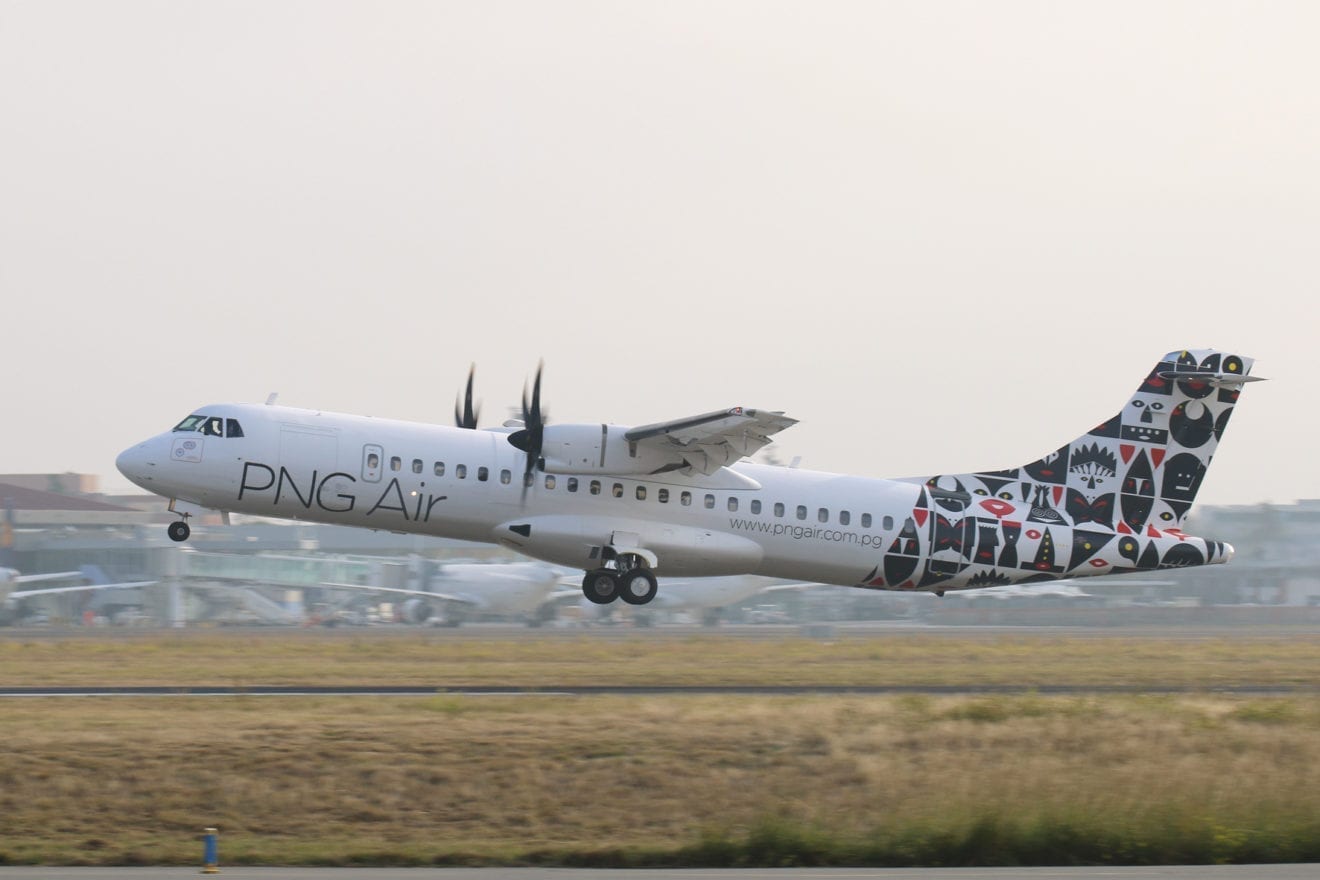
    Papua New Guinea has reiterated its plan to open a flight route from Mount Hagen to Jayapura during a meeting of the Border Liaison Officers held in Port Moresby, an Indonesian official said.

    Papua New Guinea will soon realize its plan but has not set a specific date for it, Director for East Asia and the Pacific at the Indonesian Foreign Ministry, Edy Yusuf, said on Tuesday.

    Yusuf said the Indonesian government is prepared to help realize the plan soon.

    “Indonesia is ready to help Papua New Guinea realize the plan since there is no flight from Papua to Papua New Guinea,” he added.

    The head of the Indonesian delegation to the meeting, Klemen Tinal, who is also the deputy governor of Papua, shared Yusufs view and expressed the hope that the plan would come to fruition soon.

    Most citizens of Papua New Guinea who live in Vanimo visit Indonesia by land through borders between Wutung in Papua New Guinea and Skouw in Indonesia, as well as by sea, he informed.

    If the plan to open the flight route is realized, they will no longer need to travel to Papua by land or sea, he stressed.

  • Low-end smartphones hinder music streaming business

    Low-end smartphones hinder music streaming business

    Music streaming is quickly becoming a favored service, offering Indonesia’s music-seeking public a legal means to access music. However, with a majority of Indonesians possessing low-end smartphones, the outlook may not be as rosy as some think.

    According to a new report by McKinsey, the prevalence of low-cost smartphones among mass market consumers in Asia, including Indonesia, has hindered the take-up of music streaming apps.

    Indonesia experienced a particularly busy time for music streaming services in the first half, with the entrance of foreign-based names such as Spotify, Apple Music, Yonder Music and JOOX coming in around the same period, tapping into the potentials and eagerness of the largest Southeast Asian digital market.

    Services that previously entered and operated in Indonesia include Guvera, Deezer and Rdio, which closed operations in November last year.

    It turns out that 34.7 percent of Indonesians listen to JOOX, followed by 12 percent with Musixmatch, 10.2 percent with SoundCloud, 10.1 percent with Langit Musik and 9.8 percent with Spotify, the report shows.

    However, “in markets such as Indonesia, low-end smartphones cost as little as [US]$75 per device. These devices are slower and possess less memory capacity than other smartphones, posing a dilemma for music streaming services”, the report said.

    “They can optimize music streaming apps for these lower-end smartphones at the cost of functionality that is critical to the customer experience of more affluent consumers or retain the full functionality of streaming apps to maximize the customer experience for affluent customers at the cost of limited access to mass market consumers.”

    Among the most popular smartphone brands in Indonesia in the second quarter of 2016 were Samsung, OPPO, Asus, Advan and Lenovo, all of which offer low-end smartphones.

    Services usually offer an “offline” option, through which listeners can download certain tracks onto their phone for internet-less listening. Usually, streaming relies on an internet connection, making online connectivity necessary.

    Many services offer rates that have adjusted with the market’s emphasis on affordability, with fees as low as Rp 35,000 ($2.67) to Rp 50,000 per month, and varying payment methods aside from the usual credit card option.

    To make their products affordable and wide-ranging, the services partnered with telecom companies, with partnerships including Spotify with Indosat Ooredoo, Yonder with XL Axiata and JOOX and Guvera with Telkomsel.

    However, in terms of low-end smartphone capacity, some services are confident that their apps will give listeners optimum quality regardless of weak Indonesian bandwidth or poor connectivity in some areas.

    For one, Guvera operations and marketing director Onny Robert said that because its service primarily targeted “users who prefer not to pay for their music”, its bundling plans included latching onto smartphones themselves such as Lenovo devices in order to secure listeners.

    After evaluating field connections, Onny said Guvera was able to deliver a capable service even at 3G speed.

    “Bandwidth or phone capacity won’t really matter to Guvera users because our app is practically small in size, 20 megabytes, and because it is bundled with Lenovo devices, it will drive more interest into using our service,” he said recently.

    Guvera has 1.5 million active subscribers, with under-25s dominating their demographics.

    Yonder Music CEO Adam Kidron earlier said the service aimed to further cultivate the music streaming tradition and make it more affordable and accessible.

    Spotify, meanwhile, has seen its users stream over 100 billion minutes of local and international music and listen to an average of 90 minutes of music per day, since its launch in March.

  • Airasia to serve Kuala Lumpur-Jakarta-Labuan Bajo route

    Airasia to serve Kuala Lumpur-Jakarta-Labuan Bajo route

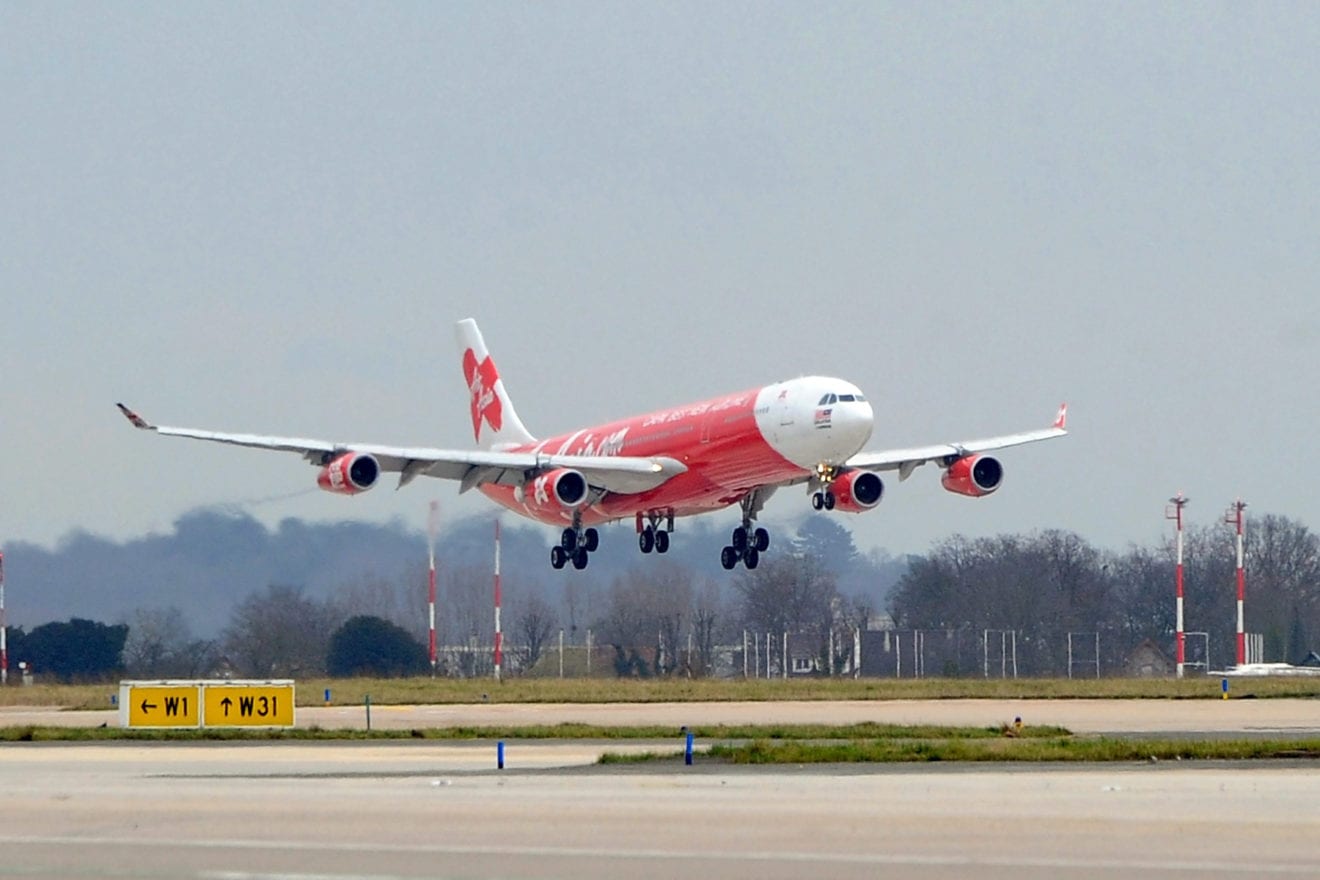
    The Malaysia-based low cost carrier AirAsia will soon serve the Kuala Lumpur-Jakarta-Labuan Bajo route, according to East Nusa Tenggara Tourism and Creative Economy Office Chief Marius Ardu Jelamu.

    “There has been an agreement with the central government and the airline company that AirAsia will serve this new route starting from next year,” Jelamu said here on Wednesday.

    He said the AirAsias new route will have a positive impact on the flow of tourists to the province of East Nusa Tenggara through the entry gate of Labuan Bajo.

    “This new service of AirAsia will enable more foreign tourists to visit the leading destinations in East Nusa Tenggara,” he said, adding that tourism progress is dependent on smooth air transport connectivity.

    Jelamu said that in addition to the Kuala Lumpur-Jakarta-Labuan Bajo route, his party is also trying to accelerate the implementation of Kupang-Dili-Darwin route.

    “In addition to air connectivity from the west, the one from the south, namely from Australia to East Nusa Tenggara, also has its share of attractive markets for linking the three countries,” he said.

    Jelamu expressed hope that the Kupang-Dili-Darwin route, which had been halted since 1990s, can be reopened soon to support the advancement of tourism in the island province.

    “We hope that the Ministry of Transportation will quickly agree on the proposed route service with the airline,” he said.

    Further, Jelamu said he appreciated the efforts of the Ministry of Transportation to have opened the Jakarta-Kupang and Jakarta-Labuan Bajo routes, served by Garuda Indonesia.

    However, he said the flight path from the south also has attractive market potential related to the flow of tourists and expressed hope that the Kupang-Dili-Darwin route would be reopened soon.

  • VICE Media Announces Launch of VICE Indonesia

    VICE Media Announces Launch of VICE Indonesia

    VICE Media, the world’s leading youth media brand, today announced a major market expansion into Indonesia, the world’s fourth largest nation. VICE will launch a full-scale operation in Indonesia, producing local content and creative agency services to reach the skyrocketing young population of over 100 million people in the country. In addition, VICE today announced multi-platform partnerships with Jawa Pos TV and Google that will bring linear and digital programming to the country. Content will be available in both English and Indonesian.

    Young people aged 18-34 comprise 50 percent of Indonesia’s overall population. In the country, mobile, linear and digital markets have grown so expansively that there are more mobile phones than people, and the average person spends five hours on the internet every day. This demonstrated thirst for multi-platform content opens the door for VICE to fill the void and reach young people on whatever platform they consume content.

    To date in Asia, VICE has operated out of Japan, China and South Korea, and last month the company launched branded VICELAND blocks, which will eventually become 24-hour VICELAND channels, in 18 Southeast Asian territories, including Indonesia, through a partnership with local media powerhouse MultiChannels Asia. Partnerships with DOCOMO Digital and AbemaTV have also brought original VICE content to mobile and digital platforms across Japan. In the coming months, VICE will launch full-scale offices in India and the Middle East.

    Building upon this growth in Asia, VICE Indonesia, which is based in Jakarta, will bring VICE’s award winning content to a young audience that is consuming mobile, digital and linear content at a staggering pace. VICE Indonesia will be at the forefront of content production in the country, creating and distributing local and international programming that appeals to the enormous young population. By working with young Indonesian talent and producers, editors, shooters and creatives, the content will maintain VICE’s distinct voice and satisfy the appetite for uniquely intimate content focused on culture, food, music, technology, sports and more.

    Through the partnership with Jawa Pos TV, a leading news television network in Indonesia, VICE News Tonight, VICE’s recently launched daily news show on HBO, will air every night on Jawa Pos TV in a primetime slot. Select VICELAND programming will also air on the network during primetime. Jawa Pos TV significantly expanded its reach earlier this year, and with infrastructure and other upgrades underway, will soon reach over 150 million people in Indonesia. As the company continues to expand its footprint in Southeast Asia, this partnership will bring VICE’s distinct, youth-oriented content to a growing market of young viewers in the region.

    “With Indonesia’s massive young audience increasingly consuming video content across all screens, launching VICE here is a no brainer,” said VICE Co-President James Schwab. “Combining our award-winning global content with content produced locally in Indonesia, both digitally and on TV through partnerships with Jawa Pos TV, Google and MultiChannels Asia, enables us to reach as many young people as possible, whenever and wherever they are consuming content.”

    “It’s been a truly life changing experience to bring VICE to Indonesia, a country I love and call home,” said Mo Morris, Managing Director of VICE Indonesia. “We will aim to produce some of the most unique content Southeast Asia has ever seen. Indonesia is a great fit for VICE, a beautiful, turbulent, and progressive country with an engaged young audience hungry for a media company that speaks their own language. By partnering with Jawa Pos TV and Google, we will be able to meet young people on whichever screen they are consuming content.”

    “Indonesia is the perfect environment for VICE,” said Ardyan M Erlangga, Managing Editor, VICE Indonesia. “The country is a diverse, complicated, and incredibly exciting place that is full of under-covered stories, unique characters, and young people hungry for compelling content. We will bring these stories to life with the best young talent locally, telling some of the world’s most important stories to the rest of the region and world.”

    “Jawa Pos TV is very excited to partner with VICE and VICELAND,” said Maesa Samola, CEO of Jawa Pos. “I am constantly fascinated by the VICE point of view and unique stand in the media world, and thrilled that VICE’s content is now available to experience through our very own Jawa Pos TV.”

    Along with VICE Indonesia launch partner Google, VICE will create digital content powered by the world’s most prolific search tool. Utilizing VICE’s unique lens and local talent, SEARCHLIGHT will showcase youth culture and nightlife across Indonesia to a global digital audience. Through a series of videos, stories and social events, SEARCHLIGHT will take viewers into unknown stories of Indonesian urban life, and expand VICE’s presence into Indonesia’s digital market.

    VICE’s expansion into Indonesia comes on the heels of a major global expansion for VICE and VICELAND. In June, VICE unveiled an expansive slate of international deals that, within the next year, will make its multi-screen programming available to audiences in over 50 new territories in Southeast Asia, Australia, New Zealand, Africa, the Middle

    East and India. In total, VICE’s award winning multi-platform programming will be available in over 80 territories.
  • Trump to seek Indonesia`s agreement on trade commitments

    Trump to seek Indonesia`s agreement on trade commitments

    The US President Elect Donald Trump will want Indonesia to agree to ratify international trade commitments including APEC and the Indonesia-US Strategic Partnership.

    “Donald Trump will be interested in making investments in the infrastructure sector, including air, land and sea ports, especially investments that have the potential to lessen the influence of the Peoples Republic of China in South-East Asia,” international relations observer from Padjajaran University, Teuku Rezasyah, told ANTARA News in Jakarta on Wednesday.

    Teuku Rezasyah added that Donald Trump will potentially urge Indonesia to explain the Free-Active policy adopted by the country in the context of the rivalry between the US and China.

    “Considering the importance of investment and trade security, Trump is likely to understand the challenges faced by Indonesia in following human rights principles in the country,” he noted.

    Republican Donald Trump won over his rival Hillary Clinton, the candidate of the Democratic Party.

    Trump was elected as the 45th US President with total electoral votes far above Hillary Clintons.

    His victory came as a shock since most surveys had predicted that Hillary Clinton would win the US Presidential contest.

  • Minister hopes festival will promote Indonesian pearl to the world

    Minister hopes festival will promote Indonesian pearl to the world

    Maritime Affairs and Fisheries Minister Susi Pudjiastuti hopes that the Indonesian Pearl Festival (IPF) 2016 will introduce Indonesias original pearls to the world.

    “I hope the Indonesian South Sea Pearl (ISSP) would be introduced to pearl stakeholders and enthusiasts. The exhibition which has been held regularly would open access to the people,” the minister said when opening the IPS in Jakarta Wednesday.

    The exposition displays the Indonesian sea kept pearls to the public she said.

    It was the duty of everyone to introduce the Indonesian pearl to pearl stakeholders and enthusiasts, the minister said.

    If the ISSP is recognized as a new commodity which has a high value, it would benefit Indonesia, as it would serve as a new source of economy to Indonesia.

    The Indonesian pearl has good potential for the world market and therefore, noted designers are called on to present the latest pearl designs, she stated.

    “Many people will come to know and love the pearl when they see the creative and up to date designs,” the minister added.

    If the Indonesian pearl potential is cultivated properly it would boost the Indonesian economy, Minister Susi reminded earlier.

    Pearls have become the target of illegal export practices, she said, and added that in 2014 the pearl exports to Hong Kong were worth US$49.8 million.

    The figure is very different from the Indonesian pearl export data.

    In 2015, Hong Kong imported pearls from Indonesia worth $34.2 million. But Indonesias pearl export data to Hong Kong showed that it was worth only about $1 million.

  • Indonesia explores opportunities in brownfield investments

    Indonesia explores opportunities in brownfield investments

    Indonesia is planning to open up state-owned run infrastructure, such as toll roads, to private investors in an effort to generate fresh funding for new projects.

    President Joko “Jokowi” Widodo said on Wednesday that he would ask some state-owned enterprises (SOEs) to sell their concessions in major toll roads, such as the Jagorawi toll road in East Jakarta, to private investors.

    Jagorawi, which connects Jakarta to Bogor and Ciawi in West Java, is the country’s oldest toll road and is currently managed by state-owned toll road operator Jasa Marga.

    “For Jasa Marga and [state construction firm] Waskita Karya, which own many toll roads, your job is to build a toll road, not to own it,” the President said on Wednesday in Jakarta, during the 2016 Indonesia Infrastructure Week.

    Not many investors, he added, wanted to invest in greenfield infrastructure projects, which refers to fresh projects, and instead preferred to put their money in brownfield projects, which refers to projects that are already operating and generating cash flow.

    National Development Planning Board (Bappenas) head Bambang Brodjonegoro, meanwhile, said it was possible for SOEs to offer a concession-sharing scheme to private investors. The SOEs, for example, could sell shares of their subsidiaries that are in charge of toll-road management.

    “They can sell some [portion of shares], like 30 to 40 percent. The SOEs will still own the main concession [for the toll road],” he said.

  • BI Revises Regulation on E-Money

    BI Revises Regulation on E-Money

    Bank Indonesia (BI) will make another revision to regulation on electronic money and introduce electronic wallet in the Bank Indonesia Regulation. The new regulation on the payment transaction processing is expected to be finalized in November 2016.

    Bank Indonesia deputy governor Ronald Waas said that one of the revision points is related to the expansion of electronic money basis. Currently, Ronald revealed, there are two types of electronic money, namely server-based and card-based electronic money. BI is considering adding gadget-based money as a new category.

    “Currently we have Samsung Pay and Apple Pay. They don’t use cards,” Ronald said in Jakarta on Wednesday, November 9, 2016.

    Ronald explained that there are two categories of e money, namely Know Your Customer (KYC) and non-Know Your Customer (nKYC).

    In the new regulation, BI has planned to require electronic money issuer with total active members of no less than 300,000 to register the electronic money.

    “[Electronic money issuer] with below 300,000 users doesn’t need to obtain a permit, but they need to report. In addition, they have to establish a legal entity,” Ronald said.

    In terms of minimum balance, Ronald clarified that there would be no revision regarding the matter. The minimum balance for non-registered electronic money is Rp 1 million (US$77), while that for registered one is Rp 10 million (US$770).