Tag: Indonesia

  • Pertamina`s profit up 209 pct in third quarter

    Pertamina`s profit up 209 pct in third quarter

    PT Pertamina made a net profit of US$2.83 billion in the third quarter of this year, 209 percent more than the US$914 million it made in the third quarter in the previous year.

    The president director of the state-owned oil and gas company, Dwi Soetjipto, on Tuesday credited the achievement to improved operational performance and efficiency as a result of various initiatives and breakthroughs.

    He said although the profit soared, corporate income was down 16.8 percent to US$26.62 billion from US$32 billion in the previous period due to a relatively lower price of crude.

    “What is encouraging is that net profit performance has been good as a result of enhanced efficiency and initiatives like the Breakthrough Project,” he added.

    Dwi Soetjipto noted that the company continued to improve its operational performance by increasing efficiency and successfully cut costs up to 27 percent in the first month of this year.

    “Until September 2016, around US$1.6 million had been saved through Breakthrough Projects,” he revealed.

    The companys downstream performance in the third quarter reached 646,000 barrels of oil equivalent per day, consisting of 309,000 barrels of oil and 1,953 mmscfd of gas per day.

    This was 12.3 percent more compared to the same period before.

    Meanwhile, the geothermal power production reached 2,233 GwH electricity equivalent.

    He stressed that the company continued to develop infrastructure including gas, processing and marketing infrastructure.

    Several projects such as Gresik-Semarang, Muara Karang-Muara Tawar and Tegal Gede gas pipeline projects have been completed up to 70 percent.

    The first RDMP (Refining Development Master plan Program) phase of the refinery project in Balikpapan, Kalimantan, is expected to be completed in June 2019 and it will become operational in September 2019 while the first phase of the project is expected to be completed in the middle of 2021 when its production will meet Euro 5 standard.

    The New Grass Root Refinery project in Tuban, East Java, a joint venture between Pertamina and Rosneft of Russia, is expected to be completed by the end of 2021. The production there will also meet Euro 5 standard.

    The RDMP of the refinery project in Cilacap, Central Java, which is a cooperation project with Saudi Aramco, is expected to be completed in 2022, also with Euro 5 Standard in production.

    “As for the New Grass Root Refinery project in Bontang (Kalimantan), it has been decided that it would be referred to Pertamina for completion, a goal expected to be achieved tentatively by 2023 with Euro 5 Standard production,” Dwi Soetjipto explained.

  • Philippines Inspect Plane Order at PT Dirgantara Indonesia

    Philippines Inspect Plane Order at PT Dirgantara Indonesia

    Under Secretary for Finance and Material, Department of National Defense of the Philippines (General Retirement) Raymundo Elefante, said that his country is currently interested in purchasing Indonesian defense products to modernize the Philippines’ weapons and combat equipment.

    Raymundo said that two NC212i airplanes he had inspected at PT Dirgantara Indonesia (PTDI) is part of the Philippines’ airplane procurement program. The planes will be delivered to the Philippines’ early next year. “Aircraft produced by PTDI will be used in various conditions such as natural disaster, medical evacuation, and other conditions,” Raymundo said while inspecting the two airplanes at PTDI’s aircraft factory complex in Bandung, November 4, 2016.

    Raymundo said that his country decided to choose NC212i because of its competitive prices. In addition, the Philippines also currently wait for its ship order from PT PAL.

    Raymundo however, did not provide detailed information on the ship orders. PT PAL had delivered one of the Philippines’ ship order and another one will be finished next year.

    Budiman Saleh, Director of Commerce and Restructuring of PT Dirgantara Indonesia said that the two NC212i plane was the first airplane purchase by the Philippines in the last 20 years. “We have to respect [the Philippines] and its modernization program. This is the first purchase by the country after 20 years,” Budiman said.

  • Adonara Hotel Group to Open 20 New Hotels

    Adonara Hotel Group to Open 20 New Hotels

    Amor added the Adonara Group will open the 20 new hotels in Bali, Makassar (Sulawesi), Yogyakarta, Bangka (administratively part of Sumatra) and Solo (Central Java). These locations were selected as local demand for hostelry is considered high enough. Moreover, the central government of Indonesia has high hopes for the tourism sector. By expanding the tourism sector the government seeks to reduce the economy’s reliance on exports of raw commodities. By 2019 the government targets to attract 20 million visitors (per year), more than double 9.73 million foreign visitor arrivals in 2015.

    With regard to the exact location Adonara aims for provincial capital cities, located nearby airports or industrial estates. Amor said it requires approximately IDR 30 billion (approx. USD $2.3 million) to develop a budget hotel or two-star hotel (with around 100 rooms) in Indonesia. The return of investment (ROI) is estimated at 6 – 7 years. The ROI for four-star hotels is estimated at 8 – 10 years.

    E-commerce is becoming an increasingly important part of Adonara’s business. Currently, approximately 30 percent of total room reservations are done online. To support its hotel business the group acquired the Room Today Asia platform.

    Up to this year’s 3rd quarter Indonesia’s hotel industry has been bleak. However, Amor sees a rebounding hotel industry in 2017 as Indonesia’s economic growth accelerates, while inflation is expected to remain low, thus boosting domestic investors’ purchasing power.

    On its website Adonara describes itself as a hotel operator that manages unique three – five star hotels as well as budget hotels in various locations across Indonesia (Sumatra, Java, Bali, Kalimantan, Sulawesi and Papua).

  • Indonesia promotes tourism branding at World Travel Market

    Indonesia promotes tourism branding at World Travel Market

    The Tourism Ministry is promoting a tourism brand of Wonderful Indonesia at the global travel fair of World Travel Market (WTM) in London from November 7 to 9, 2016.

    By promoting the event, the ministry is featuring the beauty of Banyuwangi (East Java) images on five decker buses from October 31 till the end of November, according to a statement from the Tourism Ministry received by ANTARA here on Wednesday.

    Indonesia has signed an agreement as the prime sponsor of the travel fair. Tourism Minister Arief Yahya said the agreement will help in promoting Indonesian tourism.

    “WTM is a global travel fair. As in 2015, around 50 thousand tourism professionals from 183 countries participated in the fair,” the minister said.

    He added that WTM was an effective and efficient media to promote Indonesia and its tourism brand of Wonderful Indonesia in the global market.

    With a visa-free policy and deregulation on yacht or cruise ship travelling to Indonesia, the government expects 20 million foreign tourists by 2019, nearly double the target of 10.4 million set in 2015.

    At the fair, the Indonesian delegation will showcase UNESCOs world heritage of Borobudur Temple, Prambanan Temple in Central Java, diving spots in Raja Ampat in Papua, as well as golf, spa and shopping tour in Jakarta and Bandung (West Java).

    The UK and European Union are very important markets, as the number of potential tourists is quite great. Each tourist would stay at least for 10 days on average and would spend a huge amount during their trip.

  • Indonesia faces increasing senior-citizen population

    Indonesia faces increasing senior-citizen population

    Indonesia is facing the problem of a growing number of elderly people who are expected to reach over 32 million in the next two decades.

    Indonesia’s elderly in 2010 was 4.9 percent of the population, or 11,878,236 people. This number is projected to increase to 10.8 percent, or 32,112,361 people in 2035.

    Senior researcher Sukamdi of the Center for Population and Policy Studies (PSKK) of the Gadjah Mada University (UGM) said the country is actually going to face a big problem.

    “The same issue also occurs in other countries such as Japan. However, there is no awareness of the fact we have a big problem with the elderly. In my view, Indonesia has not shown a sufficient response to the problem of the elderly,” Sukamdi said on the UGM campus on Saturday.

    The data at the UGMs PSSK on Indonesias Population projections from 2010 to 2035 indicate the percentage of the elderly population will increase to 100 percent, he said.

    The postproductive age group or age older than 65 years, has now become an important issue because it could become a potential or expense in the human life cycle as a whole, according to him.

    “If in the current productive age a person, he or she, is capable of saving, then when he or she becomes older or no longer productive in terms of the economic aspect, he or she will not become a burden to the state,” he said.

    Anyone being old or being elderly will face three gaps, he said.

    First, the geographical gap, namely, the relationship or the physical encounters between parents and children, will be increasingly rare, he said.

    Second, the cultural gap, namely, the differences in perspectives and values between parents and children.

    Third is the economic gap.

    “The third gap is being faced increasingly by the elderly. We heard the news yesterday, that in Condong Catur there was an elderly person who died but it was only five days later that the family and neighbors came to know. This is just one example, but in fact there have been several similar cases,” Sukamdi said.

    Regarding the elderly, the Office of the High Commissioner for Human Rights strives to ensure that neglected population groups are given space and weight in the human-rights agenda, and that governments take all measures required to protect and promote their human rights.

    The Indonesian government, through the Ministry of Social Affairs, has prepared the Assistance for the Elderly but for the time being it has reached only 30,000 neglected elderly.

    In November 2016 the assistance will reach 125,000 neglected elderly over 70 years by involving them in the Family Hope Program (PKH) in order to receive 200,000 rupec per month, each.

    With the Family Hope Program, the social affairs minister says the government will reach 155,000 needy elderly, although the number is still far from the overall number of neglected elderly.

    Currently, the overall number of neglected elderly is recorded at 1.8 million, and 1.6 million of whom are potentially displaced in the face of the demographic bonus, expected to lead to a positive impact on economic development and progress in the field of agriculture and industry.

    In the meantime, all Asean member countries are facing the same social issues related to the social welfare of children, the elderly and persons with disabilities.

    “The Asean countries, including Indonesia, are dealing with issues connected to the protection of children, elderly and disabled,” Social Affairs Minister Khofifah Indar Parawansa said at the ninth Asean Regional Meeting on Development and Social Welfare in Jakarta late last month.

    Earlier, Khofifah, along with several of her counterparts from the Asean countries and China, Japan and South Korea, discussed many such social problems.

    The minister said the Asean countries are facing a variety of issues related to children, including the problem of online pornography. A proposal to stem this problem has been initiated Malaysia with a proposal.

    “There was a recommendation at a meeting about children held last June in Vietnam. Many countries are facing such problems, as also those related to protection of abandoned children,” Khofifah noted.

    She said inputs given by Asean and three Asian countries which participated in the meeting emphasized the importance of checking child trafficking and ensuring childrens education, including quality standards in early childhood education and parenting.

    Most Asean countries will have a large number of the elderly people, and, therefore, should take measures to facilitate them in their daily life, especially those who are active and productive.

    “Some programs have been carried out well in Japan, China and South Korea and will be a basis to strengthen cooperation among the Asean and the three countries on the issue,” the minister concluded.

  • President hopes economy to grow more than 6 percent in 2018

    President hopes economy to grow more than 6 percent in 2018

    President Joko Widodo (Jokowi) said he hopes the countrys economy could grow more than six percent in 2018 that the 2018 state budget would get healthier.

    “In entering the year 2018, the first thing we want is a growth of more than six percent,” the president said when opening a plenary session of the cabinet at the state palace here on Wednesday.

    Jokowi said he was aware it would not be easy because for that there should be a growth of more than 10 in the investment sector.

    He then asked the head of the Capital Investment Coordinating Board (BKPM) to report estimates including steps that have to be taken to boost investment.

    “The consumption sector needs to grow more than 5 percent, exports are also expected to grow by at least 4 percent and imports by at least two to three percent,” he said.

    He said, however, the figures still leave rooms for corrections or an increase.

    He said he wanted discussion and debate on the 2018 state budget made earlier that implementation would be better.

    Almost all cabinet ministers and head of government agencies attended the cabinet plenary session.

  • Indonesia, Australia discuss free trade agreement

    Indonesia, Australia discuss free trade agreement

    Australian Minister of Trade, Tourism and Investment Steven Ciobo has met Indonesian Minister of Trade Enggartiasto Lukita in Australia on Sunday to discuss free trade agreements.

    Press releases from the Department of Foreign Affairs and Trade of Australia received by ANTARA here on Sunday said that Minister Enggartiasto is visiting Australia to discuss the Indonesia-Australia Comprehensive Economic Partnership Agreement (IA-CEPA).

    IA-CEPA will generate economic framework which is expected to make closer relations between Indonesia and Australia besides opening up markets and new opportunities for both countries.

    According to Ciabo, the negotiations are going forward as the two countries continue to work to finalize the deal.

    “Minister Lukita and I have agreed to make ambitious and high quality deals,” Ciabo said, adding that the IA-CEPA can transform Australia and Indonesia economic partnership.

    Indonesia is Australias important neighbor and great regional partner, with the value of two-way trade between Australia and Indonesia amounting to US$15 billion in 2015, Ciabo noted.

    “IA-CEPA will bring our economies closer and allow Australian and Indonesian businesses to take advantages,” he said.

    IA-CEPA will create business opportunities for Australia and Indonesia to jointly work on those opportunities that will continue to develop in the future.

  • Australia leads top ten sources of tourist arrivals in Bali

    Australia leads top ten sources of tourist arrivals in Bali

    Australia led the ten top sources of tourist arrivals in the resort island of Bali in the January-September 2016 period, an official said.

    “The number of Australian tourists visiting Bali in the first nine months of this year reached 850,326, up 16.85 percent from 727,678 in the same period last year,” chief of the Central Statistics Agency (BPS) Office in Bali, Adi Nugroho said here on Sunday.

    Most of the Australian tourists traveled to Bali by direct flights. Only 18,554 of them went to the island by cruise liner.

    More and more Australians visited Bali as they regarded it as their “second home”, he said.

    Australia contributed 23.36 percent of the overall tourist arrivals in Bali at 3.63 million over the period, up 21.69 percent compared to the same period last year when the figure was recorded at 2.99 million.

    Adi Nugroho said nine of the ten top sources of tourist arrivals in bali saw a significant increase in the number of tourist arrivals in Bali. Only the number of Malaysian tourists fell 6.64 percent to 138,203 from 138,203.

    Meanwhile, China occupied the second place with 35.84 percent of the total budget fund.

  • Pharma in Indonesia: Competing for Higher Margins

    Pharma in Indonesia: Competing for Higher Margins

    IPMG members – including Novartis, Merck, Bayer, Boehringer Ingelheim, and Pfizer – have invested more than USD $1 billion in Indonesia’s pharmaceutical industry over the past few years, particularity for the construction of factories and clinical research (source: AmCham Indonesia).

    An example is Bayer, which recently invested 8.1 million euros in the expansion of its factory in Cimanggis (West Java). This factory produces multivitamins and medicines, about 75% of which is exported to 26 countries.

    Concurrently, Indonesia’s largest pharmaceutical company, Kalbe Farma, is shifting from being a maker of generic drugs to a high-tech pharma developer. Besides producing cancer drugs, Kalbe has been investing in R&D on stem cell therapies. Significantly, a lack of generic substitutes in these fields in Indonesia implies no government-set price ceilings, and therefore these products offer higher margins.

    In fact, there are more than 200 drugmakers in Indonesia, most of which produce only low-margin generics. While they control 95% of the market by volume, they have a combined 75% share in value terms. Therefore the few multinationals operating in the country have been able to make more profits because of their focus on high-value products.

    Such activities are taking place while Indonesian President Joko Widodo is pushing its universal health care program to cover the country’s projected population of 270 million by 2019, a leap from the 170 million currently covered. This year for the first time, government expenditures on health care reached the legally mandated 5% of the state budget. Health care spending is expected to grow 12% every year through 2020.

    To join the discussion on all developments in this industry sign up for CPhI South East Asia and its LinkedIn group. CPhI is the must-attend pharma event in Indonesia comprising of a trade show and state of the art conference where the regional industry meets to leverage connections, knowledge and insight to spur business. Launched 6 years ago, the next edition takes place during 22-24 March 2017 at JIExpo in Jakarta. Workshops and exhibitors’ presentations will add into the mix, and will complement the 3 days together with a business matchmaking platform.

  • E-commerce roadmap will boost Indonesian young entrepreneurs` growth

    E-commerce roadmap will boost Indonesian young entrepreneurs` growth

    The Indonesian Young Entrepreneurs Association (Hipmi) of Yogyakarta supports the governments plan to formulate an e-commerce roadmap by early 2017.

    “The e-commerce roadmap to be launched by the government is a step in the right direction as it will encourage Indonesian young entrepreneurs and help them in expanding their business,” a Yogyakarta Hipmi member, Gunarta Adibrata, said here on Wednesday.

    Also, such a roadmap will help those starting their businesses in accessing the e-commerce system.

    “Young entrepreneurs will find the e-commerce business roadmap very beneficial,” Gunarta noted.

    According to him, young entrepreneurs need such assistance in order to grow their businesses.

    In addition, the governments timely interventions and support will increase the markets confidence in the ability of the young entrepreneurs.

    “Such an e-commerce roadmap must have clarity about taxation and consumer protection. These two things will add a positive value and enhance business certainty for those using the e-commerce system,” Gunarta noted.

    Earlier, the government had stated that the e-commerce roadmap, aimed at regulating and stimulating e-commerce transactions in Indonesia, will be released in early 2017.

  • Indonesia to operate Becakayu Toll Road by 2017

    Indonesia to operate Becakayu Toll Road by 2017

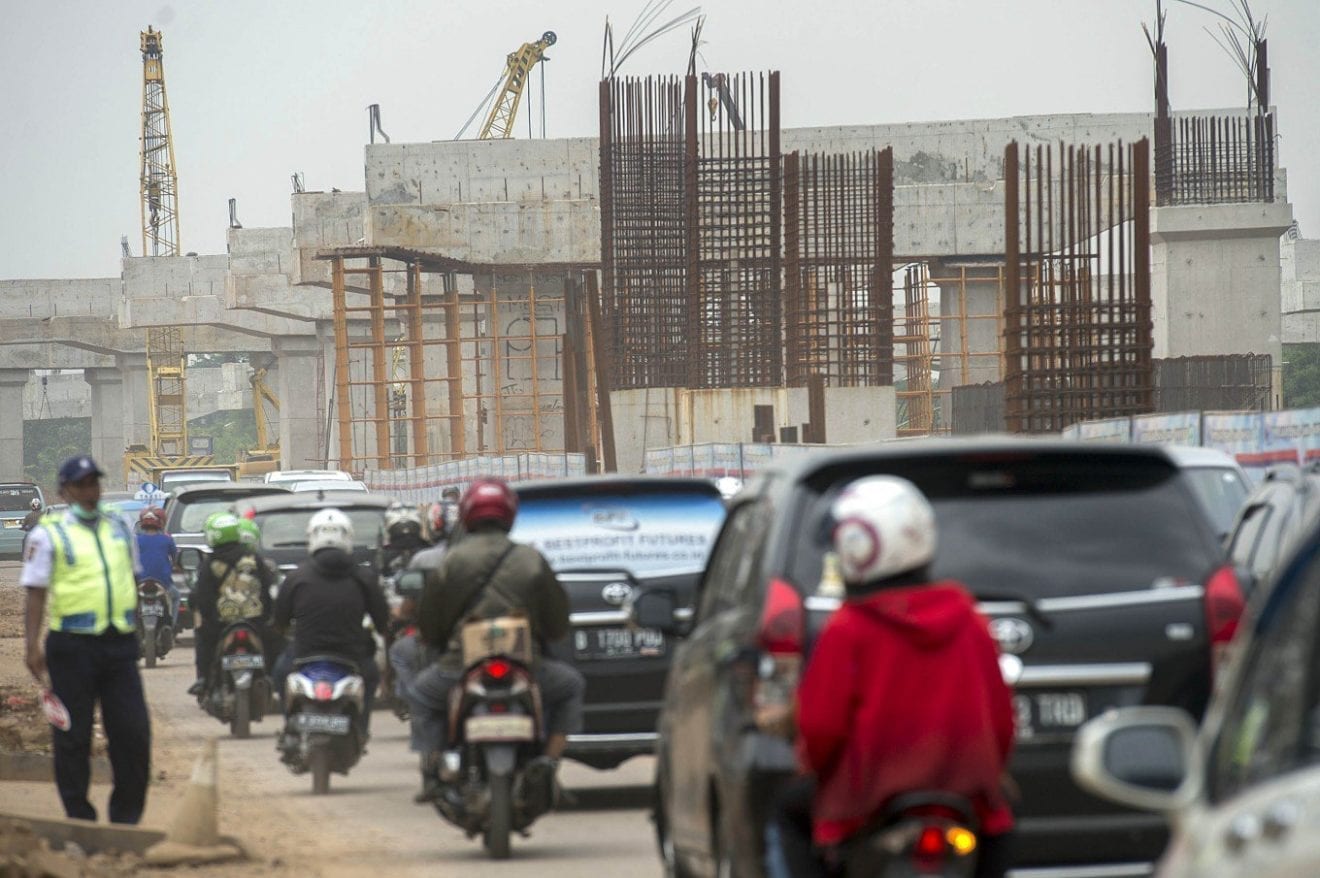
    Indonesia will start to operate 8 kilometers of the 11-kilometers section of the new Bekasi-Cawang-Kampung Melayu (Becakayu) toll road connecting Bekasi City and Jakarta by March 2017.

    “I believe by March, the 8 kilometers toll road can start operations. I hope we can operate both lanes, so there will be 16 kilometers of the new toll road,” Indonesian President Joko Widodo (Jokowi) said here on Monday.

    Jokowi conducted a visit to Becakayu toll road construction to observe the progress.

    According to Jokowi, the toll project had been stopped for 22 years since 1997. The government restarted the project in 2015.

    Indonesia plans to start operations of the 11 kilometers of the toll project by 2017.

    The toll road will hopefully decrease traffic density between Bekasi and Jakarta.

    The Becakayu Toll Road will also connect with the Jakarta Outer Ring Road (JORR) lane that integrates with outer Jakarta areas.

    Jokowi said there were no obstructions from land acquisition of Becakayu Toll Road.

    “We have no problems as we have bailout investment. The assistance could accelerate the construction,” he said.

    Indonesia is boosting its infrastructure sectors such as airports, ports, roads and highways, and railways to develop the economy.

    The president also asked ministers to help attract and support private investments in the infrastructure sectors.

    According to the president, there were several areas in which such investments can support the development of infrastructure. Such an investment can be made by private sector players, state enterprises or via Public-Private Partnership (PPP) route.

    “Infrastructure development shouldnt depend only on the State Budget or Regional Budget. We should open such opportunities for the private sector and for non-government investments,” the president said here on Wednesday.

  • Indonesian consumers regain confidence in Q3

    Indonesian consumers regain confidence in Q3

    Indonesian consumer confidence rose again in the third quarter of this year in line with their increasing confidence for the government’s recent economic policies, global research company Nielsen revealed on Wednesday.

    According to Nielsen’s Global Consumer Confidence Survey, the Indonesian consumer confidence index increased by three points to 122 in the third quarter from the previous quarter, an improvement that Nielsen Indonesia managing director Agus Nurudin attributed to a positive public response to the government’s tax amnesty, controlled inflation and manageable economic growth.

    “This is the first time we moved back to 120 after one year,” he told reporters, adding that Indonesia, since the third quarter last year, always scored below 120 in the quarterly survey because of political instability and economic uncertainty.

    The survey findings also suggested that although Indonesian consumers show an increasing willingness to spend, they are getting more rationale than before.

    “They prefer to reduce their spending on expensive tertiary goods, update their gadgets less often and change their foreign trips to domestic ones,” Agus said.

  • Indonesian ministry to boost fish consumption

    Indonesian ministry to boost fish consumption

    The Indonesia Industry Ministry will continue to encourage and increase fish consumption in various regions to raise domestic demand for fish, in an effort to advance the maritime and fisheries sector.

    “We will boost fish consumption, apart from exports, through developing traditional fish industry, which would increase the demand in the fishery sector at home,” Industry Minister Airlangga Hartarto said.

    The minister made the remarks in his address to the working meeting of the Indonesian Chamber of Commerce (Kadin) on fisheries affairs in Jakarta on Monday.

    Hartarto said that his ministry would also encourage fish consumption on a national scale.

    Slamet Soebjakto, Director General of Fisheries of the Ministry of Maritime Affairs and Fisheries, said his ministry wanted to increase the peoples sources of protein intake through increasing their fish consumption.

    It was earlier reported that the Indonesian government had been giving priority to increase the fisheries production by relaxing regulations for fishermen and local industries. The move is meant to support these sustainable industries in the development of the national fisheries sector and maintain seafood sovereignty.

    As part of the efforts to boost fish production, the government, though the Ministry of Maritime Affairs and Fisheries (KKP), had earlier built 15 Integrated Fisheries and Marine Resource Development Centers (SKPT) in various regions in the country. The aim of the SKPT is to boost fishery exports directly from the center without the need to go to Jakarta.

    The SKPT aims to maintain food resilience, increase fish consumption, foreign exchange earnings through exports, and raise the income of the people.

    Five of the SKPT are located in Simeullue (Aceh), Natuna (Riau Islands), Tahuna (North Sulawesi), Saumlaki (Maluku) and Merauke (Papua).

    Ten others are also built in Mentawai Island (West Sumatera), Nunukan (North Kalimantan), Talaud (North Sulawesi), Morotai (North Maluku), Biak-Numfor (West Papua), Sarmi (Papua), Mimika (Papua), Tual (Maluku), Rote Ndao (East Nusa Tenggara/NTT), and Maluku Barat Daya (Maluku).

  • Soekarno-Hatta Airport train expected to be operational by July 2017

    Soekarno-Hatta Airport train expected to be operational by July 2017

    The railway service connecting Jakarta to Soekarno-Hatta International Airport in Tangerang, Banten Province, should be complete and fully operational by July 2017, President Director of PT Railink Heru Kuswanto said here Monday.

    The service will provide 124 trips per day, with each train consisting of 10 coaches capable of transporting 274 passengers per trip.

    It is expected to run every 15 minutes to transport a total of 33,976 passengers per day, Kuswanto said.

    Canadian firm Bombardier was appointed to manufacture the trains.

    “The coaches will be delivered from Sweden in March 2017,” Kuswanto said.

    The government has invested US$70 billion to procure 10 trains from the rail equipment division of Bombardier.

    The trains will be customized to meet the national standard of railway gauge of 1,067 millimeters.

    The government has a budget of Rp2.7 trillion for the construction of the airport railway service which will be integrated into several Jakartas city train stations such as Manggarai, Sudirman Baru, Duri, and Batu Ceper.

    The train journey from Manggarai Station to Soekarno-Hatta International Airport is expected to take 54 minutes at Rp100,000 per trip.

    The railway network will be integrated with Terminal 1, 2 and 3 of the Soekarno-Hatta International Airport.

    PT Rilink is a joint venture enterprise between national railway company PT Kereta Api Indonesia and the state-owned airport service enterprise PT Angkasa Pura.

  • Indonesia, Australia Cooperates on Mining Gold, Copper

    Indonesia, Australia Cooperates on Mining Gold, Copper

    National mining company PT. Aneka Tambang (ANTAM) and Australian mining company Newcrest Mining Ltd. are building a partnership in order to explore gold and copper potential in Indonesia.

    A statement released by the Australian Embassy on Sunday, November 6, 2016, mentioned that the collaboration document between both countries was signed by Indonesian Trade Minister Enggartiasto Lukita and Head of the Investment Coordinating Board Thomas Lembong in Sidney.

    Australian Ambassador to Indonesia Paul Grigson, who was present during the document signing, also welcomed the collaboration. “Two-way investment is a form of acknowledgment that both countries’ economics have many potential to offer,” Paul said.

    Indonesia and Australia have decided to raise economic issues in both countries’ bilateral partnership by reviving the Indonesia-Australia Comprehensive Economic Partnership Agreement (IACEPA), according to Grigson.

    “More investment means joint prosperity,” Grigson said, while adding that increasing investments will create new job opportunities for both countries.

    Indonesia-Australia partnership in the gold and copper mining sector has been established since late 2015 in the form of preliminary studies.

    The preliminary studies were later followed up with a joint exploration in Indonesia.