Tag: Industry

  • Indian rice prices slip as demand lags; Vietnam awaits major harvest

    Indian rice prices slip as demand lags; Vietnam awaits major harvest

    Rice export prices slipped in India as the rupee weakened and demand waned, prompting buyers to turn to other markets such as Vietnam. India’s 5 percent broken parboiled variety eased to $379-$384 per tonne this week from the $382-$387 range last week. “Demand is still weak due to higher prices,” said an exporter based in Kakinada in the southern state of Andhra Pradesh, adding that despite the fall, prevailing high rates were prompting buyers to look at other markets, such as Vietnam.

    The Indian rupee hit a month low on Thursday, increasing exporters’ margins from overseas sales and thereby prompting a reduction in prices.

    Export prices in India had shot up after the central state of Chhattisgarh, a leading rice producer, raised minimum paddy buying prices to 2,500 rupees per 100 kg from 1,750 rupees.

    In neighboring Bangladesh, an increase in domestic rates for rice could prompt the government to cut the import duty on the staple grain, traders said.

    The south Asian country, which emerged as a major importer of the grain in 2017 after floods destroyed crops, imposed a 28 percent duty in June last year to support its farmers after local production revived.

    In Vietnam, rates for 5 percent broken rice fell to $355-$360 a tonne from $370-$375 last week ahead of the country’s largest harvest, expected to begin in two weeks.

    “Indonesia’s state food procurement agency’s recent announcement that it may not import rice this year has also weighed on prices,” a Ho Chi Minh City-based source said.

    “We are negotiating a deal for around 10,000 tonnes to be delivered late February, and we are stuck at pricing. We’re asking for $360 and they are offering $345,” the trader said, adding that the shipment would be bound for Africa.”

    Another trader said China’s move to limit rice shipments from Vietnam may not be as bad as some traders initially feared.

    “It’s only the beginning of the year now and importing countries can change their import plans, especially when hit by natural disasters,” the trader said.

    In second biggest exporter Thailand, prices of the benchmark 5 percent broken variety widened to $385-$400, free on board Bangkok, from $390-$400 the previous week, mostly due to fluctuations in the value of the domestic currency.

    “Demand remains flat, but some exporters are starting to talk about possible orders from the Philippines,” a Bangkok-based trader said.

    The Thai market is likely to see additional supplies flowing in toward the end of this month, from the seasonal harvest, and this could in turn move prices, another trader in Bangkok said.

  • Nissan Korea fined 900 million won for inflating mileage figures

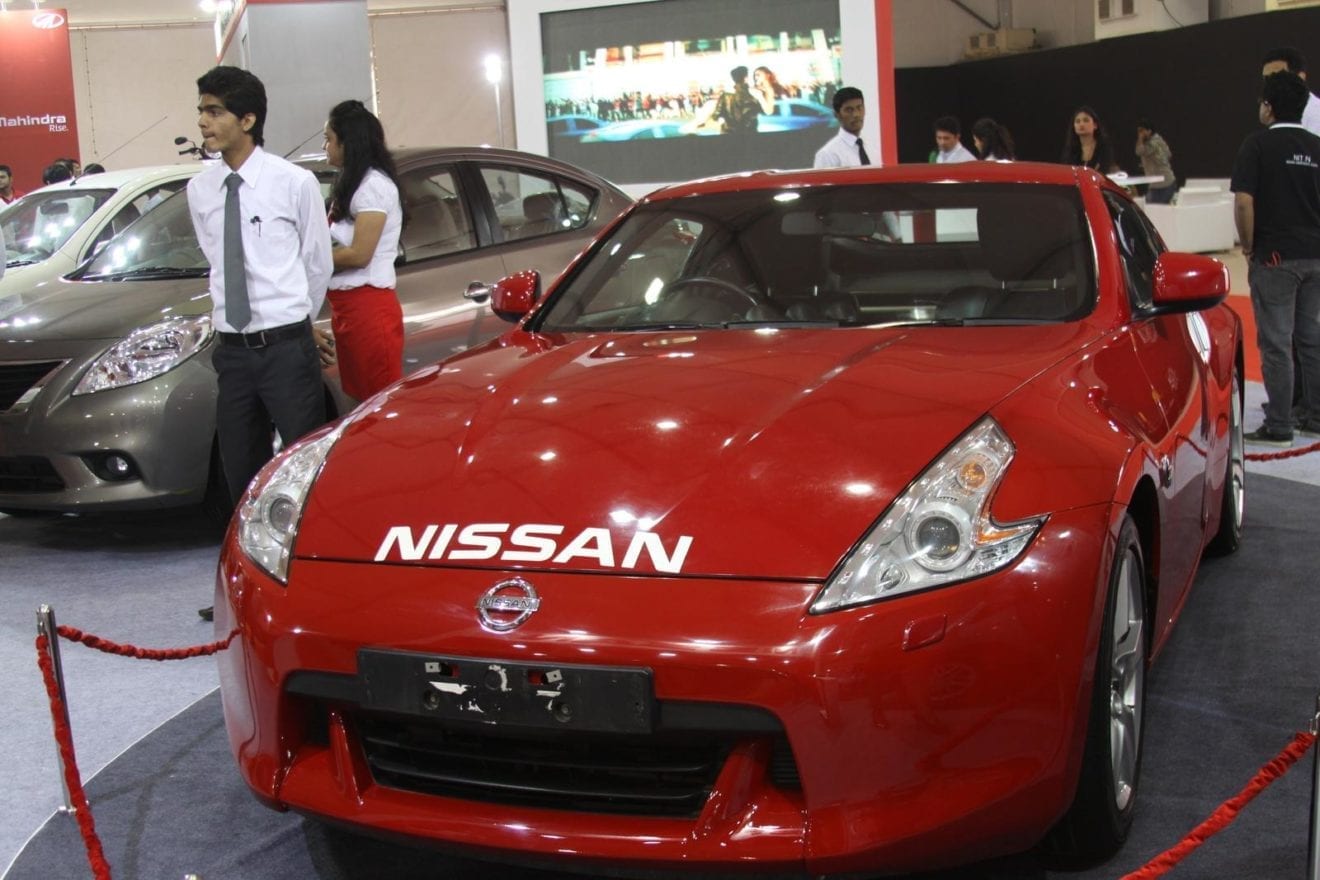
    Nissan Korea fined 900 million won for inflating mileage figures

    Korea’s antitrust watchdog said Wednesday that it has fined Nissan Korea 900 million won ($802,100) for inflating gas mileage figures for its Infiniti Q50 2.2d sedans. The Japanese car’s fuel efficiency reaches 14.6 kilometers per liter (34.3 miles per gallon), but the local unit of the Japanese carmaker overstated the fuel efficiency as 15.1 kilometers per liter in its stickers, catalogues and magazines between February and November 2014, according to the Fair Trade Commission.

    Nissan Korea sold 2,040 Infiniti Q50 2.2d sedans valued at 68.68 billion won during the cited period.

    “There are concerns that Nissan Korea’s advertising could hurt fair trade by distorting consumers’ reasonable choice, considering that fuel efficiency is a priority factor when they buy vehicles,” the commission said.

    Repeated calls to Nissan Korea seeking comment went unanswered.

  • Imports of commercial vehicles fell last month in Korea

    Imports of commercial vehicles fell last month in Korea

    Sales of imported commercial vehicles plunged 38 percent last month from a year earlier amid slower economic growth, a local automobile association said Tuesday. The number of newly-registered imported commercial vehicles fell to 283 units in December from 390 a year ago, the Korea Automobile Importers and Distributors Association (KAIDA) said in a statement.

    “The construction industry faces a slowdown as the government pushes for regeneration projects in residential areas instead of building new apartments or homes. This is driving down demand for commercial vehicles,” a spokeswoman for Volvo Trucks Korea said.

    Imported commercial vehicles are widely viewed as being more upmarket than domestically produced rivals and offer more choices for users.

    For the whole of 2018, the number of imported commercial vehicles sold in Korea declined 1.6 percent to 4,394 units from 4,464 a year earlier, the statement said.

    Major imported commercial vehicle brands are MAN, Mercedes-Benz, Volvo Trucks, Scania and Iveco.

    There are three kinds of trucks. Two of them are regarded as commercial vehicles, but the third, referred to as a dump truck, is classified as construction equipment.

    KAIDA began to compile sales data for imported commercial vehicles in January 2017.

  • Shilla Vietnam to open hotel at Da Nang

    Shilla Vietnam to open hotel at Da Nang

    Hotel Shilla announced Tuesday that it will actively begin expanding its brand abroad this year, the first new location being a resort in Da Nang, Vietnam. “Starting with Da Nang, we hope to expand our brand to more than 10 overseas locations in Southeast Asia, United States and China,” the hotel company said in a statement. Hotel Shilla is Samsung’s hotel and duty-free business arm. The 46-year-old company currently operates The Shilla Seoul and The Shilla Jeju.

    It also runs 11 business hotels under its Shilla Stay name.

    The company said that it will expand overseas through hotel management agreements with local companies, a common structuring for hotel chains. This means the local partner will own the hotel building while Shilla will operate the business. For Shilla, this minimizes investment risks.

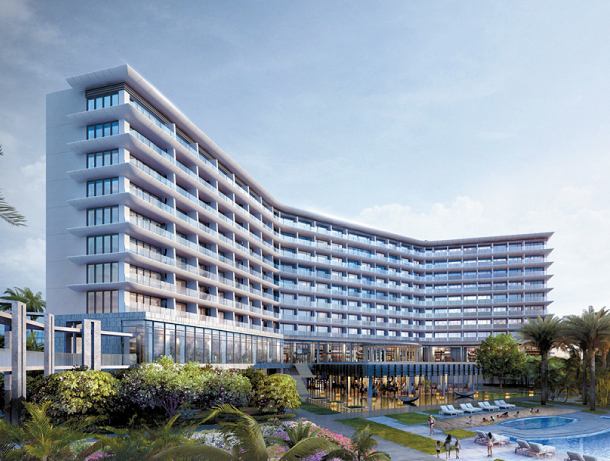
    Shilla’s new Da Nang hotel – slated to open this year under the brand-new Shilla Monogram name – will be a nine-floor building with 300 rooms. The hotel will be located on Non Nuoc Beach in Da Nang, a popular destination for Korean tourists.

    The hotel, still under construction, will feature an outdoor pool, restaurants and bars. Every room will be equipped with a balcony.

    Hotel Shilla also announced that it is preparing to open a 200-room premium business hotel in San Jose in Silicon Valley, California, under its Shilla Stay brand by 2021.

    “We hope to continue raising more revenues abroad by expanding our overseas hotel business,” said a Hotel Shilla spokesperson.

    Some 20 percent of the company’s total revenues today, or 1 trillion won ($892.5 million), come from abroad. Hotel Shilla operates several duty-free stores in domestic and foreign airports, including locations at three of Asia’s busiest airports: Singapore’s Changi Airport, Hong Kong International Airport and Incheon International Airport.

    Hotel Shilla has been operating Jinji Lake Shilla Hotel in Suzhou, China, since 2006. It was the first overseas hotel managed by the company.

    Following Tuesday’s announcement, Hotel Shilla’s stock prices closed at 76,100 won on Tuesday, 1.33 percent higher than Monday.

    As for upcoming domestic projects, Hotel Shilla is planning to open a hotel themed after hanok, or traditional Korean houses, by 2023 in central Seoul.

    If the company receives approval to build the new hotel from domestic land authorities, it will become the first to operate such a hotel in Seoul.

  • Frost & Sullivan calls for strong incentive policy for electric vehicles in Malaysia

    Frost & Sullivan calls for strong incentive policy for electric vehicles in Malaysia

    Frost & Sullivan which is “mildly positive” on growth of total industry volume (TIV) for vehicles in 2019, said a strong incentive policy is required for electric vehicles (EVs) to take off in Malaysia. “Currently what we are waiting for is if the (NAP) National Automotive Policy mentions anything about EV. Unless there is a strong policy coming up focused on EV, otherwise we will not see any major uptake in EV sales in Malaysia,” said associate partner and senior vice president of mobility at Frost & Sullivan, Vivek Vaidya.

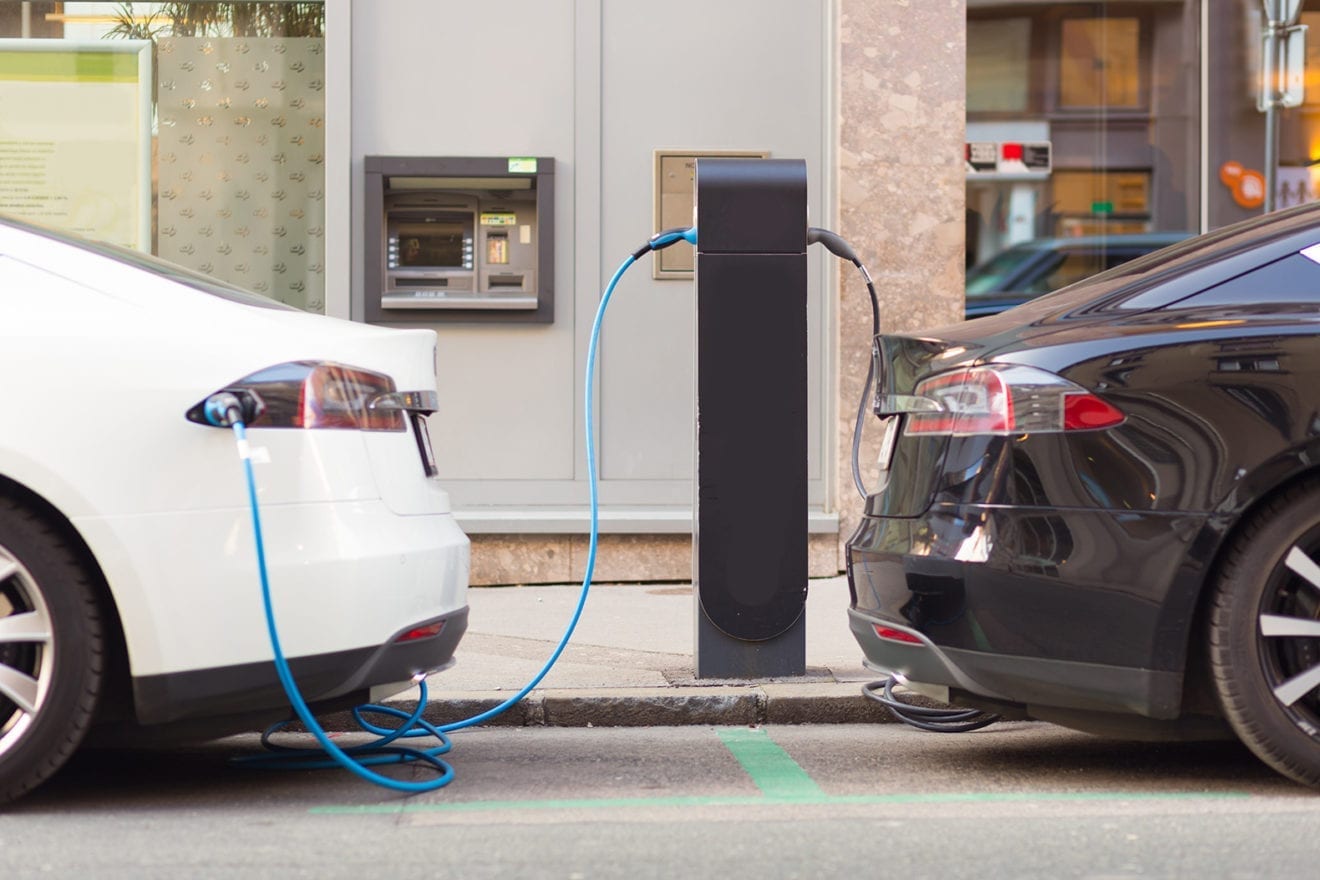
    He said the uptake for EV will also depend on factors such as incentives for manufacturers, forward distributors and customers coupled with the development of infrastructure for charging stations. Vivek added that there is a possibility of the new national car being an EV given leads of it being low energy and technology neutral.

    A survey carried out by Frost & Sullivan found that 30% of its respondents were willing to consider EVs even though such vehicles are yet to make a presence in Malaysia, signaling a latent demand for EVs.

    On the overall automotive market, Vivek expects Malaysia to registers vehicle sales of 609,700 units in 2019, 1.4% growth against 601,300 units in 2018, driven by growth in domestic consumption, private investments and new model launches.

    The passenger vehicle segment is expected to perform better than the commercial vehicle segment, which is likely to be impacted by low public spending.

    The passenger vehicle volume is projected to grow to 544,121 units in 2019 from 536,371 units in 2018, while the commercial vehicle volume is estimated to rise to 65,579 units from 64,929 units.

    Worth noting is that demand for vehicles went up by 4.2% during the tax holiday period last year.

    “Usually after a tax break period, the volume shrinks in the subsequent quarter but in 2018, strong consumer sentiment ensured Q4 volume matched last year figures to end the year on a positive note,” Vivek said.

  • Proton aims to double exports in 2019

    Proton aims to double exports in 2019

    Proton Holdings Bhd aims to double the export of its cars to at least 3,000 units this year from 1,388 units in 2018. “In 2017, we exported 248 units. This year we want to export more,” its CEO Li Chunrong said. With the support from the Malaysian government, he said, the group could export up to 4,000 to 5,000 units this year. Asked on the group’s plans to enter the Pakistani and the Middle Eastern markets, Li responded by saying that Asean will remain as the group’s focus for its export business, but it does not intend to abandon other markets.

    “We don’t want to forget the other markets (as well). We are trying our best to enter other markets,” he added.

    On response to the Proton X70 that was officially launched on Dec 12, 2018, the group said bookings for the sports utility vehicle have exceeded 15,000 units, with over 2,000 units delivered so far.

    Earlier, Proton deputy CEO Datuk Radzaif Mohamed said the group expects to bring an initial investment of RM47 million into the country through the second set of collaboration agreements between its vendors and their overseas counterparts.

    On Oct 10, 2018, Proton hosted its first signing ceremony where eight colla-boration agreements were signed and they are expected to help bring in an initial investment of RM170 million into the country.

    Radzaif said the collaborative agreements will range from technical tie-ups and joint ventures to 100% foreign direct investments with foreign vendors investing into the Malaysian economy.

    Aside from the investments in facilities and technology, he said, the collaborations are also expected to create about 450 new jobs in the automotive industry that range from assembly to design engineering.

    Additionally, these vendors will supply parts to Proton’s manufacturing facility in Tanjung Malim, which is undergoing expansion at a cost of RM1.2 billion.

    Meanwhile, Deputy International Trade and Industry Minister Ong Kian Ming, who witnessed the signing ceremony, said the government is targeting RM15 billion from exports of local automotive components and spare parts by 2020.

    Malaysian Automotive, Robotics and IoT Malaysia (MARii) CEO Datuk Madani Sahari shared that the value of exports for automotive components and parts could have easily touched the RM12 billion mark by end of December 2018.

  • Property prices likely to continue downtrend in Malaysia: PropertyGuru

    Property prices likely to continue downtrend in Malaysia: PropertyGuru

    Property prices in the country are likely to continue their downtrend for at least the first half of the year (1H19), despite improving consumer sentiment and proactive government policies announced in the Budget 2019, online property company PropertyGuru said. It said in a statement that this is validated by the company’s Market Index, which shows that asking prices of homes in Malaysia continue to show a 2.3% drop year-on-year.

    The Market Index is an analysis of over 250,000 property listings aggregated and indexed. PropertyGuru said its online portal, which has over 1.3 million Malaysians searching for properties, has seen a surge of interest in the following property hotspots identified in the various states of Kuala Lumpur, Selangor, Penang and Johor.

    While there has been a dip in asking prices, it said the demand for properties in Kuala Lumpur is still strong with the most popular and highly searched areas being Bangsar, Mont Kiara and Cheras.

    It said the property types that are most searched in these three areas are condominiums, followed by apartments and townhouses, noting the reason for high-rises being the most preferred property type in Kuala Lumpur may be due to the more affordable entry price points.

    In terms of the price bracket, PropertyGuru said many are searching below the RM300,000 bracket which is not feasible for the locations that are preferred, since many of these locations are priced above the affordability range.

    The company said demand for properties in Selangor continues to be high despite declining prices, with properties in Petaling Jaya, Shah Alam, and Subang Jaya topping the list in this order.

    It said properties that are most searched for in these areas are condominiums, followed by apartments and two-storey terrace houses, with many looking at transit-oriented development properties.

  • Strategies that will differentiate leaders in Indian retail in 2019

    Strategies that will differentiate leaders in Indian retail in 2019

    Indian retail industry has seen tremendous transformation and growth in the last few years and has become one of the most favourable market for global investment. The vibrant industry, hugely shaped by changing policies and consumer behaviour is adopting technology not only to understand changing consumer preferences but also to enhance shopping experiences. Innovations have defined a gradual shift in how companies approach retail altogether.

    Technology disruptions have taken all industries in its stride and the cash and carry business is no exception, despite it dealing with B2B customers. Technology has been a pivot for the creation of personalised, ‘instant’ buyer experiences. The players who leverage technology well will be industry leaders of the next decade.

    As we have stepped in 2019, here are some retail trends that will make news this year.

    Integrated Omnichannel presence for retail analytics – Omnichannel in retail has been a high talk point and some retailers have successfully expanded their presence across platforms. However, integration is the key to success in this game. Unless the platforms are integrated, they will present an inconsistent experience to the customers, creating confusion about the product, pricing and promotions.

    Besides ensuring an unswerving experience, a bigger advantage of an integrated Omnichannel approach would be to share and cross-leverage customer behaviour data. For instance, if a customer has a specific purchasing pattern for a product offline, the retailer can use these insights for targeted marketing on various digital platforms. It will not only help the shopper find what they need but also help the retailer generate higher sales through relevant product suggestions and repeat business.

    Shaping in-store experience through proximity marketing – Internet of Things has transformed many industries and has the potential to enable real-time interaction between retailers and consumers, providing them with a truly connected experience. It not only brings about a seamless experience but also enable guided discovery and shopping, using a network of beacons in store. These beacons can help retailers in marketing, mapping the consumer movement patterns and time spent at various sites, in-store messaging, building consumer loyalty etc. This will offer the opportunity to revolutionise in-store experience for consumers.

    Increasing focus towards sustainability – The consumer dynamics have evolved considerably over the last few years. They feel connected to a company or a brand that helps them contribute to social and environmental issues. The inclination of Indian consumers towards building a sustainable future will provide an edge to brands operating sustainably.

    The dynamic regulatory environment and shifting consumer preferences are making it imperative for retailers to decrease the social and environmental impact of their operations. Companies will be seen instituting practices and initiatives to address this need, and, the players who will ace this, will be the most preferred brands for consumers in the future.

    Decreasing wastage, promoting recycling and energy conservation will be certain immediate outcomes of bringing sustainable practices within business operations. Over a longer period, the impact of sustainability will run much deeper, with local community engagement and expected economic benefits.

    Employing Blockchain to enhance credibility through responsible and ethical sourcing –Blockchain technology helps retailers with core functions including supply chain management, inventory management, authenticity verification, auto-renewal and subscription services, customer data and loyalty programmes. However, the key benefits that the technology is delivering to retailers are to ensure authenticity and improve accuracy in tracing the origin of any product swiftly.

    Incorporating blockchain technology will enable retailers to track data right from sourcing stage to customer purchase while ensuring authenticity for their customers. It will also help establish sustainable sourcing practices being followed by the company, making a stronger connect with the millennial consumer.

  • Hyundai Motor now ready for big races

    Hyundai Motor now ready for big races

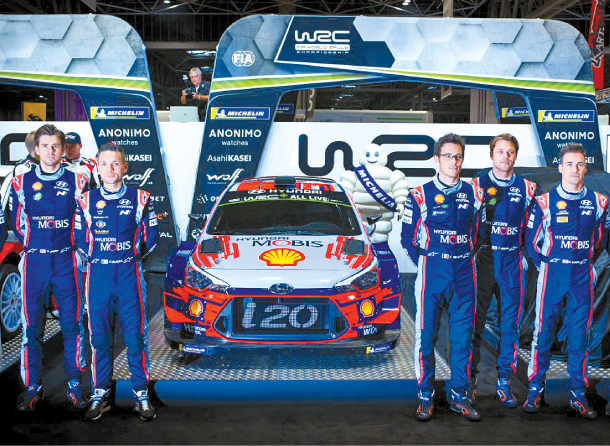
    Hyundai Motor finalized its driver lineup for this year’s major motorsport competitions, the company said Monday.  The automaker said its target this year is to win championship titles at the World Rally Championship (WRC) and the World Touring Car Cup (WTCR). In WRC events, the carmaker participates with its own team. In WTCR events, it supplies its cars to professional racing teams.

    For the WRC, the company said last year’s vice champions Thierry Neuville and Nicolas Gilsoul – a team of driver and co-driver – will be joined by Norwegian crew Andreas Mikkelsen and Anders Jaeger in all events. This year’s WRC has a total of 14 rounds. A composite score in those events will decide the winner.

    Dani Sordo and Carlos del Barrio will take part in eight events starting at Rally Mexico.

    Nine-time WRC champions Sebastien Loeb and co-driver Daniel Elena, who joined the Hyundai team from last month on a two-year contract, will take part in six rounds.

    “I am pleased to be joining such a great lineup of crews,” Loeb said. “It is clear to me that the car was a competitive package in 2018, which enabled the team to fight for the championship titles right to the very end.”

    Hyundai Motor’s team – named Hyundai Shell Mobis – came in second at last year’s WRC using an i20 coupe WRC vehicle.

    The automaker also announced four drivers who will participate at this year’s WTCR event with Hyundai’s i30 N TCR racing car. The carmaker races in the Customer Motorsports category with competitors that include Audi, Volkswagen and Ford.

    Hyundai’s customer team consists of four drivers, each driving on their own. Last year’s champion Gabriele Tarquini and fourth place driver Norbert Michelisz are driving Hyundai cars once again. Augusto Farfus and Nick Catsburg are newcomers.

    Hyundai Motor has been active in motorsport events as it has a positive influence on European sales thanks to a huge popularity of motorsports with European customers. In the long run, the carmaker hopes to upgrade its image from a value-for-money carmaker to a company known for high-performance cars.

  • Samsung in strategically key Vietnam for the long haul

    Samsung in strategically key Vietnam for the long haul

    South Korean conglomerate Samsung is committed to a long-term presence in Vietnam as a major base for its global operations. Won Hwan Shim, vice president of Samsung Electronics, reiterated the group’s commitment to Vietnam in a Friday meeting with Vietnam’s Prime Minister Nguyen Xuan Phuc. Shim said that Samsung’s plants in Vietnam had the most impressive growth among the company’s global facilities.

    Samsung, the world’s biggest smartphone maker, has been investing more and more in Vietnam, especially in its research and development centers, Shim said, adding that the group is transferring technologies to these local facilities.

    The company invested $600 million to finish the Samsung Ho Chi Minh City Research & Development Center in November 2017, its second such facility in the country after Hanoi, he noted.

    PM Phuc said that he expects more impressive growth numbers from Samsung this year, and also asked that Samsung continues to make Vietnam its most important global base, further expanding its operations here.

    Samsung has invested $17.3 billion in eight factories and two research and development centers in Vietnam, creating jobs for more than 160,000 locals.

    It is the largest foreign investor in Vietnam. Last year, Samsung estimated its exports from Vietnam was $60 billion, up 12 percent from 2017, accounting for a quarter of Vietnam’s total exports.

    Samsung last month closed one of two phone factories in China to focus more on low-cost countries like Vietnam and India for production as reported.

    The group’s two phone factories in Vietnam together make 240 million units a year. The factories, located in the northern provinces of Bac Ninh and Thai Nguyen, produce half of all the cellphones that Samsung supplies to the global market.

  • Hyundai Cars to go online – and have legs

    Hyundai Cars to go online – and have legs

    By 2022, all cars made by Hyundai Motor will be connected to the internet, the automaker announced during a press briefing held Monday in Las Vegas ahead of the 2019 Consumer Electronics Show (CES). “We aim to have 10 million active users of our connected-car services globally and apply connected-car technology to all vehicle segments in the global market by early 2022,” said Suh Jung-sik, senior vice president of Hyundai Motor Group’s ICT division.

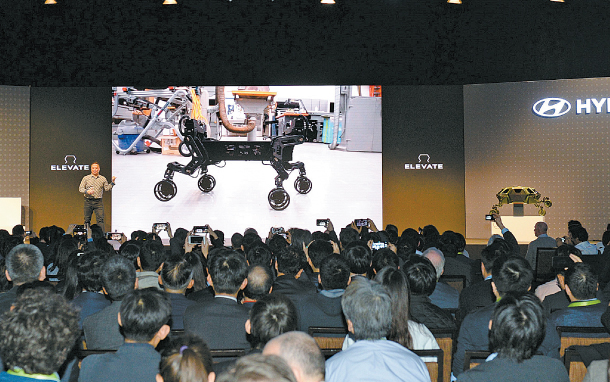
    At the CES, the company also introduced a vehicle in which the wheels are attached to robotic legs with a wide range of motion. Hyundai’s concept of a truly connected car is a car smarter than a computer that can share information not only with other vehicles on the road but also with homes, surrounding infrastructure and cities.

    Using connectivity, the cars can offer real-time traffic and parking lot information to drivers and also alert drivers remotely of theft. Remote adjustments of in-car settings, such as temperature, will also be possible.

    While Hyundai is already offering early versions of its connected cars in Korea, the United States, China, Canada and Europe, the automaker said it will establish additional big-data centers to offer similar services in countries like India, Brazil and Russia.

    To offer better connectivity worldwide, the carmaker is currently developing an operating system, a cloud platform and network technology for connected cars. The company also announced a plan to introduce an open platform on which third parties can develop new technologies using big data shared by Hyundai.

    Hyundai is not the only carmaker that came to CES with grand ambitions to take leadership in the connected car business.

    BMW will introduce the BMW Intelligent Personal Assistant, which can interact with drivers and allow for video meetings, shopping and other digital services inside cars. Audi is introducing a virtual-reality entertainment service for passengers in back seats. VR games or travel content will match the actual movements of the car. In the long run, the carmaker said the videos will reflect real-time traffic conditions so that if a car stops due to red light, the video will show an obstacle.

    Other participants, including Mercedes-Benz, Nissan, Bosch and Continental, all shared their focus on connectivity.

    “In the future, cars will be categorized as cars with hyper-connectivity and those without,” Suh of Hyundai Motor Group added.

    Apart from connectivity, Hyundai said it will develop personalized electric vehicles for everyone by giving customers the freedom to select software and hardware for their vehicles.

    To bolster open innovation, the carmaker has been setting up global open innovation centers to collaborate with foreign start-ups. Already there are three centers, established in Korea, the United States and Israel. Two more centers are set to be established, in Berlin, Germany and Beijing, China this year.

    Hyundai Motor and its innovation center in Silicon Valley, the Hyundai Cradle, introduced the “Elevate” concept vehicle at this year’s CES. It has four robotic legs specifically designed for rescue in challenging environments.

    U.S. design-consulting firm Sundberg-Ferar was involved in the development of Elevate, which Hyundai calls the ultimate mobility vehicle. It can swiftly move around places inaccessible to existing rescue transport.

    Hyundai said the Elevate’s body can be switched depending on the mission and that the robotic-leg architecture has five degrees of freedom. The company added that the vehicles can also aid people with physical impairments.

  • LG profit plunges, missing forecasts by a mile

    LG profit plunges, missing forecasts by a mile

    LG Electronics’ operating profit fell nearly 80 percent in the fourth-quarter of 2018 year-on-year, according to preliminary figures disclosed in a Financial Supervisory Service regulatory filing Tuesday.  The smartphone and household appliances manufacturer estimated 75.3 billion won ($67.0 million) in operating profit for the final quarter of last year compared to 366.8 billion won in the same quarter in 2017.

    The estimate is far below the 398.1 billion won forecast by analysts surveyed by FnGuide, a data provider. The company anticipated 15.8 trillion won in revenue from October to December last year, a 7-percent decline from the same period a year earlier.

    Analysts pointed to the slowing global smartphone market as a factor weighing on the company.

    “With the smartphone market currently in a slump, [the company] is unable to find an opportunity to recover,” said Kim Ji-san, an analyst at Kiwoom Securities in a report Tuesday that predicted disappointing earnings prior to LG’s announcement. “Demand has slowed as smartphone replacement cycles have become longer in high-value markets such as Korea and the United States,” Kim added.

    Meanwhile, the company estimated annual operating profit for 2018 at 2.7 trillion won, a 9.5 percent rise from the previous year.

  • Hyundai Korea recalls diesel vehicles for emissions issue

    Hyundai Korea recalls diesel vehicles for emissions issue

    Hyundai Motor will recall about 79,000 diesel-powered vehicles to fix faulty emission-related components, the Environment Ministry said Tuesday.Korea’s biggest carmaker by sales is expected to recall 78,721 vehicles encompassing three different models due to problematic parts that emit excessive nitrogen oxide into the air. The recall will start Wednesday and be carried out for one and a half years, an official at the Ministry of Environment said.

    The three models are the 2.2-liter diesel-powered Grandeur sedan, the Megatruck and the Mighty truck.

    “The ministry recommended Hyundai to recall 30,945 units of the Grandeur diesel sedan due to a faulty emission part,” the official said over the phone.

    “As for the two truck models, however, the carmaker has voluntarily submitted its recall plan to the ministry, with an approval due to be made this week.”

    Hyundai’s recall plan is in line with the government’s push to reduce diesel-powered vehicles on roads and fine dust, which is harmful to your health.

  • Vietnam to see slower growth in 2019

    Vietnam to see slower growth in 2019

    Vietnam’s economic growth is expected to slow down this year though it will remain a regional outperformer, according to leading global analysts. Fitch Solutions, an arm of Fitch Ratings, said in a report released Wednesday it expects Vietnam’s GDP growth to slow to 6.5 percent in 2019 in line with a wider trend of slowing global growth, but added the country would remain one of the fastest growing economies in Southeast Asia.

    The economy grew by 7.1 percent last year, the fastest rate of expansion in 11 years, according to official data. This was well above the 6.5-6.7 percent target set by the National Assembly.

    “Its increasing openness and reliance on foreign investment suggests that it is unlikely to be spared from the global growth slowdown arising from rising trade protectionism and tighter financial conditions.

    “Although we believe that Vietnam’s manufacturing sector and economy will continue to outperform the region over the coming quarters, growth is likely to face headwinds stemming from rising global trade disruptions and tightening financial conditions, which will negatively impact global economic growth and risk sentiment,” Fitch Solutions stated.

    The World Bank Group in its bi-annual report on Vietnam issued last month said the country’s GDP growth is likely to slow from 6.8 percent in 2018 to 6.6 percent this year as the global economy weakens.

    Weaker global demand for exports and reduced investment and trade flows as the U.S. Federal Reserve raises interest rates are other risks for Vietnam’s economy, Sebastian Eckardt, the World Bank’s lead economist for Vietnam, said.

    The Asian Development Bank (ADB) in a forecast released last month for the East Asia and Pacific region projected Vietnam’s growth at 6.8 percent for 2019, slightly lower than the 6.9 percent it expected for 2018. These rates are the second highest in the forecast behind only India’s.

    Disbursed foreign direct investment (FDI) in Vietnam reached a record $19.1 billion in 2018, up 9.1 percent year-on-year. With exports rising by 13.8 percent to $244.72 billion and imports at $237.51 billion, the country achieved its highest ever trade surplus of $7.21 billion last year.

    Fitch Solutions said in 2019 the manufacturing sector would remain a key economic growth driver and outperform the region.

    Vietnam has grown to become a manufacturing powerhouse, particularly in electronics, due to its relatively cheap and large workforce, geographical advantages, attractive tax breaks, stable political environment, and open trade policies.

    The opening up of the Vietnamese economy also came at an opportune time as China began to shift away from lower-end and export-oriented manufacturing to focus on the domestic economy.

    Vietnam’s continued commitment to economic liberalisation will also attract foreign manufacturers seeking to leverage its preferential trade deals.

    The country is a signatory to 10 bilateral and multilateral free trade agreements (FTAs), with six more trade pacts in the offing, including the highly touted Vietnam-EU FTA.

    Fitch Solutions added that trade tensions between China and the US would continue to drive up costs for manufacturers operating in China, pushing companies to outsource to its neighbor Vietnam, which is more competitive in terms of wages.

  • Export growth breezes in for Daikin Malaysia

    Export growth breezes in for Daikin Malaysia

    Air conditioning company Daikin Malaysia Sdn Bhd, which has allocated a capital expenditure (capex) of RM434 million for the next financial year ending March 31, 2020 (FY20), will ramp up its efforts on driving export growth, in line with its aim for export to contribute 70% of its total sales by FY20, from 65% now. COO Ooi Cheng Suan said products from its flagship factory here, mainly air conditioners for residential (household) use, as well as light commercial and commercial, are exported to 70 countries in the world.

    “We are driving export because the Malaysian market is not big and it is limited. To expand, we must go beyond, go out (of Malaysia). Being made in Malaysia, it (our products) is well accepted. In these two years, our ringgit has weakened and this has given us certain advantage when exporting. We become more competitive,” he said.

    He said traditionally, the company had been exporting to Europe, with the more prominent countries being Italy, Greece, France, UK, as well as the Middle East. This year, in addition to Central Europe, it has expanded its export to the US and Latin America.

    “We want to achieve at least 70% export for this factory here (remaining 30% for local market). As per our plan and budget, we’re on track to move towards 70%,” said Ooi.

    He explained that the US-China trade war has given the company an opportunity of exporting into the US due to the imposition of tariffs on products from China, which impacted Daikin China’s export into US.

    “Malaysia’s platform is similar to China’s platform, so we can transfer that demand from US (supplied originally by China) to Malaysia. We’re in a good position (to secure that opportunity) because we’re competitive and we’re able to respond fast to changes so there’s a high chance that the demand of US (for Daikin) will shift to Malaysia (from China),” explained Ooi.

    In Malaysia, Daikin, the world’s industry leader in air conditioning, prides itself as the number one air conditioner maker in terms of sales turnover and the number of air conditioners sold in the market. Annually, its Sungai Buloh factory produces 1.4 million sets (comprises indoor evaporator and outdoor condenser). Currently the residential segment makes up over 60% of its sales, while the remaining 40% comes from the light commercial, commercial and industrial segments.

    Ooi, who is also deputy regional general manager for Asia emerging districts, claims that the Japanese brand Daikin is also the top air conditioner maker in almost all of the markets in Southeast Asia (SEA), based on its survey.

    “Some players claim they’re number one at serving only a niche market. Daikin has the full range of air conditioners, from as small as 0.5 horsepower to a few thousand horsepower. We cover the full spectrum of the market,” said Ooi.

    The company is expecting to close FY19 with a double-digit growth based on its current sales momentum.

    “For the Malaysian market, the situation (sales) is slow, but the upcoming Chinese New Year will spur some buying from consumers. From past experience, when it comes to February and March, the weather turns hot and this will spur impulse buying.

    “Air conditioner has become a necessity. The price of air conditioner in Malaysia is not too far reaching that it becomes a luxury item. It has been relatively low, affordable for the public,” said Ooi, adding that globally, demand for air conditioner from developing countries like India and Africa is growing fast.

    He stressed on two important pillars for growing the local market, including the introduction of R32 refrigerant products (low global warming potential), as well as educating the market to move to energy-efficient products, such as the Inverter series.

    Daikin Malaysia will invest RM100 million annually as capex for facility and machine upgrading.

    Its two new factories in Shah Alam and Banting will focus on manufacturing applied products, comprising chillers and air handling units, for large, high rise buildings, shopping centres and industrial use. The Shah Alam factory, which was set up at RM140 million, will start its full-fledged production by 2019 and is expected to have a turnover of RM100 million per year in the beginning.

    “This is the only applied factory in SEA Oceania and this will be the factory that will support the whole SEA Oceania. With our plan to expand our applied business in SEA Oceania, we’ve set up our applied regional hub in Malaysia and Singapore to expand the sales in SEA.”

    Meanwhile, it will also invest RM125 million to set up a factory in Shah Alam to make electronic devices (air conditioner controllers), which will come into production by 2020. Ooi said this factory will supply to Daikin’s affiliates, of which there are 73 factories in the world.

    “Currently we’re already exporting to Daikin factories in Turkey, Vietnam, Czech Republic and the US. We can’t cater to the whole demand of Daikin. These factories that we’re catering for are less than 20% of the demand of Daikin group. A good percentage is still supplied by others,” said Ooi.

    It is also allocating RM135 million to set up a centralised logistics centre, which is expected to start operations by early 2020-2021.

    In addition, some RM74 million has been budgeted for research & development in FY20.