Tag: Industry

  • Report urges auto industry to go electric

    Report urges auto industry to go electric

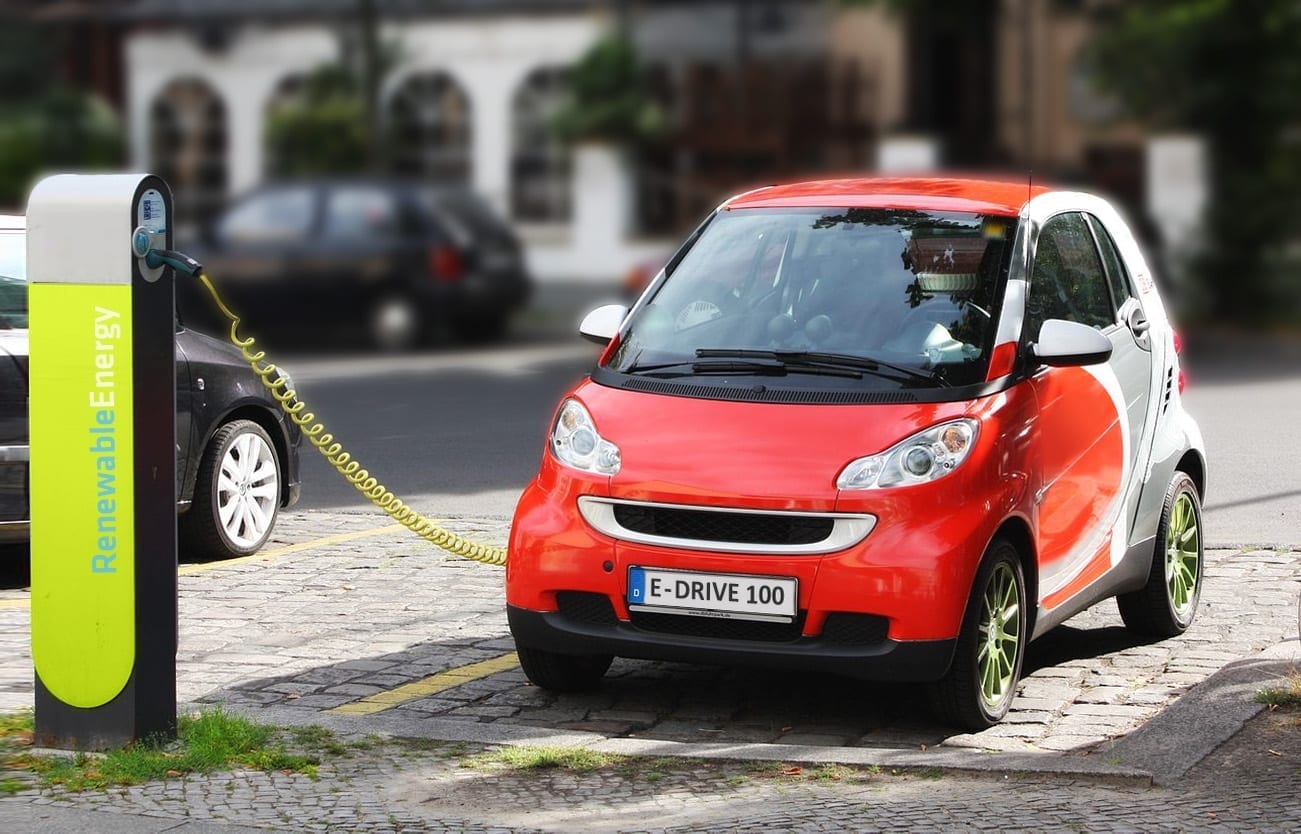
    Korea needs to give equal emphasis to the development of battery electric vehicles and fuel cell cars, considering the estimated future demand and the country’s competitiveness, a report said Thursday. “It’s a well-known fact that our car manufacturers have the mass-production technology for fuel cell automobiles,” the report from the Korea Institute for Industrial Economics & Trade (KIET) said. “However, the accumulated sales of fuel cell electric vehicles (FCEVs) worldwide stopped at 10,000 as of the end of 2018. The demand for fuel cell vehicles in 2030 will be less than 2 percent of the global sales of new automobiles.”

    In comparison, sales of battery electric vehicles (EVs) are estimated to exceed the demand for hybrids this year, 10 years since their commercialization, and show fast-paced growth, the report argued. Global rivals are due to market more than 100 different EV models by 2022, it noted.

    Korea’s high competitiveness in EV batteries is another reason why the government should not neglect investment in electric cars, the report said, warning that the relative weaknesses in the availability of charging stations and other networks could drag down the industry, despite efforts by local automakers to diversify their EV models. The report responded skeptically to the government announcement in December to give 2 trillion won ($1.79 billion) in assistance to reform the car parts industry.

    “If the auto industry, the recipient, is unable to fully accommodate, it could be difficult for the assistance to have the desired effect,” it said.

    The same report predicted hard times ahead for local auto companies, affected by the global slump in the car industry.

  • Shiseido opens a new factory in Fukuoka

    Shiseido opens a new factory in Fukuoka

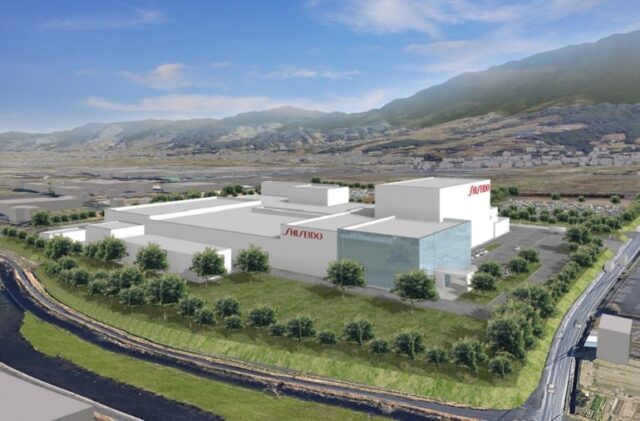
    Shiseido Company, Limited has decided to build a new production site, Shiseido Kyushu Fukuoka Factory in Kurume City, Fukuoka Prefecture, Japan. The new factory, which is slated to start its operation in fiscal 2021, will mainly manufacture skincare products for Japan and overseas markets. The investment is expected to be approximately 40-50 billion yen.

    Shiseido has been making concerted efforts as a whole toward the realization of even greater growth to accomplish the medium-to-long-term strategy VISION 2020 and to “Be a Global Winner with Our Heritage”.

    As part of its production strategy, Shiseido is pursuing the establishment of a supply chain strategy from a global perspective in line with its Group-wide marketing strategy, and progressing in the creation of a flexible operational structure at each of its factories around the globe by taking into account various elements such as costs, lead time, inventories and procurement of raw materials.

    Amid such, the company has concluded that it is vital to establish a stable and sustainable production system from a medium-to-long-term perspective in order to respond to growing demand for cosmetics inside and outside Japan and secure further business growth in the future.

    To this end, Shiseido has decided to build another new factory following Nasu Factory and New Osaka Factory (tentative name) which are currently under construction. Investments in the production base including factories currently under construction, establishment of the new Kyushu Fukuoka Factory and reinforcement of existing factories are expected to exceed 170 billion yen.

    The new factory will focus on the production of skincare products which are growing in demand, and provide safe high-quality products in compliance with ISO 22716 international standards.

    As a next-generation factory, it will utilize cutting-edge facilities and advanced technologies such as IoT in the creation of innovation. Furthermore, through the inheritance of long-standing production technologies and expertise which are Shiseido’s strength, we will realize the new factory as people-friendly with high productivity.

    It will operate in an environmentally friendly manner while being able to support our business continuity plan (BCP), aiming to exist in harmony with the surrounding environment including mountains and rivers.

  • Habeco Vietnam reports another year of falling profits

    Habeco Vietnam reports another year of falling profits

    Habeco’s profits fell by 23 percent last year to VND667 billion ($28.71 million), the fourth straight year of decline. Hanoi Beer Alcohol and Beverage Corp, as it is formally known, one of Vietnam’s biggest brewers, also reported a 5 percent fall in revenues to VND9.4 trillion ($404.67 million). There was a sharp increase in operating expenses, especially cost of sales.

    After falling for four years profits are now less than half of the 2014 figure of VND1.44 trillion ($62.12 million).

    Habeco’s decline is contrary to the general growth trend as Vietnam remains one of Asia’s biggest beer consumers. According to Euromonitor statistics, while global beer consumption volume remains unchanged last year, the figure for Vietnam soared.

    According to data from the Vietnamese Beer, Alcohol and Beverages Association, on average a Vietnamese person drank nearly 45 liters of beer in 2017, an almost 50 percent jump in two years.

    Many securities firms believe that though Habeco still leads the beer market in the north, it faces challenges like changing consumer tastes and competitive pressure from foreign brands. It has only been able to maintain market share in the low-priced segment, ceding ground in the premium segment to brands such as Heineken, Saigon Beer (now a subsidiary of ThaiBev) and other foreign brands.

    Ban Viet Securities Company’s latest data shows Habeco’s share in the beer market has fallen continuously in the last six years, from nearly 20 percent in 2010 to 18 percent by the end of 2017.

    The reason for this is that the low-cost segment, its strength, is shrinking, said the securities company. The cheap beer segment now makes up of only 8 percent of the market compared to 14 percent seven years ago.

    Vietnam is famous for its beer drinking culture, and it is widely believed that business deals go more smoothly over a few drinks.

    The country is the biggest beer market in Southeast Asia, consuming nearly four billion liters in 2017. It spends on average $3.4 billion on alcohol each year, or $300 per capita, while spending on health averages $113 per person, according to the Ministry of Health.

  • Sales of imported vehicles in Korea fell 10 percent in January

    Sales of imported vehicles in Korea fell 10 percent in January

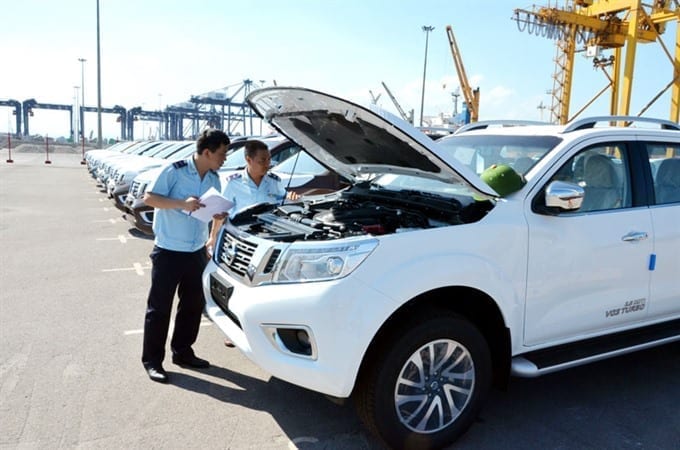
    Sales of imported vehicles in Korea declined by more than 10 percent in January from a year earlier due to typically low seasonal demand and supply shortage of some brands, industry data showed on Friday. The number of foreign cars sold last month reached 18,198 units, down 13.7 percent from a year earlier, according to the data compiled by the Korea Automobile Importers & Distributors Association (Kaida).

    The tally also marks an 11 percent drop from a month earlier, the data showed. In 2018, sales of foreign cars continued to rise, helped by firm demand for foreign brands and the resumption of sales of Audi Volkswagen.

    The number of newly registered foreign vehicles reached 260,705, up 11.8 percent from 2017.

    Foreign passenger cars made up 16.7 percent of all vehicles that were registered in the country last year, shattering the previous record high of 15.5 percent in 2015.

  • Unit price of exported automobiles in Korea up on SUV sales

    Unit price of exported automobiles in Korea up on SUV sales

    The average unit price for exported automobiles last year reached a record high of $15,400, pushed up by the strong performance of sport-utility vehicles (SUVs), according to industry statistics Thursday. Monthly data from the Korea Automobile Manufacturers Association (KAMA) put total exports by five local carmakers last year at 2,447,903, down 3.2 percent from the previous year. The monetary sum from the shipments came to $37.68 billion, 1.6 percent less than the year before.

    Despite decreases in both, the unit price of each exported vehicle remained strong thanks to exports of relatively more expensive SUVs, the data indicated, increasing 1.6 percent from 2017.

    Local manufacturers shipped 1,386,539 SUVs last year, up 6.7 percent compared with the year before, setting a new record.

    “The export volume for vehicles shrank from dulled demand in the global market, but it’s fortunate that the export-unit price rose from increased shipments of high value-added cars,” a KAMA official said.

    By manufacturer, Renault Samsung Motors had the highest unit price, at $17,100.

    It was followed by SsangYong Motor, at $17,000. The unit price was $16,200 for Hyundai Motor, $14,900 for Kia Motors and $13,400 for GM Korea.

    Records showed that the unit price rose up to the mid-2010s, rising from $12,000 in 2010 to $14,800 in 2014.

    It pivoted down to $14,200 in 2015 and stayed in a lull in 2016 at the same level before going back up to $15,000 in 2017.

    In terms of export volume, the numbers have been going down since peaking at 3,166,000 in 2012.

  • Time for China’s smartphone brands to bloom

    Time for China’s smartphone brands to bloom

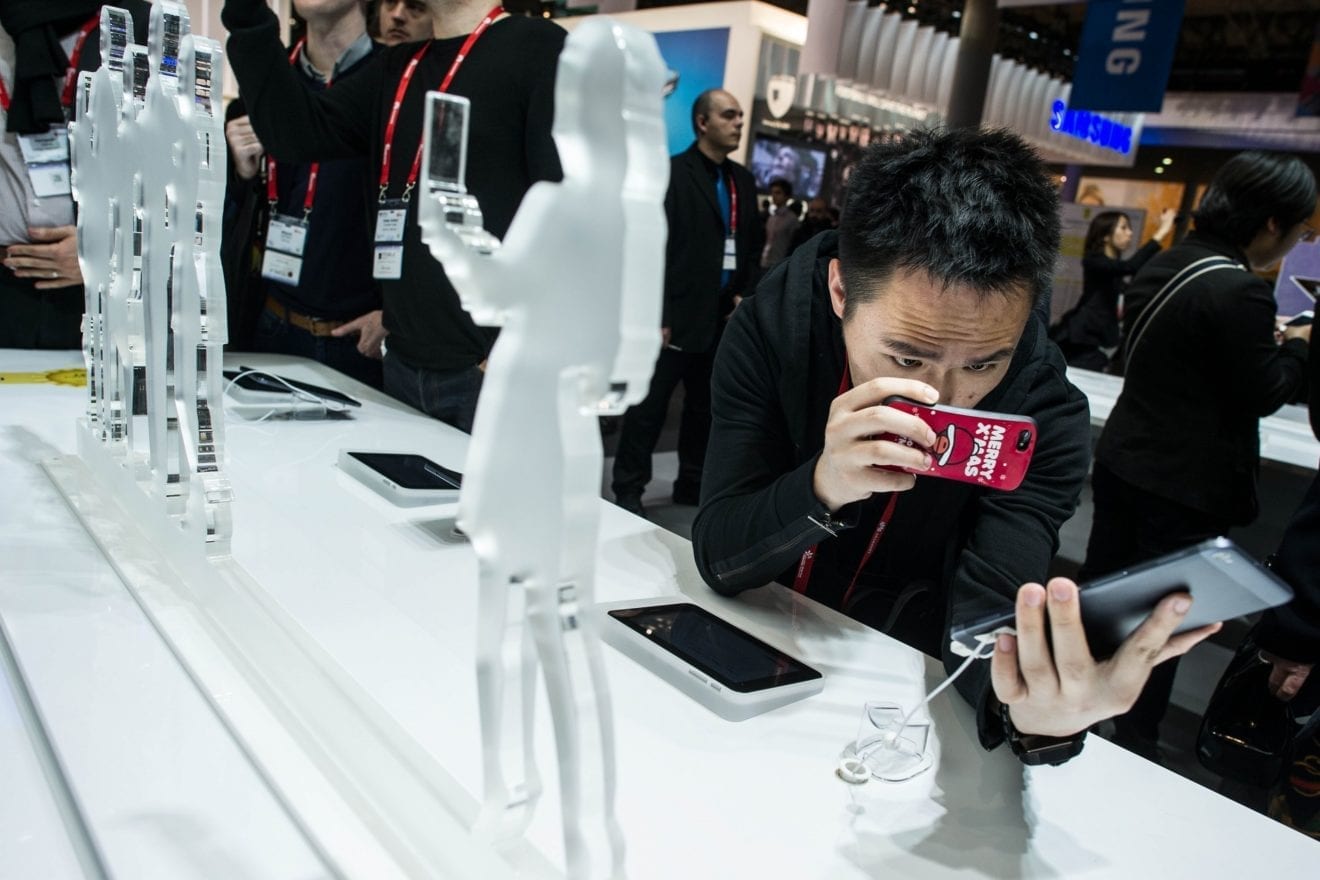
    Like many urban Chinese consumers, Shenzhen civil servant Gao Jian has had a long-held belief that the quality of domestic smartphone brands paled in comparison with foreign brands, especially Apple. But in December, Gao joined the growing number of mainland consumers who have made the switch from Apple’s iPhone to a premium Android smartphone from a major Chinese brand. He bought a Mate 20 Pro, the flagship model from the country’s largest smartphone supplier Huawei Technologies.

    “Its design and cameras are better than what I expected,” Gao said. “Also, iPhones have become increasingly unaffordable.”

    His experience reflects the broader success of the Chinese mobile phone industry in smashing people’s perception that domestic suppliers are only good for inexpensive, low-quality products.

    That stereotype has beset many Chinese brands in the home appliances, consumer electronics, personal computer, car and mobile phone markets, where products from more established brands in the US, Japan or Europe were preferred by mainland consumers for many years.

    But brands like Haier Group Corp, Lenovo Group and, more recently, Huawei, have expanded their operations, increased research and development, and made advanced products to change that impression around the world.

    China is now home to some of the most successful smartphone brands, which rival the likes of Samsung Electronics, Apple and LG Electronics.

    Shenzhen-based Huawei, the top global supplier of telecommunications network equipment, was ranked the world’s second biggest smartphone vendor – behind Samsung and ahead of Apple – for the second consecutive quarter in the three months ended September 30, according to research firm IDC. Xiaomi Corp and Oppo took the No 4 and 5 spots in the same quarter.

    The emergence of Chinese smartphone brands on the global stage has mirrored the rising competitiveness of the country’s telecoms network equipment suppliers, which have won market share with value-for-money offerings as well as on heavy investments in research and development.

    The gains have also sparked increasing pushback by the US, which is persuading its allies to boycott Chinese telecoms gear suppliers such as Huawei on grounds of national security.

    With the world’s biggest internet population and smartphone market, China had as many as 300 domestic mobile phone companies about three years ago. Cutthroat competition reduced that number to about 200 last year, as Chinese consumers bought fewer smartphones and the economy grew at a slower pace.

  • Korea’s industrial output growth slowest in near 20 years

    Korea’s industrial output growth slowest in near 20 years

    Industrial output is growing at the slowest rate in nearly 20 years, while facility investment dropped the most in a decade.  Other signs that the economy is in trouble include seven straight month of declines in the coincident and leading indexes. According to Statistics Korea and the Ministry of Strategy and Finance Thursday, last year industrial output grew 1 percent compared to 2017. This is the slowest annual growth rate since 2000.

    Manufacturing industry output was only able to rise 0.3 percent, while the construction industry, which is an important contributor to the domestic economy, fell 5.1 percent, with a particularly weak second half.

    Facility investment was down 4.2 percent, the sharpest drop since 2009, when the number declined 9.6 percent. The government said the decline in facility investment was largely due to weakening in the semiconductor sector.

    Consumption statistics were relatively strong, on the rising sales of both durable and nondurable goods. When compared to the previous year, consumption rose 4.2 percent, the sharpest increase in seven years. In 2011 consumption went up 4.6 percent.

    Strength was noted at duty-free shops and online.

    While traditional retail store sales were down, including those of discount marts like Emart and Lotte Mart, falling 2.8 percent, as well as those at smaller supermarkets and miscellaneous stores, falling 0.7 percent, sales of online stores were up 14.2 percent and duty-free sales surged 31.5 percent. Chinese tourists returned to the country in great numbers as a result of easing tensions over the introduction of a U.S. missile defense system.

    Convenience store sales were up 8.5 percent, a trend that has been seen in recent years as the number of people living alone has been rising.

    December figures weren’t comforting.

    When compared to the previous year, overall output grew 0.3 percent, which is half of the 0.6 percent reported in November. When compared to the previous month, December output fell for the second consecutive month at 0.6 percent.

    Manufacturing and mining output improved compared to the previous month. It also rose 1.6 percent compared to the same month the previous year, compared to November’s 1.1 percent.

    December output fell 1.4 percent month-on-month, the second consecutive month of decline.

    While the fall in output of automobiles was one of the major factors, down 5.9 percent compared to November, semiconductor output was also another contributing factor, as it fell 4.5 percent.

    The ministry said automobile production continued to fall as exports have shrunk. Overseas and domestic demands have been weak.

    Semiconductors, which have long been a positive force, started to become a drag, with production at some companies falling on weak demand.

    Investment in December alone fell sharply, declining 14.5 percent year-on-year, the sharpest fall since September 2018, when it tumbled 19.2 percent. Even when compared to the previous month, it dipped 0.4 percent.

    The coincident index, which shows the current economic situation when compared to the previous month, fell 0.2 points, down for nine consecutive months.

    It is the longest losing streak since falling for 11 months starting September 1997, when Korea was hit by the first financial crisis.

    The leading economic index fell 0.2 points compared to November, declining for seven consecutive months.

    In a statement, the ministry said it will swiftly move on “big projects” so investment sentiment will improve.

    “The government, if possible, is trying spend a quarter of the budget as early as possible,” Finance Minister Hong Nam-ki said Thursday.

    He denied he is looking into the possibility of a supplementary budget to boost the economy.

    “We’re only in January,” Hong said. “A supplementary budget is not under consideration.”

    The minister said the government will be announcing export measures, mostly focusing on financial aid to SMEs.

    “While finding new markets [for exports] is important, currently the most difficult issue is [SME] exporters struggling to get financial aid,” Hong said.
  • SsangYong Motor narrows loss in last quarter of 2018

    SsangYong Motor narrows loss in last quarter of 2018

    SsangYong Motor, the Korean unit of Indian carmaker Mahindra & Mahindra, said Thursday its net losses narrowed for the October-December period from a year earlier on a strengthened lineup. Net losses reached 3.99 billion won ($3.59 million) in the fourth quarter from 30.25 billion won a year ago, the company said in a statement. Robust sales of the Rexton Sports sport-utility vehicle (SUV) and the Tivoli SUV helped improve the bottom line, it said.

    Operating losses stood at 3.48 billion won in the final quarter from 2.57 billion won a year ago. Sales rose 17 percent to 1.053 trillion won from 902.16 billion won during the same period.

    For 2018, net losses slightly improved to 61.84 billion won from 65.82 billion won the previous year. Operating losses remained almost unchanged at 64.18 billion won compared with 65.28 billion won.

  • Vietnam foreign investment skyrockets in January

    Vietnam foreign investment skyrockets in January

    FDI pledges for new projects, increased capital and stake acquisitions in Vietnam rose 51.9 percent year-on-year to $1.9 billion in January. In a statement Monday, the Ministry of Planning and Investment said the manufacturing sector attracted the most interest from foreign investors, accounting for $1.19 billion or 62.4 percent of the total FDI. Science and technology ranked second with $185.8 million, followed by real estate with $179.1 million.

    Japanese were the top investors with nearly $364 million. South Korea and China were next with $349.1 million and $307.8 million.

    Ho Chi Minh City is the most attractive location for FDI investors in January, accounting for around 39.1 percent of the total FDI. Southern Binh Duong Province ranked second, accounting for 12.5 percent, followed by northern Hai Duong Province with 6.5 percent.

    As of January 20 authorities had issued licenses for 226 new projects with a total capital of $805 million. Meanwhile, another $340.2 million was pledged for existing projects this month.

    The two biggest projects were Kyoshin Vietnam’s $134.7 million investment expansion in HCMC by Japanese investors to produce, process and export electrical components and molds, and Katolec Global Logistics Vietnam’s $65 million investment for warehousing and storing goods in the northern province of Ha Nam.

    Estimated FDI disbursement for the month was $1.55 billion, up 9.2 percent year-on-year.

    Vietnam reported FDI disbursement of $19.1 billion last year, up 9.1 percent.

  • Vinamilk to open plant in Myanmar, its 2nd in Southeast Asia

    Vinamilk to open plant in Myanmar, its 2nd in Southeast Asia

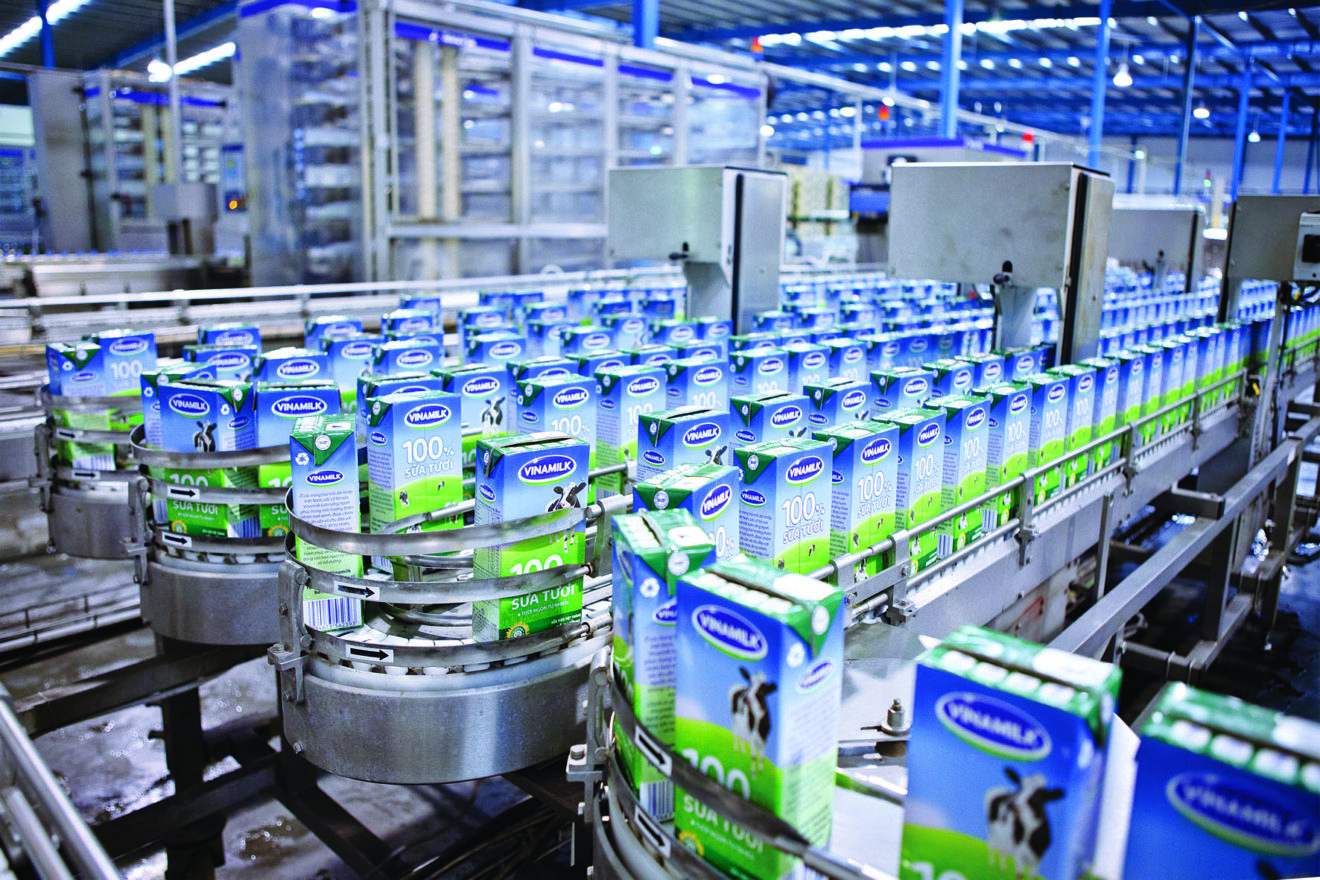
    Vietnam’s biggest dairy company plans to open a plant in Myanmar this year and is preparing to enter Indonesia and China. The Myanmar factory will be Vinamilk’s second in Southeast Asia after acquiring its first in Cambodia. It is in discussion for one joint venture in Indonesia. Myanmar is one of Vinamilk’s strategic markets to offset declining revenues in the Iraqi market, which once accounted for 60 percent of its exports. In 2017, Vinamilk reported falling exports for the first time in 20 years due to political tensions in the Middle East.

    In the latest year for which export figures are available, 2017, it shipped products worth VND7.4 trillion ($312 million), a 4.2 percent decline from the previous year.

    The company is also preparing to enter the Chinese market later this year. Chinese authorities are expected to sign a draft protocol in April this year allowing Vietnamese dairy products to be exported.

    Vinamilk is planning a change in export strategy.

    “The company will move from traditional exports to intensive cooperation with distribution partners in new key markets, and gradually build production facilities in potential markets such as Myanmar,” Vinamilk chief executive Mai Kieu Lien told shareholders in 2018.

    She added that the company has set aside $750 million for acquisitions, building new facilities and setting up cattle farms between 2017 and 2021.

    It now has 13 plants and 10 dairy farms in Vietnam, a plant each in the U.S., New Zealand and Cambodia and a subsidiary in Poland.

    In all, it has three wholly-owned foreign subsidiaries: Driftwood Dairy Holding Corporation in the U.S, Angkor Dairy Products Co., Ltd, in Cambodia, and Vinamilk Europe Spo’stkaz Ograniczona Odpowiedzialnoscia in Poland.

    It holds a 22.81 percent stake in a joint venture with Miraka Dairy in New Zealand and has a Thailand-based trading office.

    Last year the company paid $19.74 million to buy a 51 percent stake in Laotian company Lao–Jagro Development Xiengkhouang Co., Ltd, to set up a series of hi-tech beef and dairy farms based on Japanese technology.

    Vinamilk’s products are available in 46 countries and territories, including some demanding markets such as Japan, the U.S., Australia, New Zealand, and Canada.

    Last year the company reported profits before tax of VND11.52 trillion ($499.26 million), up 12.05 percent from the previous year, on revenues of VND52.63 trillion ($2.28 billion), down 2.93 percent.

  • Kia Motors begins sales of 2020 edition of Sorento SUV

    Kia Motors begins sales of 2020 edition of Sorento SUV

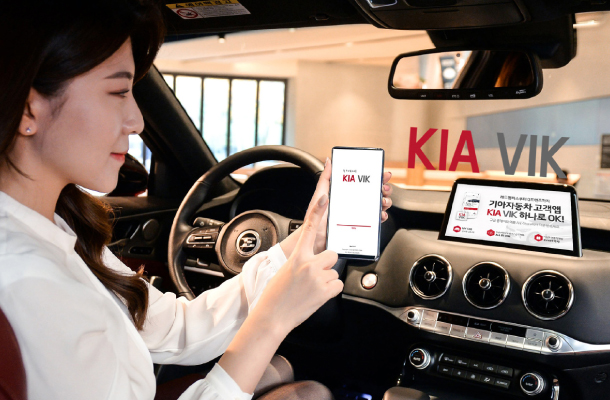
    Kia Motors announced Monday it has begun rolling out the 2020 model of its Sorento sport-utility vehicle (SUV) for sale. The updated Sorento comes with new safety features applied to all of its diesel trims and a refreshed design. The diesel version of the compact crossover SUV will have smart safety features, such as lane keep assist, lane departure warning, driver attention warning and others on all of its trims.

    As for design, the automaker said it applied a newly designed dark chrome grille on all of its models, with the highest trim model installed with 19-inch chrome alloy wheels.

    The new model also comes with a new premium trim called “master special,” which features more options, such as rear occupant alert and a head-up display.

    The SUV comes in diesel and gasoline models, with the base diesel model starting at 27.88 million won ($25,000).

  • Korean firm to set up halal ramen plant in Malaysia

    Korean firm to set up halal ramen plant in Malaysia

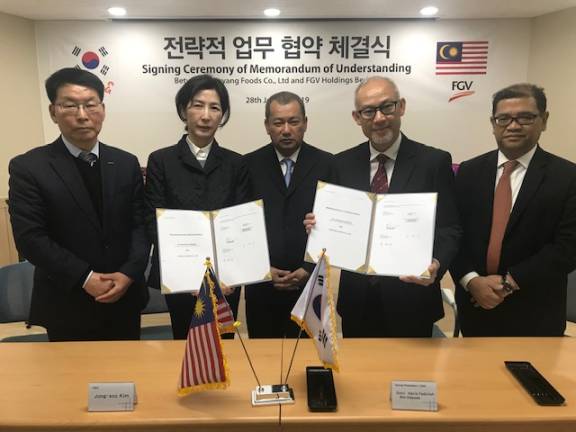
    FGV Holdings Bhd is looking to partner with South Korea’s Samyang Foods Co Ltd for the establishment of Samyang Halal’s production facilities in Malaysia. FGV told Bursa Malaysia that it had signed a memorandum of understanding (MoU) with Samyang. The production facilities will focus on serving halal ramen and instant noodle products for Malaysia and global markets.

    FGV’s newly appointed CEO Datuk Haris Fadzilah Hassan said the collaboration is part of he group’s strategic direction to expand its downstream business by diversifying the product offerings and penetrating into new markets.

    Its logistics and support businesses sector is also set to benefit from this partnership by providing a total logistics supply chain solution.

    “With this MoU, FGV hopes to explore the opportunity for both parties to establish a halal ramen and instant noodle manufacturing plant in Malaysia. The global halal food market is one of the fastest growing segments in the food industry and is expected to reach more than US$740 billion in value by 2025,” Haris said.

    FGV said the collaboration will also give FGV access to Samyang’s supply chain, which includes cooking oil, vegetable fats and sugar for its existing ramen plant in Wonju, South Korea.

    Samyang is listed on the Korean Stock Exchange with a market capitalisation of KRW459.514 billion (RM1.68 billion). It is in the business of manufacturing and selling various food products such as ramen, snacks, dairy products, sauces, and frozen dumplings.

    FGV noted that its downstream entity Delima Oil Products Sdn Bhd (DOP) can leverage on Samyang’s strong R&D and global distribution networks to improve quality and expand the reach of its “Saji” products regionally and globally.

    “In addition, DOP will benefit from Samyang’s ver 50 years’ experience in the ramen and instant noodle industry to strengthen its own products and brand positioning.”

  • Vietnam makes debut in Bloomberg innovative economy index

    Vietnam makes debut in Bloomberg innovative economy index

    Vietnam has for the first time entered the Bloomberg Innovation Index of the world’s 60 most innovative economies. It scored 45.92 out of 100 in the 2019 index. Other new entrants include India, Mexico and Saudi Arabia. Bloomberg said: “The index analyzes dozens of criteria using seven metrics, including research and development spending, manufacturing capability and concentration of high-tech public companies.”

    Vietnam’s highest rankings were 34th in high-tech density and 39th in patent activity. It ranked a lowly 59th in productivity.

    Its productivity in 2017 was among the lowest in Asia despite growth, according to the Vietnam Annual Economic Report released by the Vietnam Institute for Economic and Policy last year.

    An average Vietnamese worker made VND60.73 million ($2,600), lower than the rate for Cambodia, Indonesia Malaysia, the Philippines, and Thailand, it said.

    In the Bloomberg index, South Korea retained its top place from last year and was followed by Germany, Finland, Switzerland, and Israel.

    Other Southeast Asian countries were Singapore in sixth place, Malaysia (26th) and Thailand (40th).

  • Hyundai Mobis net swings to positive in Q4

    Hyundai Mobis net swings to positive in Q4

    Hyundai Mobis, Korea’s biggest auto parts maker, said Friday it shifted to net profit in the October-December period due to a low base effect. A net profit of 419.8 billion won ($374.1 million) was achieved for the three months that ended in December, from a net loss of 168.6 billion won a year earlier, the company said in a statement. The result was helped by the high level of corporate taxation reflected in the bottom line for the last quarter of 2017, but there were no such one-off outlays in the final three months of last year, a company spokesman said.

    Operating profit jumped 82 percent to 581.7 billion won in the fourth quarter from 319.4 billion won a year ago.

    Sales rose 9.3 percent to 9.644 trillion won from 8.822 trillion won during the same period.

    In the fourth quarter of 2017, operating profit was hit hard by a diplomatic row between Seoul and Beijing over the deployment of an advanced U.S. missile defense system, called Thaad, in Korea.

    Operating profit in the last quarter of 2018 rebounded following the easing of bilateral tensions.

    Sales climbed on the back of increased exports of high-end auto components and higher parts sales in after-sales markets despite the won’s strength against the dollar and currencies in emerging markets, the statement said.

    For the whole of 2018, net profit rose 21 percent to 1.888 trillion won from 1.558 trillion won a year earlier. Operating profit remained unchanged at 2.025 trillion won compared to a year ago. Sales also changed little to 35.149 trillion won versus 35.145 trillion won, it said.

  • China will flood US with its product

    China will flood US with its product

    Turnover in the Chinese retail industry will eclipse that of the US later this year, according to analyses. “Nothing is going to stop them,” said one commentator as new data emerged showing a fast-narrowing gap between the two markets. The fact China would overtake the US was never in doubt – China’s population of 1.4 billion is vastly more than the US population of 325 million.

    According to data from eMarketer, total Chinese retail sales will grow 7.5 per cent this year to reach US$5.636 trillion. But growth in the US is likely to be significantly slower at just 3.3 per cent, reaching $5.529 trillion.

    Not even the slowdown in China’s economic growth is likely to affect the figures – a rebound may even hasten the milestone.

    GlobalData Retail MD Neil Saunders says a big factor in the speed of China’s retail growth is the way the industry has evolved. In the US, retailers were established well before the advent of the internet meaning adapting to the new online environment has meant managing their brick-and-mortar stores while pursuing growth online.

    But in the US, the market began to mature in an online world, and online spending there will account for more than 30 per cent of total retail sales this year. In the US, online is predicted to account for less than 11 per cent.

    “The US retail environment grew up in a very different era,” says Saunders. “It grew up before the internet. There is a historical difference and an evolutionary difference, which has created this very different backdrop to retail.”

    The rapid rise of the Chinese retail industry has been fuelled by rising incomes across the country, the urbanisation of the population and a burgeoning middle class.