Tag: Industry

  • Vinomofo bets on in-person events with latest acquisition

    Vinomofo bets on in-person events with latest acquisition

    Vinomofo has purchased Melbourne-based events company Revel in an effort to better ingrain itself in the events industry – betting that as life in Australia continues to move toward normality, more Australians will want to get out and attend in-person events.

    Vinomofo chief executive Paul Edginton said the deal will give the online wine firm’s customers ‘special access’ to events and offers.

    “As our customer base grows year-on-year, we are seeing demand for a more extensive offering, with tactile, engaging, fun experiences at the top of the must-have list,” Edginton said.

    “Today’s news to acquire Revel further builds our capabilities to continue meeting the growing needs of our customers who love wine, food and the adventure of experiencing it all.”

    And, Edginton hinted that more projects outside of Vinomofo’s core wine business are well underway and will be launched in 2022.

    “The time was right for us to look at new opportunities to add more diverse offers for our tribe. The Revel acquisition allows us to do this,” Edginton said.

    Revel handles a number of events in the food industry already, namely: Pinot Palooza, Game of Rhones, Mould: A Cheese Festival, and Gauchito Gil’s Malbec Day.

  • Nestlé calls on FMCG companies to help end recycling confusion

    Nestlé calls on FMCG companies to help end recycling confusion

    The Flexible Plastic Fund is a UK industry first and is being led by producer compliance scheme, Ecosurety, with support from the environmental charity, Hubbub.

    In collaboration with manufacturers, retailers and recyclers, the fund intends to improve flexible plastic recycling and reduce plastic pollution by giving the material a stable value. This will in turn increase the supply of recycled plastic enabling the industry to become more ‘circular’ and meet the forthcoming UK plastic packaging tax obligations. The fund should motivate investment in much-needed jobs and infrastructure to make flexible plastic recycling a financially sustainable system in the UK.

    New research from the University of Sheffield suggests there is strong consumer demand for recycling flexible plastic with 95% of participants saying they would be willing to recycle their flexible plastics1. Sainsbury’s and Waitrose have already signed up to support the initiative by hosting flexible plastic collection points in selected stores across the UK. Several other major retailers are set to follow suit. As a result, recycling this material will become increasingly accessible to consumers, as they will be able to recycle all types of flexible plastic packaging with participating retailers.

    With just 16% of UK local authorities2 currently offering a household collection of flexible plastics, the amounts of this material collected for recycling are low. Flexible plastics include plastic bags, wrappers, films, pouches, packets and sachets and is described as ‘plastic bags and wrapping’, ‘soft plastics’ or ‘flexible plastics’. The fund will guarantee a minimum value of £100 per tonne of recycled product to incentivize recyclers to process flexible plastic.

    The long-term ambition of the fund is to drive progress towards creating a circular, UK-based flexible plastic recycling market that allows flexible plastic recycling via household collections. As part of the UK’s drive to boost recycling, WRAP recently announced new recommendations to support flexible plastic recycling.

    Flexible plastic represented 22% of all UK consumer plastic packaging in 2019 but only 6% was recycled. This type of plastic must be processed in a different way to other plastics due to its unique properties – it often contaminates rigid plastic recycling and clogs up machinery – something that could be overcome by creating a separate flexible plastic recycling stream.

    The initiative will provide fully audited transparency – at least 80% of the plastics collected will be recycled in the UK – rising to 100% by 2023. Until 2023, where there are currently limits in UK capacity and technology, up to 20% could be exported to qualifying facilities in Europe only. All material will be fully traceable and tracked from the collector through to new products. Unlike many other schemes, recyclers will only be paid if the plastic is definitely recycled. The manufacturers contributing to the Flexible Plastic Fund will then be able to access the Packaging Recovery Notes (“PRNs”) generated by this high-quality, tracked recycling scheme.

    The recycled plastic will be turned into a range of products including non-food-grade plastic, non-food-grade film and food-grade film. Through its graded payment hierarchy, the Flexible Plastic Fund is actively incentivizing the development of a circular model of production where flexible plastic packaging can be recycled into plastic packaging, including food-grade, again and again.

    The Flexible Plastic Fund is calling for recyclers, manufacturers and retailers to get in touch to play their role in this vital scheme that is driving solutions to flexible plastic waste in the UK.

  • High costs a drag on domestic logistics industry

    High costs a drag on domestic logistics industry

    High costs and delivery failure rates continue to plague local logistics companies, which are unable to compete with foreign-owned rivals.

    Dao Trong Khoa, vice president of the Vietnam Logistics Business Association (VLBA), said the cost of logistics in Vietnam is equivalent to 20 percent of GDP while the global average is around 11 percent.

    The delivery failure rate is around 10 percent, adding to the cost of logistics as businesses have to bear additional expenses for storage and inventory management.

    The vast majority of domestic logistic companies are small ones that primarily provide low-value-added services and intensely compete among themselves.

    The lack of coordination among them means they are unable to compete with multinational companies, who have grabbed an 80 percent market share.

    Deputy Minister of Industry and Trade Tran Quoc Khanh said local logistics companies have to find new spaces to grow.

    Tran Trung Hung, general director of Viettel Post, warned they would continue to languish if there is no technical innovation, especially in digital transformation.

    Do Huy Binh, director of the digital solutions provider Smartlock, said digital transformation is key to reducing costs, and logistics companies could cut up to 30 percent of their costs. “Investment in technology is a no-brainer for logistics companies; it is a step into the future.”

    According to the VLBA, there are around 30,000 logistics companies in the country, 4,000 of them foreign-owned.

    The industry is growing at 12-14 percent annually and is now worth $40-42 billion.

  • Myanmar crisis sounds death knell for garment industry, jobs and hope

    Myanmar crisis sounds death knell for garment industry, jobs and hope

    Two years after opening his garment factory in Myanmar, Li Dongliang is on the verge of closing down and laying off his 800 remaining workers. The business had been struggling because of the Covid-19 pandemic, but after a February 1 coup that sparked mass protests and a deadly crackdown – during which his factory was set alight amid a surge of anti-Chinese sentiment – orders stopped.

    His story is emblematic of the perilous situation facing a sector critical to Myanmar’s economy, which accounts for a third of its exports and employs 700,000 low-income workers, according to UN data.

    “We would have no choice but to give up on Myanmar if there are no new orders in the next few months,” said Li, adding he has been operating at about 20 percent capacity, surviving only on orders placed before the coup, and had already shed 400 staff.

    Li said he and many of his peers were considering moving to other low-cost garment hubs like China, Cambodia or Vietnam, as big fashion brands like H&M and Primark have stopped trading with Myanmar due to the coup.

    Chinese nationals like Li fund nearly a third of Myanmar’s 600 garment factories, according to the Myanmar Garment Manufacturers Association, by far the largest investor group.

    At least two other Chinese-funded garment factories in Myanmar, employing a combined 3000 workers, had decided to close, said Khin May Htway, managing partner of MyanWei Consulting Group, which advises Chinese investors in Myanmar. She said the two firms were her clients but declined to identify them citing privacy.

    Foreign investment in garments surged in Myanmar over the past decade as economic reforms, an end to Western sanctions, and trade deals helped establish the sector as the greatest symbol of its nascent emergence as a manufacturing hub.

    Myanmar garment shipments rose from less than $1 billion in 2011, about 10 percent of exports, to more than $6.5 billion in 2019, about 30 percent of exports, according to UN Comtrade data. But the sector has been rocked by the pandemic which plunged the world into recession and choked consumer demand, resulting in tens of thousands of garment factory jobs lost in Myanmar and elsewhere in Asia. Then the coup happened.

    In the weeks that followed, many garment workers joined protests or couldn’t get to work as streets became battlegrounds. The turmoil also jammed the banking system and made it difficult to get goods in and out of the country, factory owners said.

    With international condemnation of the coup growing, European and US fashion brands last month issued a statement through their associations saying they would protect jobs and honor commitments in Myanmar.

    However, many have recently halted orders there including the world’s second-biggest fashion retailer, Sweden’s H&M, Britain’s Next and Primark, and Italy’s Benetton.

    Next said it would split its orders previously going to Myanmar between Bangladesh, Cambodia, and China, while Benetton said it would mainly move the business to China. H&M and Primark have not commented on how they will redistribute orders.

    Escape from poverty

    In Vietnam, garment factory owner Ravi Chunilal told Reuters he was starting to get more business from European buyers diverting from Myanmar.

    “They don’t want to abandon Myanmar … but it’s being forced upon them,” said Peter McAllister of Ethical Trade Initiative, a labor rights organization whose members include European high-street brands.

    McAllister said that it would be very difficult for Myanmar’s garment sector to recover if Chinese investors left.

    Anti-China sentiment has risen since the coup, with opponents of the takeover noting Beijing’s muted criticism compared with Western condemnation. It was against this backdrop that several Chinese-funded factories, including Li’s, were torched by unidentified assailants during a protest last month.

    Rights groups have repeatedly raised concerns about exploitation in Myanmar’s garment sector, where mostly women workers earn as little as 4800 kyat ($3.40) a day, the lowest rates in the region.

    But it has provided an escape from poverty for many, as workers have migrated from rural areas to the factories, mainly around the commercial hub of Yangon, and sent money back to their families.

    Khin Maung Aye, managing director of Lat War garments factory, which employs 3500 people, says the sector faces collapse if the military does not restore a democratically elected government.

    That would result in “terrible outcomes of poverty”, he said, adding that he was also staying afloat on orders placed before the coup but feared orders for next season, normally due later this month, will dry up.

    The US, which has imposed targeted sanctions on Myanmar’s military, late last month suspended trade talks with it and said it was reviewing its eligibility for its Generalized System of Preferences scheme, which reduces tariffs and provides other trade benefits for developing countries.

    That could “portend future disruption” for Myanmar’s garments sector, said Steve Lamar, president of the American Apparel & Footwear Association, which represents more than 1000 fashion brands.

    But some unions representing garment workers have called for the international community to impose tougher sanctions to press the military, even though it may further damage their industry.

    “I accept orders moving away,” Myo Myo Aye, founder of the Solidarity Trade Union of Myanmar, said through a translator. “Workers would face difficulties and hardship because there would be no jobs. On the other hand, we simply don’t accept the military regime.”

  • Steel industry expected to recover this year

    Steel industry expected to recover this year

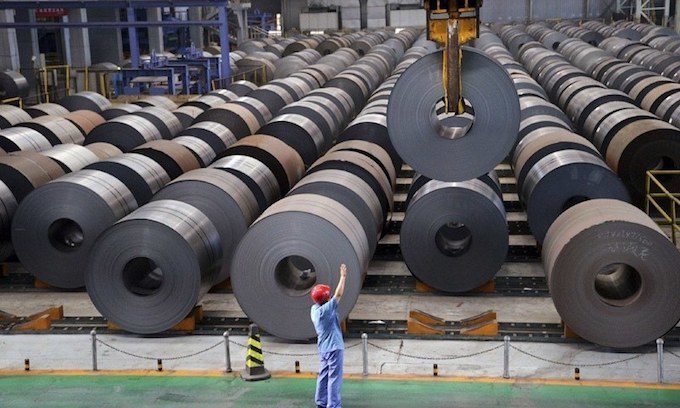
    Vietnam’s steel industry is expected to recover this year with rising export orders, thanks to improved global demand and surging domestic consumption.

    Market leader Hoa Phat Group last month exported over 12,000 tonnes of products, mostly cold-galvanized steel, to North and South America.

    This followed an export of 10,000 tonnes in January to Belgium and Spain.

    The company targets producing 300,000-400,000 tonnes of steel products this year, 30-40 percent of which are likely to be exported.

    Its competitor Hoa Sen Group last month set a new export record of 121,000 tonnes of galvanized steel worth more than $100 million. The group has a network of over 85 countries and territories, with main markets being the U.S, Mexico, Europe, and Southeast Asia.

    Vietnam’s steel industry is expected to see growth of 5-6 percent this year, with global demand set to rise by 4.1 percent thanks to a recovery in developed markets, according to the Vietnam Steel Association (VSA).

    Other drivers for growth include expectations of rising public investment in infrastructure, the recovery of the real estate market and more foreign direct investment, said VSA deputy chairman Trinh Khoi Nguyen.

    The industry started 2021 strongly, with a 61 percent year-on-year rise in production volume to 2.65 million tonnes.

    Domestic sales in the period rose 55 percent to 2.12 million tonnes, while exports rose 53 percent in value to $553 million.

    These figures indicate robust recovery prospects this year after VSA saw half of its members reporting plunging revenues last year, especially in the first and second quarter, due to Covid-19 impacts.

    However, trade officials have warned that rising safeguard measures could hurt the industry.

    Last month, Indonesia imposed an anti-dumping duty of 3.01-49.2 percent on Vietnam cold steel sheets.

    In January, Malaysia revised duties on cold-rolled coils of alloy and non-alloy steel from Vietnam to 7.42-33.7 percent for the period between January 24 and May 23.

    The U.S. and Canada have also slapped anti-dumping duties on Vietnam’s steel products in recent years.

    The Trade Remedies Authorities of Vietnam has advised local steelmakers to diversify their markets to avoid being punished with such duties.

    Nguyen Thi Thu Trang, director of the Vietnam Chamber of Commerce and Industry’s (VCCI) WTO Center, said that steel producers need to prepare themselves with knowledge of regulations on international safeguard measures and cooperate with other countries’ trade authorities to resolve issues.

  • Aviation industry could see revival in second half of 2021

    Aviation industry could see revival in second half of 2021

    The aviation industry will recover in the second half of 2021 with the advent of coronavirus vaccines, SSI Securities Corporation has forecast.

    While it would be a difficult year since the coronavirus variant identified in the U.K. is spreading quickly and new outbreaks are emerging in many countries, “the future of the aviation industry could be brighter when large-scale Covid-19 vaccination is carried out,” SSI said. “This could only happen in the second half of 2021.”

    Airlines will mainly focus on the domestic market in 2021 since international travel would not resume until the end of 2021, and the international aviation market could recover in 2022.

    “In 2021, airlines strategies will include increasing the number of inbound commercial flights, providing better flight services and offering a range of fares so that passengers will have more options,” SSI analysts said.

    The baseline scenario is for airlines to suffer losses though they would be halved from 2020.

    The number of domestic passengers will rise to 75 million, the same as in 2019. The number of foreign visitors is expected to reach 12 million, or 34 percent of the pre-pandemic number.

    Besides the challenges posed by Covid-19, airlines also face rising fuel prices, while competition is increasing with Vietravel Airlines, Vietnam’s sixth carrier, set to enter the aviation market this month.

  • Fashion companies urged to avoid ‘greenwashing’ sustainability goals

    Fashion companies urged to avoid ‘greenwashing’ sustainability goals

    Fashion companies around the globe have been urged to avoid ‘greenwashing’ as they “fall over themselves” to make sustainability claims.

    While retailers and labels like Sainsbury’s and Fat Face have publicly committed to cutting emissions across their operations by 2040 and 2025, respectively, GlobalData apparel correspondent Michelle Russell warns they risk accusations of ‘greenwashing’ when the real issue lies in the supply chain.

    Sainsbury’s and Fatface have joined a raft of global fashion firms signing up to initiatives such as the UN Fashion Charter and the Fashion Pact, or chartering their own course to hit sustainability goals.

    Russell argues that while these commitments mark “a step in the right direction,” many of the companies who have signed up have been accused of greenwashing by spending more on marketing themselves as environmentally friendly than on reducing their environmental impact.

    “The bulk of a company’s greenhouse gas emissions, for example, are generated in its supply chain, so brands need to be taking their supplier networks into account when setting out their pledges if they are to even come close to mitigating emissions.”

    “It would be encouraging if more companies acted like Levi Strauss, which set targets in 2018 for reducing carbon emissions across its owned-and-operated facilities and global supply chain by 2025. Unfortunately, their many companies that aren’t in complete control of their whole business operations and visibility across the value chain is non-existent, or limited, at best,” says Russell.

    She adds that there is also the challenge of investment, which she believes is a huge factor holding brands back.

    According to the Carbon Trust, as much as 80 percent of a company’s total carbon impact lies outside its direct operational control making it hard to make verifiable claims about environmental progress.

    “Gucci CEO Marco Bizzarri recently issued a cross-industry call to other CEOs to implement a “360-degree climate strategy,” taking “full responsibility and accountability” for the total greenhouse emissions generated by their business activities.

    “As such, he launched the ‘CEO Carbon Neutral Challenge,’ which covers both a company’s operations and its entire supply chain,” says Russell.

    Another leader in sustainability is Maya Rommwatt, a fashion campaigner for environmental group Stand Earth. She argues that commitments such as the Fashion Charter are encouraging but don’t go far enough.

    “To get really excited, we’d like to see signatories pledge to make deeper and faster emissions cuts aligned with a pathway to 1.5 degrees, which is what current science tells us we must be aiming for if we want to reduce the worst impacts of climate change. This would mean committing to reducing absolute climate pollution in their global supply chains by at least 40 percent by 2025, setting specific renewable energy goals for their factories and mills, and pledging to avoid false solutions like reaching ‘carbon neutrality’ through mass carbon offsets.”

  • Vietnamese carmaking startup VinFast gets $950 million credit line

    Vietnamese carmaking startup VinFast gets $950 million credit line

    VinFast, which aims to become Vietnam’s first domestic car manufacturer, said it has secured a 12-year credit facility for as much as $950 million to help buy machinery and equipment from German suppliers.

    The company, a unit of Vietnam’s largest conglomerate Vingroup JSC, plans to have its first production models built under its own badge hit the streets next August. Vingroup has earmarked about $3.5 billion for the project.

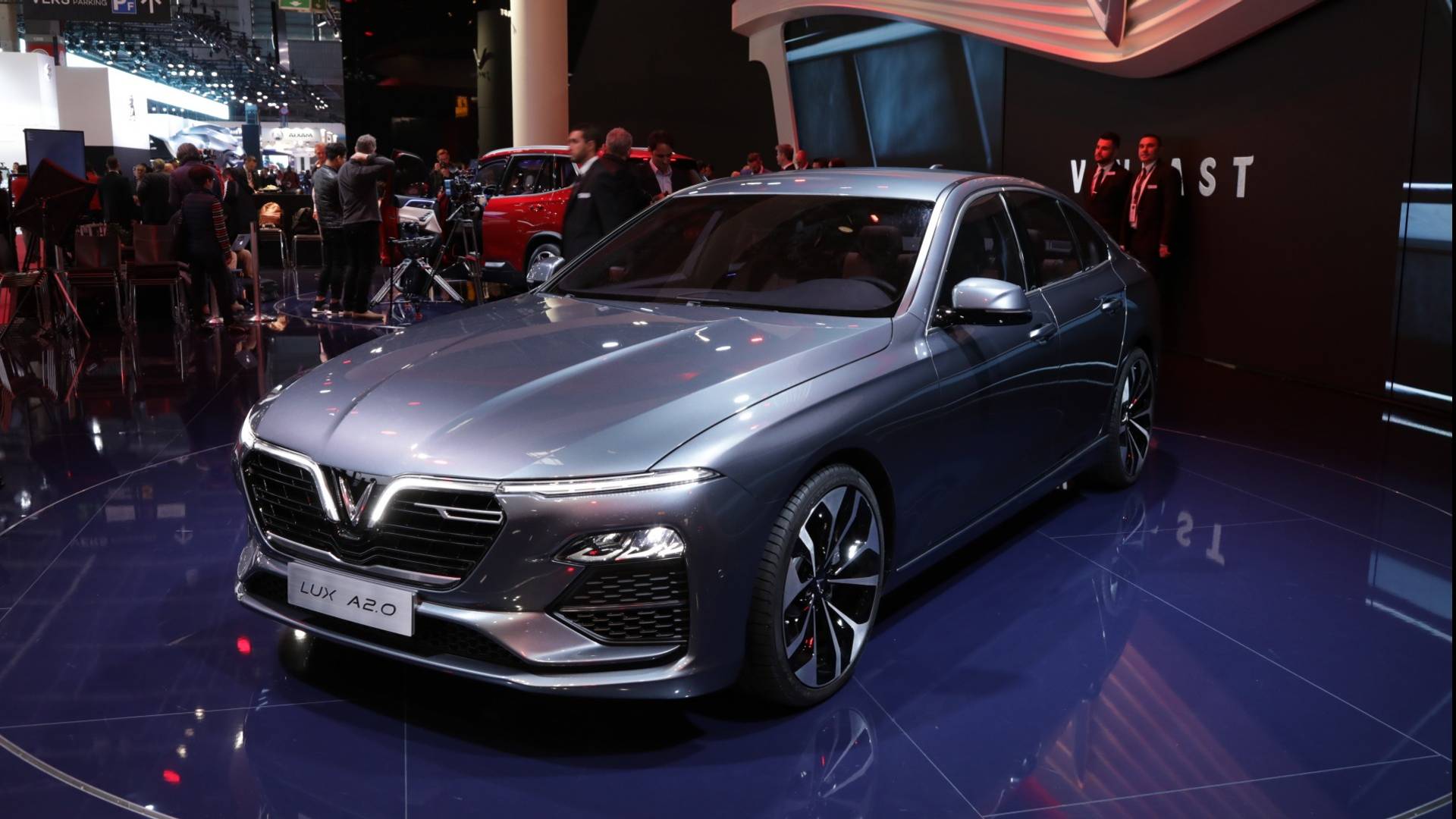
    VinFast, led by former General Motors executive Jim DeLuca, showed off its BMW-based LUX A2.0 sedan and LUX SA2.0 crossover at the Paris auto show last week. Assembly is scheduled to begin next week year.

    Credit Suisse AG and HSBC were the lead arrangers and the financing agreement was guaranteed by German export credit agency Euler Hermes, Vingroup and Vinfast said in a statement.

    The statement also said that in August Vinfast completed syndication of a $400 million term loan facility led by four international banks.

  • South Korea’s outdoor-fashion industry in ‘dire’ state

    South Korea’s outdoor-fashion industry in ‘dire’ state

    South Korea’s outdoor-fashion industry is in “dire” condition according to a report by Korea Bizwire, with brands and retailers once the leaders of the fashion industry “slowly fading into obscurity”.

    Ashley Son writes that LF, the apparel affiliate of LG Group, plans to gradually shut down all Lafuma stores, a French outdoor brand, by next year.

    And Millet Edelweiss Holdings, Millet’s Korean branch, is looking for companies interested in a potential take-over.

    According to Samsung Fashion Institute, the South Korean outdoor fashion market, which was as large as 7.1 trillion won (US$6.1 billion) back in 2016, shrank to only 4.5 trillion won by 2017.

    K2 Korea’s annual sales dropped from 352.1 billion won in 2016 to 308.8 billion won in 2018. Black Yak’s yearly sales also fell, from 426.7 billion won to 387 billion won over the same period.

    Song says experts cite the overall economic downturn, excessive competition, and the rise of casual fashion as the cause of the demise of South Korea’s outdoor-fashion industry.

    Hiking apparel, once signature products made by outdoor fashion companies, have also been taken over by golf-wear brands.

    With a strong impression among South Koreans that outdoor fashion is for the older generations, younger South Koreans are also shunning outdoor brands.

    “Too many companies are competing in an overheated market, which has resulted in excessive competition as well as slower technological advances,” said a source familiar with the industry.

  • Auto Industry May Further Cut Production

    Auto Industry May Further Cut Production

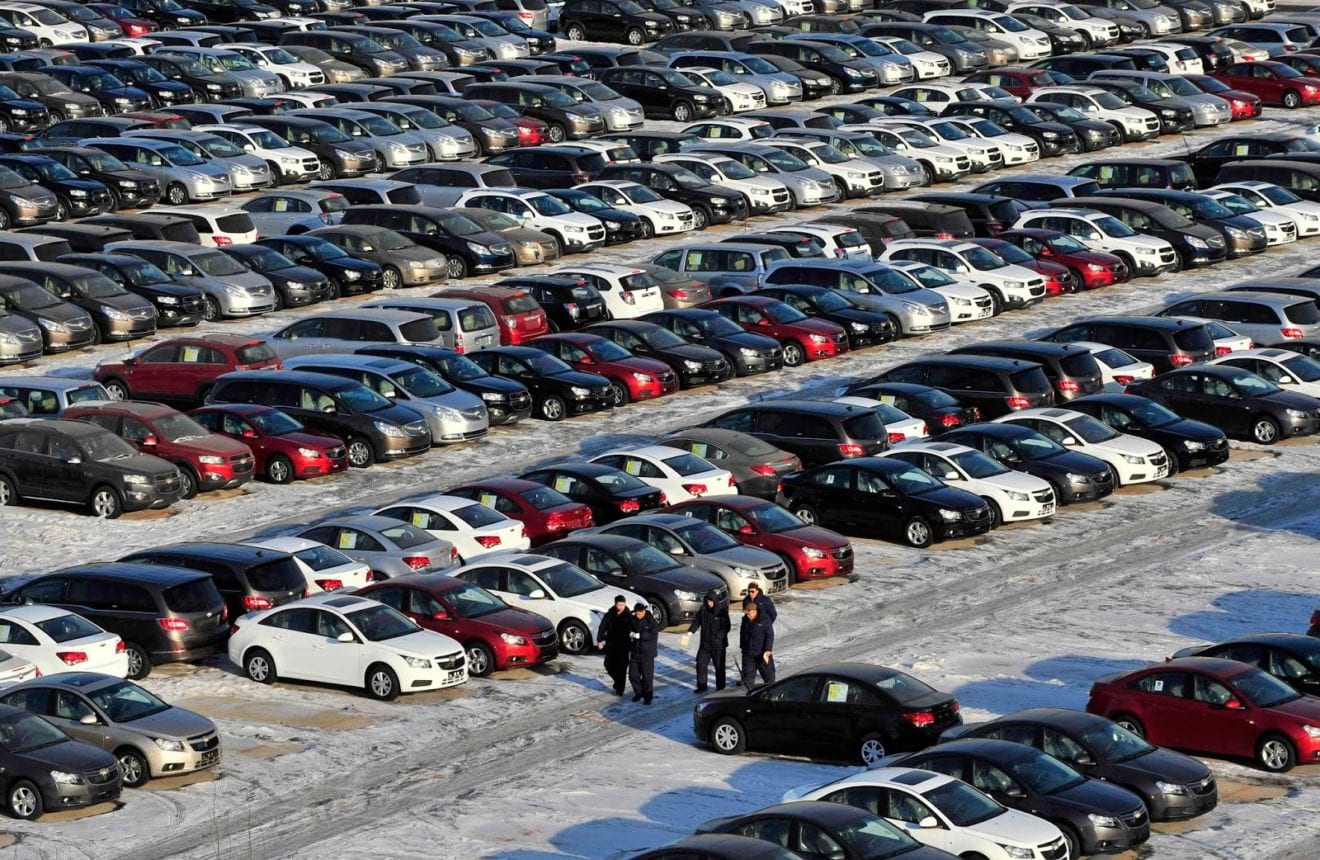
    After denting the auto sector’s profitability, the consumption slowdown along with the upcoming shift to BS VI standards will further decelerate production, leading to eventual job losses. Industry insiders point out that slowdown, which is a culmination of high GST tax rates, farm distress, stagnant wages, and liquidity constraints, has led to the month-on-month sales de-growth. Besides, inventory pile-up at the dealership level and stock management of the unsold BS IV vehicles has become a problem for the sector.

    According to Grant Thornton India Partner Sridhar V., a further reduction in production due to the continuing de-growth in sales of passenger vehicles can be expected.

    “OEMs are exploring avenues to minimize cost at an operational level by deferring and tightening the spending rate,” Sridhar V. told IANS.

    “They also at times resort to production cuts to tide over this difficult phase.”

    Accordingly, the sales downturn assumes significance as the auto industry contributes to almost half of the manufacturing GDP and 11 percent of the total GST revenue.

    “With prolonged weak consumer demand, the inventories at dealer levels have peaked, necessitating production cuts by OEMs,” Richa Bulani, Senior Analyst, India Ratings & Research (Fitch Group), told IANS.

    “Production cuts may provide some short-term relief to dealers, it negatively affects the entire auto supply chain — OEMs, component suppliers, and dealers. Volume growth of components dependent on OEMs will be affected in the first half.”

    Recently, all major OEMs consisting of passenger, commercial, two and three-wheeler manufacturers have reported a massive decline in domestic sales.

    Figures from the Society of Indian Automobile Manufacturers (SIAM) showed that domestic passenger car sales in June went down by 24.07 percent to 139,628 units. The July figures are awaited.

    In the commercial vehicle segment, domestic sales were down by 12.27 percent to 70,771 units last month.

    The overall sales of two-wheelers, which include scooters, motorcycles and mopeds, edged lower by 11.69 percent to 1,649,477 units.

    In all, the total sales of the Indian automobile sector declined by 12.34 percent during June 2019 to 1,997,952 units across segments and categories.

    Consequently, sales slowdown led to a curtailment of manufacturing with the domestic passenger cars’ production coming down by 22.26 percent to 169,594 units from 218,167 units.

    Similarly, commercial vehicle production was down by 23.39 percent to 69,496 units last month. Overall two-wheelers’ production edged lower by 11.70 percent to 1,915,195 units.

    The total production of the Indian automobile sector declined by 12.98 percent during June 2019 to 2,336,138 units across segments and categories.

    “Tight control on production volumes will continue. Beyond the upcoming festive season when OEMs would expect to have sufficient volume in the channel, they would want to keep production volume output in check,” said Rahul Mishra, Principal, A.T. Kearney.

    “Volume liquidation pressures due to BS VI and the sluggish demand will not revive production output drastically for the next few months.”

  • India’s Auto Parts Makers Warn Of 1 Million Job Cuts

    India’s Auto Parts Makers Warn Of 1 Million Job Cuts

    India’s auto parts industry could be forced to slash a fifth of its five million or so workforce if the slowdown in vehicle sales continues, the president of the country’s largest industry group for auto parts makers said. India’s auto industry is in the middle of one of its worst slumps. Passenger vehicle sales fell 18.4 percent in the first quarter, and monthly passenger vehicle sales in June fell by the biggest margin in 18 years. The slump has prompted automakers to cut production and automakers and parts makers to cut jobs.

    The drop in production “has led to a crisis like situation in the auto component sector,” Ram Venkataramani, president of the Automotive Component Manufacturers Association of India (ACMA), said in a statement late on Wednesday. “If the trend continues, an estimated 1 million people could be laid-off.”

    The slump in the auto sector, which accounts for nearly half of India’s manufacturing output, has been a major factor behind the slide in economic growth to a five-year low earlier this year.

    Speaking to NDTV about the present condition of the auto industry, Jagdish Khattar, former Managing Director, Maruti Suzuki said, “The employment related to the automobile industry, direct and indirect is 35 million, which includes transportation, insurance, finance, dealership network, service, spare parts and all that. So, it’s a huge employment and not couple of million. The total output is ₹ 8.30 lakh crore.

    He added further, “The impression is manufacturers are big names, the fact is 70-80 percent of the production of the components comes from small and medium industries. Two years back, we used to have 40 per cent diesel vehicles. Today it is less than 20. Rural areas used to have 30-40 per cent sales. The rural areas are distressed today. With Euro6, the industry has invested over a lakh and fifty thousand crore. However, Euro6 hasn’t even come yet and we are talking about electric vehicles. Euro6 will increase the prices of cars, and the Supreme Court has said that you have to take three years of insurance. I mean, everything has gone wrong as this industry is concerned. Yes, it is not the only industry, others have also been affected but this industry has a very major role to play in manufacturing, employment etc.”

    “If the government was to reduce GST, it will not make much of a difference. There are far too many things. The economy should grow, people’s confidence should grow. People are losing jobs. If I’m losing a job, am I going to buy a car? No, I’m going to wait for it,” he said. Khattar also pointed out congestion, pollution, parking charges as some of the other factors against people buying new cars.

    Venkataramani said investments in the auto sector have been frozen due to a lack of government clarity on its electric vehicles (EVs) policy. He said a government plan to speed up the rollout of EVs would raise India’s import bill and damage prospects for auto components manufacturers.

    Venkataramani also called for a cut in the goods and services tax for the vehicles and auto component sector.

  • China Liberates Its Automotive Strategy To Support Hybrid Vehicles Sales

    China Liberates Its Automotive Strategy To Support Hybrid Vehicles Sales

    China is one of the biggest EV markets in the world and many global automakers have developed electric vehicles particularly for the Chinese market. However, some carmakers like Toyota and Honda have also invested heavily in the hybrid technology and have been expecting support from the Chinese Government to promote the sales of hybrid vehicles. Finally, it looks like that the Chinese Government will consider their demand and has started focussing on hybrid vehicles as well in its new strategy for the auto sector.

    Earlier this year, the Chinese government had introduced manufacturing and sales quota to promote new-energy vehicles which include electric cars, hydrogen fuel cell vehicles and plug-in hybrids. According to the quota rule, new-energy vehicle must account for 10 per cent of automakers fleet in 2019. The Ministry of Industry and Information Technology wants to amend the regulations and allow automakers to include more fuel-efficient hybrid vehicles in their line-up. Hybrid vehicles will be still categorised under the fossil fuel powered segment but will be classified as low-fuel consumption vehicles. The new rule is likely to help automakers in China to meet the environmental quota norms along with allowing them to add more hybrid vehicles in their product line-up.

    The current rule requires automakers to manufacture 20,000 high performance EVs for every one million hybrid vehicles. If EVs do not meet the performance standards, then they require to manufacture more than 20,000 units as hybrids are grouped along with petrol and diesel vehicles, under the same category. That said, the new proposed rule will allow automakers to manufacture only 6000 EVs for a million hybrid vehicles, while the number of EVs for one million petrol or diesel vehicles will be increased to 29,000 units. China is also world’s largest car market and hybrid vehicles being more fuel efficient and low on emission will help carmakers to achieve emission targets in such a high-volume market along with improving sales.

  • New CEO For Zara Owned Inditex

    New CEO For Zara Owned Inditex

    Zara owner Inditex has named chief operating officer Carlos Crespo as its new chief executive to spearhead a bigger push into e-commerce.

    Crespo will continue in his existing position until his appointment as CEO becomes effective in July, when he will begin taking some of the responsibilities currently held by executive chairman and current CEO Pablo Isla, the company announced.

    The appointment of Crespo, who oversaw the integration of Inditex’s online and bricks-and-mortar stores, puts an emphasis on the retail giant’s digital efforts amid changing consumer habits.

    Isla said Crespo’s contribution to the company in this new role will be vital “at a time marked by Inditex’s strategic digital transformation and far-reaching commitment to sustainability”.

    Isla, who until now has held the positions of both chairman and CEO, will continue to lead the apparel company as executive chair. Crespo will work with Isla to define the overall company strategy, Inditex said.

    The new chief joined Inditex in 2001 as the head of accounting policies in the finance department. Going forward, he will be responsible for technology, procurement and sustainability.

    “I am very excited to play a role at this important time for the company in which digital transformation and sustainability in all its manifestations represent exciting challenges,” Crespo said.

    Last year, Isla announced all products from all Inditex’s brands will be made available online by 2020, including markets where it does not have any stores.

    Other than Zara, the world’s largest clothing retailer also sells the brands Pull & Bear, Massimo Dutti, Bershka, Stradivarius, Oysho and Uterque across its network of almost 7,500 physical shops. It also operates online in 49 markets.

    Isla also said all of the group’s brands will be adopting an integrated stock management system by 2020 in all the countries where there is a physical store presence.

  • Google to measure Fashion Industrie’s environmental impact

    Google to measure Fashion Industrie’s environmental impact

    Google has announced a new pilot project to help fashion brands measure the environmental impact associated with the production of their raw materials, including water and pesticide usage in the production of cotton, and deforestation to make viscose.

    The pilot project, announced at Copenhagen Fashion Summit on Wednesday, will see the tech giant partner with leading sustainable fashion brand, Stella McCartney.

    “At Stella McCartney we have been continuously focusing on looking at responsible and sustainable ways to conduct ourselves in fashion, it is at the heart of what we do,” Stella McCartney said in a statement about the pilot project.

    “We are trying our best – we aren’t perfect, but we are opening a conversation that hasn’t really been had in the history of fashion.”

    The fashion industry is considered to be one of the most polluting industries on the planet, accounting for 20 percent of wastewater and 10 percent of carbon emissions globally, according to a 2018 report by the United Nations.

    Another report by Boston Consulting Group and Global Fashion Agenda found that much of this impact occurs at the raw materials stage in the production process, where brands have little to no visibility.

    Indeed, while a growing number of brands are taking important steps to reduce plastic waste in their packaging and launch takeback schemes to keep old clothing, shoes, and accessories out of a landfill, few have been able to make a difference at the source.

    “This is an industry-wide problem, where supply chains are highly fragmented and with little transparency,” Nick Martin, head of retail at Google Cloud, said in a statement.

    But the tech giant believes it can put its data collection and analysis expertise to good use in this space.

    The company is now building a tool on Google Cloud that uses machine learning to give brands a more comprehensive view into their supply chain, particularly at the level of raw material production, known within the industry as ‘Tier 4’.

    The tool will include data sources that allow companies to better measure the environmental impact of their raw materials, including air pollution, greenhouse gas emissions, land use and water scarcity.

    “Our goal is not only to be able to determine the impact of producing these raw materials but also compare the impacts of these in different regions where they are produced,” Martin said.

    “We’ll be looking initially at cotton and viscose, each chosen due to the scale of their production, data availability and impact considerations.”

    Google noted that cotton accounts for 25 percent of all fibers used by the fashion industry, and its production is a big driver of water and pesticide use. Viscose production is smaller but growing in demand, and has links to the destruction of forests – some endangered – which are critical in mitigating carbon emissions.

    Based on the effectiveness of the pilot, Google is considering possibilities for expansion into a wider variety of key textiles in the market down the line.

    “This is the first phase of our experiment. We are actively working with fashion brands, experts, NGOs and industry bodies with the ambition of creating an open industry-wide tool, and plan to continue driving collaboration with other key players – large and small,” Martin said.

    Google developed the tool after working with Current Global, an innovation consultancy that helps brands become more sustainable.

  • ZTE, China Telecom launch 5G industrial service platform

    ZTE, China Telecom launch 5G industrial service platform

    ZTEChina Telecom and industrial equipment company Zhejiang Supcon have jointly developed a 5G-enabled industrial service platform designed to allow specialists to remotely assist on-site maintenance personnel.

    The Plantmate service platform allows on-site maintenance personnel to use augmented reality glasses equipped with high definition cameras to send real-time high definition images back to specialists over 5G.

    These specialists can then diagnose and troubleshoot problems remotely, communicating with on-site personnel over voice and video as well as a shared digital whiteboard.

    Users will also be able to access the maintenance specialist team at Zhejiang Supcon’s Hangzhou headquarters to obtain remote consultation and technical guidance for the company’s equipment and instruments.

    The three companies have announced plans to deepen their 5G cooperation in the industrial feed in the future to help jointly promote the implementation of a 5G industrial internet.