Retail News CRM

Tag: Industry

  • Spotify and Apple Music were very important to the music industry Last Year

    Spotify and Apple Music were very important to the music industry Last Year

    It’s okay to dance now that the 2019 IFPI Global Music Report is out. The report from The International Federation of the Phonographic Industry shows that a 32.9% increase in paid streaming revenues helped drive a similar increase in total streaming revenue last year. Streaming now accounts for 46.9% of the music industry. Overall, the global music market increased its top line by 9.7% last year to $19.1 billion and revenue from streaming music came to $8.9 billion, up from $6.7 billion in 2017. Streaming was obviously very important to the music industry during 2018. That is especially true since last year music downloads and physical music sales declined 21.2% and 10.1%, respectively.

    As 2018 came to an end, there were 255 million people around the world paying monthly for streaming music. The leading provider globally was Spotify, with 87 million paying subscribers. Apple Music came in second. In the U.S., growth in streaming music revenue came to 33.4% last year, while sales of physical music (records, CDs) declined 22.1%. In the states, the fastest growth came from the paid streaming segment.

    “Streaming revenues, particularly from paid subscriptions, continued to grow in 2018, with all regions posting growth in this area. Overall, growth trends were more diverse across different markets.”-IFPI

    The top two music streamers in the world, Spotify and Apple, are at odds over the 30% that Apple charges Spotify subscribers who pay monthly through the App Store. As we told you last month, Spotify has filed a complaint with the European Commission over this so-called “Apple Tax.” This is why individual Spotify subscriptions cost $12.99 on the App Store as opposed to the usual $9.99 price. With Apple Music available from the iOS app storefront for only $9.99 a month, Spotify claims Apple is giving its own music streaming app a major advantage.

  • Why does the Vietnam Economy lags behind?

    Why does the Vietnam Economy lags behind?

    The core of the doi moi (renovation) in Vietnam is the shift from single-ownership into a multi-ownership economy, where the central planned regime no longer exists. The 1987 Law on Foreign Investment, the 1990 Corporate Law & the Law on Private Enterprises, and the 1999 Enterprise Law have encouraged the development of Vietnam’s private economic sector.

    One of the revolutionary viewpoints of the 1999 Enterprise Law was that ‘people can do anything that are not prohibited by the laws’, rather than ‘people can only do the things allowed by the laws’, which was one of the major reasons hindering economic development in many decades before.

    Khai then set a goal that Vietnam would have 1 million businesses by 2010.Soon after the Enterprise Law took effect, the then PM Phan Van Khai set up a task force in charge of implementing the Enterprise Law, which deserved credit for removing half of sub-licenses, considered obstacles on businesses’ development way.

    However, the business environment did not improve as expected to pave the way for the development of private enterprises. The ask-and-grant scheme still existed and businesses still had to ‘ask for grant’ from state management agencies.

    News vendors also had to obtain licenses valid for 3 months and scrap dealers needed to have licenses for six months.

    Old sub-licenses were removed, and new licenses have come out. One chocolate bar must obtain 13 kinds of licenses to be able to hit the market, while farmers complain that it takes longer to obtain a license to sell chicken than to raise chicken.

    As a result, the private enterprise network is shrinking and their competitiveness is getting weaker, while Vietnam is more deeply integrating into the global economy.

    The 2017 master economic survey conducted by the General Statistics Office (GSO) found that as of January 1, 2017, Vietnam had 517,924 operating enterprises. Vietnam had 800,000 enterprises already in 2008.

    The GSO’s report on the socio-economic situation in the first 11 months of 2018 showed that the number of businesses suspending operation or awaiting to get dissolved increased sharply by 64 percent, while the number of newly established businesses increased by 4.5 percent only, compared with the same period 2017.

    The report pointed out that the number of small & medium enterprises (SMEs) increased sharply, now accounting for 98 percent of total enterprises. Of SMEs, 74-75 percent are micro businesses.

    The Communist Party Politburo Resolution No 39 released on April 17, 2015 said that the number of state officers must be cut by 70,000 a year, or 140,000 after two years, to streamline the civil service However, in reality, the number of officers has increased by 96,000.

    As a result, the ratio of civil servants per 1,000 people in Vietnam is 43, not including policemen and military officers, much higher than other countries. In the Philippines, there are only 13 civil servants, including policemen and military officers for every 1,000 people.

    Vietnam has 30 ministries and ministerial-level agencies, while Japan has 11, Singapore 15 and China 20.

    Vietnam has more than enough deputy heads of divisions. A report shows that there are 81,492 ‘deputy heads’, from deputy head of divisions to Deputy Minister, accounting for 21.7 percent of total civil servants from the central to district levels.

    The cumbersome apparatus requires a huge budget to feed it. In 2011-2015, regular spending accounted for 65 percent of total spending, increasing by 2.2 times compared with five years before.

  • China’s baby-care market sees boost

    China’s baby-care market sees boost

    China’s baby-care market achieved total sales of RMB9.617 billion (US$1.4 billion) last year, reflecting rapid growth, according to new research from Mintel. Between 2013 and last year, the market recorded a CAGR of 19 per cent thanks to the relaxation of the one-child policy and a consumer trend towards premiumisation in the country.

    Baby skincare is the largest segment of China’s baby-care market, accounting for 60 per cent. The baby-bath and soap segment comes in second, at 31 per cent, followed by the baby-hair products segment which accounts for roughly 10 per cent.

    “China’s baby-care market grew at a considerable rate in recent years and will see sustained growth in the next five years,” said Vicky Zhou, research analyst at Mintel China.

    “Although the current slower birth rate will affect the market, increased spending on each child and higher usage frequency should make up for the market’s growth.”

    Usage

    Insect repellents for babies was the fastest-growing sector last year, with as many as 47 per cent of Chinese consumers aged 20-39 with children aged up to three years old saying they have used baby insect repellents more often during the last year.

    Meanwhile, nearly half of Chinese consumers say that they have been using baby shower gels and baby body lotions or creams more often in the past year, rounding up the top three products with the highest change in usage frequency among Chinese consumers.

    Baby suncare also has recorded the least increase in usage frequency with only 15 per cent of Chinese consumers having used this more often in the past year, and more than 65 per cent have not used baby sun-care products.

    Skin is always a priority among Chinese parents. ‘Solve skin problems’ (71 per cent) and ‘contain ingredients that can benefit skin’ (68 per cent) are the top two attributes that parents are willing to pay a premium for when purchasing baby-care products.

    Problems

    Just over a third (34 per cent) of Chinese consumers say their biggest concern when choosing products is not knowing if it is suitable for their babies, while 32 per cent say they are afraid to try products they have not used before.

    Furthermore, 29 per cent say they do not know the ingredients used in the products, and lack understanding of the advantages of one brand versus another.

    “Parents are interested in and willing to pay a premium for baby-care products with premium claims, specifically products that can solve skin problems or contain ingredients that can bring benefits to their babies’ skin,” Zhou concluded.

    China’s baby-care market is expected to see sustained growth during the next five years, with total sales set to grow at a CAGR of 14.5 per cent, reaching RMB18.888 billion in 2023.

  • Hyundai may promote its Nexo with bottled water

    Hyundai may promote its Nexo with bottled water

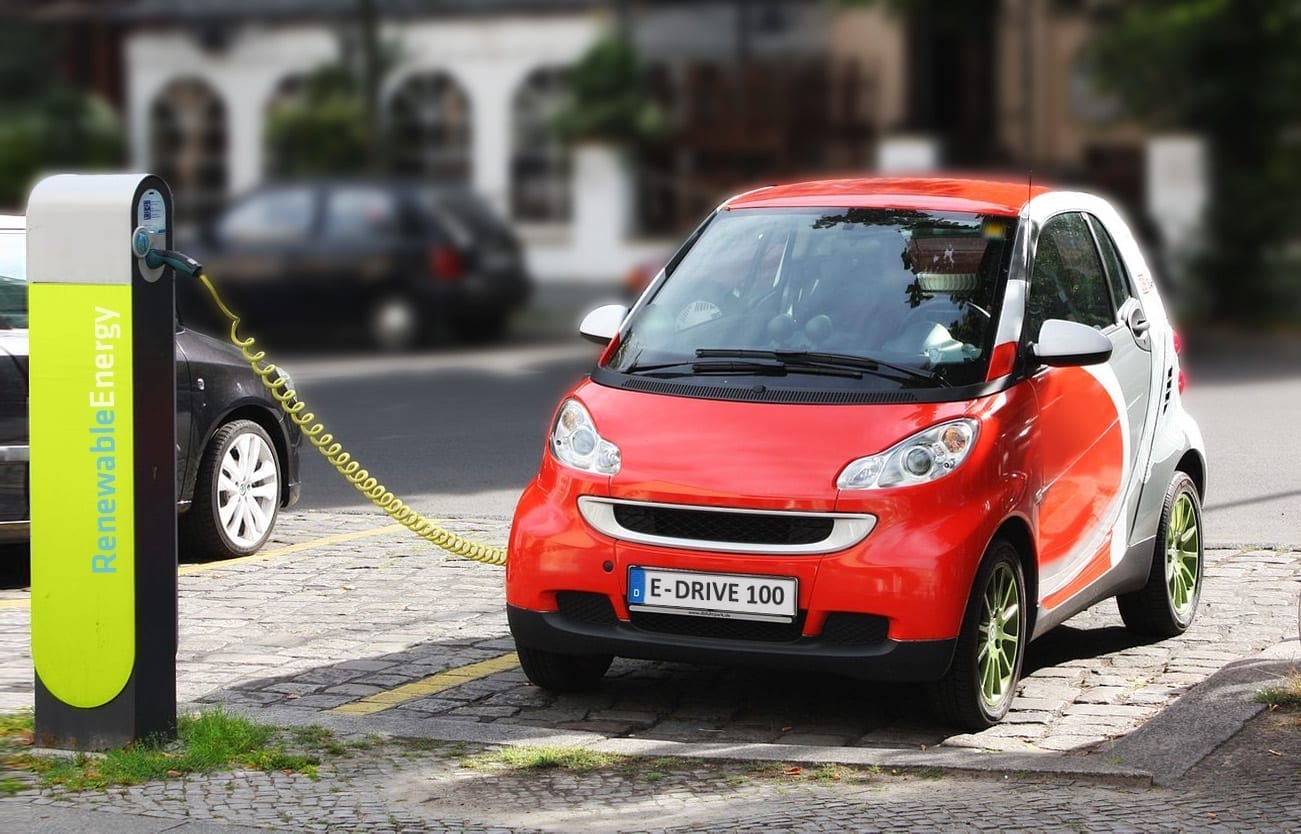
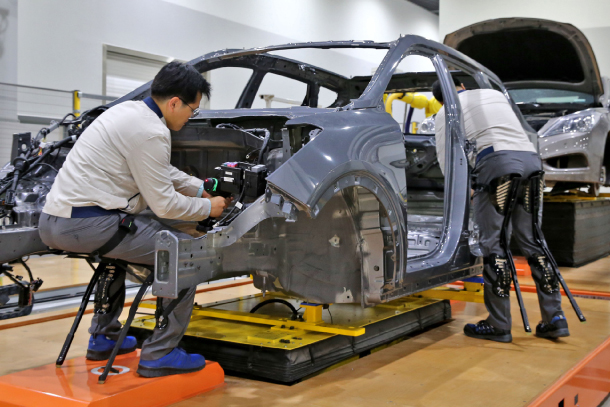
    Hyundai Motor is considering releasing a range of bottled water inspired by its hydrogen fuel-cell vehicle Nexo, the company confirmed Monday. The automaker is hoping to use the Nexo-branded water to market its Nexo sport-utility vehicle (SUV) as pure and eco-friendly, like water. The unusual approach of using water to promote the car’s eco-friendly aspect is thought to be an industry first.

    Hyundai will be partnering with local convenience store chain CU. The date of the water’s debut has yet to be fixed, according to a press officer from Hyundai, rejecting claims by some media outlets that the launch could be as early as next month. The company also said mass production of the bottled water has not yet begun.

    When asked whether the water will be produced using any of the technology that goes into making a fuel-cell vehicle – water is a byproduct of a hydrogen fuel-cell vehicle – the press officer said, “the product will be like general drinking water used for marketing rather than a medium to show our car technologies.”

    The marketing scheme comes as Hyundai Motor Group is increasing its focus on hydrogen energy as its future growth engine.

    Just last month, Hyundai Motor Group Executive Vice Chairman Chung Eui-sun was appointed co-chair of the Hydrogen Council, a group of business leaders that promote hydrogen energy. On appointment, he highlighted the potential of a hydrogen energy-based economy where hydrogen energy would meet 18 percent of the total global energy demand and create millions of jobs by 2050.

    Hydrogen fuel-cell cars are powered by electricity generated through a chemical reaction between hydrogen and oxygen. It is often labeled as the ultimate eco-friendly car because its only byproduct is water, which is environmentally friendly. However, there are still some technological hurdles to make it the most common car on the roads, including high prices.

  • Malaysia property market to remain flat in 2019: Rahim & Co

    Malaysia property market to remain flat in 2019: Rahim & Co

    The property market is expected to remain flat this year before picking up again next year, said Rahim & Co International Sdn Bhd. Executive chairman Tan Sri Abdul Rahim Abdul Rahman said the property market will remain flat across all sectors this year, except for the warehousing sub-sector, which will be driven by growth of e-commerce.

    He said the overall market will take about 12 months to begin picking up, in line with the anticipated resolution of the trade war between the US and China.

    Rahim & Co director of research Sulaiman Akhmady Mohd Saheh said the residential market will take one to two years to improve due to affordability issues while the office market will remain slow for more than a year due to incoming supply.

    He said asking rents for offices have dropped 20% while effective rents have dropped 8-10%.

  • Nestle India plans up to 3-dozen product launches in 2019, eyes higher exports

    Nestle India plans up to 3-dozen product launches in 2019, eyes higher exports

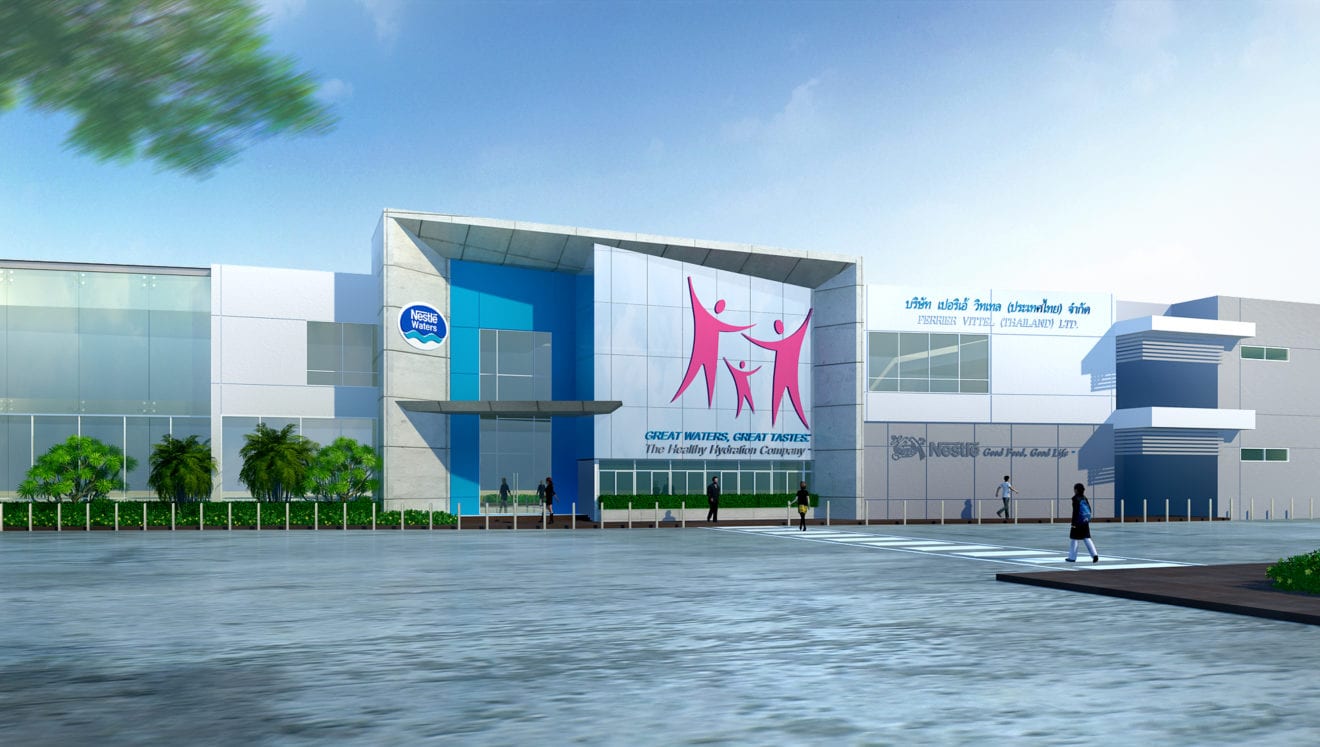
    FMCG major Nestle India has lined up nearly two-three dozen products that it plans to launch in calender year 2019 across categories in the country to drive its aggressive growth plans, Chairman and Managing Director Suresh Narayanan said.

    According to a report, the company, whose 6 percent revenues come from exports, is now looking to tap more overseas markets by targeting countries with higher Indian diaspora such as SAARC and South East Asia.

    “In 2018, our core brands have performed well…We look forward for greater acceleration as we go forward….We have two-three dozen projects (products) in pipeline for launch in 2019. These products are across categories,” Narayanan said.

    Reiterating the company’s focus on the Indian market, he said, “As an organisation the one clarion call that we are working to is that we are in the business of growth to thrive and not to survive…It is not a survival mode that we look at the opportunity in India or the opportunity for growth..but a thriving mode.”

    While the domestic market has been driving its growth, Narayanan said Nestle India would now look at expanding its export basket.

    The company is looking at tapping overseas market with higher Indian diaspora such as SAARC and South East Asia to expand its exports, he added.

    Commenting on fake news on nutrition, Narayanan said it was affecting choices and lives of people.

    Therefore, Nestle India in partnership with Google, using a chatbot mechanism, will launch a personalised information dissemination website called ‘Ask Nestle’, he added.

    “Ask Nestle seeks to be a reliable and anchor platform for nutrition and lifestyle information for customers. India is the only market where this website is being launched,” he was further said.

    When asked if the company will in future also link Ask Nestle with its own e-commerce website for selling its products, he said it is a possibility.

    “…Going forward it could morph into something bigger in terms of linking up with our own e-commerce intentions, if at all it happens. But today it is only for information sharing, dissemination and helping,” he said.

    When asked if there has been any impact on sales of Maggi noodles after Supreme Court revived government’s case in the National Consumer Disputes Redressal Commission (NCDRC) against Nestle India seeking damages of Rs 640 crore for alleged unfair trade practices, false labelling and misleading advertisements, Narayanan said “No”.

    When asked if the company is looking for manufacturing capacity expansion, he said: “…This is a question that is coming up with active consultation. That exercise is on but I can not share more at this stage”.

    Typically, our approach is to augment (capacity) at our existing factories, but it does not rule out a new manufacturing facility, Narayanan said.

    Nestle India, at present, has eight factories across the country.

    The company also did not rule out evaluating inorganic growth in the country and said it may consider it if any opportunity arises.

  • 2018 sales of EV doubled in Korea

    2018 sales of EV doubled in Korea

    Hyundai Motor Executive Vice Chairman Chung Eui-sun laid out a plan to develop 44 electric vehicle models (EVs) and sell 1.67 million of the cars by 2025 during his New Year’s message held at the beginning of this year. The goal was a dramatic increase on the 38 models he planned to have by 2025 at the start of 2018. The revised goal is rooted in the fact that EVs are growing at an unprecedented pace in the global auto industry.

    According to U.S. market research firm S&P Global Platts, the number of electric cars sold worldwide exceeded 2 million in 2018 including plug-in hybrids, double the 1 million sold in 2017.

    This achievement came seven years after Tesla rolled out its Model S, opening the era of EVs, and more than two decades since Toyota released the world’s first hybrid, the Prius.

    Among the total number of EV cars sold, battery-electric vehicles sold 1.45 million units last year, followed by plug-in hybrids at 550,000 units.

    The most popular model was Tesla’s Model 3, which started mass production last year. Unlike the Model S and X, which cost over 100 million won ($88,850), the Model 3 was released as a more affordable model with a price tag around 50 to 60 million won. It sold 146,846 units, taking the top spot.

    Four Chinese companies ranked high in the top 10. The EC Series from Beijing Automotive Group ranked second. BYD’s eco-friendly plug-in hybrid, the e5, and JAC Motor’s iEV E/S were also on the list. Among Japanese cars, Nissan’s Leaf placed third while Toyota’s Prius Prime was ninth and Mitsubishi Outlander plug-in hybrid placed 10th.

    Hyundai and Kia both made it to the top 10 list of automakers for the first time. Combined, the two sold 90,860 units last year, taking the eighth spot.

    Tesla sold the most cars, at 245,240, followed by China’s BYD at 229,338. German brands, traditionally strong players in the vehicle market, had BMW at fifth and Volkswagen at ninth.

    Industry analysts project the market for electric cars will expand at an even faster speed. Deloitte, a global consulting firm, expects 4 million EVs to be sold in 2020 and 14 million in 2025. By 2030 it expects EV sales to hit 21 million.

    Considering that 98 million cars are sold worldwide annually, within 20 years one of every five cars purchased will be an EV.

    Experts say that while the United States and China have led the growth of the EV market, that is likely to change in the future.

    Deloitte forecast that cost reductions from technology development will pull down the price of EVs to be on a par with diesel cars by 2022. This means the product sector will gain price competitiveness, no longer relying on government subsidies.

    The market will also get more competitive. Toyota and Volkswagen are both planning to release new electric cars in the near future, with Volkswagen aiming to make 25 percent of the cars it produces EVs by 2025. Its investment in electric cars is already worth 20 billion euros ($2.25 billion).

    According to consulting firm AlixPartners, Volkswagen Group is planning to release 55 EV models by 2022. This accounts for half of all EV models slated for release by then.

    “Government subsidies played a big role in enabling Chinese firms to sell large numbers of EVs, but its finances have hit the limit,” said Kwon Yong-ju, a professor from Kookmin University’s department of automotive & transportation design.

    “With European companies having accumulated technology and capital while waiting for the commercialization of EVs, the future could be quite different from now.”

    “Major countries, like the United States and Europe, have tightened regulations toward environmental pollution more than before,” said Koh Tae-bong, head of research center at Hi Investment & Securities. “For car companies, it is inevitable that they will expand the amount of electric cars they make.”

  • Leather brand Kompanero to expand in Europe

    Leather brand Kompanero to expand in Europe

    India’s premium leather bag brand Kompanero plans to open 100 outlets by 2025. The company will open four stores, raising its network to 34, this year. “With four new stores in the pipeline, we are expanding our presence in existing cities with Express Avenue Mall in Chennai and Sarath City Mall in Hyderabad,” said Indranath Sengupta, Kompanero CEO. “In addition, the brand’s airport presence is being strengthened with our newly launched store at Guwahati Airport and Chandigarh Airport, and an upcoming one at Chennai Domestic Airport.”

    The brand is also entering Europe this year with its exclusive stores; however, the exact location of the first store has yet to be revealed.

    The company’s turnover has grown by 60 per cent within the last year.

    Kompanero products are available in Australia, the UK, Japan, and Korea via distribution networks as well as e-commerce portals including Amazon, Myntra and Jabong.

  • LG Electronics to debut dual display phones

    LG Electronics to debut dual display phones

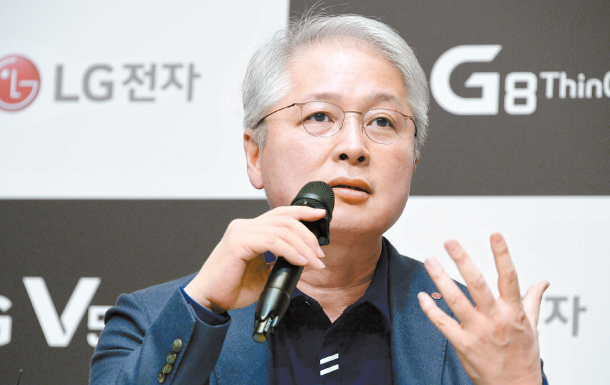
    LG Electronics’ major release of the year will be dual display smartphones, which the company hopes will recover its reputation as consumers flock to next-generation 5G smartphones. “There were internal discussions on releasing foldable phones at the same time but we concluded not to apply the form to early 5G models,” said LG Electronics President Brian Kwon during a press conference at LG Science Park in Magok, western Seoul, Friday.

    The event was the first time since he was appointed to head the smartphone business in November that Kwon shared future strategies for mobile business in front of the local press.

    “Our direction will allow consumers to enjoy 5G network content through dual displays to be showcased at the Mobile World Congress (MWC).”

    “Speaking of displays for early 5G phones, a major question to ask is whether we really need them, is there enough user content that requires such screens? In that perspective, I believe it’s too early to present [foldable phones,]” he added. “In terms of technology, we’re already prepared to make foldable and rollable screens.”

    Changes in form, especially screens, will be a major attraction point at this year’s MWC, the world’s largest trade show for phones. Samsung Electronics and Huawei will be rolling out foldable phones that come with two screens overlapping one another.

    LG’s dual display phone is rumored to come with a separate second screen that can be attached to the back or beside the main screen, although the company did not confirm the details. Its price remains undecided but Kwon said internal discussions were ongoing over whether to set it above or below $1,000.

    The form-factor competition comes in line with the commercialization of 5G networks expected to be realized this year. 5G will transfer data at an extremely high speed, enabling smartphone users to enjoy movies and games at unmatched quality and speed. Phone makers are eyeing the opportunity to win over consumers as they upgrade their phones to models that support 5G.

    LG’s strategy for this generation shift is “two track,” Kwon said Friday. Apart from the dual display phones, the V50 ThinQ 5G and the G8 ThinQ will also be showcased at the MWC. They are the latest models from the company’s high-end V and G lineups. V50 will support 5G networks, while the G8 will remain a premium phone for 4G, or LTE, network users.

    Underlying the two-track strategy is an uncertainty about how fast it will actually take for 5G infrastructure and related services to expand and how many consumers will jump from 4G to 5G.

    “Our plan for the year’s first half is to release the V50 to tackle the 5G market but our direction for the second half will depends on the 5G market,” said Kwon. “If it expands quickly we’ll look into developing a lower priced model that supports the network; if it doesn’t we’ll still have the 4G lineup.”

    LG’s smartphone business has been in the red for 15 consecutive quarters as of last year. Kwon was successfully heading the company’s television business when he was appointed to additionally take charge of the mobile division three months ago.

    “It’s true that industry insiders are hoping the 5G era will push growth of the smartphone market but as there also conservative projections, our goal for the year is not to make a drastic turnaround in the business but to see sales grow and restore our reputation in the smartphone market,” said Kwon.

  • Furniture maker in Vietnam to meet younger customer taste

    Furniture maker in Vietnam to meet younger customer taste

    Furniture manufacturers are striving to meet the changing tastes of young people, who have begun to value eco-friendliness and aesthetics. Nguyen Chanh Phuong, vice president and general secretary of the Ho Chi Minh City Fine Arts and Wood Processing Association (HAWA), said the furniture segment for small urban houses is abuzz in Vietnam, with its main customers being young adults born between 1980 and 2000.

    Unlike the previous generation, who preferred simple but durable furniture that could last 100 years, young people prefer to buy comprehensive interior packages based on their own aesthetic views, he explained.

    They see furniture as things that serve their needs and not assets to be passed down, and so products only need to last about 10 years, he said, pointing out this was why furniture makers like IKEA have been so successful.

    “There is a lot of opportunity arising from this group of customers alone. I estimate they only account for 15 percent in terms of number of buyers but account for 30-40 percent of spending.”

    Industry insiders said the market is seeing rapid growth in raw materials production, design and manufacture of furniture, and one can now find all types of international “fashionable” wood varieties from Germany, the U.S., France, Japan, Canada, and New Zealand.

    Vietnam’s furniture market was worth $4 billion in 2018, and is expected to grow to $5-7 billion by 2025, according to the Handicraft And Wood Industry Association of HCMC.

    Nguyen Quoc Khanh, HAWA chairman, said not only is the scale growing but also Vietnamese are increasingly demanding higher quality products.

    “I think ‘strong and durable’ is not the Vietnamese style; it was a need at a difficult time. Life is much better now, so people are allowed to express themselves.

    “The only regret is that the market has not yet created the necessary ecosystem for the business of interior design. That is, furniture manufacturers have not been able to work with designers and real estate companies to completely meet users’ needs.”

    Foreign home interior brands and designers are present in force and dominating the increasingly affluent market.

    According to the Vietnam Chamber of Commerce and Industry (VCCI), some 80 percent of luxury woodwork and interior decoration items is imported from Europe, with local players accounting for the rest.

  • Korea automobile production falls for 3rd year in 2018

    Korea automobile production falls for 3rd year in 2018

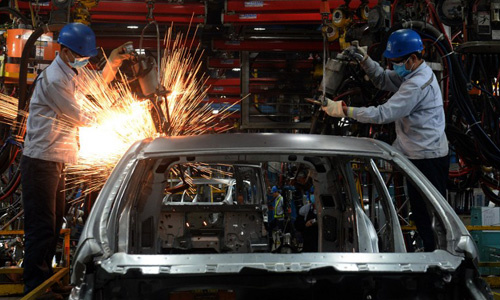
    Korea’s auto production tumbled for a third consecutive year in 2018 amid weaker domestic and global demand, data showed Sunday. According to the data by the Korea Automobile Manufacturers Association (KAMA), Korea produced 4.03 million vehicles last year, down 2.1 percent from the previous year. The figure has been decreasing over the past three years from 4.56 million in 2015 to 4.23 million in 2016 and 4.12 in 2017.

    The 2018 figure put Korea as the seventh-largest car manufacturing country in the world, down one notch from the previous year, according to the association.

    Korea became the world’s fifth-largest maker of cars in 2005 and retained the ranking until 2015. But India edged out Korea to stand at the world’s sixth in 2016 and 2017. Last year, Korea fell behind Mexico.

    China was found to produce the largest number of vehicles in 2018, with 27.81 million followed by the United States, Japan, Germany and India.

    Korea’s total car exports also fell to 2.45 million vehicles last year from the previous year’s 2.53 million, the KAMA said, adding that the country accounted for 4.1 percent of the world’s car production in 2018, down 0.1 percentage point from a year earlier.

    “Contentious labor-management relations, as well as stiff labor market conditions, among others, appear to negatively affect local carmakers’ competitiveness,” the association said in a release, calling for state support and business innovation.

  • Report urges auto industry to go electric

    Report urges auto industry to go electric

    Korea needs to give equal emphasis to the development of battery electric vehicles and fuel cell cars, considering the estimated future demand and the country’s competitiveness, a report said Thursday. “It’s a well-known fact that our car manufacturers have the mass-production technology for fuel cell automobiles,” the report from the Korea Institute for Industrial Economics & Trade (KIET) said. “However, the accumulated sales of fuel cell electric vehicles (FCEVs) worldwide stopped at 10,000 as of the end of 2018. The demand for fuel cell vehicles in 2030 will be less than 2 percent of the global sales of new automobiles.”

    In comparison, sales of battery electric vehicles (EVs) are estimated to exceed the demand for hybrids this year, 10 years since their commercialization, and show fast-paced growth, the report argued. Global rivals are due to market more than 100 different EV models by 2022, it noted.

    Korea’s high competitiveness in EV batteries is another reason why the government should not neglect investment in electric cars, the report said, warning that the relative weaknesses in the availability of charging stations and other networks could drag down the industry, despite efforts by local automakers to diversify their EV models. The report responded skeptically to the government announcement in December to give 2 trillion won ($1.79 billion) in assistance to reform the car parts industry.

    “If the auto industry, the recipient, is unable to fully accommodate, it could be difficult for the assistance to have the desired effect,” it said.

    The same report predicted hard times ahead for local auto companies, affected by the global slump in the car industry.

  • Shiseido opens a new factory in Fukuoka

    Shiseido opens a new factory in Fukuoka

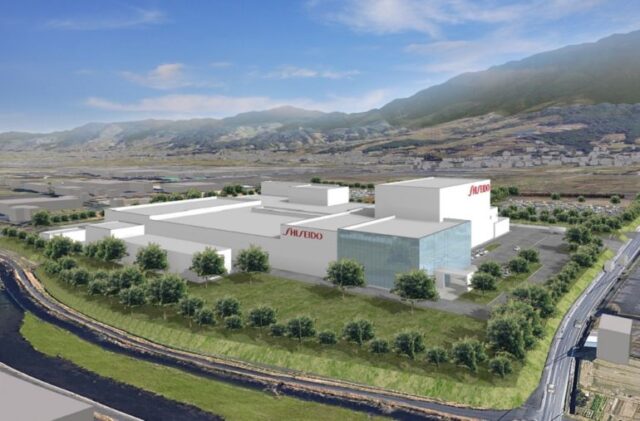
    Shiseido Company, Limited has decided to build a new production site, Shiseido Kyushu Fukuoka Factory in Kurume City, Fukuoka Prefecture, Japan. The new factory, which is slated to start its operation in fiscal 2021, will mainly manufacture skincare products for Japan and overseas markets. The investment is expected to be approximately 40-50 billion yen.

    Shiseido has been making concerted efforts as a whole toward the realization of even greater growth to accomplish the medium-to-long-term strategy VISION 2020 and to “Be a Global Winner with Our Heritage”.

    As part of its production strategy, Shiseido is pursuing the establishment of a supply chain strategy from a global perspective in line with its Group-wide marketing strategy, and progressing in the creation of a flexible operational structure at each of its factories around the globe by taking into account various elements such as costs, lead time, inventories and procurement of raw materials.

    Amid such, the company has concluded that it is vital to establish a stable and sustainable production system from a medium-to-long-term perspective in order to respond to growing demand for cosmetics inside and outside Japan and secure further business growth in the future.

    To this end, Shiseido has decided to build another new factory following Nasu Factory and New Osaka Factory (tentative name) which are currently under construction. Investments in the production base including factories currently under construction, establishment of the new Kyushu Fukuoka Factory and reinforcement of existing factories are expected to exceed 170 billion yen.

    The new factory will focus on the production of skincare products which are growing in demand, and provide safe high-quality products in compliance with ISO 22716 international standards.

    As a next-generation factory, it will utilize cutting-edge facilities and advanced technologies such as IoT in the creation of innovation. Furthermore, through the inheritance of long-standing production technologies and expertise which are Shiseido’s strength, we will realize the new factory as people-friendly with high productivity.

    It will operate in an environmentally friendly manner while being able to support our business continuity plan (BCP), aiming to exist in harmony with the surrounding environment including mountains and rivers.

  • Habeco Vietnam reports another year of falling profits

    Habeco Vietnam reports another year of falling profits

    Habeco’s profits fell by 23 percent last year to VND667 billion ($28.71 million), the fourth straight year of decline. Hanoi Beer Alcohol and Beverage Corp, as it is formally known, one of Vietnam’s biggest brewers, also reported a 5 percent fall in revenues to VND9.4 trillion ($404.67 million). There was a sharp increase in operating expenses, especially cost of sales.

    After falling for four years profits are now less than half of the 2014 figure of VND1.44 trillion ($62.12 million).

    Habeco’s decline is contrary to the general growth trend as Vietnam remains one of Asia’s biggest beer consumers. According to Euromonitor statistics, while global beer consumption volume remains unchanged last year, the figure for Vietnam soared.

    According to data from the Vietnamese Beer, Alcohol and Beverages Association, on average a Vietnamese person drank nearly 45 liters of beer in 2017, an almost 50 percent jump in two years.

    Many securities firms believe that though Habeco still leads the beer market in the north, it faces challenges like changing consumer tastes and competitive pressure from foreign brands. It has only been able to maintain market share in the low-priced segment, ceding ground in the premium segment to brands such as Heineken, Saigon Beer (now a subsidiary of ThaiBev) and other foreign brands.

    Ban Viet Securities Company’s latest data shows Habeco’s share in the beer market has fallen continuously in the last six years, from nearly 20 percent in 2010 to 18 percent by the end of 2017.

    The reason for this is that the low-cost segment, its strength, is shrinking, said the securities company. The cheap beer segment now makes up of only 8 percent of the market compared to 14 percent seven years ago.

    Vietnam is famous for its beer drinking culture, and it is widely believed that business deals go more smoothly over a few drinks.

    The country is the biggest beer market in Southeast Asia, consuming nearly four billion liters in 2017. It spends on average $3.4 billion on alcohol each year, or $300 per capita, while spending on health averages $113 per person, according to the Ministry of Health.

  • Sales of imported vehicles in Korea fell 10 percent in January

    Sales of imported vehicles in Korea fell 10 percent in January

    Sales of imported vehicles in Korea declined by more than 10 percent in January from a year earlier due to typically low seasonal demand and supply shortage of some brands, industry data showed on Friday. The number of foreign cars sold last month reached 18,198 units, down 13.7 percent from a year earlier, according to the data compiled by the Korea Automobile Importers & Distributors Association (Kaida).

    The tally also marks an 11 percent drop from a month earlier, the data showed. In 2018, sales of foreign cars continued to rise, helped by firm demand for foreign brands and the resumption of sales of Audi Volkswagen.

    The number of newly registered foreign vehicles reached 260,705, up 11.8 percent from 2017.

    Foreign passenger cars made up 16.7 percent of all vehicles that were registered in the country last year, shattering the previous record high of 15.5 percent in 2015.