Retail News CRM

Tag: Industry

  • Korean drug companies anticipate a strong 2019

    Korean drug companies anticipate a strong 2019

    Korean pharmaceutical companies are entering 2019 with high expectations as several domestic drugs are expected to gain approval from overseas regulators this year. Though the Samsung BioLogics accounting fraud scandal made 2018 a less-than-stellar year for the pharmaceutical industry, bio firms are ready to get back on their feet with new drugs and licenses.

    Daewoong Pharmaceutical is one firm hoping to get the green light for sales of a product in the United States and Europe this year. Nabota, a botulinum toxin, or botox product, was submitted for approval to the U.S. Food and Drug Administration (FDA) and the European Medicines Agency in 2017.

    Last August, Nabota became the first domestic botox product to gain sales approval in Canada after Daewoong acquired the necessary permit from the country’s health authorities.

    Green Cross is another company awaiting FDA approval. Its I.V.-Globulin SN, an immunoglobulin product that treats immune deficiencies, is being reviewed by the agency.

    Though the FDA postponed approval of the drug last September when it requested supplementary documents from the company, Green Cross is optimistic that it will eventually get the go-ahead since I.V.-Globulin SN is already being sold in both Korea and overseas markets, such as Brazil.

    SK Biopharmaceuticals is waiting for the FDA to approve Cenobamate, an antiepileptic drug. Cenobamate is the first drug for which a Korean company has applied for FDA approval independently without going through global partner companies.

    If the drug is approved, SK expects that Cenobamate will become a huge cash cow that can generate up to 1 trillion won ($898.8 million) in annual sales just in the United States. The United States is the world’s largest market for epilepsy drugs.

    Last Thursday, Hanmi Pharmaceutical filed a license application for Rolontis, a drug intended to treat chemotherapy-induced neutropenia, with the FDA through Spectrum Pharmaceuticals. Hanmi is hoping to gain approval by the first half of 2020.

    Korean drug makers are hoping to make progress with clinical trials and technology exports this year.

    Yuhan is currently working with Janssen Biotech to conduct clinical trials for lung cancer drug Lazertinib. Two months ago, Janssen purchased out-licensing rights from Yuhan for Lazertinib in a deal valued at $1.25 billion.

    One of Chong Kun Dang Pharmaceutical’s most highly anticipated drug candidates is the CKD-702 bispecific antibody, an artificial protein used for cancer immunotherapy. Given the growing interest in bispecific antibodies around the world, industry experts predict Chong Kun Dang will be able to export the drug technology as early on as the pre-clinical stage.

    Hanmi and Jeil Pharmaceutical are also expected to complete Phase 2 clinical trials for their obesity drug HM15211 and stroke treatment JPI-289 this year, while SillaJen is due to complete Phase 3 clinical trials for its cancer treatment Pexa-Vec in the coming months.

    “Domestic pharmaceutical firms have tried to venture into the United States, the world’s biggest drug market, and their efforts will lead to real results next year,” said one spokesman from a pharmaceutical firm.

  • Hyundai reveals a glimpse of the future

    Hyundai reveals a glimpse of the future

    Hyundai Motor Group offered a glimpse of its new concept autonomous car Friday in a short video. The concept car is electric. In the video, the electric car finds its way to a charging station inside a nearby parking lot on its own after the driver gets off at its destination. The station offers wireless charging. When charging is finished, the car then parks itself in an empty lot to make room for other vehicles to charge. When the driver calls the car back using their smartphone, the car drives itself to the requested meeting point.

    The Korean automaker described the feature as an “automated valet parking system.” The feature could take the burden off drivers struggling to park and also save time as they won’t need to find charging stations or empty lots.

    For this system to work, parking lots, cars and drivers need to continuously share information through a connected network, Hyundai said. For instance, parking lots need to send the location of charging stations and empty parking lots to cars, and wireless chargers need to notify drivers of cars’ battery status via text message or other means.

    “In the upcoming era where autonomous driving cars become prevalent, there will be growing demand for various driving control features using self-driving technology,” a spokesperson from Hyundai Motor Group said. “We will focus on developing services that enable drivers to make convenient and safe use of self-driving cars.”

    The company said it expects the wireless charging system and automated valet parking system to be applied to its autonomous driving cars scheduled for launch in 2025.

  • Vietnam FDI disbursement in 2018 tops $19 bln

    Vietnam FDI disbursement in 2018 tops $19 bln

    Foreign direct investment disbursement in Vietnam reached a record $19.1 billion in 2018, a year-on-year increase of 9.1 percent. However, FDI pledges for new projects, capital supplements and stake acquisitions were down 1.2 percent from a year earlier to $35.46 billion, according to the Ministry of Planning and Investment.

    A total of 3,046 new projects have been granted investment certificates since the beginning of the year, with a total registered capital of nearly $18 billion. Nearly 1,170 projects registered to increase their capital by a total of $7.5 billion. The rest of the registered capital was reported in a total of 6,500 instances of capital contribution and share purchases by foreign investors.

    This year, foreign investors injected capital into 18 fields and sectors. The processing and manufacturing industry attracted the highest capital at $16.5 billion, followed by real estate with $6.6 billion, and wholesale and retail sectors with $3.6 billion.

    Japan ranked first in FDI contributions to Vietnam this year, followed by South Korea and Singapore. Localities that attracted the most FDI were Hanoi, Ho Chi Minh City and the northern city of Hai Phong.

    Meanwhile, Vietnam invested nearly $380 million abroad this year, mainly in banking and finance, forestry, and fishing. Vietnamese investors injected capital into 38 different countries and territories, with the highest investment in Laos, followed by Australia, the U.S. and Cambodia.

  • Strong sales growth for India’s textile manufacturing sector in Q2

    Strong sales growth for India’s textile manufacturing sector in Q2

    The manufacturing sector, particularly textile and iron and steel segments, maintained its pace of sales growth in the second quarter of 2018-19 as compared to the year-ago period, the RBI said on Wednesday. Demand condition in the manufacturing sector “maintained its pace in the September quarter 2018-19 as reflected in strong sales growth (year-on-year)”, as per the RBI analysis of 2,700 listed private sector non-financial companies.

    “The manufacturing sector sales growth was mainly supported by robust demand conditions in chemical and chemical products, iron and steel, and petroleum products industries coupled with significant improvement recorded by textile industry,” the RBI said.

    The central bank said heavy moderation was seen in the sales growth of motor vehicles and other transport equipment, driven in part by a large adverse base effect, and pharmaceutical and medicine industries.

    The information technology (IT) sector also recorded further improvement in sales growth over the year-ago period.

    The manufacturing sector continued to record strong growth in net profits, which received support from other income.

    The RBI said companies in manufacturing sector posted a net profit of Rs 47,100 crore in the reported quarter, up 29.4 per cent from the same period last year. The data is based on abridged financial results of 1,734 companies in the manufacturing sector.

    “Despite continuous contraction in the telecommunication, the services (non-IT) sector posted a turnaround riding on the support from wholesale and retail trade,” the RBI said.

    The profit of IT sector, based on data of 172 firms, was Rs 17,700 crore in the second quarter, up 5.8 per cent over the July-September period of 2017-18.

    As per the RBI, the combined sales of 2,700 companies was Rs 9,81,800 crore in the September quarter, up 18.2 per cent from the year-ago period.

    Their net profit was Rs 71,900 crore, an increase of 41.7 per cent year-on-year.

    On expenditure front, manufacturing companies continued to face rising input cost (cost of raw materials, staff cost) pressures. In case of IT sector, staff costs accelerated in tandem with the improvement in sales growth, the RBI said.

  • BMW assembly on the anvil, says Vietnam auto conglomerate

    BMW assembly on the anvil, says Vietnam auto conglomerate

    THACO, a major player in the country’s commercial vehicle segment, plans to assemble German brand BMW cars in Vietnam. Tran Ba Duong, chairman of the Truong Hai Auto Corporation (THACO), said at a conference last week that BMW cars will be the next vehicle that THACO assembles in the country, following other brands like Peugeot, Kia and Mazda.

    He did not reveal further details about when this would happen and what models would be assembled.

    THACO became the sole authorized distributor of BMW in Vietnam starting January this year, after Ho Chi Minh City-based Euro Auto lost its license for smuggling 133 BMW cars in December 2016.

    Duong had said earlier that he plans to open 15 BMW and MINI (a car brand owned by BMW) showrooms by early next year. However, the company currently runs only one BMW showroom in Hanoi, another in HCMC and one MINI showroom, also in HCMC.

    THACO has not revealed its revenue from selling BMW cars this year, but a source told VnExpress that the company sold almost 400 vehicles in the first half of this year. Euro Auto, at its peak, sold 1,400 BMW and 400 MINI cars a year.

    BMW cars were first assembled in Vietnam in 1995 by the VMC company in Hanoi. However, low sales led to the factory’s shutdown in 2005, and VMC had to spend two years selling its inventory.

    Mercedes-Benz is currently the only luxury car brand that assembles its vehicles in Vietnam, and it tops domestic market sales in this segment. Industry insiders say that if BMW cars are assembled in the country again, they could emerge a strong competitor, especially in terms of price.

  • Tracking the dynamics of India’s gym wear market

    Tracking the dynamics of India’s gym wear market

    Whether or not one shows dedication in maintaining their gym routine is debatable, but it is an undeniable fact that gyms are doing well when it comes to their membership registers being filled. India’s waking up to being healthy and this means tons of gym memberships. This also means that when one takes a gym membership, the very next thing they do is head off to stores that deal in gym wear. Or they just log on and buy gym clothes and accessories. The demand for gym and active wear is growing in India because of a desire to stay fit and healthy. IMAGES Business of Fashion takes a look at the market dynamics…

    Setting the context for the story, Pallavi Burman, Head – Marketing, HRX shares, “The Indian active wear industry is currently estimated at a whopping Rs. 8500 crore. It is expected to continue growing at CAGR 12 percent and touch expected sales of approximately 6X at Rs. 54,000 crores by 2020.”

    Burman attributes the reason for this to growing health and wellness trend in India along with an increase in the number of sporting clubs, increased interest in sporting activities like football, basketball, tennis, badminton and cricket, the Indian active wear industry is fast proliferating. She says, “More disposable income and general inclination towards fitness is rising and resulting in the growth of this industry.”

    Another major reason for an increase in demand for gym wear is having Bollywood celebrities being spotted in gym gear, especially the likes of Hrithik Roshan, Malaika Arora and Kareen Kapoor Khan. It isn’t uncommon to see Page 3 pictures of these celebrities in their gym wear. The glamour magazines often have pictures and articles of how celebrities are taking gym wear to the streets and this eventually does give a fillip to the demand for workout clothes in the country.

    Market Overview

    Perhaps the above well explains the emergence of active wear in the country. Where dedicated gym wear is opted for only by a handful few, those opting for working it out in the gym clubbing their active wear or sportswear as gym wear. No wonder then that brands in India too offer gym clothes under the category of ‘active wear’.

    Pallavi Burman decodes the difference between the often clubbed together categories of active wear, athleisure wear, sports / performance wear. “By definition, athleisure and active wear clothing are those which can be worn from studio to street. Sportswear or performance wear, however, is clothing which help athletes or sports persons enhance their performance specially items like shoes, technologies like compression, socks in some sports etc.”

    Nivida Kohli, Design Manager, Numero Uno shares her views, saying, “As of today each distinct category is reinventing itself. This is a phase where the consumer market is changing since there is a generic shift towards more flexible lifestyles. Once this change settles in, I believe there will be clearer newer distinct definitions for sportswear and athleisure.”

    However, a lot many online players have an exclusive category for gym wear and some have gone a step further to have their portals dedicated to offering nothing else but gym clothing.

    The emphasis is more on offering men’s gym wear than having something specialized for women and unfortunately in India, gym wear still consists of mostly leggings and sports brassieres, although bigger brands have started innovating for women as well now.

    Taking note of this gap, brand Mojostar in association with Bollywood actor Jacqueline Fernandes, recently launched their exclusive portal www.justf.in that is dedicated to women’s active / gym wear.

    Just F was launched after Jaqueline and CEO Mojostar, Abhishek Verma, realized the gap in the market for women’s gym / active wear.

    “Sportswear needn’t be super masculine, so we are introducing fusion elements, florals, and may even add lace to some designs,” says Jacqueline Fernandes in a media interview. She has actively participated in the designing of the brand and has ensured that little things are not given a miss like pockets in fitness wear, the positioning of the straps and hooks and the materials used for leggings.

    According to Abhishek Verma, the focus for the brand for now would be functionality and support. The brand is also going quite aggressive with their collection of sports bras.

    The research by the brand indicated that most of the international brands that are present in this category design their range keeping in mind the target audience of western countries, which don’t fit the average Indian woman. Another reason for launching Just F was to give Indian women appropriate exercise clothing at reasonable costs, especially since most international brands come with a hefty price tag.

    Growing Demand

    Pallavi Burman says that with Indians becoming more health conscious and image sensitive, their pursuit for fitness has increased. “The average age bracket for Indian fitness enthusiasts is 20-35 years, which makes for the majority population of young Indian students and professionals. This target set loves to experiment with their wardrobe. Office wardrobe has drastically changed – we don’t see dress pants and brogues and oxfords anymore. Jeans and trainers have smoothly replaced these items. Everything in today’s clothing spells comfort and chic,” she says as way of explanation of why there a fillip in the performance wear category in Indian retail has been noticed.

    She explicates that to be able to tap into this big chunk of the Indian population with available disposable income and the affinity for fitness, brands and minimalistic wardrobe brands have to focus hugely on active wear and the athleisure segment.

    Gym Wear Essentials in India

    According to Pallavi Burman, a pair of leggings and shorts for women and men respectively –usually a loose tee and a pair of decent walking shoes – constitute for basic gym wear in India.
    “But this isn’t enough if the exercise routine includes more than walking. While almost 50 percent of Indians still prefer traditional ways of staying active like walking and running, the other 50 percent are inclined to swimming, cycling and other sports and training means. For targeting this kind of segmentation one needs to delve deeper into sub categories.”

    What makes gym wear more intricate for women is the inclusion of a high-performance sports bra. Without a well-designed sports bra, the gym wear ensemble for women remains incomplete. Quite a few Indian brands that have taken note of this and the range available online as well as offline is exhaustive. It is interesting to see brands like Triumph launching exclusive brassieres for gym wear considering they are a premium lingerie wear brand. The option they have is bounce control certified by world renowned Research Group in Breast Health, the University of Portsmouth. Elaborating on the same, Jennifer Kapasi, Commercial Director, India & Sri Lanka, Triumph International shares, “Triaction by Triumph is a stylish, high-performance sportswear collection that gives modern women the freedom to train how and when they like. Boasting the best bounce control levels on the market, three versatile fits and superior comfort, Triaction supports women throughout the day—on the go from the gym or studio in complete style.”

    Innovative Fabric Play

    Anything that stretches and helps absorb sweat yet keeps the fabric dry is the most preferred fabric when it comes to performance wear. Reiterating the same, Pallavi Burman says, “The fabric we use is always stretchable “wicking” blend made up of polyester and lycra. We also use a breathable mesh fabric as design and utility elements and several other performance enhancing features like anti-microbial layering, UV protection, rapid dry etc.”

    When you go through the collection, what catches your attention is interesting mélanges for both men and women. She says, “Color blocking and coordinated sets are finding a big audience in this space now.”

    Adding in a safety feature to go along with their sportswear, Numero Uno uses reflective N1 ACTIVE prints that act as safety alerts along with digital and high-density prints for a futuristic fashion flare. Kohli further adds, “For our sportswear/active wear, we are using fabrics that have technically advanced finishes with features like Anti-Static, quick dry, moisture wicking, Windproof, water repellent, Anti-microbial, odour control, easy care etc.”

    Triumph has developed two series of specialized brassieres that use innovative fabrics for the woman on the go. Their Dynamic Lite series with 3D Powertech material is made from the innovative fabric Dynamic Lite, which offers flexibility that keeps its shape over time. It fuses three innovative fabrics in one, is a two-way stretch fabric, has a strong lightweight mesh and soft moisture management lining which are insightfully laminated together, allowing the bras to stay very light and adjustable to all body shapes. These features make the bra light and comfortable to wear with its functional unpadded fabric combination. This innovation received an honorable mention at the 2016 Red Dot Deign Awards.

    Elaborating on the second innovation, Jennifer Kapasi says, “Our Magic Motion series is made from the most comfortable fabrics. Powered by LYCRA sport technology, these bras have stay dry properties, bacteria-reducing fabric with moisture management mesh. Extremely elastic fabric using LYCRA, guarantees unique freedom of movement.”

    The next generation LYCRA® SPORT technology combines the proven stretch performance of LYCRA® fibre with demanding testing standards that measure fabric performance descriptors on a simplified 1-10 scale. The three indexes measure Power, Comfort and Energy (PCE™). Triumph has gone ahead to combine these indexes to create performance levels tailored to fit each garment’s end use.

    The range at Just F is made using polyester-spandex or polyester-cotton blend which well suits the Indian climate.

    Promoting Gym Wear

    Since gym wear is a part of the performance wear / active wear category, brands don’t actively engaging in marketing and promotion initiatives targeting gym goers. However, on the other hand, some brands like HRX go the extra mile to reach to their target audience right at the place they are at – i.e. the gym!

    Pallavi Burman reveals, “Ours is the first homegrown, successful fitness brand in the country. We have multiple partnerships for various verticals all-leading to and adding up to fitness. We have our active wear and athleisure collection exclusively available on Myntra, we have the signature HRX Work out available at all Cult gyms, we have HRX Athlete meal packs selling at Eat.fit and we have our Mi HRX fitness bands available with Xiaomi. Across the three partners we have active communication all around the year on Digital, TV, OOH and Cinemas. Needless to say Hrithik is the face of HRX and this is the biggest draw for building customer engagement.”

    On whether there is a genuine demand for gym / active wear in the country, especially by women, Jennifer Kapasi says, “Women who regularly work out and those who lead an active lifestyle desire sport specific garments designed to help optimize performance. They pay a lot of attention to the fabric when buying a sports bra. In general, they will tend to look for hi-tech fabrics with ‘moisture-wicking’ and ‘stay-dry’ features. One of the most important qualities women look for is a high percentage of Elastane which not only makes the bra comfortable to wear but also retains its shape after multiple uses.”

    To launch their Autumn/Winter ‘18 Triaction – a collection by Triumph – took a digital approach through the launch of an online campaign ‘Team Triaction’, featuring four inspiring women, undertaking a fitness challenges to test both mind and body.

    “Team Triaction is led by actress and fitness enthusiast Mandira Bedi. She is joined by celebrity fitness instructor and owner of a Pilates studio Namrata Purohit; popular yogi and influencer Yogasini (aka Radhika Bose); and lifestyle and beauty influencer Juhi Godambe. The campaign also included a weekly contest with four rounds for Instagram and Facebook fans,” states Jennifer Kapasi.

    Getting Future Ready

    While there are a lot of dedicated online portals for gym wear, it remains to be seen how these enterprises survive over a period of time with their niche offering. With fitness being seen as a goal on everybody’s to-do list, especially with the new year approaching, all the gyms will experience a full house and so the sale of gym wear eventually is going to go up, but it is completely upon these brands to maintain the tempo for after all.


  • Vietnam labor costs highest among ASEAN comparators

    Vietnam labor costs highest among ASEAN comparators

    Vietnam’s labor cost is the highest among comparator countries in Southeast Asia, a World Bank report says.

    In a report on enhancing enterprise competitiveness and enhancing small and medium-sized enterprise (SME) linkages, it says Vietnam’s labor costs are higher than in comparable Southeast Asian peers.

    It defines labor costs for each firm as the cost of all payments to all workers divided by the number of workers.

    It says wage costs about $2,739 per worker for the median Vietnamese firm, about twice as high as in Laos, Myanmar and Malaysia, and about 30 to 45 percent higher than in Cambodia, Thailand and the Philippines.

    While Vietnam’s labor costs are higher than in the rest of the region, they seem in line with productivity levels and thus do not seem to be a major obstacle to competitiveness, the report says.

    The average manufacturing firm in Vietnam produces about $10,500 worth of value-added per worker per year, higher than in most countries in Southeast Asia. It is around $10,000 in Malaysia, and $5,000 in Cambodia.

    Vietnam’s relatively high value appears to be partly driven by high and growing use of capital, the report says.

    The report also breaks down labor productivity in the country by region. The north-central and central coastal regions of Vietnam have the highest productivity — of almost $16,000 value addition per worker — while the southeast comes in second at $14,000.

    The Red River Delta region has a productivity of only $7,000, and it is even lower in the Mekong River Delta at around $6,000.

    It also said that foreign-owned firms are generally more productive than domestic firms, which can be explained by their easier access to technology and finance through their parent companies.

    The World Bank report also says that capital productivity is low in Vietnam. The ratio of sales to value capital in Vietnam is around 160 percent, lower than in any of its peers in Southeast Asia. The bank’s data confirms that capital might not be used very efficiently in Vietnam.

  • LOTS to cheer for the Cash & Carry business in India

    LOTS to cheer for the Cash & Carry business in India

    LOTS Wholesale Solutions recently unveiled its second Cash & Carry wholesale distribution centre in India at Akshardham in East Delhi. The launch of LOTS’ second store follows closely on the heels of its first store three months ago. Inaugurated by Amitabh Kant, CEO, NITI Aayog, this is second of the fifteen distribution centres that the firm is aiming to open in India over the next three years.

    The newly launched store will cater to over 45,000 registered business customers, which include hotels, restaurants, and caterers (HoReCa), kirana stores, corporates, MSMEs and institutions such as government agencies, educational institutes, and hospitals.

    Spread over an area of more than 53,000 sq. ft., the newly opened store has all the facilities including automatic system orders forre-stocking, predicting the demand as per customer’s behaviour, and designated goods receiving and dispatching, live bakery, among many more. Other notable features are transparent pricing, round-the-year promotions, consistent product availability, customized last mile delivery and credit facilities, all of which are tailored to satisfy the needs of its registered members.

    “We had promised to open two wholesale distribution centres in India in 2018. Today, that promise has been fulfilled. From our first store, we have exceeded the expectations we had set for ourselves. We have been getting very good response and we are getting 600-1500 walk-in customers daily. We decided to open our second store in Akshardham in view of the unfulfilled potential of the area in terms of wholesale buying options. The facility is all set to cater to the requirements of our members in east Delhi and nearby catchment areas. Through this store, the business customers of LOTS Wholesale Solutions will have a wide range of more than 5,000 food and no-food products to select from. Besides, they will also benefit from customized delivery solutions, competitive pricing and personalized service through our business development associates,” Tanit Chearavanont, Managing Director, LOTS Wholesale Solutions, said commenting on the launch of the new store. With its expanding footprint in Delhi-NCR, LOTS Wholesale Solutions will generate 5,000 direct and indirect jobs over the next five years.

    The launch ceremony was presided over by the chief guest Amitabh Kant, CEO, NITI Aayog. Also present at the launch ceremony was Chutintorn Gongsakdi, Thailand’s Ambassador to India and LOTS’ global and Indian leadership team. “I congratulate LOTS Wholesale Solutions on opening its second store in Delhi-NCR. The Retail sector in India is poised for higher growth as we are growing at 8.2 percent. We have jumped 65 spot and moved up substantially in the ease of doing business. India is the only country to have repealed 1,300 regulatory laws as part of our efforts towards creating a better business environment. Indian FDI has grown 62 percent whereas globally the numbers have shrunk by 16 percent.

    This is a unique story for Indian retail and the government is pushing for greater financial inclusion and working closely with other stakeholders. Such enabling regulatory norms and liberalised FDI policy should make it easier for global companies like LOTS to invest in India and on mutually benefiting terms. We will act as a facilitator and assure them of all the support they need to excel and deliver on the demands and expectations of their customers,” said Kant.

    In recent years, India has emerged as one of the top destinations for FDI. The inflow of FDI into India has gone up significantly with receipts flowing in from across the world, which has given India access to the latest technology, best practices, and global innovations. The arrival of multinational companies like CP Wholesale Solutions in India, which has chosen a 100 percent FDI route to establish its operations in India, further vindicates the popularity of Brand India in the world. With India’s retail sector projected to grow to USD 1.3 trillion by 2020, the country is the land of opportunities for potential investors and companies looking to start operations here.

    There has been an overall growth of the Indian economy, which has increased the purchasing power of the people in rural areas opening development opportunities for the companies to expand their presence. This offers a huge potential for Cash & Carry players to target B2B customers – like kirana stores and catering to the rural audience. Also, the implementation of GST has created a favourable environment for companies like LOTS that aim to establish and expand operations across India. It rubs off positively on supply chain efficiency, uniform assortment of goods and in supporting the end consumers. Cash & Carry, also known as wholesale trade, is fast emerging in India, where Lots Wholesale competes with players such as Walmart, Metro Cash and Carry and Reliance Cash and Carry, a unit of Reliance Industries Ltd. According to Ambassador Chutintorn Gongsakdi, after the arrival of LOTS in India, business interest in the country has picked up substantially and many more companies from

    Thailand have begun making enquiries about starting operations in India. “As the Thai Ambassador to India, I have set an ongoing goal for India and Thailand to strengthen our economic relations. One target I had was to have at least two new businesses to come and start business in India during my term in office,” said the Ambassador. He remarked in a lighter vein that his task in India has already been accomplished within one and half years of taking up office. “With the registration ofCP Group’s LOTS Wholesale Solutions Pvt. Ltd. and SCG International Pvt. Ltd., I have already succeeded in meeting my target. I can go home but I have reset my target to bring in two new Thai companies per year.”

    Expressing his satisfaction and pleasure at India’s participation in Thailand’s eastern economic corridor, he observed: “Speaking on this occasion, I already know that two new businesses are in the process of registering their business in India. So things are very vibrant. I have witnessed all the hard work done by Tanit and his team with respect to LOTS’ first store. I would like to sincerely congratulate the LOTS team on the opening of the second store. To witness a Thai MNC such as CPGroup, known for great corporate governance and values, grow their business in India gives us great satisfaction and pride. India is a dynamic country with a great future and it is a moment of pride for the Royal Thailand government and myself that Thai companies are keen to play a contributory role in India’s economy.”

    Pointing out that the opening of the LOTS’ second store reflects the ongoing rise of Thai businesses in India and is proof of T ai investment successfully flowing into India, Ambassador Chutintorn Gongsakdi said: “LOTS and CP Group’s success will, in turn, have a halo effect on other companies in the CP Group and other Thai businesses wanting to enter India. As ambassador, I am pleased to see the full potential of Indo-Thai economic relations being developed through the engagement of CP Group and other Th ai MNCs and SMEs and also vice versa from the Indian side.We have now around 28 Thai companies in India and the 28 will soon be thirty and more. The trend is good and The Royal Thai embassy has been receiving many expressions of interest in doing business with Thailand from the Indian side as well. I will use my office as a business matching venue to put this act together. Thanks to the eff orts of Amitabh Kant, Niti Ayog, and others in team India, the government in India has been very successful in reforming the economy and making it friendly to investors. Th is is the right time for Th ai businesses to secure their place in India’s future. And this message is not only for Th ais but other ASEAN and other nationalities as well. It’s not too late to be in India and startnow but in another five years it will almost be too late. Thailand is ranked 26 in the ease of doing business and we also off er a very friendly setting for foreign investors wishing to set up operations in our country.”

    The Indian government, on its part, is actively favouring open-door policies in investment and trade. The government is pushing for financial inclusion and working closely with ministries like Commerce, DIPP and Food Processing to bring relief to farmers by doubling their income through better yield. “It is our vision to make India an ideal place for large format business groups to set up shop and contribute to the growing demands of our growing nation. I am impressed that LOTS with its values of “local love” and principles of 3Cs – country,community and company – is not just about profit making but also about focusing on contributing to the society in equal measure. My compliments to LOTS Wholesale Solutions for opening two wholesale stores within a span of three months,” Kant said.

    In India, LOTS is committed to invest over Rs 1,000 crore in the first five years and its plan of opening 15 wholesale distribution centres across northern India has already started taking shape. Within a span of one year of signing the Memorandum of Understanding (MoU) with the Ministry of Food Processing Industries, the company – CP Wholesale India Private Limited – was incorporated, LOTS brand was launched and two stores have started operations already. It plans to open a third one in Noida by the end of this financial year. Because of the real estate challenges in the country, the company has decided to open 25,000-50,000 sq. ft. stores inside the cities instead of outskirts. “If we build centres out of the city, it is very difficult for the people to travel. Th at is the reason why we continue to focus on building stores where the catchment is,” said Tanit.

    The company, which invests on average Rs. 60-70 crore in one centre, is also looking at opening stores in Lucknow, Kanpur, Varanasi, Jalandhar, and Kolkata. For the next 2-3 years, the company will continue to add more stores in north India as a part of its expansion plans and intends to have a national footprint in 10 years time. Besides, the company also plans to adopt the omni-channel system for integrating online sales channel with its brick and mortar stores and is also exploring the idea of having dark stores/fulfilment centre in India.

    “With regulatory changes like GST, demonetization, RERA and the Make in India policy bringing about a higher organization on the Indian retail scene, there is no time like the present for retailers from across the world to venture into the country and invest. Our parent company Siam Makro has defi nitive expansion plans in the ASEAN region and owing to a positive regulatory environment, India is the first on our list. We see a lot of potential and the right type of investing and retailing environment in the country, which is why we were ready to take the lead here,” said Sameer Singh, Director – Operations, Business Development and Expansion, LOTS Wholesale Solutions.

    He added that LOTS follows a cluster approach. The brand sets up stores basis the supplier/ customer base so that it can provide them with a hassle-free experience and build a robust supply chain and make the delivery process faster. “Our parent company Siam Makro has evolved into several separate store formats and we are bringing all these formats and this knowledge to India, ready to explore both large or small sizes and even multilevel sizes. We can look at different sizes, which could help us at different levels. It gives us that excitement to be part of the catchment itself, otherwise we might be stuck on a certain format,” explains Singh.

    This catchment-specific approach is extended to the daily needs and grocery sections of the product range of LOTS as well. All efforts are made to source fresh produce from local farming community, which helps farmers earn better while reducing wastage during transportation and storage.

    According to Singh, LOTS offers solutions to member companies, which help them undertake a path of sustainable growth. Our product selection is based on detailed research that is specific to the region as well as the community. A critical element is to provide support to the home-grown brands – an essential component of our region-specific business strategy. Therefore, apart from engaging with international brands, we are working very closely with Indian brands and local farmers.”

    Taking pride in working with the local community and giving back to society, LOTS has joined hands with farmers in Bhatinda to help them adopt progressive farming methodology. In addition to that, the company is committed to sourcing fresh produce from the local farming communities, share know-how and packaging and storage so that farmers can reduce wastage during transportation and storage and increase their income. The company hopes that its efforts will help to develop the agricultural sector in India.

    At the same time, LOTS is focused on customers’ needs and satisfaction. The company brings specially curated assortments, categorised into food and beverages, kitchenware, household appliances, home decor, furniture, bedding, textiles, stationery and office supplies, electronic products and others; making LOTS Wholesale Solutions a complete one-stop shop. Th e company also offers a varied set of benefits to its members, including a wide range of product selection at its stores, based on detailed research specifically catered to the catchment area and market demand. Th e company, which currently has a customer base of around one lakh members,will also offer its support to home-grown brands and local suppliers and is looking to turn profitable in the next five years.

    “We place our customers at the core of our business and aim to provide a hassle-free shopping experience, making LOTS Wholesale Solutions a one stop shop for all their business needs. We aim at sourcing our products from not only top international brands but also Indian brands as well. Additionally, we believe in supporting the local community so that they flourish without support,” emphasised Tanit Chearavanont.

  • Inside the Indian sportswear industry

    Inside the Indian sportswear industry

    India today is at par with wider global fitness trends. The booming economy and changing lifestyle preferences have compelled Indian consumers to be more health conscious and add new health and wellness routines to their hectic lifestyles. This trend has largely benefited the sportswear industry in India, which now is among the top in demand fashion segments of the country.

    According to a research report published by Global Industry Analysts Inc., the global market for Sports and Fitness Clothing is projected to reach US $231.7 billion by 2024. The research also indicates that technological developments designed to improve comfort and performance has also led to the growth in sales of sports apparel. The report points out that the Asia-Pacific region is expected to be fastest growing region, with a CAGR of 6.9 percent over the forecast period. Sales came from emerging markets, such as India and Thailand, as well as the US, the world’s largest sportswear market.

    The Indian Market

    According to reports from various internet sources, the Indian sportswear market grew 22 percent from 2015 to 2016, outpacing the segment’s global increase of 7 percent.

    As documented by a Euromonitor research, the sportswear market in India has grown from Rs. 24,000 crore in 2014 to Rs. 37,000 crore in 2016 at more than 50 percent over the past two years. A same study has shown a 23.7 percent CAGR for the 2011-16 period with a forecast of 11.3 percent for the 2016-2021 period.

    Men’s wear comprises the biggest share of the Indian sportswear market followed by the women’s and kids’ segments. In the recent past, the women’s market is progressively showing positive signs of accelerated growth. “Women’s wear is the fastest growing segment in the sportswear industry in India now — both for the industry and for us. Earlier, it was highly underpenetrated, but now it’s a booming segment. The men’s segment continues to grow at a steady pace of 40 percent,” says Sandeep Mukim, Managing Director, Proline.

    “While the men’s segment in sportswear is growing fast as numbers of sale, it is the women’s segment that is registering a higher growth percentage. This is due to the growing awareness of women for individual sports category like running, marathon, and other fitness activities. The kid’s segment is highly influenced by team sports – and the segment is growing fast along with the increasing popularity of cricket, football, etc.” says Mohit Prabhakar, GM, Nivia.

    “For our brand, as also for the category as a whole, the growth is largely driven by the men’s category. The women’s and kids market has not grown at the same pace, largely for the need to be fashion-oriented and/or more colourful as opposed to the fact of being more functional and performance-driven. Also, given the same budget, women are likely to purchase more garments to match element of their wardrobe and hence are more likely to buy, say, 2 pieces of stretch leggings rather than 1 track bottom,” says Sakshi Juneja, Key Accounts Manager of Black Panther, a unit of Juneja Global.

    “It is very difficult, almost impossible to accurately estimate the market size for sportwear, considering the fragmented nature of this particular industry and the overlapping categories such as lounge wear, athleisure and even sleepwear and undergarment brands vying for a slice of the activewear pie by styling themselves as sportwear brands. Added to this is the huge unorganized sector with a full-fledged and well-developed market for counterfeit merchandise of global brands, retailing brazenly through not only MBOs but also leading online portals,” she adds.

    As a whole, the sportswear market in India has traditionally been dominated by the big international brands, aptly named the ‘Big Four’ — Reebok, Adidas, Nike and Puma. Most of these brands entered the country in the 1990s and in the years that followed established their presence through a flood of local franchisees.

    But, in the recent past, given the enthusiasm of consumers towards sports and sportswear in general, a slew of brands, both home grown and foreign, have mushroomed absorb the market tendencies to cater to the rising needs of the consumers. Indian brands, although young, have an edge over their international peers – the price segment in which they operate. “In the case of apparel, international bigwigs are growing at very slow rate compared to homegrown brands due to their high price points. Indian brands are creating huge demand due to their capability of manufacturing compatible quality in India and offering products at very affordable prices,” explains Mohit Prabhakar.

    Of late, a legion of celebrity launched brands have surfaced in an attempt to cash in on the mammoth popularity they enjoy among the commonality. “With fitness fever gripping the nation, celebrities have also caught on to this trend. Bollywood stars Hrithik Roshan and Jacqueline Fernandez have launched their own sportswear brands which are gaining popularity amongst the general audience. However, for those who are more seriously into fitness, they still stick to more international and well-established brands because of proven technologies and brand equity,” remarks Vishal Gupta, Director – Retail, Puma India.

    Growth Drivers

    The average, modern Indian consumer’s lifestyle is undergoing a massive metamorphosis. Rising incomes and discretionary expenditure in urban India have allowed people to focus increasingly on health and wellness, as well as rising awareness of lifestyle diseases. The proliferation of international brands represented by sports and Bollywood stars have kept sportswear in the public eye fuelling this drive as well.

    Contemporary trends like taking long vacations, going on bike rides, hiking, travelling and indulging in recreational activities has been instrumental in driving growth of outdoor, sports inspired apparel. Most of the reputed brands of the sportswear domain have a wide range of outdoor apparel that makes a significant contribution to the total brand revenue.

    Driving the sportswear trend further into the masses are Indian pop culture icons, who are becoming self-proclaimed spokespersons of the fitness movement that is sweeping the country by storm. The proliferation of international brands represented by sports and Bollywood stars have kept sportswear in the public eye, fuelling this drive.

    The flourishing online retail market is yet another catalyst that has been successful in bolstering the growth of the sportswear market in India. E-commerce has especially been instrumental in aiding brands reach to smaller cities and towns where they are not physically present of yet. “E-commerce is a channel which is going to stay and keep becoming stronger because of its massive reach and the huge Indian population. As a brand we would never be able to reach them all with physical retail and hence would have to depend upon online. The younger population is also very tech savvy and spends a lot of their time on social media where they not only get to know fashion / trends but also make purchase decision,” says Vishal Gupta.

    “E-commerce is filling the availability gap for the consumers and thus growing fast. As physical retail would expand in these towns, we foresee that consumers would be happier to experience the products and buy,” says Sandeep Mukim.

    Considering that the second innings of the Indian retail revolution is all set to start from the country’s smaller cities, these geographical locations have emerged as key points of importance for the sportswear industry too.

    “The next big consumer group to adapt to this trend is currently in the smaller towns and cities of India. Their rising aspiration makes our availability in these locations a prime priority,” adds Sandeep Mukim.

    “Sportswear is a brand-driven category and footwear even more so, and footwear is what gives international brands the edge. Added to this is the fact that sports footwear has a largely undeveloped domestic manufacturing capability in terms of material, styling and technology. So the sourcing from manufacturing bases like China entails high MOQs and huge investments. Also, footwear having a low shelf life is a high-risk business. As such, global brands have an edge as it gives them the critical value and volume to sustain EBOs and premium retail space in megastores,” explains Sakshi Juneja.

    “However, Indian brands are pulling up their socks by smart sourcing of limited styles in footwear. Also, global brands are largely marketers who are dependent on local and international vendors for their apparel sourcing. Local brands like Black Panther, having vertically integrated manufacturing facilities are able to adapt and customize to customer preference more efficiently and will always have their own space,” she adds.

    The Indian Consumer

    The modern Indian consumer too has metamorphosed over the time and the Indian sportswear market now speaks to a more educated consumer who is aware of the importance of the right type of gear. “Through the internet and via international trends the consumer is updated with the latest in sportswear technology. To keep up with the evolving consumer, sportswear brands now launch products and technology at the same time as their global counter parts. The coolest and latest technology is brought to Indian audiences, giving them a taste of the type of innovation and experience the brand has to offer. Along with performance technology, trends such as athleisure and street style have played a big role in inspiring product and collections for the Indian market,” says Vishal Gupta.

    Although Indian consumers have come a long way from their earlier price conscious selves, vestiges of this trait are still witnessed today. In line with this, brands still have to make deliberate efforts in their pricing policies. “Our prices are competitive with other international players in the market. We also try to ensure that our price points are more or less the same in India and internationally. The key is providing an awesome product with cutting edge technology while keeping the pricing competitive,” says Vishal Gupta.

    “Nivia is capitalizing in a big way on our affordable price and technical products. In our factory at Jalandhar, we have total control from fabric designing to the final garment which is helping us in keeping our prices affordable for most products,” states Mohit Prabhakar.

    Conclusion

    The sportswear segment in India, like many other fashion segment, is undergoing an astounding change of perception as well as evolution. A noticeable change in the Indian sportswear industry is that it’s becoming increasingly organized; and modern retail is picking pace in small cities too, much to the delight of brands, suppliers and retailers of sportswear and sports lifestyle products.

    Overall, the industry is poised to grow, and India will be a key market as the awareness about sports and fitness increases and people become aware of being healthy.

    “We are extremely positive of the future and next opportunity is in making products for India at local prices. There is large population waiting to consume this category, which has stayed away till now because of the absence of trustworthy home grown players. The domestic brands would take this advantage as local manufacturing is becoming more updated,” concludes Sandeep Mukim.

  • MAHB’s record profits come at a cost to the Malaysian economy and tourism

    MAHB’s record profits come at a cost to the Malaysian economy and tourism

    Against a backdrop of a challenging economy and falling profitability in corporate Malaysia, Malaysia Airports Holdings Berhad (MAHB) won a major Malaysian award last week, topping billion ringgit companies for giving its shareholders the best three-year returns in its class.

    MAHB’s net profit more than tripled in 2017 to RM237 million from RM73 million in 2016 – itself nearly double from RM40 million in 2015 – and it is set to break yet another record this year.

    In the write-up that accompanied the award, the sharp increase in profits was attributed to two reasons: an increase in Passenger Service Charge (PSC) and growth in passenger numbers coming through its airports.

    The write-up unabashedly stated that MAHB owed its vastly improved performance to its structural dominance and described MAHB as a structural monopoly.

    Kudos to MAHB. But then, it is not difficult to keep showing such numbers when you are a monopoly.

    Nevertheless, unjustified price increases, such as the PSC hike imposed by MAHB, will lead to unintended consequences when its clients, who have no choice but to use its services, are eventually squeezed out of business. Then, everything will collapse – Malaysia’s tourism arrivals, billions in tourism receipts and revenues to MAHB’s own coffers (a fact it has failed to acknowledge).

    MAHB rewards itself with excessive monopoly profits, yet it provides the Malaysian public with embarrassingly low service levels.

    AirAsia X Malaysia CEO Benyamin Ismail said, “In addition to the RM50 PSC it already imposes, MAHB is now demanding an additional RM23 from each passenger travelling through klia2. The millions of passengers departing from klia2, more than 90 percent of whom fly with AirAsia, will attest to the long walks they have had to endure to reach their gates in what is a passenger-unfriendly airport with inferior facilities yet unjustified high charges.

    “Furthermore, since klia2 opened, there have been constant flight disruptions and cancellations due to major apron and runway defects, unscheduled closure of runways, ponding of water on the best of days and fuel pipeline ruptures.

    “We were sued after we refused to collect the extra RM23 that MAHB has imposed for the sole benefit of its shareholders. We will vigorously fight this suit. We will not be part of this scheme to burden the travelling public by making them pay more for below par services.”

    Benyamin added that while the operating results of klia2 itself were not immediately apparent, AirAsia estimates that MAHB’s returns on capital are well in excess of the level of the cost of capital set by regulators.

    AirAsia Malaysia CEO Riad Asmat said, “The overall tourism sector, one of Malaysia’s biggest revenue earners, and the interests of millions of Malaysians who have been able to fly because of the low fares pioneered by AirAsia, are being threatened by MAHB’s price hikes. We urge the regulators and policy makers to rebuff this unfair and unreasonable attempt by MAHB to use its monopoly to enrich itself further by revisiting and rescinding the decision to raise the PSC.

    “MAHB has argued it needs more profits to operate smaller loss-making airports on behalf of the government, but it is obvious from its exponential growth in profits over the last three years – even after taking into account losses in its Turkish operations – that this is not the case.

    “The additional RM23 to be collected will amount to more than RM100 million a year that will go straight to MAHB’s bottom line rather than to the government. MAHB will continue to be among the most profitable Malaysian companies for many years to come. But this will come at a cost to the wider Malaysian economy and at the expense of engines of growth such as AirAsia and AirAsia X.”

    Riad also referred to MAHB’s defence of its decision to charge the extra RM23 in PSC from each travelling passenger, saying it is “bound by Article 15 of the Chicago Convention of 1944.”

    “This would almost be laughable if it were not so serious. MAHB is falling back on a convention ratified in 1944, when Japan still ruled Malaya and when Frank Whittle was testing the jet engine and when only the well-heeled could fly.

    “For all these reasons, we shall not accede to MAHB’s demands and we will take our battle both to the people and to the court of law.”

  • Supporting industry should be a major priority: PM Vietnam

    Supporting industry should be a major priority: PM Vietnam

    Vietnam needs to make its supporting industry a production base for the global manufacturing chain, PM Nguyen Xuan Phuc says. “Vietnam should become a production base for multinational companies. This is what the Ministry of Industry and Trade and other government bodies should think about in their development strategy,” Prime Minister Nguyen Xuan Phuc said Wednesday.

    He was speaking at the conference on “Solutions for Promoting the Development of Supporting Industry in Vietnam,” held in Hanoi.

    He said that Vietnam should strive to compete in regional and global markets, manufacturing parts for cars, motorbikes and even airplanes.

    The government has always been prioritizing land access for the supporting industry, and has never said no to any such request, Phuc said.

    Supporting businesses should speed up and start operations earlier, Phuc said, adding that there were firms in the industry that could finish clearance and lay their foundations in just three months, while some have left things hanging for as long as three years.

    The supporting industry in Vietnam remains weak, having to import nearly 90 percent of raw materials, spare parts and components needed for production, according to the Ministry of Industry and Trade.

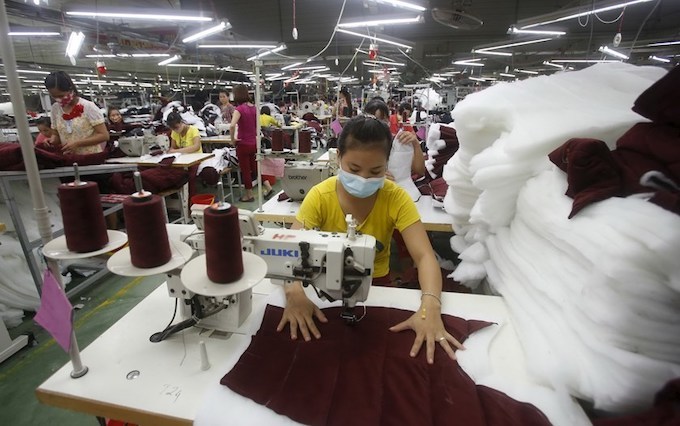
    This means a low localization rate, even in industries with great supporting industry potential, like automobiles and textiles and garments, it said.

    Minister of Industry and Trade Tran Tuan Anh said at the conference that only 300 supporting firms were currently part of the supply chain for multinational companies. As of last year, Vietnam had 75,000 manufacturing firms.

    The number of new businesses in this sector has barely increased in recent years, even though this is a key foundation for industrialization, Anh said.

    Therefore, those making finished products in the country are having to import accessories and parts from other countries or produce them on their own, he added.

    He cited Japan as a good example of a strong supporting industry. Even though the majority of Japanese supporting businesses are medium, small and micro sized, they are integrated deeply in the global manufacturing chain with high added value. They provide accessories and parts to the aviation industry, he noted.

    The trade minister added that Vietnam’s policy for attracting foreign direct investment (FDI) does not create favorable opportunities for local supporting businesses to develop and join the global manufacturing chain.

    There are over 3,000 supporting industry businesses in Vietnam, accounting for 4.5 percent of the manufacturing and processing sector, creating jobs for over 550,000 employees, according to the Ministry of Industry and Trade.

    From January to November this year, Vietnam imported $30.66 billion worth of machines, accessories and parts, and exported $15.13 billion worth of products, according to Vietnam Customs, marking a trade deficit of $15.53 billion.

  • LVMH acquires Belmond hotel group

    LVMH acquires Belmond hotel group

    The London-based owner of the Hotel Cipriani in Venice and the Orient Express train service is being acquired by LVMH for $3.2bn including debt, marking a return to dealmaking by the world’s largest luxury group by revenues. The acquisition of Belmond boosts the hotel portfolio of LVMH, which already has Cheval Blanc hotels in Courchevel, the Maldives, Saint-Barthélemy and Paris as well as owning Bulgari Hotel and Resorts.

    Belmond operates in 24 countries and its hotels include the Copacabana Palace in Rio de Janeiro and Hotel Splendido in Portofino. It also owns train services such as the Venice Simplon-Orient-Express and Belmond Royal Scotsman, and cruises including Belmond Afloat in France and Belmond Road to Mandalay.

    LVMH, which owns brands such as Christian Dior and Louis Vuitton, saw off interest from several other potential bidders for the deal, including private equity groups.

    Belmond, which used to be known as Orient-Express Hotels, had said in August it had hired Goldman Sachs and JPMorgan Chase for a strategic review.

    The acquisition of Belmond comes as companies seek to tap into a rising trend of so-called “experiential” luxury, with consumers buying fewer products and more experiences in areas such as high-end food and wine, luxury hotels and travel.

    “Our agreement today with the Belmond Group is entirely consistent with our continued investment in the field of experiential luxury,” Bernard Arnault said.

    He added that the deal will “bring us ever closer to our highly discerning customers”. “Bernard Arnault was one of the first to think hard about how best to attract and retain an increasingly volatile luxury customer,” said Thomas Chauvet, analyst at Citi. “Over the past decade, LVMH has expanded its reach beyond its traditionally boundaries with continued expansion of travel retail, the rollout of high-end hotels and spas,” he said.

    “While these activities have a limited impact on LVMH’s overall profit, these have been among the group’s fastest growing businesses over the past few years.” The global luxury hotel market was worth at $83.1bn in 2017 and is expected to grow at a compound annual growth rate of 4.3 per cent to reach $115.8bn by 2025, according to Grand View Research, a consulting firm.

    Paris-based LVMH said on Friday that it was buying Belmond for $25 per share in cash — a premium of more than $7 per share to the stock’s closing price on Thursday. That represents a value of $2.6bn for the overall equity of group.

    Including debt, Belmond is being valued at $3.2bn.

    In the year to September, Belmond made adjusted earnings before interest, tax, depreciation and amortisation of $140m on revenues of $572m.

    Its average price per room night ranges from $1,206 in Europe to $448 in Asia.

    The last substantial deal by LVMH chairman and chief executive Bernard Arnault was more than 18 months ago, when his family company Groupe Arnault paid €12.1bn for the minority stake that it did not already own in Christian Dior.

    At the time Mr Arnault said that LVMH was shunning external acquisitions because they were either unavailable or too expensive. “We’re not actively looking at external acquisitions, we’re focusing on internal growth,” said Mr Arnault in April 2017. “Given the current market, fewer and fewer assets are looking attractive to us. And the best assets are not for sale.”

    In 2016, LVMH also bought high-tech German suitcase maker Rimowa, which is headed by Mr Arnault’s son, Alexandre Arnault.

    The Belmond transaction is expected to complete in the first half of 2019.

  • Securing Raw Materials Key to Competitiveness of Indonesia’s Textile Industry

    Securing Raw Materials Key to Competitiveness of Indonesia’s Textile Industry

    Indonesia is set to become one of the top five textile and textile product producers in the world by 2030, and the Ministry of Trade is forging ahead with its Making Indonesia 4.0 roadmap, which prioritizes the development of a number of industries, including the textile sector.

    Muhdori, the trade ministry’s director tasked with the textile, leather, footwear and various other industries, said the implementation of the roadmap would strengthen the textile sector’s global competitiveness, as it improves efficiencies and product quality.

    “Being highly integrated from upstream to downstream, this sector is competitive and is supported by a large amount of human resources for its production activities,” he said.

    The challenge for the textile industry was to become more efficient, while continuing to improve human resource competencies, in accordance with technological development, he said.

    “Being both an export-oriented and labor-intensive sector, the textile industry has thus far contributed significantly to Indonesia’s economic growth,” Muhdori said.

    According to the Ministry of Industry, textile and textile product exports have continued to increase in recent years. The textile and textile product sector’s contribution to Indonesia’s gross domestic product amounted to a record $10.46 billion last year, while exports were valued at $12.58 billion, up 6 percent from 2016.

    Increased Exports

    The Ministry of Industry pegged textile exports at $13.5 billion this year, along with the creation of 2.95 million new jobs in the industry, while exports are projected to increase further to $15 billion next year, with the creation of up to 3.11 million jobs. This will increase the sector’s share of Indonesia’s total exports to 1.6 percent.

    The ministry is optimistic that this year’s growth target of between 4 percent and 6 percent can be achieved. The textile industry grew 3.45 percent last year, having nearly doubled from 2016.

    However, this growth target also calls for an increased supply of raw materials, which currently consist of 51 percent synthetic fiber, such as polyester and nylon, 37 percent cotton fiber, and 12 percent rayon.

    But the industry still faces obstacles in reaching its full competitive potential, as nearly all cotton must be imported. In contrast, 80 percent of synthetic fiber and 85 percent of rayon are domestically produced, with these numbers expected to increase further.

    Rayon is a cellulose material extracted from soluble wood pulp. It offers better absorption and breathability than cotton. Rayon fiber has various uses, including in clothing, bedding, towels, baby wipes, masks and personal hygiene products.

    According to Redma Gita Wirawasta, secretary general of the Indonesian Synthetic Fiber Producers Association (APSyFI), rayon is most in demand in the fashion industry due to several advantages, such as comfort and disposability, which make it environmentally friendly.

    “Indonesia has the potential to become one of the largest rayon industry players in the world, supported by extensive land availability and a suitable climate. This makes Indonesia comparatively superior to other rayon-producing countries,” he said.

    Raw Materials

    Redma Gita said the growth of the rayon fiber industry requires sustainable raw material supply through industrial plantations.

    “Rayon plants supported by industrial plants not only strengthen the structure of the textile industry, but also reduce its dependence on imported raw materials, which has been an issue for national textile competitiveness,” he said.

    “This upstream industry could even generate foreign exchange as some of its production is exported,” he added.

    The Ministry of Industry noted that the production capacity of the rayon fiber industry has risen substantially over the past three years. Production is expected to increase to about 700,000 metric tons this year, compared with 565,000 tons last year and 470,000 tons in 2016.

    Production capacity growth is expected to continue until 2021, when it is expected to reach 1.2 million tons.

    However, the industry faces challenges from environmental activists. Redma Gita refuted allegations from Canopy, an international nonprofit focused on forest conservation, which stated that raw materials for rayon fiber comes from ancient and endangered forests in Sumatra and Kalimantan.

    “Those accusations are baseless. They have provided no proof of this whatsoever,” he said. He also highlighted the importance of the government in supporting the development of the national textile industry.

    Machmud Thohari, a forestry expert, meanwhile also questioned the Canopy report’s use of terms such as ‘ancient’ and ‘endangered’ to categorize forests.

    “As far as I know, the terms ‘ancient’ and ‘endangered’ aren’t commonly used in the scientific classification of forests,” he said.

    Thohari said the term ‘ancient forest’ may have been used to refer to an old-age forest or one that is many, many years (i.e.: centuries) old.

    On a similar note, Riau Governor Wan Thamrin Hasyim also condemned the Canopy allegations, as he sought to highlight the strategic industrial potential of the province.

    “The accusation must be clarified, as it can deter investors and [negatively impact] Riau’s economic growth,” he said.

  • Nissan terminates contract with Vietnamese distributor

    Nissan terminates contract with Vietnamese distributor

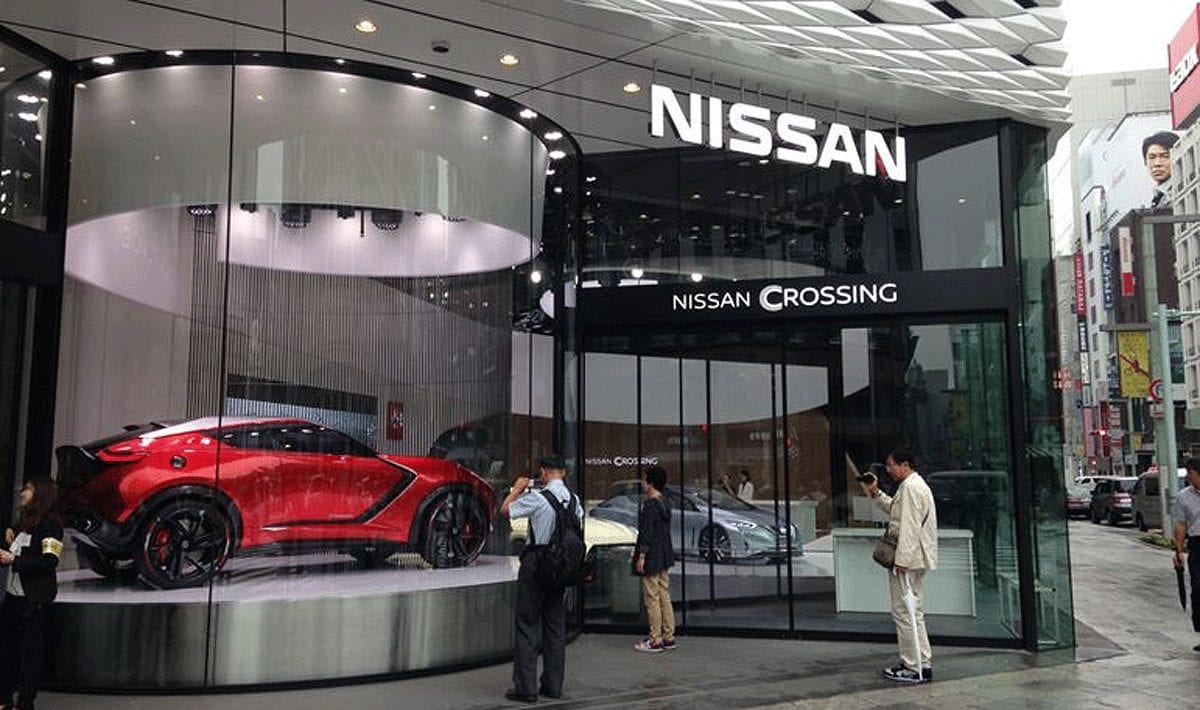
    Japanese carmaker Nissan announced it has ended its tie-up with its distributor in Vietnam, Tan Chong, without disclosing the reason. Malaysian-owned Tan Chong Motor Holdings Bhd, said it would stop importing and distributing Nissan vehicles and parts in Vietnam from September 10 next year.

    Tan Chong said it “remains open to further discussion with Nissan to explore alternative solutions and business opportunities for mutual benefit in Vietnam.”

    Nissan said: “The termination of the joint venture with Tan Chong will not affect the sales of Nissan cars in Vietnam.”

    Its business operations would remain unchanged in the near future, it said. It is set to debut its seven-seat SUV Terra in Vietnam on December 18.

    Tan Chong, a multinational corporation based in Malaysia, is not only the official distributor of Nissan in Malaysia and Vietnam, but also in Laos, Cambodia and Myanmar.

    In Malaysia, it also distributes cars by Opel, Renault and Foton. Its subsidiary, Motor Image, also owns the rights to produce and distribute Subaru vehicles in Southeast Asia, including Vietnam.

  • Genesis starts by-the-month car subscriptions

    Genesis starts by-the-month car subscriptions

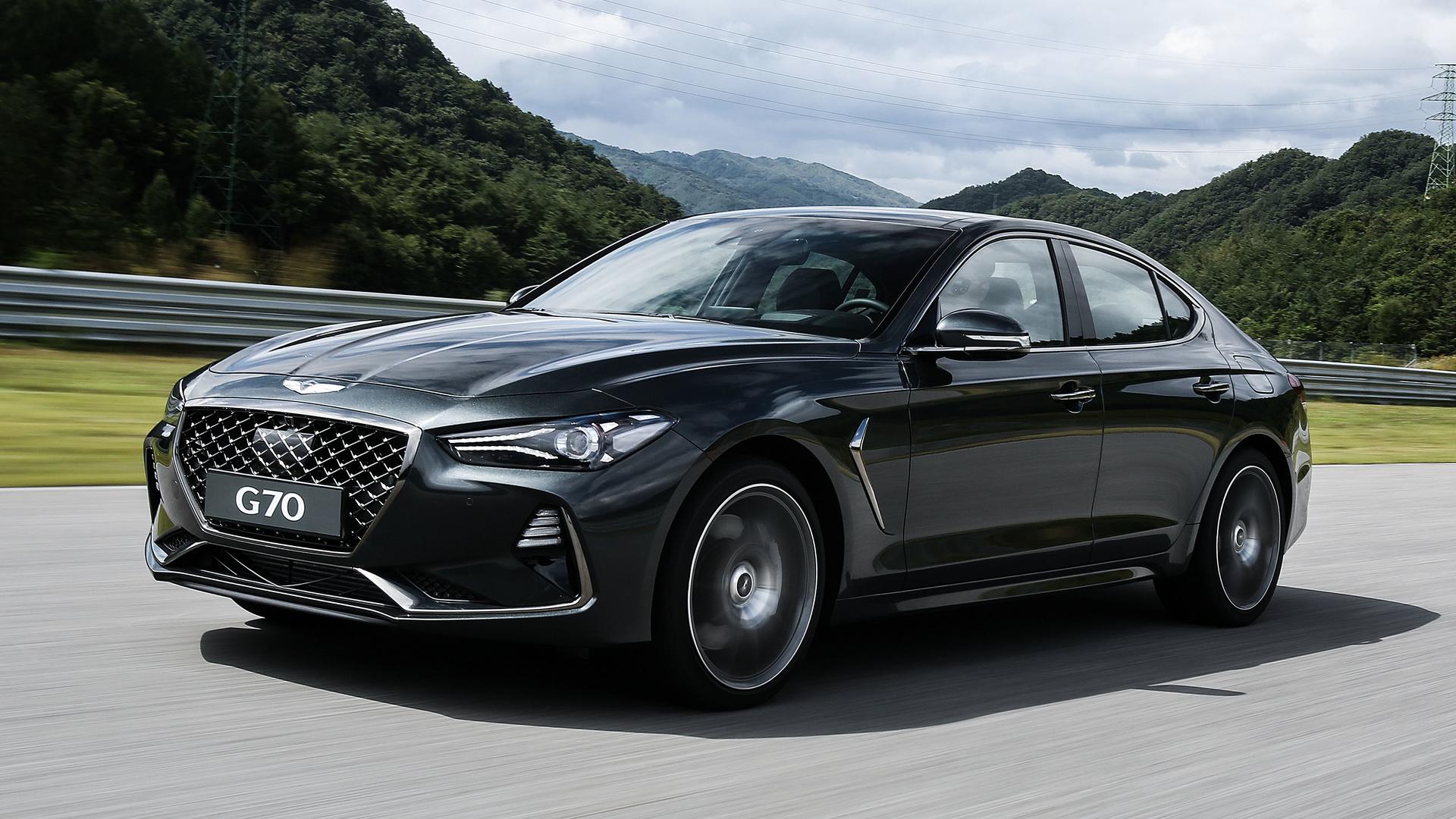
    Hyundai Motor luxury brand Genesis is starting a car subscription service, the first such effort by a domestic automaker in Korea. The company Thursday announced its Genesis Spectrum program. Under the program, subscribers can drive Genesis vehicles – including the G70, G80, G80 Sport and G90 – for 1.49 million won ($1,330) per month. The service is in collaboration with domestic rental-car companies and Hyundai Capital’s Deal Car.

    The fleet of available cars includes the 2018 G70 3.3 Sports Supreme, the G80 3.3 Premium Luxury, the 2019 G80 Sports 3.3T Premium Luxury and G90 3.8 Premium Luxury. The provided cars are relatively new, with fewer than 10,000 kilometers (6,213 miles) of accumulated driving, according to the carmaker. For those using the G70, G80 and G80 vehicles, cars can be switched twice a month. The G90 is available to subscribers only for test driving 48 hours a month.

    Subscribers will not have to pay any maintenance costs, including after-sales service and the purchase of replacement parts. They will have to renew their subscription every month, but no fee is charged for early termination of membership. The program offers pick-up and delivery in Seoul as long as the vehicles are reserved three days in advance.

    “Genesis has been researching opportunities our brand could offer customers,” an official at Genesis said. “One of the results of the survey is a subscription program, which is globally emerging as trend.”

    Genesis added that the subscription service will allow the brand to collect data about its customers and drivers, such as preferred models for certain age groups and car replacement cycles.

    While subscription services for cars are a global phenomenon, as fewer people opt for ownership, the concept hasn’t taken off in Korea yet.

    Hyundai Motor’s finance affiliate Hyundai Capital America has already launched a subscription service in the United States called Hyundai PLUS, where subscribers can use the Sonata, Tucson, Santa Fe and other models for a monthly fee. Other carmakers have been offering subscriptions in certain markets. Porsche runs Porsche Passport, Mercedes-Benz has Benz Collection and BMW has Access by BMW.

    Swedish carmaker Volvo recently started Care By Volvo, and has rolled out its “Don’t Buy This Car” campaign to promote the new service.

    “Subscription services are suitable especially for younger people who want to enjoy a diverse range of driving experiences while avoiding the financial burden of buying the car and then maintaining it,” said Kim Pil-soo, an automotive engineering professor at Daelim University.

    The Mini brand launched a subscription service in partnership with connected-car platform Epikar last month in Korea. Its membership fee is 1.79 million won, but it charges more depending on which model the customer wants to drive.

    The Genesis service started Thursday and will run for 10 months.